2.3.2Structure and Functions in Living Organisms: Part 1
Practical: Food Tests
5 min read 9 parts Lesson 8 of 36 1 quiz
Section 1 of 9Why test food?
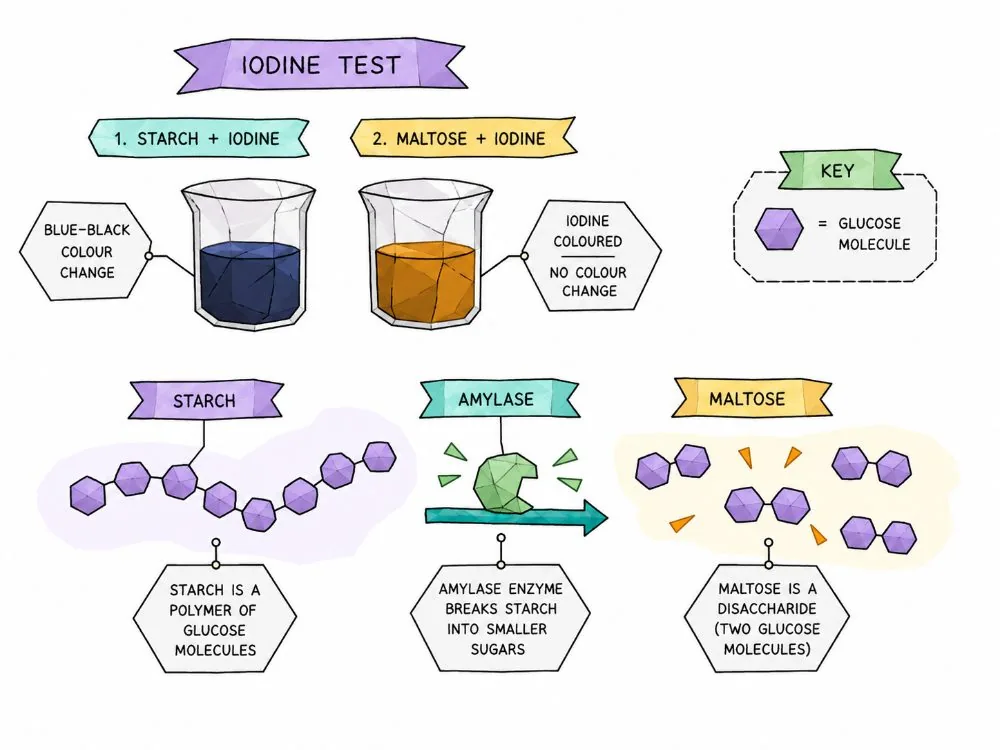
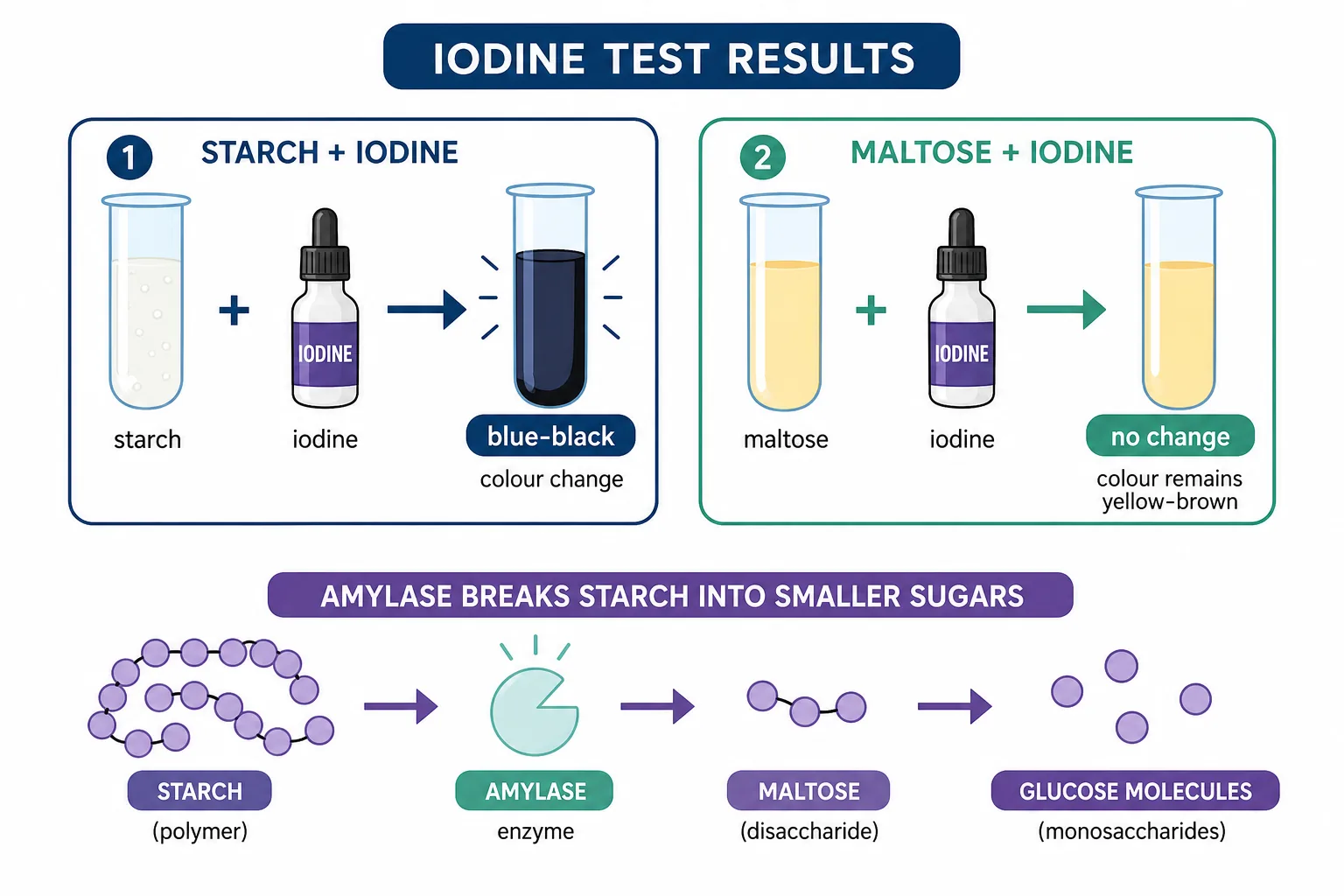


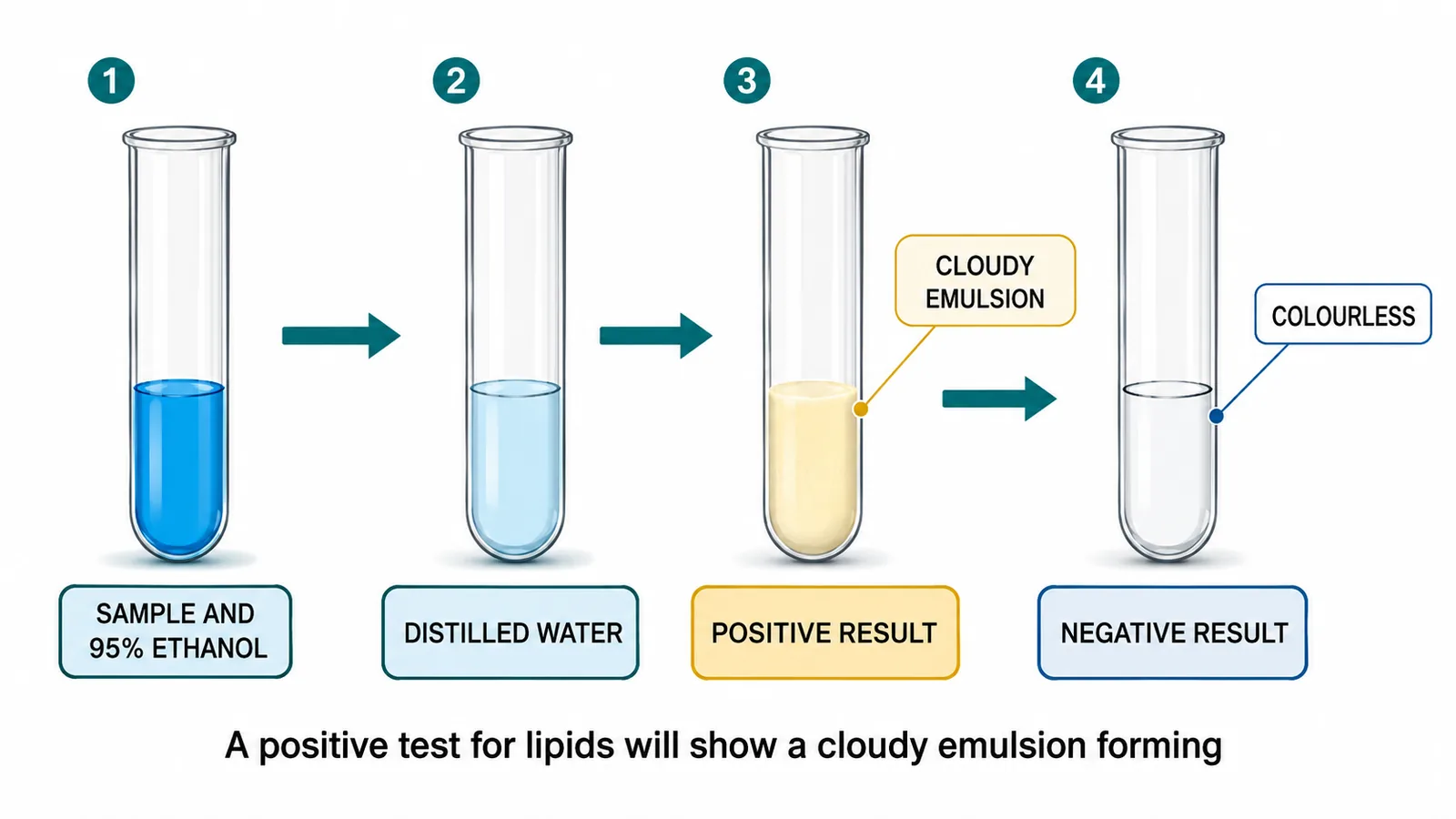
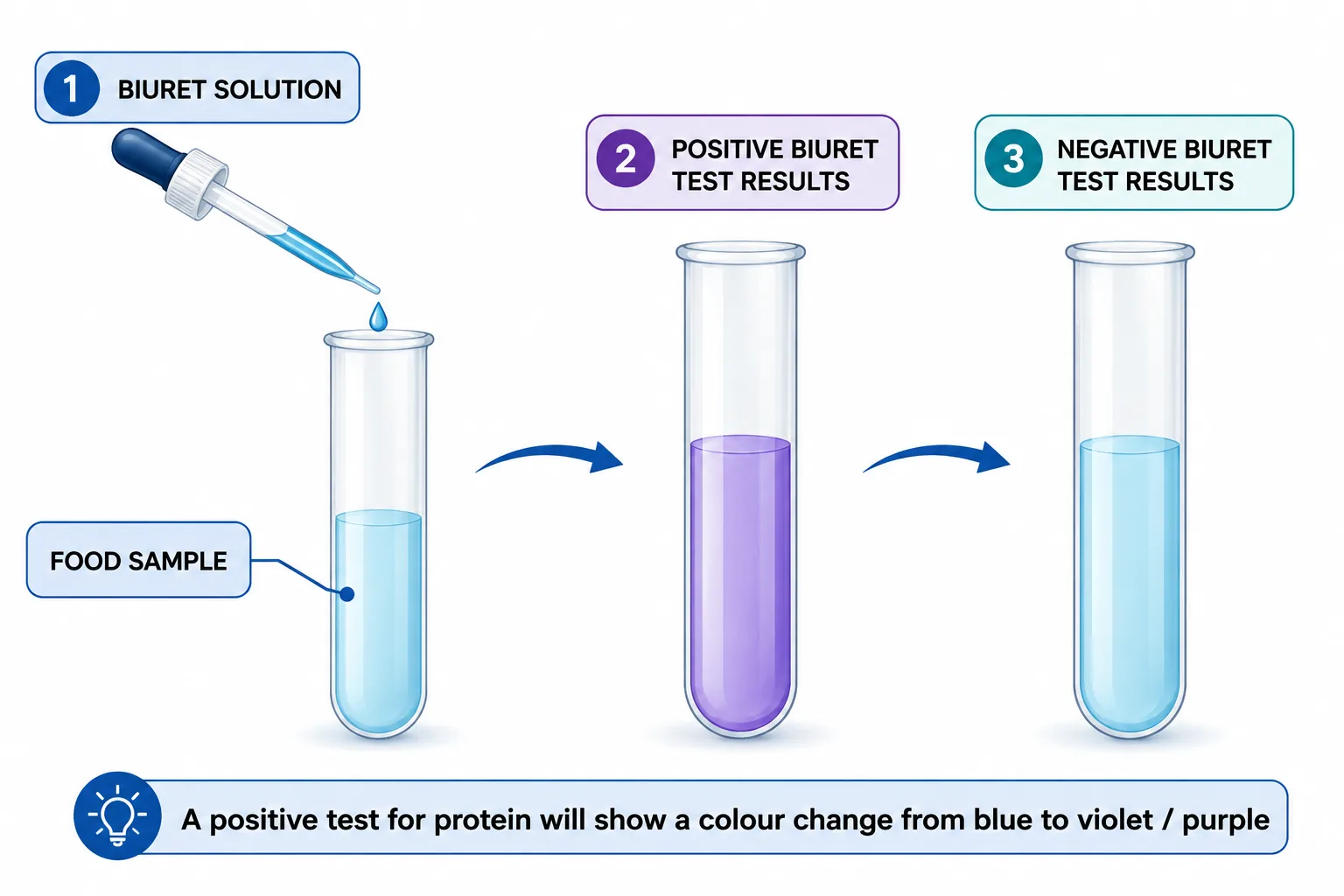



Foods contain different mixtures of carbohydrates, proteins and lipids. Simple chemical tests show which nutrients are present. Each test uses a reagent that changes colour or appearance in a characteristic way if a particular nutrient is present. The tests are qualitative: they show presence, and the depth of colour gives only a rough idea of the amount.
Section 2 of 9Preparing the sample
Solid food is ground with a pestle and mortar and a little distilled water, and the mixture is filtered or allowed to settle so that a liquid sample is obtained. Using clean apparatus for each food and wearing safety goggles prevent contamination and accidents.
It also helps to put the sample in a small volume: 2 cm3 of food solution in a clean test tube is usually enough, and the same volume of reagent should be added each time so that the intensity of colour can be compared fairly between foods.
Section 3 of 9The four main tests


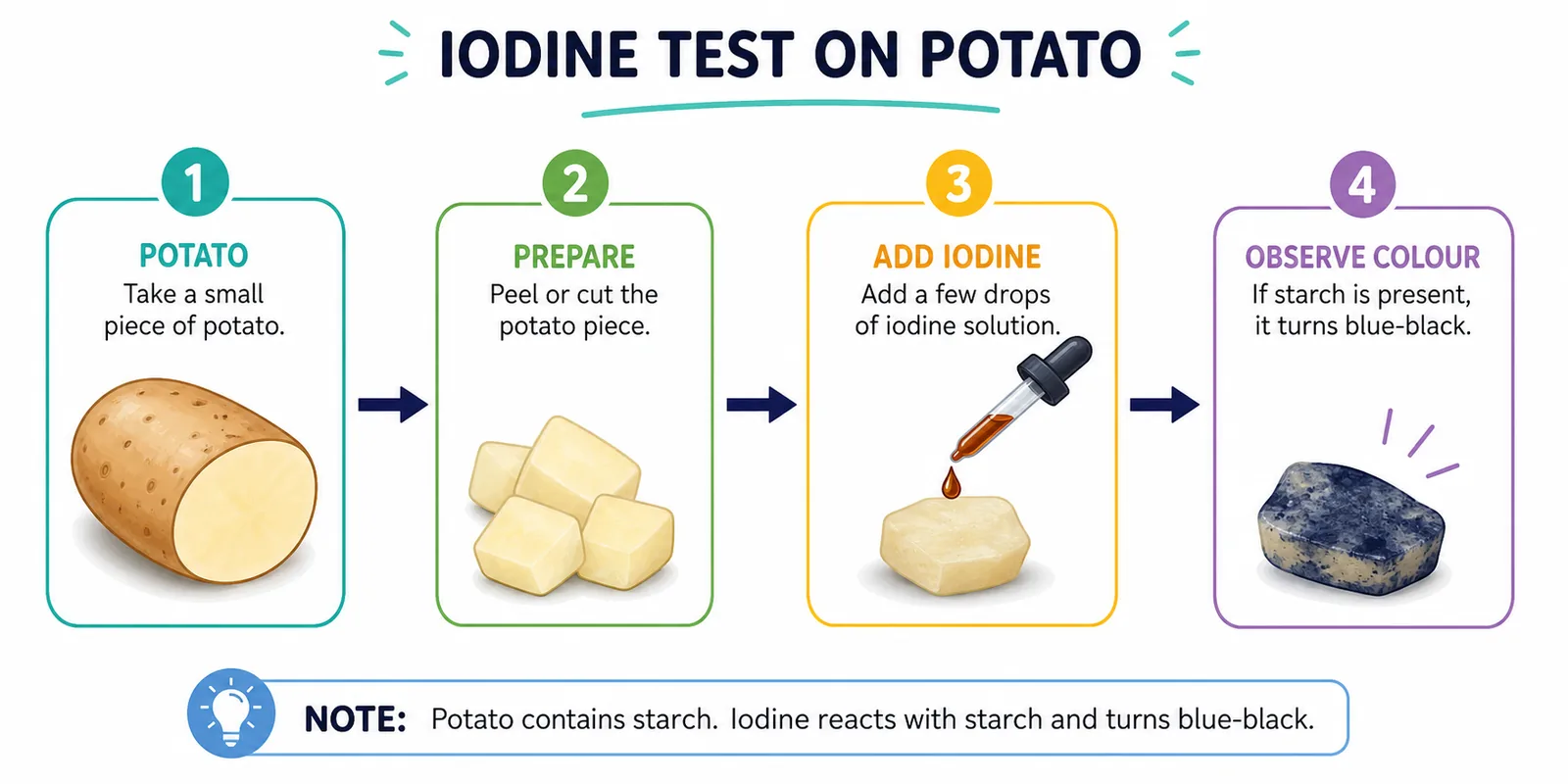
| Nutrient | Reagent | Method | Positive result |
|---|---|---|---|
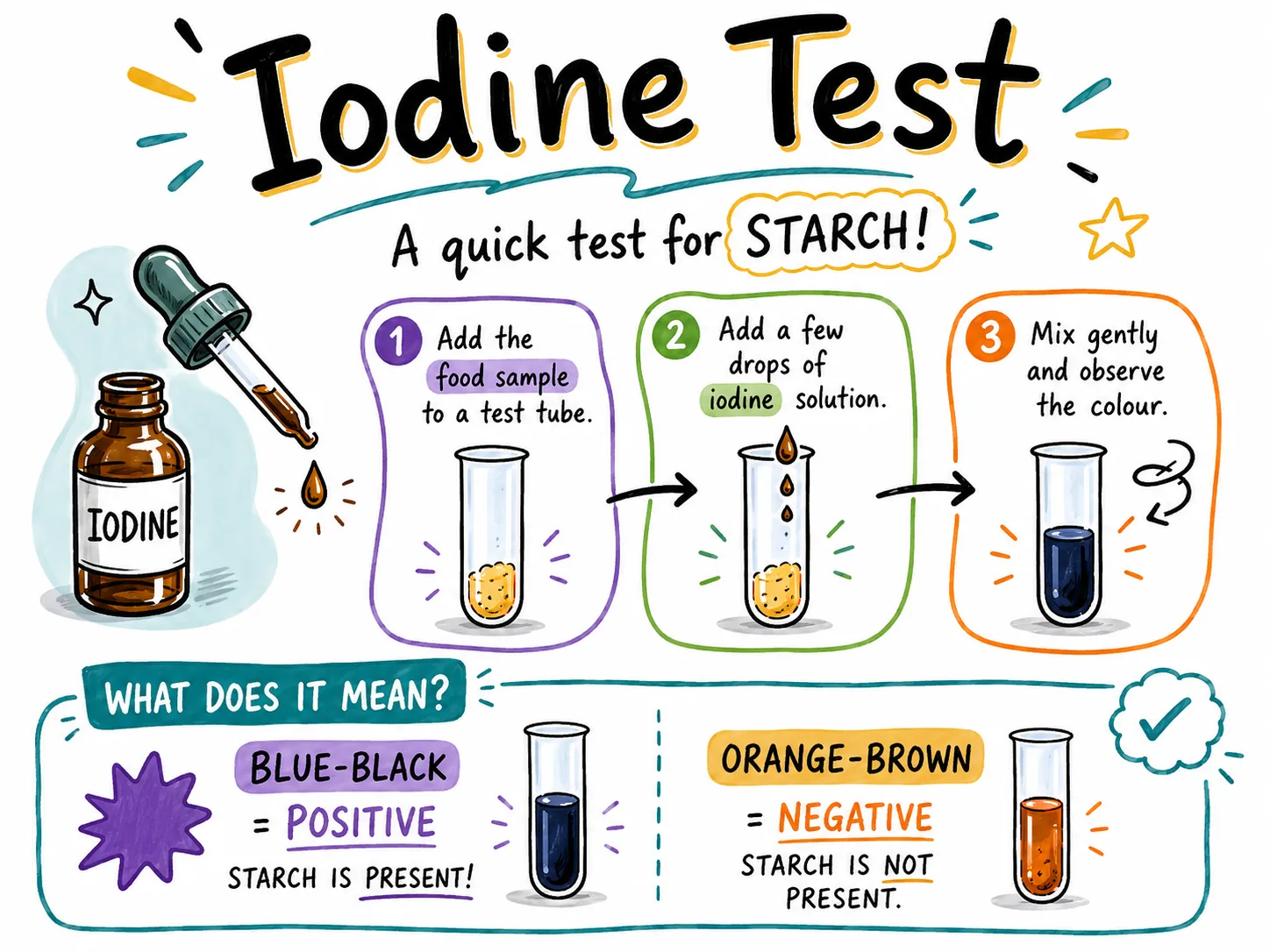
| Starch | Iodine solution | Add a few drops to the sample | Orange-brown to blue-black |
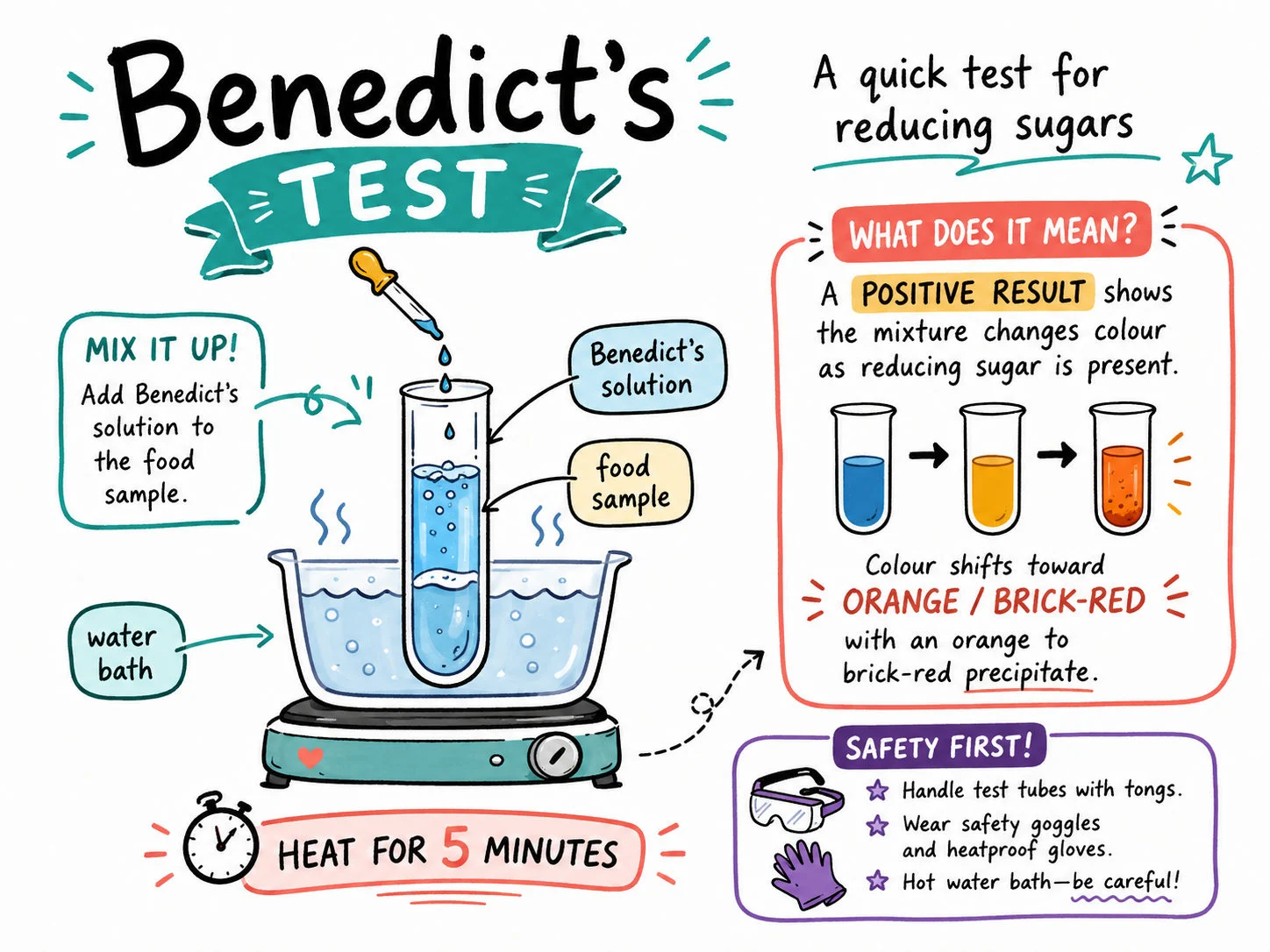
| Reducing sugars (such as glucose) | Benedict's solution | Add reagent, heat in water bath at about 80 degrees Celsius for several minutes | Blue to green, yellow, orange, then brick-red precipitate |
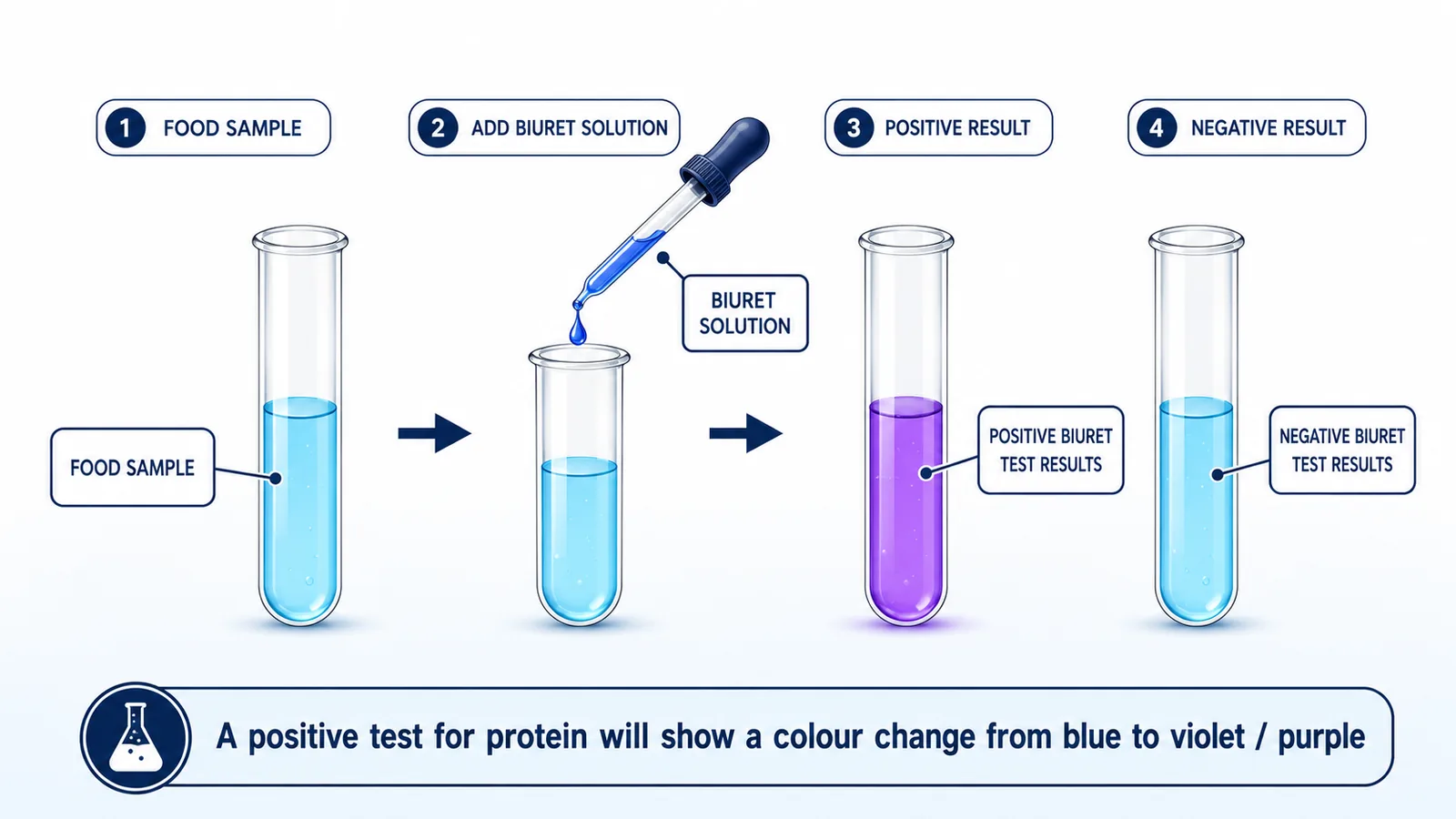
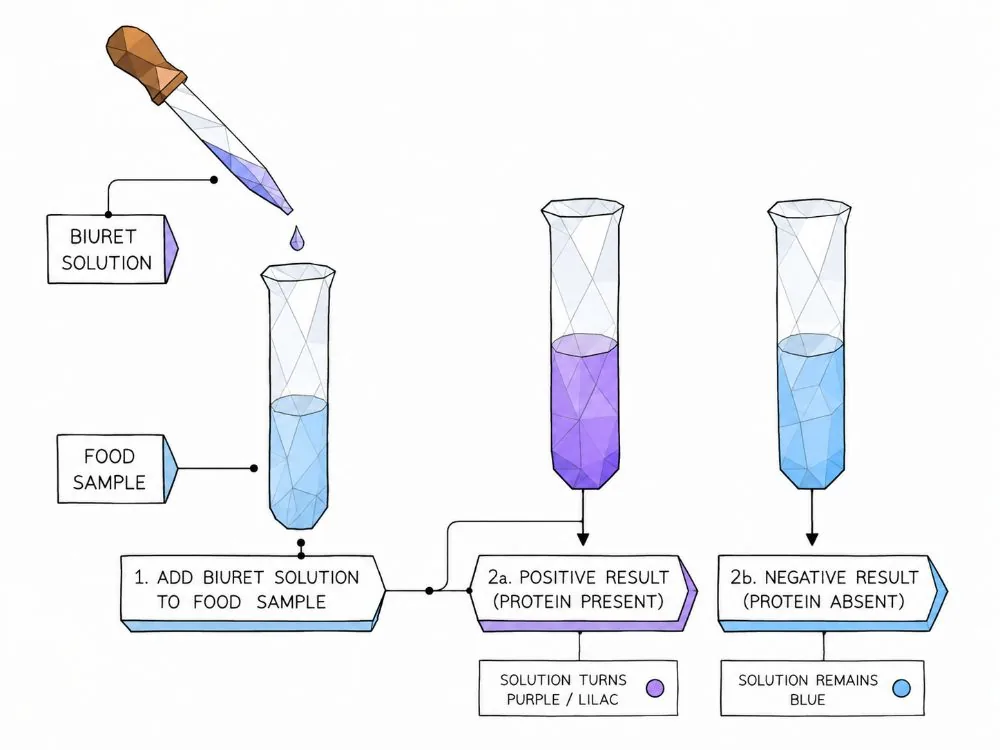
| Protein | Biuret reagent (or sodium hydroxide then copper sulfate) | Add reagent and mix; no heating | Blue to purple/lilac |
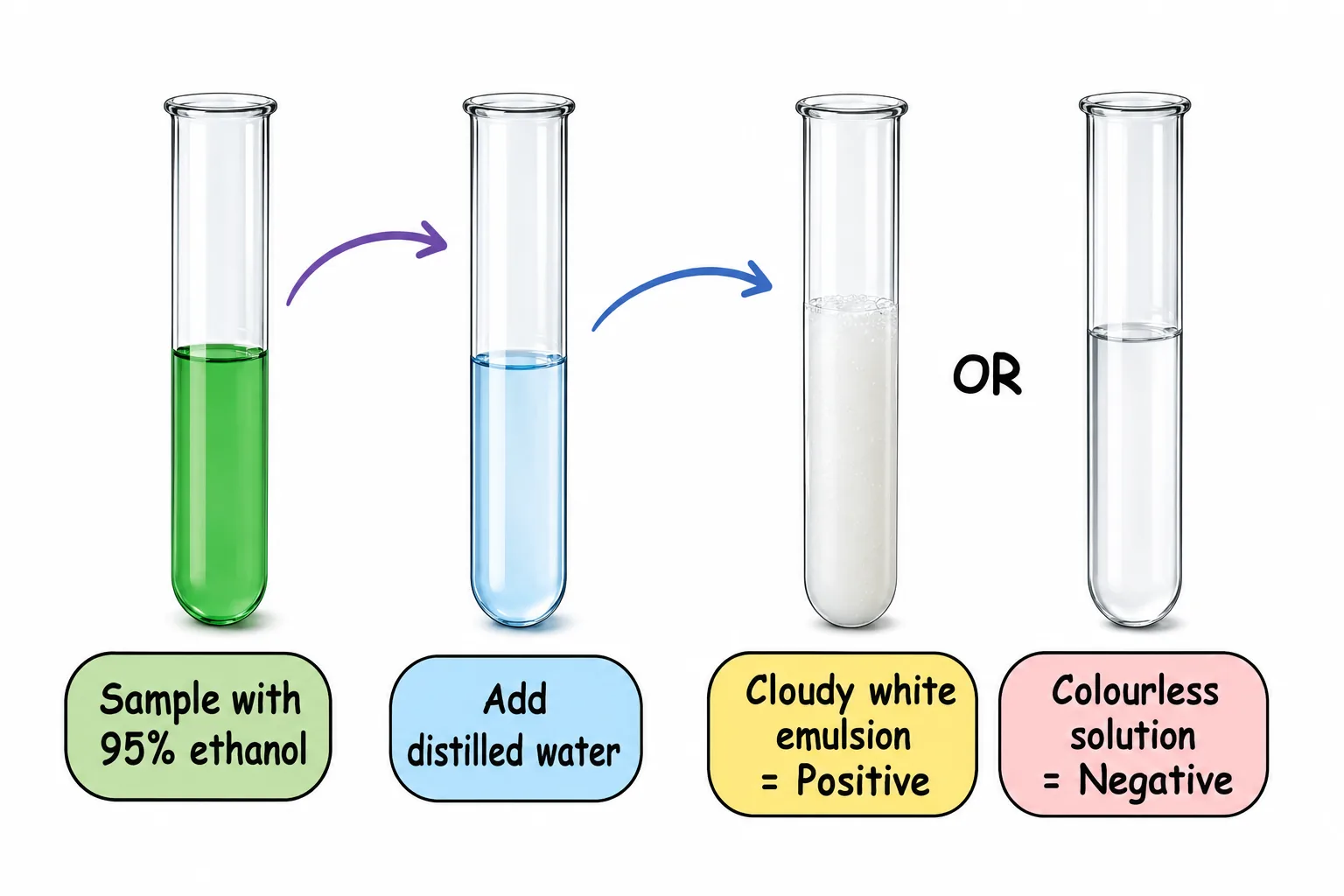
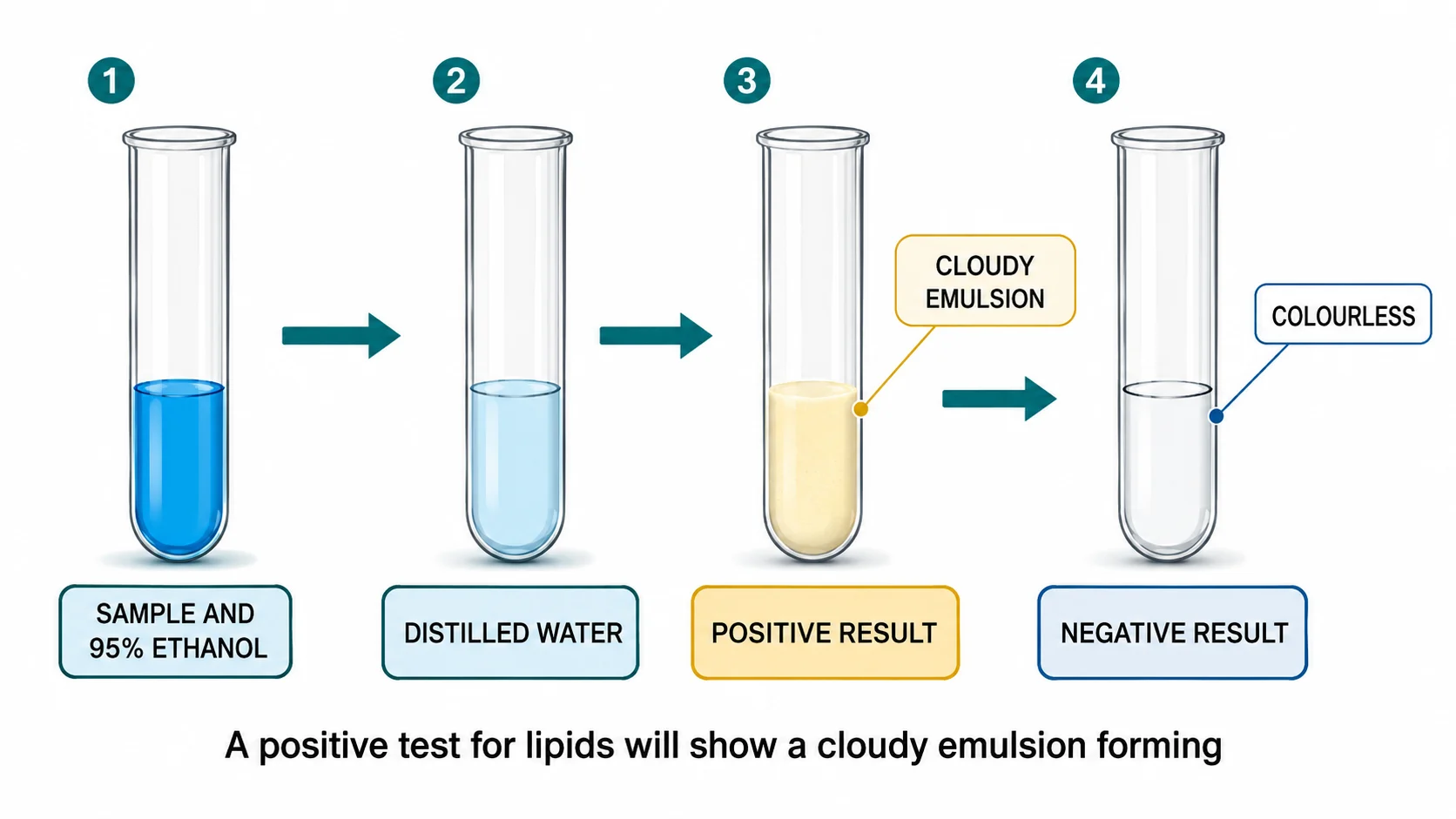
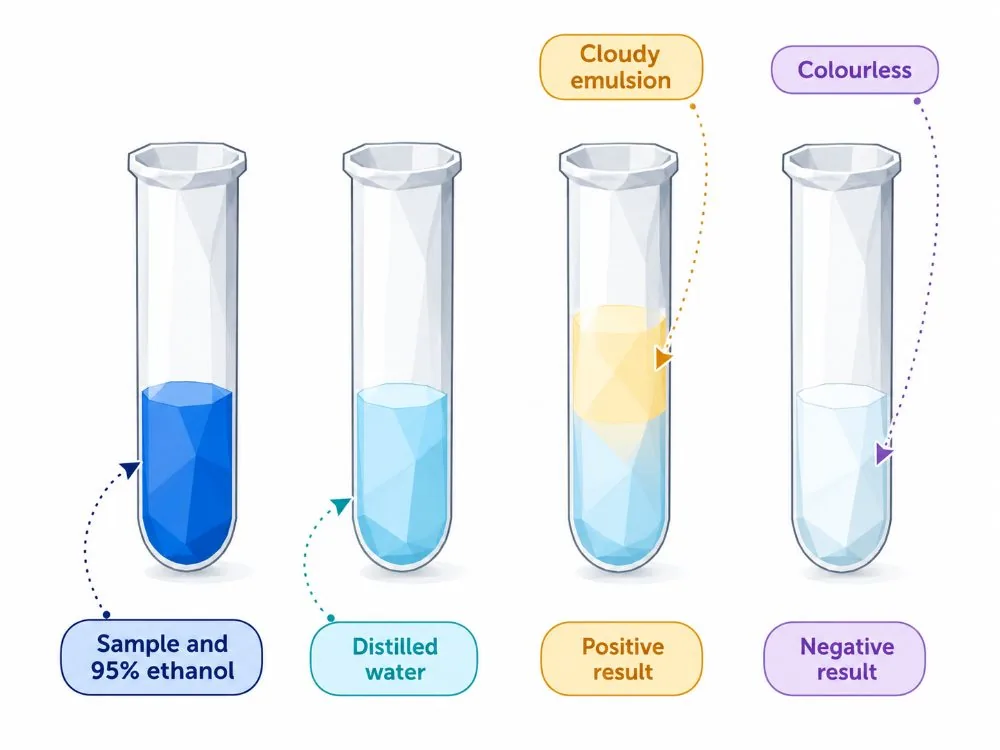
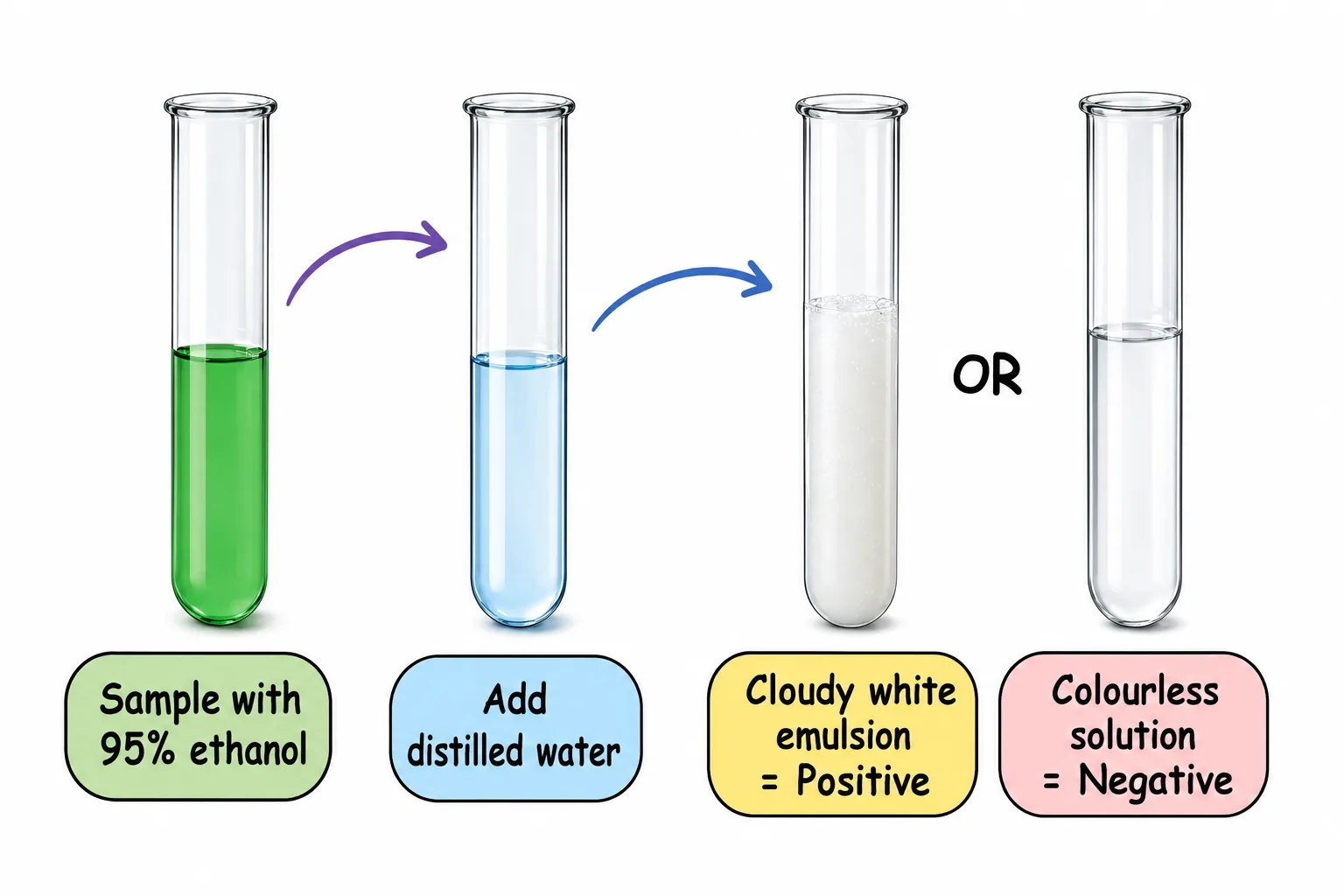
| Lipid | Ethanol, then water (emulsion test) | Shake sample with ethanol, pour into water | Cloudy white emulsion |
Negative results are no colour change
- iodine stays orange-brown, Benedict's stays blue, Biuret stays blue, and the ethanol-water mixture stays clear.
- Sudan III stain can also be used for lipids, producing a red layer on top of the water.
Section 4 of 9Interpreting results and controls
The colour change in the Benedict's test goes through green, yellow and orange to brick-red as the amount of reducing sugar increases, so the colours can be used to compare foods semi-quantitatively. Starch is not a reducing sugar and sucrose is a non-reducing sugar, so a food containing only these gives a negative Benedict's result until it is boiled with acid.
A food such as milk may be positive for protein, lipid and sugar but not for starch, while a potato may give positive for starch and a weak positive for reducing sugar. A control using distilled water instead of the food shows what a negative result looks like and confirms the reagent is working.
Quantitative versions of these tests are possible.
- or the time taken for the first colour change can be noted,
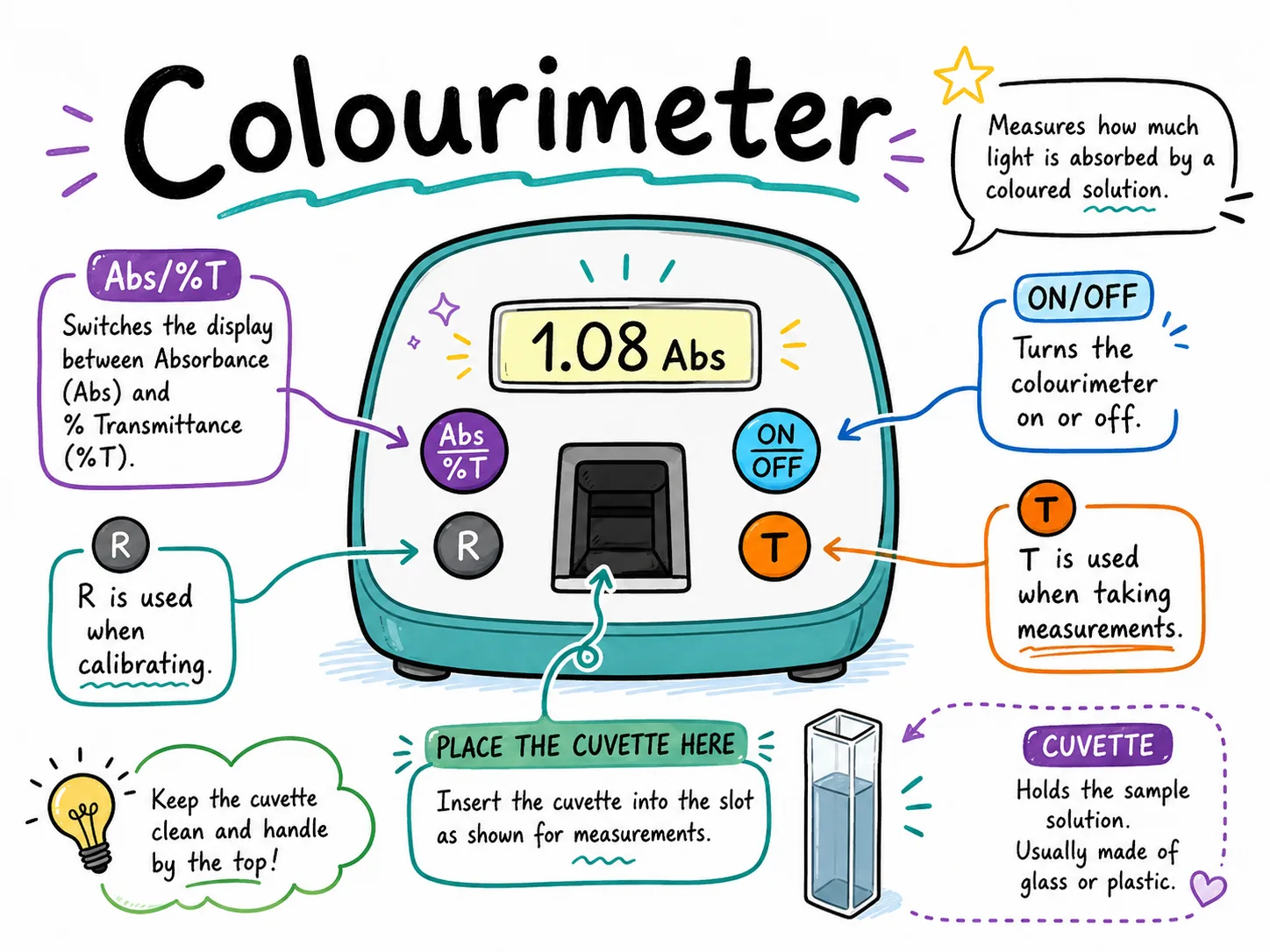
- and a colorimeter can measure how much light passes through the mixture,
- producing numerical data that can be plotted as a calibration graph.
- such as a mystery powder, by testing it with each reagent in turn and constructing a table of results.
Section 5 of 9Safety and evaluation
Possible limitations are that coloured foods hide colour changes, and that the tests are not quantitative; to improve, filter the sample or dilute it, and compare against standard solutions of known concentration.
Always record observations rather than conclusions in the results table, for example "turned blue-black" rather than "starch present", and then use the observations to draw the conclusion beneath the table. Order the foods tested and tests carried out in a clear grid so that patterns are easy to see, and state clearly which foods were positive for each nutrient.
Section 6 of 9Why it matters
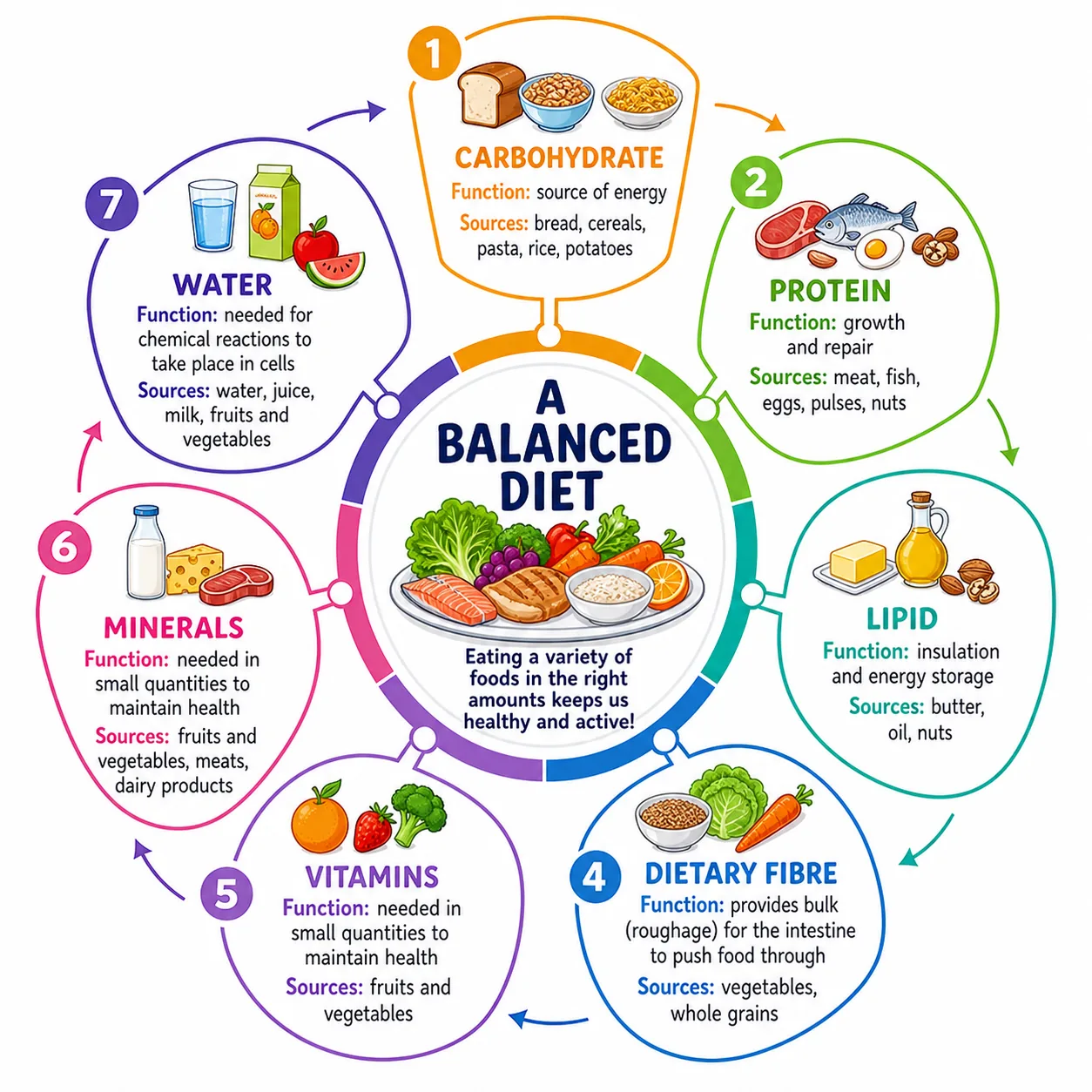
Knowing which nutrients are in a food helps plan a balanced diet. Carbohydrates, mainly starch and sugar, supply energy; proteins are needed for growth and repair; lipids supply energy and form cell membranes. Food tests are a small-scale version of the analysis that food scientists do to check the labels on products.
Section 7 of 9Exam-style questions




Describe how to test a food sample for reducing sugar. [3]3 marks
Add Benedict's solution to the sample [1]; heat in a water bath at about 80 degrees Celsius [1]; a colour change from blue through green/yellow/orange to brick-red shows reducing sugar [1].
A food gave a purple colour with biuret reagent and a cloudy emulsion with ethanol. State what nutrients it contains. [2]2 marks
Protein [1]; lipid [1].
Explain why distilled water is tested alongside the food samples. [2]2 marks
It acts as a negative control [1]; shows the colour of the reagent without the nutrient so results can be compared [1].
Section 8 of 9Key terms
| Term | Meaning |
|---|---|
| Reagent | A chemical used to detect another substance. |
| Benedict's solution | A blue reagent that forms a brick-red precipitate with reducing sugars on heating. |
| Biuret reagent | A reagent that turns purple with protein. |
| Emulsion | A cloudy mixture of tiny droplets of one liquid in another. |
| Reducing sugar | A sugar such as glucose that reacts with Benedict's solution. |
| Control | A test that shows what a negative result looks like. |
| Qualitative | Showing presence or absence rather than amounts. |