2.3.4Structure and Functions in Living Organisms: Part 1
Temperature and Enzyme Function
5 min read 7 parts Lesson 10 of 36 1 quiz
Section 1 of 7Why shape matters

Enzymes are proteins
- Enzymes are proteins An enzyme is a long chain of amino acids folded into a precise three-dimensional shape,
- which is held in place by bonds between parts of the chain.
The active site
- The active site The folding creates the active site.
- The substrate can only bind and react if its shape is complementary to this site.
- Anything that changes the shape of the enzyme therefore changes how well it works.
Section 2 of 7Heating towards the optimum

1Temperature increases
- Temperature increases Enzyme and substrate molecules gain kinetic energy.
2Faster movement
- Faster movement The molecules move around more quickly in the solution.
3More collisions
- More collisions Substrate molecules hit active sites more often and with more energy, so more successful collisions occur each second.
4Rate rises
- Rate rises More enzyme-substrate complexes form and the rate of reaction increases, up to the optimum temperature.
Section 3 of 7Above the optimum: denaturation


Denaturation
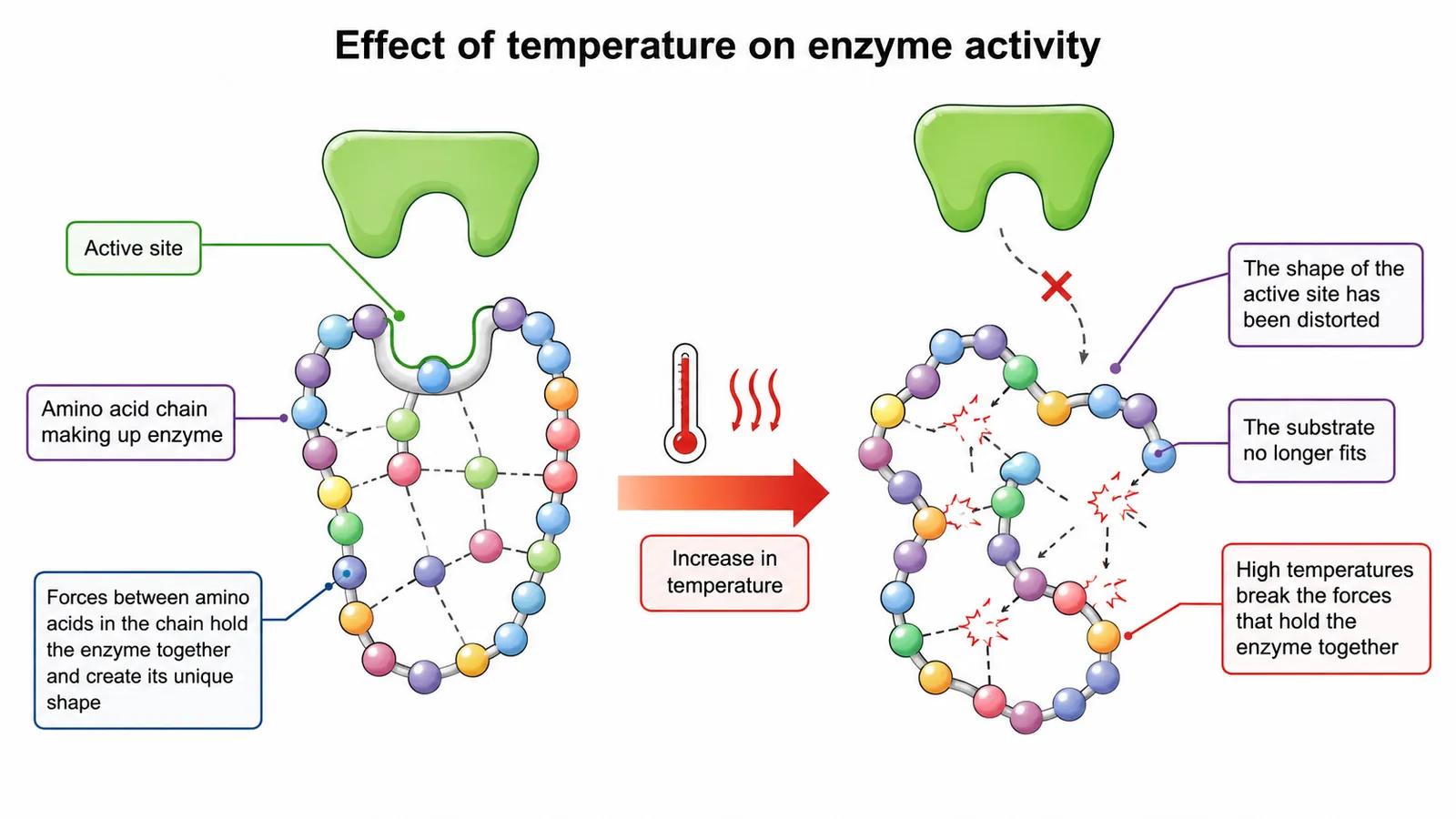
Bonds break
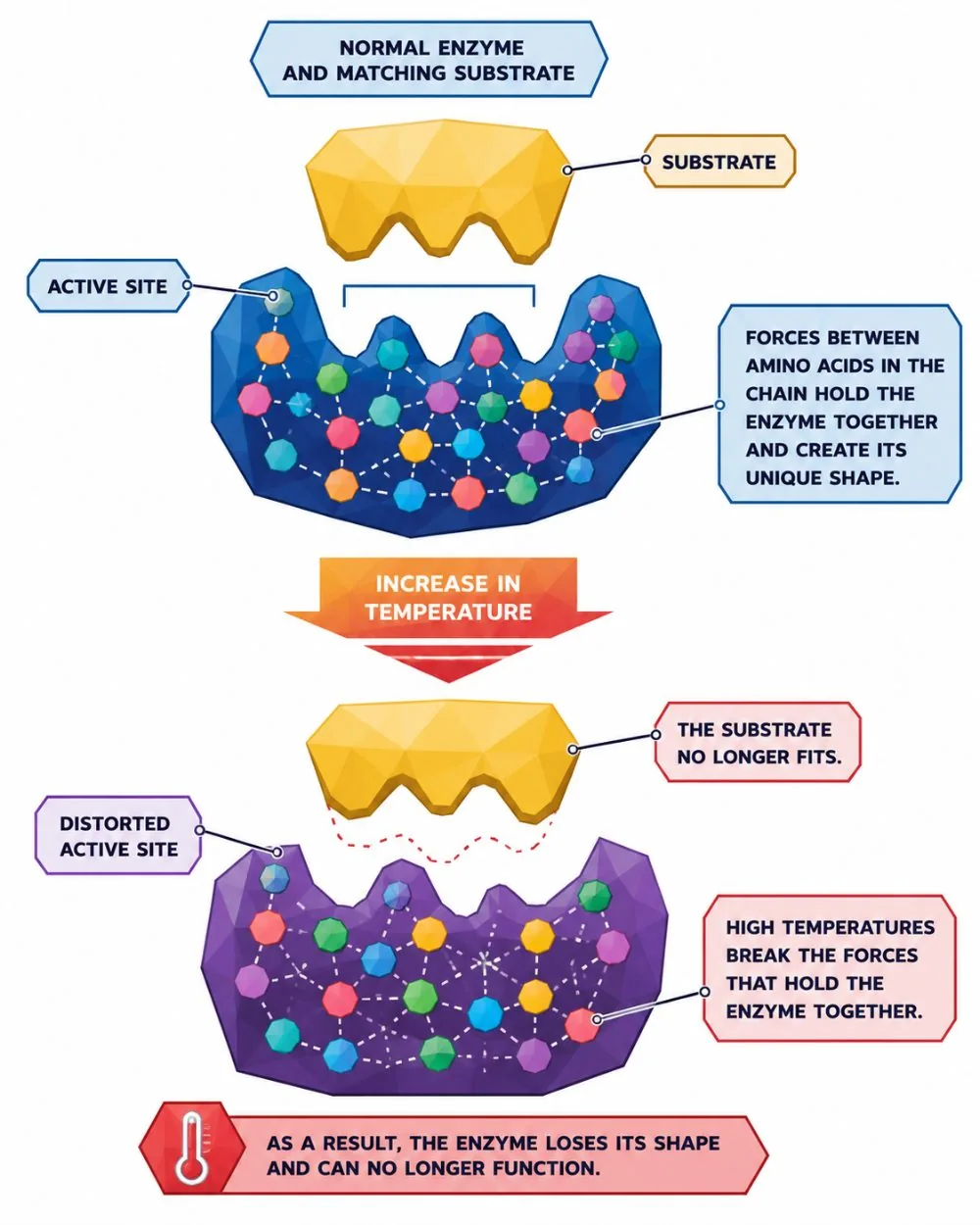
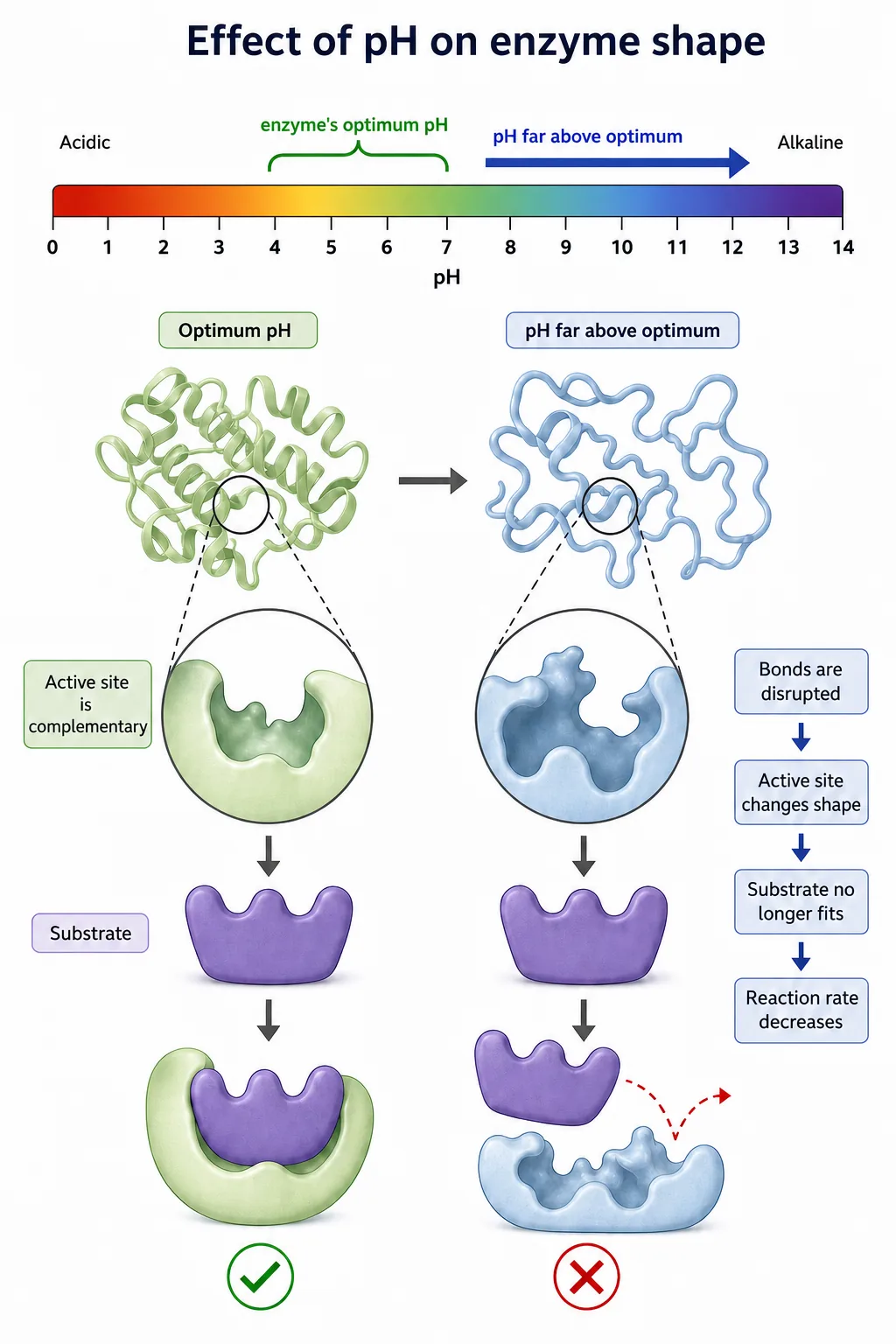
- Bonds break At high temperatures the enzyme molecule vibrates so strongly that the bonds holding its shape in place begin to break.
Shape lost
- Shape lost As the protein unfolds, the shape of the active site changes.
- The substrate is no longer complementary to it and cannot bind.
Activity stops
- Activity stops The enzyme can no longer catalyse the reaction. This is called denaturation.
Irreversible
- Irreversible Denaturation is permanent. Cooling the enzyme again does not restore its shape or its activity.
Section 4 of 7Reading the temperature graph


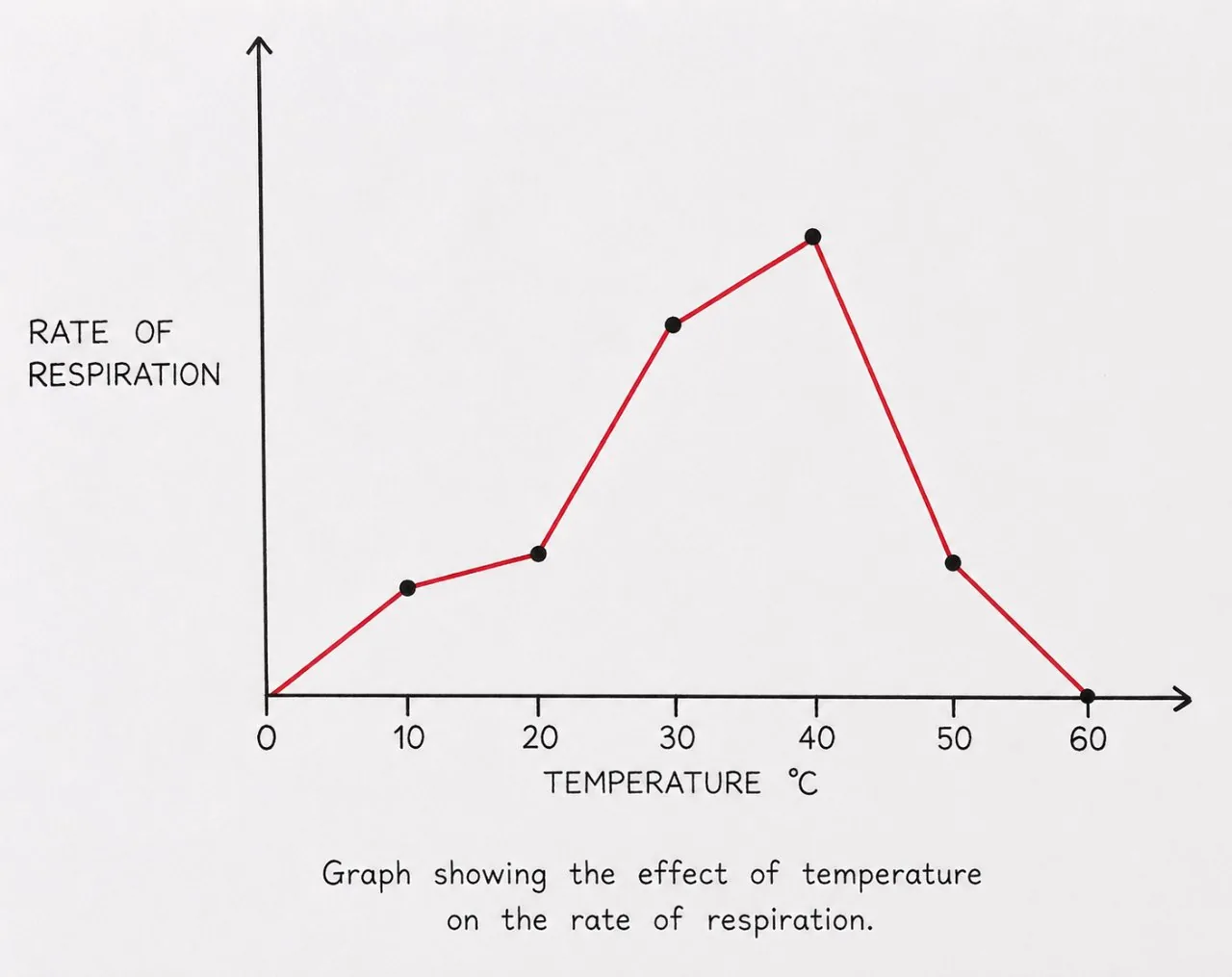

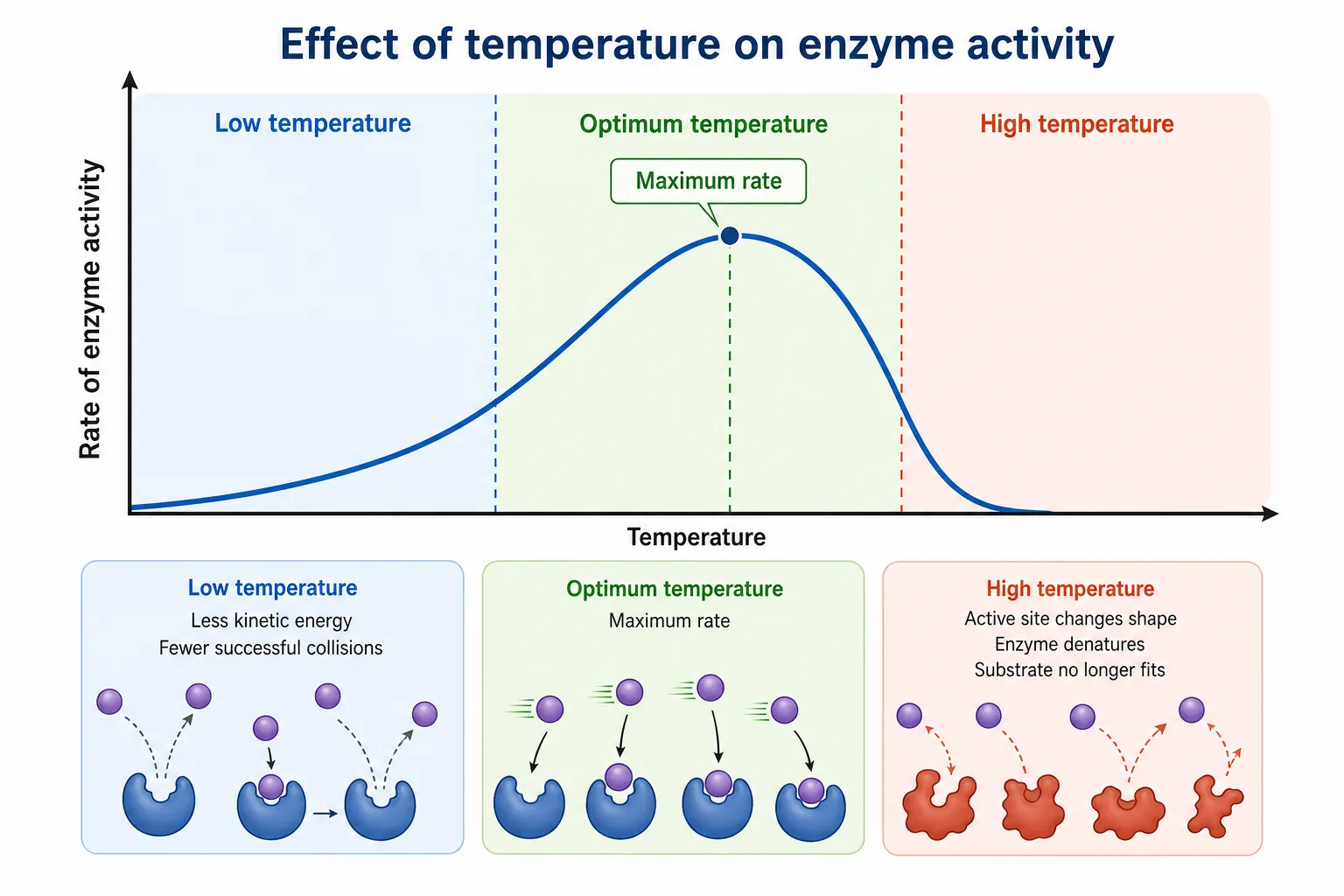
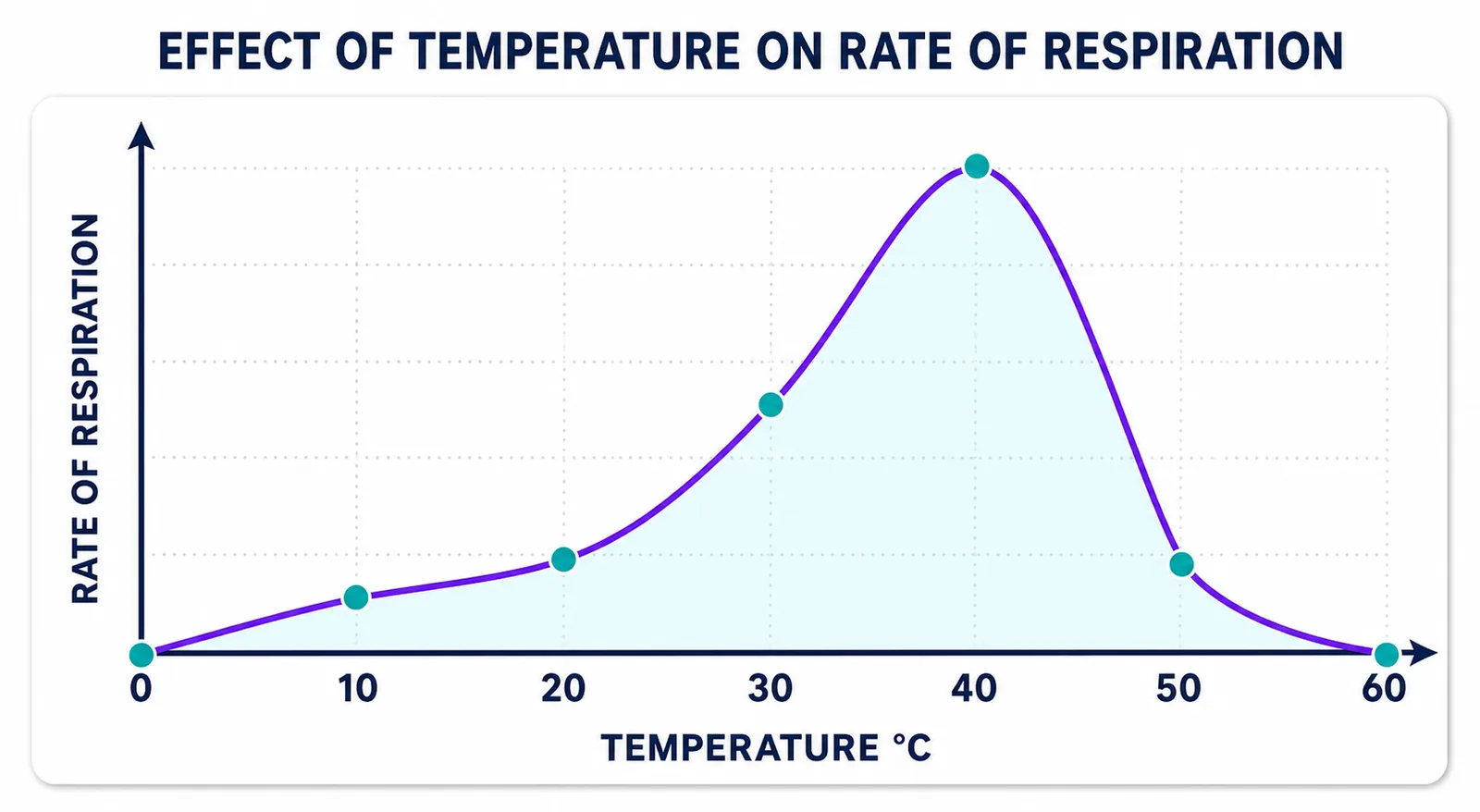

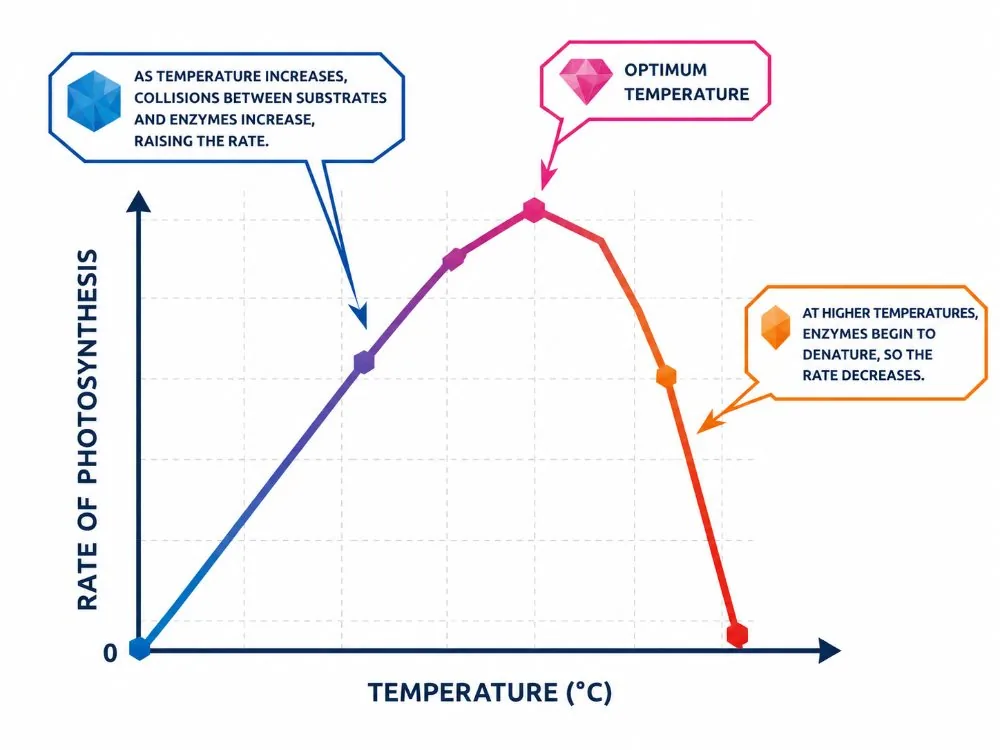

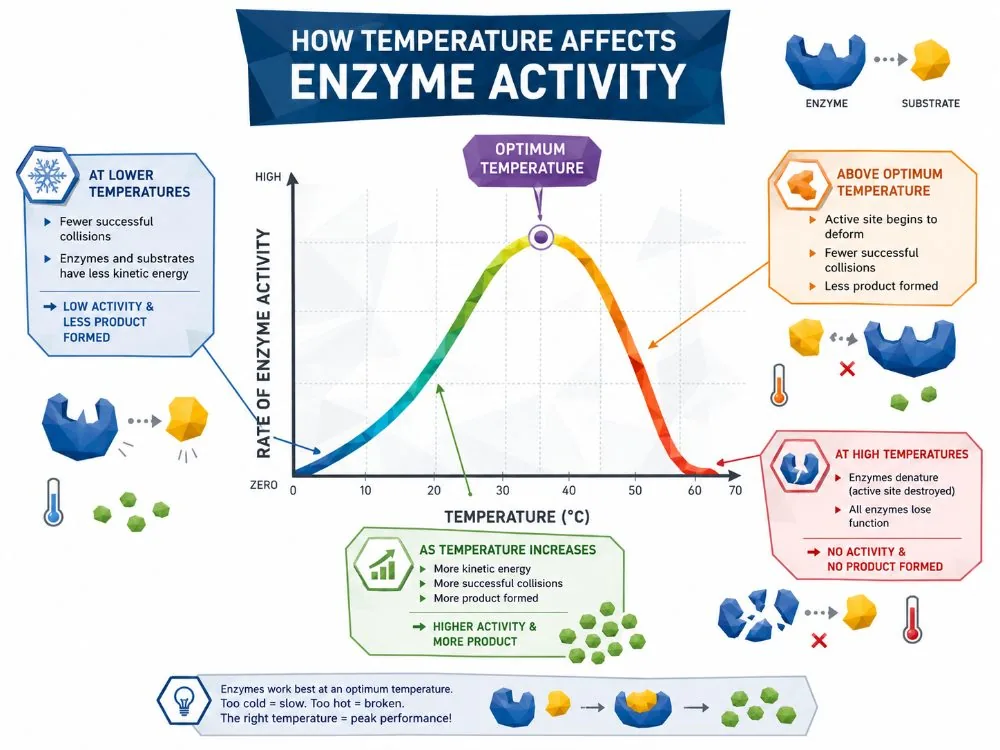


| Region of the graph | What is happening | Explanation |
|---|---|---|
| Low temperature, rate low but rising | Slow reaction | Little kinetic energy, so few successful collisions between enzyme and substrate |
| Rising steeply towards the peak | Rate increasing | More kinetic energy, so more frequent and more energetic collisions |
| Peak of the curve | Optimum temperature | Fastest rate; about 37 °C for human enzymes |
| Falling steeply after the peak | Rate decreasing | Bonds break and the active site changes shape as enzymes denature |
| Zero rate at high temperature | No activity | All enzymes have been denatured |
Section 5 of 7Low temperatures



Slowed, not destroyed
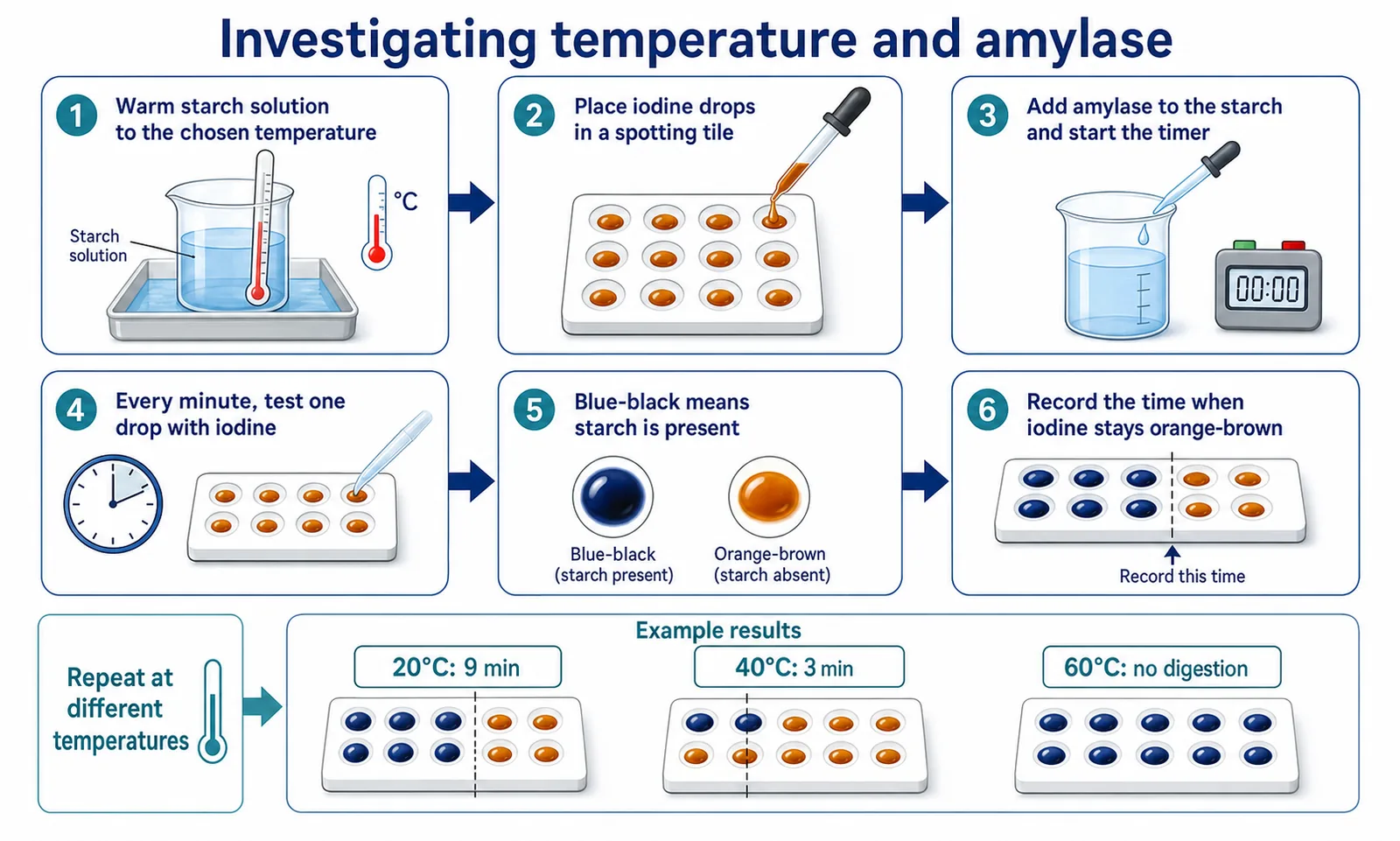
- Slowed, not destroyed Cold does not denature enzymes.
- At low temperatures the molecules simply have less kinetic energy and the reaction is slow.
- If the temperature is raised again the enzymes work faster, so a refrigerator slows food spoilage without permanently harming the enzymes.
Optimum temperature
- Optimum temperature Each enzyme has its own optimum.
- Enzymes in the human body usually work best at around 37 °C, whereas those in organisms from hot springs can have a much higher optimum.
Section 6 of 7Key terms
| Term | Meaning |
|---|---|
| Optimum temperature | The temperature at which an enzyme works fastest. |
| Denaturation | A permanent change in the shape of an enzyme, so that its active site no longer fits the substrate. |
| Kinetic energy | The energy a particle has because of its movement. |
| Active site | The part of an enzyme where the substrate binds. |
| Rate of reaction | How quickly the substrate is used up or the product is formed. |
Section 7 of 7Exam technique
1
Saying the enzyme has 'died' or been 'killed' by heat. The correct word is denatured, because enzymes are not living.
2
Claiming cold temperatures denature enzymes. They only slow the reaction down, and the effect is reversible.
3
Explaining the fall in rate after the optimum with 'the molecules move too fast'. The cause is the active site changing shape, so the substrate can no longer fit.
4
Forgetting to use the word 'complementary' when explaining why the substrate no longer fits a denatured enzyme.