2.7.4Structure and Functions in Living Organisms: Part 1
Smoking and the Gas Exchange System
5 min read 5 parts Lesson 35 of 36 Unit quiz
Section 1 of 5Harmful chemicals in tobacco smoke

Tobacco smoke
Nicotine
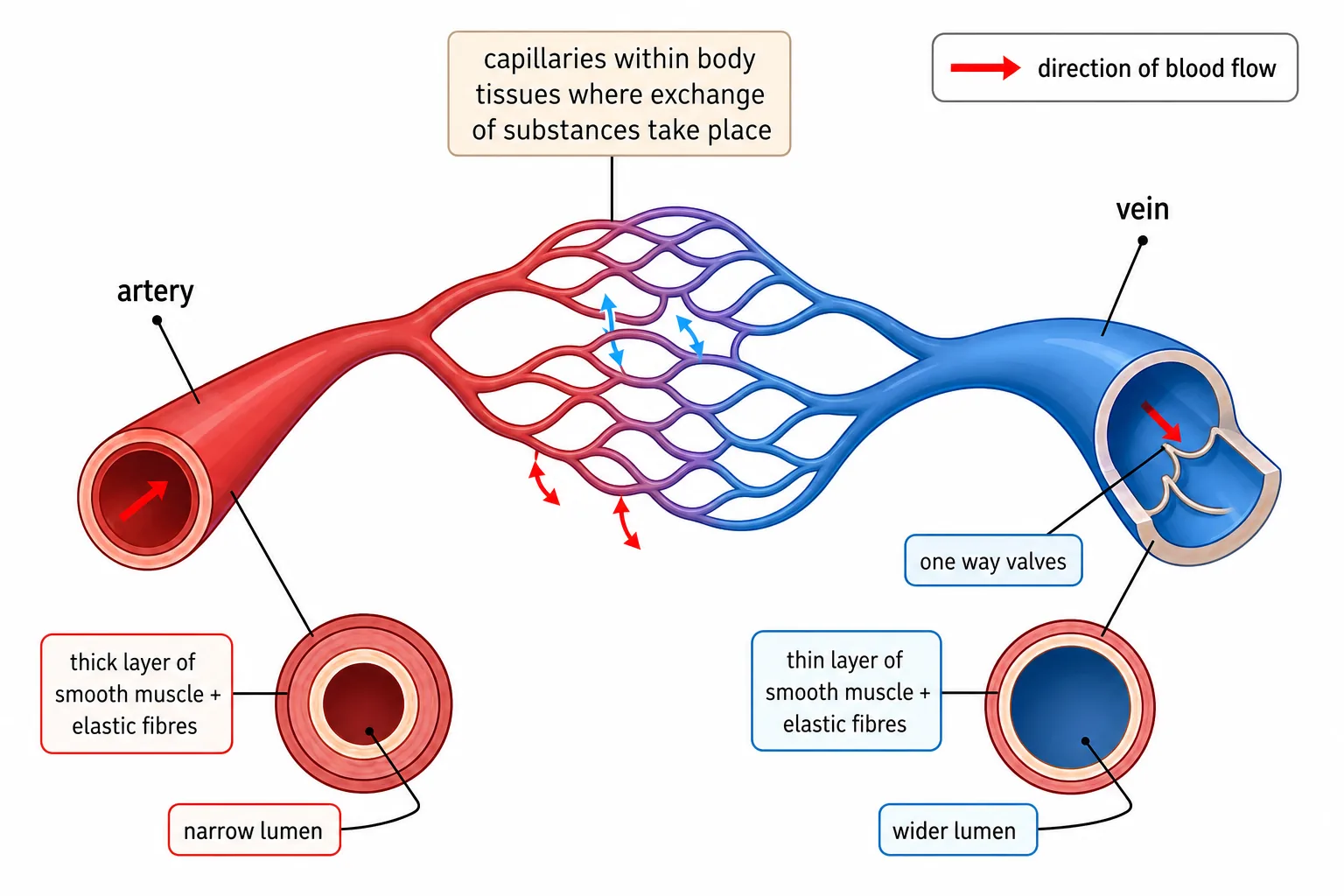
- Nicotine An addictive drug that narrows blood vessels and raises heart rate, so blood pressure goes up.
- High blood pressure can lead to blood clots in the arteries, causing a heart attack or stroke.
Carbon monoxide
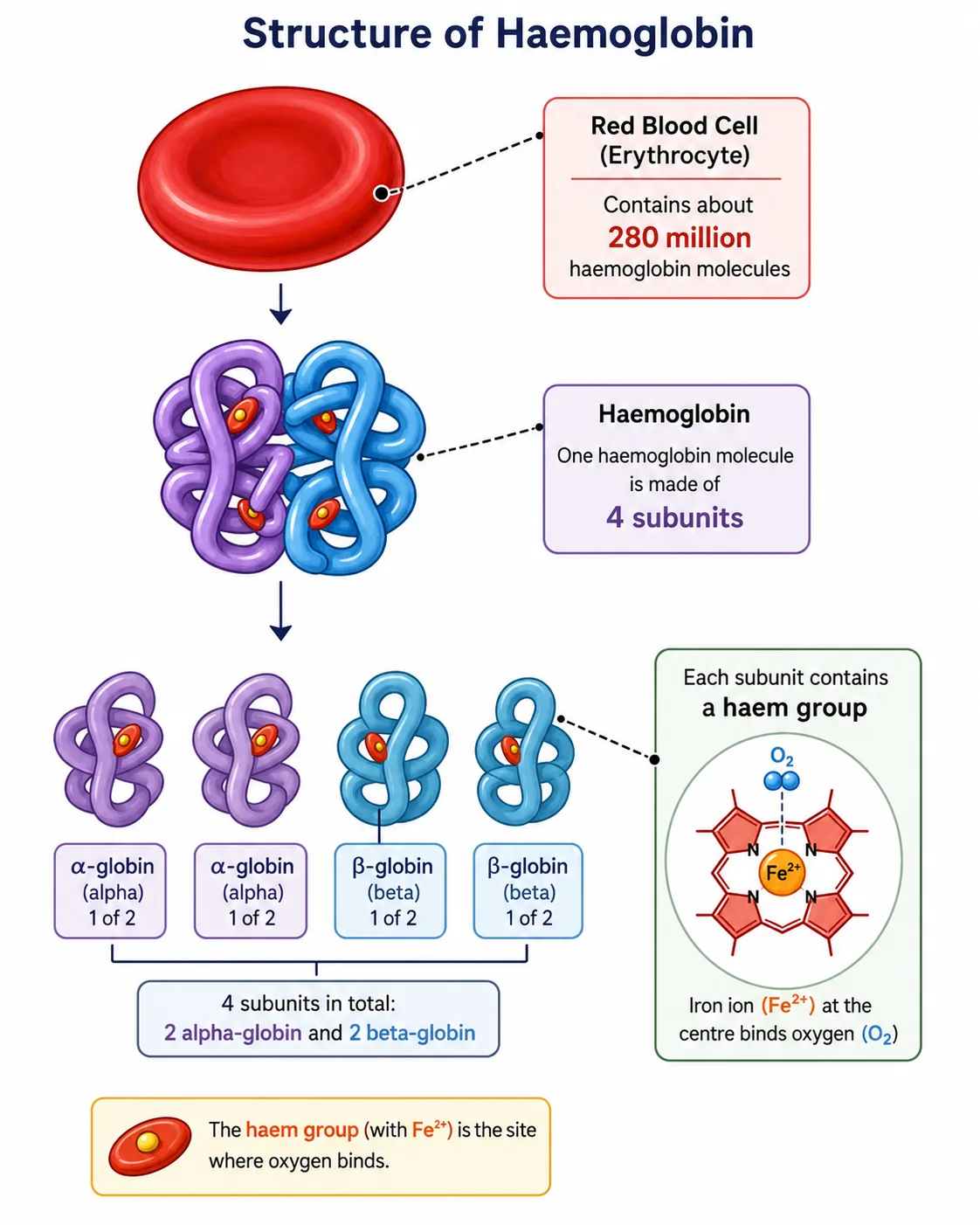
- Carbon monoxide It binds to haemoglobin irreversibly, so red blood cells carry less oxygen.
- The breathing and circulatory systems must work harder to deliver the same amount of oxygen, raising the risk of coronary heart disease.
Tar
- Tar A sticky mixture containing carcinogens that can cause cancerous cells to develop in the lungs.
- It also contributes to COPD, where chronic bronchitis and emphysema occur together.
Section 2 of 5How chronic bronchitis develops
1Tar irritates the airways
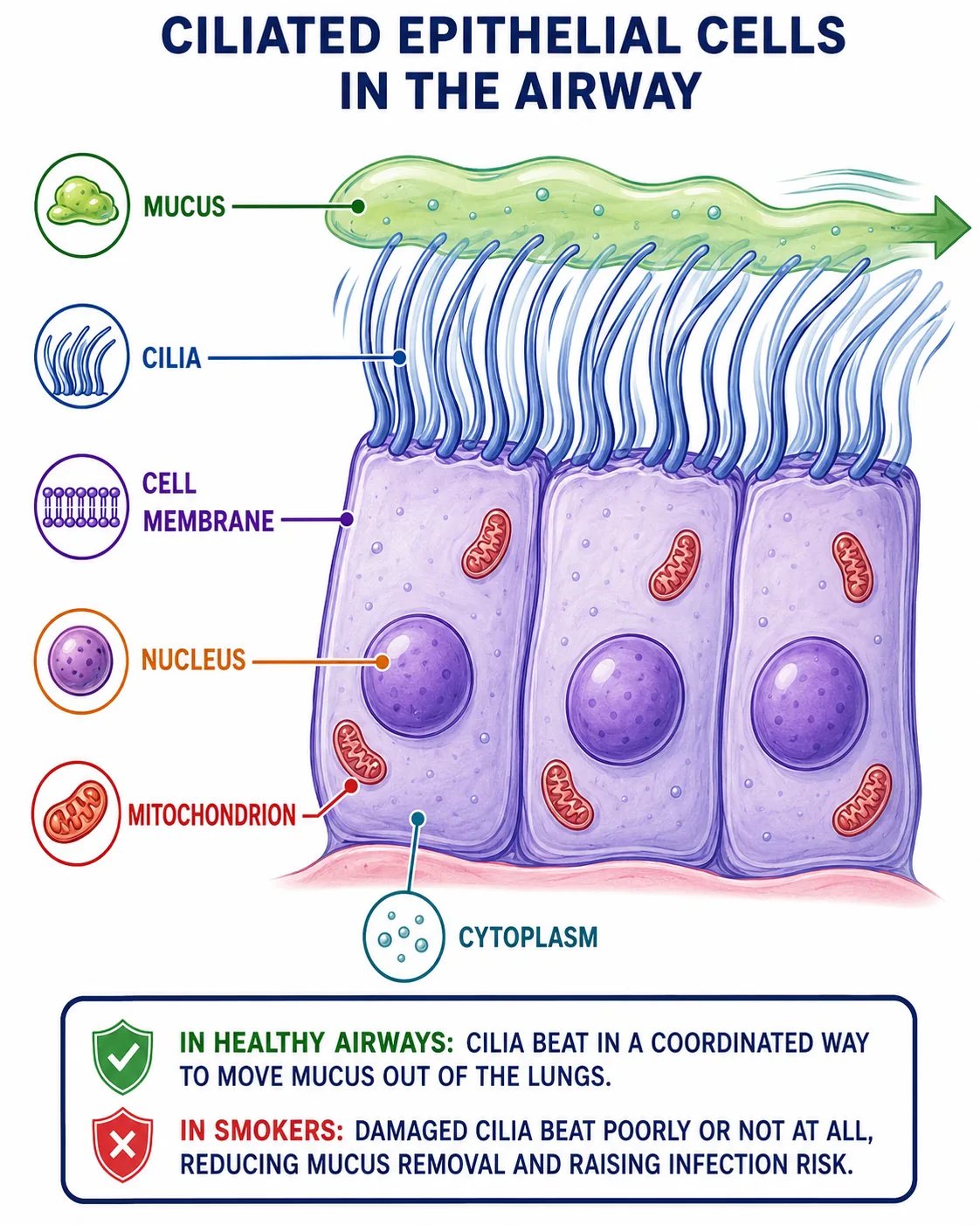
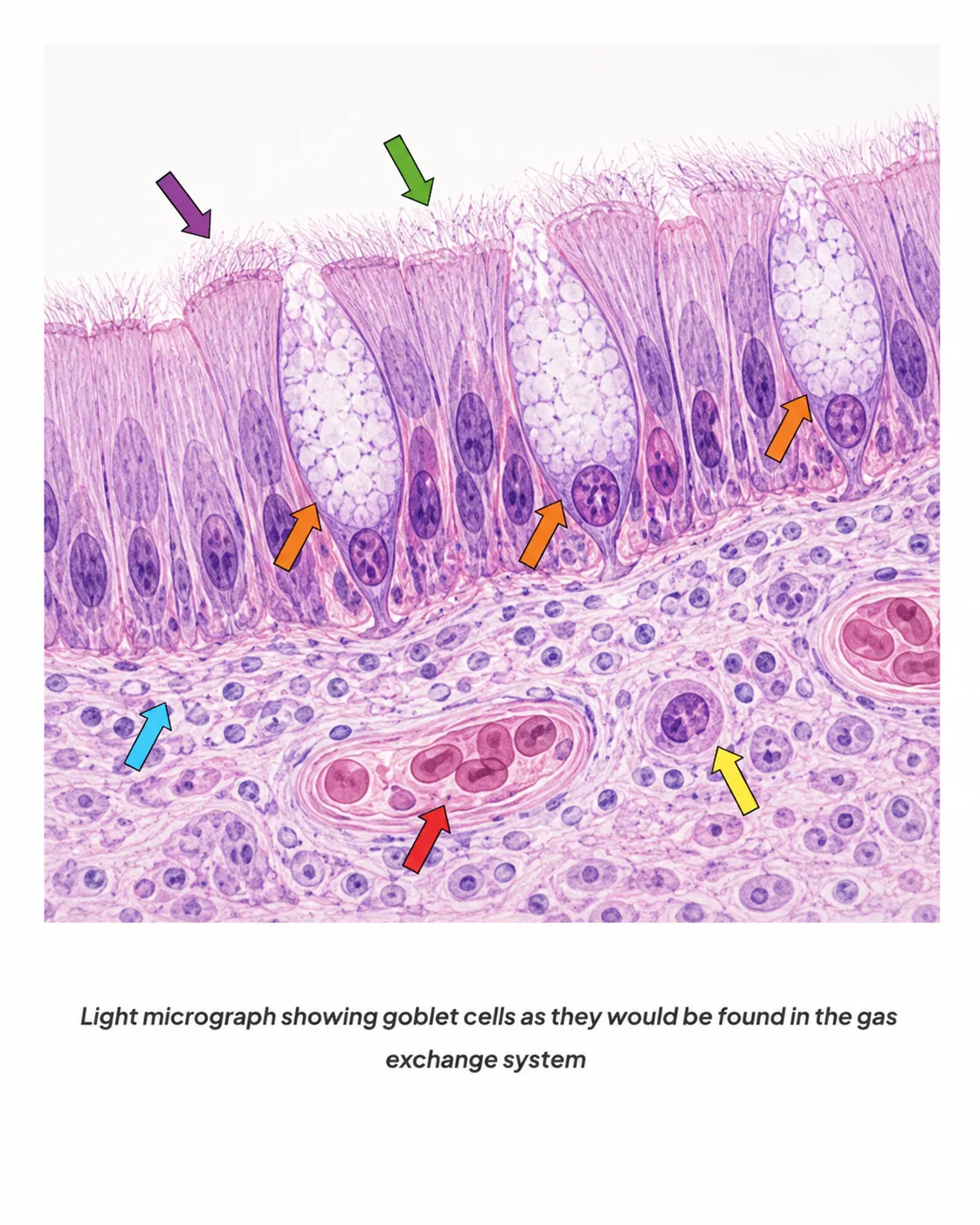
- Tar irritates the airways Goblet cells and mucus glands enlarge and make more mucus.
2Cilia are damaged
- Cilia are damaged Cilia normally beat to sweep mucus and trapped bacteria upwards;
- in smokers they stop working.
3Mucus builds up
- Mucus builds up Mucus blocks the smallest bronchioles and traps microbes, causing repeated infections.
4Smoker's cough
- Smoker's cough The cough is an attempt to clear the mucus that the cilia can no longer move.
Section 3 of 5How emphysema develops
1Frequent infections
- Frequent infections Mucus build-up makes lung infections more common in smokers.
2Phagocytes release elastase
- Phagocytes release elastase White blood cells entering the lungs release an enzyme, elastase, that breaks down elastic fibres in the alveoli.
3Alveoli lose elasticity
- Alveoli lose elasticity They cannot stretch and recoil, and many burst.
4Surface area falls
- Surface area falls Less surface area means less gas exchange, so the person is breathless and wheezy and may need extra oxygen.
Section 4 of 5Key terms
| Term | Meaning |
|---|---|
| Carcinogen | A substance that can cause cancer. |
| Cilia | Tiny hair-like structures on airway cells that beat to move mucus out of the lungs. |
| Emphysema | A lung disease in which alveoli break down, reducing the surface area for gas exchange. |
| Chronic bronchitis | Long-term inflammation of the airways with excess mucus and a persistent cough. |
| COPD | Chronic obstructive pulmonary disease, a combination of chronic bronchitis and emphysema. |
Section 5 of 5Exam technique
1
Saying tar causes emphysema directly. It is repeated infection and the release of elastase that destroys the alveoli.
2
Mixing up the roles of carbon monoxide (reduces oxygen transport) and nicotine (addiction and blood pressure).
3
Writing that carbon monoxide combines with haemoglobin temporarily. It binds irreversibly, so those molecules cannot carry oxygen.
4
Forgetting that smoking is also a risk factor for heart disease, not just lung disease.