1.1.3Structure and Functions in Living Organisms: Part 2
The Blood
5 min read 13 parts Lesson 4 of 29 1 quiz
Section 1 of 13Components of blood


- Four components
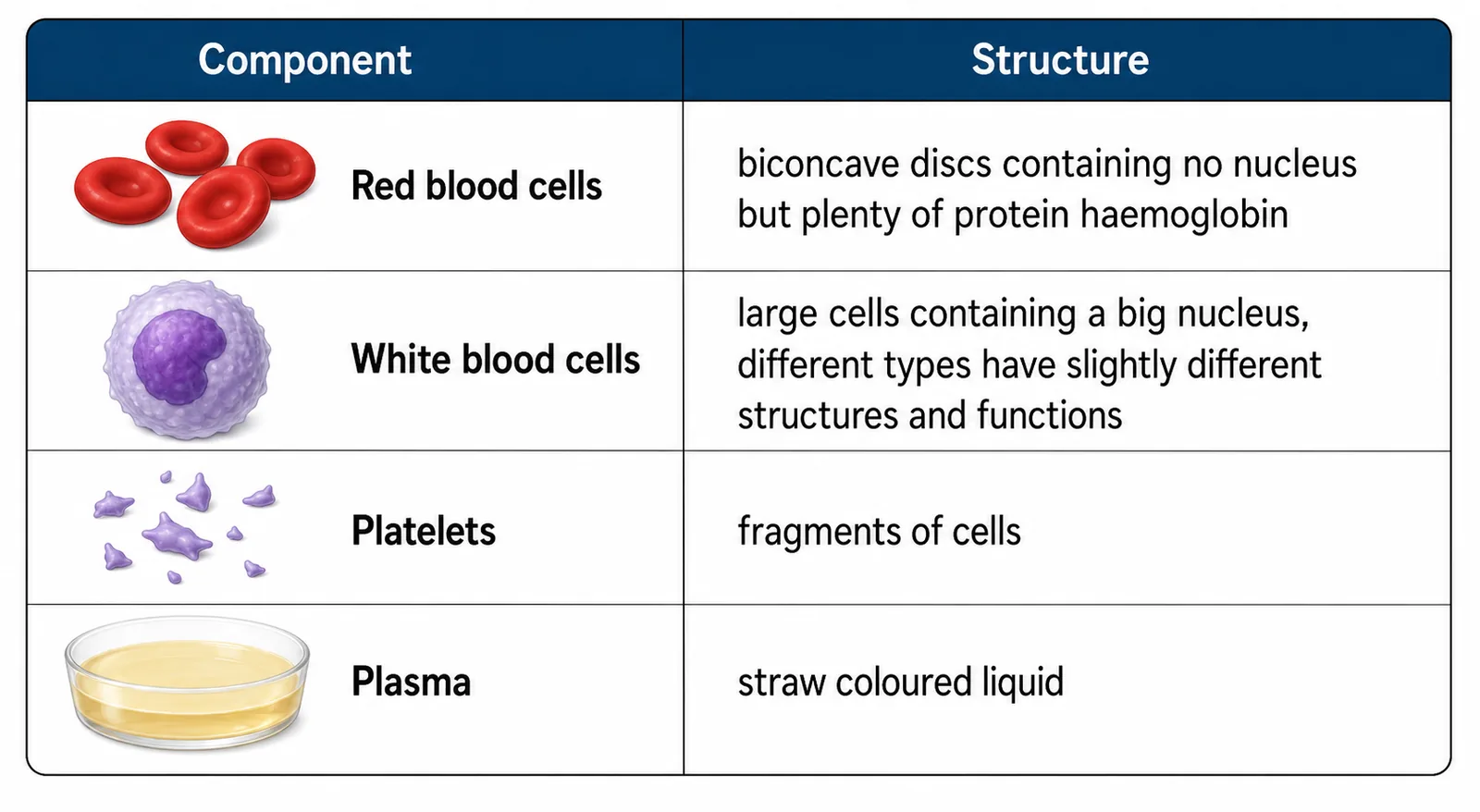
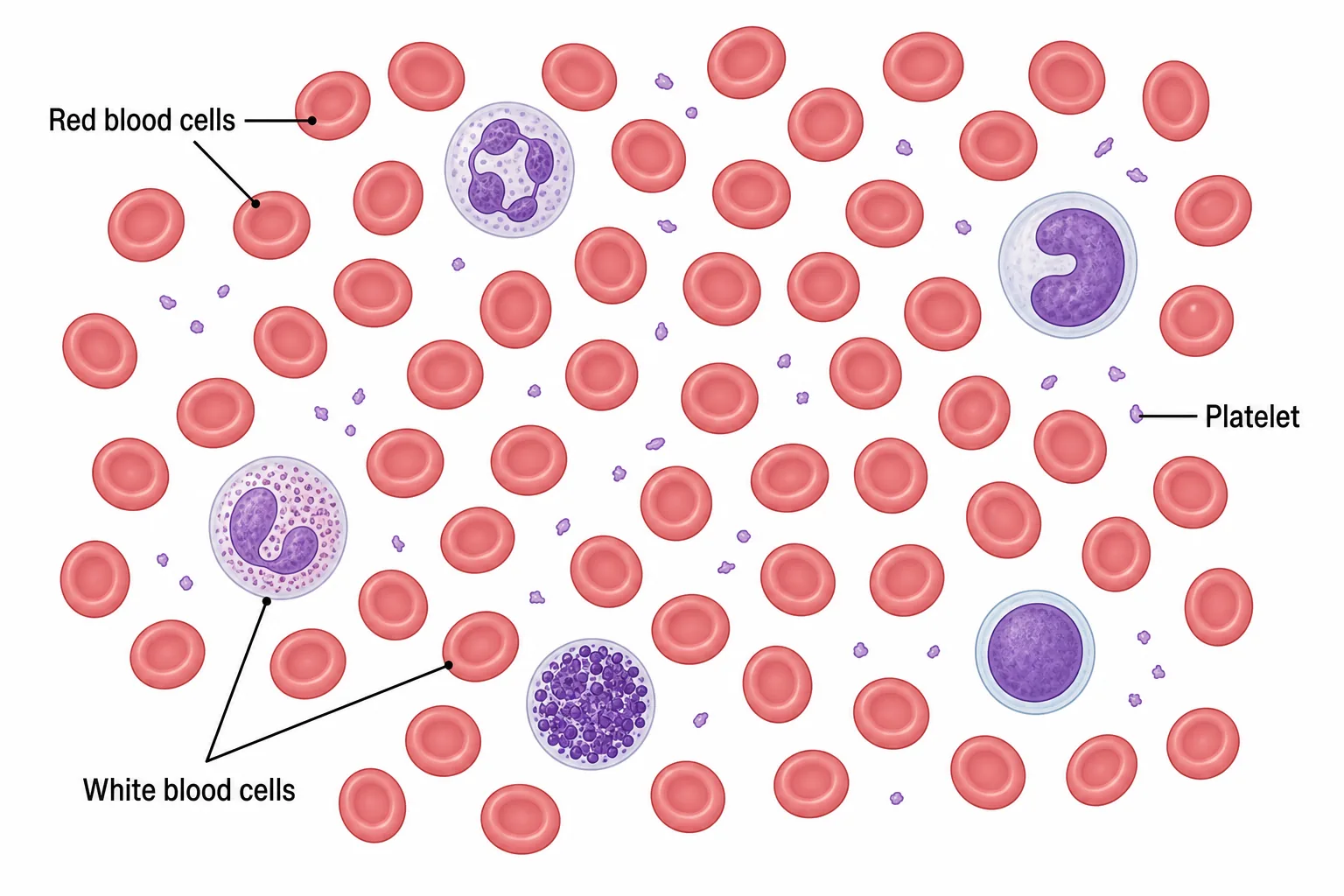
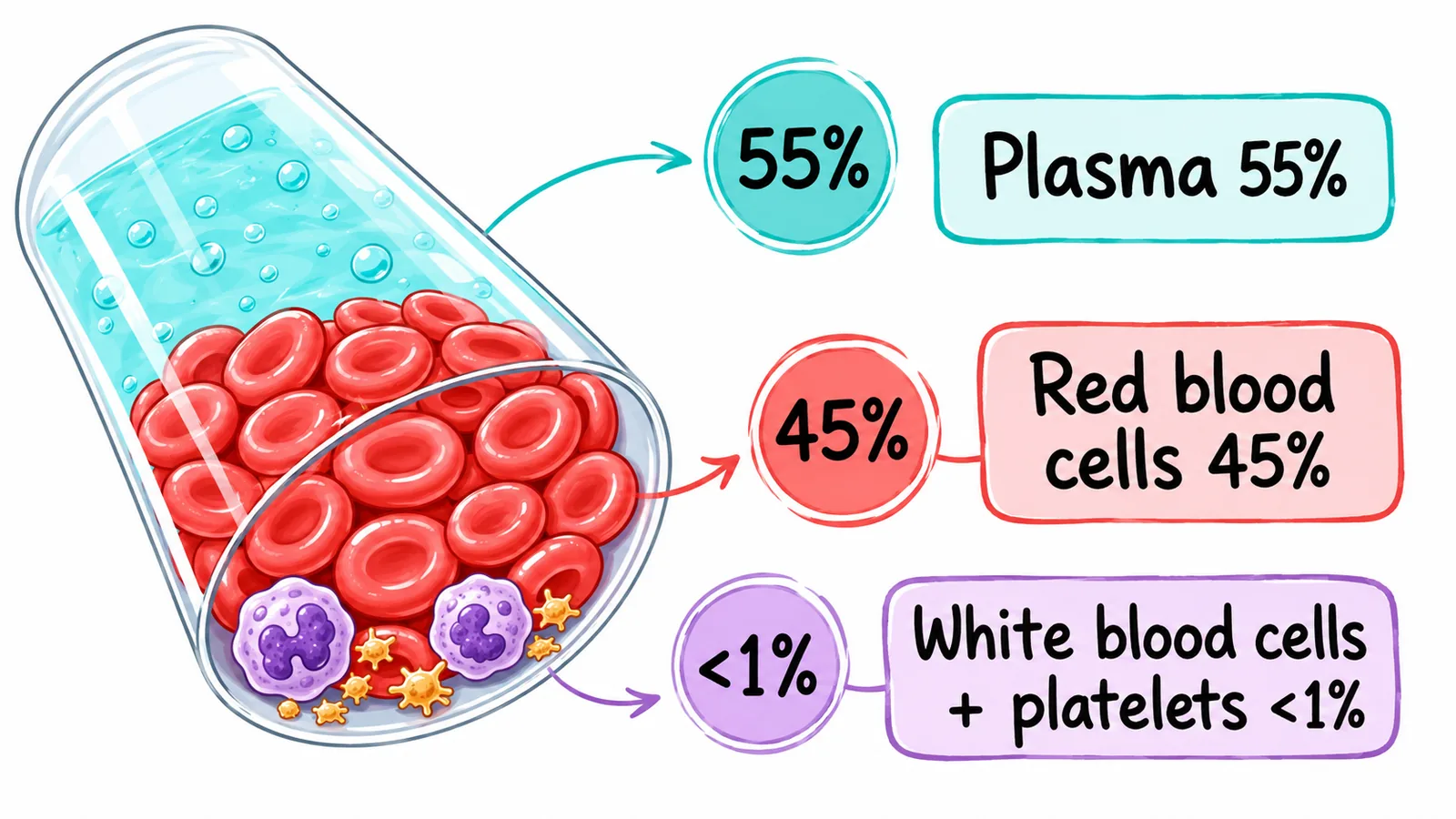
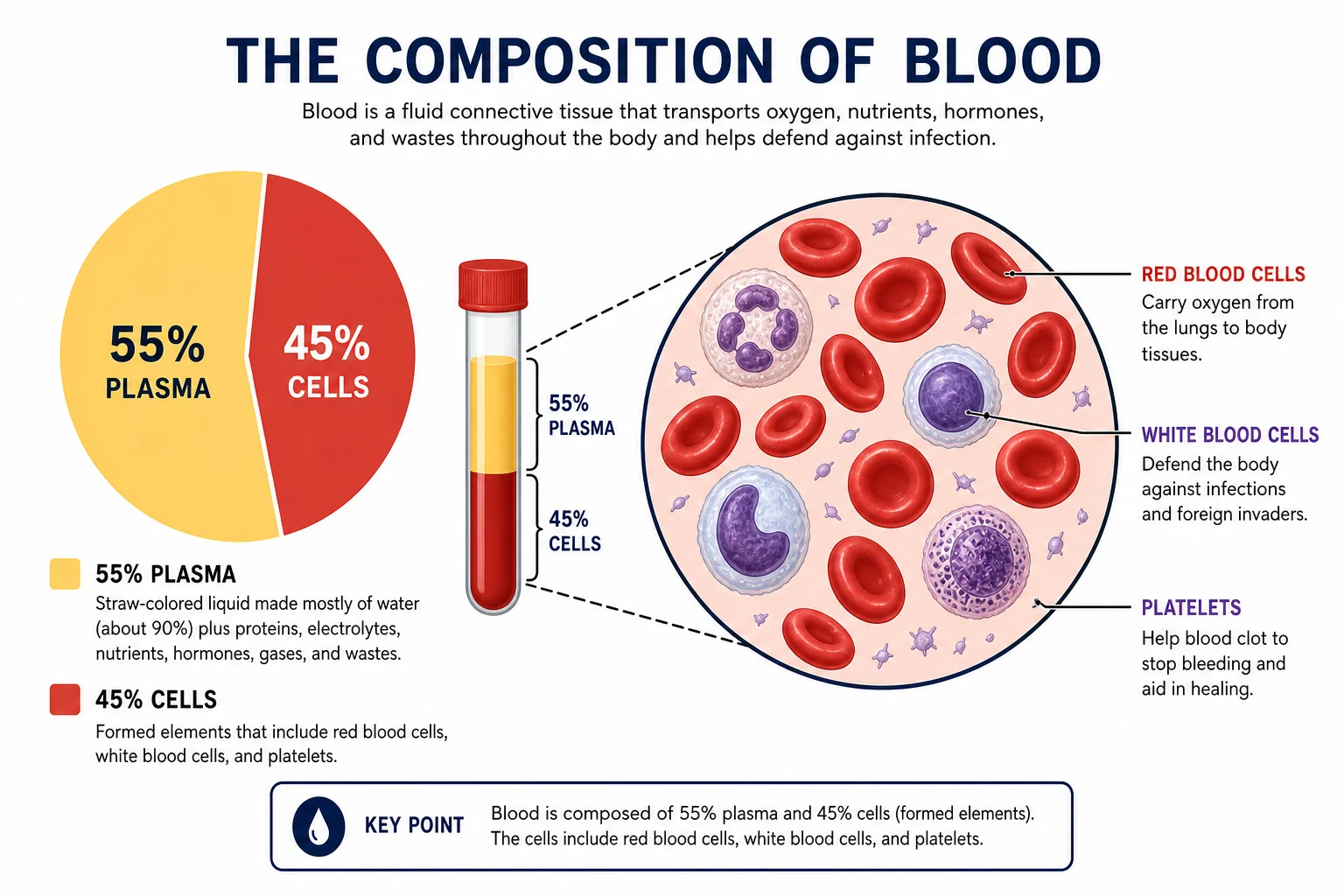
- blood consists of red blood cells, white blood cells, platelets and plasma.
Section 2 of 13Structure of each component
| Component | Structure |
|---|---|
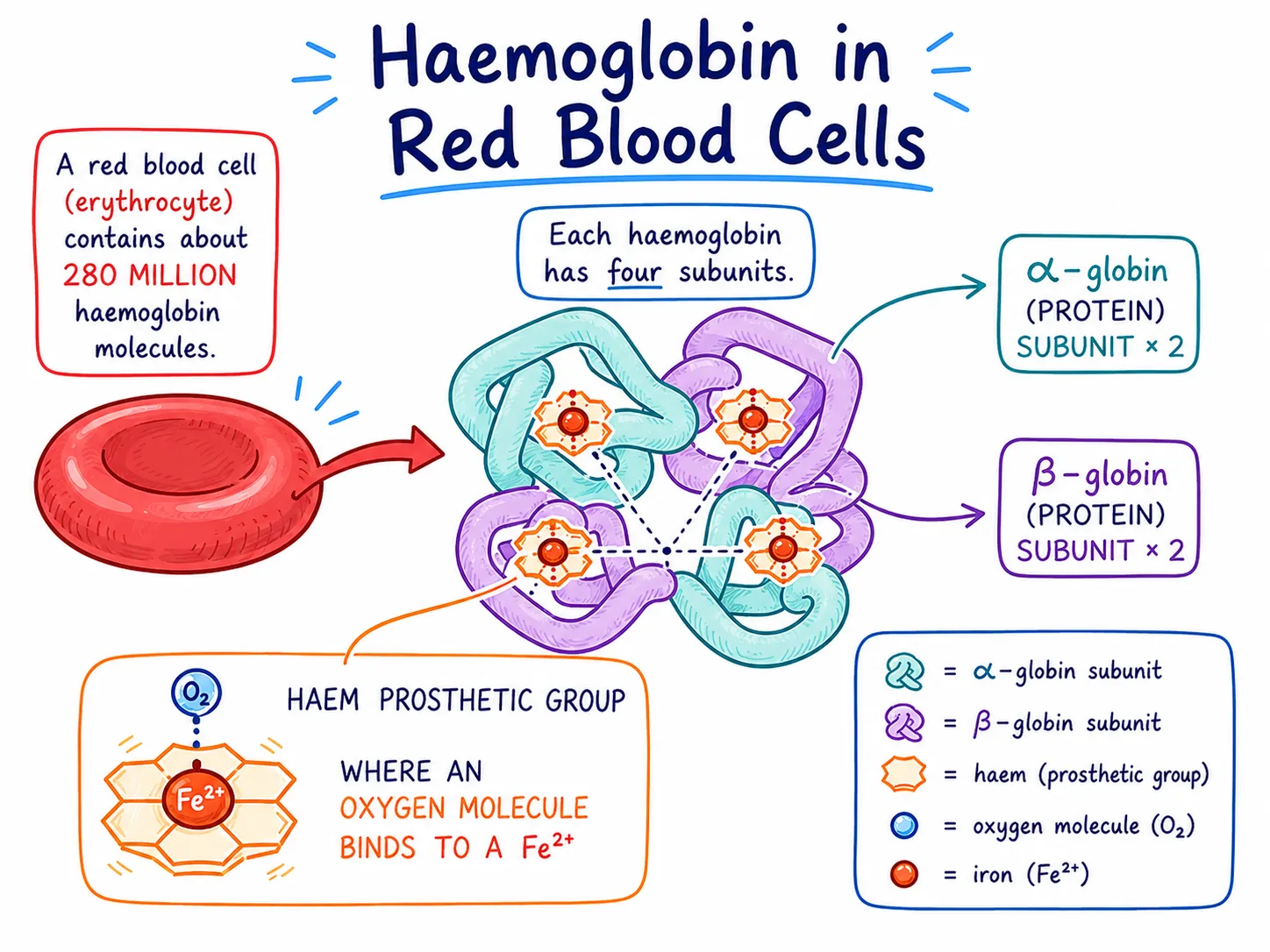
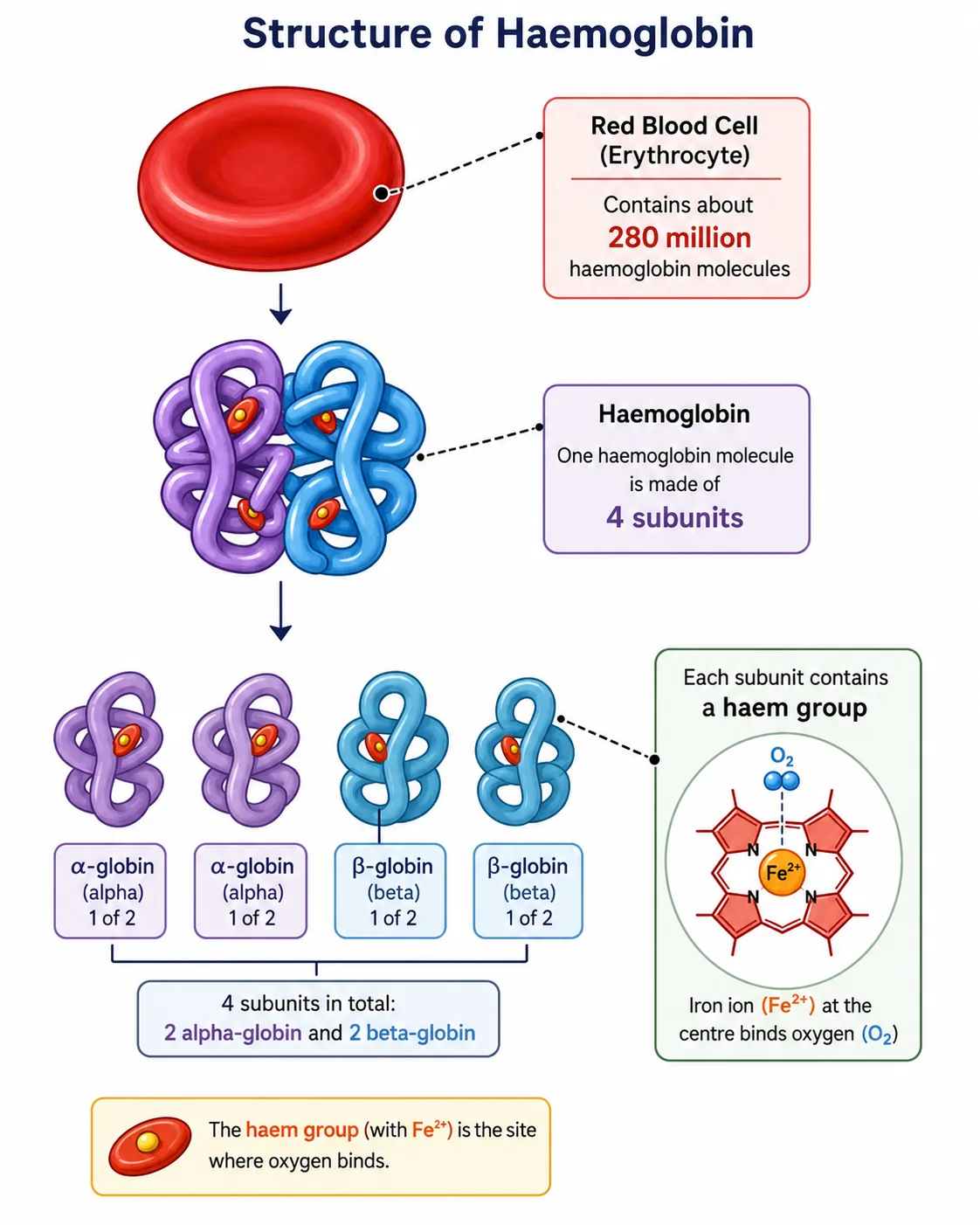
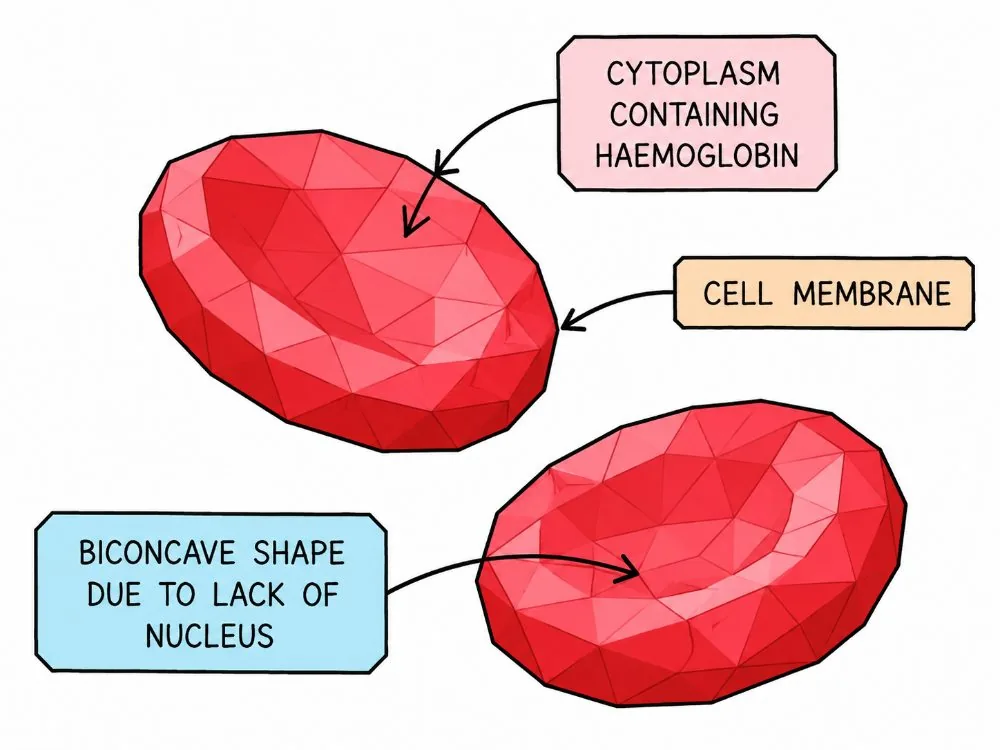
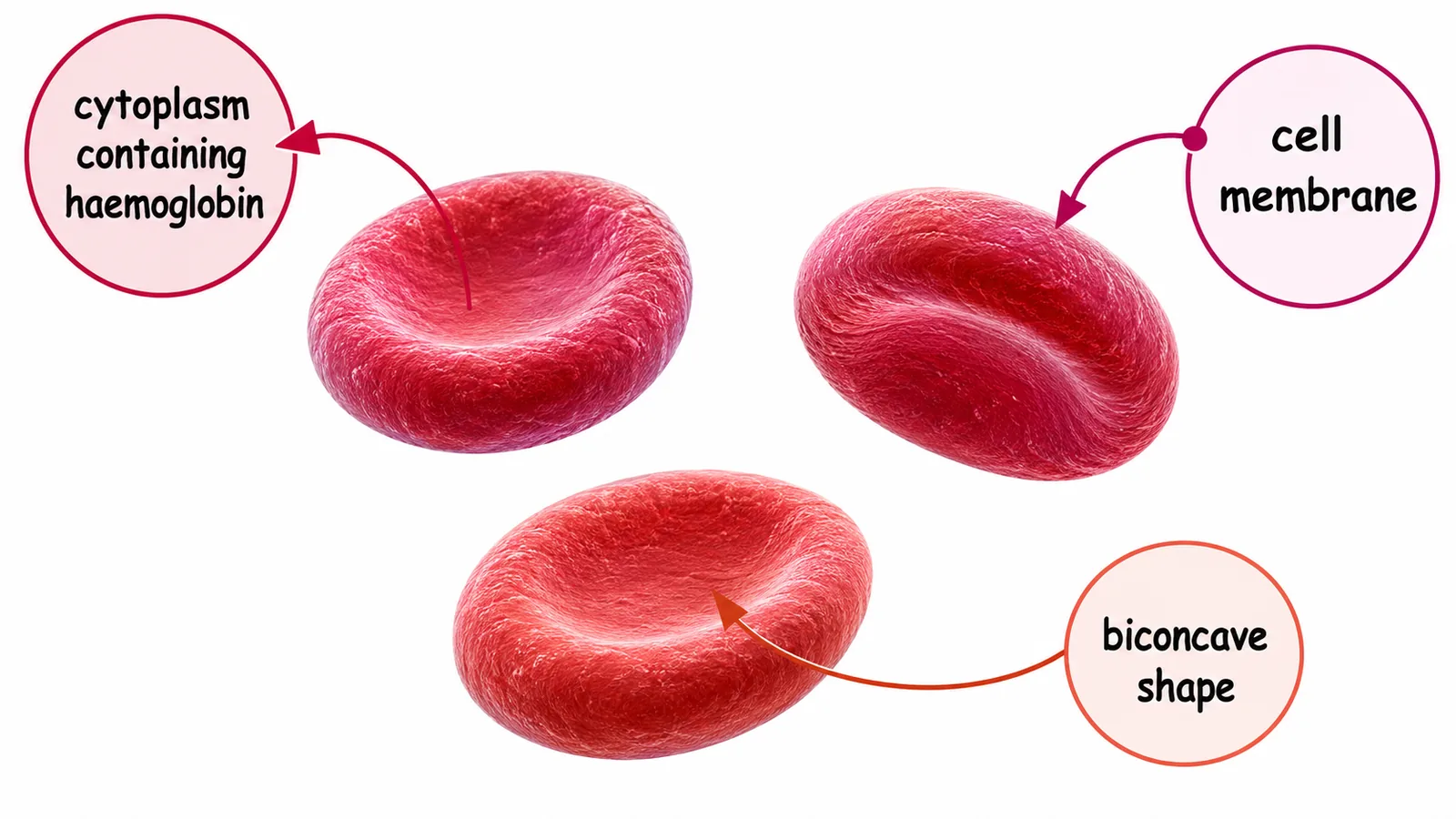
| Red blood cells | Biconcave discs with no nucleus, containing a large amount of the protein haemoglobin |
| White blood cells | Large cells with a large nucleus, with different types (phagocytes and lymphocytes) having slightly different structures |
| Platelets | Small fragments of cells with no nucleus |
| Plasma | Pale yellow (straw-coloured) liquid made mostly of water |
Section 3 of 13Identifying red blood cells





Shape
- A biconcave disc providing a large surface area to volume ratio for efficient oxygen diffusion.
Nucleus
- Absent in mature red blood cells to maximize available space for hemoglobin.
Section 4 of 13Identifying white blood cells

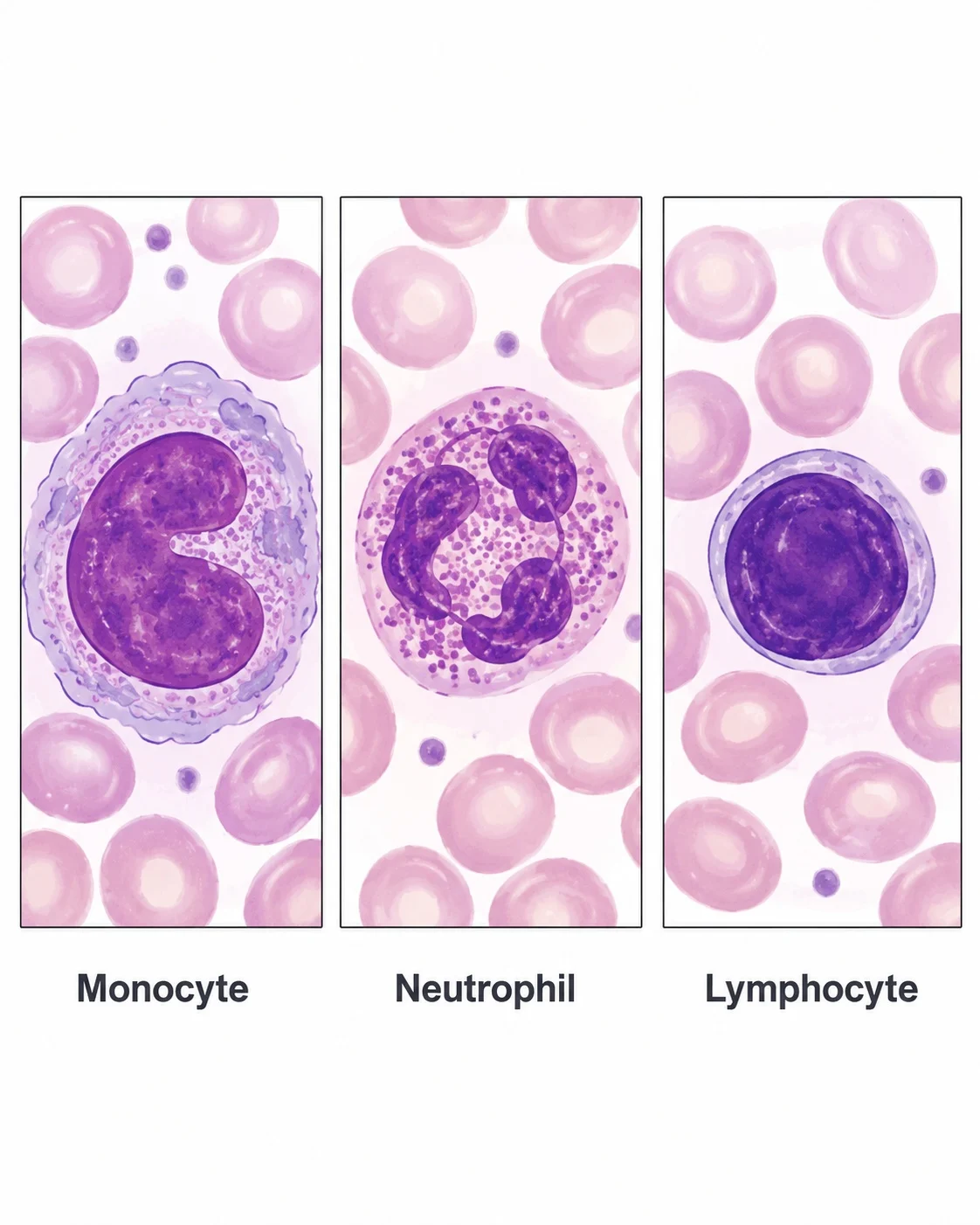
Shape
- Shape usually round.
Nucleus
- Nucleus present, and large.
Size
- Size they are the largest blood cells.
Section 5 of 13Types of white blood cell
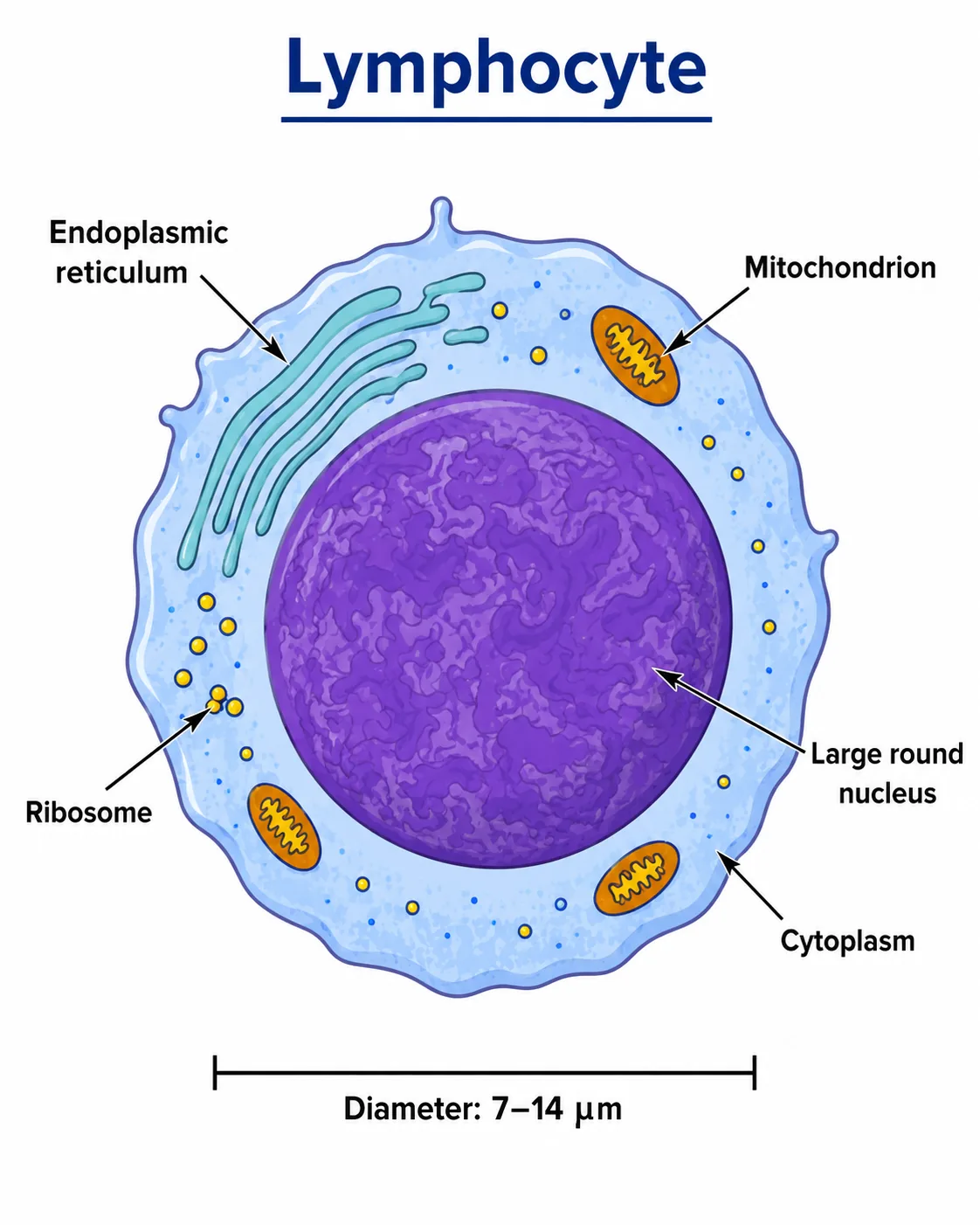
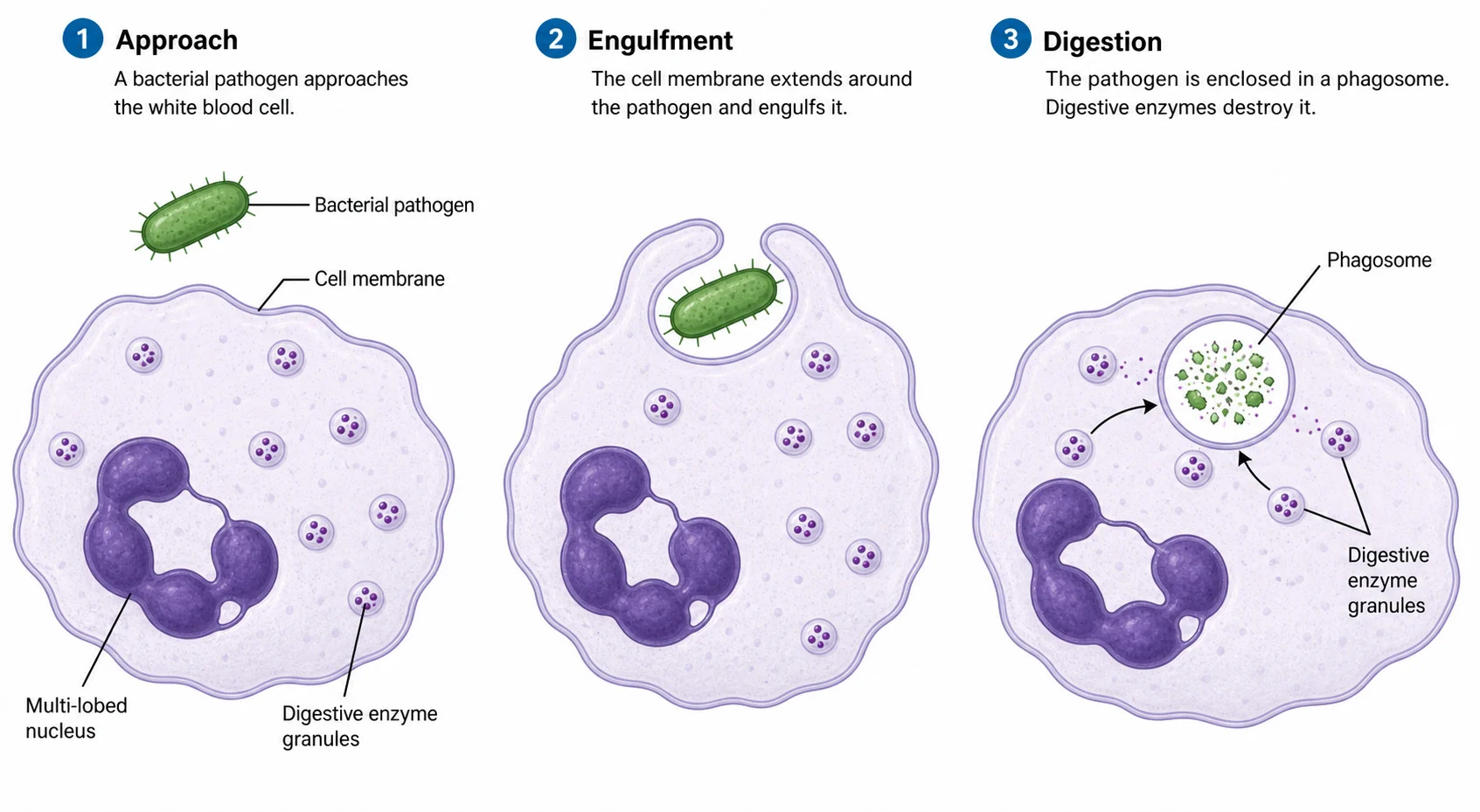
Types of white blood cell
Phagocytes
- Phagocytes have a multi-lobed nucleus and granular cytoplasm.
Lymphocytes
- Lymphocytes have a large round nucleus that fills nearly the whole cell and clear cytoplasm with no granules.
Section 6 of 13Platelets
Size
- Size much smaller than either type of cell.
Nature
- Nature fragments of cells, not whole cells.
Section 7 of 13Plasma carries
Blood cells
- Blood cells the red cells, white cells and platelets.
Nutrients
- Nutrients such as glucose and amino acids.
Waste
- Waste such as urea and carbon dioxide.
Other substances
- Other substances ions and hormones, and heat.
Section 8 of 13Where blood cells are made
- Bone marrow
- red blood cells, phagocytes, lymphocytes and platelets are made in it.
Section 9 of 13More from the specification
More from the specification
Muscle
- Tissue that contracts to cause movement.
Ventricle
- A heart chamber that pumps blood out.
Circulatory system
- The organ system that transports blood.
Deoxygenated blood
- Blood with little oxygen.
Coronary artery
- An artery that supplies the heart muscle.
Oxygenated blood
- Blood carrying a lot of oxygen.
Pulmonary artery
- The artery that takes blood from the heart to the lungs.
Artery
- A vessel that carries blood away from the heart at high pressure.
Pressure
- Force acting on a unit area.
Valve
- A flap that stops blood flowing backwards.
Activity
- The rate at which the nuclei in a sample decay.
Capillary
- Very small blood vessel with a wall one cell thick.
Oxygen
- Gas that relights a glowing splint.
Section 10 of 13More on this topic
| Component | Structure | Function |
|---|---|---|
| Red blood cells | Biconcave discs with no nucleus, full of haemoglobin | Carry oxygen |
| White blood cells | Large cells with a nucleus | Defend against pathogens |
| Platelets | Small cell fragments with no nucleus | Take part in clotting |
| Plasma | Pale yellow liquid, mostly water | Carries cells and dissolved substances |
Section 11 of 13More from the specification
- Venous valves preventing retrograde flow
- semilunar pocket valves along systemic veins assist muscular pumps returning portal blood toward the metabolic liver.
Section 12 of 13Key terms
| Term | Meaning |
|---|---|
| Plasma | The pale yellow liquid part of blood. |
| Red blood cell | A biconcave cell with haemoglobin that carries oxygen. |
| White blood cell | A cell with a nucleus that defends against pathogens. |
| Platelet | A cell fragment involved in clotting. |
| Haemoglobin | The protein in red blood cells that binds oxygen. |
| Phagocyte | A white blood cell that engulfs pathogens. |
| Lymphocyte | A white blood cell that makes antibodies. |
Section 13 of 13Exam technique
1
Saying red blood cells have a nucleus — they have none.
2
Calling platelets complete cells — they are cell fragments.
3
Saying plasma is made of cells — it is mostly water.
4
Mixing up phagocytes and lymphocytes — phagocytes engulf and lymphocytes make antibodies.