1.1.5Structure and Functions in Living Organisms: Part 2
Structure and Function of the Heart
5 min read 9 parts Lesson 6 of 29 1 quiz
Section 1 of 9Why we need a nervous system

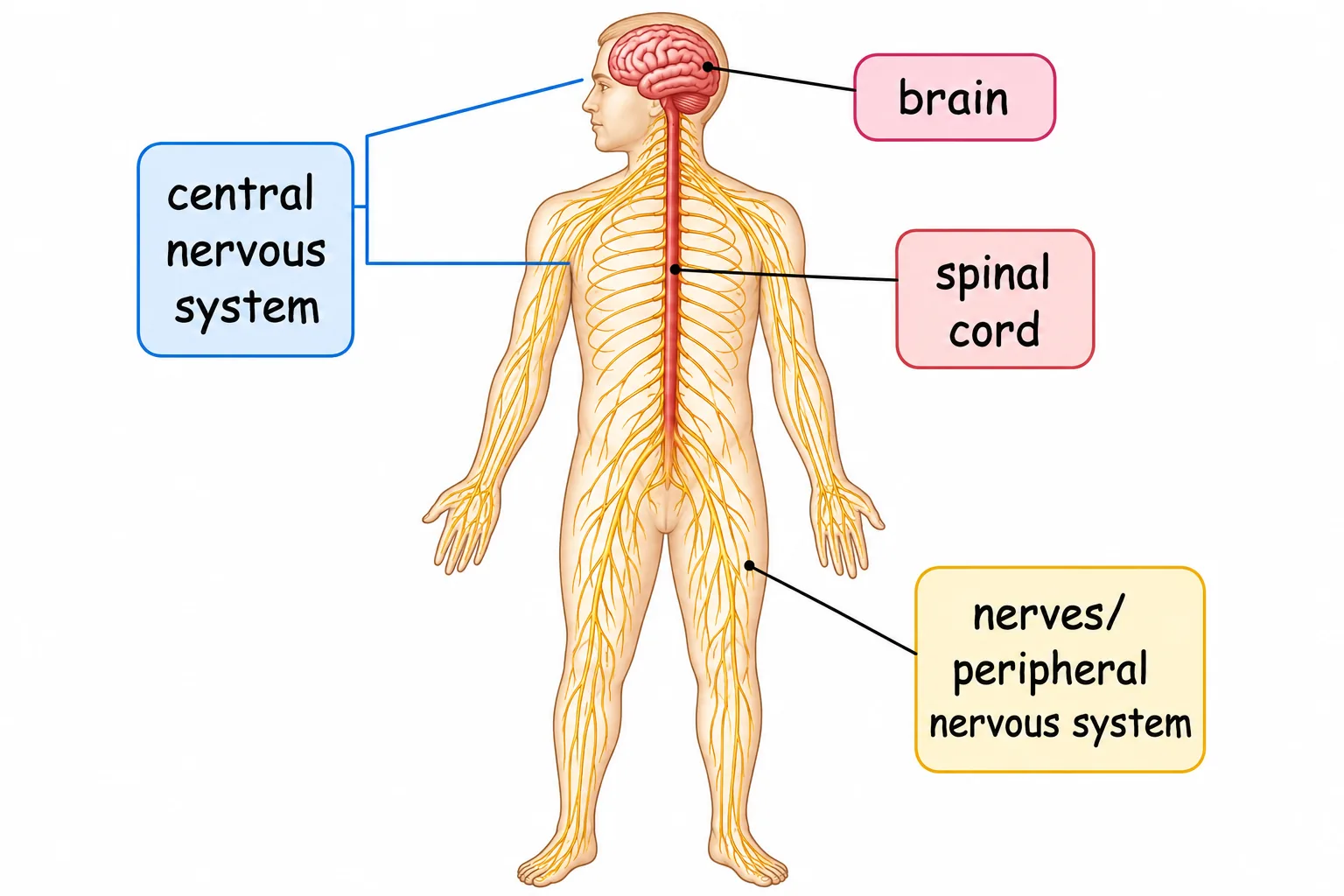
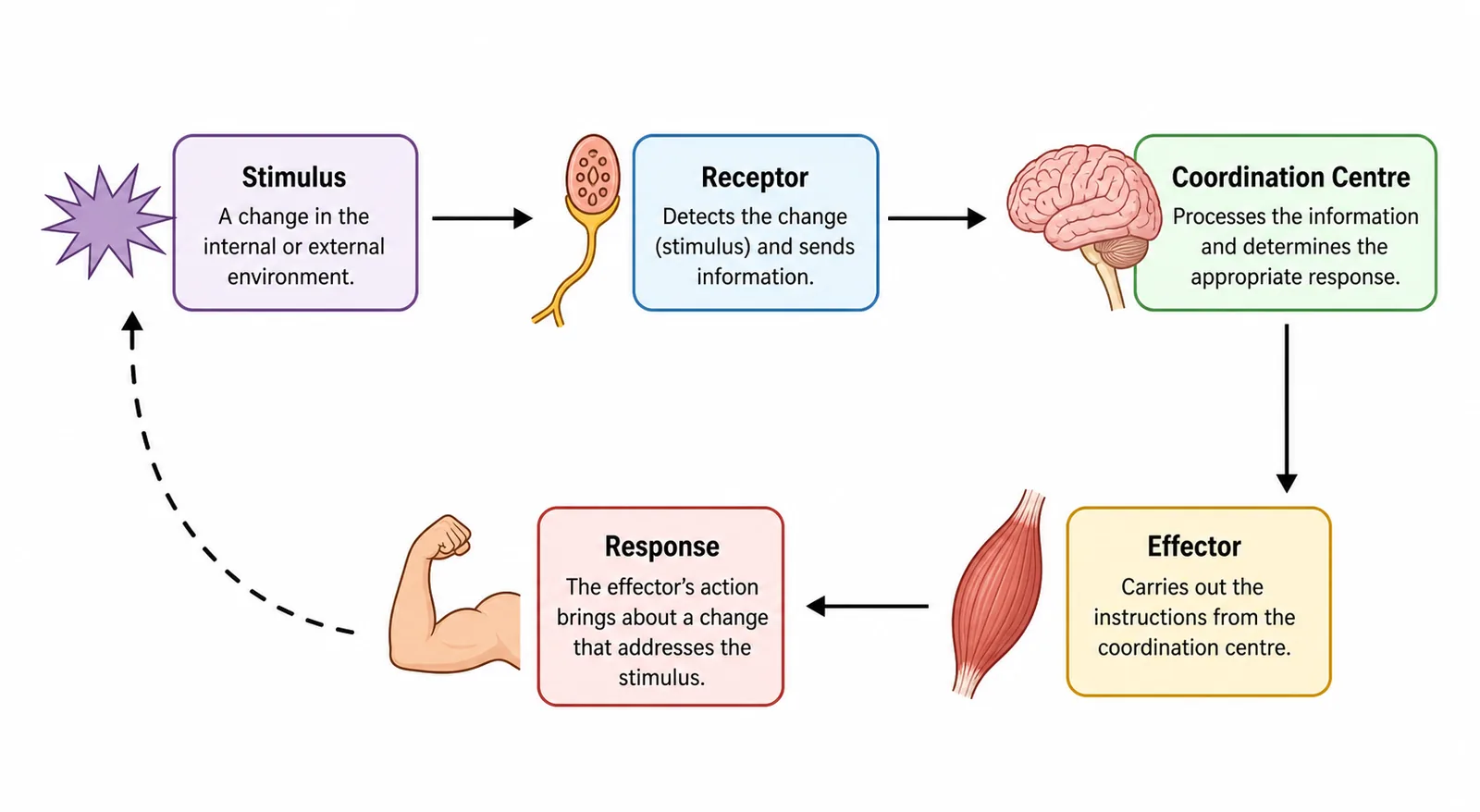
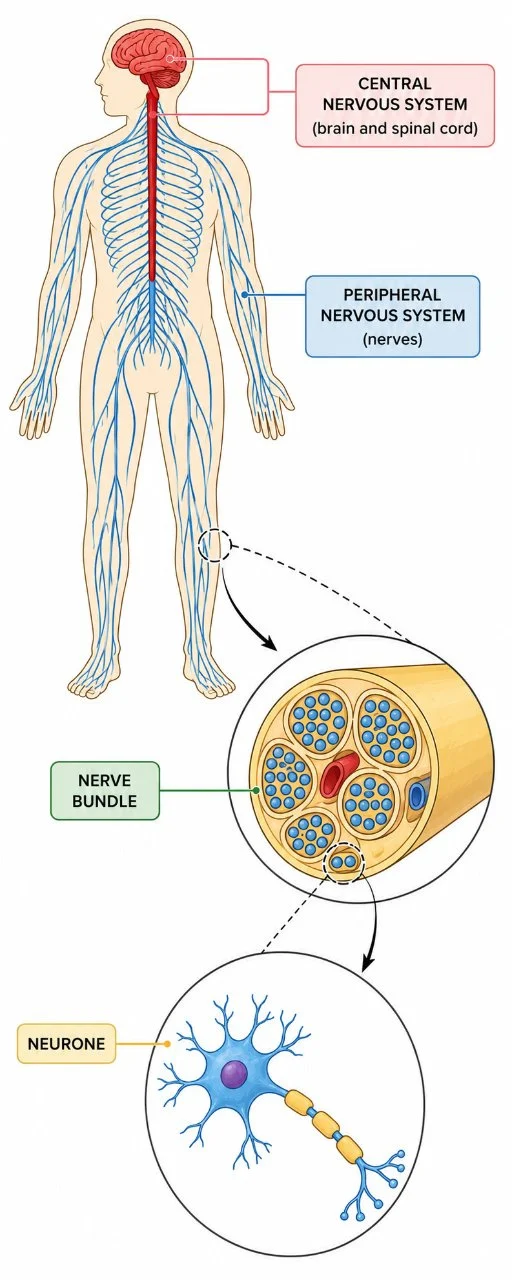
The nervous system allows humans to react to their surroundings and to coordinate their behaviour.
- and the CNS coordinates a response carried out by an effector.
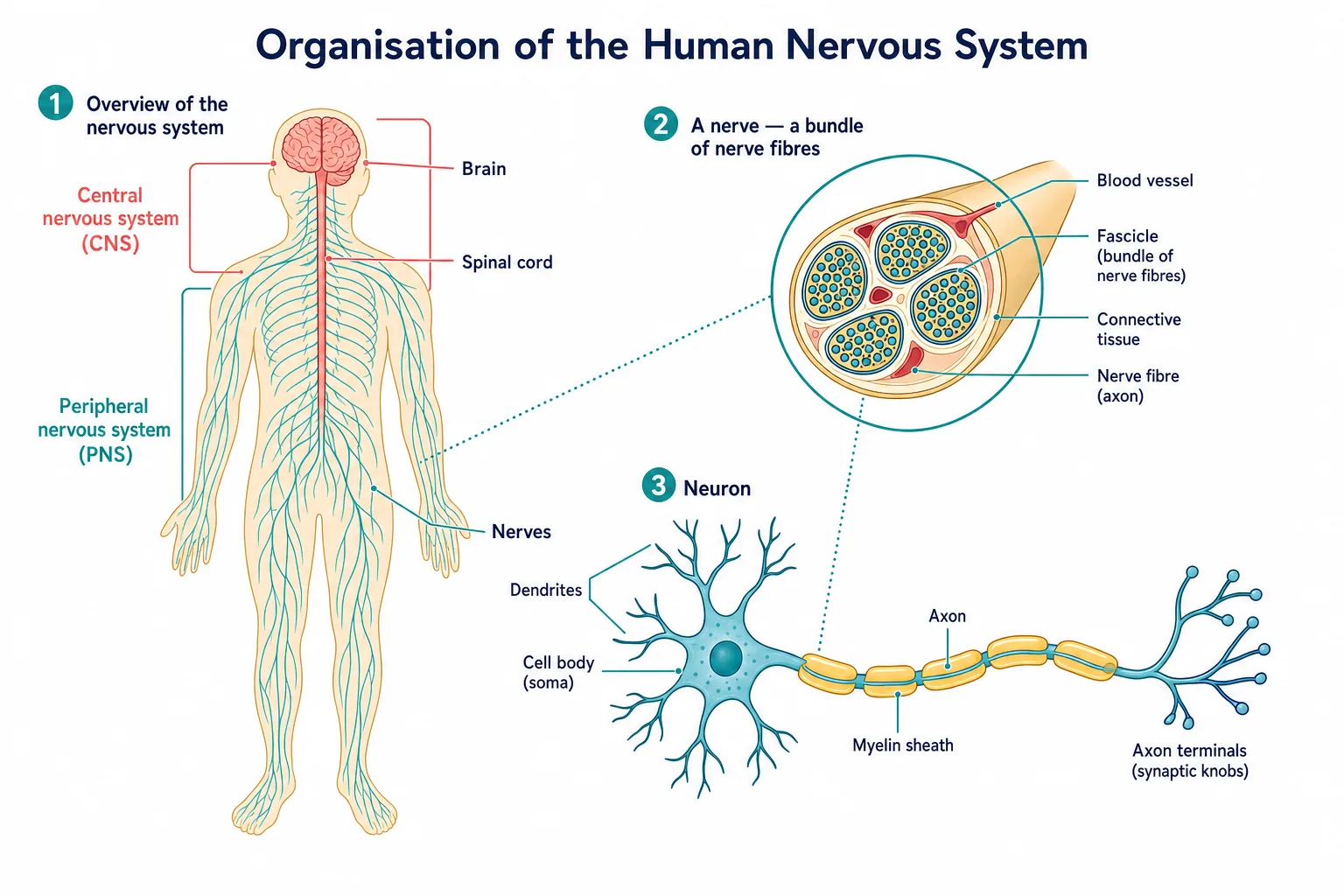
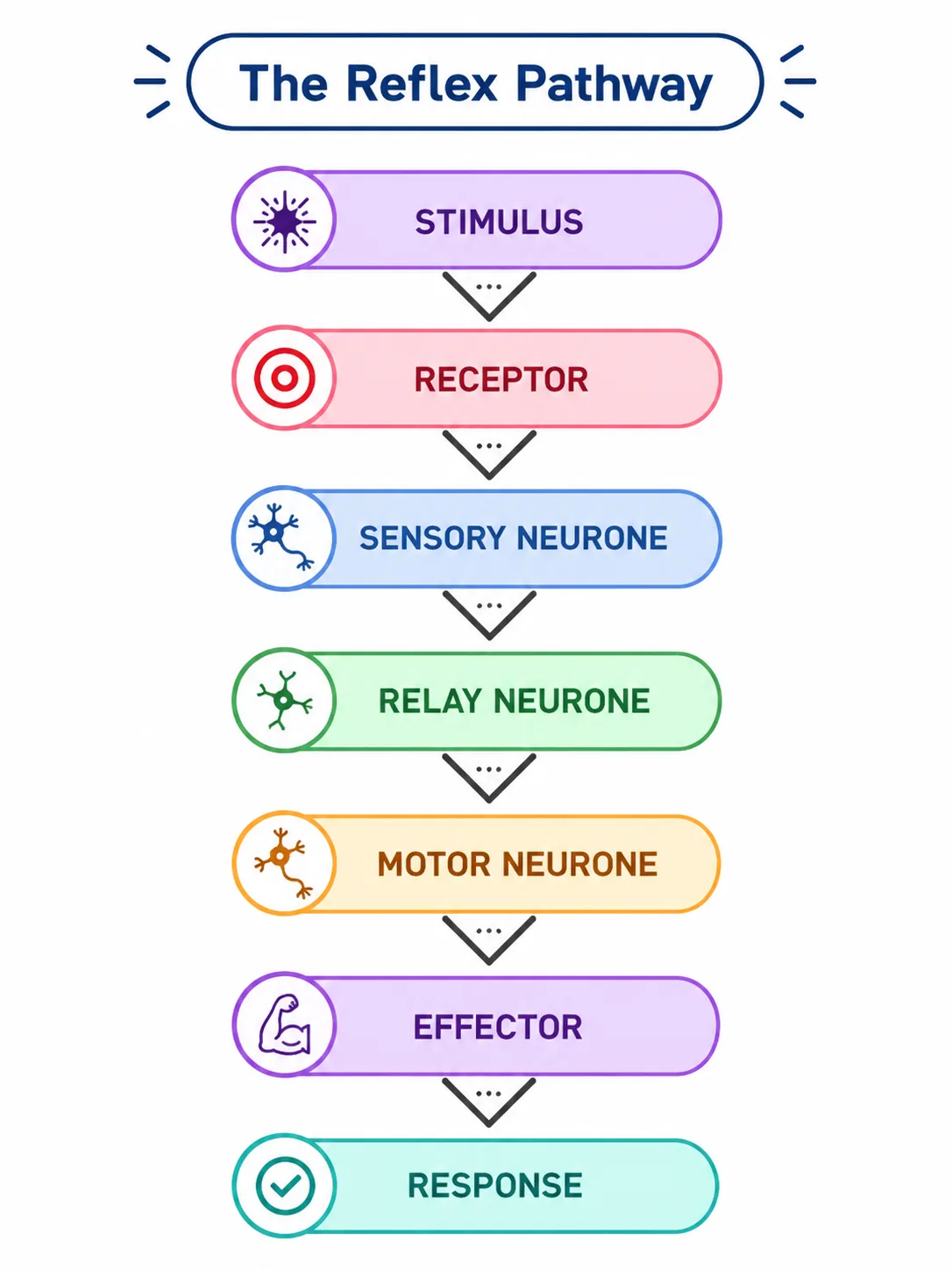
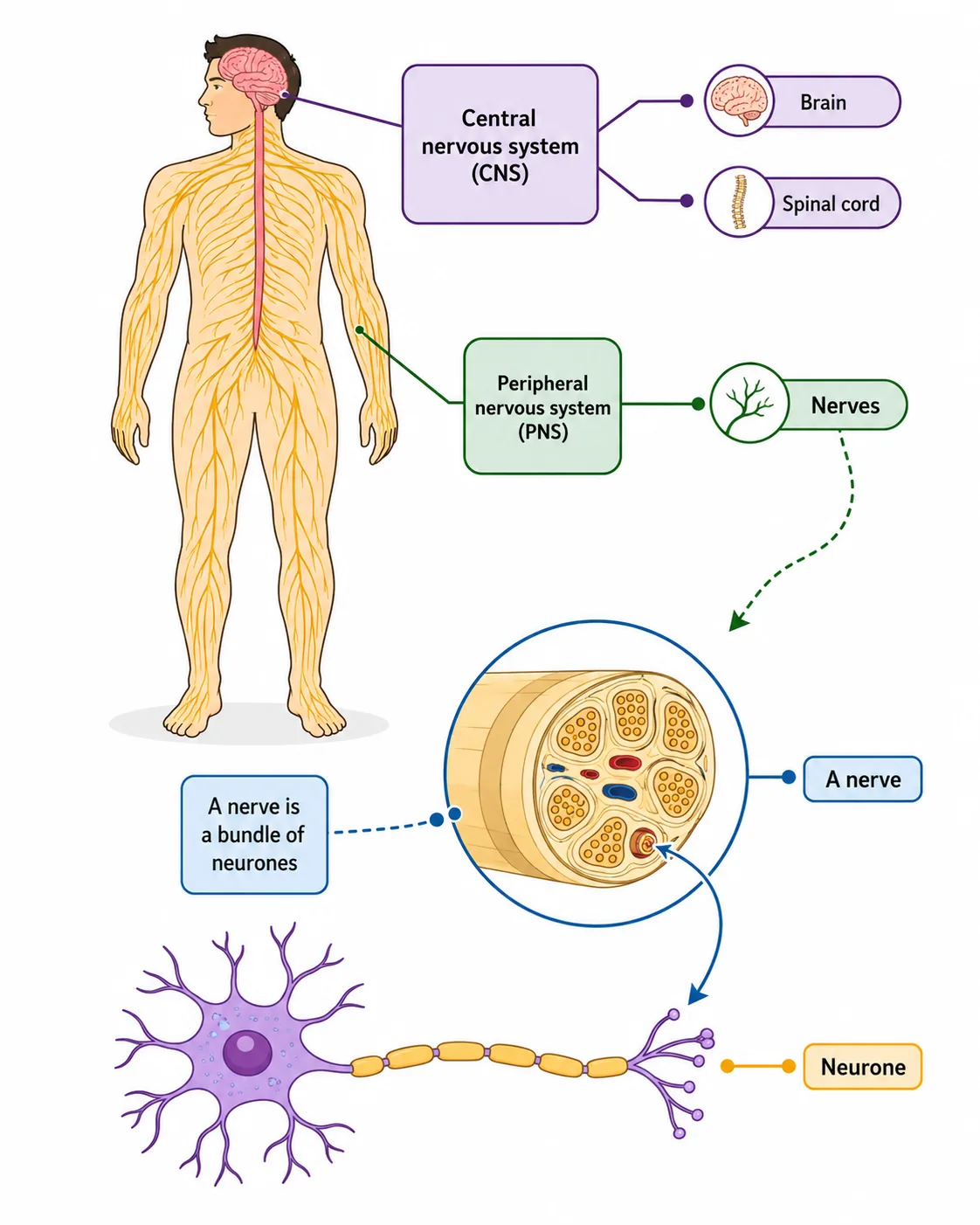
The CNS consists of the brain and spinal cord. The nerves leading to and from it make up the peripheral nervous system. The route followed by information is: stimulus → receptor → sensory neurone → CNS (coordinator) → motor neurone → effector → response.
Section 2 of 9Receptors
Receptors are groups of specialised cells that detect particular stimuli. Different receptors are sensitive to different types of energy or chemical.
| Receptor location | Stimulus detected |
|---|---|
| Eye (retina) | Light intensity and colour |
| Ear | Sound and changes in position of the head (balance) |
| Tongue | Chemicals in food (taste) |
| Nose | Chemicals in the air (smell) |
| Skin | Touch, pressure, pain, temperature |
Receptors convert the energy of the stimulus into electrical impulses. These impulses travel along neurones, the cells that make up nerves.
Section 3 of 9Neurones and their adaptations
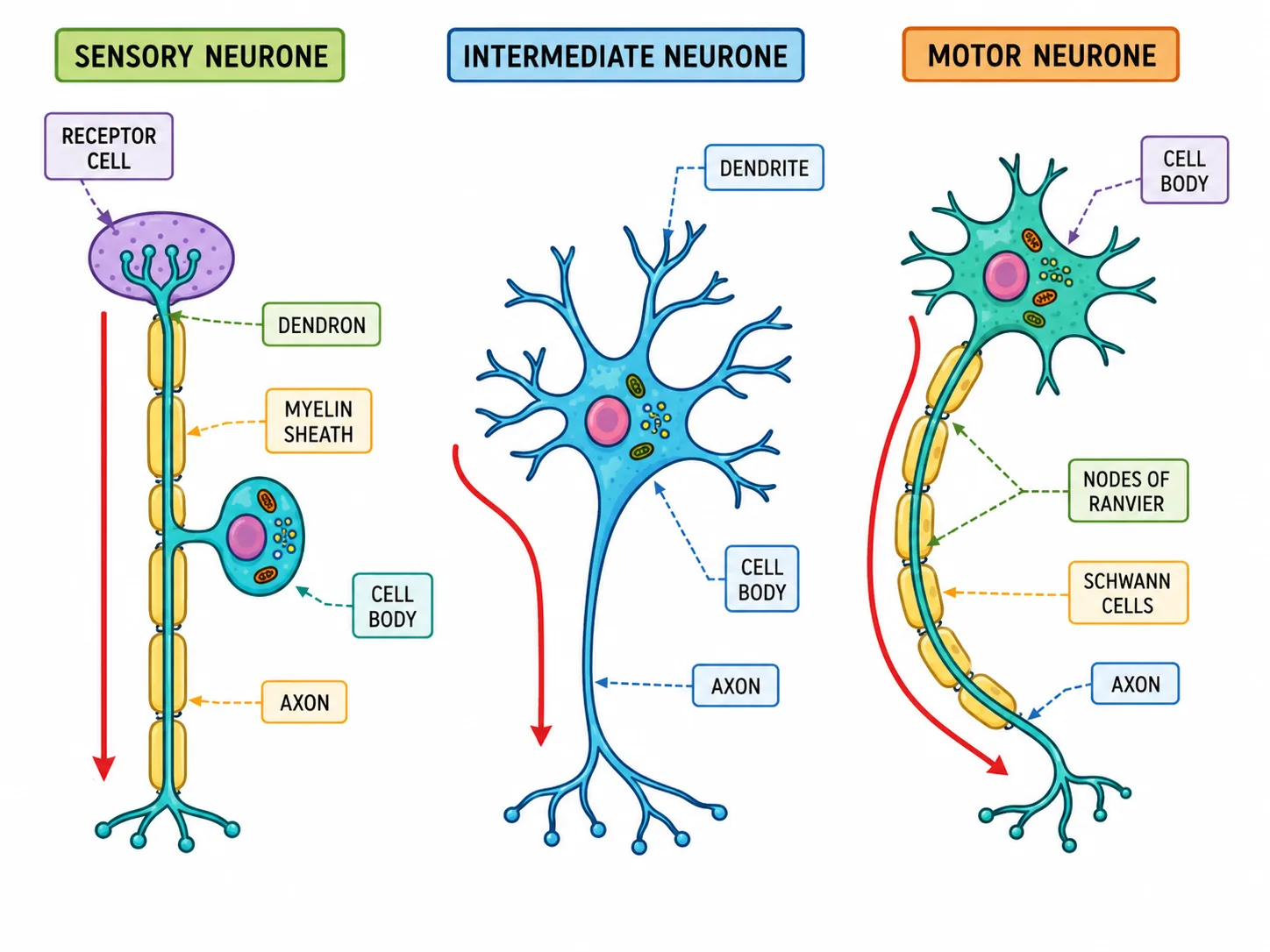
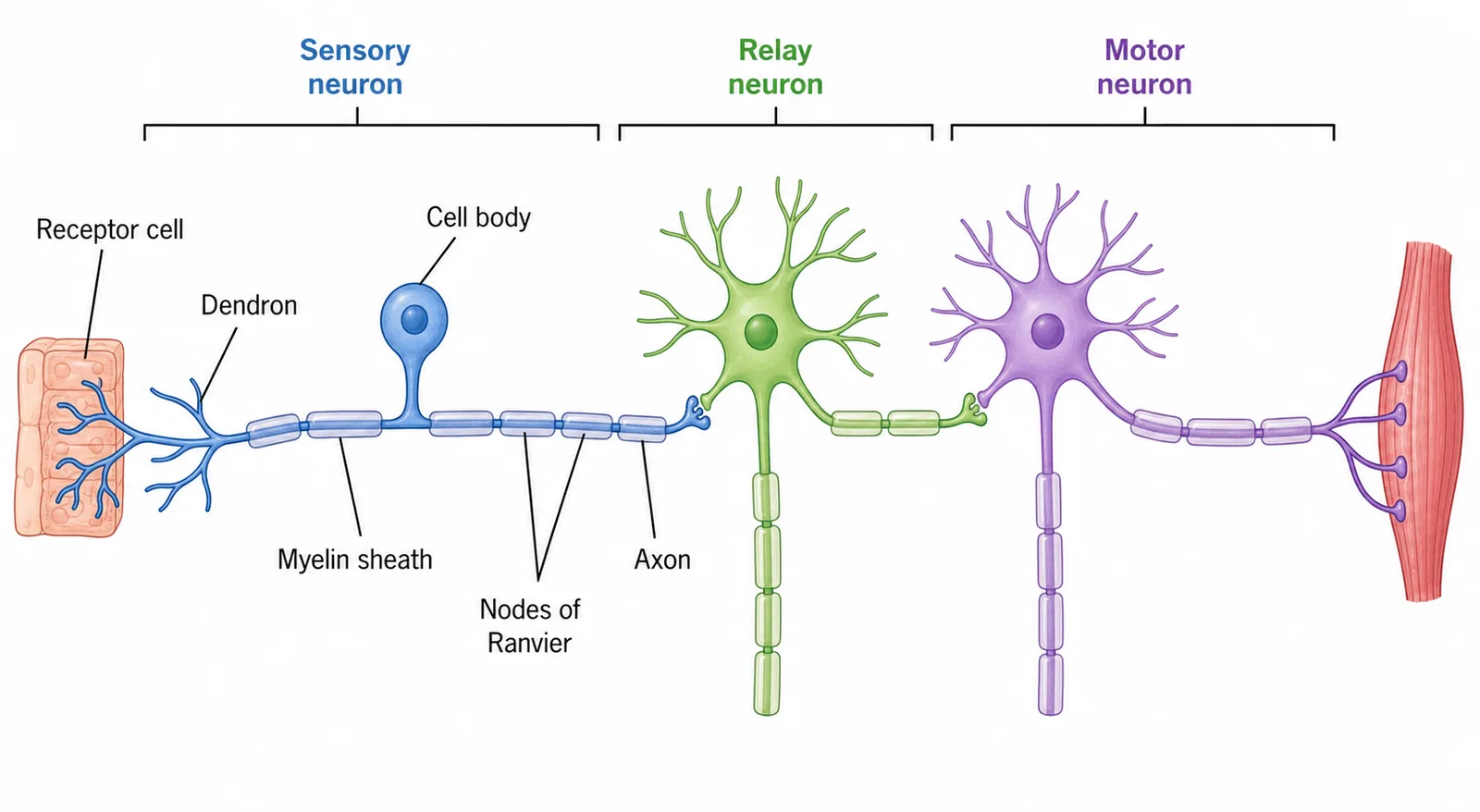
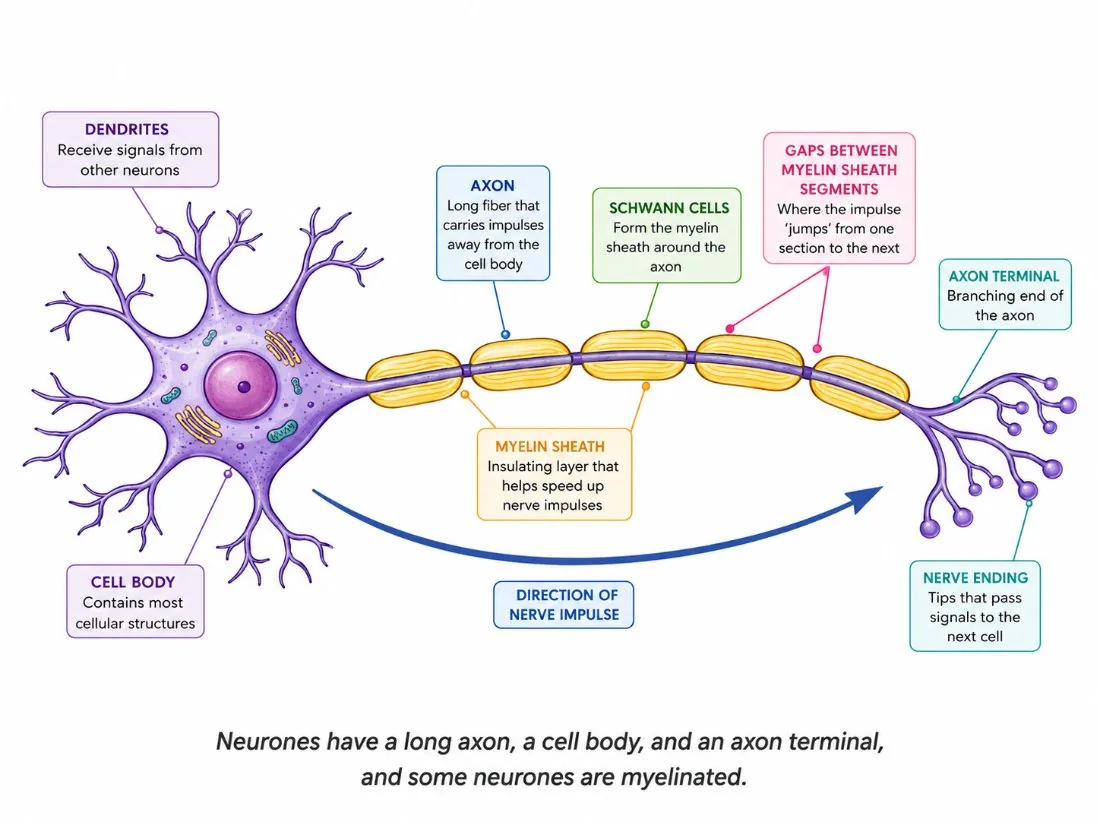
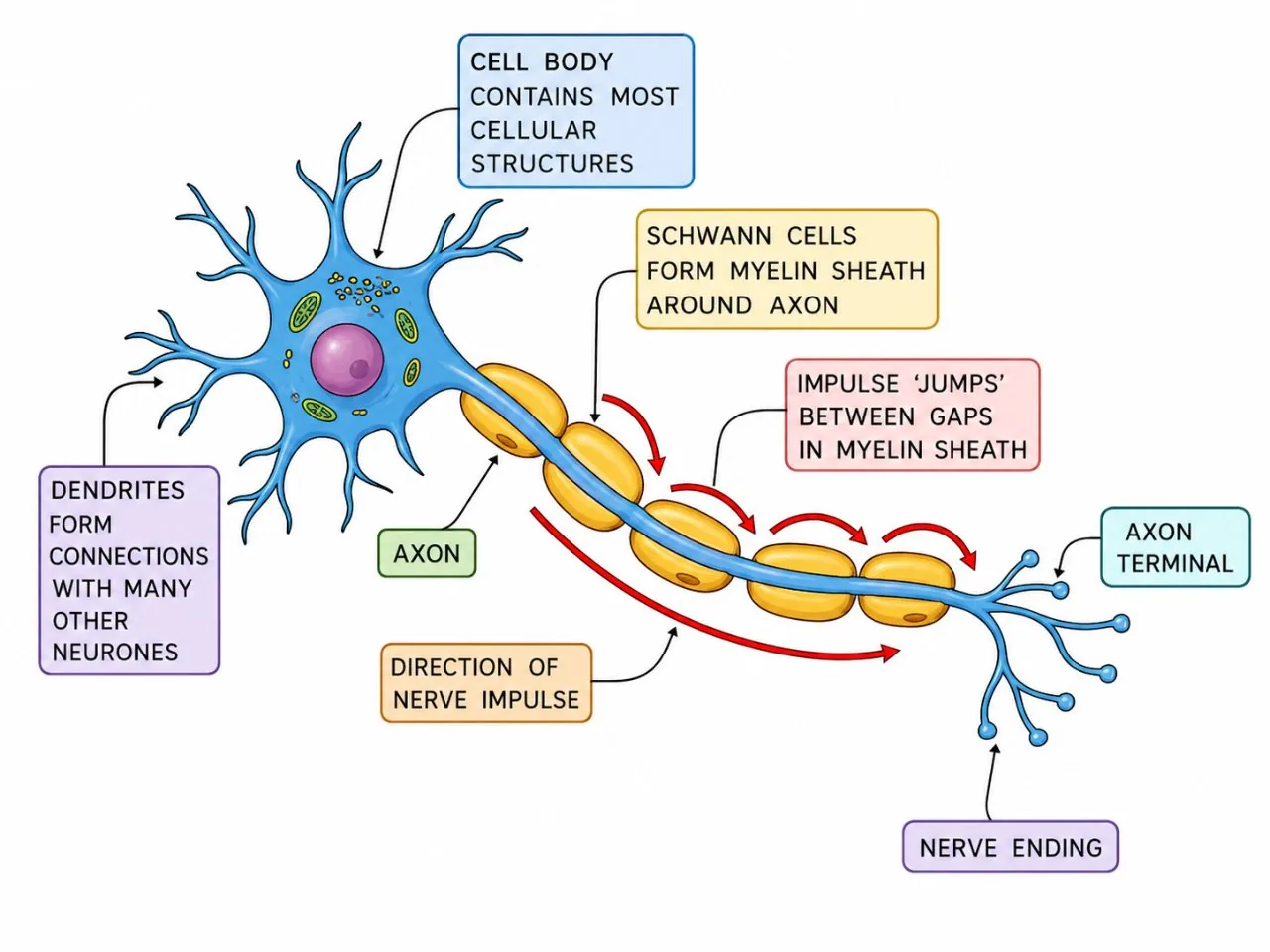
There are three types of neurone, each with a different job.
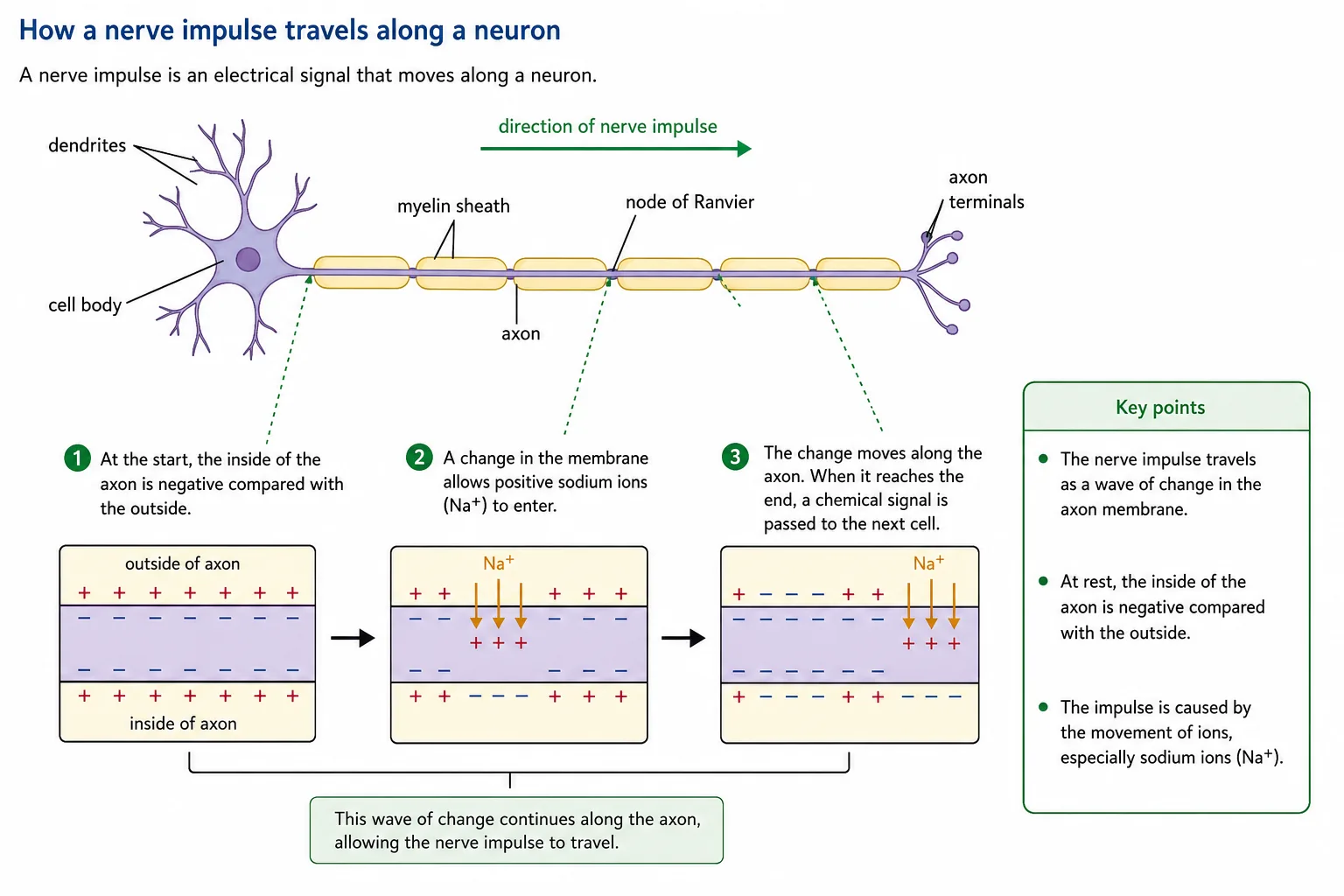
A neurone has a long thin axon that carries the impulse over long distances, and the axon is often covered by a fatty myelin sheath that insulates it and speeds up transmission.
Section 4 of 9Synapses

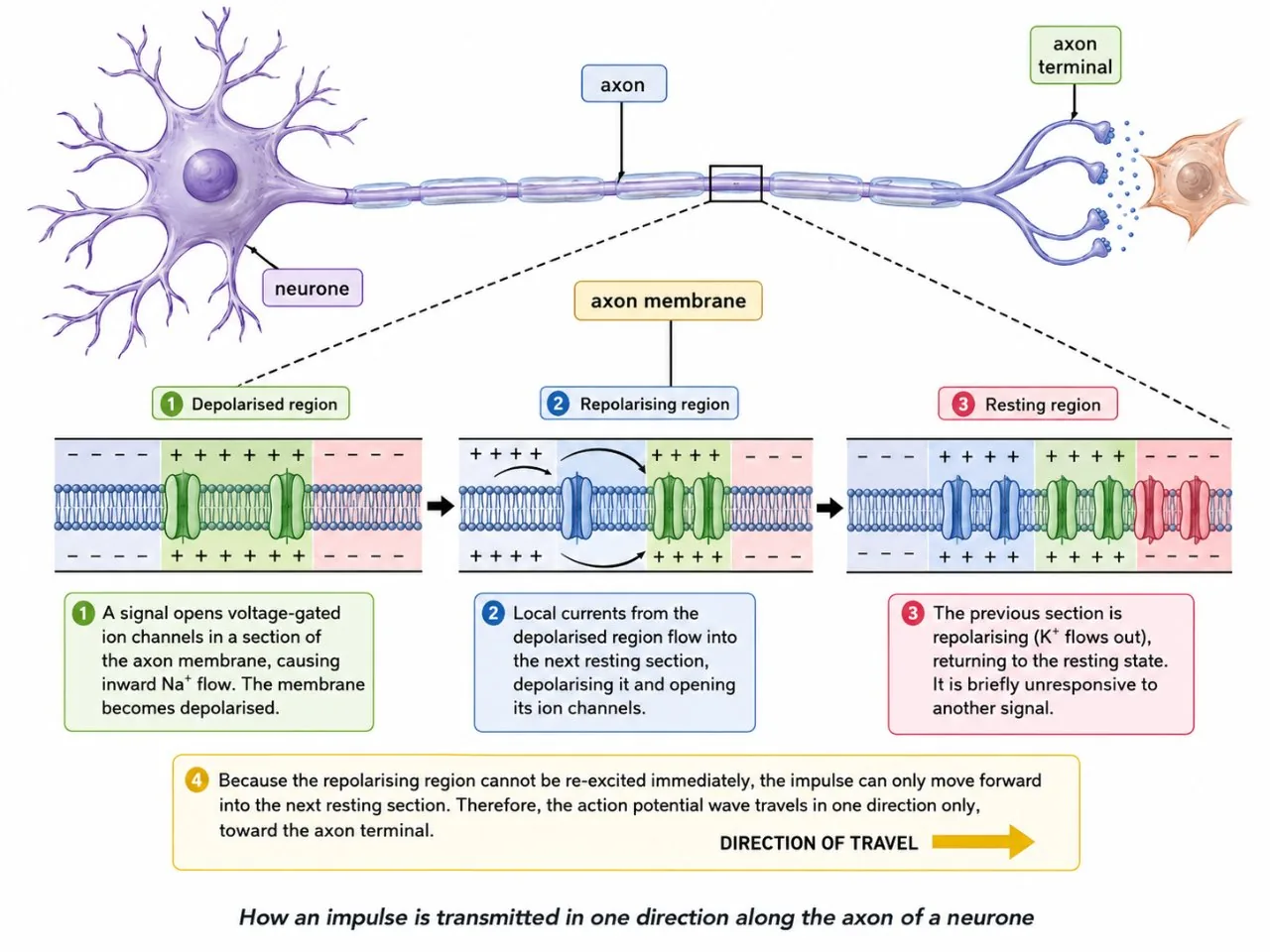
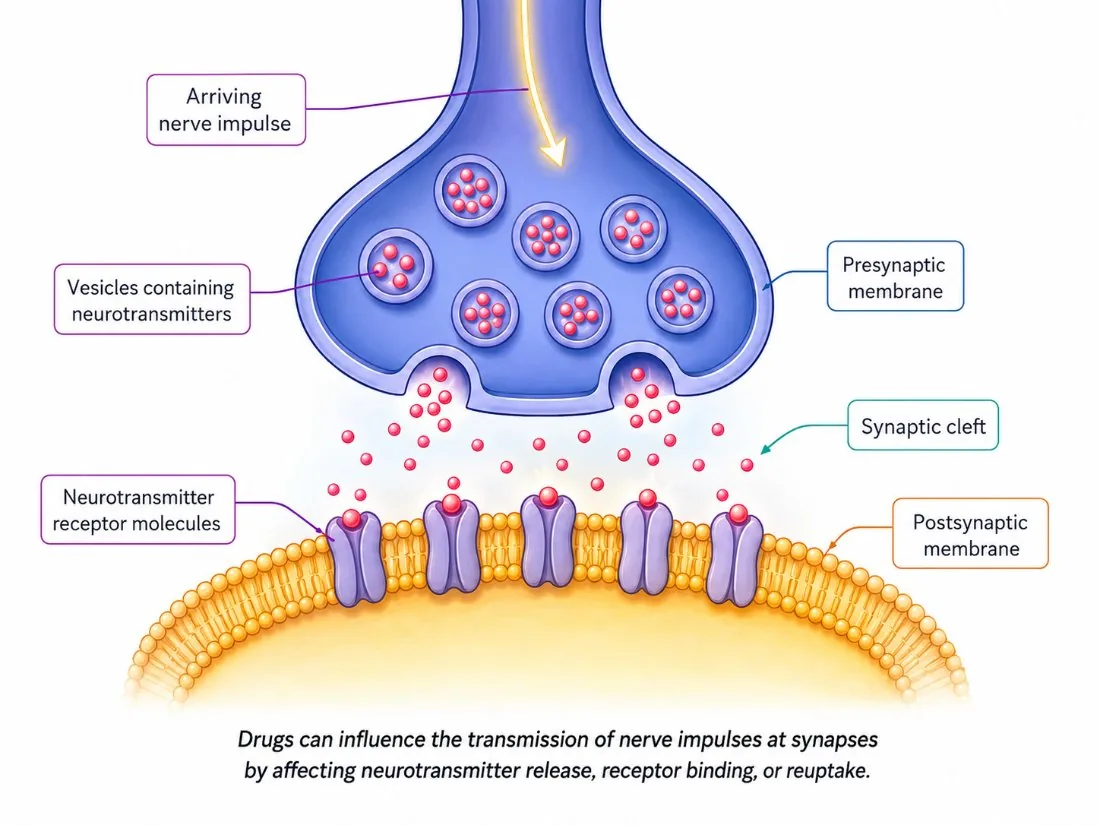
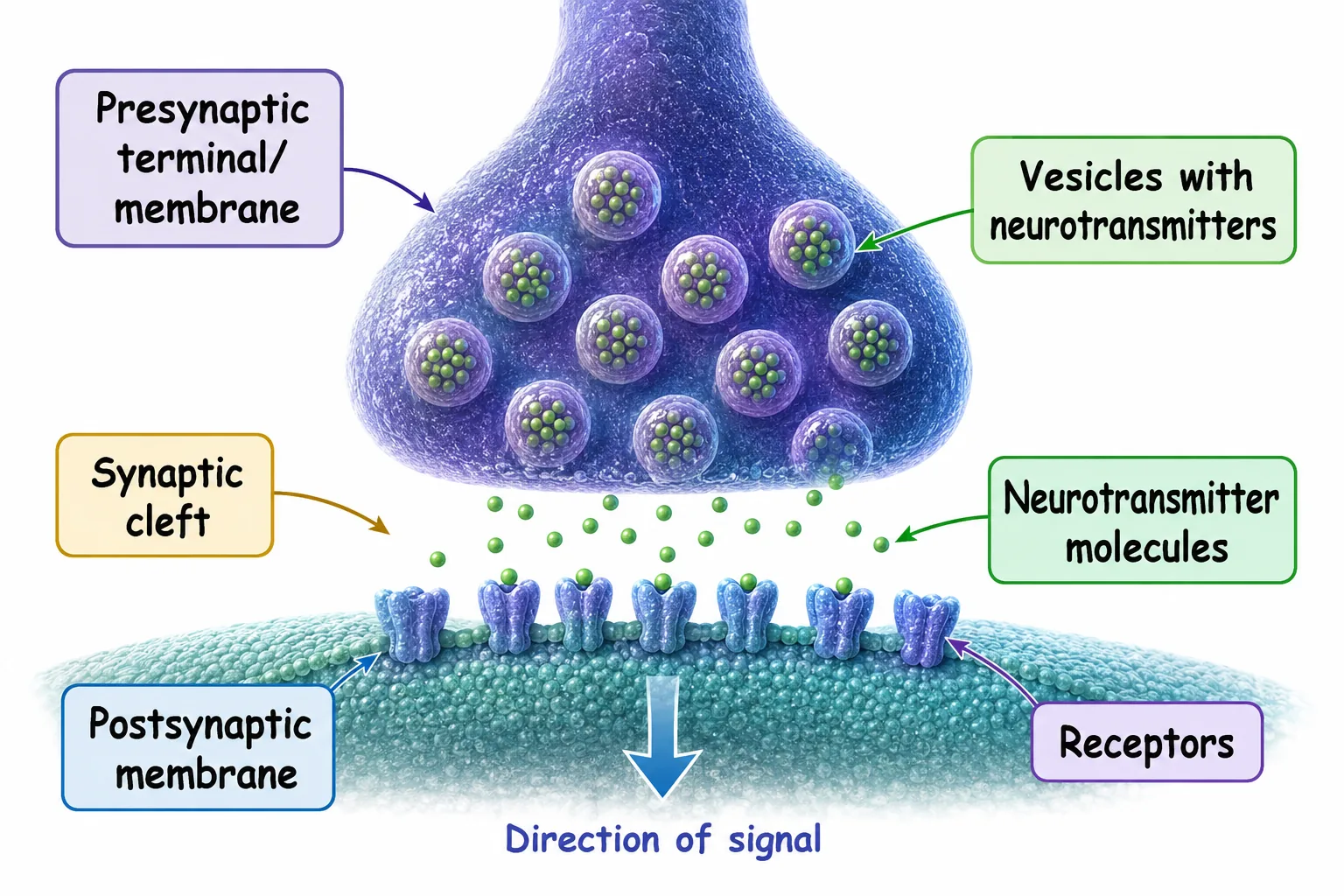
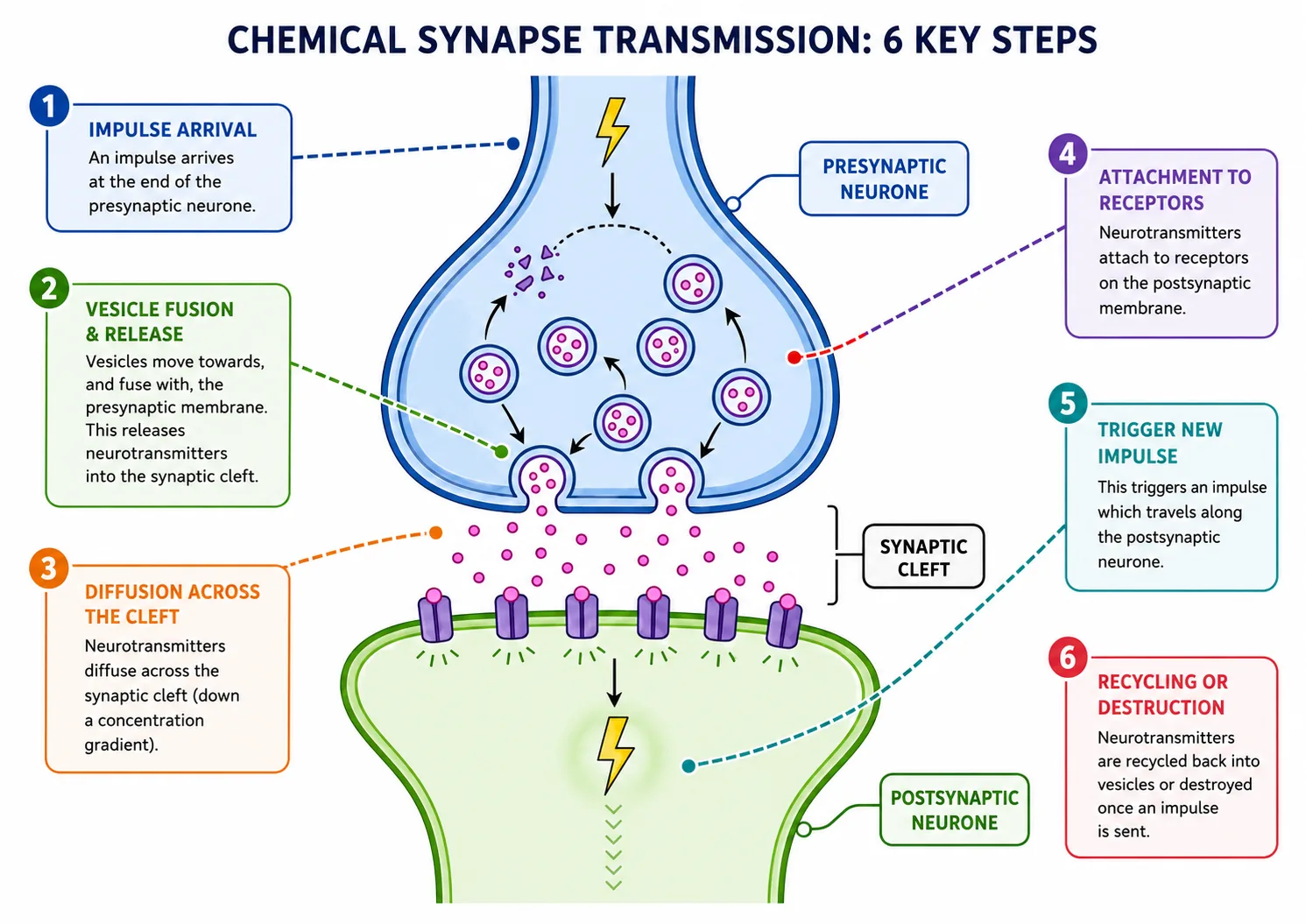
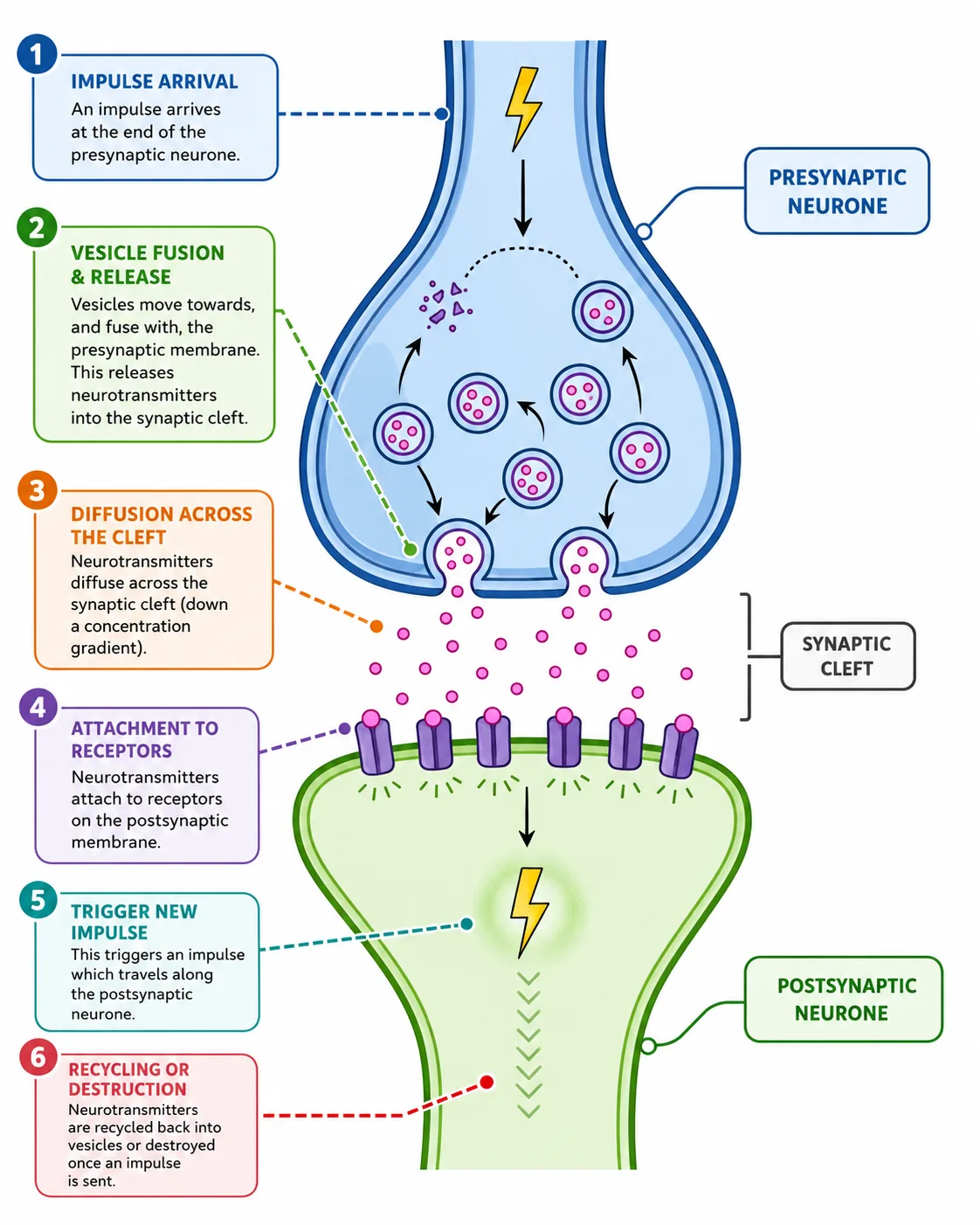
Neurones do not touch each other. The tiny gap between two neurones is a synapse. The impulse is carried across it by chemicals, not electricity.
Because neurotransmitter is released from only one side, synapses make sure impulses travel in one direction only. Diffusion across the gap takes a little time, which is part of the reaction time. Some drugs and poisons work by interfering with synapses.
Section 5 of 9Coordination and links
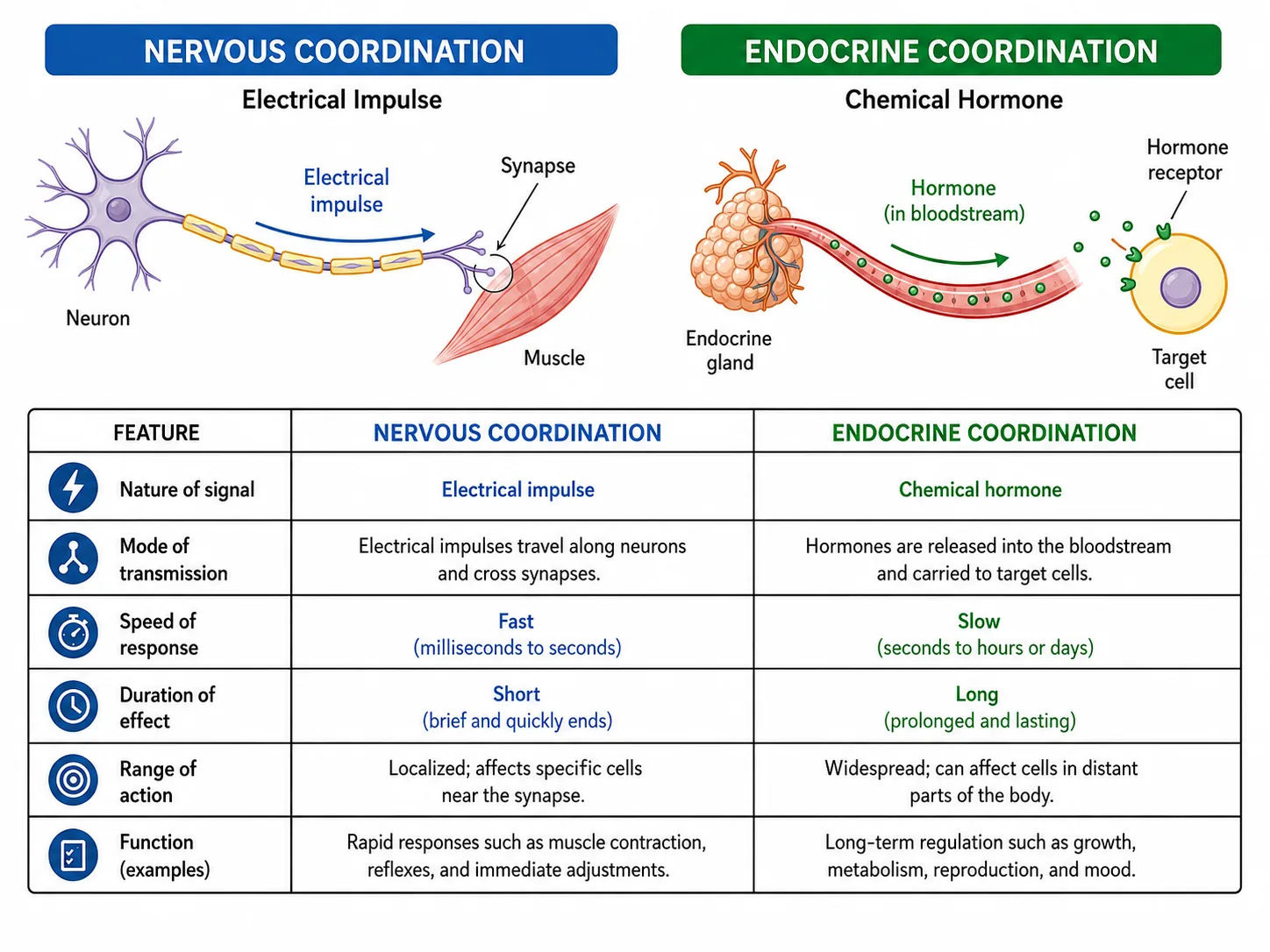


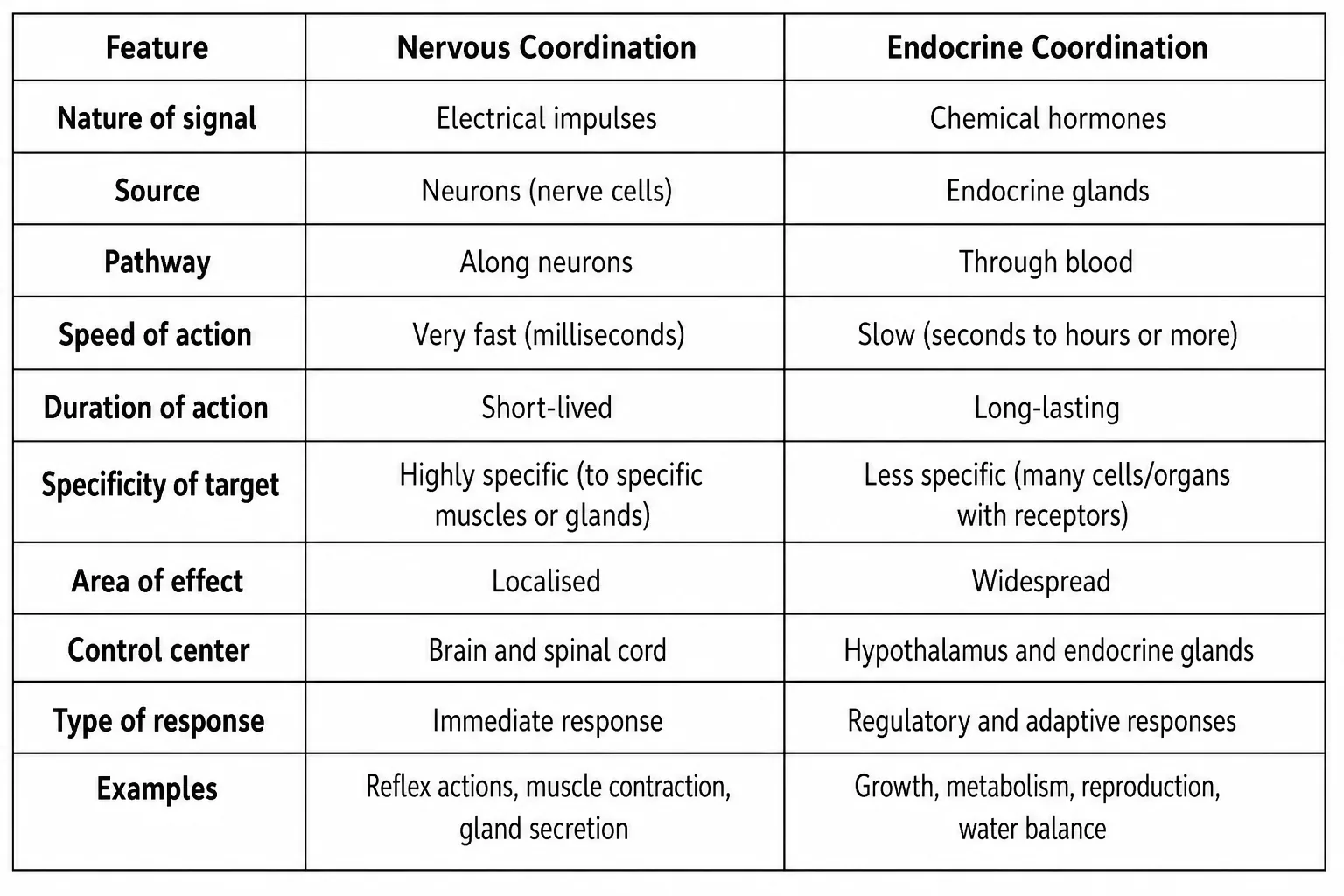


- Nervous responses are fast, short-lived and usually act on a precise part of the body,
- which is different from hormonal responses,
- which are slower and longer lasting.
- The nervous system works with the endocrine system to maintain a steady internal environment.
- If the brain and the spinal cord are damaged, impulses cannot pass, which can lead to paralysis.
- and the control of body temperature (5.1.6),
- where the same stimulus-receptor-coordinator-effector pathway is used.
Section 6 of 9Worked pathway: catching a falling object
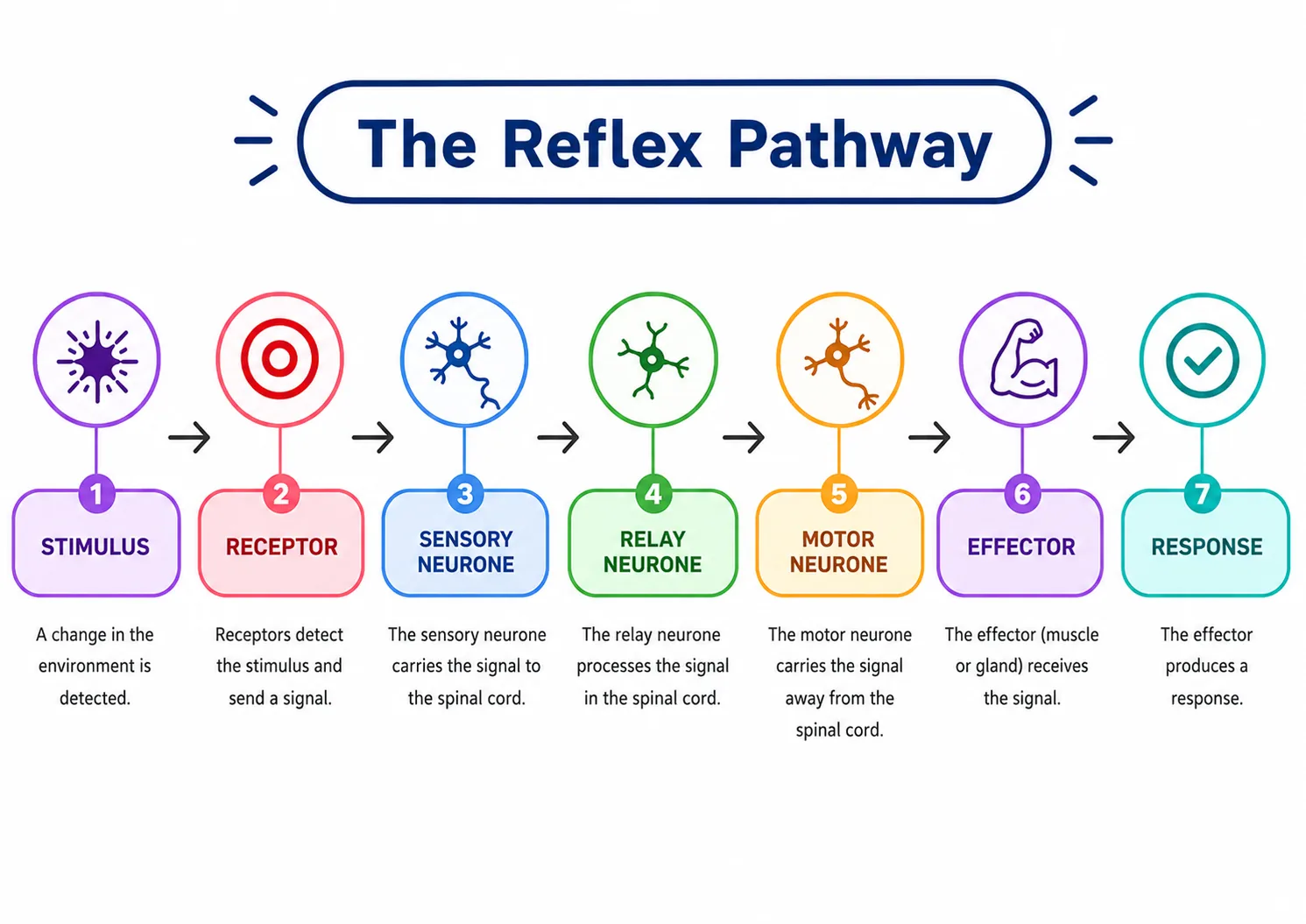
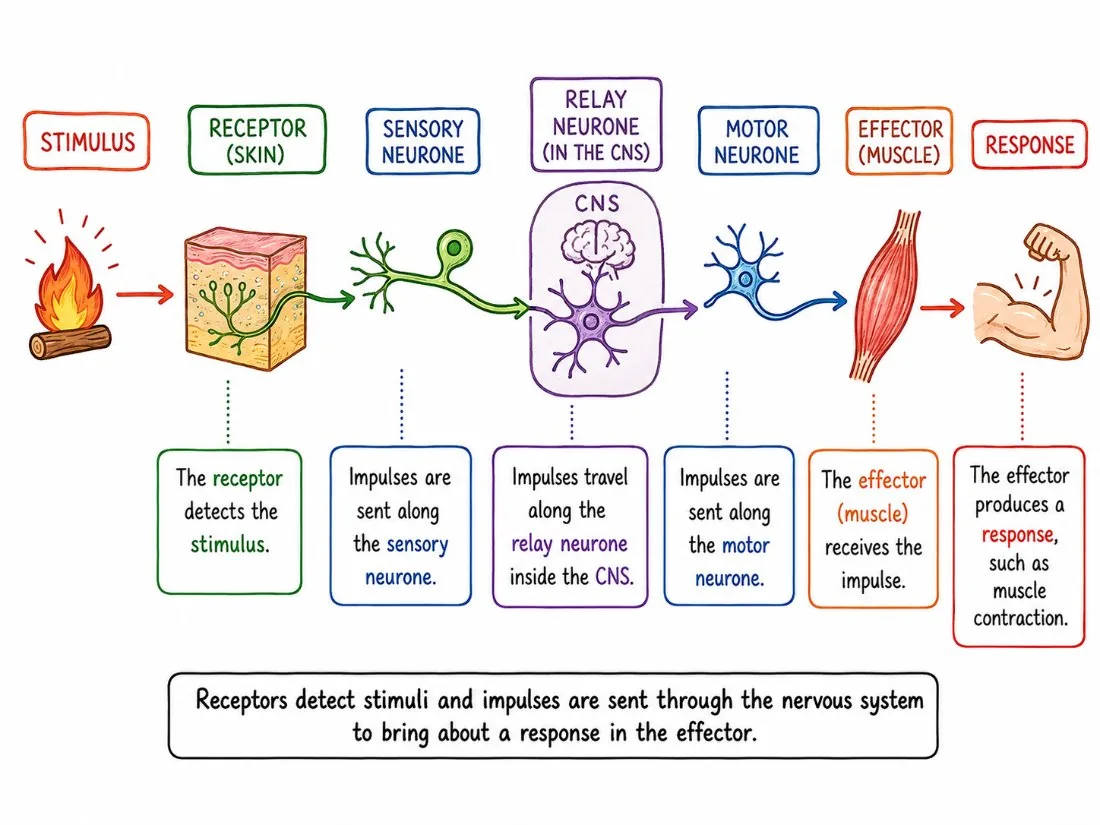
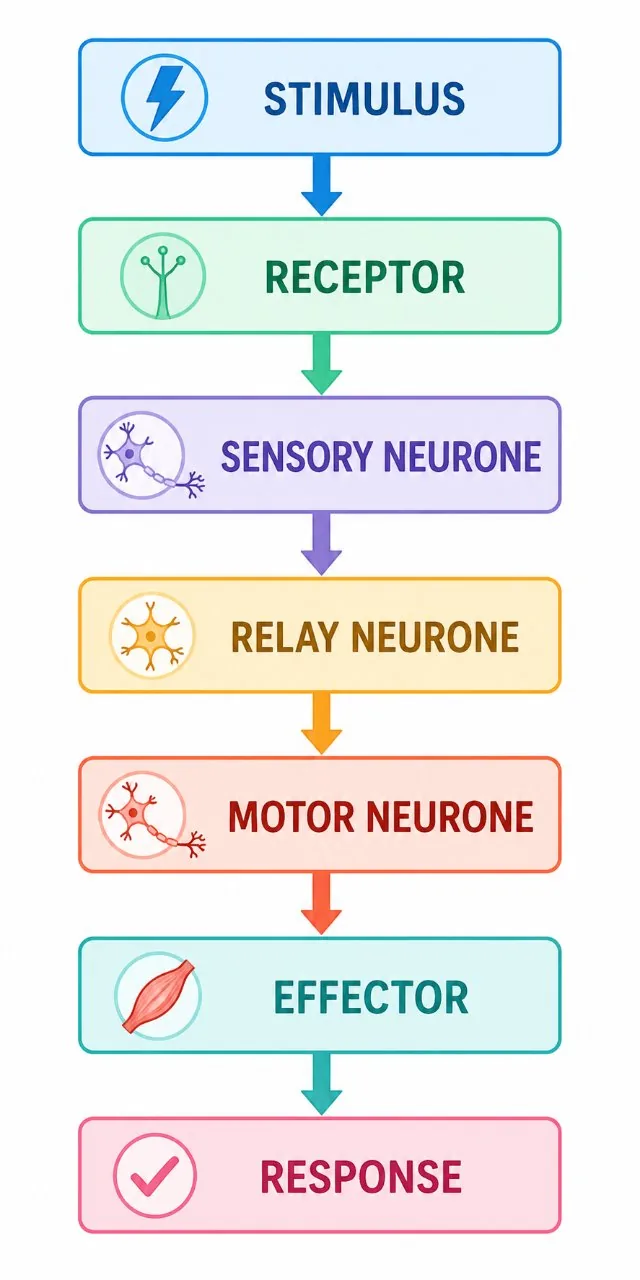
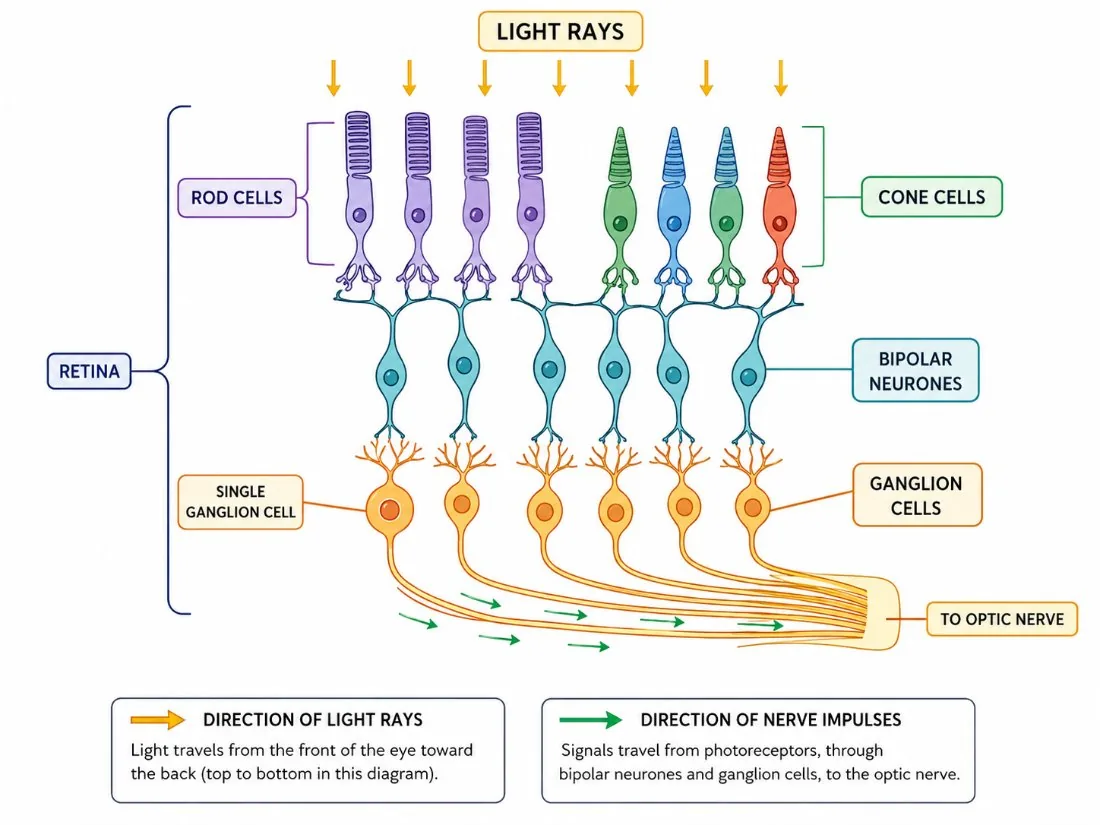


Consider a student who sees a pen roll off a desk and catches it.
- which contract to catch the pen.
This is a voluntary, coordinated response, so more synapses are involved and it takes longer than a reflex.
- and remember that the route along any neurone is electrical while the route across a synapse is chemical.
Section 7 of 9Exam-style questions


Describe the pathway of a nerve impulse from a receptor to an effector. [4]4 marks
Receptor detects the stimulus [1]. Impulse travels along a sensory neurone to the CNS [1]. Relay neurone in the CNS passes the impulse to a motor neurone [1]. The motor neurone carries the impulse to the effector (muscle or gland), which responds [1].
Explain how an impulse crosses a synapse. [4]4 marks
The impulse arrives at the end of the first neurone and chemical (neurotransmitter) is released [1]. The chemical diffuses across the gap [1]. It binds to receptors on the next neurone [1]. This triggers a new impulse in the second neurone [1].
Give two ways in which a motor neurone is adapted to its function. [2]2 marks
Long axon to carry impulses over long distances [1]. Myelin sheath insulates it and speeds up transmission [1]. (Branched ends to connect with muscle fibres is also accepted.)
Section 8 of 9Key terms
| Term | Meaning |
|---|---|
| Stimulus | A change in the environment detected by a receptor. |
| Receptor | A cell or group of cells that detects a stimulus. |
| Effector | A muscle or gland that carries out a response. |
| Central nervous system | The brain and spinal cord. |
| Synapse | The gap between two neurones across which neurotransmitter diffuses. |
| Neurotransmitter | A chemical released at a synapse that triggers an impulse in the next neurone. |
| Myelin sheath | Fatty insulating layer around some axons that speeds up impulses. |
| Sensory neurone | A neurone carrying impulses from receptors to the CNS. |