1.1.9Structure and Functions in Living Organisms: Part 2
Circulatory System: General Structure
5 min read 7 parts Lesson 10 of 29 1 quiz
Section 1 of 7A closed system



Closed circulation
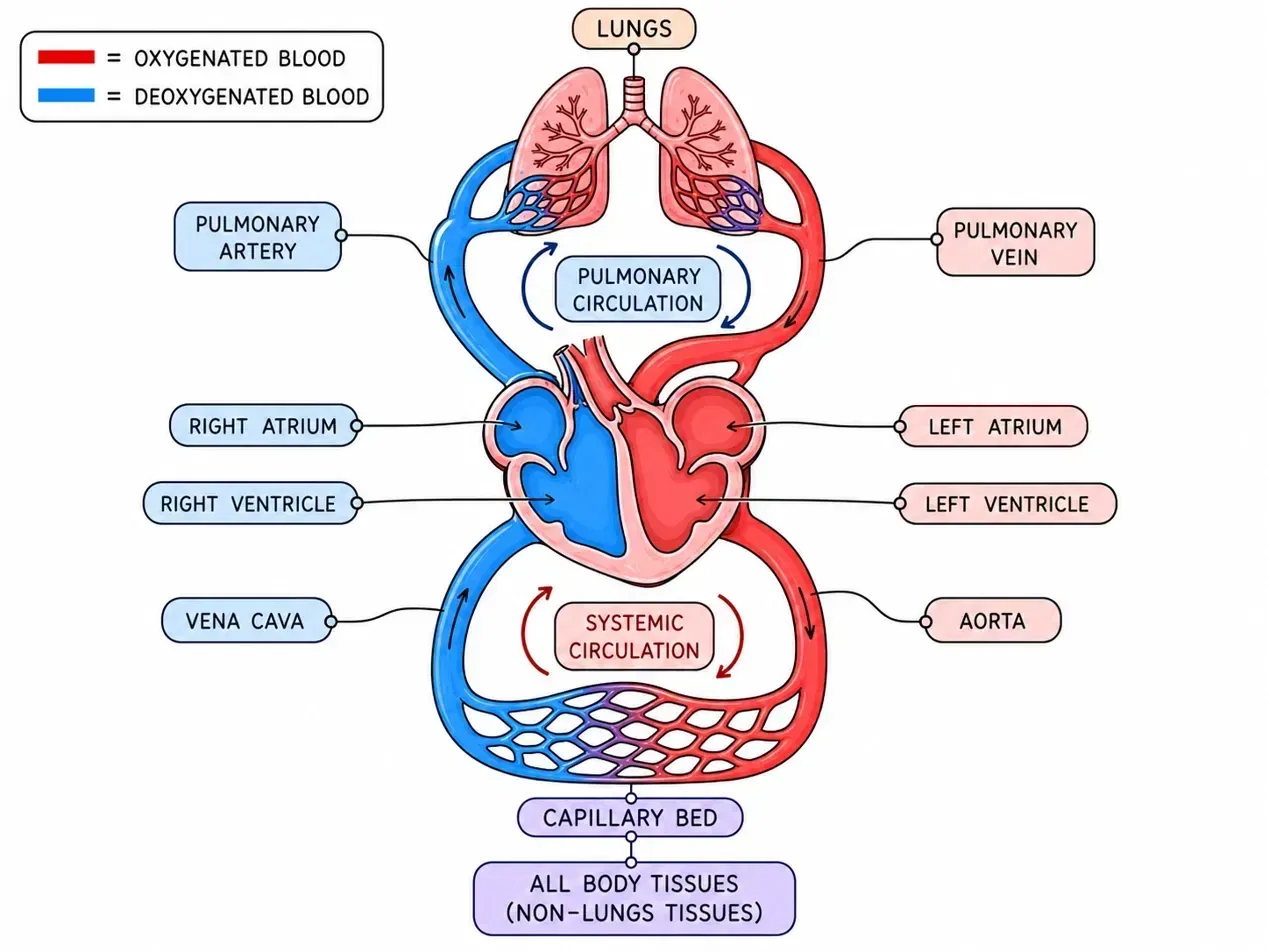
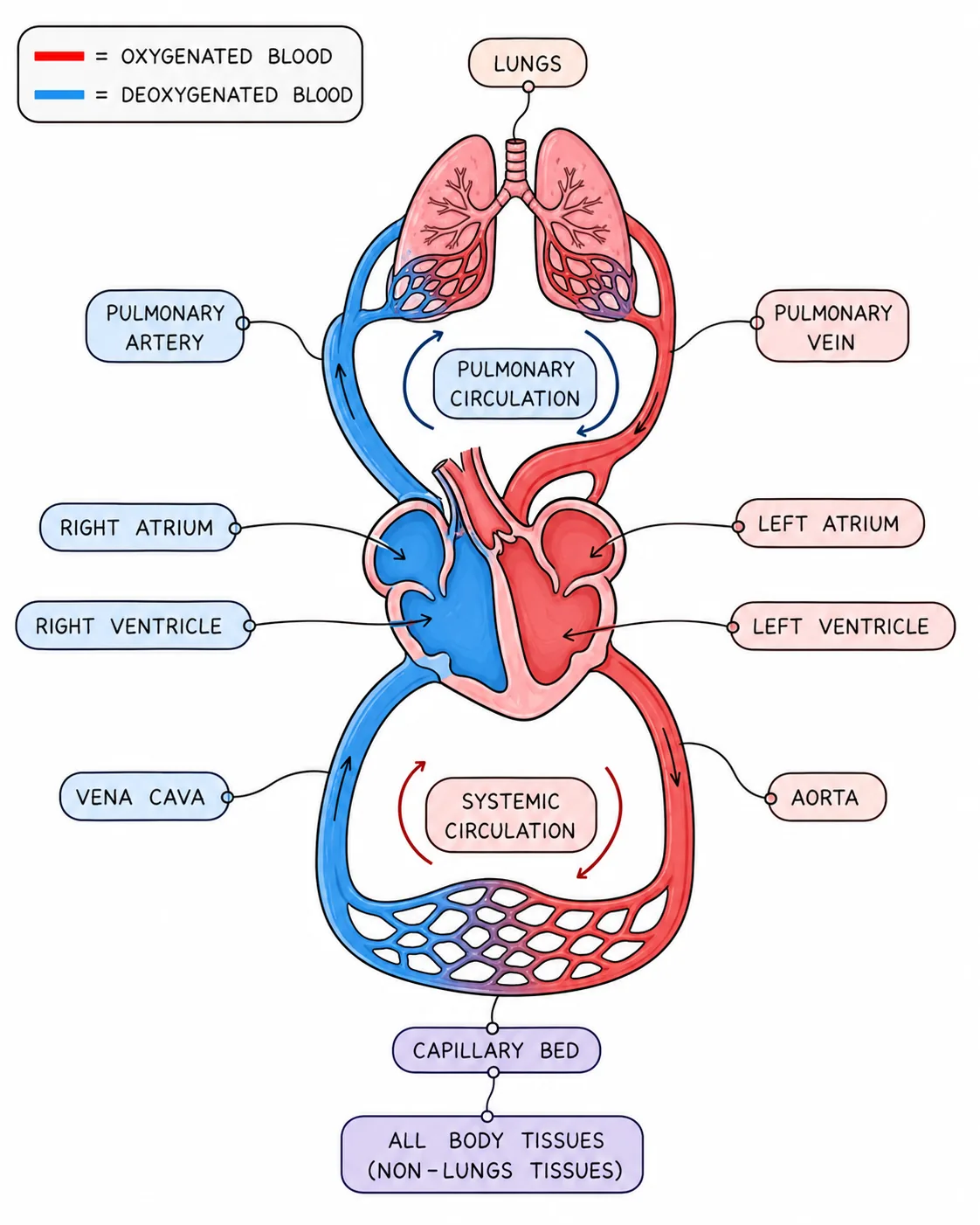
- Closed circulation Blood stays inside a continuous network of vessels that is connected to the heart.
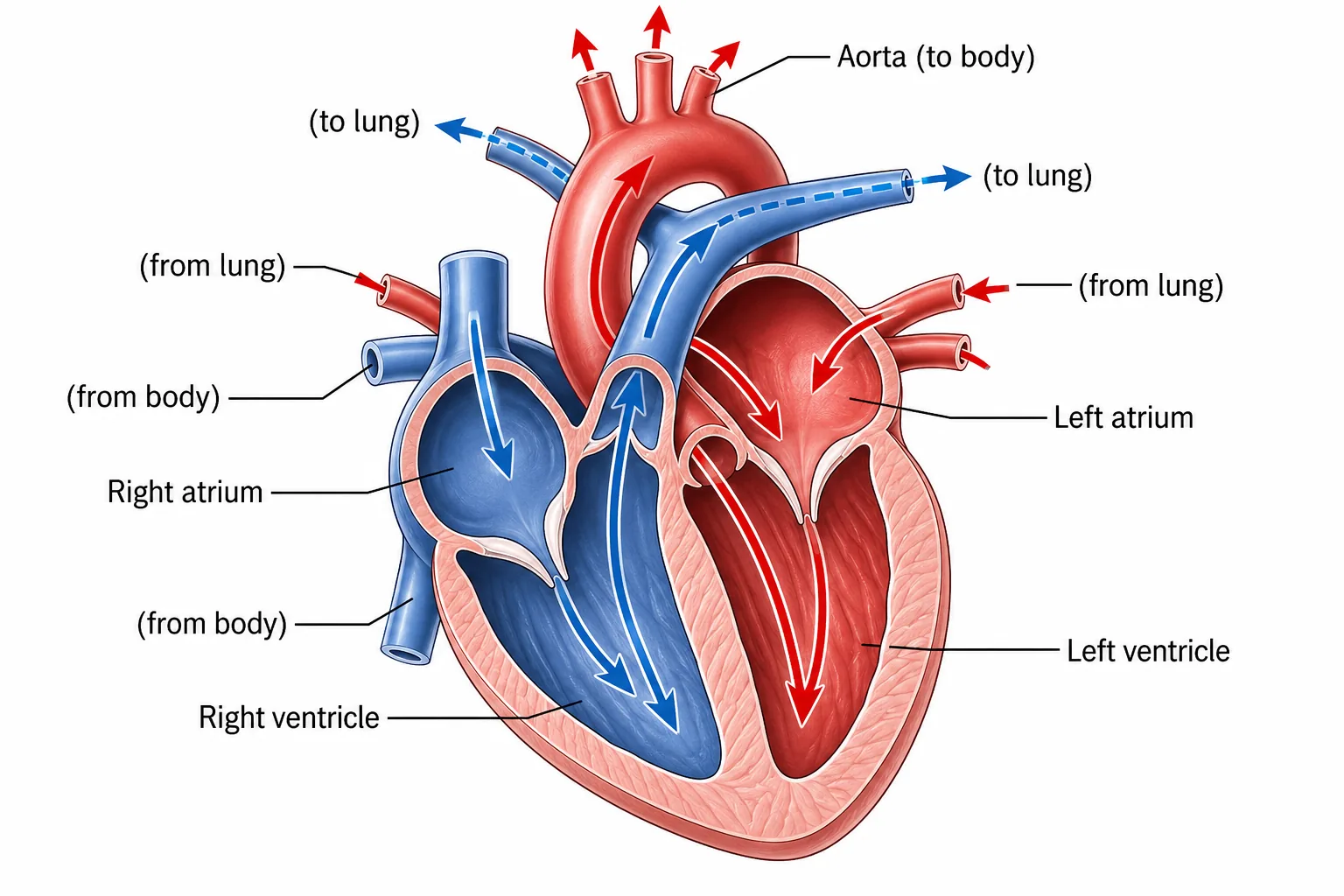
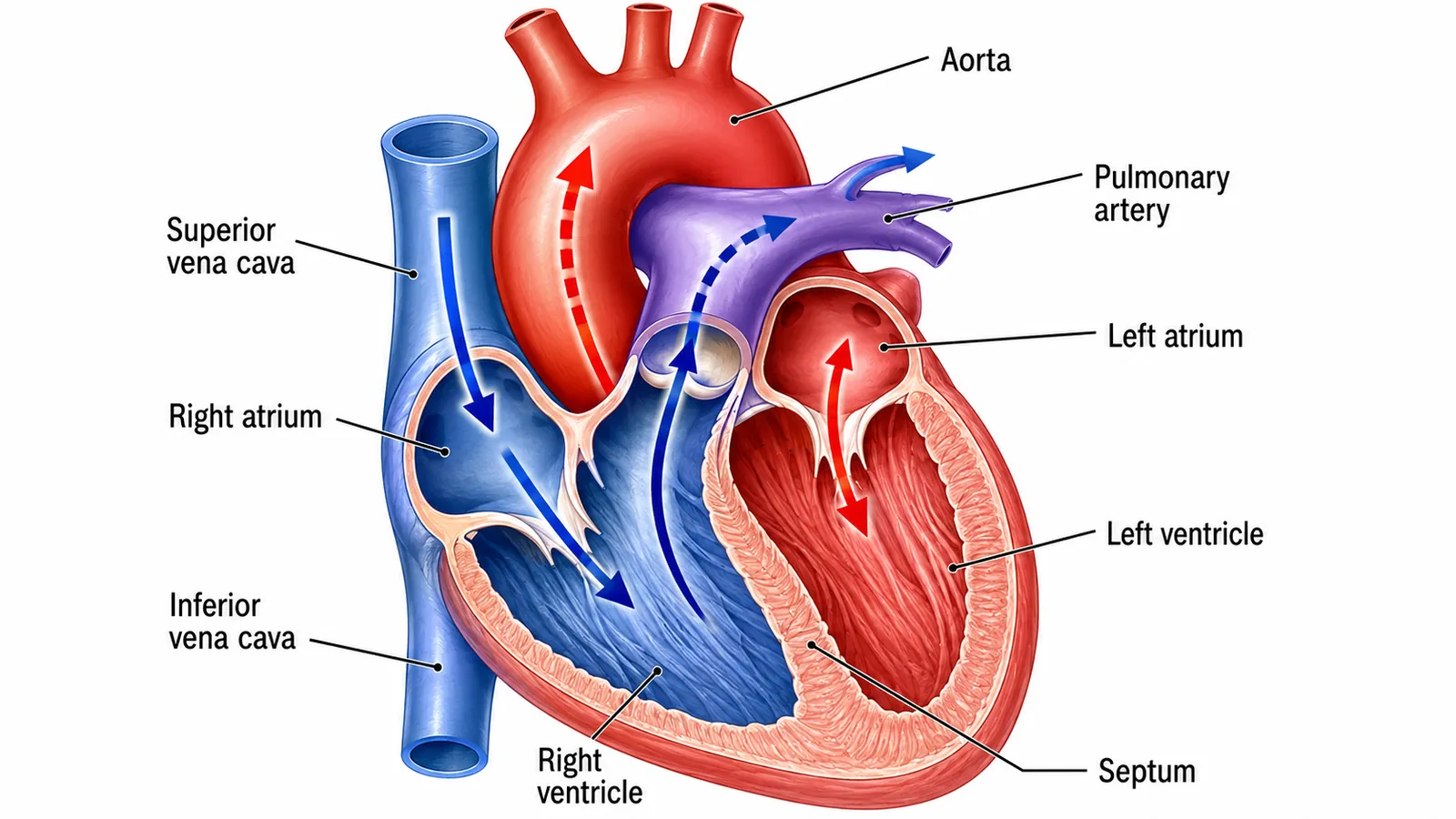
- The blood flows in one direction only, which is kept that way by the heart's valves and the valves in veins.
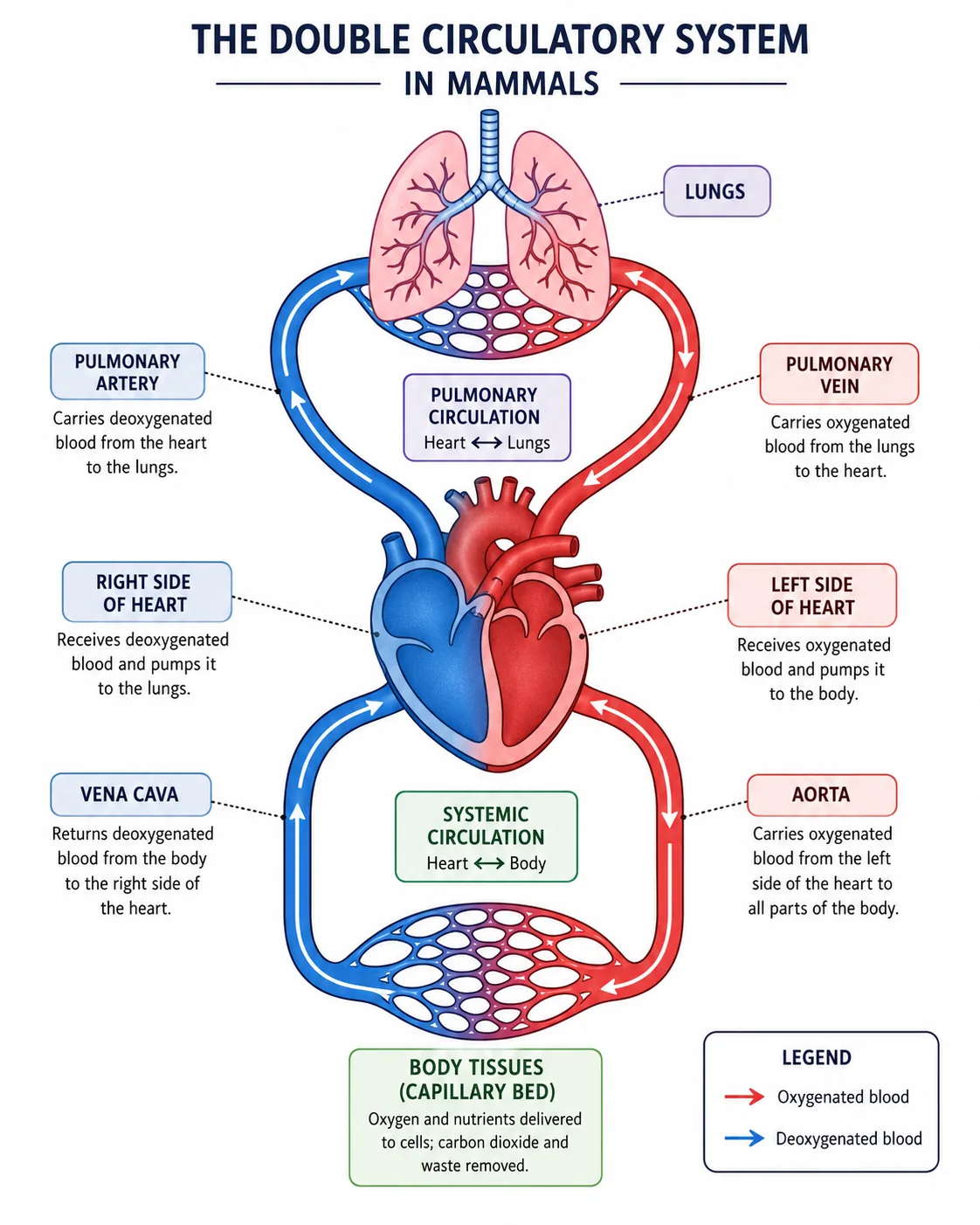
Double circulation
- Double circulation One loop takes blood from the heart to the lungs and back, while the other takes blood to the rest of the body and back.
- Blood therefore passes through the heart twice on each complete circuit.
Lymphatic vessels
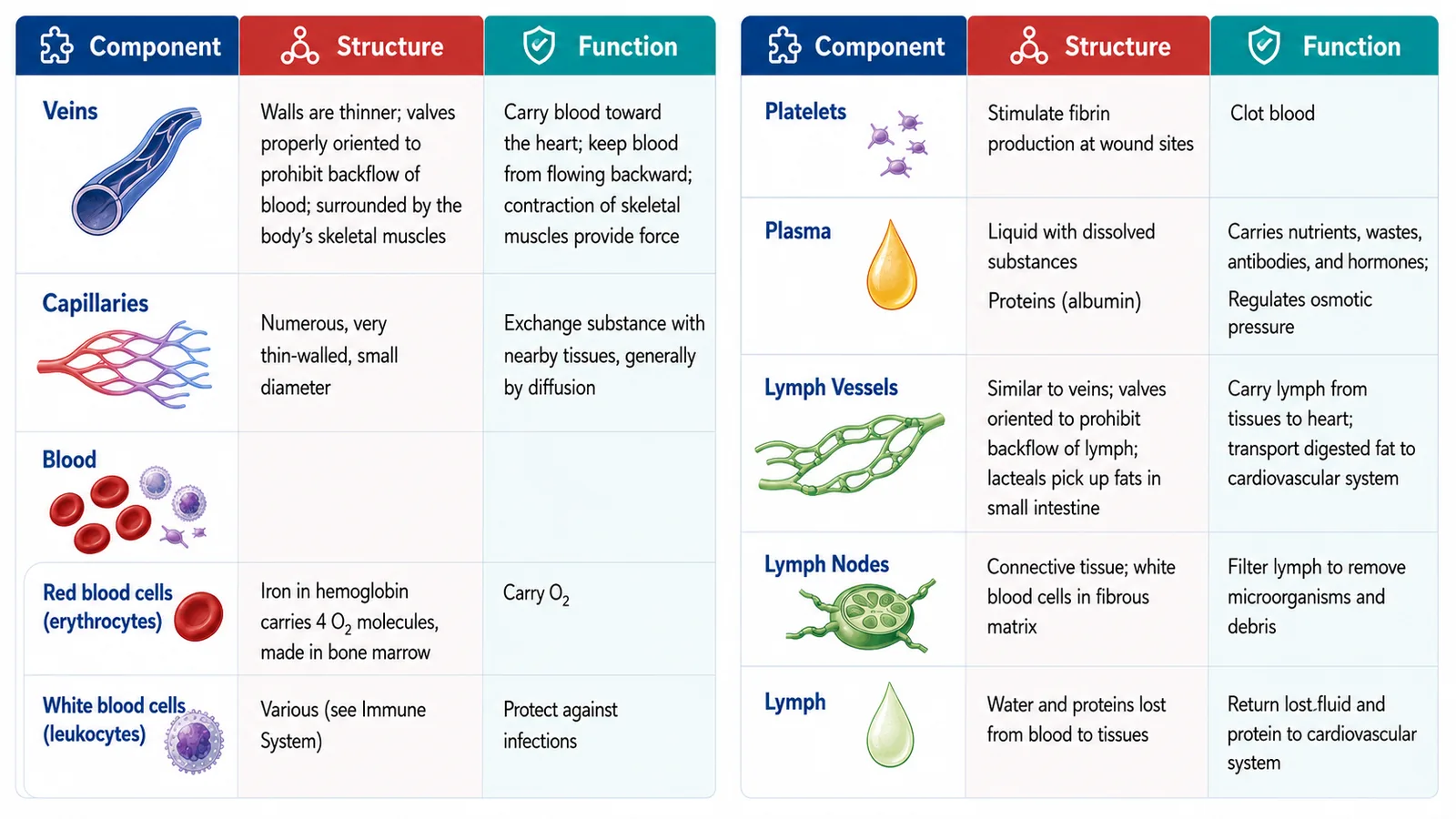
- Lymphatic vessels A separate network of lymphatic vessels collects the extra tissue fluid that leaks from capillaries.
- It returns this fluid to the circulatory system so that it is not lost.
Section 2 of 7The journey of blood
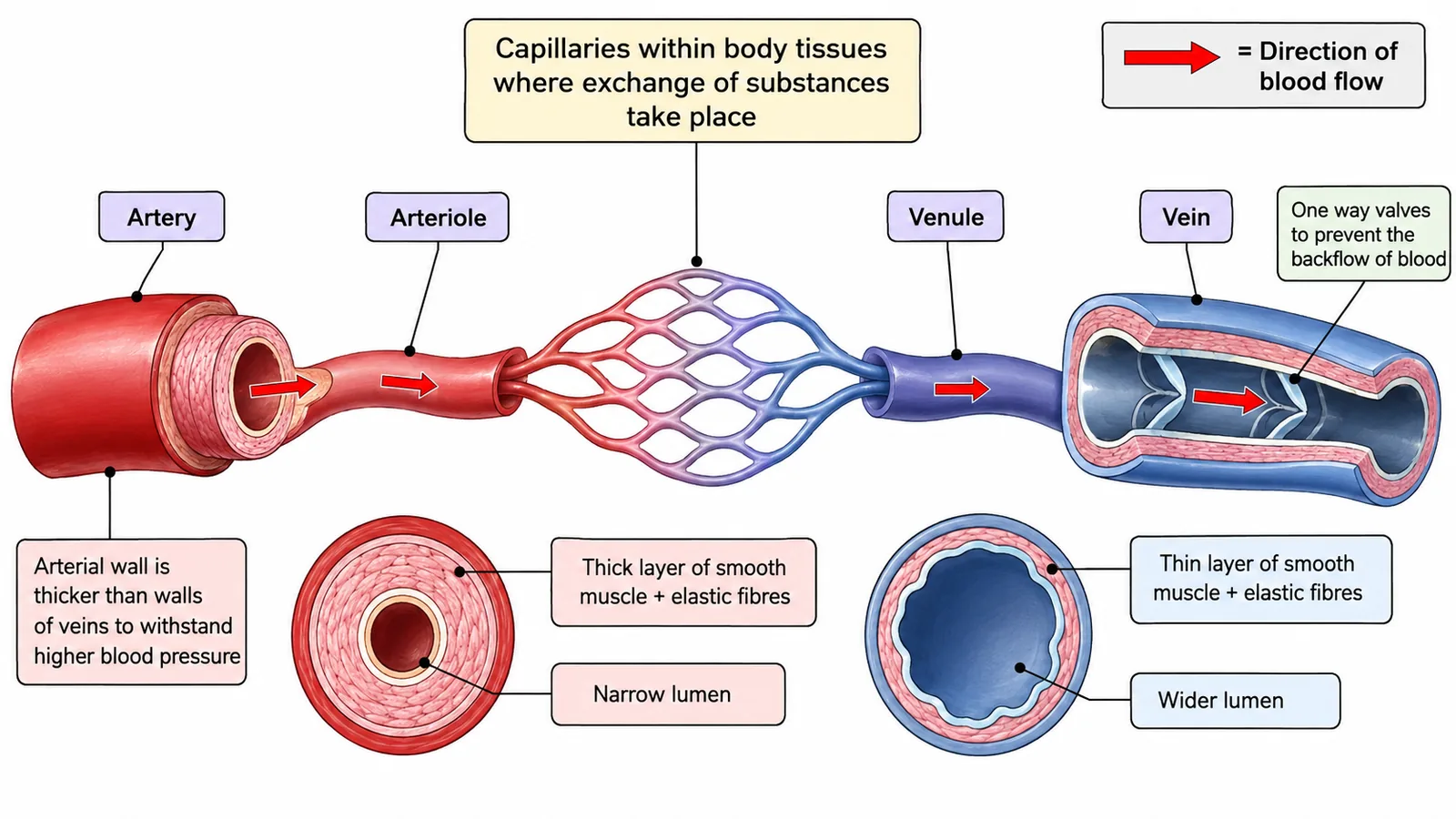

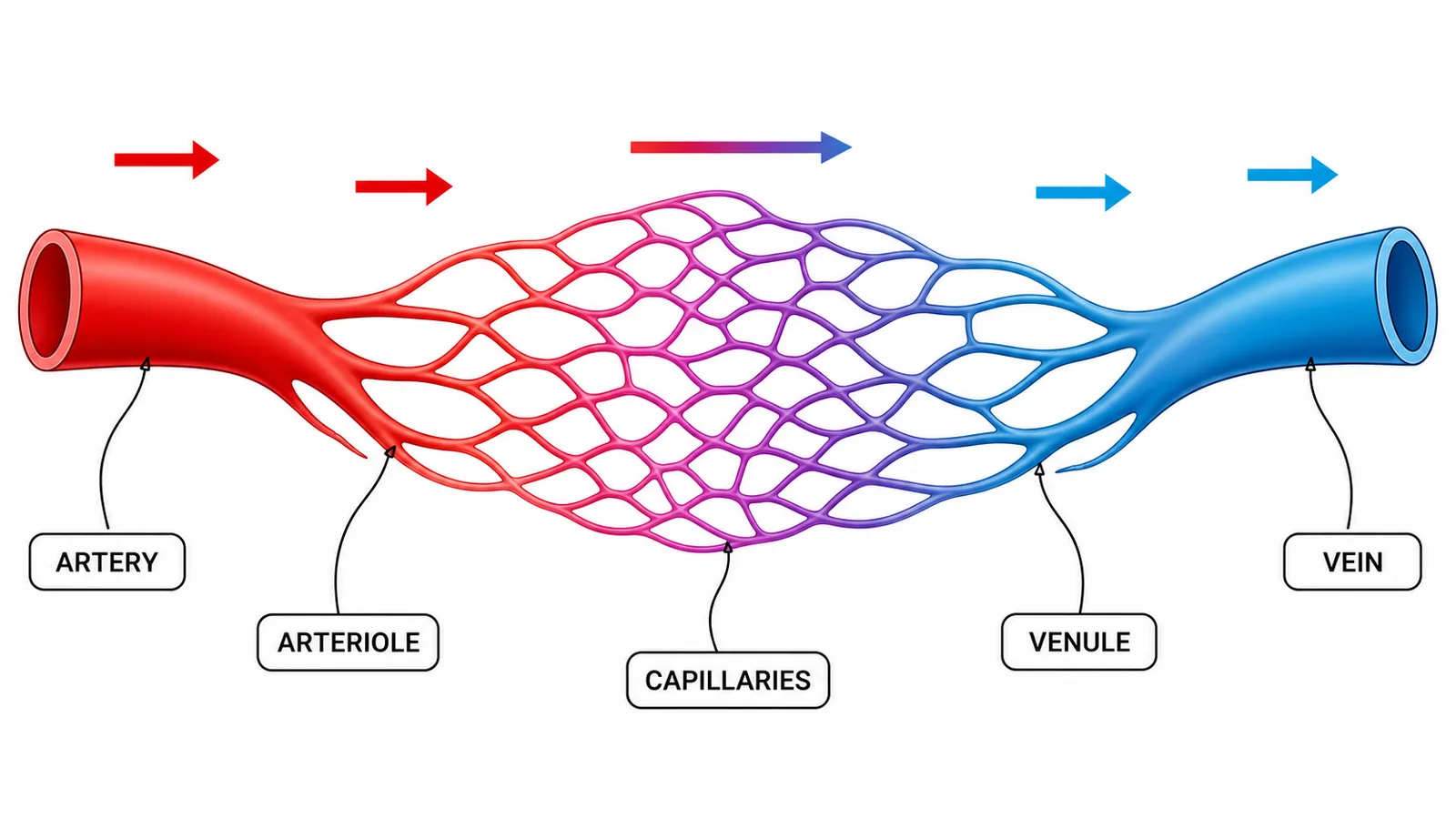
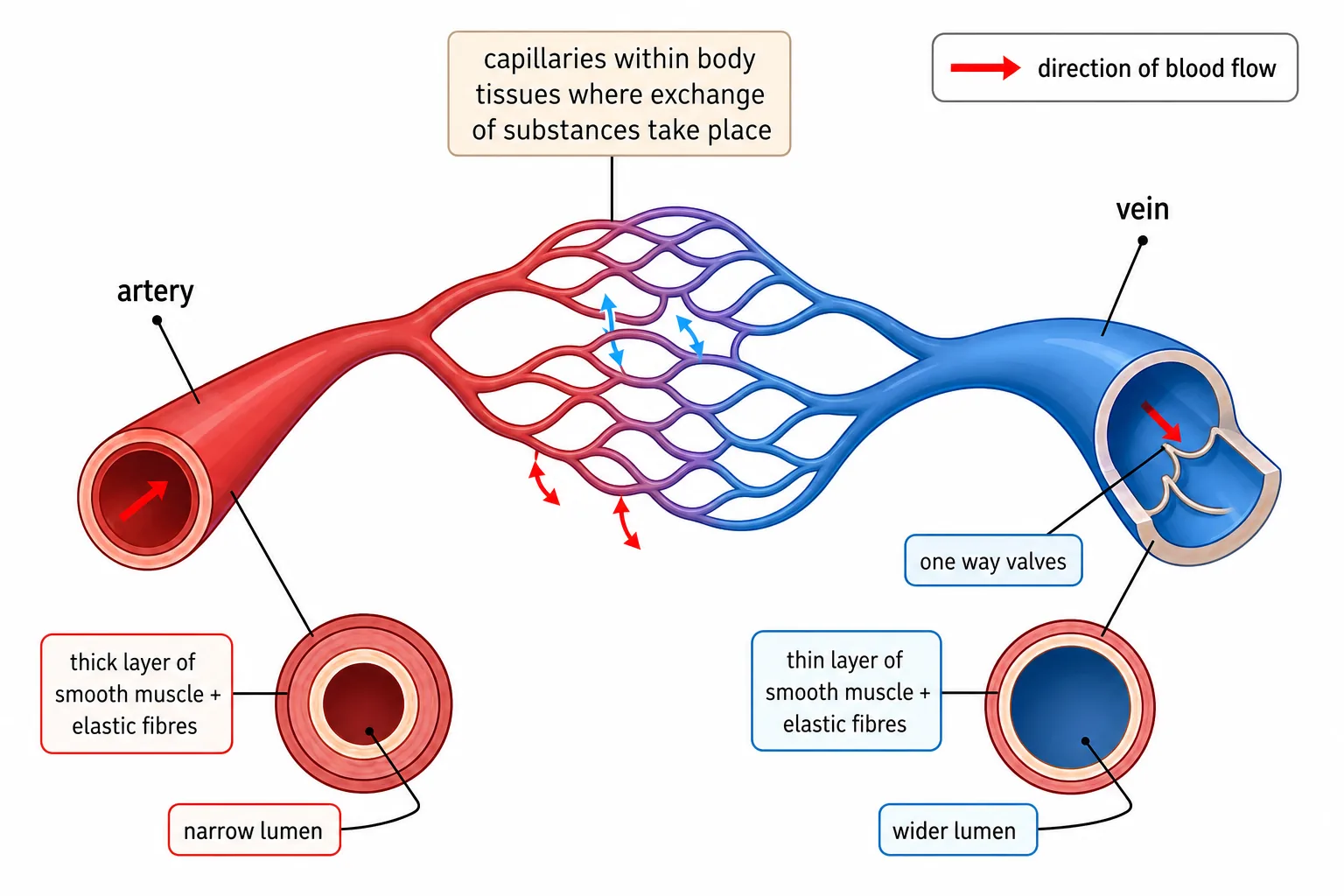
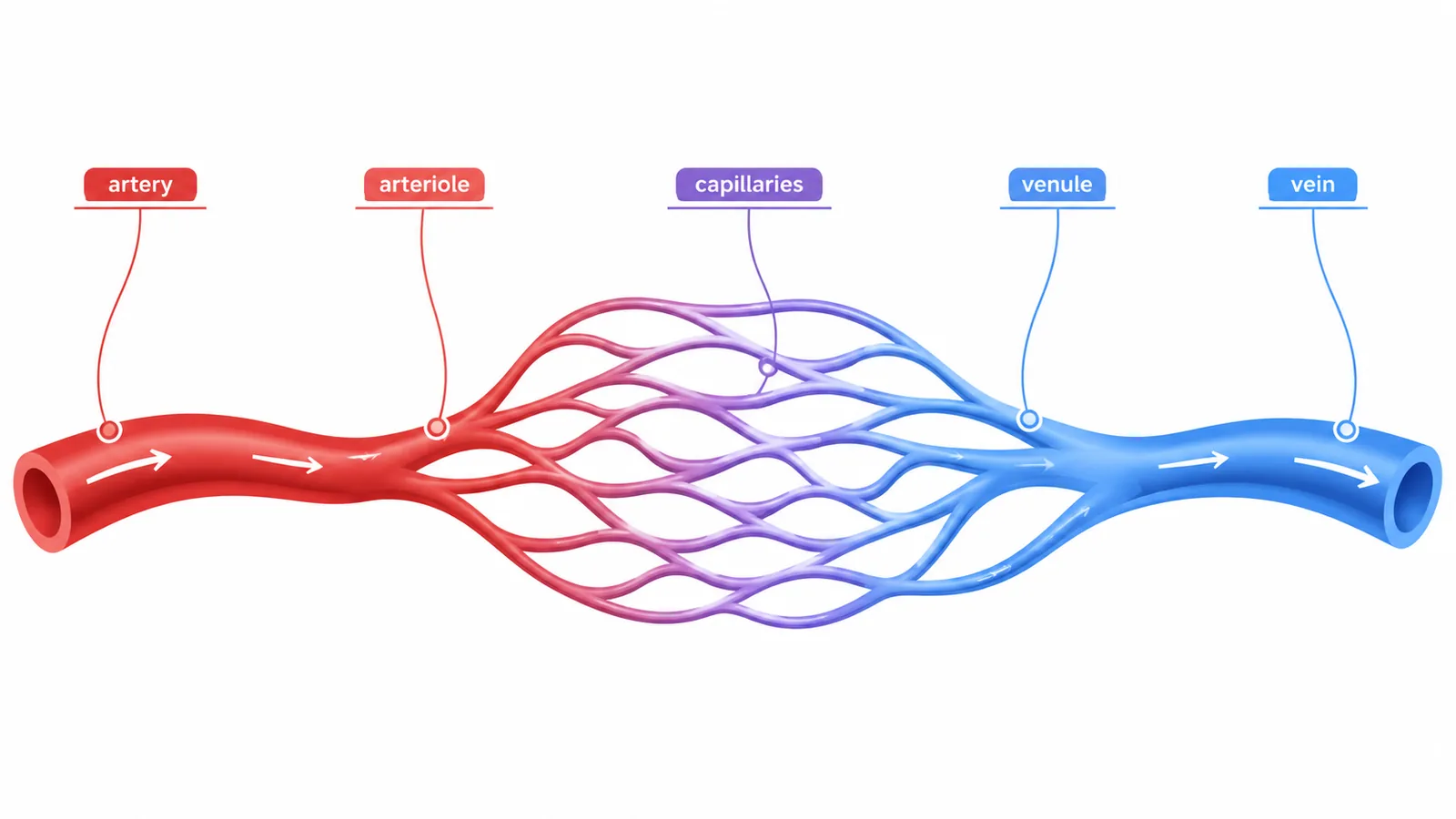
1Arteries
- Arteries Carry blood away from the heart to the organs. The blood is usually oxygenated.
2Arterioles
- Arterioles The arteries divide into narrower vessels that spread blood through each organ.
3Capillaries
- Capillaries Respiring cells take oxygen from the blood, so the blood becomes deoxygenated here.
4Venules and veins
- Venules and veins Capillaries join to form venules, which widen into veins that return blood, usually deoxygenated, to the heart.
Section 3 of 7Exceptions to remember
Pulmonary artery
- Pulmonary artery Leaves the heart and takes deoxygenated blood to the lungs, even though it is an artery.
Pulmonary vein
- Pulmonary vein Brings oxygenated blood from the lungs back to the heart, even though it is a vein.
Section 4 of 7Main vessels at each organ
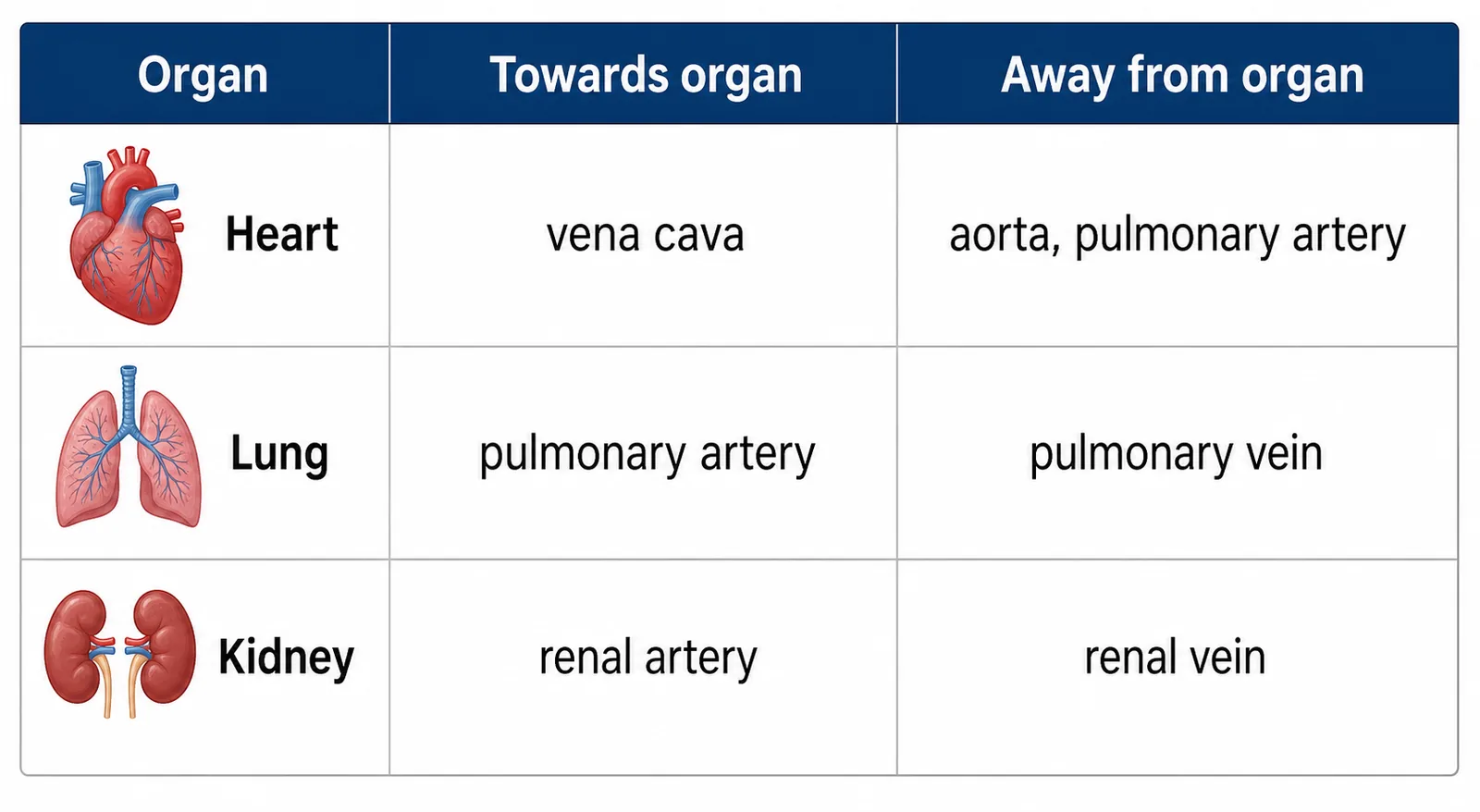


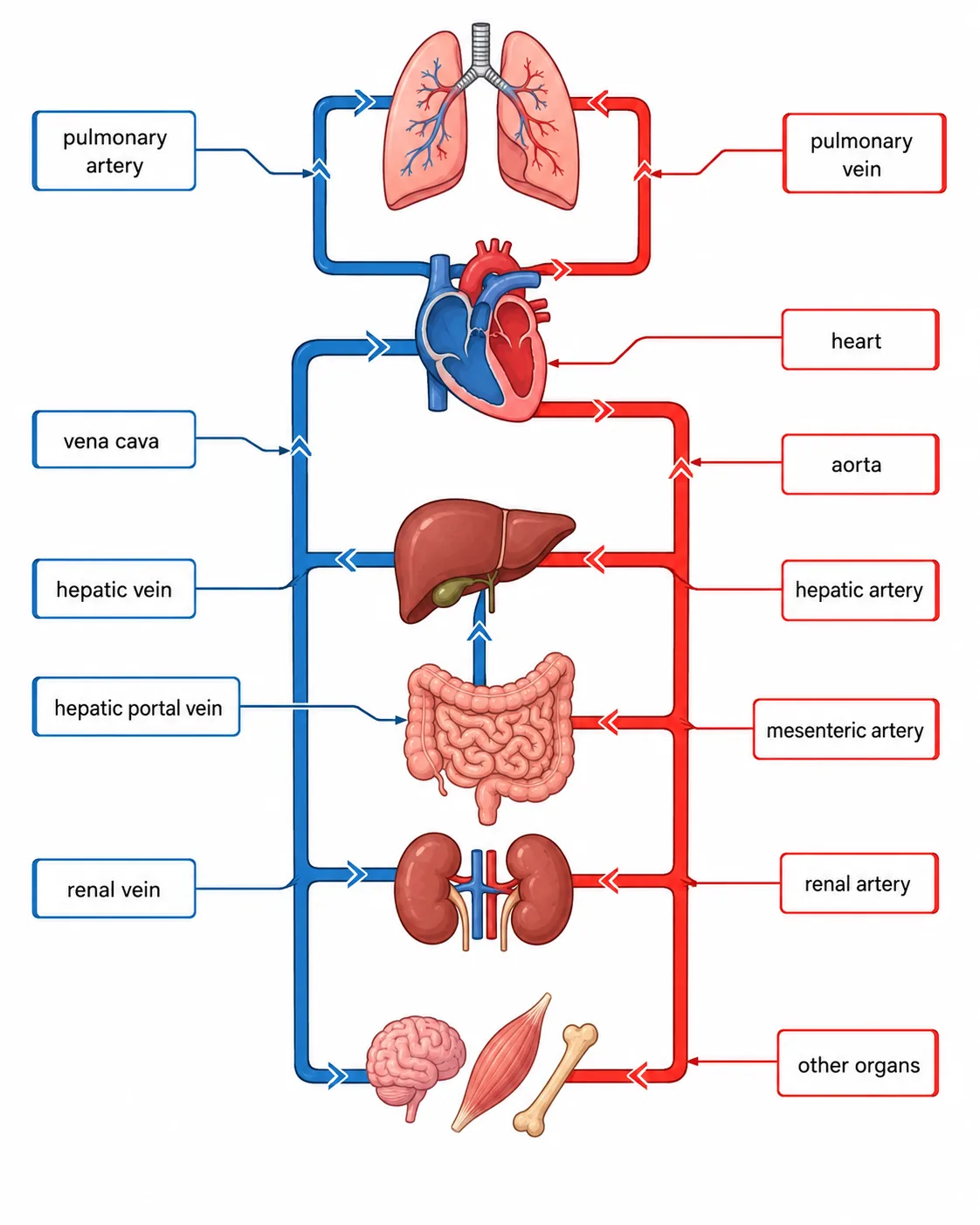
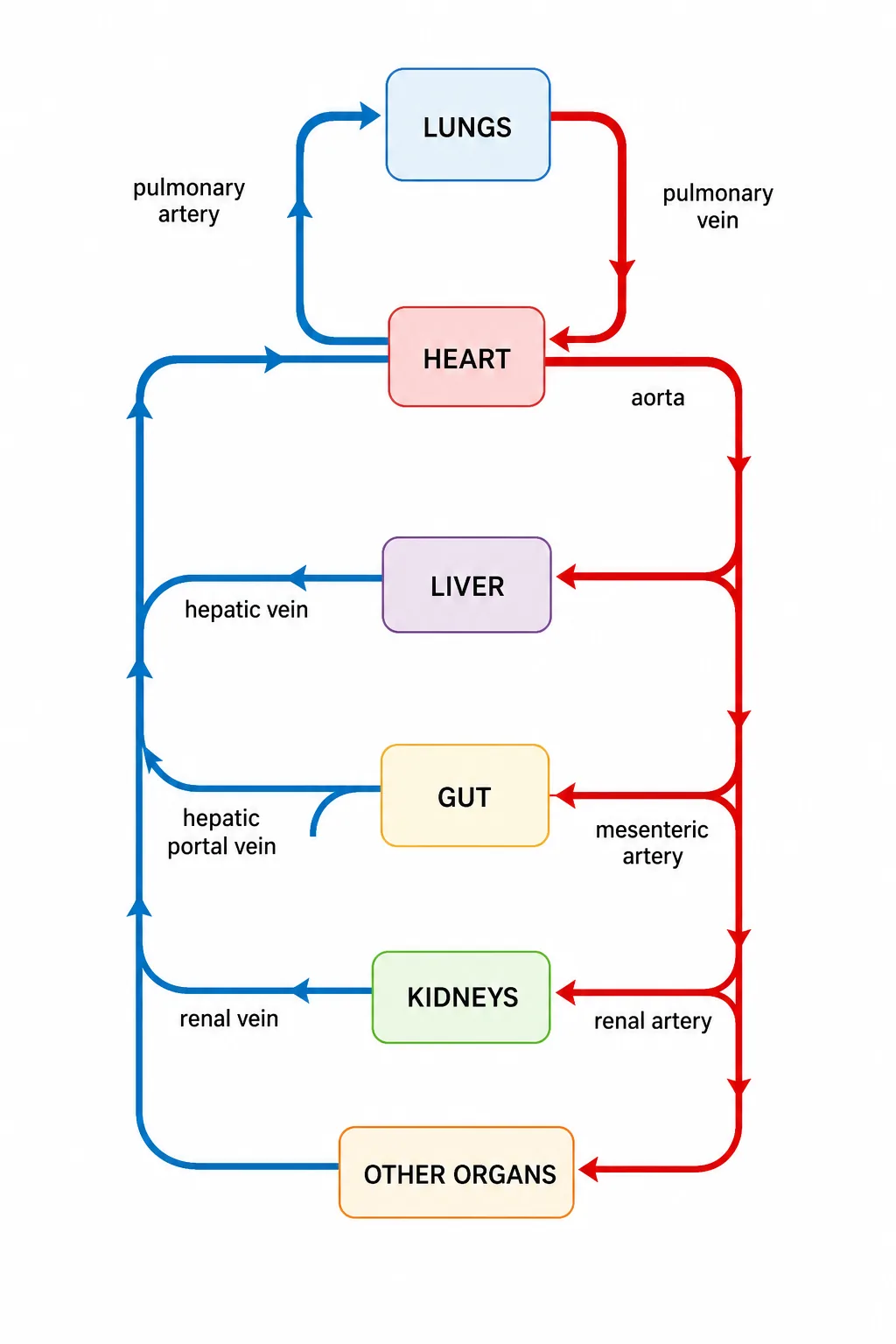
| Organ | Vessel bringing blood towards it | Vessel taking blood away |
|---|---|---|
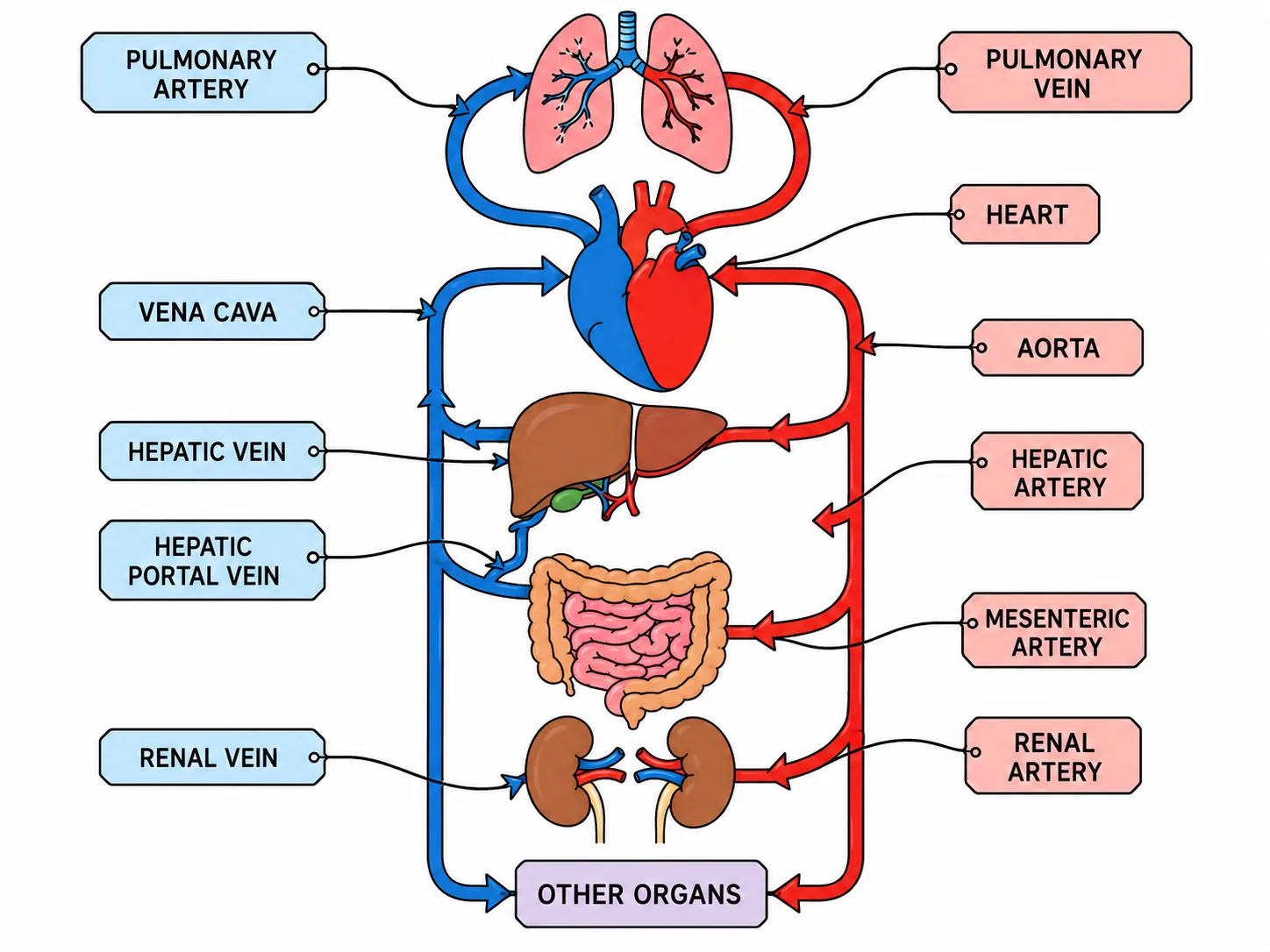
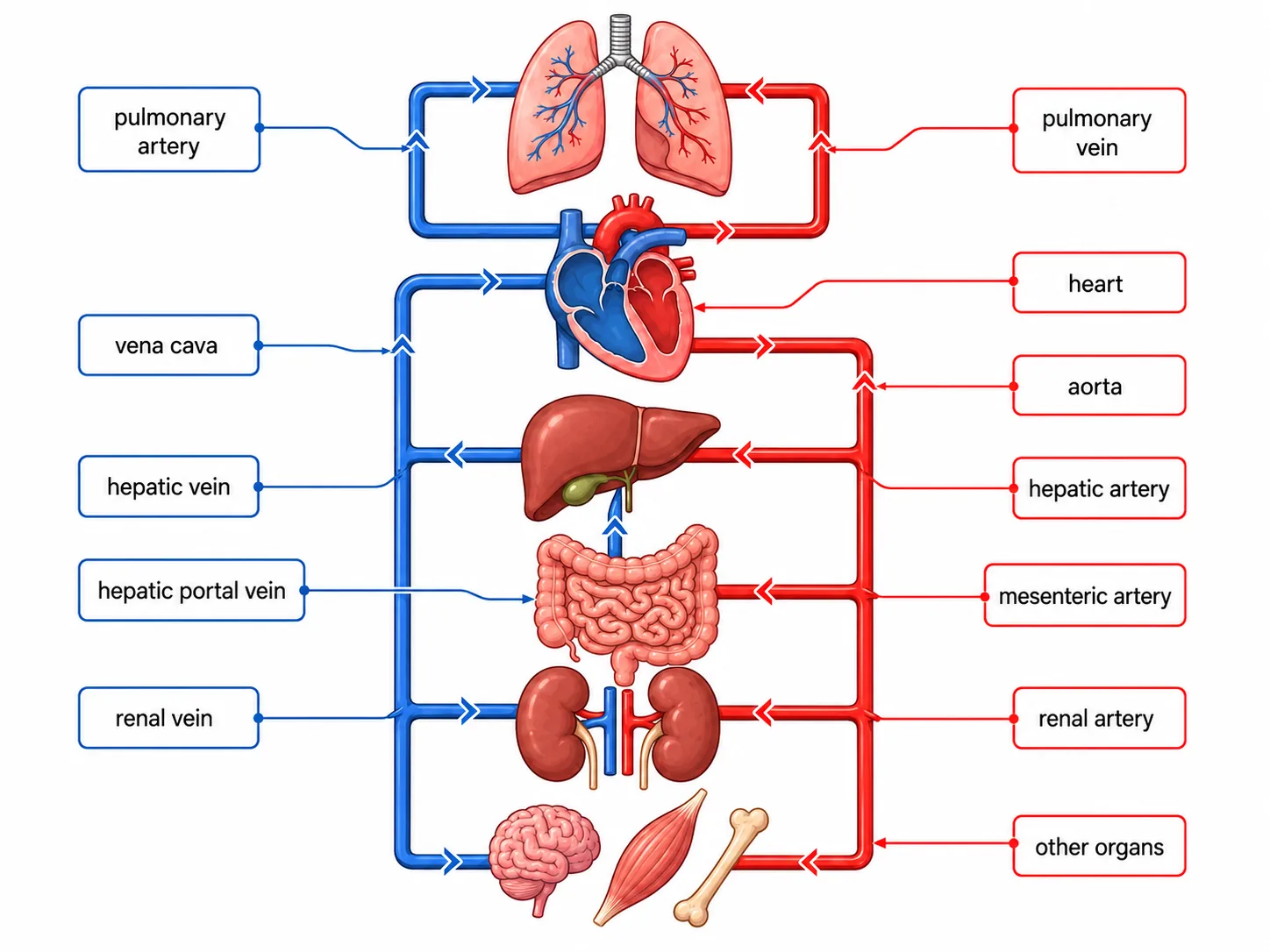
| Heart | Vena cava and pulmonary vein | Aorta and pulmonary artery |
| Lungs | Pulmonary artery | Pulmonary vein |
| Liver | Hepatic artery and hepatic portal vein | Hepatic vein |
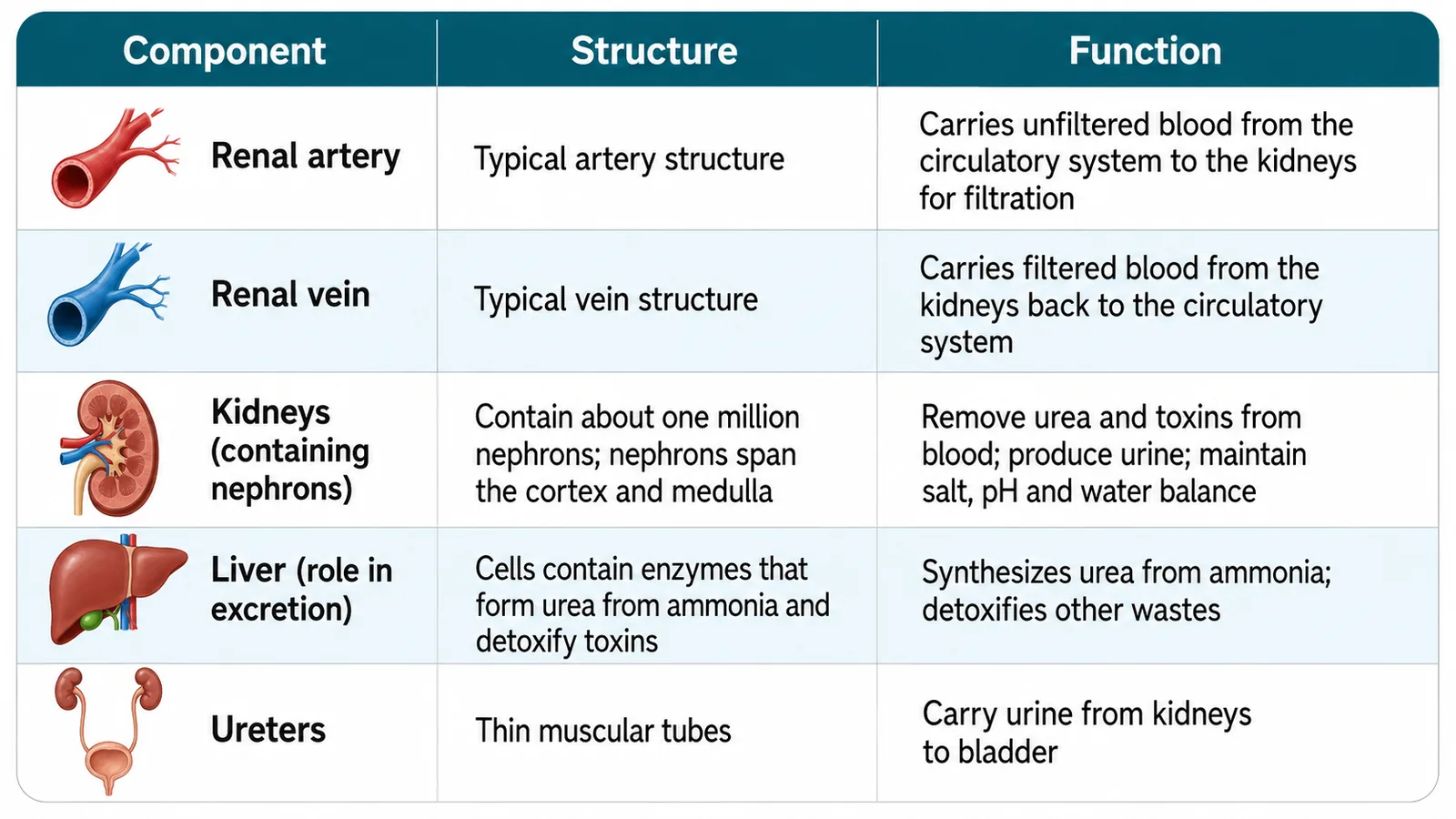
| Kidneys | Renal artery | Renal vein |
Section 5 of 7Using the table



1
Decide which direction the question asks about: towards the organ or away from it.
2
Remember that the vessel name usually begins with the organ it serves, for example renal for kidney and hepatic for liver.
3
Check whether the vessel is an artery or a vein by asking if it carries blood away from the heart or towards it.
4
Note that the liver is unusual because it receives blood from two vessels, the hepatic artery and the hepatic portal vein.
Section 6 of 7Key terms
| Term | Meaning |
|---|---|
| Closed circulatory system | A system in which blood is always contained within vessels. |
| Aorta | The large artery that carries oxygenated blood from the heart to the body. |
| Vena cava | The large vein that returns deoxygenated blood from the body to the heart. |
| Hepatic portal vein | The vessel that carries blood rich in digested food from the gut to the liver. |
| Lymphatic vessel | A vessel that returns excess tissue fluid to the blood system. |
Section 7 of 7Exam technique
1
Saying the blood leaves the vessels to flow around the body — in humans blood stays inside vessels, and only plasma leaks out to form tissue fluid.
2
Assuming every artery has oxygenated blood; the pulmonary artery does not.
3
Mixing up the renal artery and renal vein: the artery takes blood to the kidney and the vein takes it away.
4
Forgetting that the liver has two incoming vessels but only one leaving vessel.