2.1.2Reproduction and Inheritance
Gametes and Fertilisation
5 min read 7 parts Lesson 3 of 29 1 quiz
Section 1 of 7What gametes are

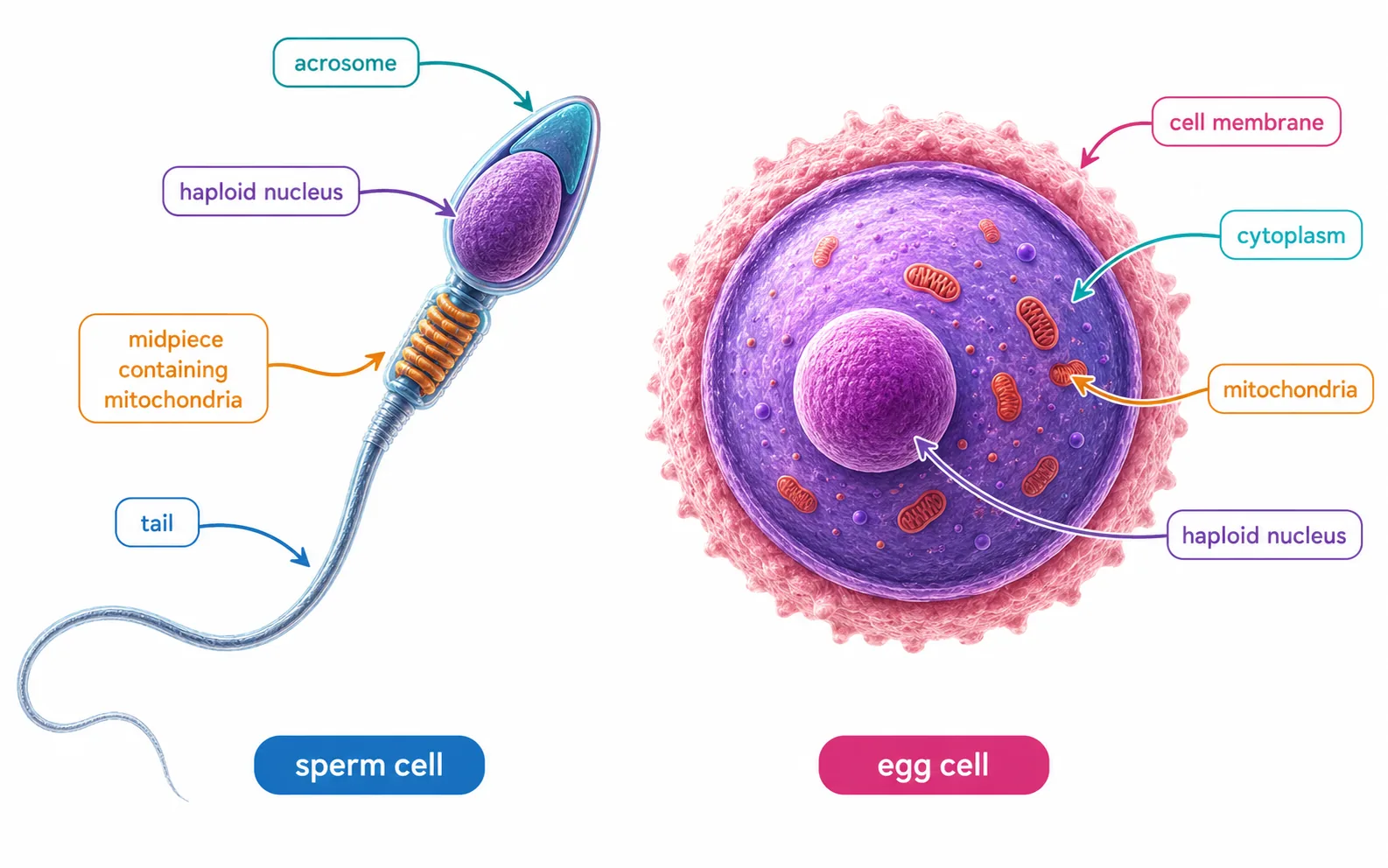


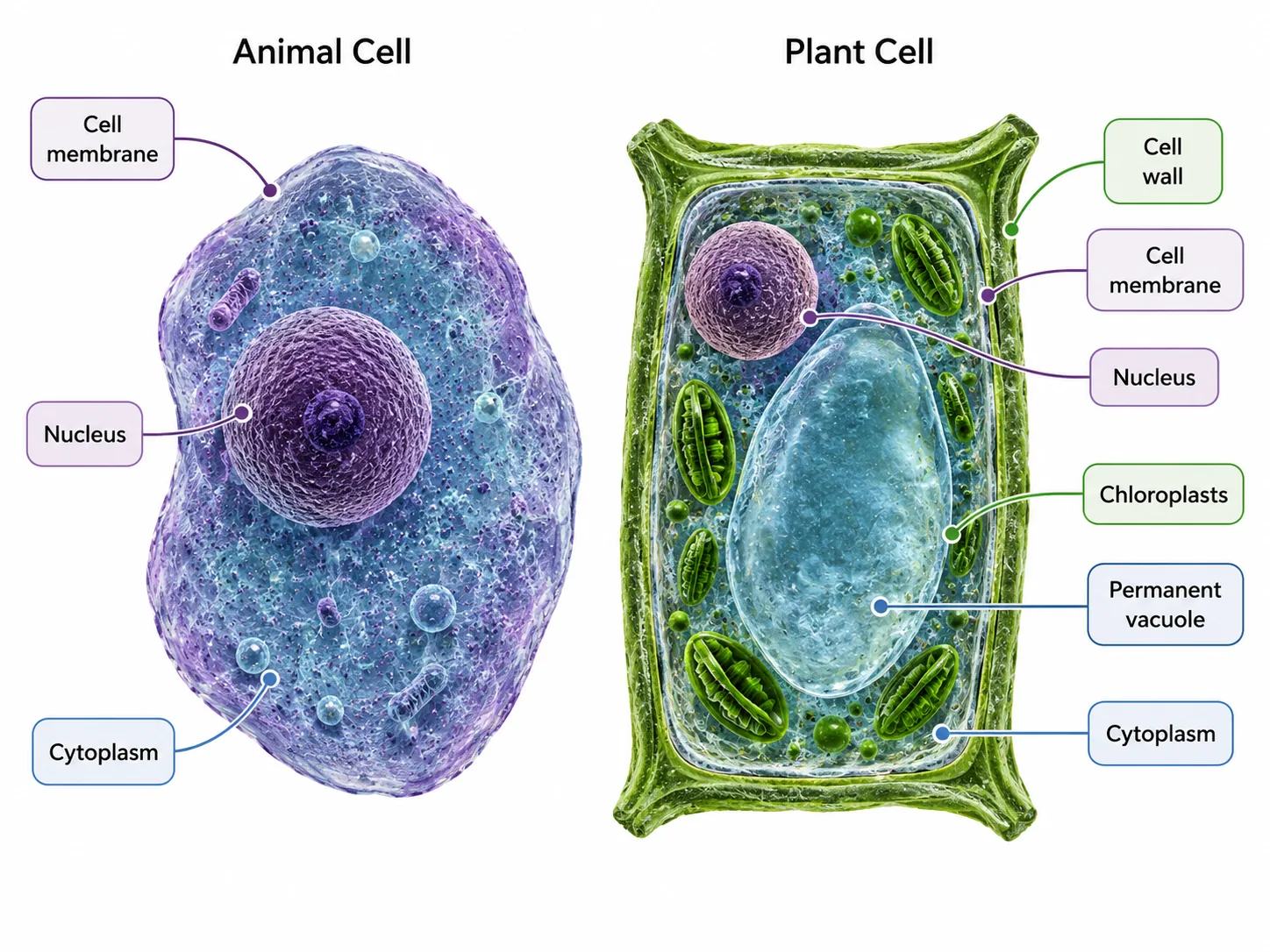

Sex cells made by meiosis
- Sex cells made by meiosis Gametes are the specialised reproductive cells of an organism.
- They are made by a type of cell division called meiosis.
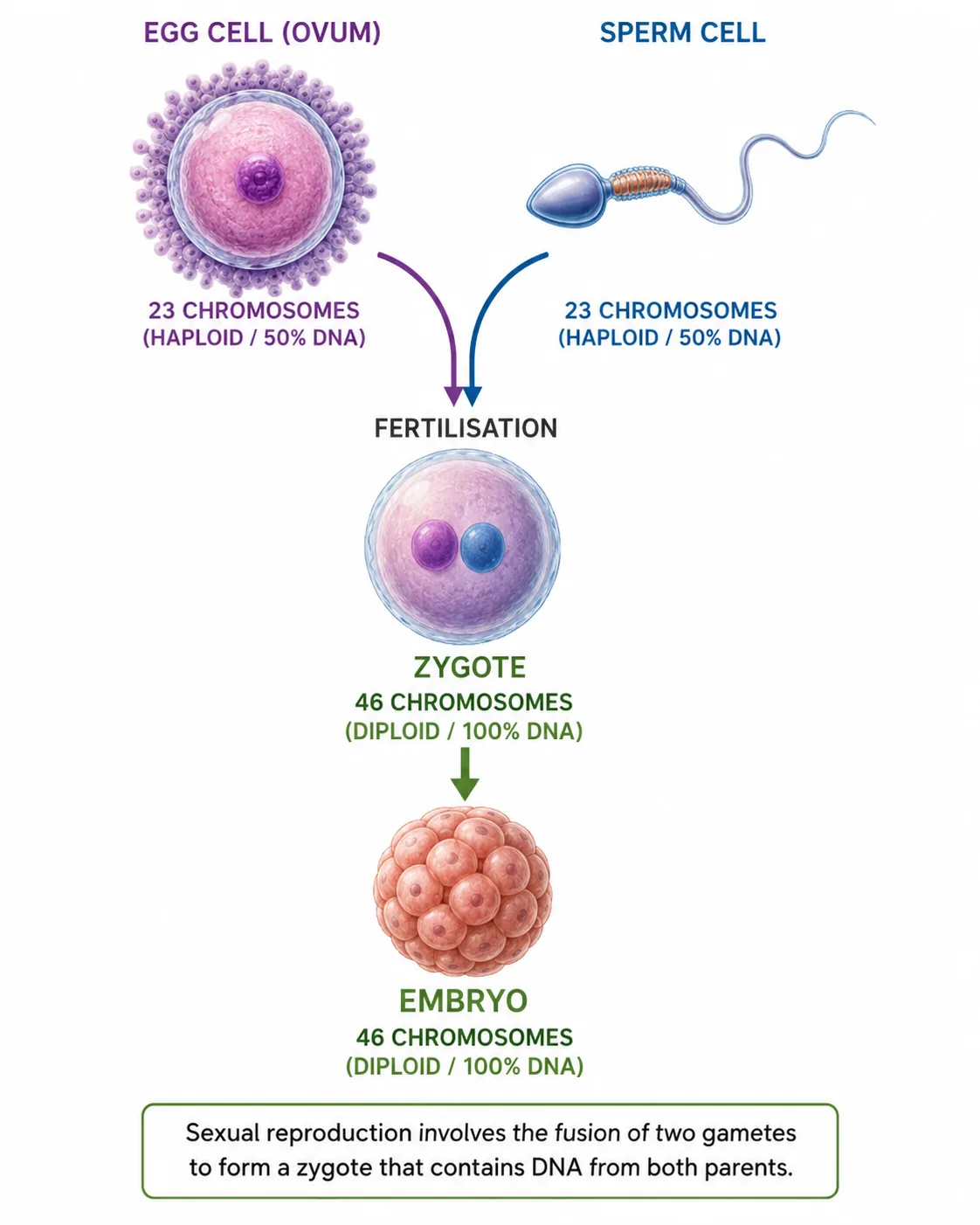
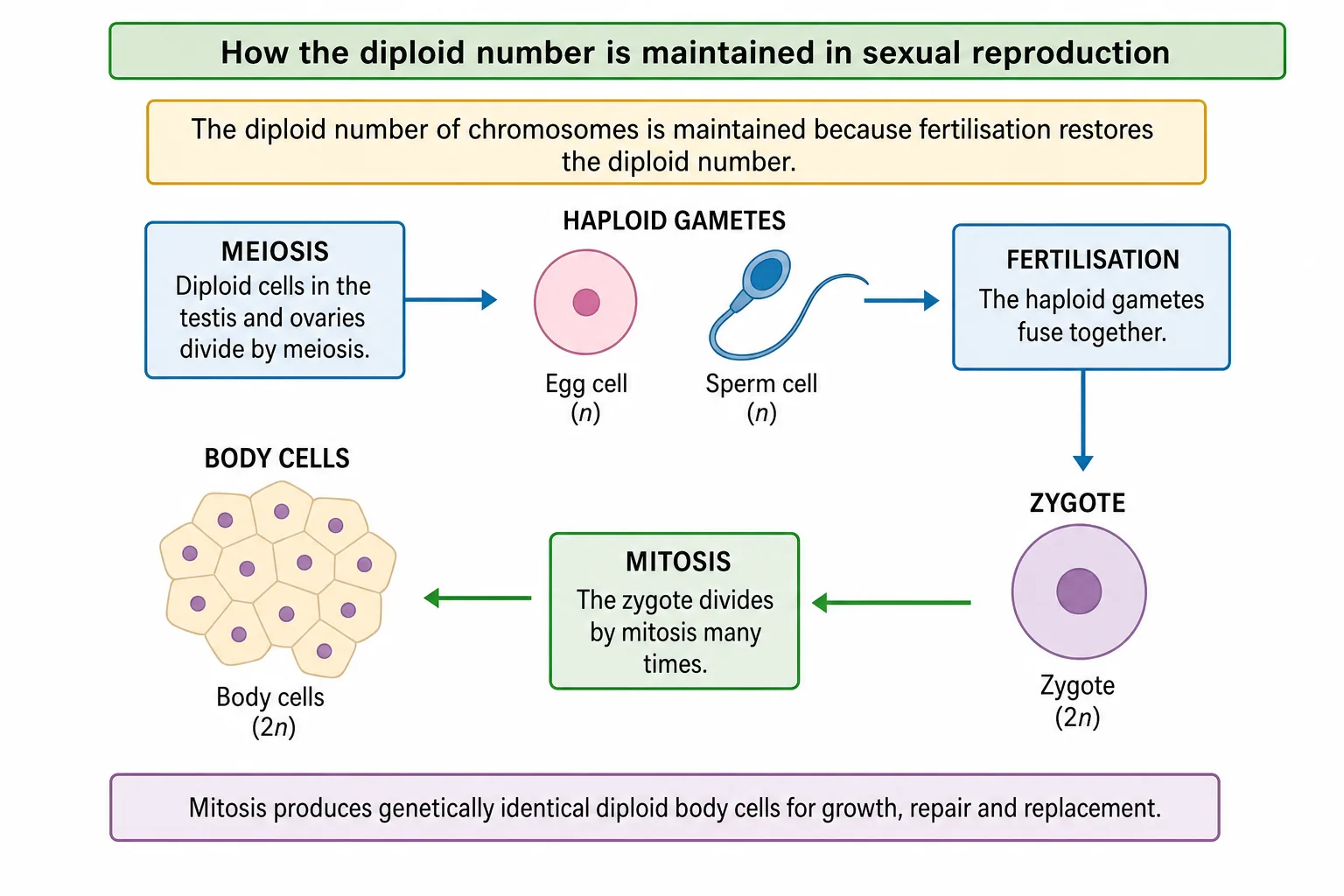
- Because of meiosis, each gamete carries only half the normal number of chromosomes: 23 in a human gamete, compared with 46 in an ordinary body cell.
Gametes in animals
- Gametes in animals The male gamete is the sperm cell and the female gamete is the egg cell, also called the ovum.
Gametes in flowering plants
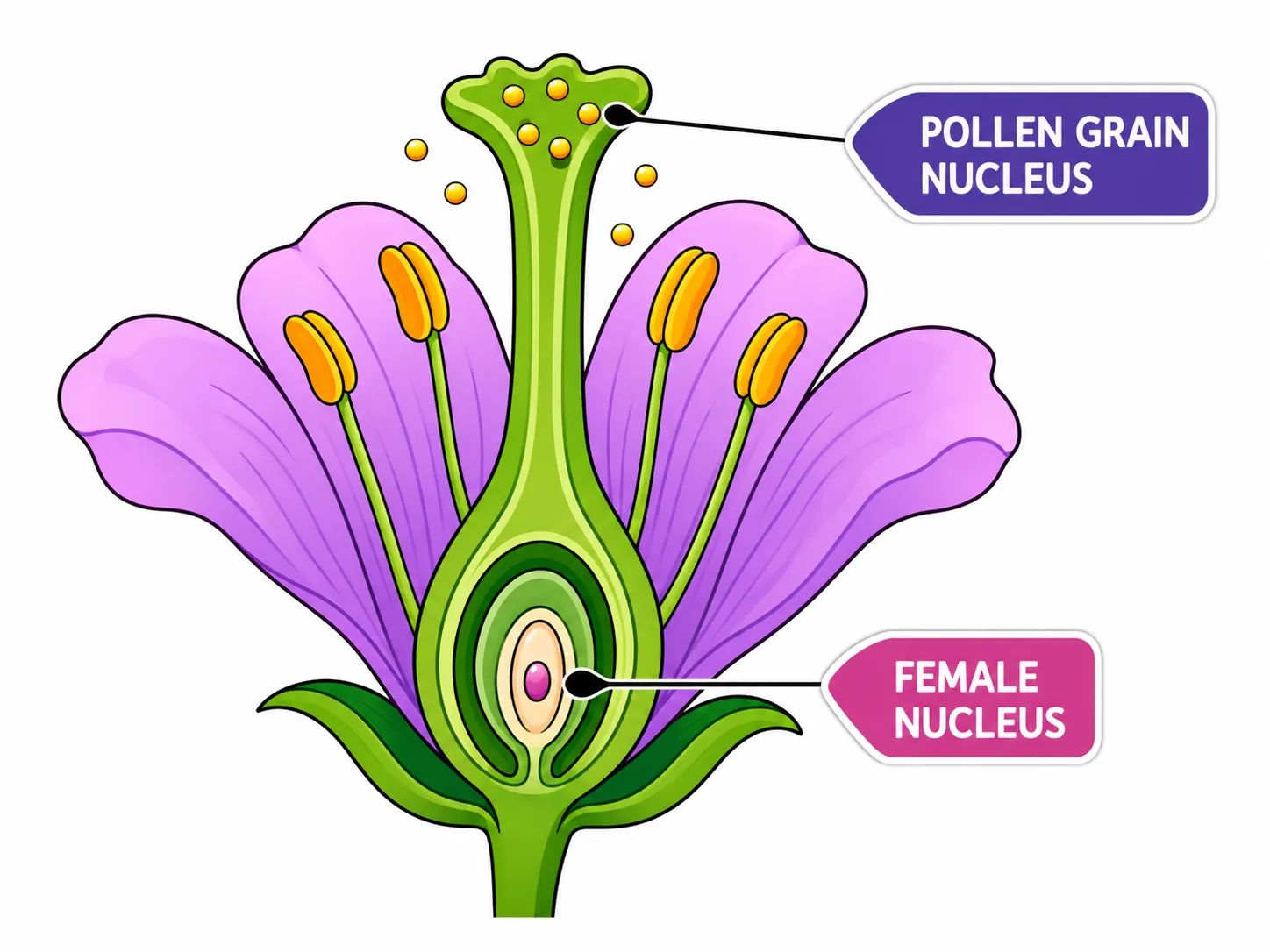
- Gametes in flowering plants The male gamete is the nucleus inside a pollen grain.
- The female gamete is the ovum (egg cell) held inside an ovule in the ovary.
Section 2 of 7Adaptations of sperm and egg
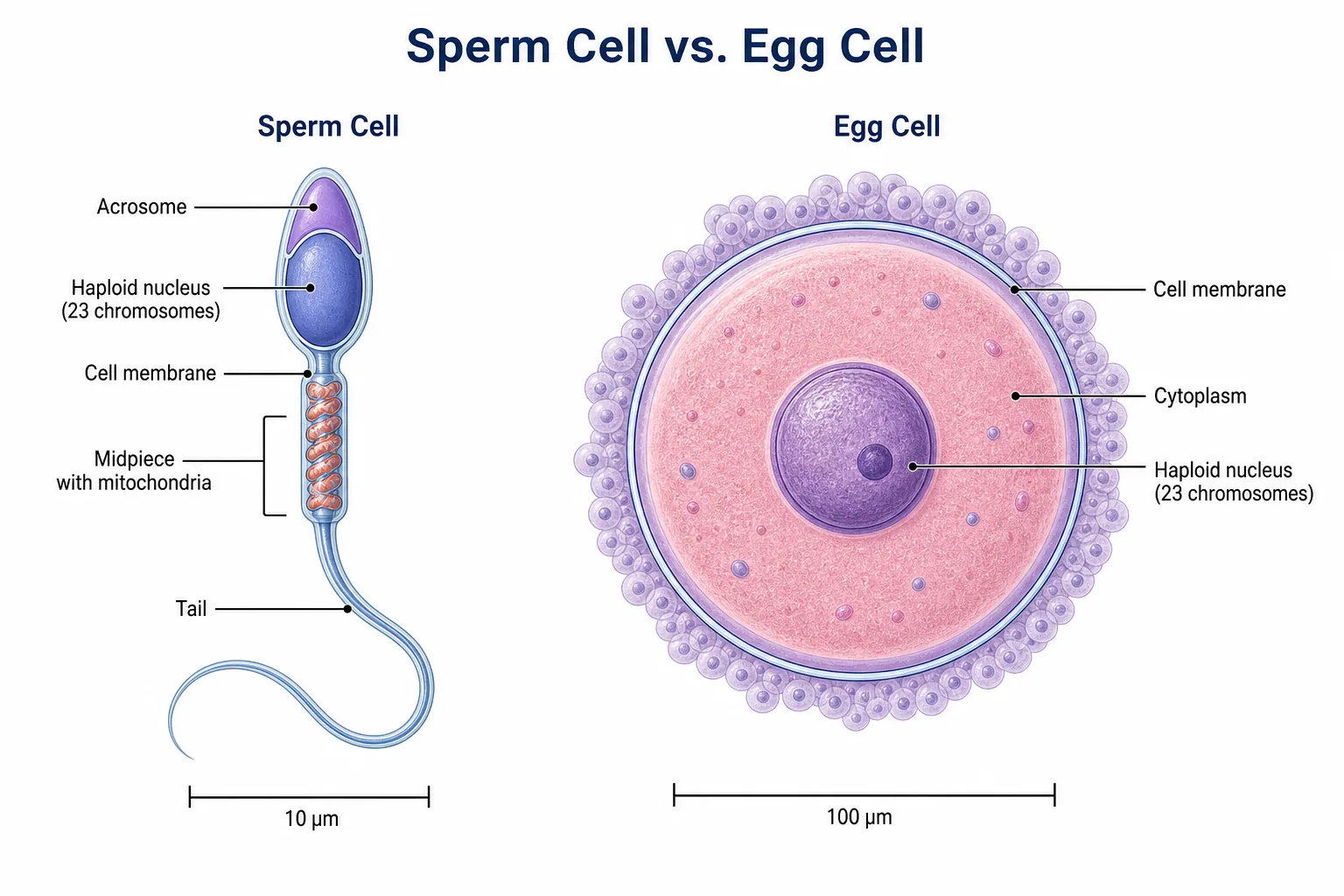
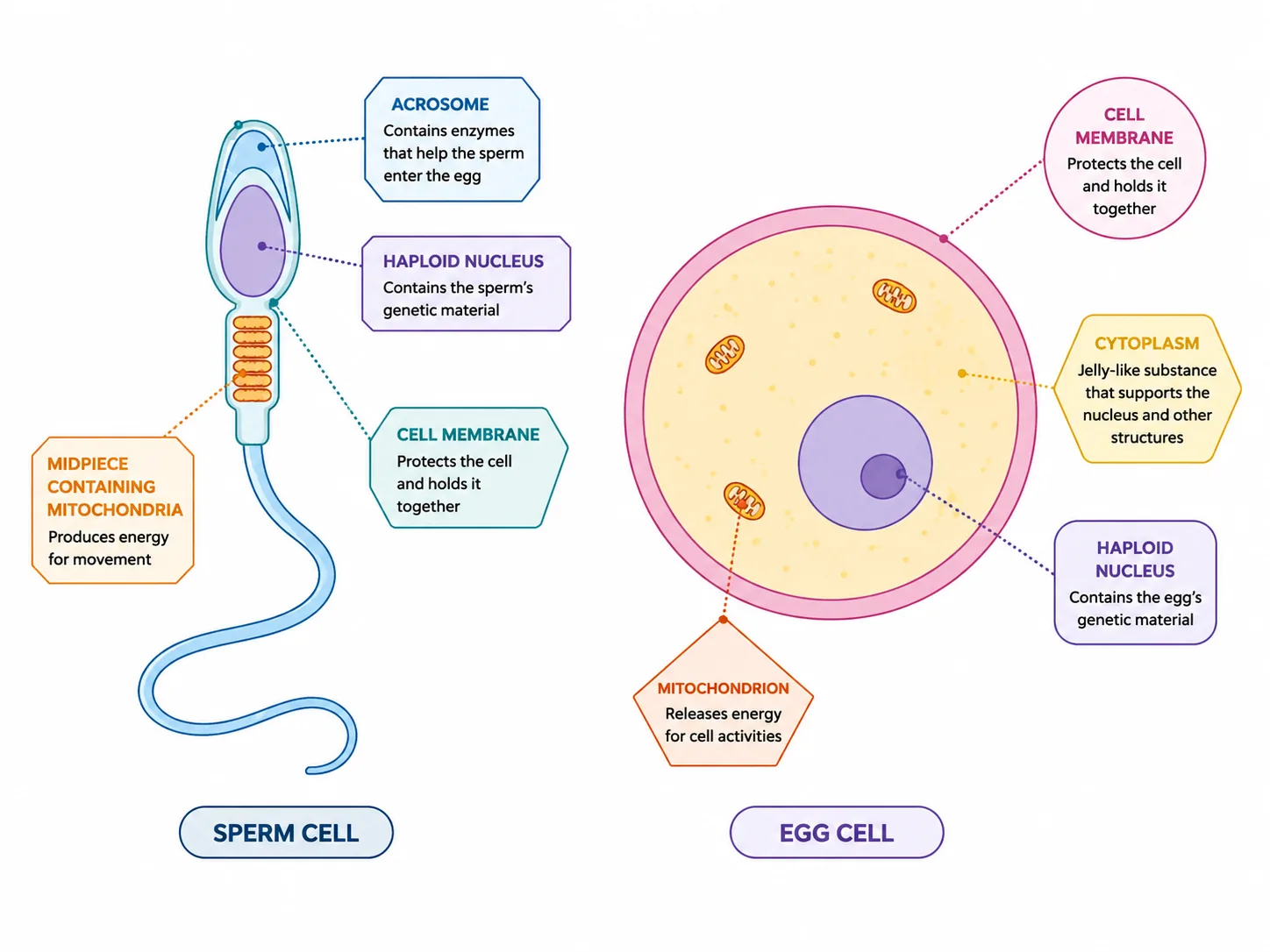
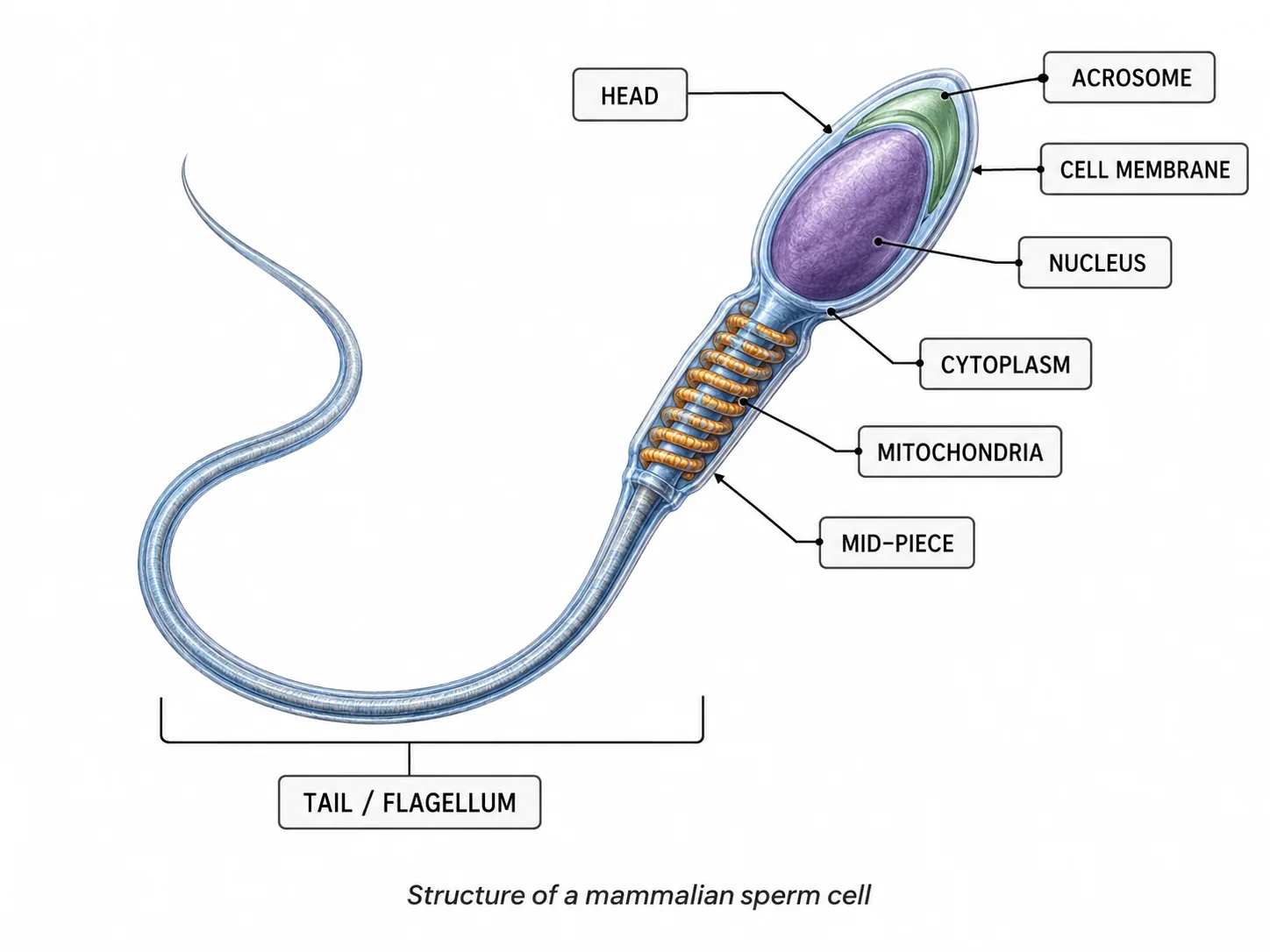
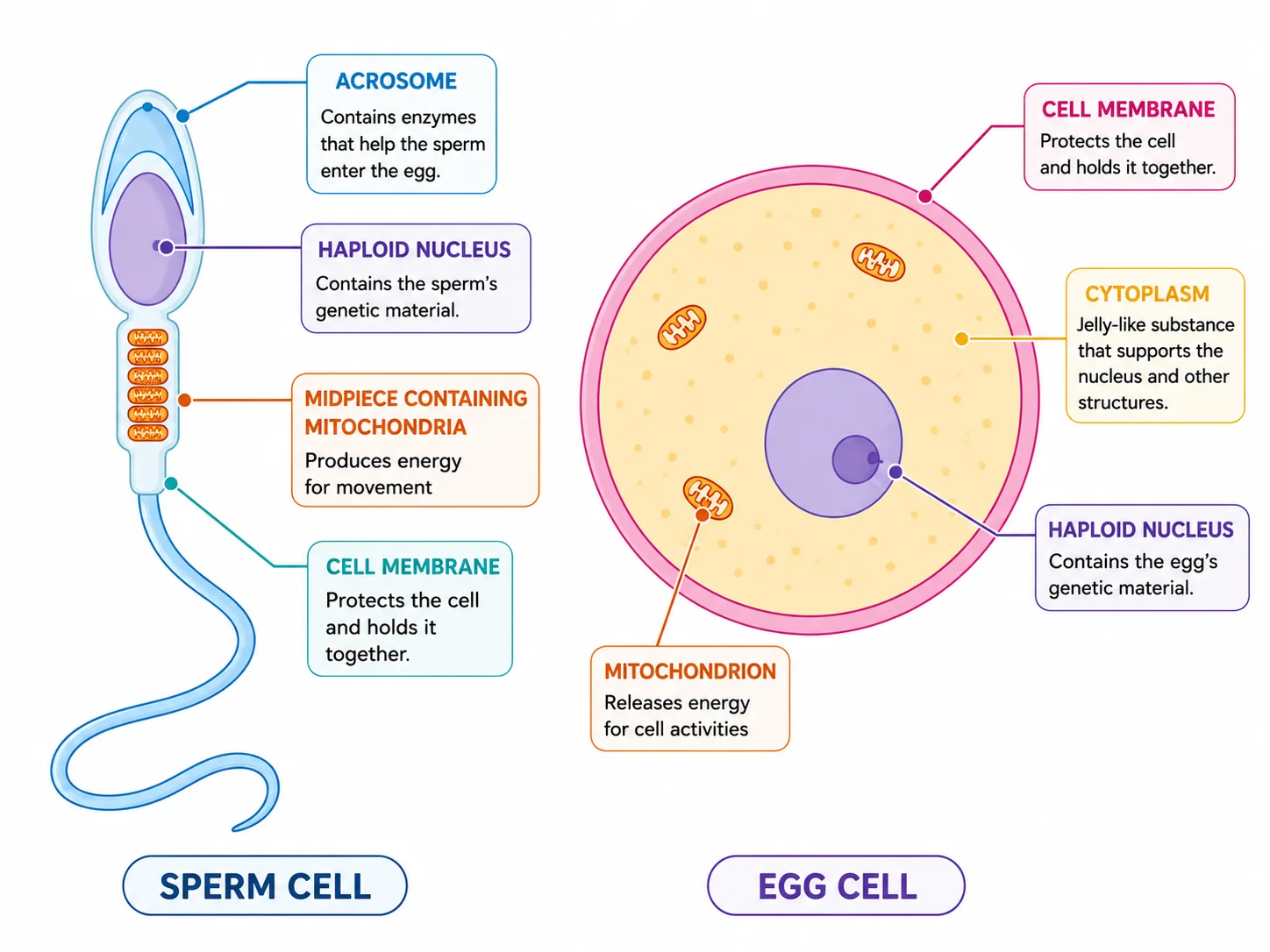
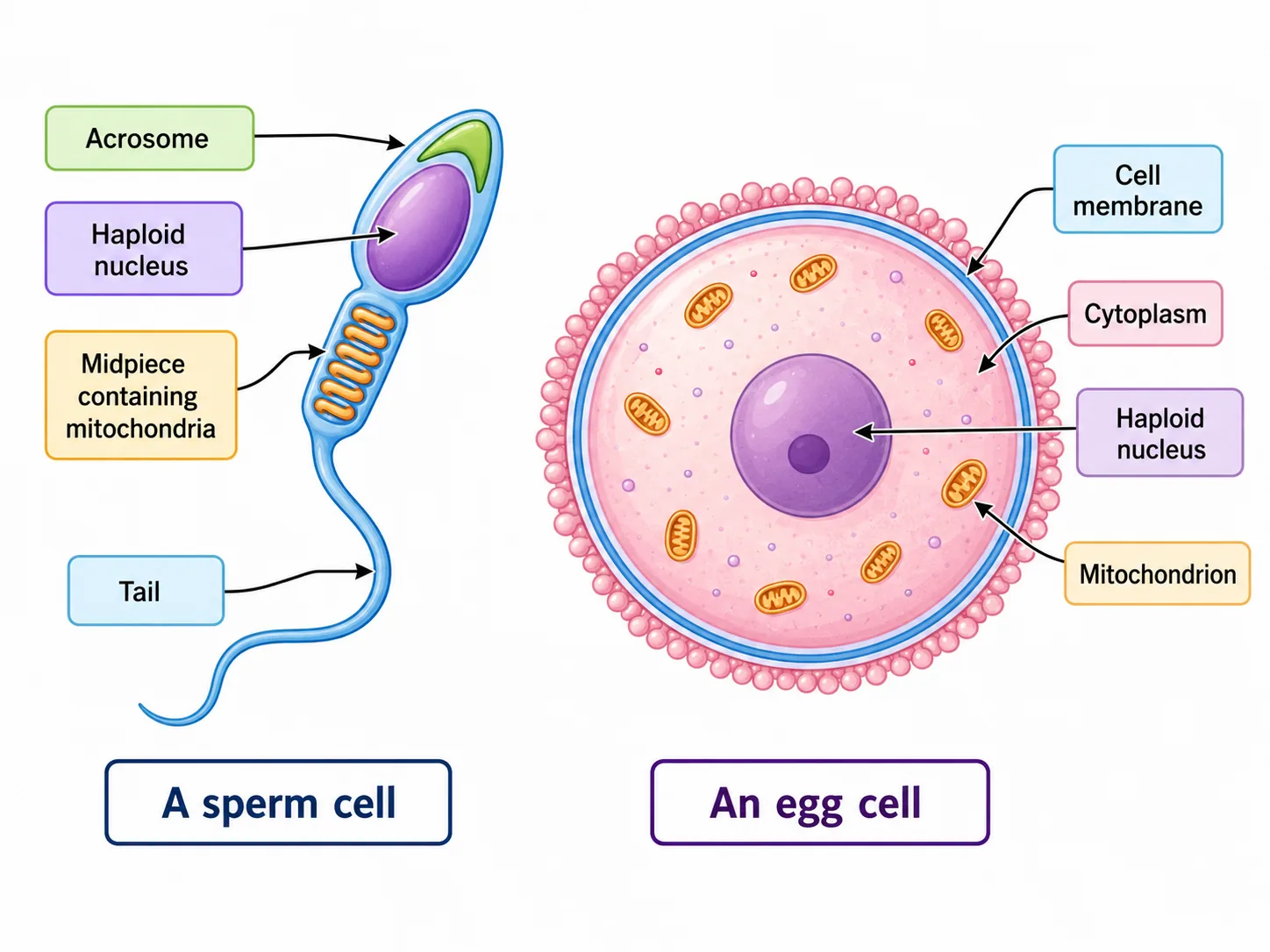

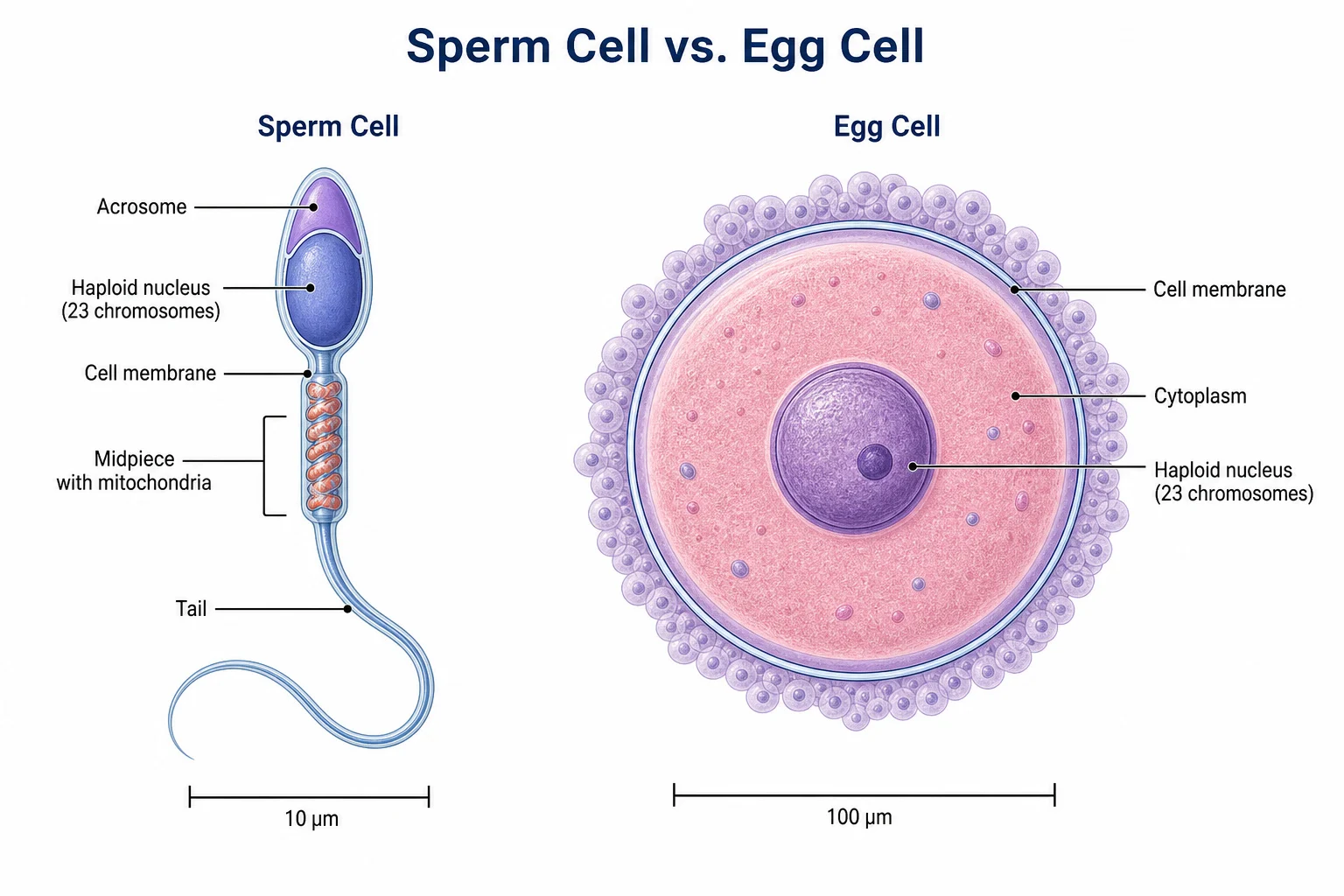
| Gamete | Adaptation | How it helps |
|---|---|---|
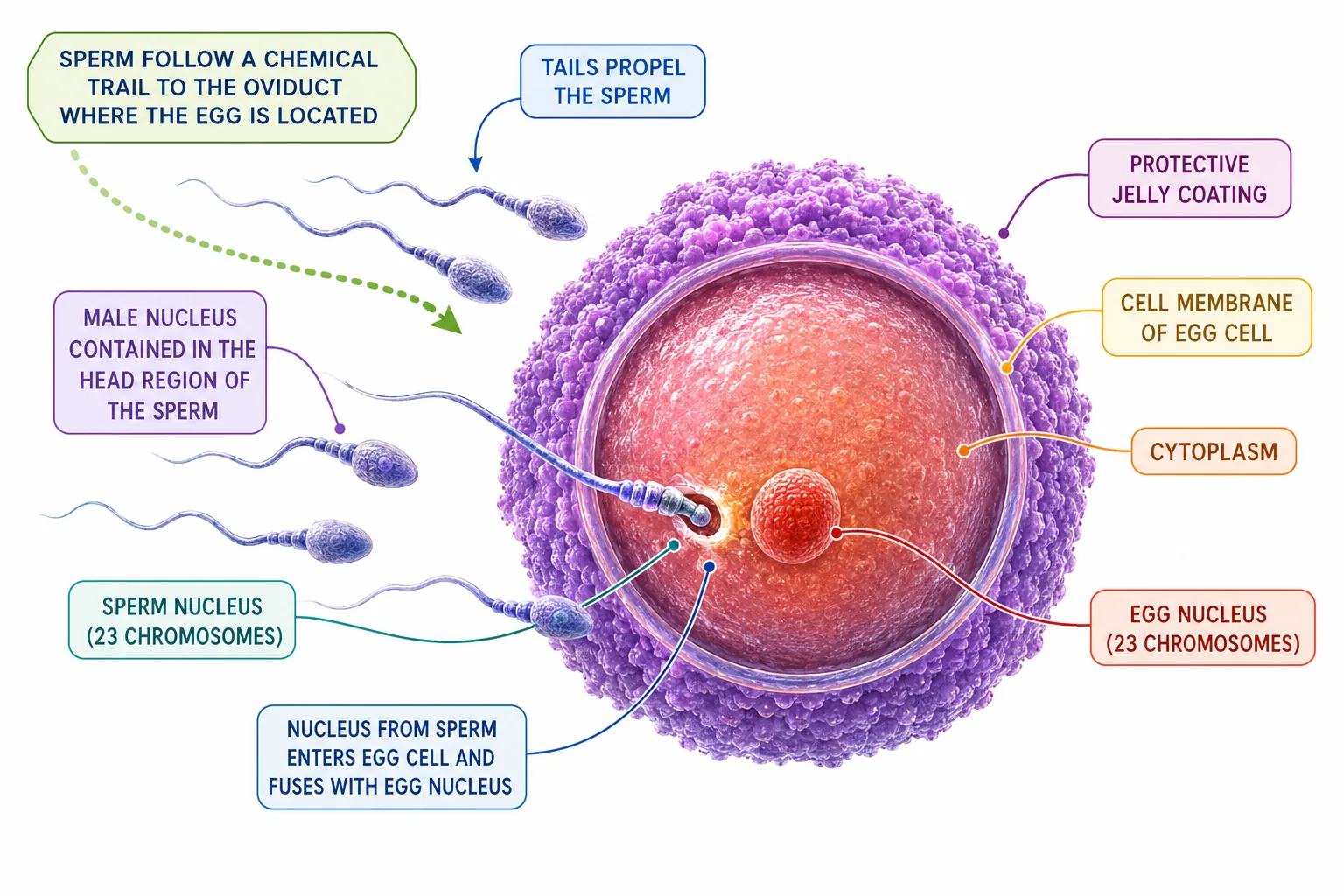
| Sperm cell | Long tail | Lashes from side to side to swim towards the egg |
| Sperm cell | Many mitochondria | Release the energy needed to keep the tail moving |
| Sperm cell | Small, streamlined head containing the nucleus | Carries the father's genes with little drag |
| Egg cell | Large cytoplasm containing food reserves | Supplies energy and nutrients to the early embryo |
| Egg cell | Haploid nucleus | Provides the mother's half of the genetic information |
Section 3 of 7Fertilisation in humans

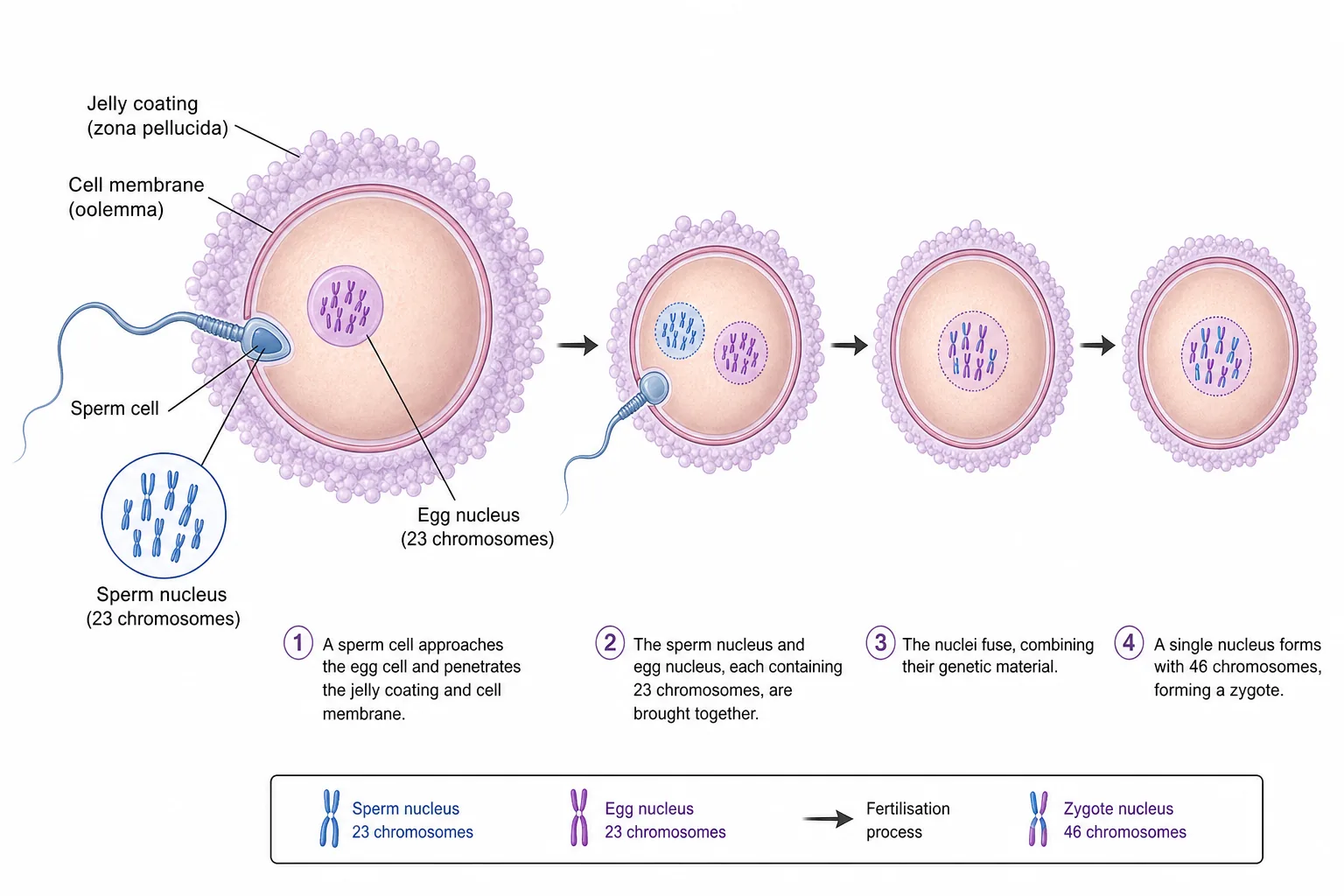
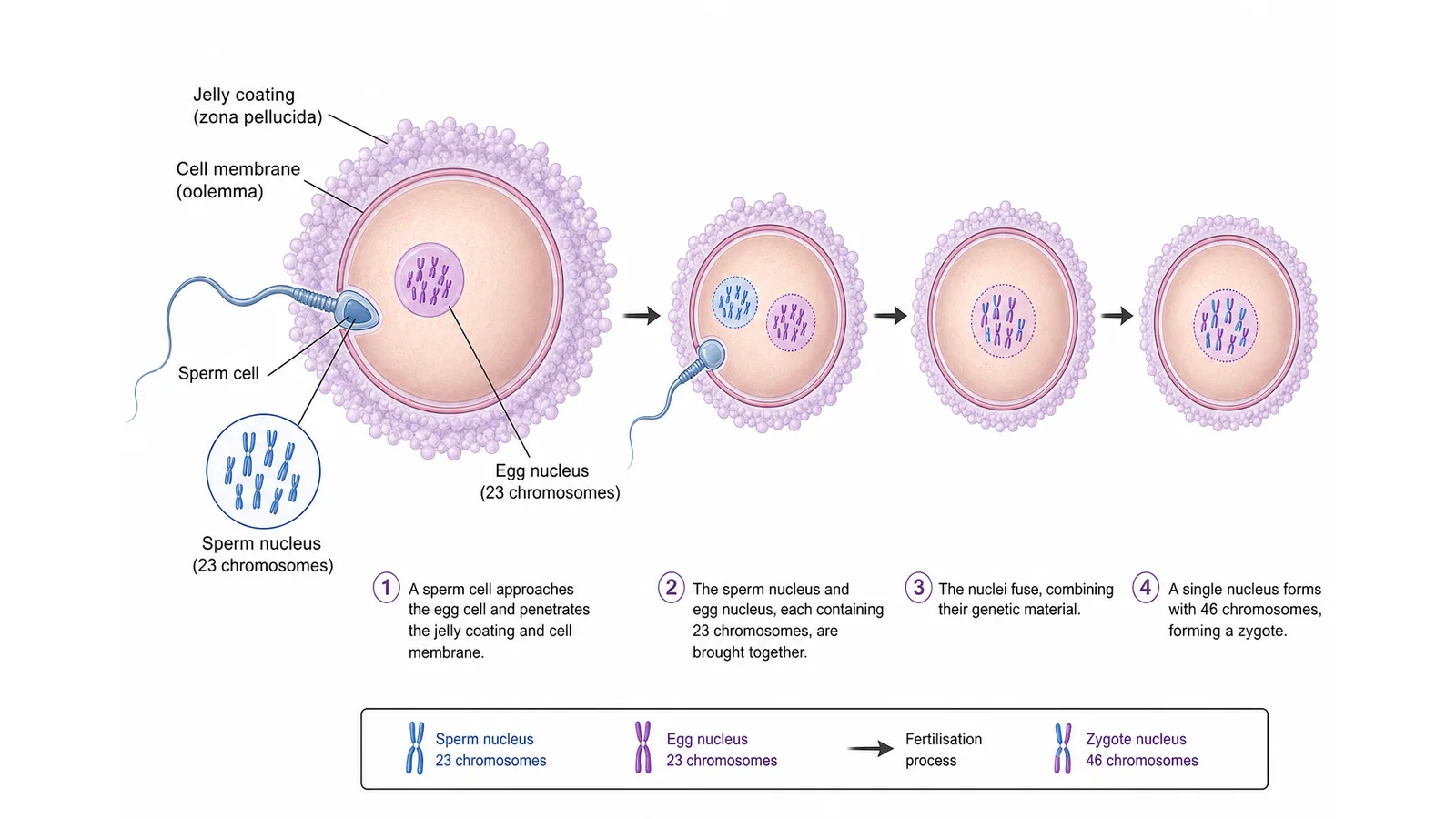
1Sperm are released
- Sperm are released During intercourse semen is released into the vagina close to the cervix.
- Sperm swim through the cervix into the uterus and up the oviducts.
2Sperm meets egg
- Sperm meets egg If an egg is present in the oviduct, usually within one to two days of ovulation, a sperm may reach it.
3Nuclei fuse
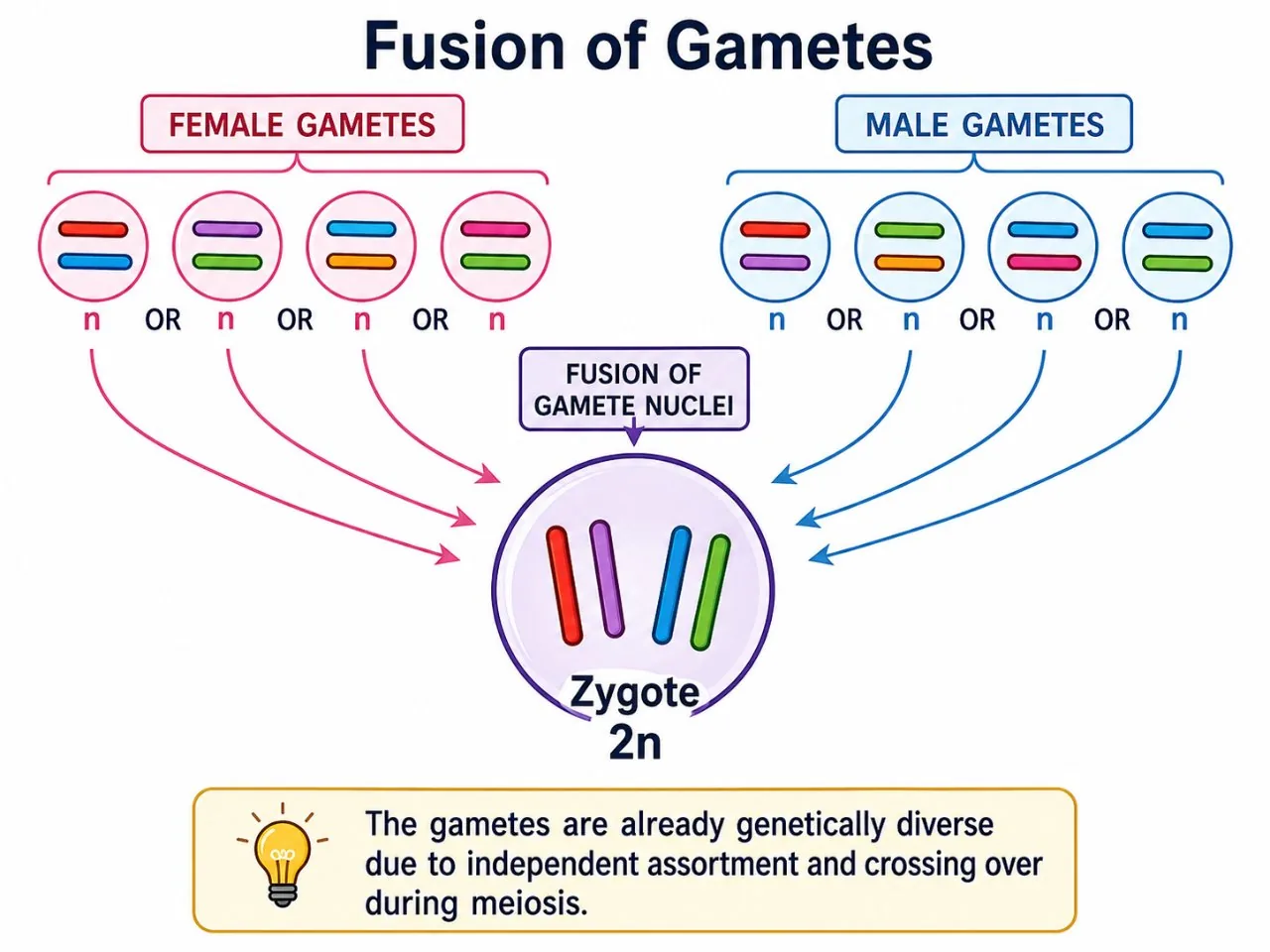
- Nuclei fuse The nucleus of the sperm joins with the nucleus of the egg.
- This fusion of a male and a female gamete is fertilisation.
4A zygote forms
- A zygote forms The fertilised egg is called a zygote and has the full 46 chromosomes, 23 from each parent.
Section 4 of 7From zygote to embryo
1
The zygote divides by mitosis, which produces identical copies of the cells and keeps the full chromosome number.
2
The ball of cells that results is called an embryo.
3
As the embryo grows, its cells become specialised (they differentiate) to do particular jobs.
4
These specialised cells form all the tissues and organs of the new individual.
Section 5 of 7Fertilisation in plants




Pollen tube
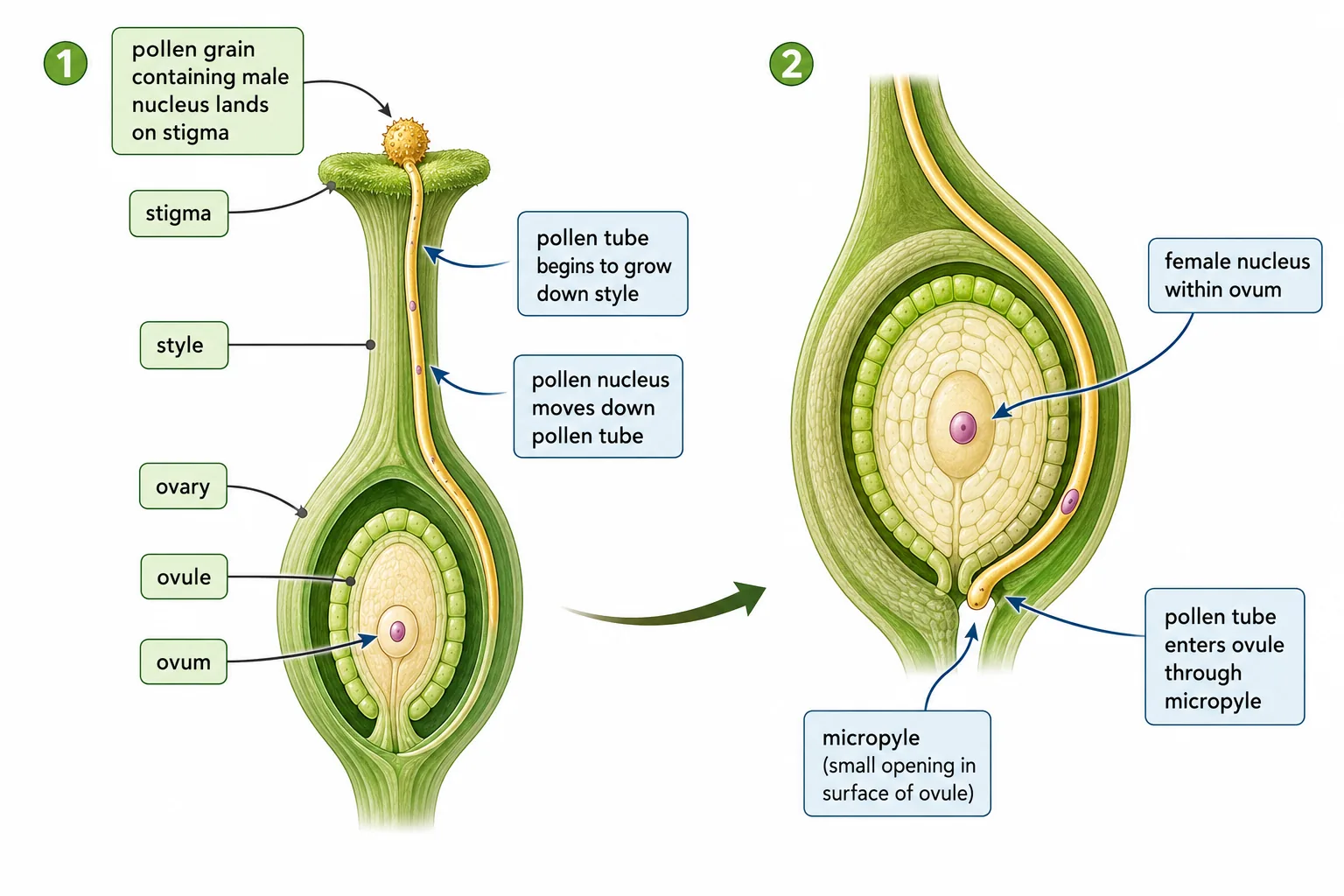
- Pollen tube After pollination, a pollen tube grows from the pollen grain down towards the ovary.
Delivery of the male nucleus
- Delivery of the male nucleus The male nucleus travels along the tube into the ovary,
- where it fuses with the nucleus of the ovum to form a zygote that develops into the plant embryo.
Section 6 of 7Key terms
| Term | Meaning |
|---|---|
| Gamete | A haploid sex cell, made by meiosis, that fuses with another gamete at fertilisation. |
| Fertilisation | The fusion of the nucleus of a male gamete with the nucleus of a female gamete. |
| Zygote | The single cell formed when two gametes fuse; it has the full chromosome number. |
| Meiosis | Cell division that halves the chromosome number to make gametes. |
| Embryo | The ball of cells formed when a zygote divides by mitosis. |
| Specialised cell | A cell that has changed in structure so that it can carry out a particular job. |
Section 7 of 7Exam technique
1
Saying that gametes have 46 chromosomes. Human gametes have 23; the zygote restores the total to 46.
2
Writing that a zygote is made by mitosis. The zygote is made by fertilisation, and mitosis is what happens afterwards to build the embryo.
3
Giving the sperm's adaptation as just having a tail without adding that the mitochondria supply the energy for swimming.
4
Forgetting that fertilisation happens in the oviduct, not in the uterus.