2.1.12Reproduction and Inheritance
Development of Secondary Sexual Characteristics
5 min read 8 parts Lesson 13 of 29 1 quiz
Section 1 of 8What and why

Secondary sexual characteristics
- Secondary sexual characteristics These are the changes during puberty that mark the body's development towards adulthood and the ability to reproduce.
- They are different from the primary sexual characteristics, the reproductive organs present from birth.
Hormone control
- Hormone control Puberty is triggered when hormones are released in larger amounts.
- The key sex hormone in females is oestrogen and in males is testosterone.
Typical timing
- Typical timing Puberty usually starts in early adolescence, though the exact age varies between individuals.
Section 2 of 8Changes in females (oestrogen)
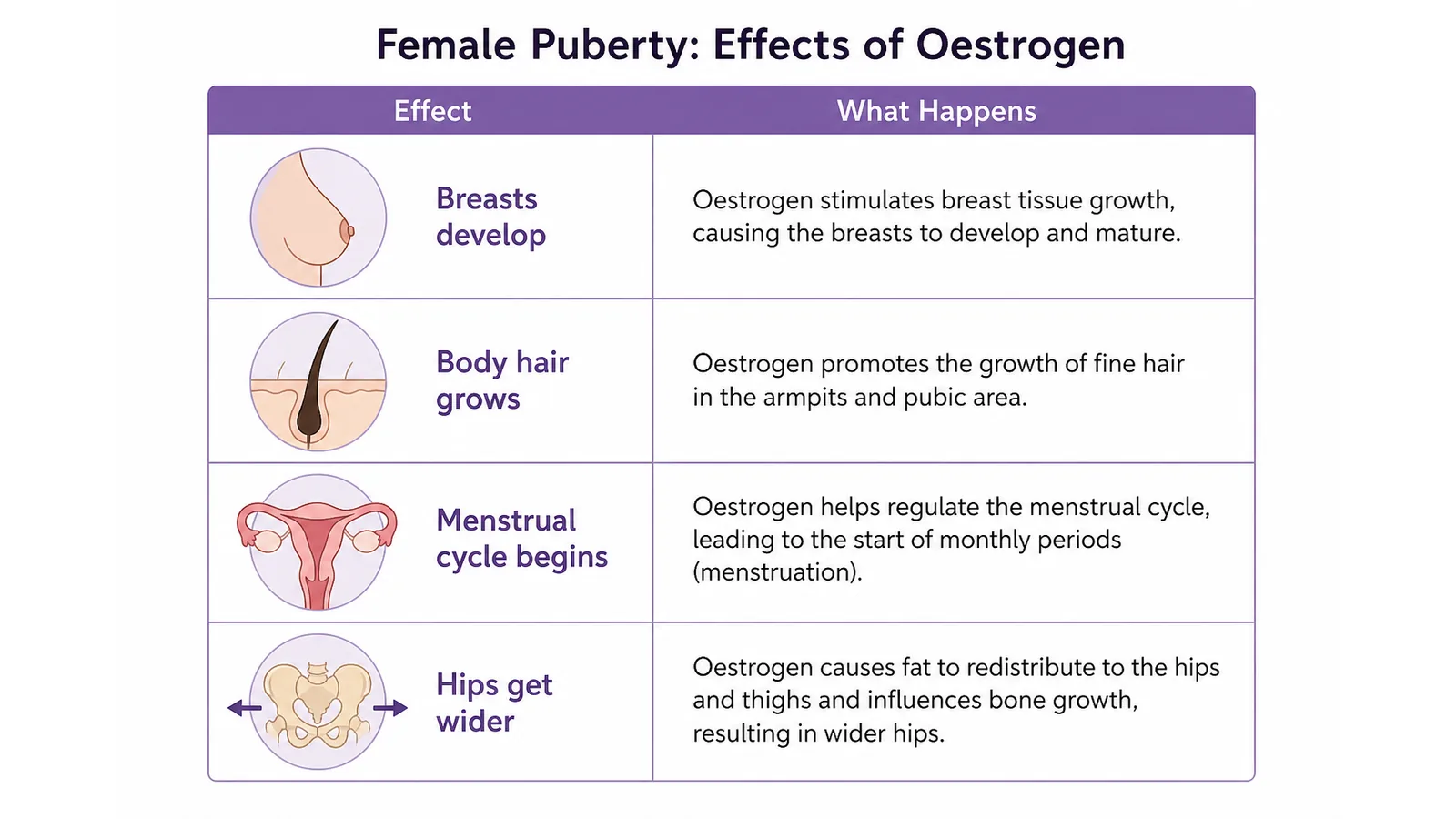
Oestrogen
Breasts
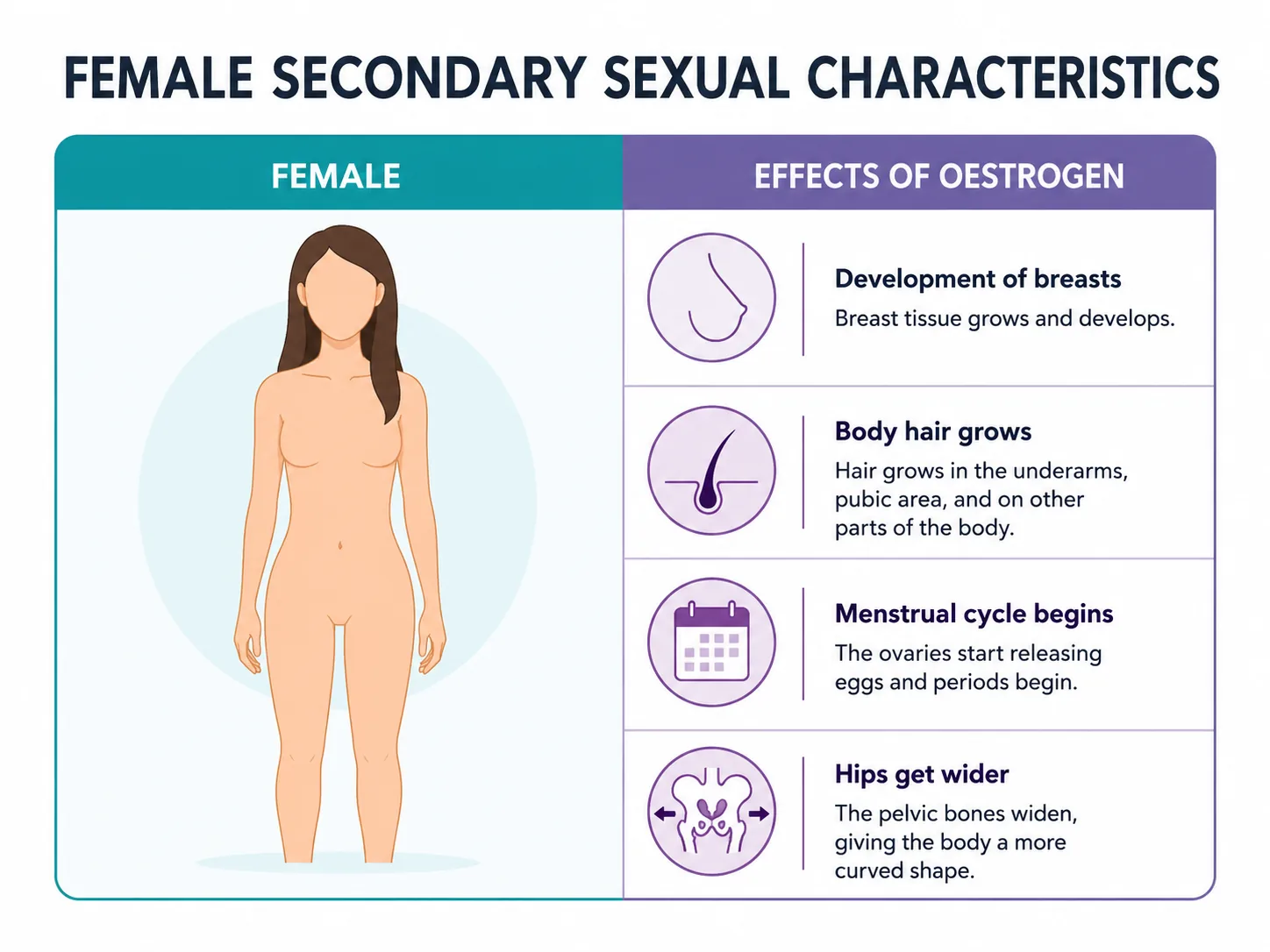
- Breasts The breasts develop.
Body hair
- Body hair Hair grows under the arms and in the pubic region.
Hips
- Hips The hips become wider.
Menstrual cycle
- Menstrual cycle Ovulation and periods begin.
Section 3 of 8Changes in males (testosterone)
Testosterone
Sex organs
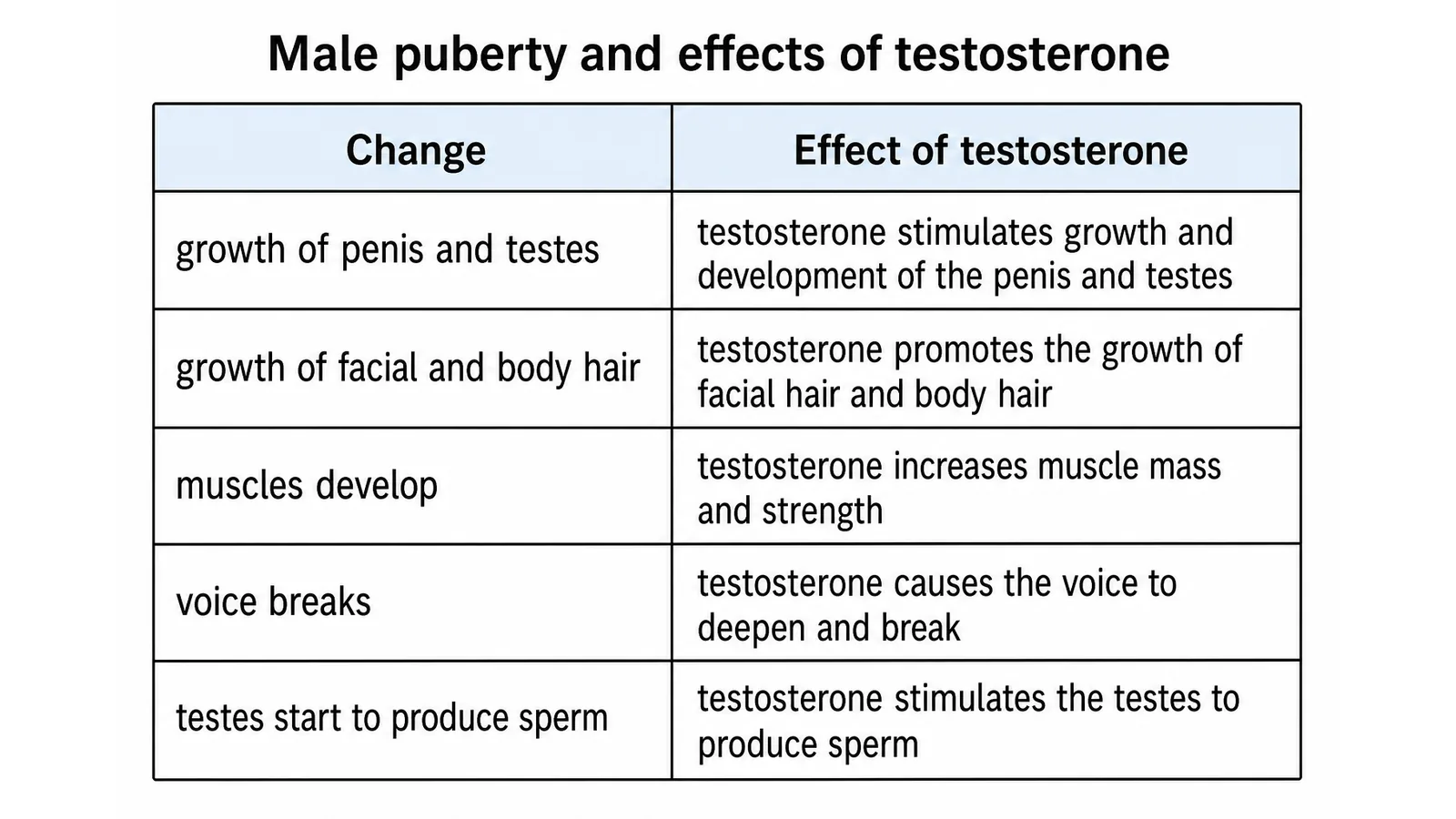
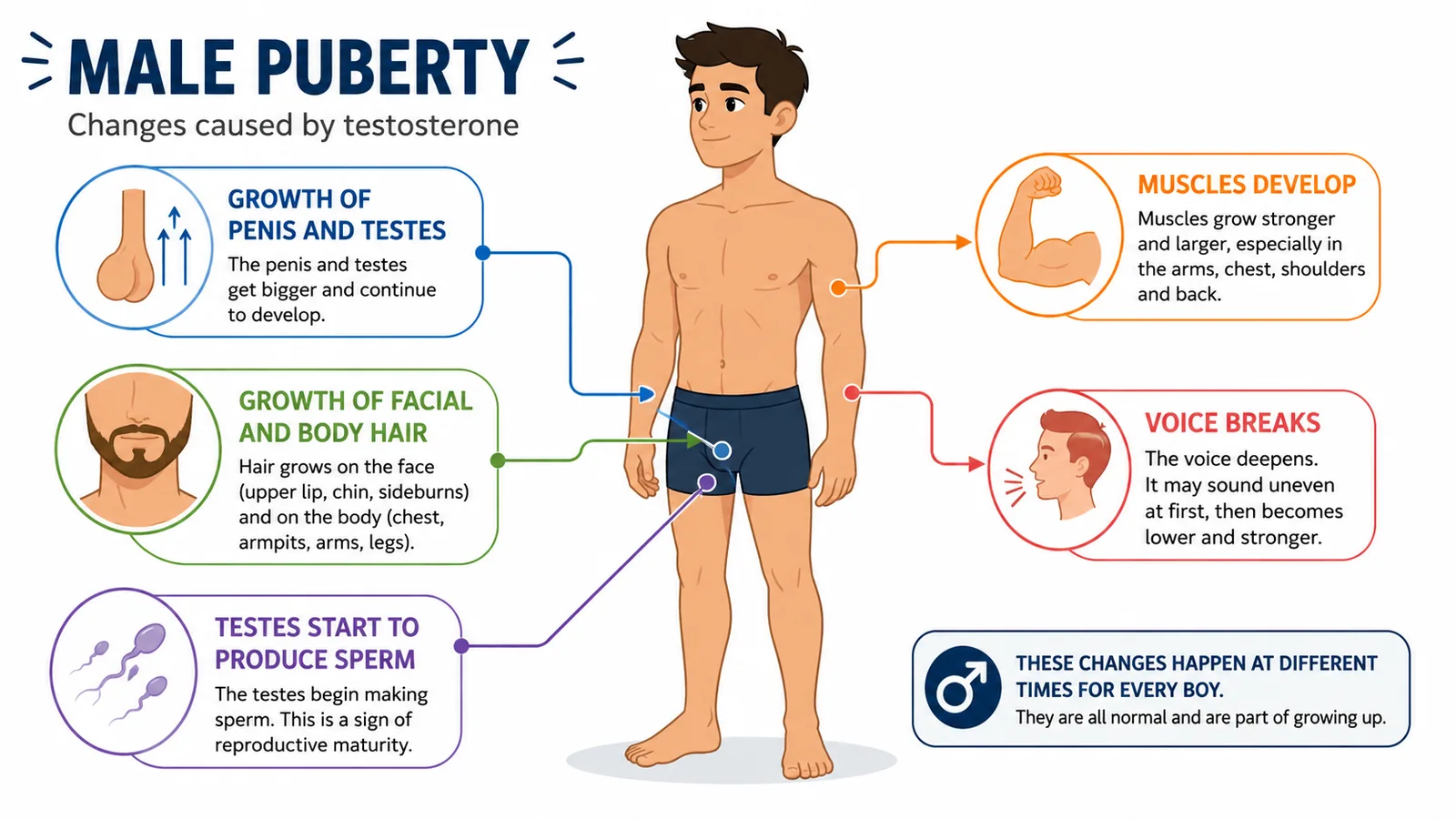
- Sex organs The testes and penis grow.
Sperm
- Sperm The testes start producing sperm.
Hair
- Hair Facial and body hair grow.
Voice
- Voice The voice breaks and becomes deeper.
Muscles
- Muscles Muscles develop and grow stronger.
Section 4 of 8Comparison
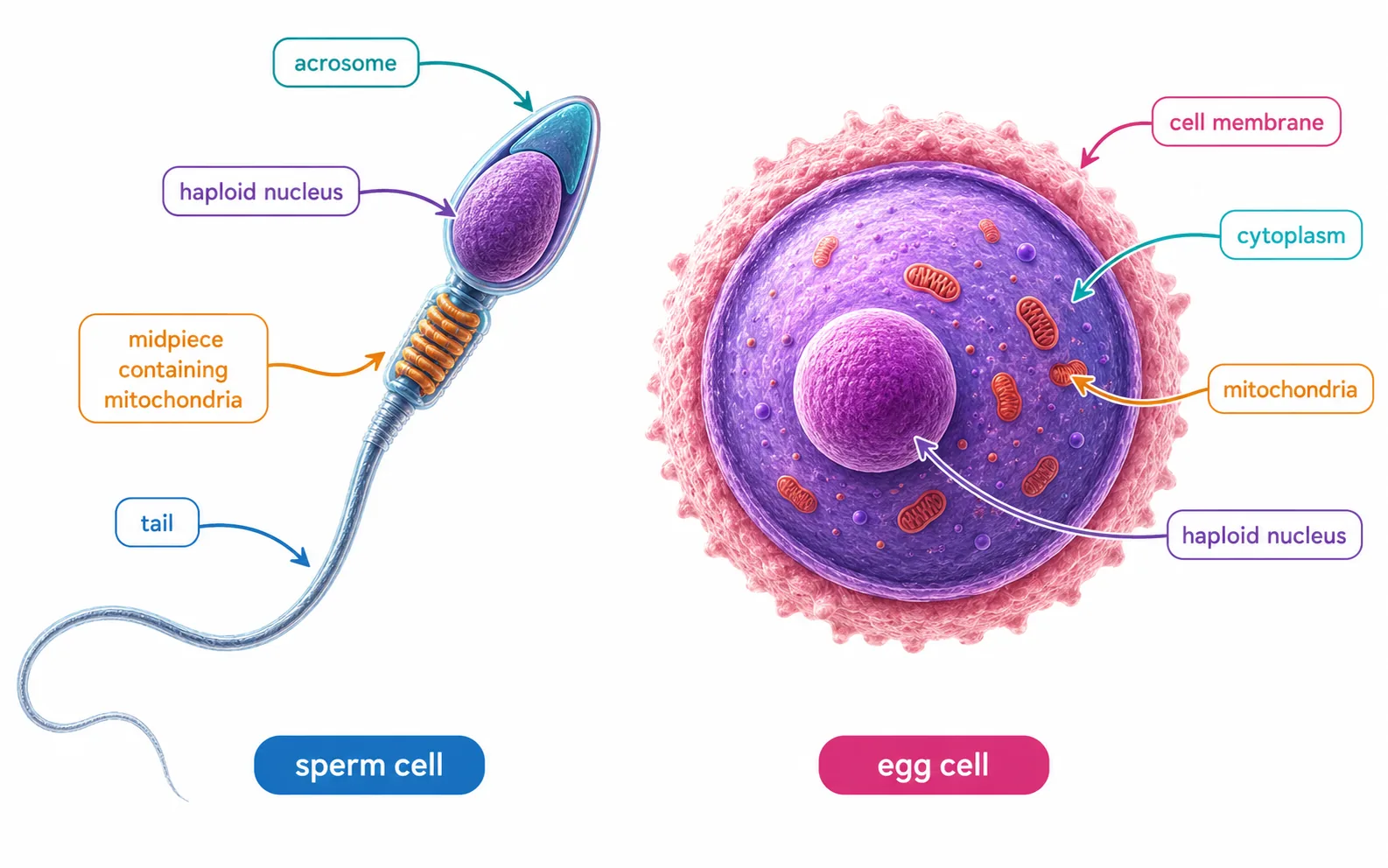
| Feature | Females | Males |
|---|---|---|
| Hormone | Oestrogen | Testosterone |
| Made in | Ovaries | Testes |
| Gamete production starts | Egg release and periods | Sperm production |
| Body shape | Wider hips, breast development | Muscle growth, broader build |
| Shared changes | Pubic and underarm hair; growth of sex organs; emotional changes | Pubic and underarm hair; growth of sex organs; emotional changes |
Section 5 of 8How the hormones act
1Release
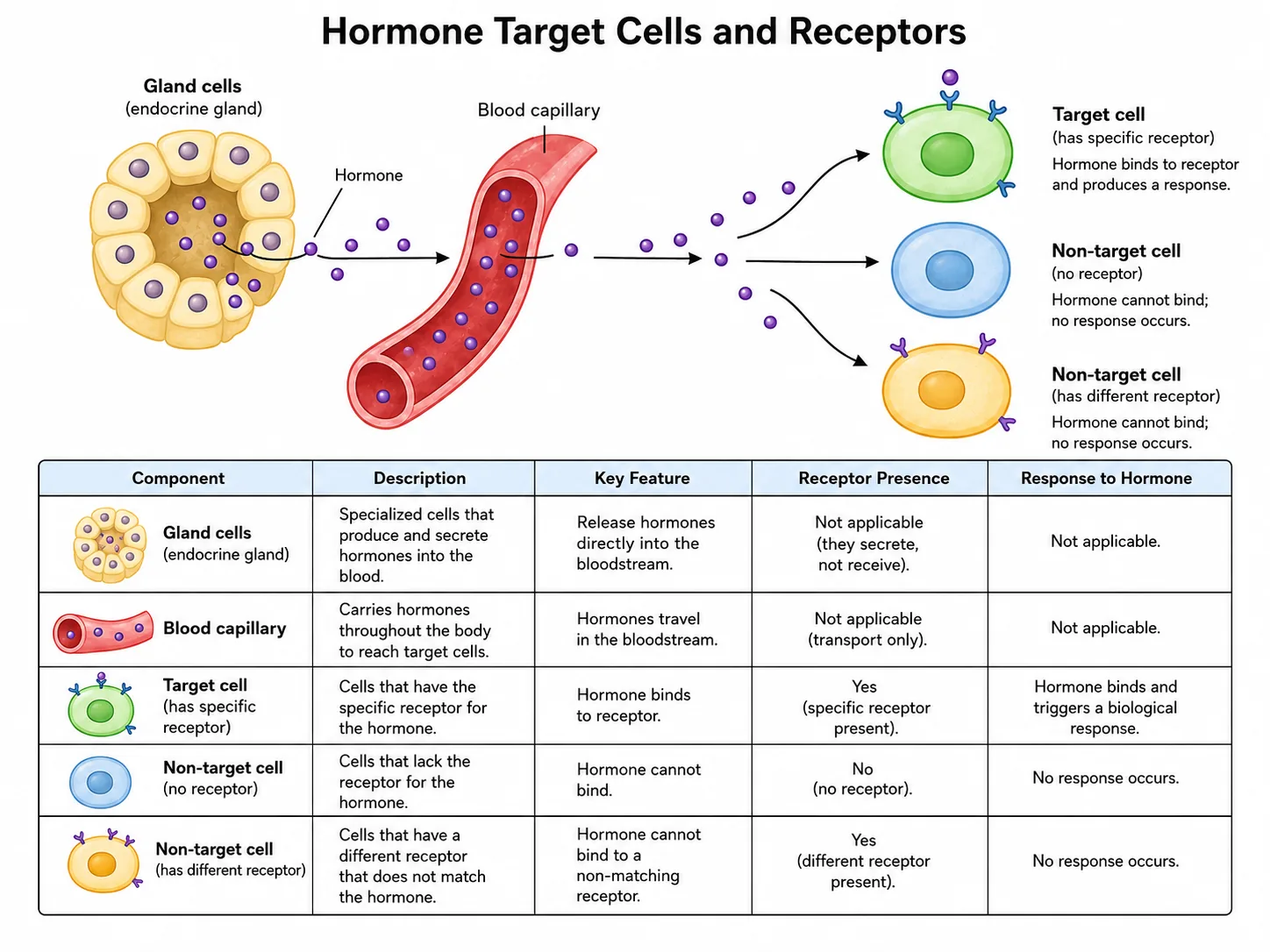
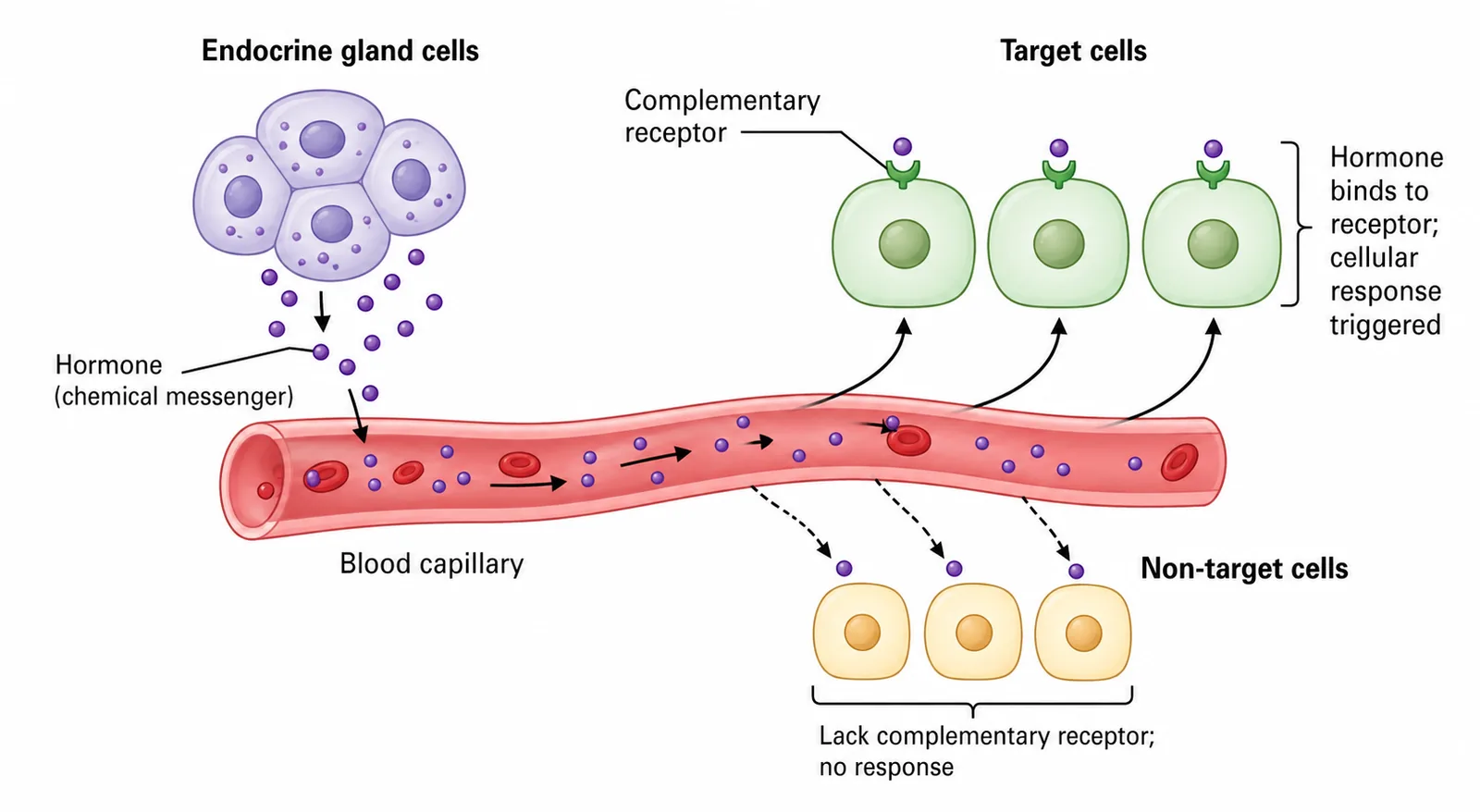
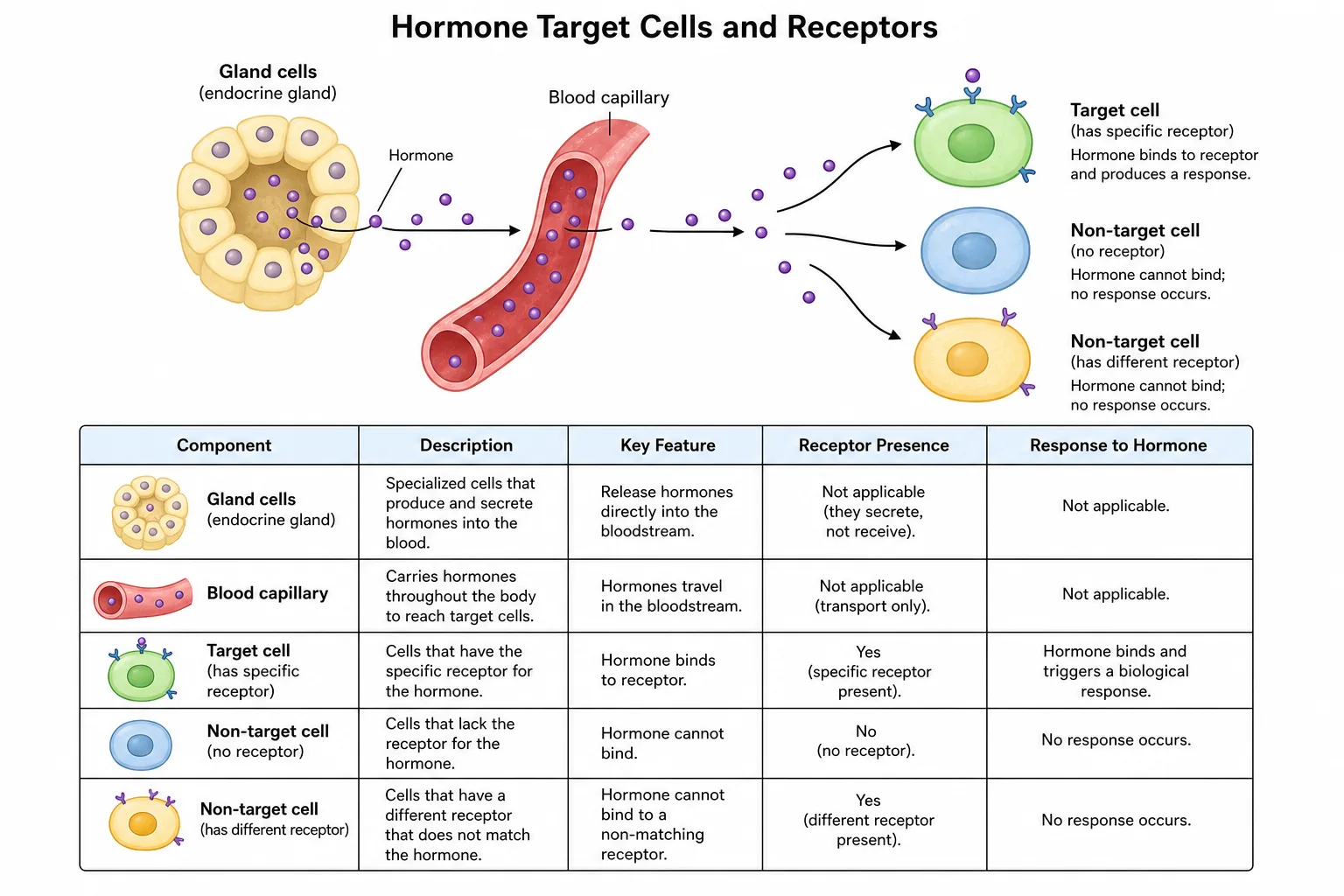
- Release At the start of puberty the testes or ovaries begin to make much larger amounts of their sex hormone.
2Transport
- Transport The hormone is carried around the body in the bloodstream to every tissue.
3Target tissues respond
- Target tissues respond Only cells with the right receptors respond, for example breast tissue to oestrogen or muscle and vocal cords to testosterone.
4Visible change
- Visible change Over a few years the changes build up, so a child gradually develops the body of an adult capable of reproduction.
Section 6 of 8Emotional changes
1
Higher hormone levels affect the brain as well as the body.
2
Both sexes may feel increased interest in sex.
3
Both may experience mood swings.
4
These changes are a normal part of puberty and settle as hormone levels become steadier.
Section 7 of 8Key terms



| Term | Meaning |
|---|---|
| Puberty | The stage of life when the body becomes able to reproduce. |
| Secondary sexual characteristics | Body changes at puberty controlled by sex hormones. |
| Oestrogen | The main female sex hormone, made in the ovaries. |
| Testosterone | The main male sex hormone, made in the testes. |
| Hormone | A chemical messenger carried in the blood. |
Section 8 of 8Exam technique


1
Attributing female changes to testosterone or male changes to oestrogen.
2
Listing the testes making sperm as a secondary characteristic only; it is a result of puberty hormones turning on gamete production.
3
Thinking that only girls grow underarm hair; both sexes do.
4
Forgetting that hormones also cause emotional changes such as mood swings.