Section 1 of 7Two kinds of cell
Diploid cells (2n)
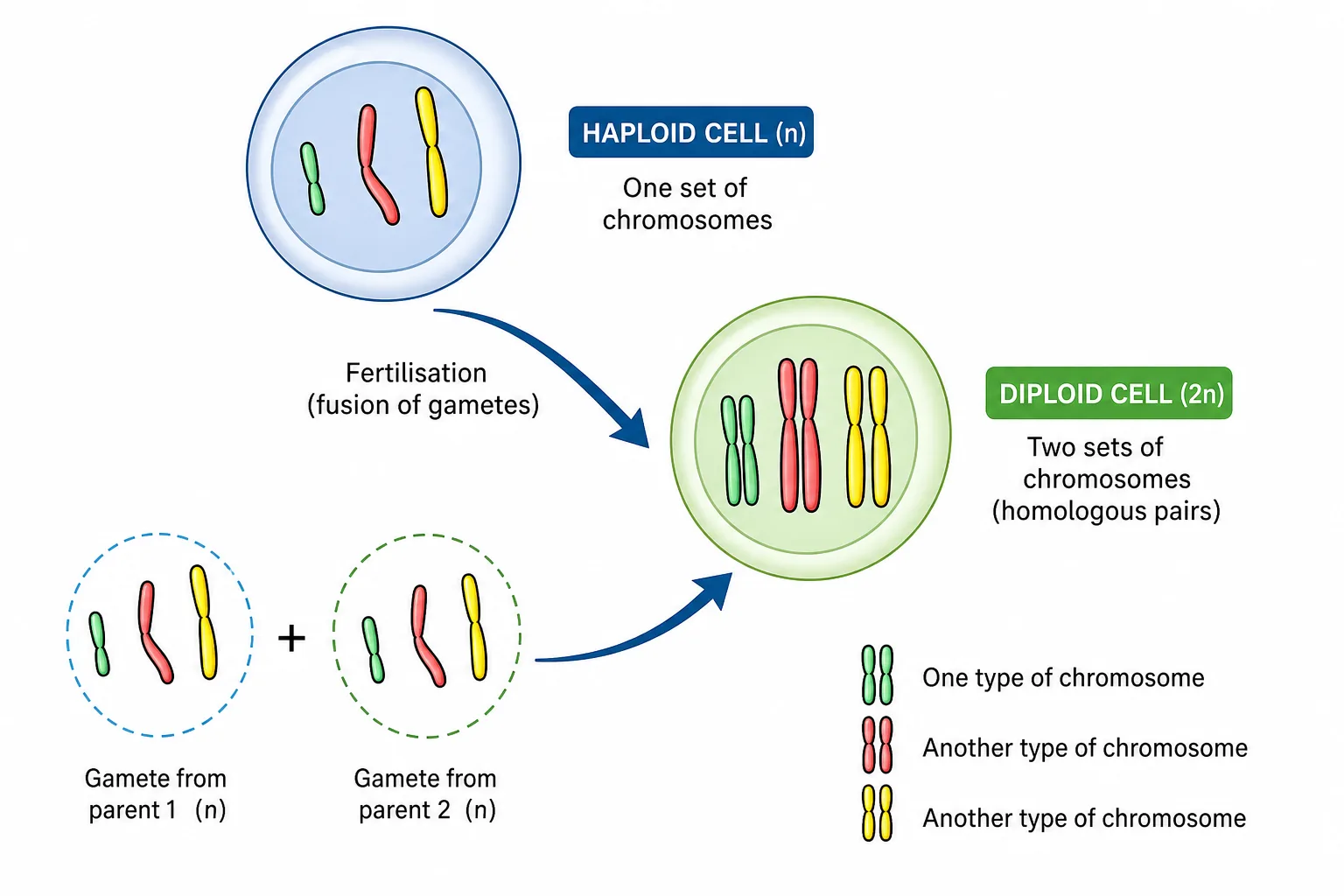
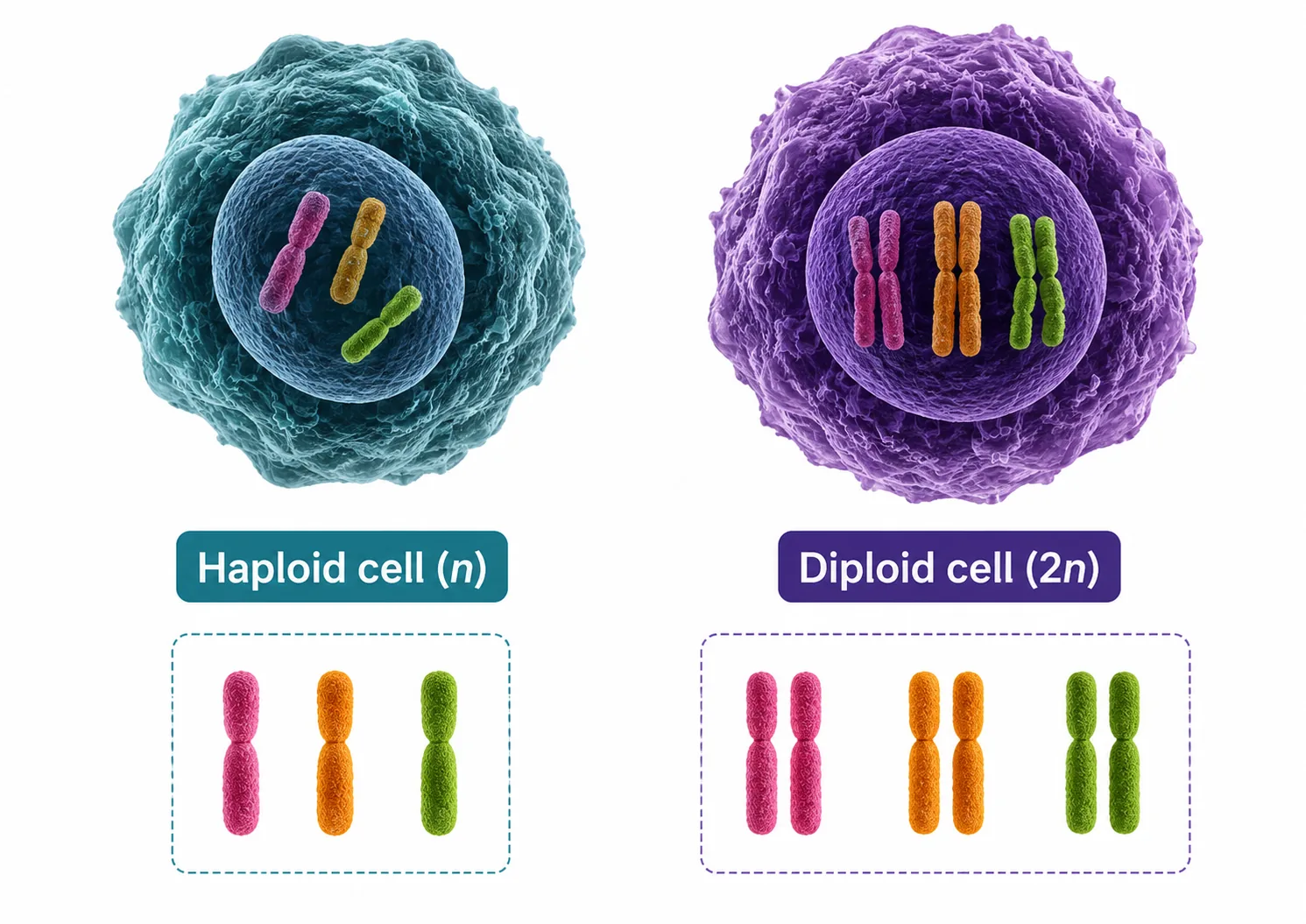
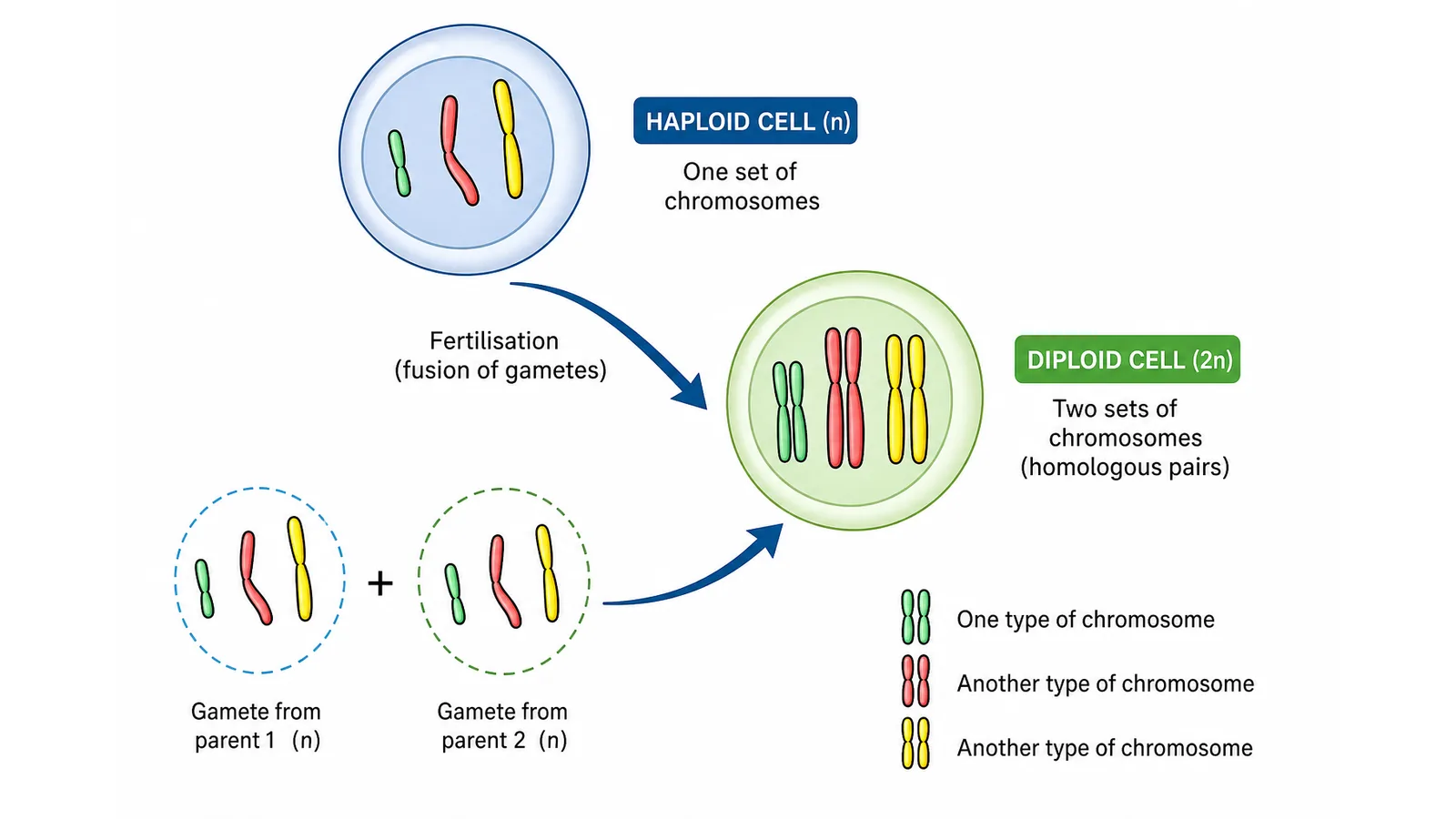
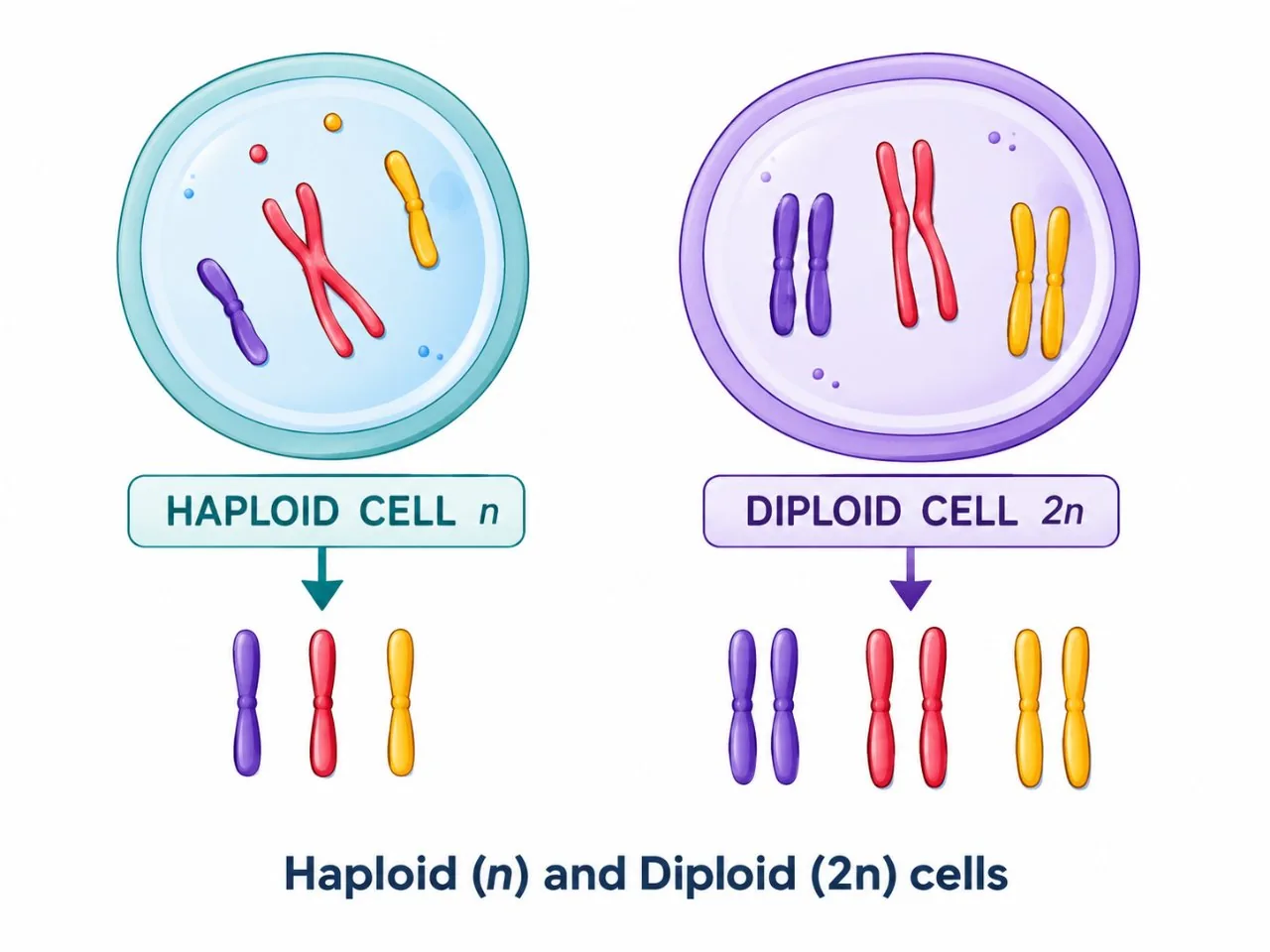
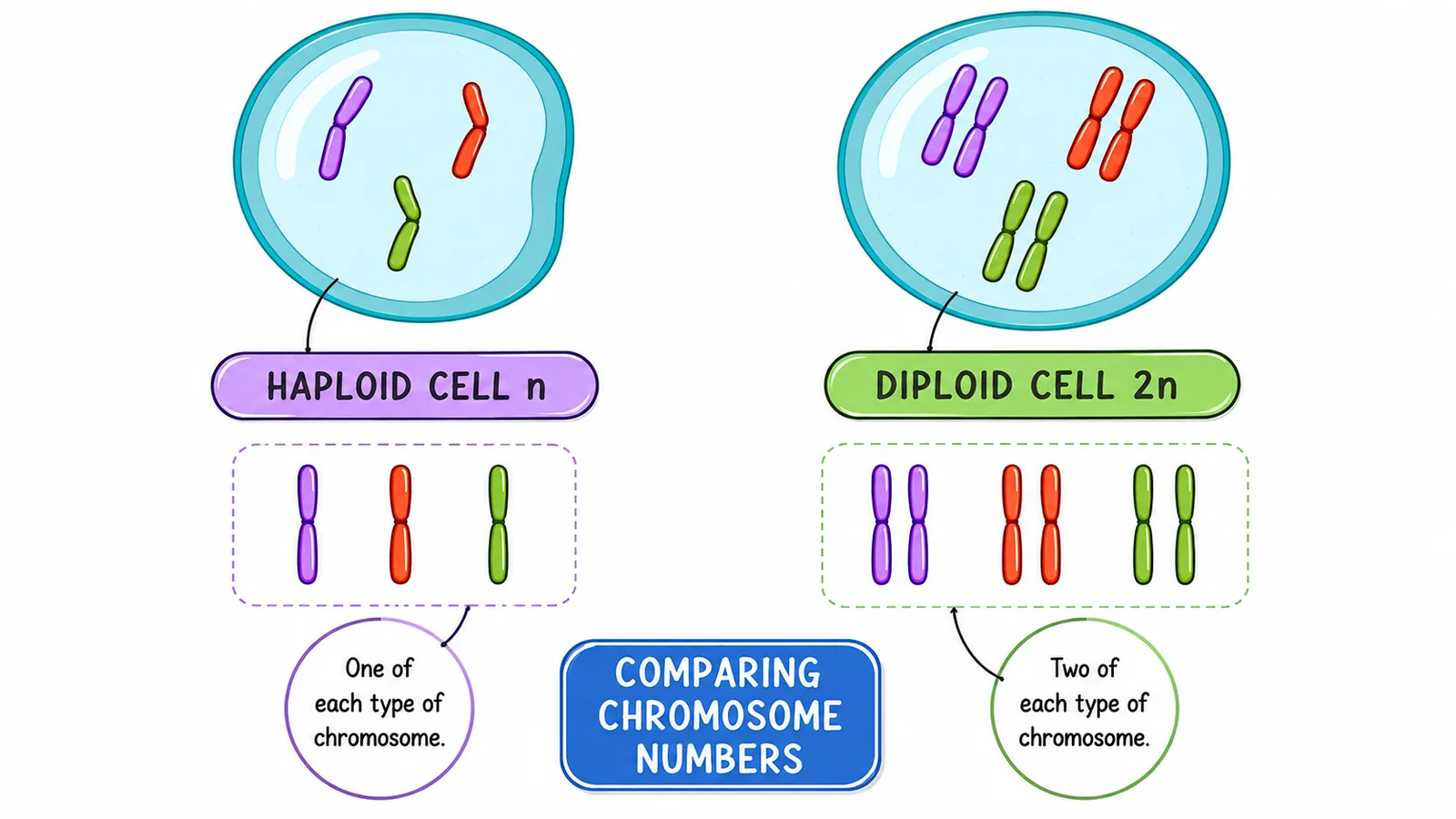
- Diploid cells (2n) A diploid cell contains two complete sets of chromosomes, one inherited from each parent, so its chromosomes exist as pairs.
- Nearly all human body cells are diploid, with 46 chromosomes arranged in 23 pairs in the nucleus.
Haploid cells (n)
- Haploid cells (n) A haploid cell contains only one complete set of chromosomes, so it has no pairs.
- Human haploid cells have 23 chromosomes.
- These cells are the gametes: the sperm in males and the egg in females.
Function of the chromosomes
- Function of the chromosomes The DNA on the chromosomes carries the genes needed to make proteins and run the cell.
Section 2 of 7Chromosome numbers in humans
| Cell type | Ploidy | Chromosomes | Pairs |
|---|---|---|---|
| Skin, muscle, nerve and most other body cells | Diploid (2n) | 46 | 23 pairs |
| Sperm cell | Haploid (n) | 23 | None |
| Egg cell | Haploid (n) | 23 | None |
| Zygote (fertilised egg) | Diploid (2n) | 46 | 23 pairs |
Section 3 of 7Why gametes must be haploid


1Meiosis
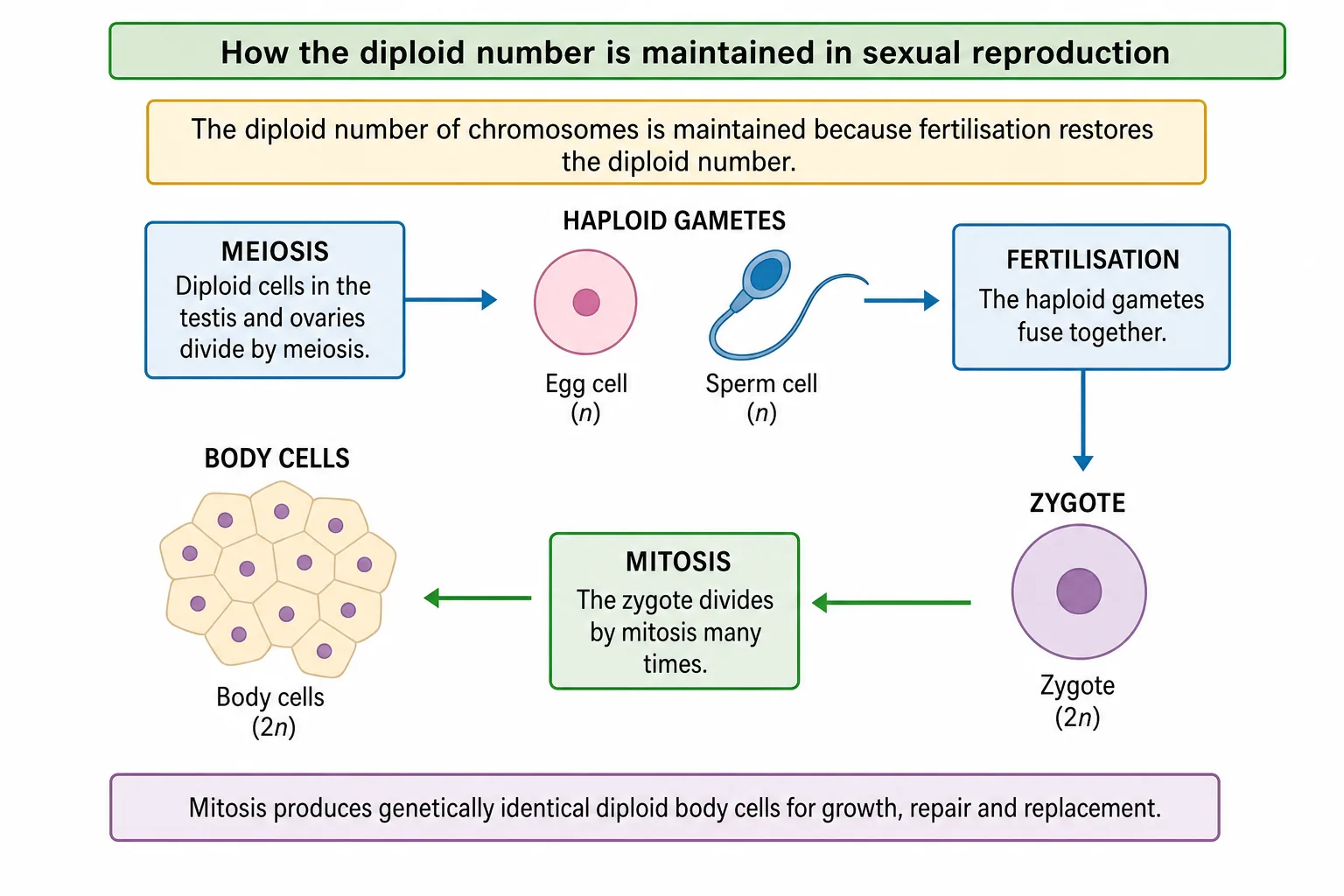
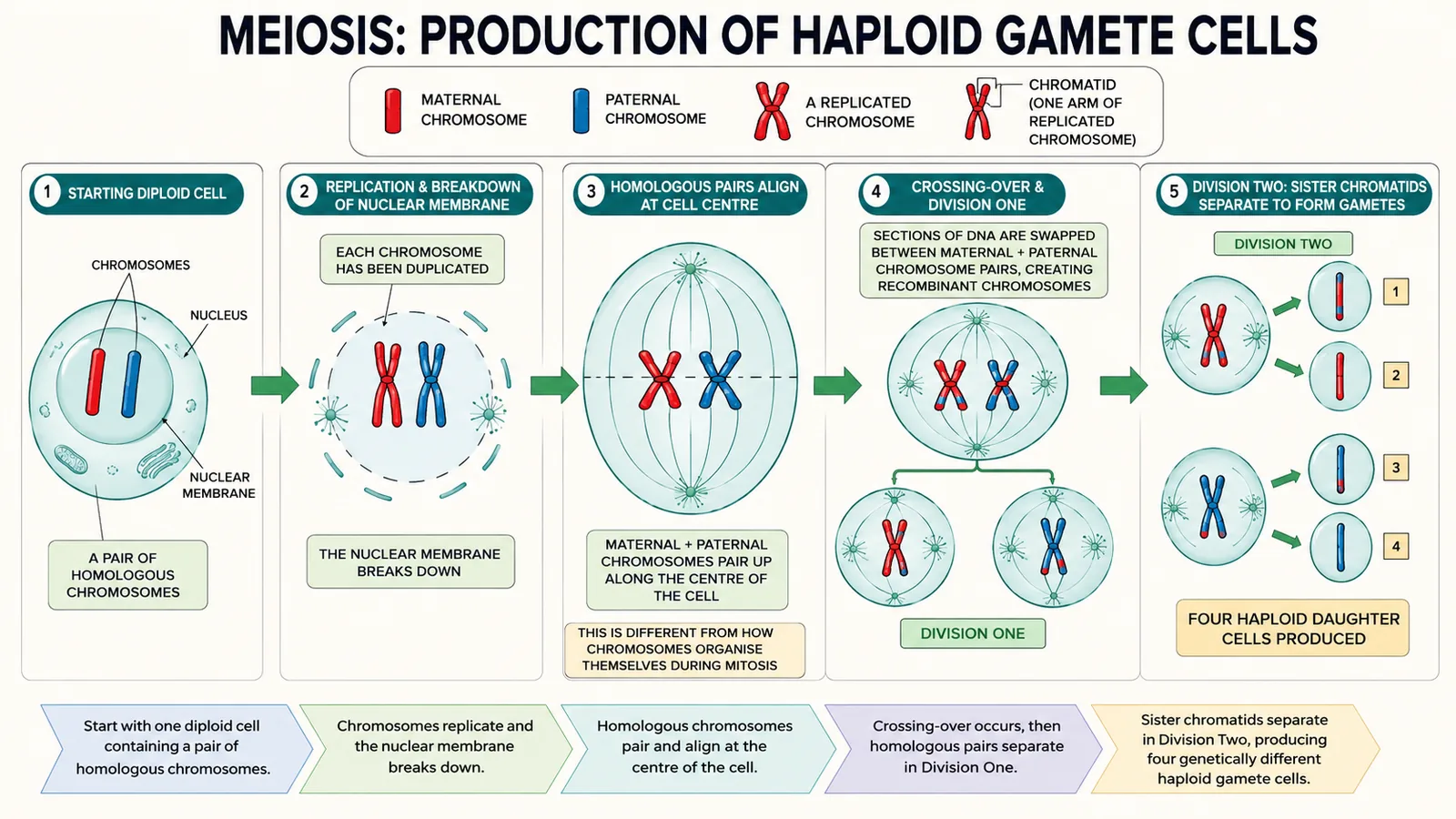
- Meiosis Meiosis halves the chromosome number, producing haploid gametes from a diploid cell.
2Fertilisation
- Fertilisation The haploid sperm and haploid egg fuse, combining 23 + 23 chromosomes.
3Diploid zygote
- Diploid zygote The zygote has 46 chromosomes, restoring the full diploid number.
4Growth by mitosis
- Growth by mitosis Mitosis copies the 46 chromosomes into every new cell, so each body cell is diploid.
Section 4 of 7What would happen without halving
1
If gametes were diploid, each would contain 46 chromosomes.
2
Fertilisation would then produce a zygote with 92 chromosomes.
3
The number would double in every generation.
4
Halving the number in the gametes keeps the chromosome number stable from generation to generation in a species.
Section 5 of 7Where each type of cell is found
Body (somatic) cells
- Body (somatic) cells Cells in the skin, liver, muscles and brain are diploid.
- They are made from the zygote by mitosis, so each carries the same two sets of chromosomes and therefore the same genes.
- Having pairs means that every cell has two alleles of each gene, one on each chromosome of the pair.
Gametes
- Gametes Sperm and eggs are made in the testes and ovaries by meiosis.
- Each contains just one chromosome from every pair, so it carries only one allele of each gene.
- This is why a parent passes on only one of their two alleles to each child.
Linking to inheritance
- Linking to inheritance The haploid-diploid cycle explains why offspring receive half their genes from each parent and why they look like a mixture of both.
Section 6 of 7Key terms
| Term | Meaning |
|---|---|
| Diploid | A cell with two sets of chromosomes, written 2n. |
| Haploid | A cell with one set of chromosomes, written n. |
| Gamete | A haploid sex cell, such as a sperm or an egg. |
| Chromosome | A thread-like structure of DNA in the nucleus carrying many genes. |
| Zygote | The diploid cell formed when two gametes fuse. |
Section 7 of 7Exam technique
1
Saying a haploid cell has 23 pairs of chromosomes; it has 23 single chromosomes.
2
Writing that all human cells are diploid; the gametes are haploid.
3
Mixing up the chromosome number (46) with the number of pairs (23).
4
Forgetting that the zygote is diploid because it receives one set from each parent.