3.2.2Ecology and the Environment
Food chains, Food webs and Pyramids
5 min read 9 parts Lesson 7 of 15 1 quiz
Section 1 of 9Feeding terms
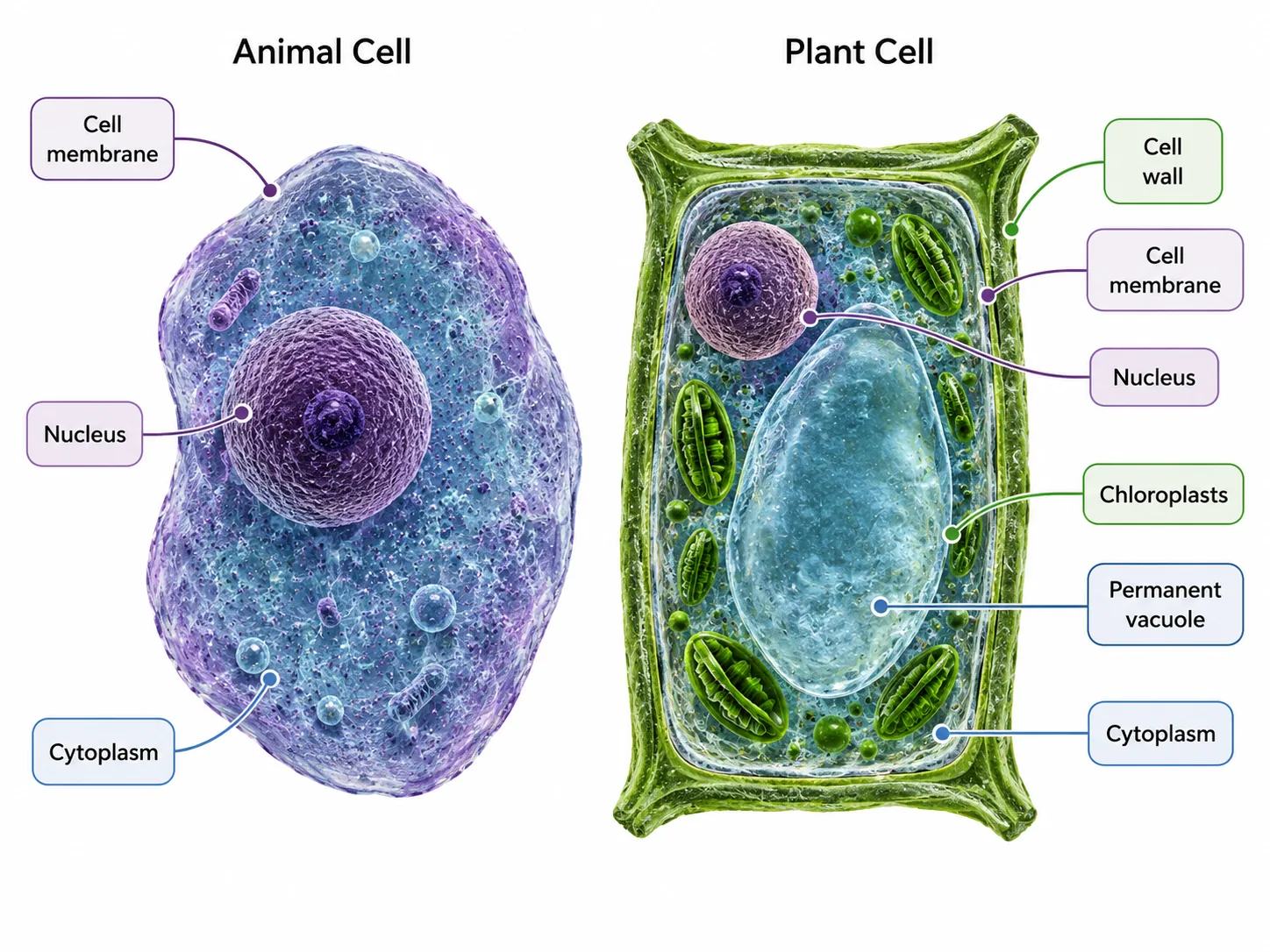
Producer
- Producer an organism that makes its own organic nutrients, usually using sunlight.
Consumer
- Consumer an organism that gets energy by feeding on other organisms, classed as primary, secondary, tertiary or quaternary.
Herbivore
- Herbivore an animal that eats plants.
Carnivore
- Carnivore an animal that eats other animals.
Omnivore
- Omnivore an animal that eats plants and animals.
Decomposer
- Decomposer an organism that gets energy from dead or waste organic material.
Section 2 of 9Food chains


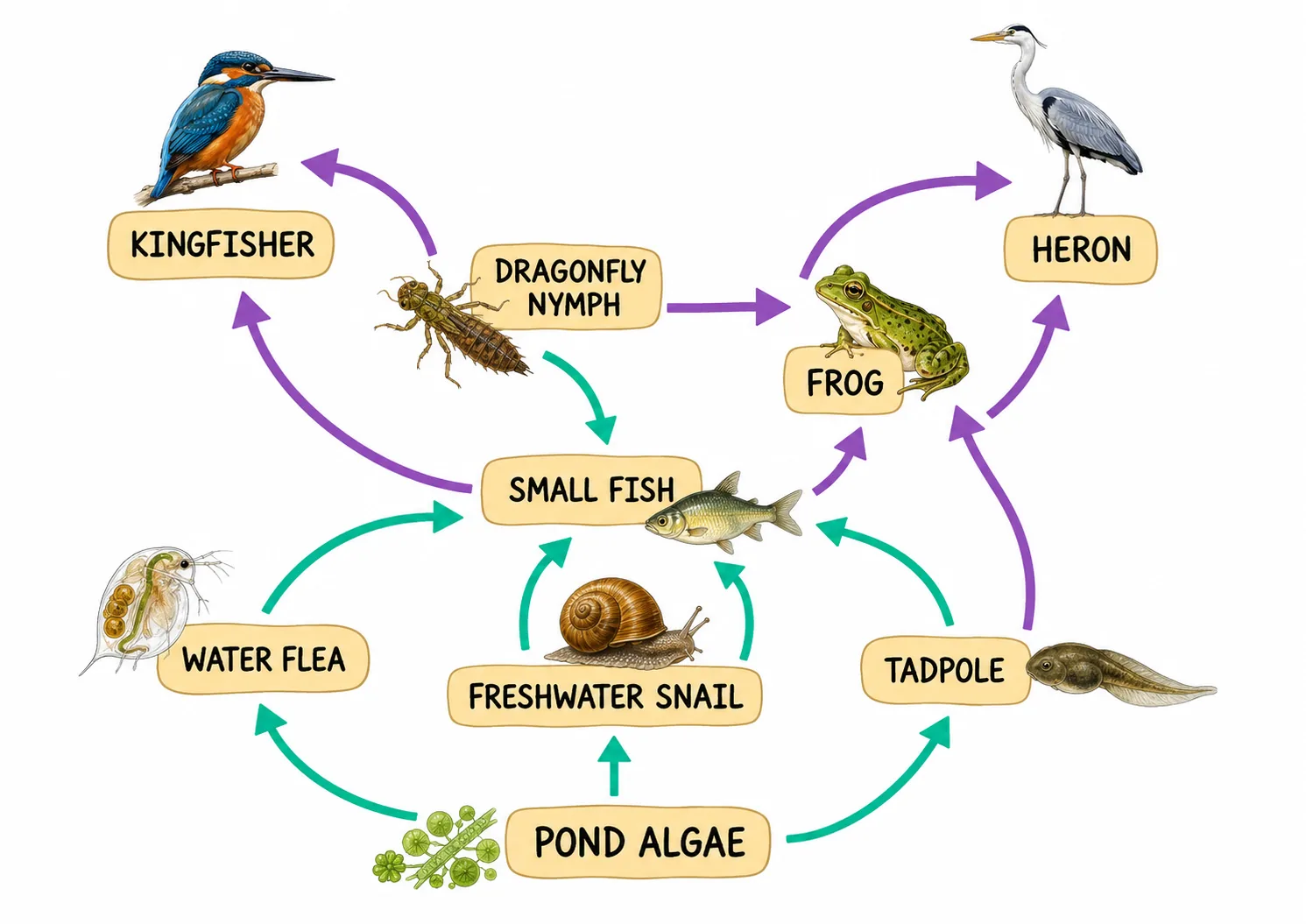
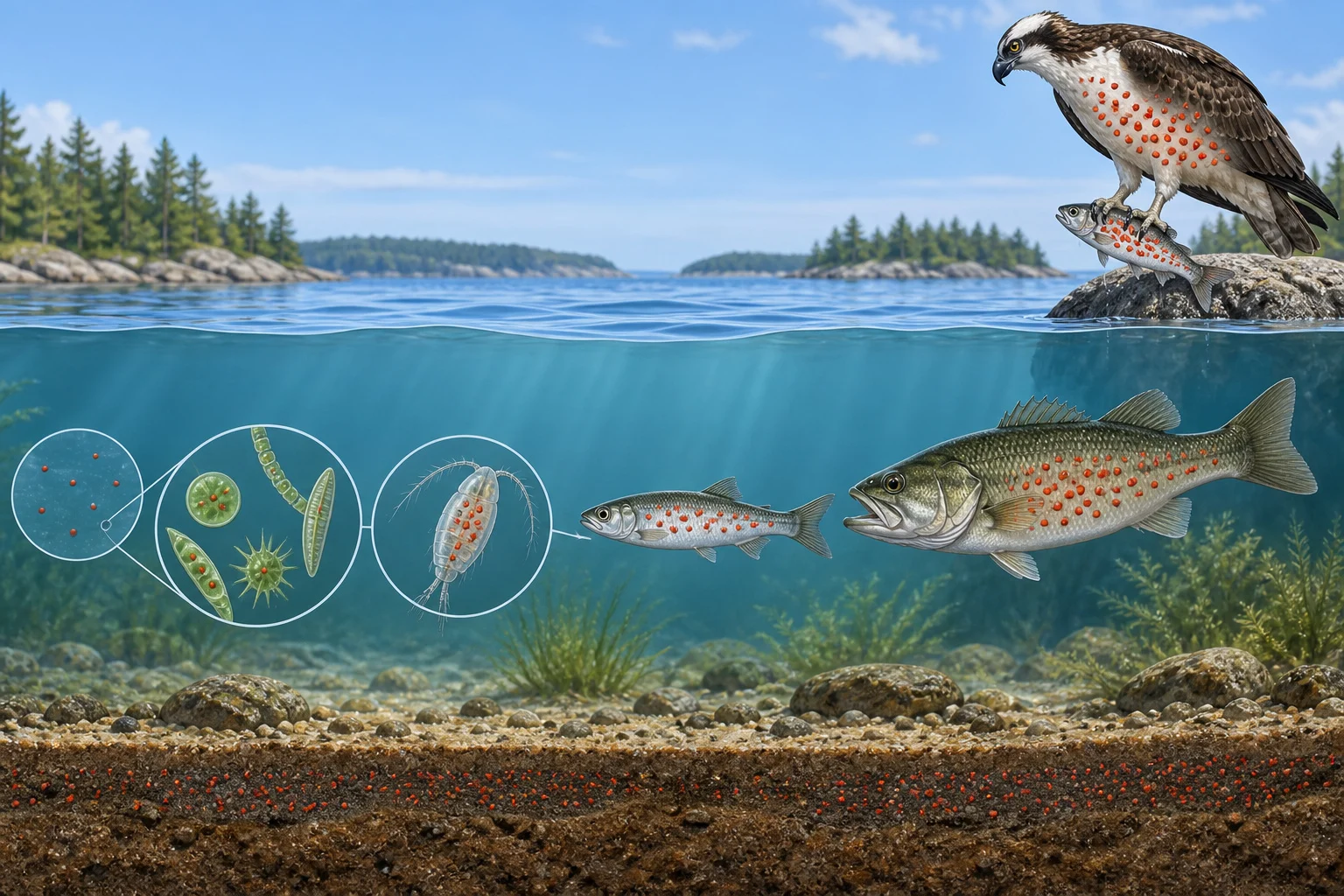
Food chain
Food chain shows the transfer of energy from one organism to the next, beginning with a producer.
Source
- Source the Sun is the source of all energy in a food chain.
Arrows
- Arrows show the direction of energy transfer, from the organism eaten to the one that eats it.
Method
- Method energy passes by ingestion, or eating.
| Position | Organism | Explanation |
|---|---|---|
| Producer | Grass | Makes food by photosynthesis |
| Primary consumer | Mouse | Eats the producer |
| Secondary consumer | Barn owl | Eats the primary consumer |
Section 3 of 9Roles in a chain
| Role | Gets energy from | Trophic level |
|---|---|---|
| Producer | Sunlight | 1 |
| Primary consumer | Producers | 2 |
| Secondary consumer | Primary consumers | 3 |
| Tertiary consumer | Secondary consumers | 4 |
| Decomposer | Dead organisms | All levels |
Section 4 of 9Food webs


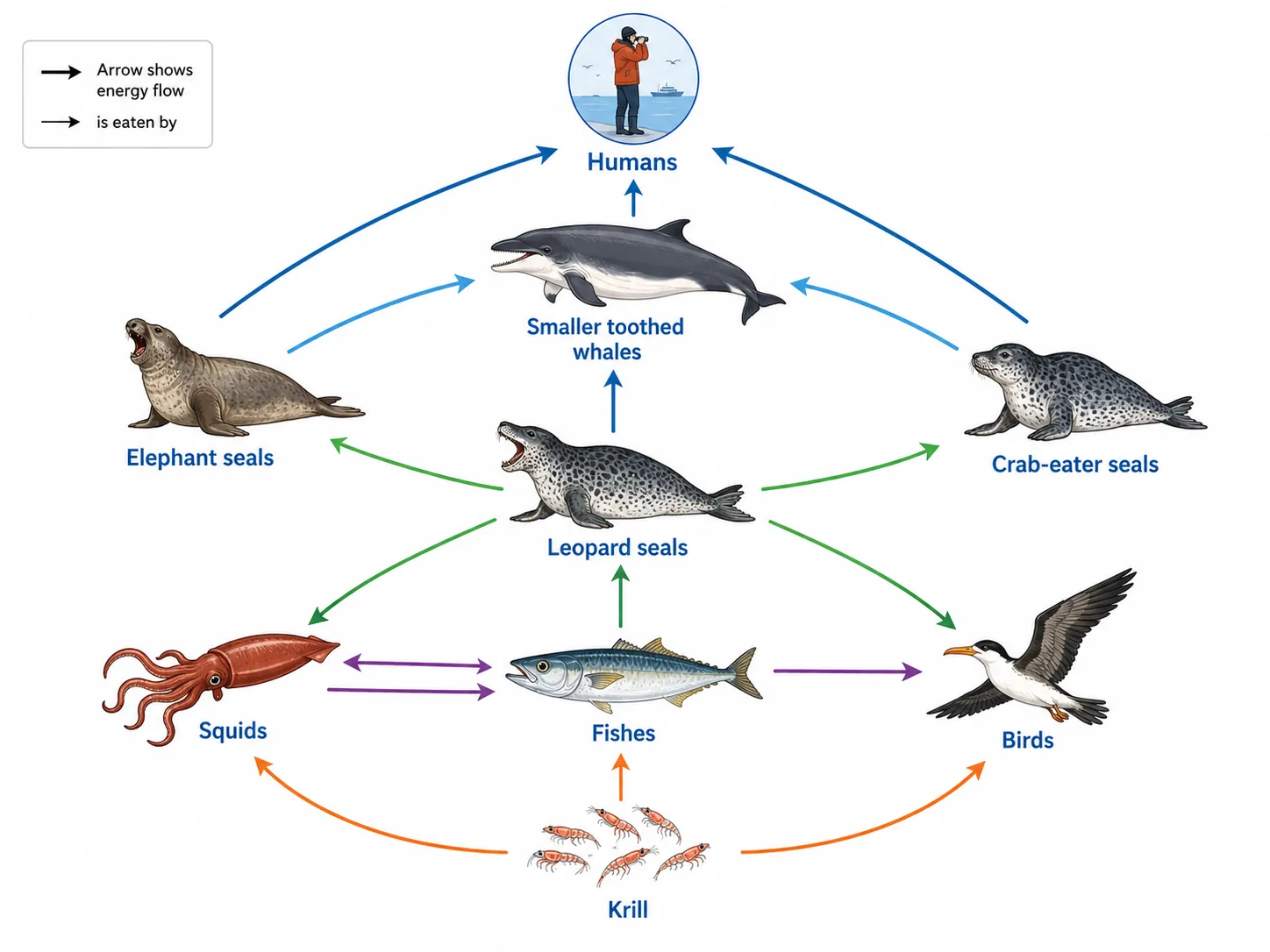
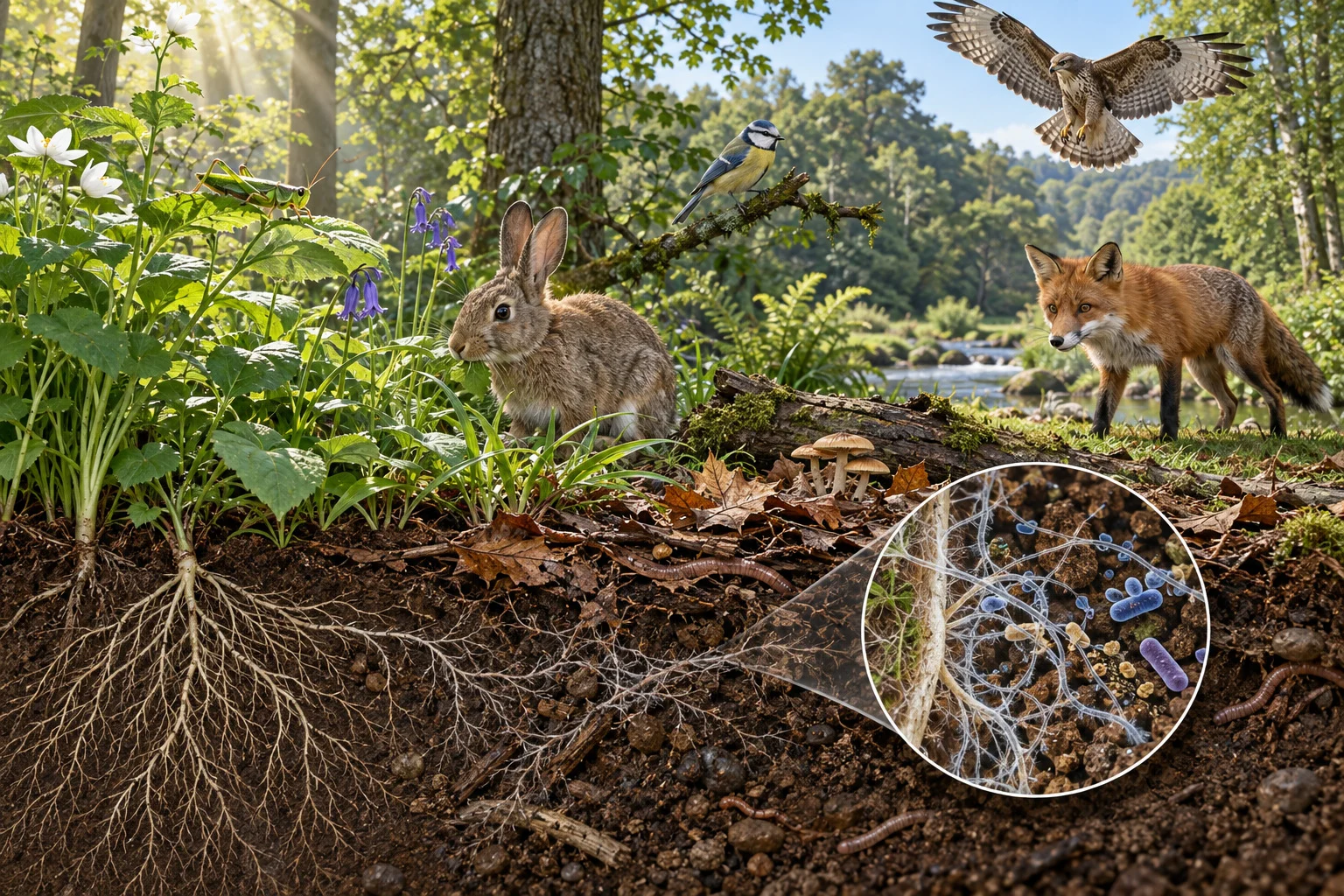
Food web
Food web a network of interconnected food chains.
Realistic
- Realistic animals rarely feed on only one food source.
Interdependence
- Interdependence a change in one population affects others.
Information
- Information webs show more about energy transfer than single chains.
Section 5 of 9Predicting changes in a web
Predicting changes in a web
Fewer of an organism
- Fewer of an organism its food source increases because fewer feed on it.
Single-food predators
- Single-food predators decrease significantly if their only food falls.
Predators with other food
- Predators with other food decrease only slightly.
Wording
- Wording use increase or decrease, not die out.
Reason
- Reason always give the reason for an increase or decrease.
Section 6 of 9Human impact on webs
Overharvesting
- Overharvesting removing too many of a food species reduces populations throughout the web.
Introduced species
- Introduced species foreign species added to a habitat can have long-lasting knock-on effects.
Section 7 of 9More from the specification
Ecological Pyramids of Biomass
- Pyramids of biomass represent the total dry mass of living biological matter at each successive trophic level, almost universally presenting an upright pyramid shape due to non-recoverable respiratory energy losses.
Pyramids of Numbers and Inverted Structures
- A pyramid of numbers quantifies individual organism counts;
- it can become inverted when a single massive producer supports thousands of primary consumers,
- or when consumers host numerous parasites.
- (such as an oak tree)
Ecological Resilience in Food Webs
- Complex interconnected food webs provide alternative feeding pathways for consumers, stabilizing community dynamics against environmental perturbations far more effectively than isolated linear food chains.
Microorganism
- A living organism so small that it can only be seen clearly with a microscope.
Bacteria
- Single-celled microorganisms, much smaller than plant or animal cells.
Carbon cycle
- The movement of carbon between air, living things, soil and fossil fuels.
Fossil fuel
- Fuel formed from long-dead organisms.
Nitrogen
- Element in amino acids and nitrogenous bases.
Carbon
- Element with four valence electrons that forms the backbone of organic molecules.
Biomass
- The dry mass of living matter in an organism or trophic level.
Growth
- A permanent increase in size and dry mass.
Ecosystem
- Community plus environment.
Section 8 of 9Key terms


| Term | Meaning |
|---|---|
| Producer | Organism that makes its own food. |
| Consumer | Organism that eats other organisms. |
| Herbivore | Animal that eats plants. |
| Carnivore | Animal that eats animals. |
| Food web | A network of interconnected food chains. |
| Interdependence | Populations affecting each other. |
Section 9 of 9Exam technique
1
Drawing arrows from the eater to the eaten — arrows point from the eaten to the eater.
2
Saying a species would die out — say its population would decrease.
3
Starting a chain with an animal — every chain starts with a producer.
4
Saying removing a consumer affects only one organism — populations are interdependent.