Reproduction and Inheritance
Reproduction — Edexcel Linear - OL Revision Notes & Topical Questions
10 min read 13 parts Lesson 3 of 5 Unit quiz
Germination, Asexual Reproduction in Plants and the Human Reproductive Systems — EDEXCEL LINEAR - OL notes: Describe the conditions for germination, how seeds use their food stores, how plants reproduce asexually and the structure and function of the human reproductive systems.Ge…
- temperature
- Worked example 1
- Worked example 2
- Worked example 3
- Worked example 4
- Worked example 5
Section 1 of 13Practical: conditions for germination
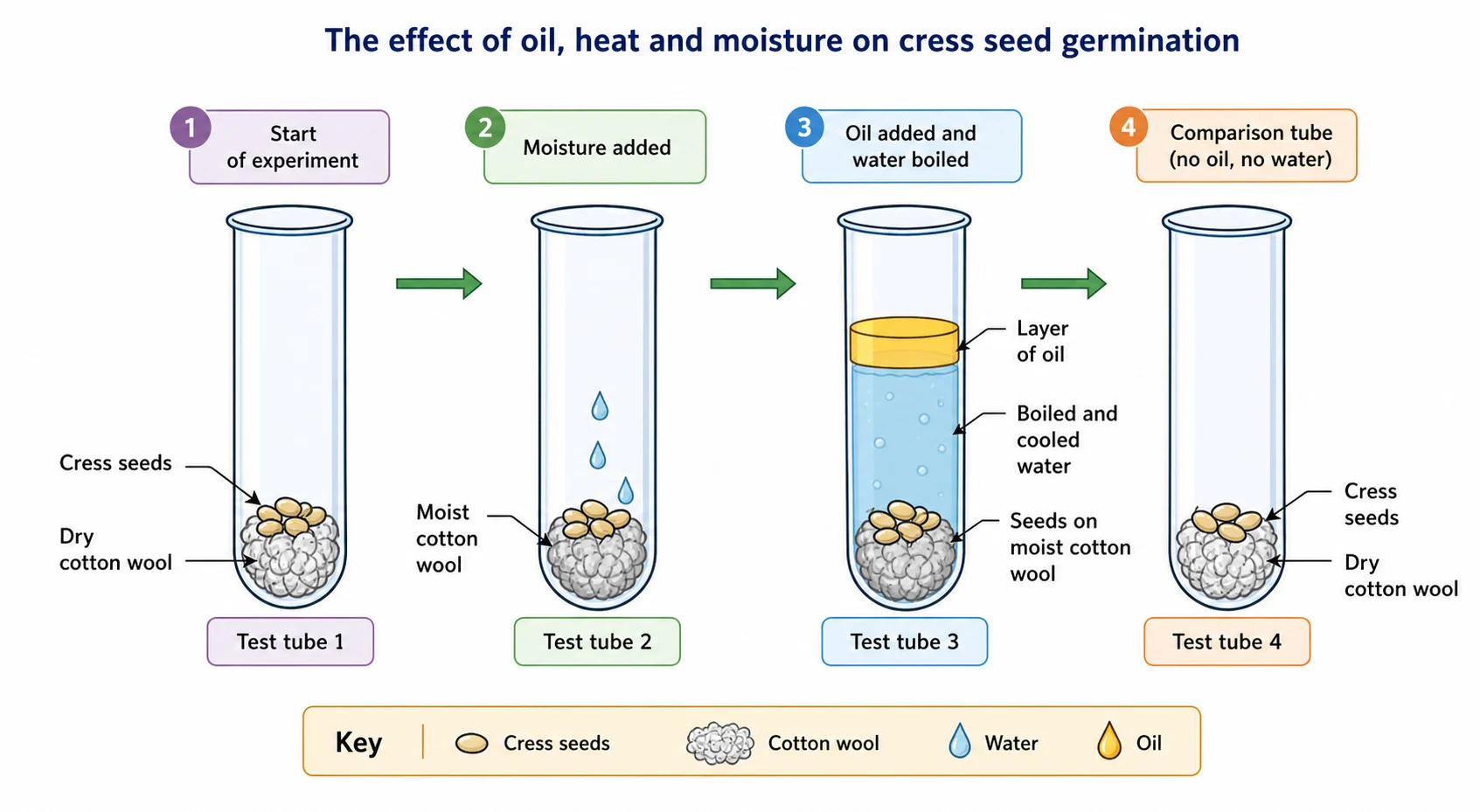
Germination marks the beginning of seed growth. Three key factors are needed: water, oxygen and a suitable temperature (warmth). Light is not usually needed. Test the necessity of each by removing it in turn, using cress seeds in test tubes.
| Tube | Conditions | Result |
|---|---|---|
| A | No water (dry cotton wool) | No germination |
| B | Control: water, oxygen, warmth | Germination |
| C | No oxygen (boiled water with an oil layer on top) | No germination |
| D | Cold (in a fridge) | No or little germination |
CORMS: Change the abiotic condition; O use cress seeds from the same parent plant (or species); Repeat several times; Measure the number of seeds germinating or shoot length; Same number of seeds, light and type of cotton wool.
Section 2 of 13What happens during germination
The seed contains an embryo plant and a food store (starch and other nutrients, in the cotyledons or endosperm).
Section 3 of 13Asexual reproduction in plants
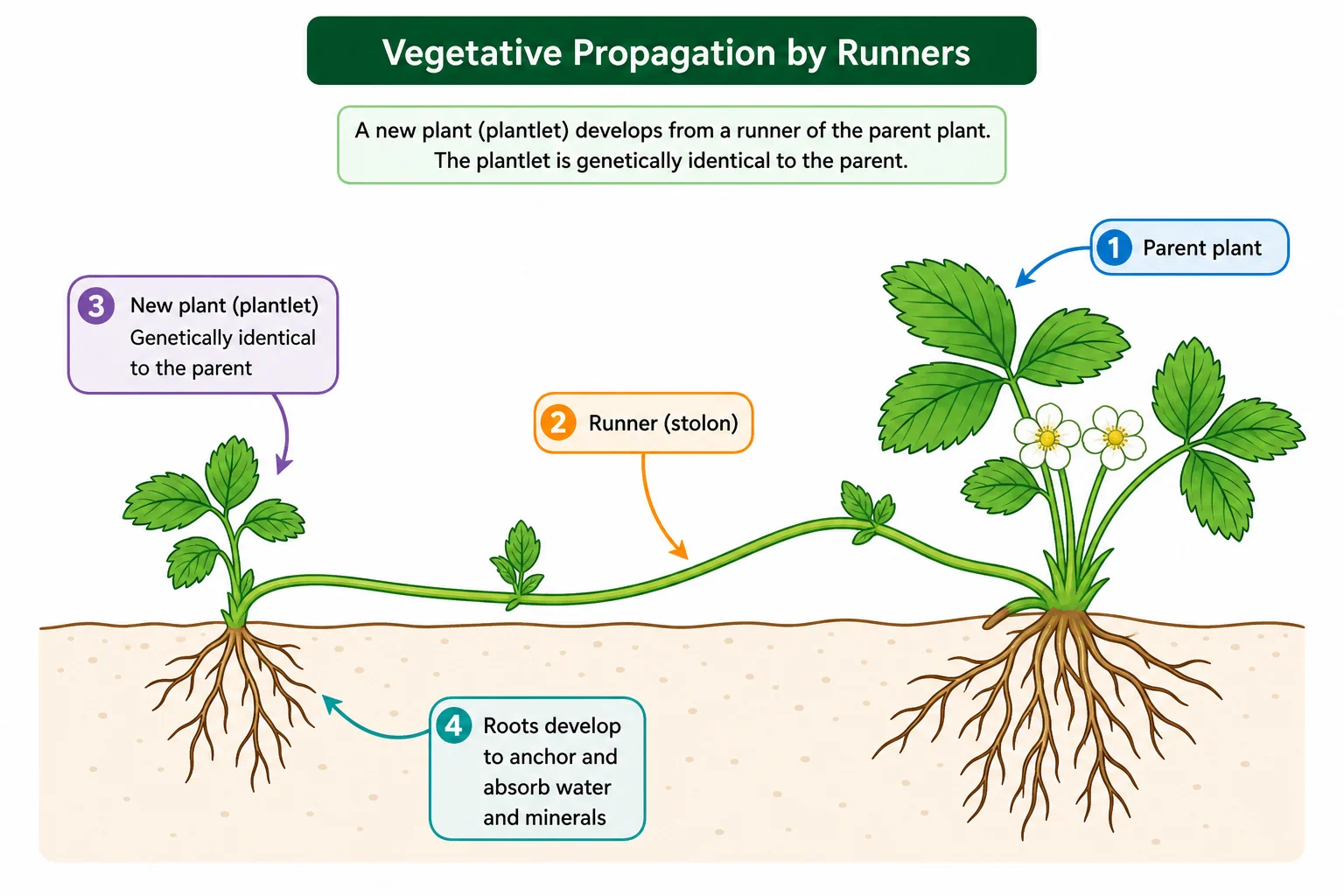
Asexual reproduction involves only one parent and all offspring are exact genetic copies (clones).
- and roots grow.
Section 4 of 13The human reproductive systems
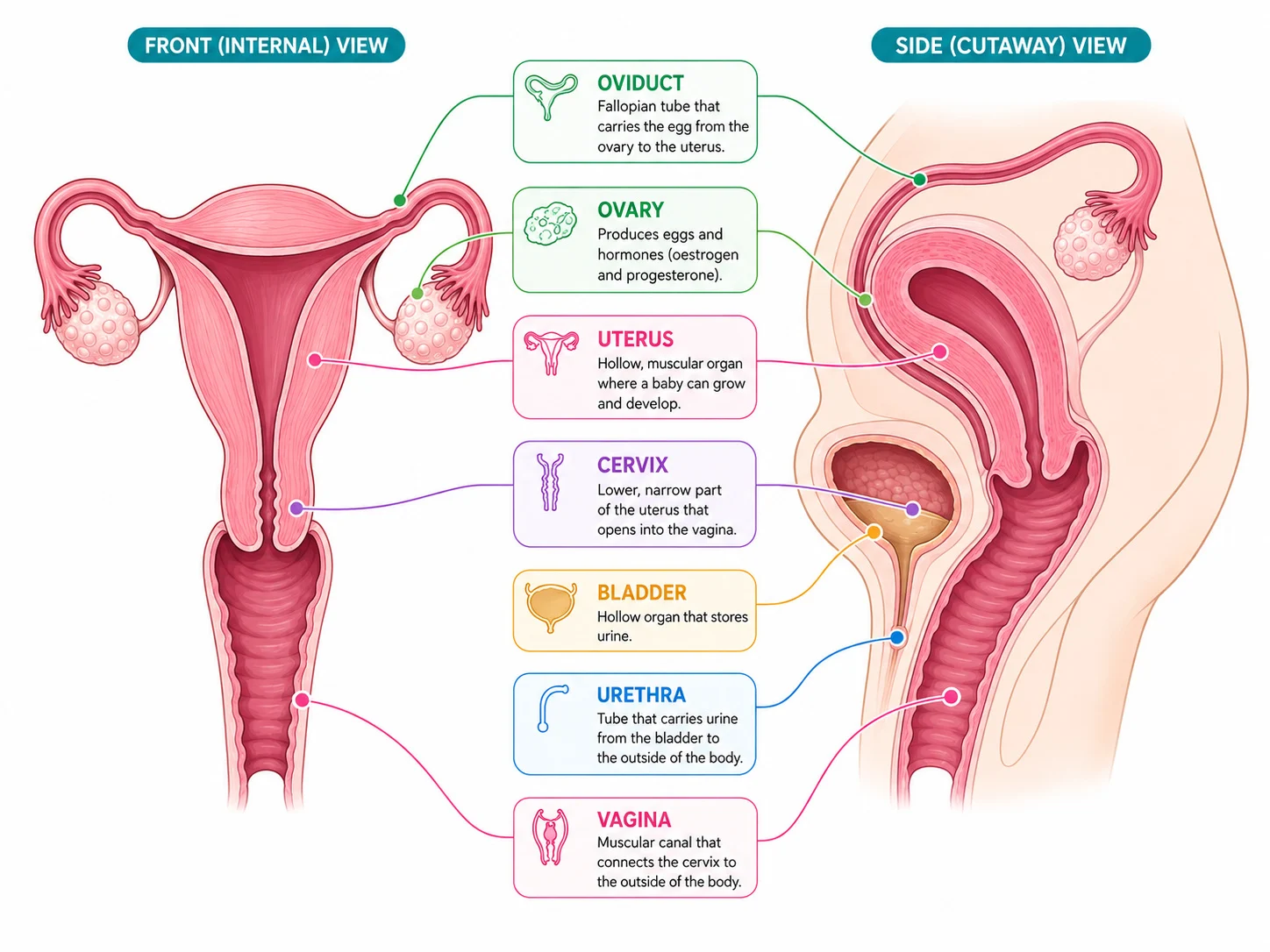
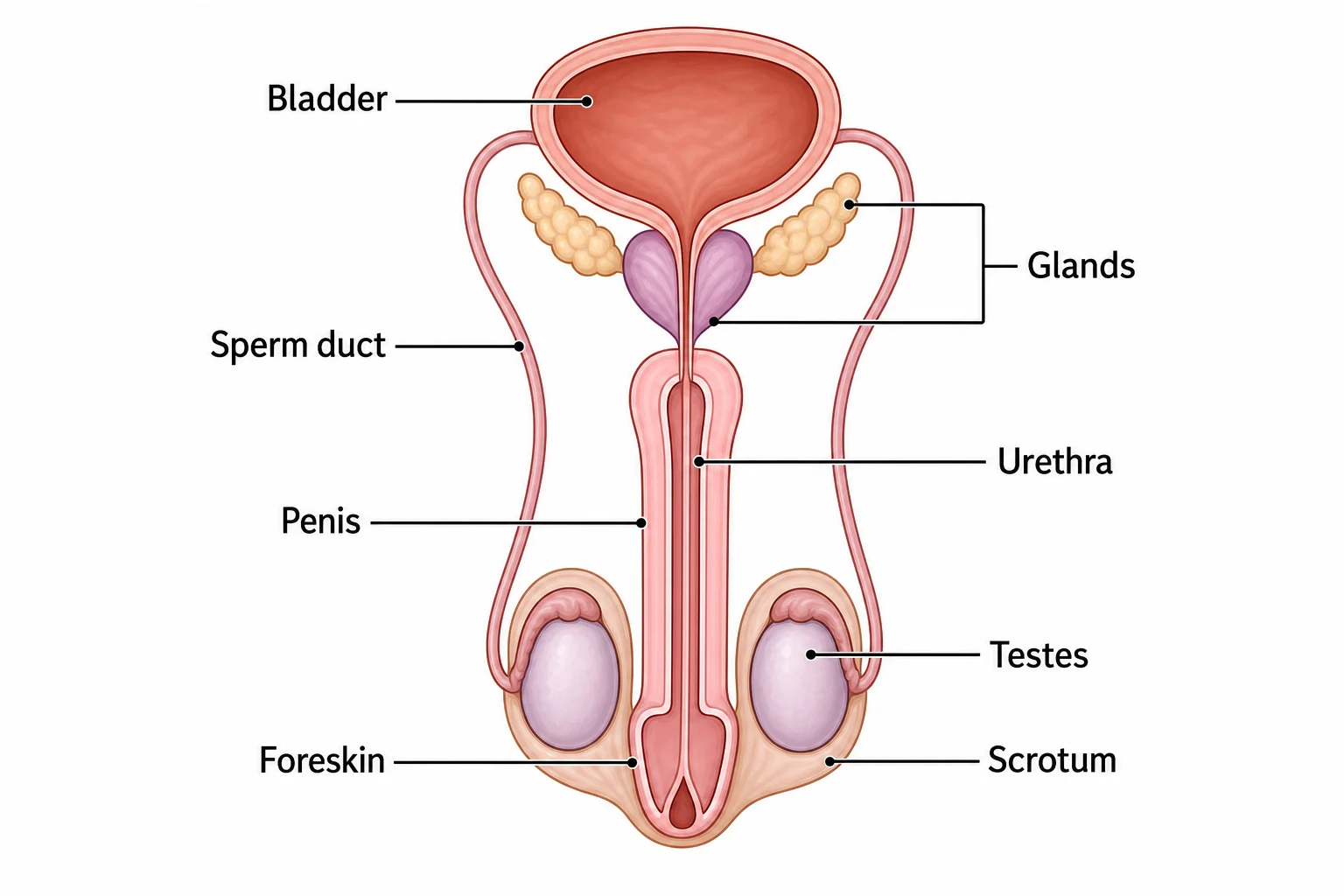
| Part | Function |
|---|---|
| Testis (in the scrotum) | Produces sperm (male gametes) and testosterone |
| Sperm duct | Carries sperm to be mixed with fluids from glands before the urethra |
| Urethra | Tube through the penis that carries urine or semen; a ring of muscle prevents them mixing |
| Ovaries | Contain ova (female gametes) which mature when hormones are released |
| Oviduct | Carries the egg; fertilisation occurs here |
| Uterus | Muscular sac with a soft lining where the embryo implants and develops into a foetus |
| Cervix | Ring of muscle at the lower end of the uterus holding the foetus in place |
| Vagina | Muscular tube where sperm are deposited |
Section 5 of 13Oestrogen and progesterone in the menstrual cycle
- Oestrogen (from the ovary) rebuilds and thickens the uterus lining after menstruation; progesterone maintains it.
- (from the corpus luteum)
- If the egg is not fertilised, progesterone falls and the lining is shed in menstruation.
- and calculate the percentage germination; for example 9 out of 10 seeds is 90%.
- and fertilisation produces a seed that later germinates in suitable conditions,
- so germination is the next stage after sexual reproduction in a flowering plant.
Section 6 of 13Worked examples
State three conditions needed for germination. [3]3 marks
Water, oxygen and a suitable temperature.
Explain why boiled water with oil is used in one tube. [2]2 marks
Boiling removes dissolved oxygen and the oil prevents more entering, so oxygen is the only factor missing.
Why are enzymes important during germination? [2]2 marks
They break down the stored starch into maltose and glucose for respiration.
Describe why plants grown from cuttings are identical to the parent. [2]2 marks
Asexual reproduction involves one parent and mitosis, so the offspring are clones.
State the function of the cervix. [1]1 mark
A ring of muscle that keeps the developing foetus in place.
Section 7 of 13How the four menstrual cycle hormones interact
The menstrual cycle is controlled by two hormones from the pituitary gland in the brain (FSH and LH) and two from the ovary (oestrogen and progesterone). Each hormone triggers or inhibits the next, so the cycle runs in a repeating sequence of about 28 days.
- LH causes ovulation, the release of the egg from the ovary.
- and the placenta then secretes progesterone throughout the pregnancy so the lining is kept.
On a graph, FSH is highest in the first half of the cycle, LH shows a sharp spike around day 14, oestrogen peaks just before day 14, and progesterone stays low until after ovulation and then rises.
Section 8 of 13The placenta and exchange between mother and fetus
After fertilisation in the oviduct the zygote divides to form an embryo, which travels to the uterus. On reaching the uterus the embryo implants in the thick uterine lining and continues to develop. A structure called the placenta forms at the implantation site. The fetus is joined to the placenta by the umbilical cord, which carries its blood supply.
In the placenta the mother's blood comes very close to the fetal blood, but the two supplies never mix. Substances pass across by diffusion, so the placenta is an exchange surface with a large surface area and a thin wall.
| Direction | Substances |
|---|---|
| Mother to fetus | Oxygen, nutrients such as glucose, amino acids, vitamins and mineral ions, and antibodies |
| Fetus to mother | Carbon dioxide and urea |
The placenta also secretes hormones, for example progesterone. It acts as a partial barrier to toxins and pathogens, but it is not a complete one: nicotine, alcohol and virus particles can cross it, which is why smoking and drinking during pregnancy harm the fetus.
Section 9 of 13Amniotic fluid
In the uterus the developing embryo and fetus is surrounded by amniotic fluid, held inside a membrane called the amniotic sac (amniotic membrane). The fluid cushions the fetus against bumps and knocks when the mother moves around, so it protects the fetus during development.
Section 10 of 13Puberty and secondary sexual characteristics
Secondary sexual characteristics are the changes that occur during puberty. Their development is controlled by hormones: oestrogen in females and testosterone in males.
| Female (oestrogen) | Male (testosterone) |
|---|---|
| Breasts develop | Growth of the penis and testes |
| Body hair grows | Facial and body hair grows |
| Menstrual cycle begins | Muscles develop |
| Hips get wider | Voice breaks |
| Testes start to produce sperm |
Some changes occur in both sexes, including growth of the sexual organs and of body hair. The rising hormone levels also cause emotional changes, such as increased interest in sex and mood swings.
Section 11 of 13Worked examples
Explain how a high concentration of oestrogen leads to ovulation. [3]3 marks
Oestrogen from the developing follicle reaches a peak just before day 14. This high level triggers the pituitary gland to release LH. LH causes the mature egg to be released from the ovary (ovulation).
Describe the role of the placenta during pregnancy. [4]4 marks
The placenta allows exchange between the blood of the mother and fetus without the bloods mixing. Oxygen, glucose, amino acids and antibodies pass from mother to fetus; carbon dioxide and urea pass from fetus to mother. It has a large surface area and thin wall for diffusion, and it secretes progesterone.
A pregnant woman drinks alcohol. Why might this affect the fetus? [2]2 marks
Alcohol can cross the placenta because the placenta is only a partial barrier. It enters the fetal blood and can harm development.
Name the hormone that causes the voice to break and state where it is made. [2]2 marks
Testosterone, made in the testes.
Section 12 of 13Key terms
| Term | Meaning |
|---|---|
| Germination | The start of growth of a seed. |
| Clone | A genetically identical organism produced by asexual reproduction. |
| Runner | A stem growing along the ground that forms a new plant. |
| Cutting | A piece of stem used to grow a new plant. |
| Uterus | Muscular organ where the foetus develops. |
| Testis | Organ that makes sperm and testosterone. |
| Term | Meaning |
|---|---|
| FSH | Pituitary hormone that makes a follicle and egg mature and stimulates oestrogen release. |
| LH | Pituitary hormone released at the oestrogen peak that causes ovulation and stimulates progesterone. |
| Corpus luteum | The remains of the follicle after ovulation, which makes progesterone. |
| Placenta | Organ at the implantation site that allows exchange of substances between mother and fetus. |
| Umbilical cord | Structure that connects the fetus blood supply to the placenta. |
| Amniotic fluid | Fluid in the amniotic sac that cushions and protects the fetus. |
| Secondary sexual characteristics | Changes at puberty controlled by oestrogen or testosterone. |
Section 13 of 13Exam technique
Last updated:
\n