2.6Ecology
Humans and the environment — EST 2 Biology Revision Notes & Topical Questions
15 min read 25 parts Lesson 6 of 8 2 quizzes
Lesson summary
SAT Biology humans and the environment: explain how resource use, pollution and conservation affect biodiversity and ecosystem stability. Human population growth increases demand for land, water, food, energy and raw materials.
Part 1 of 5Human pressure on ecosystems
Human pressure on ecosystems
Human population growth increases demand for land, water, food, energy and raw materials. Habitat destruction and fragmentation reduce living space and can isolate populations.
Overharvesting removes organisms faster than populations can replace them. Introduced species, pollution and climate change can alter food webs and environmental conditions.
Part 2 of 5Pollution and nutrient enrichment
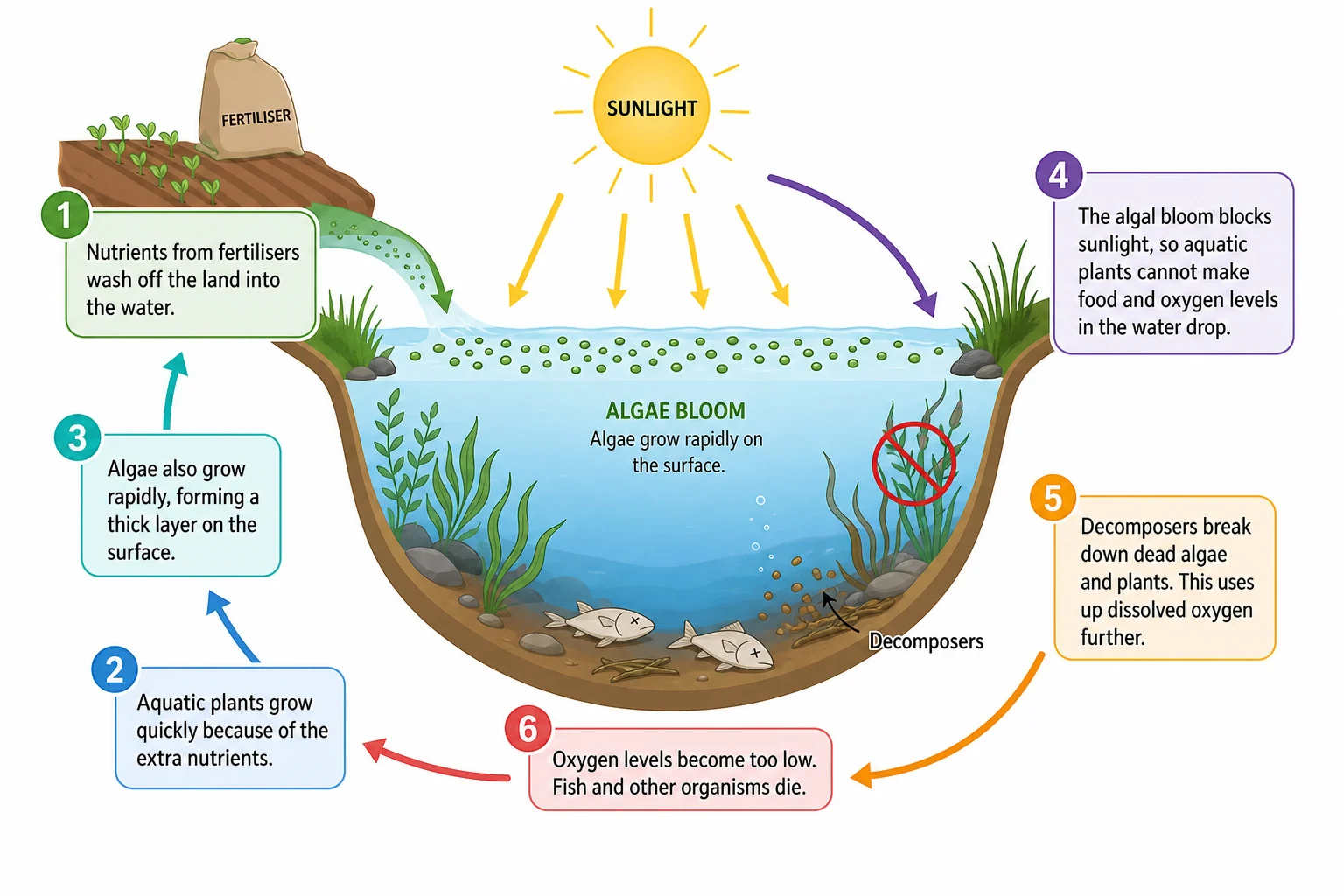

Pollution and nutrient enrichment
Fertiliser or sewage runoff can add excess nutrients to water. Rapid algal growth blocks light; after algae die, decomposers consume dissolved oxygen, which can kill fish and other aerobic organisms.
Persistent pollutants can accumulate in organisms and become more concentrated at higher trophic levels. Air pollutants and greenhouse gases can also affect ecosystems far from their original source.
Part 3 of 5Biodiversity value
Biodiversity
Biodiversity includes genetic, species and ecosystem diversity. Diverse ecosystems supply food, medicines, clean water, pollination, soil formation and regulation of atmospheric gases.
Because species are interconnected, extinction can remove food or habitat used by other organisms. Low genetic diversity also reduces a population's ability to adapt to environmental change.
Part 4 of 5Sustainable resource use
Sustainable resource use
Sustainability means using resources at rates that allow renewal. Recycling reduces demand for raw materials, landfill use and some energy consumption, although collection and processing must be managed safely.
Renewable harvesting limits, reduced waste, efficient energy use and biodegradable products can lower environmental damage while still meeting human needs.
Part 5 of 5Conservation strategies
Conservation strategies
In-situ conservation protects species in natural habitats through reserves, habitat restoration, wildlife corridors, laws and sustainable quotas.
Ex-situ conservation uses seed banks, captive breeding and managed collections. Successful programmes preserve genetic variation and, where possible, return organisms to restored habitats.
Marked practiceQuizzes for this lesson
Last updated:
\n