4.1Body Systems and Plants
Digestion and nutrition — EST 2 Biology Revision Notes & Topical Questions
20 min read 28 parts Lesson 1 of 8 3 quizzes
Lesson summary
SAT Biology digestion and nutrition: build a complete explanation of the core structures, processes and exam relationships.A balanced diet supplies carbohydrates for energy, proteins for growth and repair, lipids for concentrated energy and membranes, plus vitamins, minerals, fib…
Part 1 of 5Balanced nutrition
Balanced nutrition
A balanced diet supplies carbohydrates for energy, proteins for growth and repair, lipids for concentrated energy and membranes, plus vitamins, minerals, fibre and water.
Energy intake must match energy use over time. Deficiency causes malnutrition, while long-term excess energy is stored and can increase health risks.
Part 2 of 5Mechanical and chemical digestion
Mechanical and chemical digestion
Mechanical digestion breaks food into smaller pieces and increases surface area. Chemical digestion uses enzymes to hydrolyse large insoluble molecules into small soluble molecules.
Amylase digests starch to sugars, proteases digest proteins to amino acids, and lipases digest lipids to fatty acids and glycerol.
Part 3 of 5Digestive tract
Digestive tract
The mouth begins mechanical digestion and starch digestion. Peristalsis moves the bolus through the oesophagus to the stomach, where acid and protease act.
The small intestine completes digestion and absorbs nutrients. The large intestine reabsorbs water, and faeces leave through the rectum and anus.
Part 4 of 5Accessory organs
Accessory organs
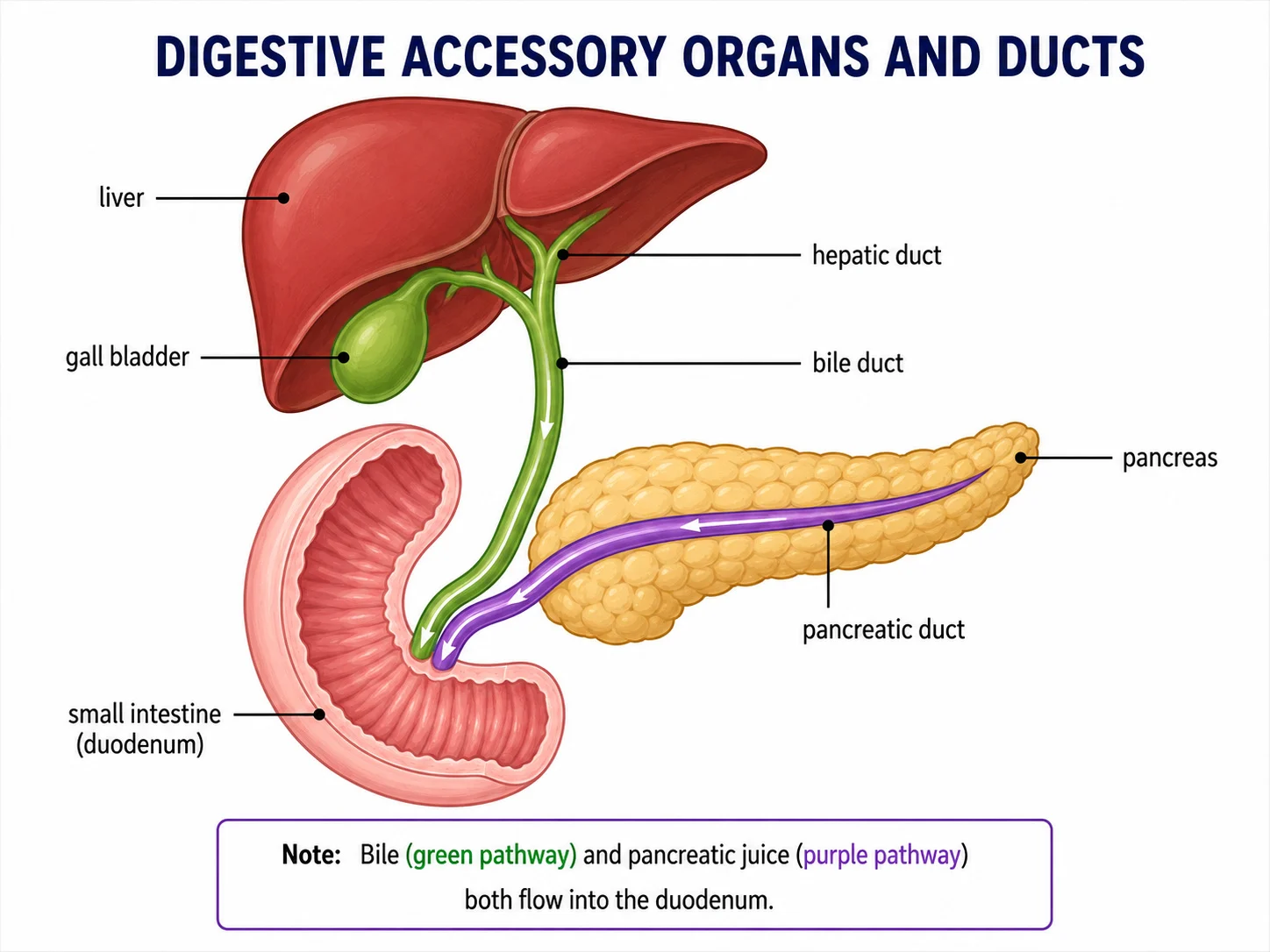
The liver makes bile, which neutralises acidic chyme and emulsifies fat. The gall bladder stores bile, and the pancreas releases digestive enzymes and bicarbonate.
Emulsification divides fat into small droplets, increasing surface area for lipase without chemically breaking the lipid molecules.
Part 5 of 5Absorption and assimilation
Absorption and assimilation
Villi and microvilli provide a large, thin, well-supplied surface for absorption. Sugars and amino acids enter blood capillaries; lipid products enter lacteals.
Assimilation occurs when absorbed nutrients enter cells and are used, for example glucose in respiration and amino acids in protein synthesis.
Marked practiceQuizzes for this lesson
Last updated:
\n