4.2Body Systems and Plants
Circulation and gas exchange — EST 2 Biology Revision Notes & Topical Questions
15 min read 26 parts Lesson 2 of 8 3 quizzes
Lesson summary
SAT Biology circulation and gas exchange: build a complete explanation of the core structures, processes and exam relationships.The pulmonary circuit carries deoxygenated blood from the right side of the heart to the lungs and returns oxygenated blood to the left side.The systemi…
Part 1 of 5Double circulation
Double circulation
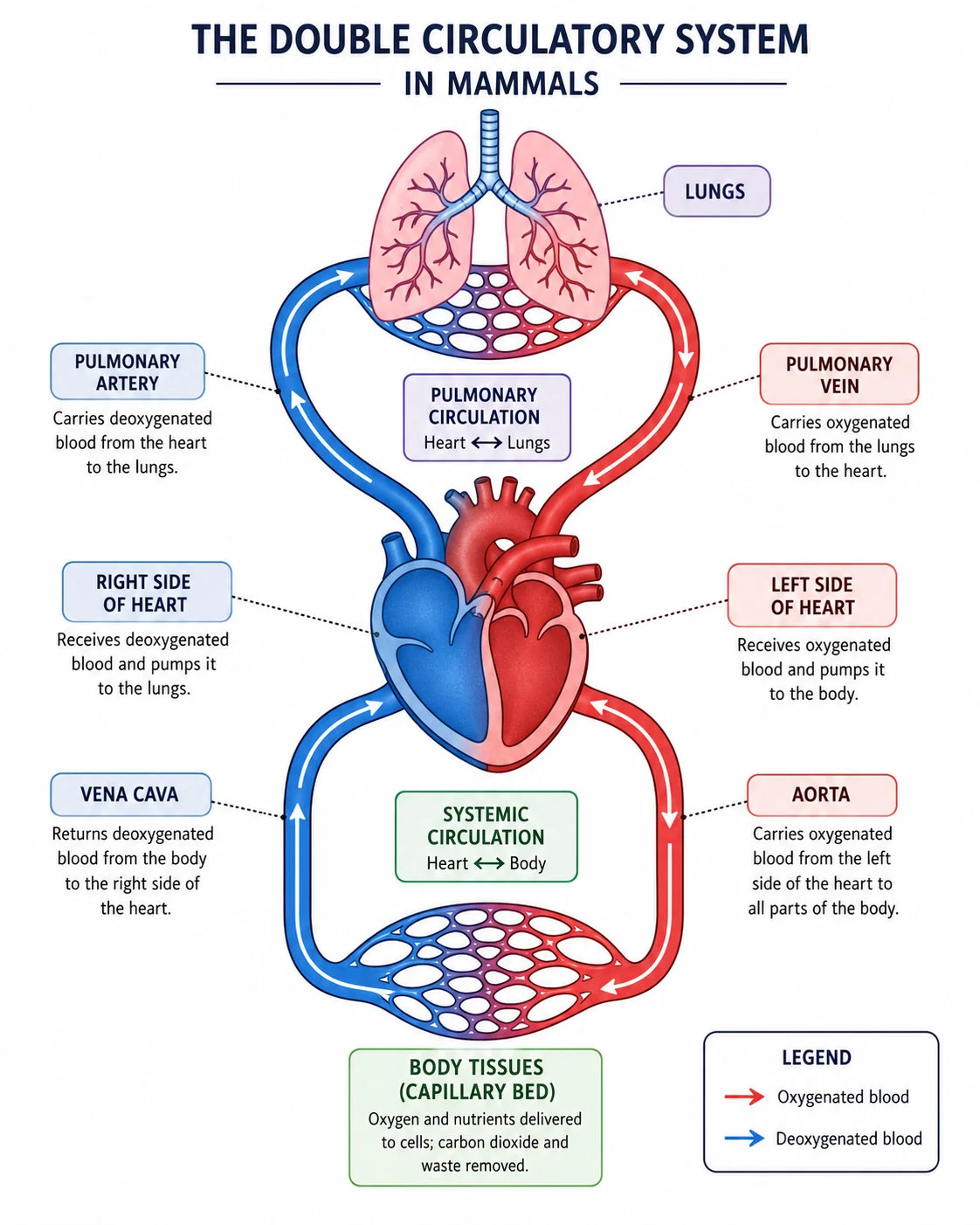
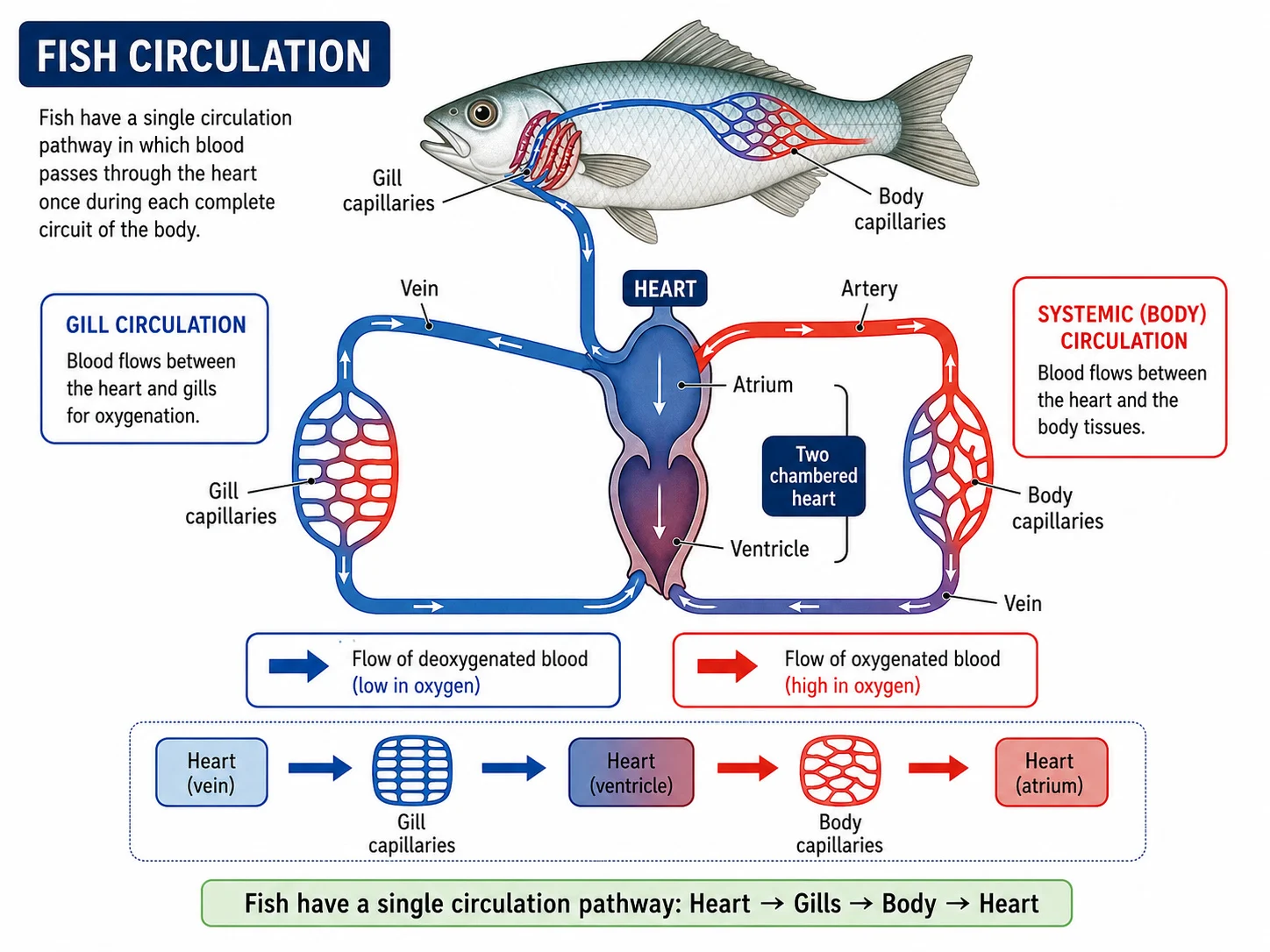
The pulmonary circuit carries deoxygenated blood from the right side of the heart to the lungs and returns oxygenated blood to the left side.
The systemic circuit sends oxygenated blood from the left ventricle through the aorta to the body and returns it through the vena cava.
Part 2 of 5Heart structure
Heart structure
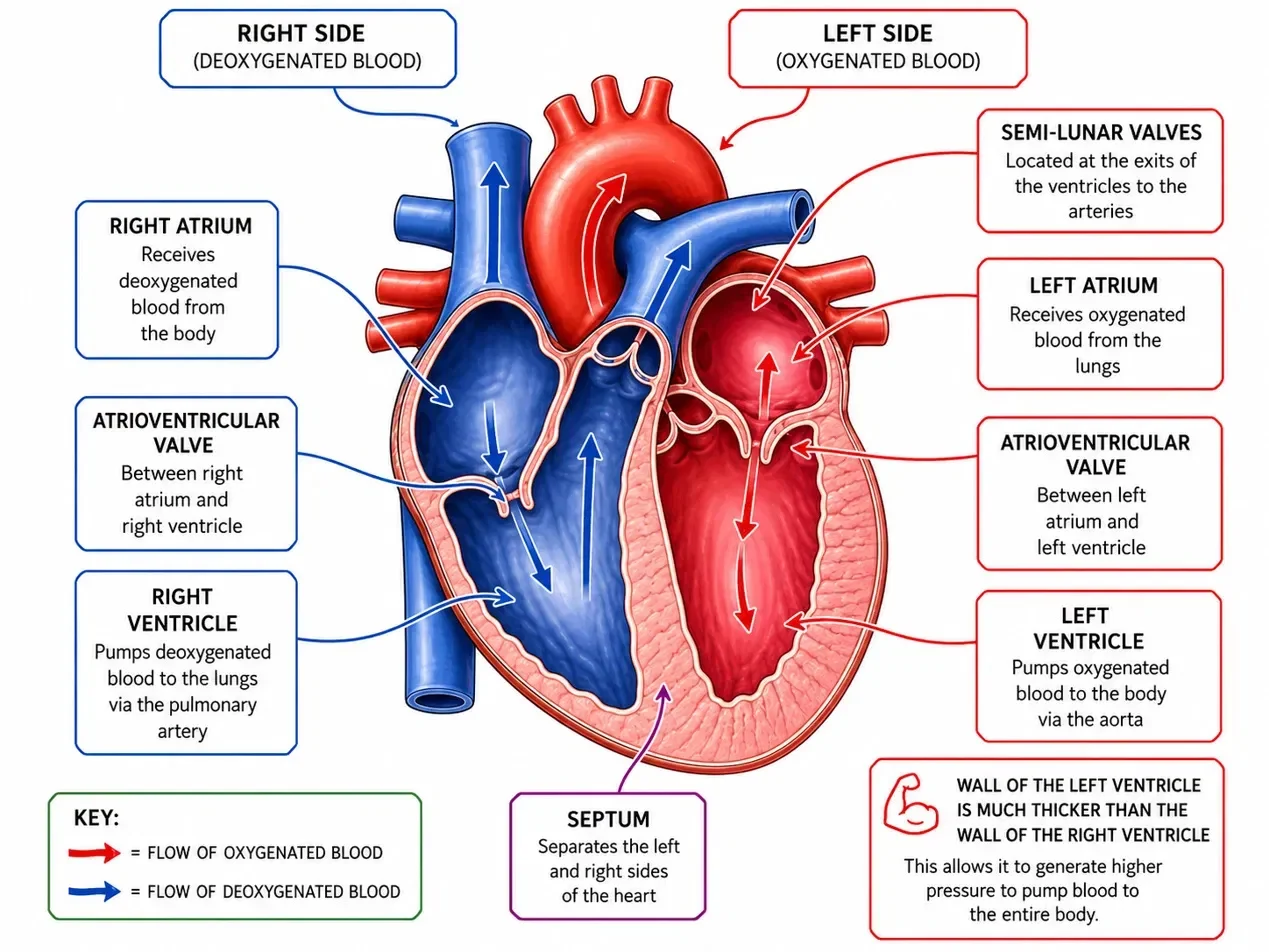
Atria receive blood and ventricles pump it. Valves prevent backflow, and the muscular left ventricle has the thickest wall because it generates pressure for the whole body.
Coronary arteries supply the heart muscle. Electrical activity coordinates atrial contraction followed by ventricular contraction.
Part 3 of 5Blood vessels
Blood vessels
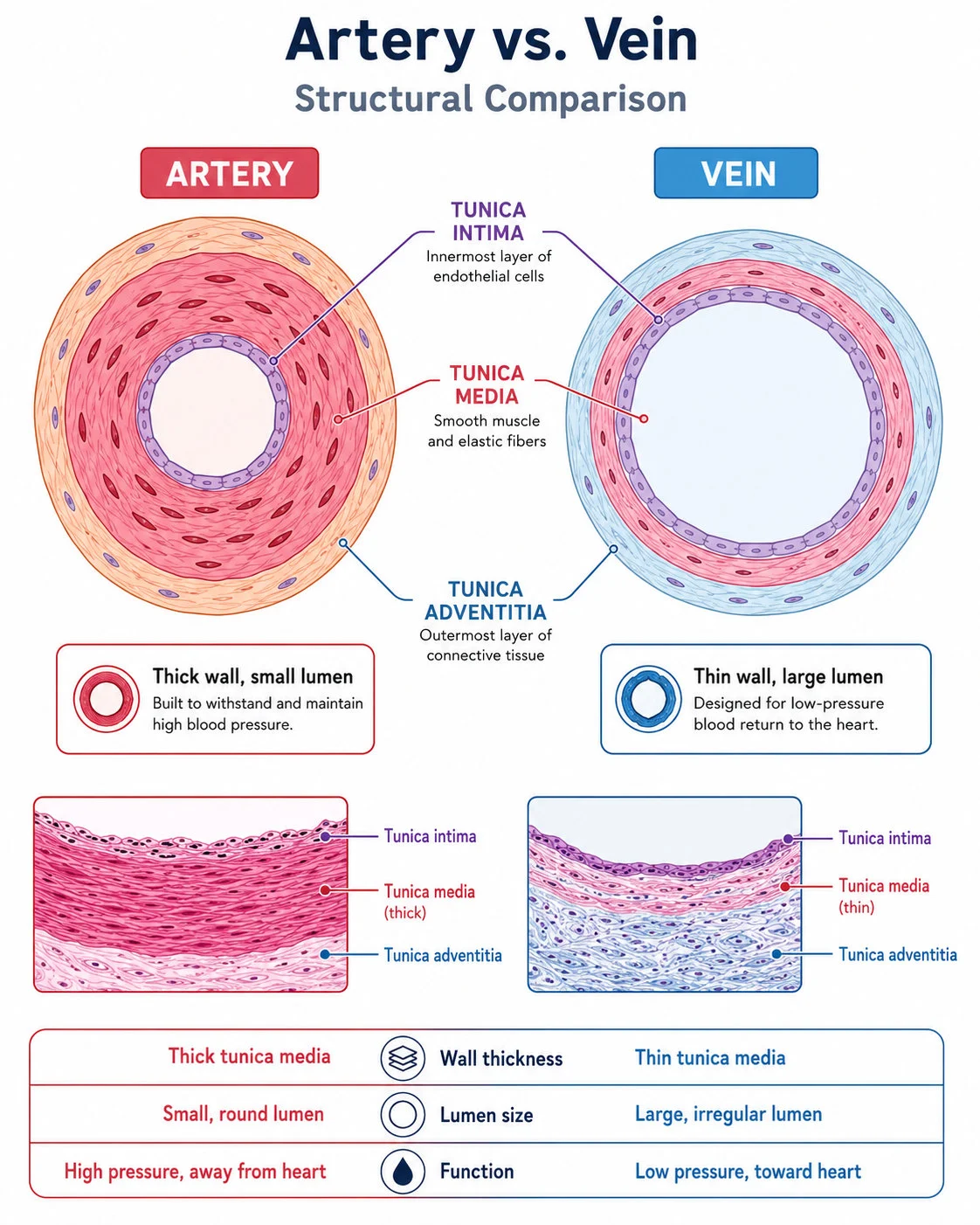
Arteries carry blood away under high pressure and have thick elastic walls. Veins return blood at lower pressure and contain valves.
Capillaries have one-cell-thick walls and narrow lumens, producing short diffusion distances and extensive exchange surfaces.
Part 4 of 5Blood components
Blood components
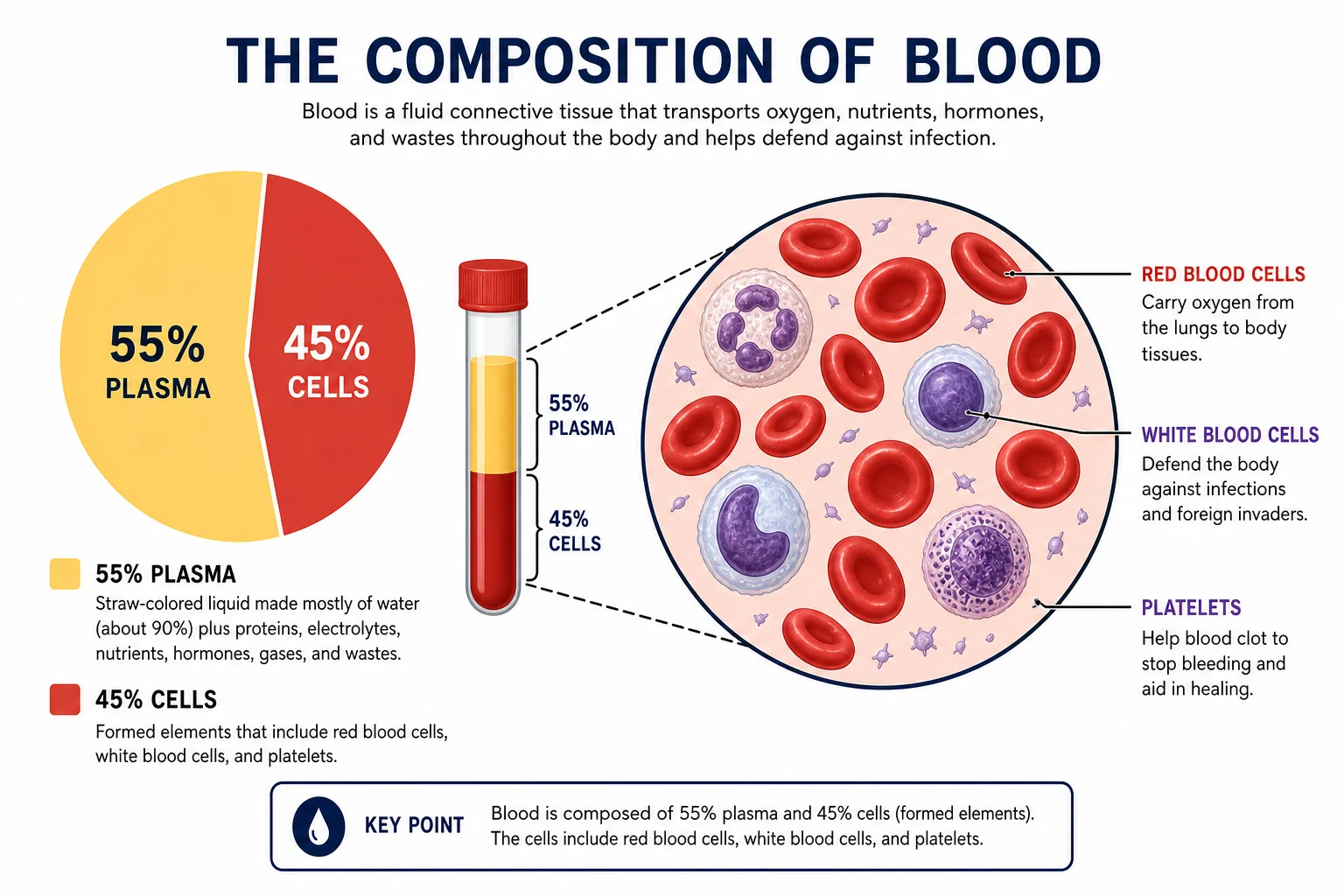
Red blood cells contain haemoglobin and transport oxygen. White blood cells provide defence, platelets enable clotting, and plasma transports cells and dissolved substances.
Oxygen binds reversibly to haemoglobin in the lungs and is released in respiring tissues where oxygen concentration is lower.
Part 5 of 5Gas exchange
Gas exchange
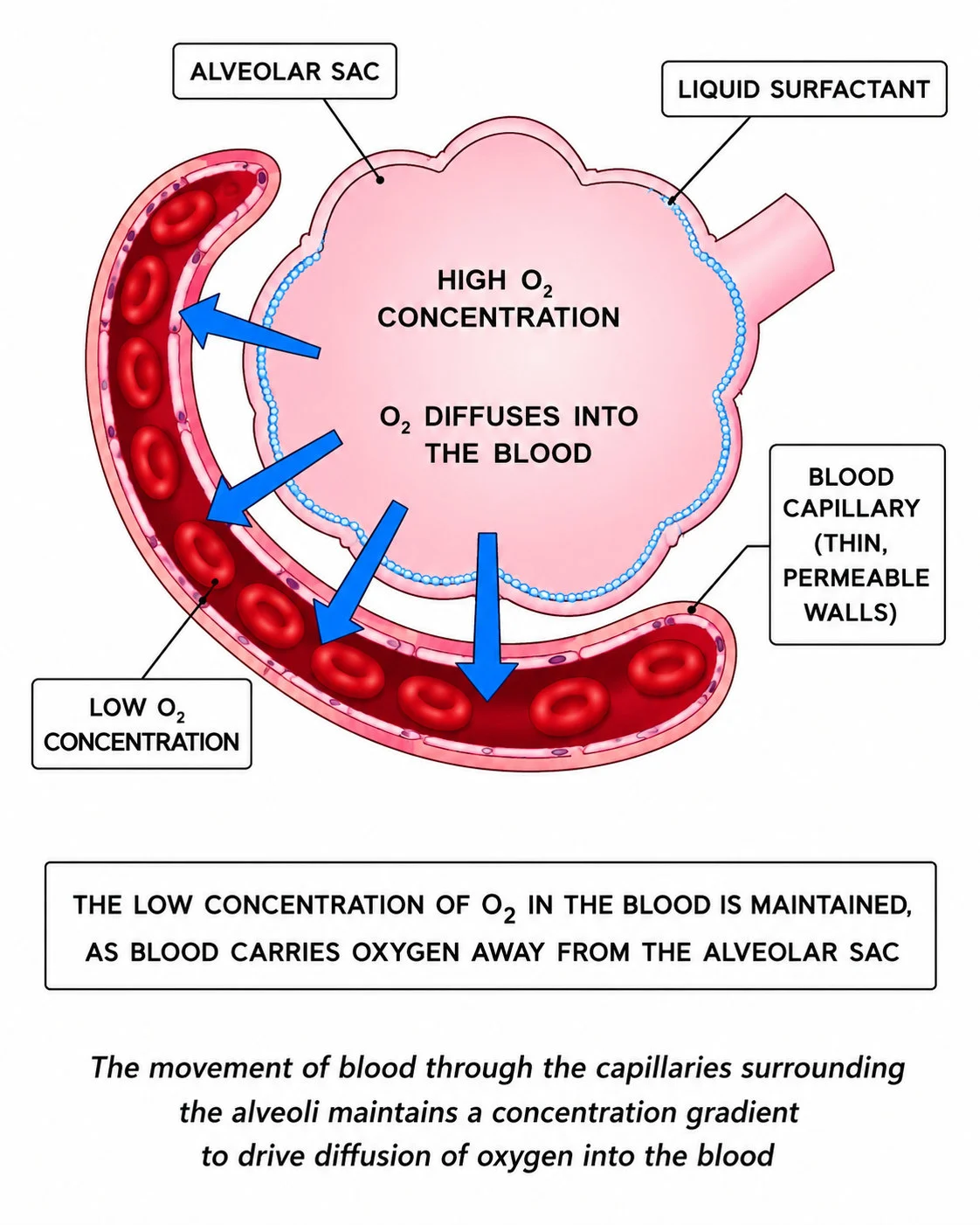
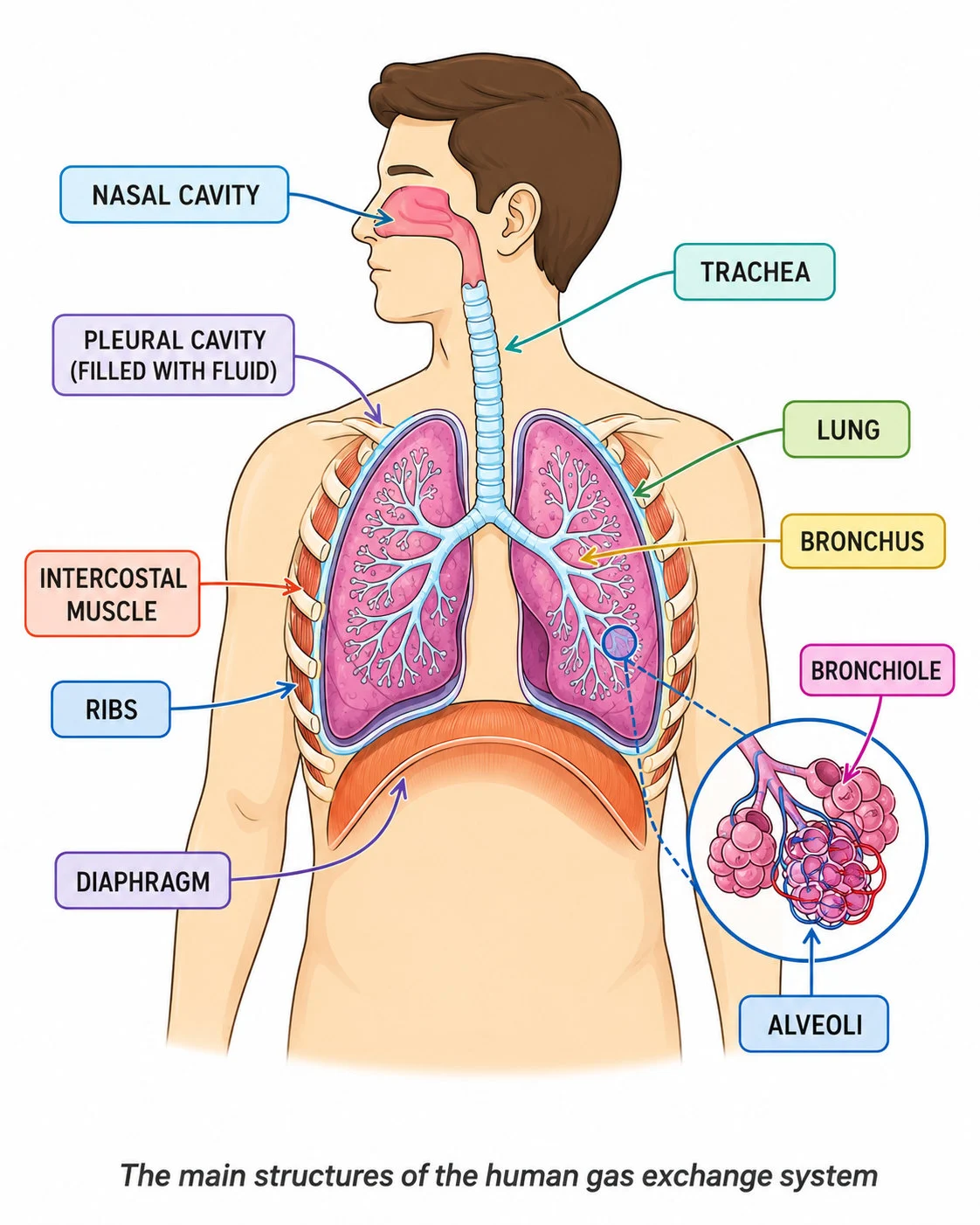
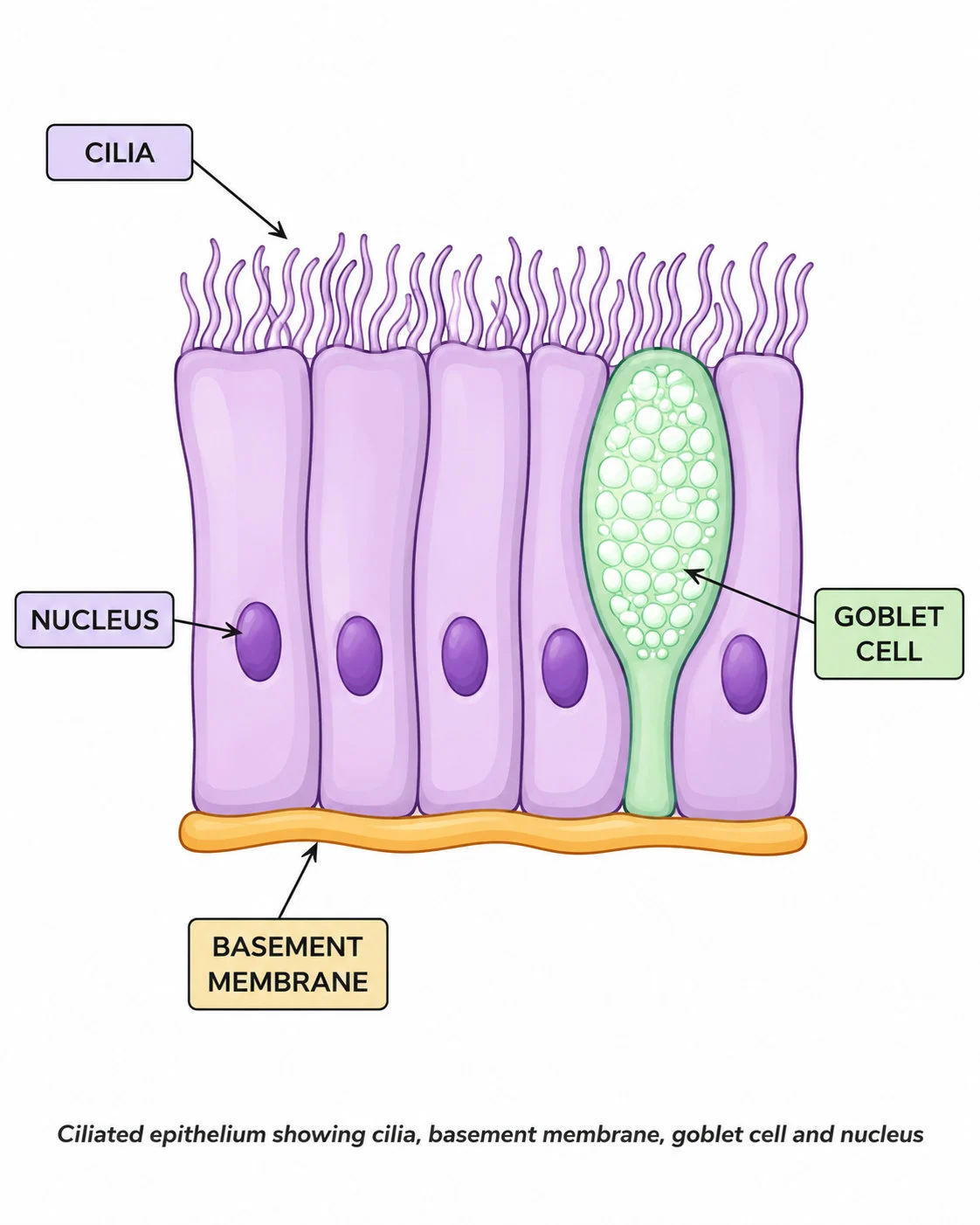
Alveoli provide a large moist surface, a thin diffusion barrier and dense capillary supply. Ventilation and blood flow maintain steep concentration gradients.
Oxygen diffuses from alveolar air into blood, while carbon dioxide diffuses from blood into alveoli and is removed during exhalation.
Marked practiceQuizzes for this lesson
Last updated:
\n