4.6Body Systems and Plants
Support, movement and reproduction — EST 2 Biology Revision Notes & Topical Questions
25 min read 39 parts Lesson 6 of 8 2 quizzes
Lesson summary
SAT Biology support, movement and reproduction: build a complete explanation of the core structures, processes and exam relationships.The skeleton supports the body, protects organs and provides attachment points for muscles.
- Meiosis forms gametes, and fertilisation restores the diploid chromosome number in the zygote
Part 1 of 5Skeleton and joints
Skeleton and joints
The skeleton supports the body, protects organs and provides attachment points for muscles. Ligaments join bone to bone, while tendons join muscle to bone.
At synovial joints, cartilage reduces friction and absorbs shock, synovial fluid lubricates, and a capsule stabilises the joint.
Part 2 of 5Antagonistic muscles
Antagonistic muscles
Muscles generate force only by contracting, so they work in antagonistic pairs. At the elbow, biceps contraction flexes the arm while triceps contraction extends it.
A contracting muscle shortens and pulls through its tendon. The opposing muscle relaxes so the bone can rotate around the joint.
Part 3 of 5Sexual and asexual reproduction
Sexual and asexual reproduction
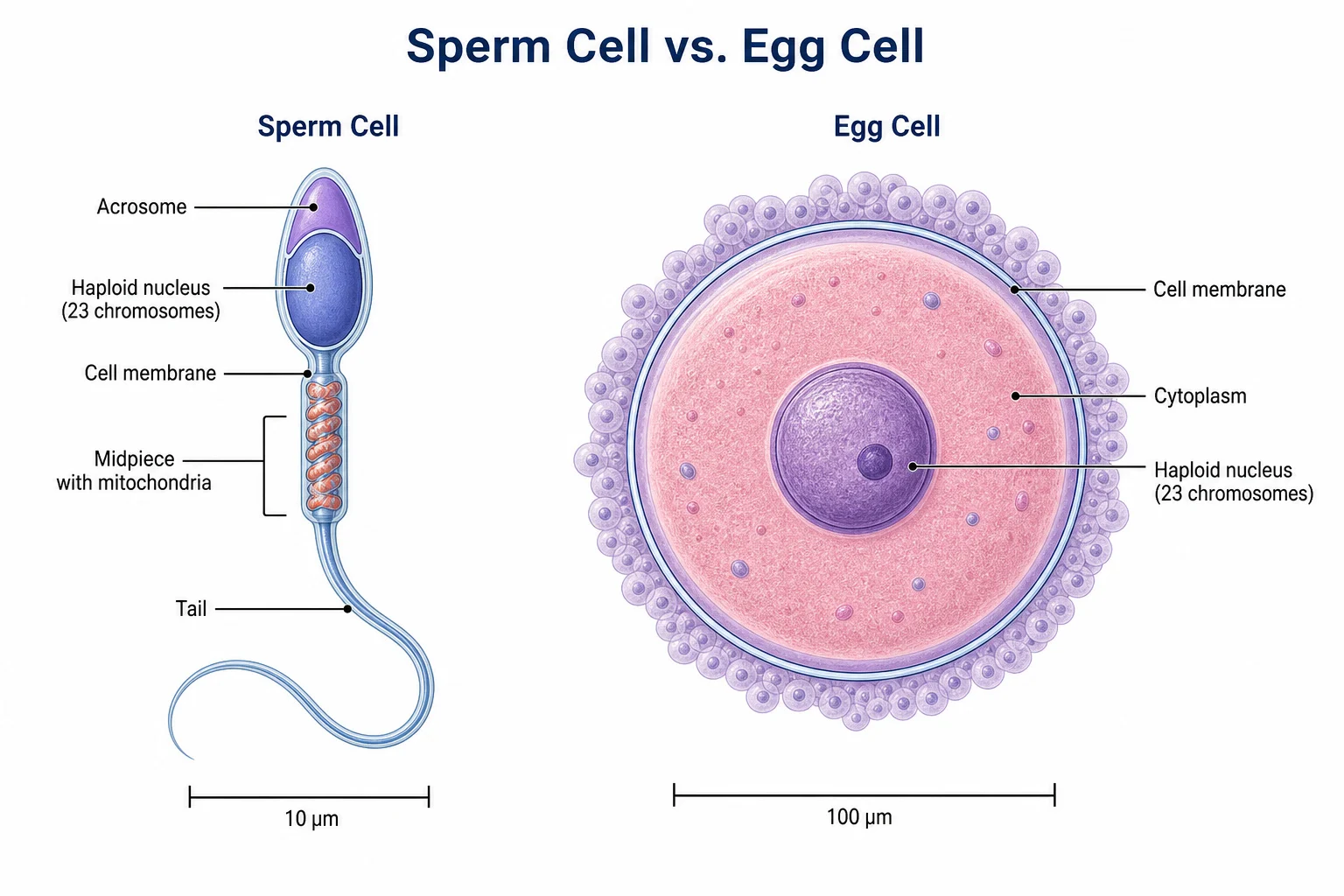
Asexual reproduction uses one parent and produces genetically similar offspring rapidly. Sexual reproduction fuses haploid gametes and generates variation.
Meiosis forms gametes, and fertilisation restores the diploid chromosome number in the zygote.
Part 4 of 5Human reproductive cycle
Human reproductive cycle
FSH stimulates follicle development and oestrogen secretion. Rising oestrogen rebuilds the uterine lining and contributes to the LH surge that triggers ovulation.
Progesterone from the corpus luteum maintains the lining. If fertilisation does not occur, hormone levels fall and menstruation begins.
Part 5 of 5Fertilisation and development
1
Fertilisation normally occurs in an oviduct. The zygote divides by mitosis, becomes an embryo and implants in the uterine lining.
2
The placenta exchanges materials between maternal and fetal blood without normally mixing them; oxygen and nutrients enter while carbon dioxide and urea leave.
Marked practiceQuizzes for this lesson
Last updated:
\n