Section 1 of 9Enzymes as biological catalysts
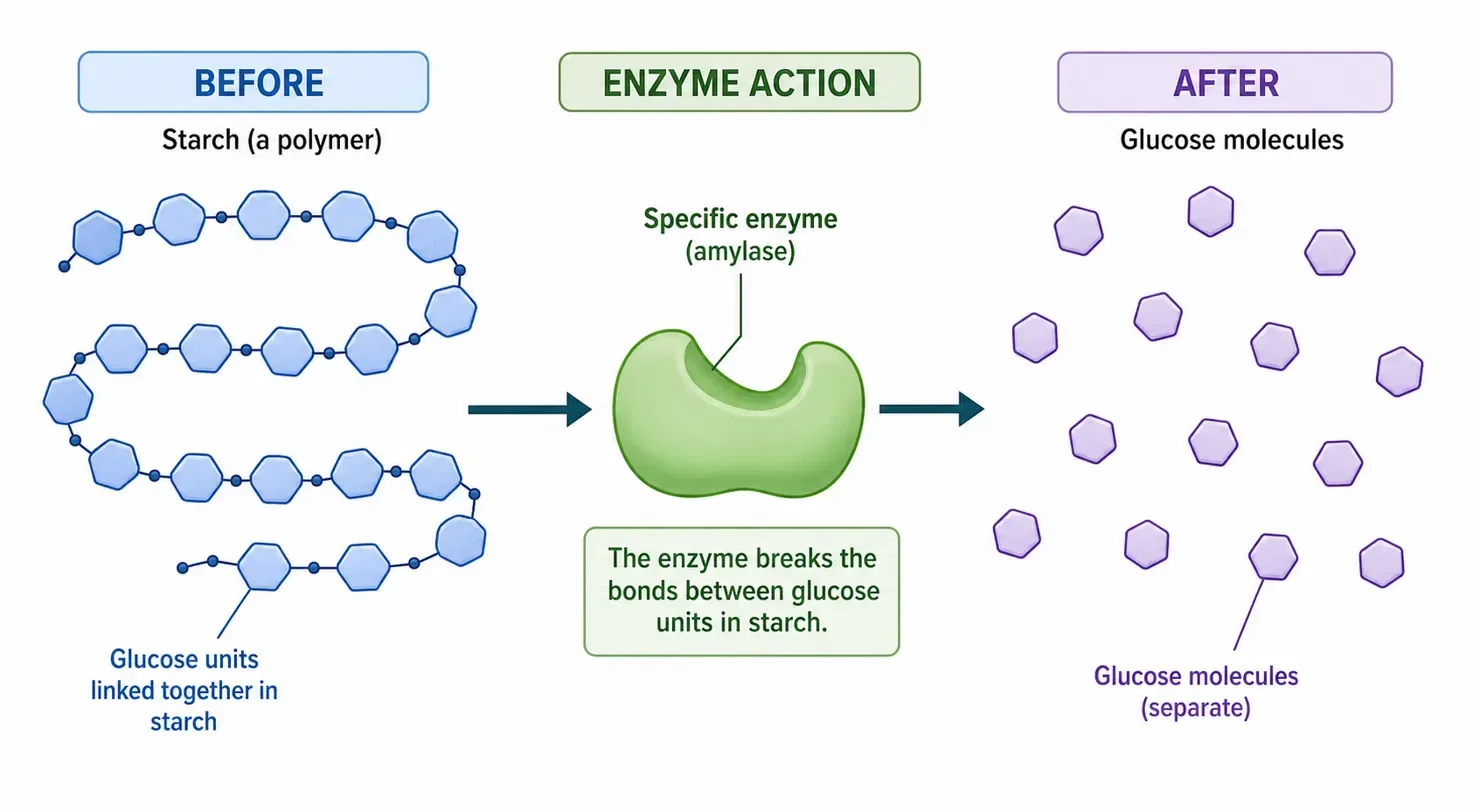
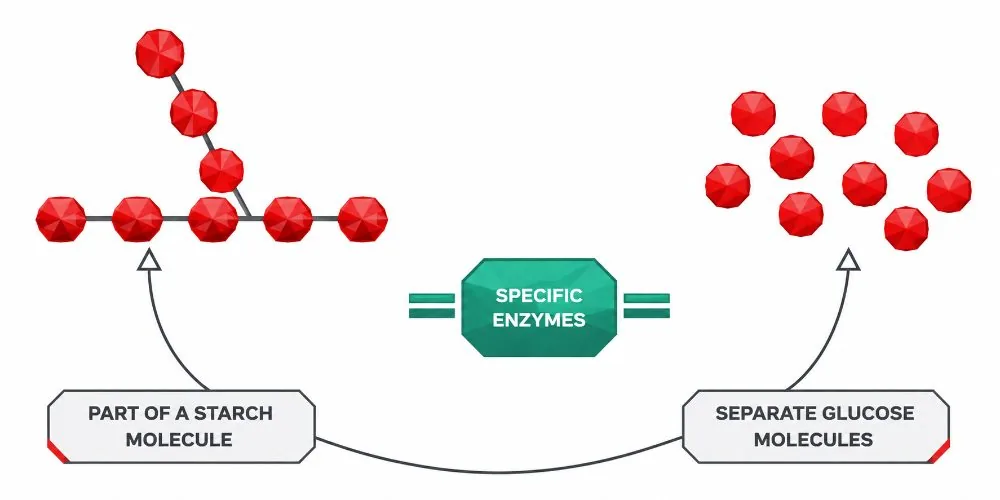


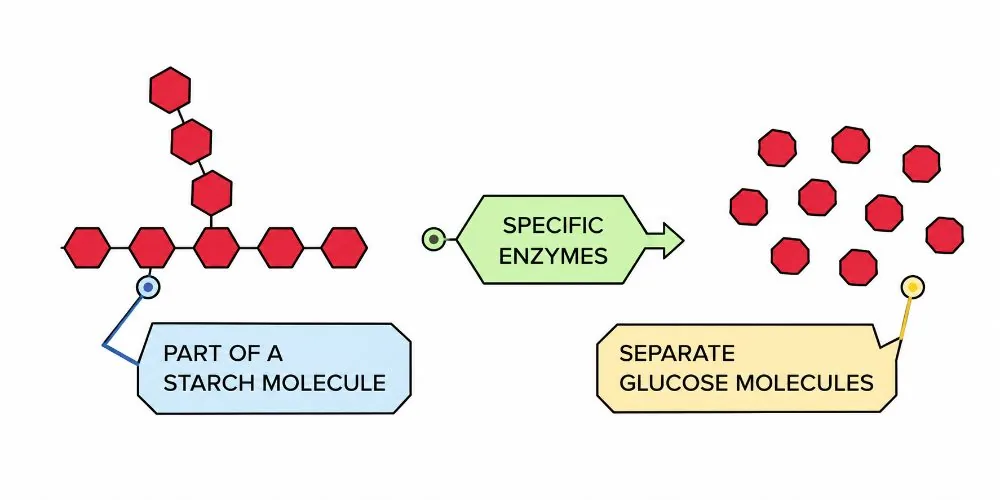


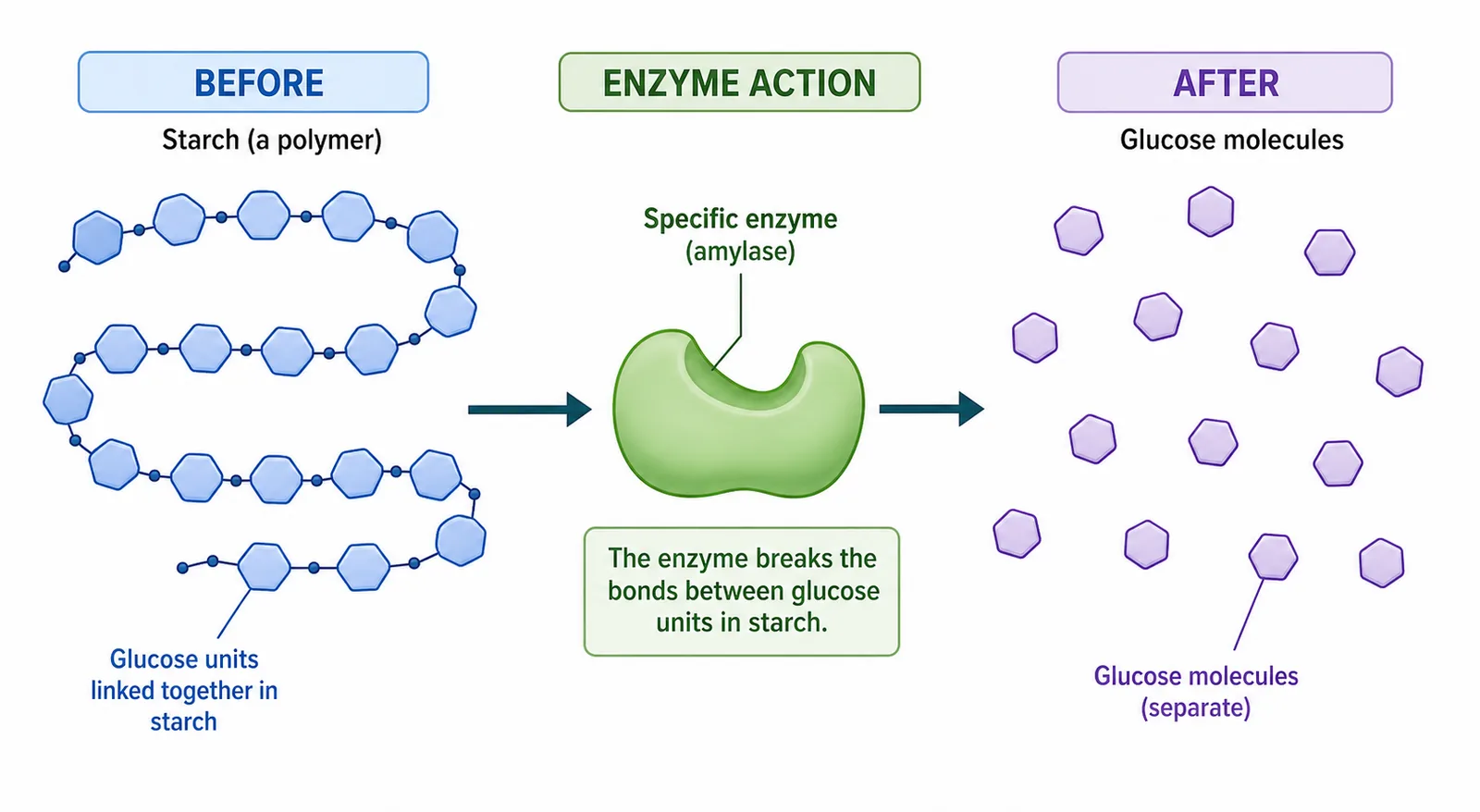
Chemical reactions in cells, such as digestion and respiration, would be far too slow at body temperature if they were left to occur by themselves. Enzymes are proteins that act as biological catalysts: they speed up reactions without being used up or changed themselves.
- which breaks down starch into maltose, protease,
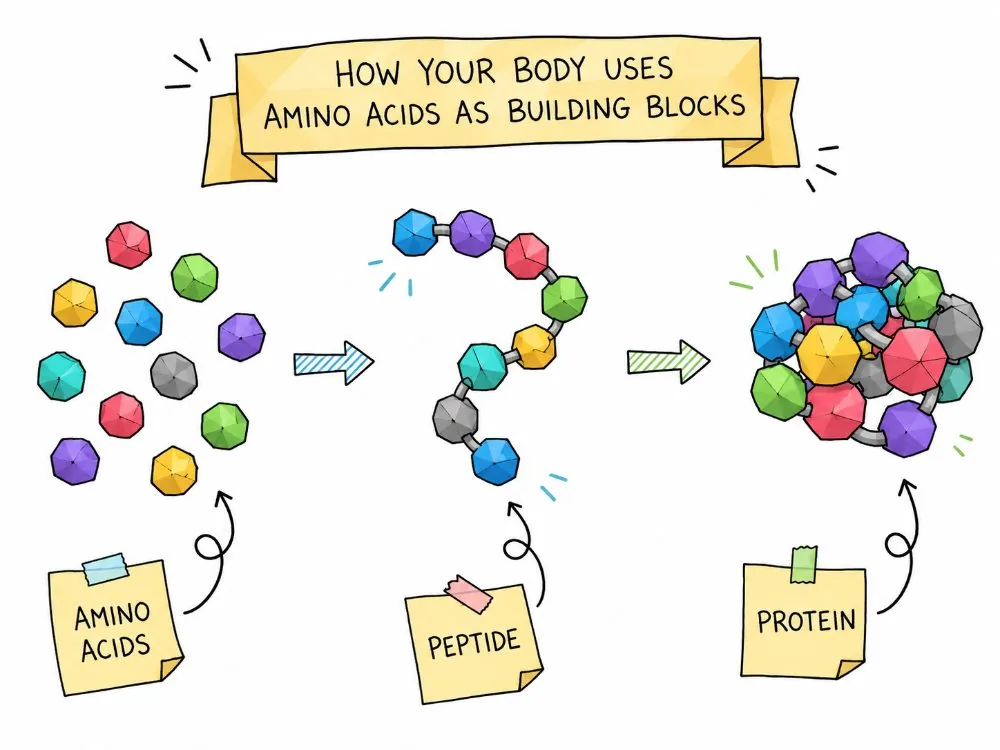
- which breaks proteins into amino acids, and lipase,
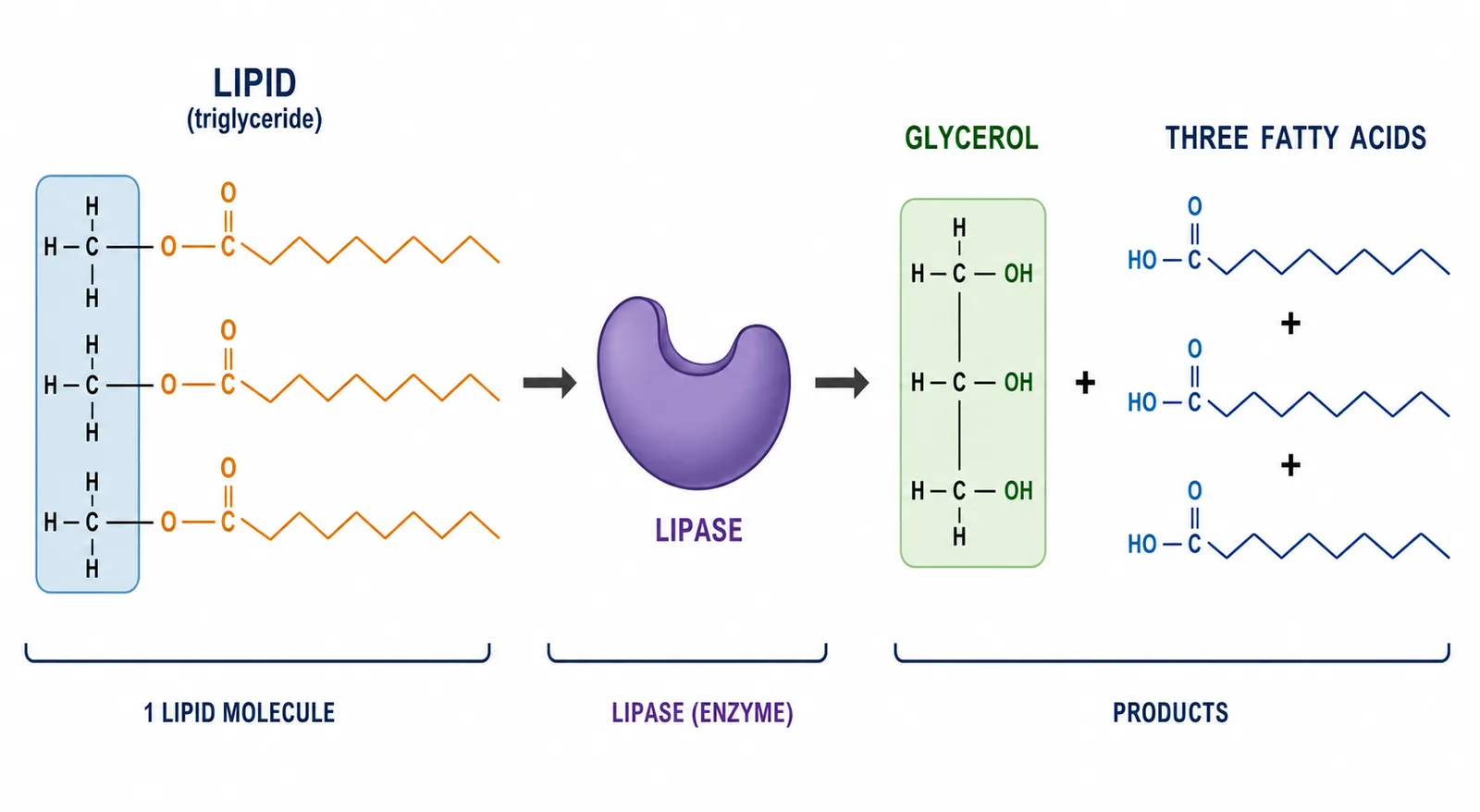
- which breaks fats into fatty acids and glycerol.
Section 2 of 9The lock and key model
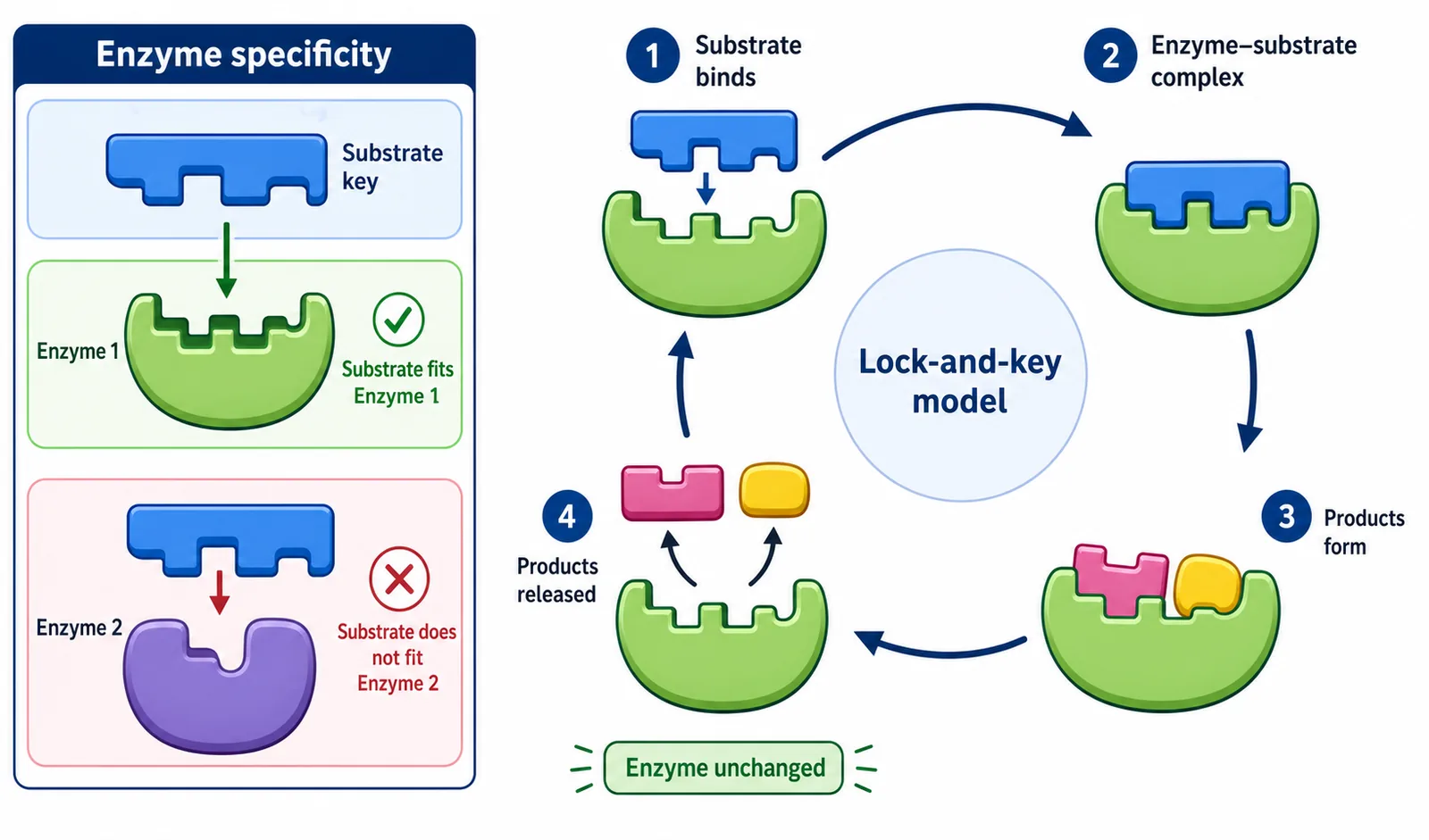

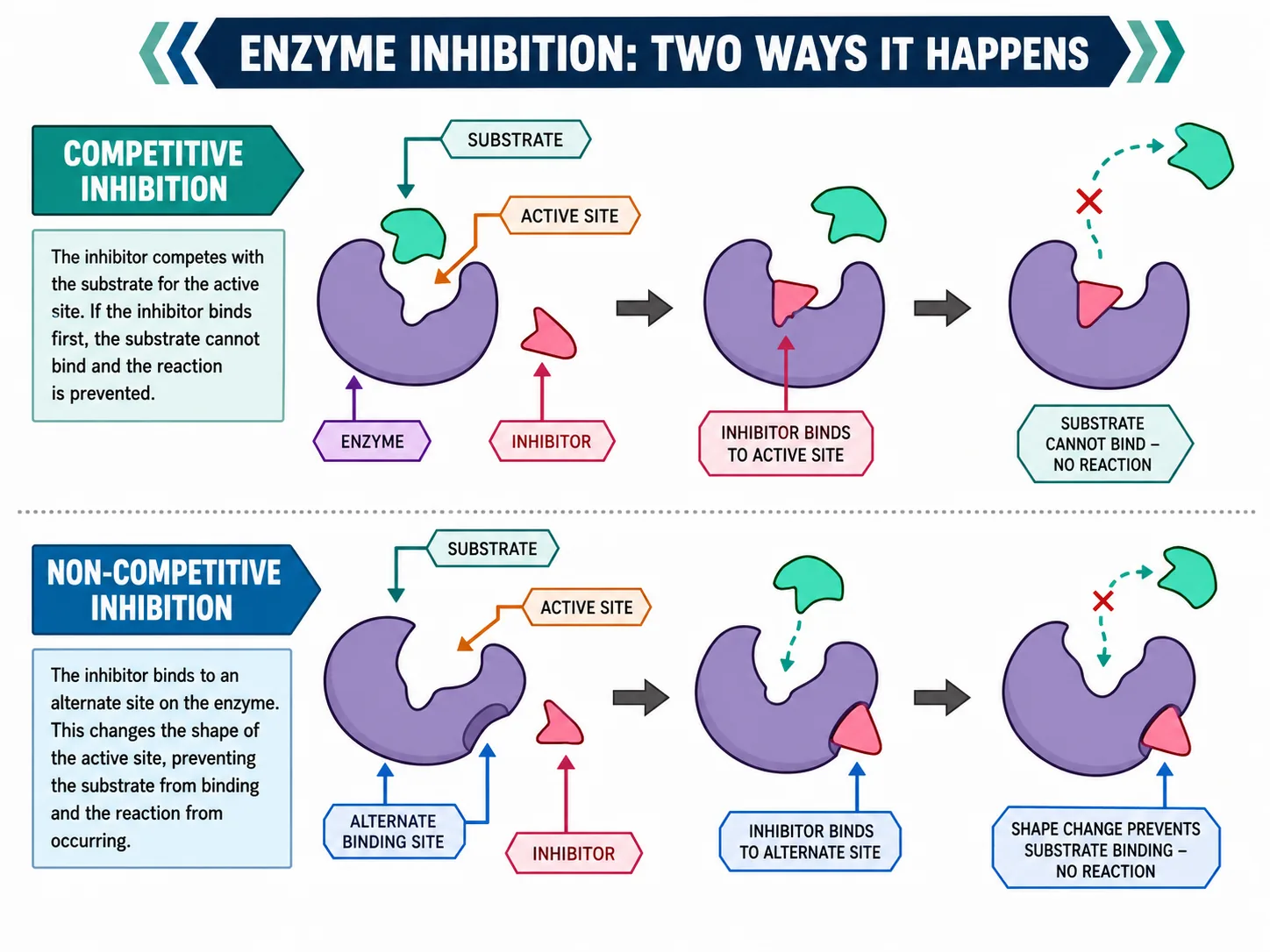
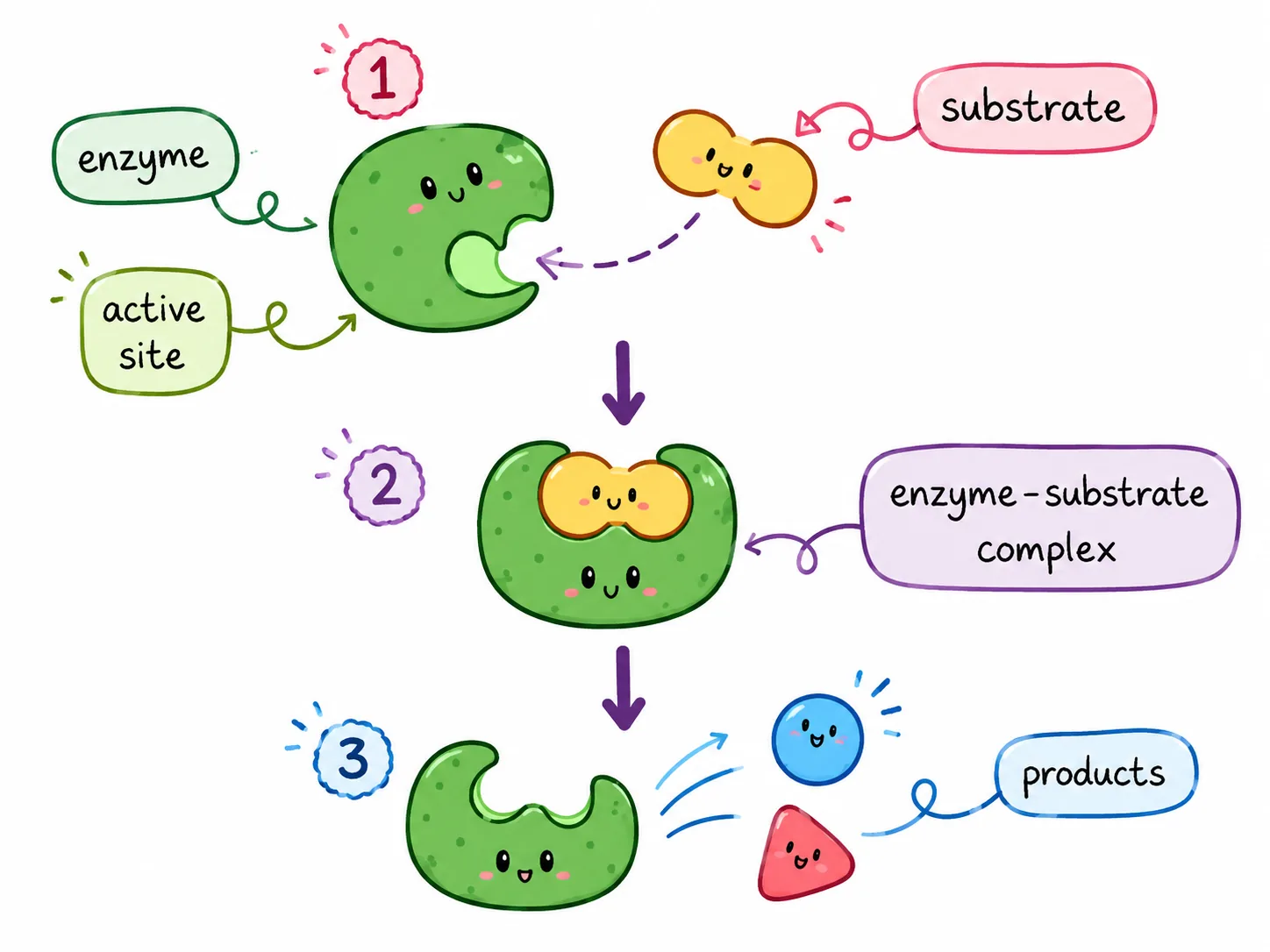
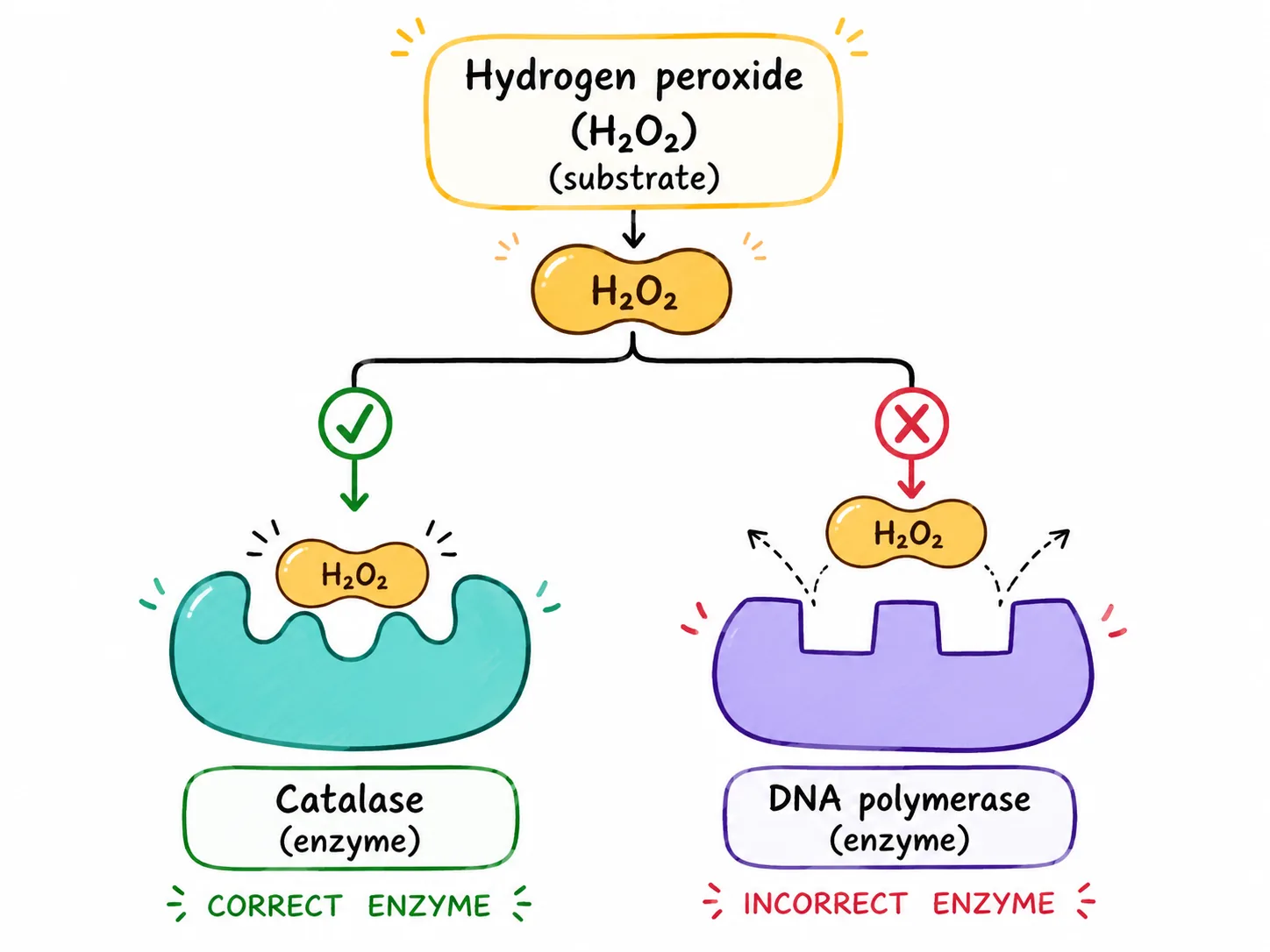


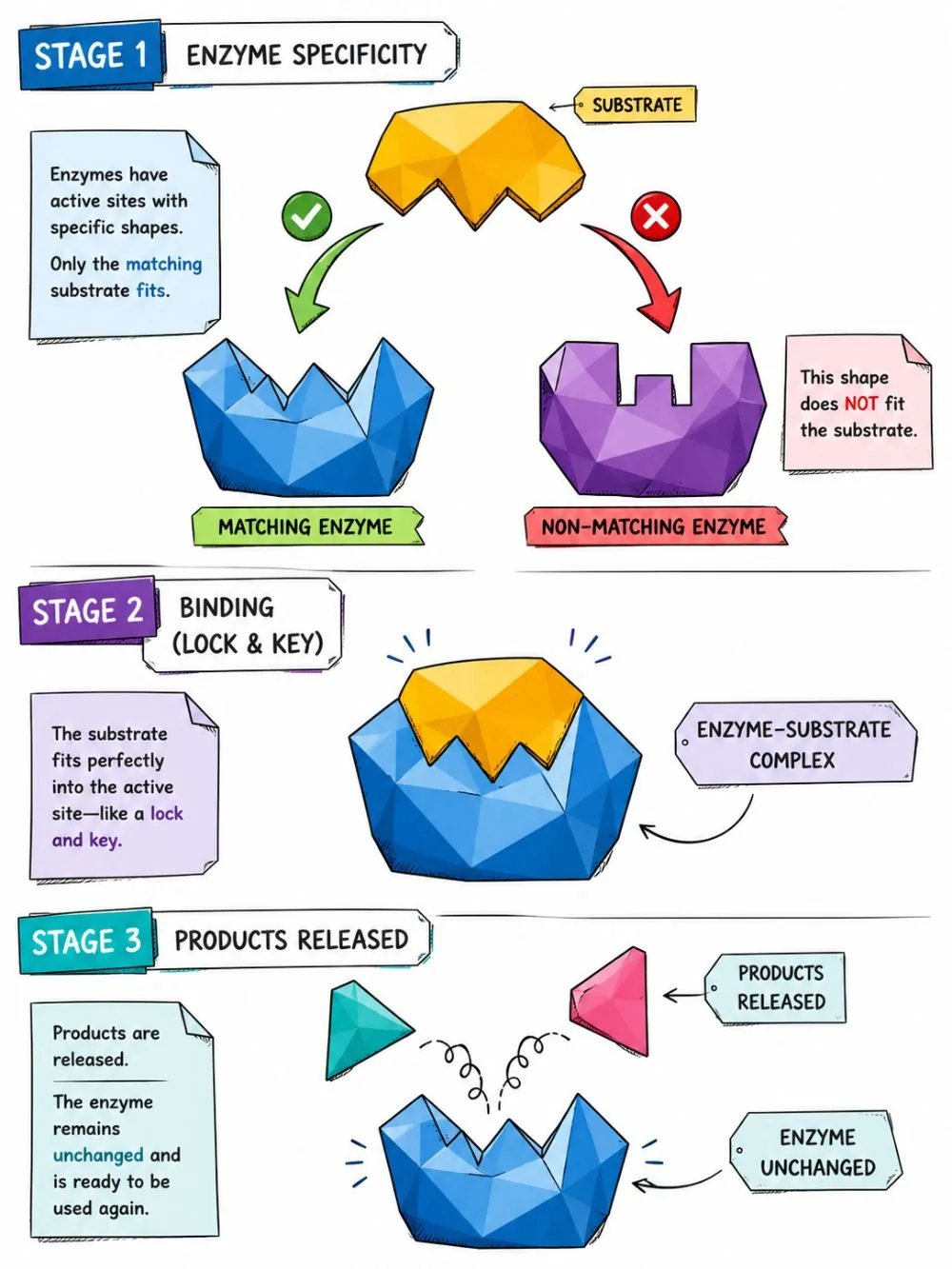
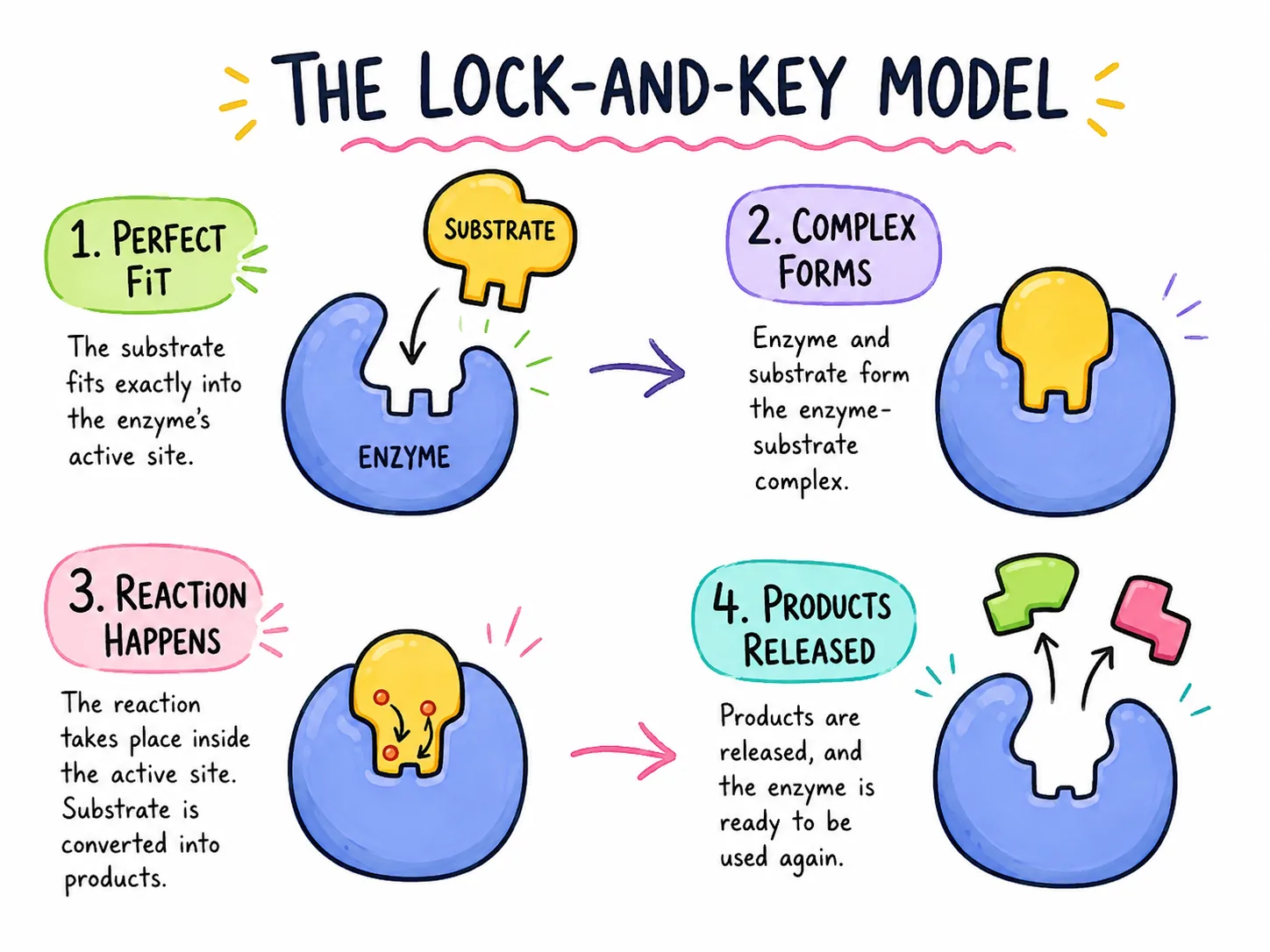
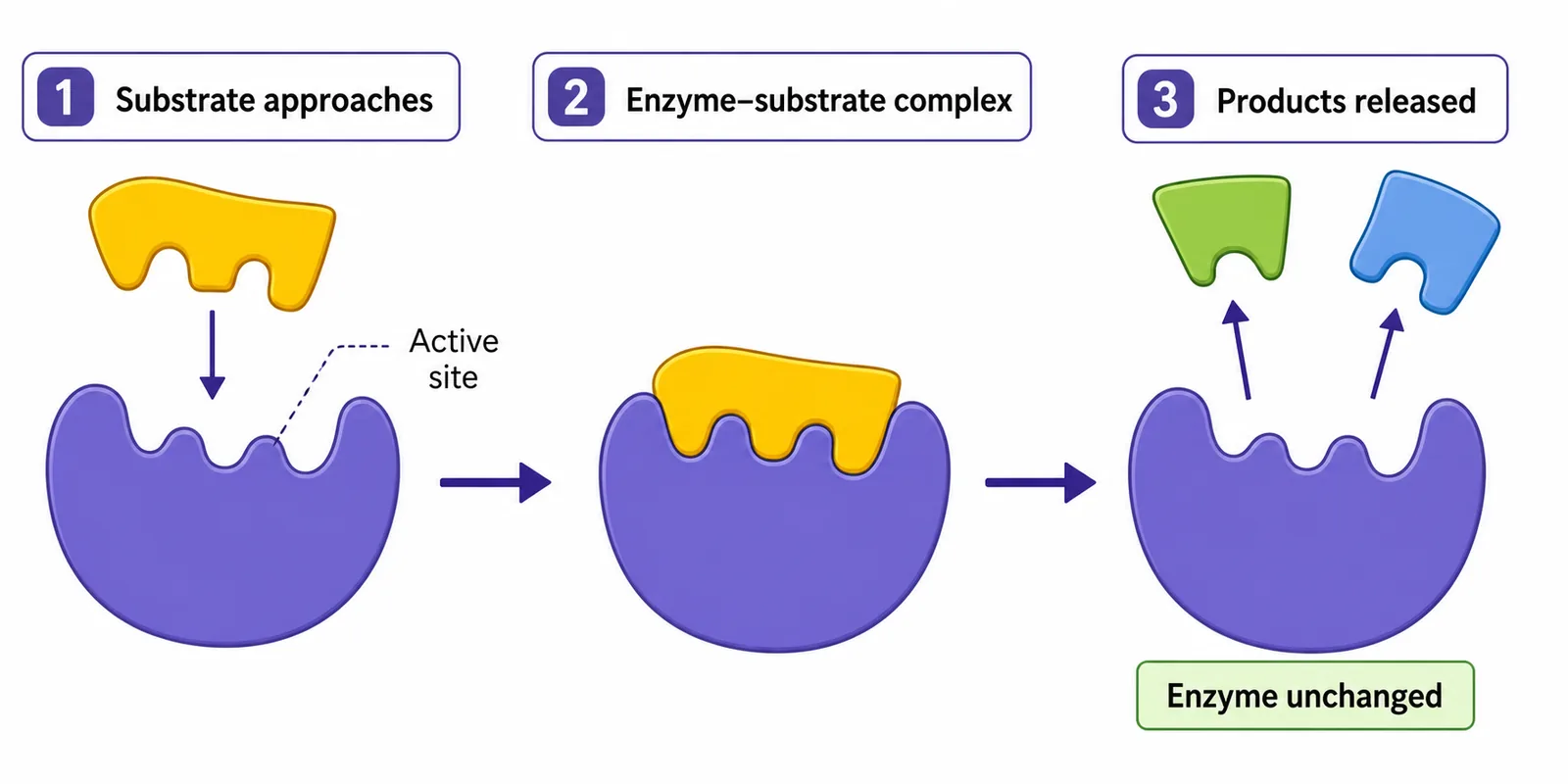
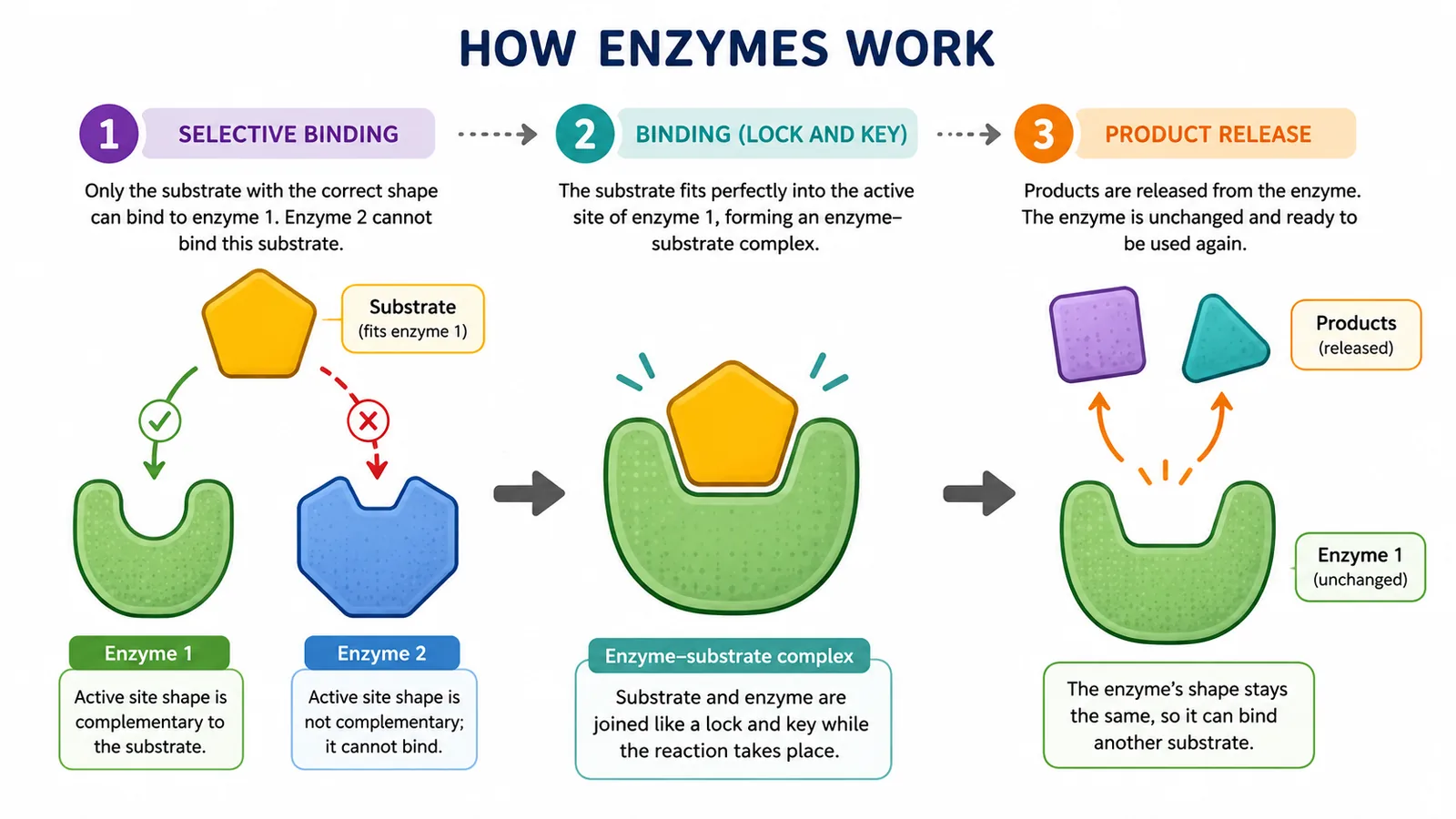
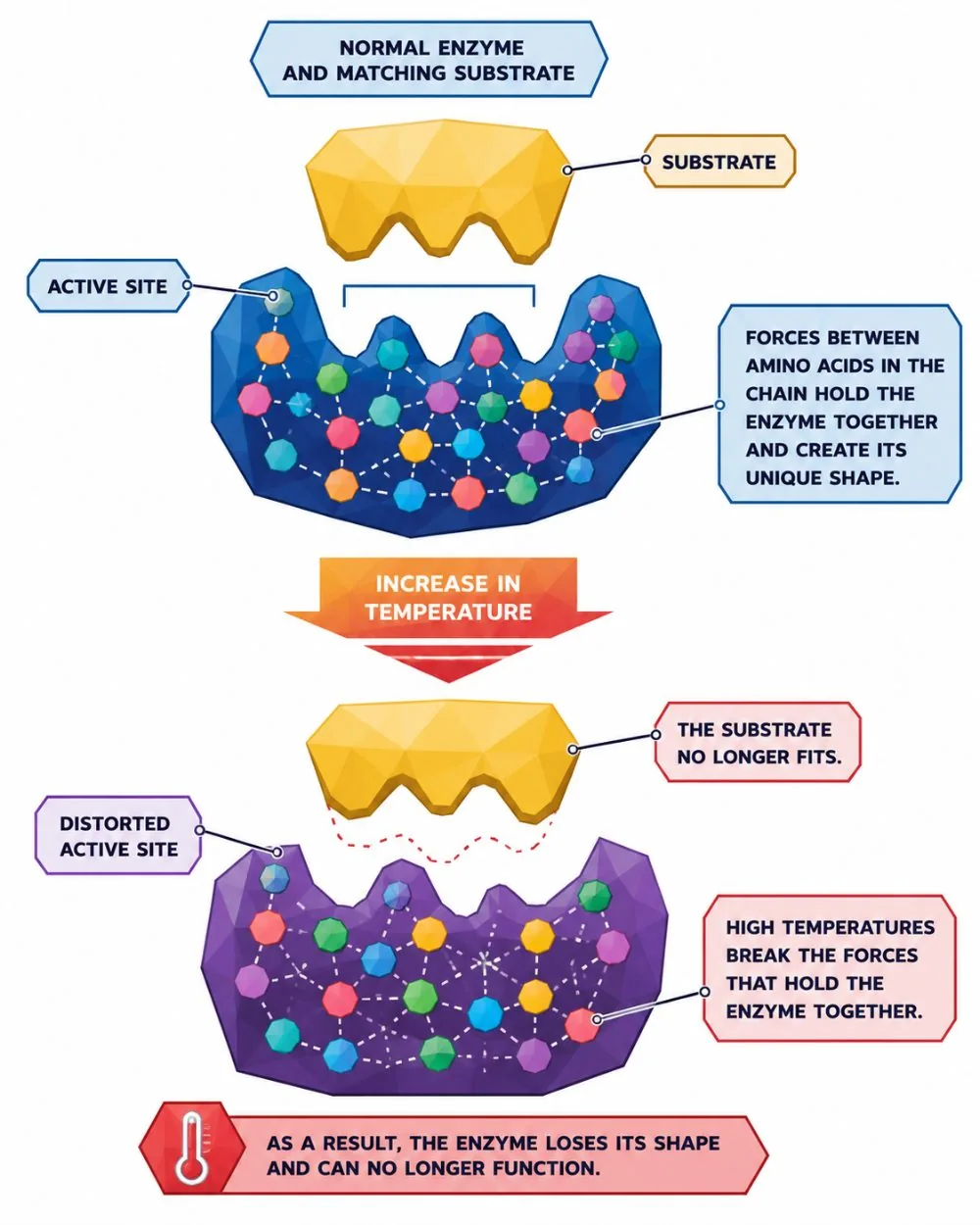
Each enzyme has a region called the active site, which has a specific 3-D shape. The molecule on which the enzyme acts is the substrate. The substrate fits the active site like a key fits a lock. The steps are:
Because the shape of the active site is complementary to only one substrate, enzymes are specific. The shape depends on the folding of the protein chain, which is set by the amino acid sequence determined by the gene.
Section 3 of 9Effect of temperature


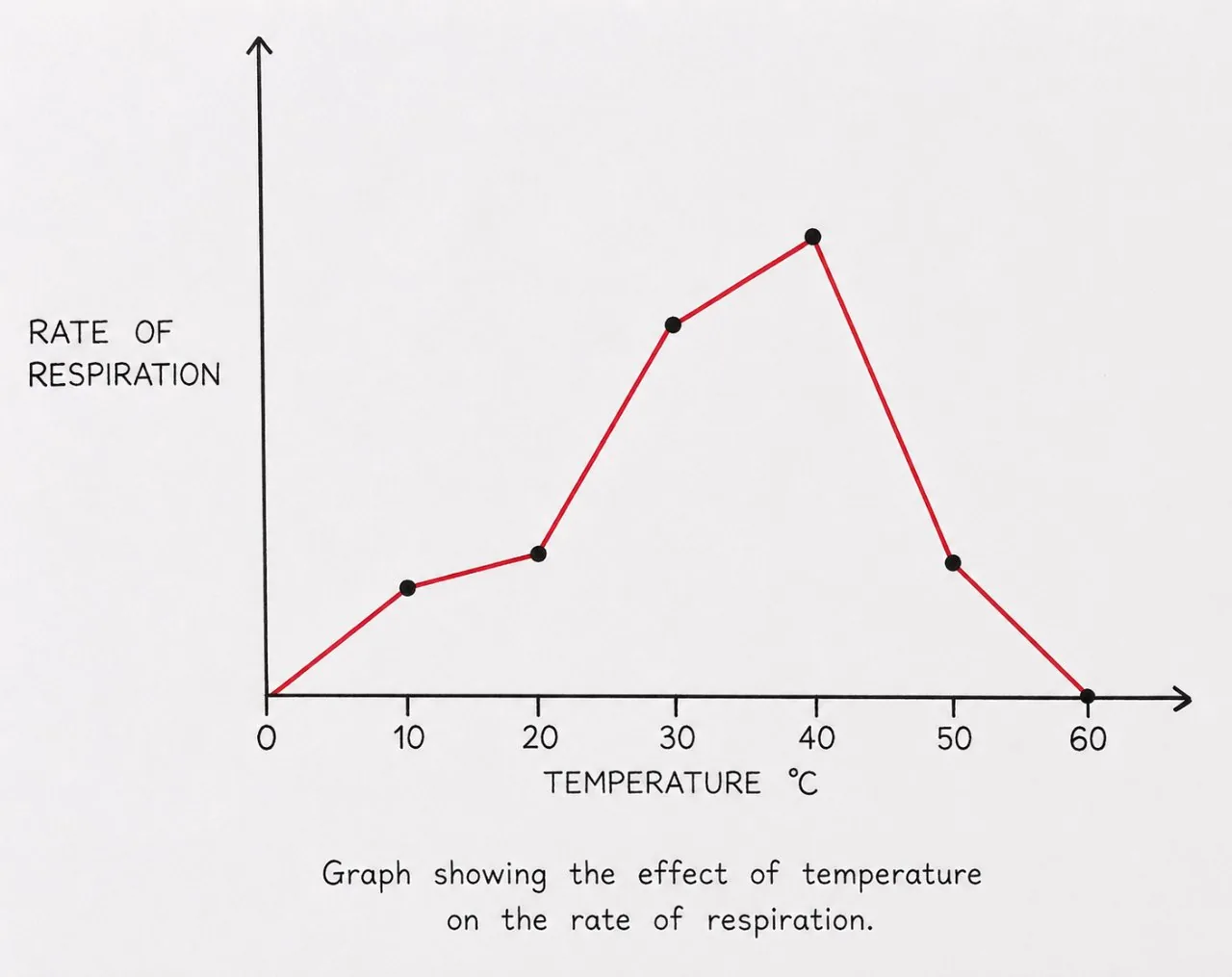

As temperature rises, the molecules gain kinetic energy and move faster, so the substrate and enzyme collide more often and with more energy.
Section 4 of 9Effect of pH and substrate concentration


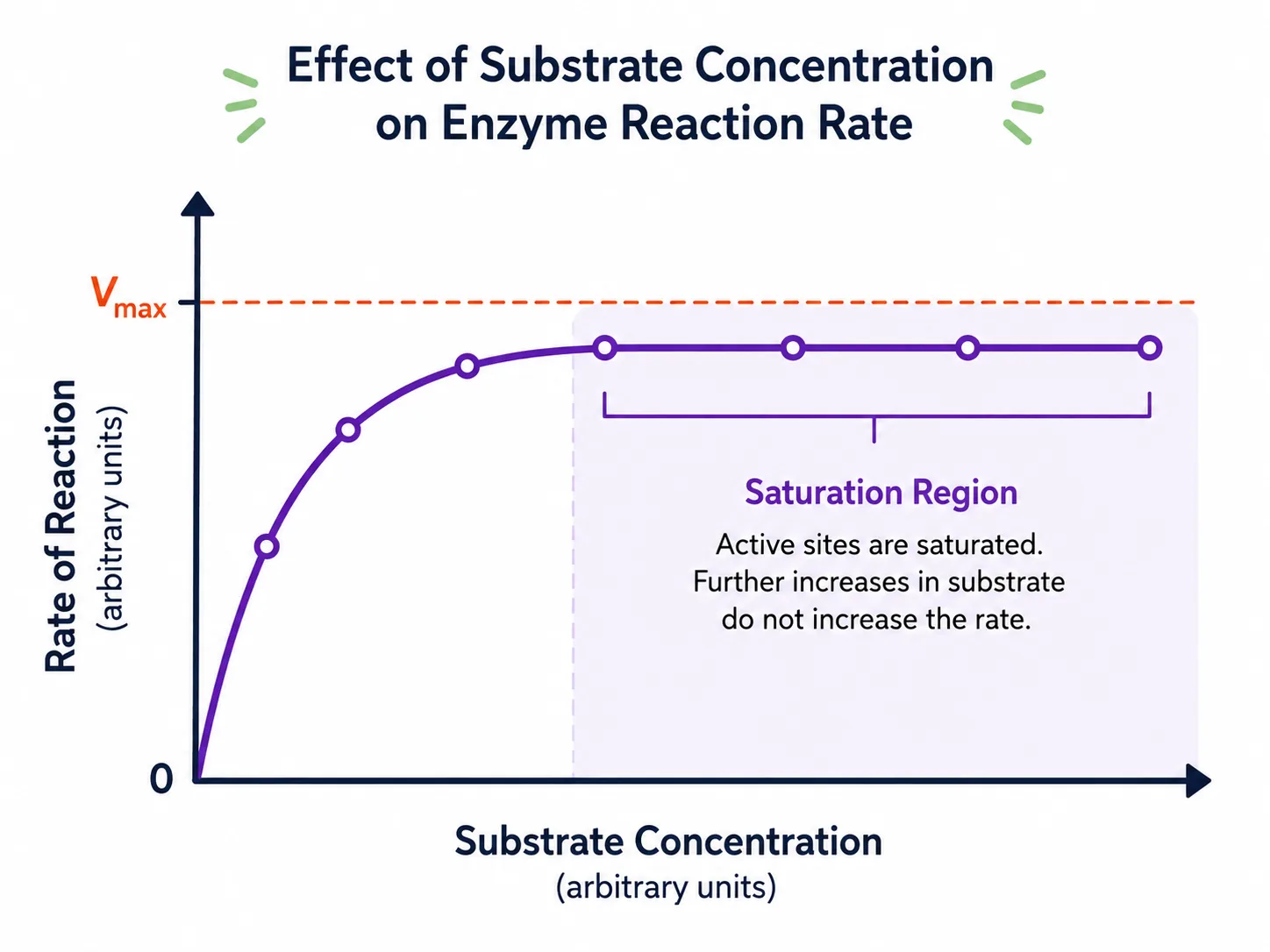

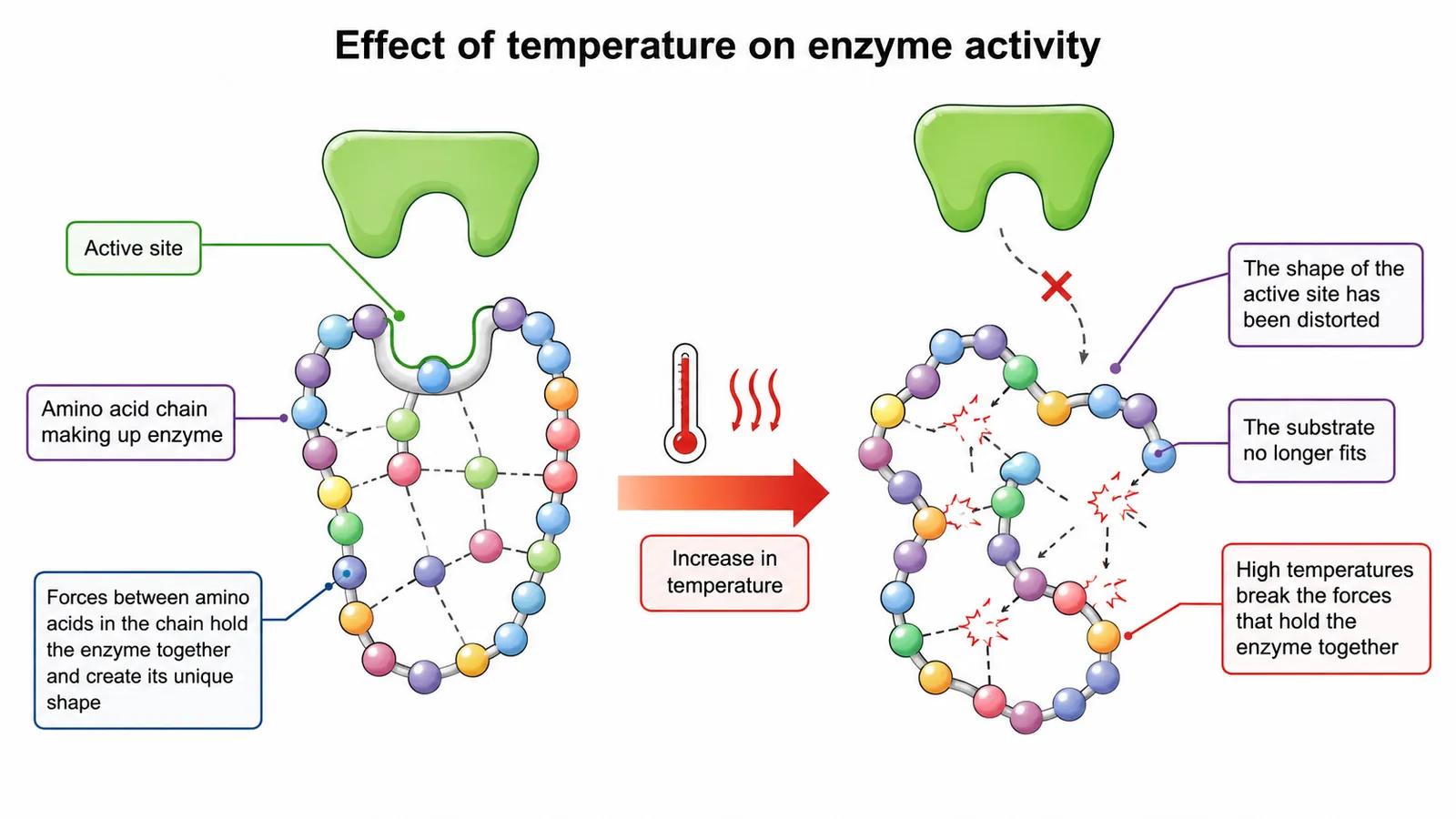
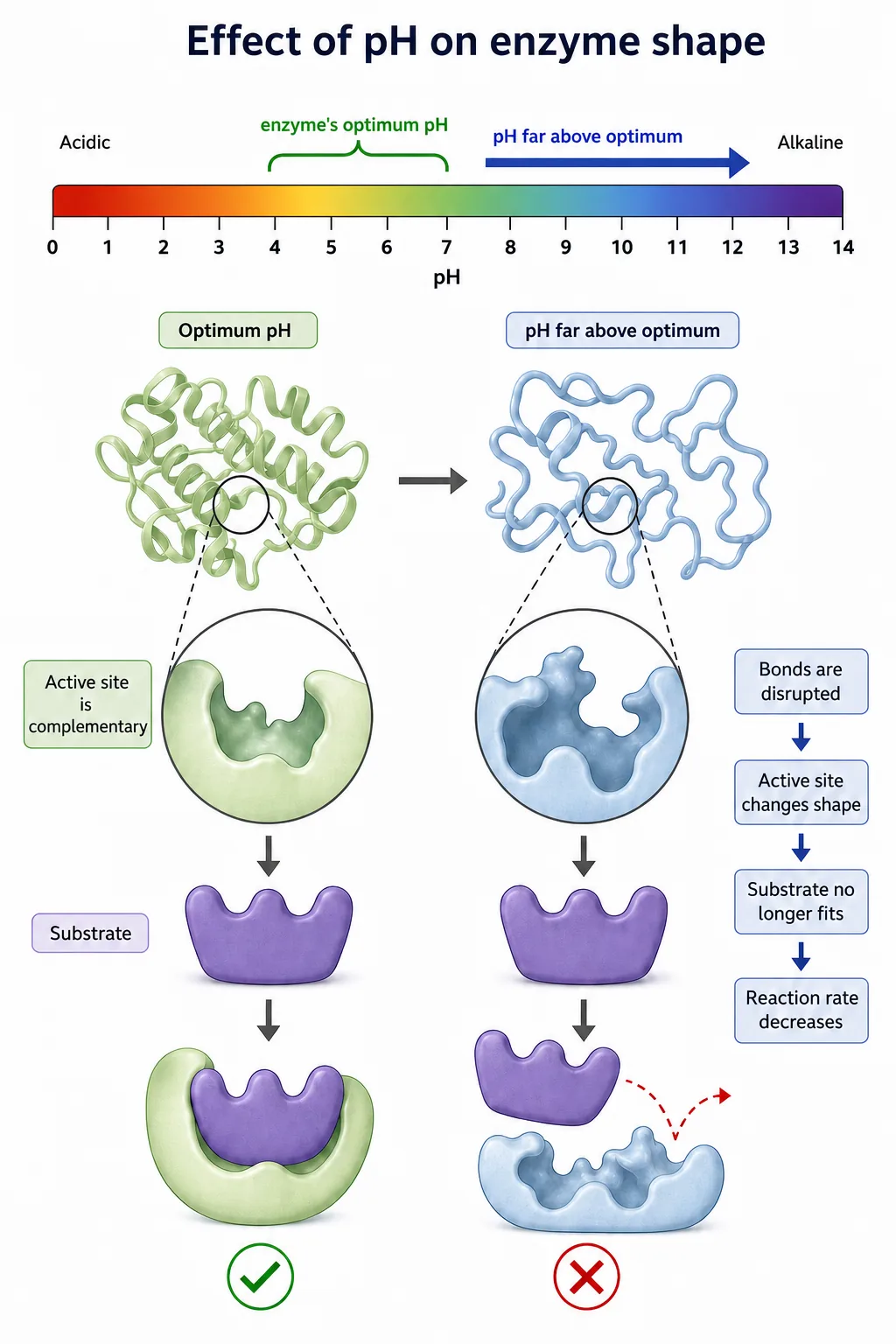

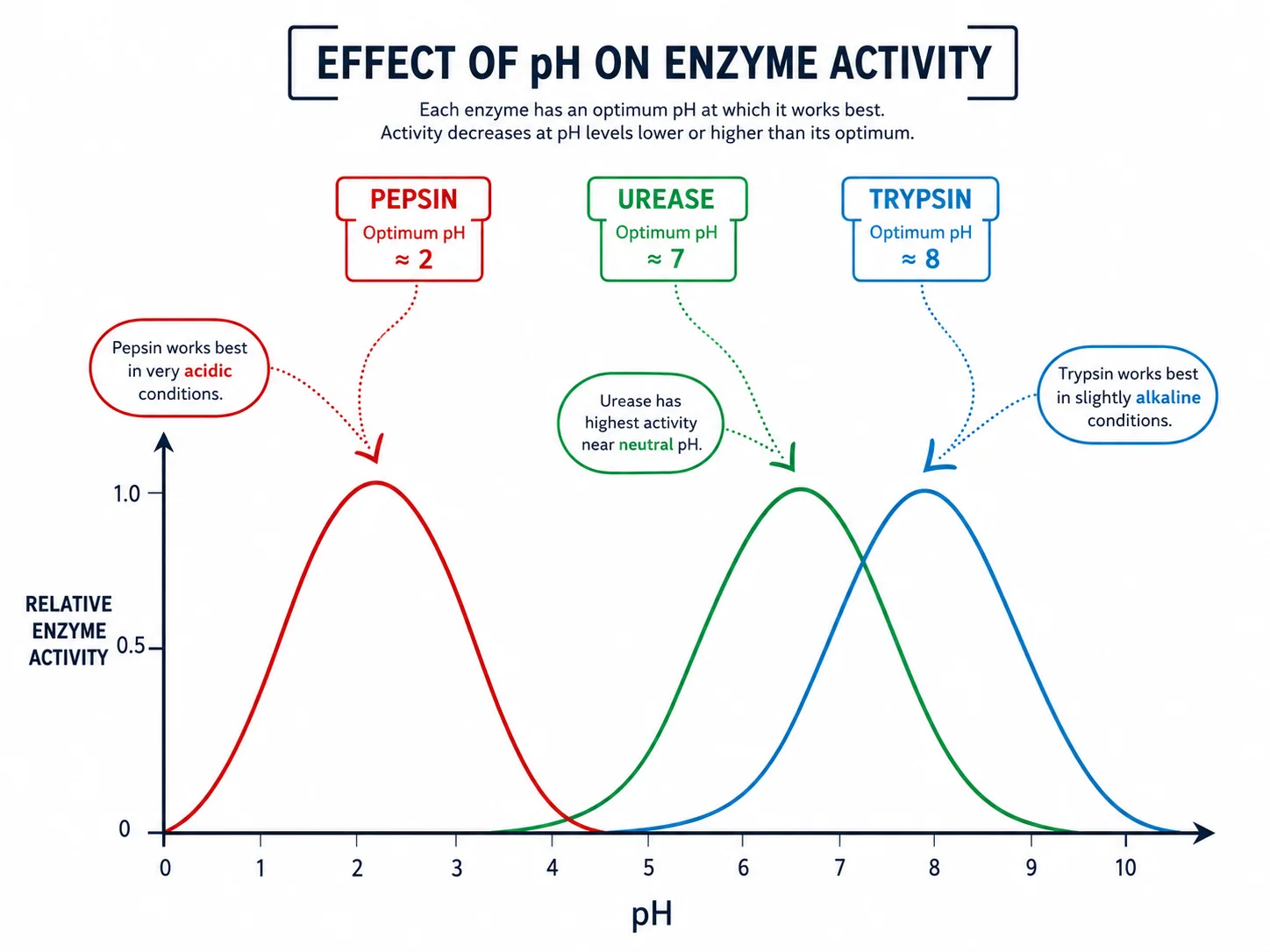
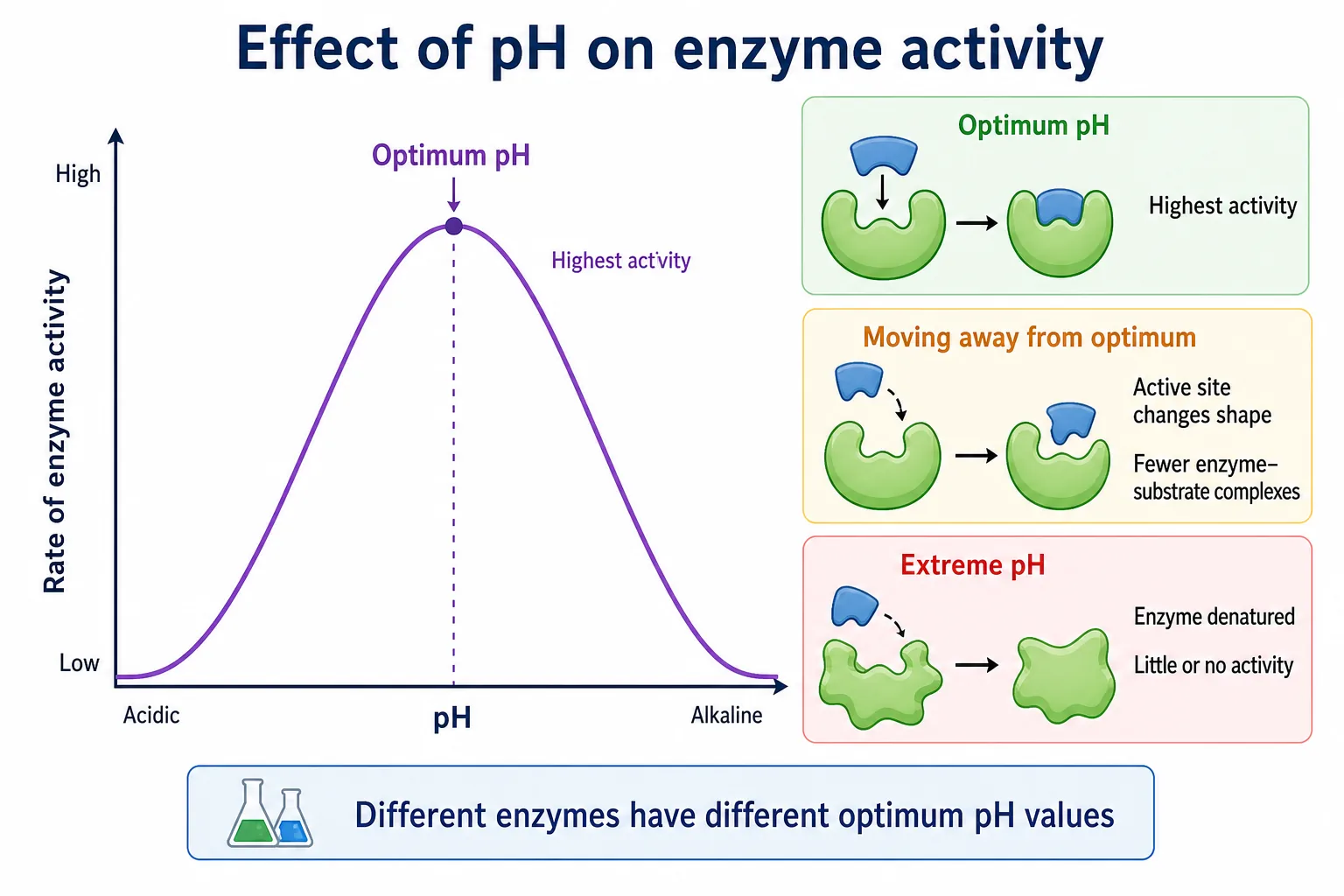
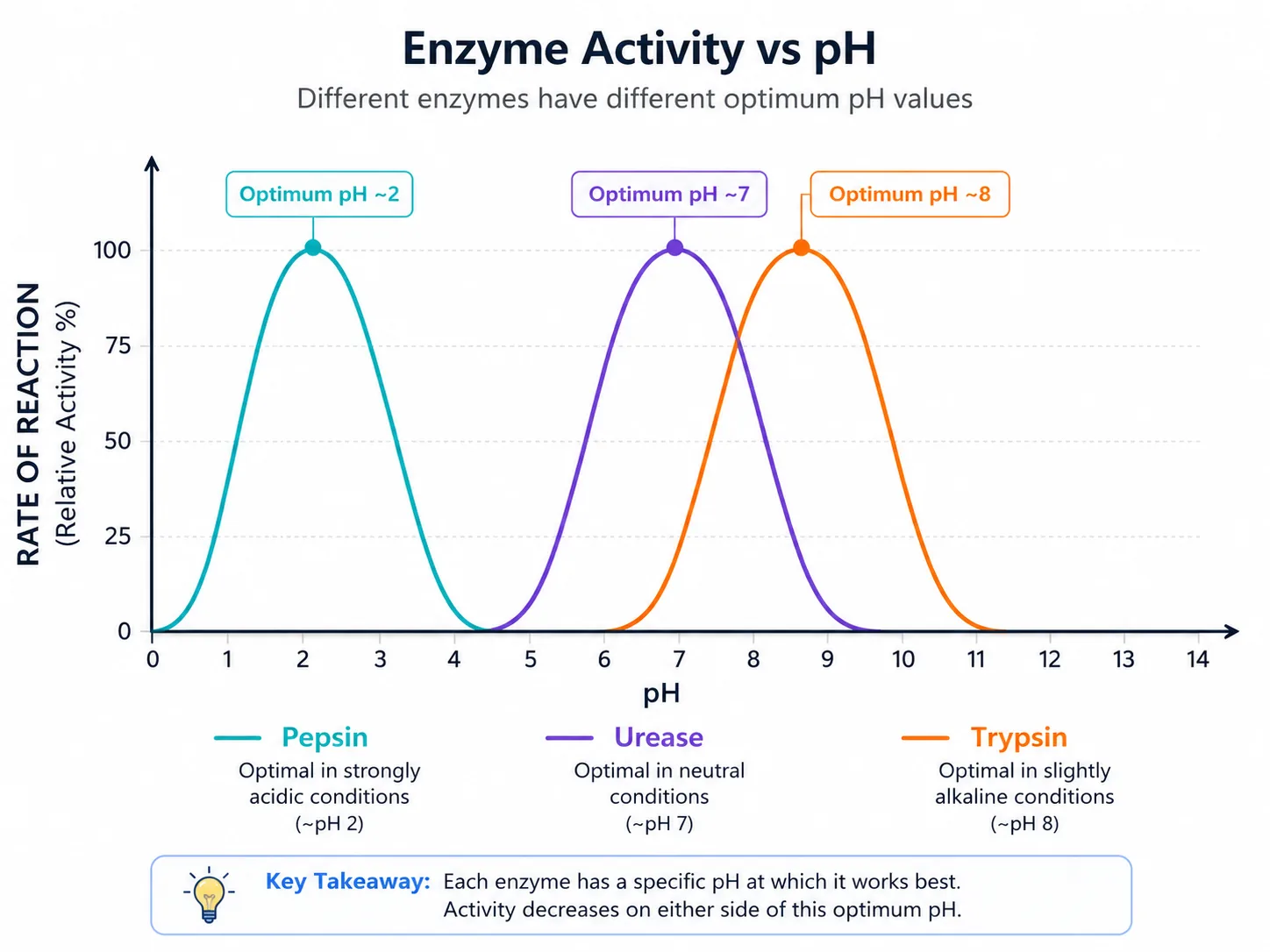
Each enzyme has an optimum pH. Amylase in saliva works best at about pH 7, pepsin in the stomach at about pH 2, and lipase and trypsin in the small intestine at about pH 8 or 9. Extremes of pH disrupt the bonds that hold the active site in shape and denature the enzyme.
When the substrate concentration is increased, the rate rises because collisions between enzyme and substrate become more frequent. However, the rate eventually levels off, as all the active sites are in use (the enzyme is saturated), so the enzyme concentration or another factor is limiting.
| Factor | Low value | Optimum | High value |
|---|---|---|---|
| Temperature | Slow, not denatured | Maximum rate | Denatured, rate falls to zero |
| pH | Denatured if too acidic | Maximum rate | Denatured if too alkaline |
| Substrate | Rate low | Rate rises | Rate plateaus |
Section 5 of 9Required practical: effect of pH on amylase
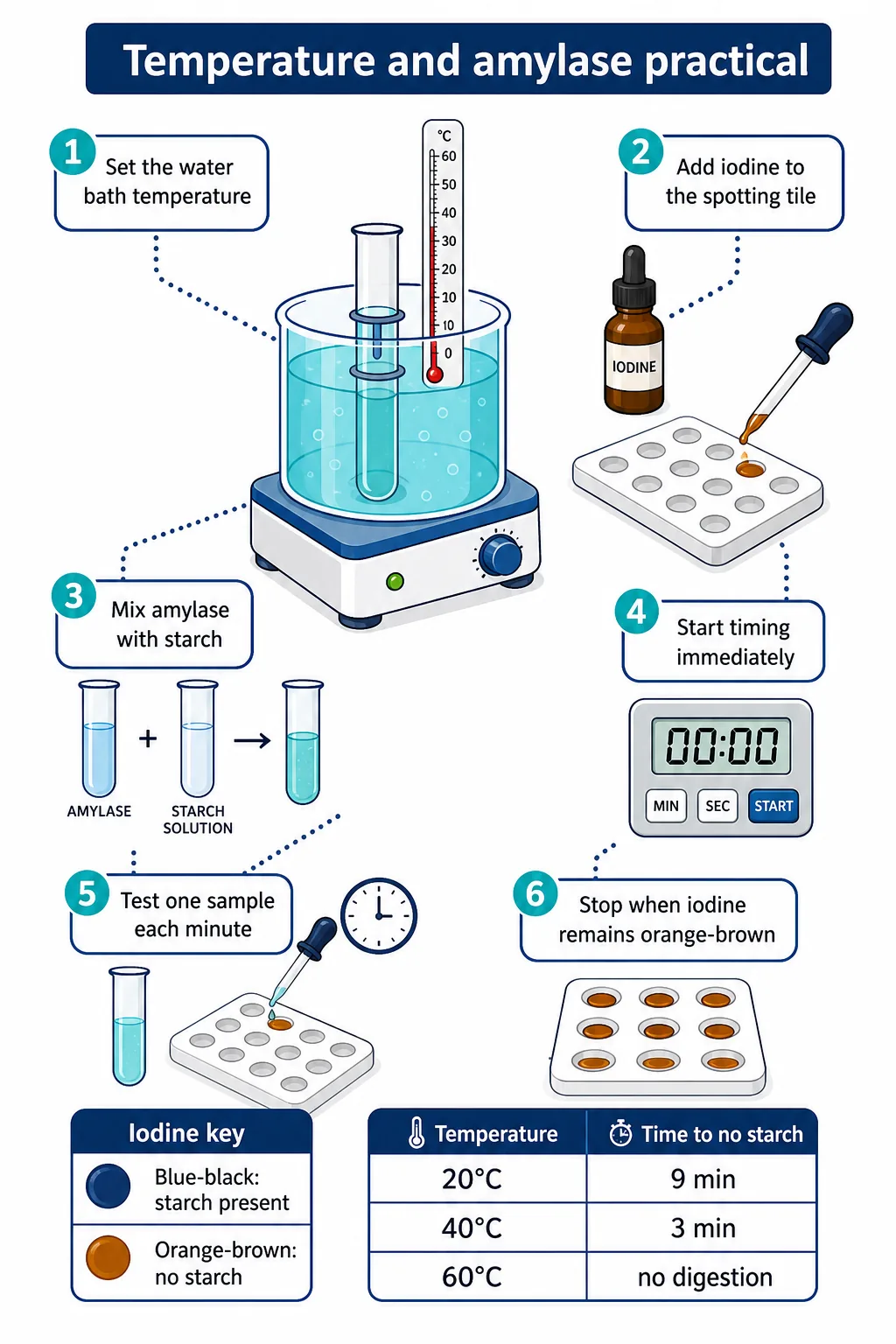

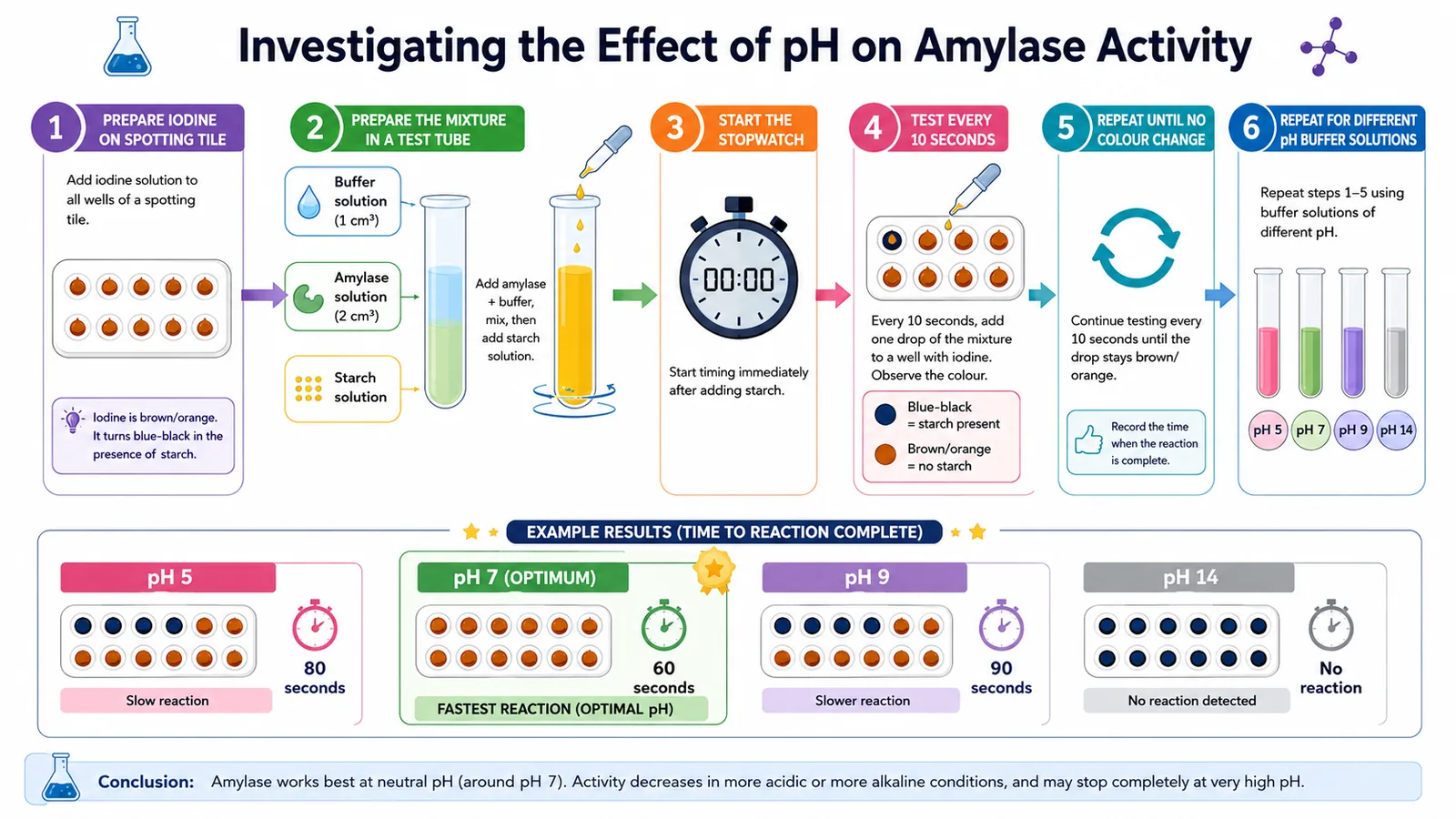

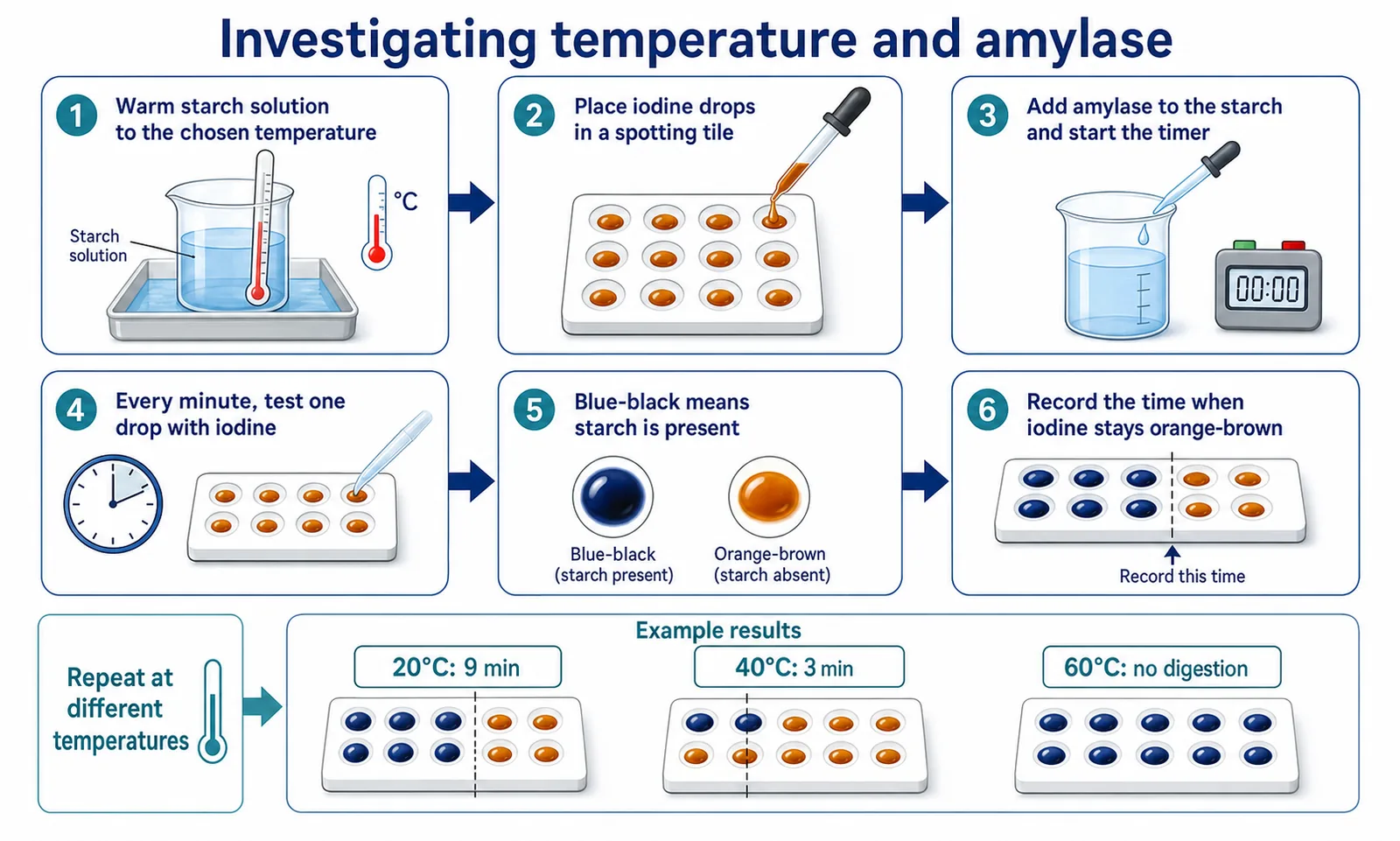
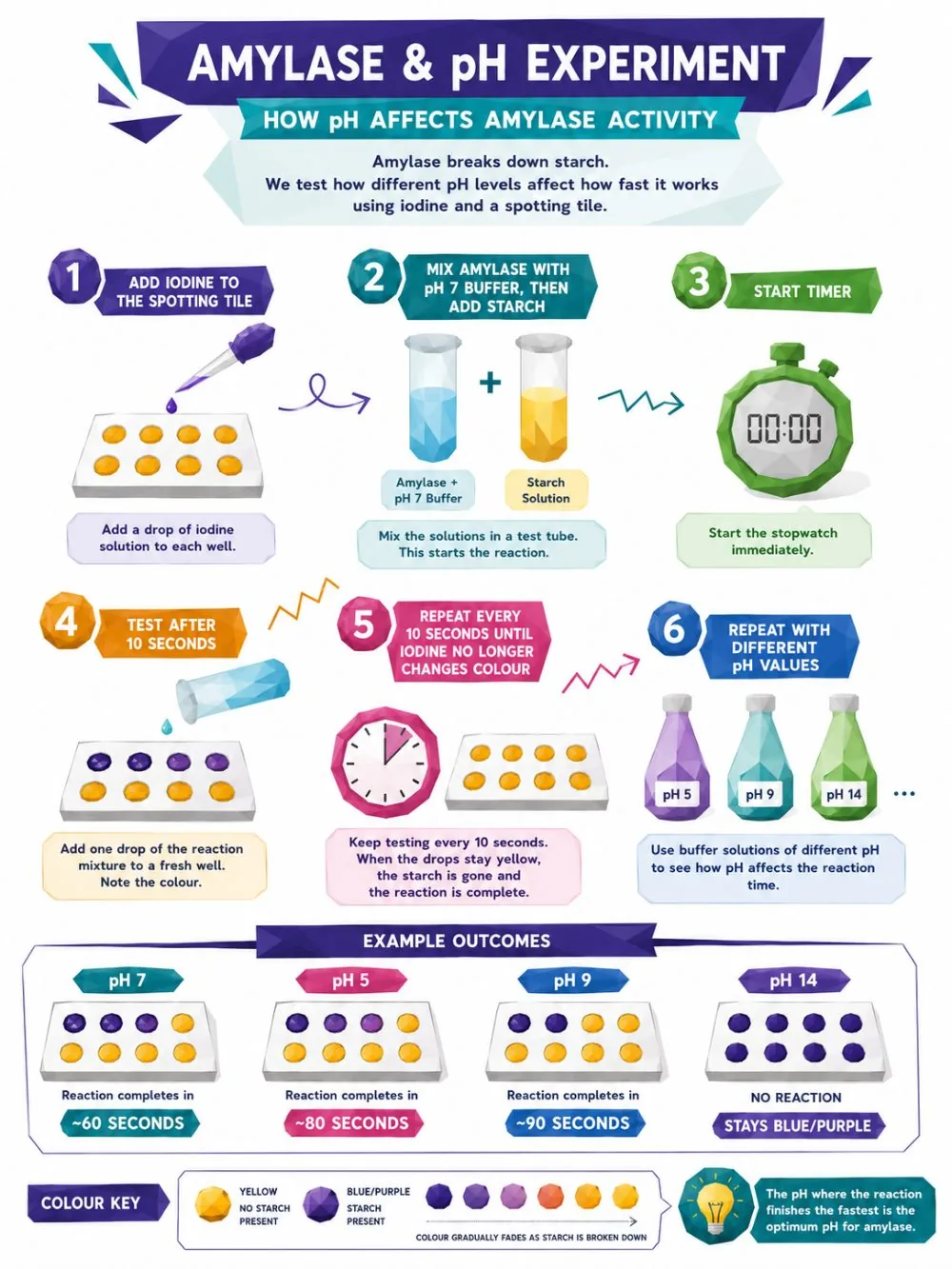
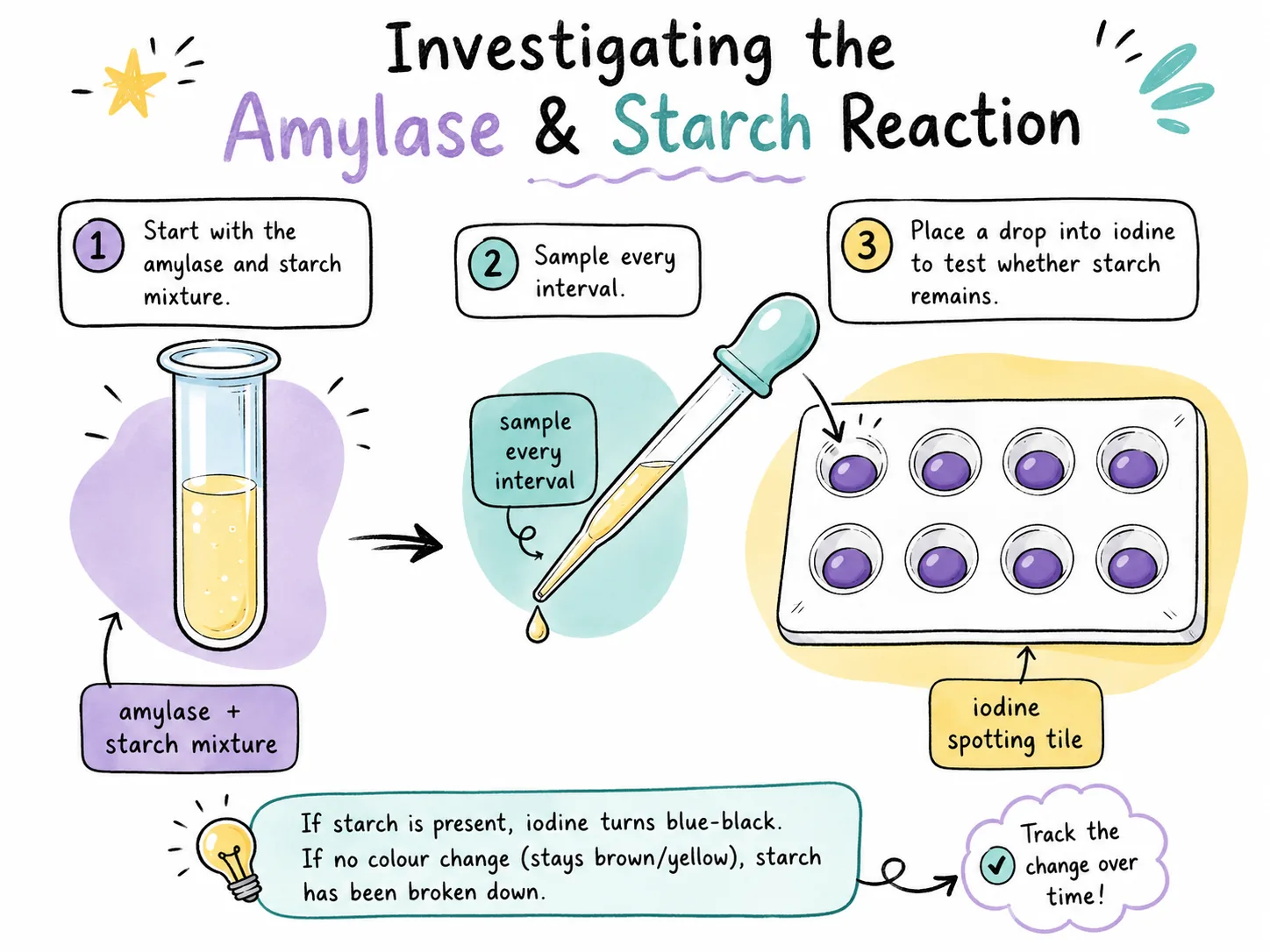


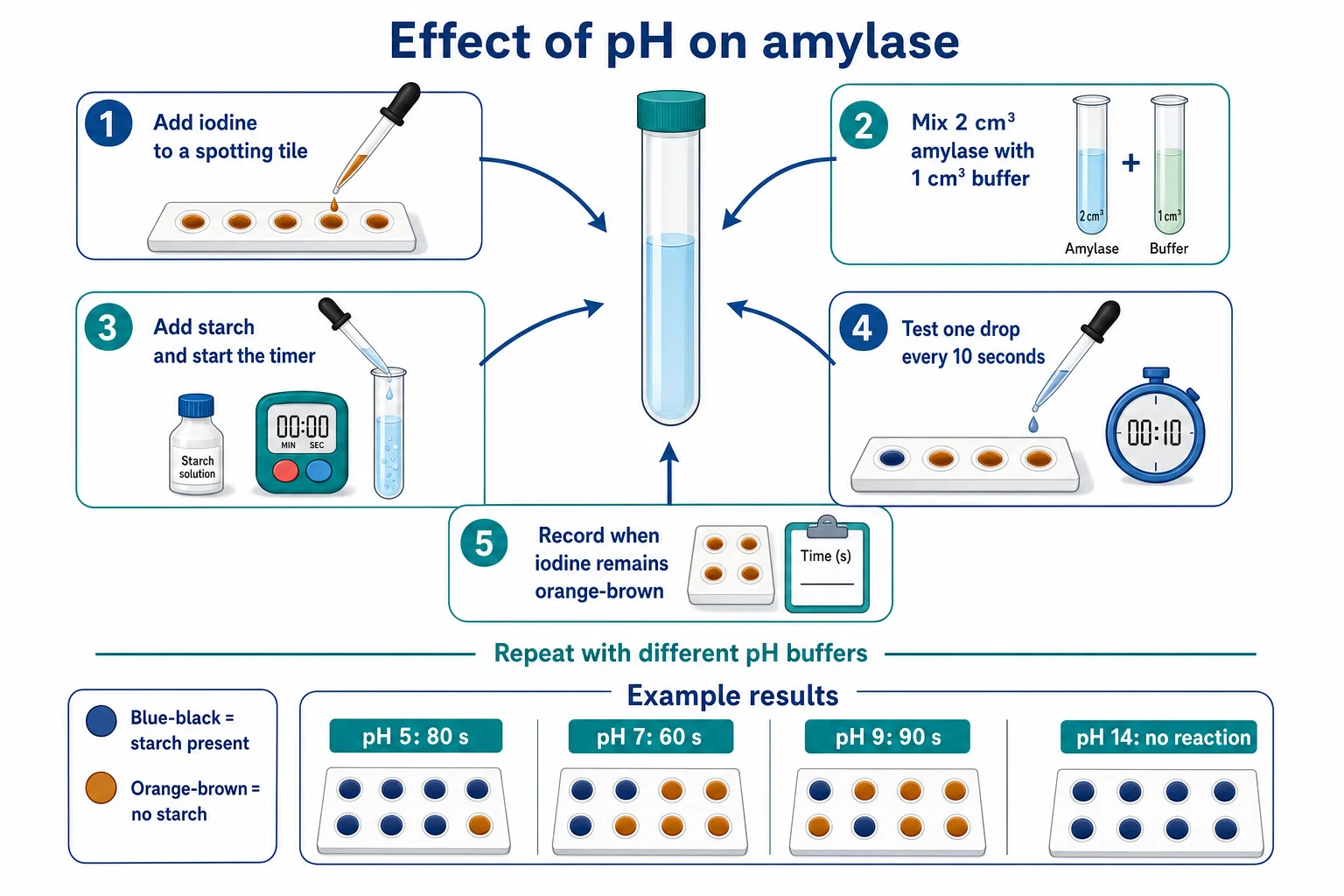
Amylase and starch solution are mixed in a series of test tubes, each with a buffer solution of a different pH (for example 4, 5, 6, 7, 8 and 9) in a water bath at constant temperature.
Section 6 of 9Worked example: reading rate data
In an investigation a student measures how much oxygen is made by catalase in liver in 60 seconds at different temperatures: 10 degrees gives 3 cm3, 20 degrees gives 8 cm3, 30 degrees gives 15 cm3, 40 degrees gives 18 cm3, 50 degrees gives 6 cm3 and 60 degrees gives 0 cm3.
- and between 40 and 60 degrees it falls as the enzyme is denatured.
Enzymes are also used in industry. Biological detergents contain proteases and lipases to remove stains at low temperatures, and carbohydrases convert starch to glucose syrup. Immobilised enzymes are fixed to beads so they can be reused and the product is not contaminated, though the equipment costs more.
Section 7 of 9Exam-style questions


Explain why the rate of an enzyme-controlled reaction drops sharply at 60 degrees Celsius. [3]3 marks
Exam-style questions1. High temperature breaks the bonds holding the protein in shape [1].2. The shape of the active site changes, so the substrate no longer fits [1].3. The enzyme is denatured, so the rate falls (and this cannot be reversed) [1].In an investigation, amylase digests a starch solution at pH 7. It takes 40 seconds for all the starch to disappear. Calculate the rate of reaction in s-1 and state how the time would change at pH 2. [3]3 marks
1. Rate = 1 / time = 1 / 40 [1].
2. = 0.025 s-1 [1].
3. At pH 2 amylase is denatured, so the time is much longer (or the starch is never digested) [1].
Section 8 of 9Key terms
| Term | Meaning |
|---|---|
| Enzyme | A biological catalyst, a protein that speeds up a reaction. |
| Substrate | The molecule that an enzyme acts on. |
| Active site | The region of an enzyme where the substrate binds. |
| Denaturation | The permanent change in the shape of an enzyme, so the active site no longer works. |
| Optimum | The condition, such as temperature or pH, at which an enzyme works fastest. |
| Catalyst | A substance that speeds up a reaction without being used up. |
| Enzyme-substrate complex | The enzyme and substrate bound together at the active site. |
| Product | A substance made by a reaction. |