1.3.2Cell Level Systems
Aerobic and Anaerobic Respiration
5 min read 9 parts Lesson 8 of 13 2 quizzes
Section 1 of 9What respiration is
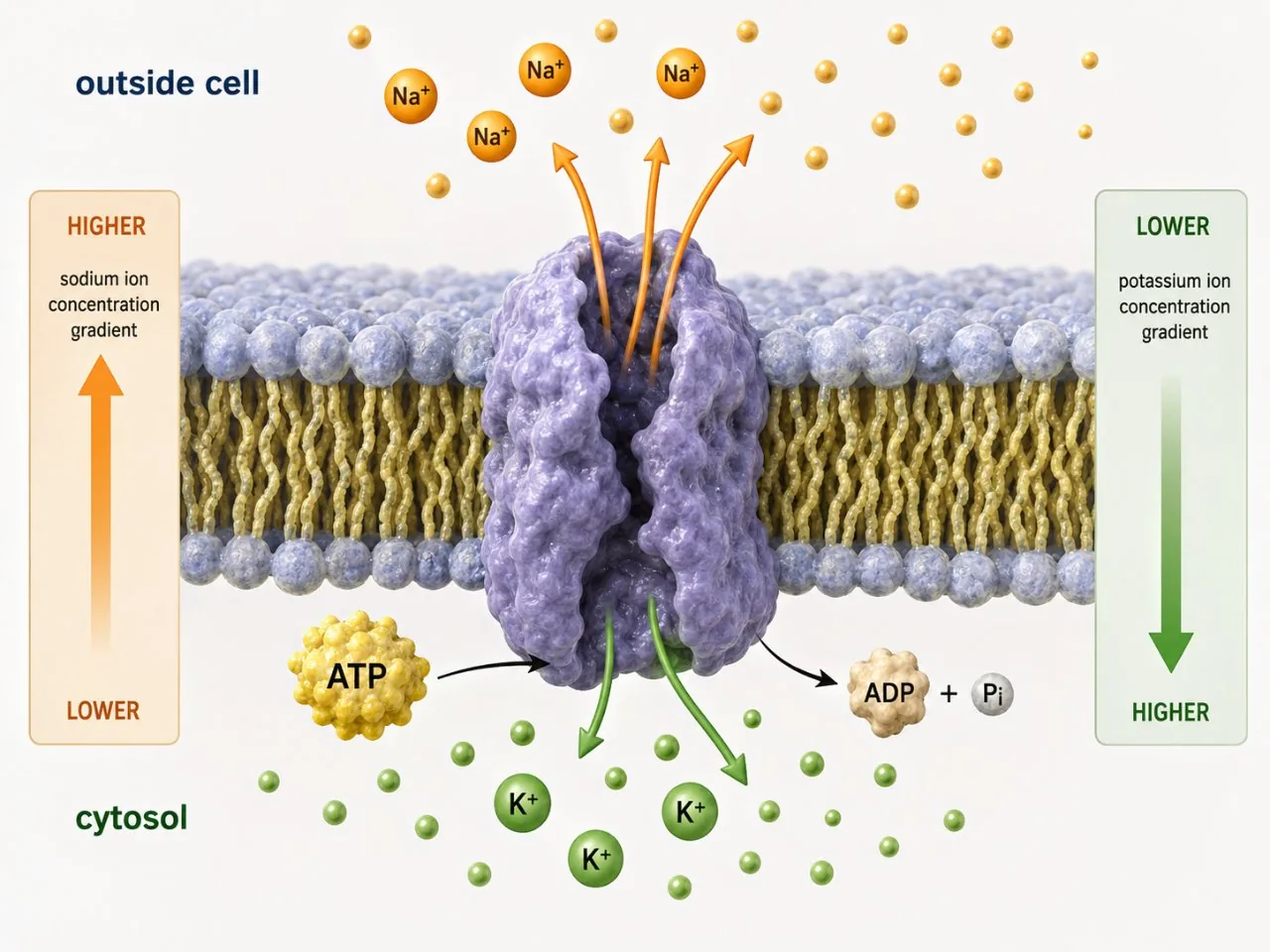
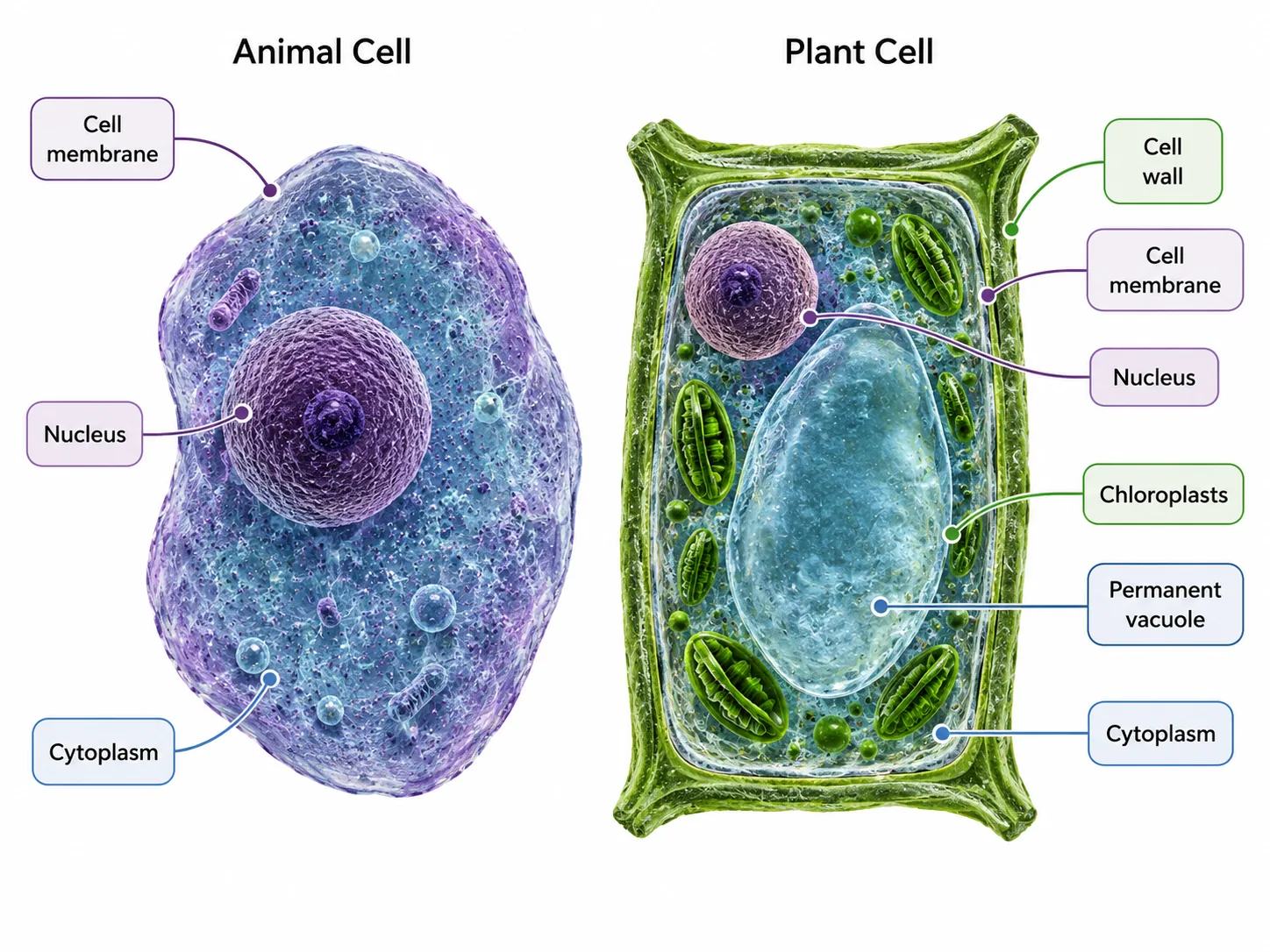
Respiration is the chemical reaction in every living cell that transfers energy from glucose. It is an exothermic reaction, meaning energy is released to the surroundings. Respiration is not the same thing as breathing: breathing moves air in and out of the lungs, while respiration happens inside cells, in the cytoplasm and the mitochondria.
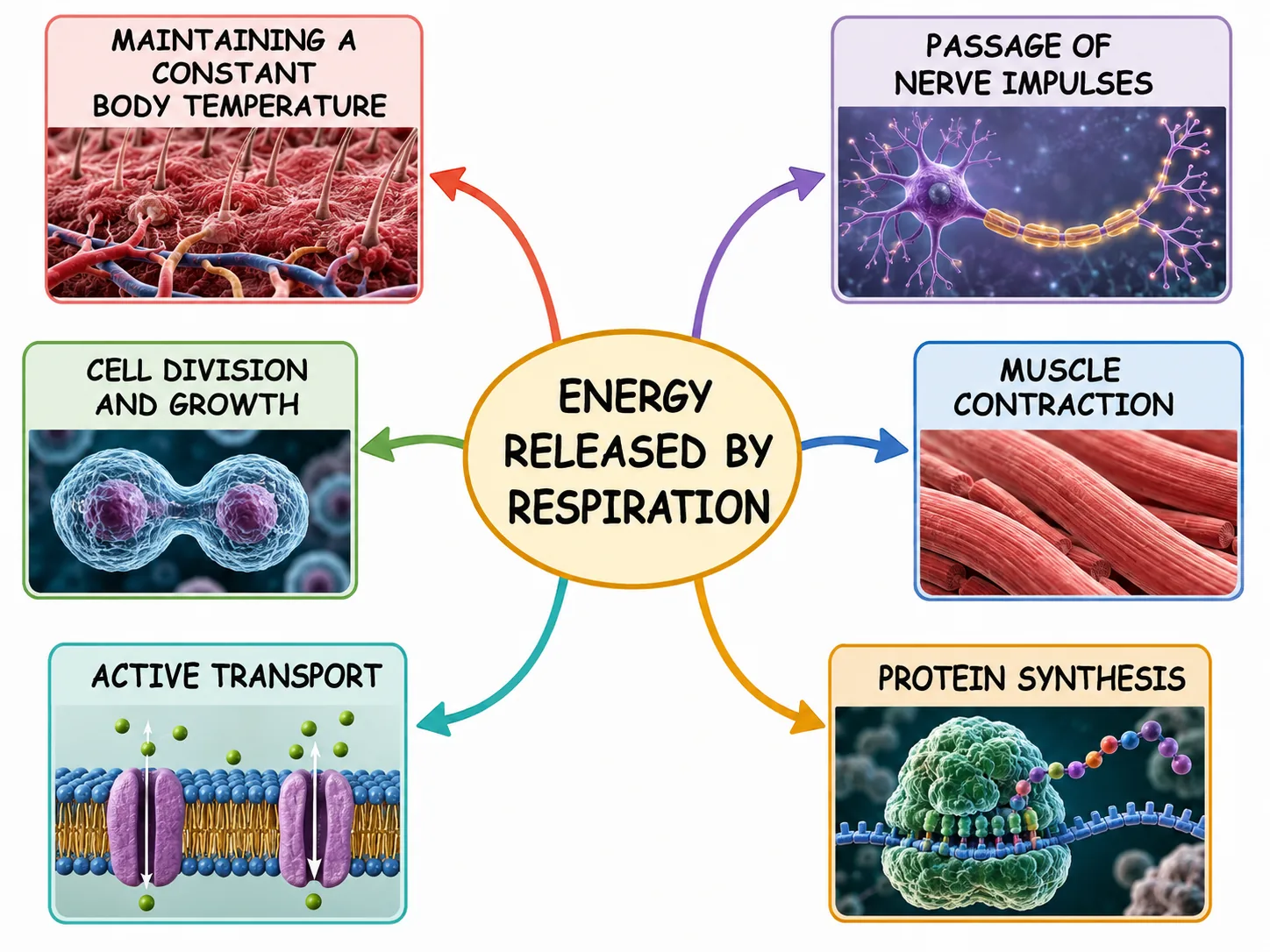
The energy released is used to build larger molecules from smaller ones (for example proteins from amino acids), to make muscles contract, to keep body temperature steady in mammals and birds, and to drive active transport in plants and animals. Cells that are very active, such as muscle cells and sperm cells, contain large numbers of mitochondria.
Section 2 of 9Aerobic respiration


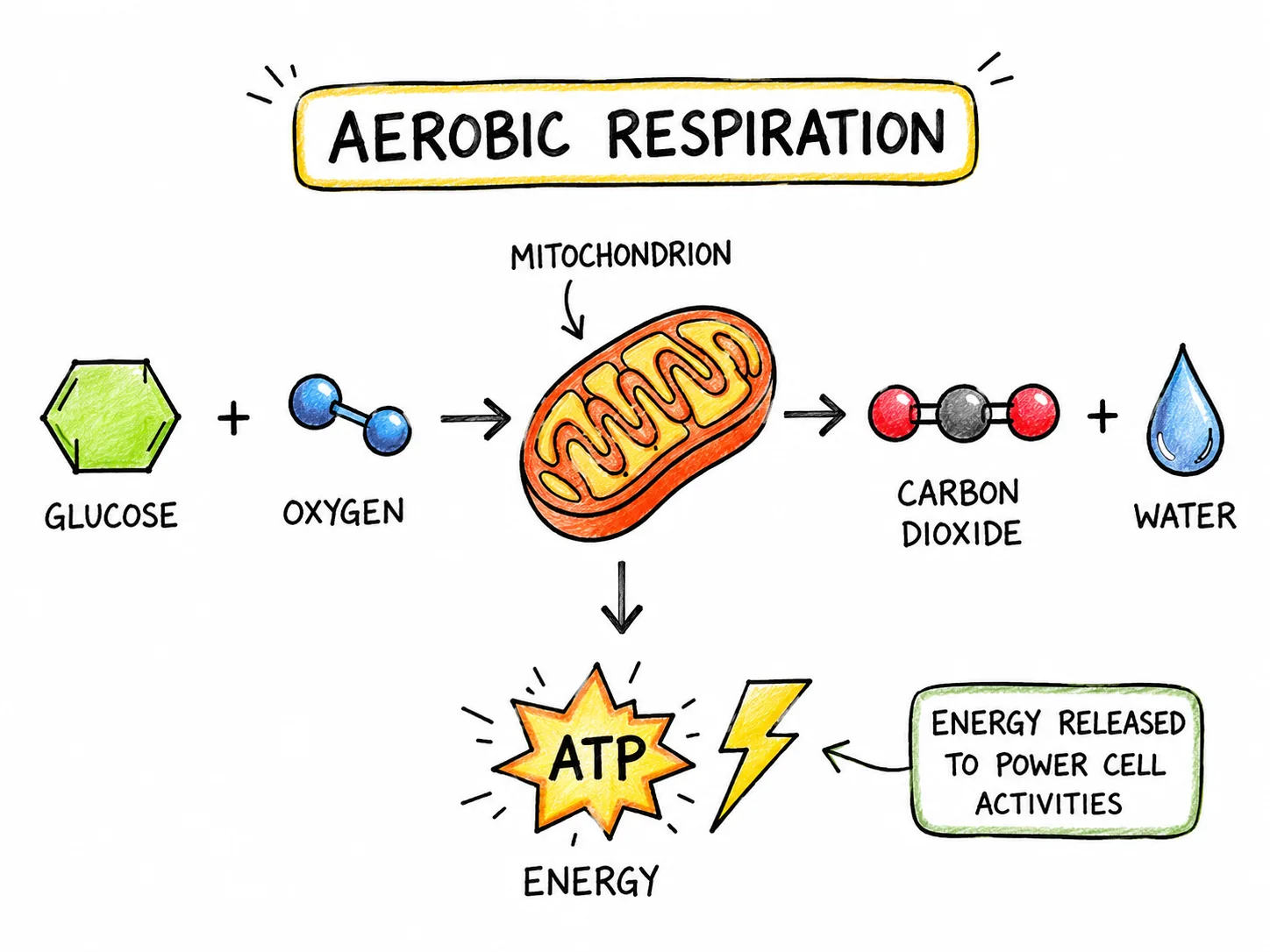

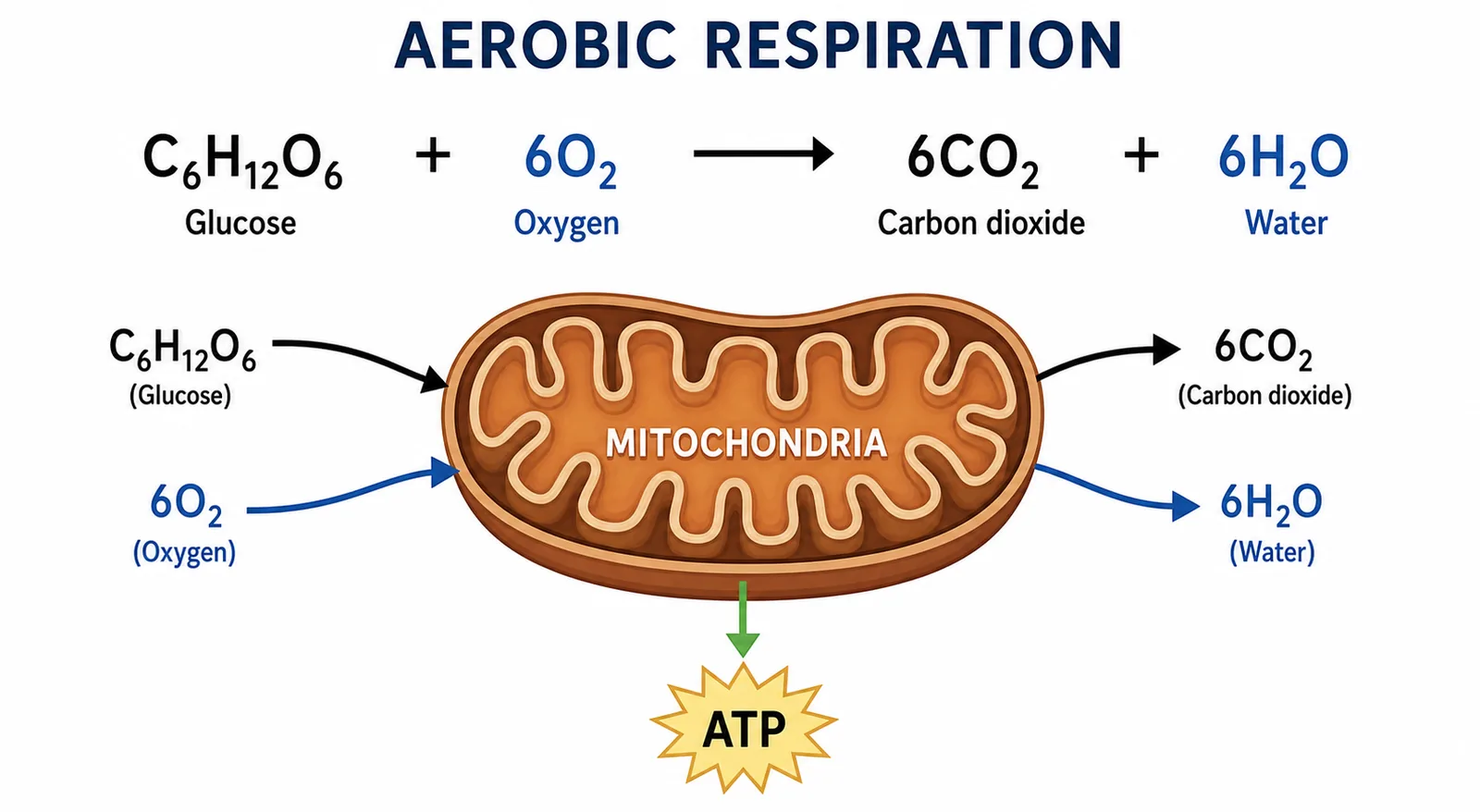
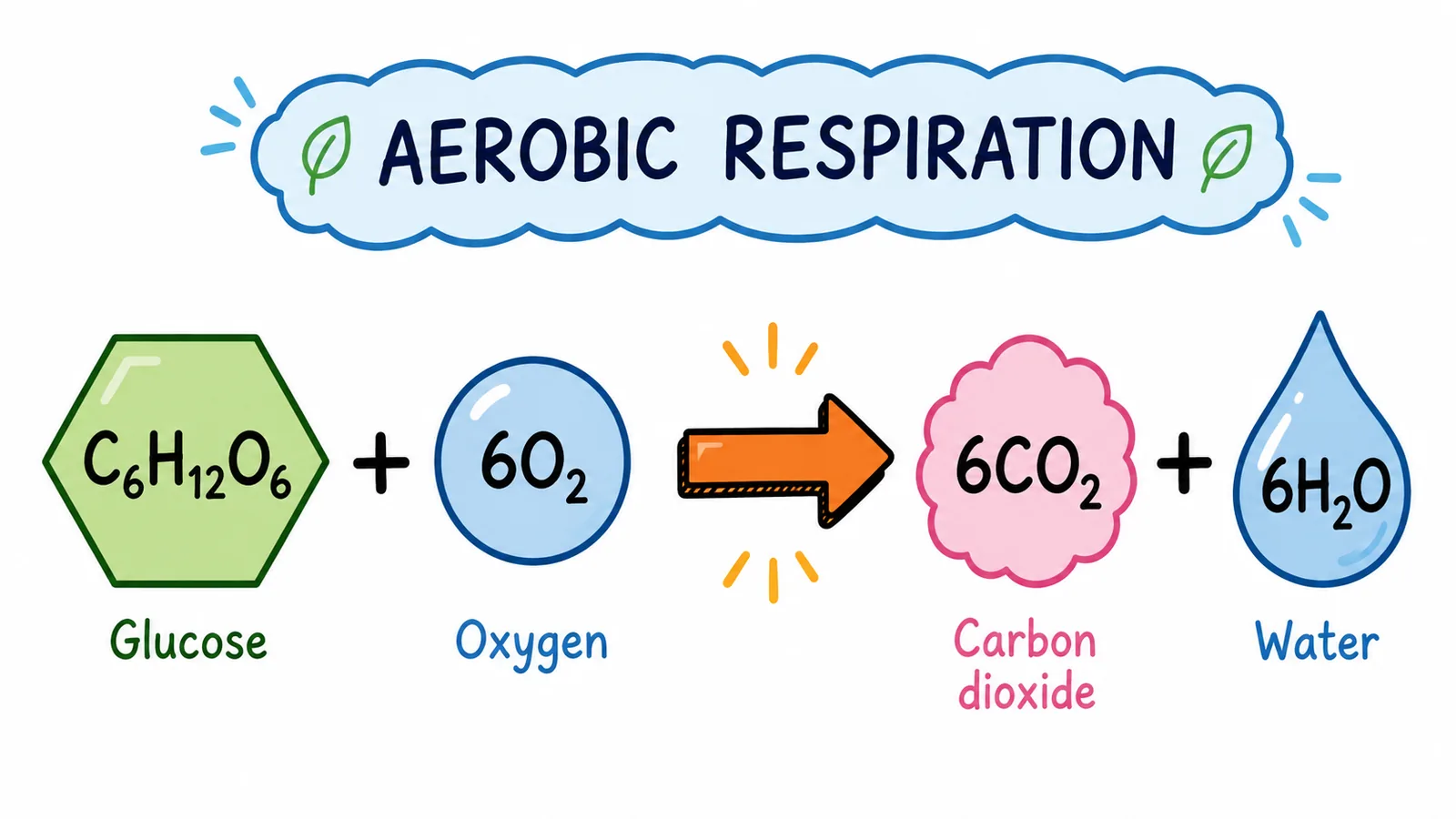
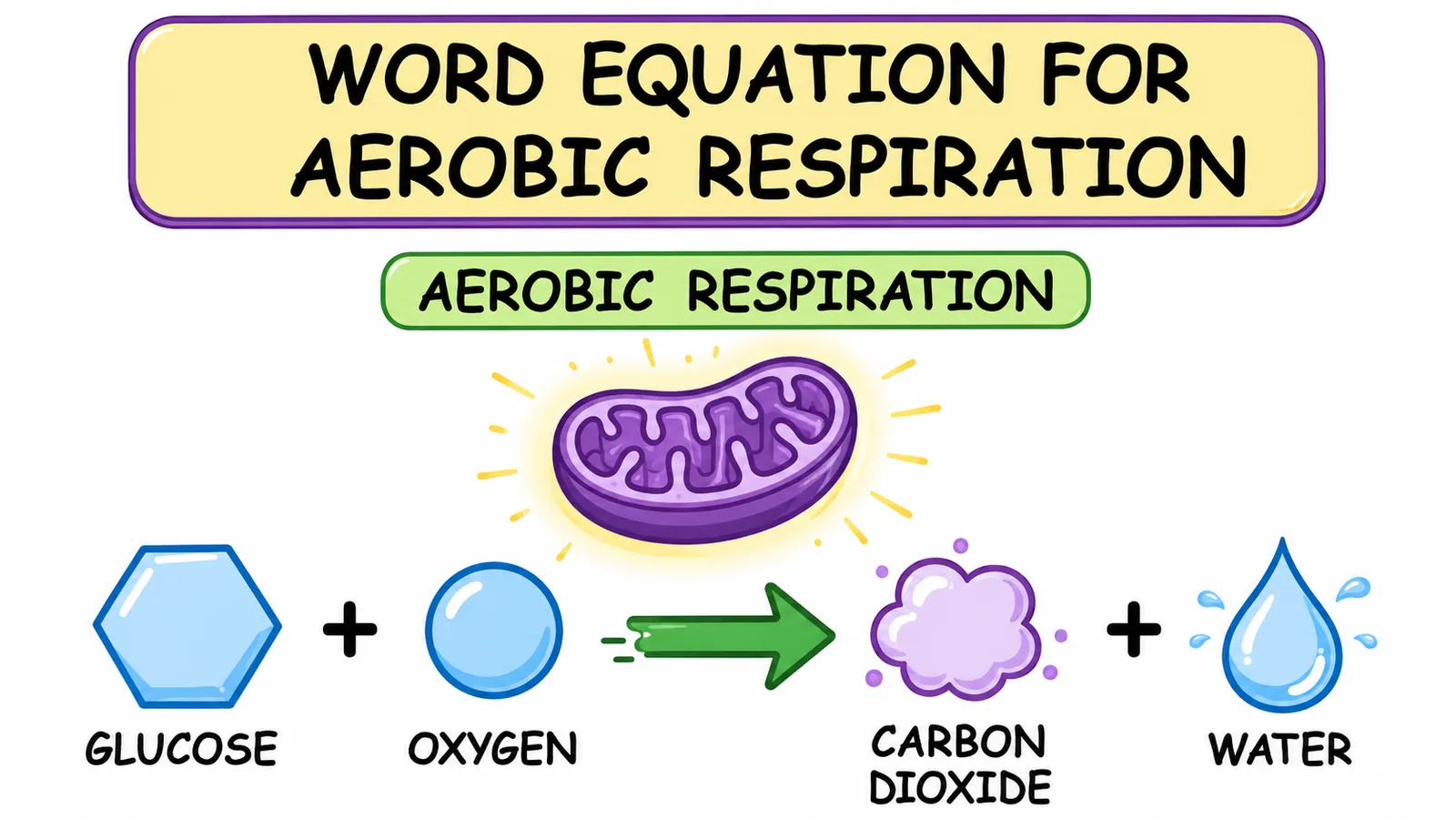
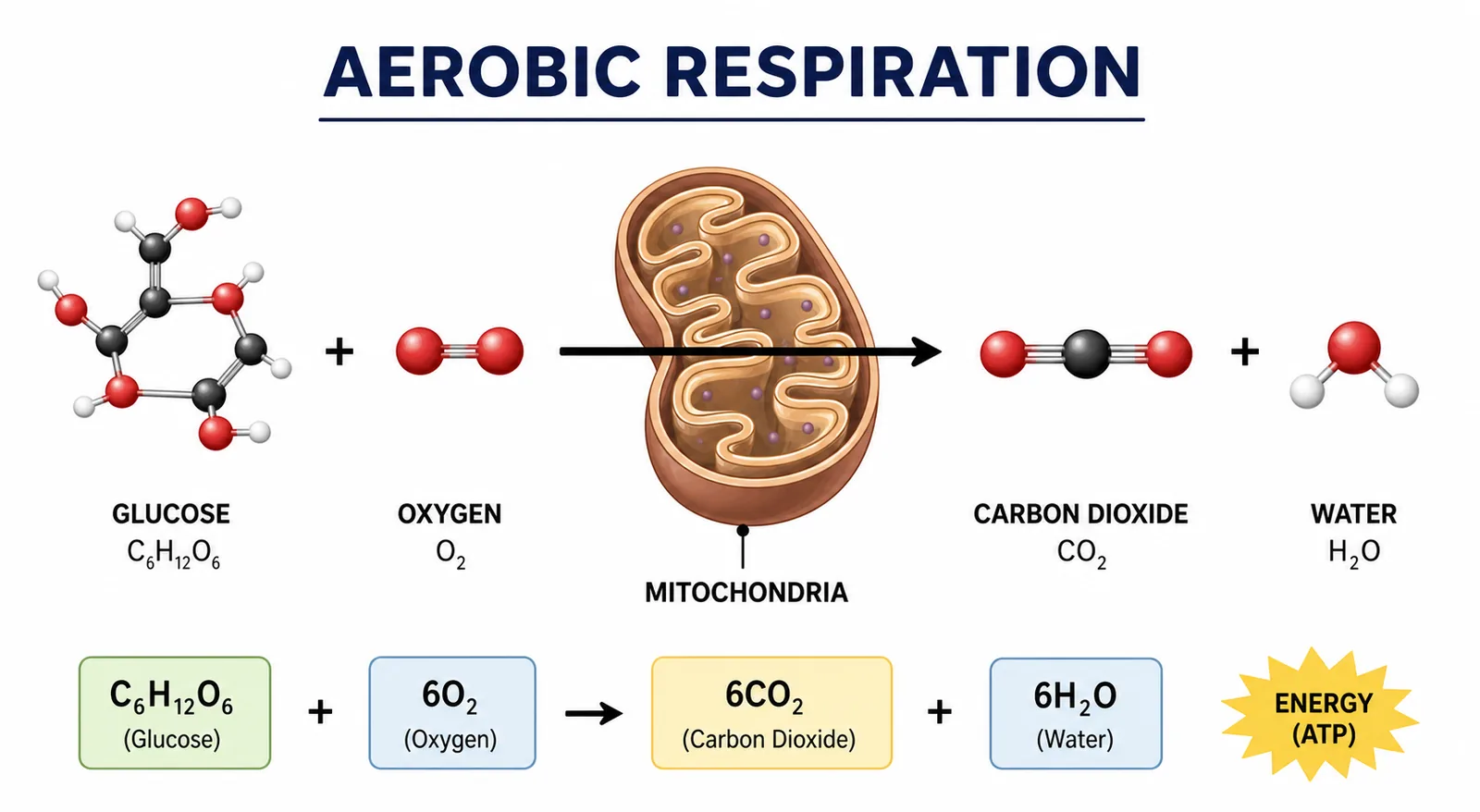
Aerobic respiration uses oxygen. It takes place continuously in plant and animal cells and releases a large amount of energy per glucose molecule. Most of the reactions occur in the mitochondria.
Word equationglucose + oxygen → carbon dioxide + water
Symbol equationC6H12O6 + 6O2 → 6CO2 + 6H2O
Glucose is carried to cells in the blood plasma and oxygen is carried by red blood cells. The carbon dioxide made is carried back to the lungs and breathed out. Check that the symbol equation balances: there are 6 carbon, 12 hydrogen and 18 oxygen atoms on each side.
Section 3 of 9Anaerobic respiration
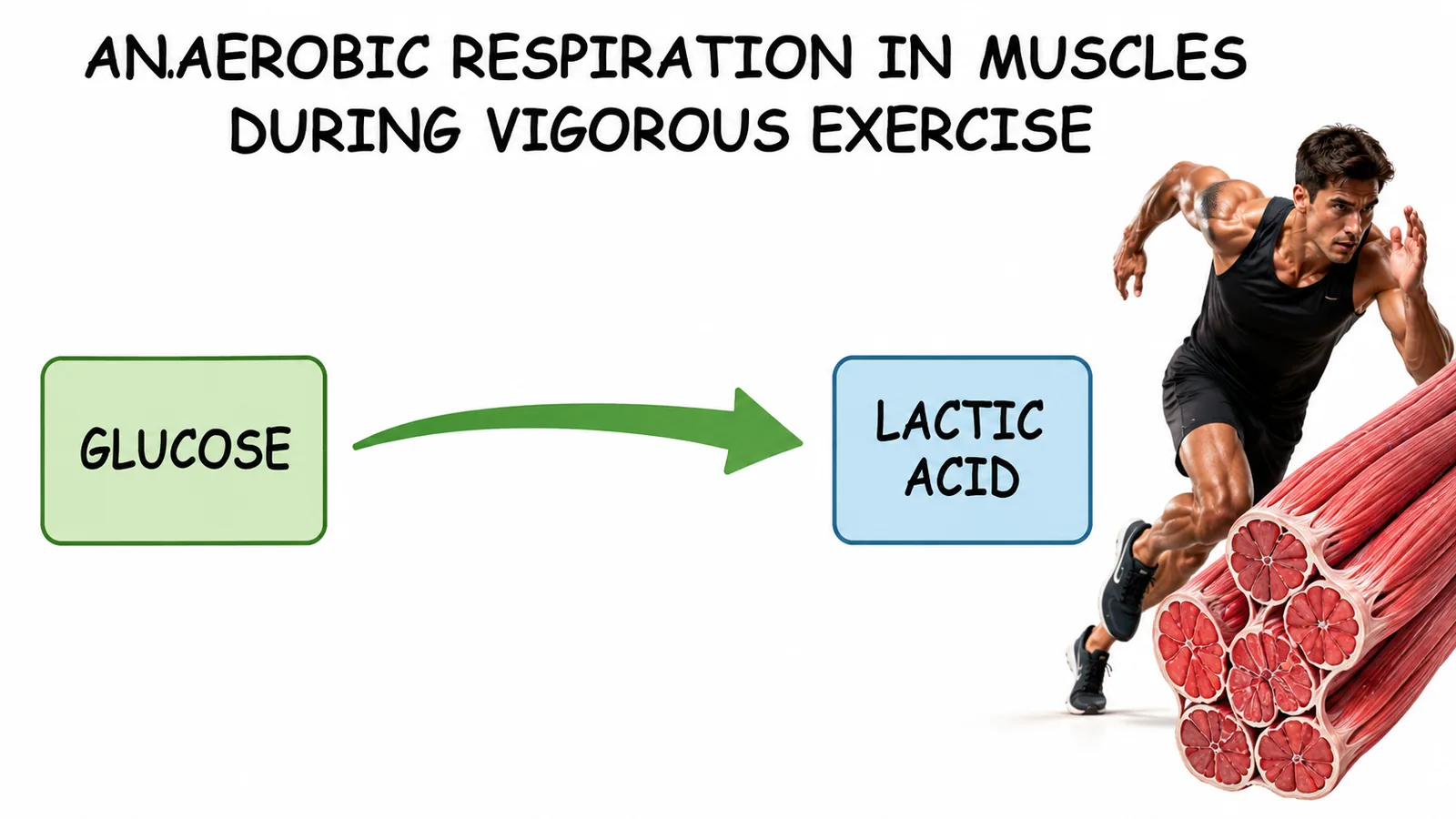
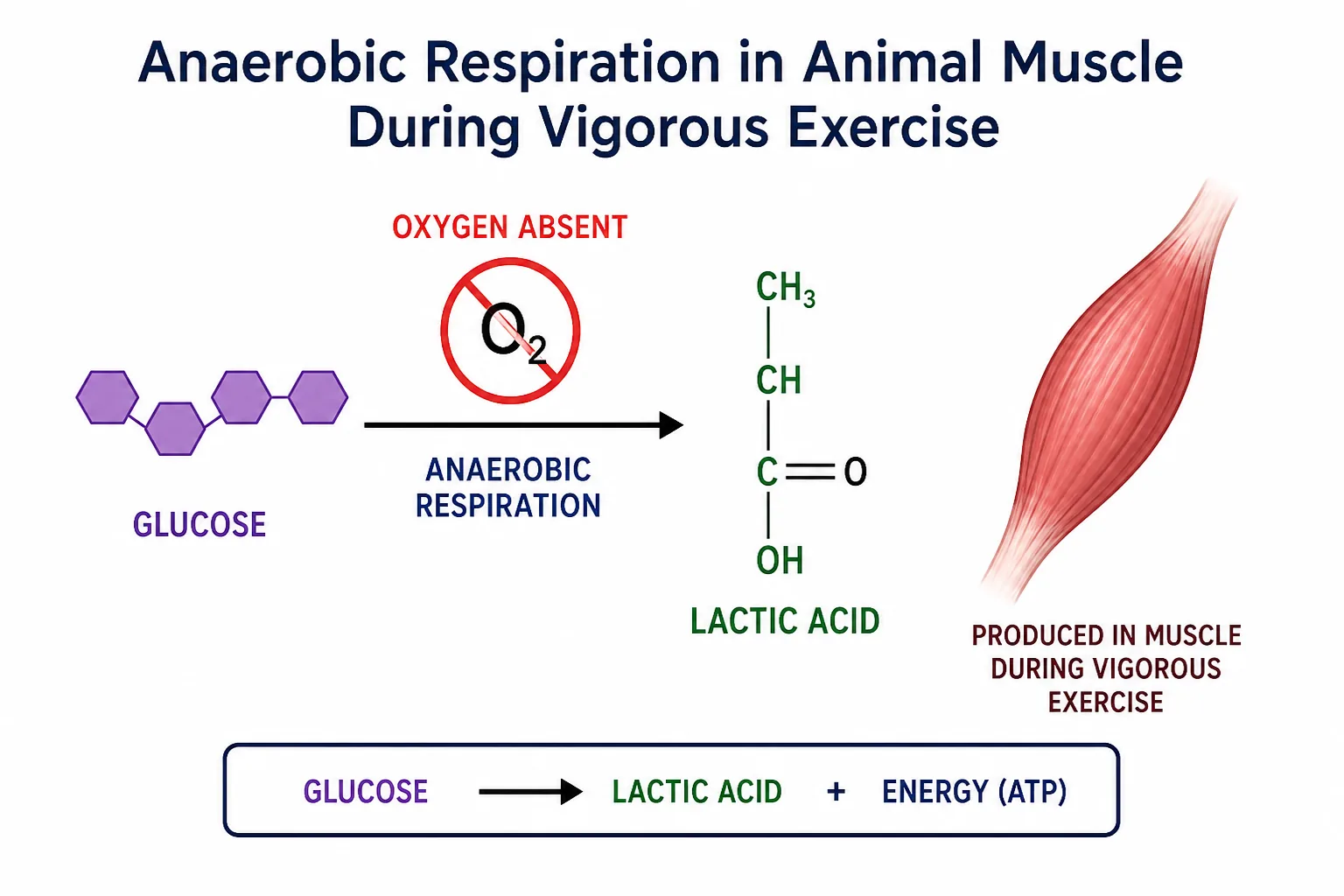

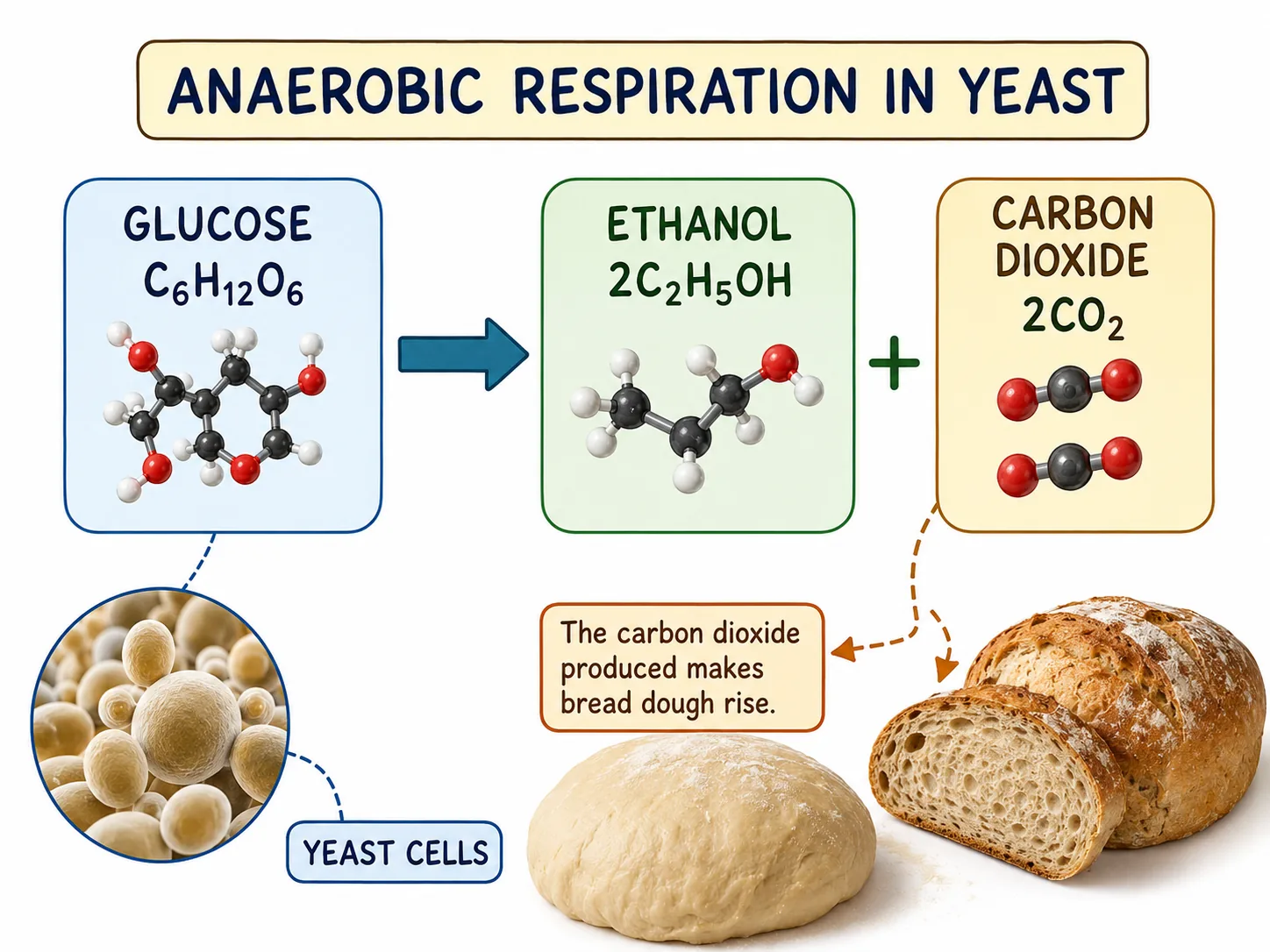

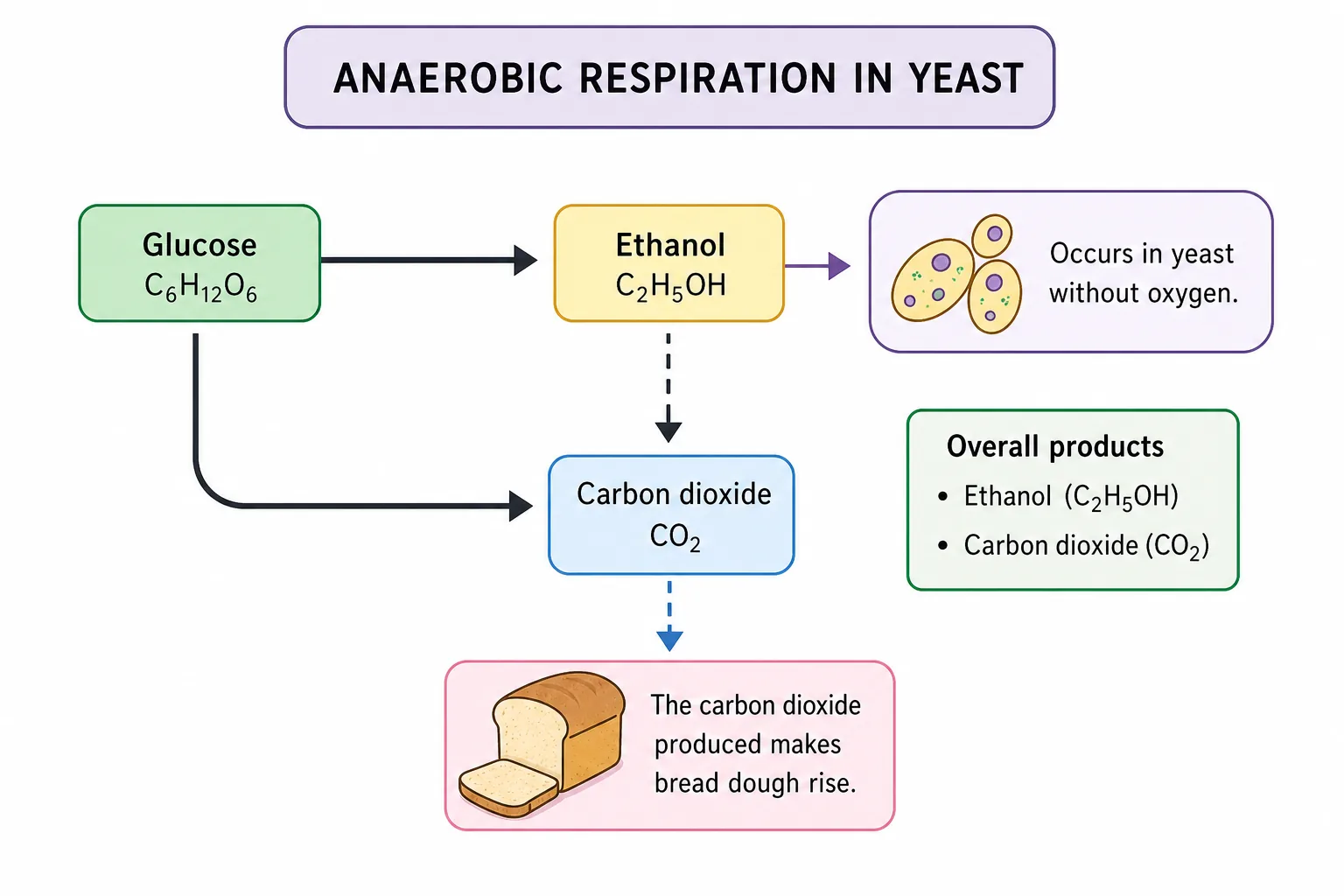

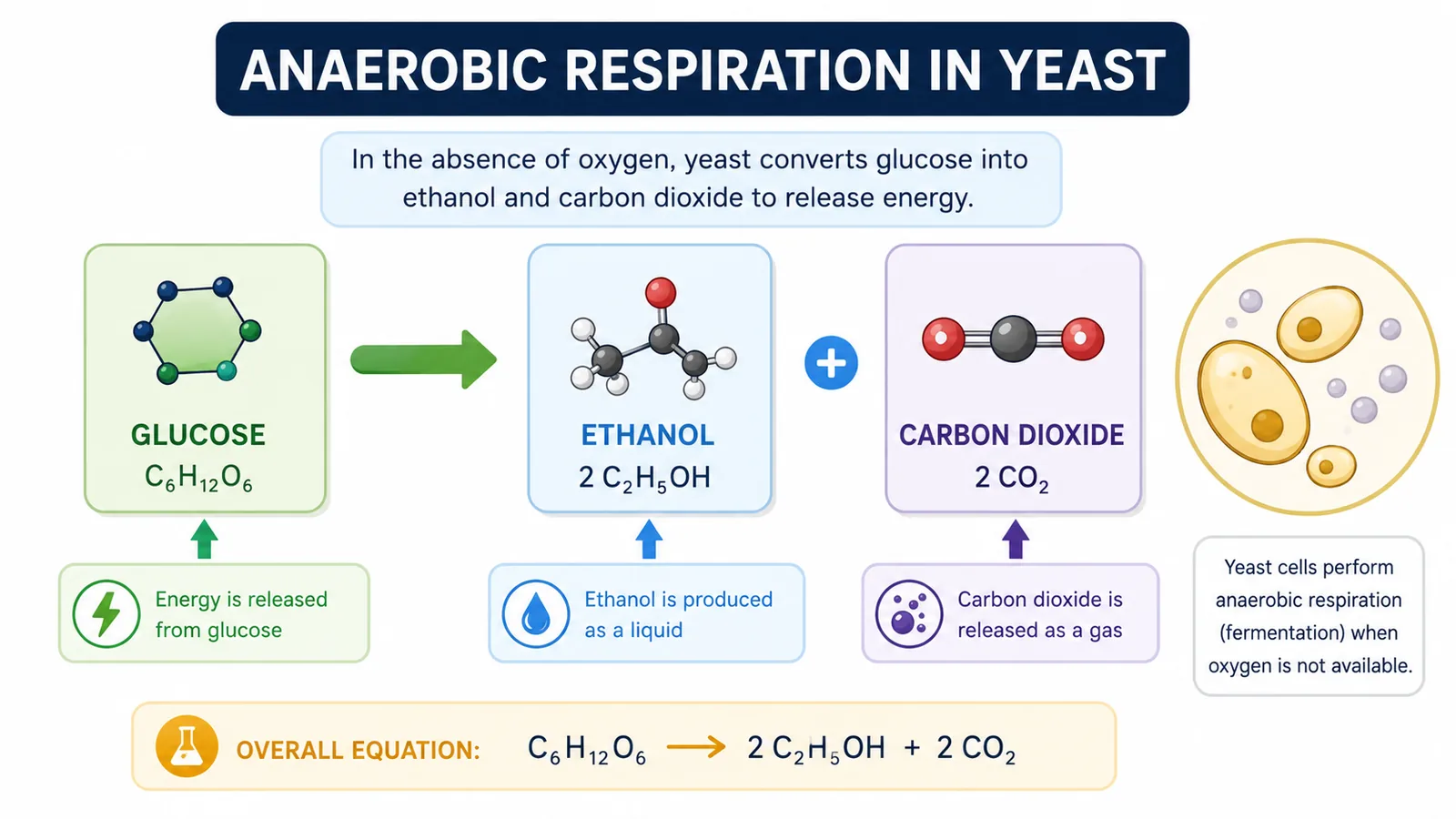
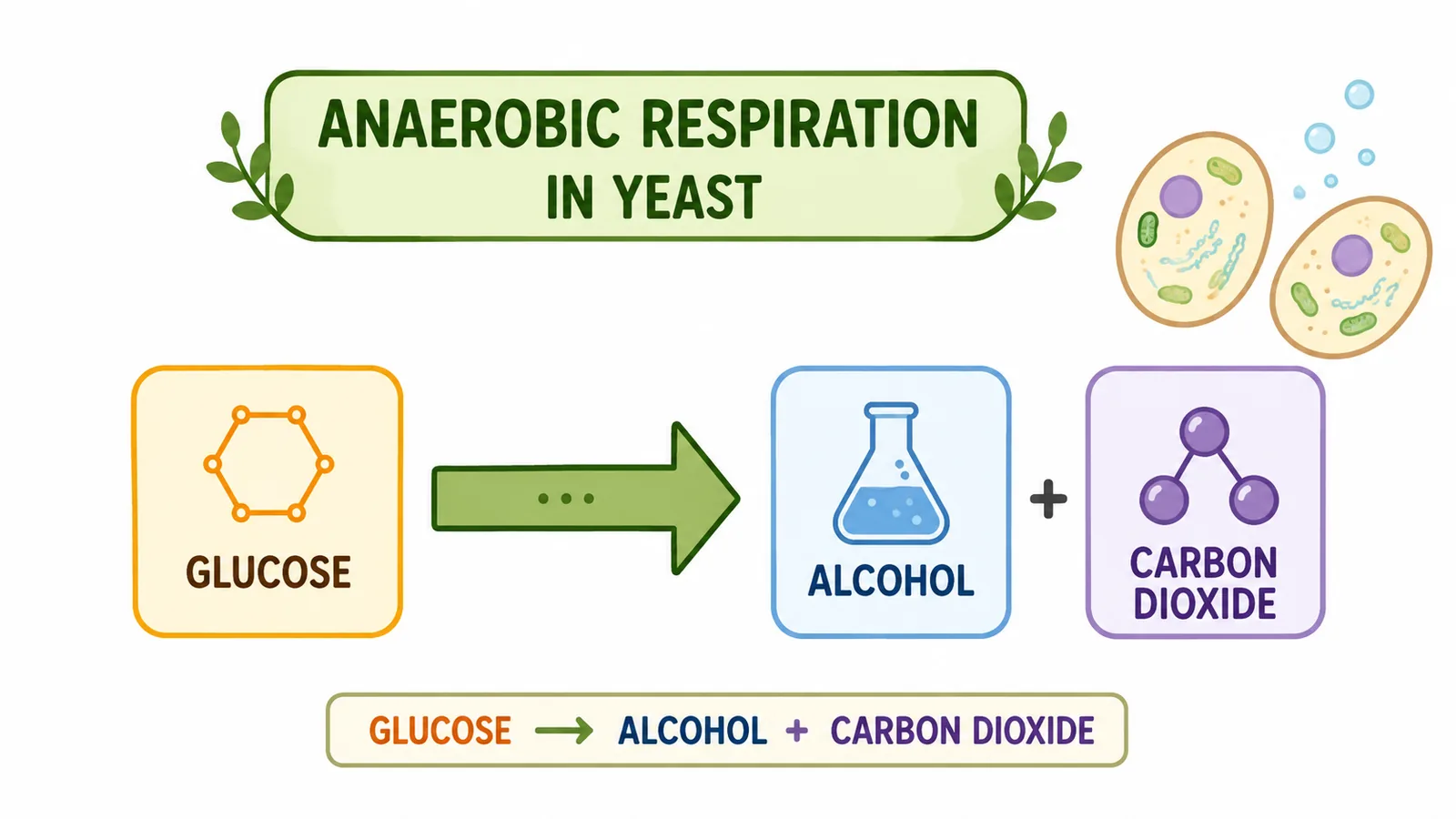

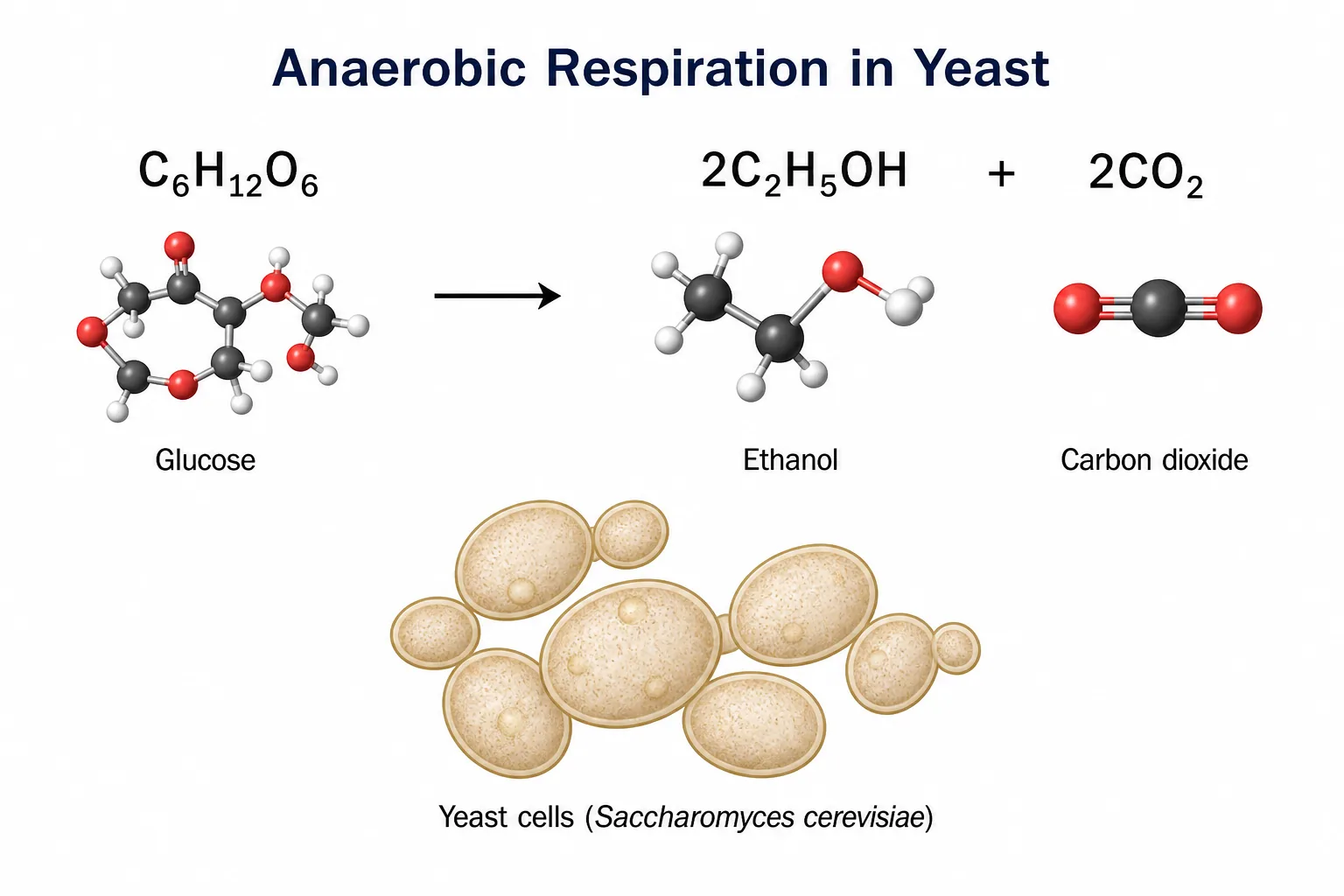
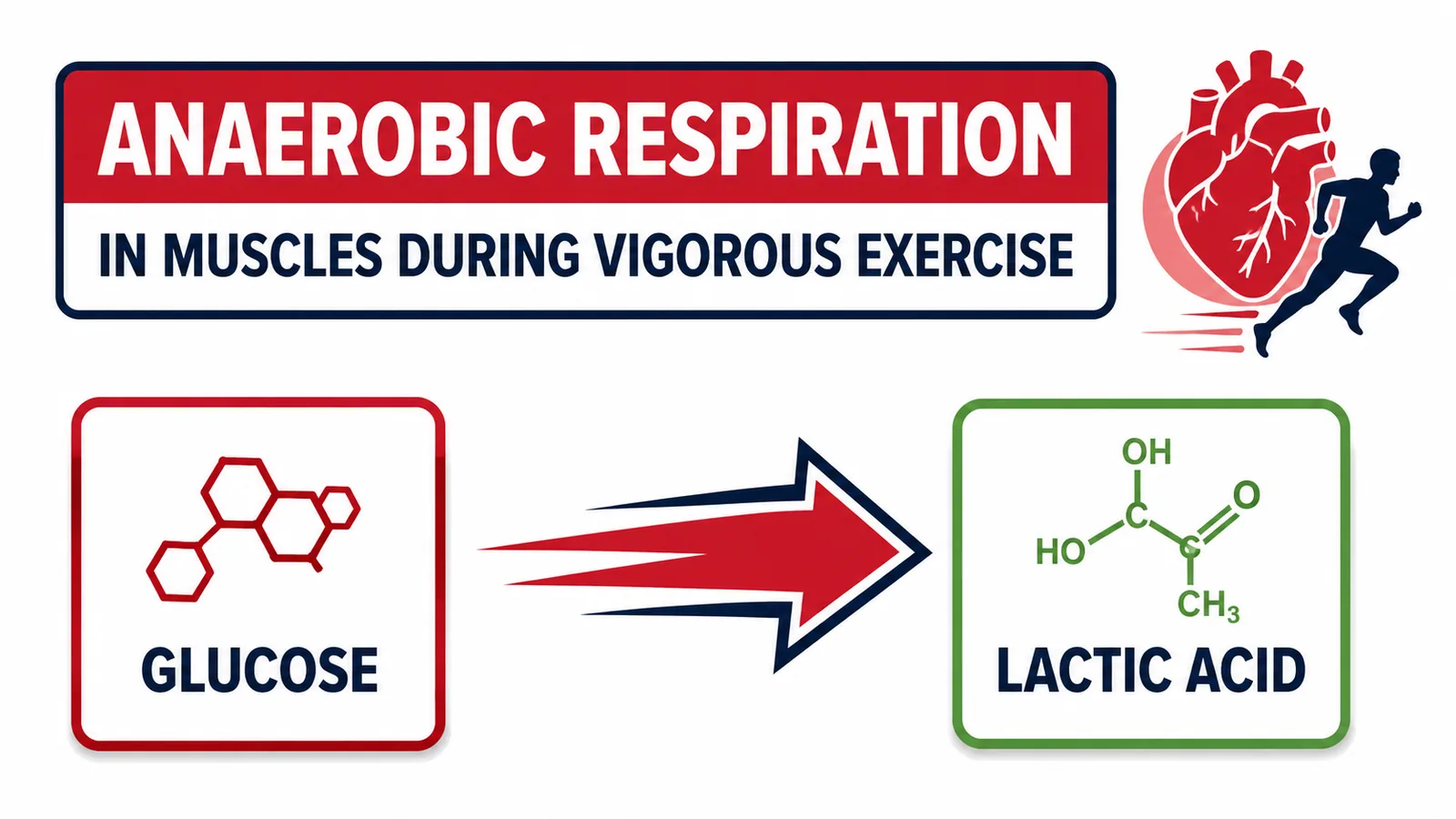

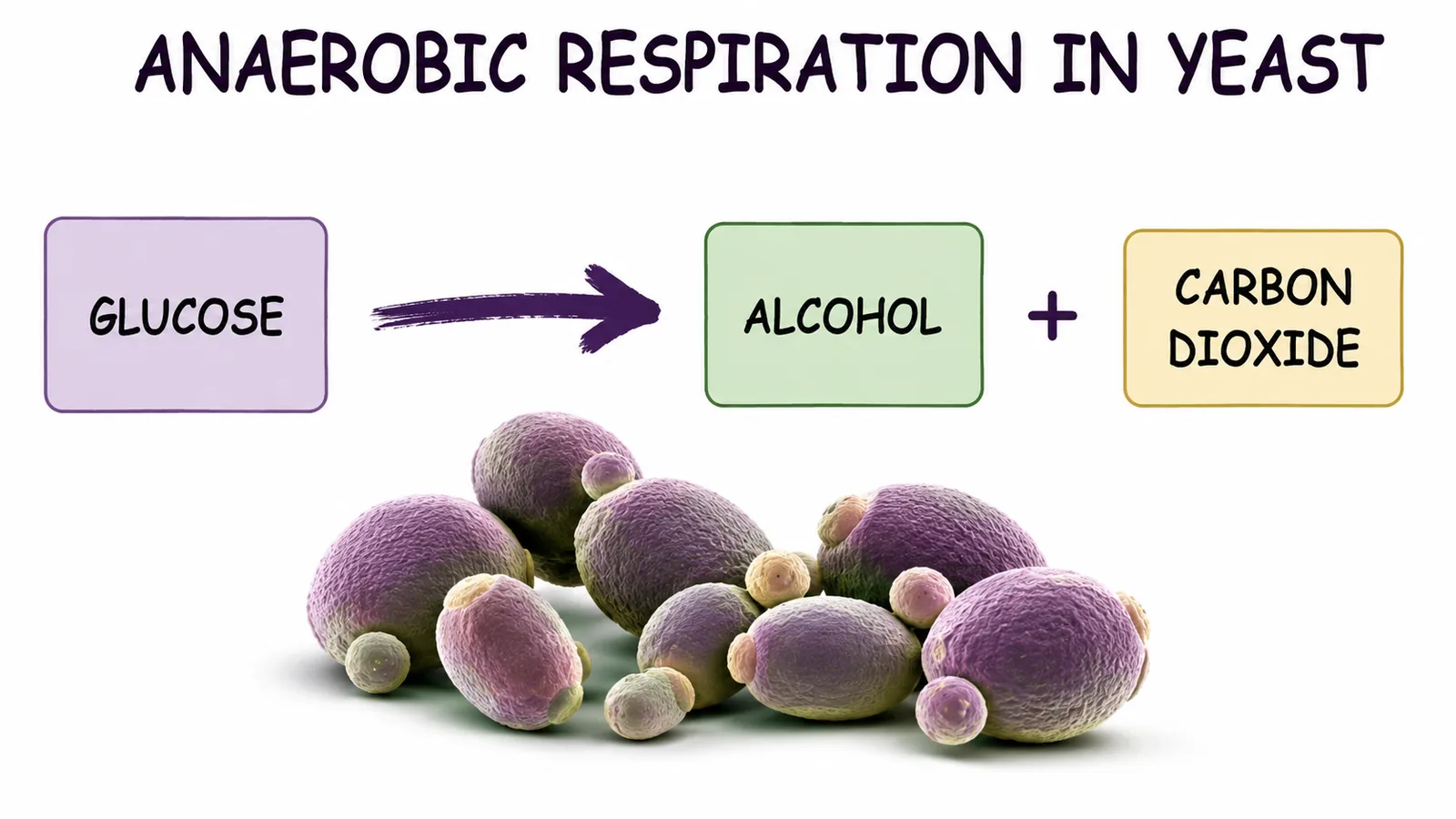
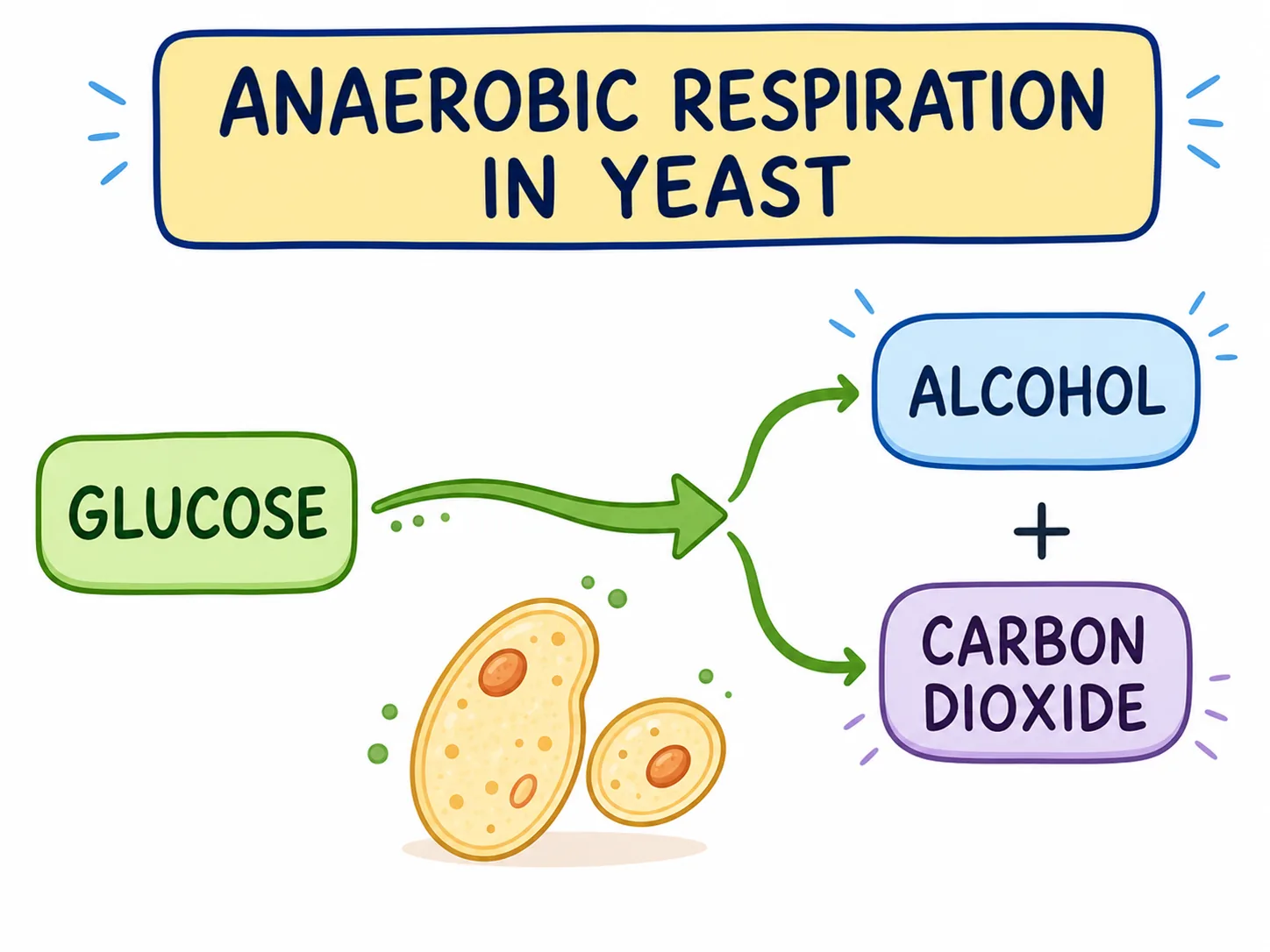
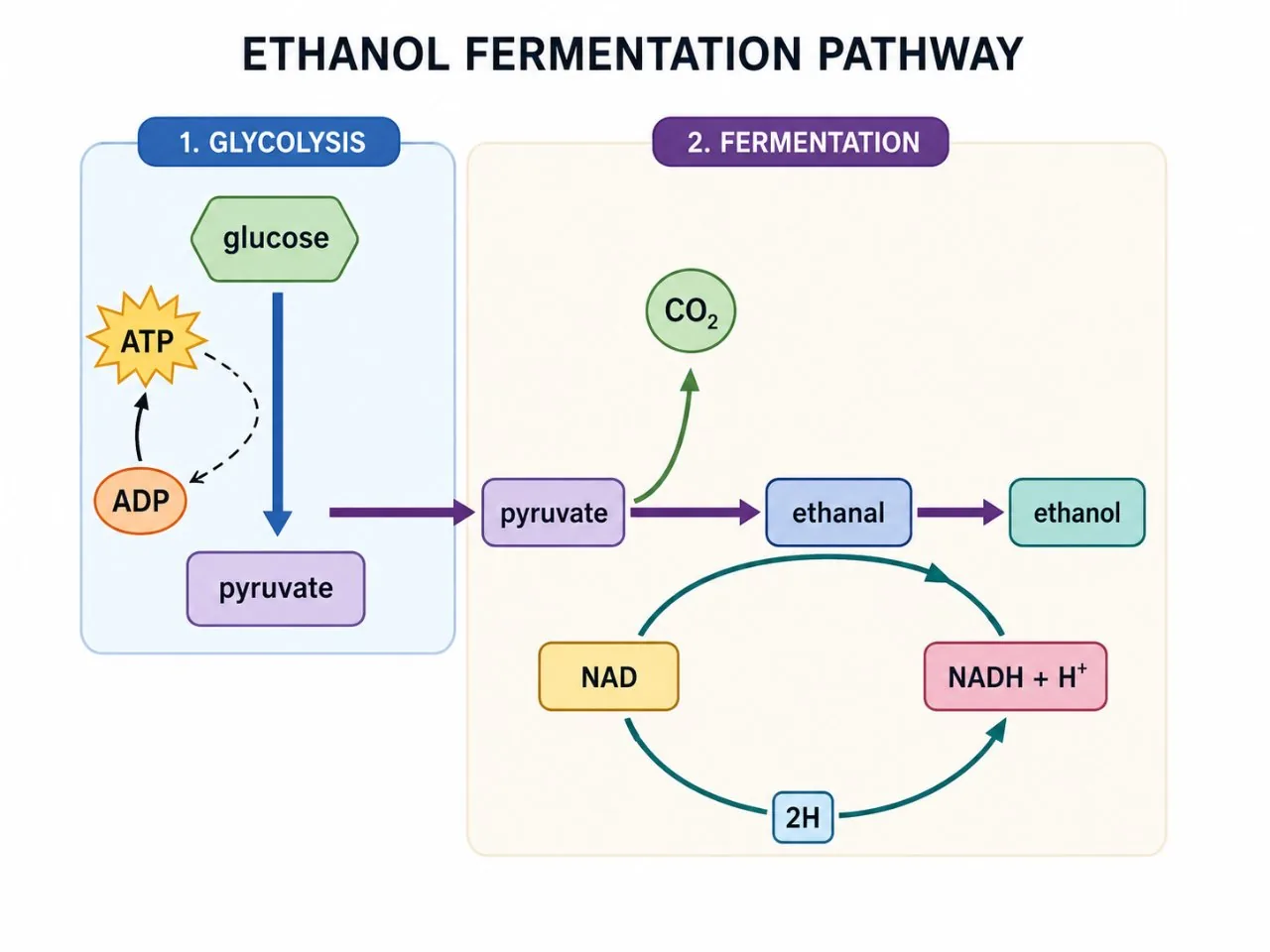
Anaerobic respiration happens without oxygen. It is much less efficient because glucose is only partly broken down, so far less energy is released per glucose molecule. It takes place in the cytoplasm. The products depend on the organism.
- When yeast does this it is called fermentation.
- It is used to make bread rise and in brewing alcoholic drinks.
- (the carbon dioxide forms bubbles in the dough)
Anaerobic respiration releases energy quickly, which is useful in a short burst of intense activity, but it cannot be sustained because lactic acid accumulates and muscles become fatigued.
Section 4 of 9Comparing the two types
| Feature | Aerobic | Anaerobic (muscle) |
|---|---|---|
| Oxygen needed | Yes | No |
| Site in cell | Mostly mitochondria | Cytoplasm |
| Products | Carbon dioxide and water | Lactic acid |
| Energy released per glucose | Large | Small |
| Can continue for long periods | Yes | No |
Section 5 of 9Investigating respiration and linking ideas
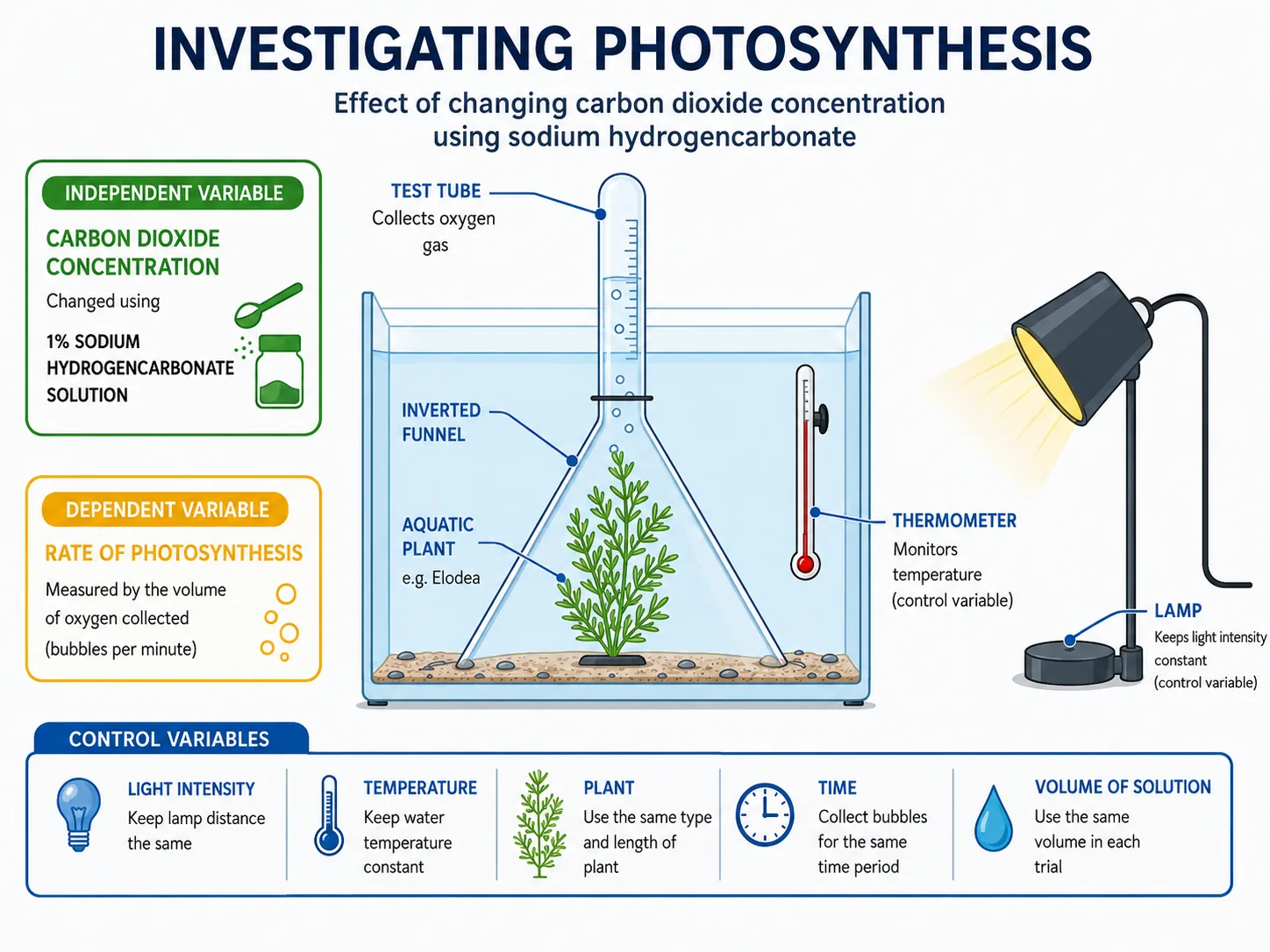



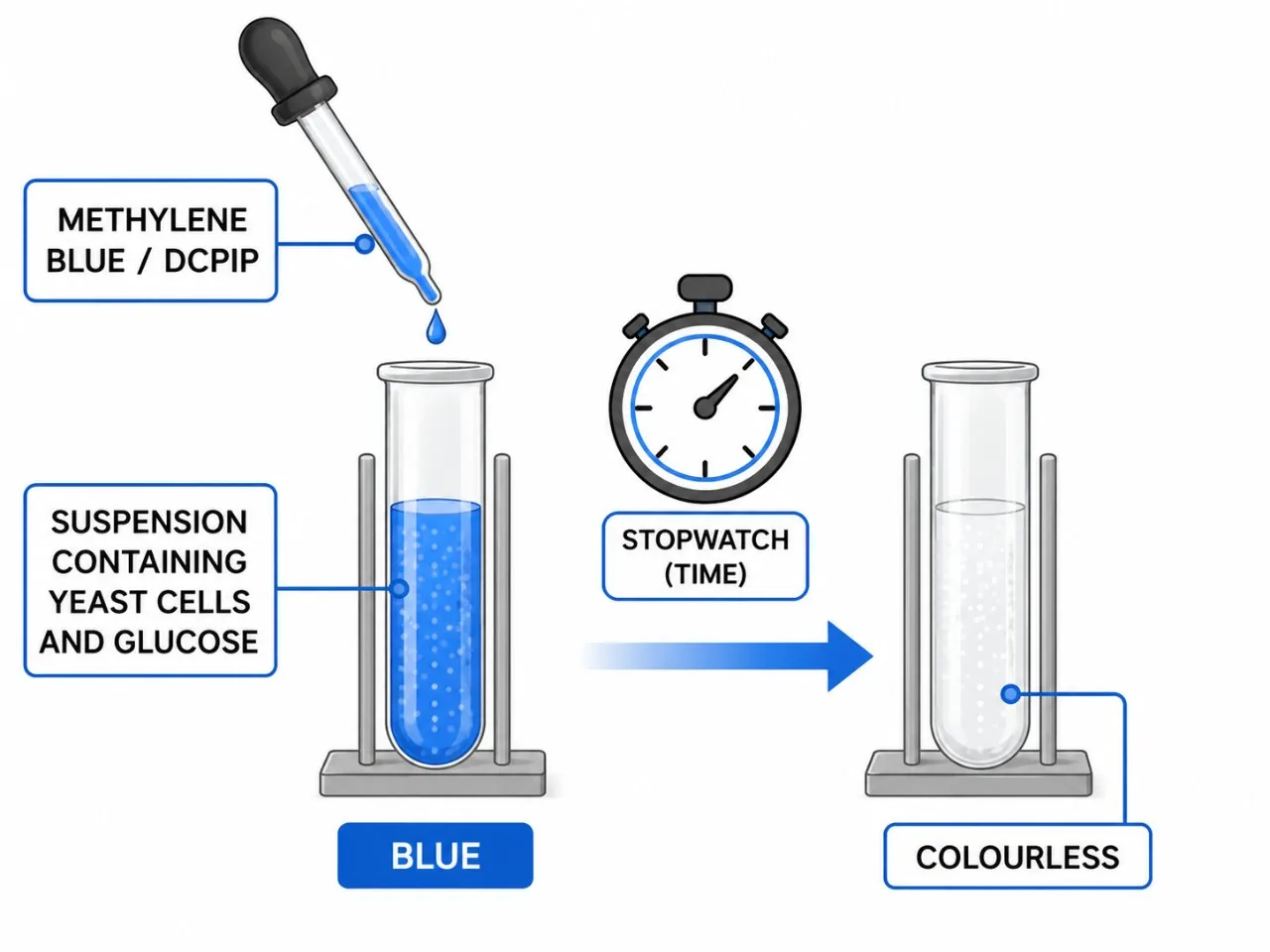
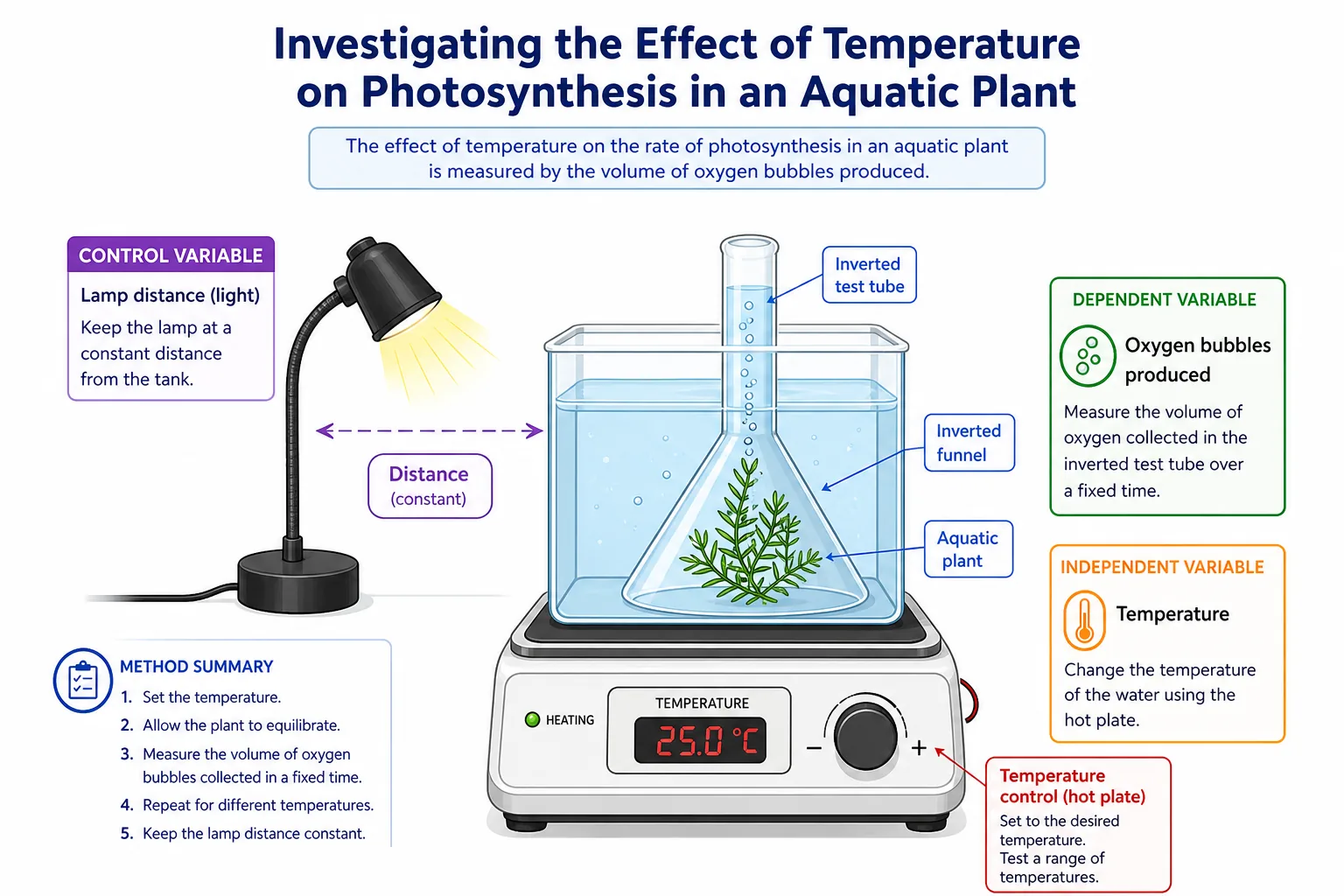


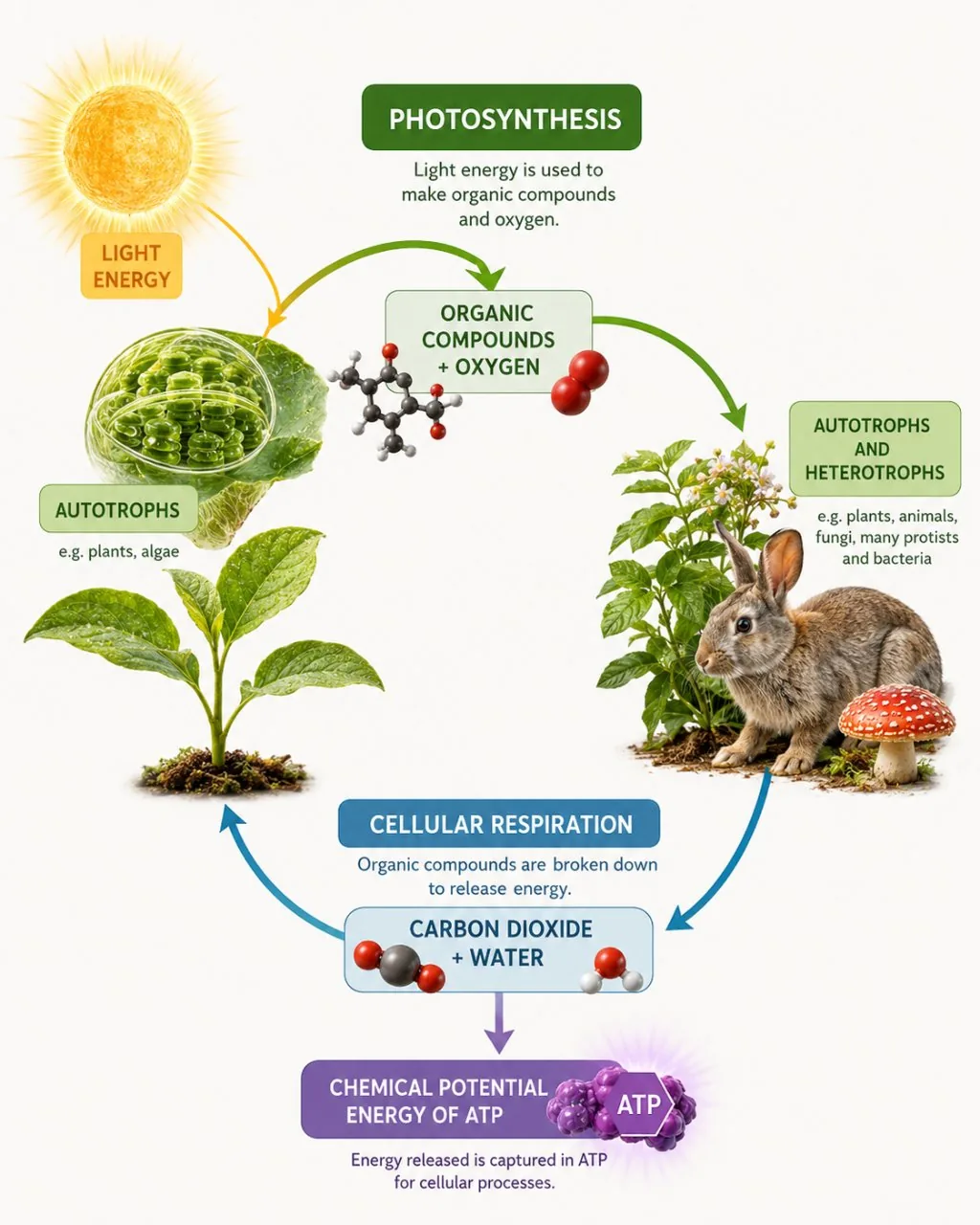
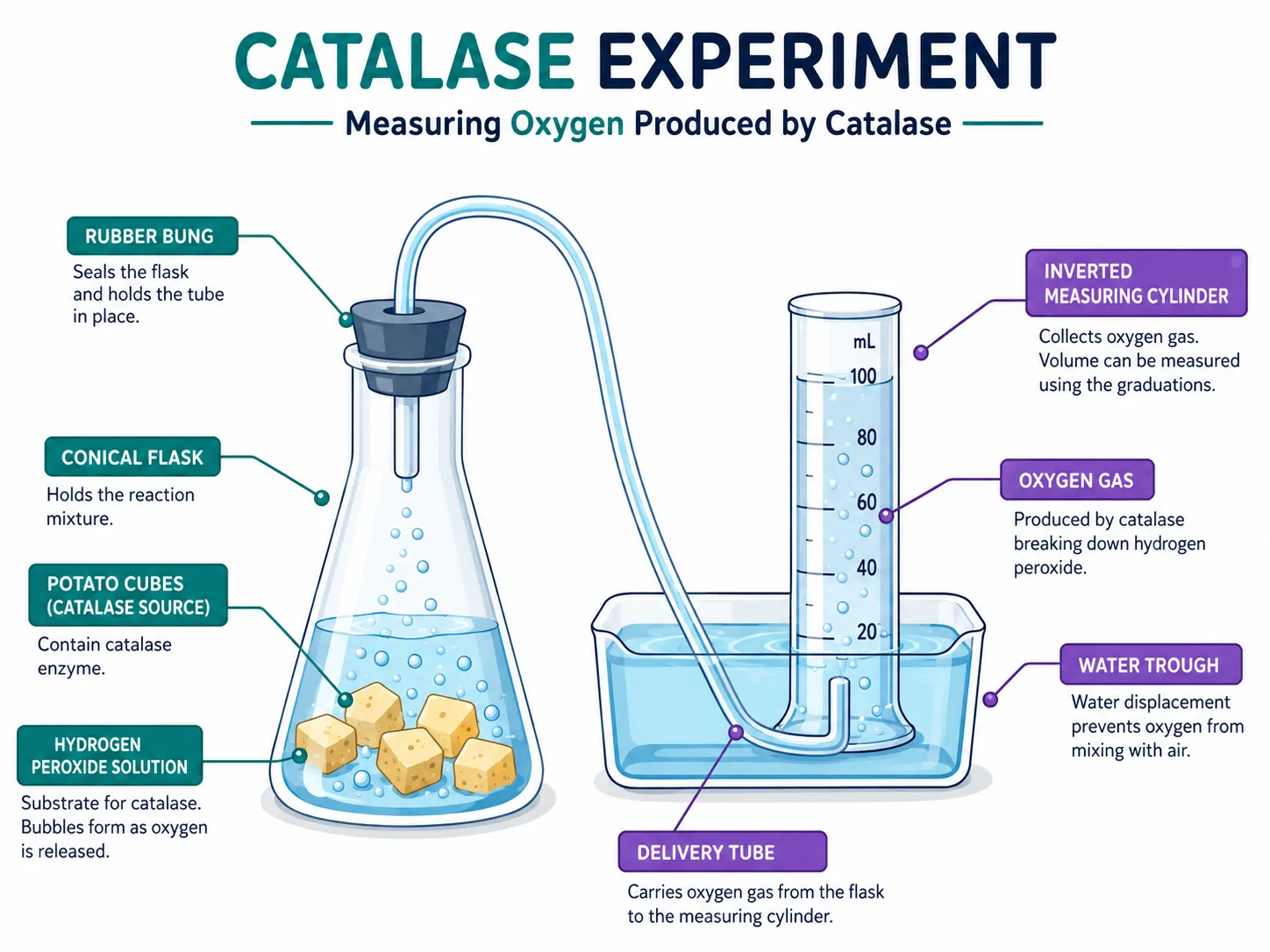
- Germinating seeds in a sealed flask with a thermometer show a temperature rise because respiration is exothermic.
- Limewater turning cloudy or hydrogencarbonate indicator changing from red to yellow shows carbon dioxide is being produced.
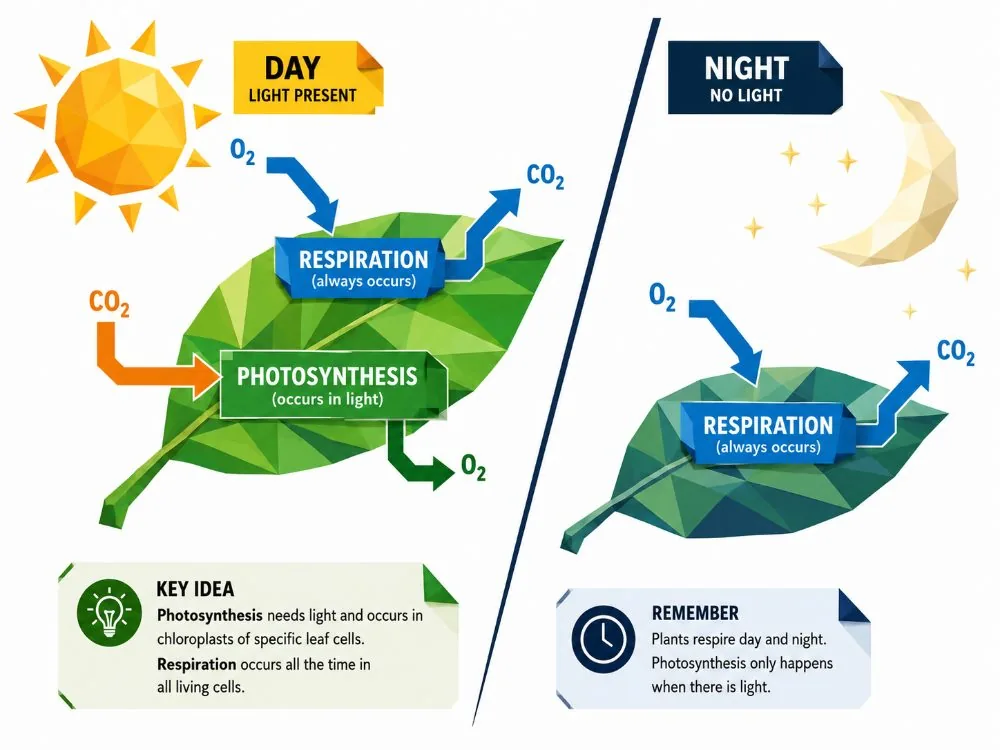
- while respiration releases that energy and uses the oxygen.
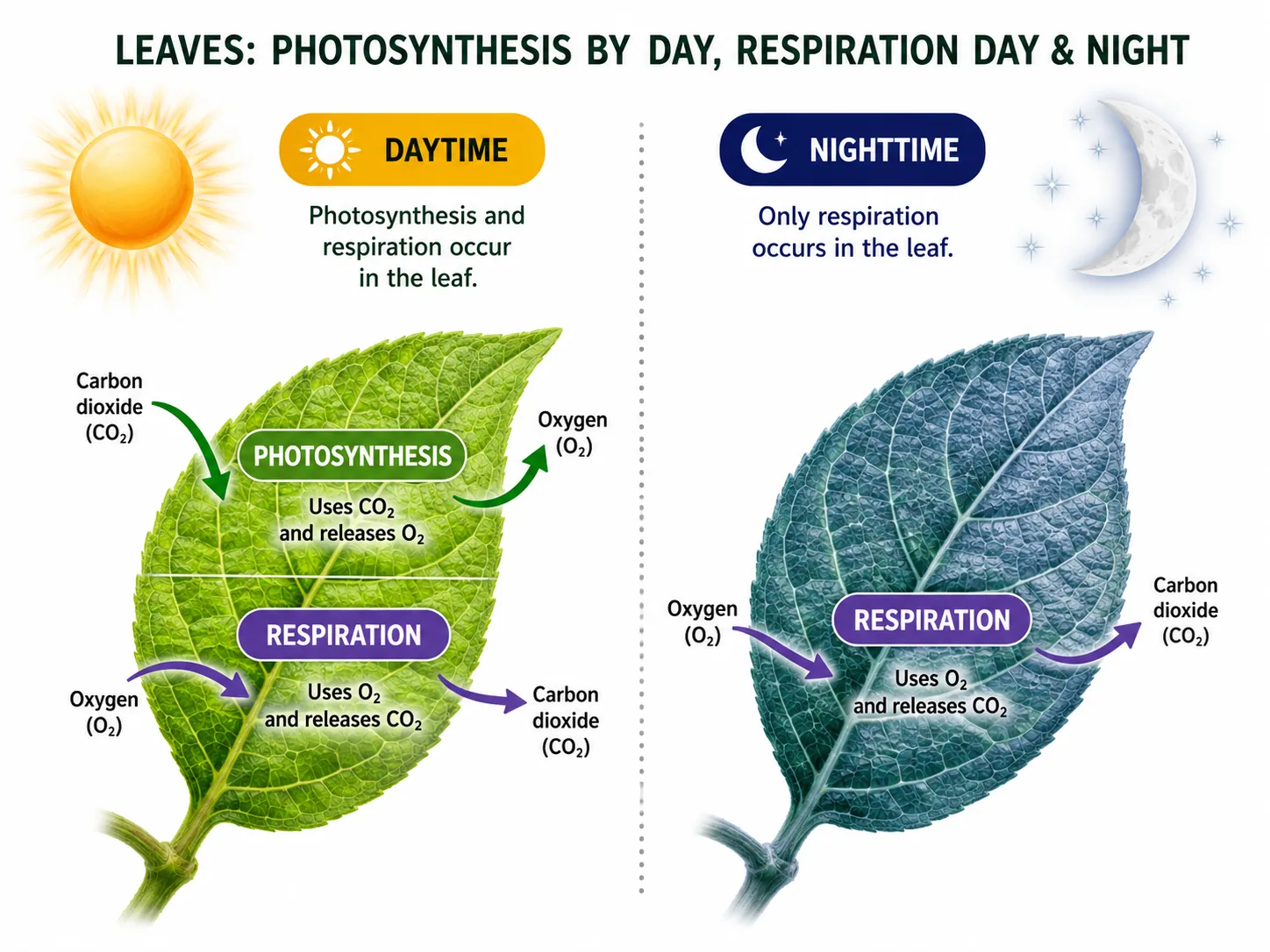
- Plants do both;
- during the day photosynthesis is usually faster than respiration, so there is a net release of oxygen.
- including plants at night and organisms in soil or mud,
- where anaerobic respiration may be the only option.
Section 6 of 9Interpreting data on respiration
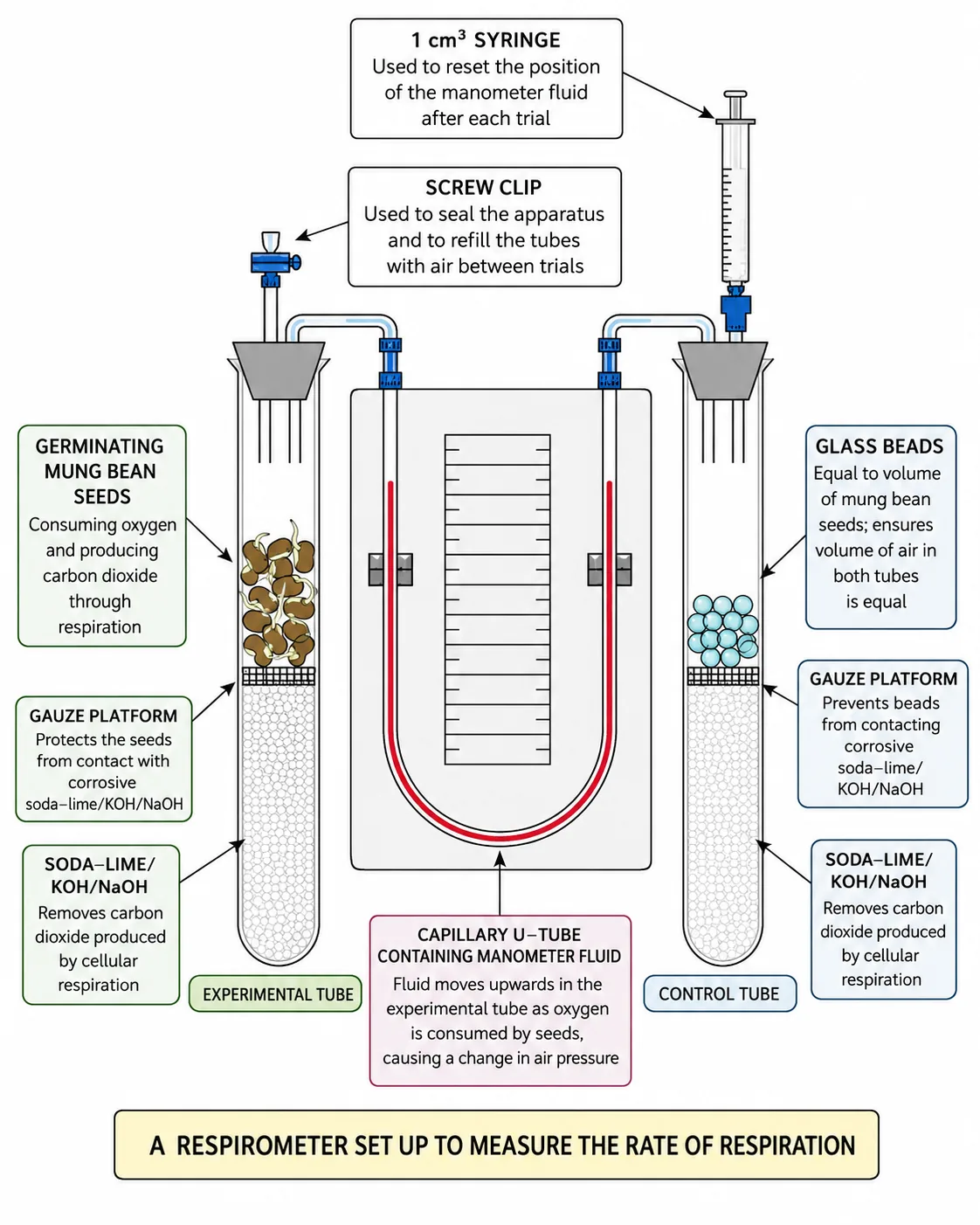
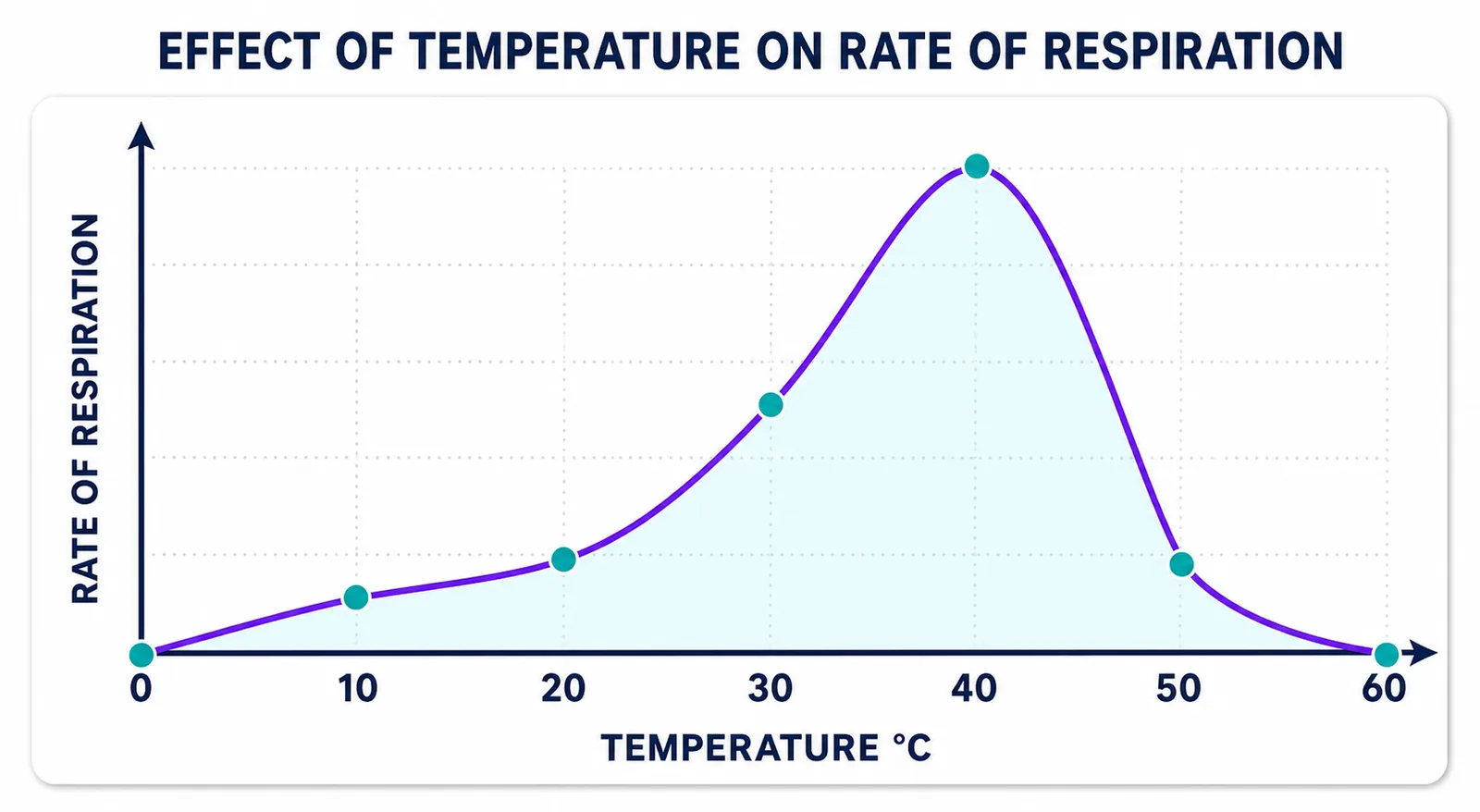
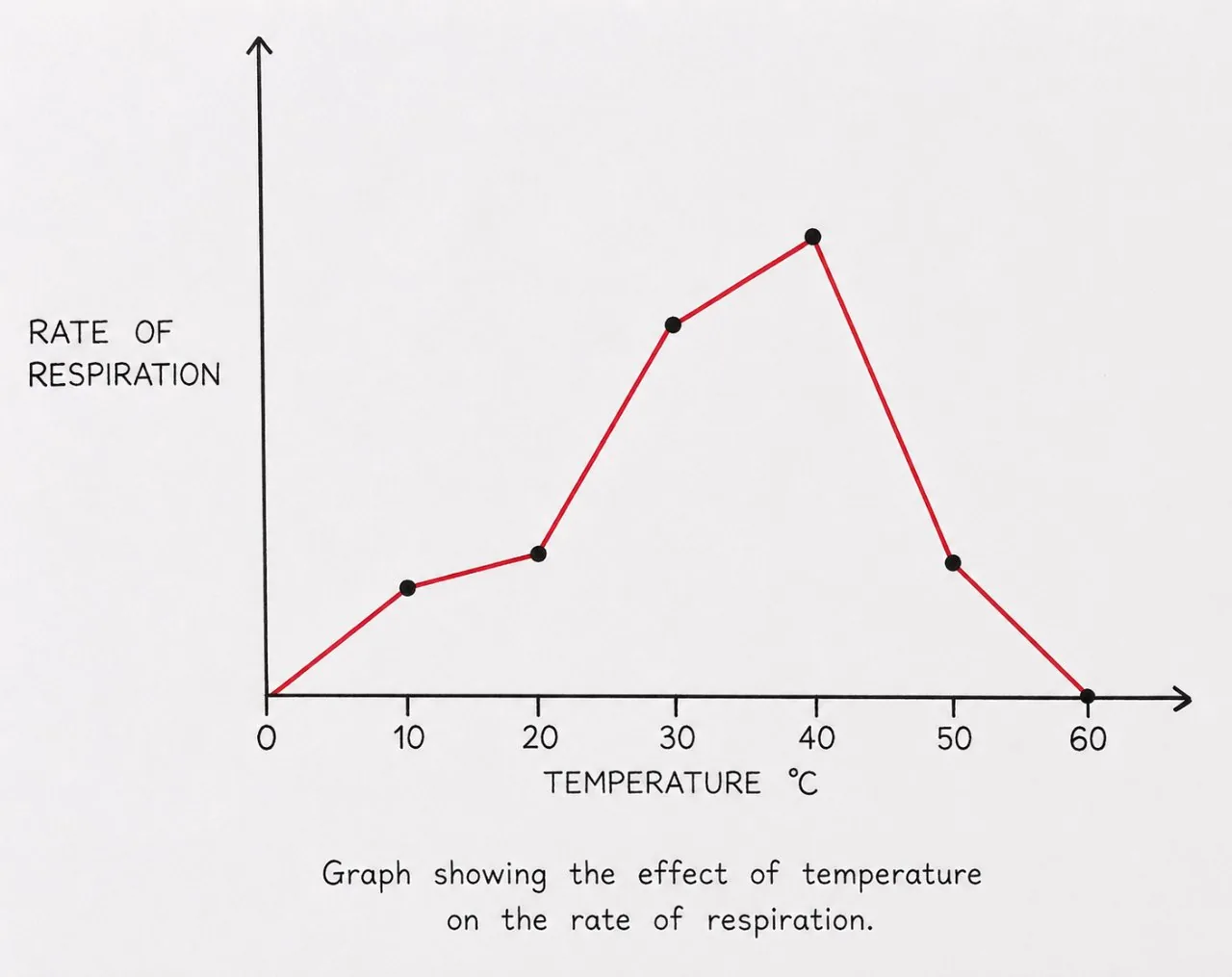

Exam questions often give results from a respirometer or a temperature probe.
Compare living and dead (boiled) seeds as a control: the dead seeds should show no change, proving the effect is due to living cells.
Remember that anaerobic respiration in yeast releases carbon dioxide, so gas volume can rise even when no oxygen is present, while in a muscle it releases none.
Section 7 of 9Exam-style questions

Write the word equation for aerobic respiration and state where in the cell most of it happens. [3]3 marks
Glucose + oxygen → carbon dioxide + water [2: reactants correct 1, products correct 1].
Most of it happens in the mitochondria [1].
Yeast is added to a sugar solution in a sealed flask with no air. Bubbles of gas appear and a smell of alcohol develops. Explain these observations. [3]3 marks
The yeast is respiring anaerobically (fermentation) because there is no oxygen [1]. Glucose is broken down to ethanol and carbon dioxide [1]. The bubbles are carbon dioxide and the smell is ethanol [1].
Explain why a sprinter's muscles may stop working well after a 400 m race even though breathing is rapid. [3]3 marks
The oxygen supply cannot meet demand so muscles respire anaerobically [1]. This produces lactic acid, which builds up in the muscles [1]. The acid causes muscle fatigue so the muscles contract less effectively [1].
Section 8 of 9Key terms
| Term | Meaning |
|---|---|
| Respiration | The chemical reaction in cells that transfers energy from glucose. |
| Exothermic | A reaction that releases energy to the surroundings. |
| Aerobic respiration | Respiration using oxygen, releasing a large amount of energy. |
| Anaerobic respiration | Respiration without oxygen, releasing much less energy. |
| Mitochondria | Organelles where most aerobic respiration reactions occur. |
| Fermentation | Anaerobic respiration in yeast producing ethanol and carbon dioxide. |
| Lactic acid | The product of anaerobic respiration in muscle cells. |