Section 1 of 9Why cells need to move substances

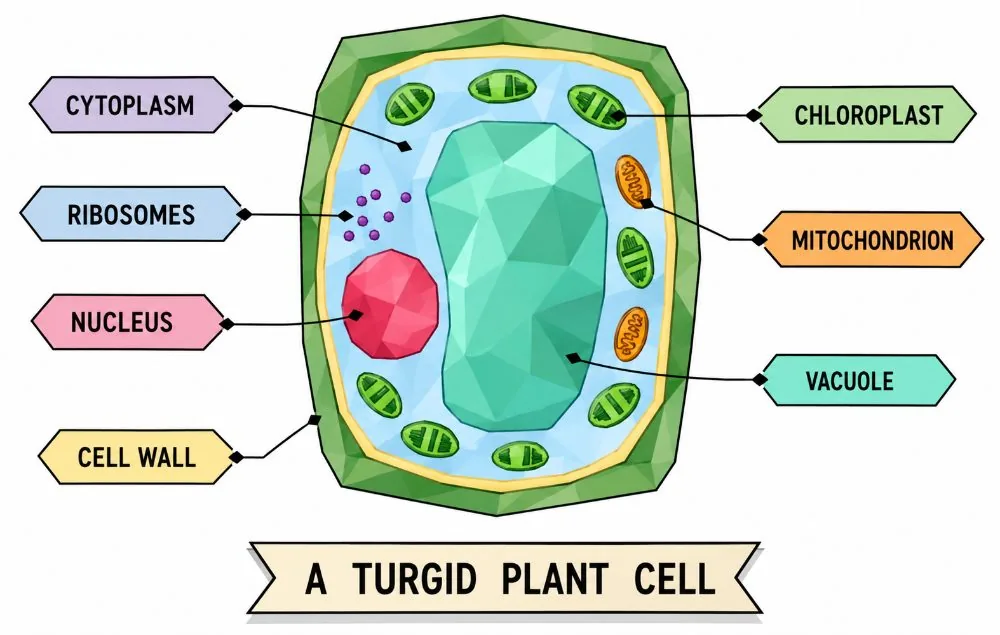


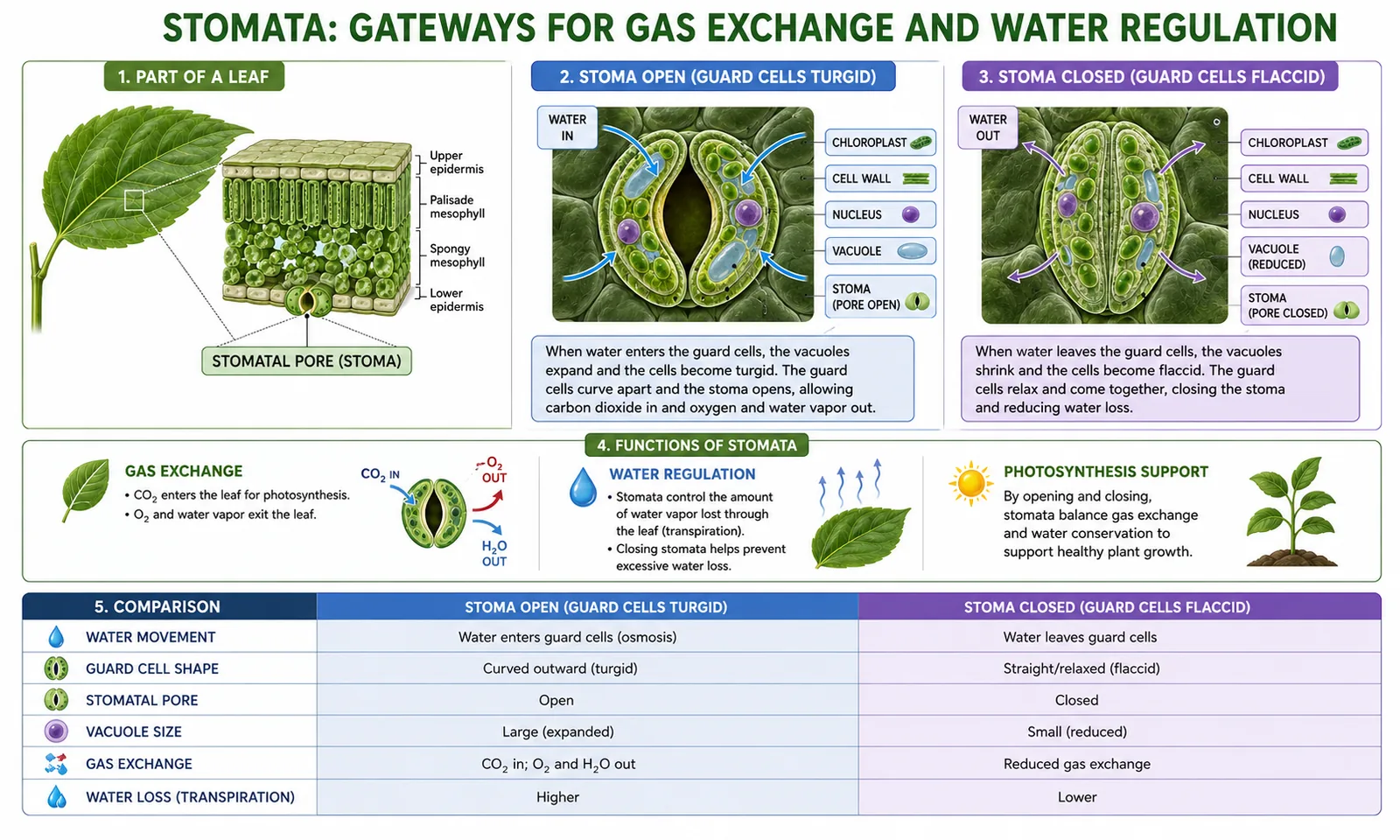
Every cell must take in raw materials such as oxygen, glucose and water and get rid of waste such as carbon dioxide and urea. Some substances cross the cell membrane without the cell using energy; this is passive transport. Diffusion and osmosis are the two passive processes you must know for OCR Gateway GCSE Biology A.
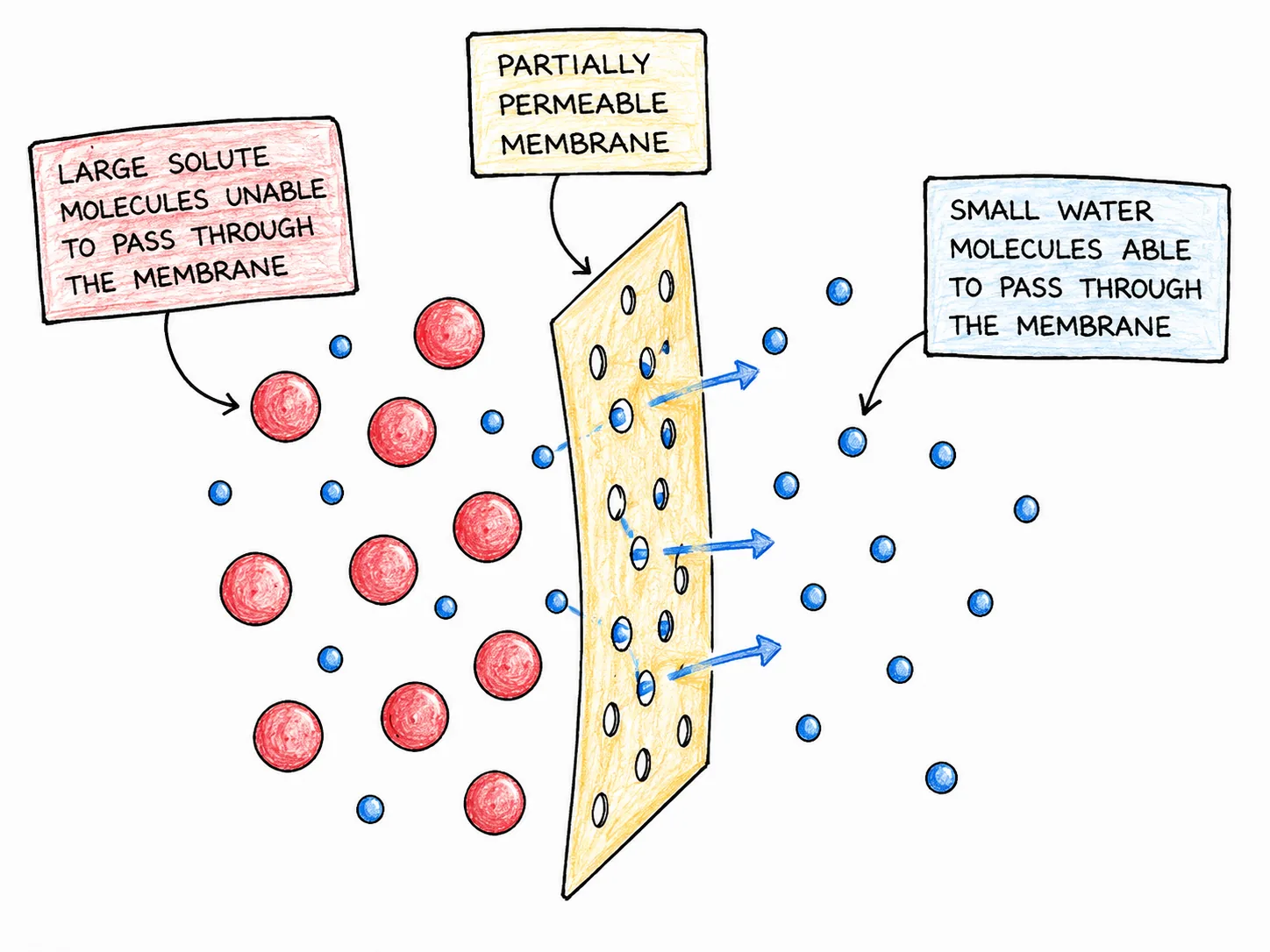
The cell surface membrane is partially permeable: it lets small molecules such as water, oxygen and carbon dioxide through easily, but controls the movement of larger or charged particles.
Section 2 of 9Diffusion
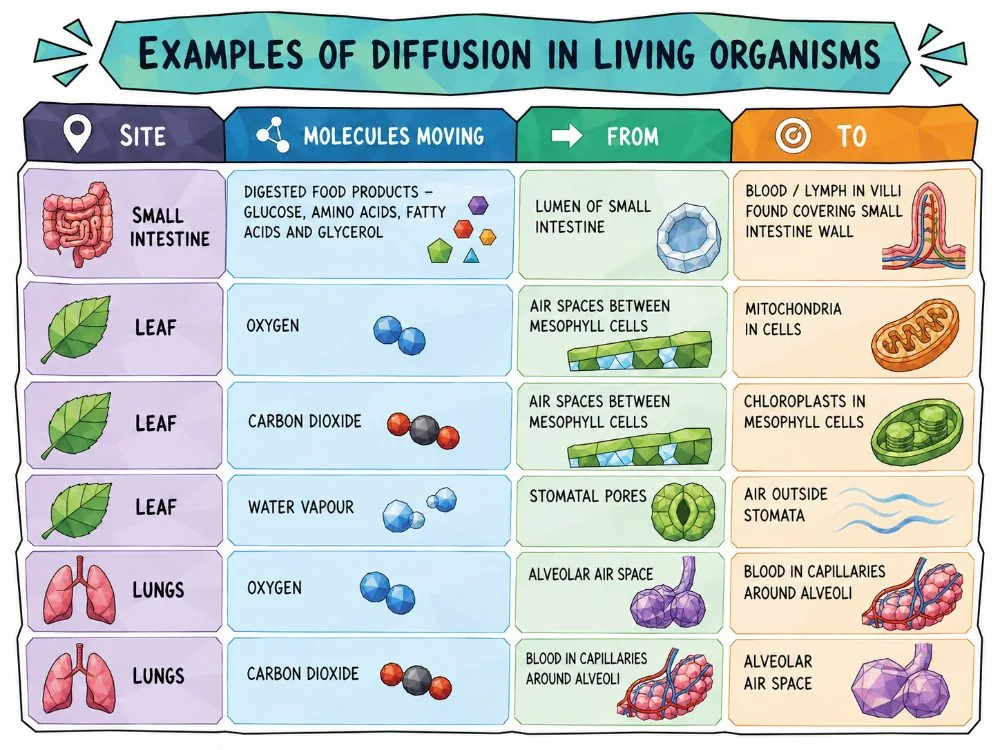
Diffusion is the net movement of particles from a region of higher concentration to a region of lower concentration, down a concentration gradient.
Examples in living things:
Section 3 of 9Factors affecting the rate of diffusion
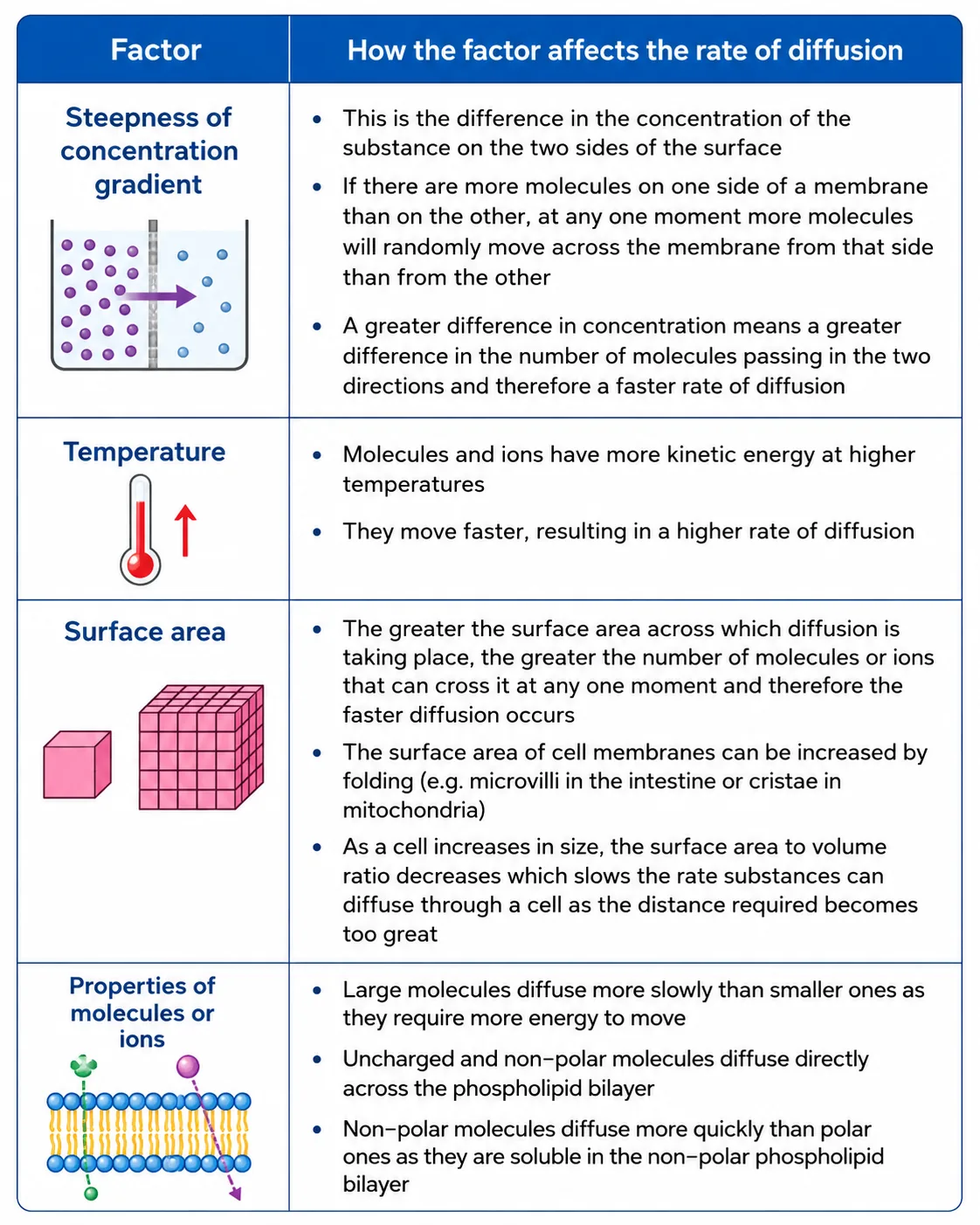


| Factor | Effect on rate | Reason |
|---|---|---|
| Concentration gradient | Steeper gradient, faster diffusion | More particles move down the gradient than back up it |
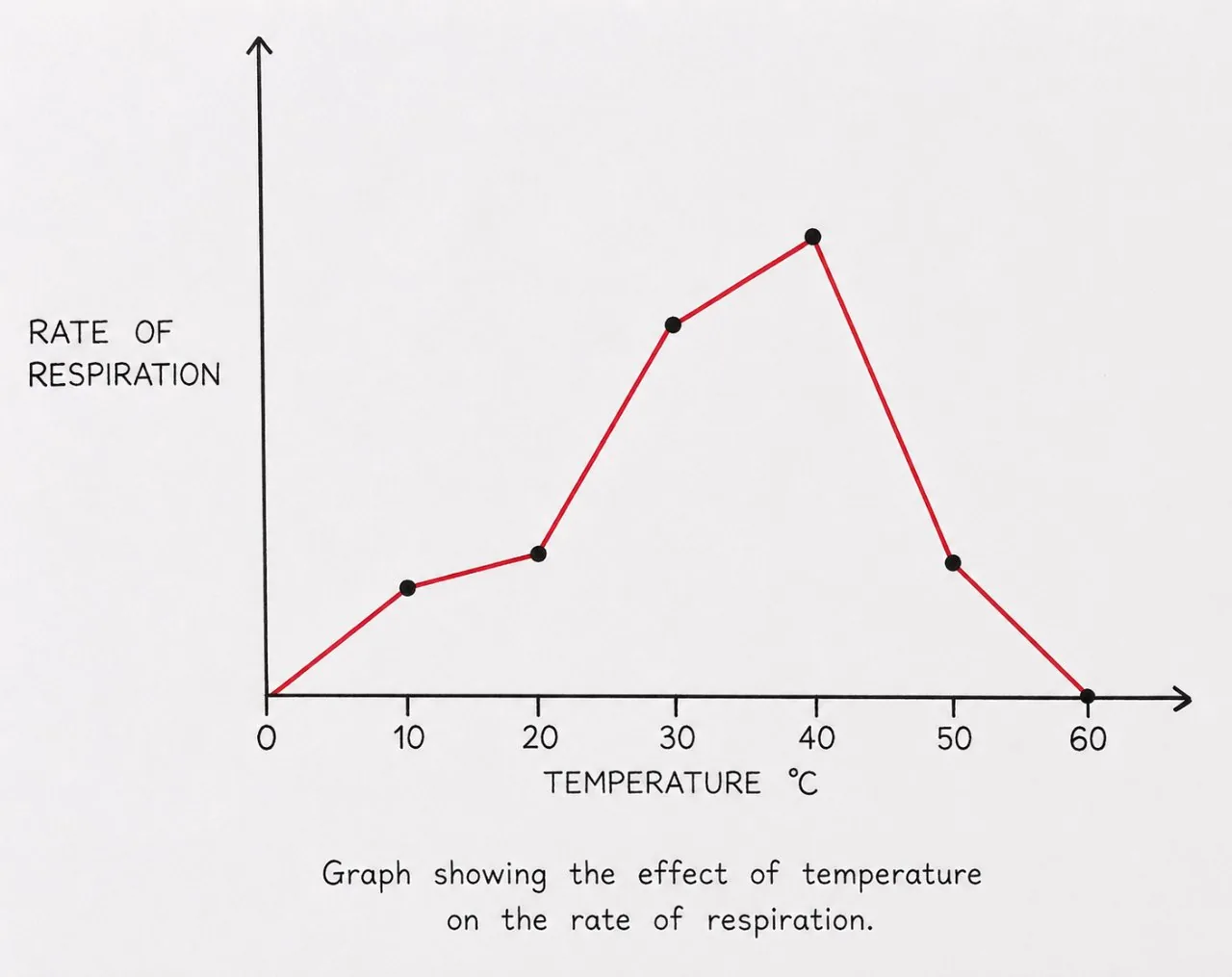
| Temperature | Higher temperature, faster diffusion | Particles have more kinetic energy and move faster |
| Surface area | Larger area, faster diffusion | More particles can cross each second |
| Diffusion distance | Shorter distance, faster diffusion | Particles have less far to travel, for example through thin alveolus walls |
Gas exchange surfaces are adapted with all of these in mind: large area, thin walls and a good blood supply that keeps the gradient steep by removing oxygen as fast as it arrives.
Section 4 of 9Osmosis


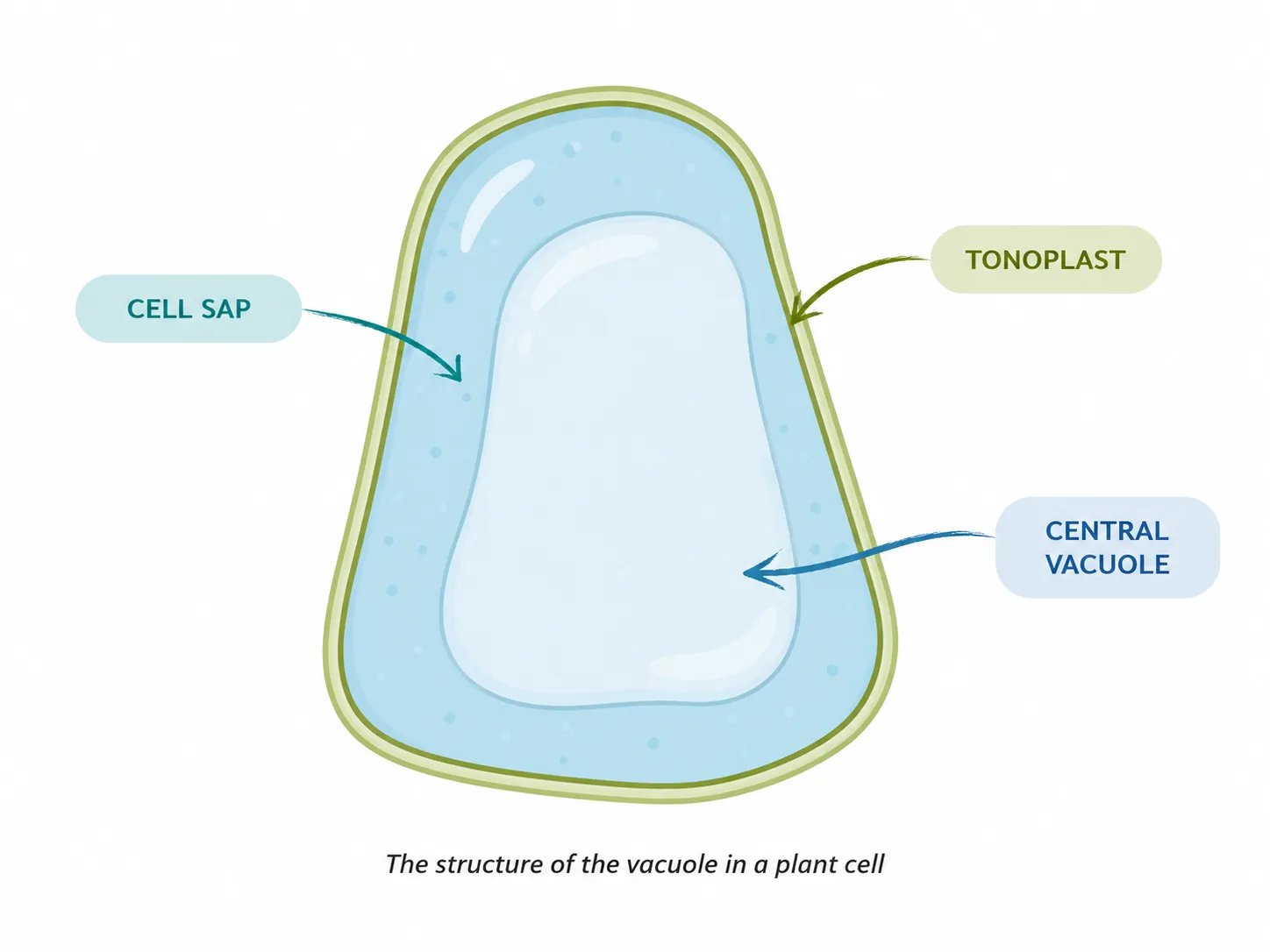
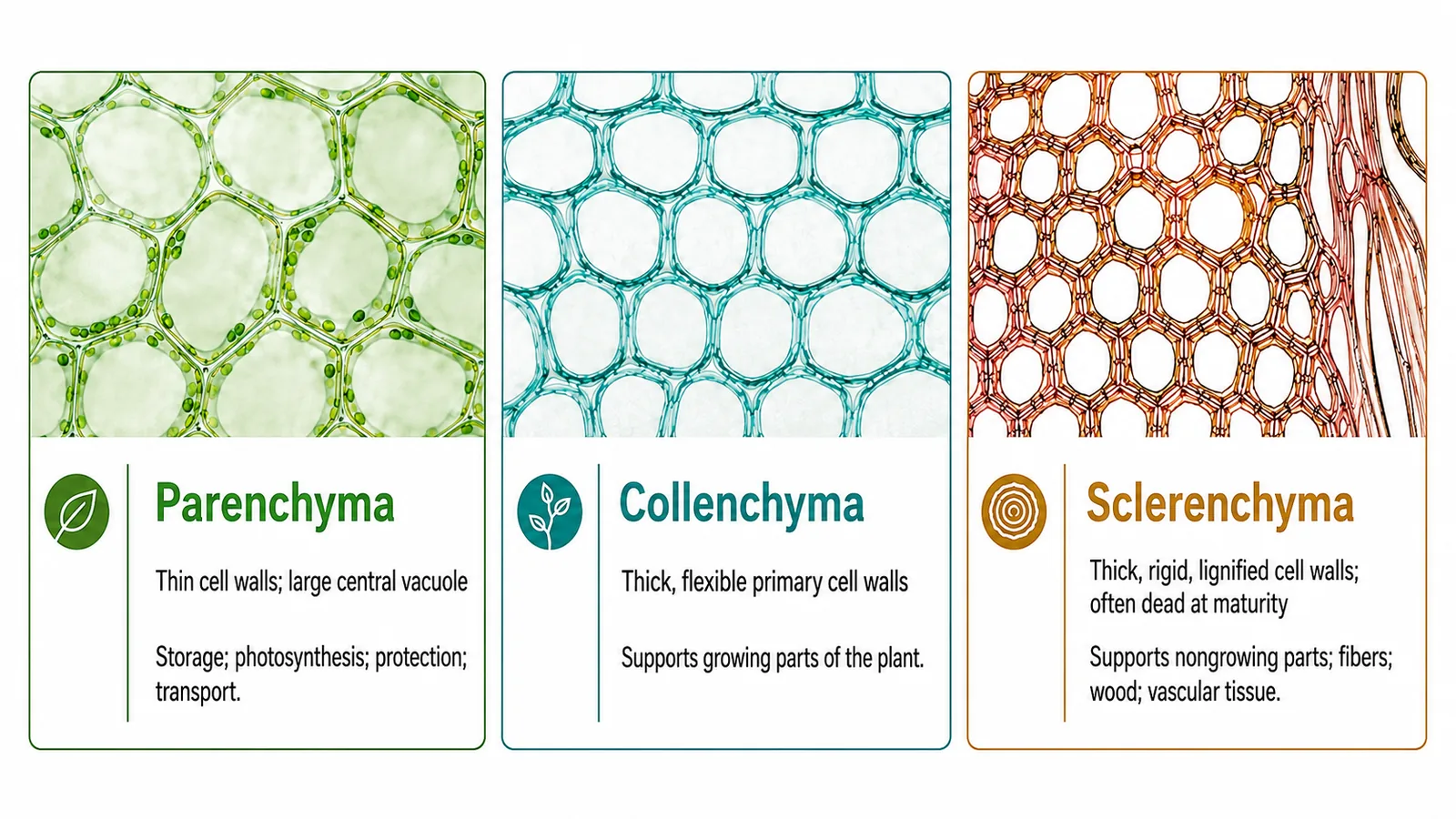
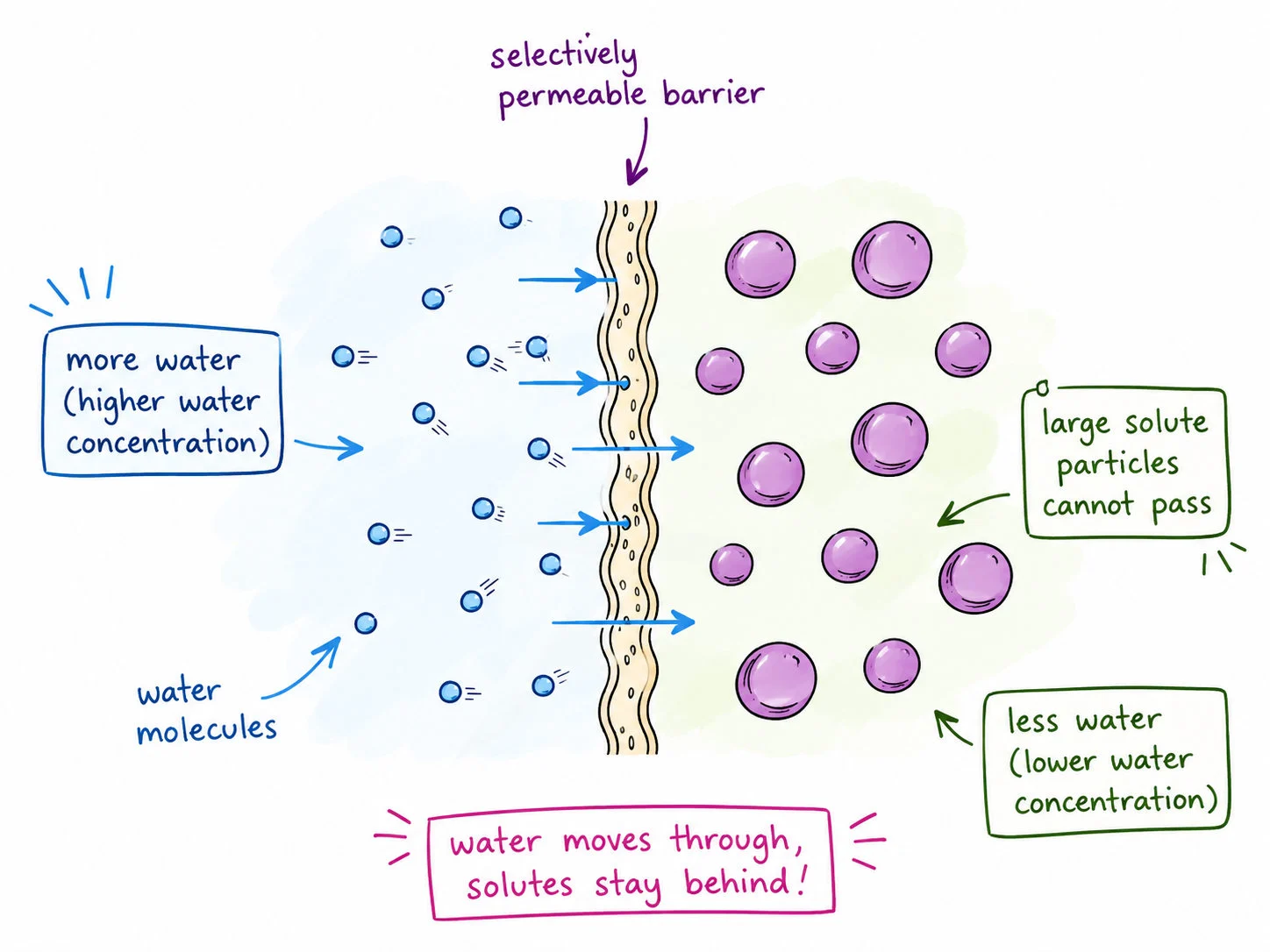
Osmosis is the diffusion of water from a region of higher water concentration (a dilute solution) to a region of lower water concentration (a concentrated solution) through a partially permeable membrane. Water moves toward the more concentrated solution, so the solution with more dissolved solute gains water.
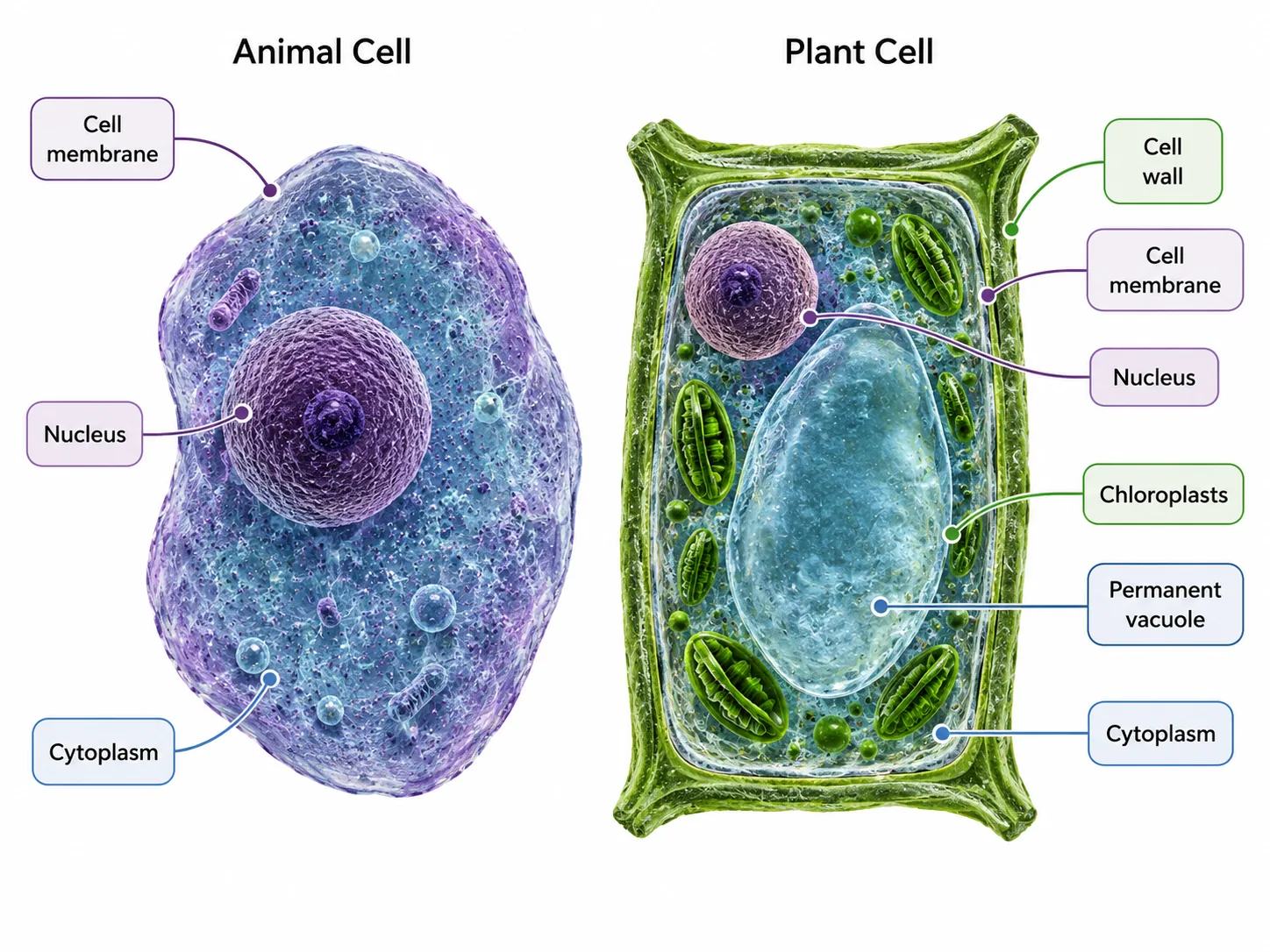
Effect on animal cells (which have no cell wall):
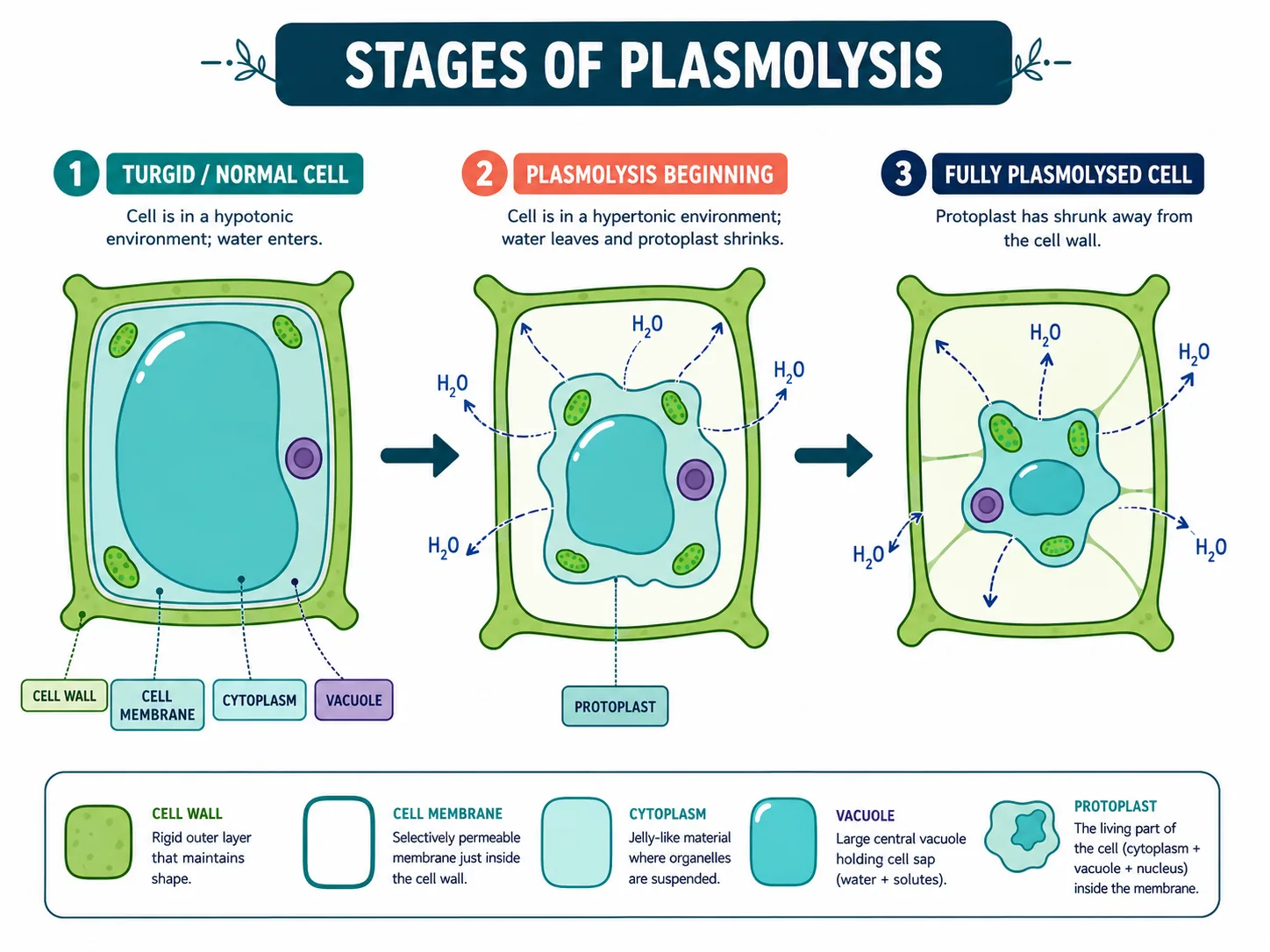
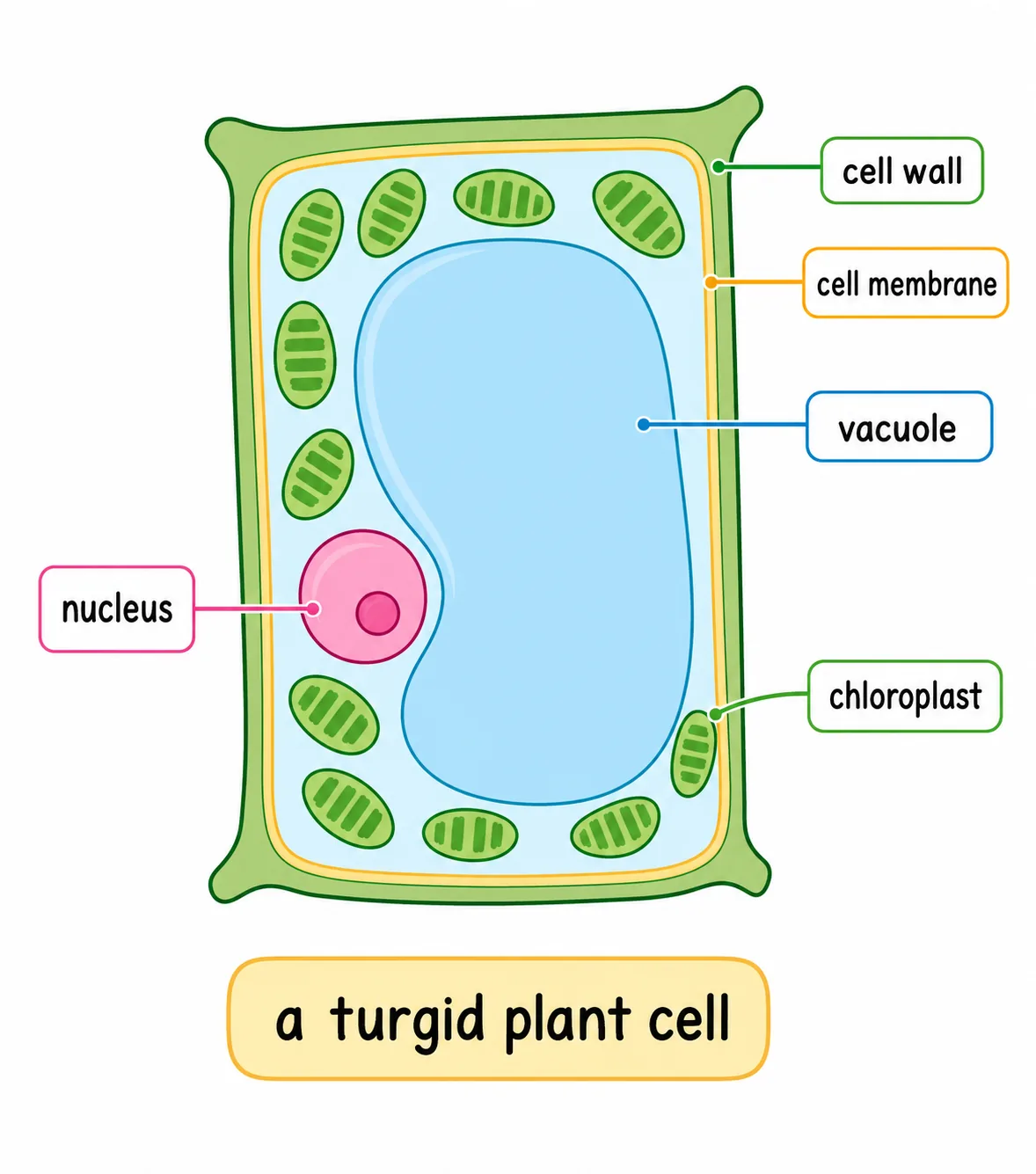
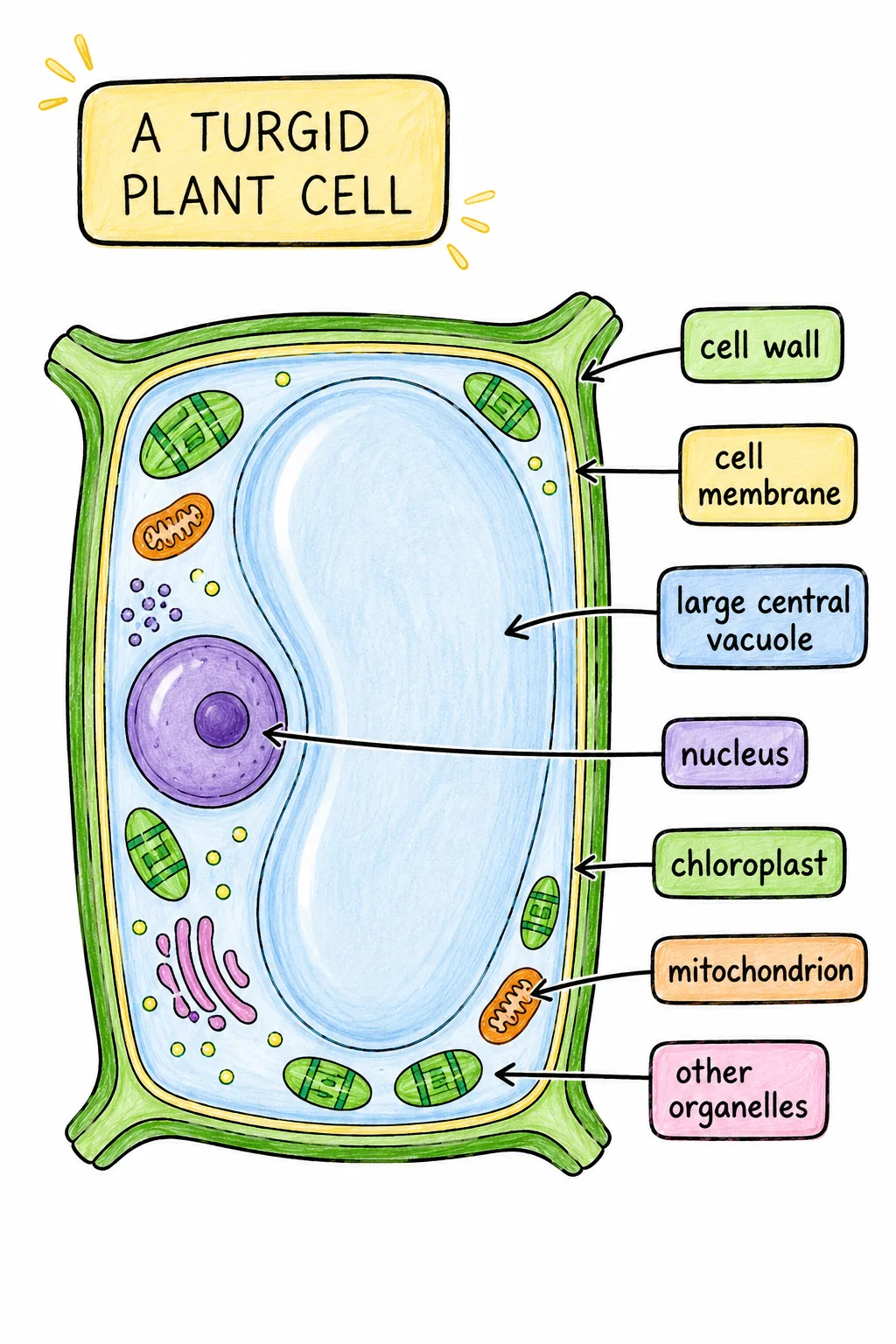
Plant cells have a cell wall. In dilute surroundings water enters and the vacuole swells, pushing the membrane against the wall; the cell becomes firm (turgid), which supports soft plant tissue. In concentrated surroundings the cell loses water, becomes flaccid, and the plant wilts. In extreme cases the membrane pulls away from the wall (plasmolysis).
Section 5 of 9Required practical: osmosis in potato cylinders
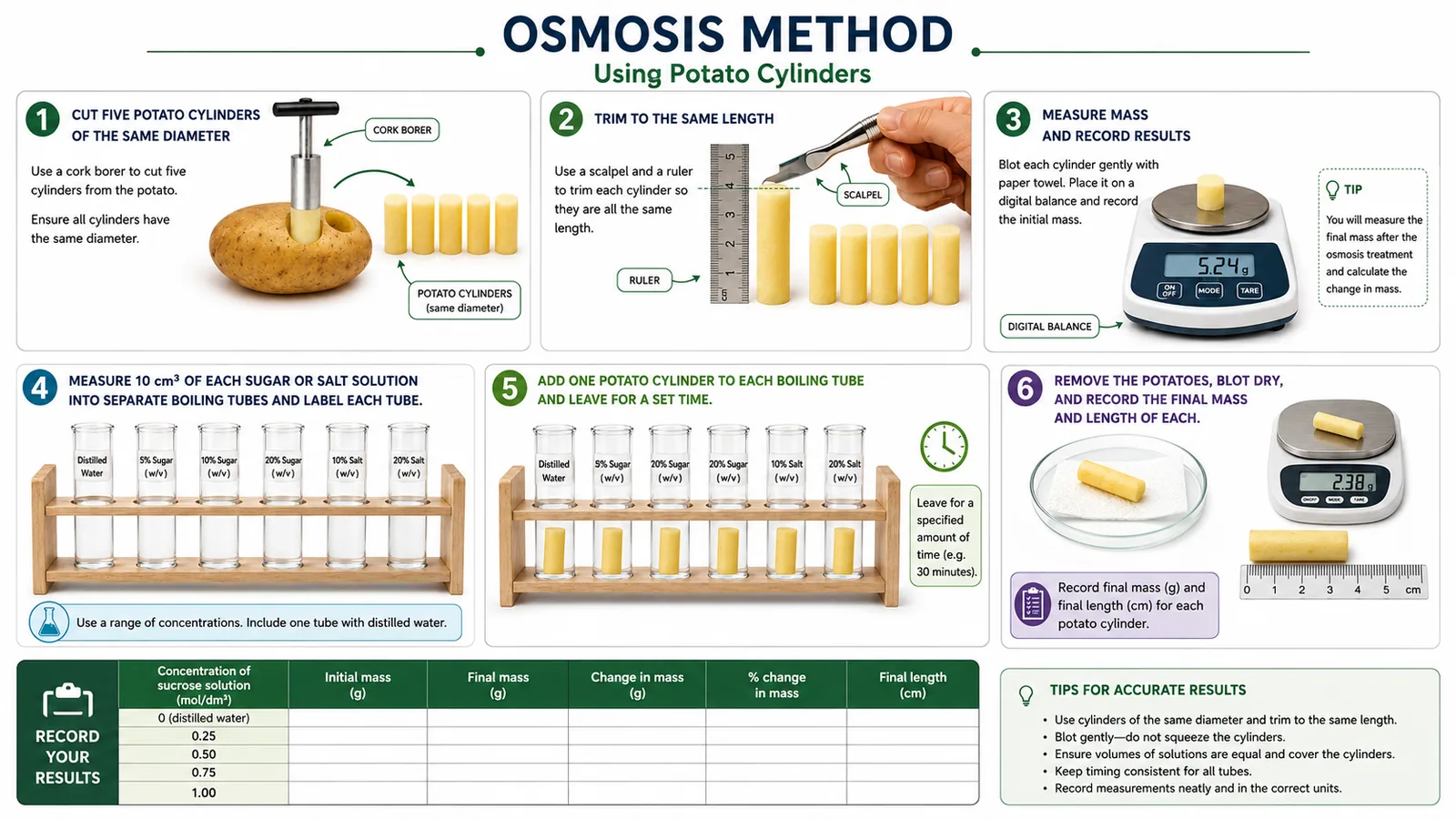


Method points:
- Percentages are used so that cylinders of slightly different starting masses can be compared fairly.
Plot percentage change against sucrose concentration. Where the line crosses zero, there is no net water movement: the sucrose concentration there matches the concentration of the potato cell contents. Above zero means water gained; below zero means water lost. Repeating each concentration and calculating a mean improves reliability.
Section 6 of 9Linking diffusion and osmosis to exam contexts


Questions often ask you to apply these ideas to unfamiliar situations.
- and why vegetables crisp up in cold water.
Remember that osmosis explains why a person should not drink seawater: the salty fluid in the gut draws water out of the body cells, making dehydration worse.
Section 7 of 9Exam-style questions





Explain why the rate of diffusion of oxygen into a muscle cell increases when the person starts to run. [3]3 marks
Respiring cells use up oxygen faster, so the oxygen concentration inside the cell falls [1]. This makes the concentration gradient between blood and cell steeper [1]. A steeper gradient means more oxygen particles move into the cell per second, so the rate of diffusion increases [1].
A potato cylinder has mass 4.0 g at the start and 4.6 g after 30 minutes in a sucrose solution. Calculate the percentage change in mass and explain what happened. [3]3 marks
Change = 4.6 - 4.0 = 0.6 g [1]. Percentage change = 0.6 / 4.0 x 100 = +15% [1]. The cylinder gained mass because water moved into the potato cells by osmosis, as the solution was more dilute than the cell contents [1].
Describe what would happen to a red blood cell placed in pure water and explain why. [3]3 marks
It would swell and burst [1]. Water moves into the cell by osmosis because the cytoplasm has a lower water concentration than the pure water [1]. Animal cells have no cell wall to resist the swelling [1].
Section 8 of 9Key terms
| Term | Meaning |
|---|---|
| Diffusion | Net movement of particles from higher to lower concentration down a concentration gradient. |
| Osmosis | Net movement of water across a partially permeable membrane from a dilute to a more concentrated solution. |
| Partially permeable membrane | A membrane that allows some substances through but not others. |
| Concentration gradient | The difference in concentration between two regions. |
| Turgid | A plant cell that is firm because it is full of water and pushing against its wall. |
| Flaccid | A plant cell that has lost water and is soft and limp. |
| Passive transport | Movement of substances without the use of energy from respiration. |
Section 9 of 9Exam technique
Marked practiceQuizzes for this lesson
Magnification Triangle & Unit Conversion
Formula: M = I / A ⇔ A = I / M ⇔ I = M × A
Units: 1 mm = 1,000 μm = 1,000,000 nm.
Rule: Convert Image size (ruler mm) to μm by ×1,000 before dividing by Actual size.