Section 1 of 9What is active transport?

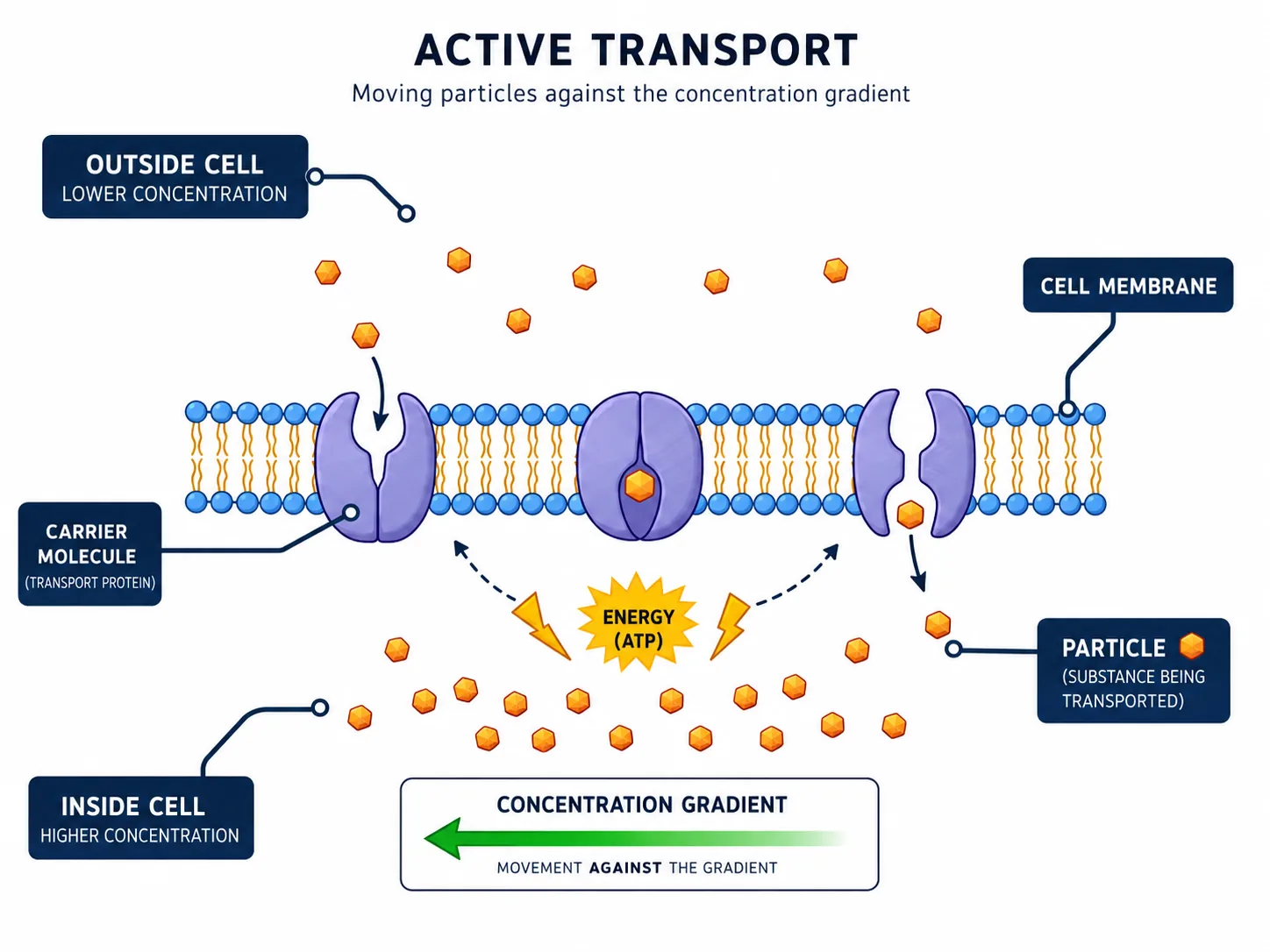

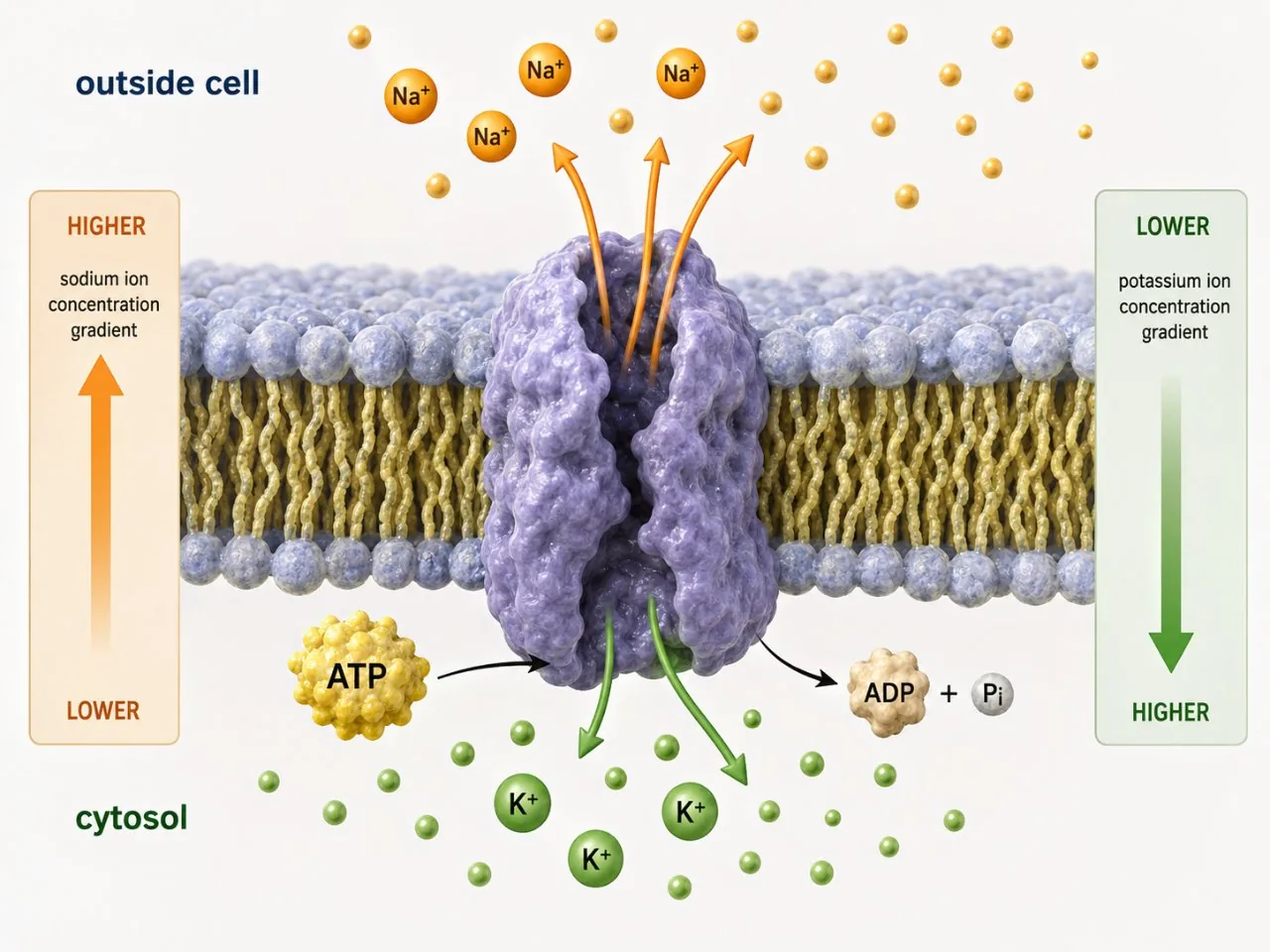

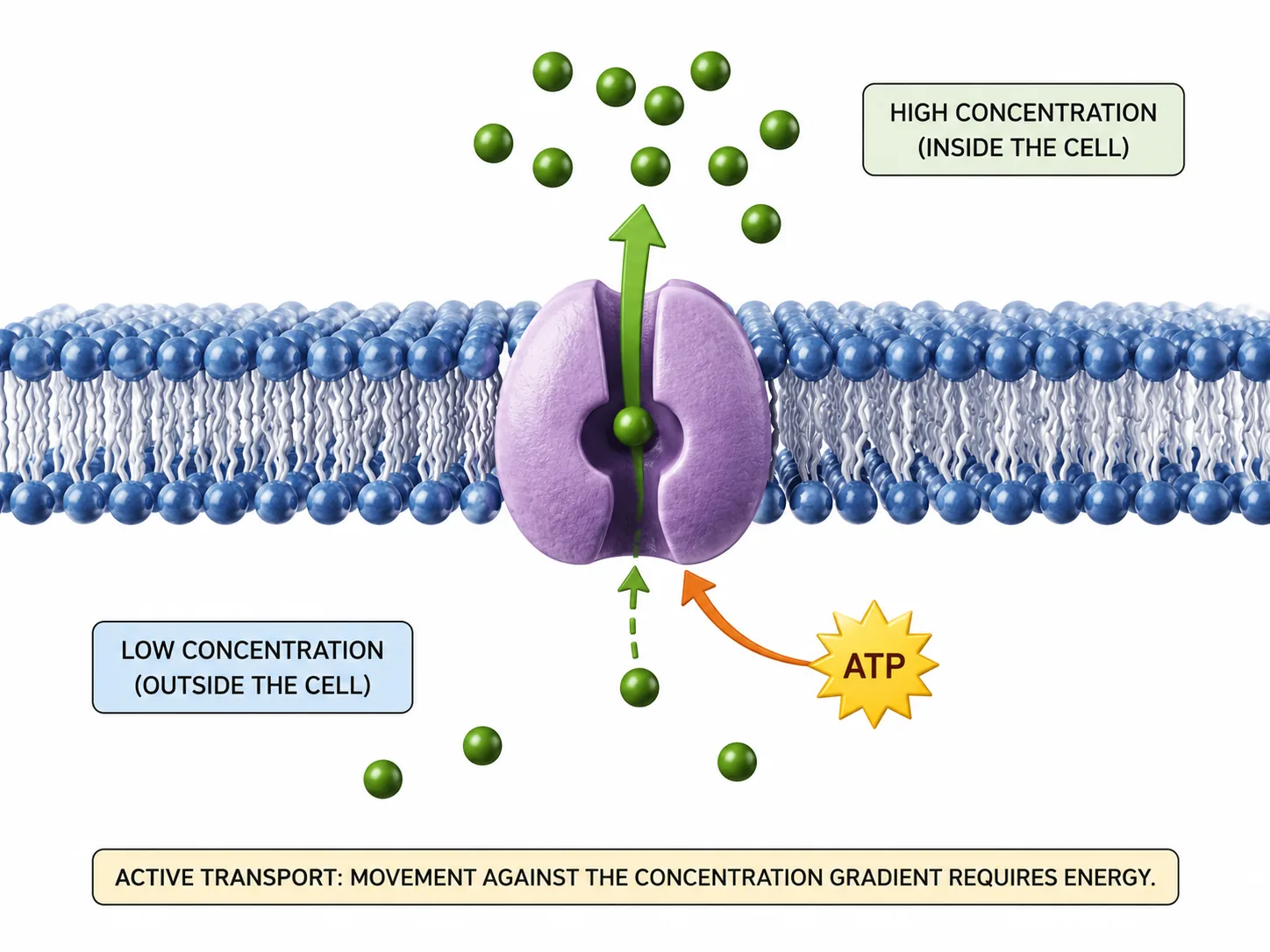
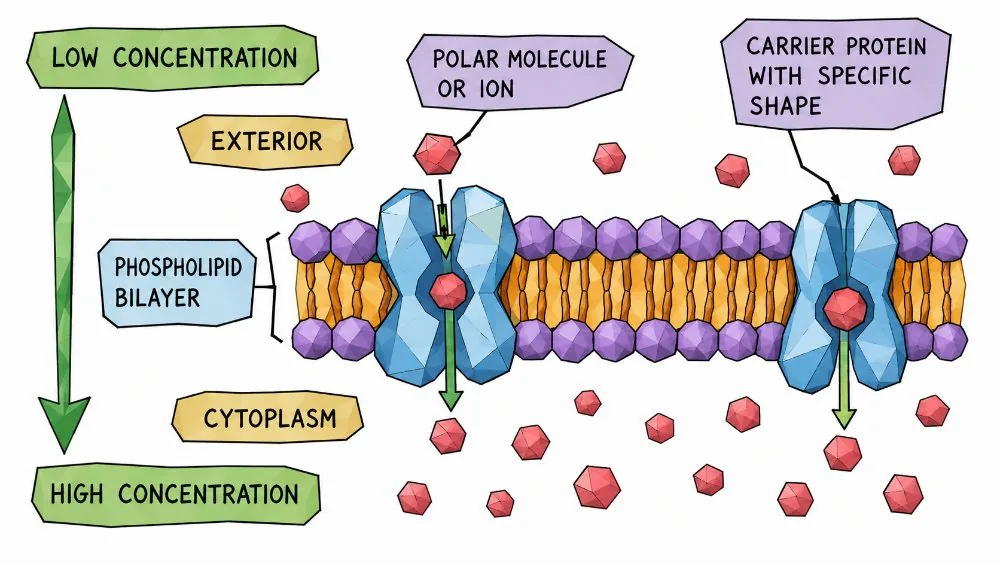
Active transport is the movement of substances across a cell membrane from a region of lower concentration to a region of higher concentration, that is, against the concentration gradient.
Diffusion and osmosis are passive and need no energy from the cell. Active transport is the opposite: it can build up a concentration inside a cell that is higher than outside.
Section 2 of 9Comparing diffusion and active transport
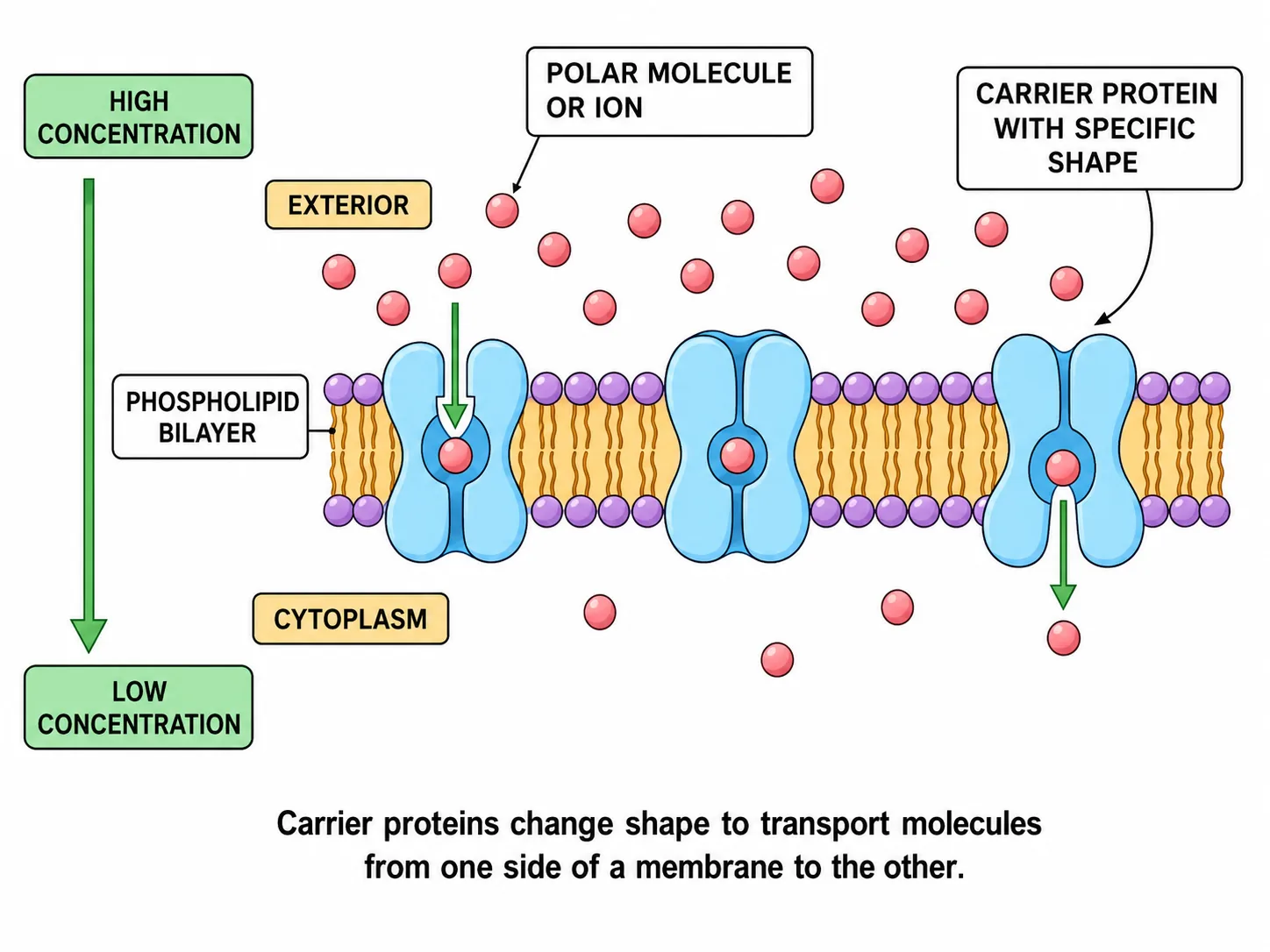


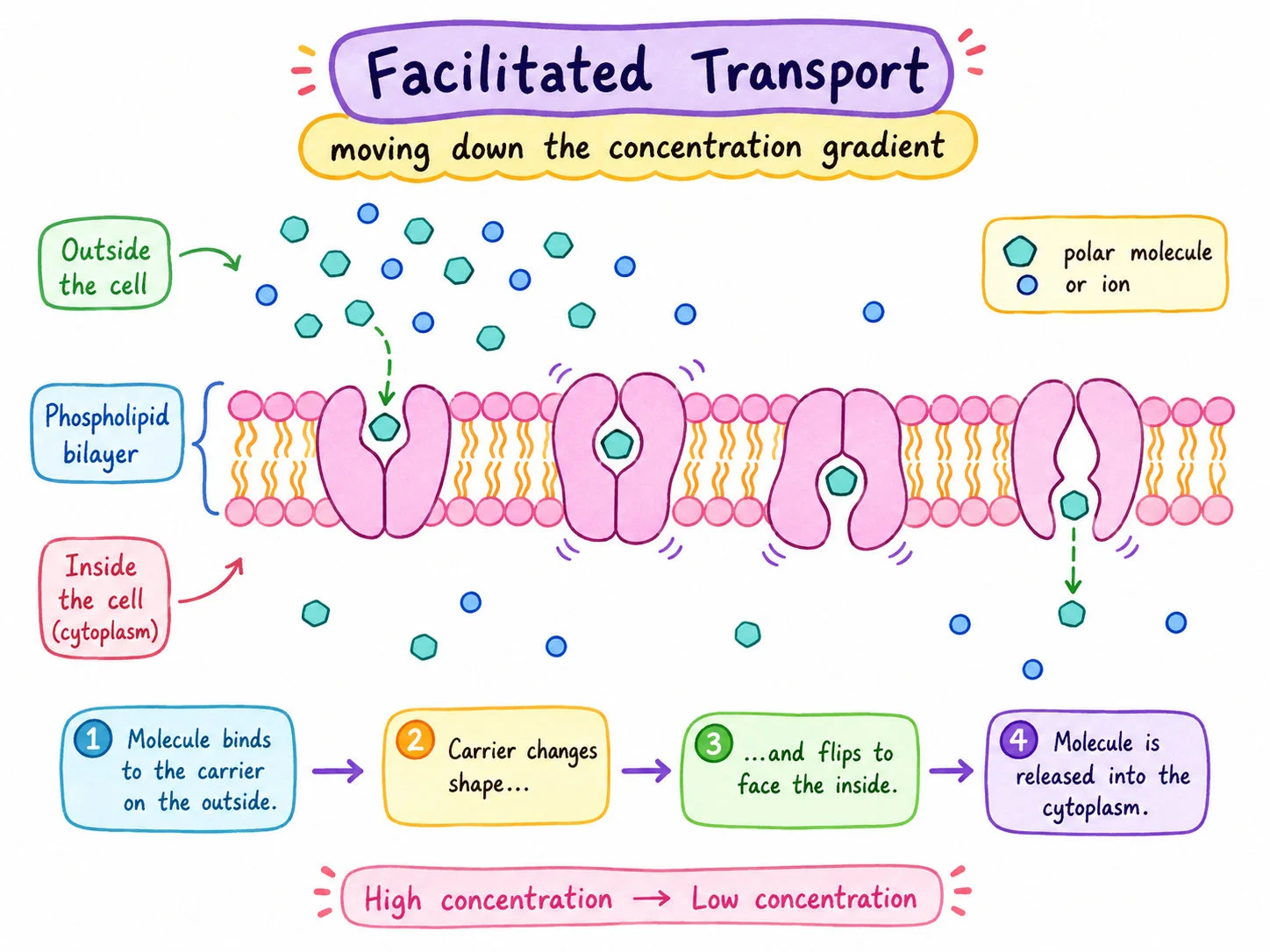
| Feature | Diffusion | Active transport |
|---|---|---|
| Direction | Down the concentration gradient | Against the concentration gradient |
| Energy from respiration | Not needed | Needed |
| Carrier proteins | Not needed for simple diffusion | Needed |
| Effect of oxygen or respiration poison | None | Slows or stops |
| Example | Oxygen into blood at alveoli | Mineral ions into root hair cells |
Section 3 of 9Active transport in plants: root hair cells


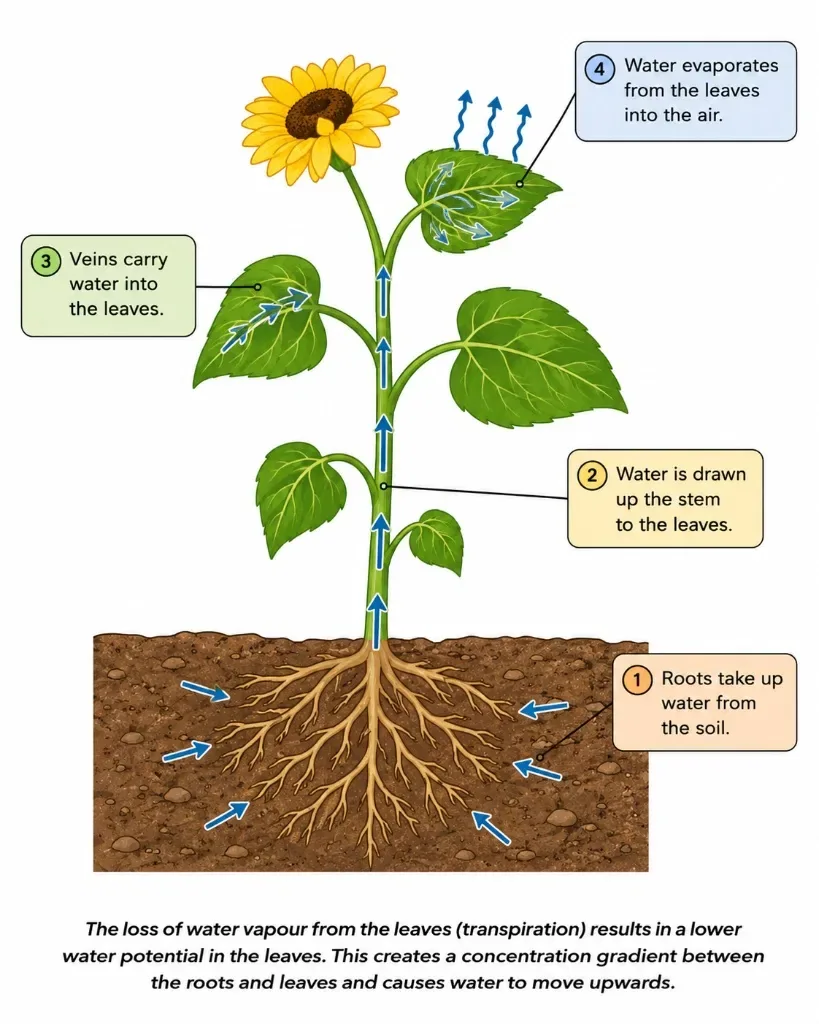

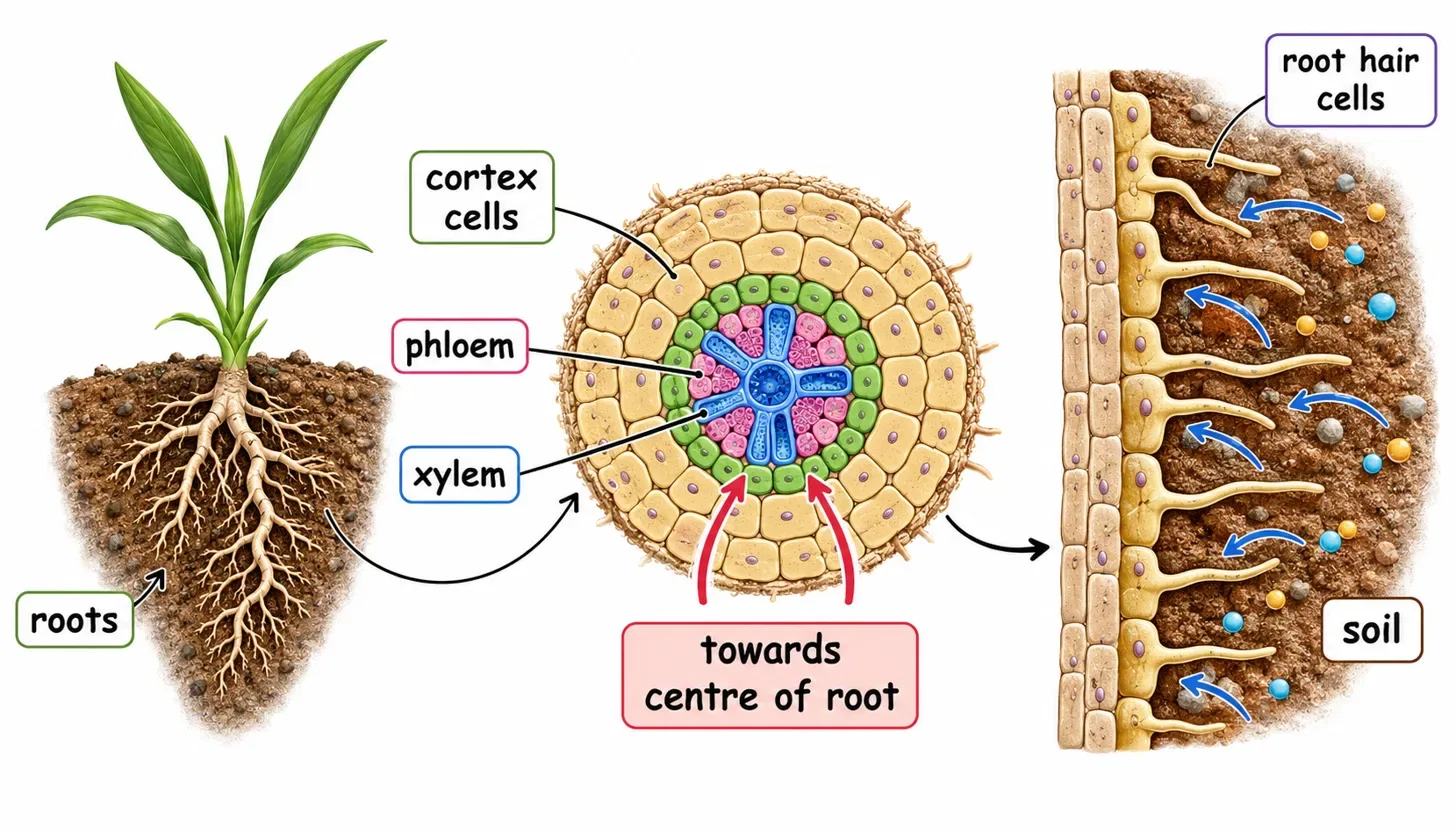
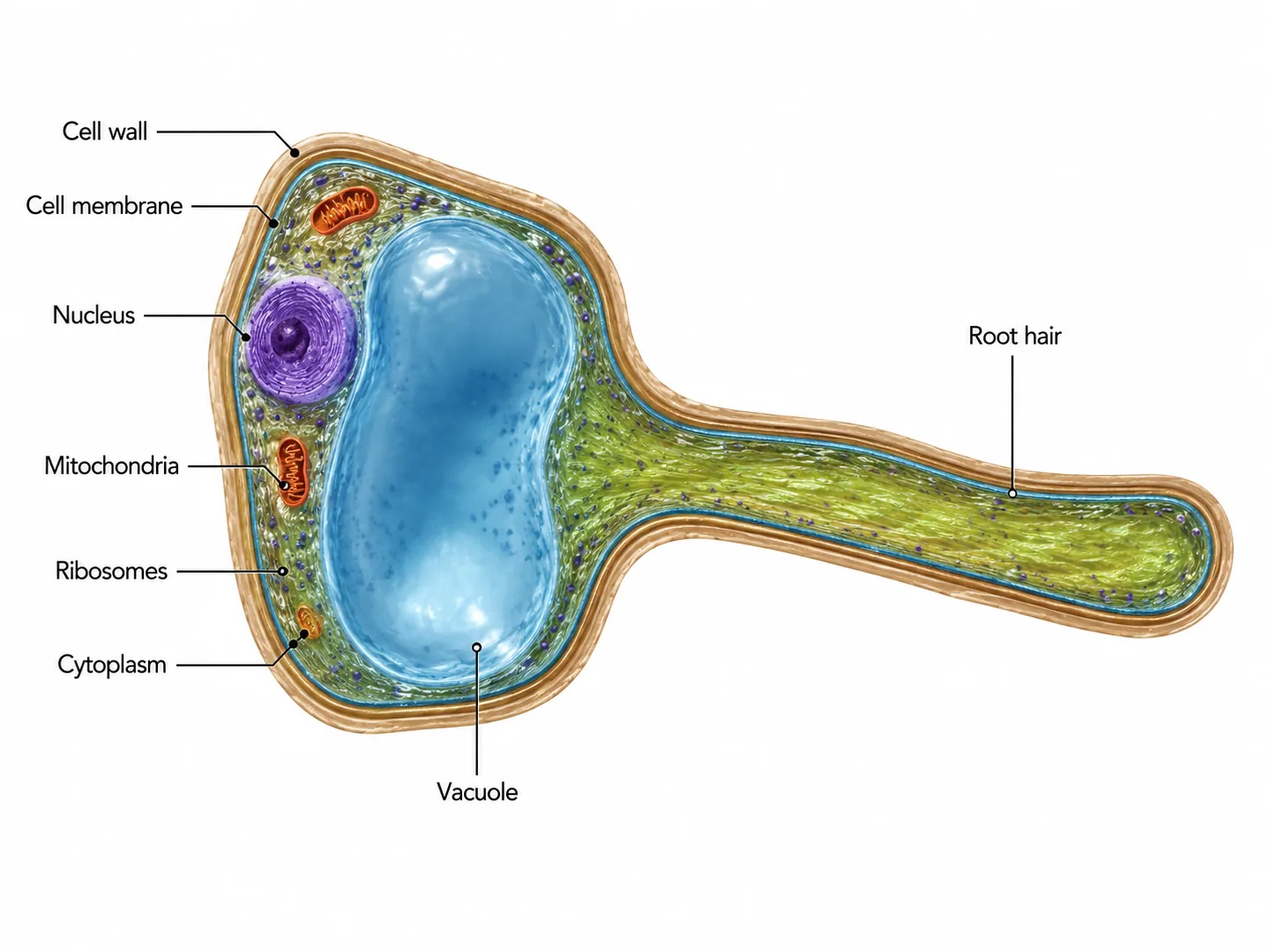
The soil water around roots contains very low concentrations of mineral ions such as nitrate, phosphate and magnesium.
Root hair cells are adapted for this: the long, thin hair extension gives a large surface area, and the cytoplasm contains many mitochondria to supply the energy.
Section 4 of 9Active transport in animals

In the small intestine, digested glucose is absorbed into the blood by diffusion when its concentration in the gut is higher than in the blood. After the meal, the gut concentration can fall below the blood concentration. Glucose is then absorbed by active transport so that none is wasted. Epithelial cells lining the villi contain many mitochondria for this reason.
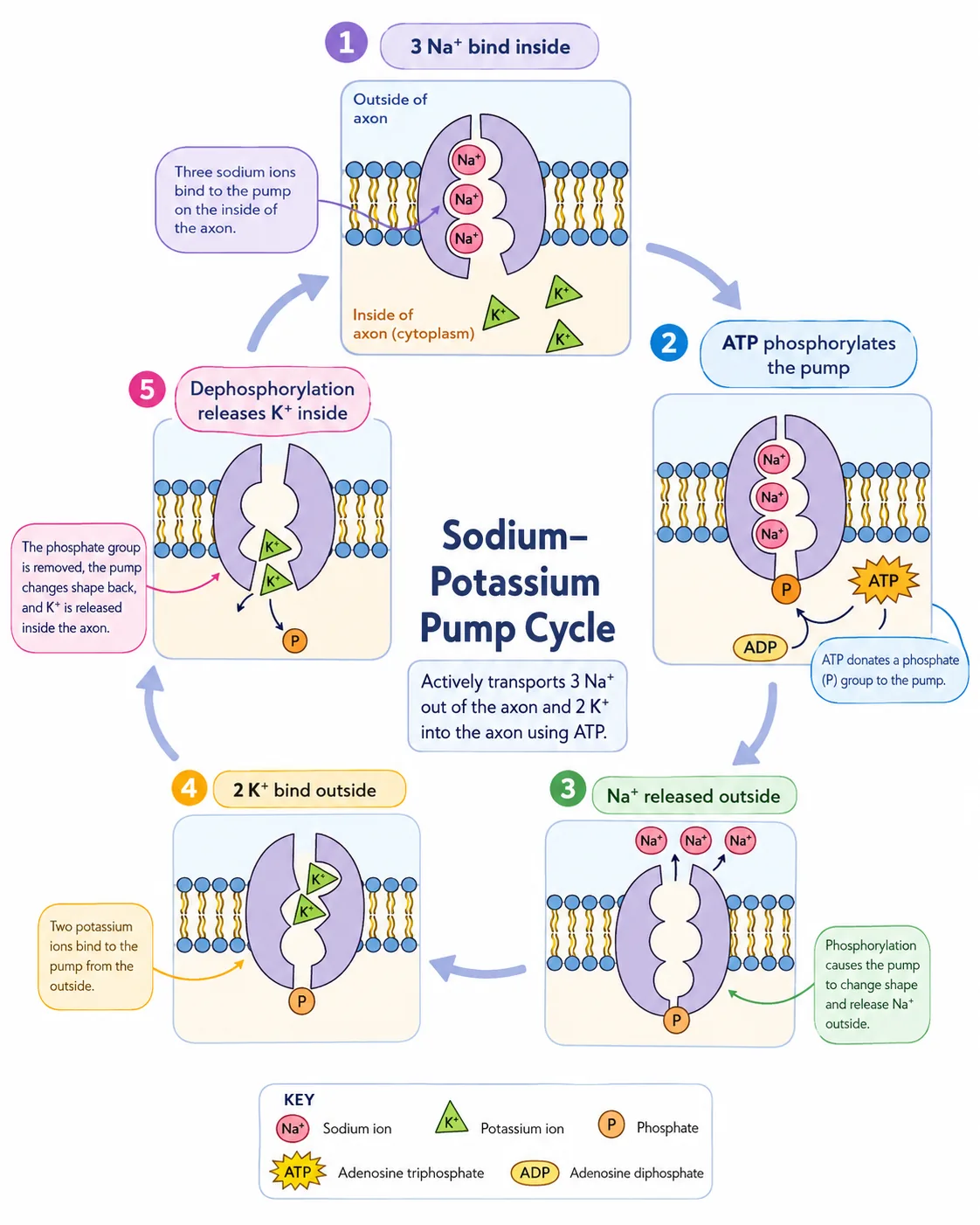
Active transport is also important in the kidney, where glucose is reabsorbed from the filtrate back into the blood, and in nerve cells, which pump sodium and potassium ions across their membranes.
Section 5 of 9Investigating and interpreting
Typical data question
- ion uptake by roots is measured at different oxygen levels, or with and without a respiration poison such as cyanide.
- If uptake falls when oxygen is removed or a poison is added, this supports the idea that ion uptake needs energy from respiration, so it is active transport.
- If uptake continues unchanged, diffusion is more likely.
Link to other topicsthe energy comes from aerobic respiration, the ions are used in photosynthesis and protein synthesis, and the transpiration stream then carries the ions up the xylem.
Section 6 of 9Why diffusion alone is not enough


A useful way to think about this topic is to ask what would happen if a cell had only passive transport.
- and a plant on poor soil would be unable to make enough protein to grow.
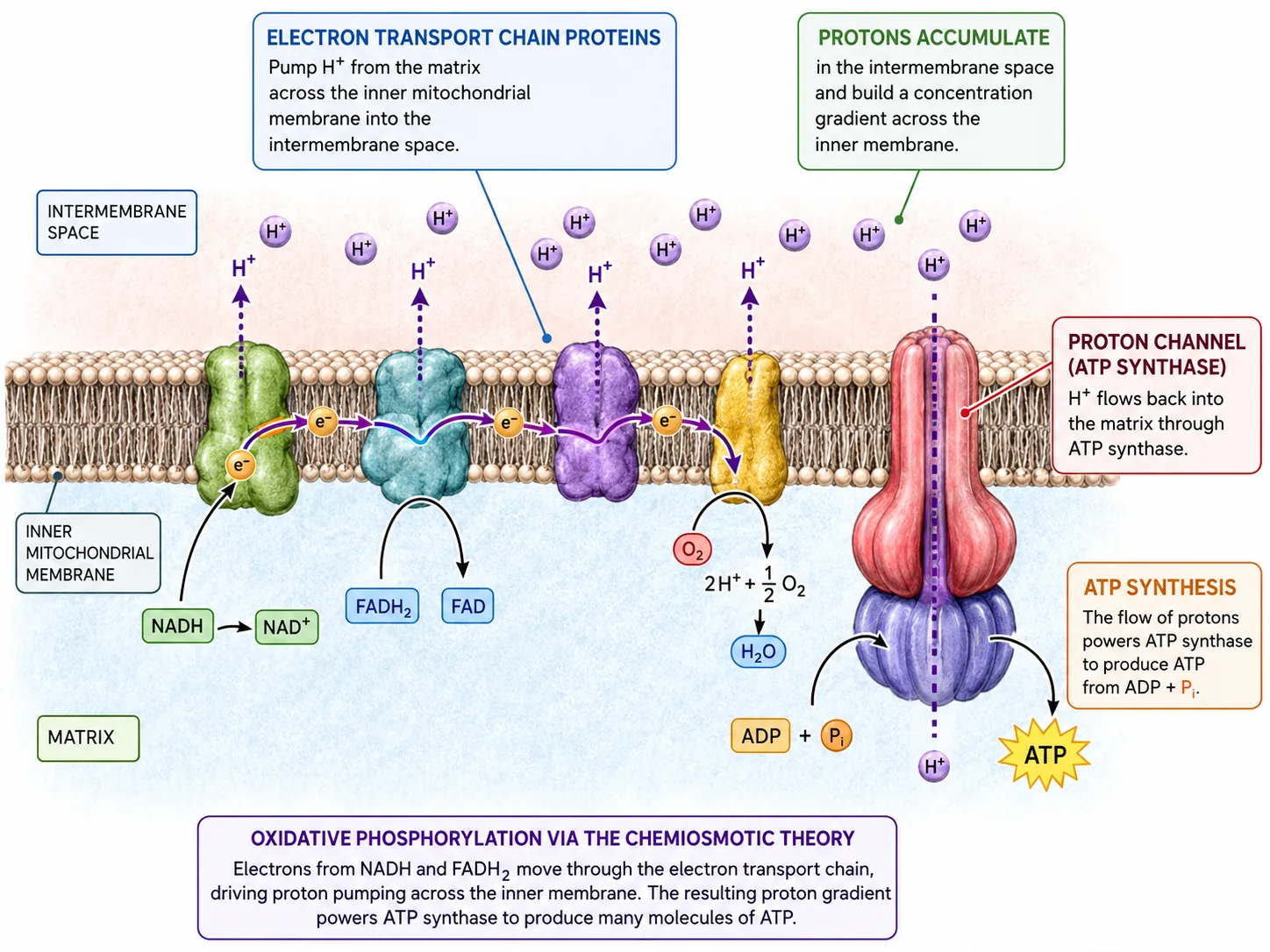
Because the process is driven by respiration, anything that reduces respiration reduces active transport.
- and poisons such as cyanide stop the electron transport chain.
When describing active transport in an answer, give three linked points: against the concentration gradient, uses energy from respiration, and uses carrier proteins.
Worked reasoningif a graph shows ion uptake rising steadily with oxygen concentration and then plateauing, the rise shows that more oxygen allows more respiration and therefore more energy for the carriers, and the plateau shows that another factor, such as the number of carrier proteins, has become limiting.
Section 7 of 9Exam-style questions




Explain why root hair cells have many mitochondria. [3]3 marks
Root hair cells take in mineral ions by active transport [1]. Active transport needs energy [1]. Mitochondria release this energy by aerobic respiration [1].
The concentration of nitrate ions is 0.02 units in soil water and 0.5 units in a root hair cell. State how nitrate enters the cell and give evidence from the data. [3]3 marks
By active transport [1]. The concentration inside is higher than outside, so the nitrate moves against the concentration gradient [1]. Diffusion could only move it from high to low, so it cannot explain the uptake; energy is required [1].
Give two differences between diffusion and active transport. [2]2 marks
Diffusion is down a concentration gradient but active transport is against it [1]. Diffusion does not need energy from respiration but active transport does [1].
Section 8 of 9Key terms
| Term | Meaning |
|---|---|
| Active transport | Movement of particles against a concentration gradient using energy from respiration. |
| Carrier protein | A membrane protein that binds a specific particle and moves it across the membrane. |
| Mitochondria | Organelles where aerobic respiration releases energy. |
| Root hair cell | A plant cell with a long extension that absorbs water and mineral ions from soil. |
| Mineral ions | Dissolved charged particles such as nitrate and magnesium that plants need. |
| Concentration gradient | A difference in concentration between two regions. |
Section 9 of 9Exam technique
Marked practiceQuizzes for this lesson
Magnification Triangle & Unit Conversion
Formula: M = I / A ⇔ A = I / M ⇔ I = M × A
Units: 1 mm = 1,000 μm = 1,000,000 nm.
Rule: Convert Image size (ruler mm) to μm by ×1,000 before dividing by Actual size.