2.2.1Scaling Up
Surface Area: Volume Ratio and Transport
5 min read 9 parts Lesson 8 of 16 Unit quiz
Section 1 of 9Exchange and size

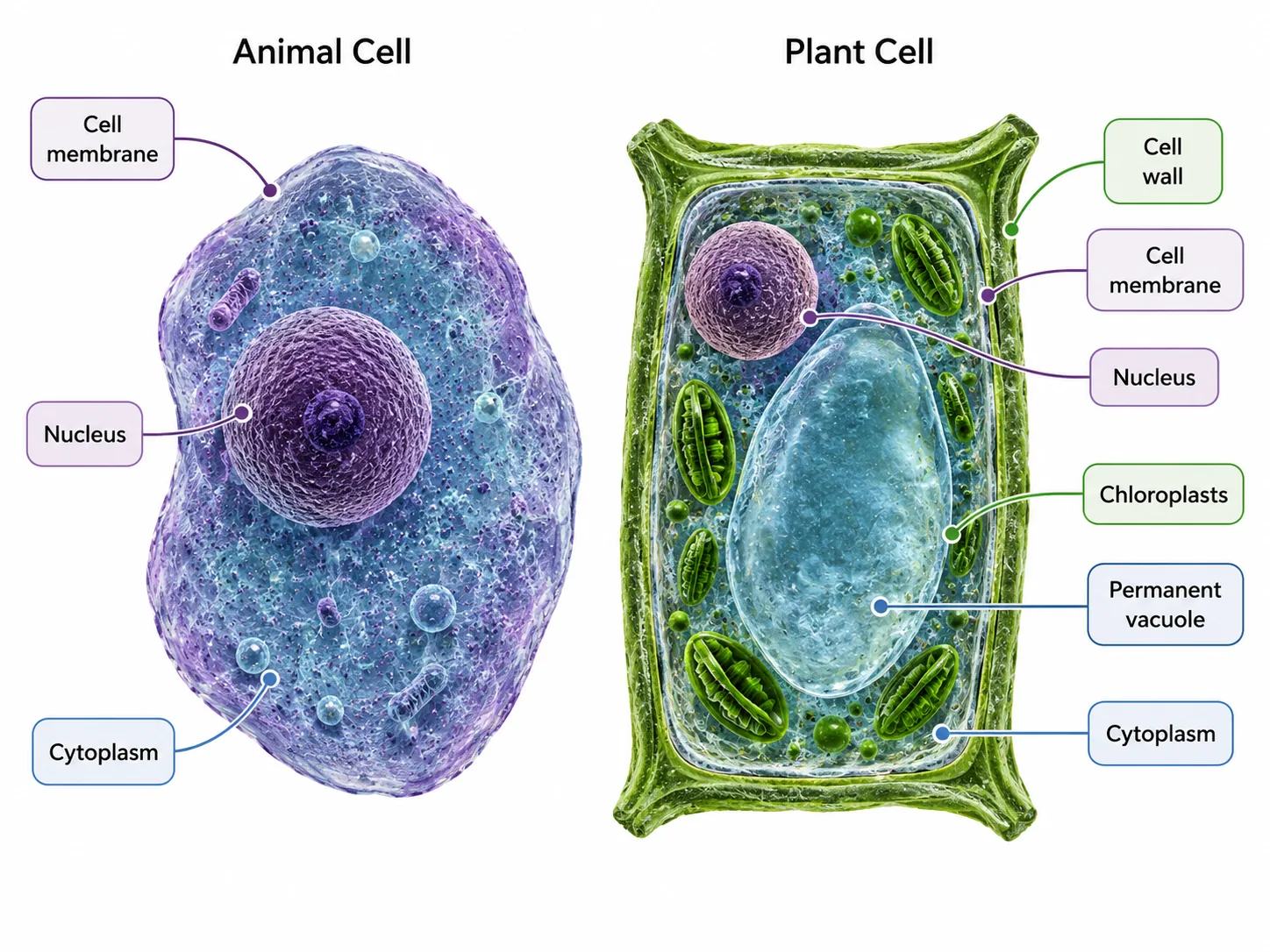
Every living cell must exchange substances with its surroundings: oxygen and nutrients in, carbon dioxide and wastes out.
- because substances can diffuse across the cell surface membrane to reach all parts of the cell quickly.
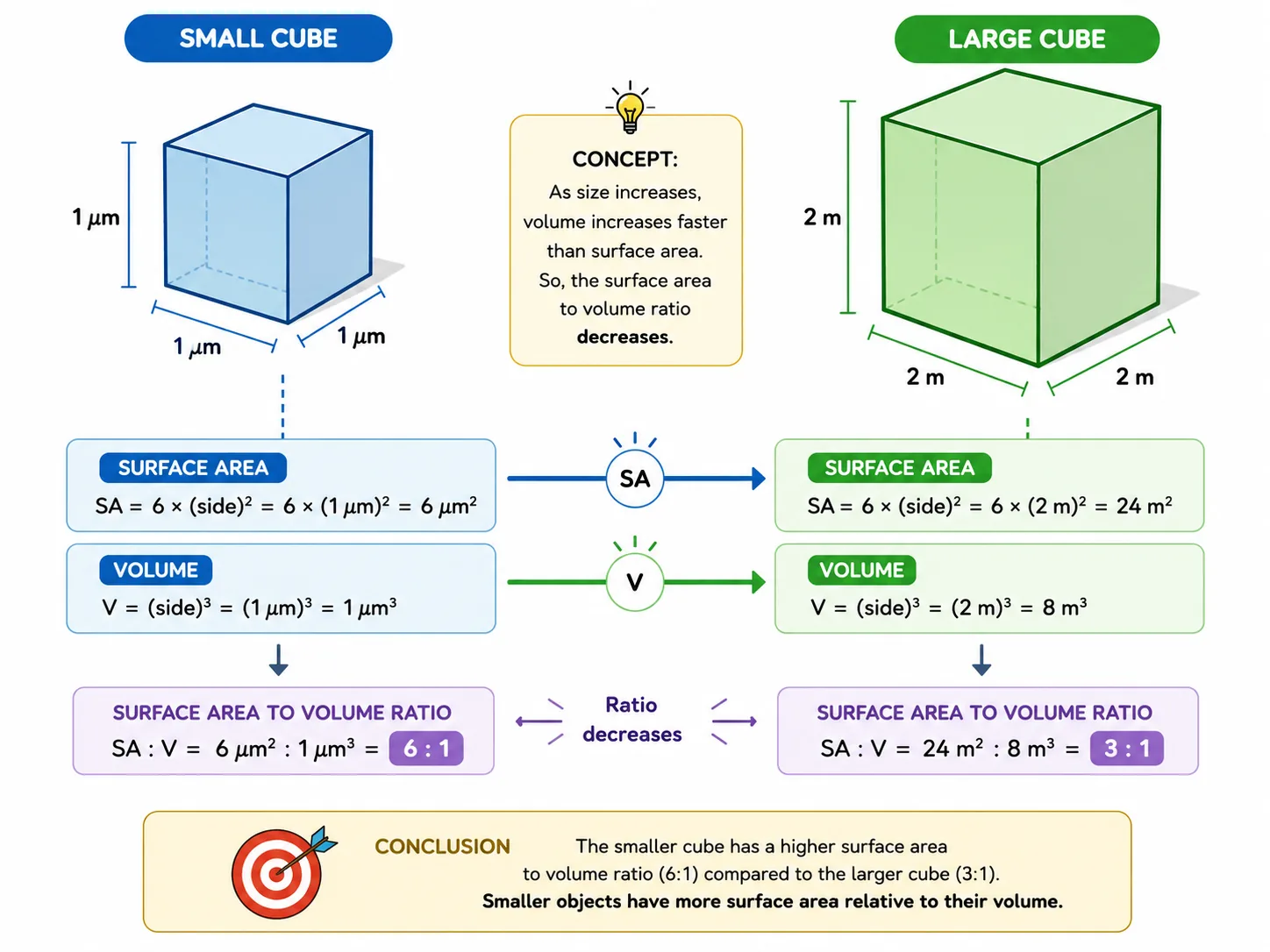
The key idea is the surface area to volume ratio (SA:V). As an organism gets bigger its volume increases faster than its surface area, so the ratio gets smaller.
Section 2 of 9Calculating SA:V

For a cube of side length L: surface area = 6 x L x L and volume = L x L x L. Worked comparison:
| Side length | Surface area | Volume | SA:V ratio |
|---|---|---|---|
| 1 cm | 6 cm2 | 1 cm3 | 6 : 1 |
| 2 cm | 24 cm2 | 8 cm3 | 3 : 1 |
| 3 cm | 54 cm2 | 27 cm3 | 2 : 1 |
The cube that is three times longer has a ratio only a third as large. To simplify a ratio divide both numbers by the volume, giving a figure such as 6 : 1. A larger ratio means a greater area of surface for each unit of volume that needs supplying.
Section 3 of 9Why large organisms need special systems
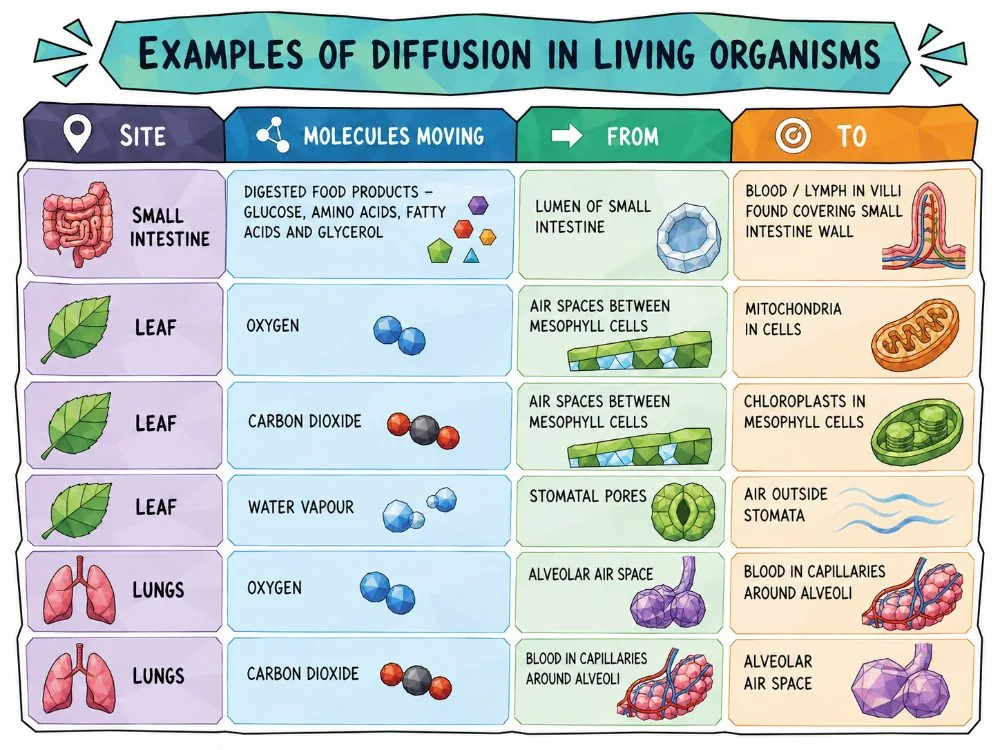
A multicellular organism has a small SA:V, a long diffusion distance and a high demand for oxygen and food because many cells are respiring. Diffusion across the outer surface cannot meet this demand. Large organisms therefore have two features:
- such as alveoli in the lungs, villi in the small intestine, gills in fish and root hairs in plants.
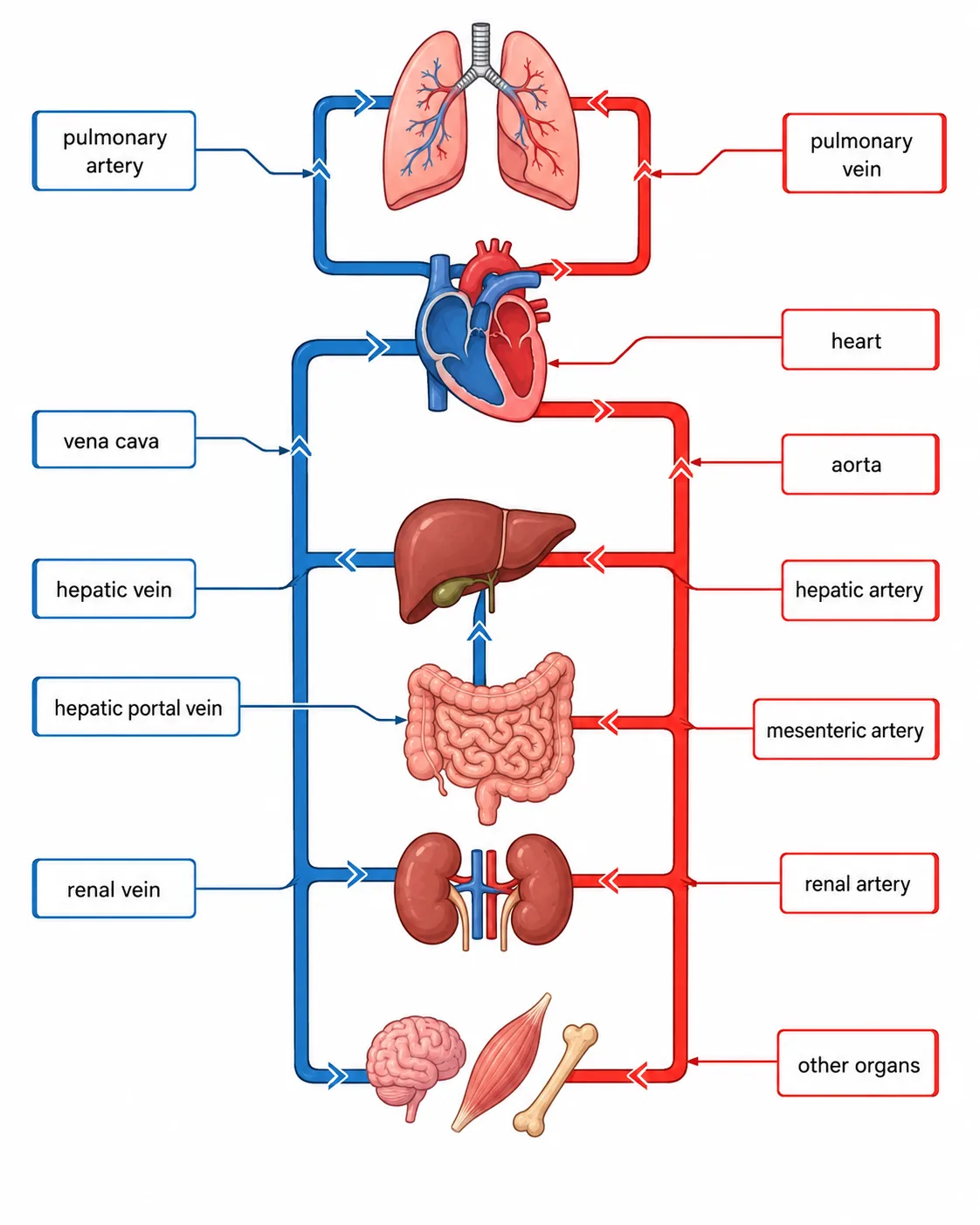
- such as the circulatory system in animals and xylem and phloem in plants.
Flatworms and other flat organisms can manage without these because their thin, flat shape keeps the SA:V high and the diffusion distance short.
Section 4 of 9Adaptations of exchange surfaces


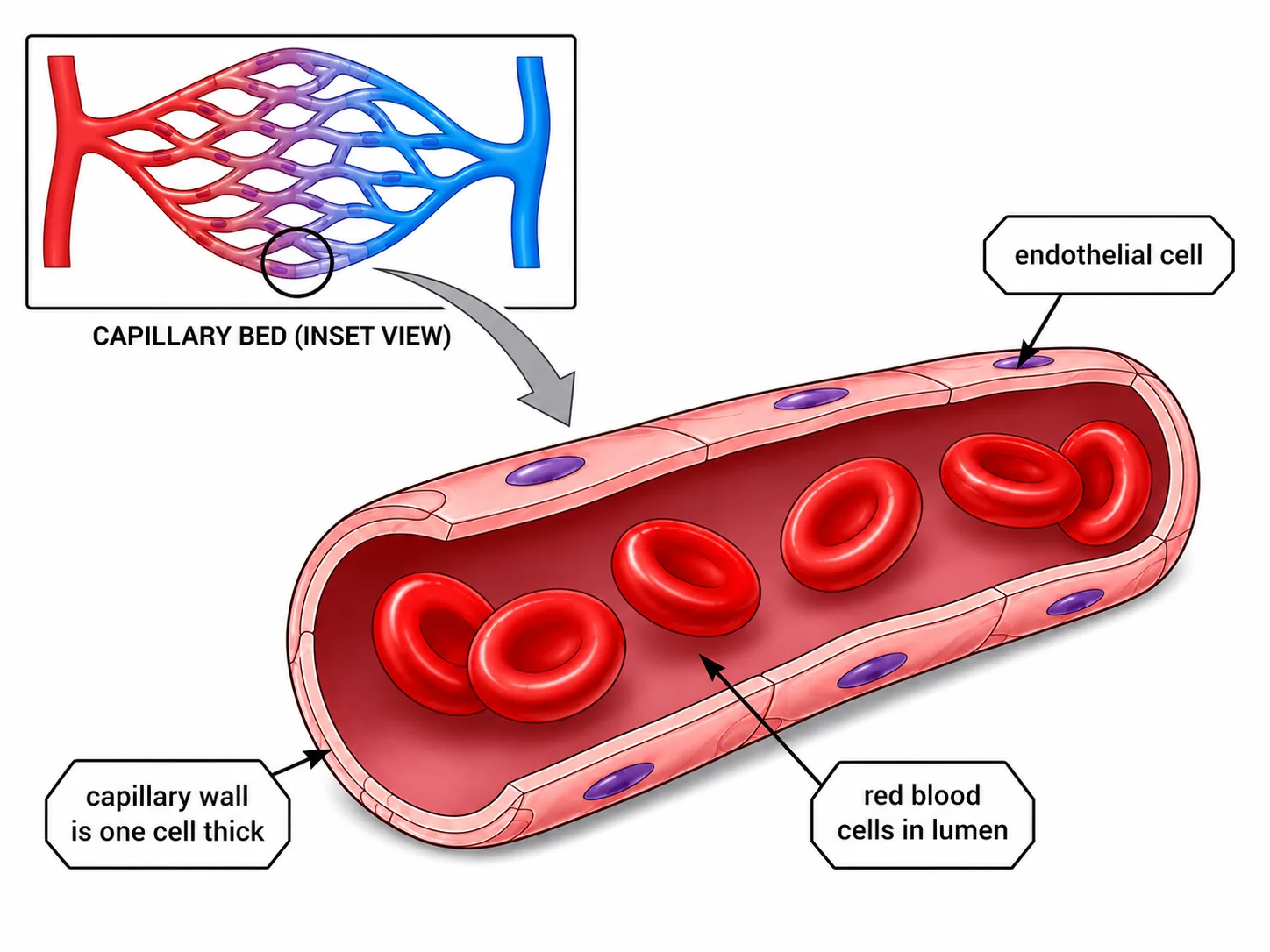
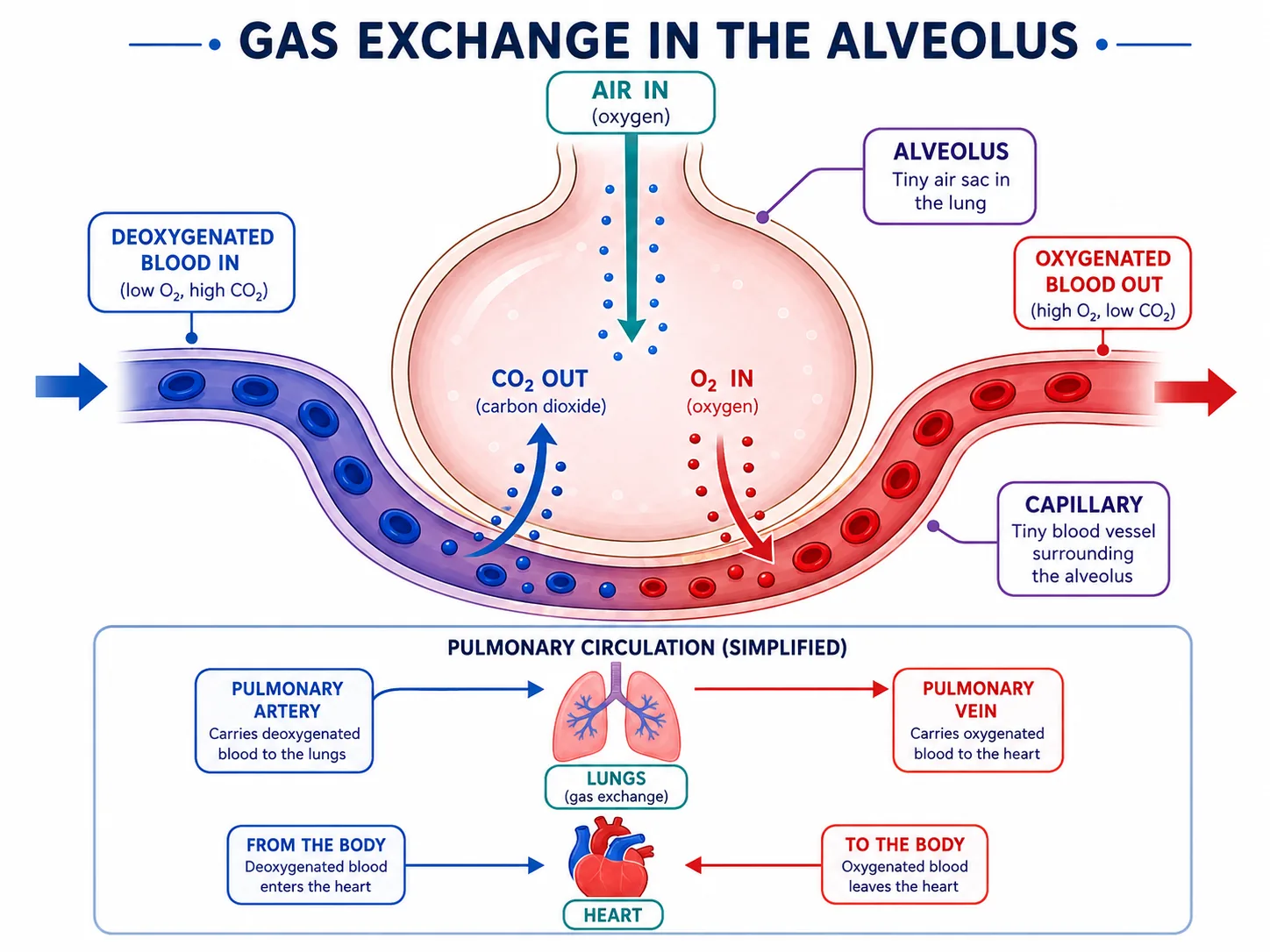
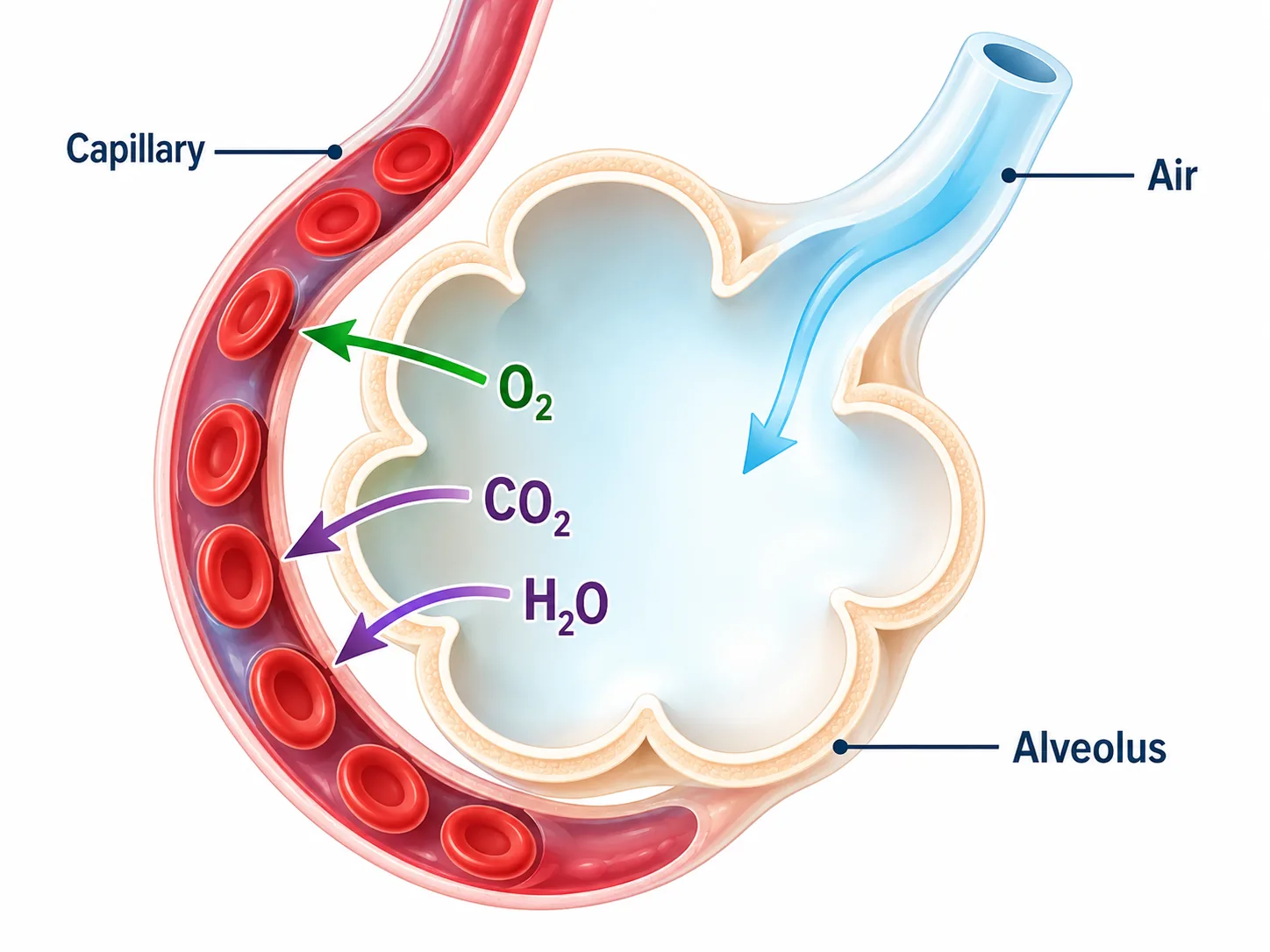
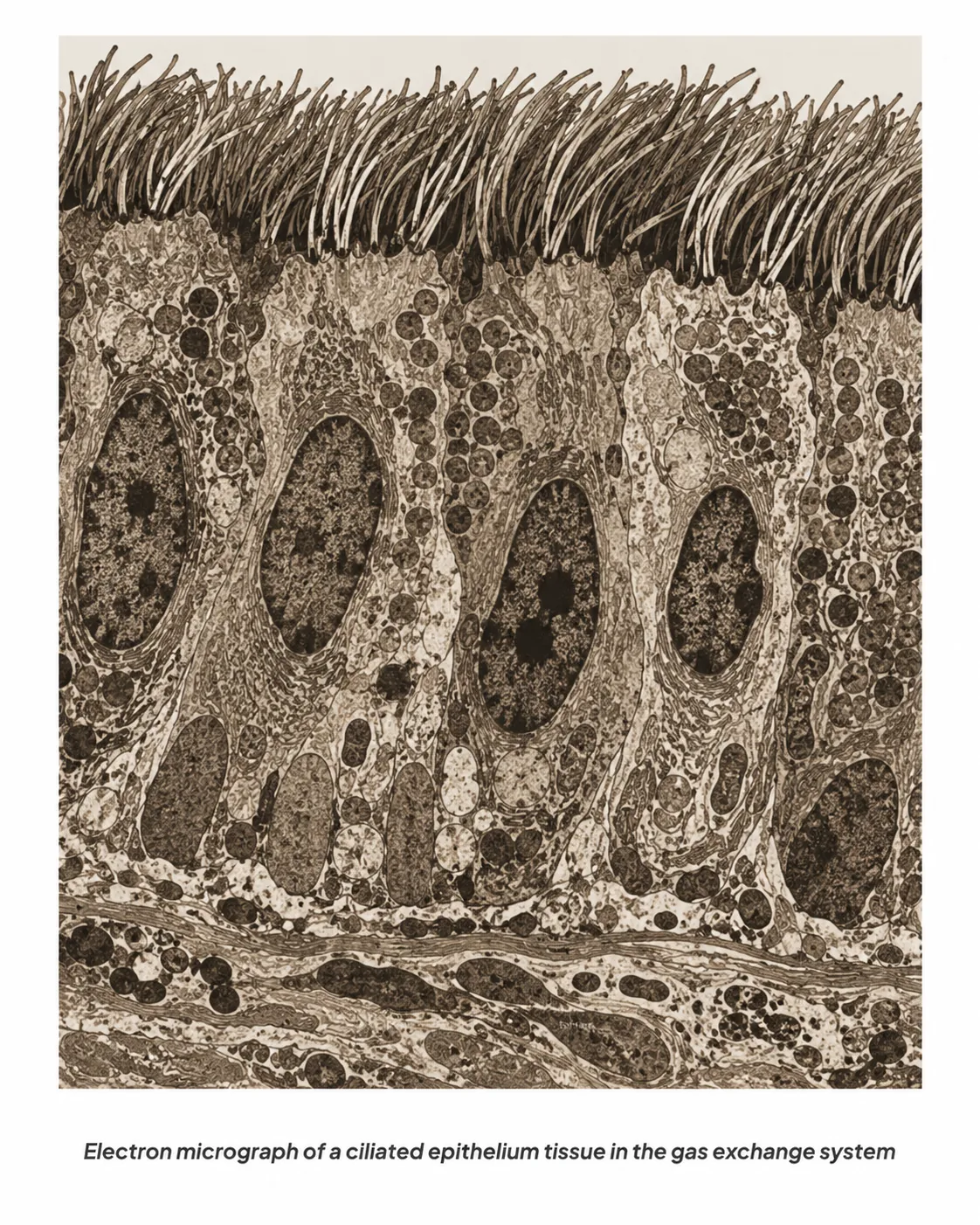
An efficient exchange surface has a large surface area (folding or many small units), a thin membrane (often one cell thick) to make the diffusion distance short, a good blood supply to carry substances away and keep the concentration gradient steep, and sometimes ventilation to bring fresh air or water to the surface.
Section 5 of 9Applying SA:V to animals and plants

SA:V helps to explain body shape.
This topic links directly to gas exchange, digestion, and the circulatory system, which together keep cells supplied.
Section 6 of 9Worked reasoning and further examples
Consider two different blocks of agar jelly, one with side 1 cm and one with side 3 cm, placed in dilute acid.
- and why large organisms are built from many small cells rather than being one giant cell.
Shape also matters, not only size.
- increasing the surface area without increasing the volume much.
Section 7 of 9Exam-style questions





Calculate the SA:V ratio of a cube with sides of 4 cm. [3]3 marks
Surface area = 6 x 4 x 4 = 96 cm2 [1]. Volume = 4 x 4 x 4 = 64 cm3 [1]. Ratio = 96 : 64 = 1.5 : 1 [1].
Explain why a large animal needs a circulatory system but a single-celled organism does not. [3]3 marks
A single-celled organism has a large SA:V ratio and a short diffusion distance, so diffusion across the surface supplies all its needs [1]. A large animal has a small SA:V and many cells deep inside the body [1], so diffusion would be too slow and a transport system is needed to carry oxygen and nutrients to cells [1].
Give two features of the alveoli that make gas exchange efficient. [2]2 marks
Walls only one cell thick give a short diffusion distance [1]; a rich blood supply of capillaries maintains a steep concentration gradient [1]. (Also acceptable: many alveoli give a large surface area.)
Section 8 of 9Key terms
| Term | Meaning |
|---|---|
| Surface area to volume ratio | The surface area of an object divided by its volume; falls as size increases. |
| Diffusion distance | How far particles have to travel to cross an exchange surface or reach a cell. |
| Exchange surface | A specialised area where substances move between an organism and its surroundings. |
| Alveolus | A tiny air sac in the lung where gas exchange happens. |
| Villus | A finger-like projection in the small intestine that increases the area for absorption. |
| Multicellular | Made of many cells. |
| Concentration gradient | The difference in concentration across an exchange surface. |