2.2.6Scaling Up
Transport of Water and Mineral Ions in Plants
5 min read 9 parts Lesson 13 of 16 1 quiz
Section 1 of 9Why plants need transport

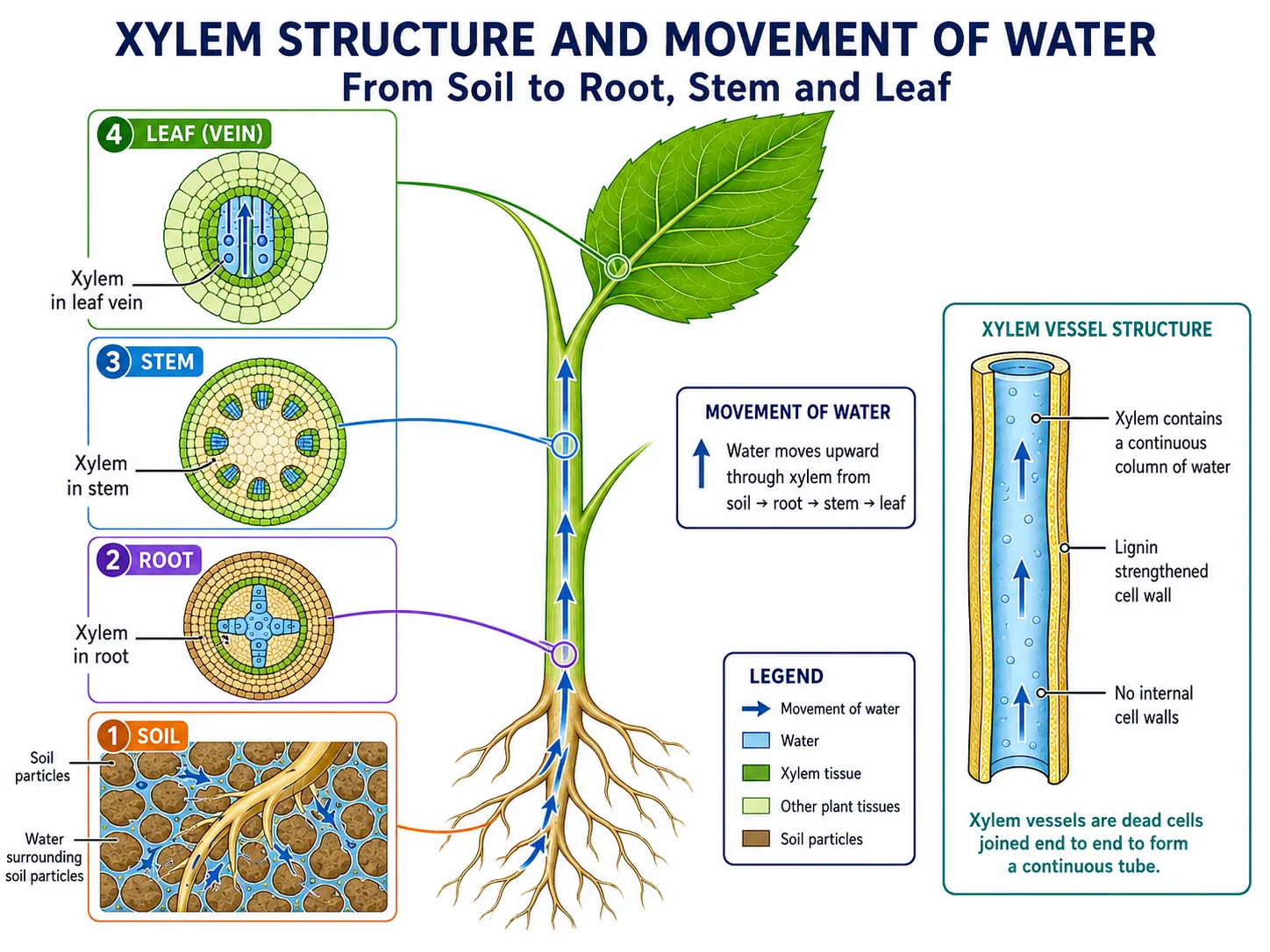

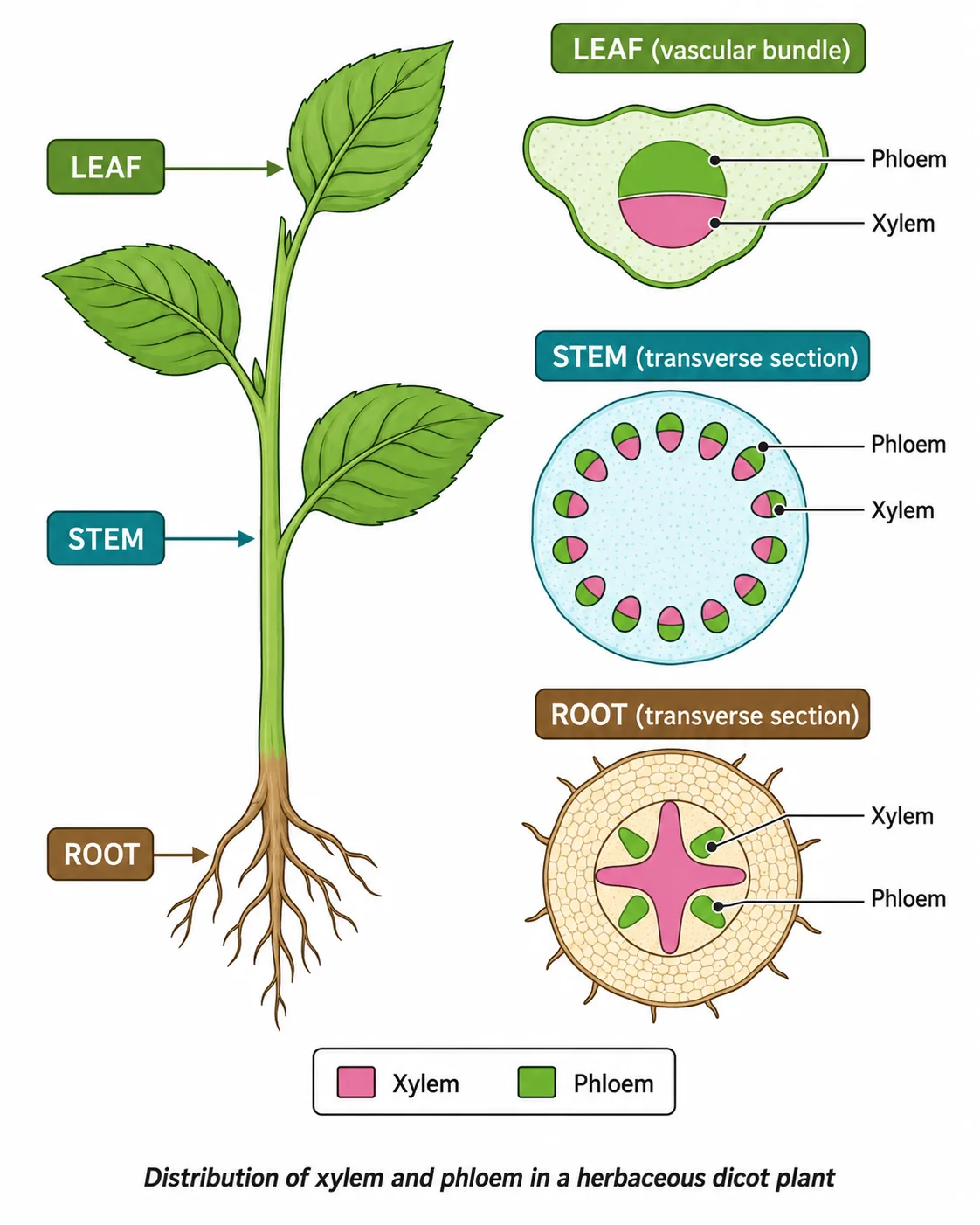



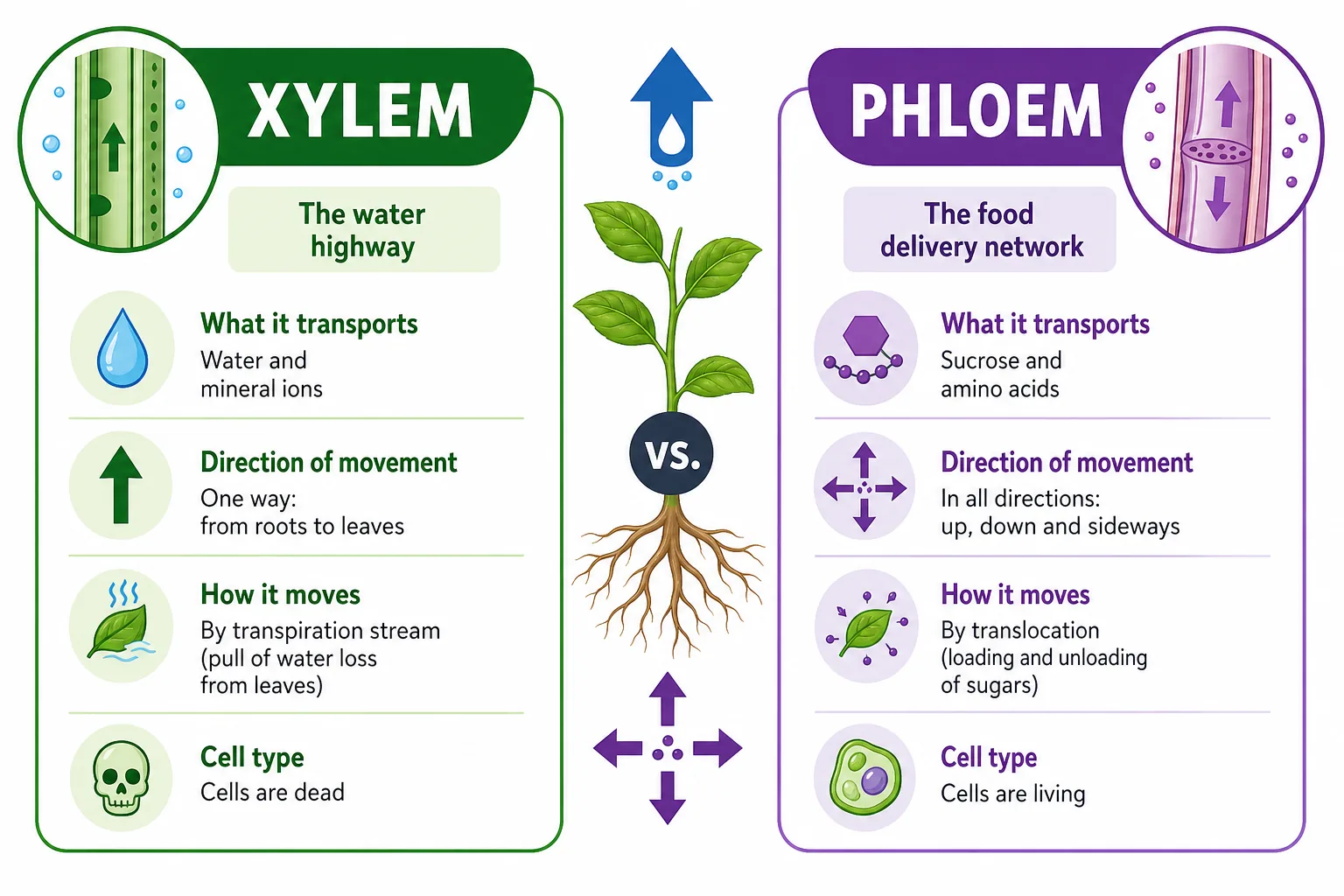
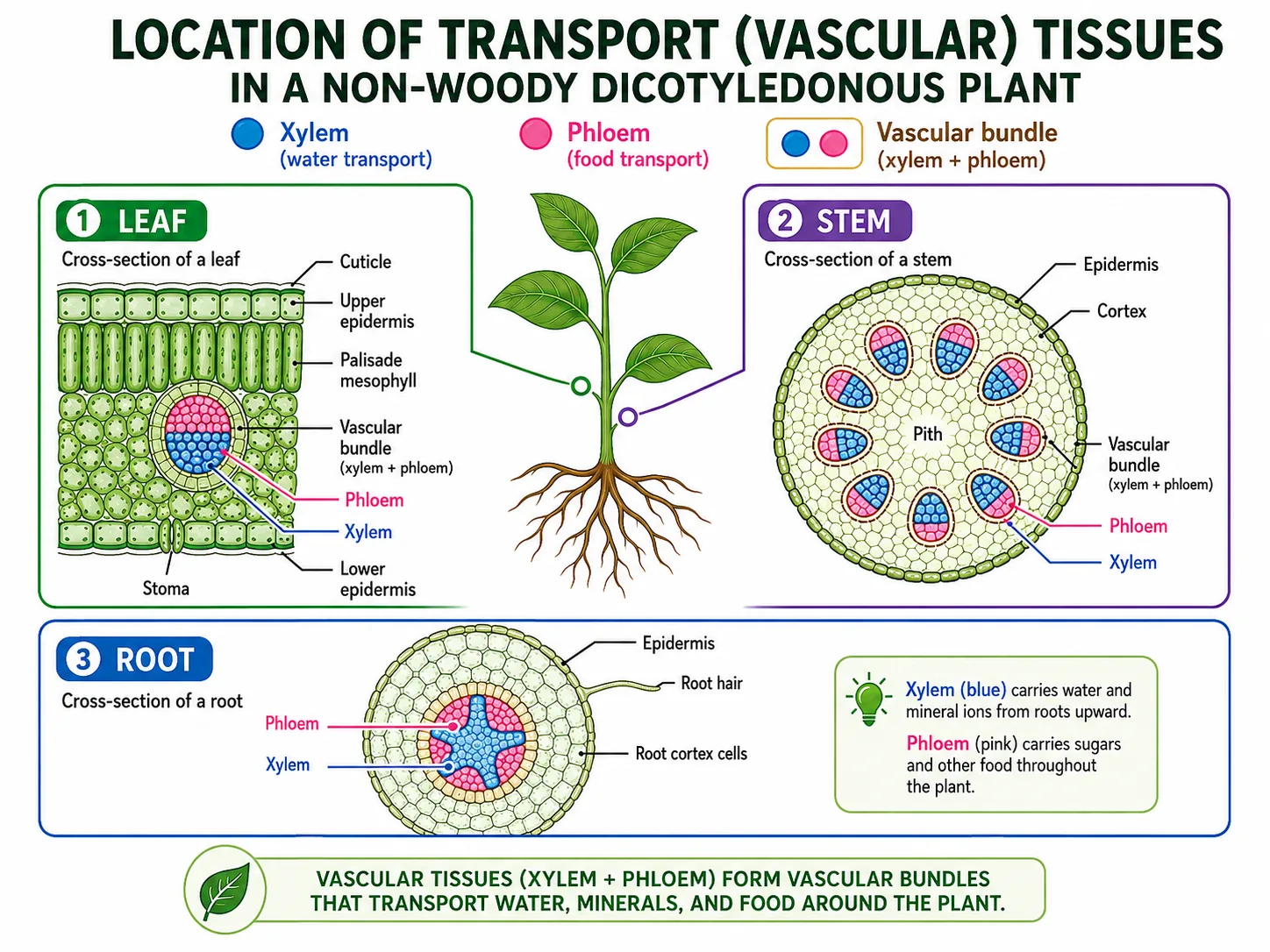
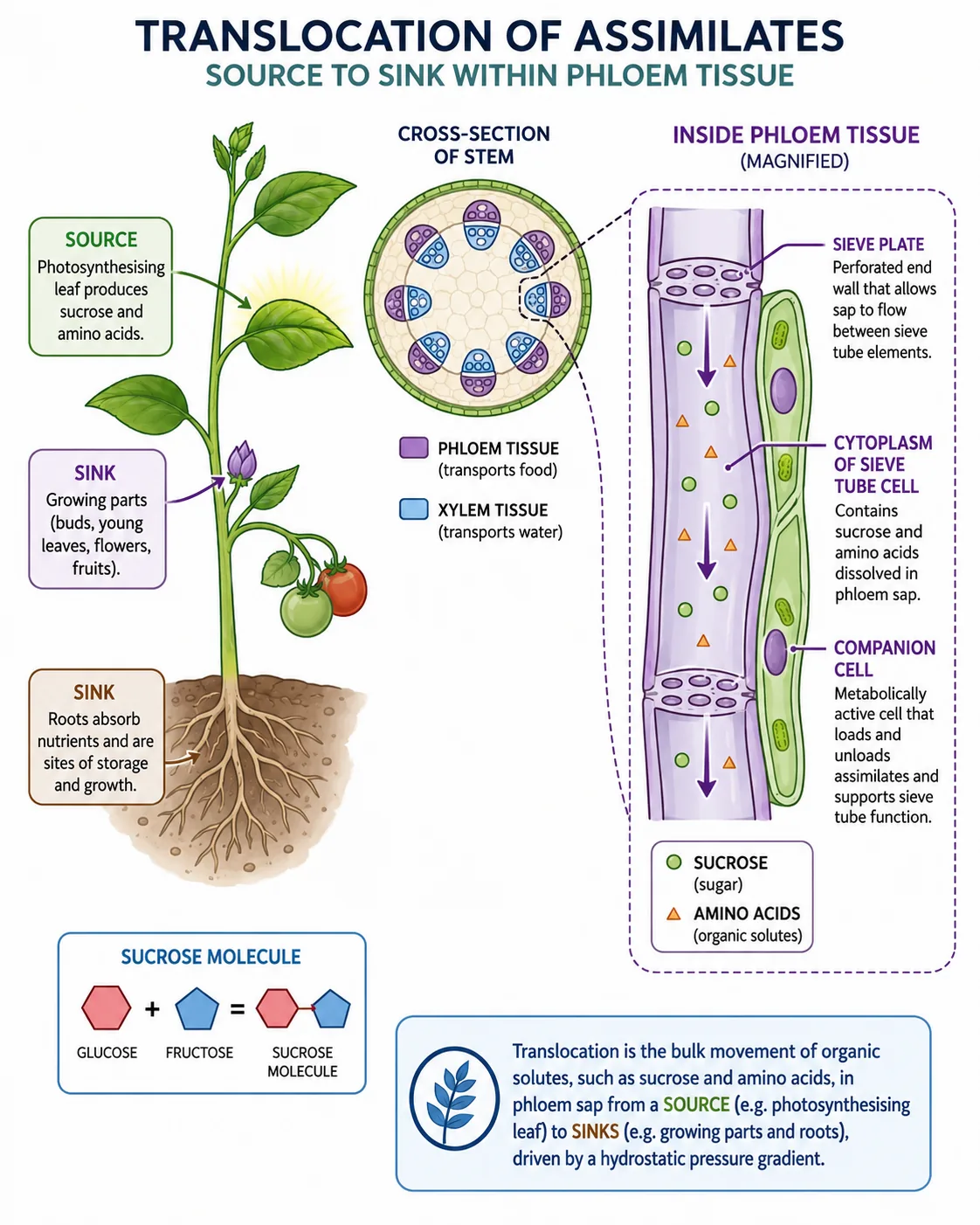
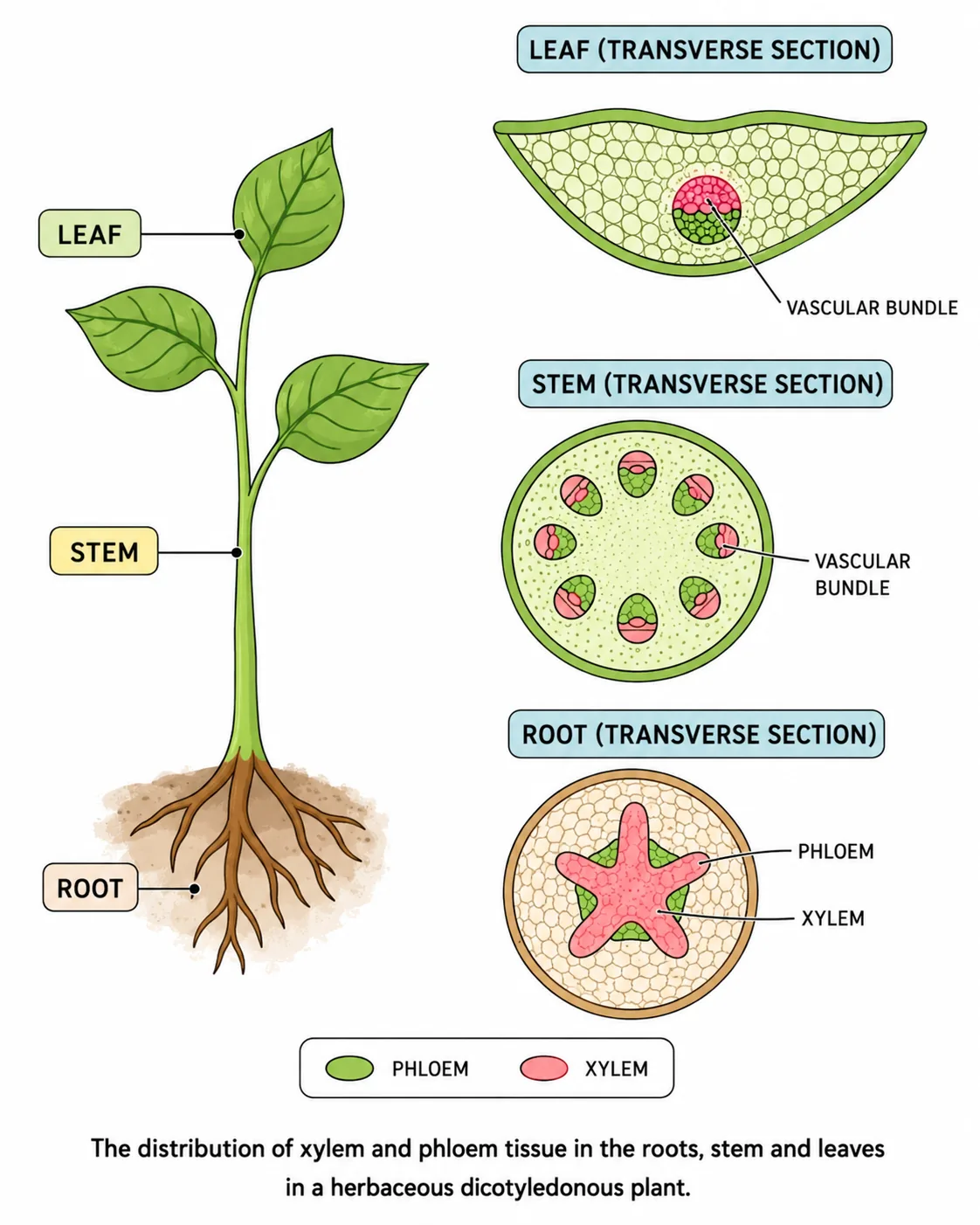
Plants must obtain water and mineral ions from the soil and carbon dioxide from the air, and they make sugars in the leaves. These substances need to be moved over long distances, so plants have two types of transport tissue grouped in vascular bundles: xylem, which carries water and minerals up from roots, and phloem, which carries sugars to where they are needed.
Section 2 of 9Root hair cells and entry of water

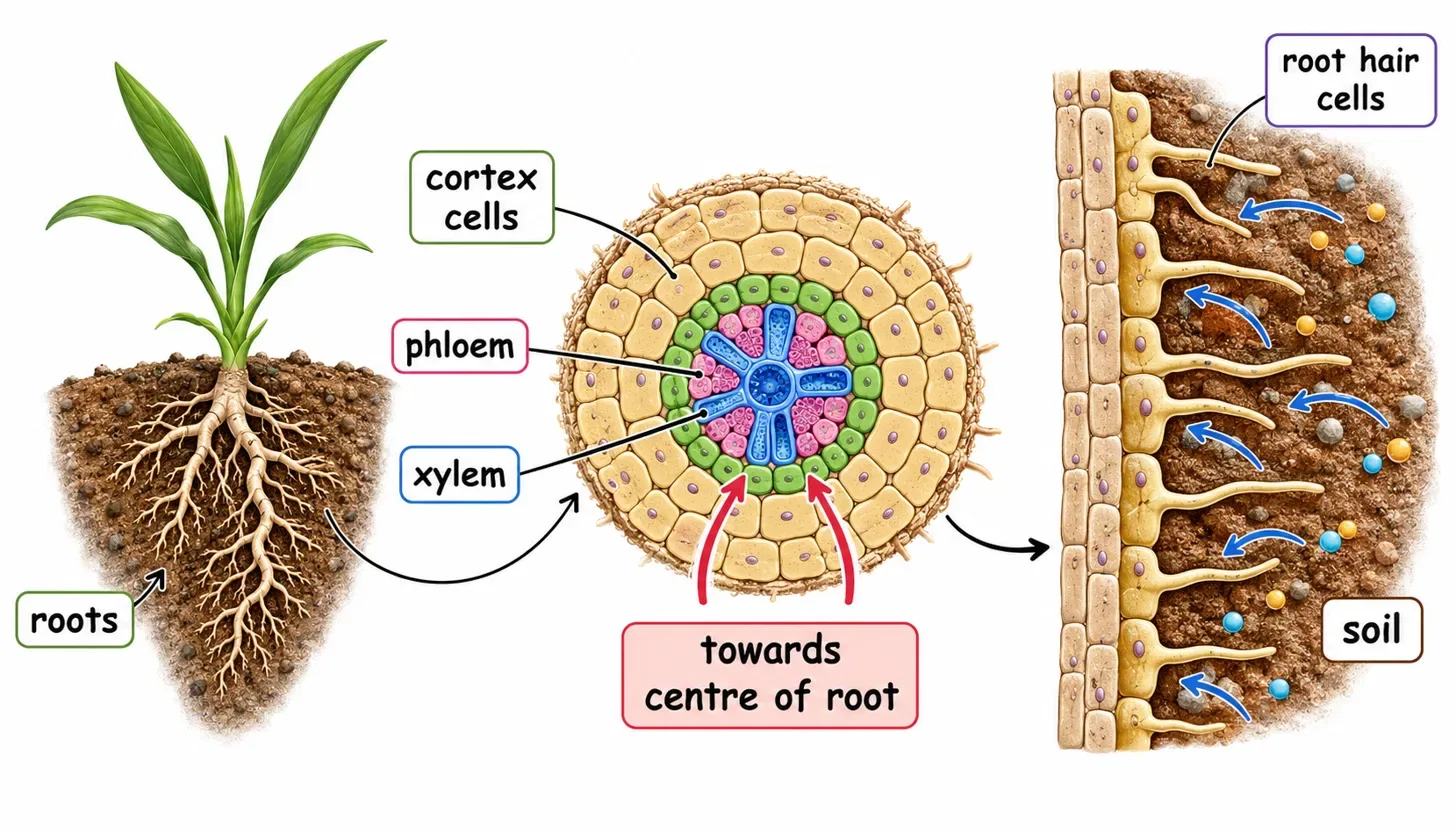

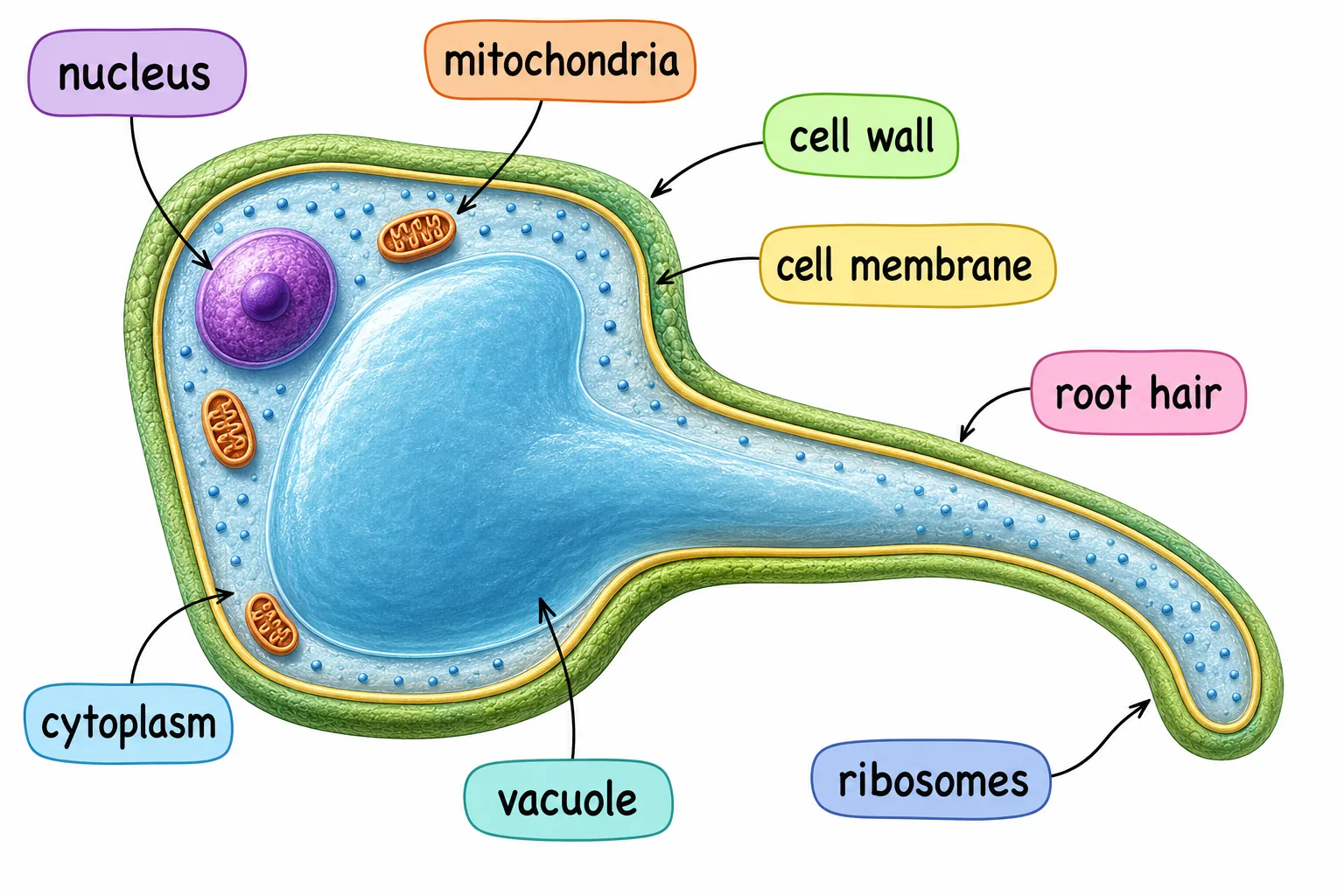
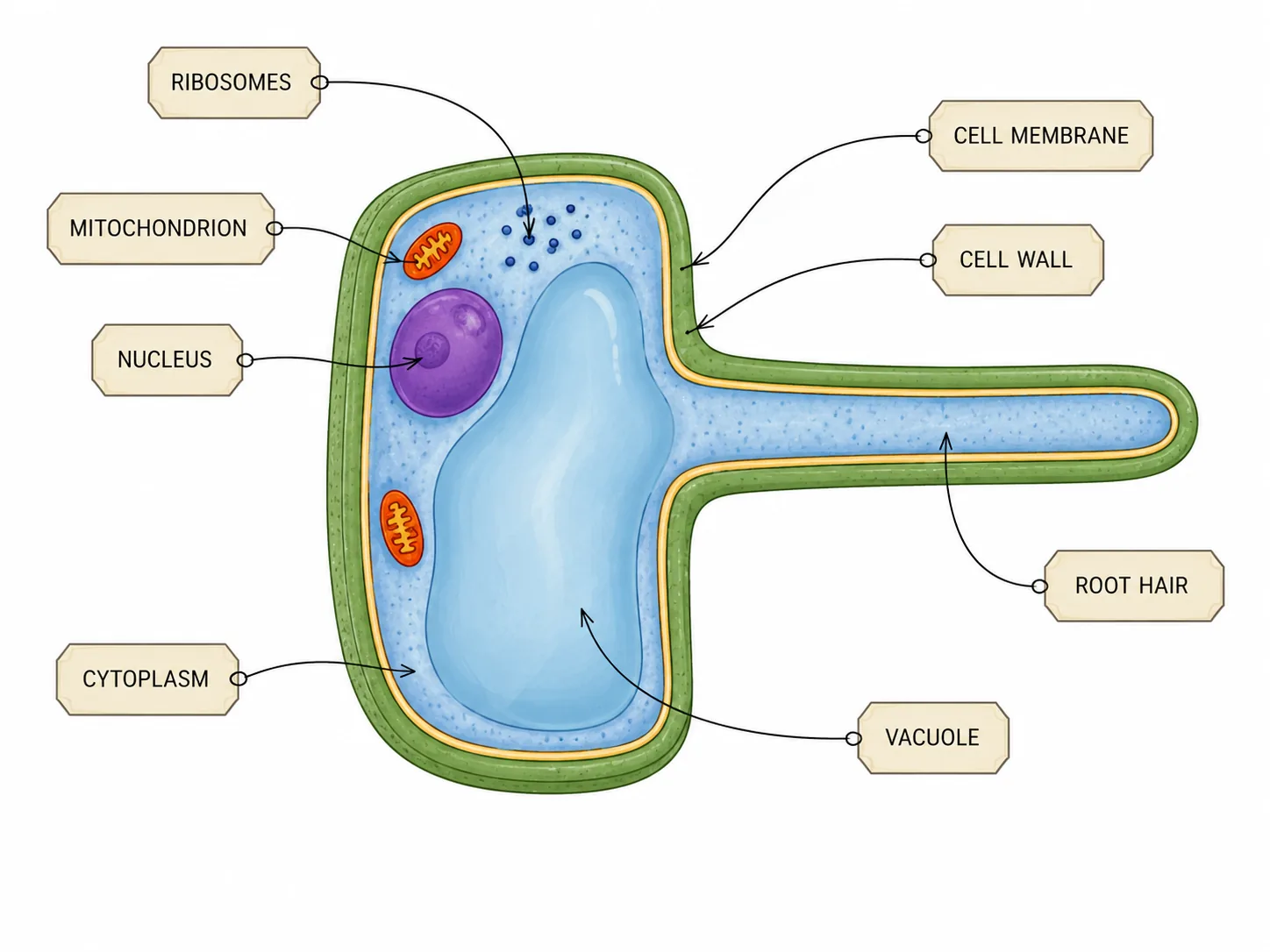
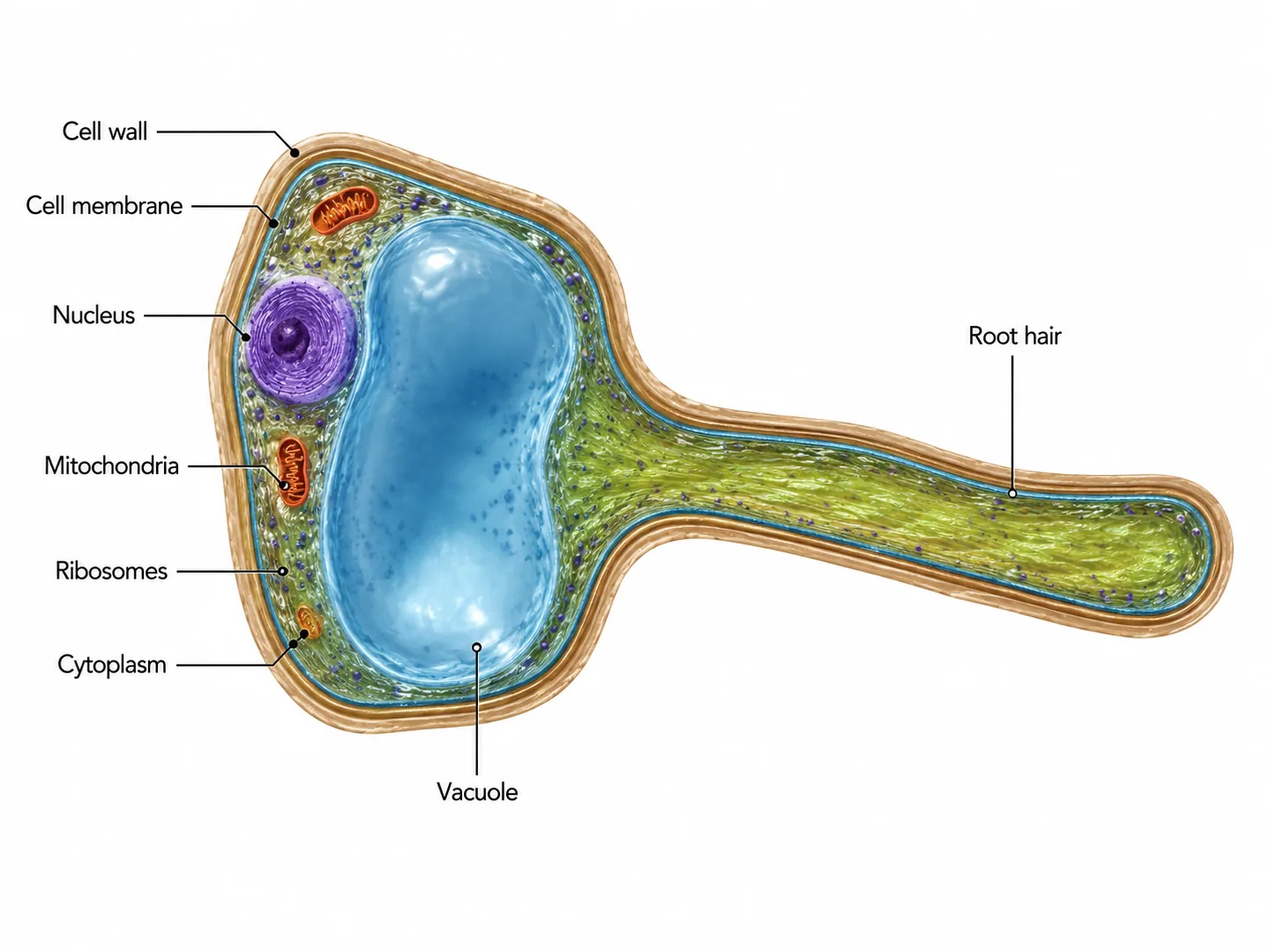


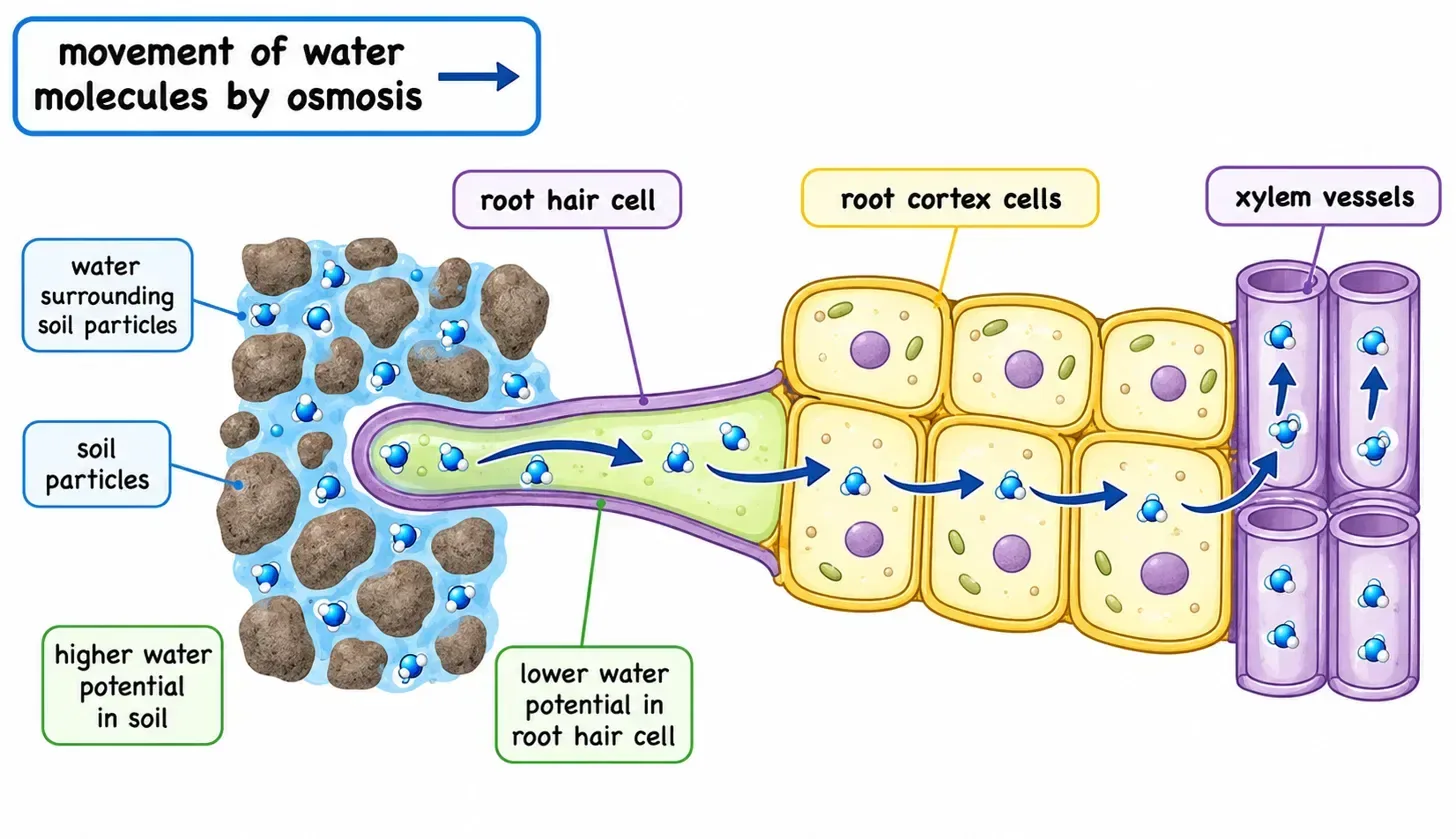


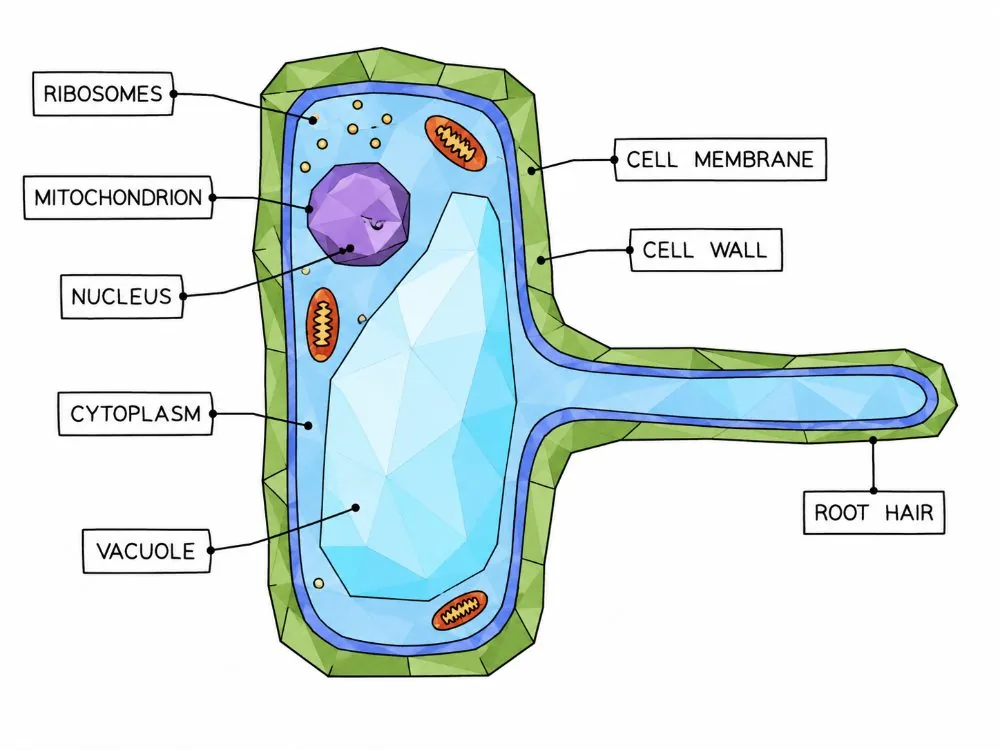
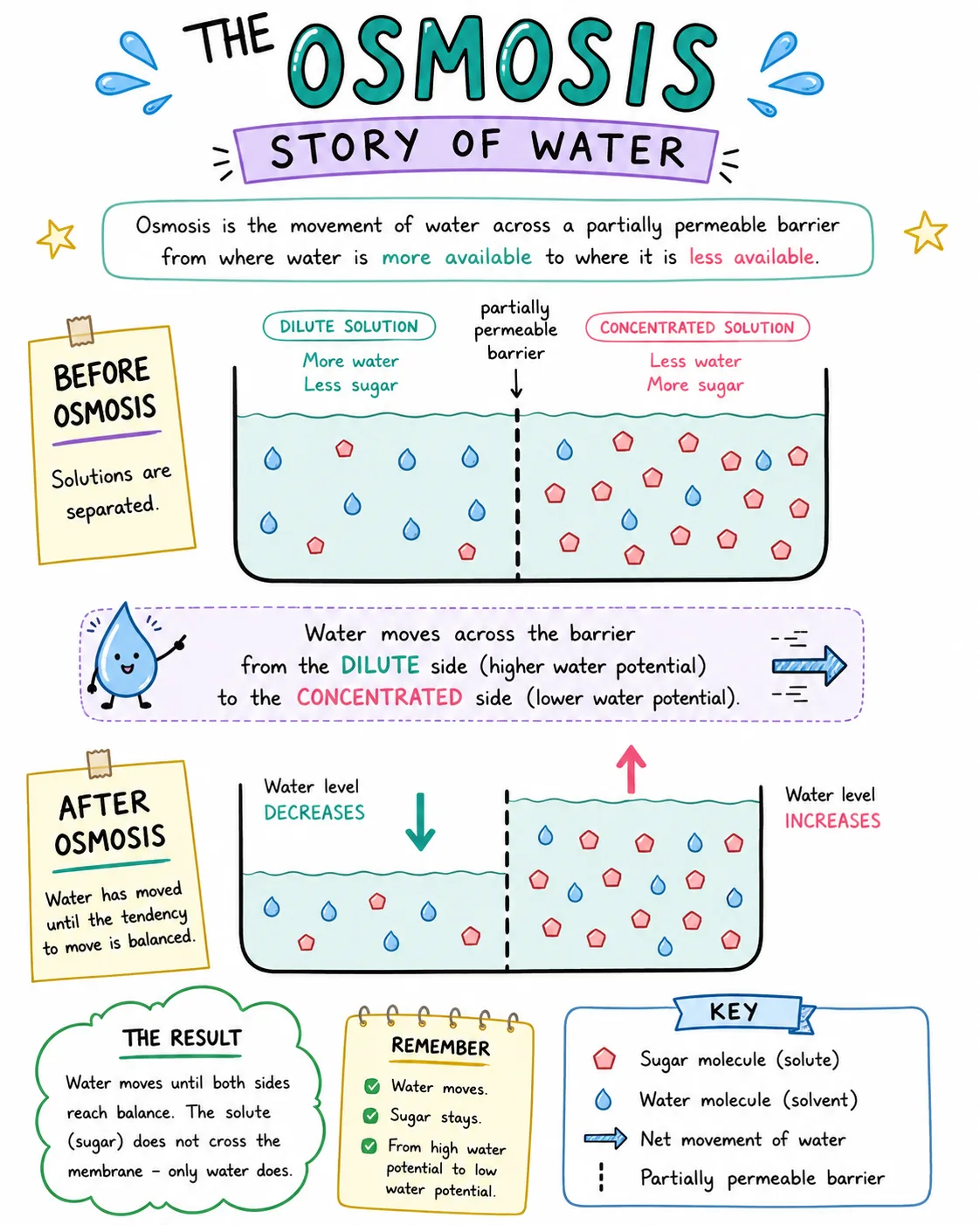
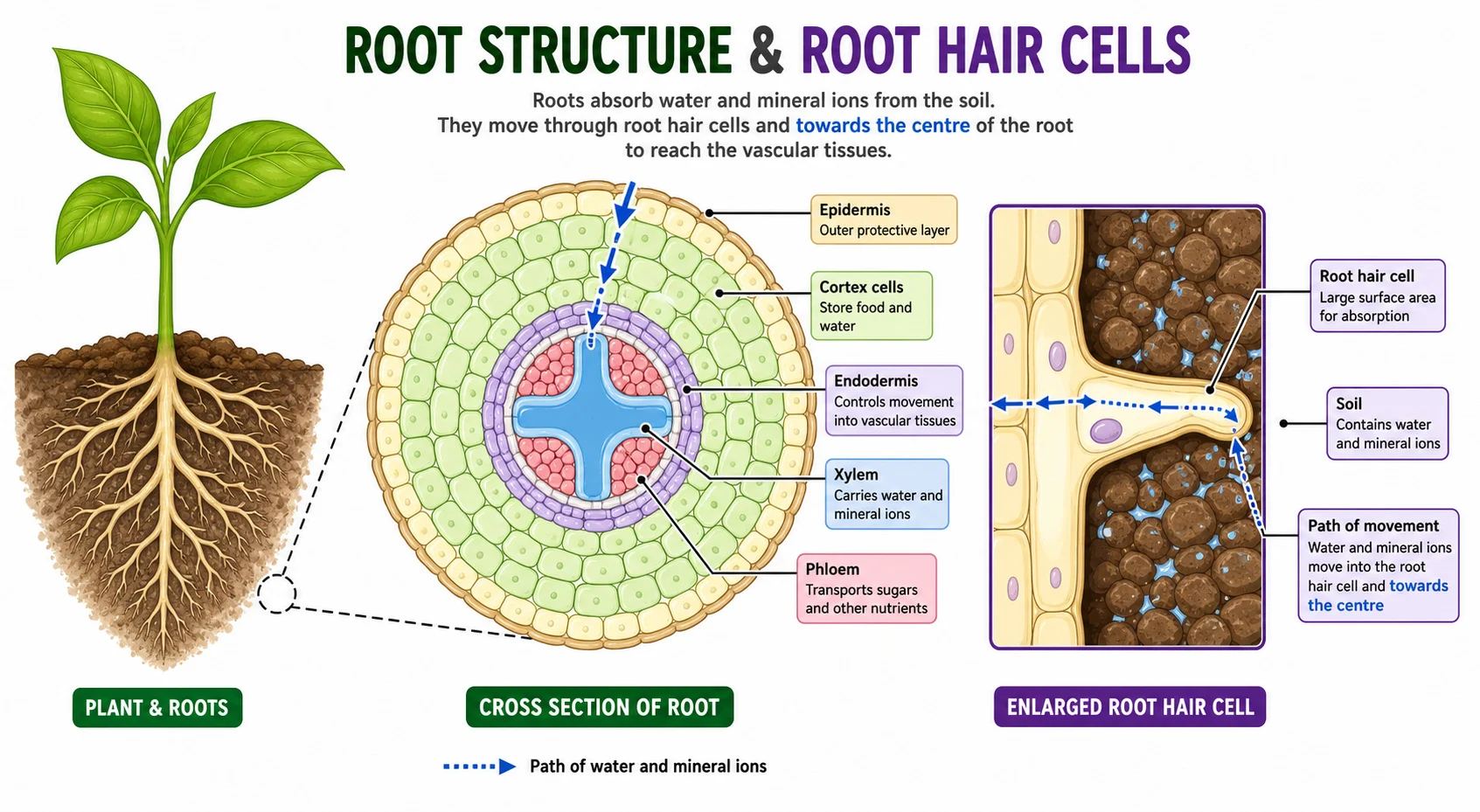
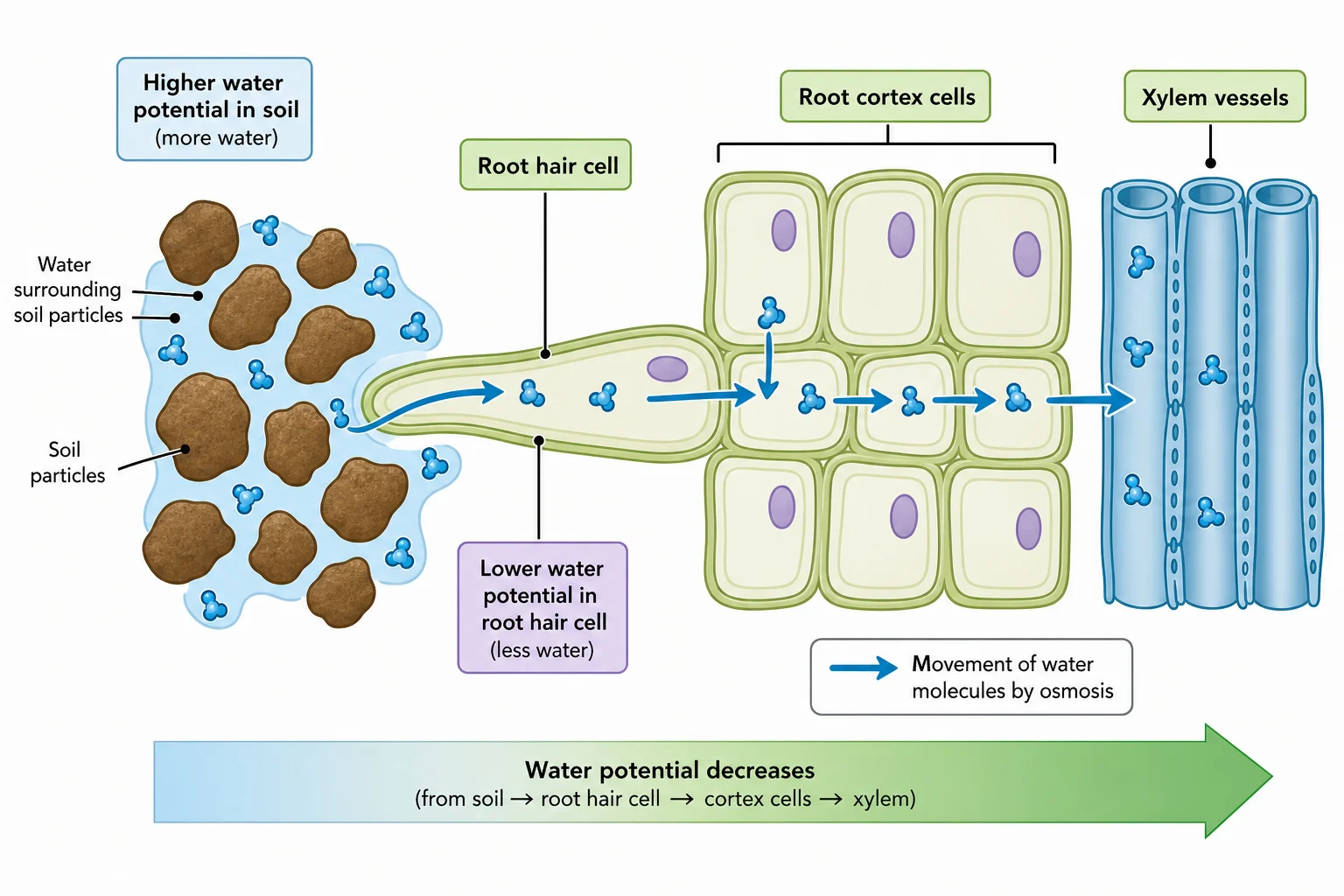
Water and mineral ions enter through root hair cells.
- It moves from the soil water (high water concentration) into the cell cytoplasm and vacuole.
- The cell has a lower water concentration because of dissolved solutes.
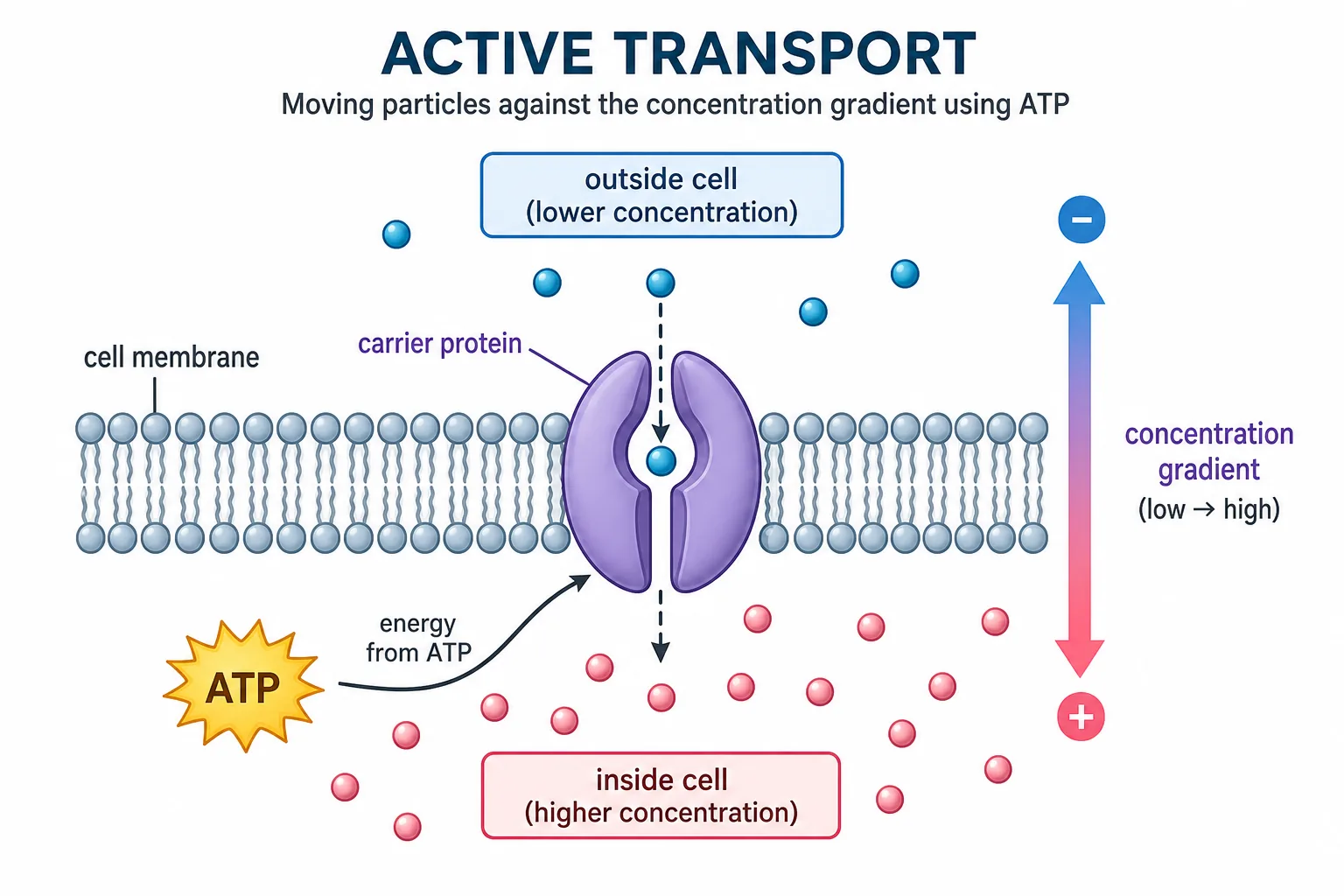
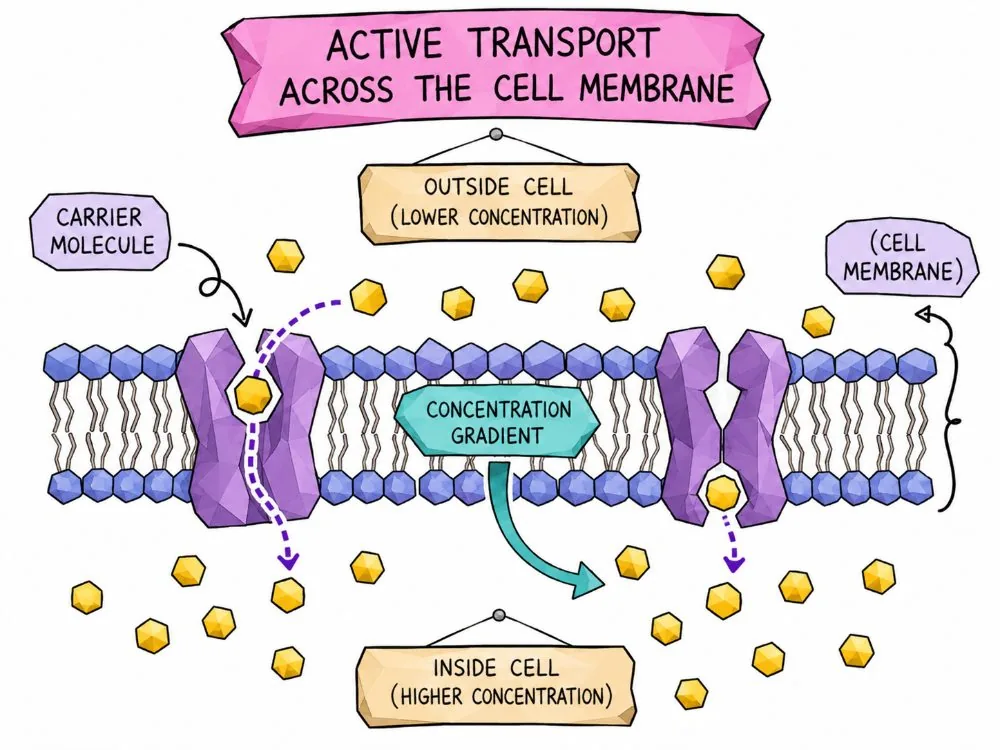
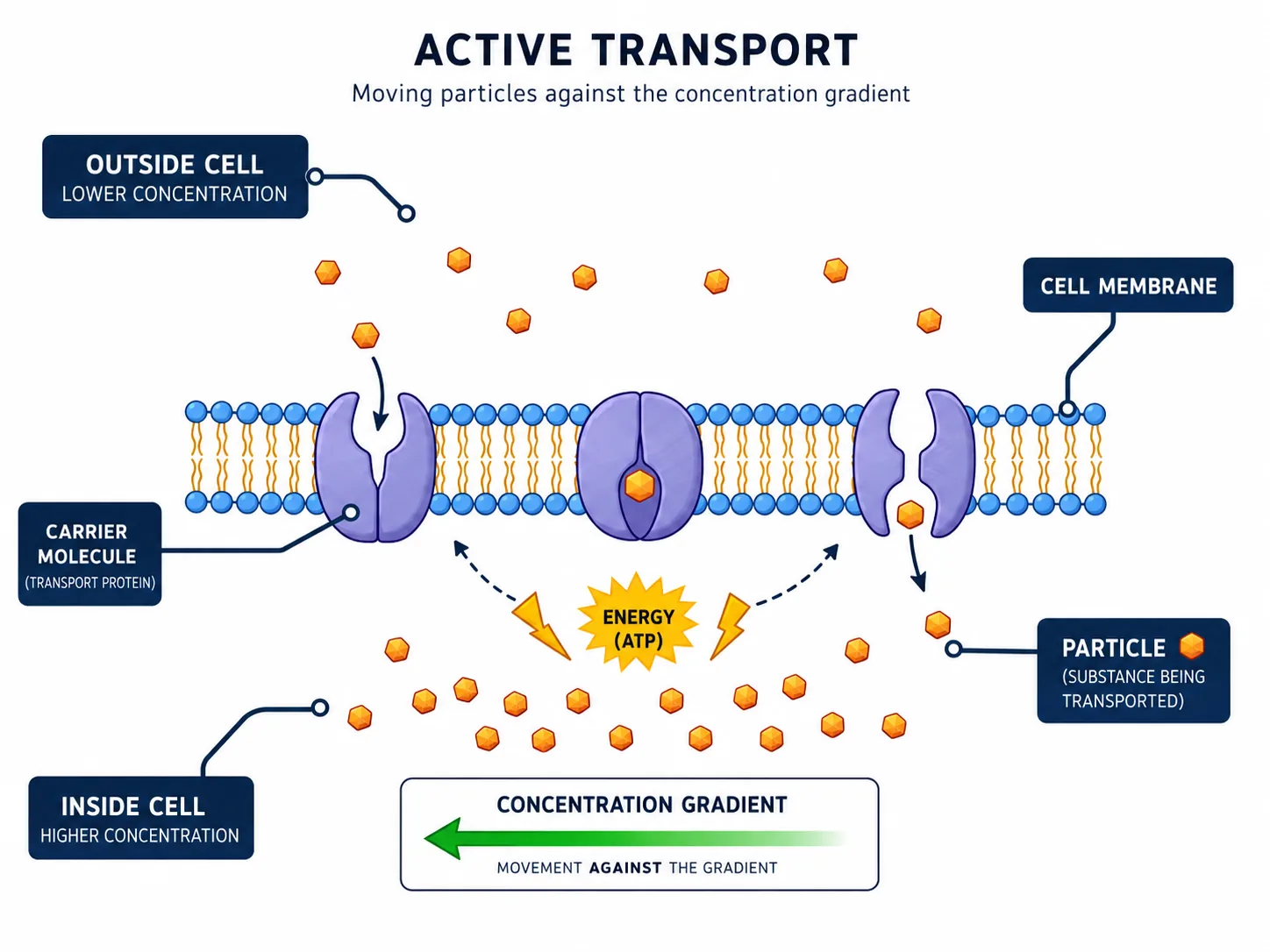
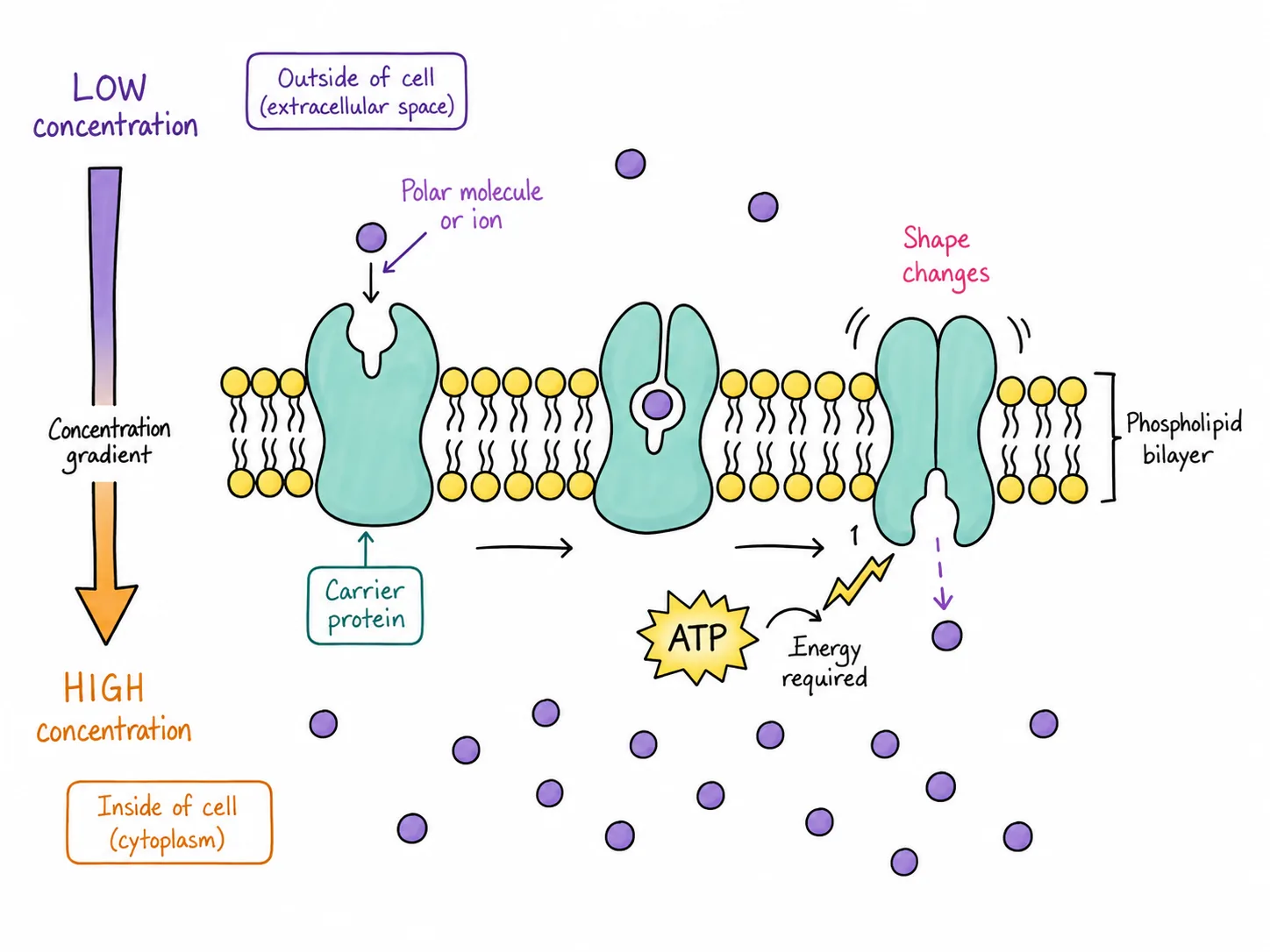
- They are at a lower concentration in the soil than in the cell.
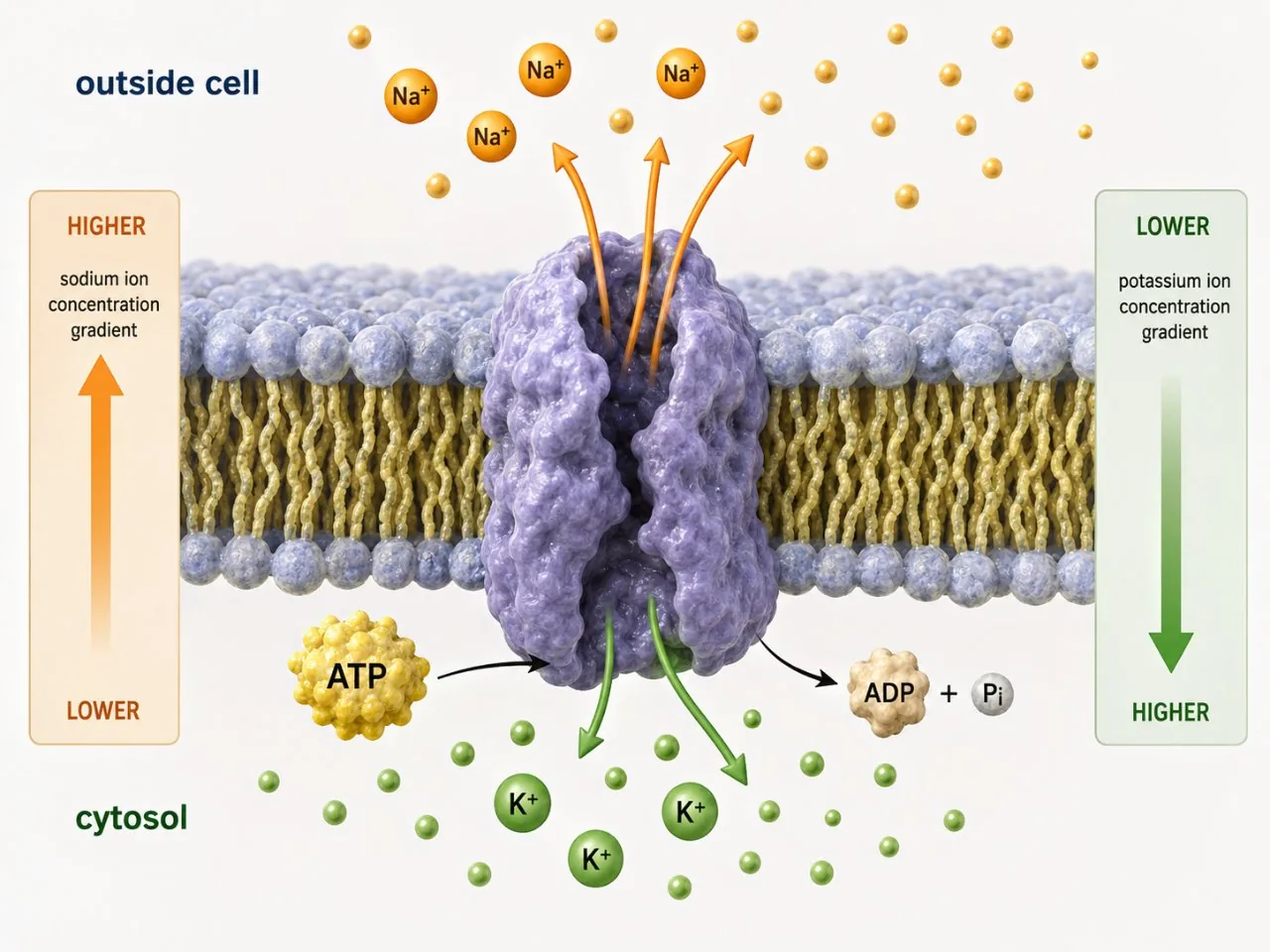
- Active transport uses carrier proteins and energy from respiration.
Water then passes from cell to cell across the root cortex, again down a water concentration gradient, until it reaches the xylem.
Section 3 of 9Xylem structure

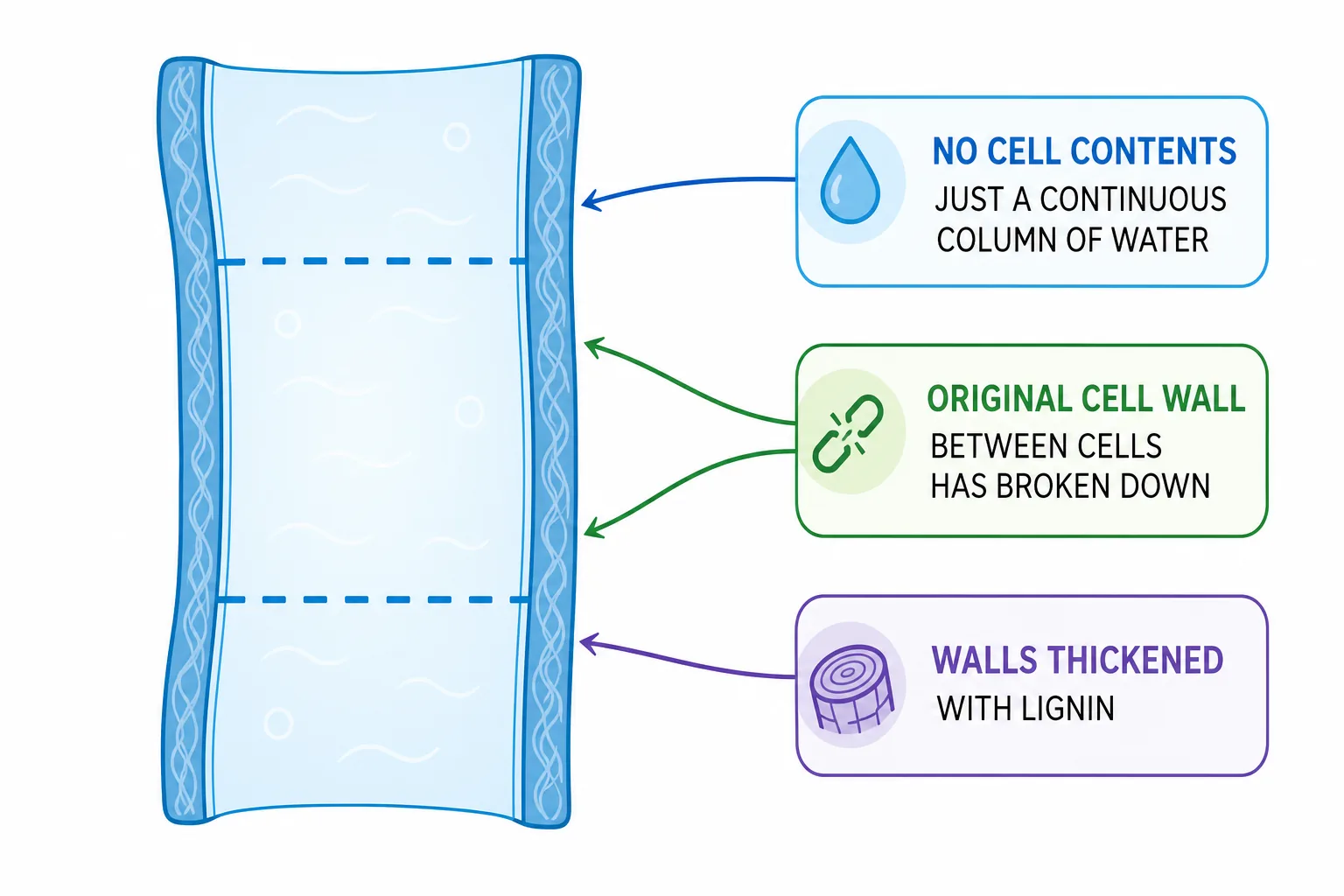
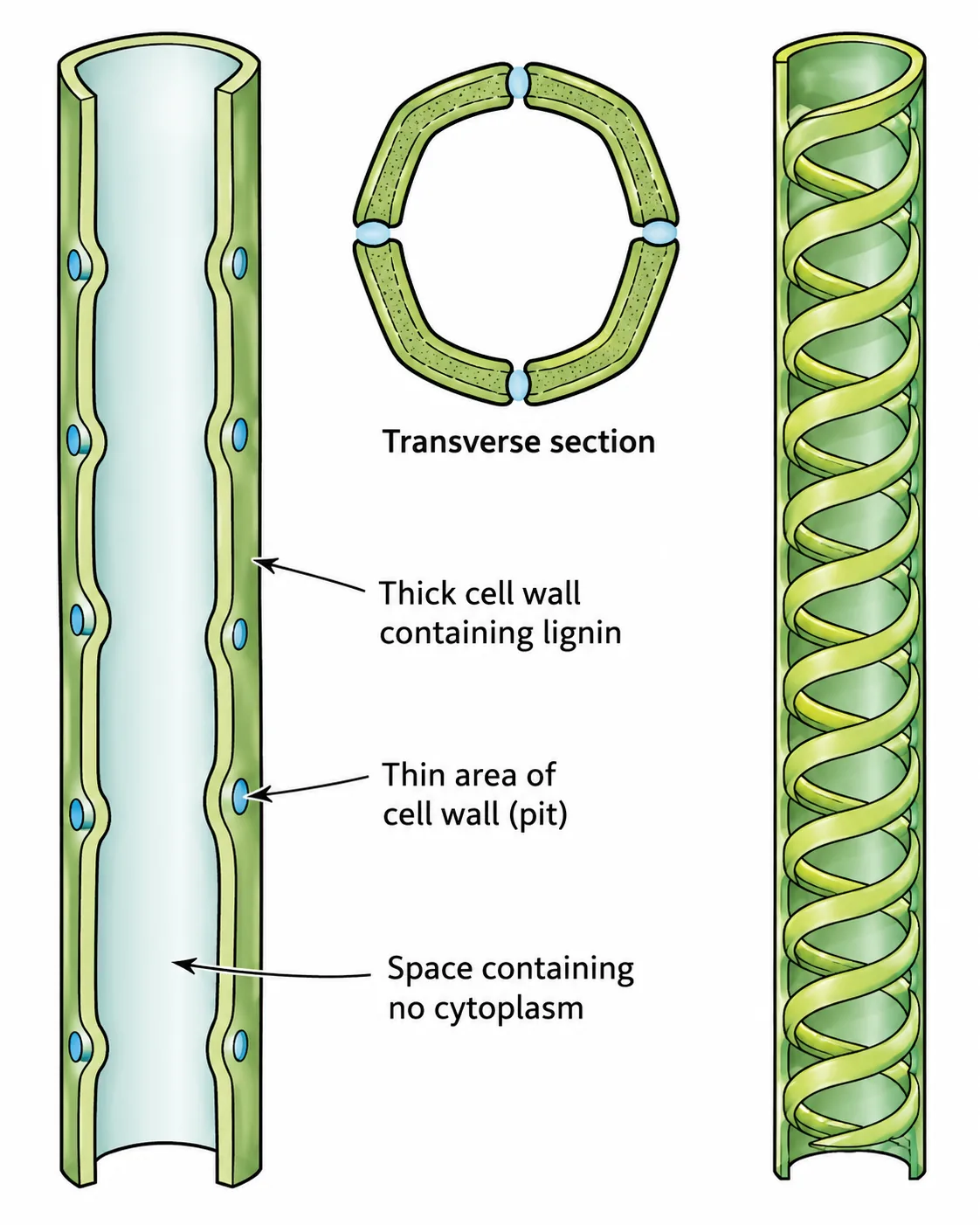
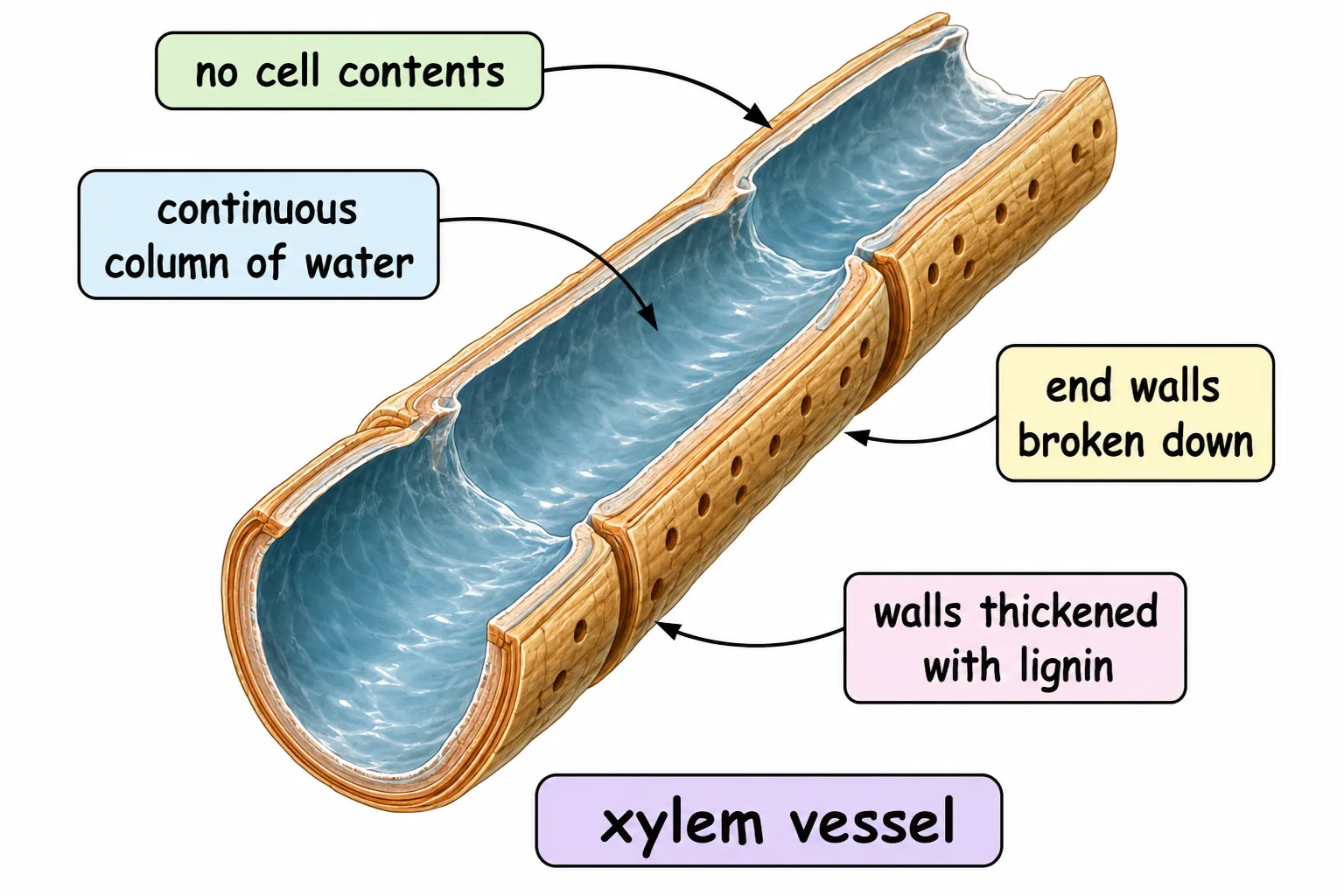
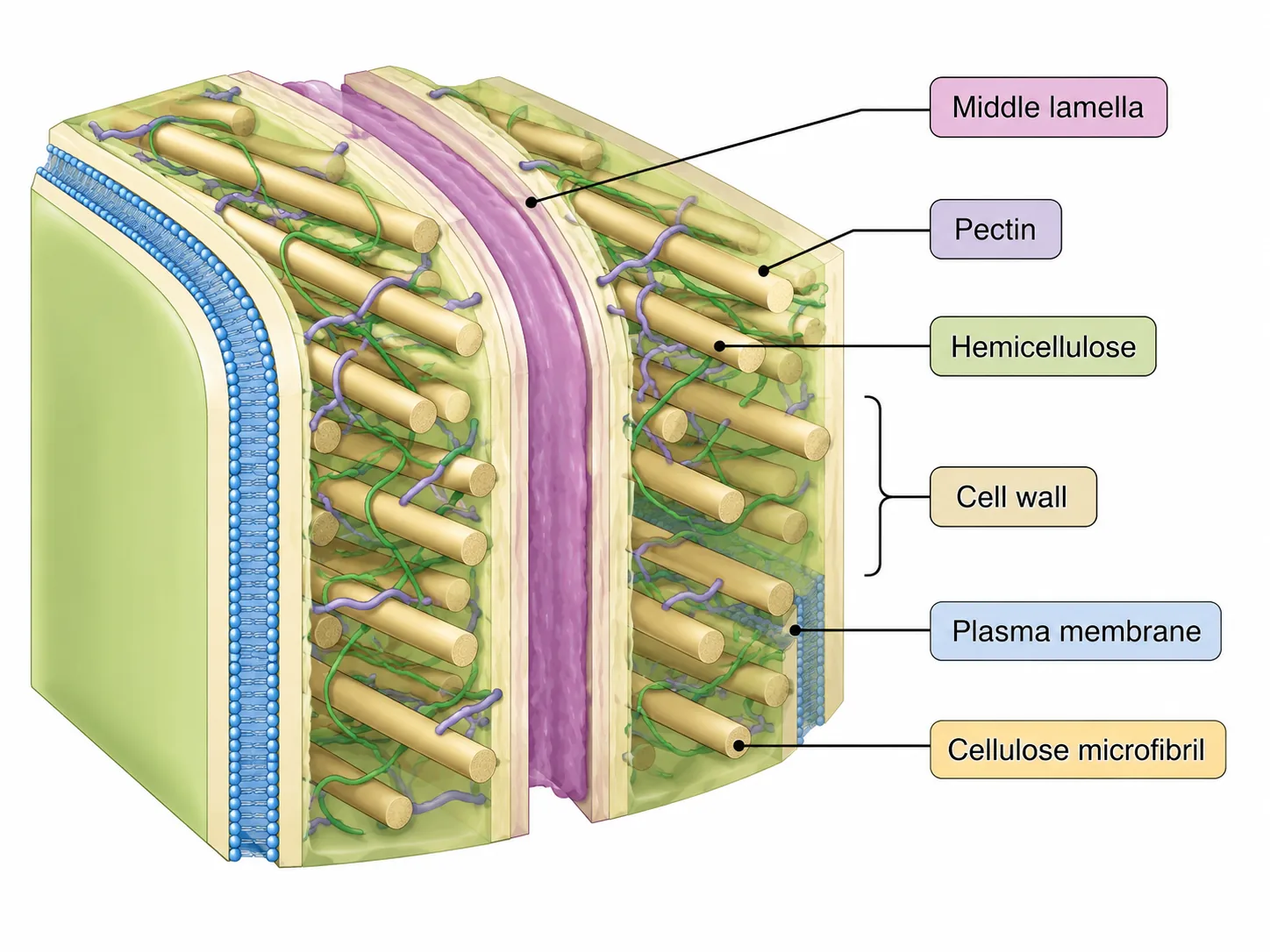

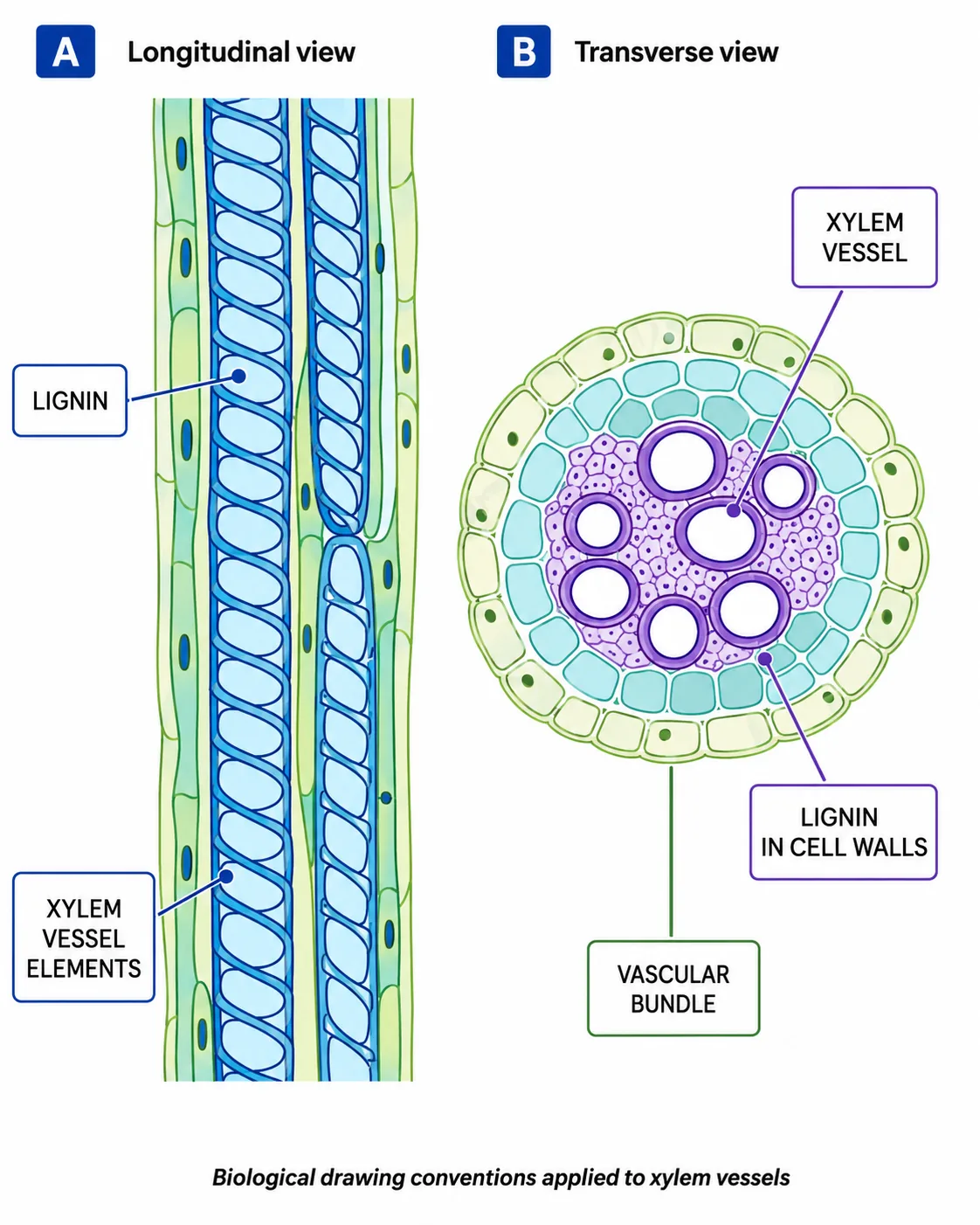
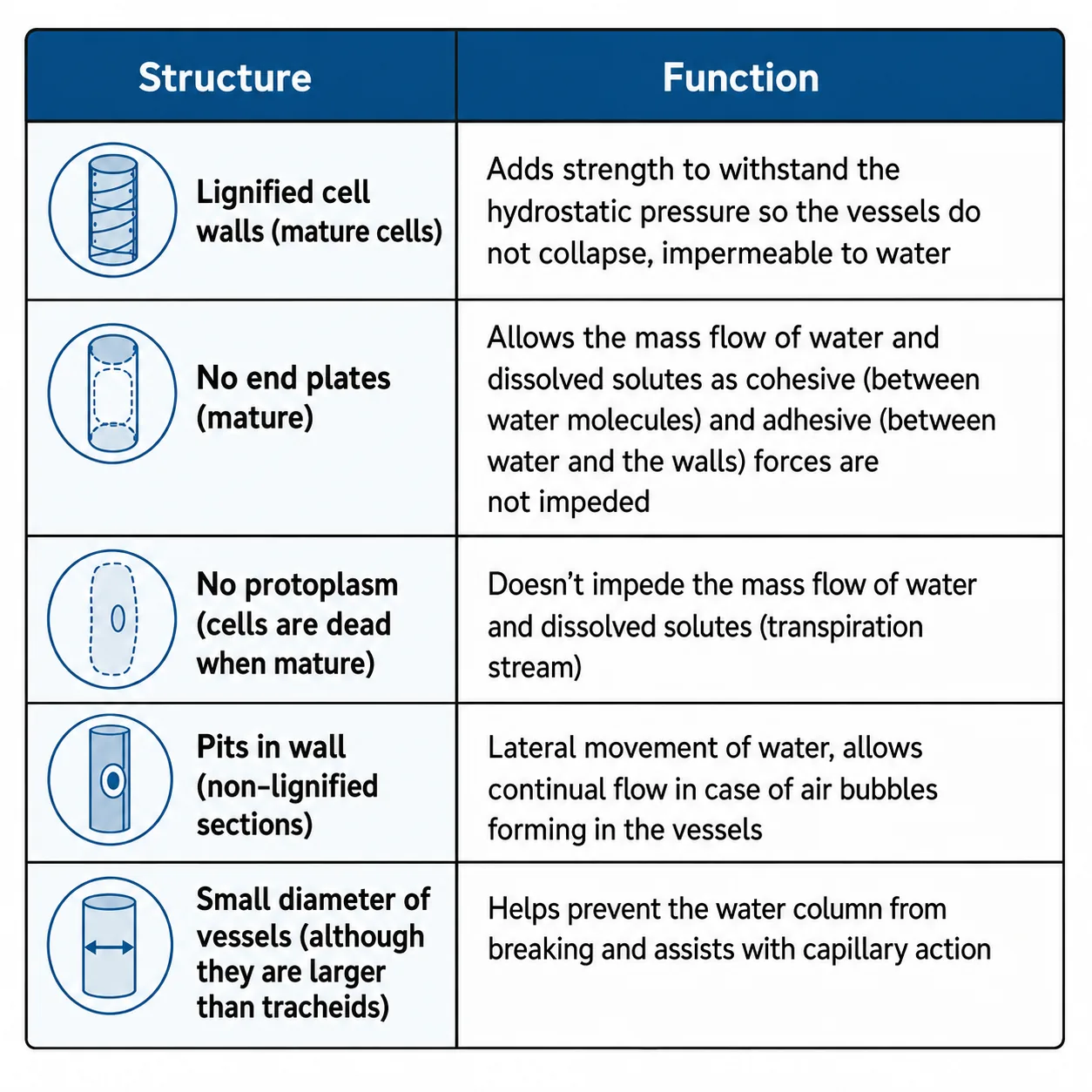
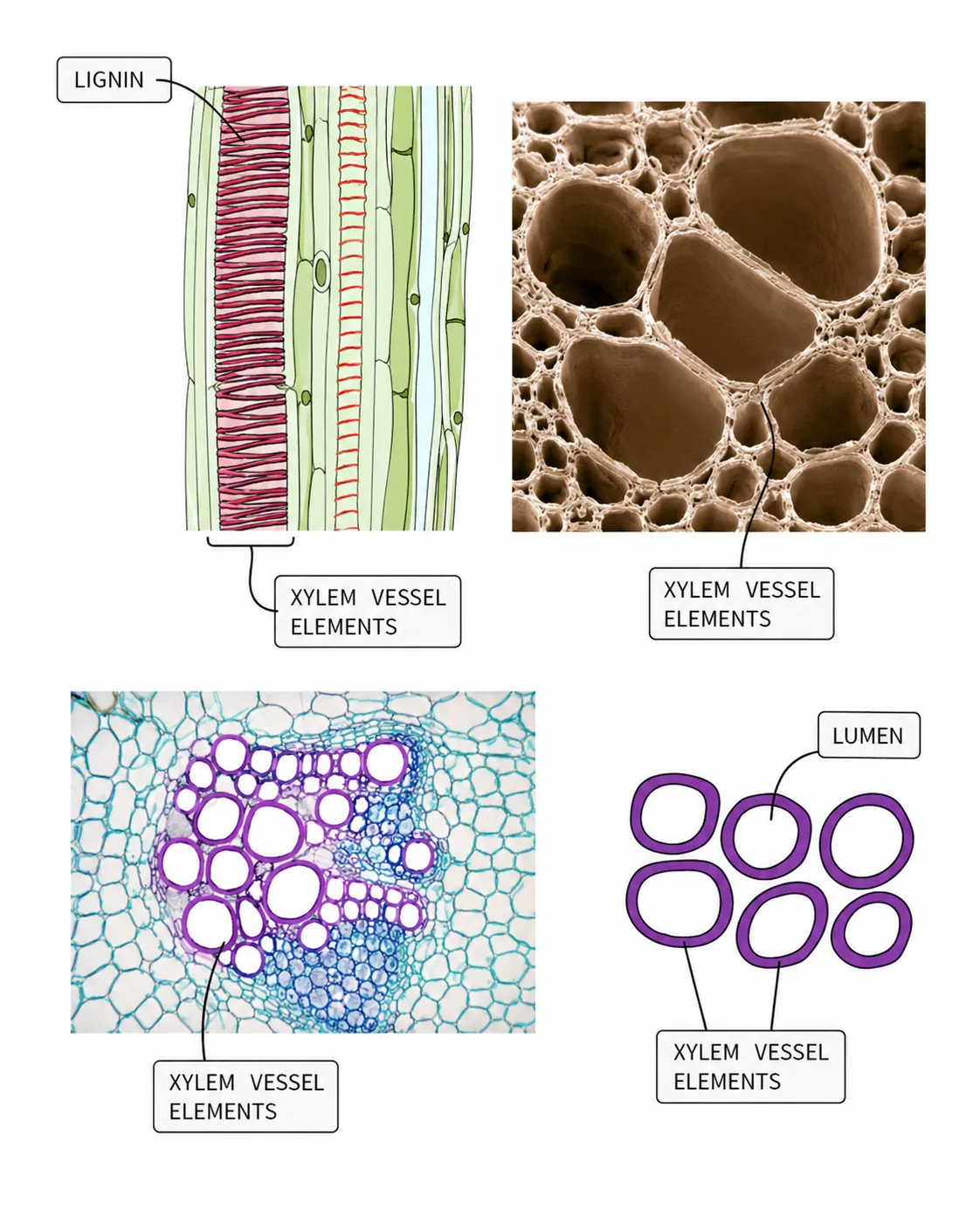
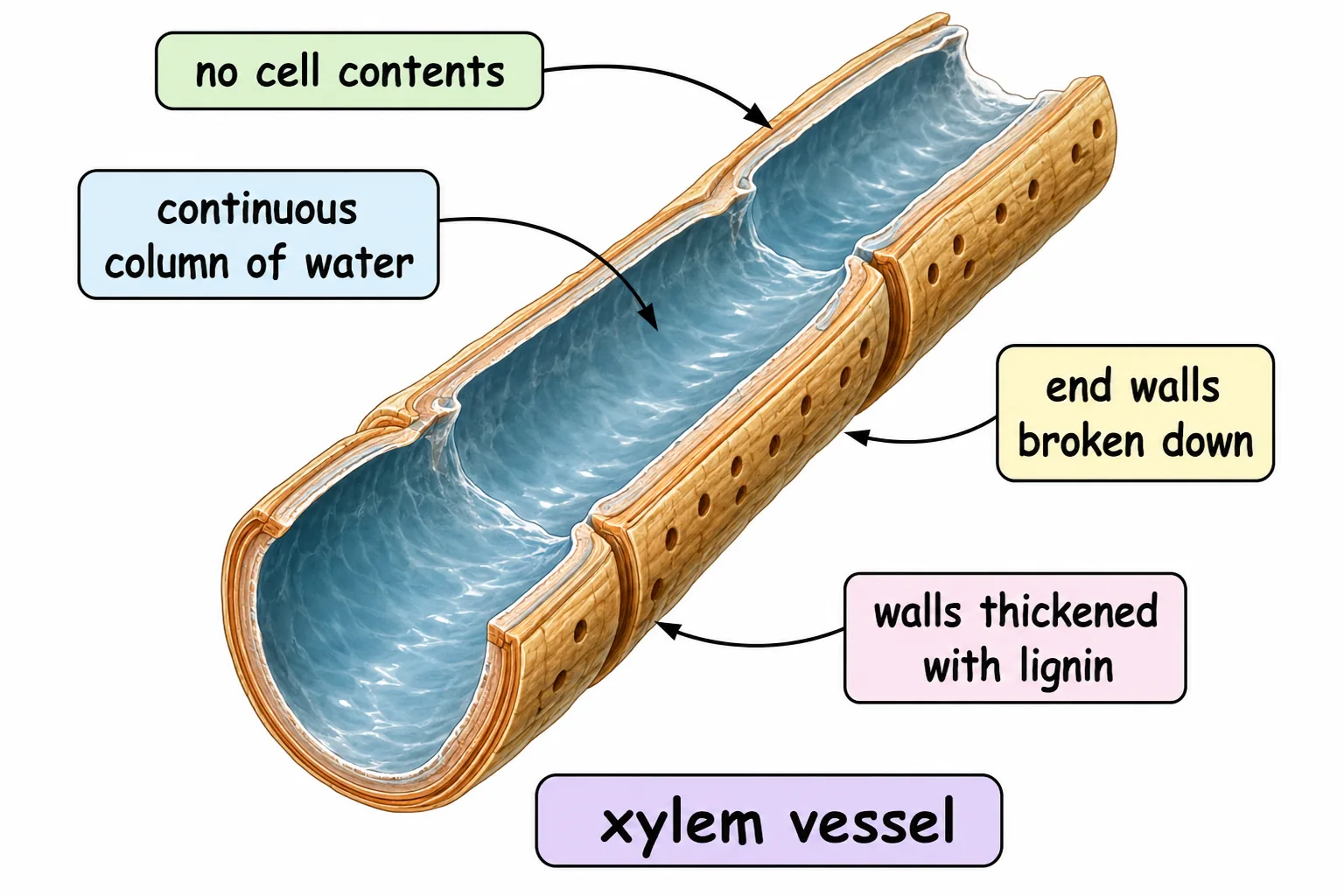
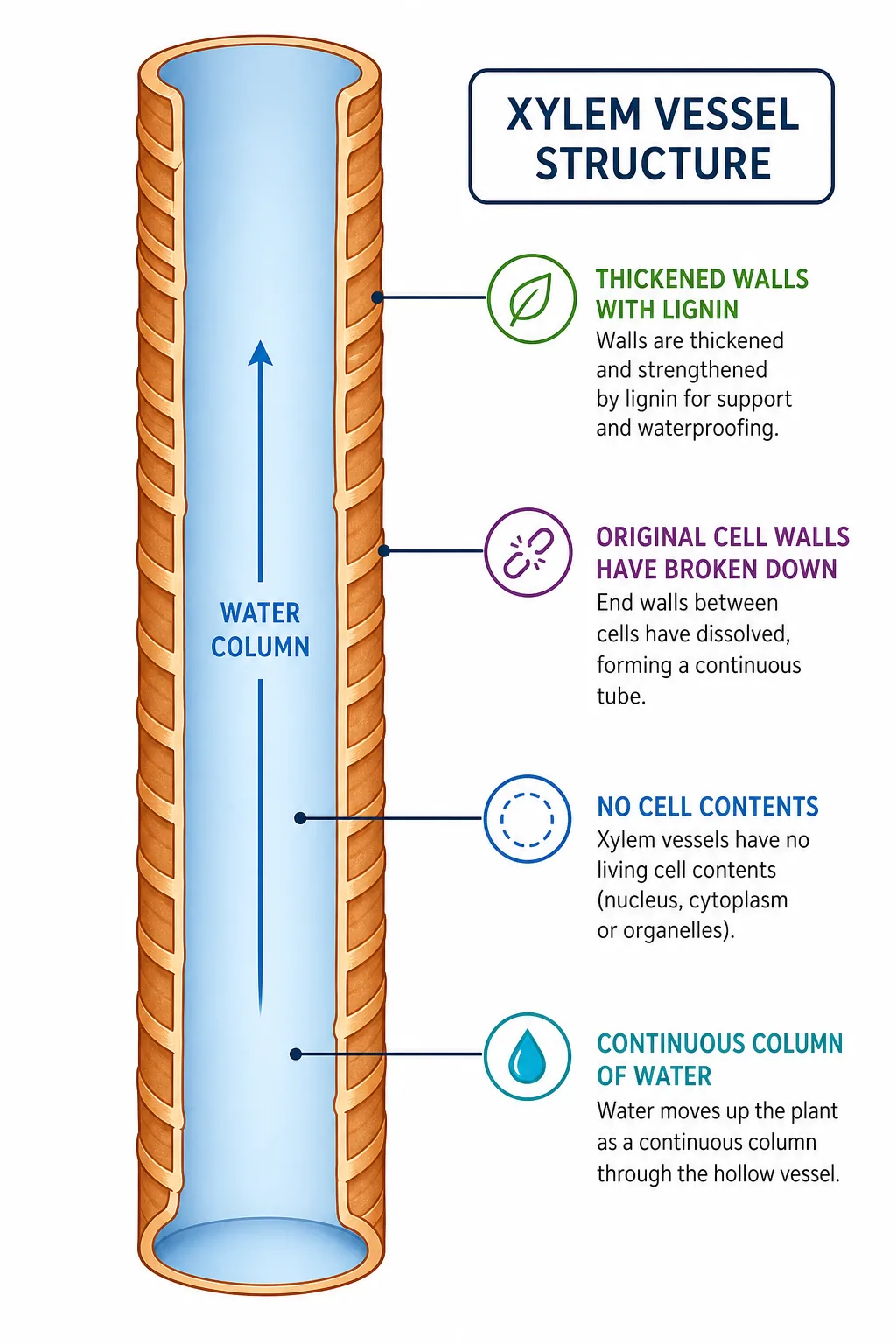
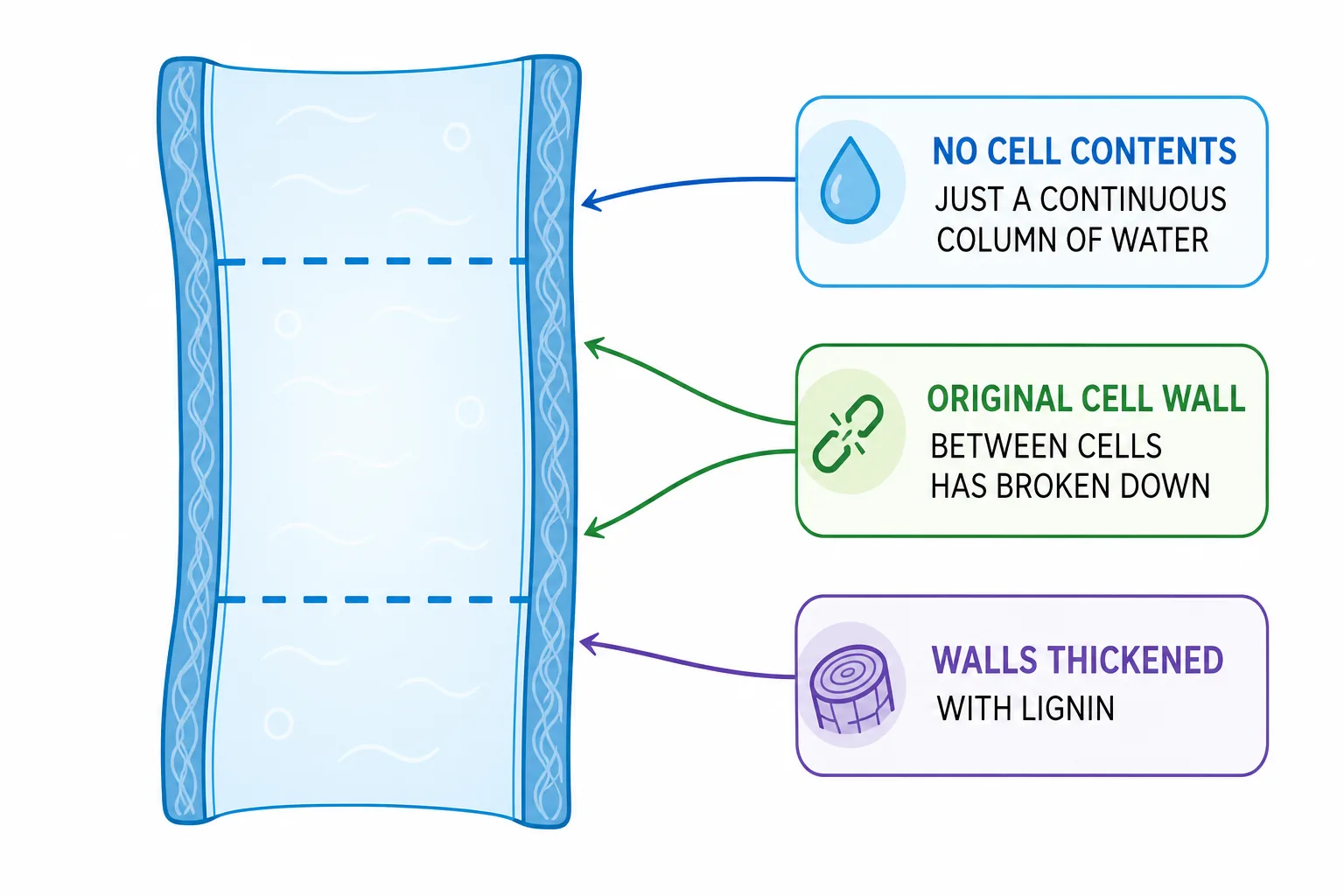
Xylem vessels are formed from dead cells joined end to end.
Section 4 of 9The movement of water upward
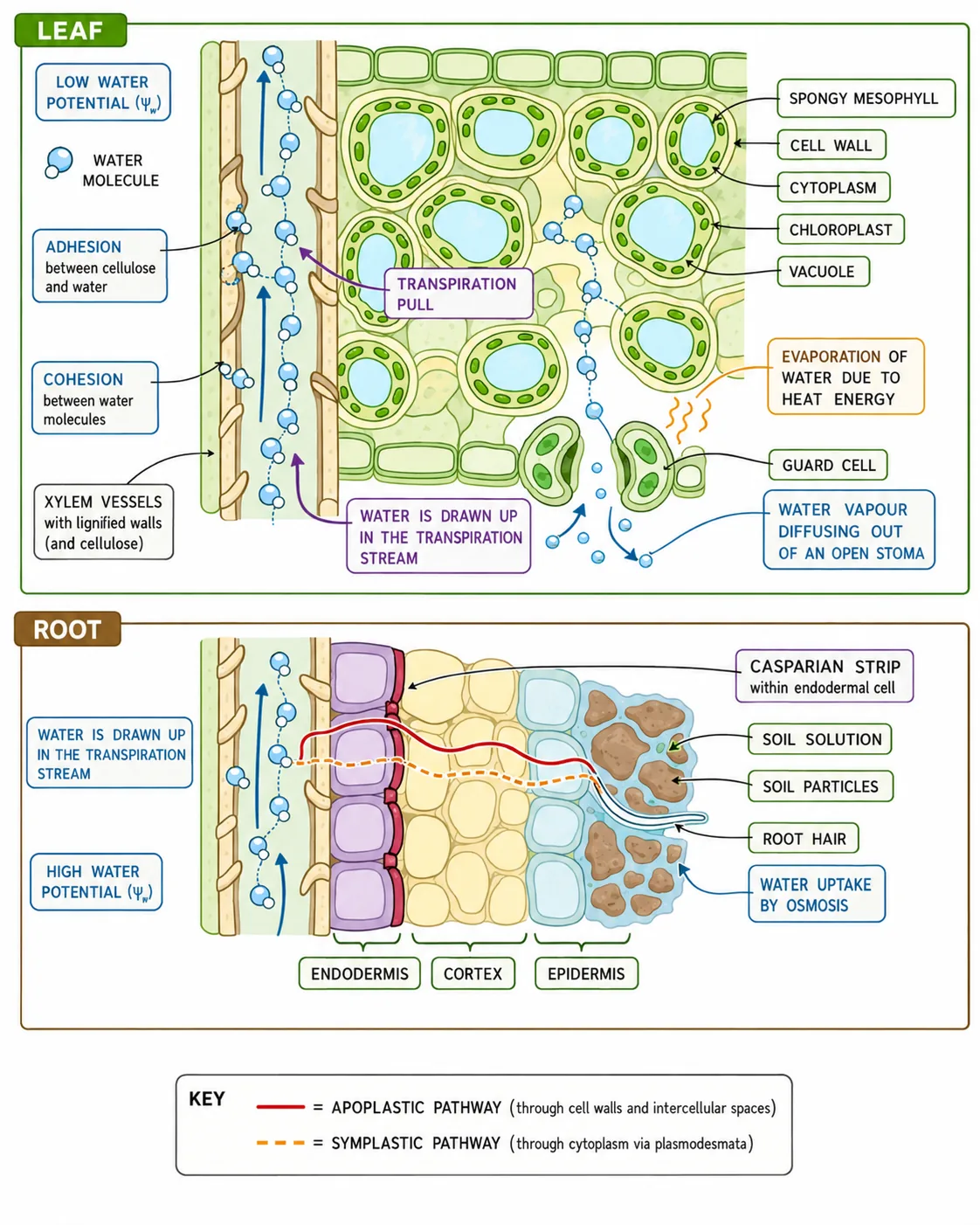

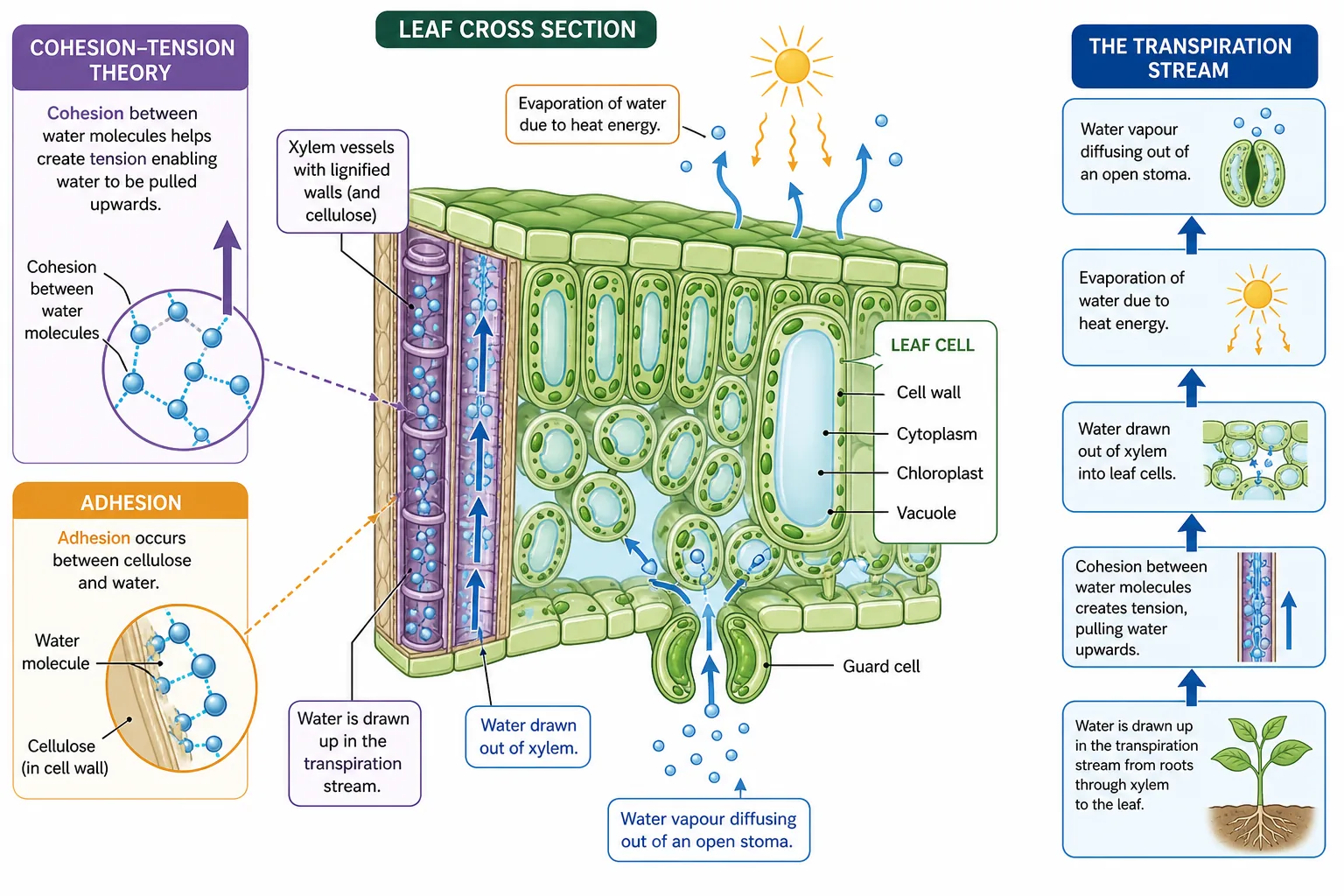
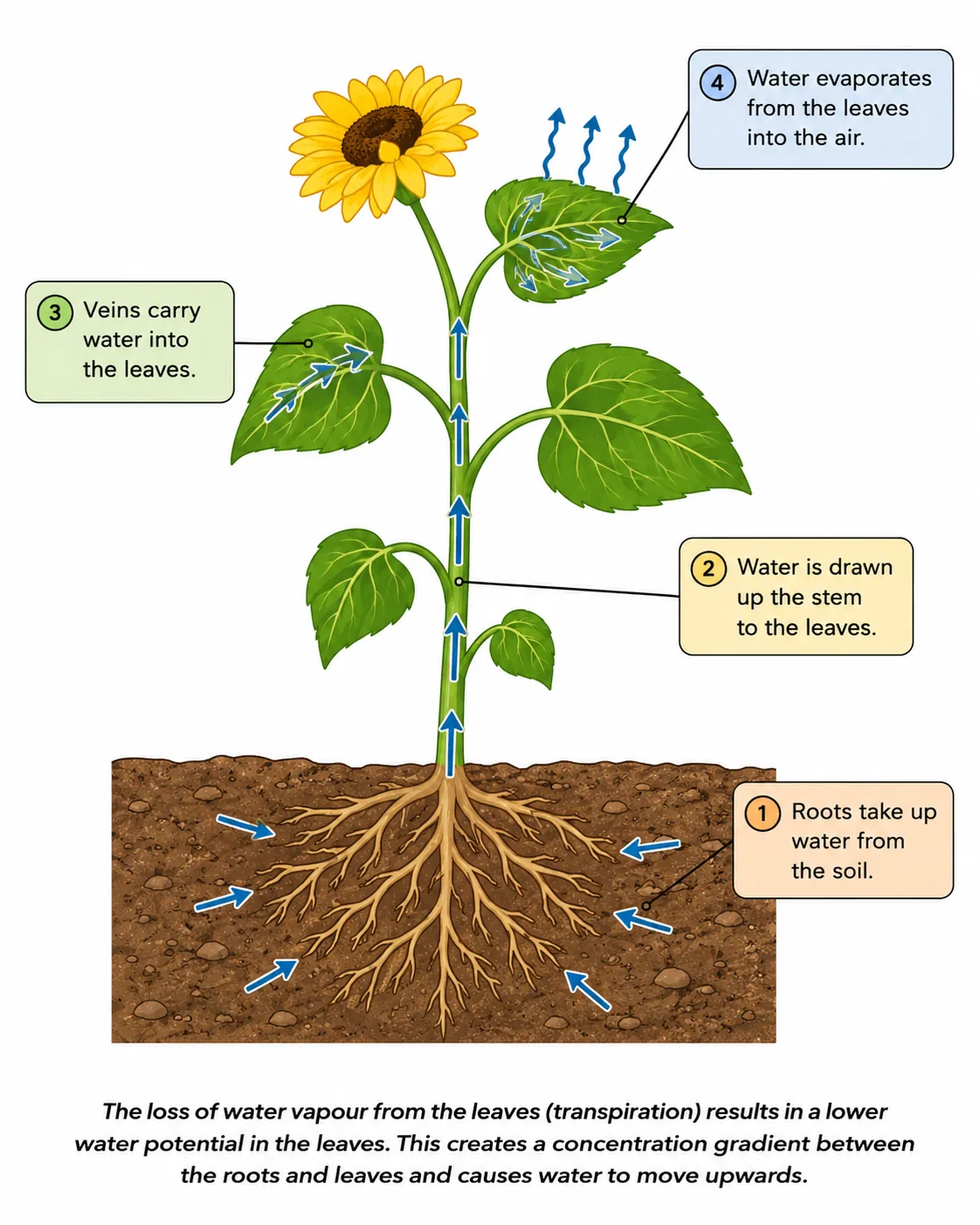
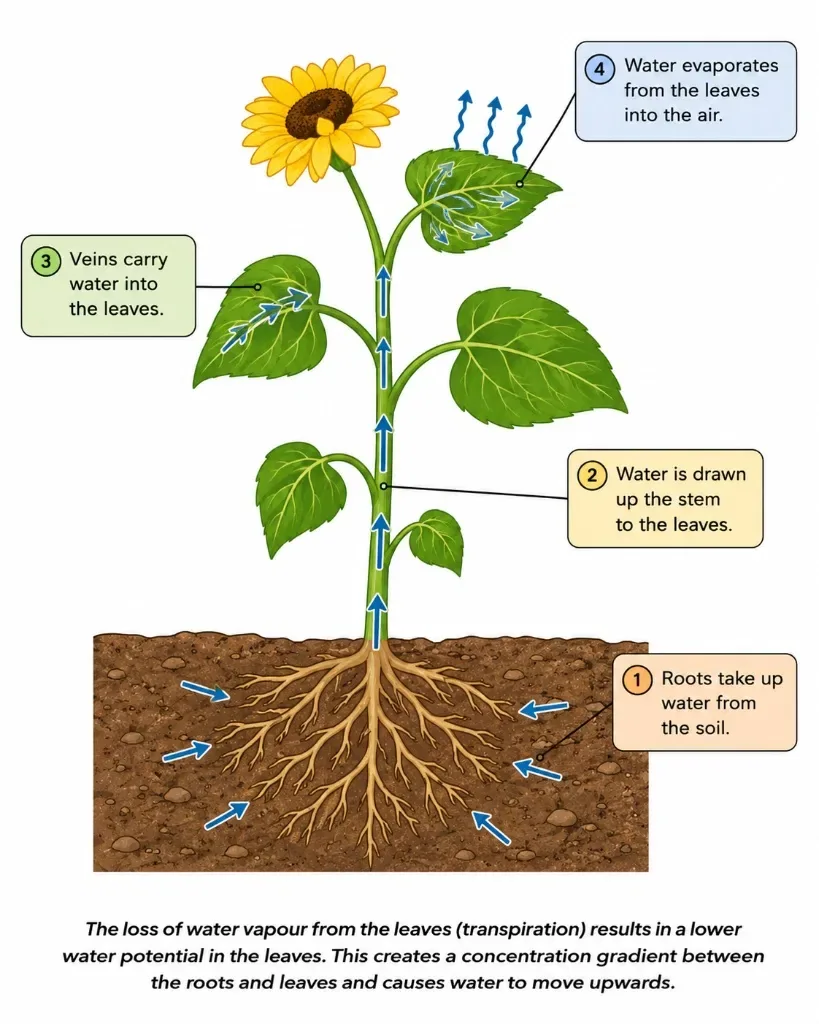
Water evaporates from the surfaces of mesophyll cells in the leaf and diffuses out of the stomata (transpiration).
- where nitrate is used to make amino acids and magnesium to make chlorophyll,
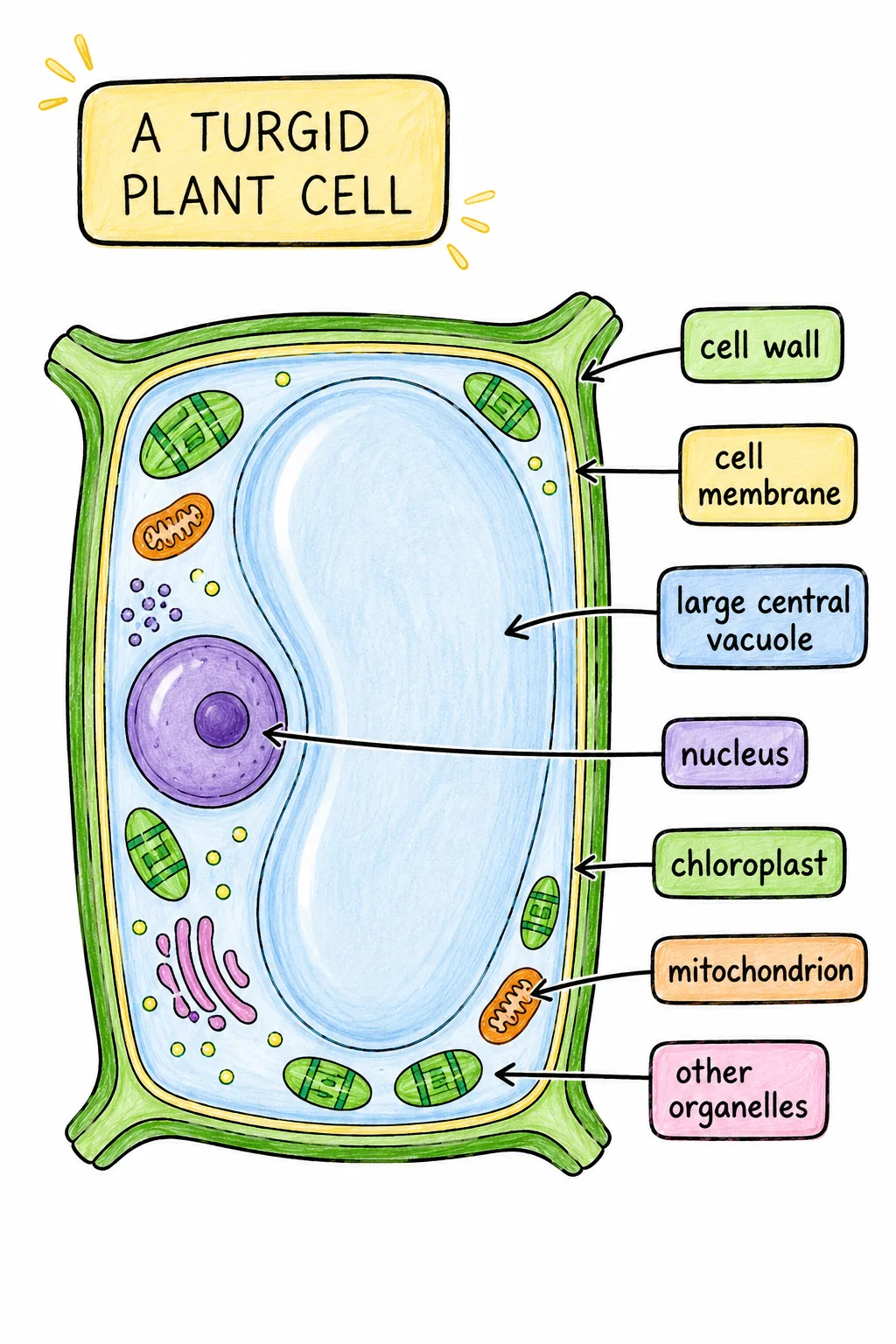
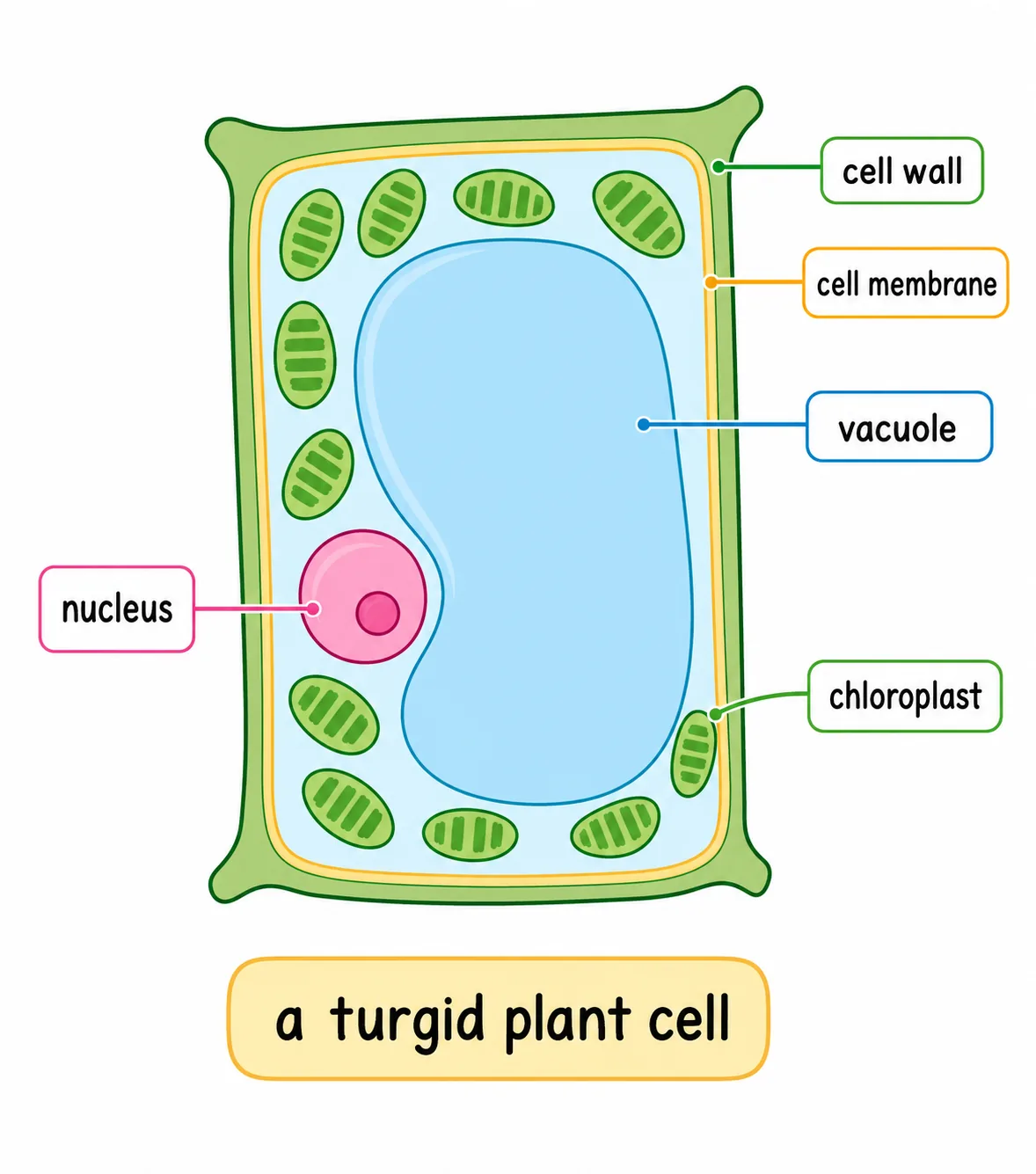
- and it supplies water for photosynthesis, cools the leaf by evaporation and keeps the cells turgid,
- so that the plant is supported.
Section 5 of 9Evidence and links

Practical evidencea cut celery stalk placed in water containing a coloured dye shows the dye moving up in the xylem, and a stained cross-section reveals the coloured xylem in a ring or in bundles.
- and magnesium deficiency causes yellowing between the veins.
Section 6 of 9Following water from soil to leaf


It helps to follow a single water molecule on its journey.
- and either evaporates from their surface and diffuses out through the stomata,
- or is used in photosynthesis,
- or helps to keep cells turgid.
This pathway explains why plants wilt when soil is dry or salty: the water concentration in the soil is no higher than in the cells, so water cannot enter by osmosis, and the cells lose their turgor. It also explains why plants given too much fertiliser may be damaged, because the solution outside the root becomes more concentrated than the cell contents.
In a diagram of a root cross-section, xylem usually appears at the centre in an X or star shape, surrounded by phloem, with root hairs on the outside.
Section 7 of 9Exam-style questions
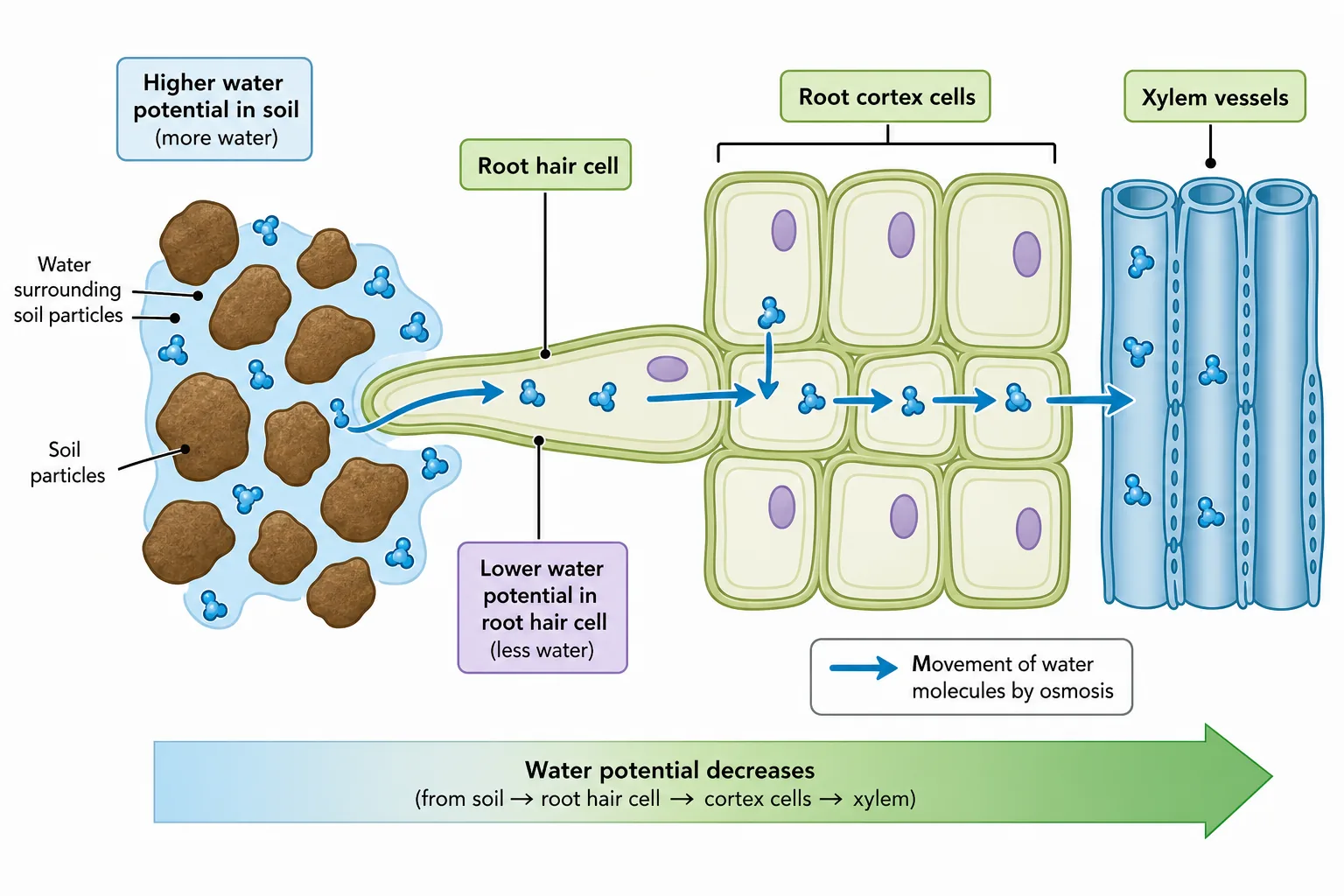









Describe how water moves from the soil into a root hair cell. [2]2 marks
By osmosis [1], down a water concentration gradient from the soil (dilute) through the partially permeable membrane into the cell sap [1].
Explain how the structure of xylem vessels is adapted for transporting water. [3]3 marks
Cells are dead with no end walls, so there is a continuous hollow tube [1]. Walls are strengthened with lignin so they do not collapse under low pressure [1]. No cytoplasm or organelles that would block the flow [1].
Explain why a plant growing in waterlogged soil may show poor mineral uptake. [3]3 marks
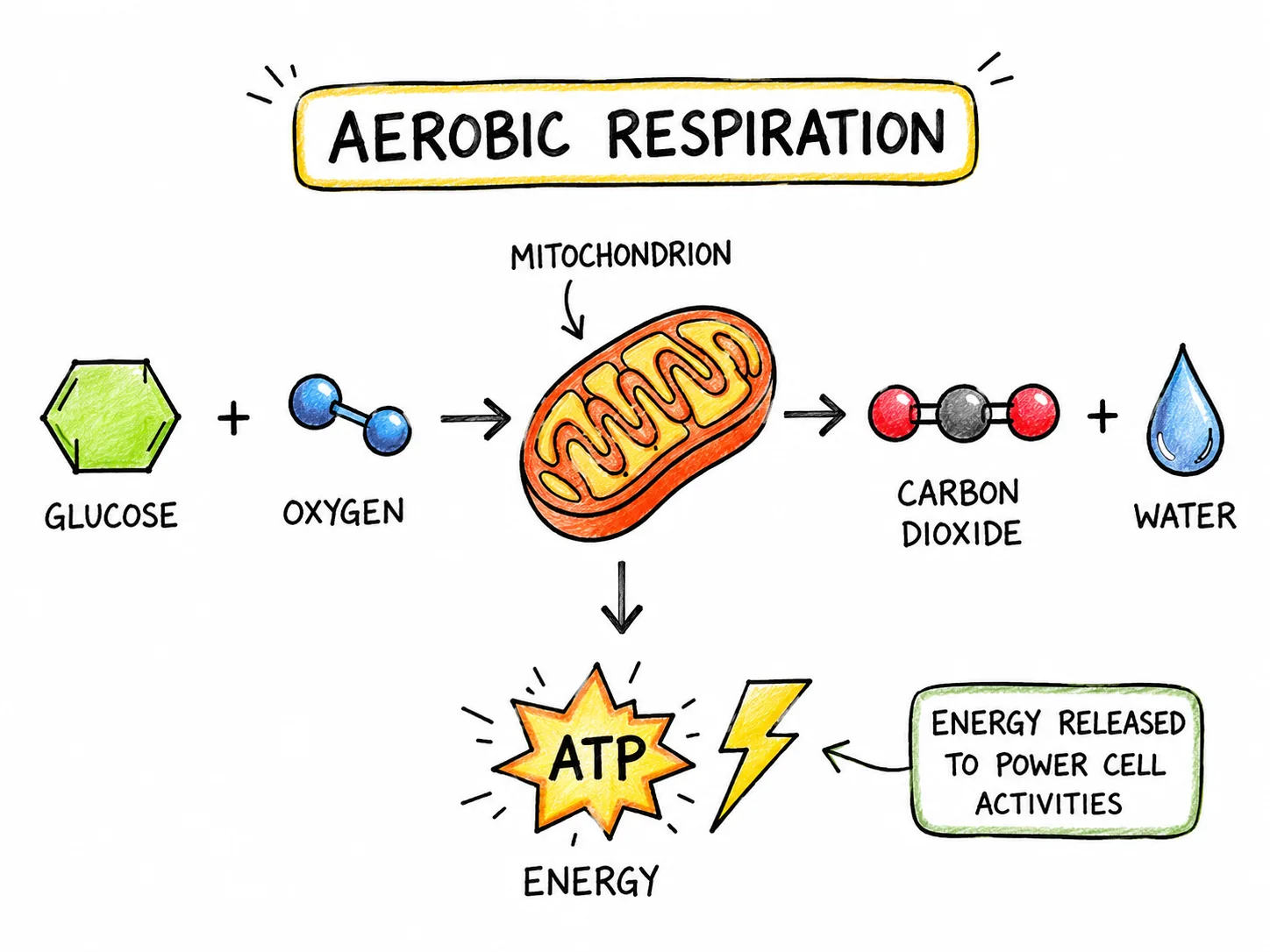
Mineral ions enter root hair cells by active transport [1], which needs energy from aerobic respiration [1]. In waterlogged soil there is little oxygen, so respiration and therefore active transport are reduced [1].
Section 8 of 9Key terms
| Term | Meaning |
|---|---|
| Xylem | Plant tissue that transports water and mineral ions upward from the roots. |
| Phloem | Plant tissue that transports sugars around the plant. |
| Lignin | A strong, waterproof substance that strengthens xylem walls. |
| Root hair cell | A root epidermal cell with an extension for absorbing water and ions. |
| Transpiration stream | The continuous flow of water from roots to leaves. |
| Active transport | Movement of ions against a concentration gradient using energy from respiration. |
| Cohesion | Attraction between water molecules that keeps the water column together. |