Skip to content
Dabour HubLEARN · PRACTICE · EXPLORESign inStudent

2.2.8Scaling Up

Xylem and Phloem

5 min read 9 parts Lesson 15 of 16 1 quiz

0%read

Section 1 of 9The plant transport system
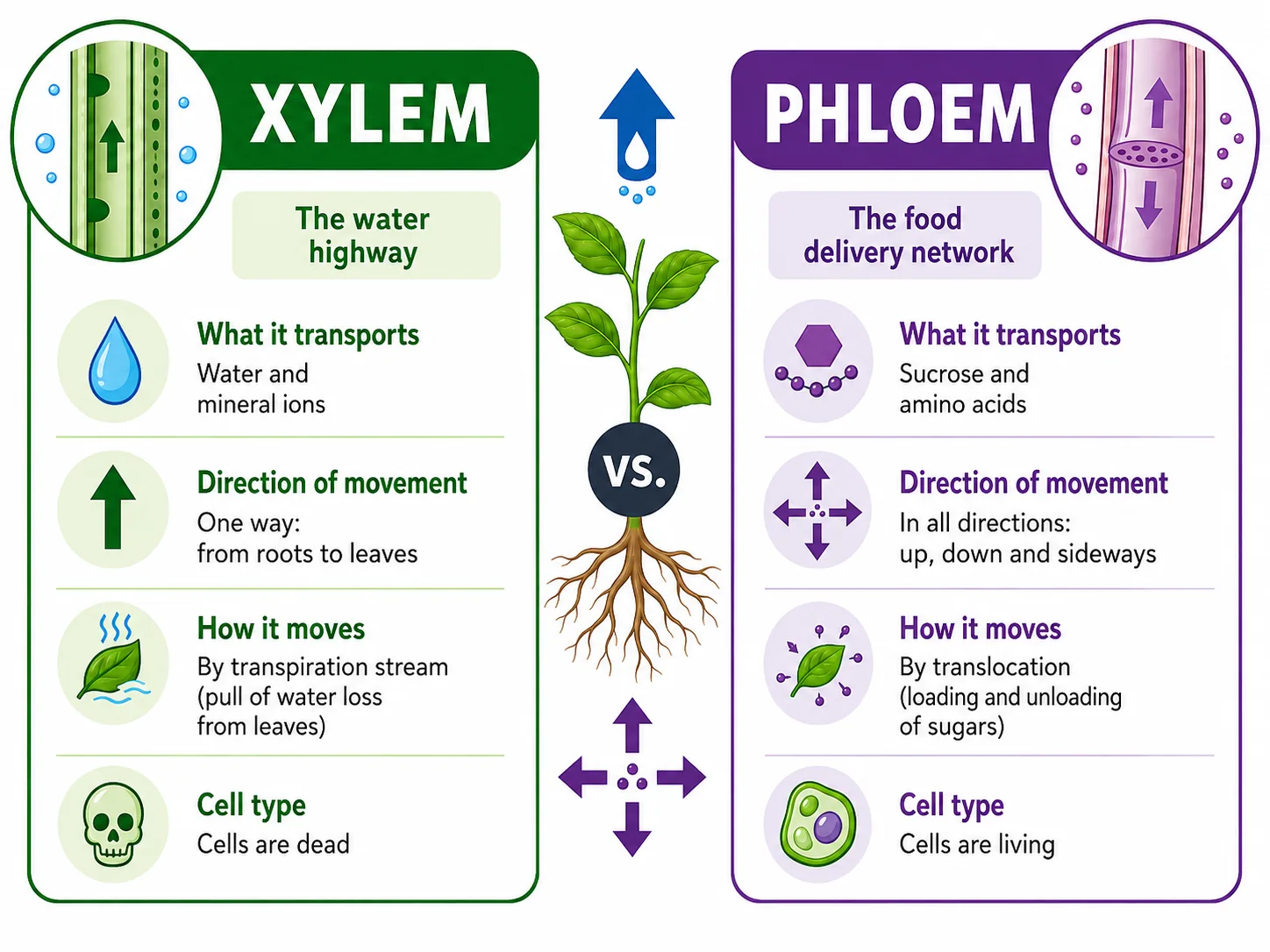
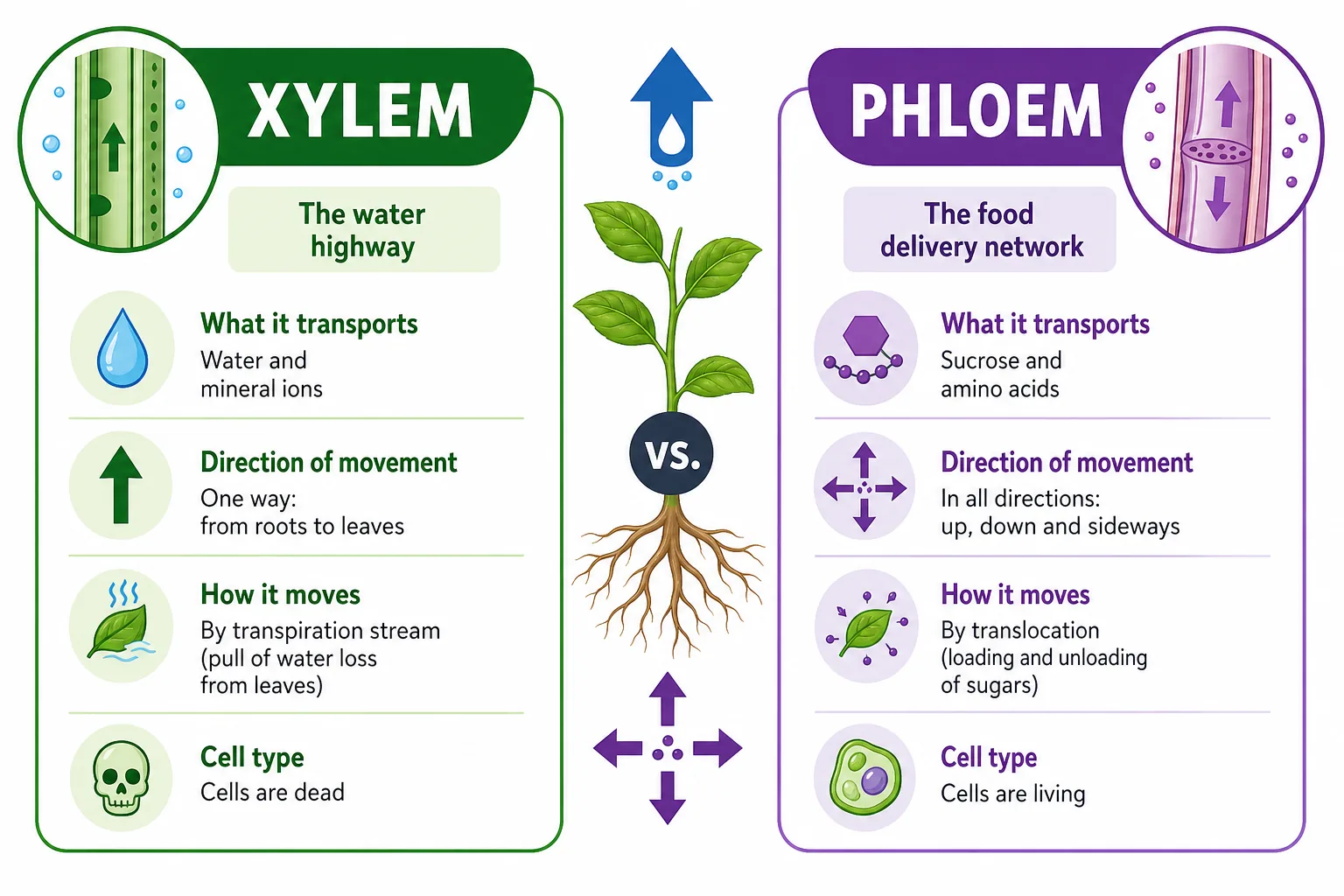
Xylem vs phloem comparison
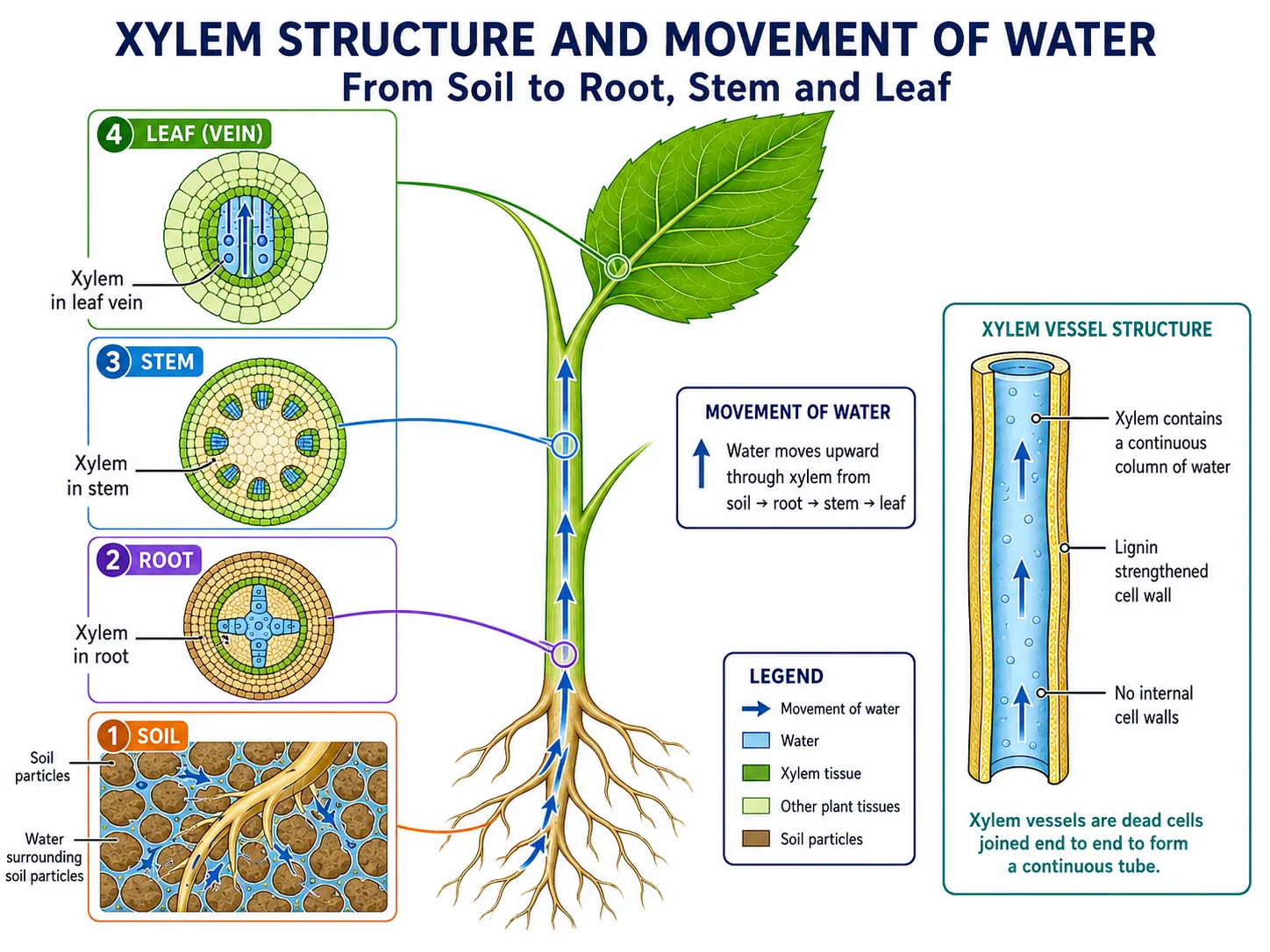
Xylem Structure and Movement of Water
plant tissues landscape
Transport in plants and humans
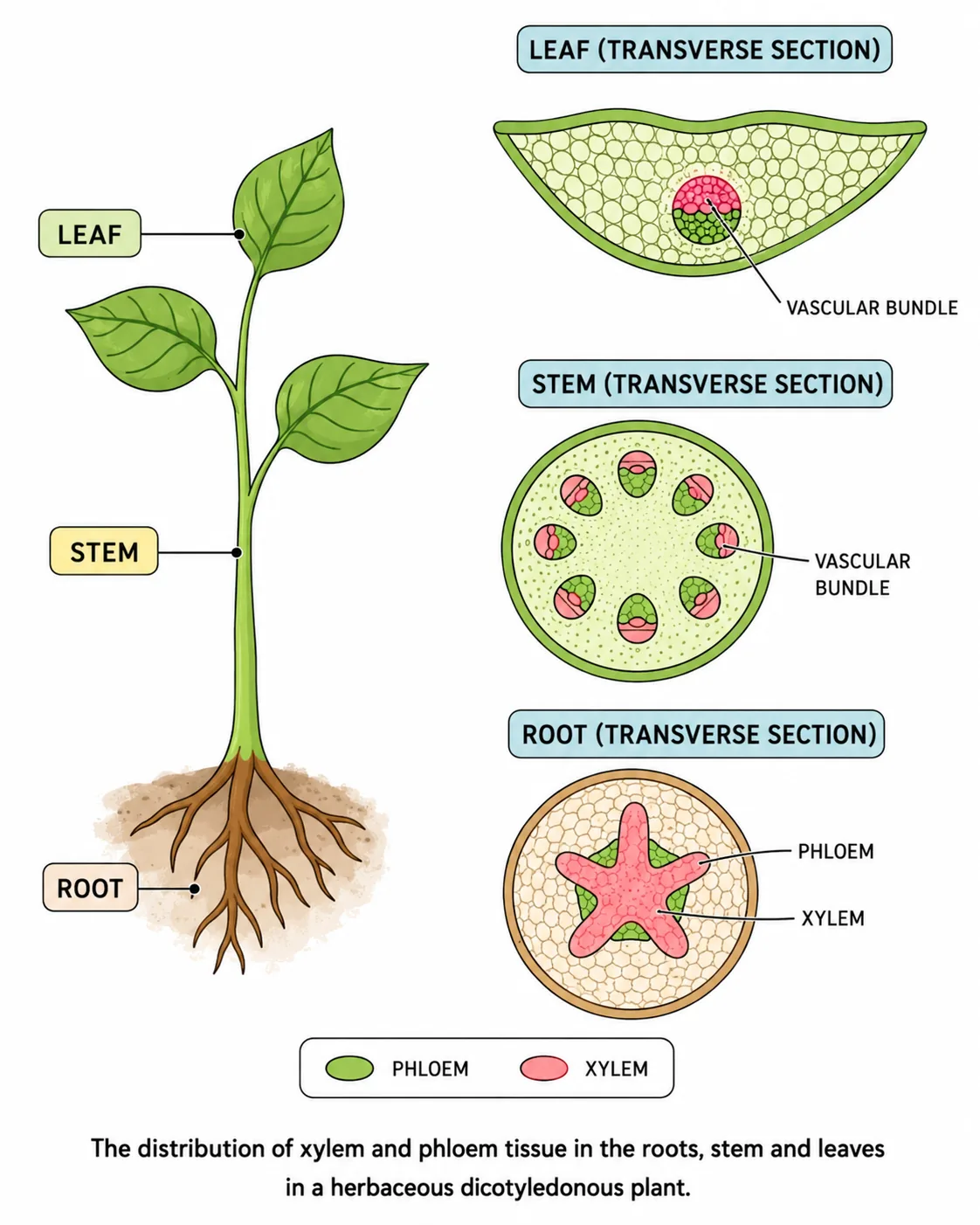
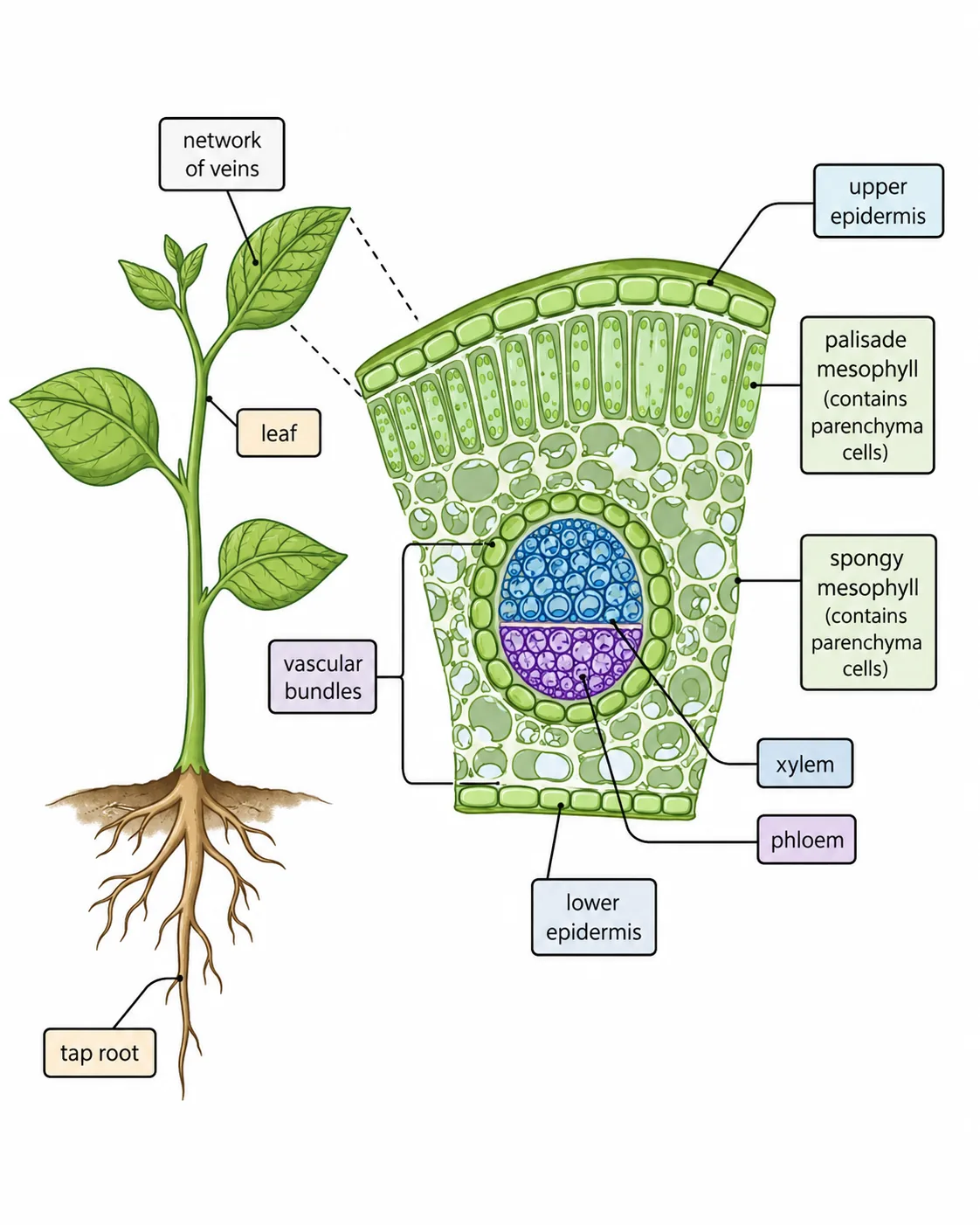
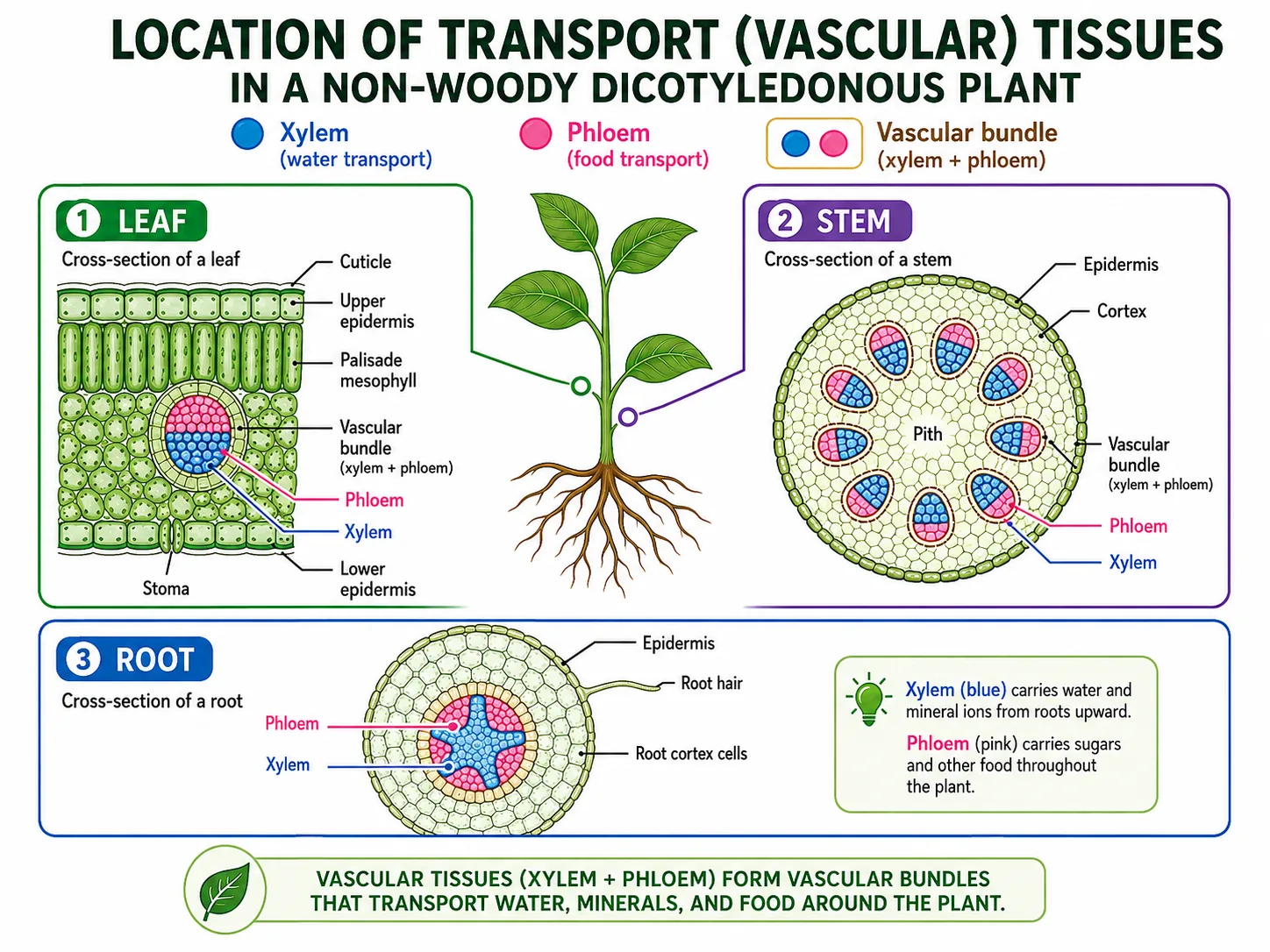
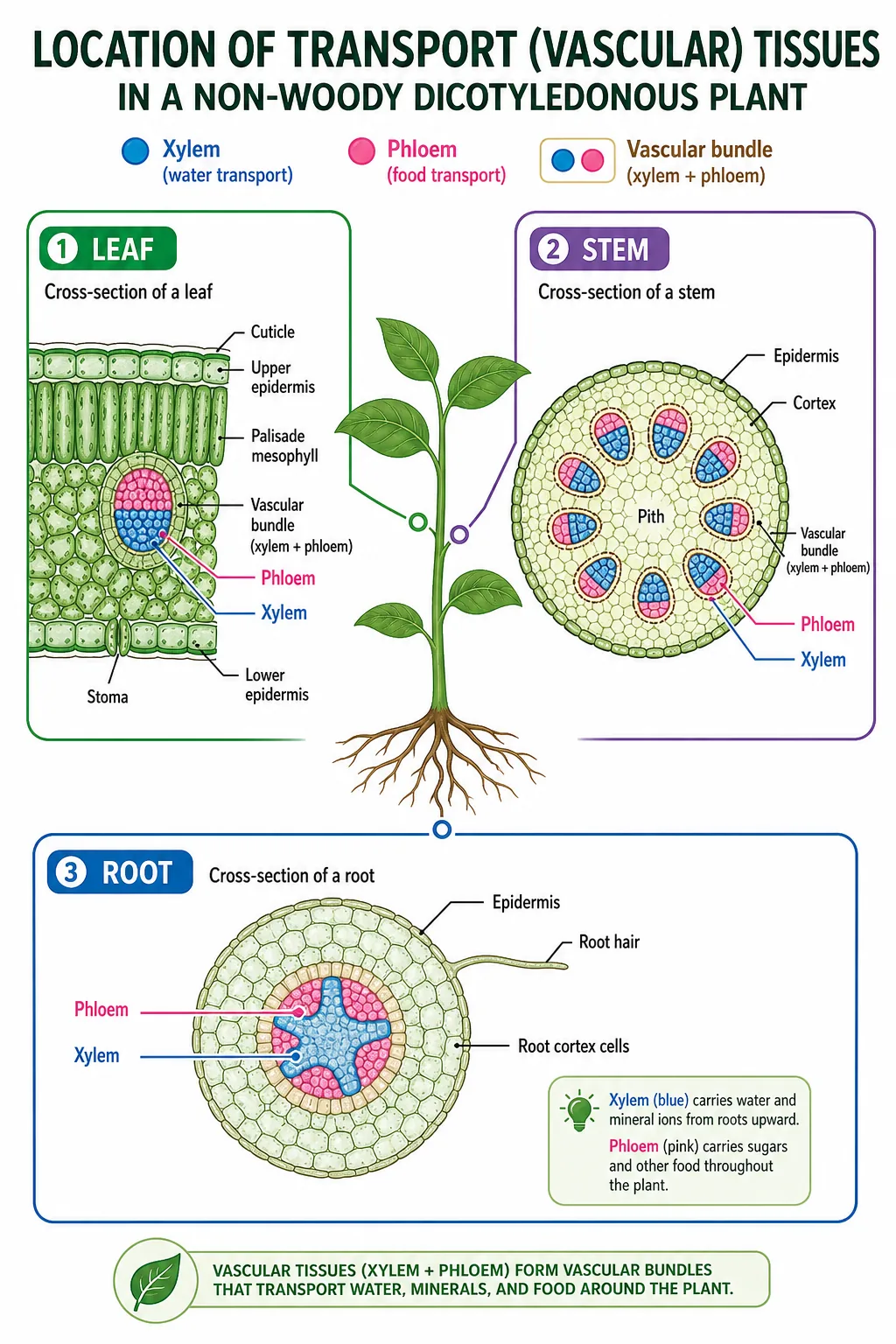
Location of Transport (Vascular) Tissues
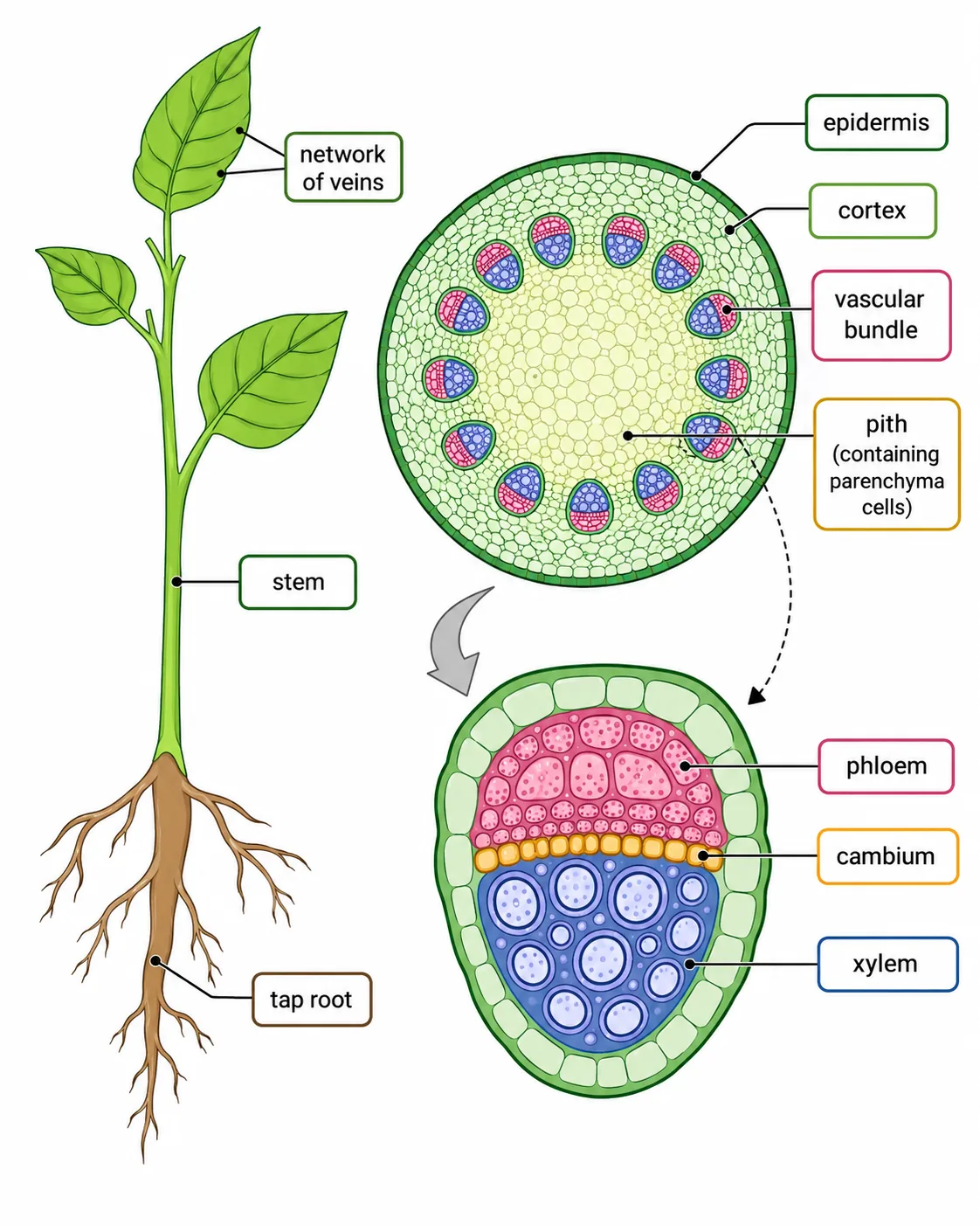
Transport (vascular) tissues in a dicotyledonous plant
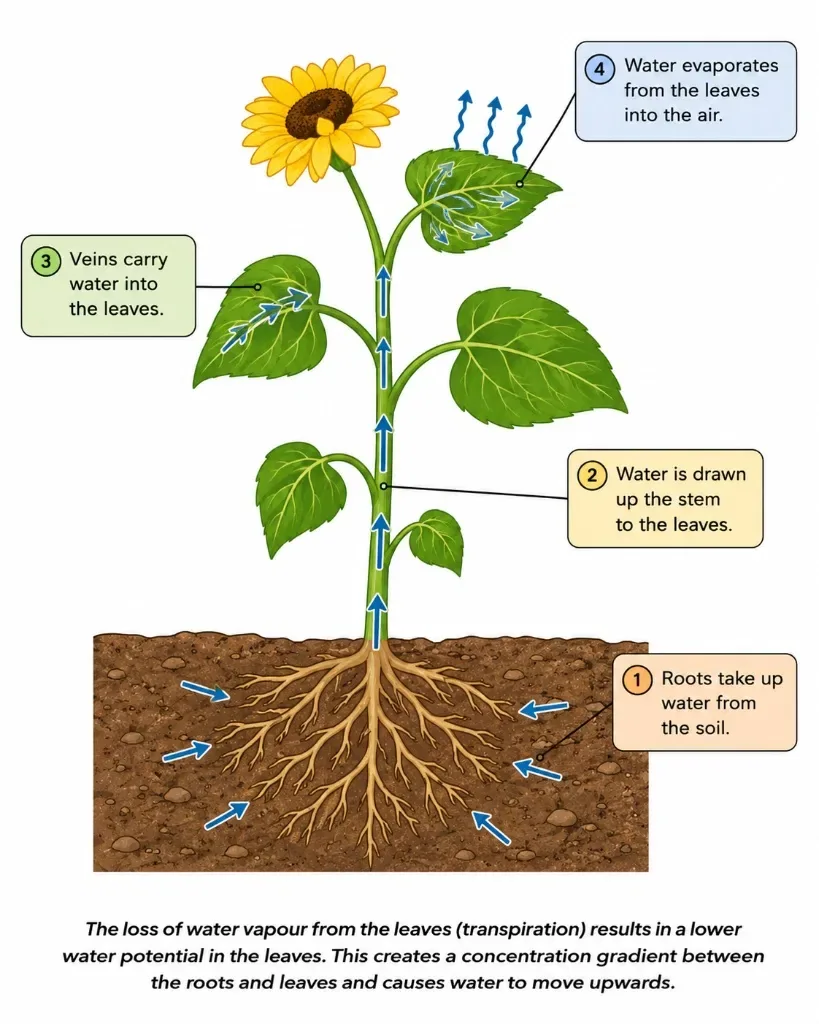
Water Transport in a Plant

Plants are large multicellular organisms, and cells deep in the plant cannot get what they need by diffusion alone. They have two types of transport tissue, which are arranged together in vascular bundles running through the roots, stem and leaves: xylem, which carries water and mineral ions, and phloem, which carries sugars and other organic nutrients.

Section 2 of 9Xylem
Xylem vessel
Xylem Vessel Structure
Xylem vessel
Xylem vessel
Xylem vessel structure
Xylem Vessel — Step-by-Step Mechanism

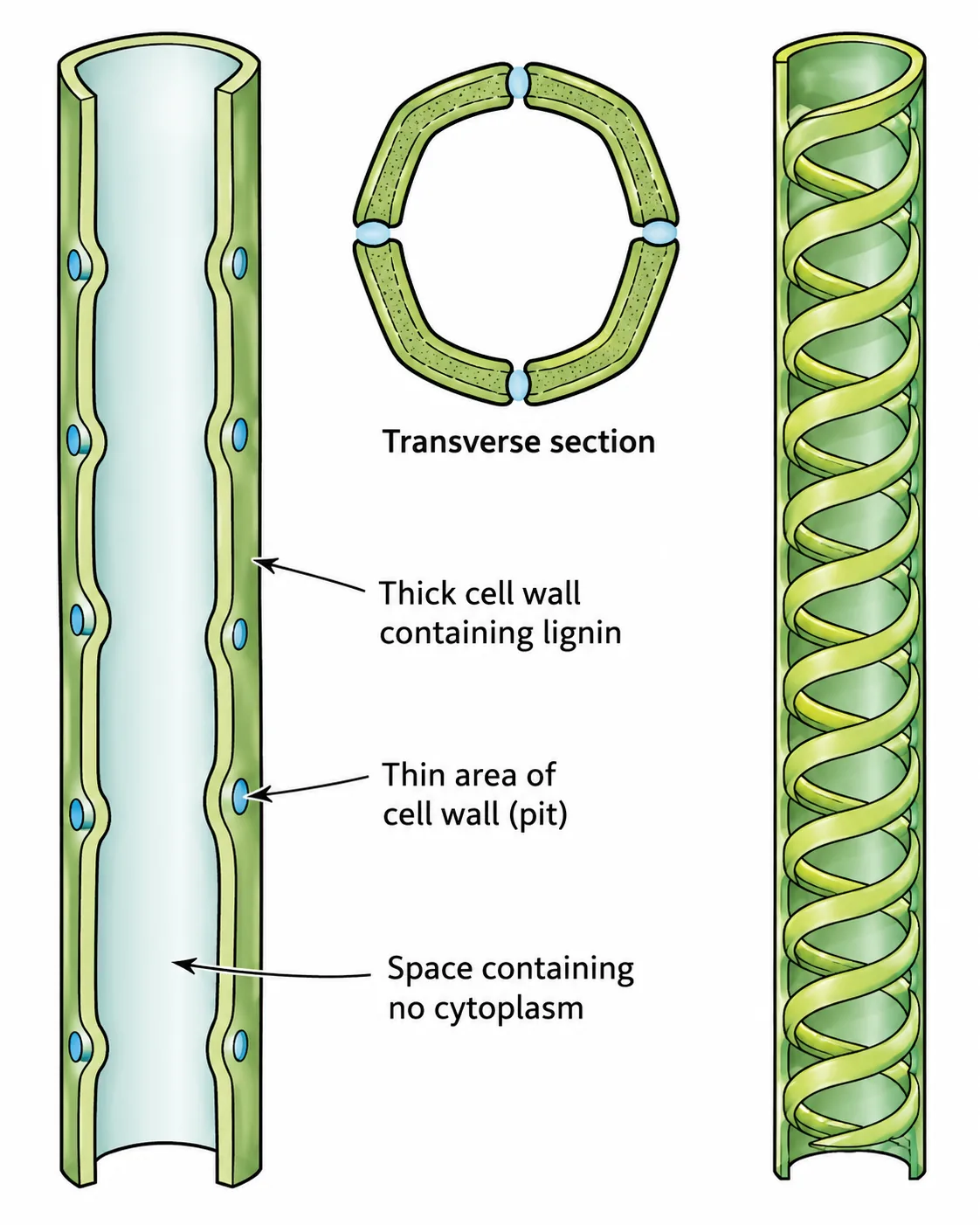
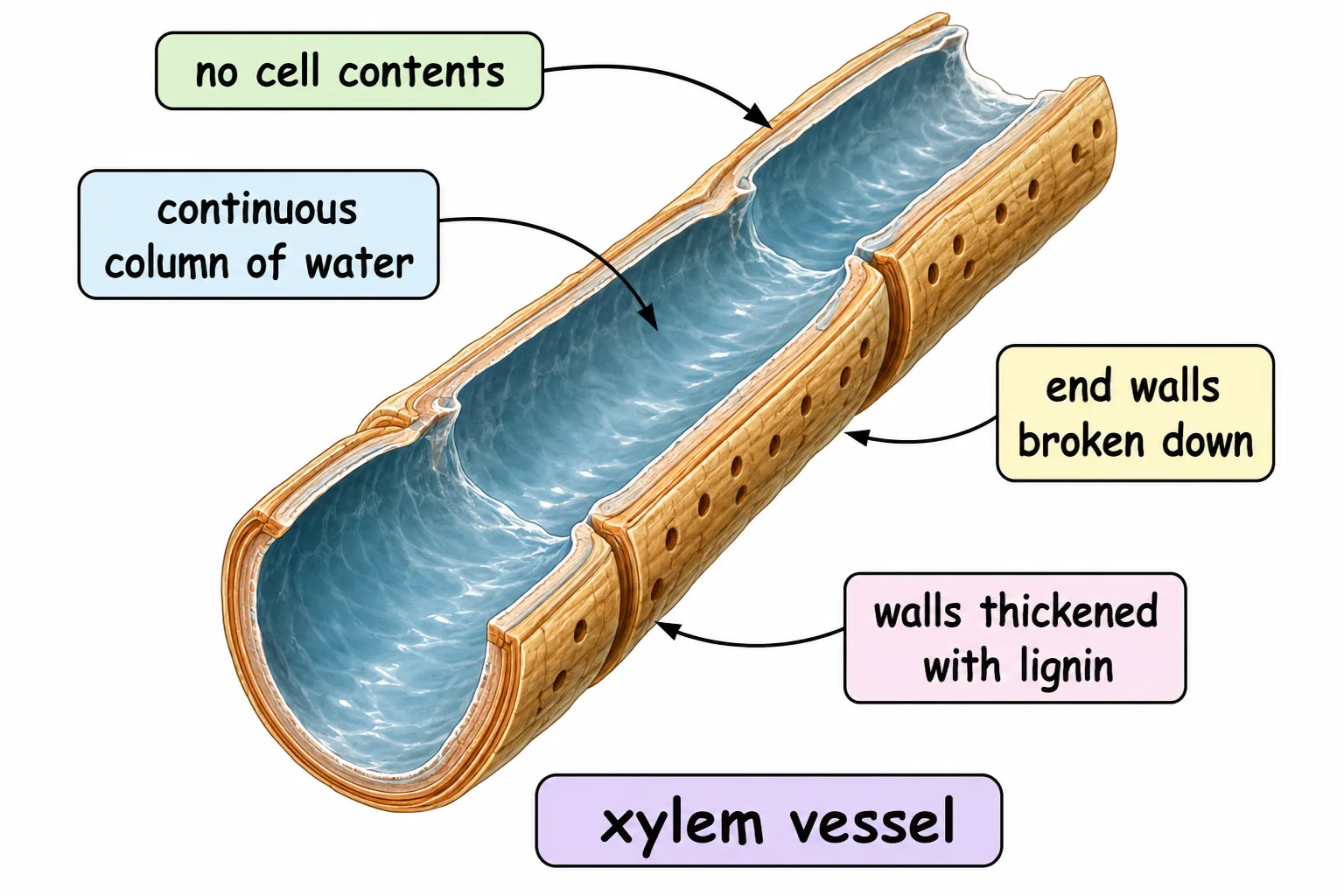
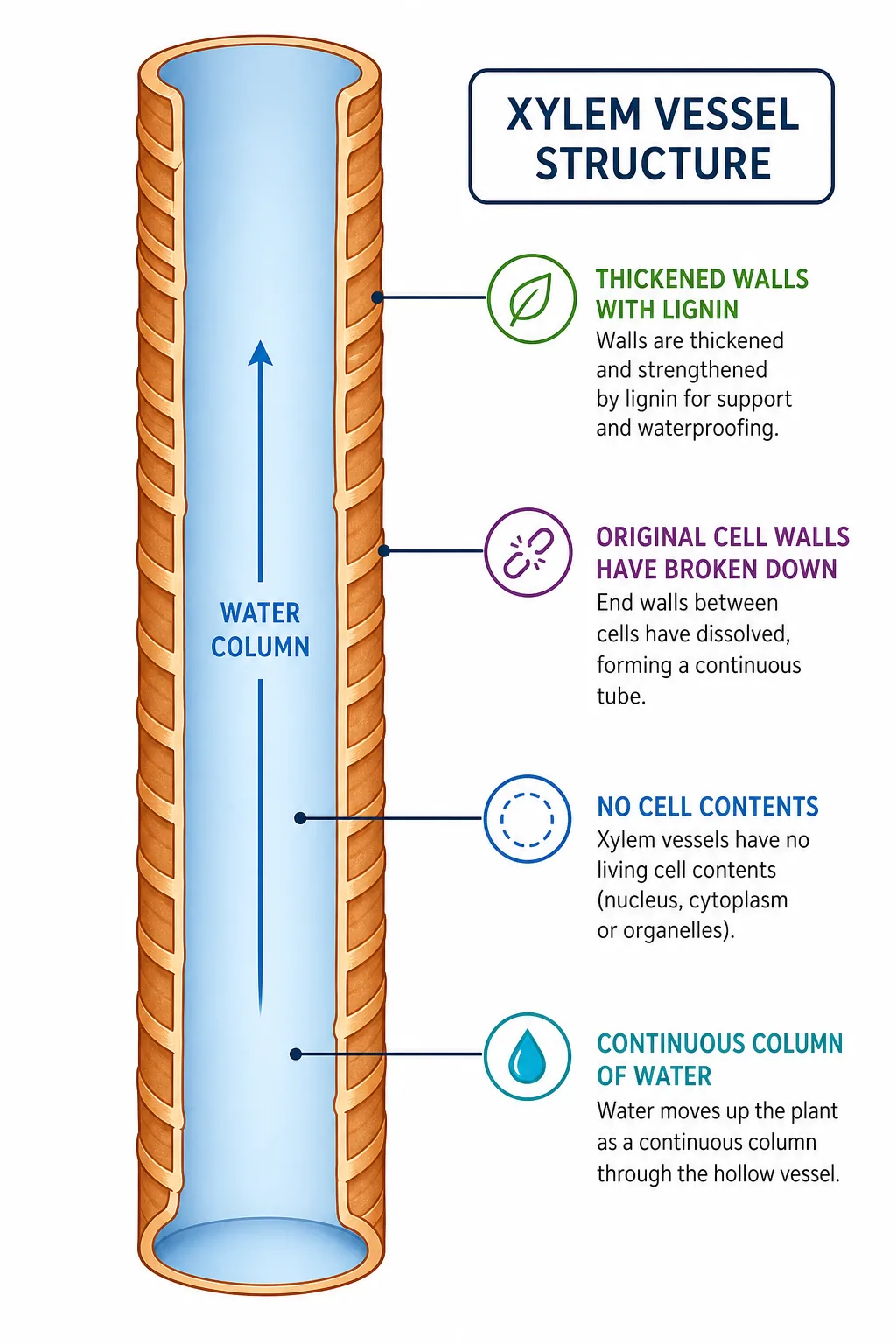
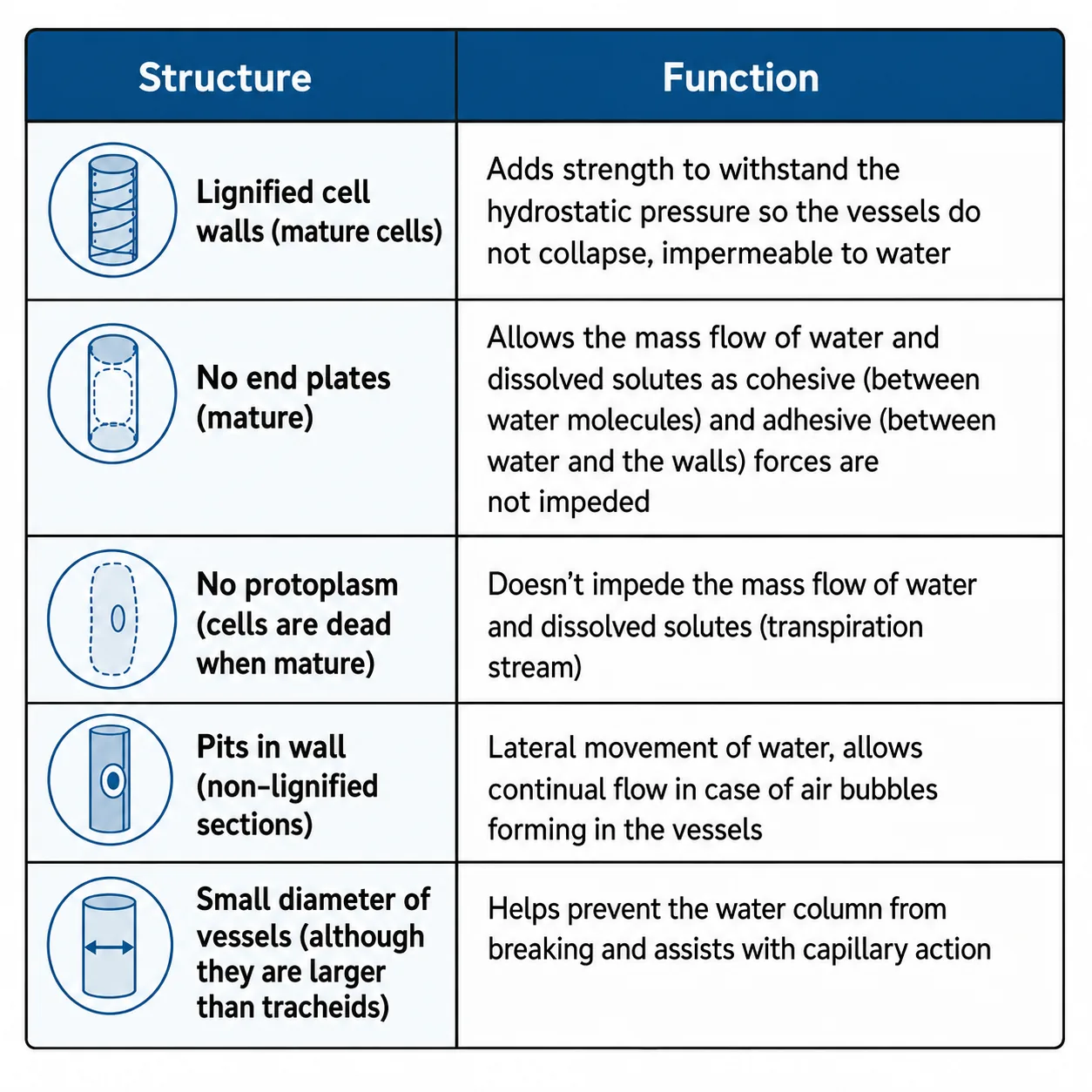
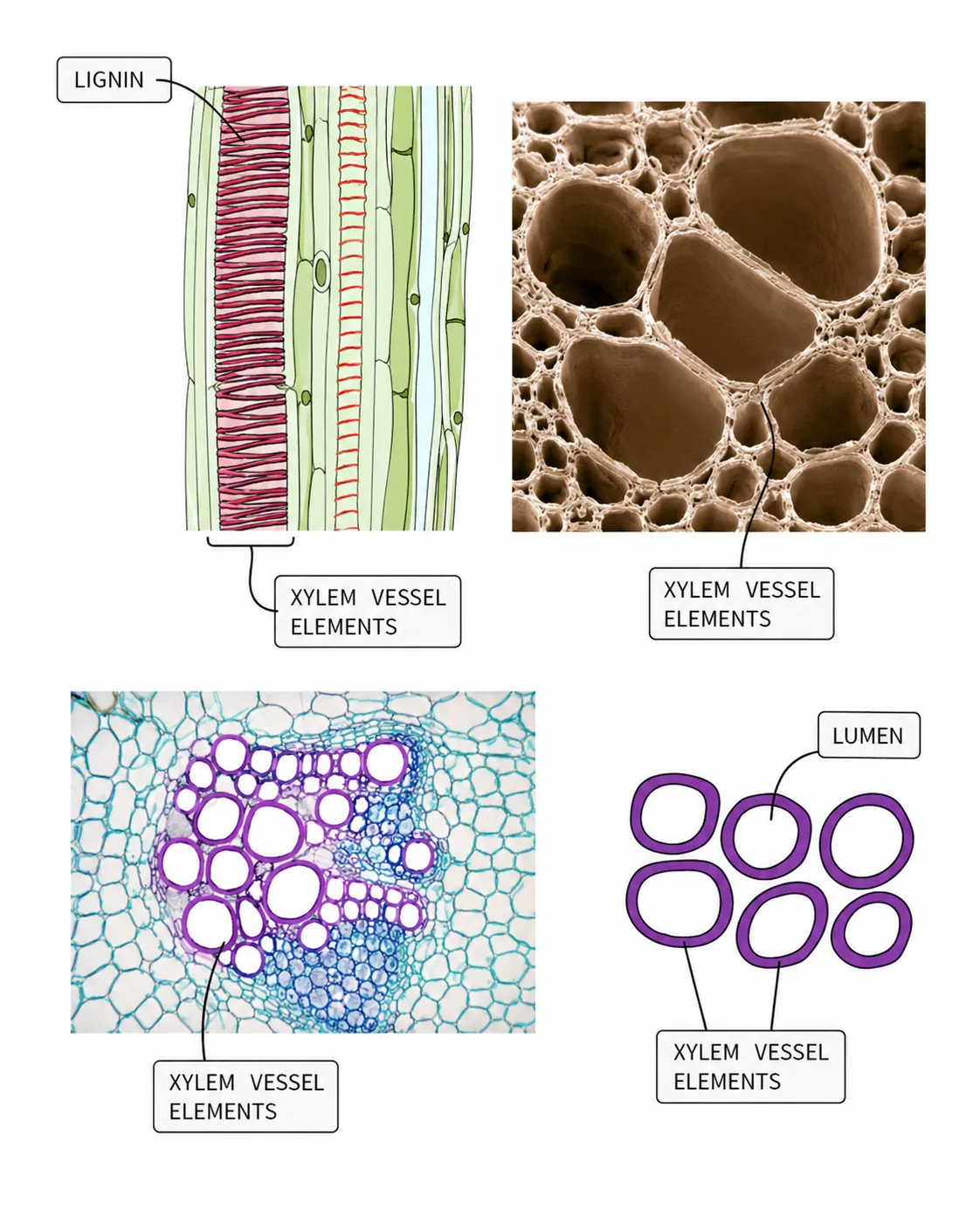
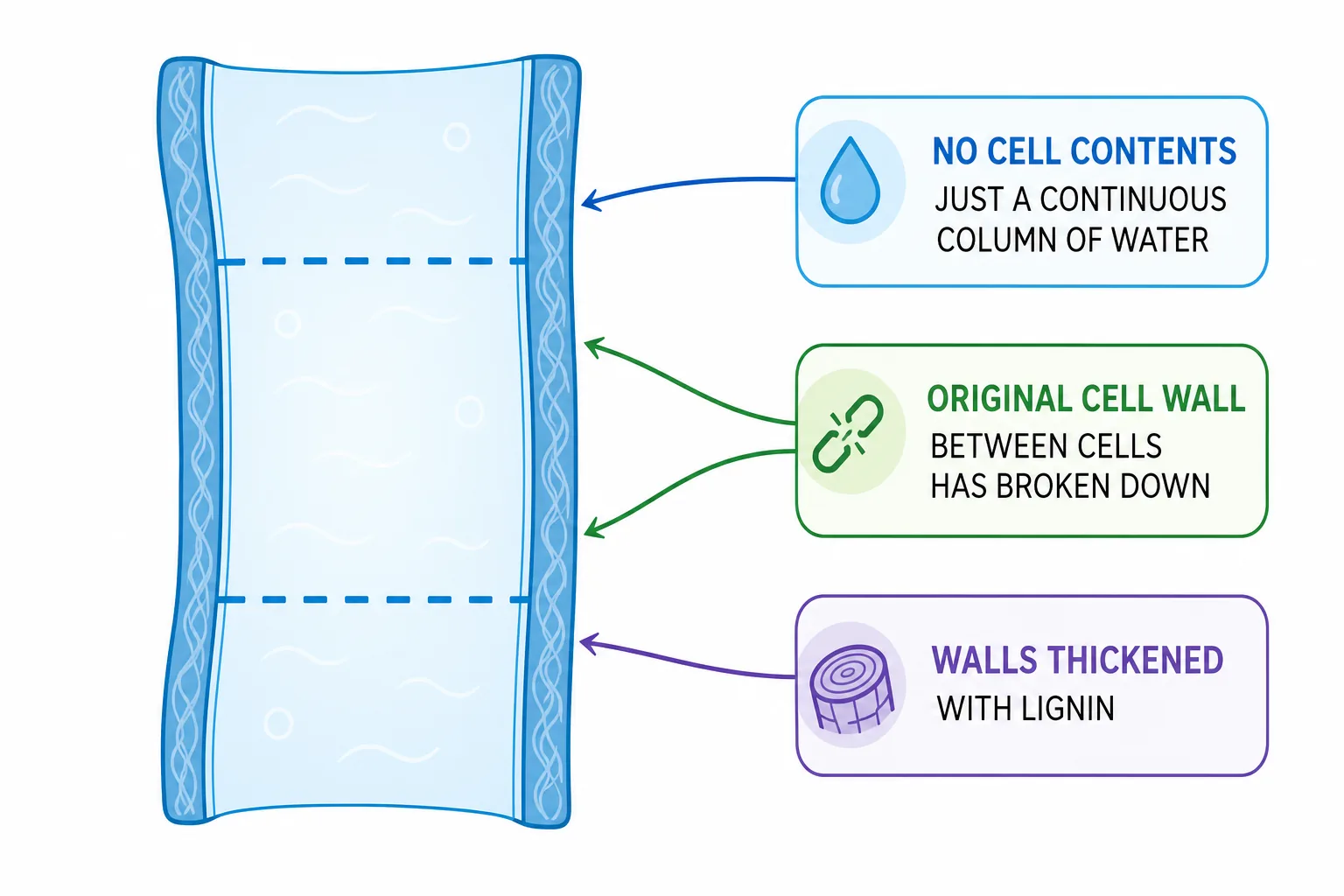
Xylem vessels are long, hollow tubes made from dead cells joined end to end.

The end walls between cells have broken down, forming a continuous hollow tube with no cytoplasm, so water flows easily.
Lignin
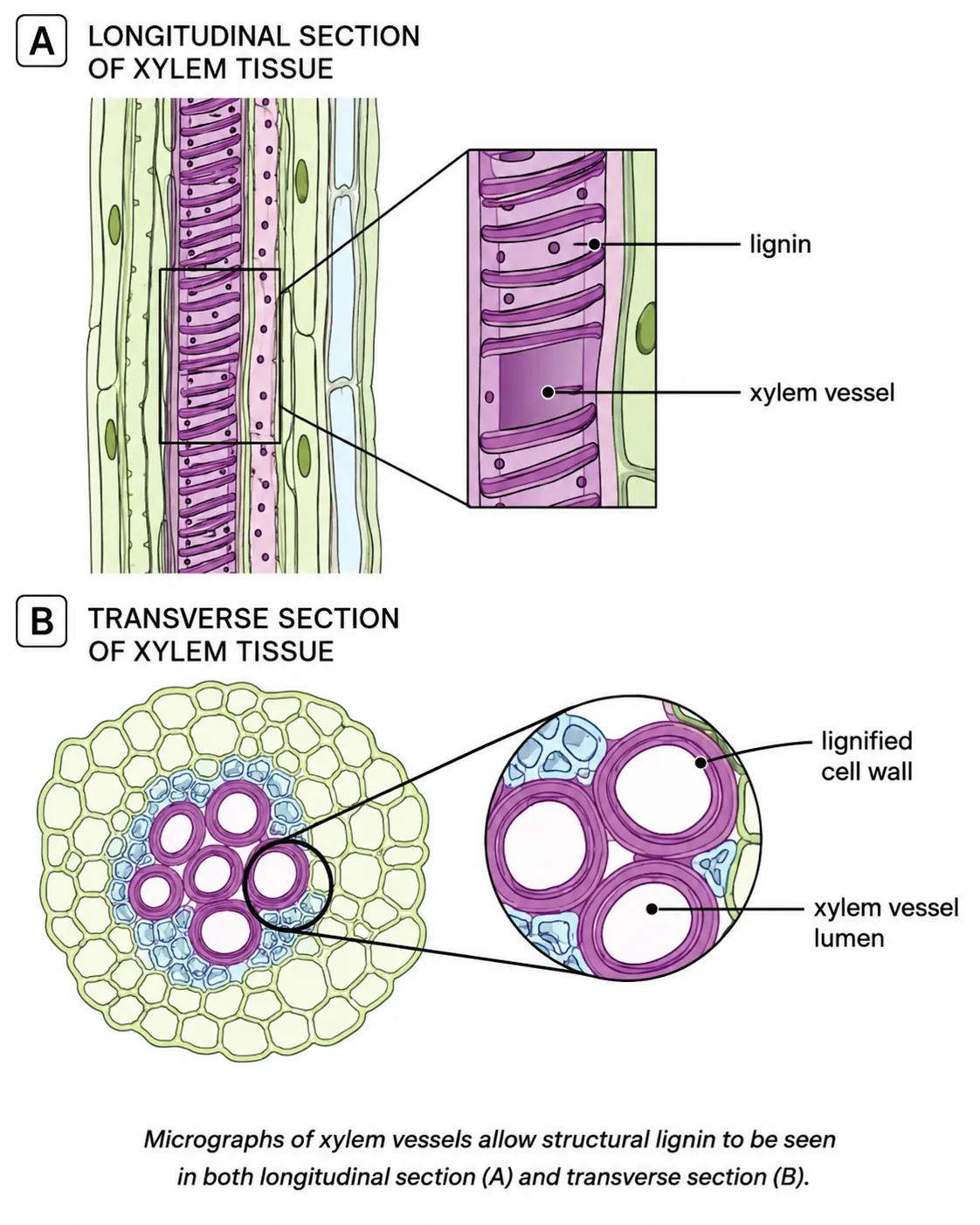
The walls are thickened and strengthened with a hard substance called lignin, often in spirals or rings.
  • Lignin makes the vessels waterproof and strong enough to withstand the low pressure in the tube, and it supports the plant.
Water and dissolved mineral ions move in one direction: from the roots to the leaves.

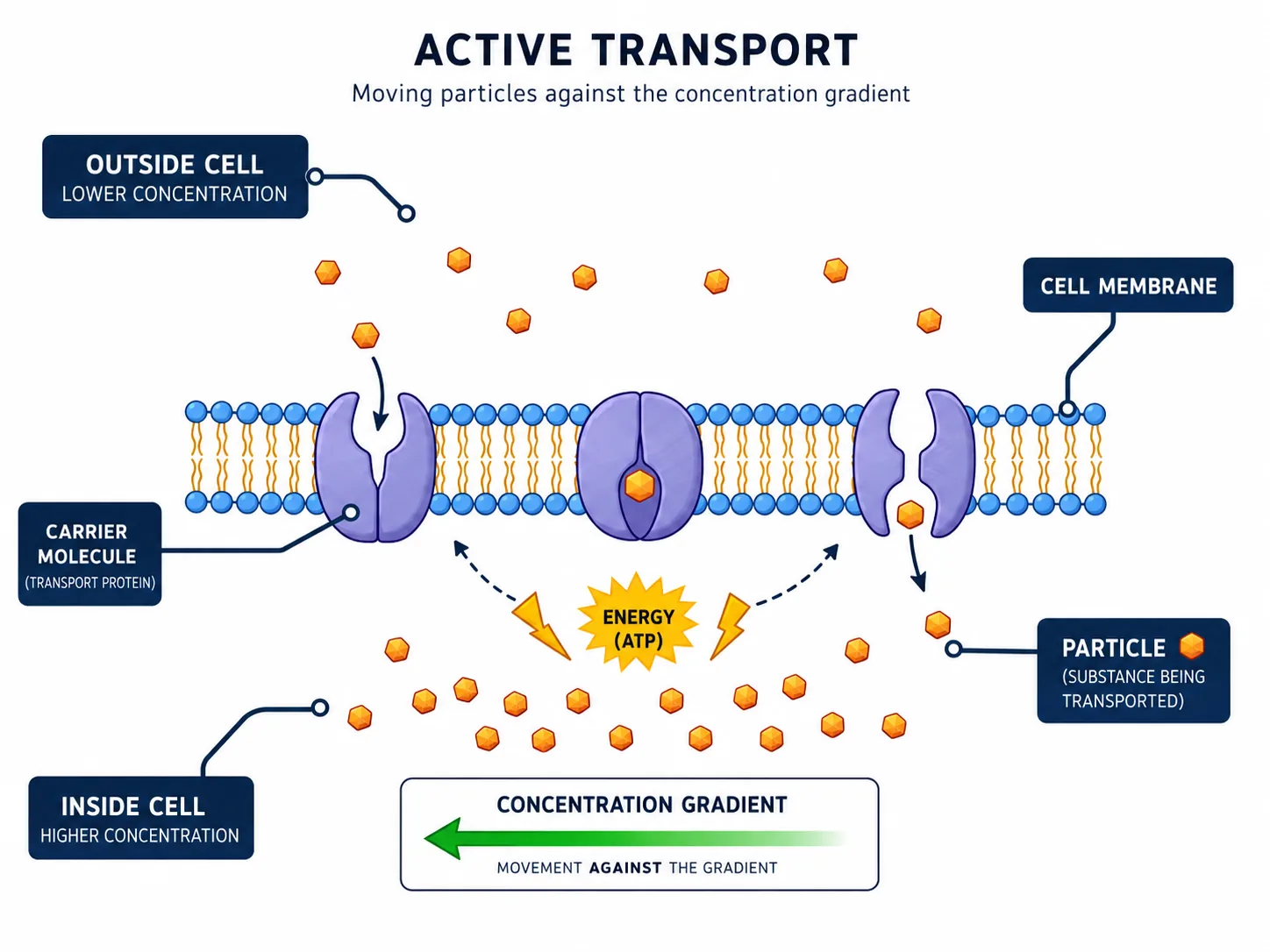
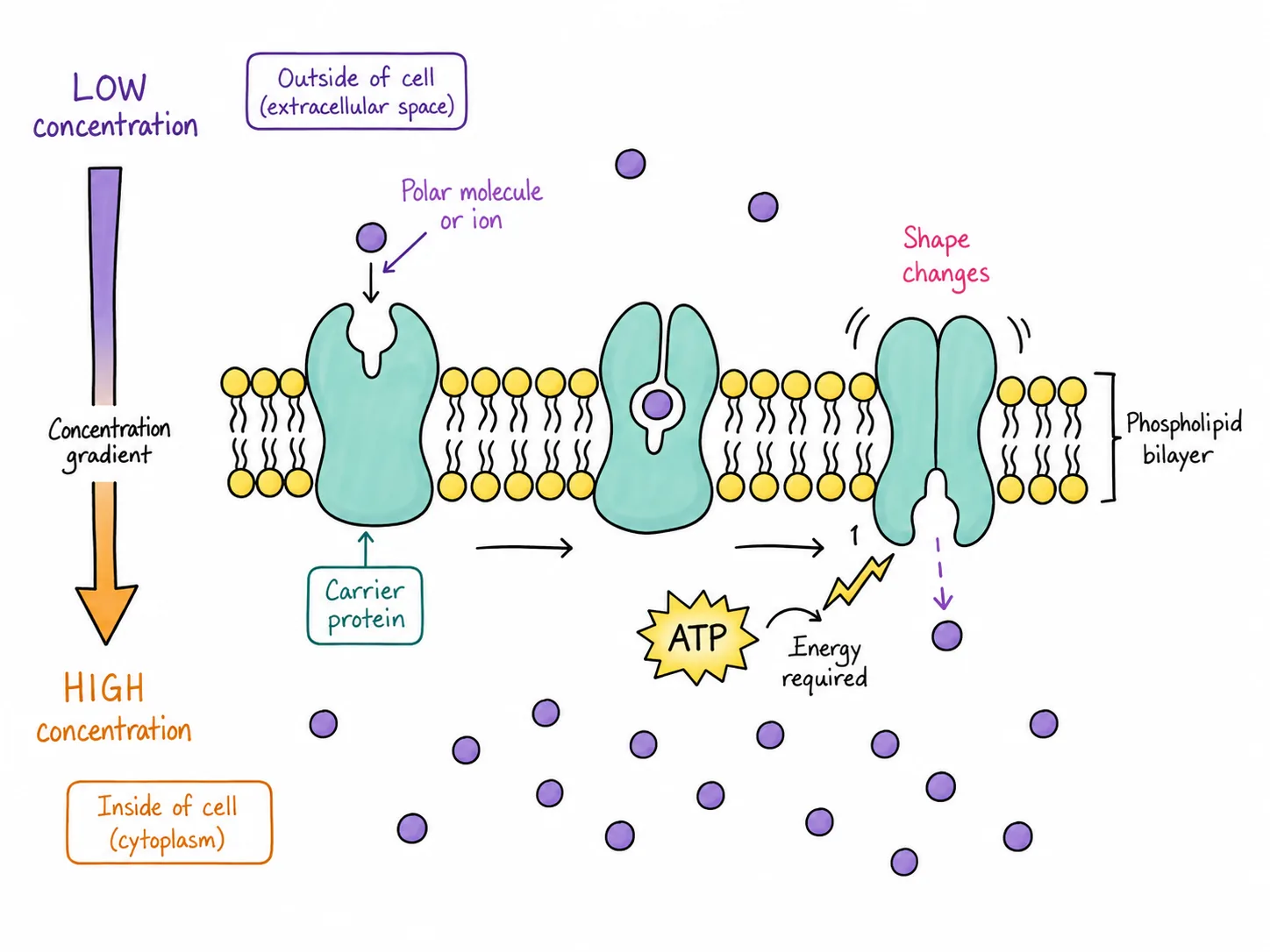
Because the cells are dead, this is not active transport. The movement is driven by transpiration at the leaves.

Section 3 of 9Phloem

Translocation in phloem
Translocation in Phloem
Translocation in phloem
Phloem Sieve Tube Elements — Step-by-Step Simulation
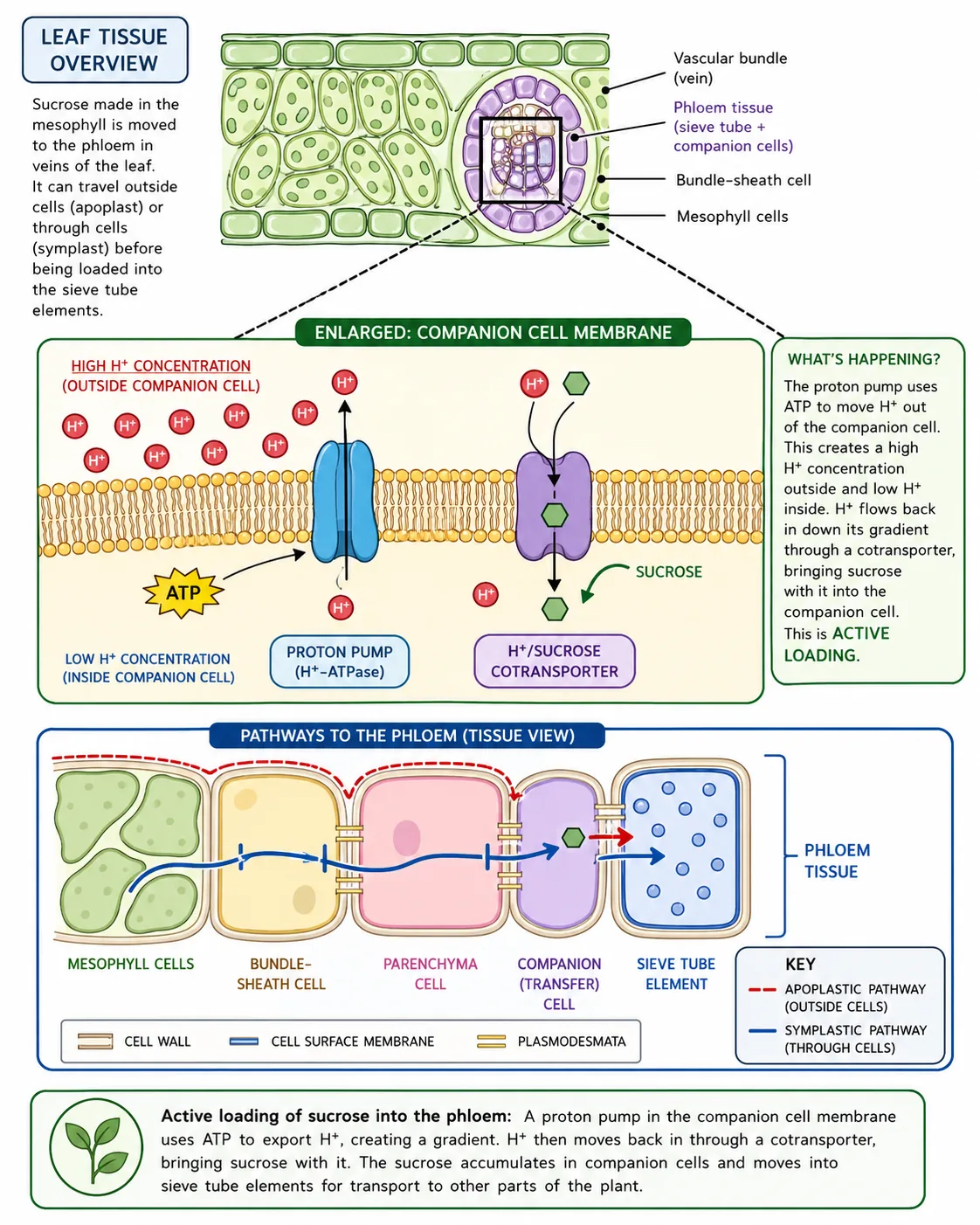
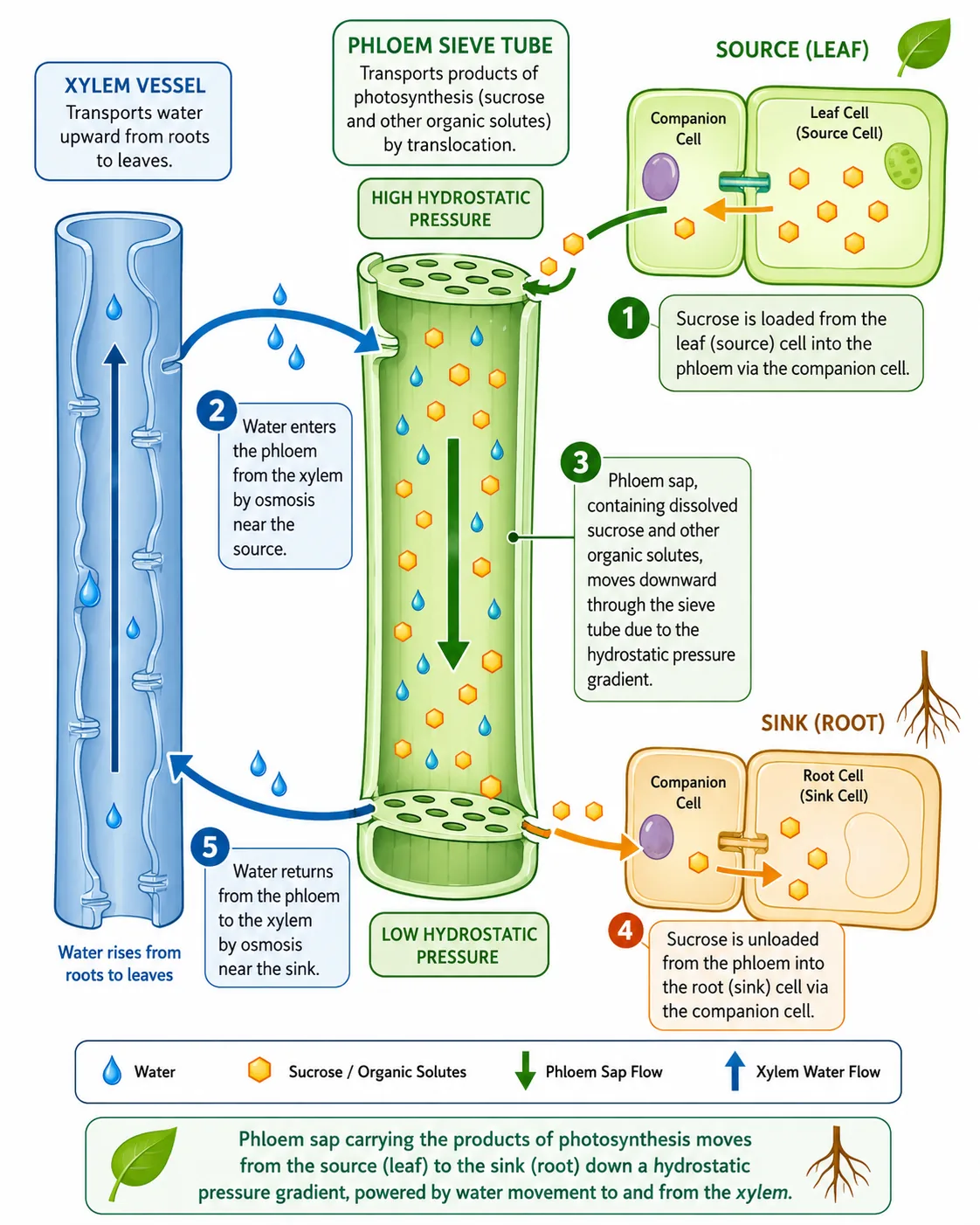
Active loading of sucrose into the phloem
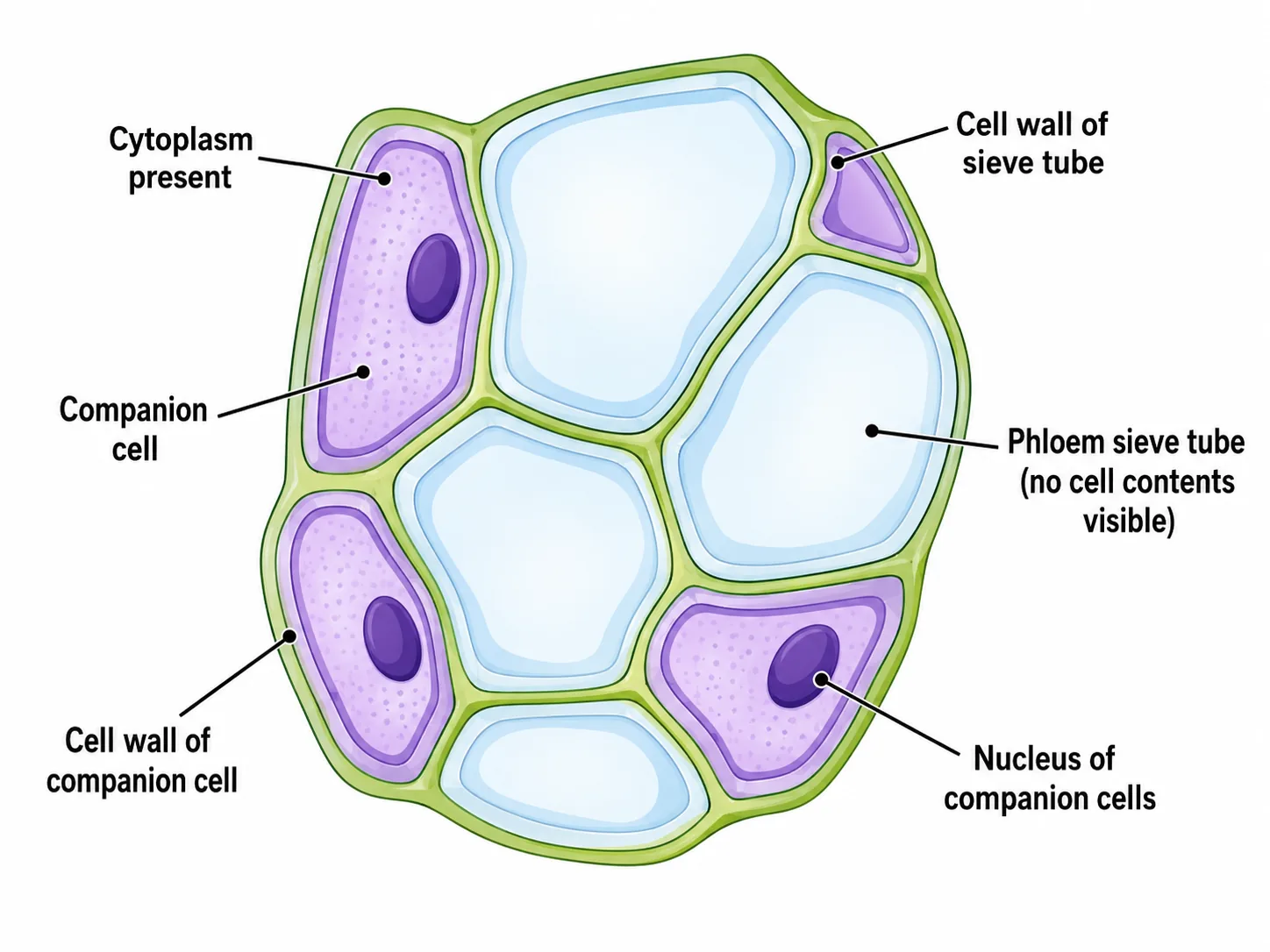
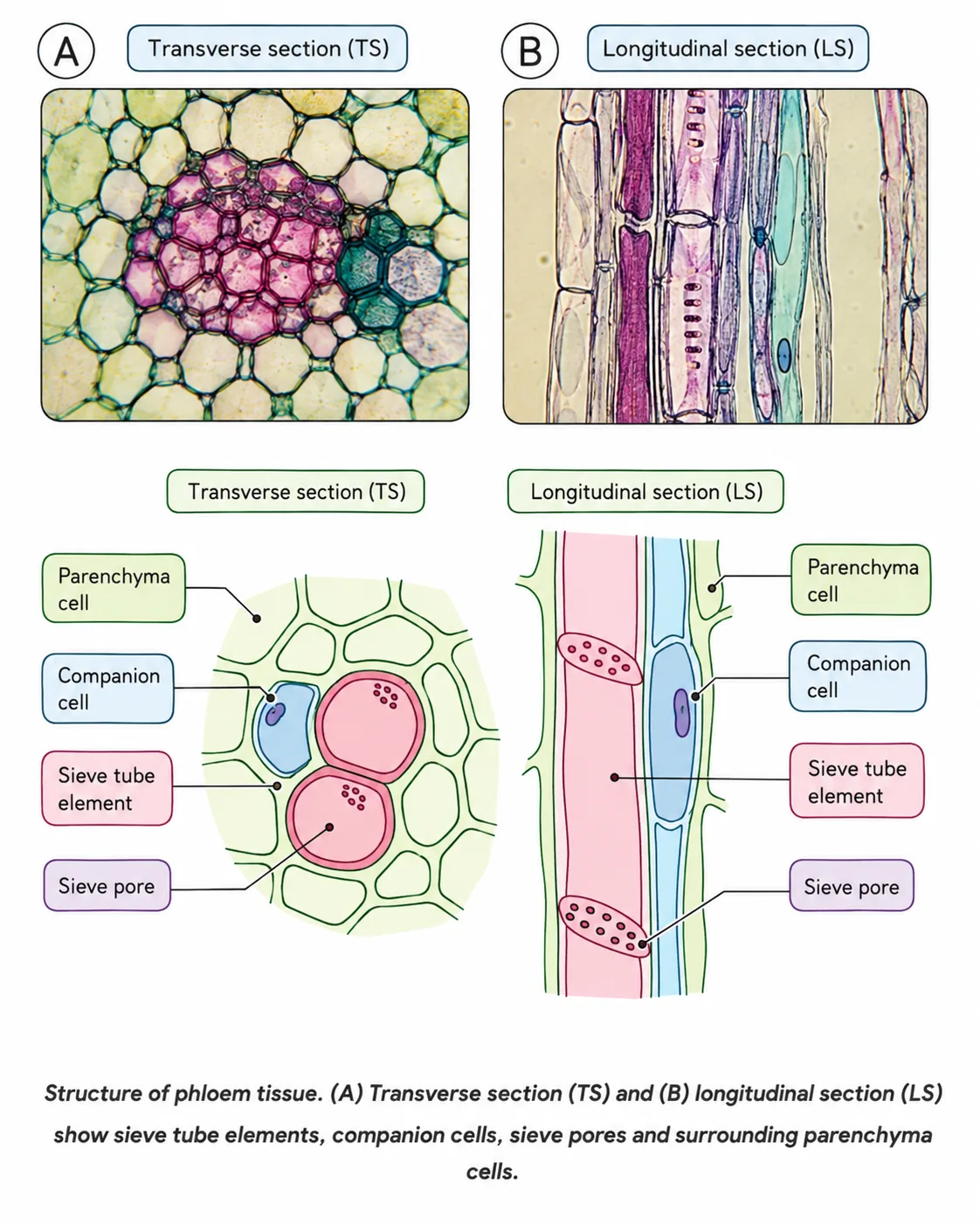
Structure of phloem tissue
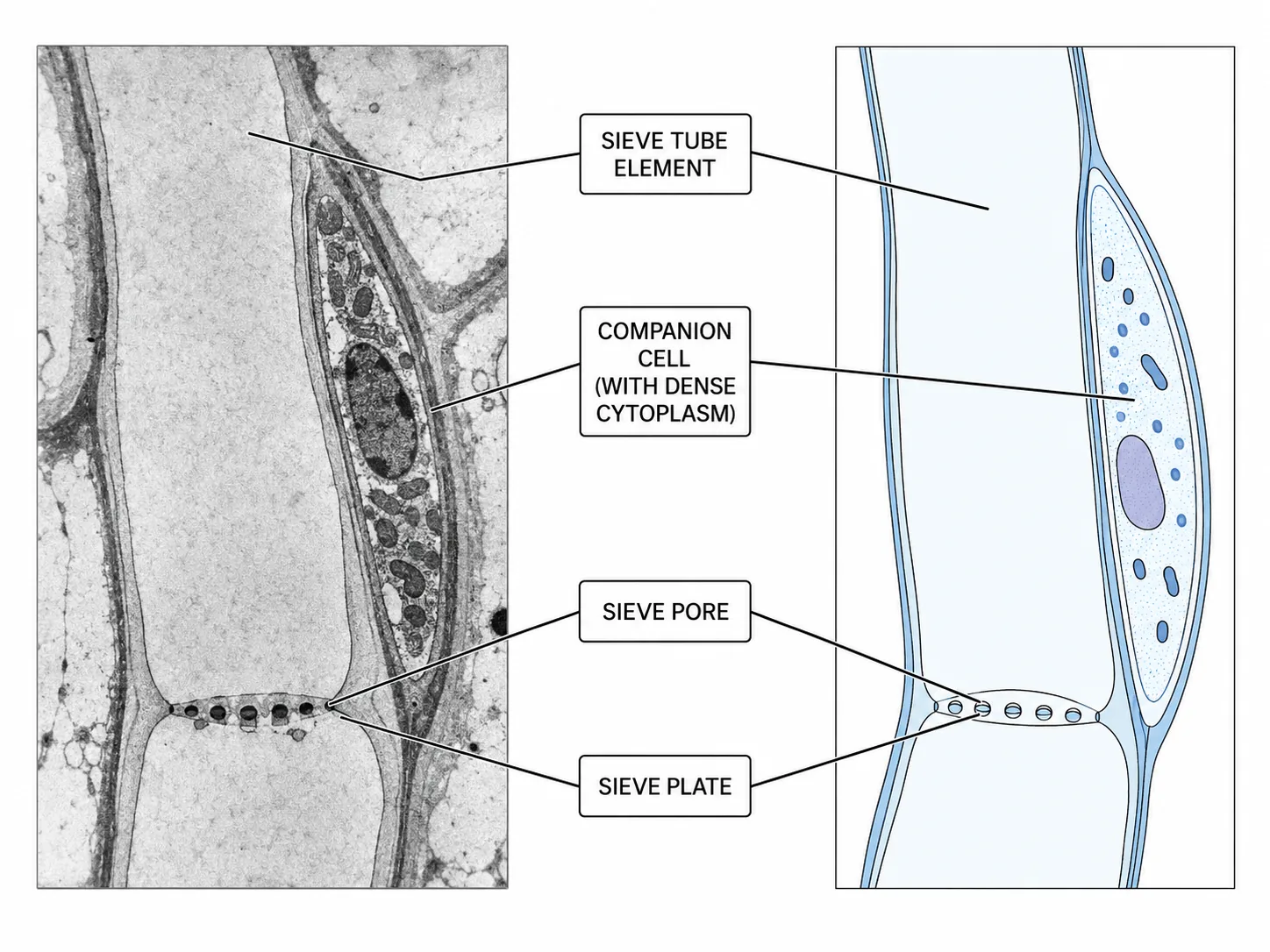
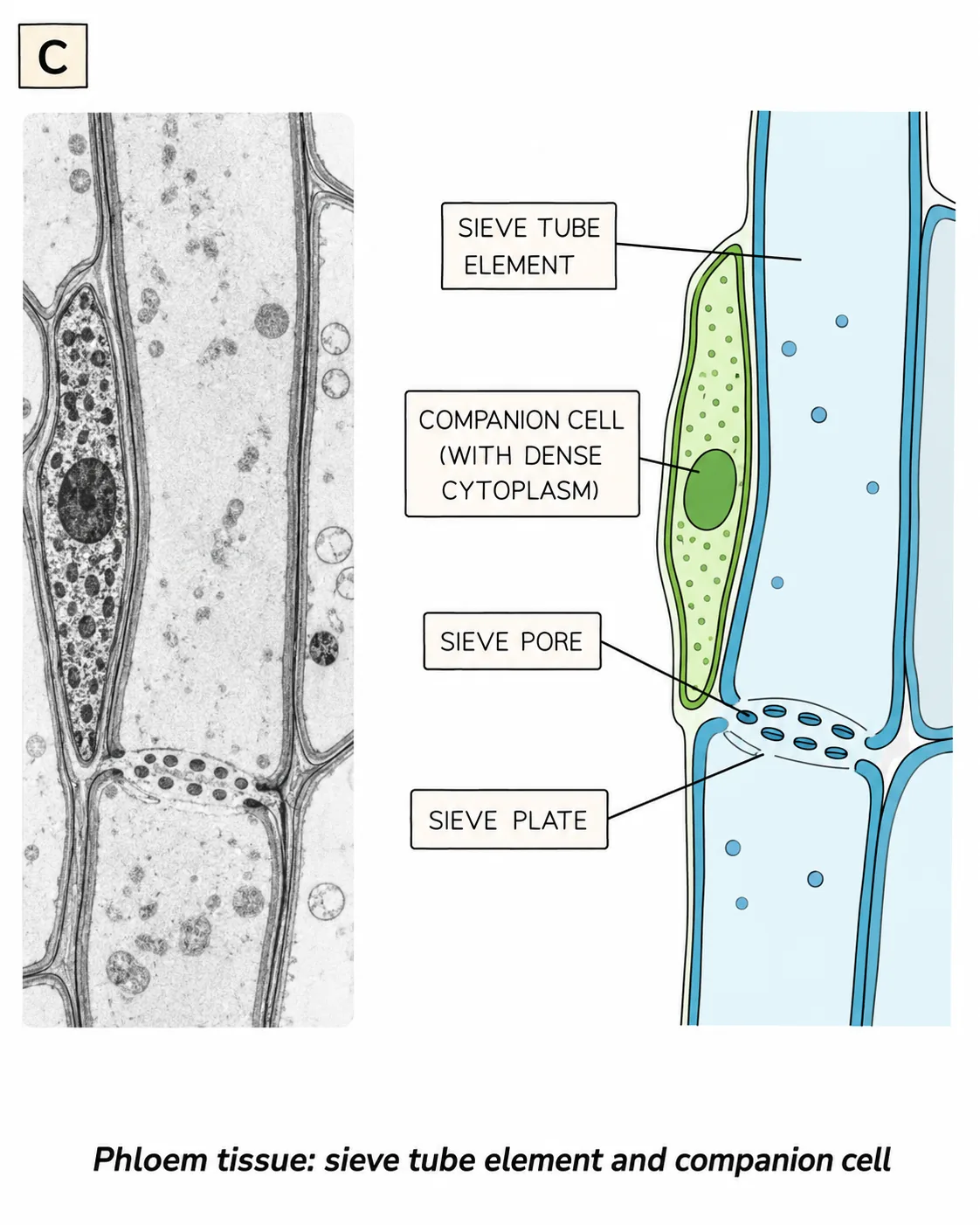
Phloem: sieve tube element and companion cell
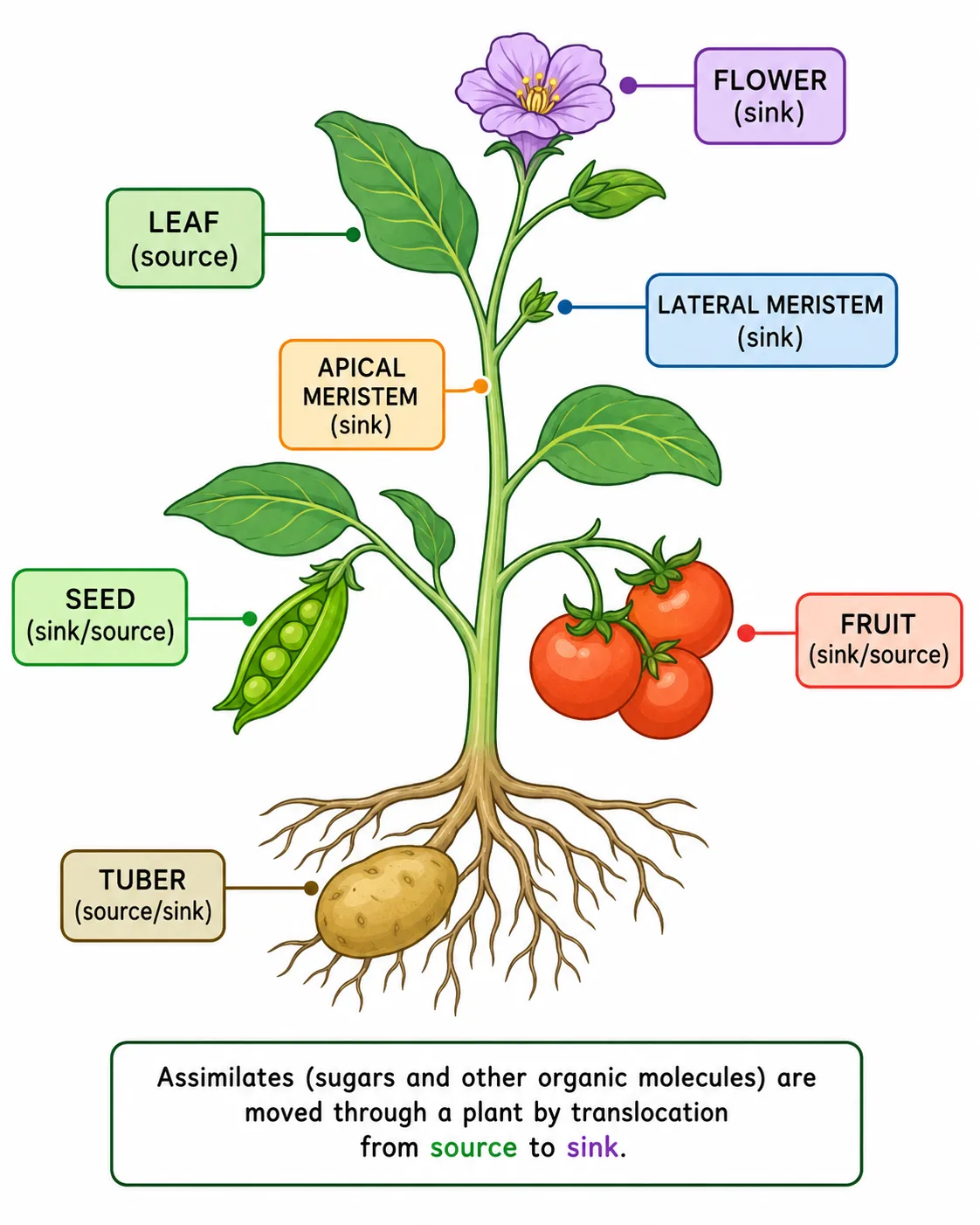
Phloem translocation from source leaf to sink with sieve tube
Translocation: source to sink

Phloem is made of living cells.

Sieve tube elements
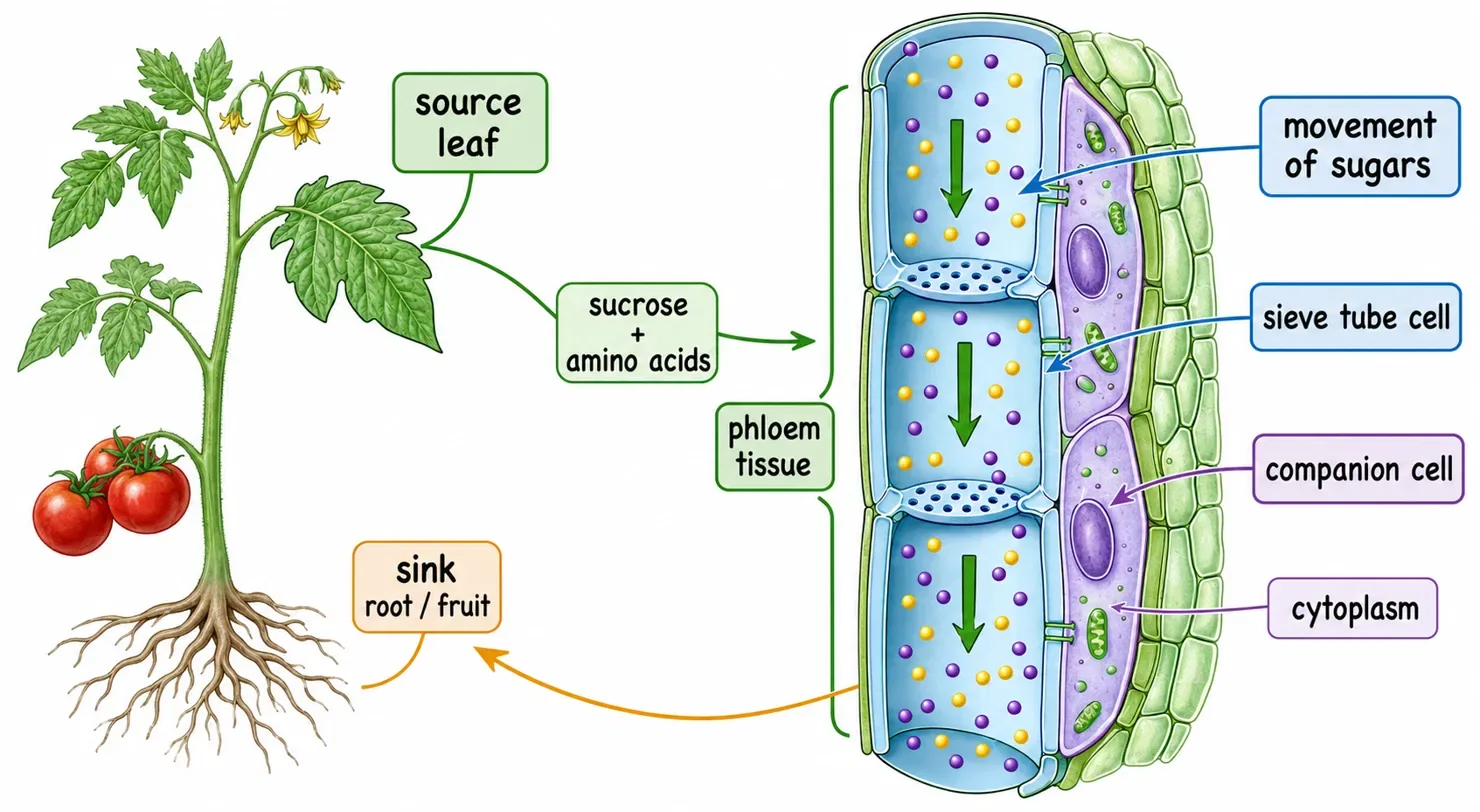
Sieve tube elements are joined end to end, and the end walls (sieve plates) have small pores so that sap can pass through.
  • They have few organelles and little cytoplasm.
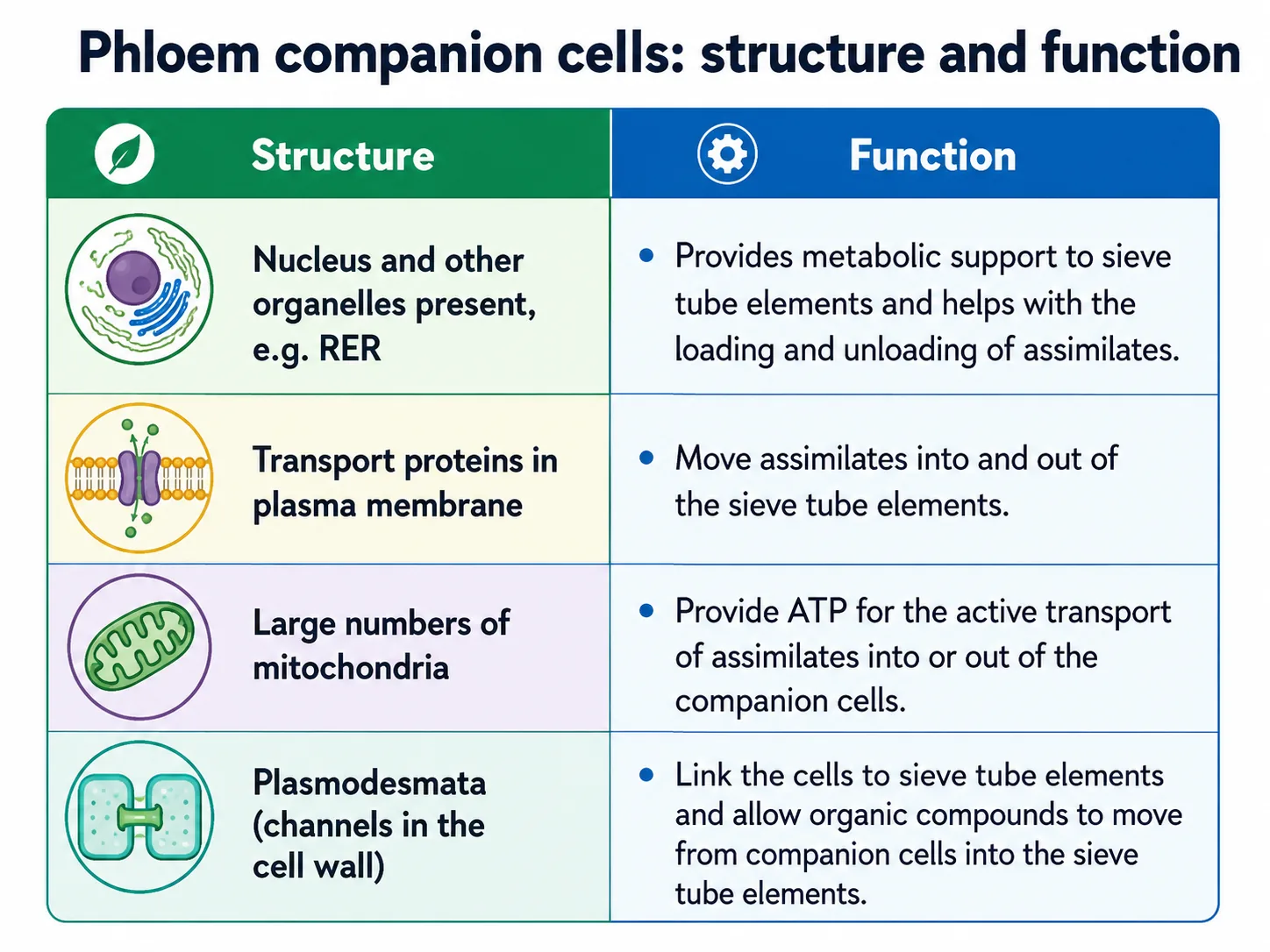
Companion cells
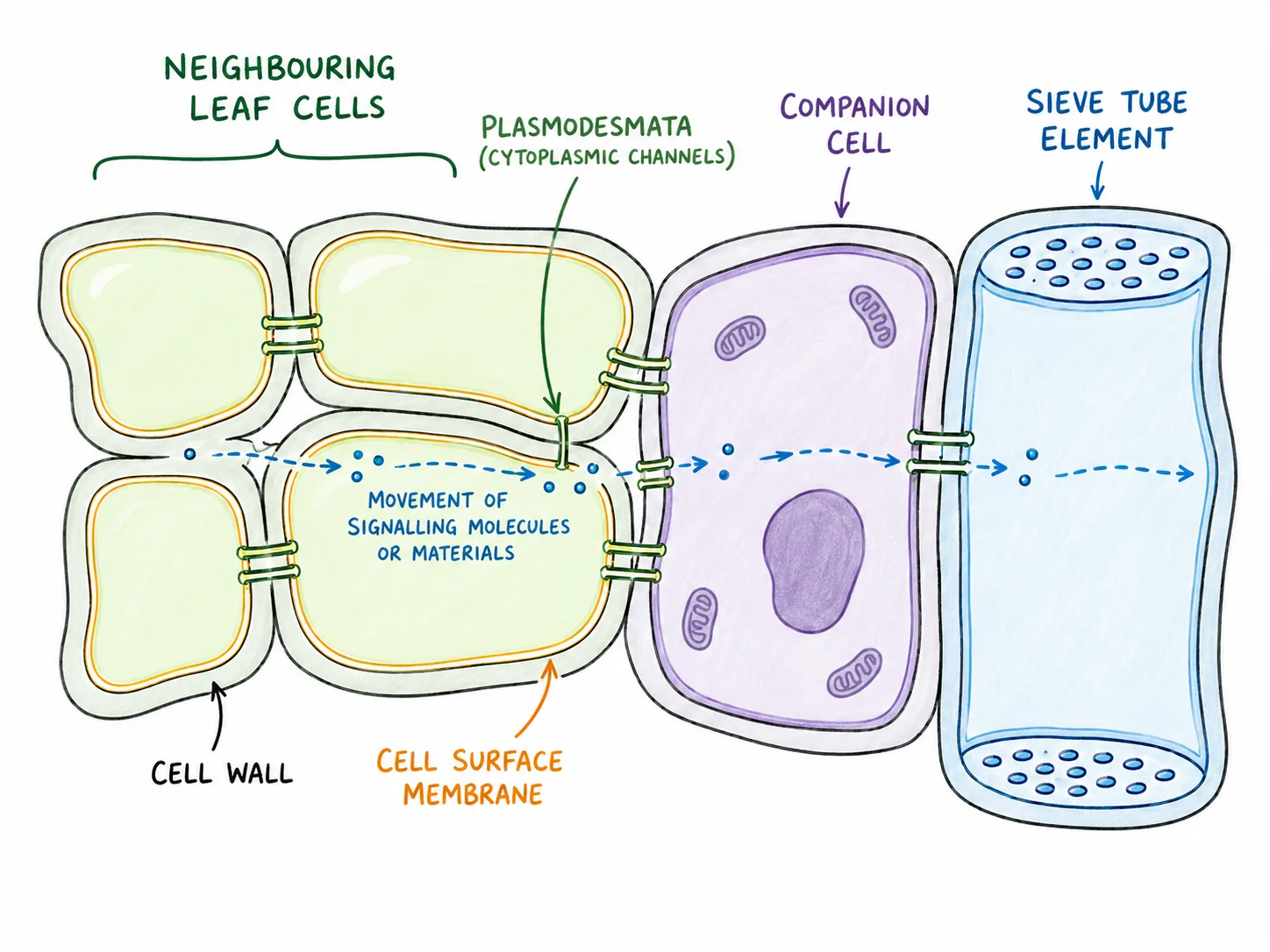
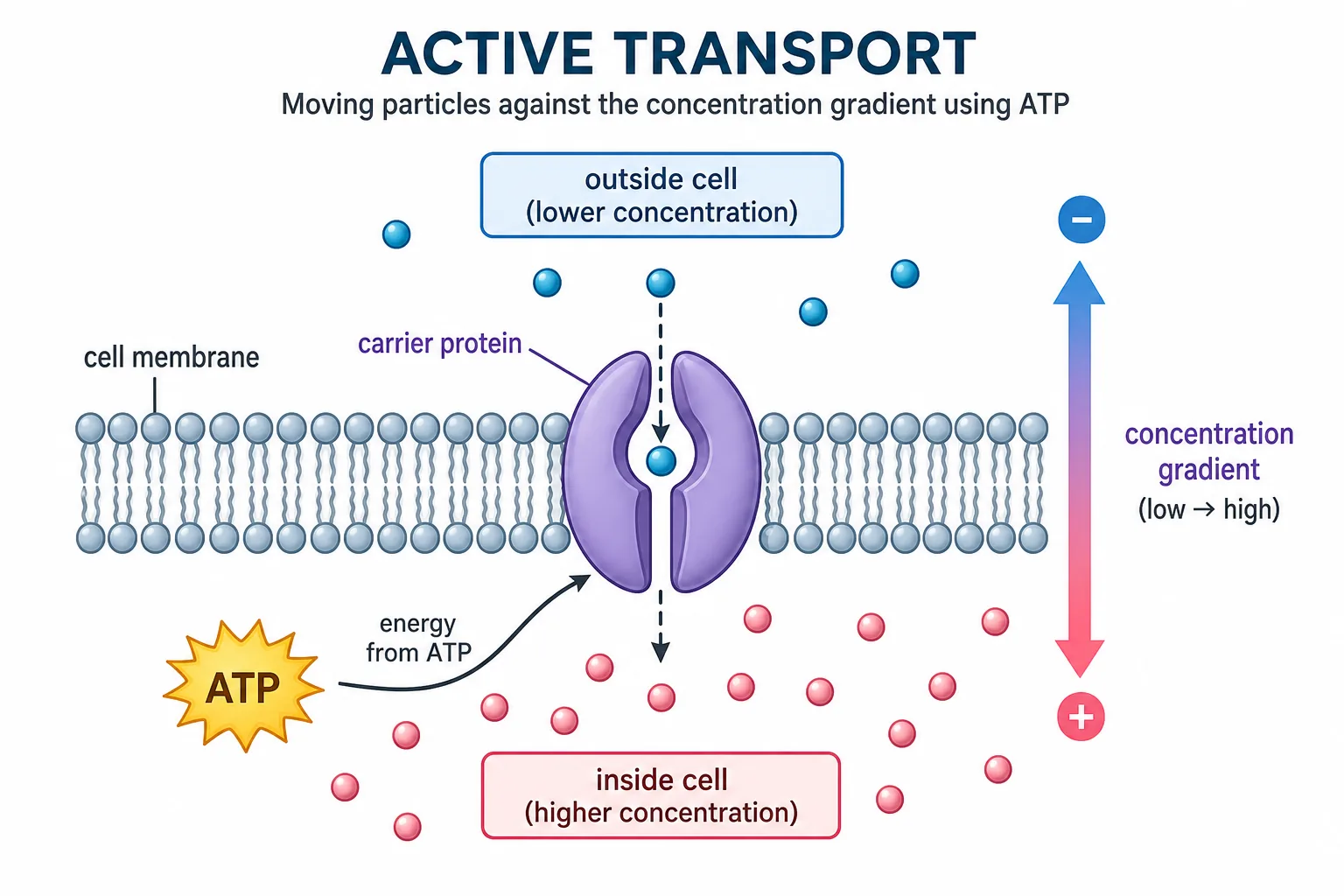
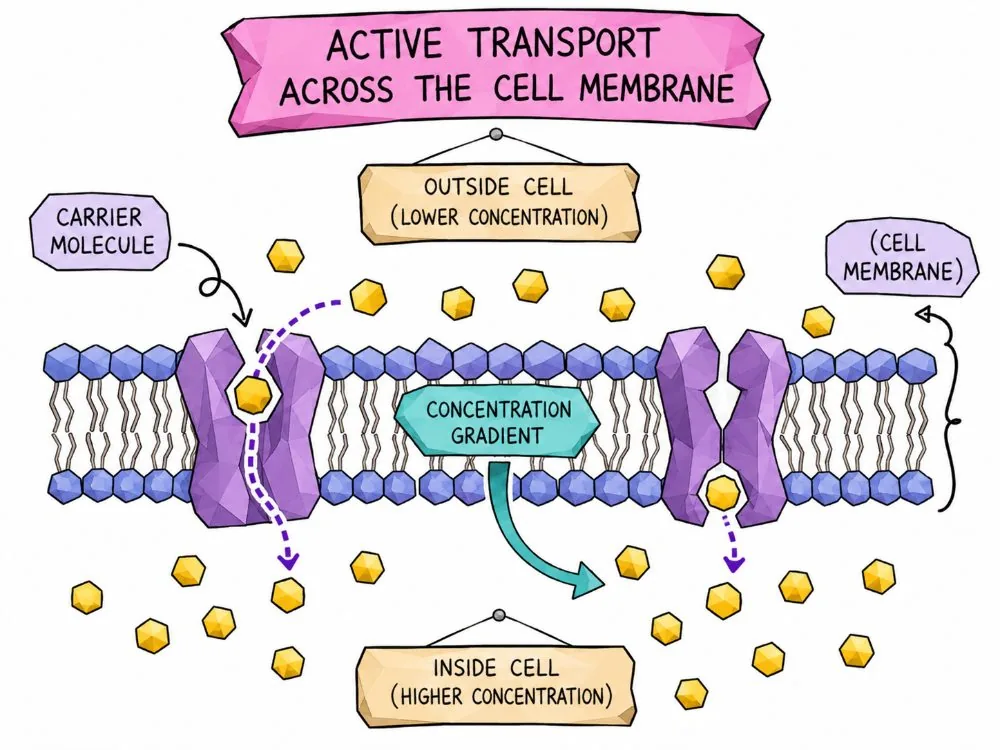
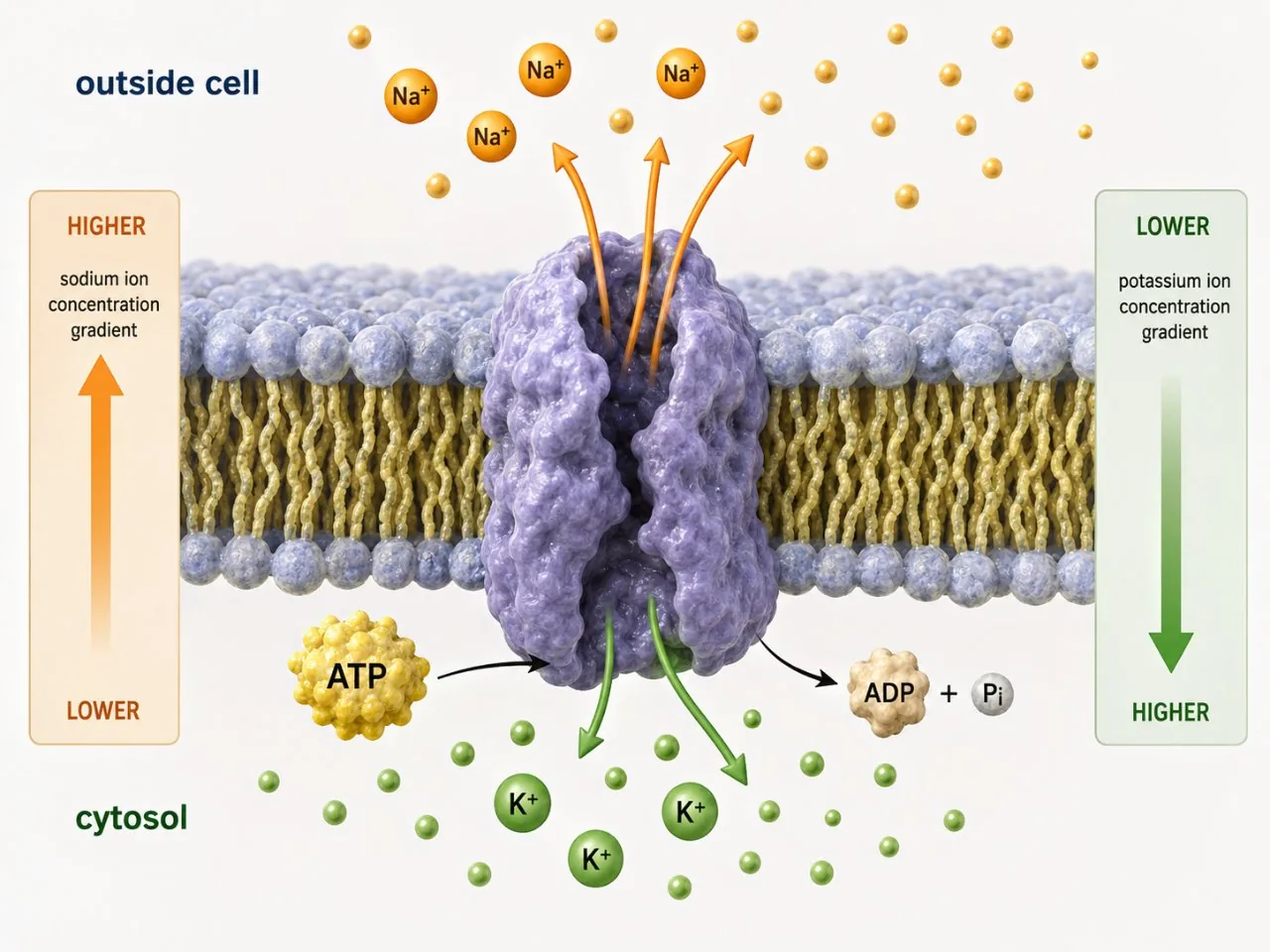
Companion cells next to each sieve tube have many mitochondria and provide the energy for the loading of sucrose into the sieve tubes by active transport.

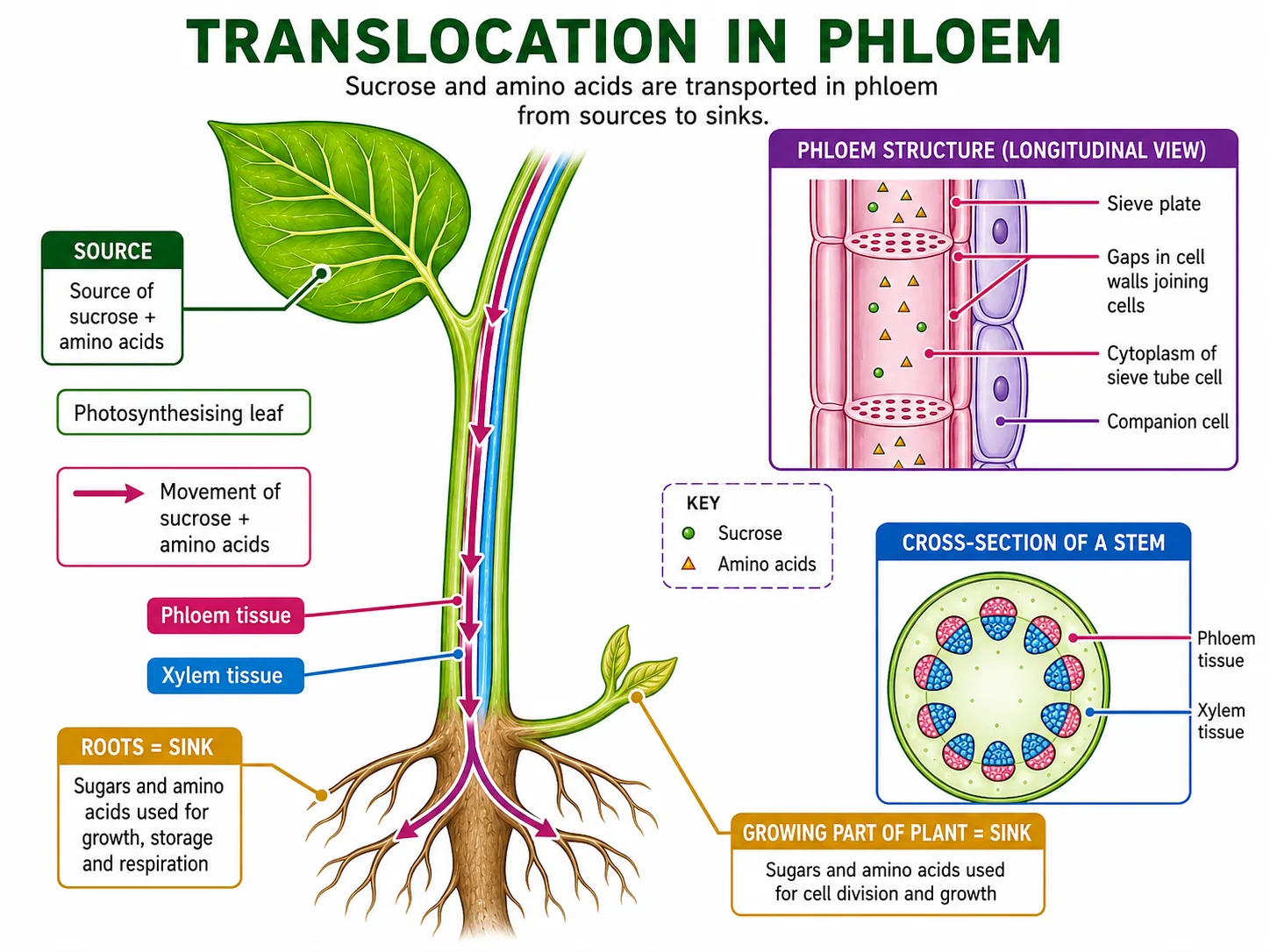
Phloem carries sucrose and amino acids dissolved in water, in a process called translocation.

Phloem
Sugars are made in the leaves (the source) and moved to growing parts of the plant, such as roots, buds and fruits, or to storage organs (the sinks).
Flow can go up or down, depending on where the sink is, so it can happen in both directions in different tubes.

Section 4 of 9Comparison

plasmodesmata phloem transport
XylemPhloem
TransportsWater and mineral ionsSucrose and amino acids
DirectionUpwards from roots onlyUp and down from leaves to sinks
CellsDead, hollow, lignifiedLiving sieve tubes and companion cells
EnergyNo energy used by the vesselsUses energy for loading
ProcessTranspiration streamTranslocation

Section 5 of 9Position in the plant

In a root, the xylem is in the centre, often in an X shape, which resists the pulling forces on the root.

1
In a stem, the vascular bundles are arranged in a ring near the outside.
2
In a leaf, they form the veins, which also support the leaf blade.
3
Phloem is usually found outside the xylem in each bundle.
4
If a ring of bark is removed from a tree (ringing), phloem is cut so sugars cannot reach the roots; the tree eventually dies,
  • but water transport in xylem continues for a while.

Section 6 of 9Evidence from experiments

Experiment: plant with and without carbon dioxide
Water moving by osmosis from soil to xylem through root
Leaf cross-section: carbon dioxide enters, oxygen exits

If a plant is placed in water containing a coloured dye, the dye moves up in the xylem and stains it, which can be seen in a cross-section of the stem or in celery.

Evidence from experiments
This shows water moves in xylem.
Radioactive carbon dioxide given to a leaf appears in the phloem as labelled sugars, showing sugars move from leaves to other regions.
Aphids feeding on stems insert their mouthparts into phloem sieve tubes and collect sap, which can be analysed for sugars.

The two systems are also different in how they are driven.

1
Xylem transport is a passive pull, produced by evaporation from leaves, and does not need the cells themselves to use energy,
  • so even a dead stem can move water for a time.
2
Phloem transport depends on living cells loading sugar actively at the source; this raises the concentration in the sieve tube, water follows by osmosis and the resulting pressure pushes the sap towards the sinks,
  • where sugar is removed.
3
Because of the difference between water and sugar movement, a tree that has been poisoned so that the phloem cells die stops moving sugar even while water still rises.
4
When answering, always state what is carried, in which direction and how the structure suits it, using the words hollow, lignin, sieve plate and companion cell correctly.
5
In the exam you may be asked to draw or label a cross-section of a stem, showing xylem on the inside and phloem on the outside of each bundle.

Section 7 of 9Exam-style questions
Phloem Translocation
plant evolution
pasted 1782294294247 0
pasted 1782446296896 0
Active Transport
Active Transport
Active Transport
Active Transport
r046-active-transport
r097-active-transport
Active Transport
  1. Describe two ways in which xylem vessels are adapted for transporting water. [2]2 marks

  2. Explain the role of companion cells in the phloem. [2]2 marks

  3. A stem is ringed so that the phloem is removed. Explain why the roots eventually die. [3]3 marks

Section 8 of 9Key terms

TermMeaning
XylemTissue that transports water and mineral ions from roots to leaves.
PhloemTissue that transports sucrose and amino acids around the plant.
LigninA hard substance that strengthens xylem walls.
TranslocationThe transport of sugars in the phloem.
Sieve tubeA phloem cell that forms a tube for the transport of sap.
Companion cellA cell next to a sieve tube that supplies it with energy.
Vascular bundleA group of xylem and phloem running through the plant.

Section 9 of 9Exam technique

1
Saying that xylem carries sugar and phloem carries water. It is the opposite.
2
Saying xylem cells are living. Mature xylem vessels are dead.
3
Calling translocation the movement of water; it is the movement of sugars.
4
Saying phloem only moves downwards.
\n