3.1.2Organism Level Systems
Generating a Nervous Response
5 min read 9 parts Lesson 3 of 13 Unit quiz
Section 1 of 9From stimulus to impulse
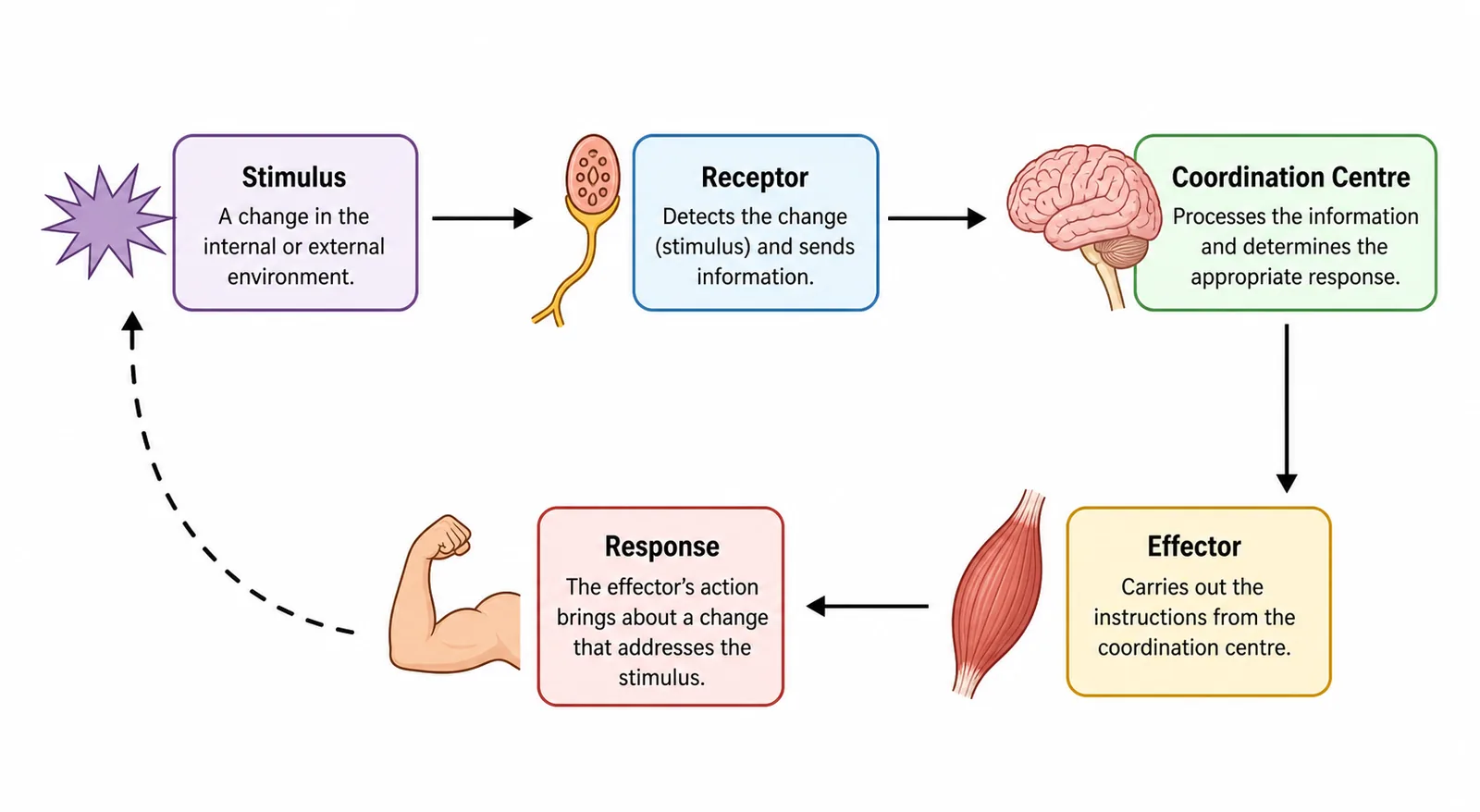

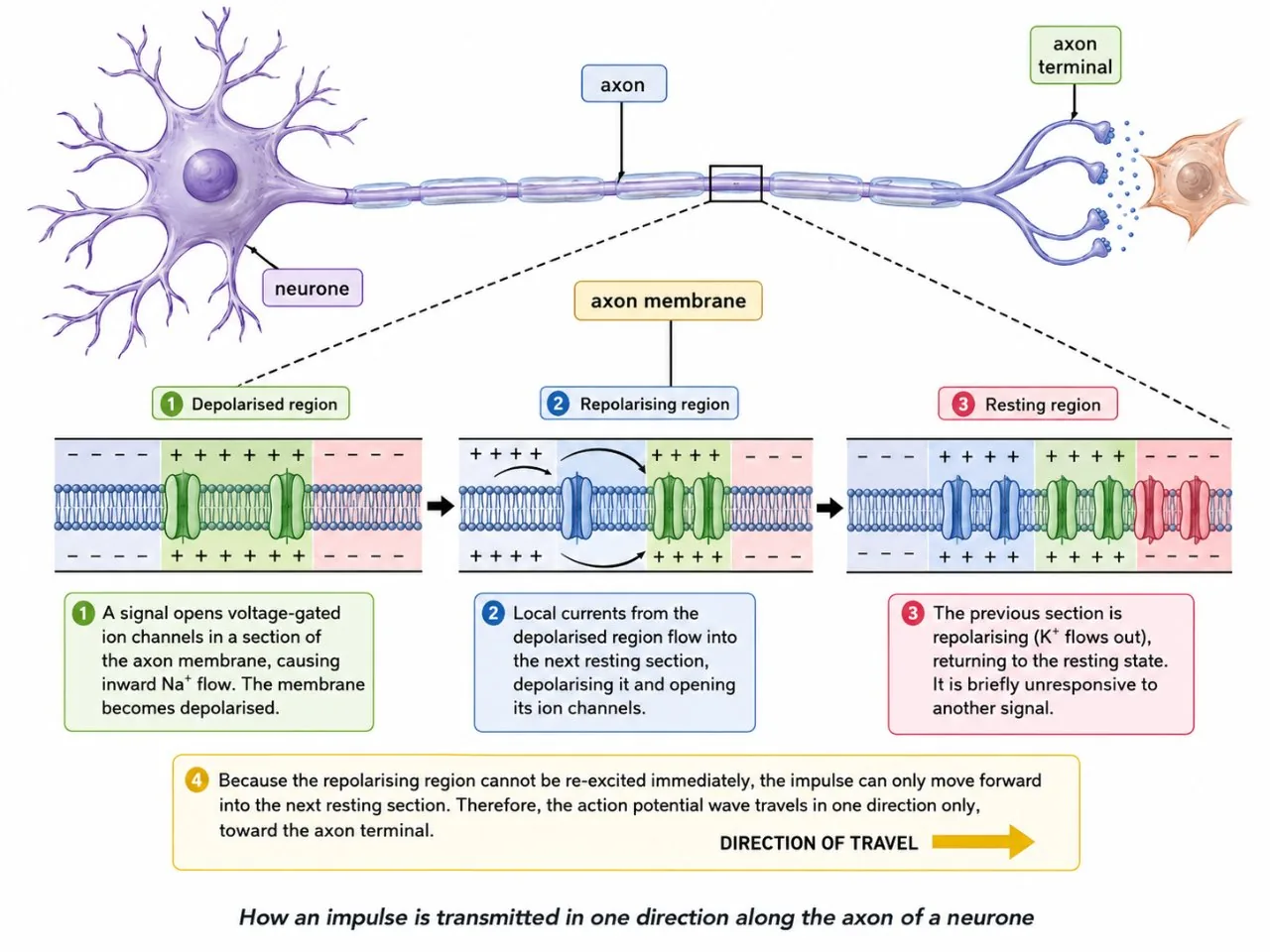
Each sense organ has receptor cells sensitive to one type of stimulus.
Section 2 of 9The eye
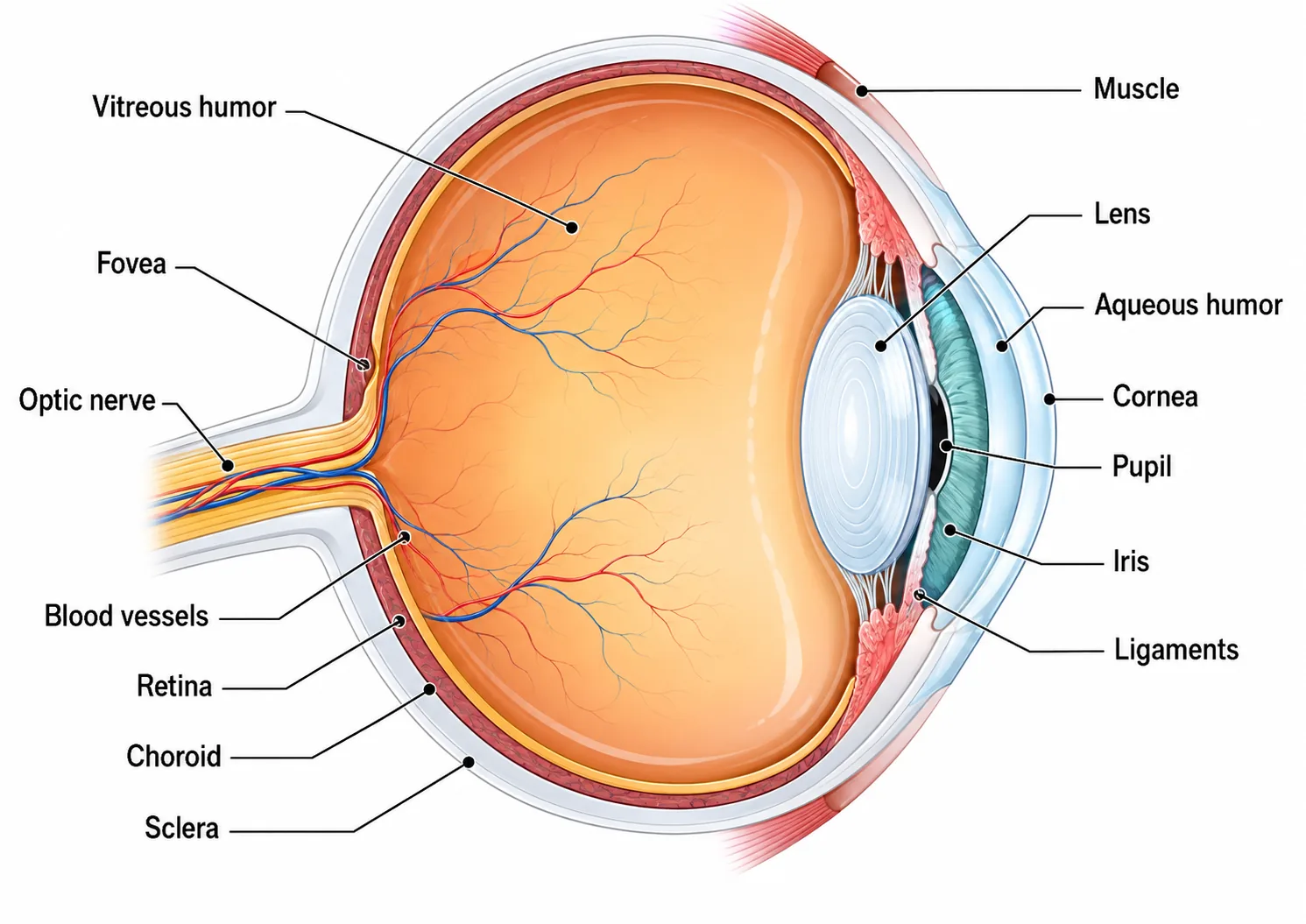
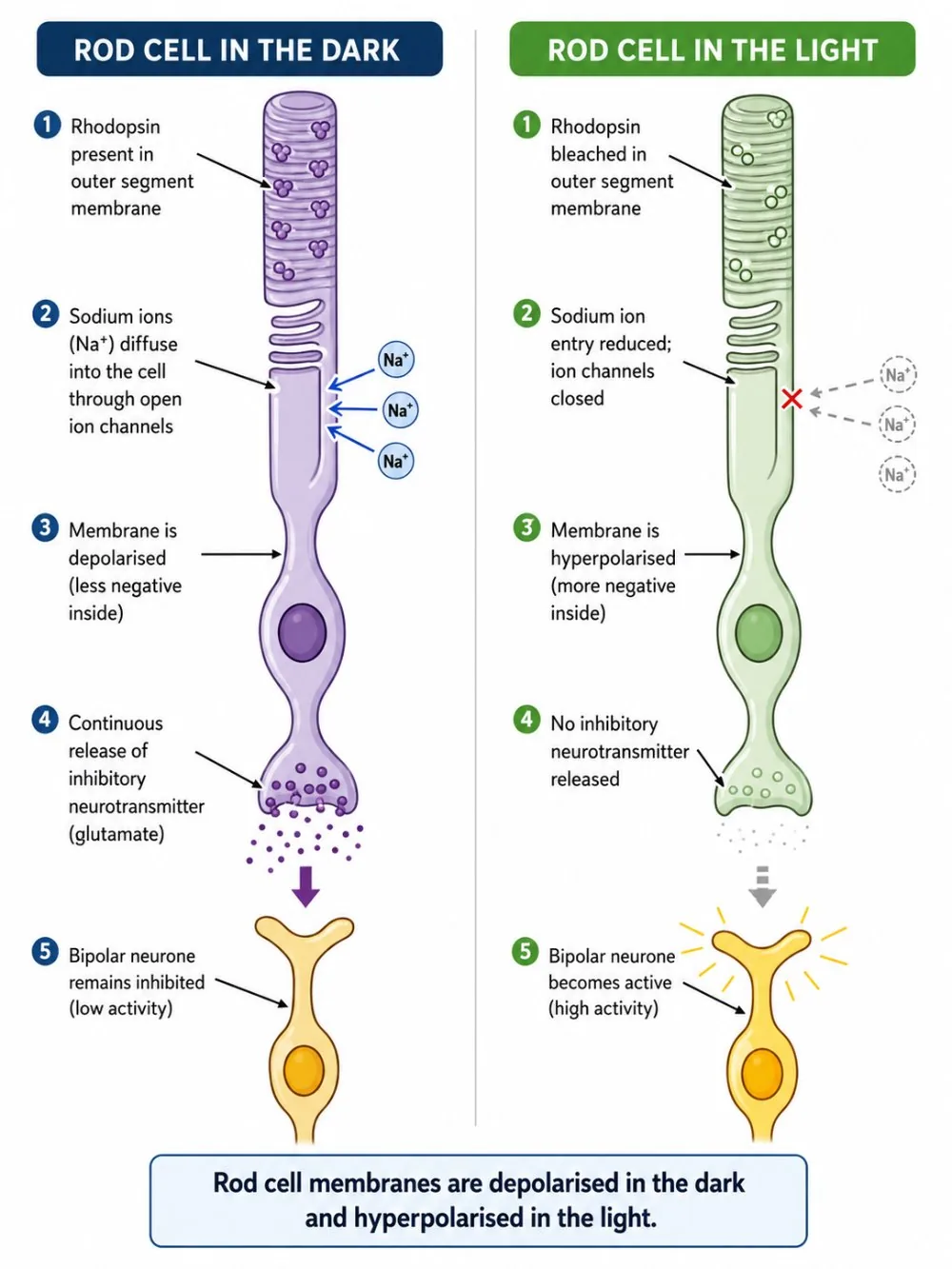
The eye contains light receptors (rods and cones) in the retina. Rods work in dim light and detect black and white; cones detect colour and work in bright light. Key parts:
Section 3 of 9Adapting to light and distance
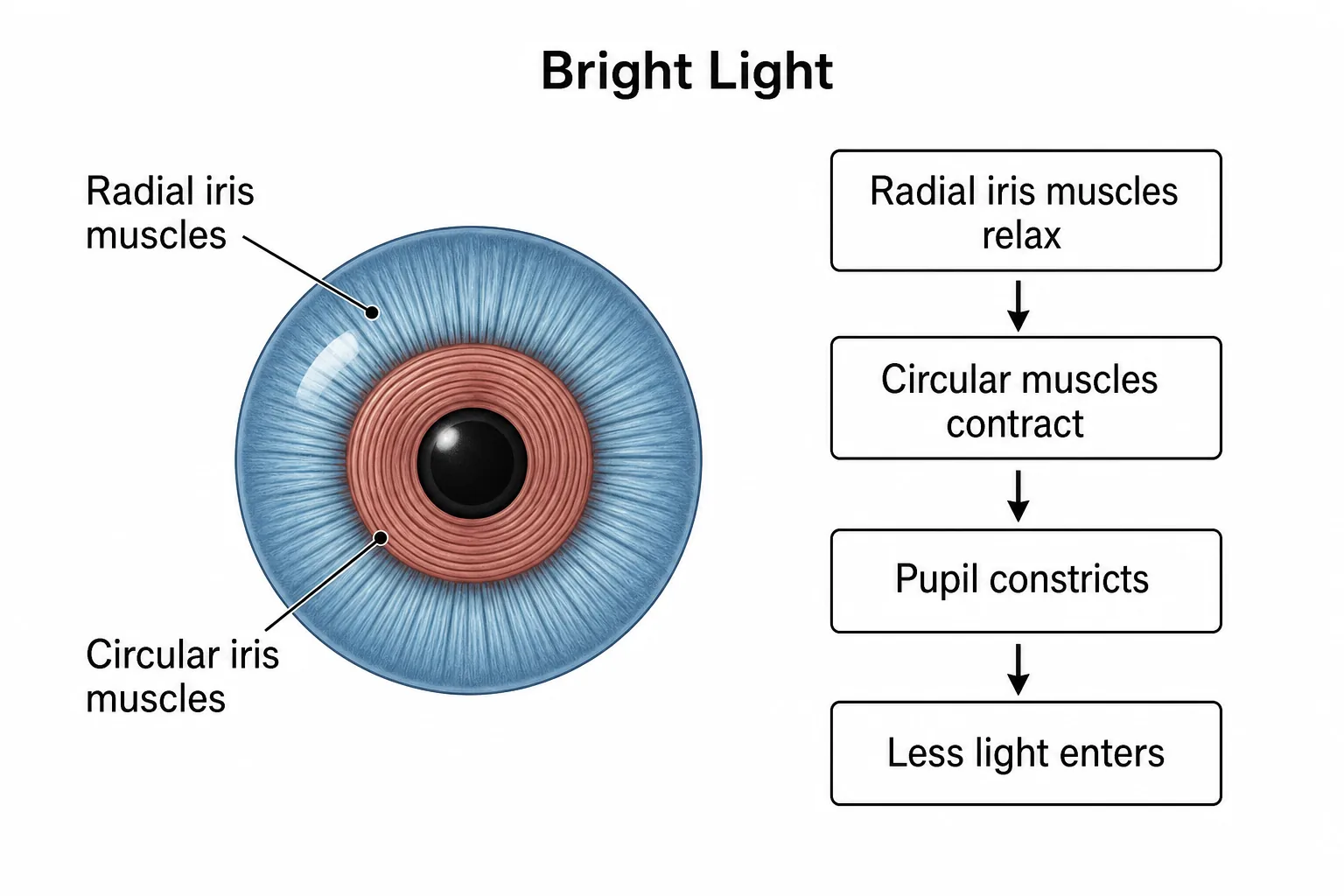
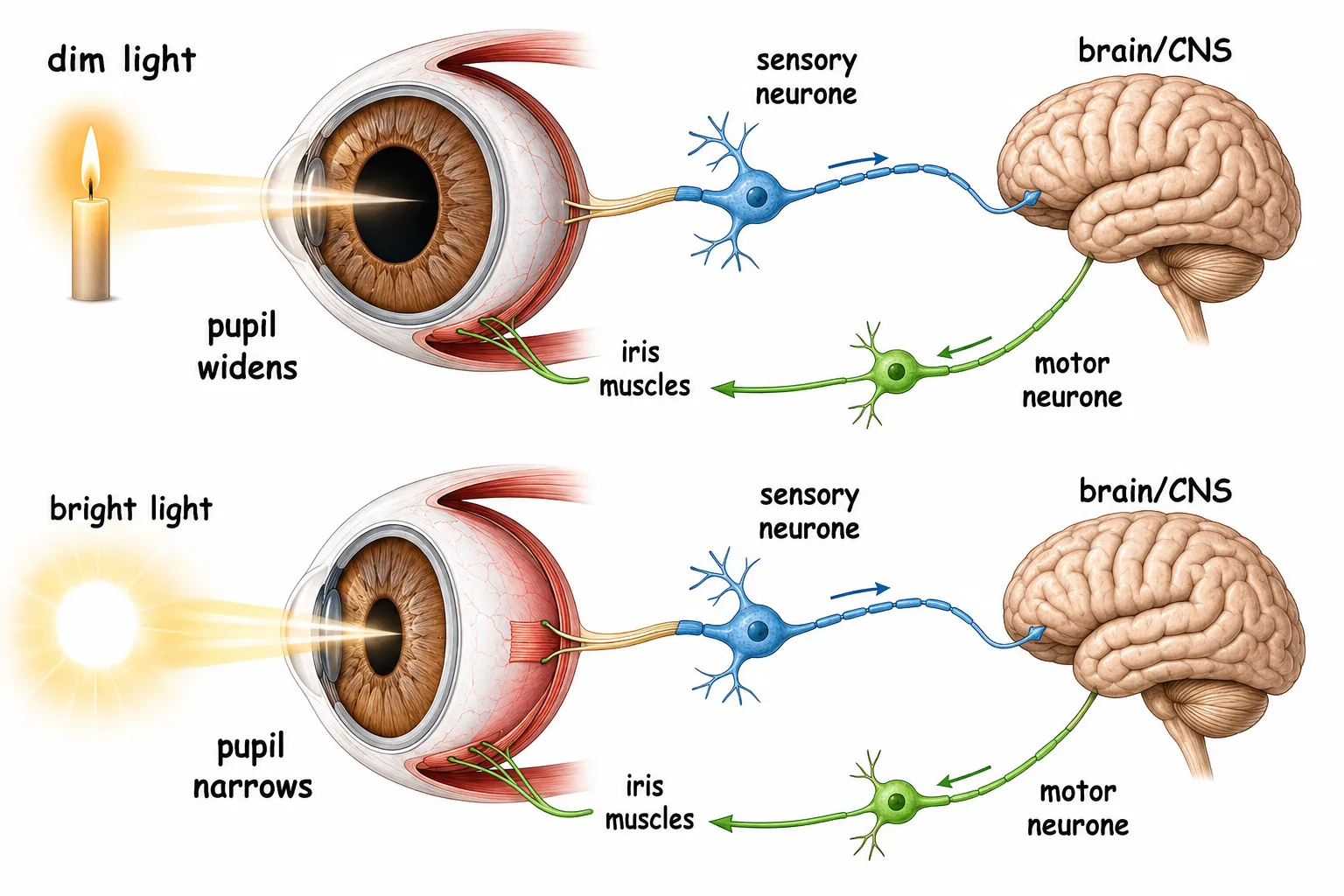
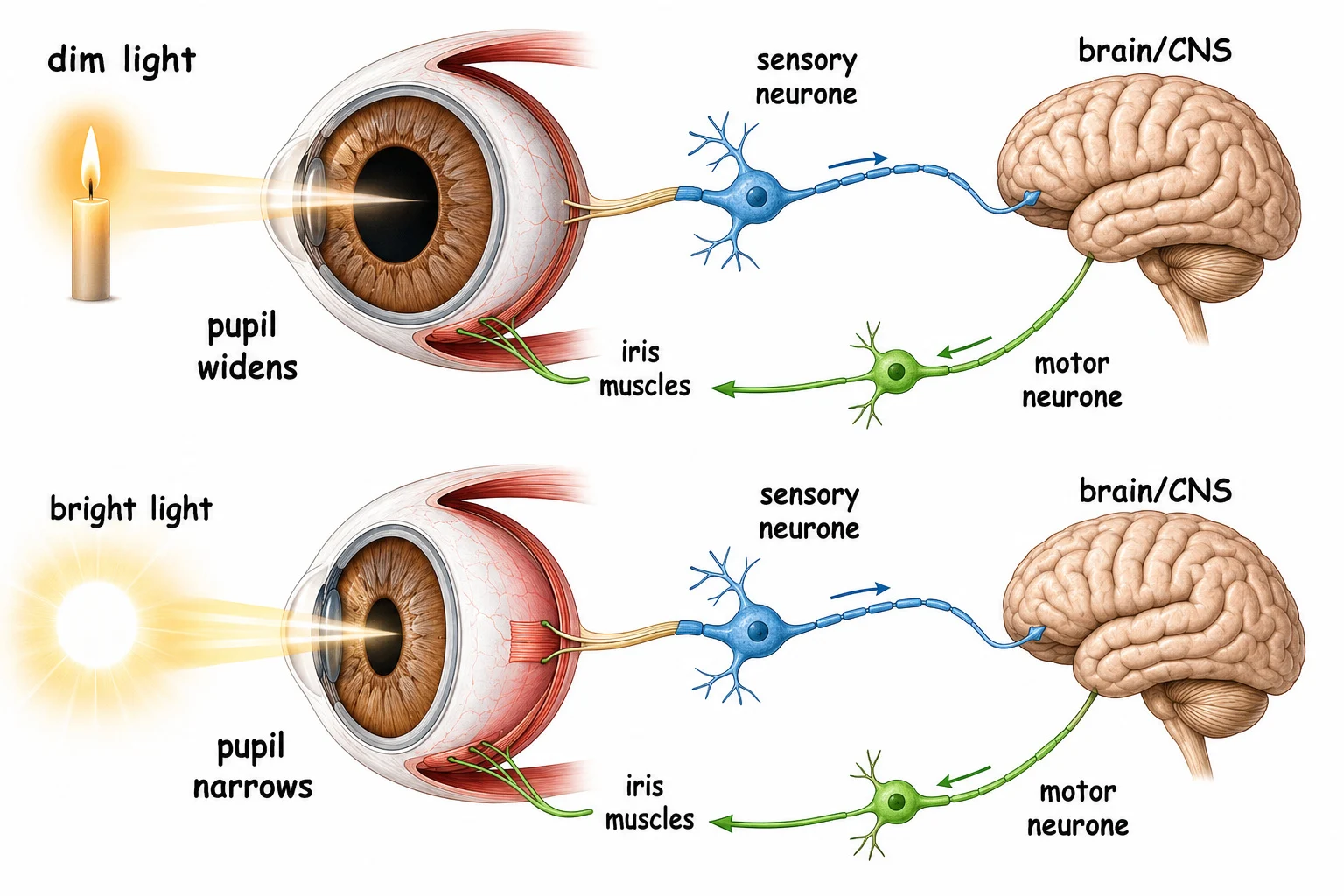
Pupil reflex
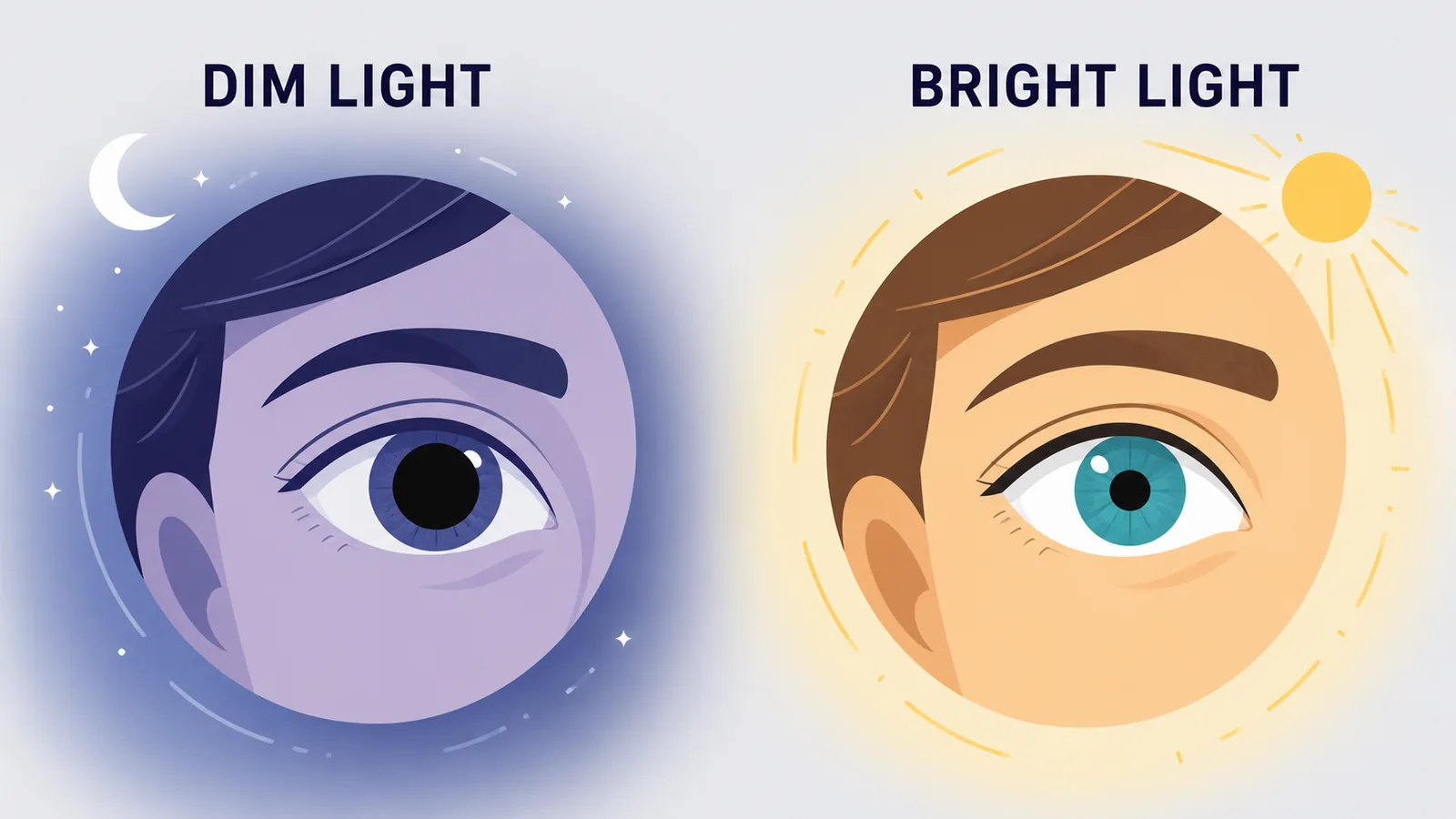
- in bright light, circular muscles in the iris contract and radial muscles relax, so the pupil gets smaller, which protects the retina from damage.
- In dim light, radial muscles contract and circular muscles relax, so the pupil gets larger and lets in more light.
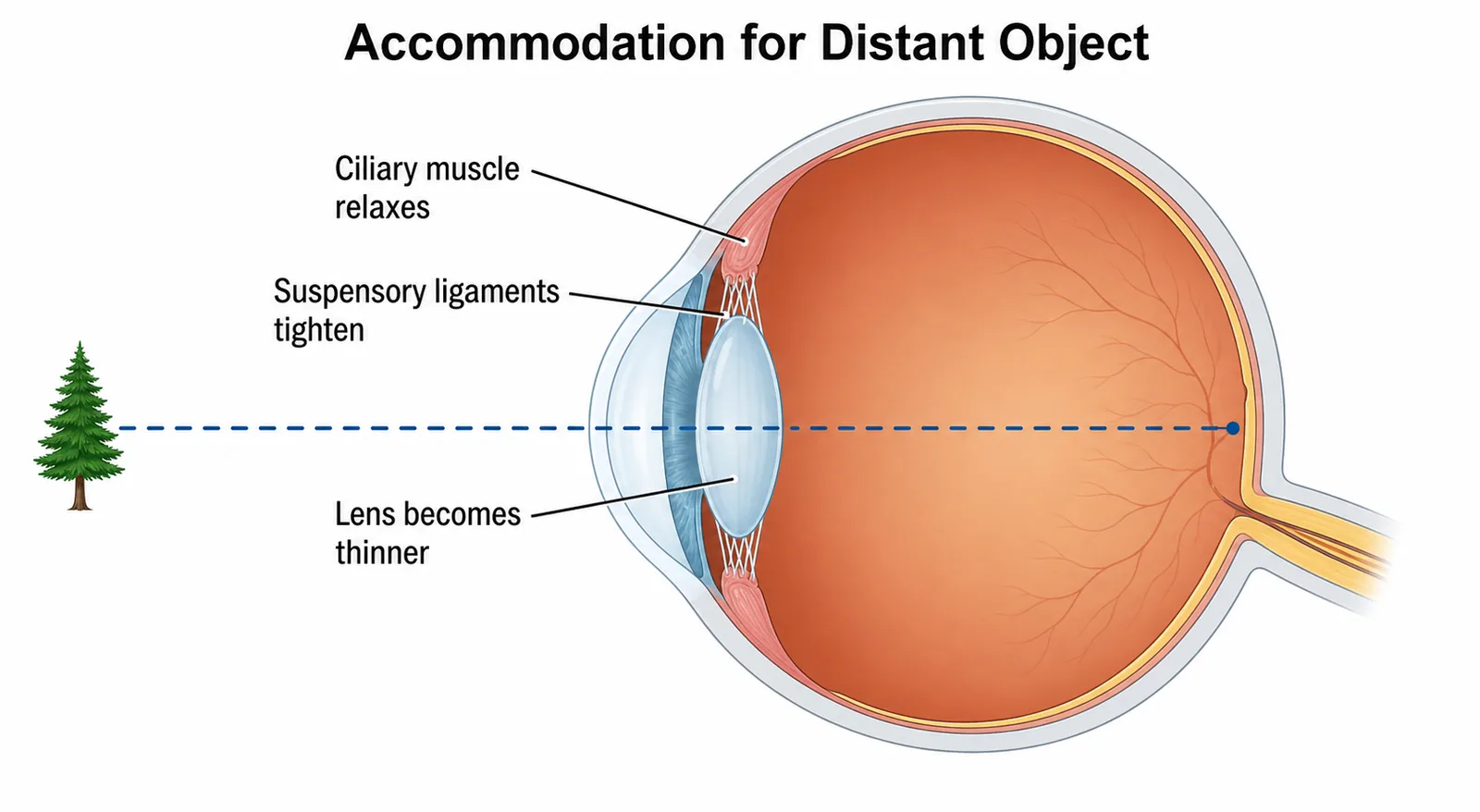
Accommodation to focus on a near object, the ciliary muscles contract, the suspensory ligaments slacken and the lens becomes fatter (more curved) and refracts the light more.
Section 4 of 9The ear and skin


In the ear, sound waves make the eardrum vibrate.
- which travel in the auditory nerve.
Section 5 of 9Reaction time practical
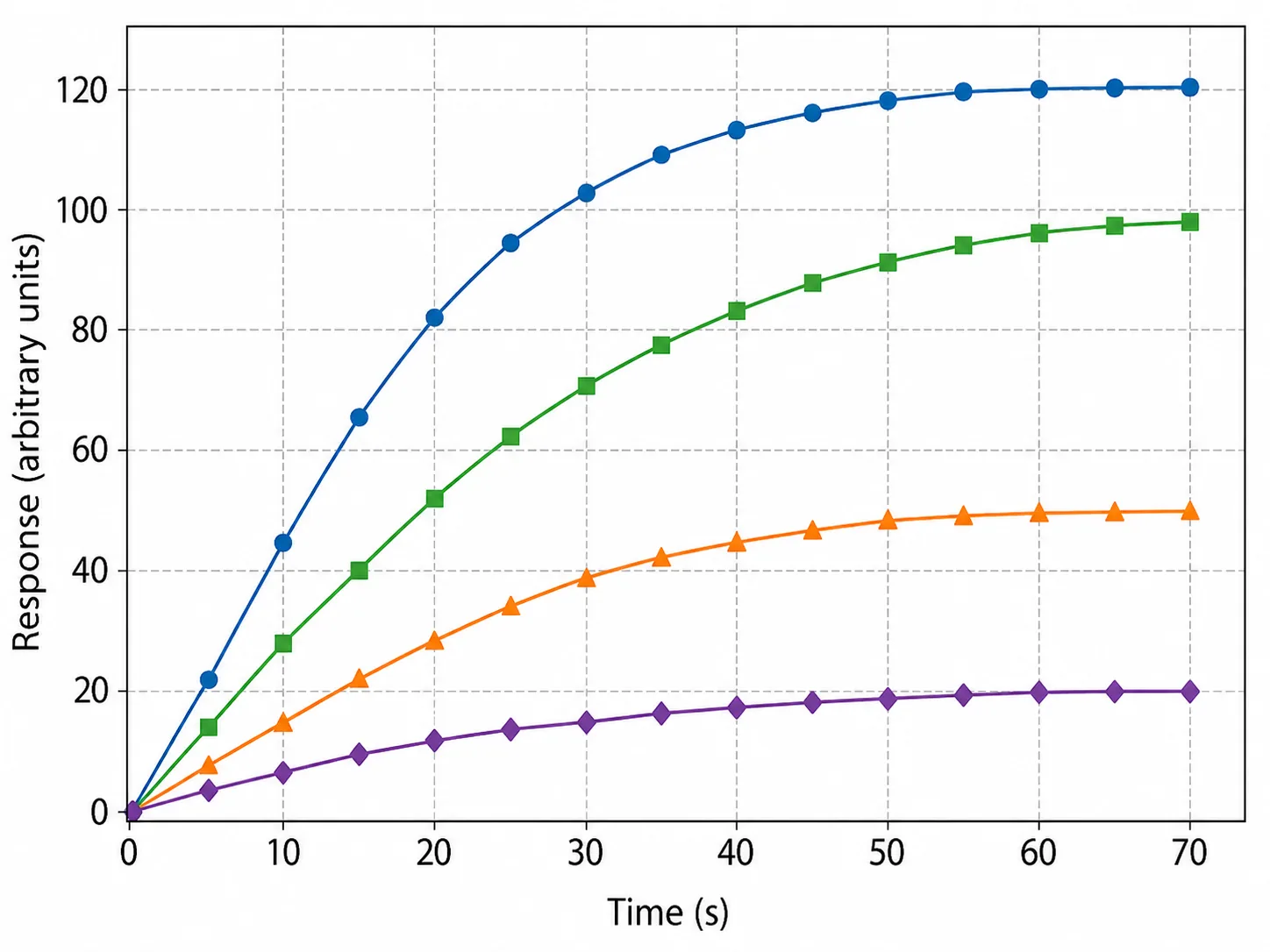
Reaction time is the time between a stimulus and a response, such as catching a ruler.
- and the same dropper.
Section 6 of 9Colour vision, night vision and eye problems


The retina contains about 120 million rods but far fewer cones.
As people age the lens becomes less elastic, so it can no longer become fat enough to focus on close objects, and many people need reading glasses.
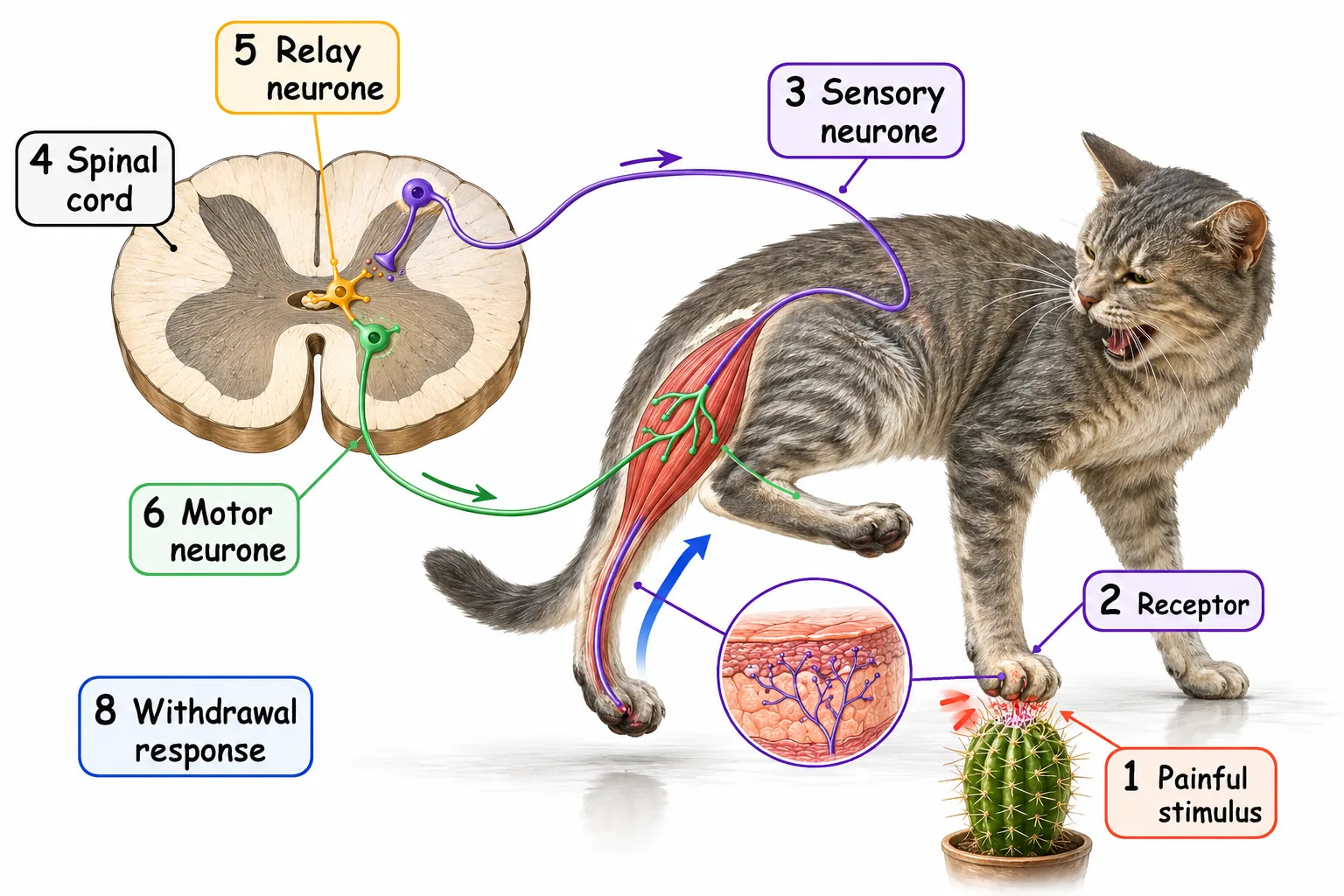
- and the pupil reflex is a good example of a reflex that you do not control consciously.
Section 7 of 9Exam-style questions


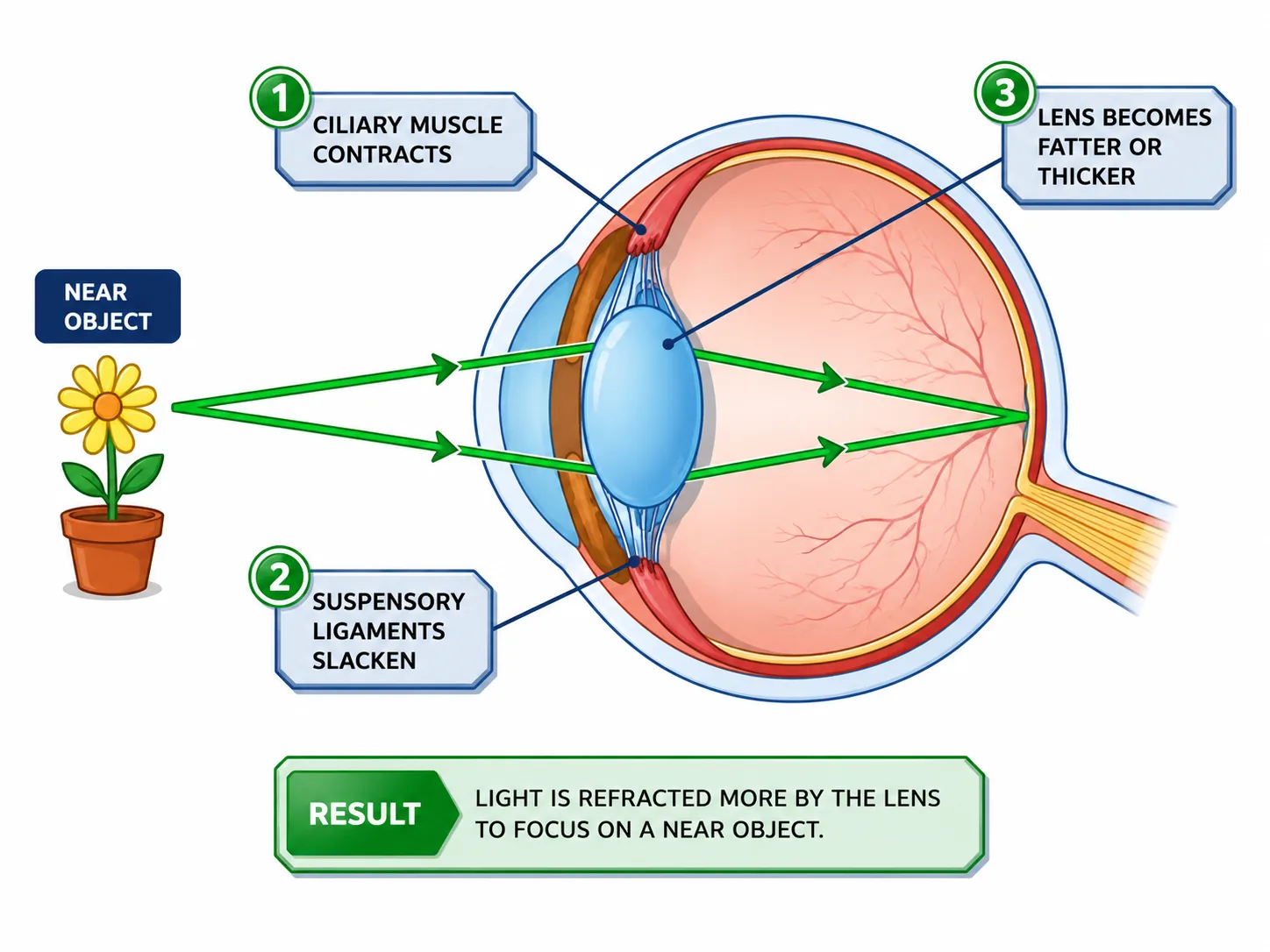

Explain how the eye changes shape of the lens to focus on a near object. [3]3 marks
The ciliary muscles contract [1], so the suspensory ligaments slacken [1] and the lens becomes thicker and more curved, refracting light more [1].
Describe and explain what happens to the pupils when a person walks from a dark room into bright sunlight. [3]3 marks
The pupils become smaller [1] because the circular muscles of the iris contract [1] and this reduces the amount of light entering and prevents damage to the retina [1].
A student's reaction times in a ruler test are 0.21 s, 0.19 s, 0.23 s and 0.17 s. Calculate the mean. [2]2 marks
Total = 0.80 s [1]. Mean = 0.80 / 4 = 0.20 s [1].
Section 8 of 9Key terms
| Term | Meaning |
|---|---|
| Retina | The light-sensitive layer at the back of the eye. |
| Cornea | Transparent front part of the eye that refracts light. |
| Iris | Muscle that controls pupil size. |
| Accommodation | Change in lens shape to focus on near or distant objects. |
| Cochlea | Part of the ear containing sound receptors. |
| Reaction time | The time taken to respond to a stimulus. |
| Optic nerve | Carries impulses from the retina to the brain. |