3.3.3Organism Level Systems
Glucagon in Blood Sugar Control
5 min read 9 parts Lesson 12 of 13 1 quiz
Section 1 of 9The need to raise blood glucose
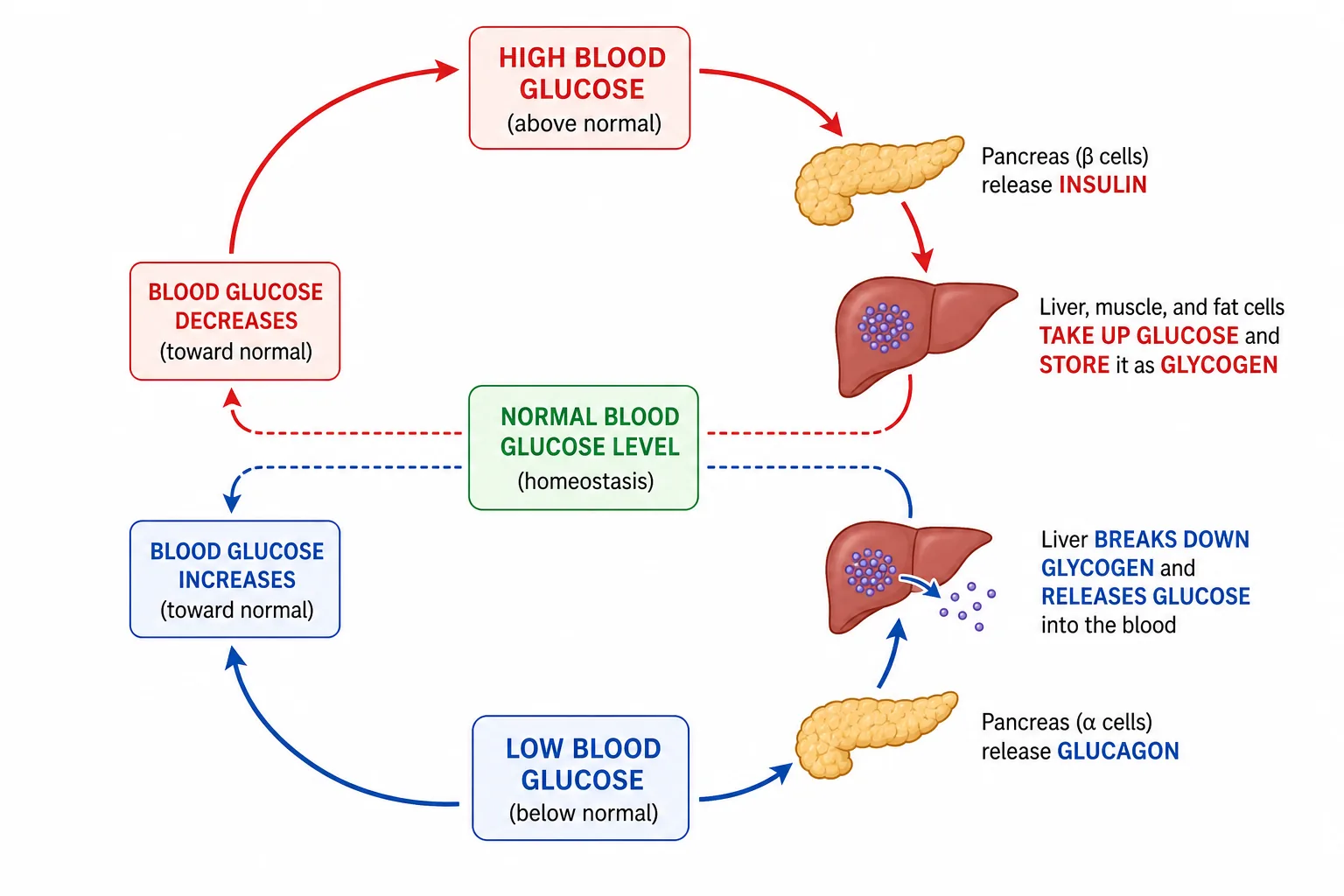
Blood glucose falls between meals, during fasting and during exercise because cells use it in respiration.
Section 2 of 9How glucagon works
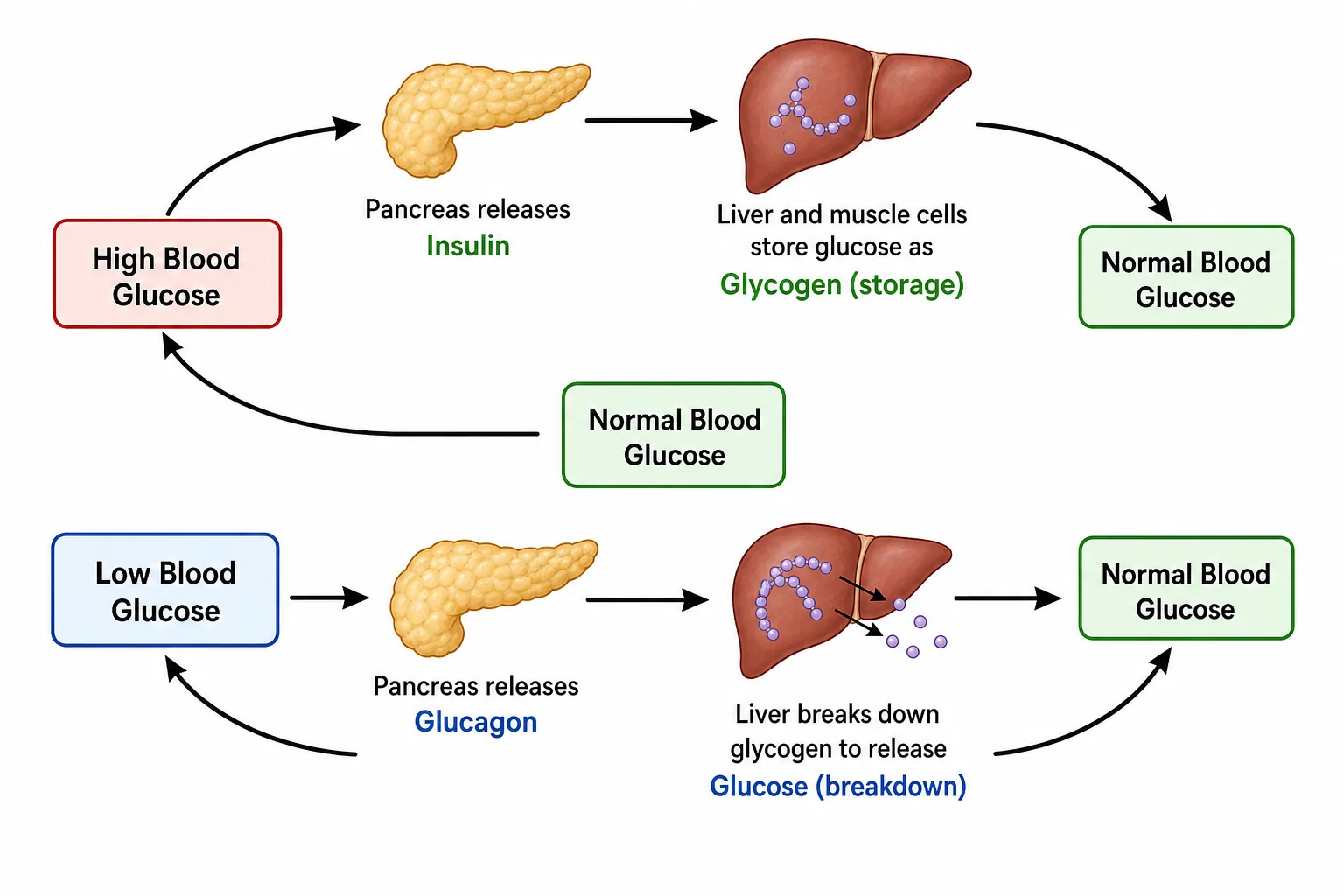
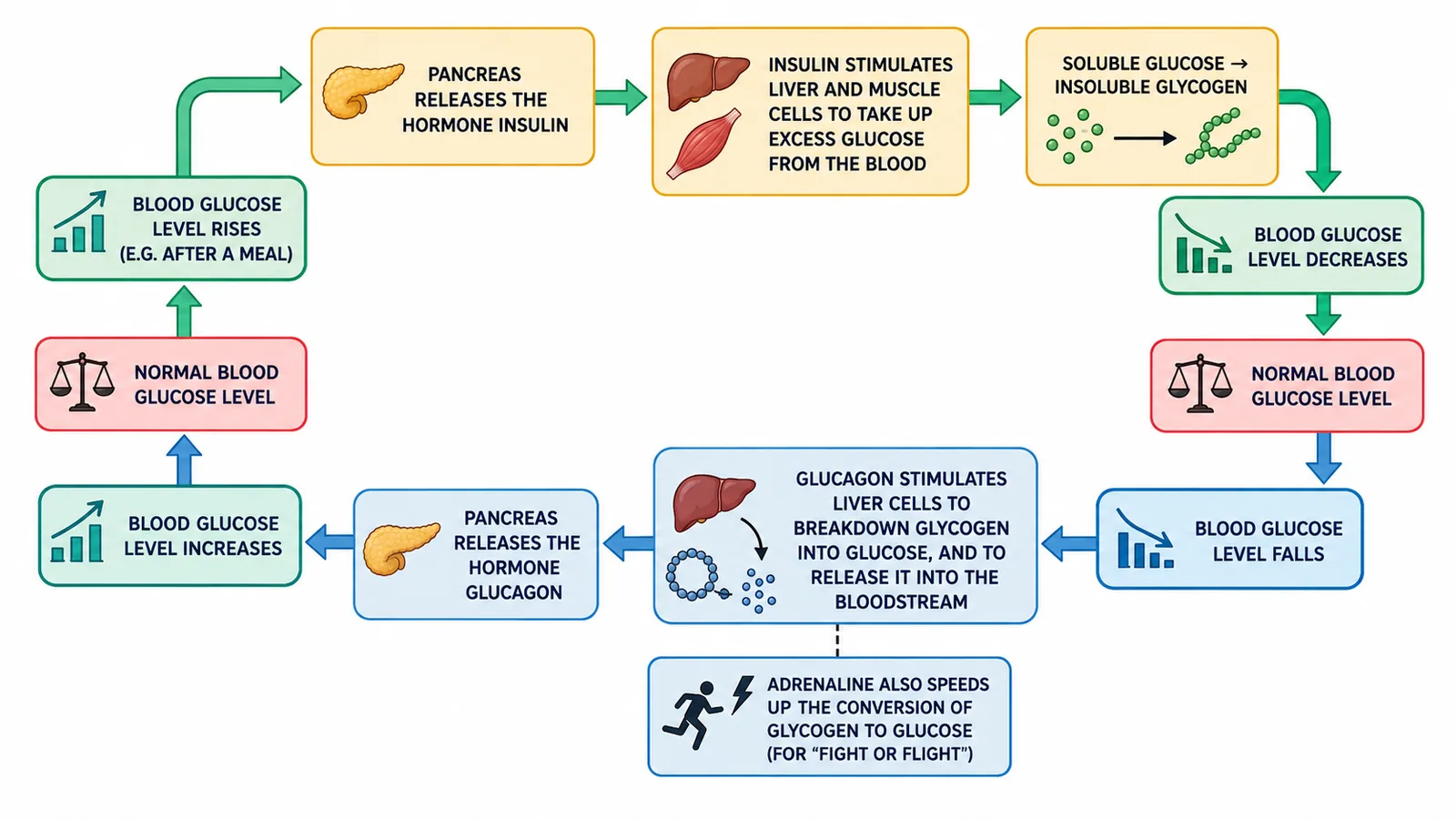
Glucagon is carried in the blood to the liver, where it stimulates liver cells to break down stored glycogen into glucose.
Section 3 of 9Insulin and glucagon together
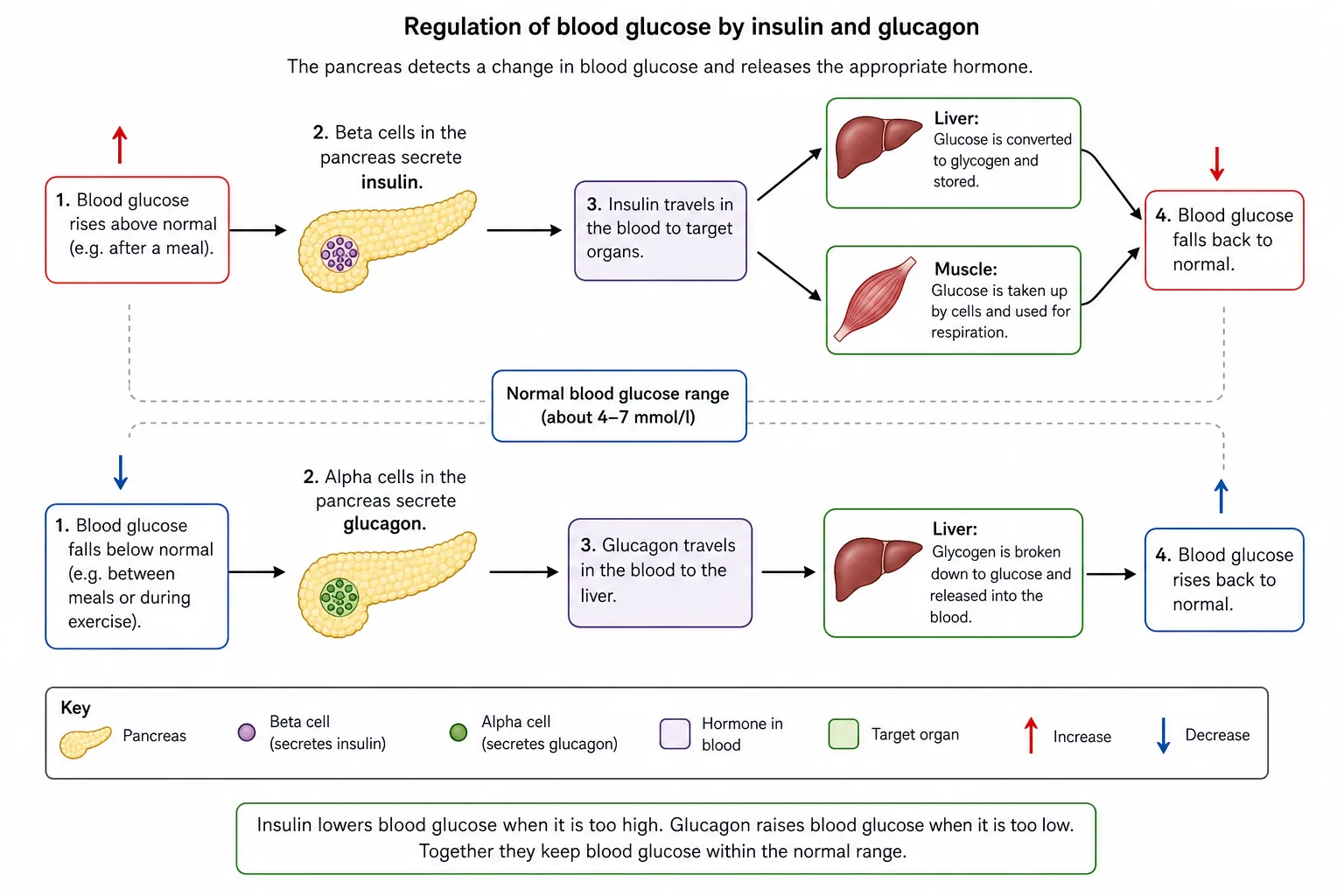
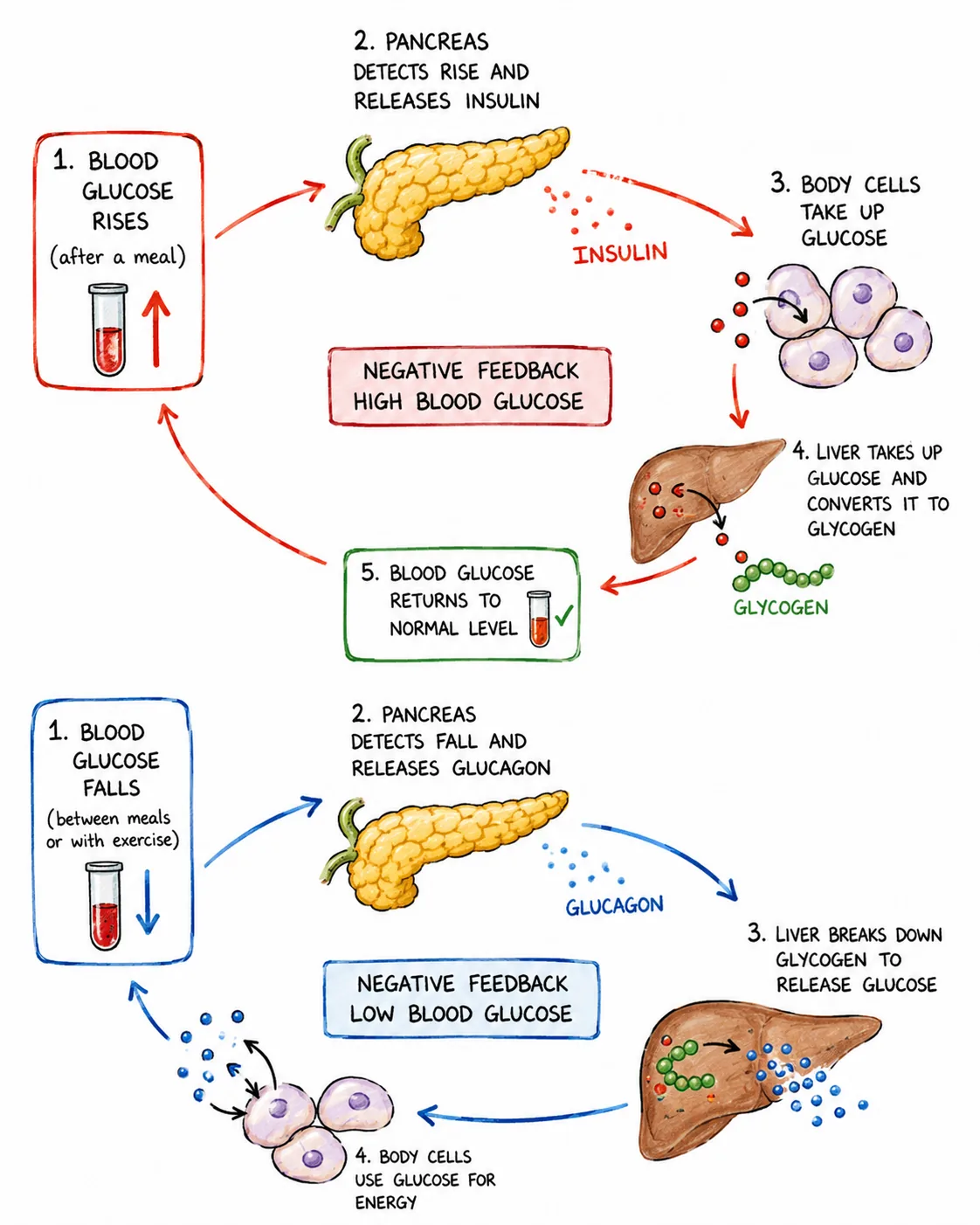

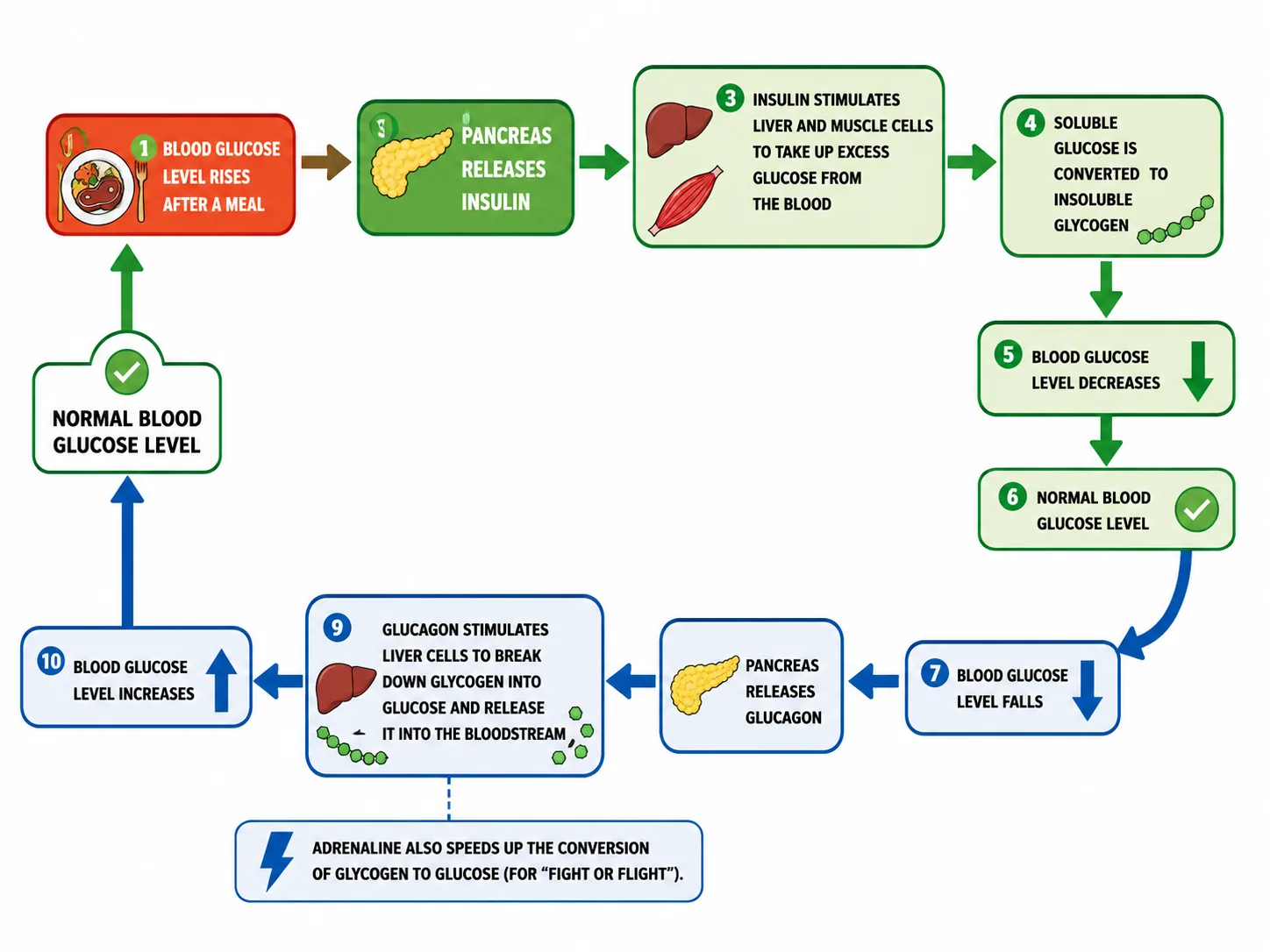
Insulin and glucagon have opposite effects, which are described as antagonistic. Together they keep blood glucose within a narrow range.
| Feature | Insulin | Glucagon |
|---|---|---|
| Released when | Blood glucose is high | Blood glucose is low |
| Target organs | Liver, muscles | Liver |
| Effect on glycogen | Glucose converted to glycogen | Glycogen converted to glucose |
| Effect on blood glucose | Falls | Rises |
The cycle
- high glucose, insulin released, glucose into cells and stored as glycogen, level falls;
- low glucose, glucagon released, glycogen broken down, level rises.
- Each response ends when the glucose level returns to normal.
Section 4 of 9Exercise, fasting and diabetes
During exercise the muscles take up glucose quickly, so the level in the blood falls; glucagon helps replace it.
- and the person must balance insulin dose, food and exercise.
Graph questions show how the two hormones change in opposite directions: after a meal, insulin rises as glucose rises; several hours later, as glucose falls, glucagon rises. Describe the peaks with time and figures, then explain.
Section 5 of 9Evaluating the system
The use of two hormones with opposite actions gives finer control than one hormone alone, since it can push the level either way.
- such as transplants of pancreas cells or stem cells that develop into insulin-producing cells,
- but the problem of rejection and the need for immunosuppressant drugs remain.
Section 6 of 9Worked example of a 24-hour cycle
Imagine a person eating breakfast at 8 am, lunch at 1 pm and dinner at 7 pm.
- and the level returns to normal within a couple of hours as glucose is taken into liver and muscle cells and stored as glycogen.
- and overnight, the blood glucose drifts downward as the brain and other organs use it;
- glucagon is released and the liver breaks down glycogen to top up the blood.
- while a graph of insulin has peaks that follow the meals and glucagon has peaks in the gaps.
The liver's glycogen store is limited to roughly a day's supply when fasting; after that, the body begins to use fats as fuel and to convert some amino acids to glucose.
Section 7 of 9Exam-style questions

Explain how glucagon raises the blood glucose concentration. [3]3 marks
Glucagon is released from the pancreas when glucose is low [1]. It travels to the liver and causes glycogen to be broken down to glucose [1], which is released into the blood [1].
Describe how insulin and glucagon act as an example of negative feedback. [3]3 marks
When glucose is high, insulin lowers it; when it is low, glucagon raises it [1]. Each hormone reverses the change away from the normal level [1]. When the level returns to normal, secretion of the hormone is reduced [1].
Explain why an athlete's blood glucose may stay roughly constant during a long run. [2]2 marks
Muscles use glucose, but glucagon (and adrenaline) cause the liver to release glucose from glycogen [1], which replaces the glucose used so the concentration is maintained [1].
Section 8 of 9Key terms
| Term | Meaning |
|---|---|
| Glucagon | Pancreatic hormone that raises blood glucose. |
| Glycogen | Storage carbohydrate in the liver and muscles. |
| Antagonistic | Having opposite effects. |
| Liver | Organ that stores glycogen and releases glucose. |
| Fasting | Going without food for a period. |
| Negative feedback | A change triggering a response that reverses it. |