Section 1 of 9Antigens and antibodies

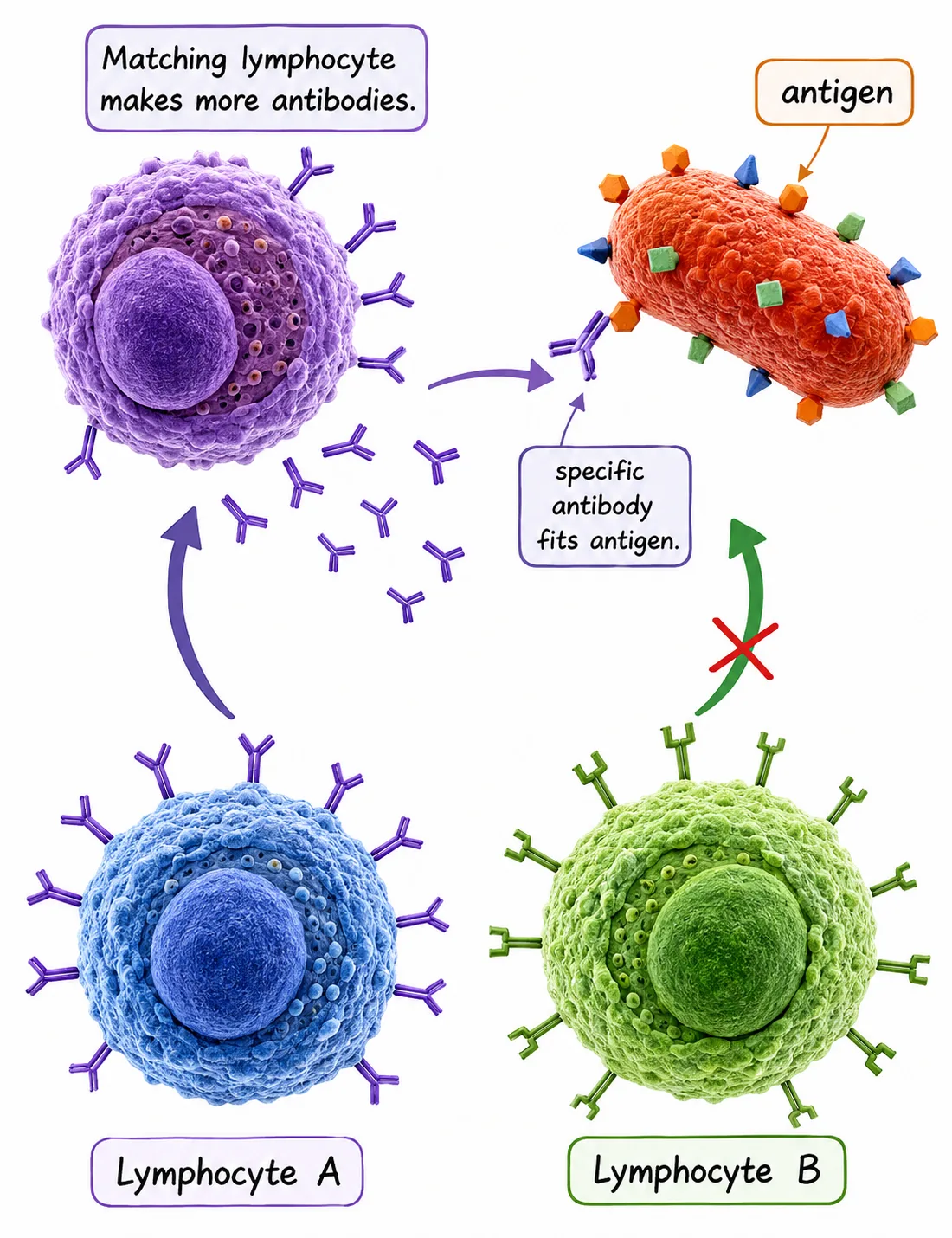


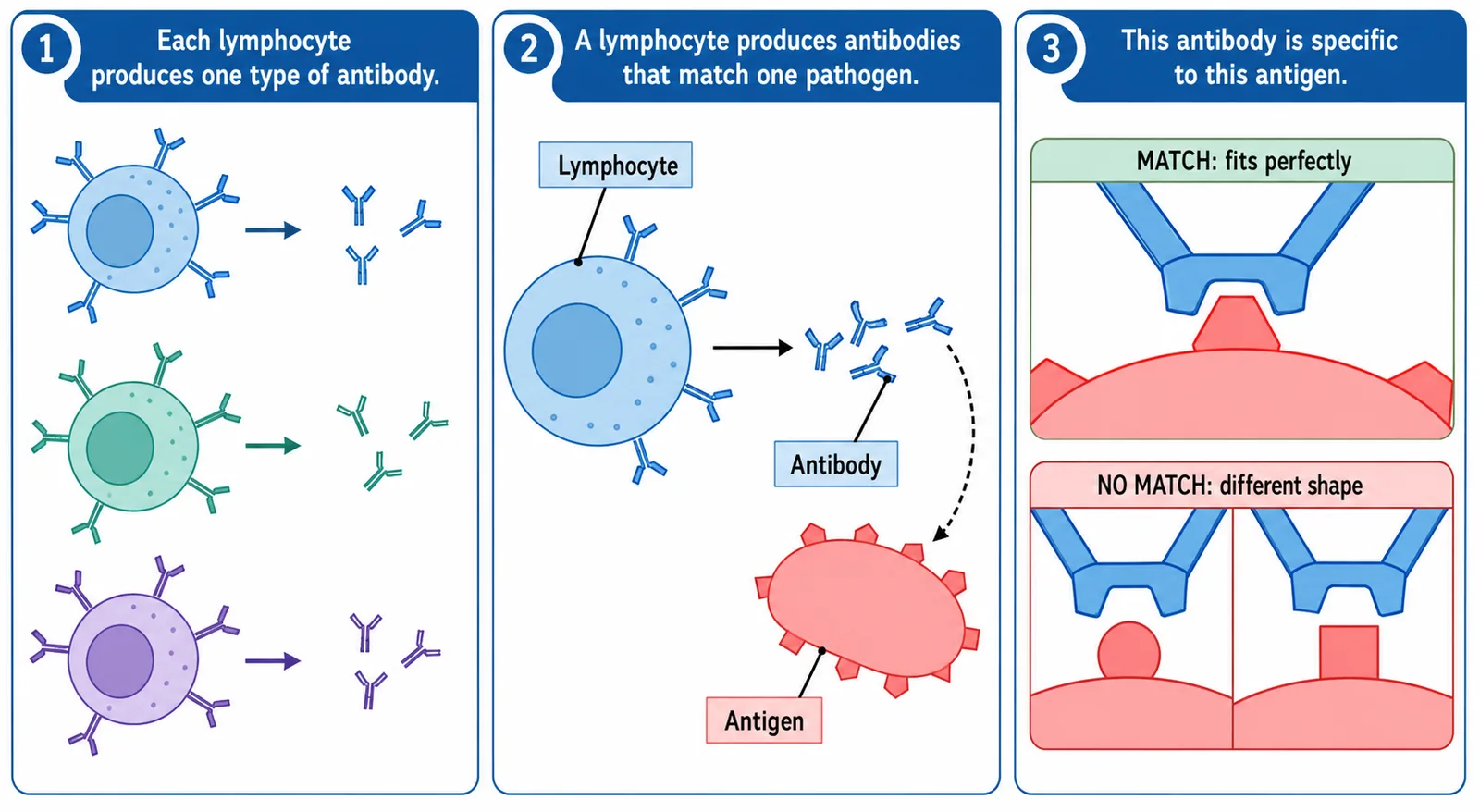
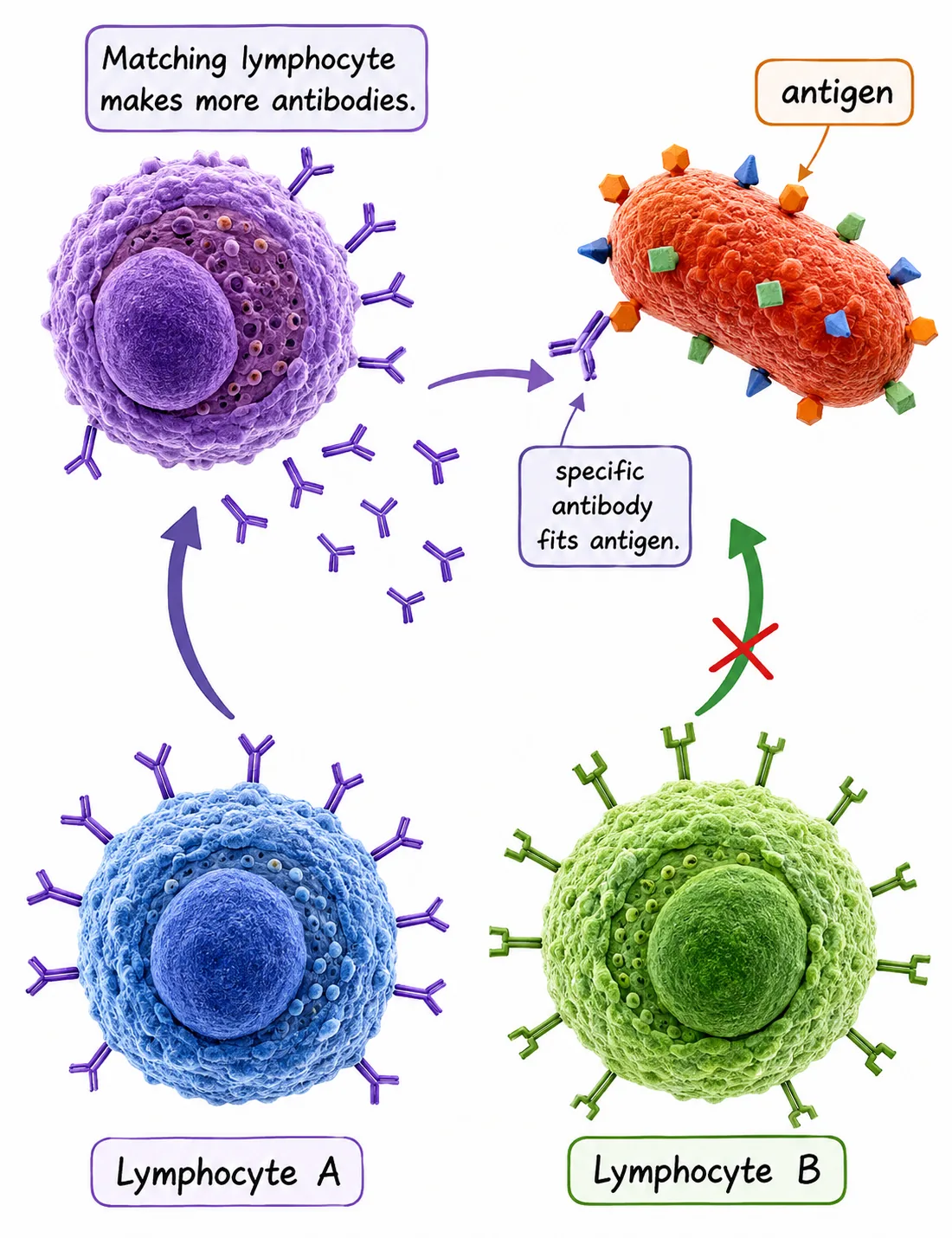
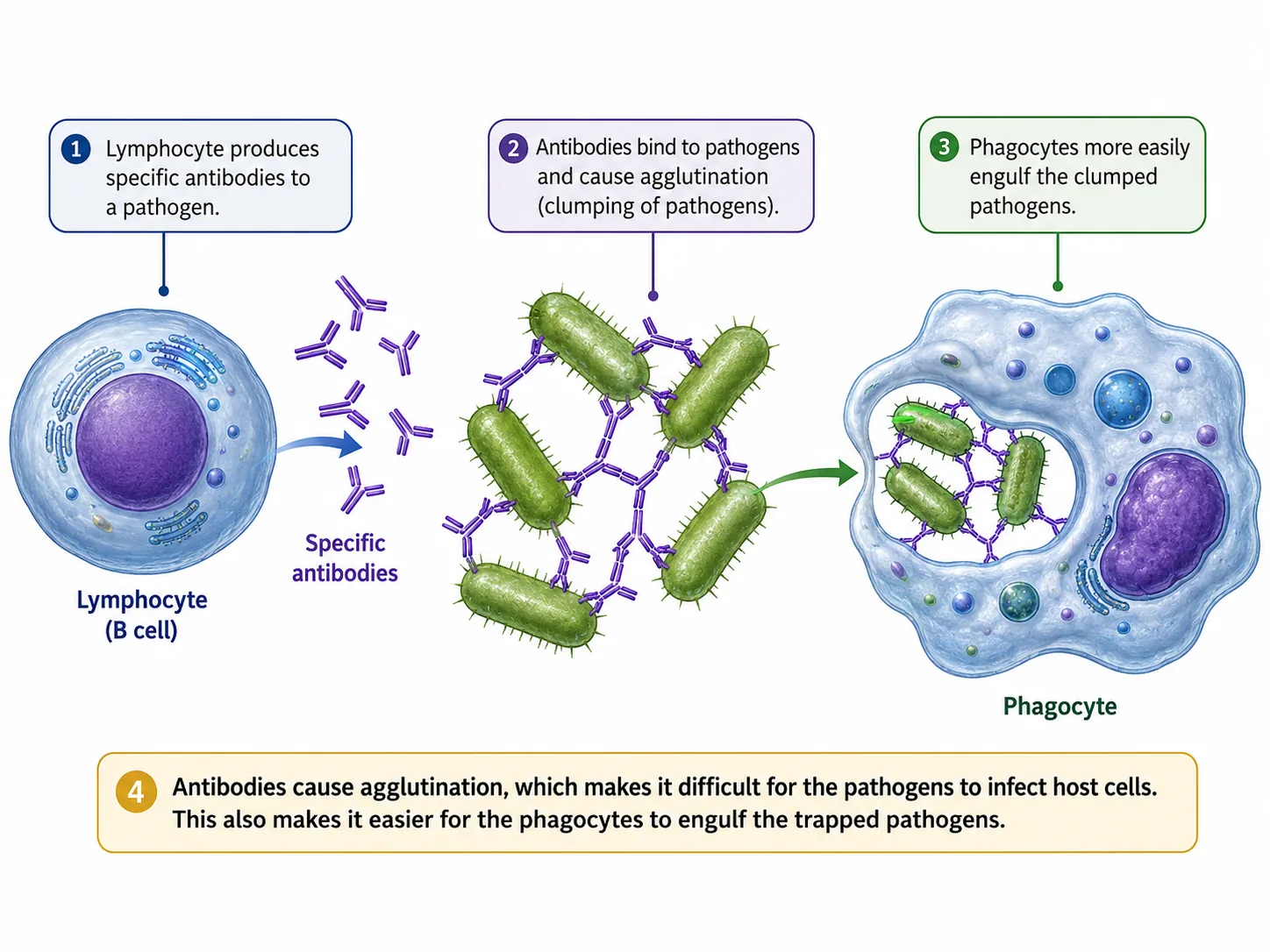

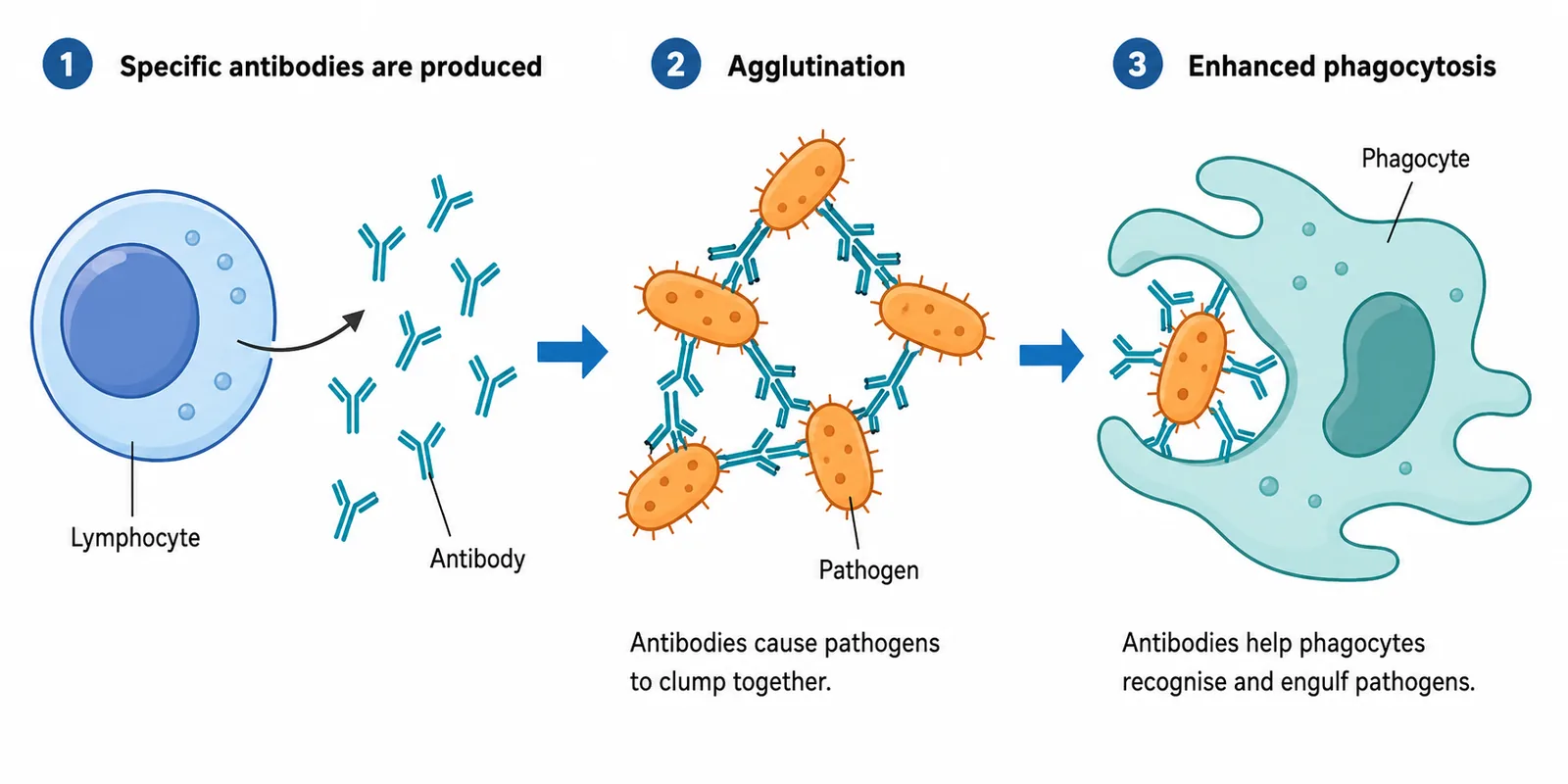
Every cell has molecules on its surface that identify it. Pathogens carry foreign molecules called antigens, usually proteins, on their surface. The body's own cells have antigens that the immune system recognises as 'self' and does not attack. When foreign antigens are detected, the body mounts a specific immune response.
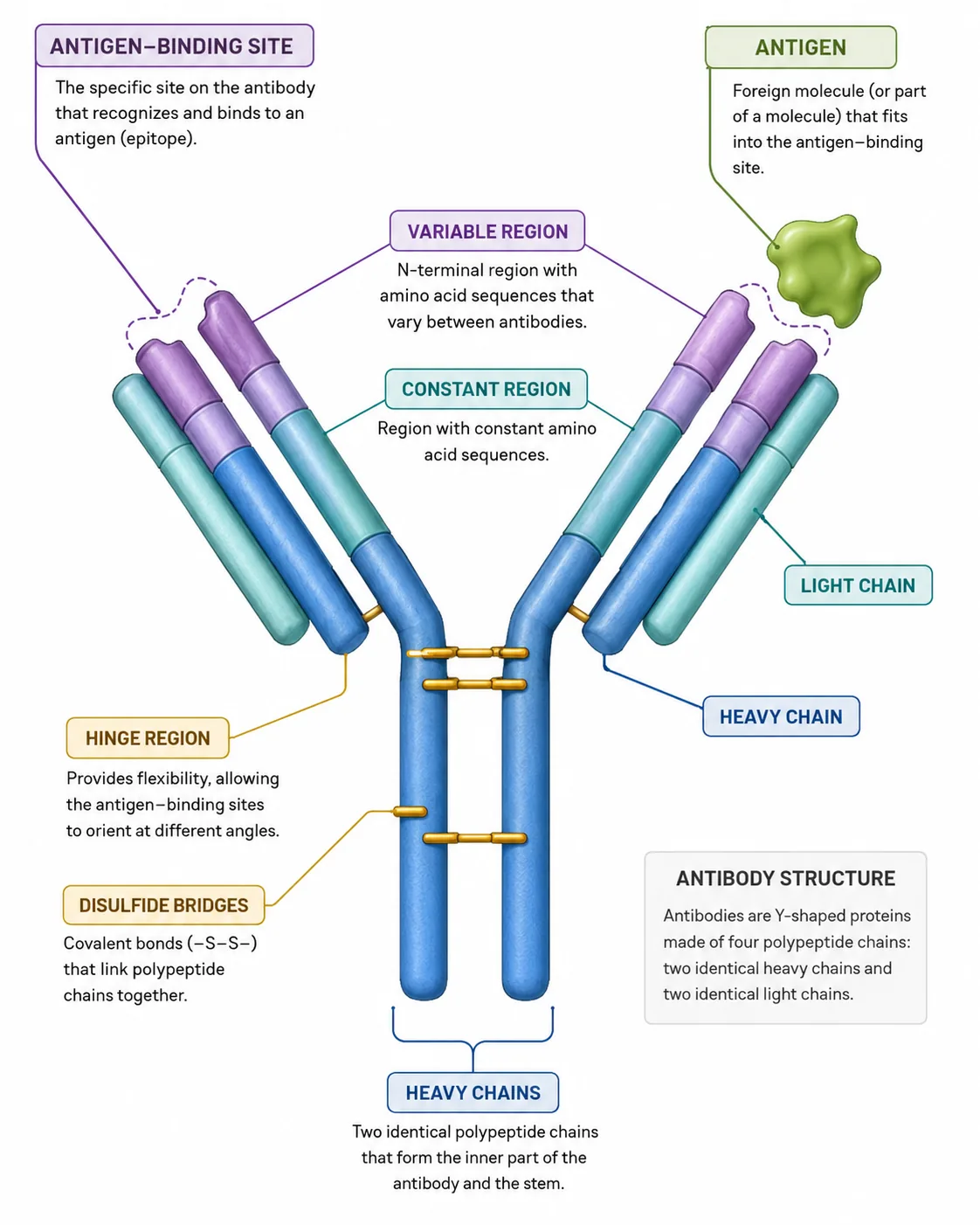
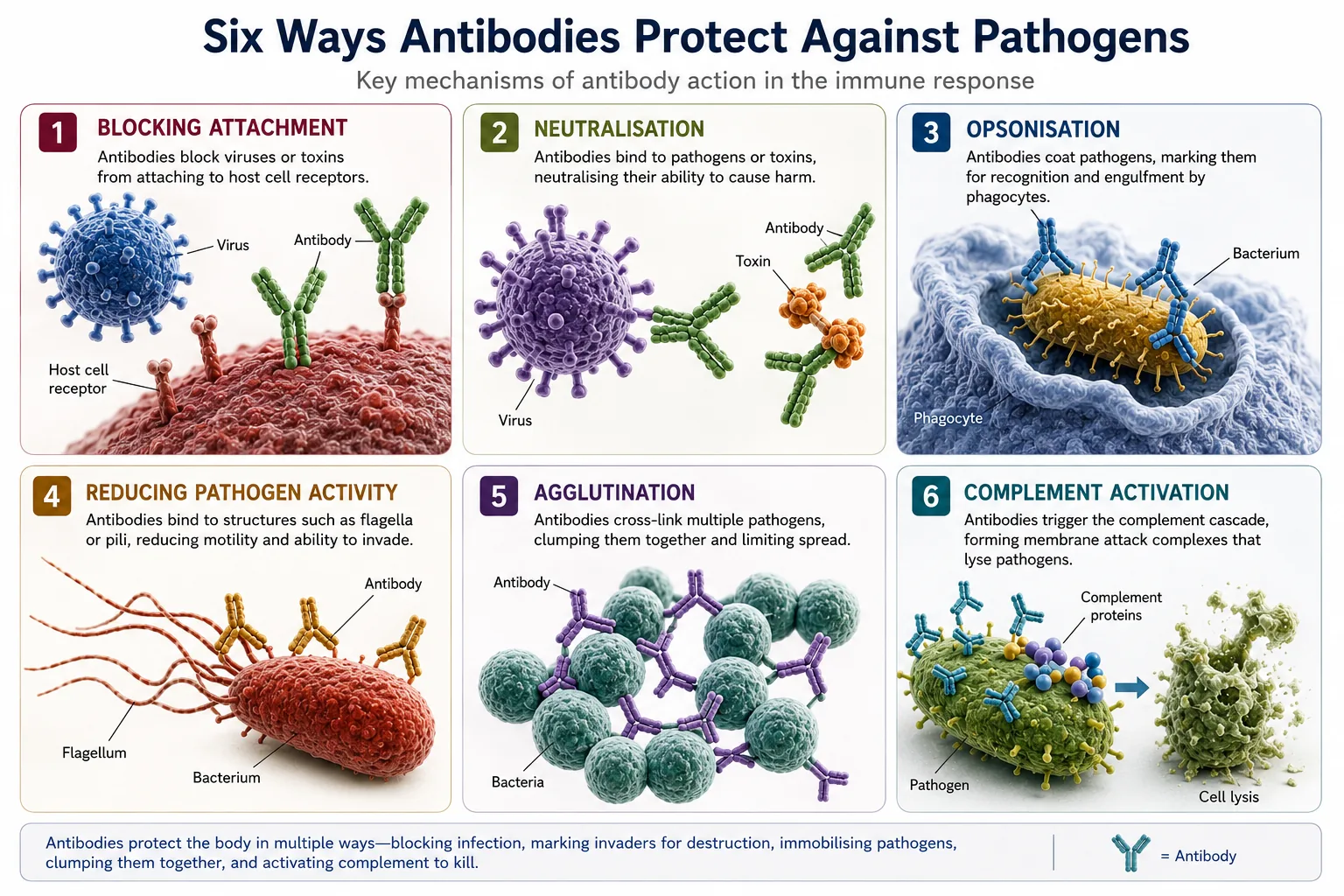
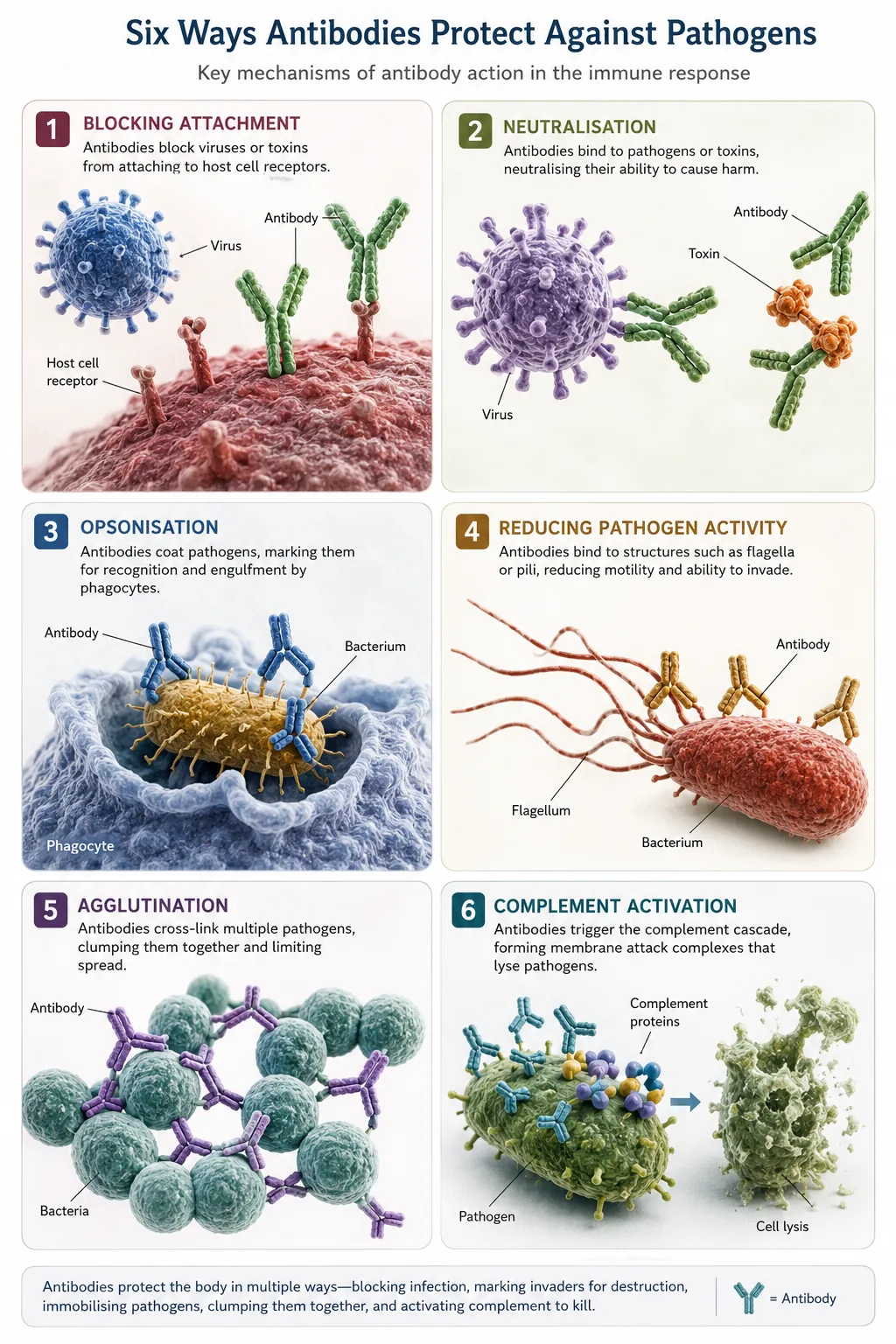
Antibodies are proteins made by white blood cells called B lymphocytes. The antibody has a variable region whose three-dimensional shape is complementary to one particular antigen; an antibody against measles will not fit the antigens of flu. Because antibodies are proteins, their shape depends on the order of amino acids, as in any protein, and they can be denatured.
Section 2 of 9The primary response


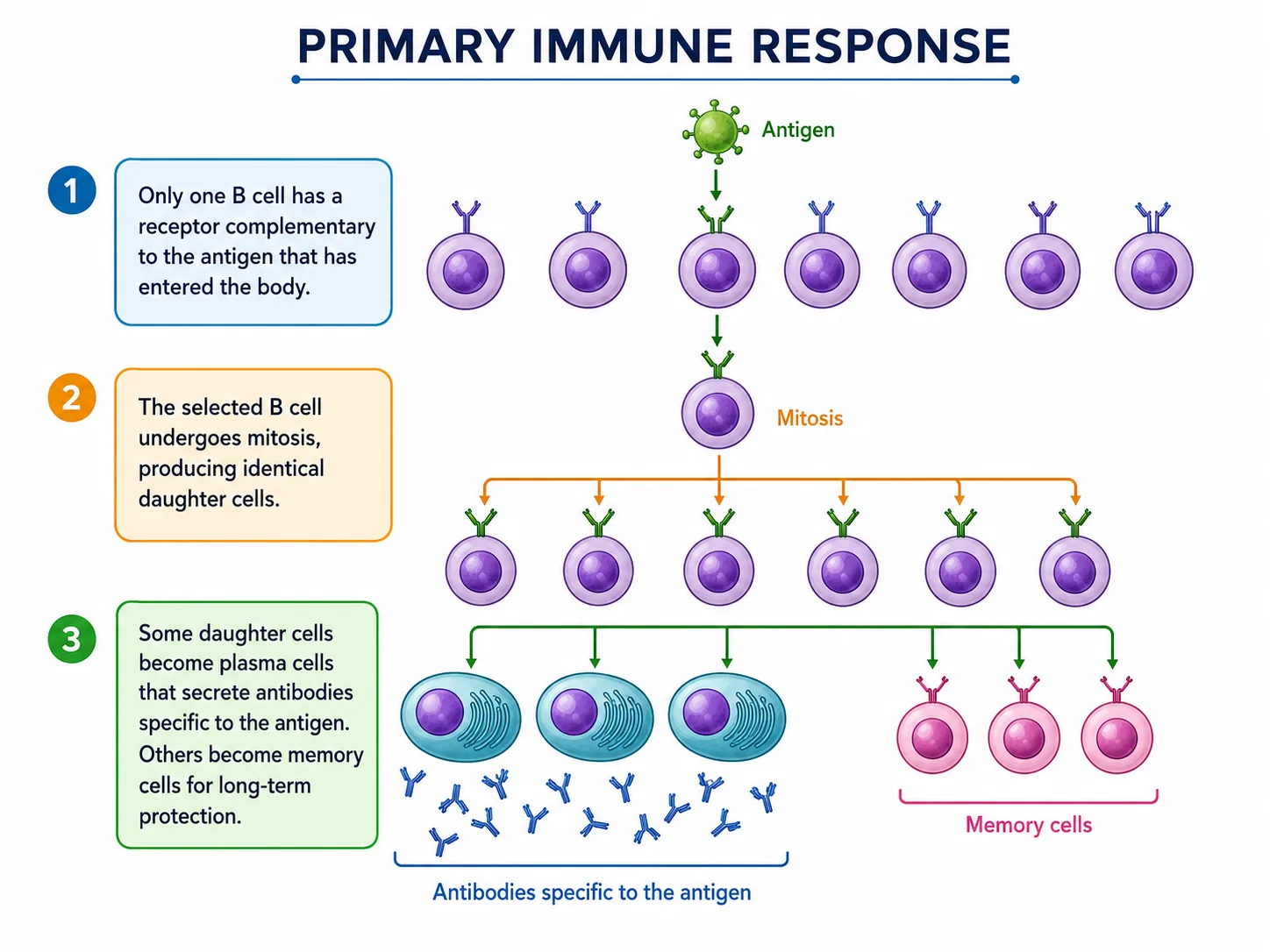

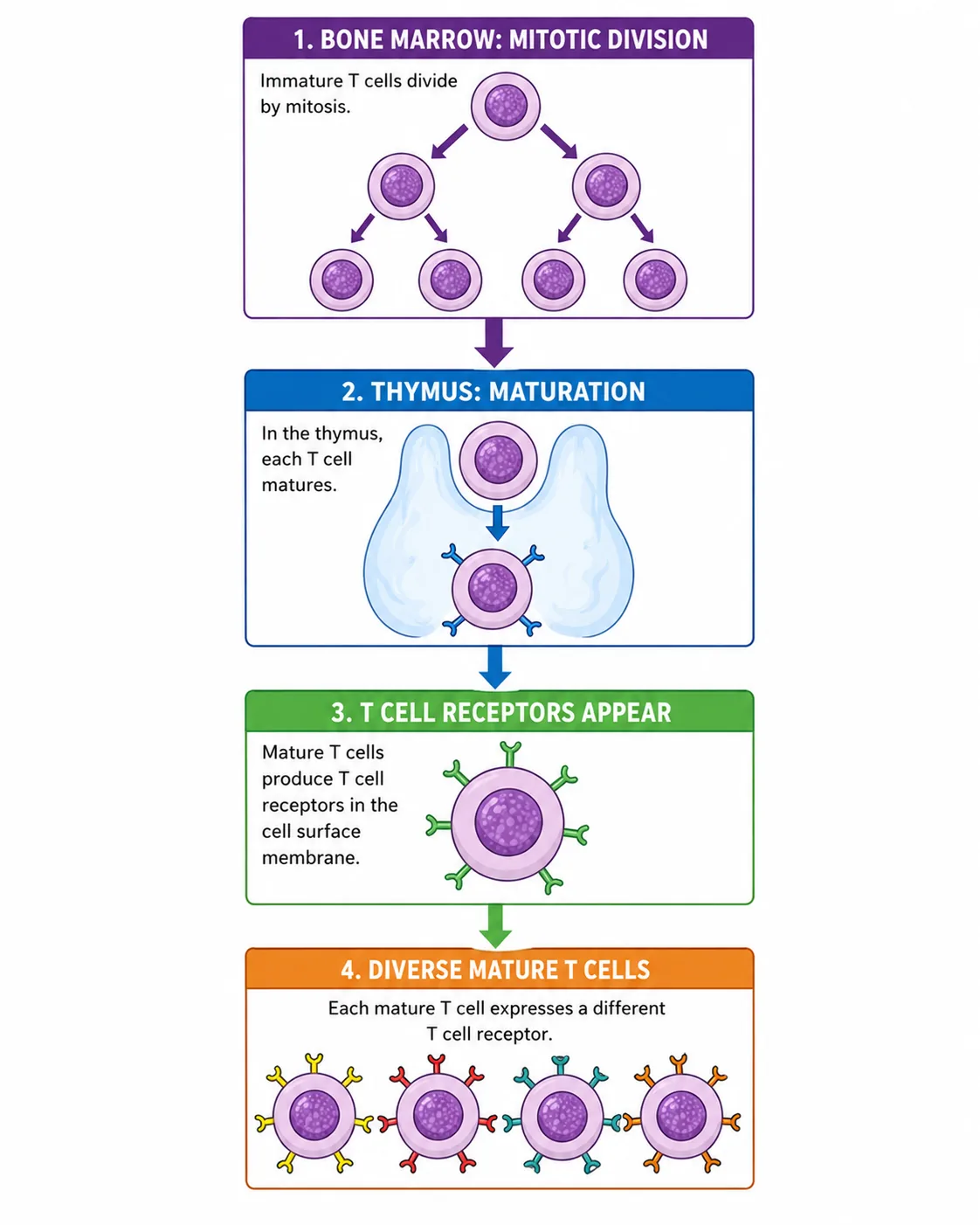
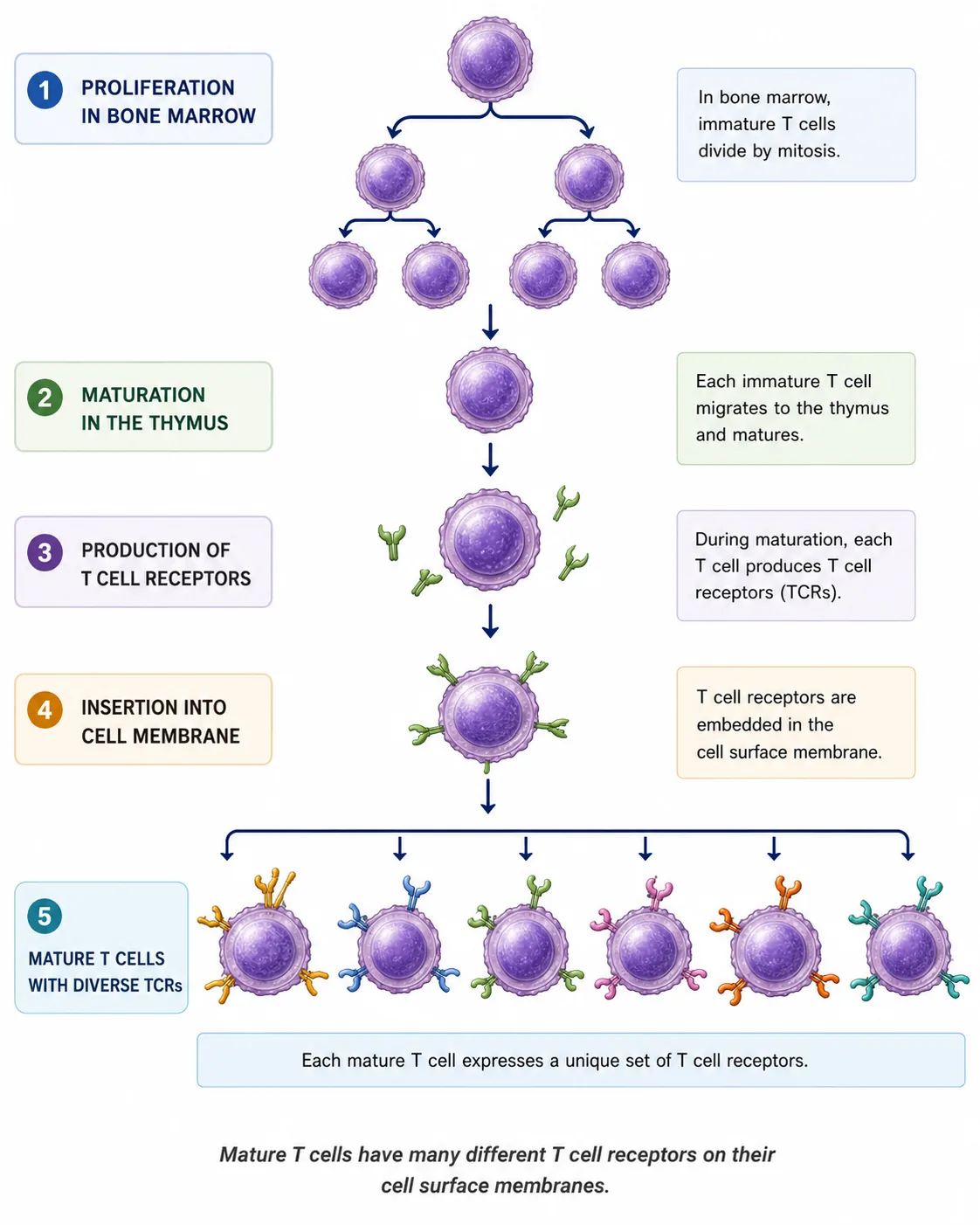
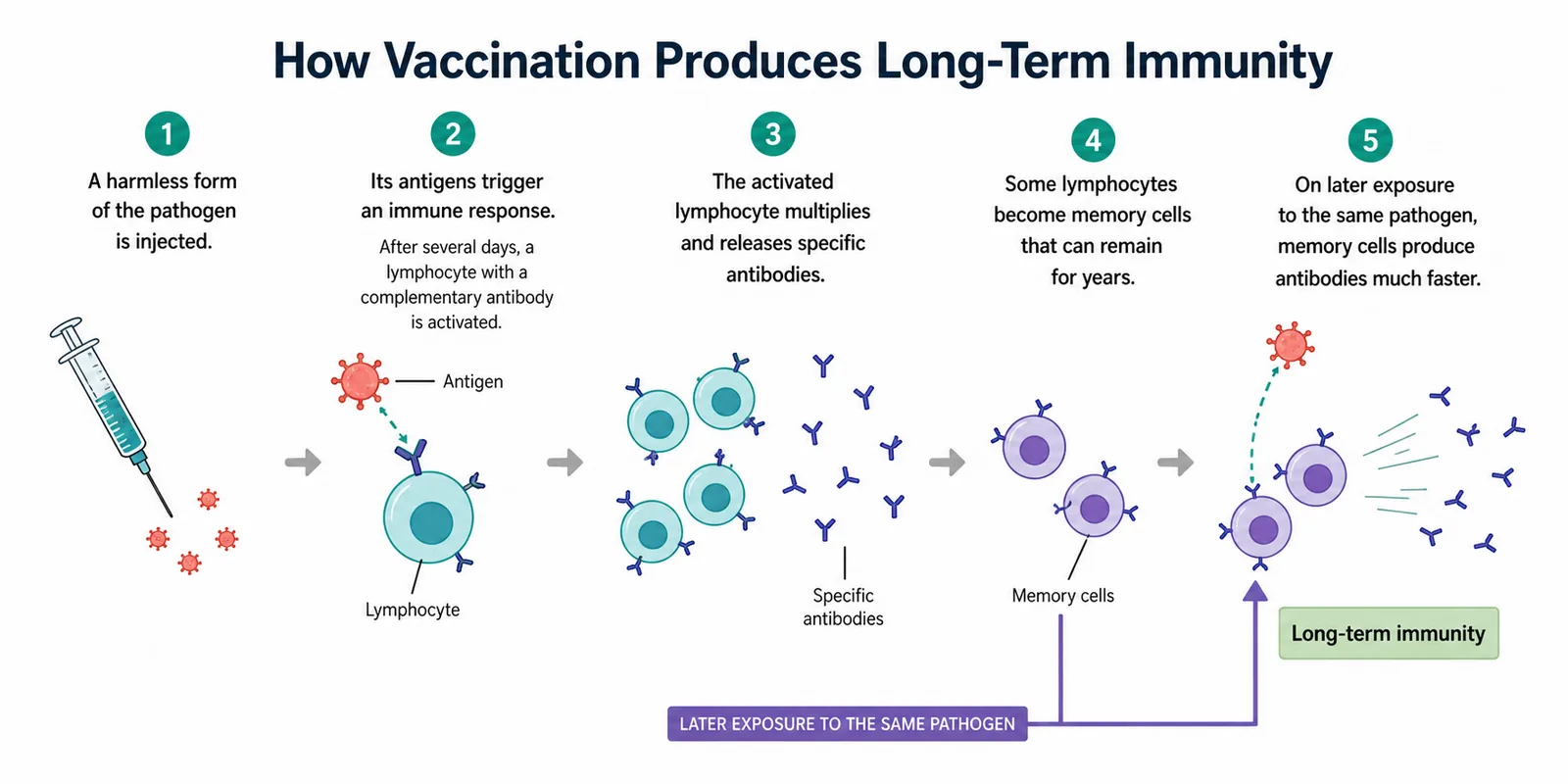
- Its antigens are detected by a lymphocyte that has a matching antibody on its surface, sometimes with the help of a phagocyte that displays pieces of the pathogen.
- Some antibodies cause bacteria to burst.
Some lymphocytes become memory cells, which stay in the blood and lymph for many years. Meanwhile some types of lymphocyte produce antitoxins to neutralise toxins and other cells (T cells) destroy infected body cells directly, but at GCSE the focus is on antibodies and memory cells.
Section 3 of 9The secondary response and immunity
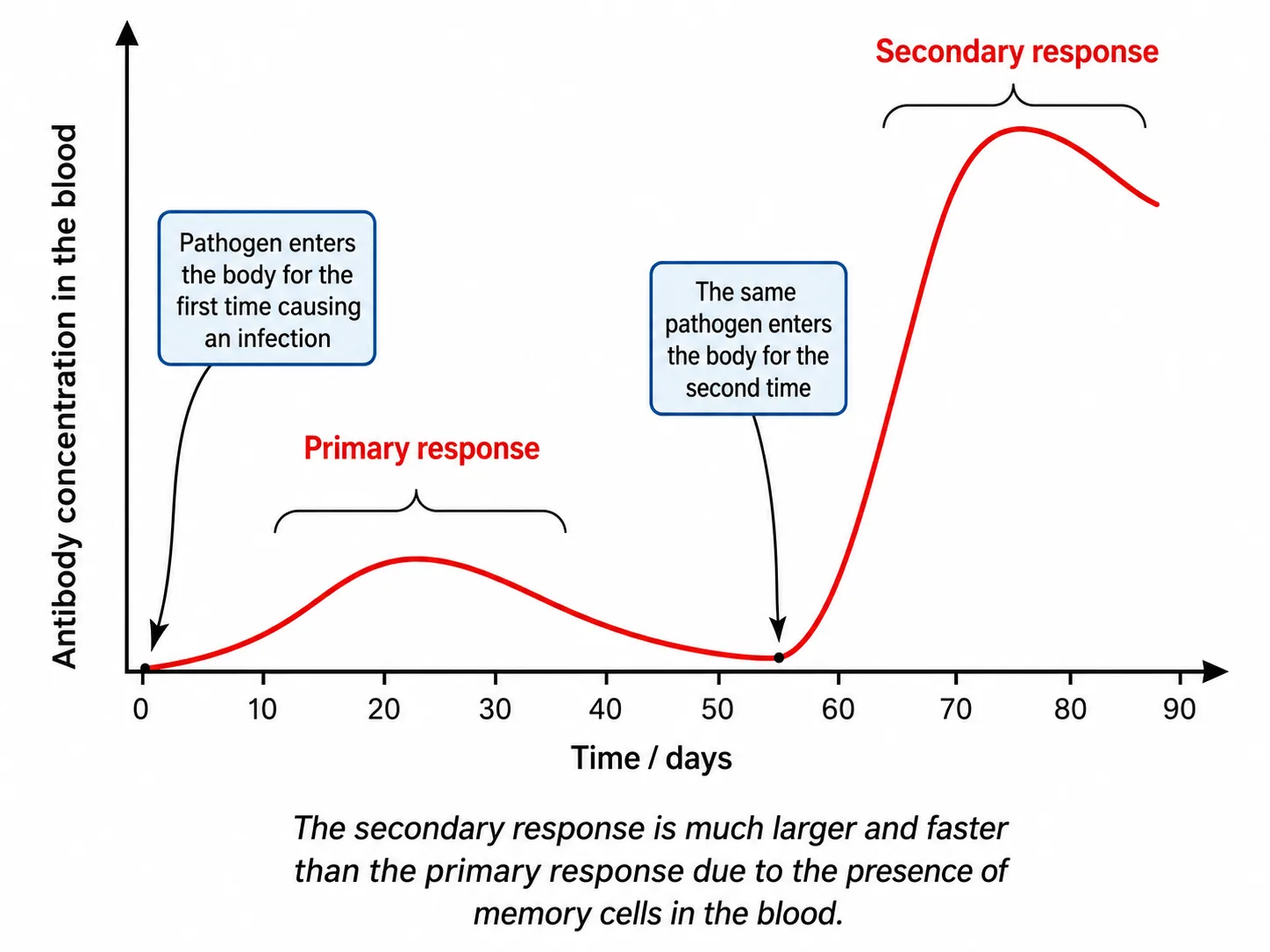
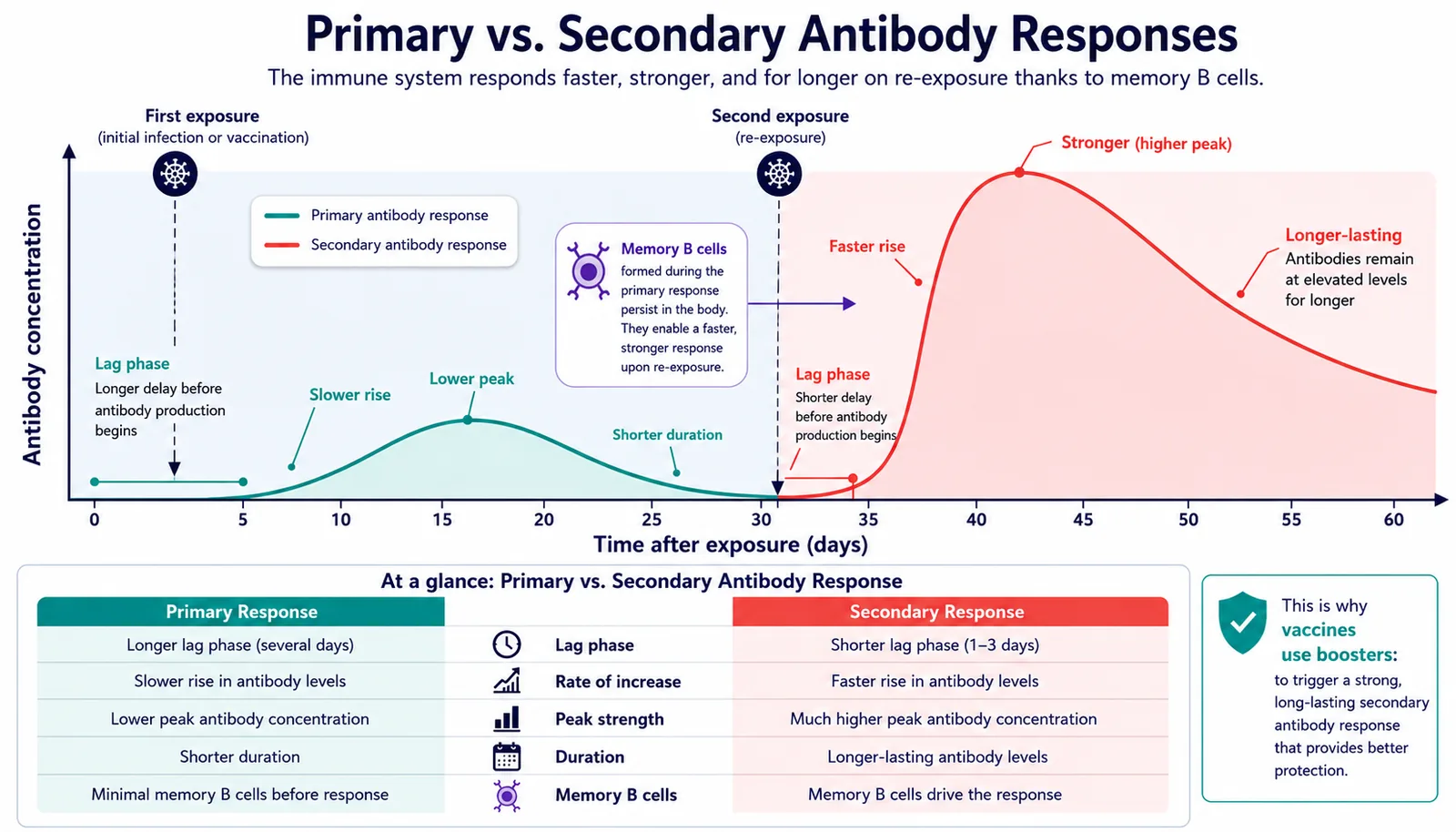


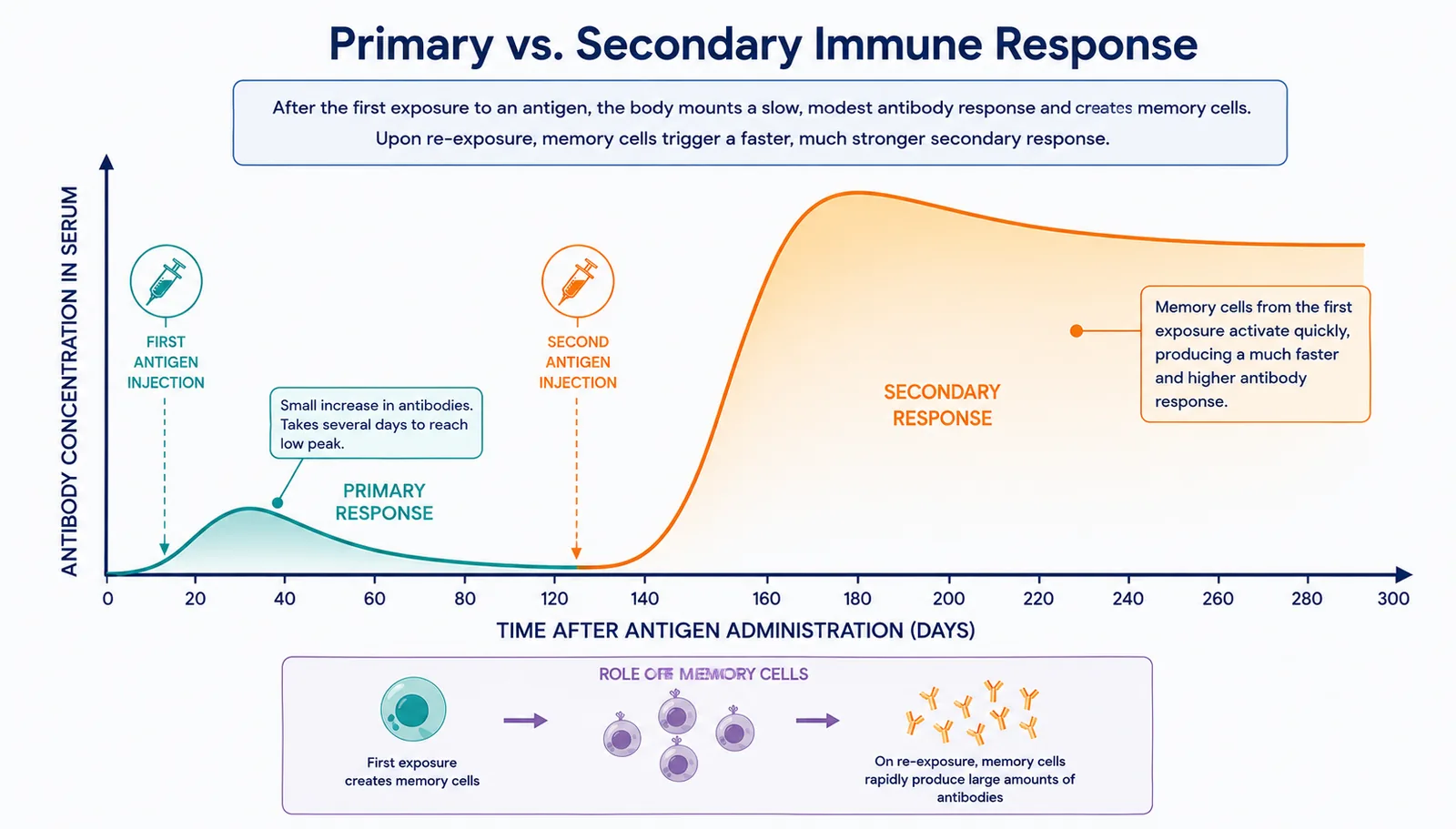
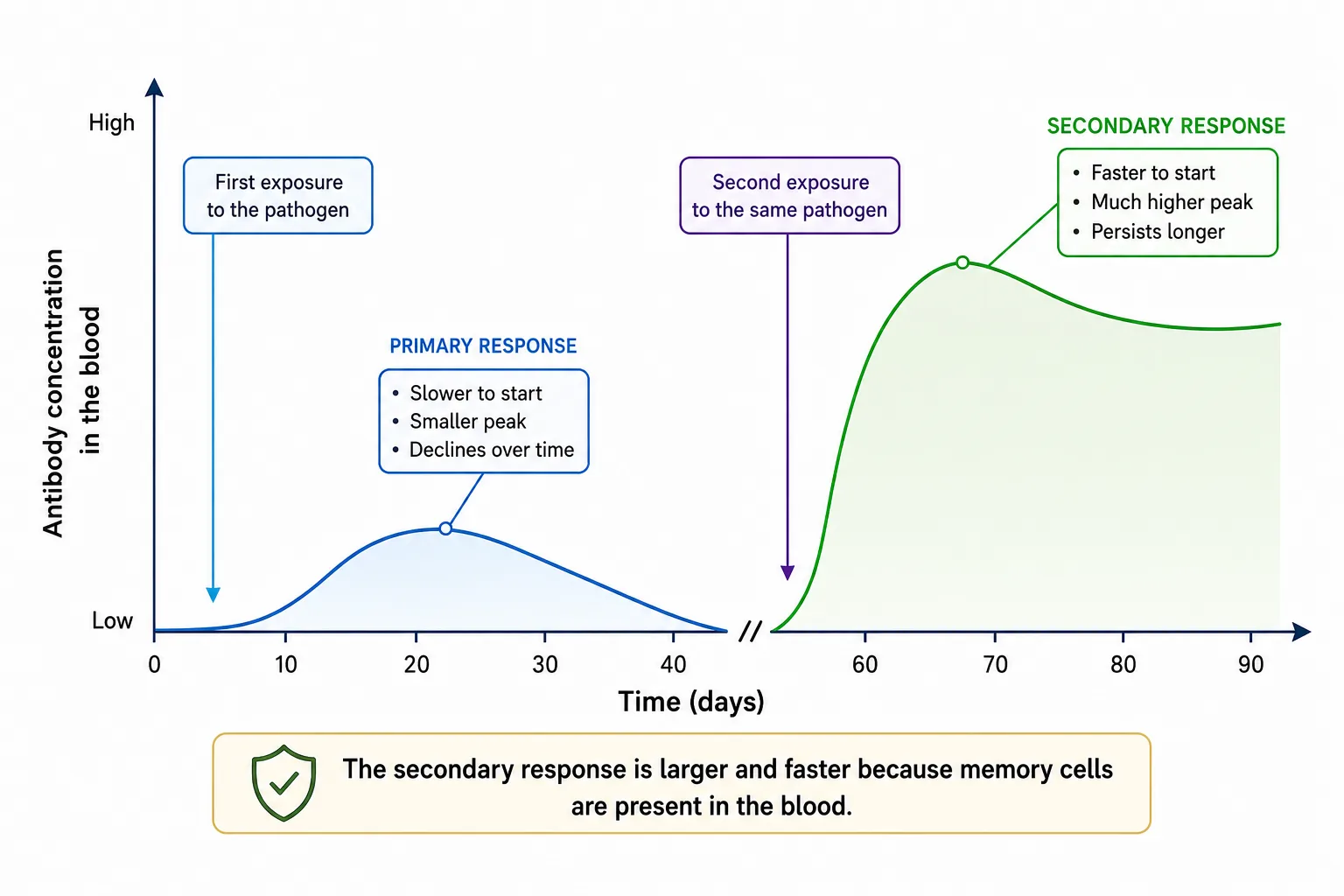
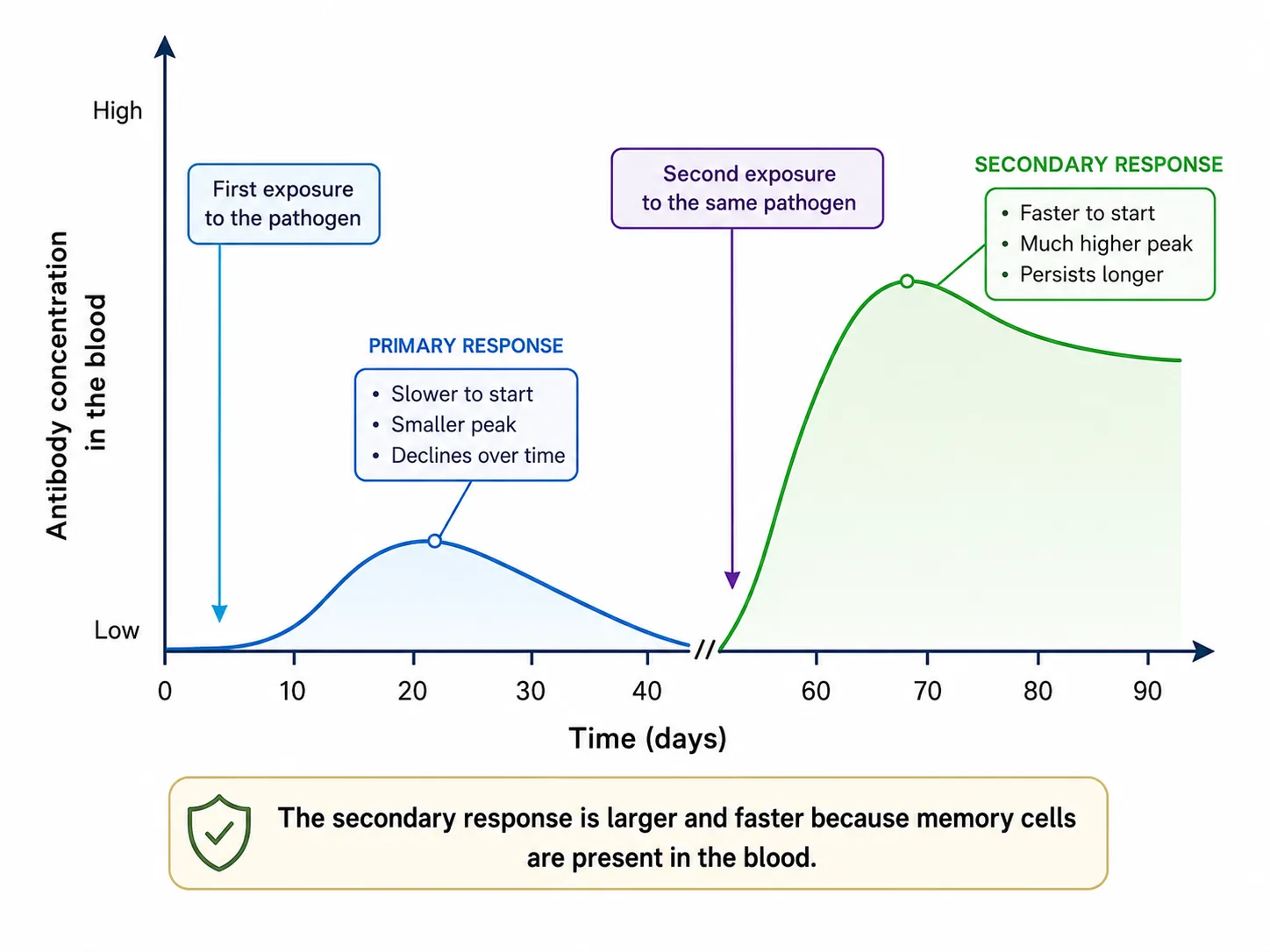
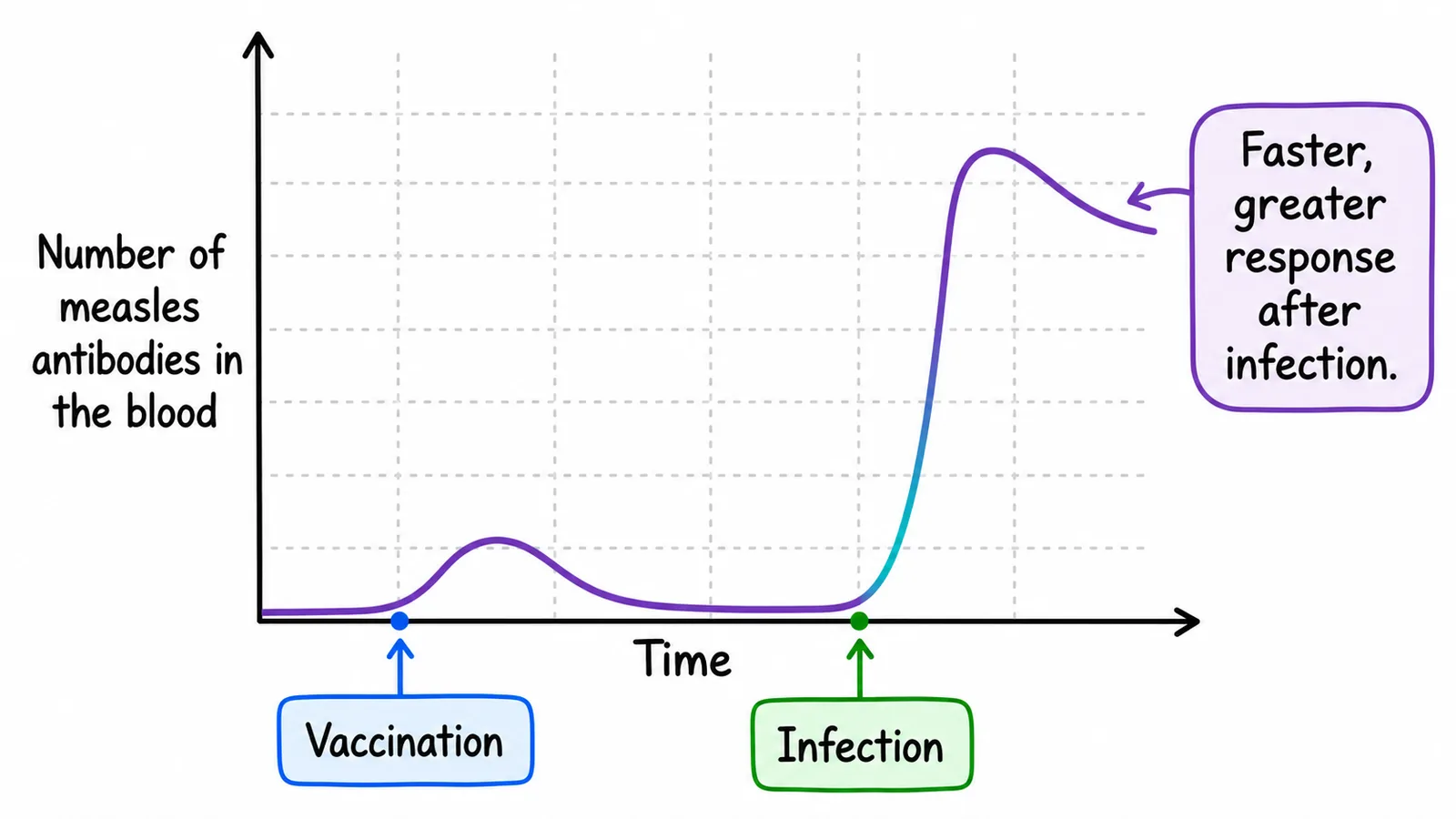
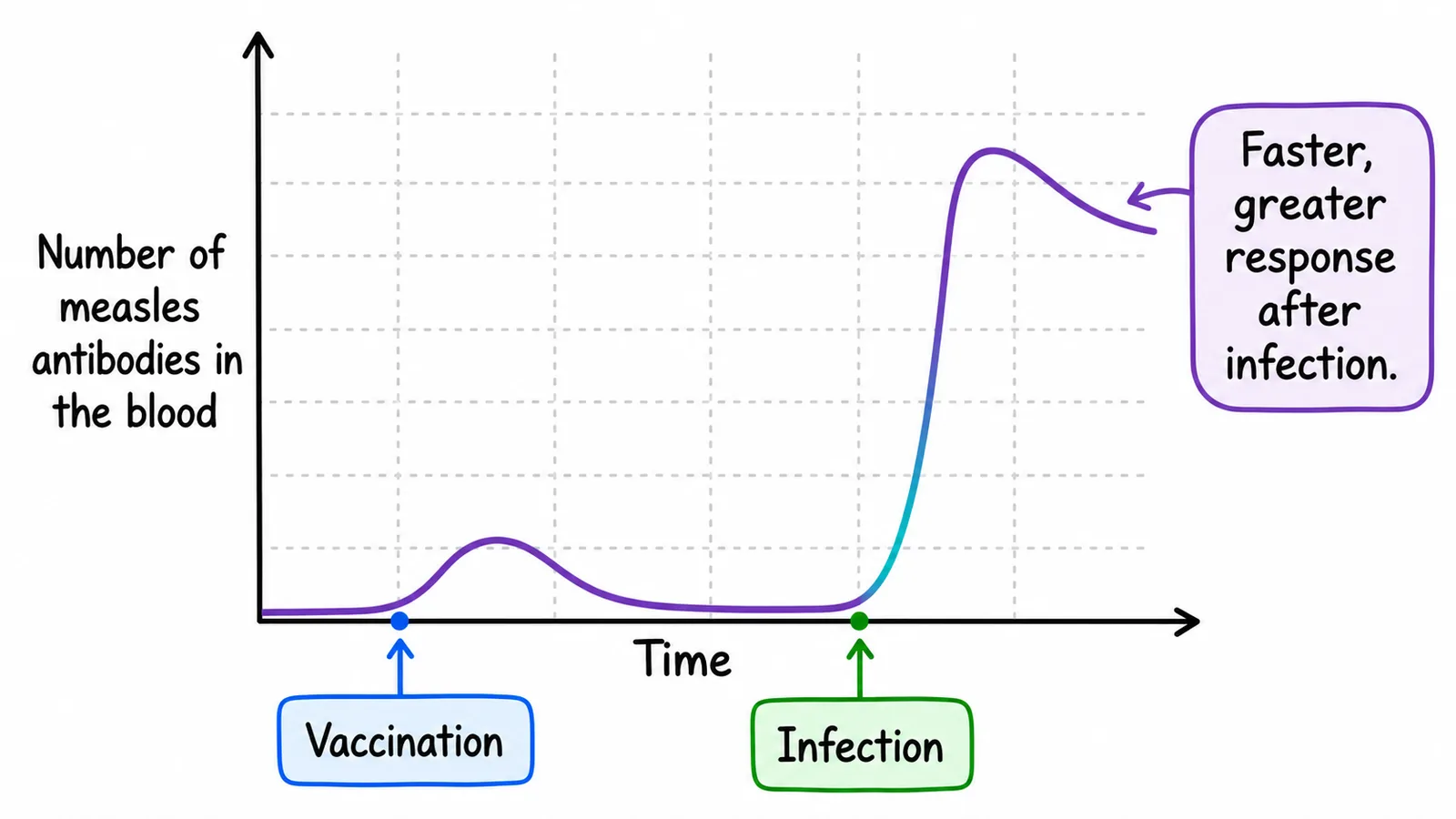
If the same pathogen enters the body again, the memory cells recognise the antigen straight away.
| Primary response | Secondary response | |
|---|---|---|
| Time before antibodies appear | Several days | A day or less |
| Amount of antibody | Low peak | Much higher peak |
| Duration | Short | Longer lasting |
| Symptoms | Yes | Usually none |
Section 4 of 9Interpreting a graph of antibody concentration
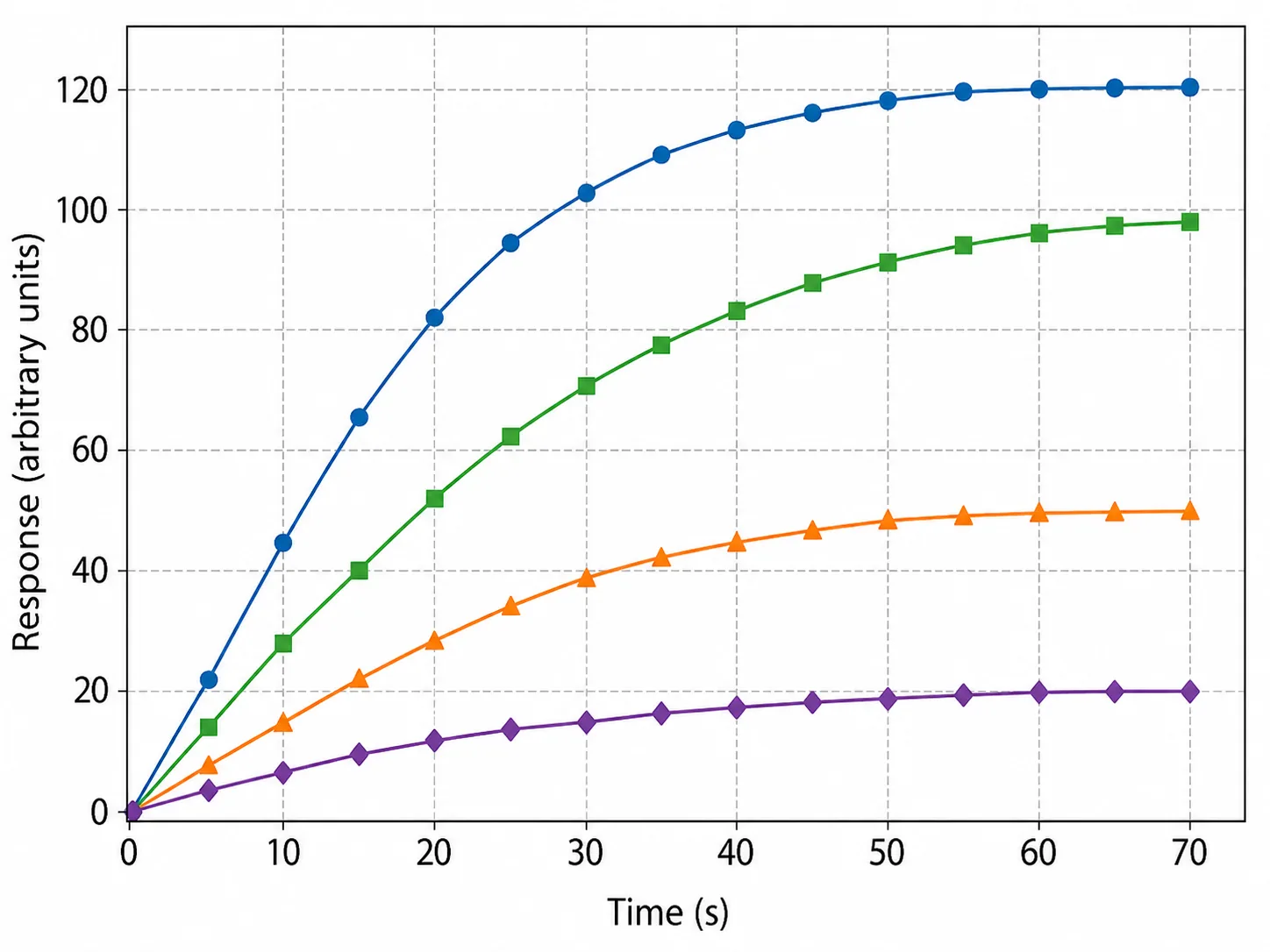

A typical graph has time on the x-axis and antibody concentration on the y-axis.
- but after the second it reached 120 units by day 3',
- so the second response was six times higher (120 / 20) and seven days faster.
Always link the explanation to memory cells: they are already present, so clone production starts at once.
Section 5 of 9Why you can catch some diseases repeatedly
Immunity to measles lasts a lifetime but you can catch colds or flu many times.
- which shows how immune responses can also cause harm.
Section 6 of 9Passive immunity and the role of T cells
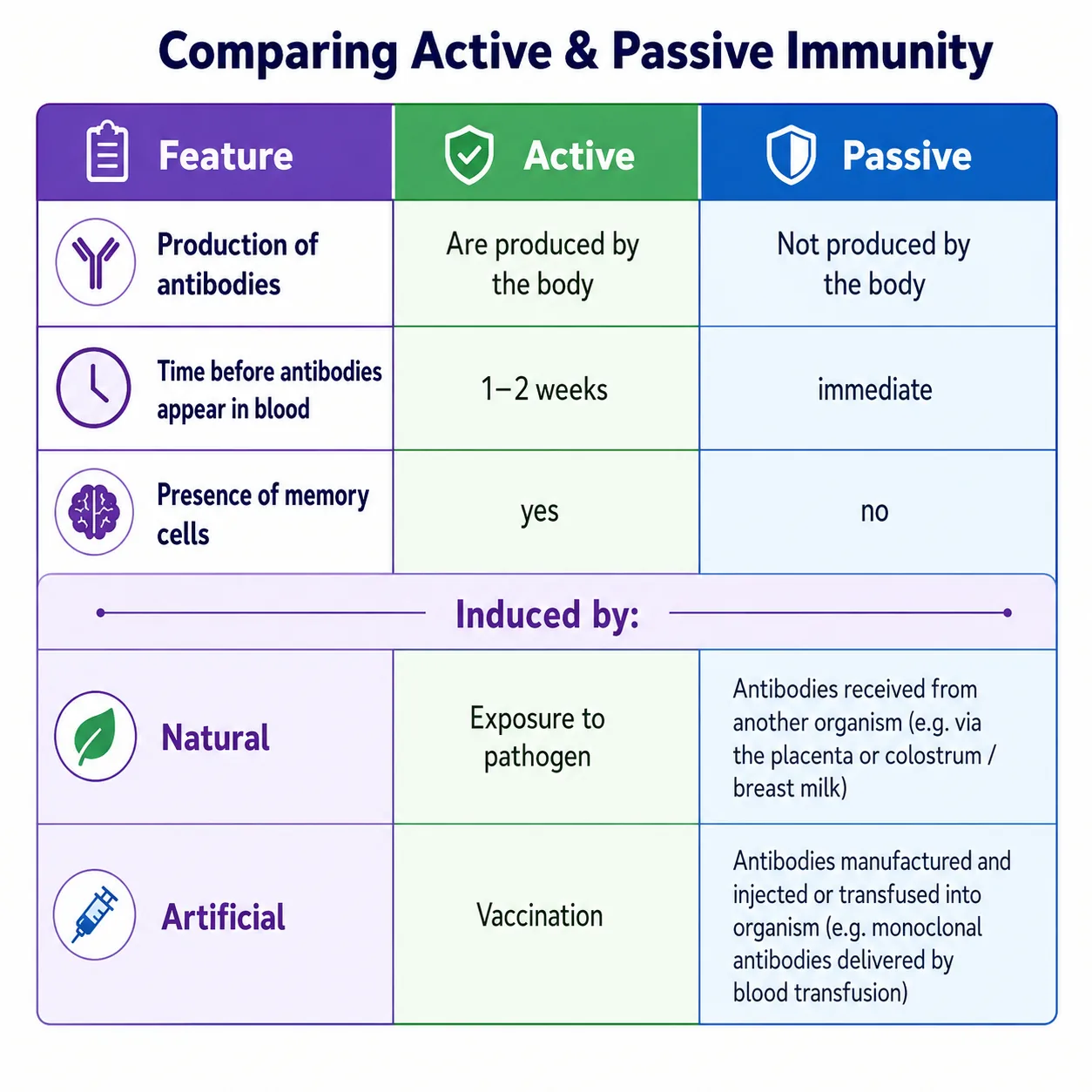
Immunity can also be gained passively, when ready-made antibodies are passed to a person.
- which protects it in the first months;
- an injection of antibodies can be given after exposure to a dangerous pathogen such as tetanus or rabies.
- so that the immune system acts as a team.
Section 7 of 9Exam-style questions



Explain why a person who has had chickenpox is usually immune to the disease for the rest of their life. [3]3 marks
Exam-style questions1. During the first infection, lymphocytes make antibodies and some become memory cells. [1]2. Memory cells remain in the body. [1]3. If the virus enters again, memory cells divide and produce antibodies very quickly in large amounts, killing it before symptoms appear. [1]A graph shows antibody concentration peaks at 15 units 10 days after the first exposure and at 90 units 3 days after the second. Calculate how many times greater the second peak is and suggest why. [3]3 marks
Exam-style questions1. 90 / 15 = 6 times greater. [1]2. Memory cells were present from the first infection. [1]3. They divide quickly to produce many antibody-secreting cells. [1]Explain why antibodies for one pathogen do not protect against a different one. [2]2 marks
1. Each antibody has a binding site with a shape complementary to one specific antigen. [1]
2. A different pathogen has different antigens, so the antibody does not fit. [1]
Section 8 of 9Key terms
| Term | Meaning |
|---|---|
| Antigen | A molecule that triggers an immune response. |
| Antibody | A protein that binds to a specific antigen. |
| Memory cell | A long-lived lymphocyte that gives a fast response on re-exposure. |
| Primary response | The first, slower response to a pathogen. |
| Secondary response | The faster, stronger response on second exposure. |
| Immunity | Protection against a pathogen through the immune system. |
| Clone | A group of genetically identical cells. |
| Lymphocyte | A white blood cell that produces antibodies. |