7.1.4Practical Skills
Practical: Investigating Enzymatic Reactions
5 min read 7 parts Lesson 5 of 11 1 quiz
Section 1 of 7The reaction being studied


Amylase and starch
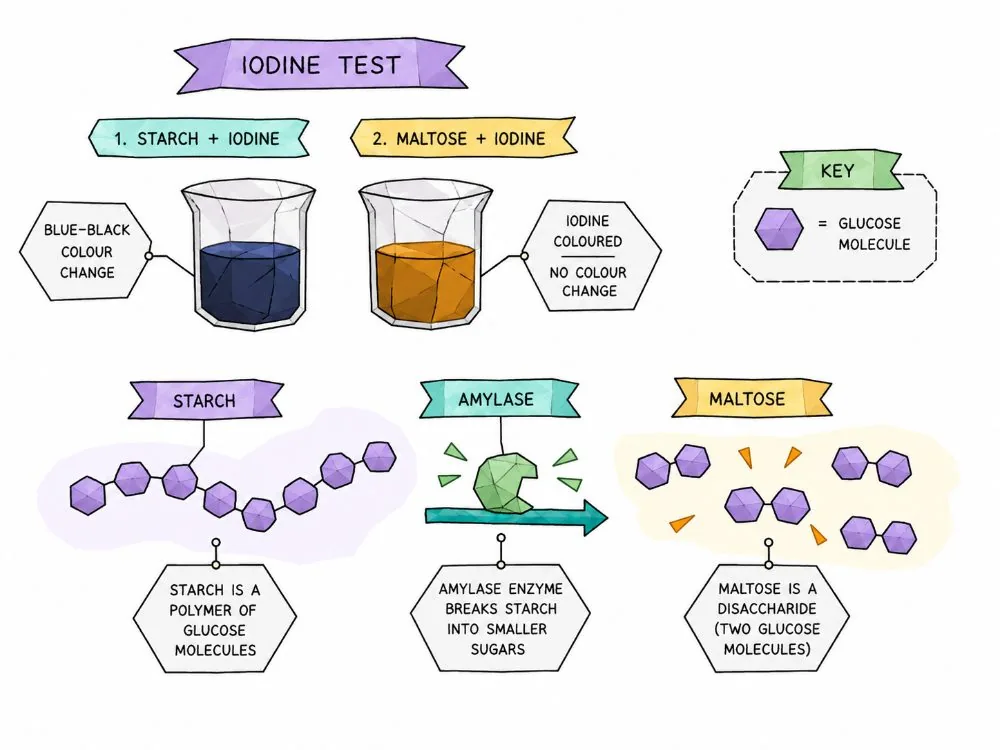
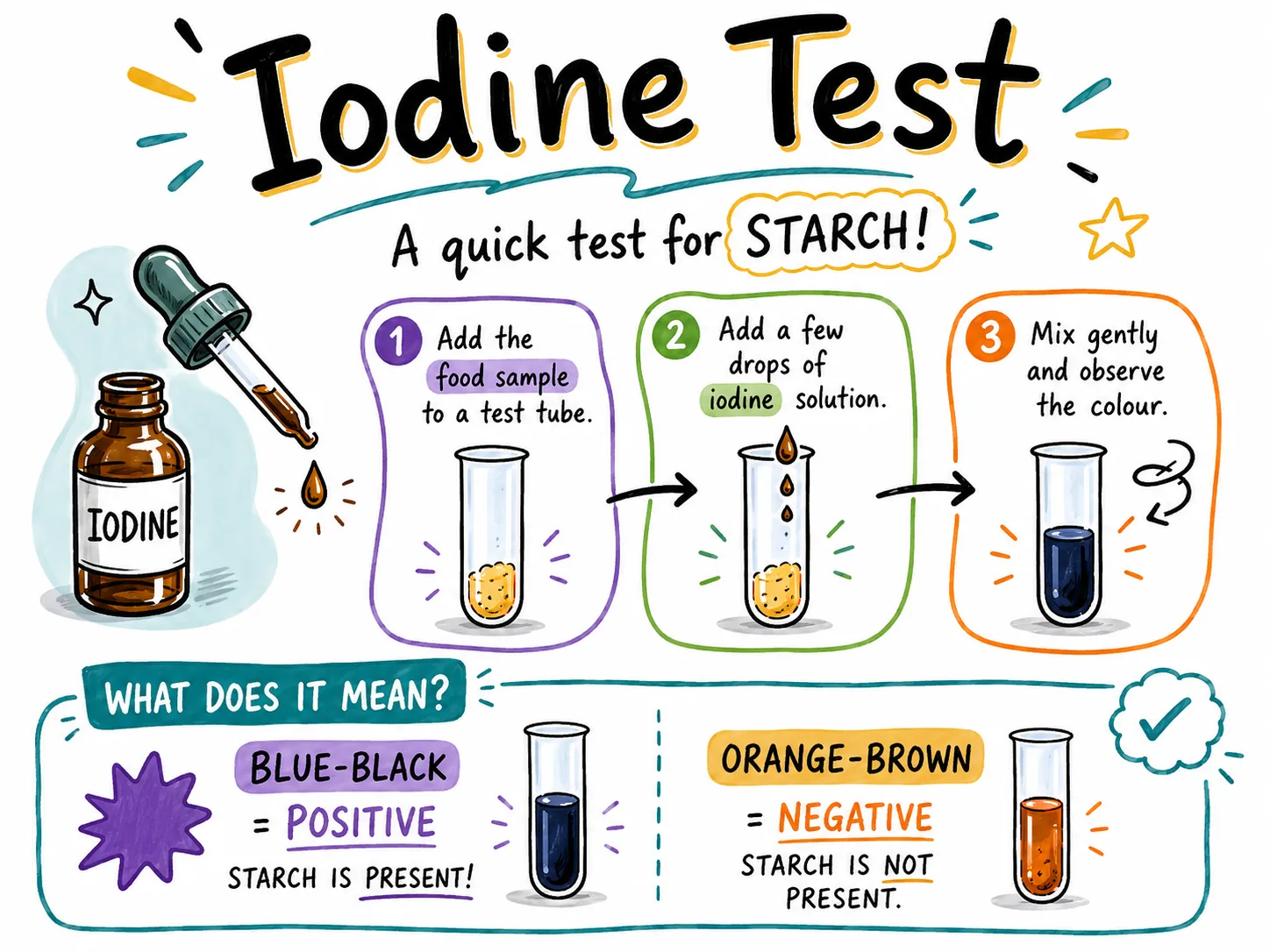
- Amylase and starch Amylase is an enzyme that digests starch into the sugar maltose.
Iodine test
- Iodine test Iodine solution is orange-brown, but turns blue-black when starch is present.
- The reaction is finished when a sample no longer turns blue-black.
Measuring activity
- Measuring activity The time taken for the starch to disappear is recorded;
- a shorter time means a faster rate.
Section 2 of 7Effect of pH: method
1
Place a drop of iodine in each well of a spotting tile.
2
Put amylase solution into a test tube and add a buffer solution of a chosen pH.
3
Add starch solution, start the stopwatch and mix.
4
Every 10 seconds transfer a drop of the mixture into a fresh well of iodine.
5
Stop when the iodine stays orange-brown and record the time.
6
Repeat with buffers at other pH values (for example pH 3 to pH 7).
Section 3 of 7Effect of temperature: changes to the method


| Feature | Detail |
|---|---|
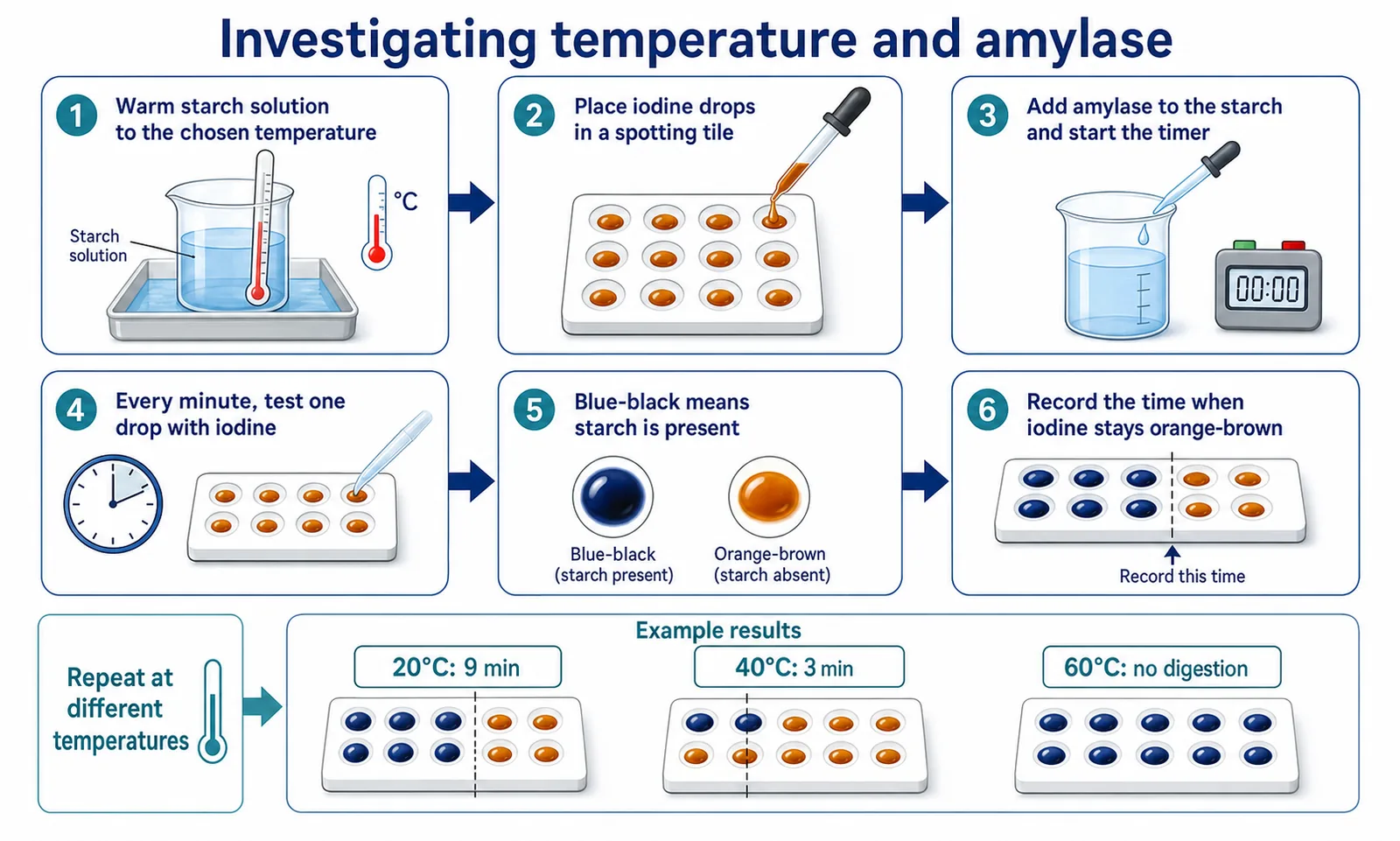
| Independent variable | Temperature, set using a water bath |
| Dependent variable | Time for the starch to be digested |
| Control variables | Volumes and concentrations of enzyme and starch, pH (use a buffer) |
| Sampling | A drop is tested in iodine every minute |
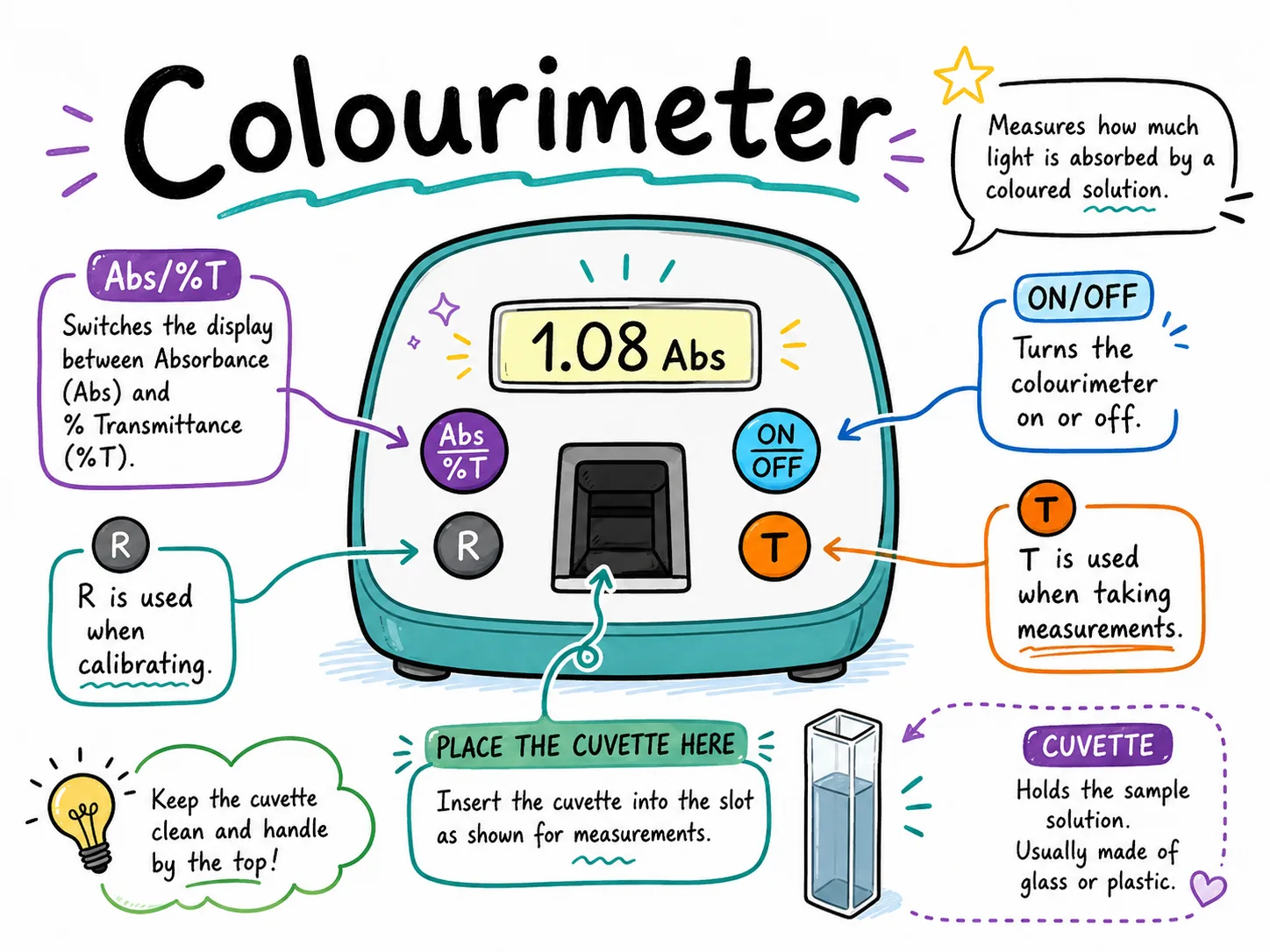
| Improvement | A colorimeter can measure the colour change more objectively |
Section 4 of 7Interpreting results



Enzyme activity
Optimum
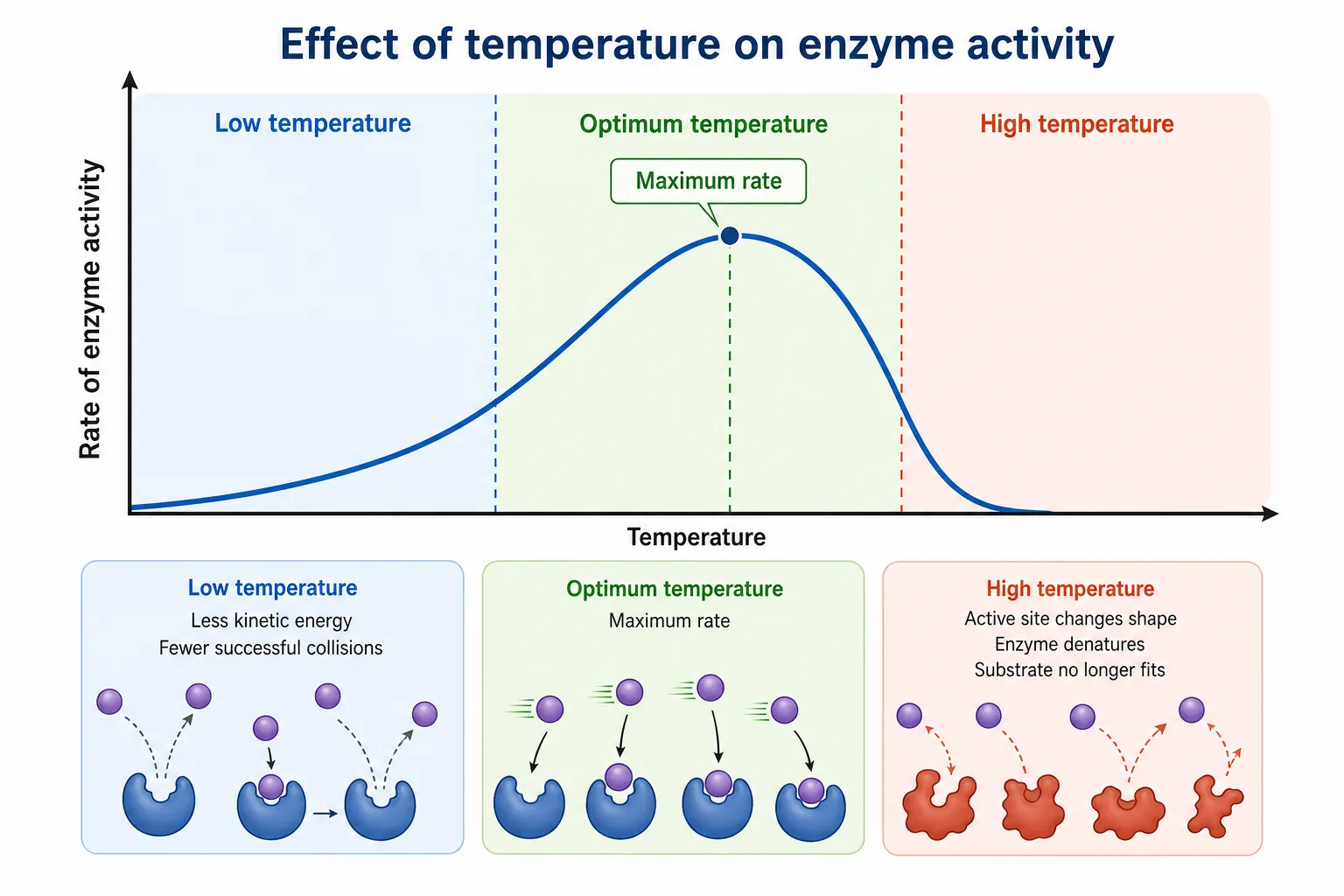
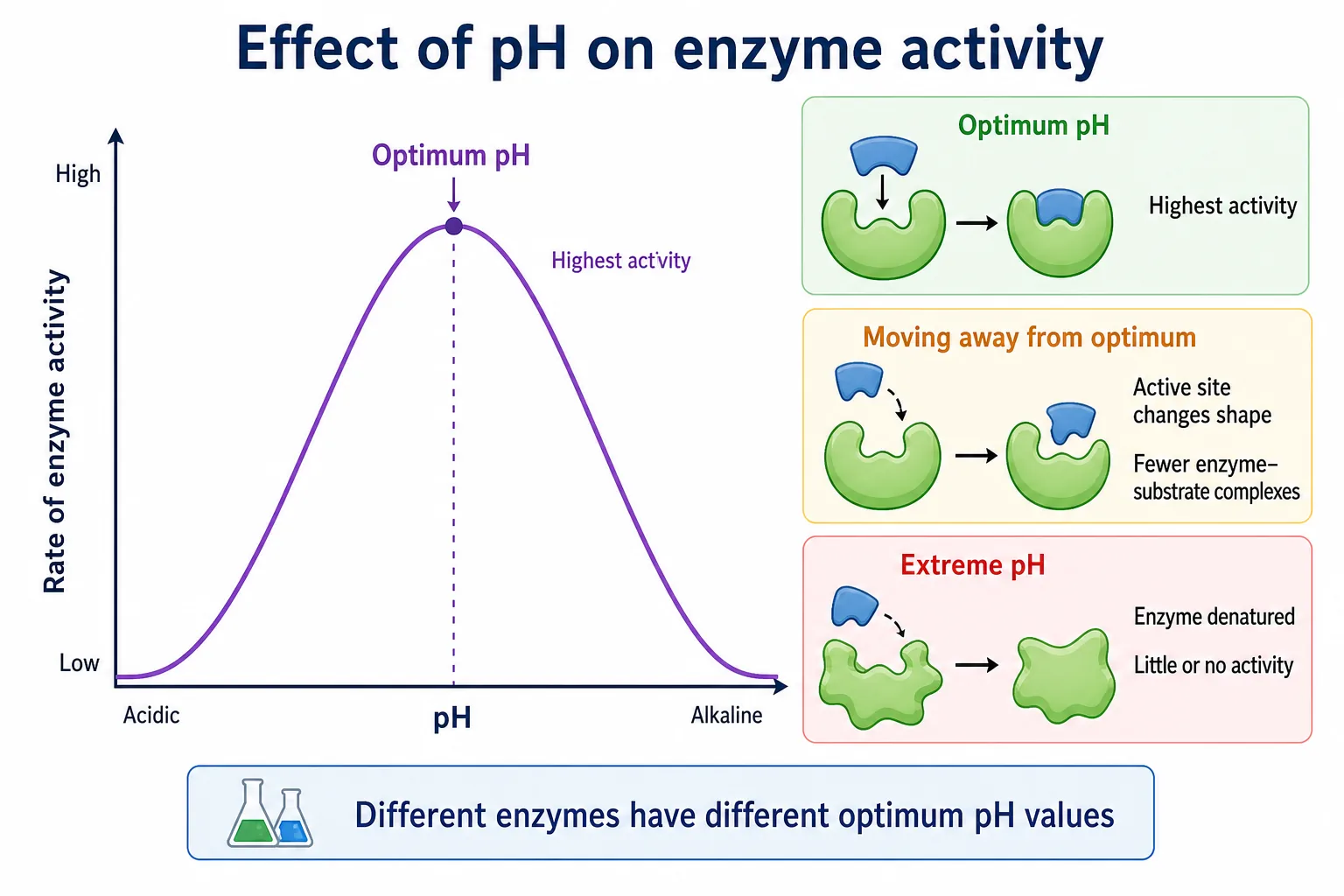
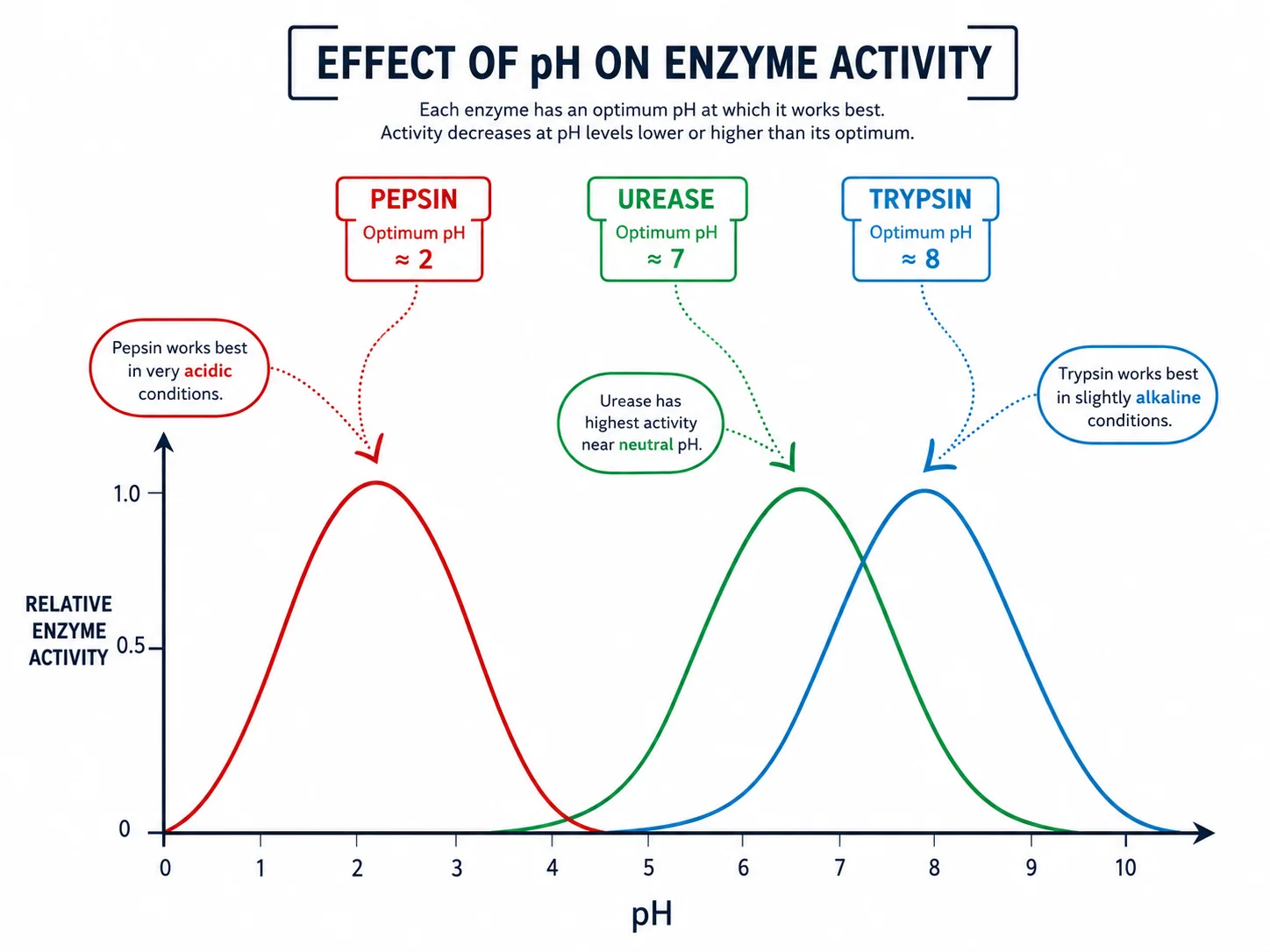
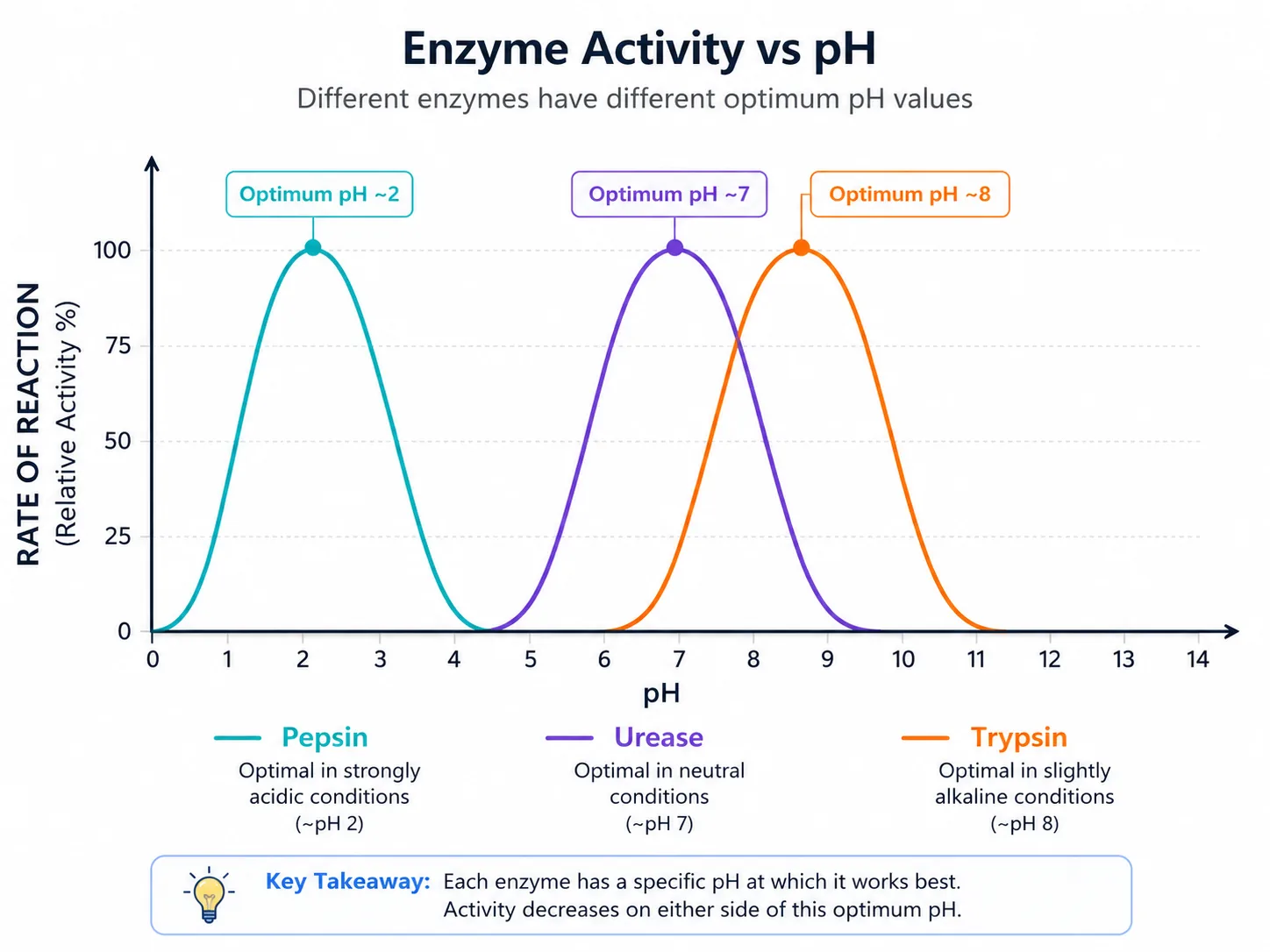
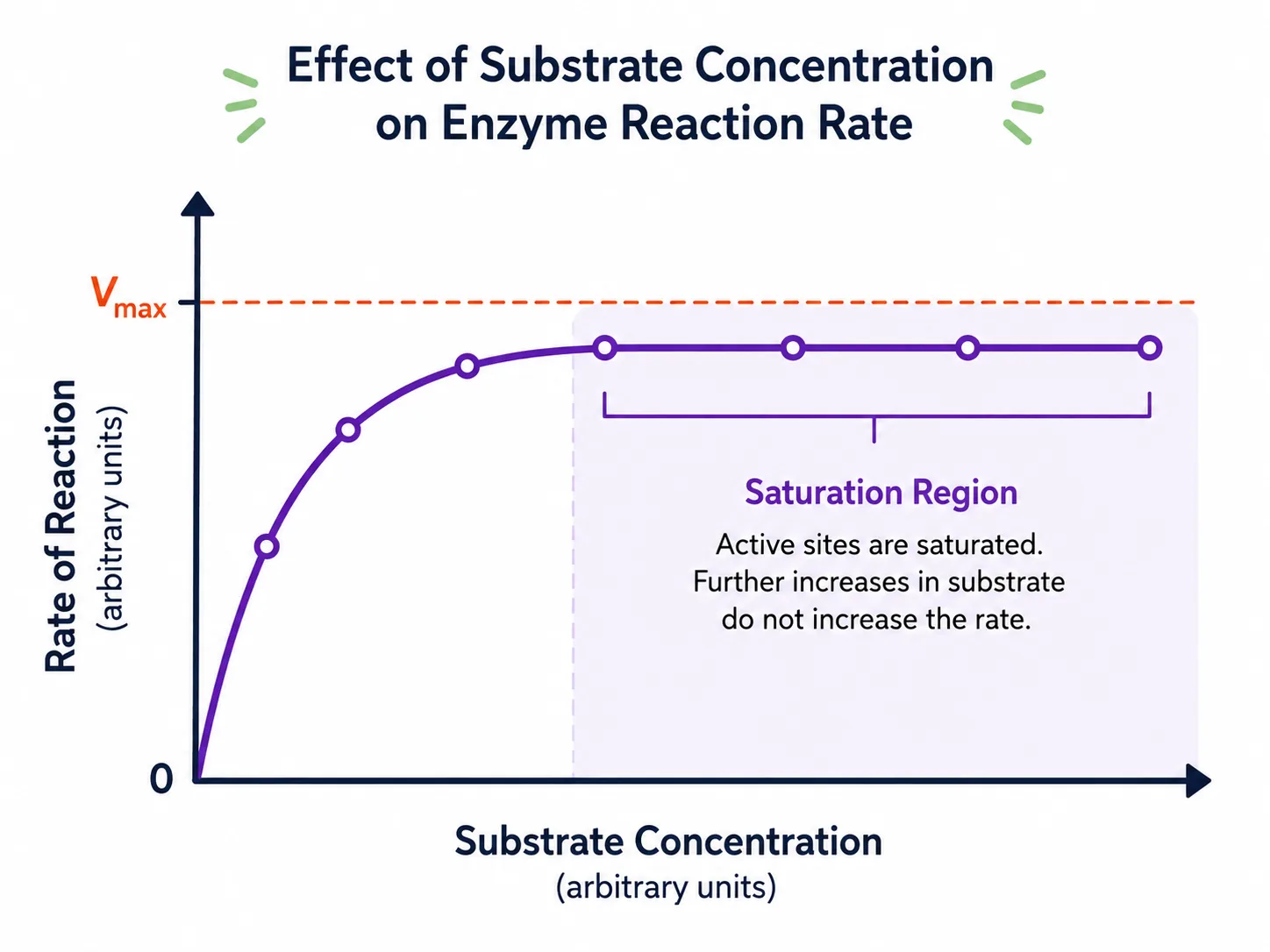
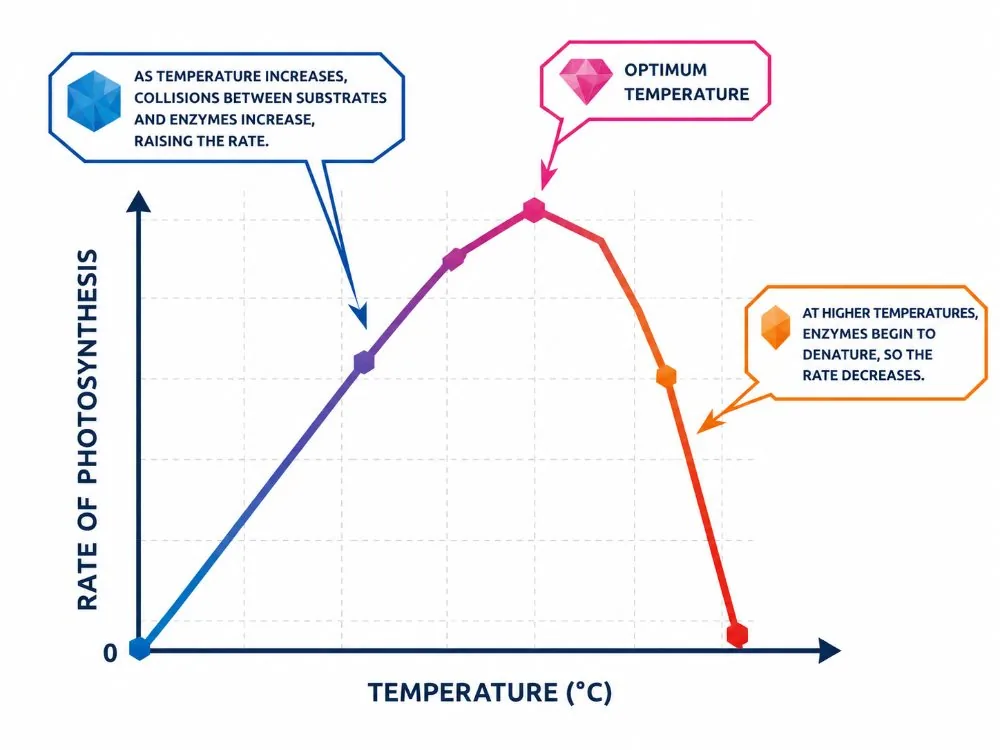
- Optimum At the optimum pH or temperature, the starch disappears in the shortest time.
Too acidic or too alkaline
- Too acidic or too alkaline The enzyme starts to denature;
- the active site changes shape, so starch cannot bind.
Low temperature
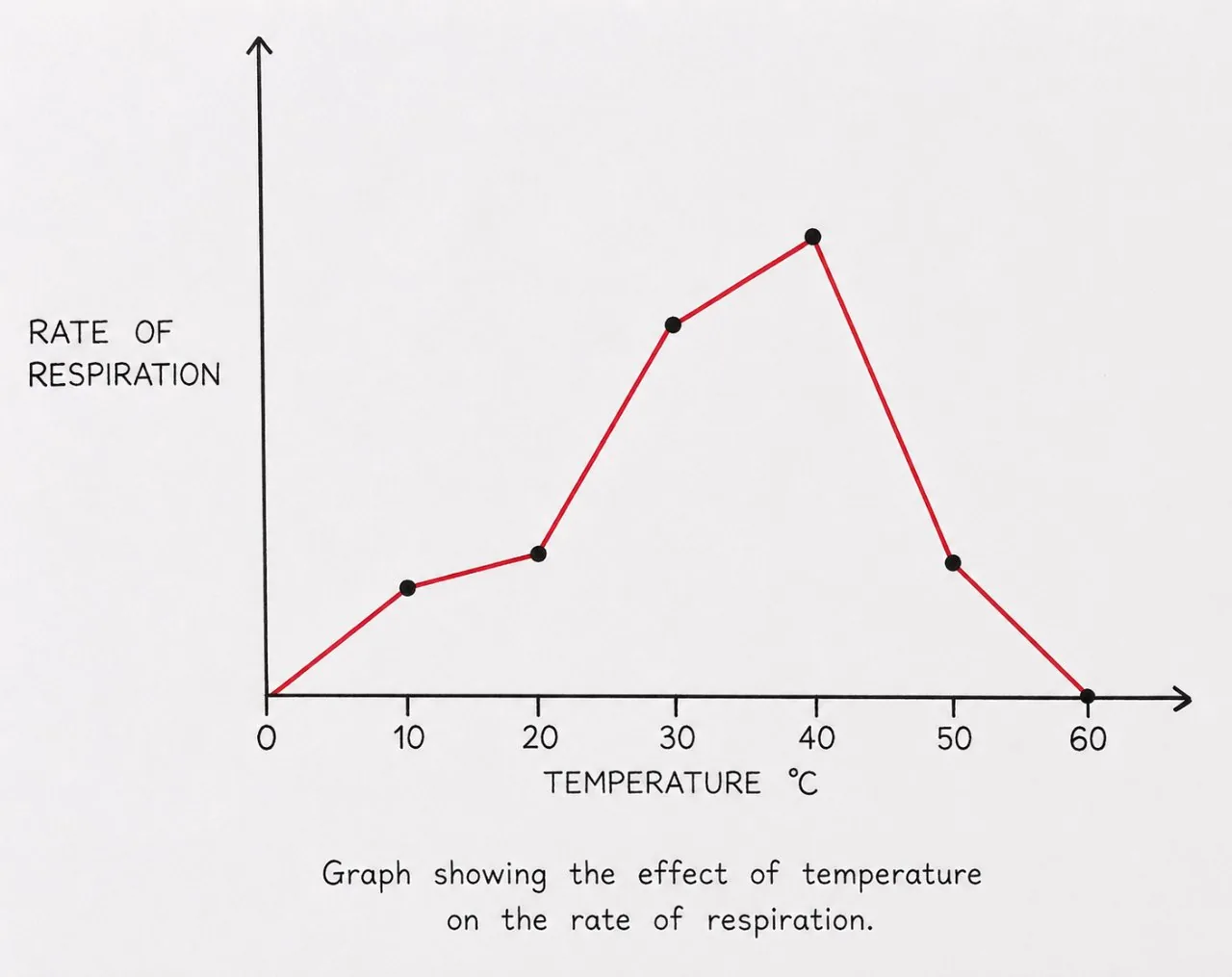
- Low temperature Particles have less energy, so there are fewer collisions;
- the enzyme is slow but not denatured.
High temperature
- High temperature Above the optimum the enzyme denatures and activity stops.
Section 5 of 7Calculating rate



1
Rate = change ÷ time, where the change is the amount of substrate used up or product formed.
2
Example: 15 g of starch digested in 2 hours gives 15 ÷ 2 = 7.5 g per hour.
3
Example: 45 cm3 of oxygen released in 5 minutes gives 45 ÷ 5 = 9 cm3 per minute.
4
If only the time is known, use rate = 1 ÷ time.
Section 6 of 7Key terms
| Term | Meaning |
|---|---|
| Enzyme | A biological catalyst, usually a protein, that speeds up a reaction. |
| Denatured | Permanently changed in shape so the active site no longer fits the substrate. |
| Optimum | The condition at which the enzyme works fastest. |
| Buffer solution | A solution that keeps the pH constant. |
| Substrate | The substance that an enzyme acts on. |
Section 7 of 7Exam technique
1
Saying low temperatures denature enzymes - they only slow them down.
2
Forgetting to keep pH constant when changing temperature, or temperature constant when changing pH.
3
Saying that blue-black means the starch has gone - it means starch is still present.
4
Mixing the iodine dropsuse a fresh well for each sample.