Section 1 of 7Factors affecting transpiration
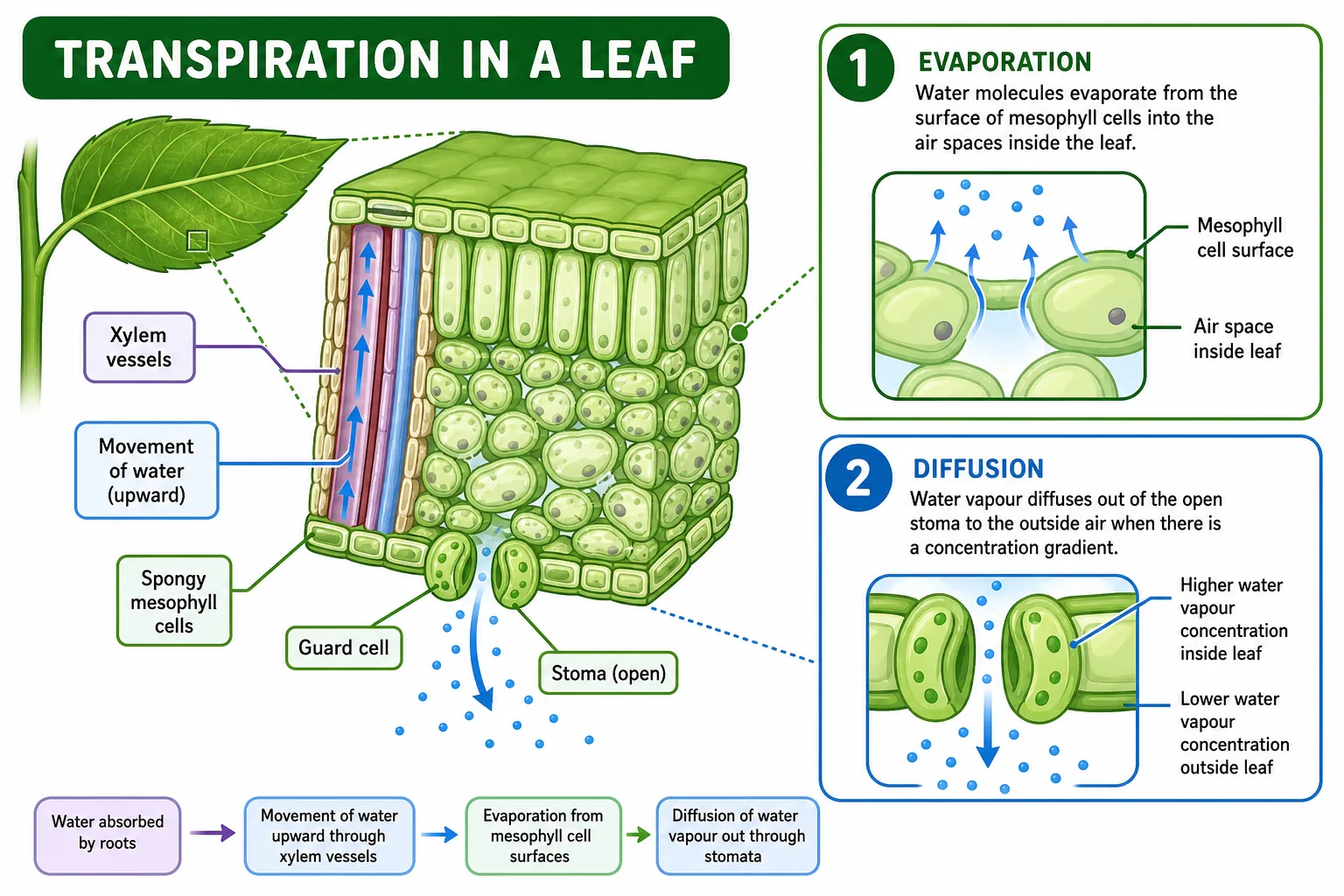

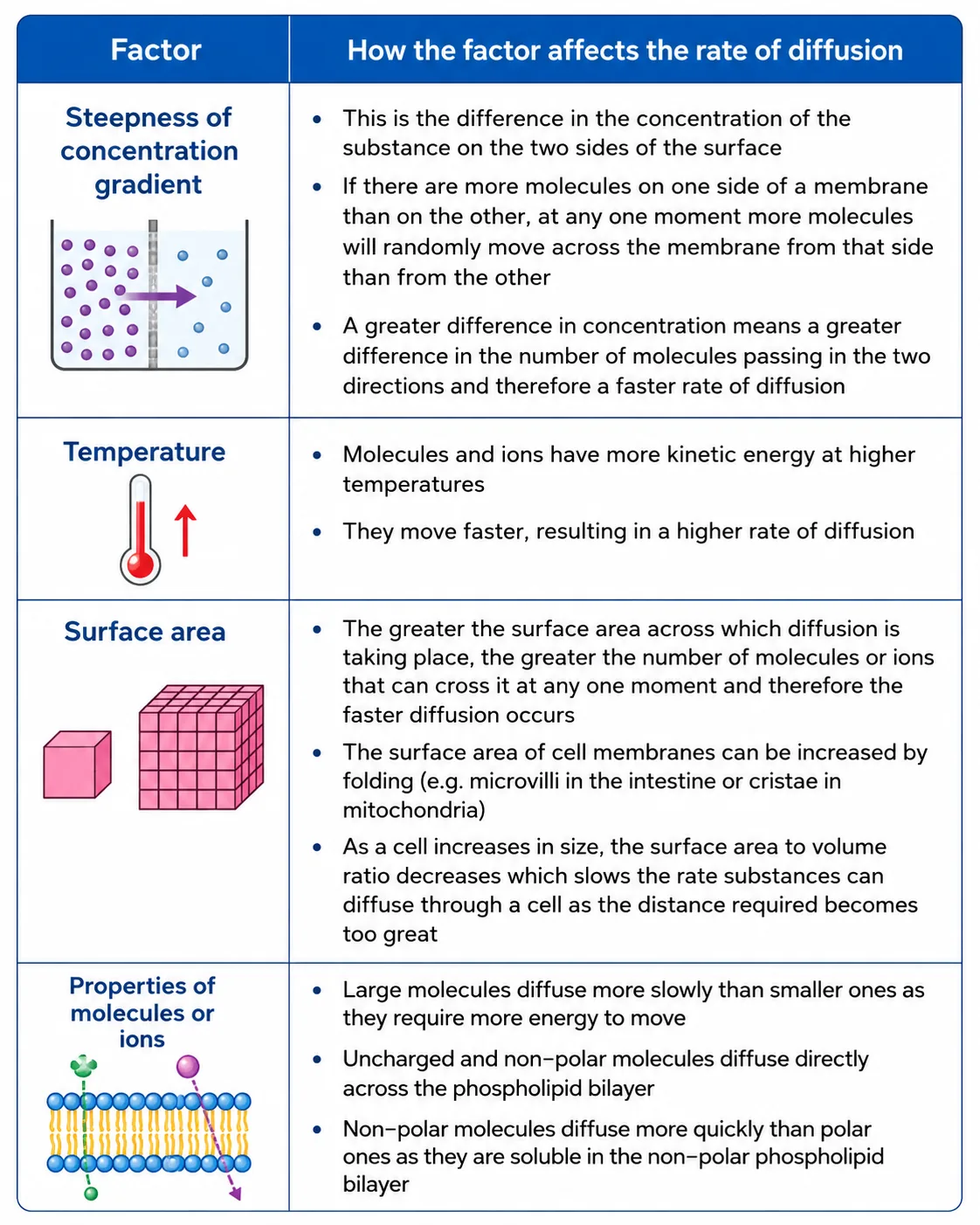
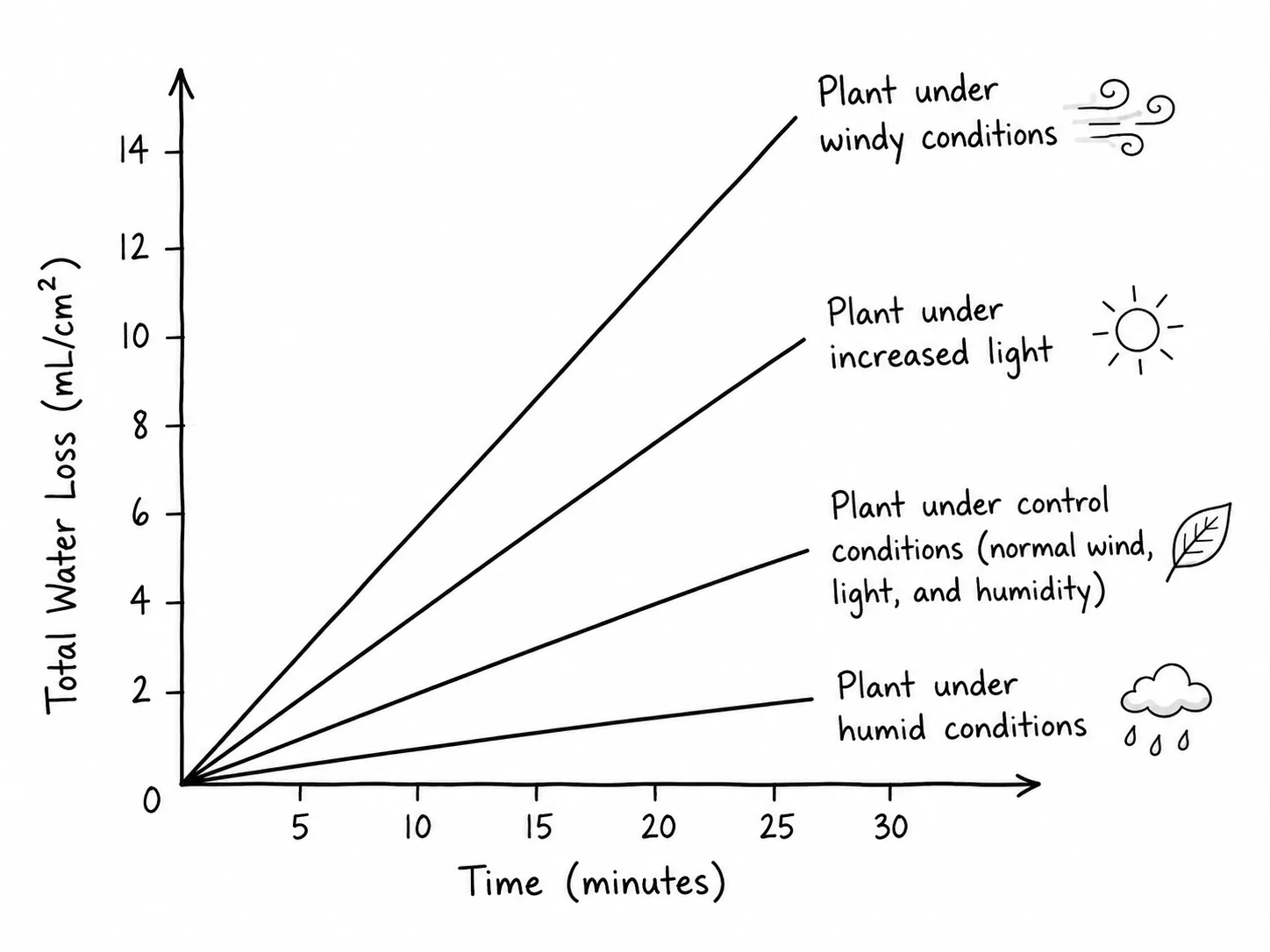
| Factor | When high, transpiration... |
|---|---|
| Light intensity | increases, because more stomata open |
| Temperature | increases, as water evaporates faster |
| Air movement | increases, because water vapour is carried away from the leaf |
| Humidity | decreases, as the concentration gradient of water vapour is smaller |
Section 2 of 7Types of potometer

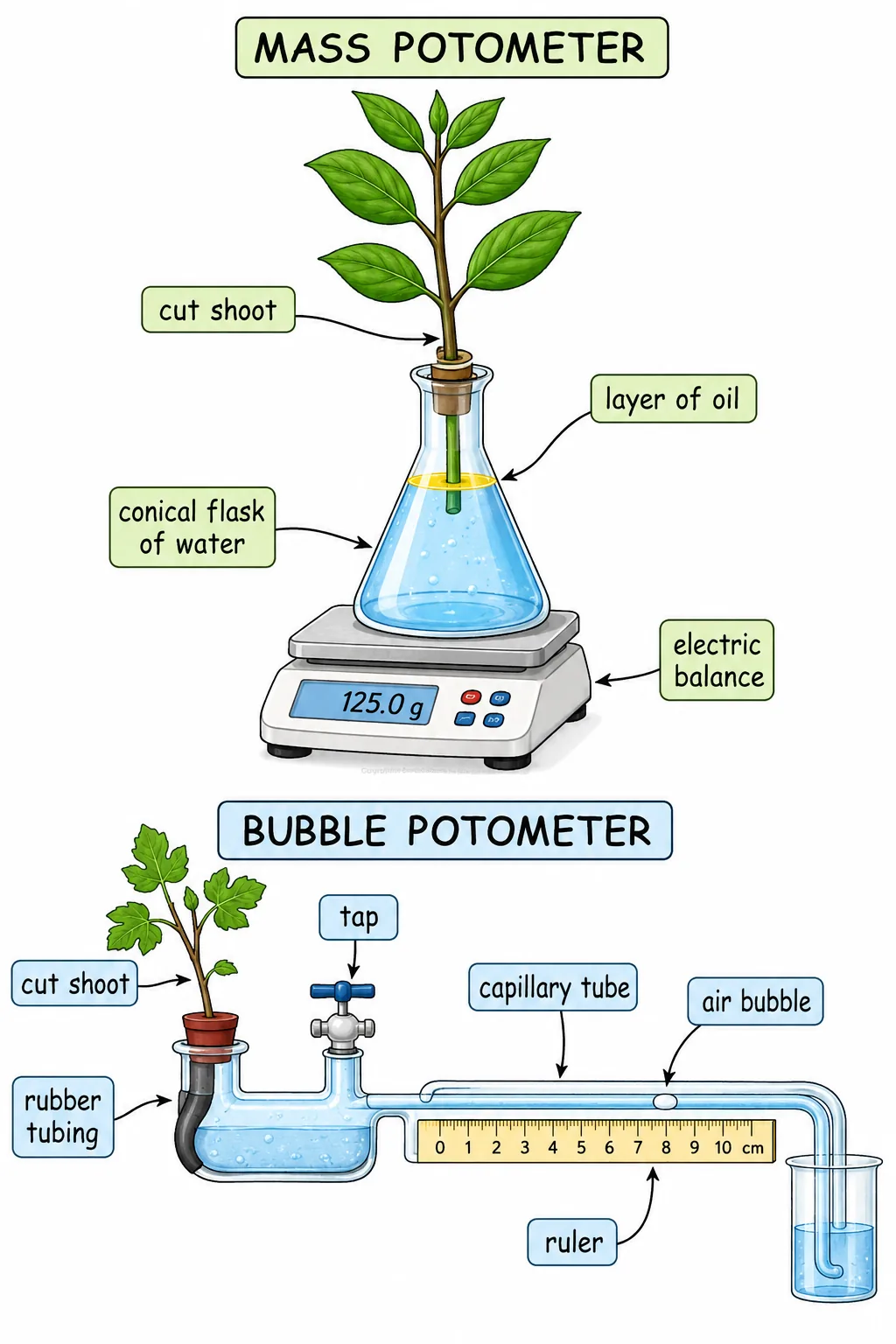

Bubble potometer
- Bubble potometer Measures how far an air bubble moves along a capillary tube as the shoot takes up water to replace what it loses.
Mass potometer
- Mass potometer Measures the loss in mass of the plant as water evaporates.
Assumption
- Assumption Water uptake is taken as a measure of transpiration, assuming little water is used in photosynthesis or stored.
Section 3 of 7Method
1
Cut a shoot under water so that air does not enter the xylem, and fit it into the tube under water.
2
Check that the apparatus is airtight, sealing gaps with petroleum jelly.
3
Dry the leaves, because wet leaves affect the results.
4
Lift the end of the capillary tube from the water to let one air bubble in, then return it.
5
Place a lamp 10 cm from the leaves and leave the plant for 5 minutes to adapt.
6
Record the starting position of the bubble, wait 30 minutes and record the end position.
7
Calculate rate = distance moved ÷ time.
8
Reset the bubble through the reservoir tap, change the light level and repeat.
Section 4 of 7Changing other factors
Investigating transpiration
Air movement
- Air movement Use a fan or hairdryer at different distances or speed settings.
Humidity
- Humidity Enclose the leaves in a bag containing water spray.
Temperature
- Temperature Carry out the experiment in a cold room and a warm room.
Light result
- Light result The closer the lamp, the further the bubble travels in the same time, so the higher the transpiration rate.
Section 5 of 7Troubleshooting
| Problem | Solution |
|---|---|
| Leaks in the apparatus | Fit bungs tightly and assemble under water for a good seal |
| Blocked xylem | Cut the stem under water to stop air bubbles entering |
| No bubble movement | Use freshly cut shoots, because uptake slows as they age |
Section 6 of 7Key terms
| Term | Meaning |
|---|---|
| Transpiration | The loss of water vapour from the leaves, mainly through the stomata. |
| Potometer | Apparatus used to measure the rate of water uptake by a plant shoot. |
| Xylem | The tissue that carries water up the plant. |
| Stomata | Pores in the leaf surface through which gases and water vapour pass. |
Section 7 of 7Exam technique
1
Cutting the shoot in air, which lets air block the xylem.
2
Giving the answer as total distance rather than a rate (distance per unit time).
3
Saying high humidity increases transpiration.
4
Changing more than one environmental factor at once.