2.1Inorganic Chemistry
Periodicity
5 min read 7 parts Lesson 1 of 27
Lesson summary
Complete PDF with figures and original page layoutPage 1 Oxford AQA International Your notes A Level (IAL) Chemistry Periodicity Contents Classification Physical Properties of Period 3 Elements Page 2 Classification …
Section 1 of 7Structure of the Periodic Table
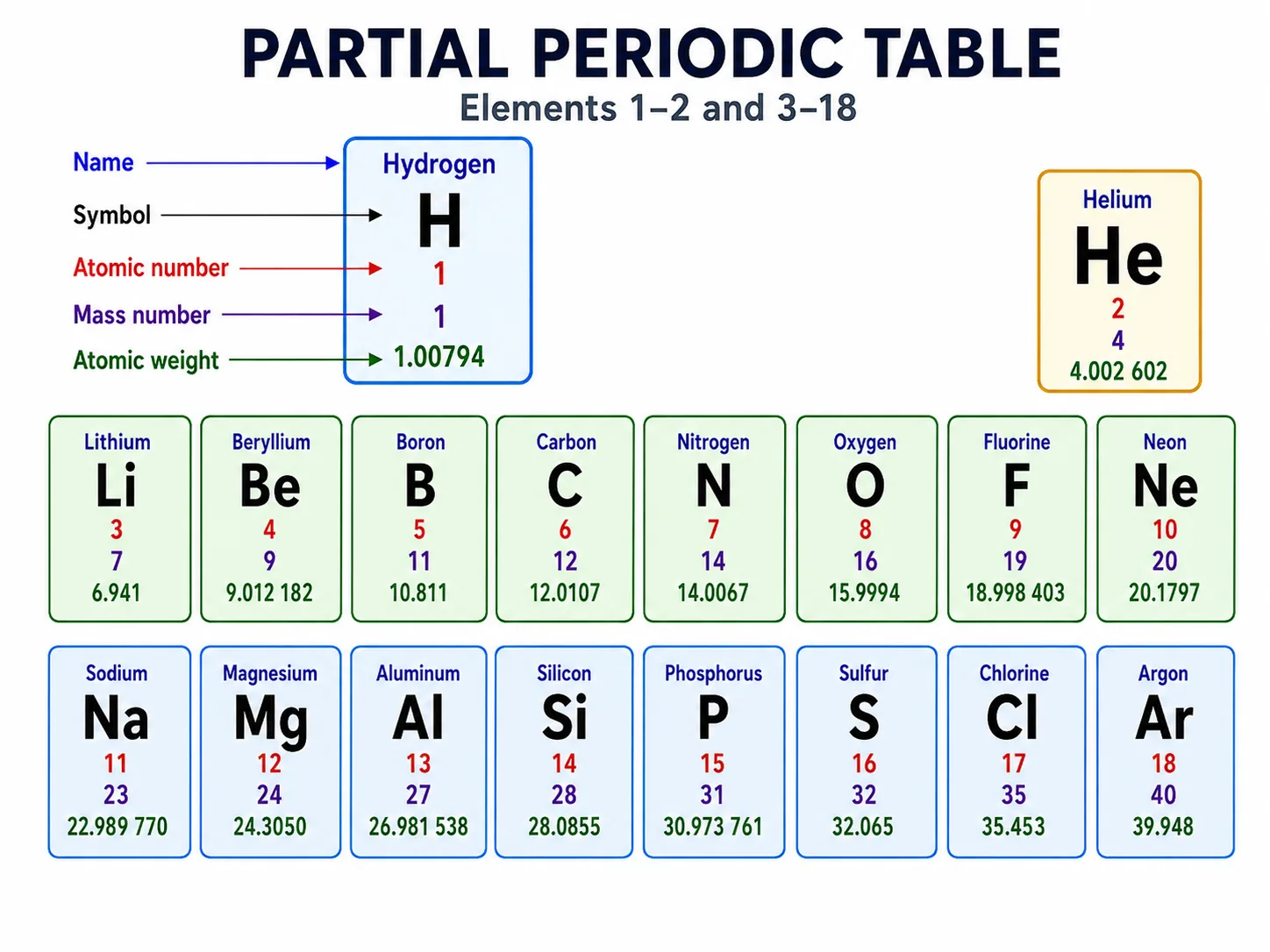
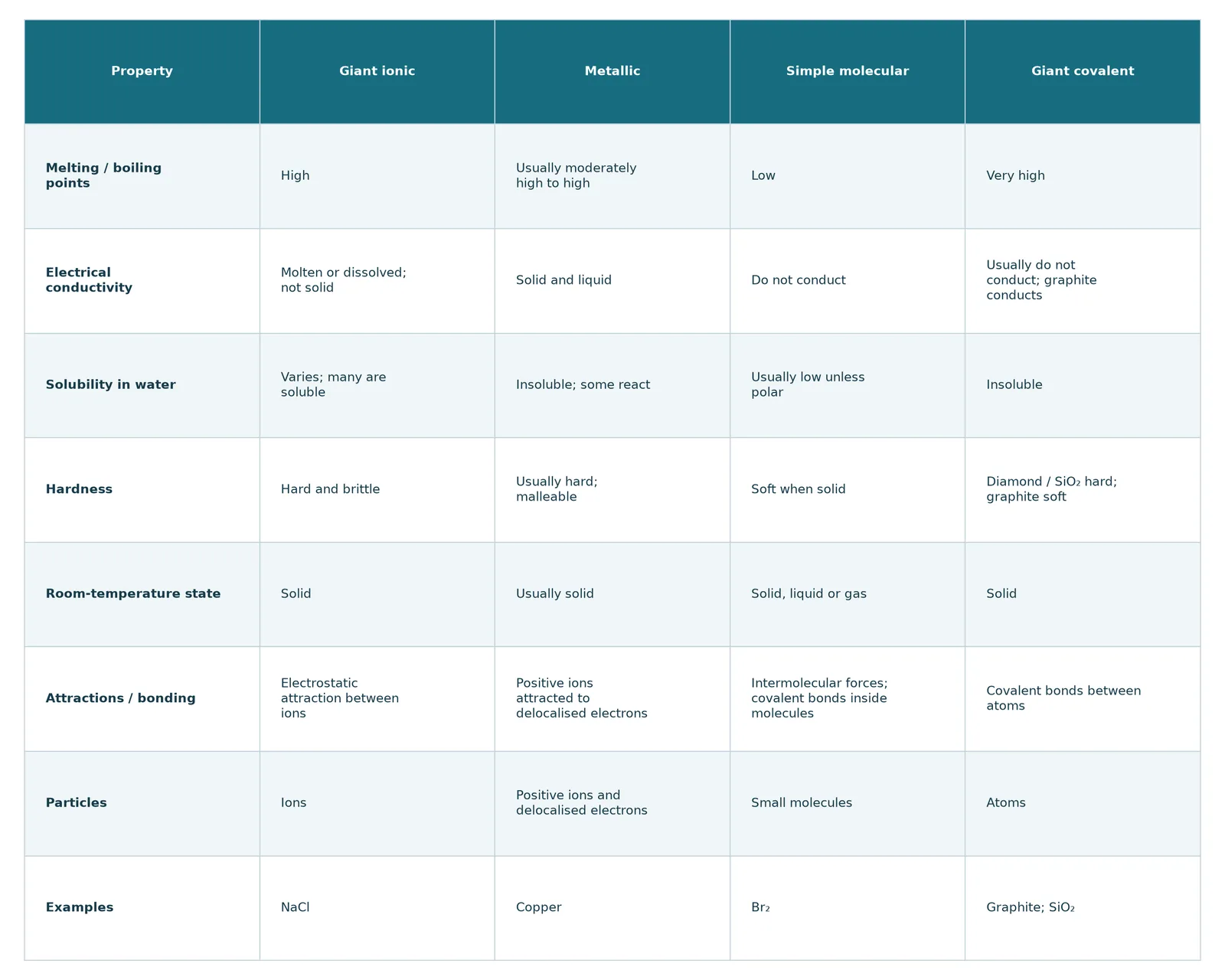
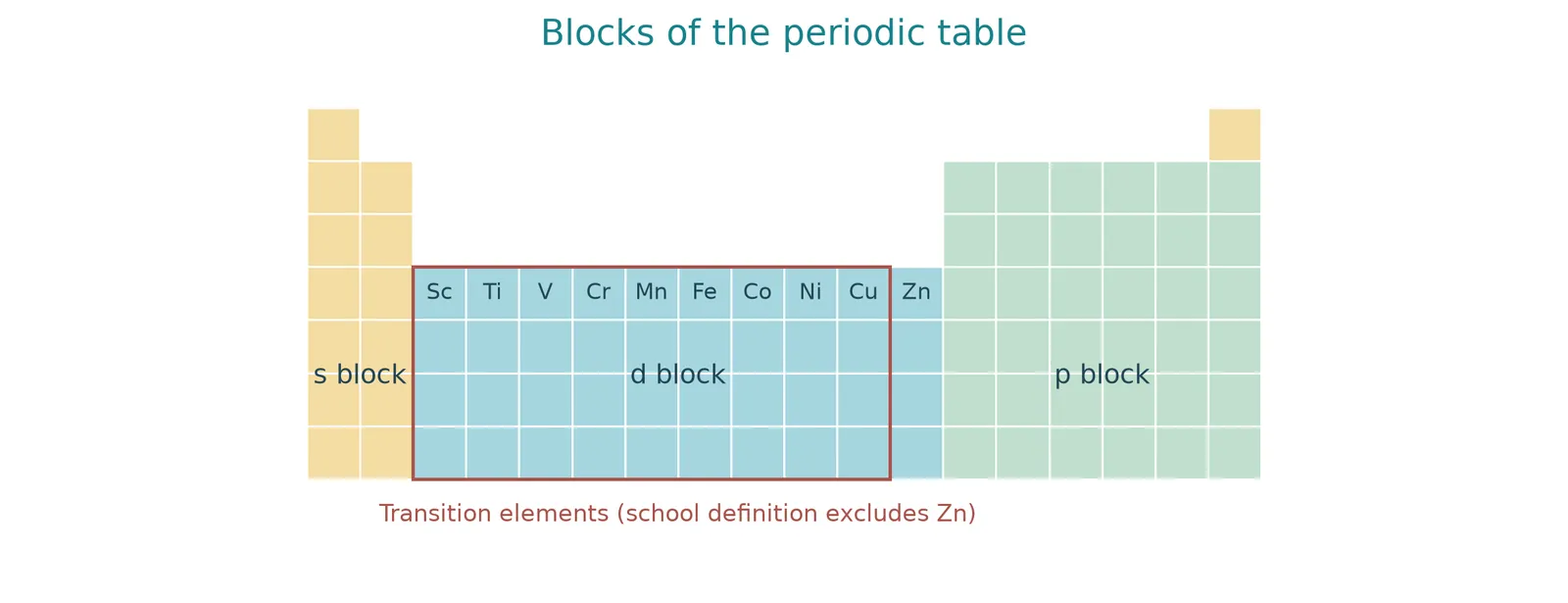

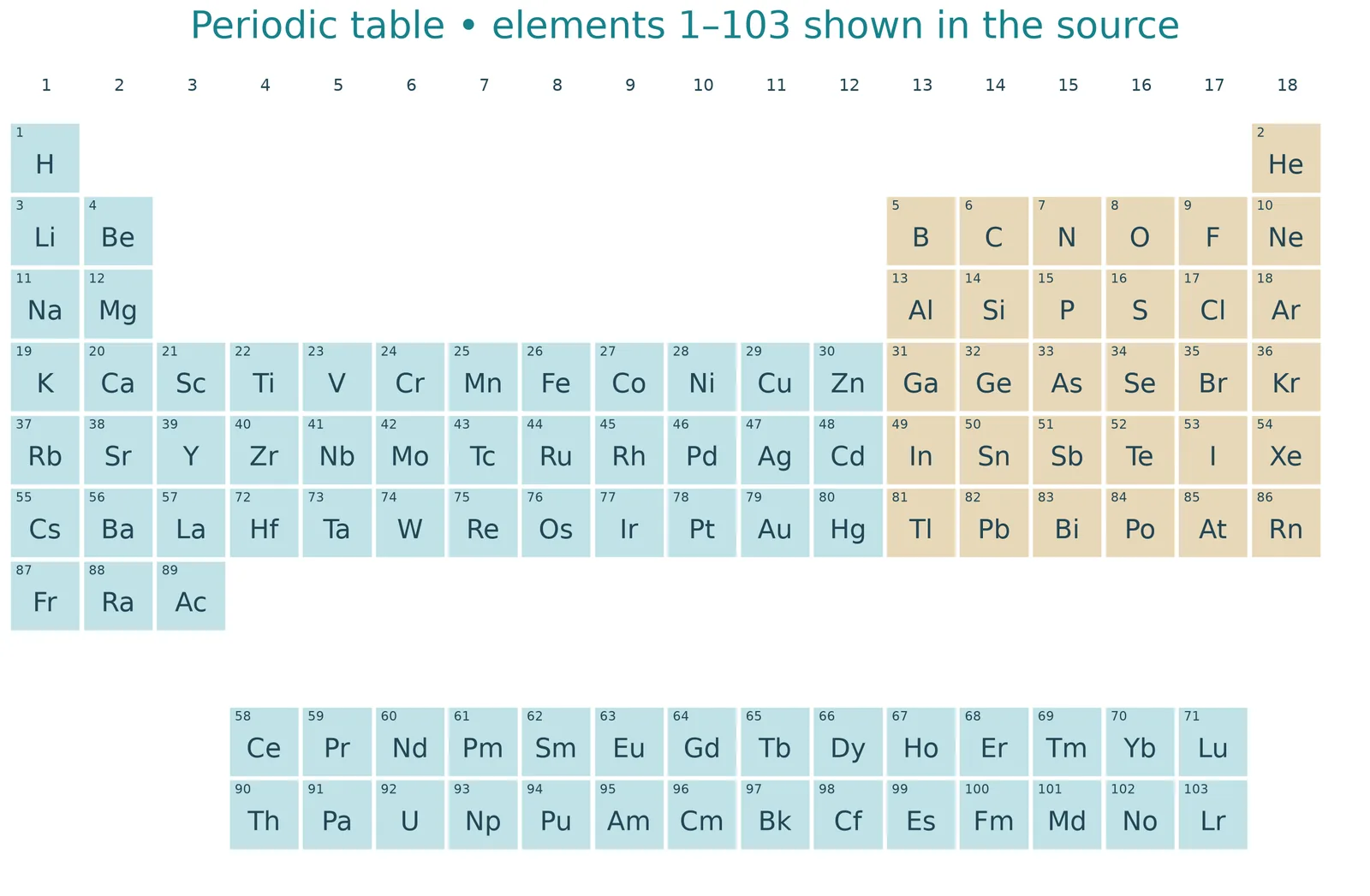

Structure of the Periodic Table
Order
- Order elements are arranged by increasing atomic number (proton number)
Periods
- Periods rows, in which atoms have the same number of shells
Groups
- Groups columns, in which atoms have similar outer electron configurations
Blocks
- Blocks s, p, d and f blocks show which sub-shell holds the outer electron
Periodicity
- Periodicity properties show trends that repeat in each period, called periodic trends
Chemical similarity
- Chemical similarity elements in the same group show similar chemical properties
Section 2 of 7Atomic radius across Period 3


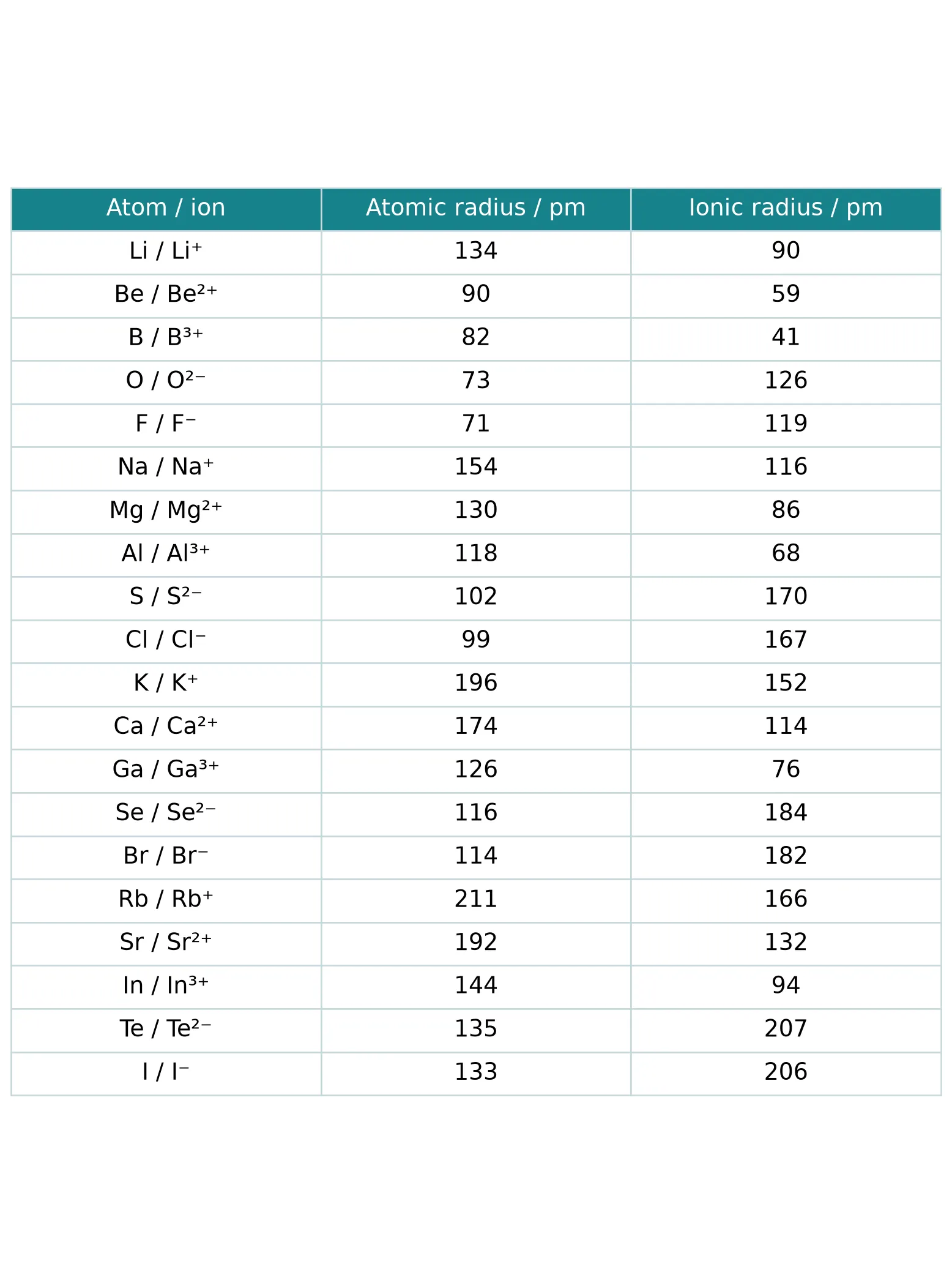
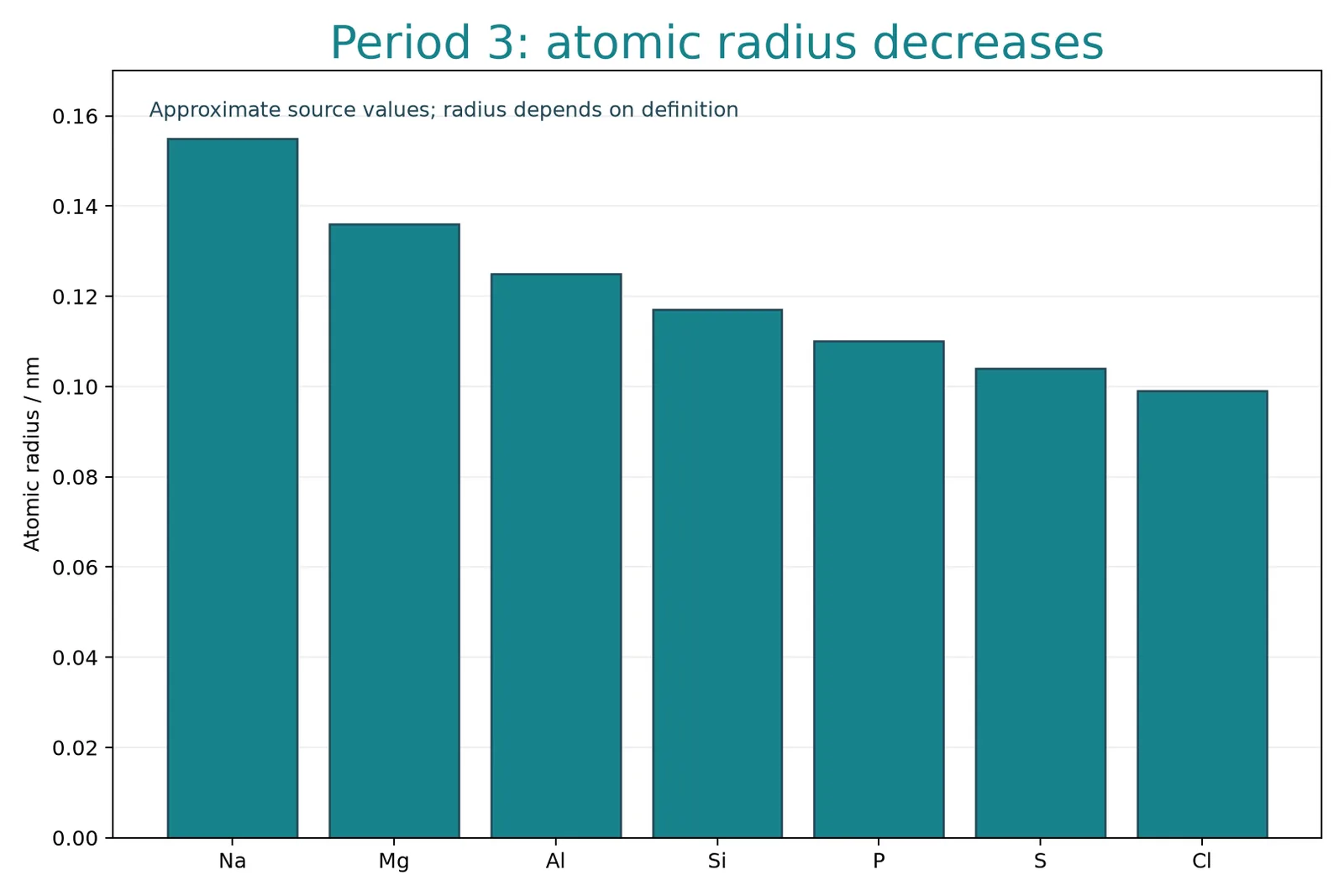
- Definition
- half the distance between the nuclei of two atoms of the same element, called the metallic radius in metals and the covalent radius in non-metals
| Element | Na | Mg | Al | Si | P | S | Cl |
|---|---|---|---|---|---|---|---|
| Radius / nm | 0.157 | 0.136 | 0.125 | 0.117 | 0.110 | 0.104 | 0.099 |
Trend
- Trend atomic radius decreases across Period 3
Explanation
- Nuclear charge increases by one at each step.
- Electrons are added to the same shell, so shielding is about the same.
- The nucleus attracts the outer electrons more strongly and pulls them closer.
Misconception
- Misconception more electrons do not make the atom larger across the period
Section 3 of 7First ionisation energy across Period 3


1
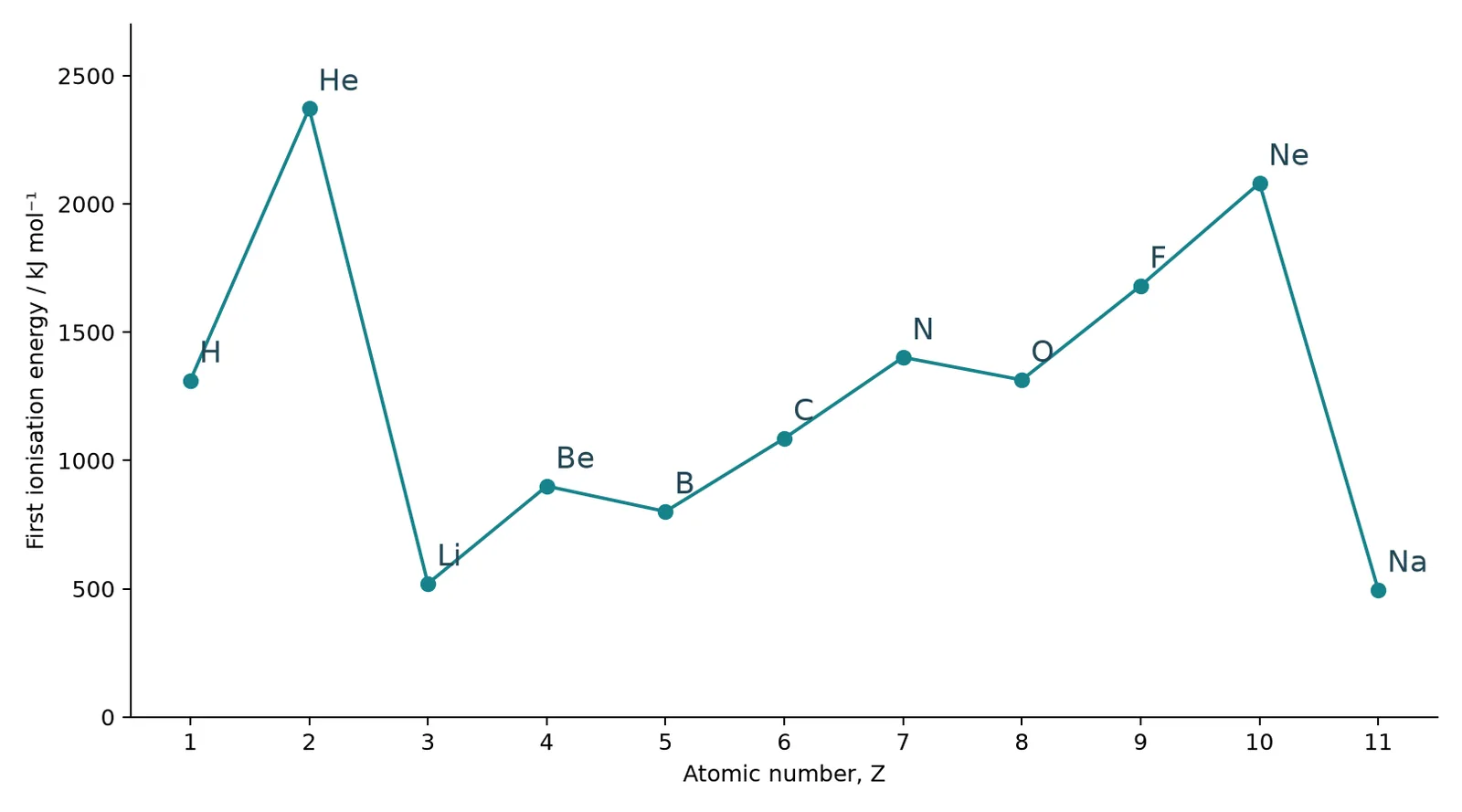
First ionisation energy = the energy to remove one mole of electrons from one mole of gaseous atoms to form one mole of 1+ ions,
- such as Na(g) → Na+(g) + e-, +496 kJ mol-1
2Trend
- Trend it generally increases across the period
3
Explanation
- Nuclear charge increases and the atomic radius decreases.
- The outer electrons are nearer the nucleus, while shielding stays roughly constant.
- More energy is needed to remove an electron.
4
Exceptions
- Aluminium is lower than magnesium.
- Sulfur is lower than phosphorus.
- Both can be explained from the electronic configurations (a 3p electron in Al, and paired 3p electrons in S).
Section 4 of 7Melting point across Period 3



- Trend
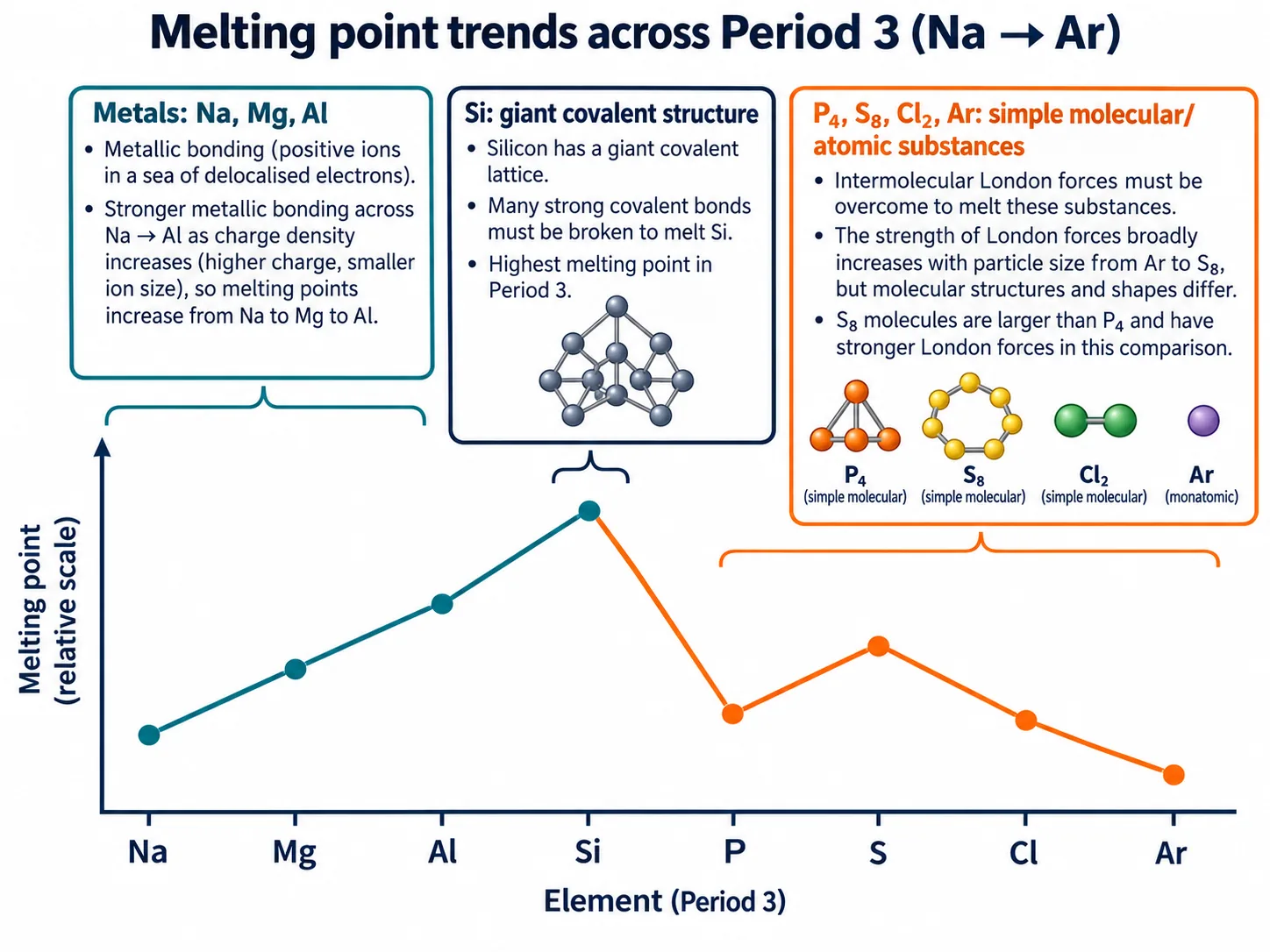
- melting point generally rises to silicon, which is highest, and then falls sharply
| Element | Na | Mg | Al | Si | P | S | Cl | Ar |
|---|---|---|---|---|---|---|---|---|
| Melting point / K | 371 | 923 | 932 | 1683 | 317 | 392 | 172 | 84 |
1Sodium, magnesium and aluminium
- Sodium, magnesium and aluminium metallic bonding
- Electrostatic attraction exists between positive ions and the sea of delocalised electrons.
- Na donates one electron, Mg two and Al three.
- The attraction between a 3+ ion and a larger electron sea is much stronger than for Na+, so melting point increases.
2Silicon
- Silicon giant covalent structure
- Each atom is held to four neighbours by strong covalent bonds.
- Much energy is needed to break these bonds, so the melting point is highest.
Section 5 of 7Phosphorus to argon: molecular elements
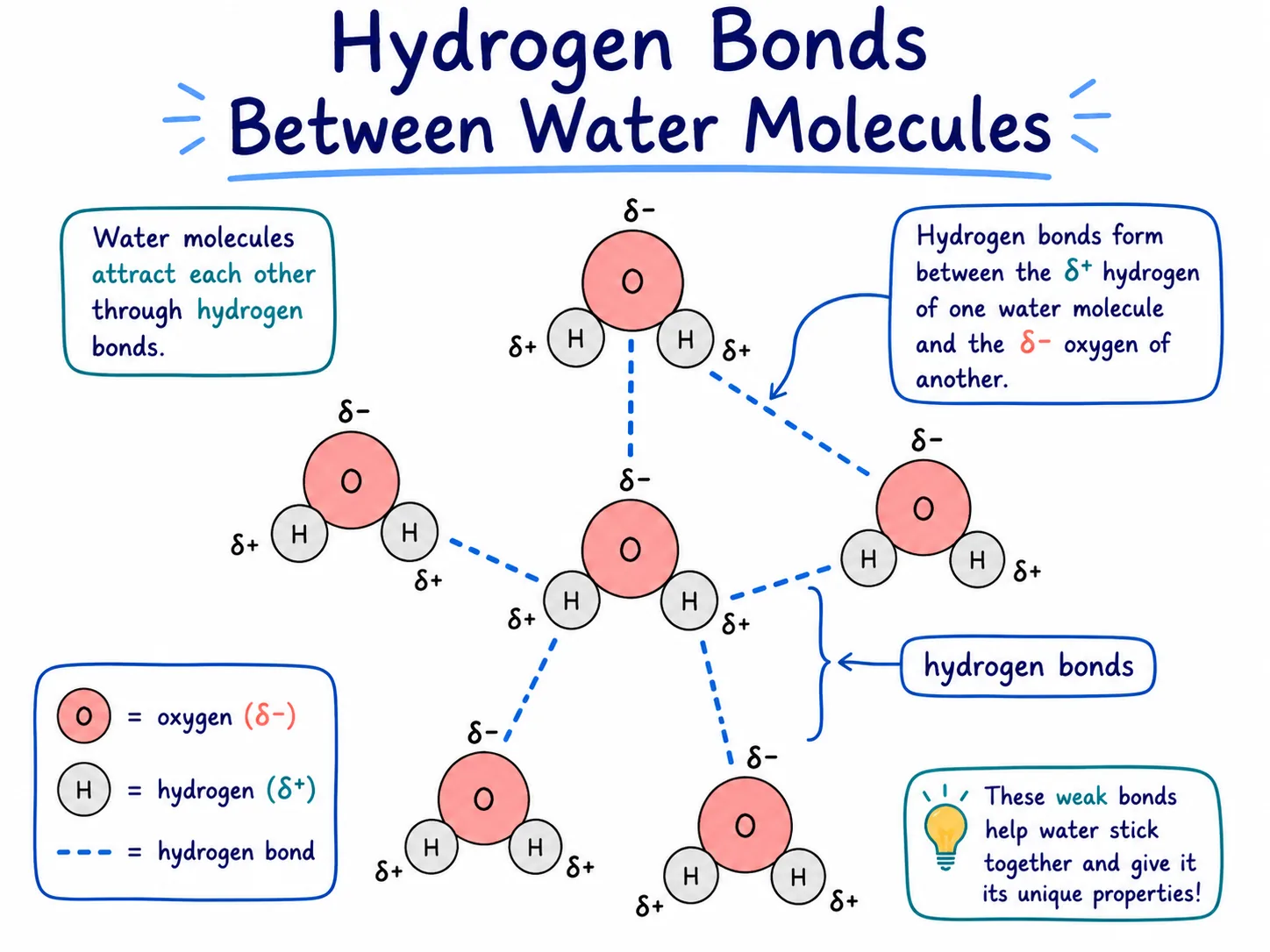

Phosphorus to argon: molecular elements
Structure
- Structure simple molecules P4, S8, Cl2 and single Ar atoms
Forces
- Forces covalent bonds within molecules are strong, but only weak van der Waals forces act between molecules
Melting
- Melting little energy is needed to overcome van der Waals forces, so melting points are low
Order
- Order the forces depend on electron number and size, so melting points go S8 > P4 > Cl2 > Ar
Exam point
- Exam point on melting, van der Waals forces break, not the covalent bonds
Section 6 of 7Key terms
| Term | Meaning |
|---|---|
| Periodicity | A repeating pattern in properties across each period of the Periodic Table. |
| Atomic radius | Half the distance between the nuclei of two bonded atoms of the same element. |
| Nuclear charge | The number of protons in the nucleus. |
| Giant covalent structure | A huge network of atoms joined by covalent bonds. |
| Van der Waals forces | Weak forces between molecules. |
Section 7 of 7Exam technique
1
Saying atomic radius increases across Period 3 because of extra electrons — the increased nuclear charge pulls the shell in.
2
Saying covalent bonds break when phosphorus melts — only van der Waals forces break.
3
Saying silicon has metallic bonding — it is giant covalent.
4
Writing the 1+ equation without state symbols — include (g).