3.6Organic Chemistry
Organic Analysis
10 min read 18 parts Lesson 23 of 55
Lesson summary
Complete PDF with figures and original page layoutPage 1 Oxford AQA International Your notes A Level (IAL) Chemistry Organic Analysis Contents Identification of Functional Groups by Test Tube Reactions Testing for Organic Functional Groups Mass Spectromet…
Section 1 of 18Test for an alkene
Reagent
- Reagent bromine water, an orange-brown solution
Method
- Method shake the unknown compound with the bromine water
Positive result
- Positive result the orange-brown colour disappears because bromine adds across C=C
Alternative
- Alternative iodine also decolourises with a double bond
Section 2 of 18Test for a halogenoalkane
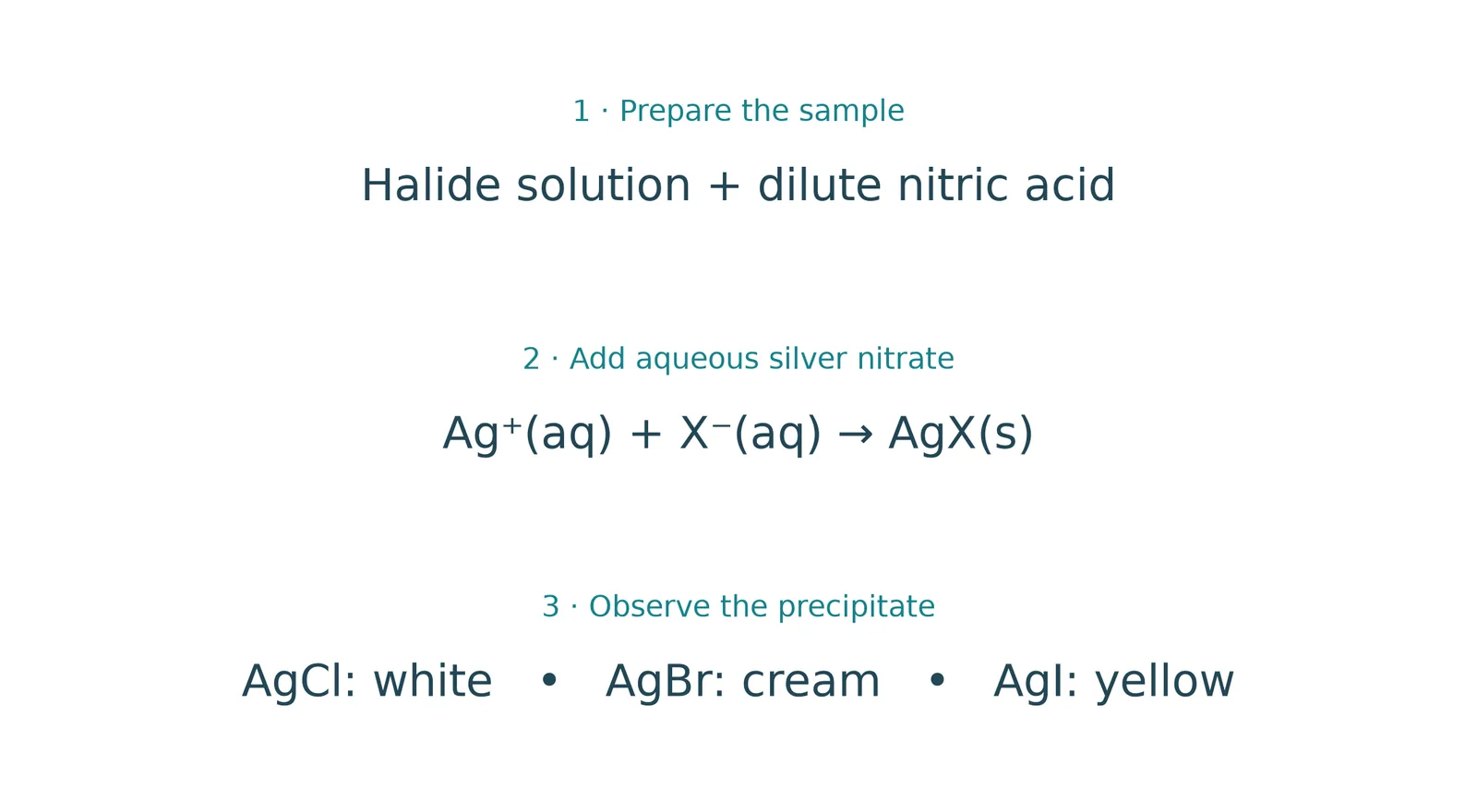
Test for a halogenoalkane
Warm the halogenoalkane with sodium hydroxide in ethanol and water, releasing the halide ion by nucleophilic substitution.
Acidify with dilute nitric acid to remove carbonate ions, which could give a false positive.
Add silver nitrate solution.
- Equation
- Ag+(aq) + X-(aq) → AgX(s)
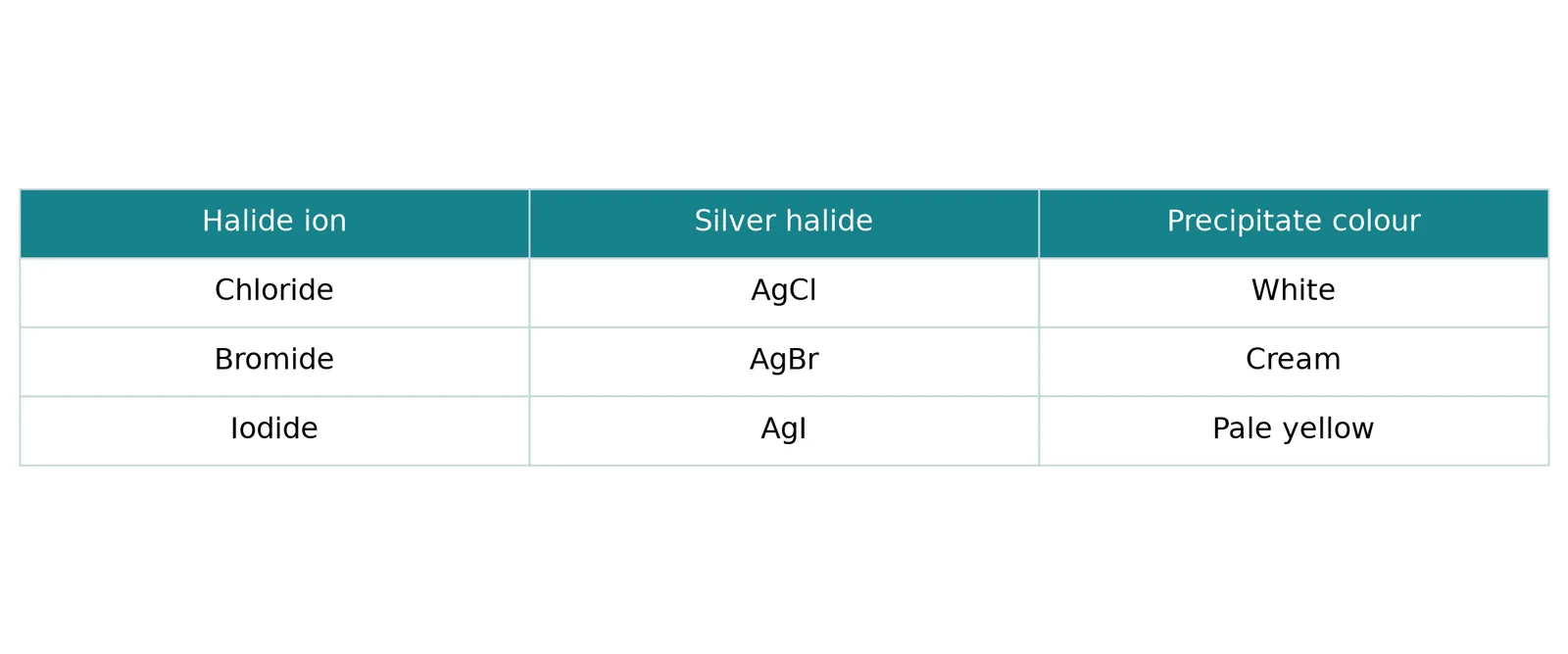
| Halide | Precipitate |
|---|---|
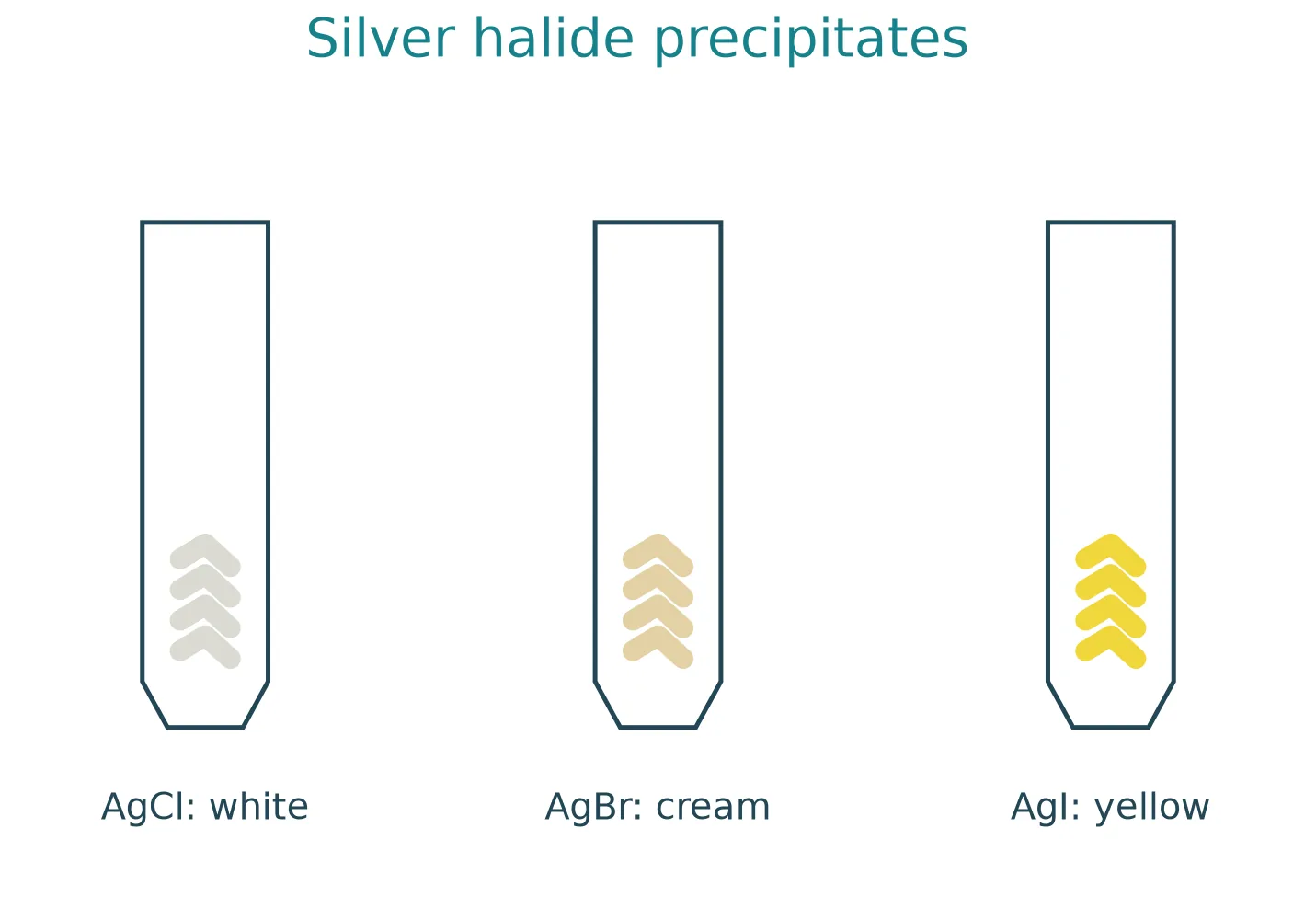
| Chloride | White AgCl |
| Bromide | Cream AgBr |
| Iodide | Yellow AgI |
- Memory aids
- the precipitates get more coloured down the group, or list bromide, chloride and iodide alphabetically as cream, white and yellow
Section 3 of 18Tests for an aldehyde
Principle
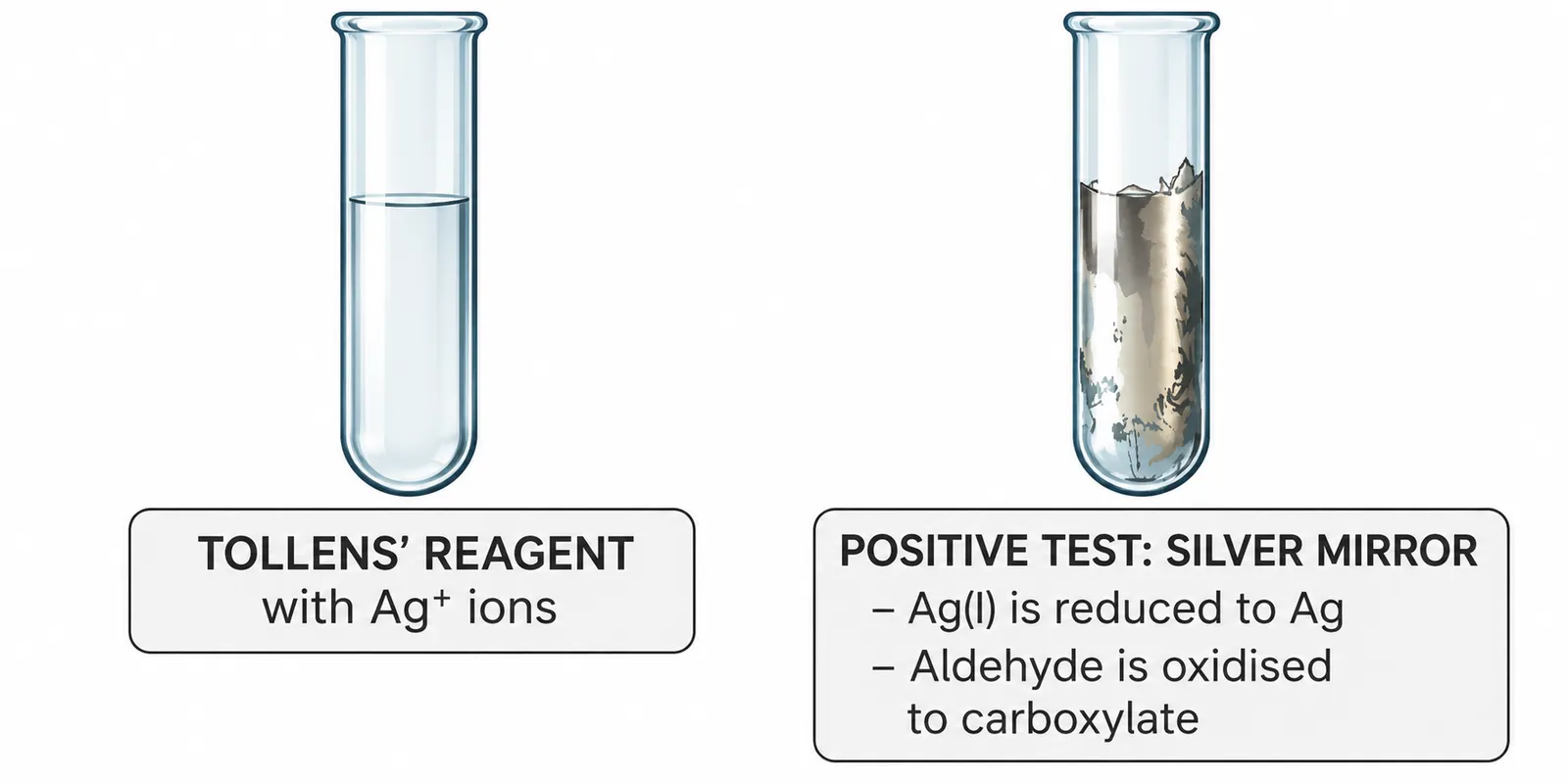
- Principle the aldehyde is oxidised to a carboxylic acid, whereas ketones cannot be oxidised and give a negative result
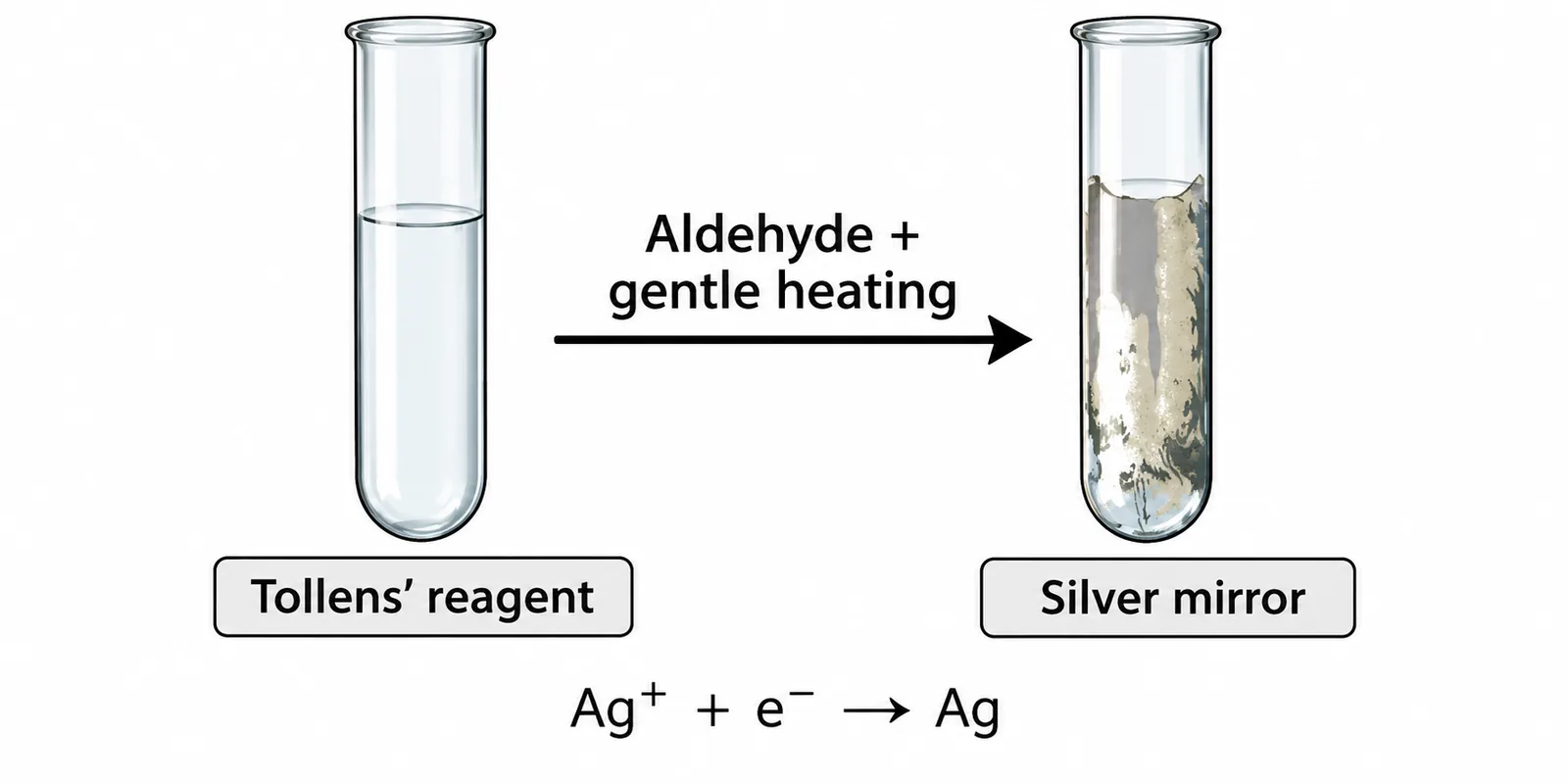
Tollens’ reagent
- Tollens’ reagent aqueous silver nitrate in excess ammonia
- (ammoniacal silver nitrate)
- Warm with the aldehyde.
- Ag+ is reduced to Ag, forming a silver mirror on the inside of the tube.
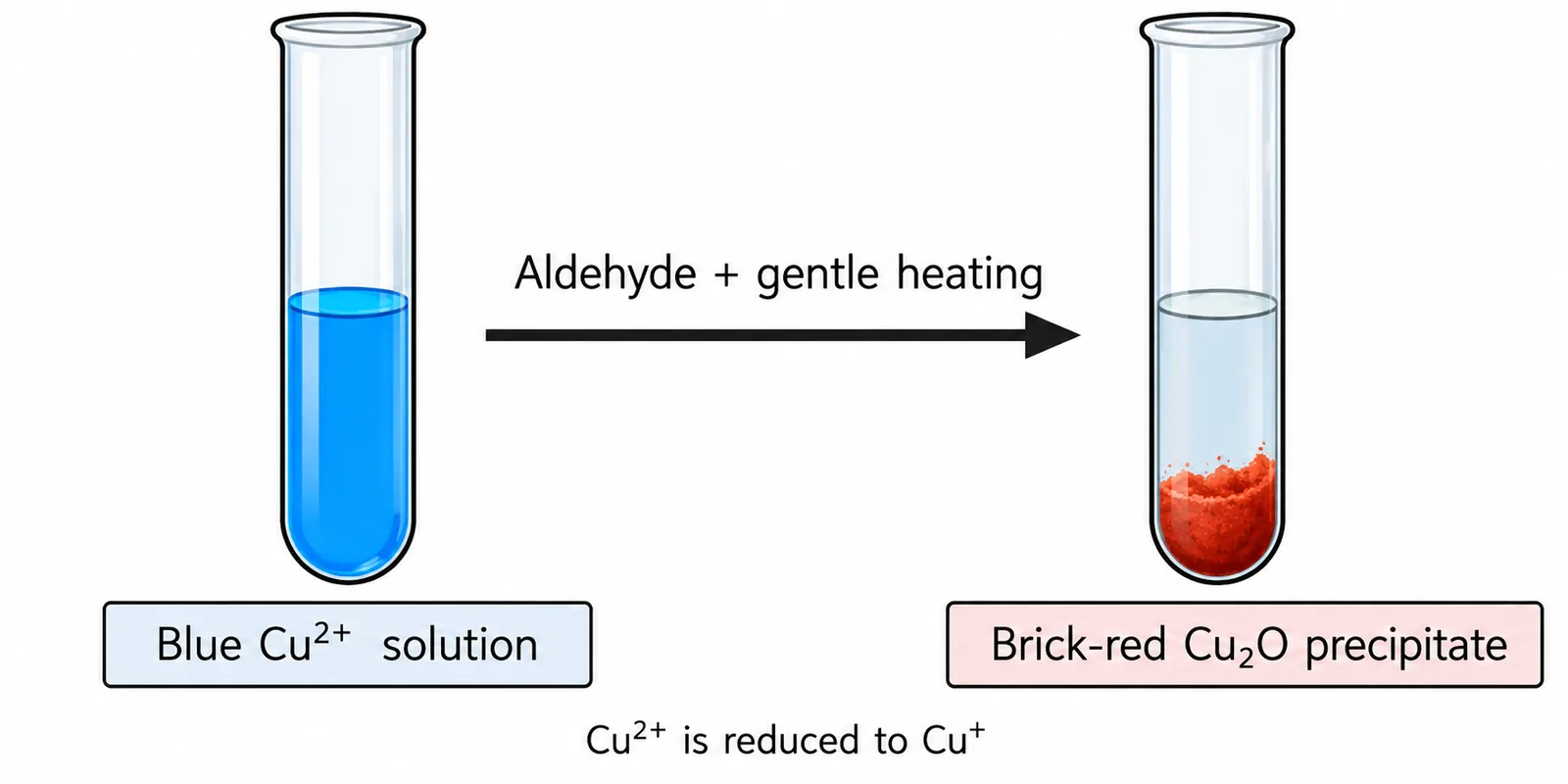
Fehling’s solution
- Fehling’s solution a blue solution of Cu2+ ions
- Warm with the aldehyde.
- Cu2+ is reduced to Cu+, giving an orange or brick-red precipitate.
- A ketone gives no visible change.
Section 4 of 18Test for an alcohol
- Classification
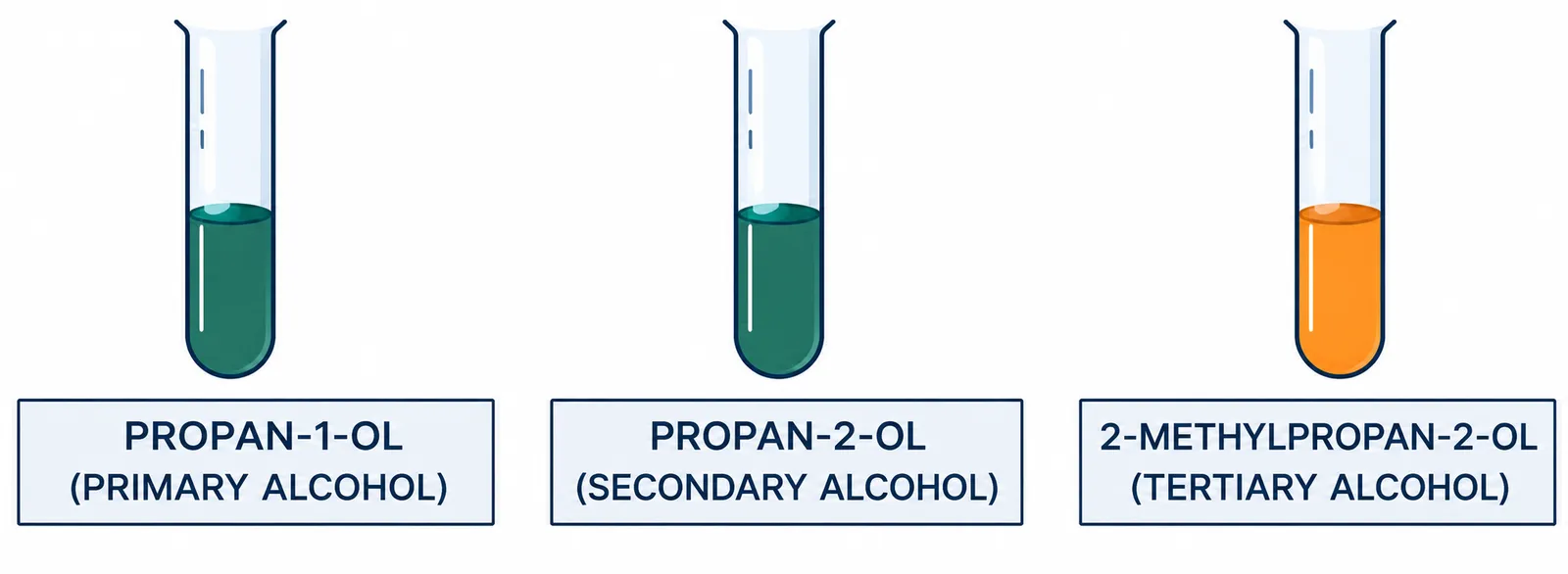
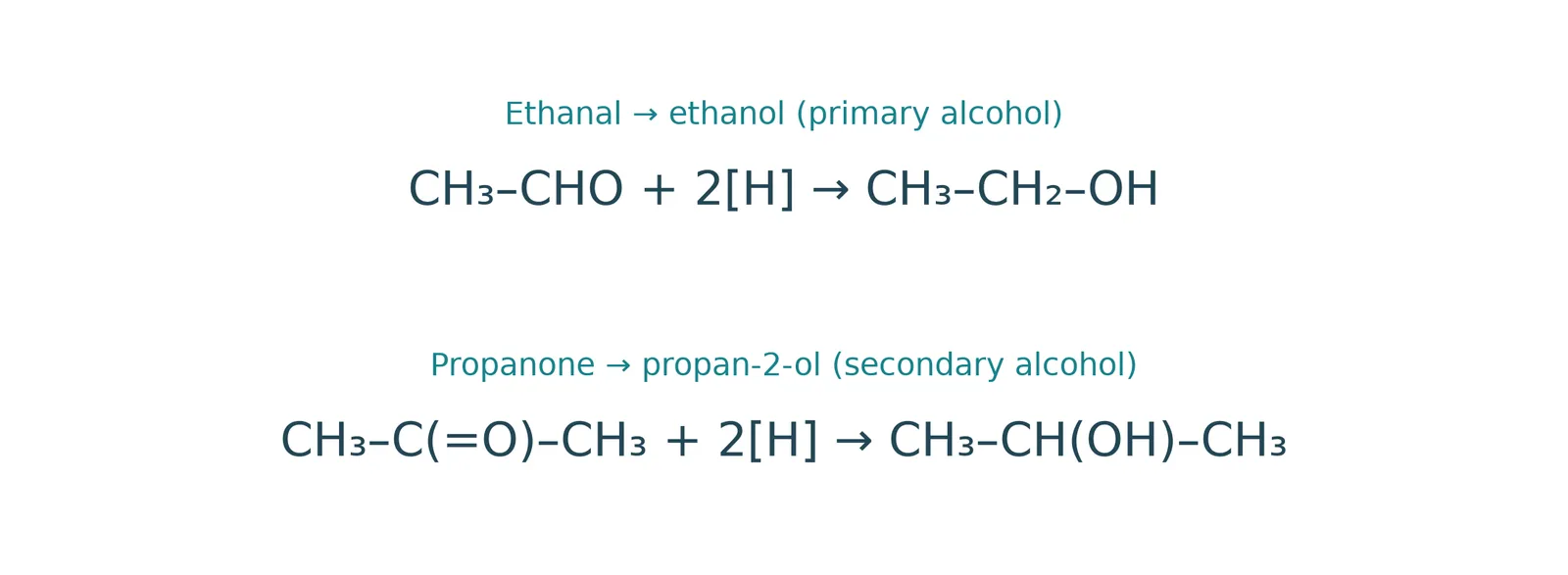
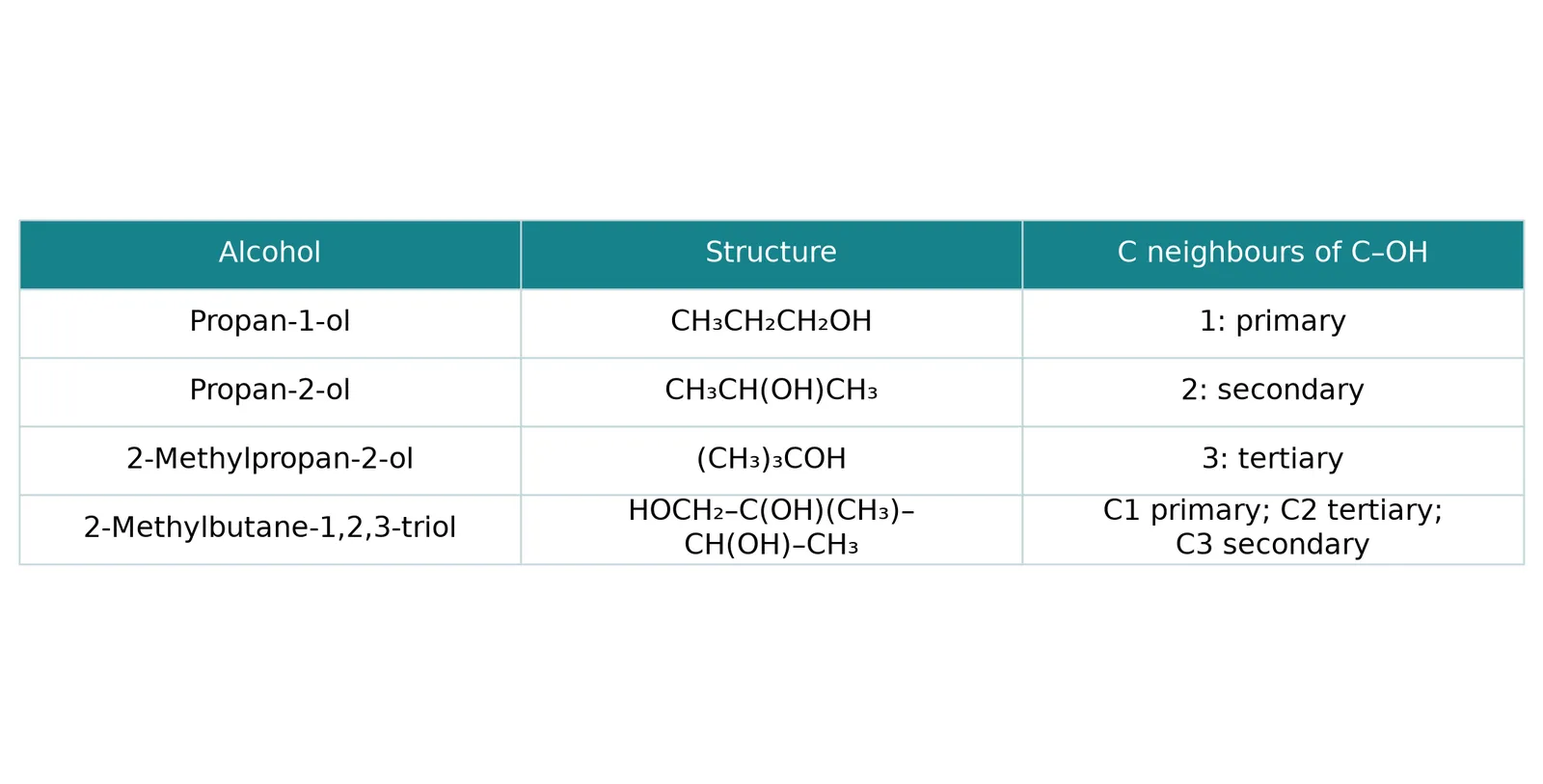
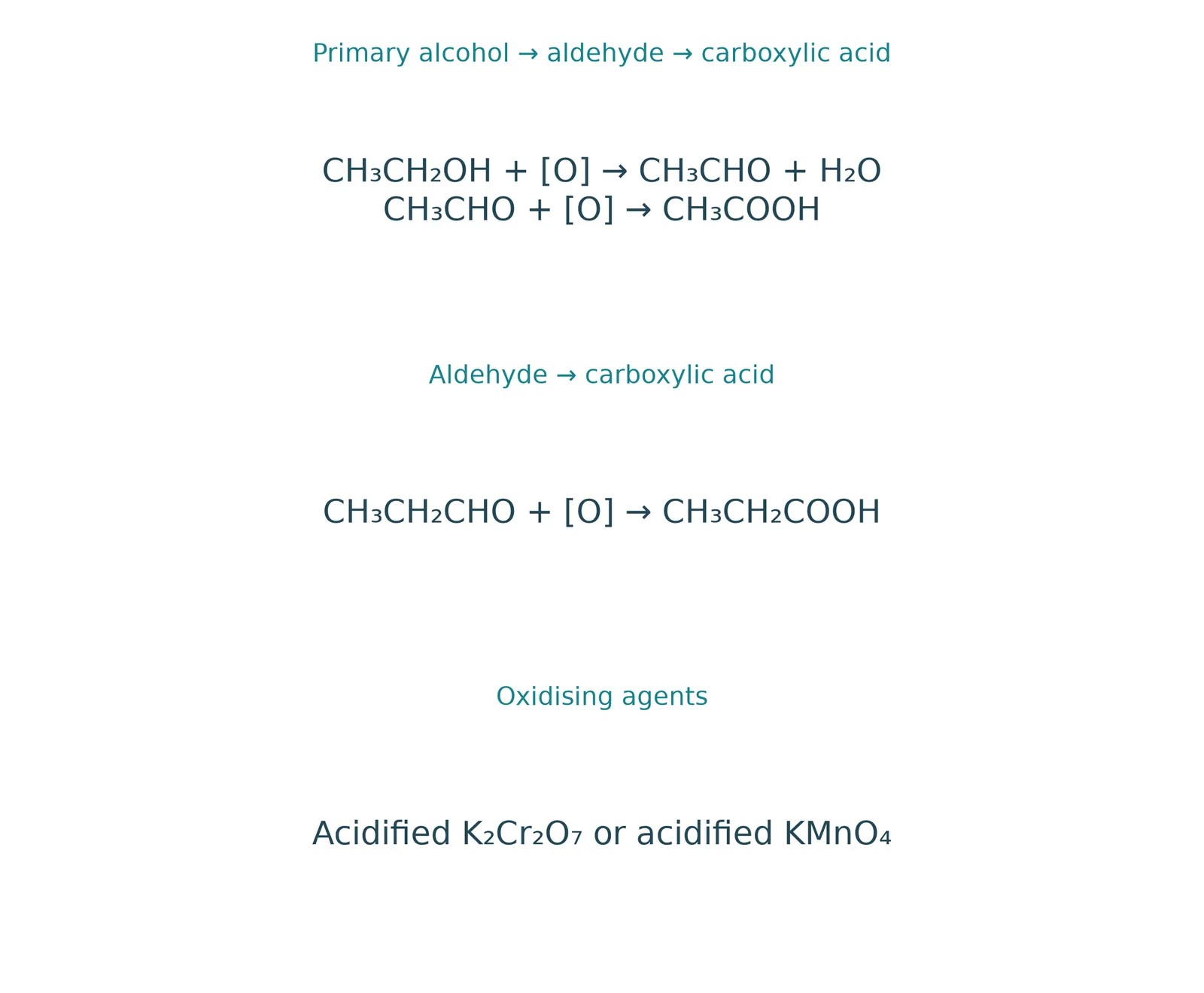
- primary alcohols oxidise to aldehydes and acids, secondary alcohols to ketones, and tertiary alcohols do not oxidise
1
Add 1 cm3 of the substance to a test tube with a pipette.
2
Add 1 cm3 of acidified potassium dichromate with a different pipette.
3
Stopper and shake.
4
Place in a hot water bath at about 60 °C for a few minutes.
Test for an alcohol
Primary or secondary alcohol
- Primary or secondary alcohol the solution changes from orange to green
Tertiary alcohol
- Tertiary alcohol the solution stays orange
Caution
- Caution an aldehyde also turns acidified dichromate from orange to green
Section 5 of 18Test for a carboxylic acid


pH
- pH carboxylic acids in solution have a pH of about 3, so an indicator or pH probe can be used
Carbonate test
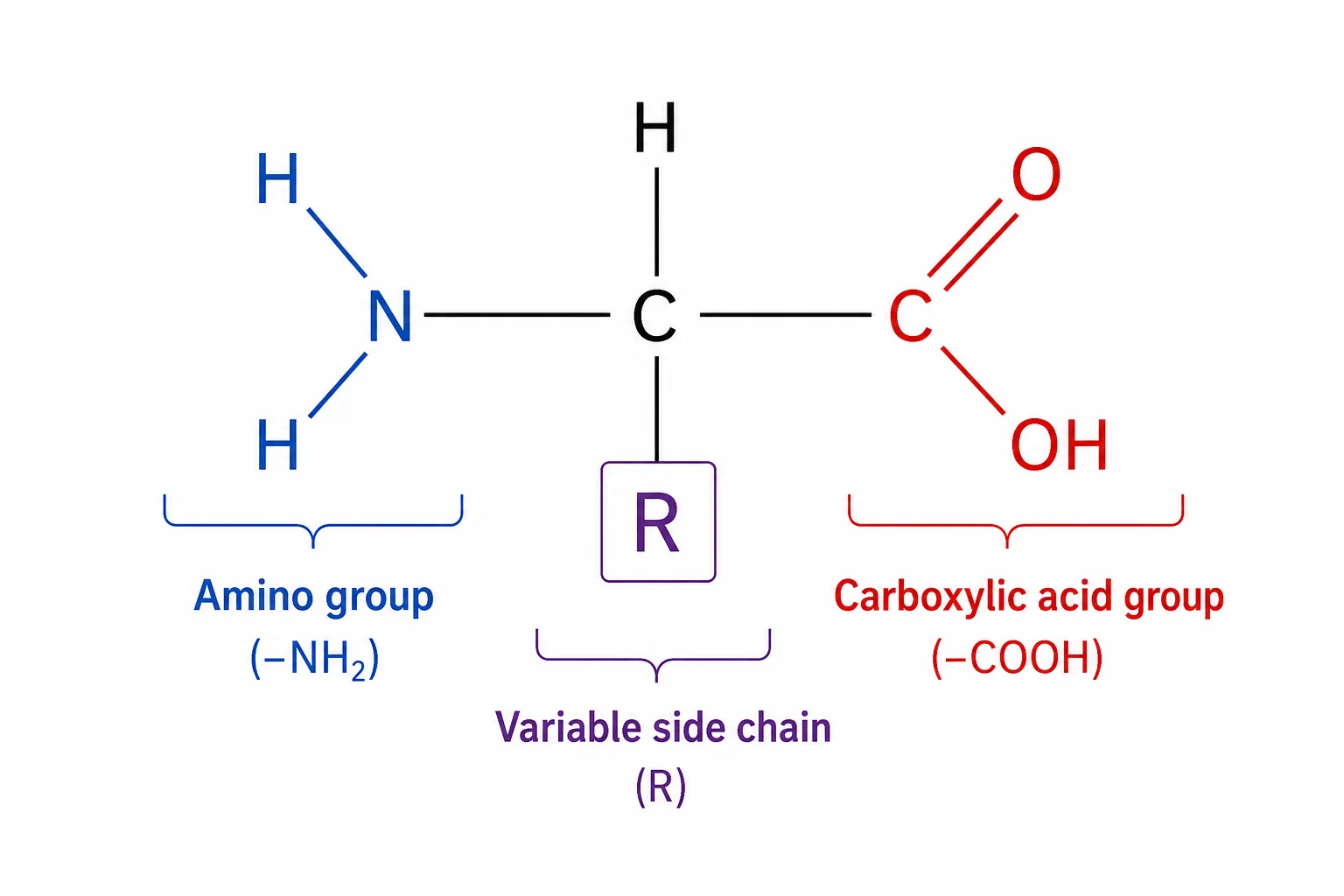
- Carbonate test add 1–2 cm3 of sodium carbonate or sodium hydrogencarbonate solution, and bubbles of gas indicate an acid
Confirmation
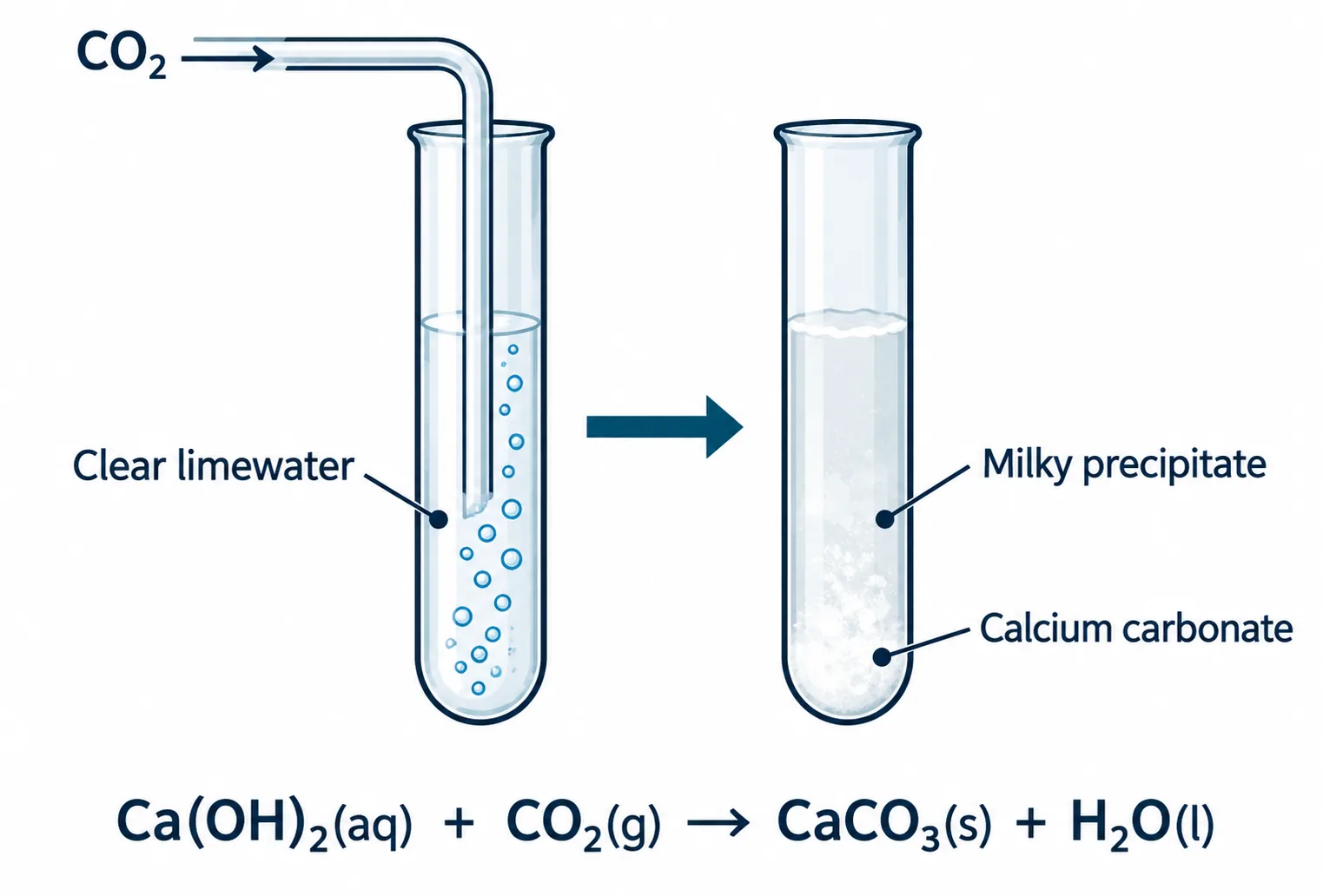
- Confirmation bubble the gas into limewater, which turns milky if it is carbon dioxide
Section 6 of 18Required Practical 5: apparatus
Aim
- Aim to test for alcohol, aldehyde, alkene, carboxylic acid and halogenoalkane functional groups
Apparatus
- Apparatus ethanol, small pieces of sodium under petroleum ether, ethanal or propanal, Fehling’s A and B, cyclohexene, bromine water, solid sodium hydrogencarbonate, dilute ethanoic acid, 1-bromobutane, sodium hydroxide, dilute nitric acid, 0.05 mol dm-3 silver nitrate, 250 cm3 beaker, anti-bumping granules, test tubes, boiling tubes and holder, thermometer and pipettes
- (with a beaker of ethanol for disposing of excess sodium)
Format
- Format five separate experiments, with results in a suitable table
Section 7 of 18Required Practical 5: methods 1 to 3
Required Practical 5: methods 1 to 3
Part 1
- Part 1 alcohol
- Put 1 cm3 of ethanol in a dry test tube.
- Add a small piece of sodium and record the observations (fizzing).
- Dispose of excess sodium safely in the beaker of ethanol.
Part 2
- Part 2 aldehyde
- Put 1 cm3 of sodium carbonate solution in a tube and add anti-bumping granules.
- Mix equal volumes of Fehling’s A and B to give a clear dark blue solution.
- Add 5 drops of it to the carbonate tube, then 1 cm3 of ethanal or propanal.
- Warm gently in a water bath for about 5 minutes and stand for several minutes.
- Record the observations.
Part 3
- Part 3 alkene
- Put 2–3 drops of cyclohexene in a tube and add 1 cm3 of bromine water.
- Shake vigorously and record the observations.
Section 8 of 18Required Practical 5: methods 4 and 5, and evaluation

Required Practical 5: methods 4 and 5, and evaluation
Part 4
- Part 4 carboxylic acid
- Put one small spatula of solid sodium hydrogencarbonate in a boiling tube.
- Add 2 cm3 of dilute ethanoic acid and record the observations.
Part 5
- Part 5 halogenoalkane
- Put 1 cm3 of sodium hydroxide in a tube and add 5 drops of 1-bromobutane.
- Warm in a water bath at about 60 °C for a few minutes.
- Add 2 cm3 of dilute nitric acid, then 1 cm3 of silver nitrate, and record the observations.
Volumes
- Volumes they need not be precise because only general observations are needed
Evaluation
- Evaluation check that each functional group gives the expected result
Example identification
- Example identification decolourising bromine water gives an alkene, a yellow precipitate with silver nitrate gives an iodoalkane, fizzing with NaHCO3 gives a carboxylic acid, blue to red precipitate with Fehling’s gives an aldehyde,
- and fizzing with sodium gives an alcohol
Section 9 of 18Mass spectrometry: molecular ion
Purpose
- Purpose to identify unknown compounds
Ionisation
- Ionisation the vaporised sample is bombarded with electrons, forming molecular ions, M+•
Molecular ion peak
- Molecular ion peak the peak with the highest m/z is M+, and its m/z equals the relative molecular mass
M+1 peak
- M+1 peak a smaller peak caused by carbon-13, whose height increases with the number of carbon atoms, so hexane has a larger M+1 peak than ethane
Example
- Example pent-1-ene has M+ at m/z 70 and M+1 at 71
Section 10 of 18Fragmentation
Fragmentation
- Fragmentation the molecular ion breaks into new ions, molecules and radicals, and the same molecule gives several different fragments
Mass spectrum
- Mass spectrum the relative abundances of ions form a molecular fingerprint that a computer can match to a database
| Fragment | m/z | Small molecule lost | m/z |
|---|---|---|---|
| CH3+ | 15 | H2O | 18 |
| C2H5+ | 29 | CO | 28 |
| C3H7+ | 43 | CO2 | 44 |
- Example
- butan-2-ol cannot give a peak at m/z 43, because it contains neither CH3CH2CH2+ nor (CH3)2CH+
Section 11 of 18Low and high resolution mass spectrometry
Low resolution
- Low resolution masses to 2 decimal places using values such as H 1.00, C 12.00 and O 16.00
- It suits general analysis and simple compounds.
- It cannot distinguish molecules of similar molecular mass.
High resolution
- High resolution masses to 4 or 5 decimal places, such as H 1.00783, C 12.0000 and O 15.99491
- It gives a precise molecular mass and so the molecular formula.
- It distinguishes molecules of similar mass but not isomers, which have identical molecular mass.
| Molecule | Low resolution | High resolution |
|---|---|---|
| Propane, C3H8 | 44.00 | 44.06264 |
| Ethanal, CH3CHO | 44.00 | 44.02623 |
- Example
- CHCF (44.00623) and CO2 (43.98982) both have relative molecular mass 44.00 at low resolution, but high resolution separates them
Section 12 of 18Infrared spectroscopy: principle
Bond vibration
- Bond vibration covalent bonds act like springs and vibrate in different ways
Method
- Method a spectrophotometer passes IR radiation through the sample, some energy is absorbed by the bonds and the rest is transmitted to a detector
Spectrum
- Spectrum the x-axis is wavenumber in cm-1 and the y-axis is transmittance as a decimal or percentage
Peaks
- Peaks characteristic peaks identify functional groups
Section 13 of 18Infrared absorption data and shapes
| Bond | Wavenumber / cm-1 |
|---|---|
| N–H (amines) | 3300–3500 |
| O–H (alcohols) | 3230–3550 |
| C–H | 2850–3300 |
| O–H (acids) | 2500–3000 |
| C≡N | 2220–2260 |
| C=O | 1680–1750 |
| C=C | 1620–1680 |
| C–O | 1000–1300 |
| C–C | 750–1100 |
O–H
- O–H alcohols and carboxylic acids give a broad scoop, and position and shape distinguish them
C=O
- C=O aldehydes and ketones give a sharp intense spike
Example
- Example propanone has a sharp peak near 1700 cm-1, and propan-2-ol has a broad peak at 3200–3500 cm-1
Section 14 of 18Using infrared spectroscopy
Limitation
- IR alone usually cannot identify an unknown compound
Uses
- Uses to identify functional groups, to confirm a known compound is present, and to detect impurities by comparing with database spectra
Combined with other techniques
- Elemental analysis gives the empirical formula.
- Mass spectrometry gives the molecular mass and fragments.
- NMR is not covered at AS.
Section 15 of 18The fingerprint region
Definition
- Definition the region below about 1500 cm-1, which is unique to every molecule
Peaks
- Peaks many peaks come from complex vibrations between bonds and are hard to assign
Use
- Use matching it to a database gives an exact identification, for example of one member of a homologous series
Example
- Example propan-1-ol and propan-2-ol show the same bonds above 1500 cm-1 but different fingerprint regions
Section 16 of 18Infrared radiation and global warming
Energy path
- Energy path short-wavelength UV from the Sun is absorbed by the Earth’s surface and re-emitted as longer-wavelength infrared
Greenhouse gases
- Greenhouse gases carbon dioxide, methane and water vapour trap much of this infrared, which maintains the Earth’s temperature
- (the greenhouse effect)
Absorbing bonds
- CO2 has two C=O bonds, methane has four C–H bonds and water has two O–H bonds, all of which absorb IR
Human activity
- Human activity it raises greenhouse gas levels, and more absorption of infrared causes global warming
Section 17 of 18Key terms
| Term | Meaning |
|---|---|
| Tollens’ reagent | Ammoniacal silver nitrate used to identify aldehydes. |
| Fehling’s solution | An alkaline copper(II) reagent giving a brick-red precipitate with aldehydes. |
| Positive result | The observation that shows a functional group is present. |
| Decolourise | To lose colour, as bromine water does with an alkene. |
| Term | Meaning |
|---|---|
| Molecular ion | The ion formed when a molecule loses one electron, giving the highest m/z peak. |
| Wavenumber | The reciprocal of wavelength, in cm-1. |
| Fingerprint region | The region below about 1500 cm-1 unique to each molecule. |
| Fragmentation | The breakdown of the molecular ion into smaller ions. |
| Greenhouse effect | The trapping of infrared radiation by atmospheric gases. |
Section 18 of 18Exam technique
1
Skipping the nitric acid step — carbonate ions would give a false precipitate.
2
Saying a ketone gives a silver mirror — only aldehydes do.
3
Thinking only alcohols turn dichromate green — aldehydes also do.
4
Using hydrochloric acid in the halide test — use nitric acid.
1
Saying the molecular ion is the base peak — it is the peak of highest m/z.
2
Saying IR alone identifies an unknown — it is used with other techniques.
3
Saying high resolution MS distinguishes isomers — isomers have the same molecular mass.
4
Saying the broad scoop peak is a C=O — C=O is a sharp spike.