3.9Organic Chemistry
Carboxylic Acids and Derivatives
10 min read 19 parts Lesson 32 of 55
Lesson summary
Complete PDF with figures and original page layoutPage 1 Oxford AQA International Your notes A Level (IAL) Chemistry Carboxylic Acids & Derivatives Contents Carboxylic acids & Esters Hydrolysis of Esters Acylation Preparing a Pure Organic Solid …
Section 1 of 19Carboxylic acids
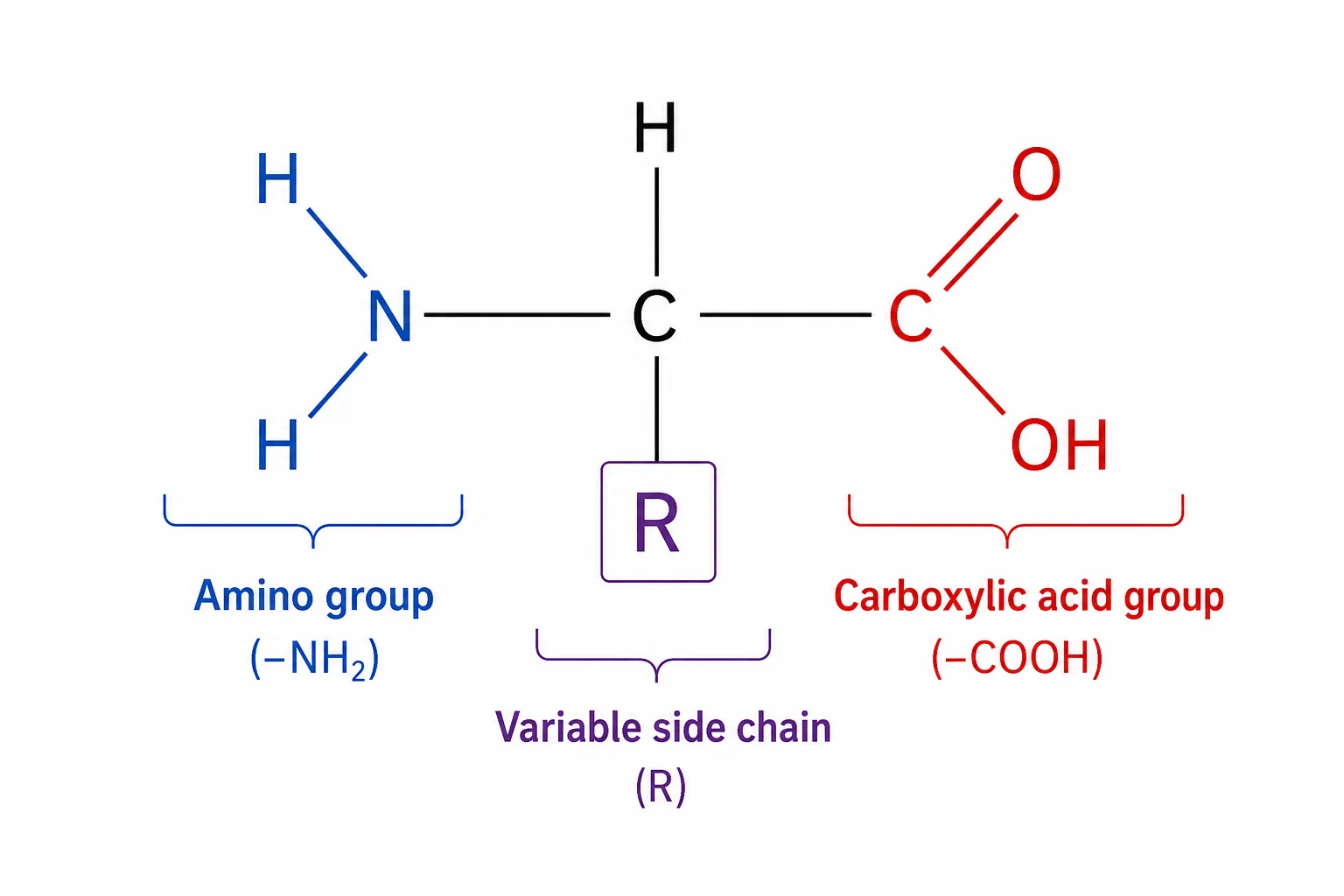
Carboxylic acids
Functional group
- Functional group the carboxyl group, –COOH, with general formula CnH2n+1COOH (RCOOH)
Naming
- Naming alkane stem + "oic acid", with the carboxyl carbon always carbon 1, so no number is needed, such as propanoic acid
Acidity
- Acidity they partially ionise, so they are weak acids
Test
- Test they react with sodium carbonate or hydrogencarbonate to give carbon dioxide: 2RCOOH + Na2CO3 → 2RCOO-Na+ + CO2 + H2O
Section 2 of 19Esters: preparation and naming

Preparation
- Preparation a condensation reaction between an alcohol and a carboxylic acid with a concentrated strong acid catalyst, called esterification
Condensation
- Condensation a reaction that eliminates a small molecule, here water
Naming
- Naming replace the -oic acid ending of the acid with -oate, and put the alkyl group from the alcohol first, such as propyl ethanoate
Note
- Note the name is written backwards from the structure and comes from the alcohol and acid used
Section 3 of 19Uses of esters: fragrances and test
Uses of esters: fragrances and test
Fragrances and flavourings
- Fragrances and flavourings esters smell fruitier and sweeter than aldehydes and ketones, are responsible for many natural scents,
- and are used as artificial fruit flavours,
- such as ethyl methanoate for raspberry
Complex mixtures
- Complex mixtures natural aromas and tastes often come from mixtures of esters
Test for an alcohol (or acid)
- Warm the unknown with ethanoic acid and concentrated sulfuric acid.
- Remove excess acid with warm aqueous sodium carbonate.
- A sweet, fruity smell confirms the alcohol, as the warm solution makes the ester evaporate.
Section 4 of 19Uses of esters: plasticisers and solvents
Uses of esters: plasticisers and solvents
Plasticisers
- PVC is strong and rigid and makes drainpipes and guttering.
- Adding an ester plasticiser makes it soft and pliable, for cling film.
- The ester penetrates between chains, increasing their separation, weakening the polar effects of the C–Cl bond and reducing rigidity so chains slide.
Solvents
- Ethyl ethanoate is a common solvent with low toxicity, low volatility (boiling point 77 °C) and low cost.
- It is used in glues, fragrances and nail varnishes.
Section 5 of 19Naturally occurring esters
Triglycerides
- Triglycerides animal fats and olive oil are tri-esters of glycerol and fatty acids (long-chain carboxylic acids such as stearic acid, CH3(CH2)16COOH)
- (propane-1,2,3-triol)
Formation
- Formation one mole of glycerol with three moles of fatty acid and an acid catalyst gives the triglyceride, with three moles of water eliminated
Section 6 of 19Acid hydrolysis of esters


Hydrolysis
- Hydrolysis the reverse of esterification, useful for making biodegradable plastics
Conditions
- Conditions heating under reflux with dilute acid such as sulfuric acid
Result
- Result an equilibrium mixture of ester, carboxylic acid and alcohol, so hydrolysis is incomplete
Example
- CH3COOCH2CH3 + H2O ⇌ CH3COOH + CH3CH2OH
Section 7 of 19Alkaline hydrolysis of esters

Conditions
- Conditions heating under reflux with dilute alkali such as sodium hydroxide
Result
- Result an irreversible reaction that goes to completion, giving a carboxylate salt and an alcohol
Acidification
- Acidification the carboxylate ion needs an acid such as HCl to be protonated to the carboxylic acid
Example
- CH3CH2COOCH3 + NaOH → CH3CH2COONa + CH3OH
| Acid hydrolysis | Alkaline hydrolysis | |
|---|---|---|
| Extent | Equilibrium, incomplete | Irreversible, complete |
| Conditions | Reflux with dilute HCl or H2SO4 | Reflux with dilute NaOH |
| Products | Carboxylic acid and alcohol | Carboxylate salt and alcohol |
Section 8 of 19Soap and biodiesel
Soap and biodiesel
Soap (saponification)
- Vegetable oils and animal fats are hydrolysed with aqueous sodium hydroxide.
- The products are glycerol and the sodium salts of fatty acids, which are soaps.
Biodiesel
- It is made from renewable vegetable oils rather than petrochemicals.
- Triglycerides are converted to methyl esters (FAME), which are less viscous, by transesterification with methanol.
- Acids (protonating the carbonyl) or alkalis (deprotonating methanol) can catalyse it, and NaOH or KOH is more common.
- The reaction is reversible, so excess methanol drives it right, giving yields up to 98%.
- Glycerol is the by-product.
Section 9 of 19Acyl derivatives

Acyl chlorides
- Acyl chlorides carboxylic acid derivatives in which –OH is replaced by Cl, named with the suffix -oyl chloride
Acid anhydrides
- Acid anhydrides derivatives in which –OH is replaced by an alkanoate group, named with the suffix -oic anhydride
Amides
- Amides compounds with the –CONR2 group, made from an acyl chloride and ammonia or an amine
Section 10 of 19Nucleophilic addition–elimination of acyl chlorides


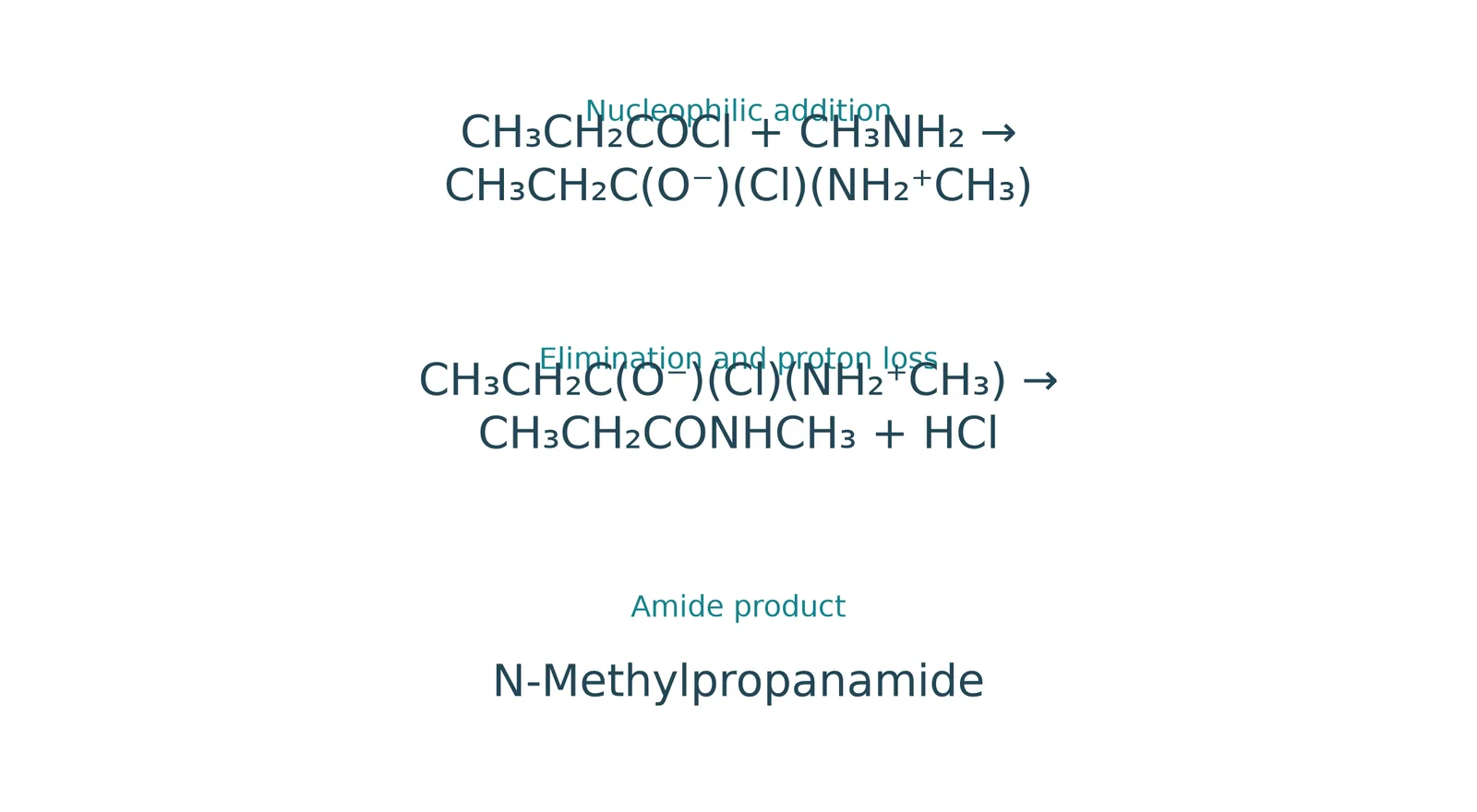



Nucleophilic addition–elimination of acyl chlorides
Reactions
- Reactions hydrolysis, reaction with alcohols to form esters, and reaction with ammonia and primary amines to form amides
Mechanism type
- Mechanism type the nucleophile adds across the C=O bond and then a small molecule, HCl, is eliminated
Hydrolysis
- Hydrolysis an acyl chloride gives a carboxylic acid and HCl
- Step 1 (addition): the lone pair on water’s oxygen attacks the carbonyl carbon.
- Step 2 (elimination): HCl is eliminated.
- Examplepropanoyl chloride gives propanoic acid and HCl.
Reaction
- Reaction an acyl chloride reacts with an alcohol to give an ester and HCl
Mechanism
- Mechanism the alcohol acts as a nucleophile
Steps
- Additionthe lone pair on the alcohol oxygen attacks the carbonyl carbon.
- EliminationHCl is eliminated.
Section 11 of 19Formation of amides
Reaction
- Reaction an acyl chloride reacts with ammonia or a primary amine in a condensation reaction
Mechanism
- Mechanism a lone pair on nitrogen attacks the carbonyl carbon (addition), and then a chloride ion is eliminated, forming HCl
Fate of HCl
- It is neutralised by a second molecule of ammonia or amine in excess.
- This forms an ammonium salt such as NH4Cl or CH3NH3Cl.
Two molecules needed
- Two molecules needed the first forms the amide and the second neutralises the HCl
Section 12 of 19Examples of amide formation
| Reactants | Products |
|---|---|
| CH3CH2COCl + 2NH3 | CH3CH2CONH2 (propanamide, a primary amide) + NH4Cl |
| CH3COCl + 2CH3NH2 | CH3CONHCH3 (a substituted amide) + CH3NH3Cl |
| CH3COCl + 2CH3CH2NH2 | CH3CONHCH2CH3 + CH3CH2NH3Cl |
- Summary
- HCl is never seen as a separate product, because excess ammonia or amine neutralises it
Section 13 of 19Mechanism of amide formation
- Nucleophile
- the nitrogen of ammonia or a primary amine
Mechanism of amide formation
Nucleophilic addition: the nitrogen lone pair attacks the carbonyl carbon.
Elimination: a chloride is lost and HCl forms.
Acid–base reaction: the HCl immediately reacts with excess ammonia or amine to give an ammonium chloride.
Section 14 of 19Acylation and the manufacture of aspirin
Uses of acylation
- Uses of acylation pharmaceuticals such as aspirin, and textiles such as cellulose acetate
Aspirin
- Aspirin salicylic acid is reacted with ethanoic anhydride to give aspirin and ethanoic acid
Equation
- HOOCC6H4OH + (CH3CO)2O → HOOCC6H4OCOCH3 + CH3COOH
Why anhydrides are preferred to acyl chlorides
- They are cheaper to produce.
- They are less reactive and the reactions are easier to control.
- The by-product is the less corrosive carboxylic acid, instead of corrosive HCl gas.
Acyl chloride drawback
- Acyl chloride drawback reactions with water or alcohols are fast and exothermic, giving rapid corrosive HCl
Section 15 of 19Required Practical 10: apparatus and aim
Required Practical 10: apparatus and aim
Aim
- Aim to prepare a pure organic solid (aspirin) and test its purity
Preparation apparatus
- Preparation apparatus salicylic acid, 100 cm3 conical flask, 10 cm3 measuring cylinder, ethanoic anhydride, concentrated sulfuric acid, 400 cm3 beaker, tripod, gauze and Bunsen burner, thermometer, 250 cm3 beaker, Buchner funnel, filter paper, stirring rod, wash bottle and spatula
Recrystallisation and purity apparatus
- 25 cm3 measuring cylinder, boiling tube, ethanol, 100 cm3 conical flask, kettle, balance to 2 decimal places, thermometer (0–250 °C), melting point apparatus and tubes, watch glass and rubber ring
Section 16 of 19Required Practical 10: preparation and recrystallisation
Required Practical 10: preparation and recrystallisation
Preparation
- Add 6.00 g of salicylic acid, 10 cm3 of ethanoic anhydride and 5 drops of concentrated sulfuric acid to a conical flask.
- Swirl and hold in a water bath at about 60 °C for about 20 minutes.
- Cool and add the contents to 75 cm3 of cold water, so the aspirin crystallises.
- Recover the aspirin by Buchner filtration and leave to dry.
Recrystallisation
- Measure 15 cm3 of ethanol into a boiling tube.
- Half-fill a beaker with water at 75 °C and stand the boiling tube in it.
- Add the crude aspirin without scraping the filter paper, and stir until it dissolves.
- Pour the solution into about 40 cm3 of water in a 100 cm3 conical flask and warm gently until the solution is complete.
- Cool in an ice bath so crystals form, scratching the inside of the vessel if needed.
- Filter with a Buchner funnel, dry, and record the mass.
Section 17 of 19Required Practical 10: melting point test and evaluation
1
Crush a sample with a spatula to a powder.
2
Fill three melting point tubes to a depth of 0.5 cm.
3
Place them in the melting point apparatus.
4
Heat the oil bath gently and note the temperature at which the solid melts.
5
Repeat with the other tubes, heating more slowly as the approximate value is approached.
6
Deduce the melting point from the readings.
Purity
- Purity compare the melting point with the data book value of 136 °C, because impurities lower the melting point and a close match suggests purity
Reporting
- Reporting quote a melting point as a range, ±, and cite a data book value
Yield
- Yield calculate the theoretical yield from 6.00 g of salicylic acid, and then the percentage yield
Example
- 6.00 g of salicylic acid (Mr 138.1) gives 7.82 g of aspirin (Mr 180.1), and 4.13 g obtained is a 52.8% yield
Section 18 of 19Key terms
| Term | Meaning |
|---|---|
| Esterification | The reaction of an alcohol with a carboxylic acid to form an ester and water. |
| Saponification | Alkaline hydrolysis of fats to make soap. |
| Transesterification | The conversion of one ester into another, as in making biodiesel. |
| Acyl chloride | A carboxylic acid derivative with Cl in place of OH. |
| Triglyceride | A tri-ester of glycerol and fatty acids. |
| Plasticiser | An additive that makes a polymer more flexible. |
| Term | Meaning |
|---|---|
| Amide | A compound with the –CONR2 group. |
| Acylation | A reaction that introduces an acyl group. |
| Recrystallisation | Purifying a solid by dissolving it in hot solvent and cooling to re-form crystals. |
| Buchner filtration | Vacuum filtration using a Buchner funnel. |
| Melting point range | The temperatures over which a solid melts, used to assess purity. |
Section 19 of 19Exam technique
1
Writing the ester name in structural order — the alcohol part comes first in the name.
2
Saying acid hydrolysis goes to completion — it is an equilibrium.
3
Forgetting to acidify after alkaline hydrolysis — the product is a carboxylate until acidified.
4
Saying acyl chloride hydrolysis is slow — it is fast and exothermic.
1
Letting HCl accumulate in amide formation — it is neutralised by excess ammonia or amine.
2
Using acyl chlorides for aspirin because they are cheaper — anhydrides are cheaper and safer.
3
Scraping the filter paper when transferring crude aspirin — this contaminates the product.
4
Saying a high melting point proves purity — compare it with the data book value, since impurities lower it.