Section 1 of 7What is an element?
Definition
- Definition An element is a substance made of only one type of atom.
- Elements cannot be broken down into anything simpler by chemical reactions.
Building blocks
- Building blocks Elements can be combined in chemical reactions to make more complicated substances called compounds.
- Every substance in the universe is made from elements.
The periodic table
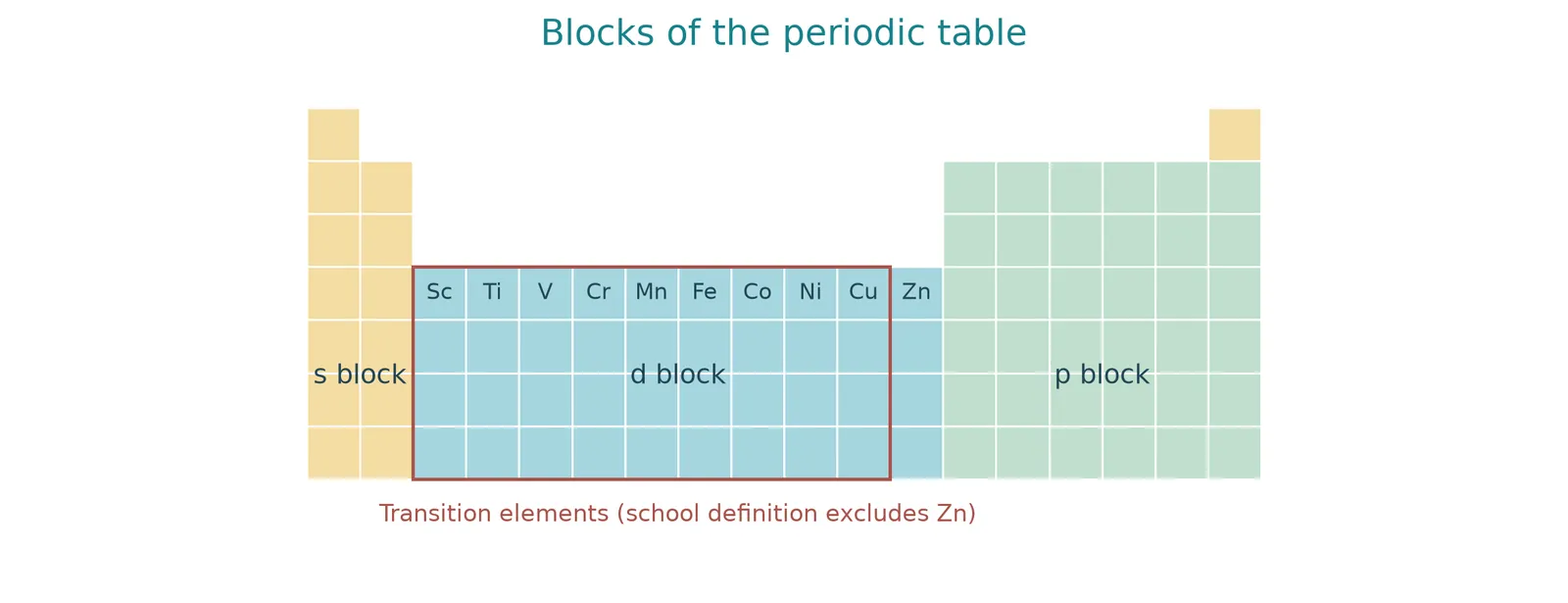
- The periodic table All the known elements, over 100 of them, are arranged in the periodic table.
- Each element has its own box with its symbol and numbers.
Section 2 of 7Chemical symbols
Rules for symbols
- Rules for symbols Each element has a symbol of one or two letters.
- The first letter is always a capital and the second, if there is one, is lower case.
- Writing Co (cobalt) is different from CO (carbon monoxide).
Some symbols come from other names
- Some symbols come from other names Sodium is Na and potassium is K, from their older Latin names, so you need to learn them rather than guess.
Representing atoms
- Representing atoms The symbol stands for one atom of that element, for example O for an atom of oxygen.
Section 3 of 7Common elements and symbols
| Element | Symbol | Element | Symbol |
|---|---|---|---|
| Carbon | C | Sulfur | S |
| Nitrogen | N | Chlorine | Cl |
| Aluminium | Al | Sodium | Na |
| Hydrogen | H | Oxygen | O |
| Magnesium | Mg | Calcium | Ca |
Section 4 of 7Atoms or molecules
Elements
Single atoms
- Single atoms Some elements exist as separate atoms, such as the noble gases helium, neon and argon, and metals made of lattices of atoms.
Molecules of the element
- Molecules of the element Others exist as molecules in which two or more atoms of the same element are chemically joined.
- Examples are hydrogen H2, oxygen O2, nitrogen N2 and chlorine Cl2.
Still one type of atom
- Still one type of atom Even when atoms are joined in a molecule, the substance is still an element, because only one kind of atom is present.
Compare with a compound
- Compare with a compound A compound such as water, H2O, has atoms of different elements chemically bonded together.
Section 5 of 7Worked example: finding symbols and names
1
Look at the symbol: if it is C, the element is carbon; if it is Na, it is sodium.
2
To find a symbol from a name, check the periodic table. Sulfur is S and chlorine is Cl.
3
Check the capital letters. Aluminium is Al, not AL or al.
4
State whether the element is found as atoms or as molecules, for example N2 means nitrogen exists as molecules containing two atoms.
Section 6 of 7Key terms
| Term | Meaning |
|---|---|
| Element | A substance made of only one type of atom, which cannot be split into simpler substances by chemical means. |
| Atom | The smallest particle of an element that can exist. |
| Molecule | Two or more atoms joined together by chemical bonds. |
| Compound | A substance made of two or more different elements chemically combined. |
| Chemical symbol | One or two letters used to represent an atom of an element. |
Section 7 of 7Exam technique
1
Writing a symbol with the wrong capitals, such as CL or cl. The first letter is capital and the second is lower case.
2
Believing that an element made of molecules, such as O2, is a compound. It contains only one kind of atom, so it is an element.
3
Mixing up elements and compoundsif different atoms are chemically joined, it is a compound.
4
Guessing symbols like S for sodium. Sodium is Na and sulfur is S.