8.1.2The Rate and Extent of Chemical Change
Collision Theory and Activation Energy
5 min read 7 parts Lesson 3 of 16 1 quiz
Section 1 of 7Collision theory
Particles must collide
- Particles must collide A chemical reaction can only happen when reactant particles collide with each other.
- Most collisions do not result in a reaction.
Collisions must be successful
- Collisions must be successful A collision is successful only if the particles hit with at least a minimum amount of energy.
- This minimum energy is called the activation energy.
Rate and successful collisions
- Rate and successful collisions The rate depends on how many successful collisions occur per second.
- More frequent collisions, or a larger proportion with enough energy, both raise the rate.
Section 2 of 7Activation energy on a reaction profile






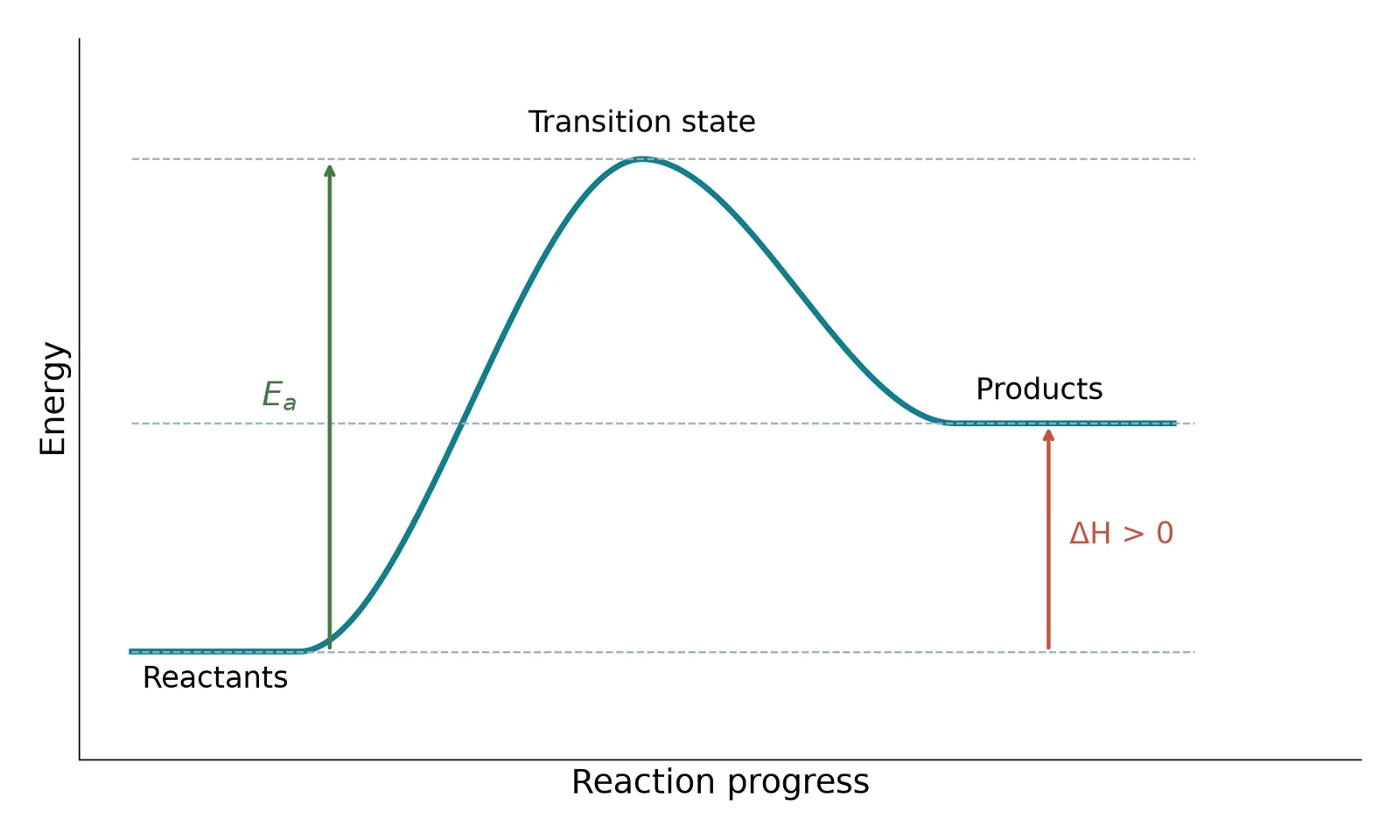
1
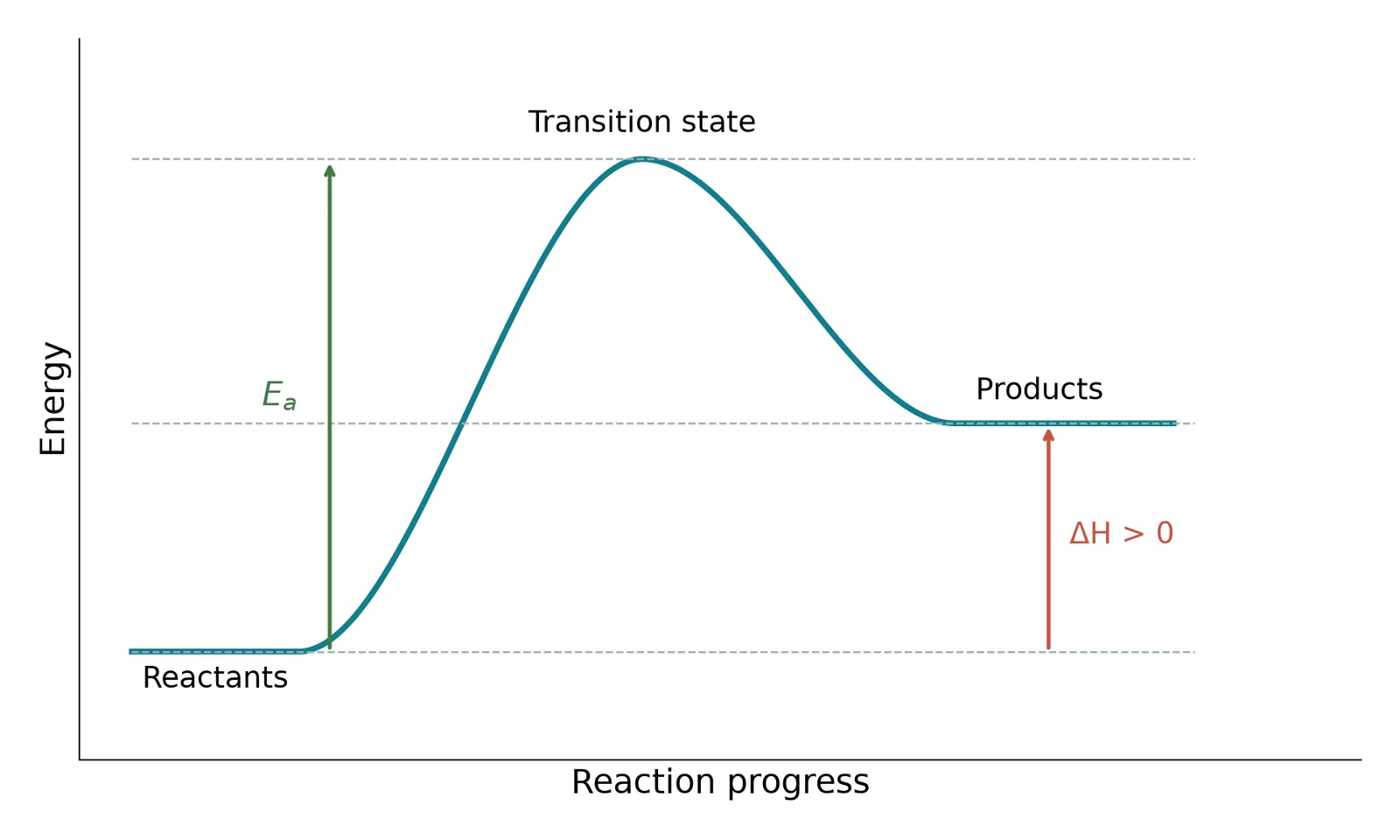
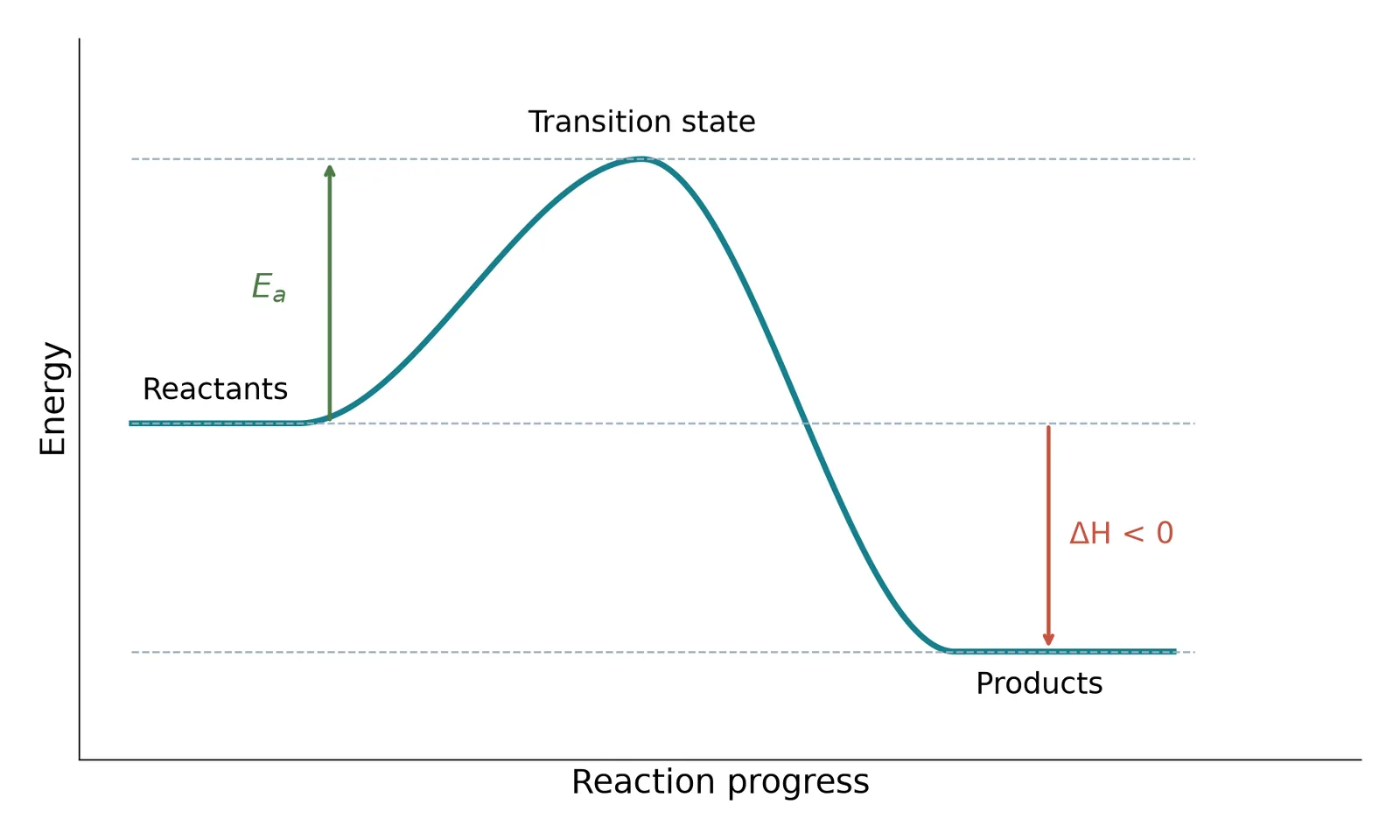
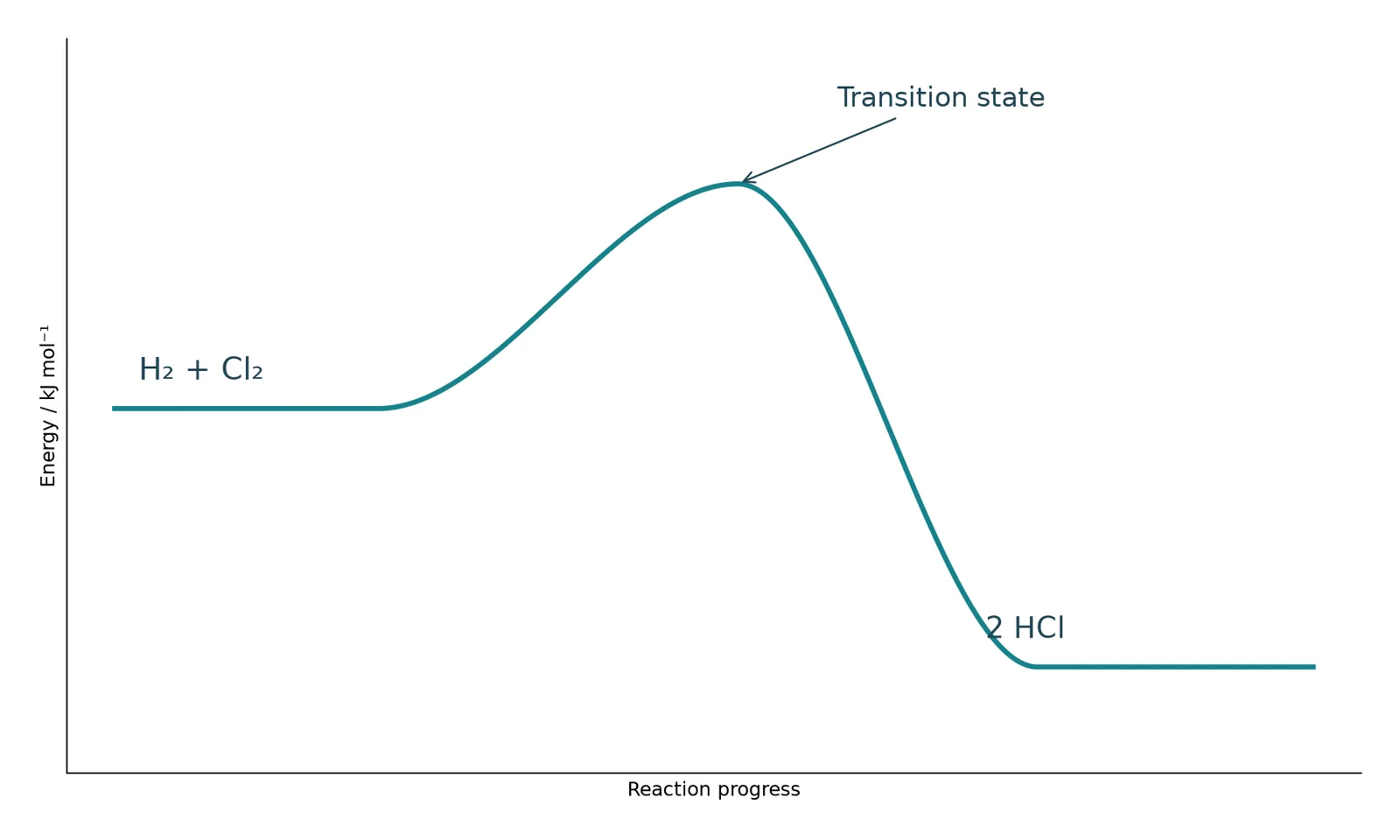
Draw the reactants at their energy level on the left of the diagram.
2
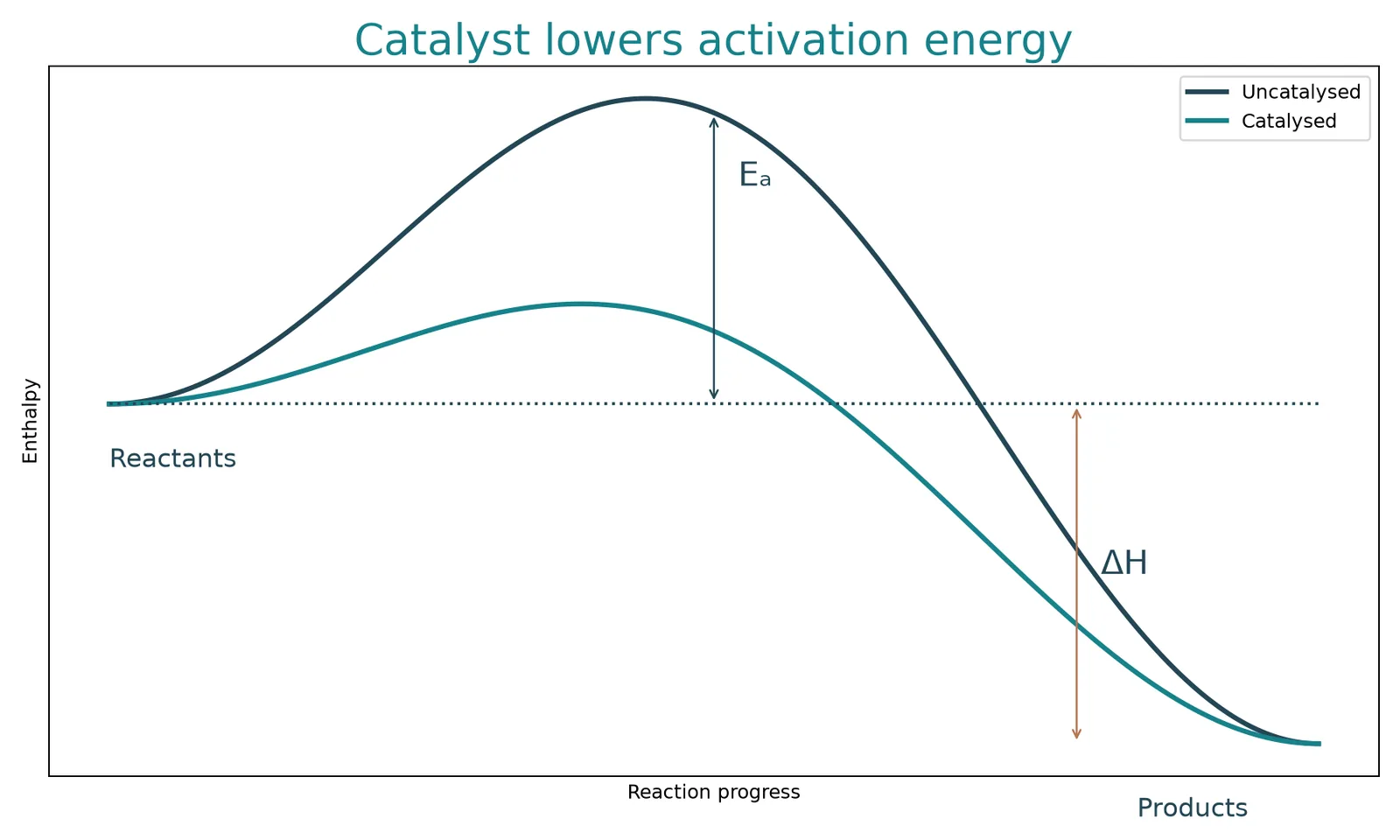
Draw a curve rising to a peak: the height from the reactants to the peak is the activation energy.
3
Bonds in the reactants must be partly broken to reach this peak, which is why energy is needed even in an exothermic reaction.
4
Draw the curve falling to the products; a lower product level means an exothermic reaction, a higher one an endothermic reaction.
Section 3 of 7How each factor changes the rate
| Change | Effect on particles | Effect on rate |
|---|---|---|
| Higher concentration of a solution | More particles in the same volume, so collisions are more frequent | Increases |
| Higher pressure of a gas | Particles closer together, so collisions are more frequent | Increases |
| Larger surface area of a solid | More exposed particles meet the other reactant more often | Increases |
| Higher temperature | Particles move faster: more frequent collisions and more of them have at least the activation energy | Increases |
Section 4 of 7Why temperature has the biggest effect
1Heat is supplied
- Heat is supplied The average kinetic energy of the particles increases.
2Faster movement
- Faster movement The particles travel faster, so they collide more often.
3Higher energy collisions
- Higher energy collisions A greater proportion of collisions has energy equal to or above the activation energy.
4Rate rises sharply
- Rate rises sharply Many more successful collisions happen each second;
- a rise of about 10 °C roughly doubles the rate for many reactions.
Section 5 of 7Writing an exam explanation

Three-part answer
Name the change
- Name the change State what was altered, for example 'the concentration was increased'.
Describe the particles
- Describe the particles Say there are more particles in the same volume, or that they move faster.
Link to collisions
- Link to collisions Finish with 'more frequent (successful) collisions per second, so the rate increases'.
Section 6 of 7Key terms
| Term | Meaning |
|---|---|
| Collision theory | The idea that reactions occur when particles collide with enough energy. |
| Activation energy | The minimum energy particles need to react when they collide. |
| Successful collision | A collision in which the particles react because they have at least the activation energy. |
| Frequency of collisions | How many collisions take place each second. |
| Reaction profile | An energy diagram showing reactants, products and the activation energy peak. |
Section 7 of 7Exam technique
1
Saying that raising the temperature makes particles 'collide' without adding that more collisions have enough energy to react.
2
Believing that every collision causes a reaction; only those reaching the activation energy do.
3
Showing the activation energy as the difference between reactants and products rather than reactants and the peak.
4
Stating that increasing concentration raises the particles' energy; it only increases how often they collide.