Section 1 of 7What a catalyst does
Speeds things up
- Speeds things up A catalyst increases the rate of a chemical reaction.
- It is not used up, so it is chemically unchanged at the end and can be reused.
Not in the equation
- Not in the equation Because it is not a reactant or a product, a catalyst is not shown in the balanced equation;
- it is written over the arrow if mentioned.
Specific
- Specific Different reactions need different catalysts, for example iron in making ammonia and manganese(IV) oxide in breaking down hydrogen peroxide.
Section 2 of 7How a catalyst works
1Alternative pathway
- Alternative pathway The catalyst gives the reaction a different route.
2Lower activation energy
- Lower activation energy Less energy is needed for a collision to be successful.
3More successful collisions
- More successful collisions A larger proportion of collisions has enough energy, although the temperature is unchanged.
4Faster reaction
- Faster reaction The rate rises, but the overall energy change and the amount of product at the end stay the same.
Section 3 of 7Showing a catalyst on a reaction profile

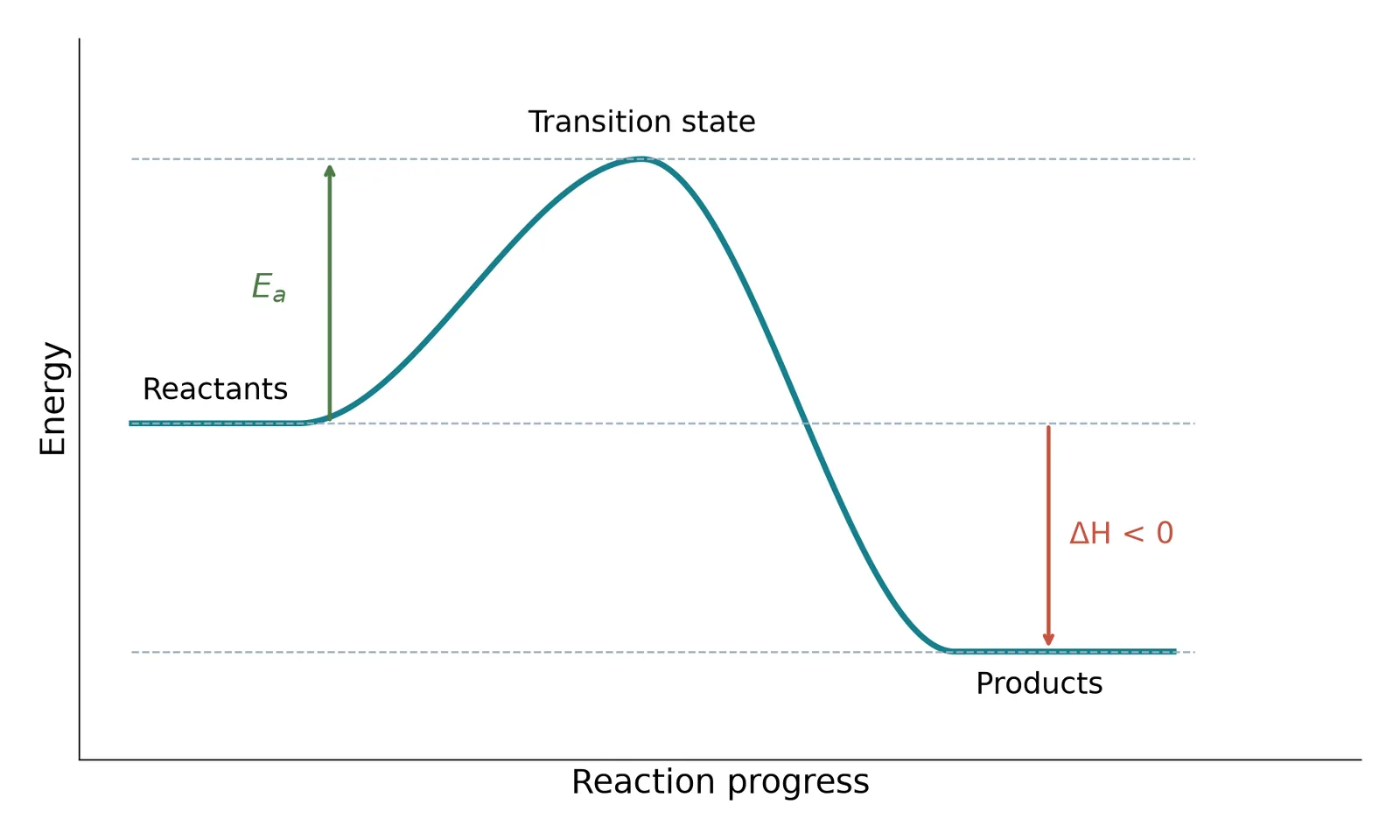


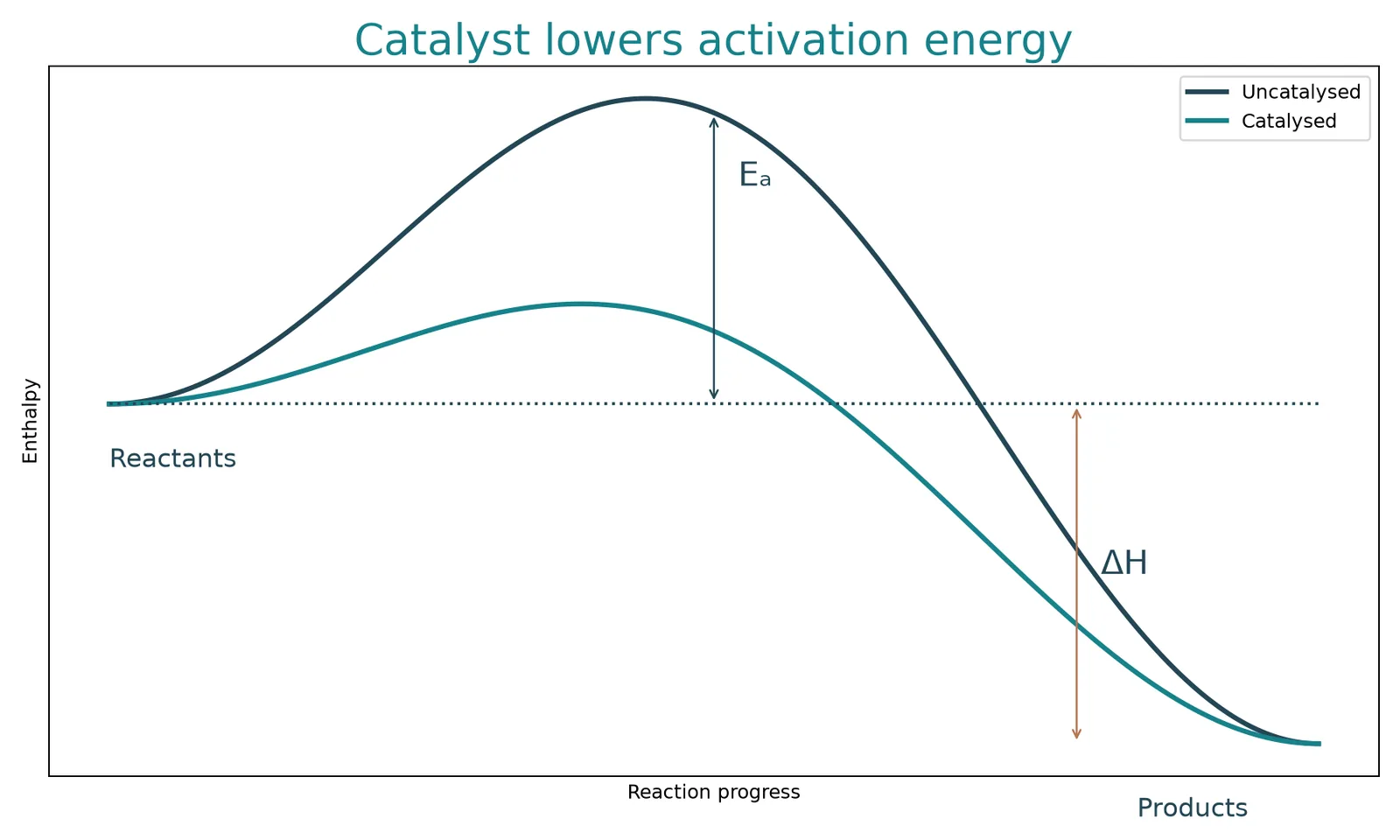
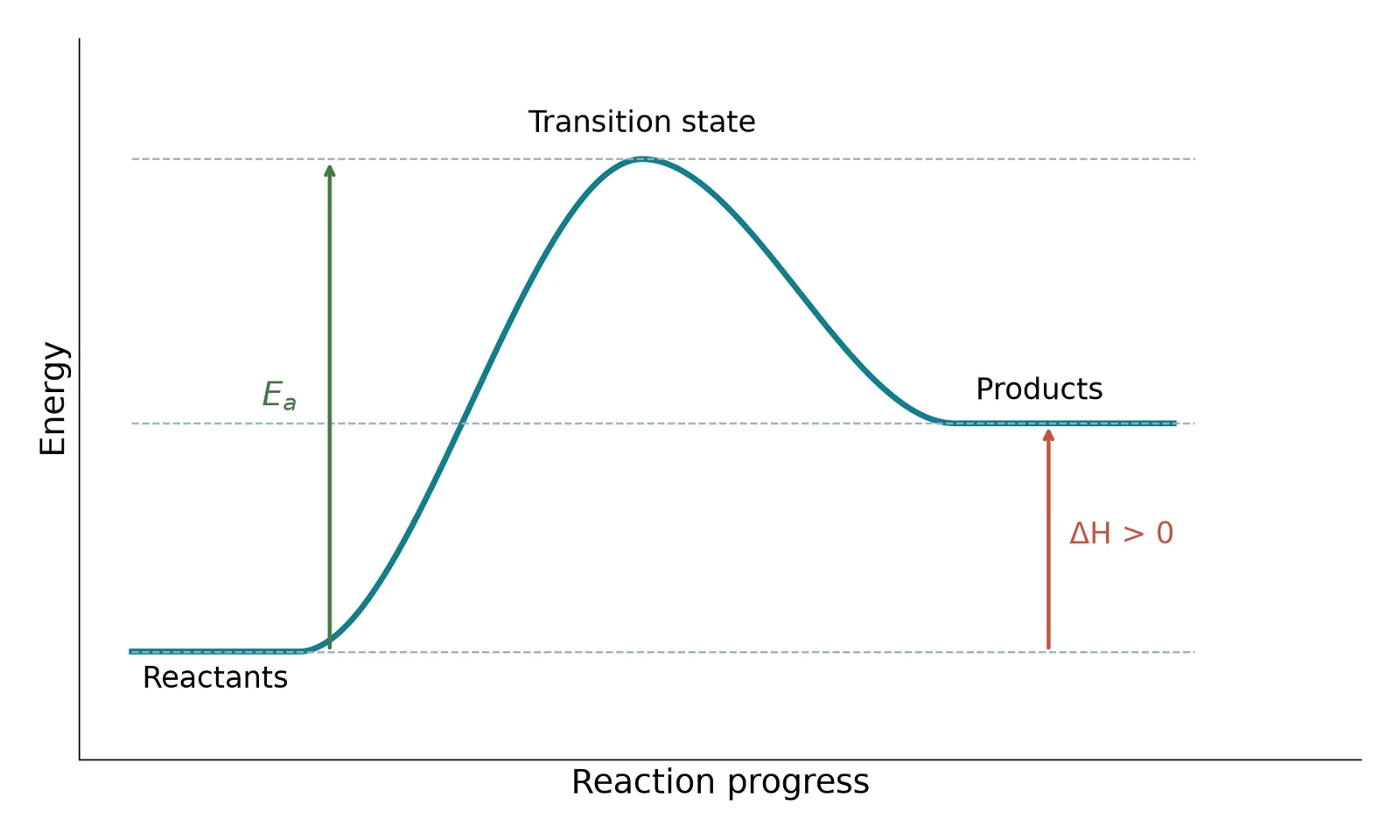
1
Draw the normal curve for the uncatalysed reaction, with reactants, a peak and products.
2
Add a second curve with a lower peak between the same reactants and products.
3
Label the activation energy for each curve; the catalysed one is smaller.
4
Check that the start and end levels have not moved, because a catalyst does not change the energy released or absorbed.
Section 4 of 7Catalysts in use
| Reaction | Catalyst | Benefit |
|---|---|---|
| Making ammonia (Haber process) | Iron | Reaction runs fast enough at a lower temperature, saving energy |
| Decomposition of hydrogen peroxide into water and oxygen | Manganese(IV) oxide | Oxygen bubbles off quickly at room temperature |
| Hydrogenation of vegetable oils | Nickel | Makes margarine at a practical rate |
| Exhaust gases in cars | Platinum or rhodium | Converts harmful gases into less harmful ones |
Section 5 of 7Advantages and drawbacks
Industrial catalysts
Lower costs
- Lower costs Lower temperatures and pressures mean less fuel is burned, and the catalyst can be reused.
Environment
- Environment Less energy used means lower carbon dioxide emissions.
Drawbacks
- Drawbacks Many catalysts are expensive metals, can be poisoned by impurities, and need replacing or cleaning.
Enzymes
- Enzymes Biological catalysts called enzymes work in living things and in industries such as brewing.
Section 6 of 7Key terms
| Term | Meaning |
|---|---|
| Catalyst | A substance that speeds up a reaction without being used up. |
| Activation energy | The minimum energy needed for particles to react. |
| Alternative pathway | A different reaction route with a lower activation energy. |
| Enzyme | A biological catalyst made of protein. |
| Decomposition | A reaction in which one compound breaks down into simpler substances. |
Section 7 of 7Exam technique
1
Saying that a catalyst gives particles more energy; it lowers the energy needed.
2
Including the catalyst as a reactant in the balanced equation.
3
Drawing the products at a different level on a catalysed profile.
4
Claiming a catalyst increases the yield of a reaction, when it only gets there faster.