3.1Unit 3 — Life on Earth
Ecosystems and Biomes
5 min read 4 parts Lesson 1 of 31
Section 1 of 4Ecological terminology


Ecological terminology
Species
A group of organisms that can interbreed with each other to produce fertile offspring.
Biodiversity
The variety and abundance of different species present in a biological ecosystem.
Population
The total number of individuals of one single species living in a particular area at the same time.
Community
All the populations of living organisms (plants, animals, fungi, microbes) co-existing in an ecosystem.
Habitat
The physical place or geographical environment where an organism lives.
Ecosystem
All the living organisms (community) interacting with the non-living physical components of their environment.
Niche
The specific ecological role an organism plays within its community, including its resource use (light, temperature, moisture), food interactions, and environmental tolerances.
Section 2 of 4Biotic and abiotic factors
| Category | Definition | Examples | Measuring Instruments & Source of Error |
|---|---|---|---|
| Abiotic Factors | Non-living physical and chemical components of the environment | Light intensity, soil moisture, pH, ambient temperature | Light meter (casting shadows over sensor), Moisture meter / pH meter (failing to wipe probe between samples) |
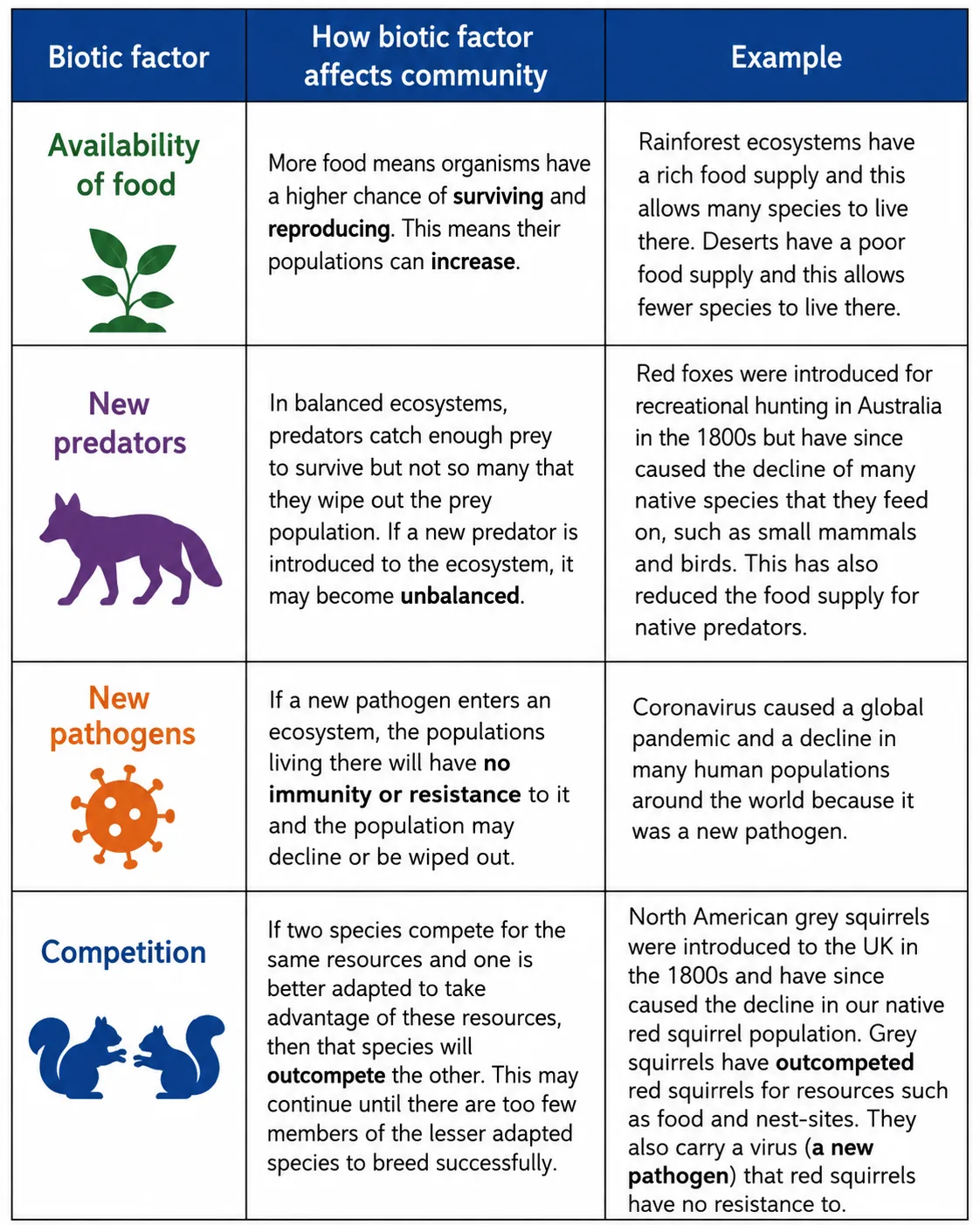
| Biotic Factors | Living interactions between organisms | Competition (intraspecific and interspecific), predation, disease/pathogens, grazing | Observational surveys, mark-release-recapture |
- Competition:
- Occurs when required resources are in short supply.
- Interspecific competitionBetween individuals of different species competing for one or a few shared resources (e.g. red and grey squirrels competing for food).
- Intraspecific competitionBetween individuals of the same species competing for all the exact same resources (food, territory, mates). Intraspecific competition is significantly more intense because individuals have identical requirements.
Section 3 of 4Key terms
| Term | Meaning |
|---|---|
| Niche | The total functional role played by an organism within its ecosystem and community. |
| Intraspecific competition | Competition between members of the same species for identical resources. |
| Interspecific competition | Competition between members of different species for common resources. |
| Abiotic factor | A non-living environmental factor (e.g. pH, temperature, moisture, light). |
Section 4 of 4Exam technique
Avoid these mistakes
Confusing interspecific and intraspecific competition — intra means within the same species (more intense); inter means between different species.
Casting a shadow when using a light meter — always orient your body away from the sensor to prevent false low light readings.