3.3Unit 3 — Life on Earth
Photosynthesis
5 min read 4 parts Lesson 14 of 31
Section 1 of 4The two stages of photosynthesis

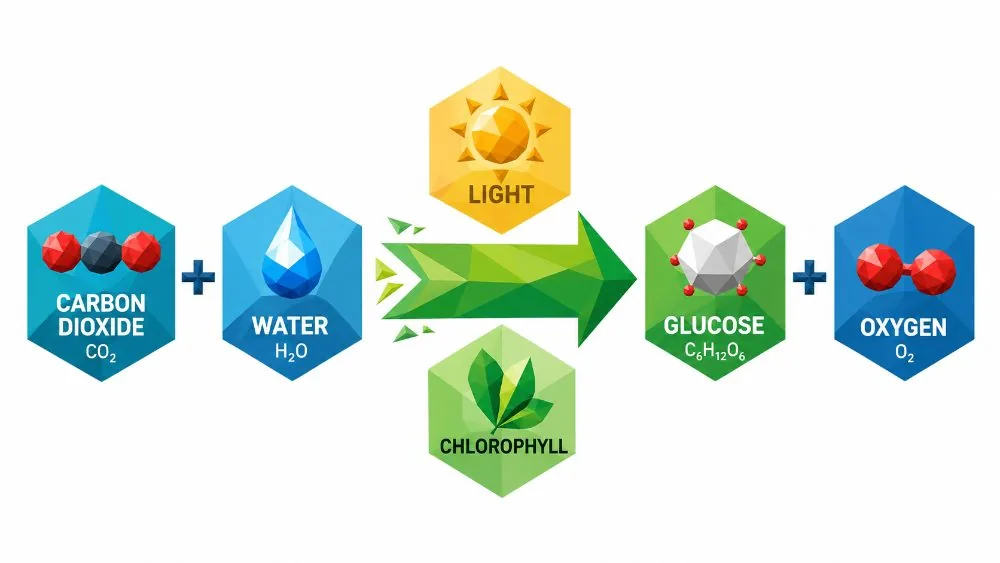



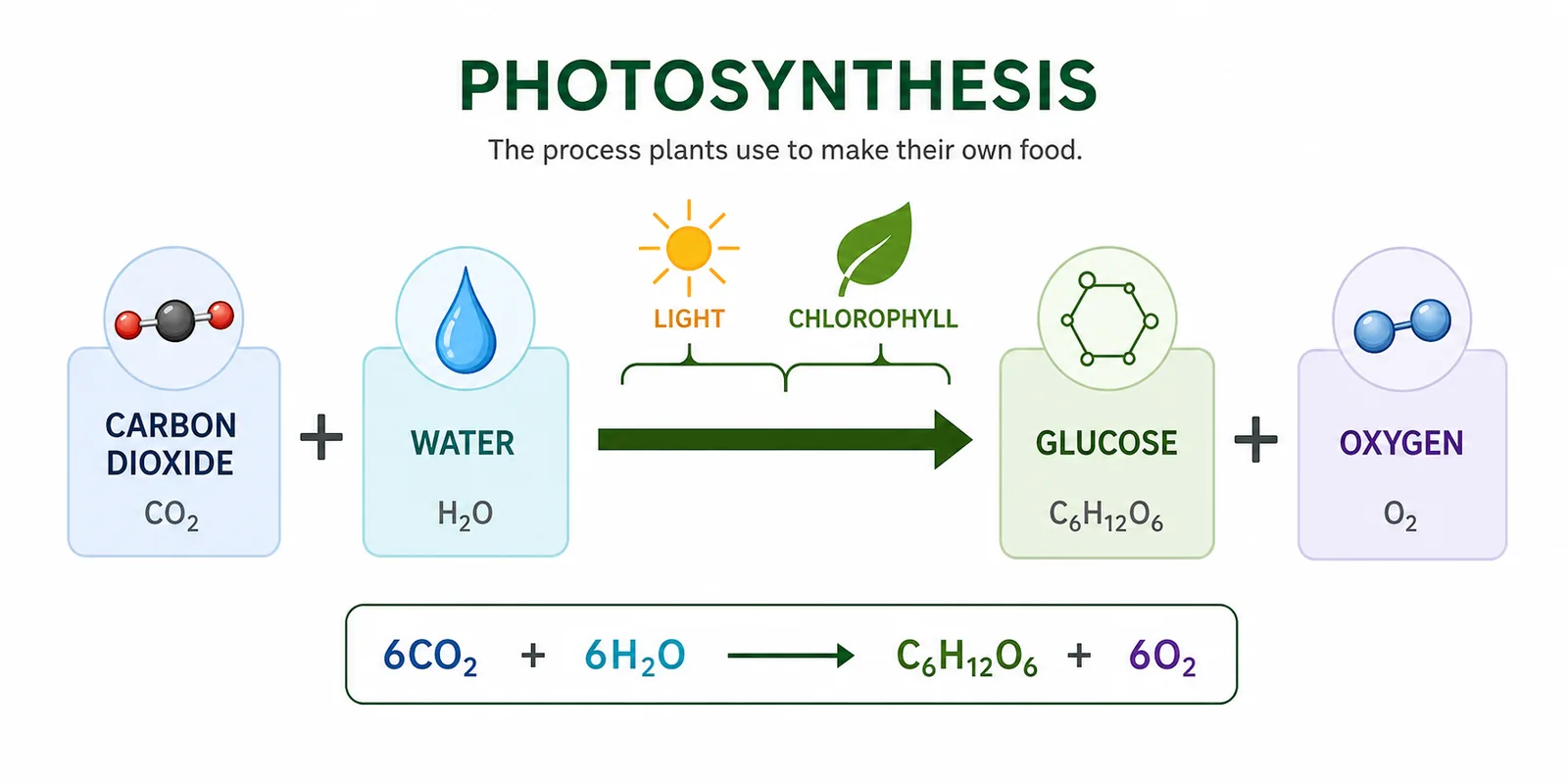
Carbon Dioxide + Water → (Light Energy & Chlorophyll) → Glucose + Oxygen
1
Stage 1
Light Reactions (Photolysis)
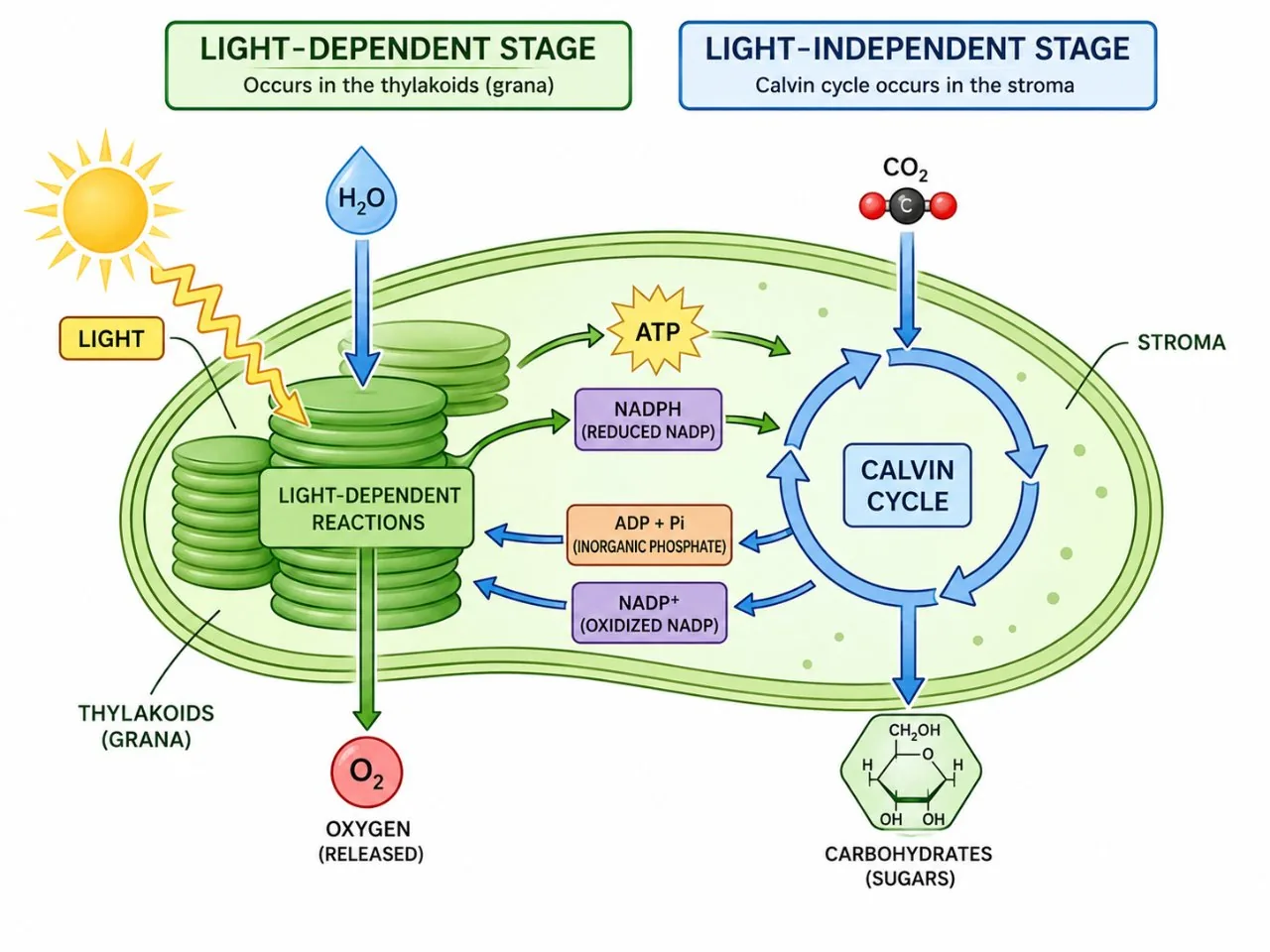
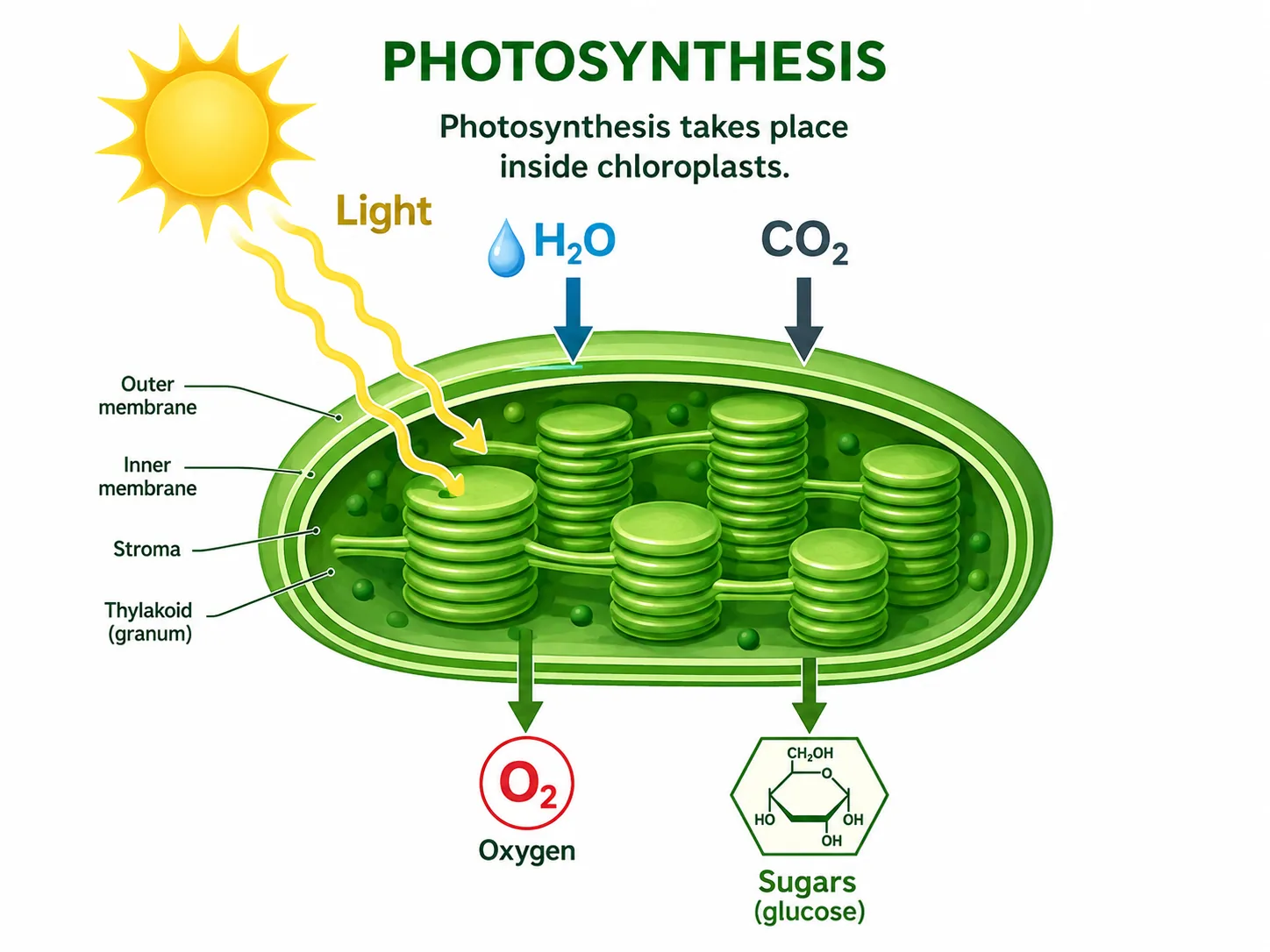
- Light energy from the Sun is trapped by the green pigment chlorophyll in chloroplasts.
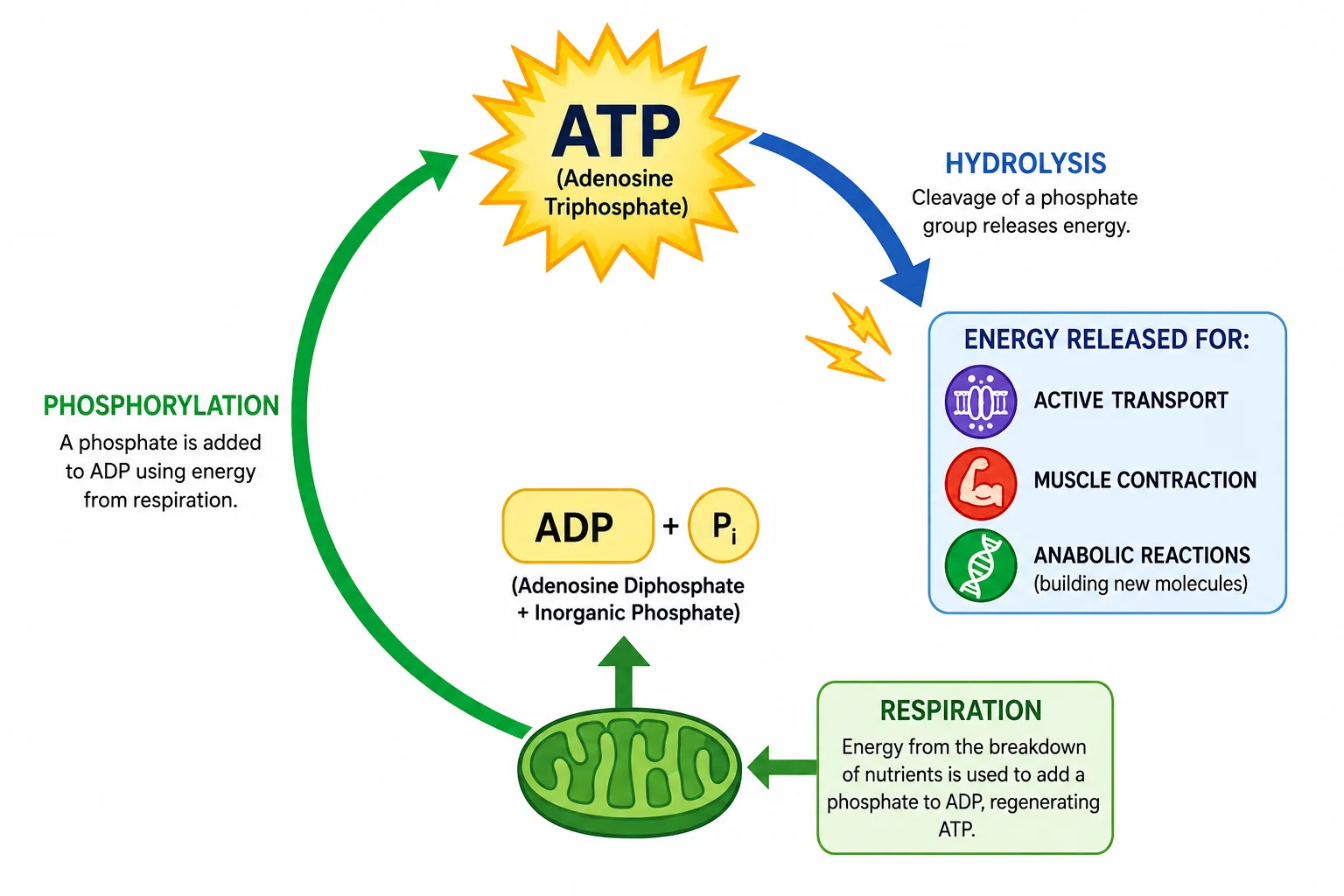
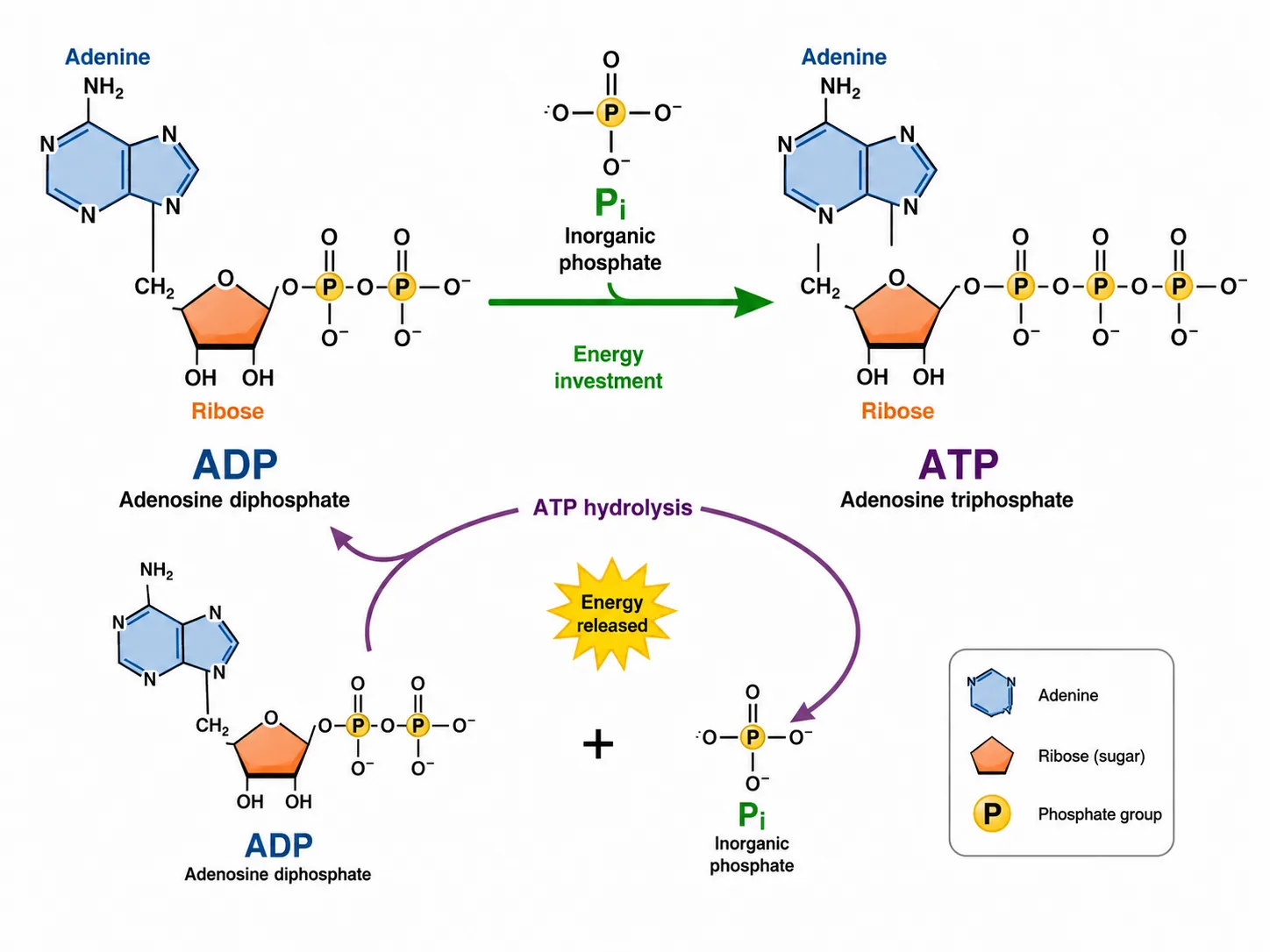
- Light energy is converted into chemical energy: generates ATP from ADP and Pi.
- Water is split into hydrogen and oxygen (photolysis):
Water → Hydrogen + Oxygen
- Oxygen diffuses out of leaf cells through stomata as a waste by-product.
- Hydrogen and ATP are passed on to Stage 2.
2
Stage 2
Carbon Fixation
- A cycle of enzyme-controlled biochemical reactions (does not require light directly).
- Hydrogen and ATP (from Stage 1) are combined with Carbon Dioxide from the air to produce Glucose.
- Because it is enzyme-controlled, it is highly sensitive to temperature changes.
3
Fates of synthesized glucose
- Used immediately as a substrate in cellular respiration to release ATP.
- Stored as the insoluble carbohydrate starch for later energy needs.
- Converted into the structural carbohydrate cellulose to build plant cell walls.
Section 2 of 4Limiting factors of photosynthesis






1Limiting factor
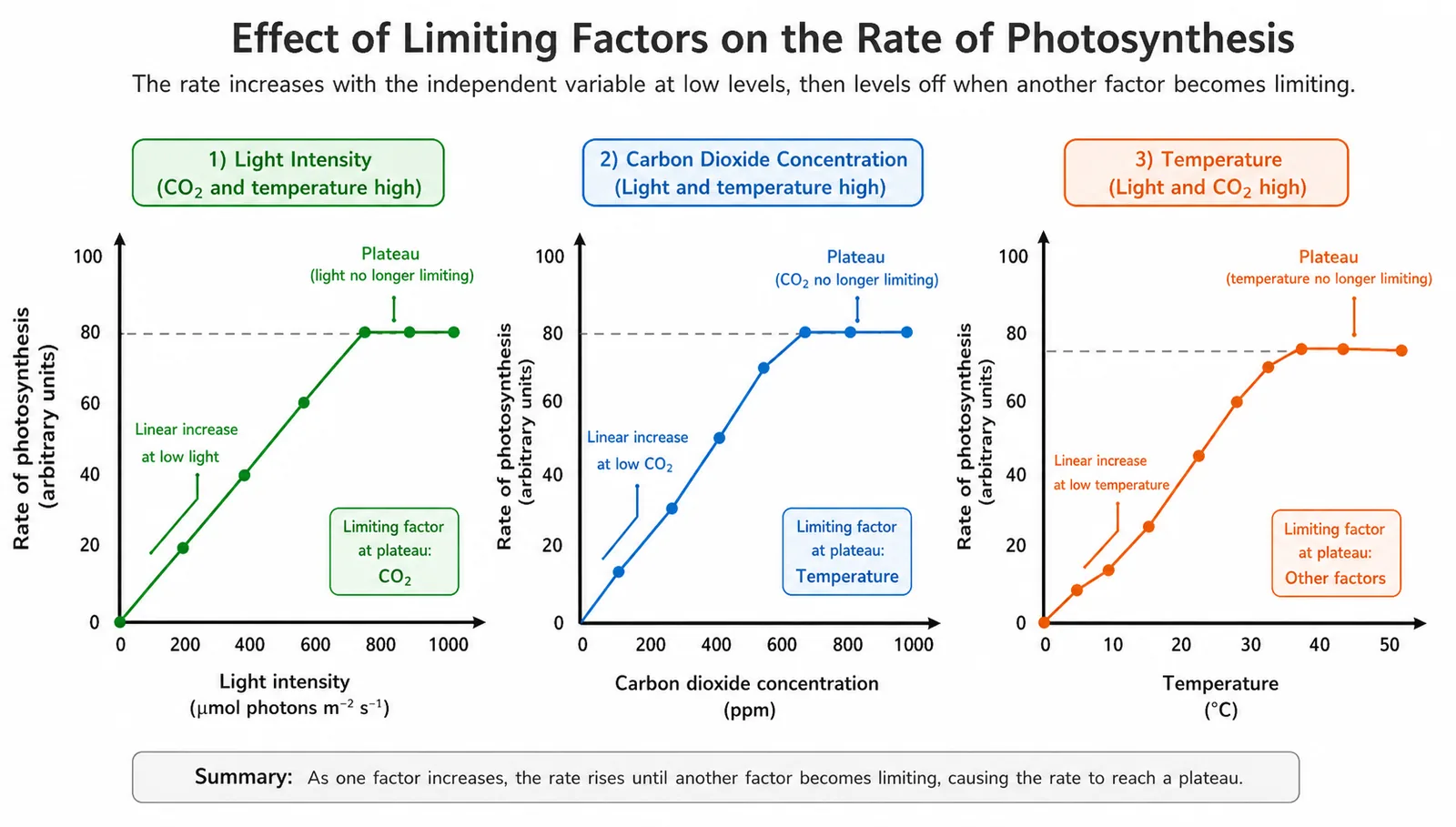
A limiting factor is an environmental condition in shortest supply that restricts the rate of photosynthesis.
2The three key limiting factors
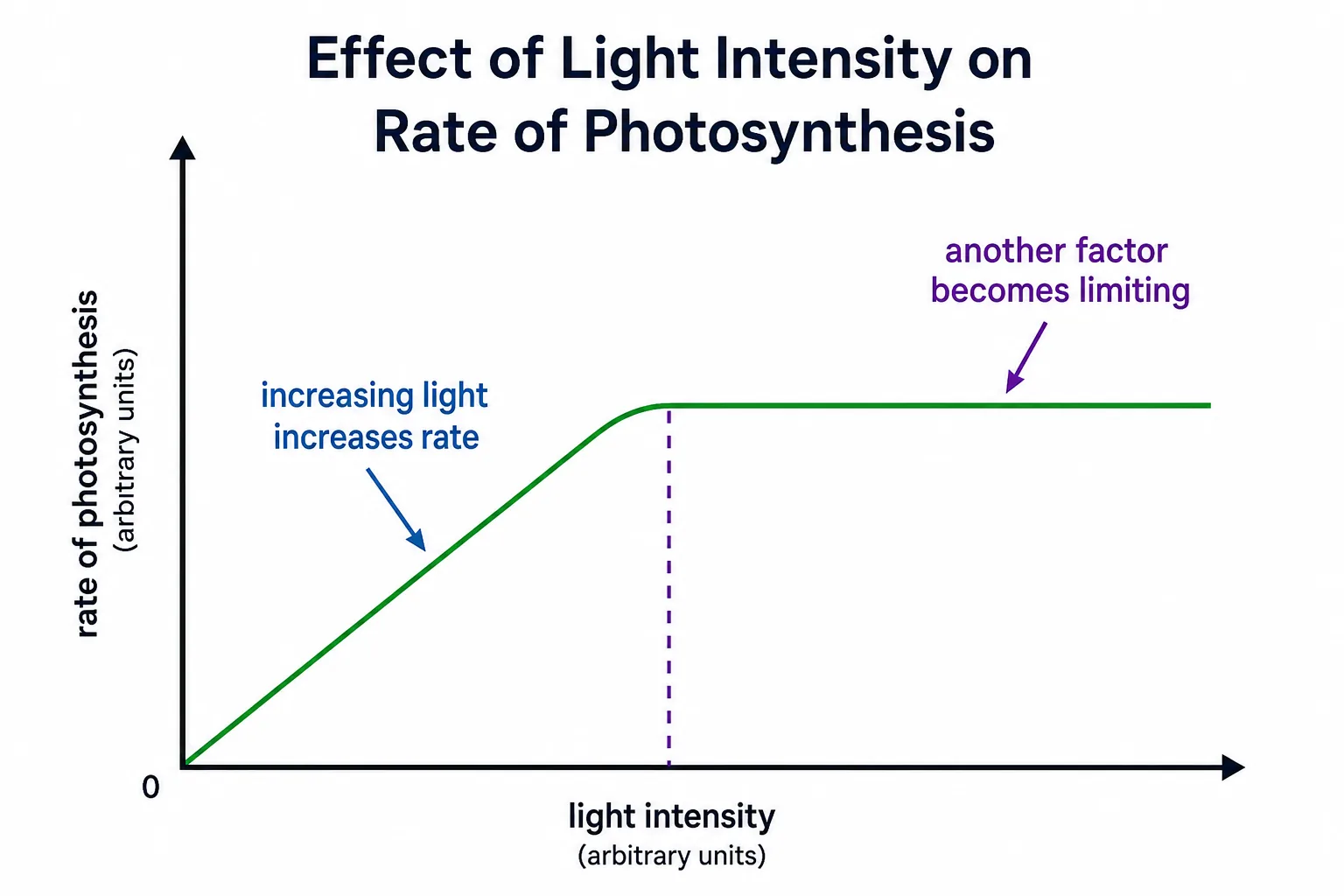
- Light intensity
- Provides energy for the light reactions;
- as light increases, rate increases until another factor becomes limiting.
- Provides energy for the light reactions;
- Carbon dioxide concentration
- Provides essential carbon atoms for carbon fixation;
- rate levels off when light or temperature limits.
- Provides essential carbon atoms for carbon fixation;
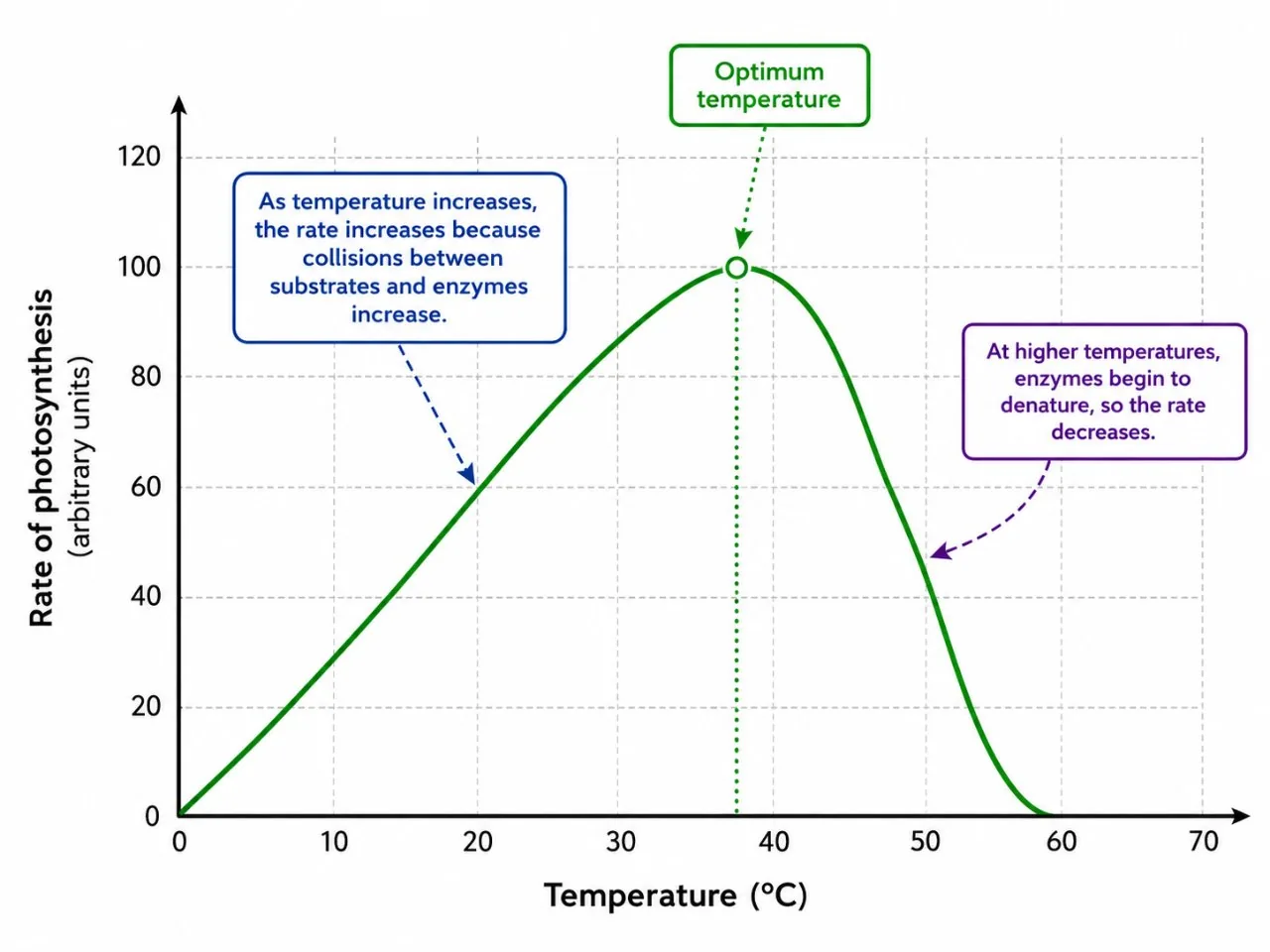
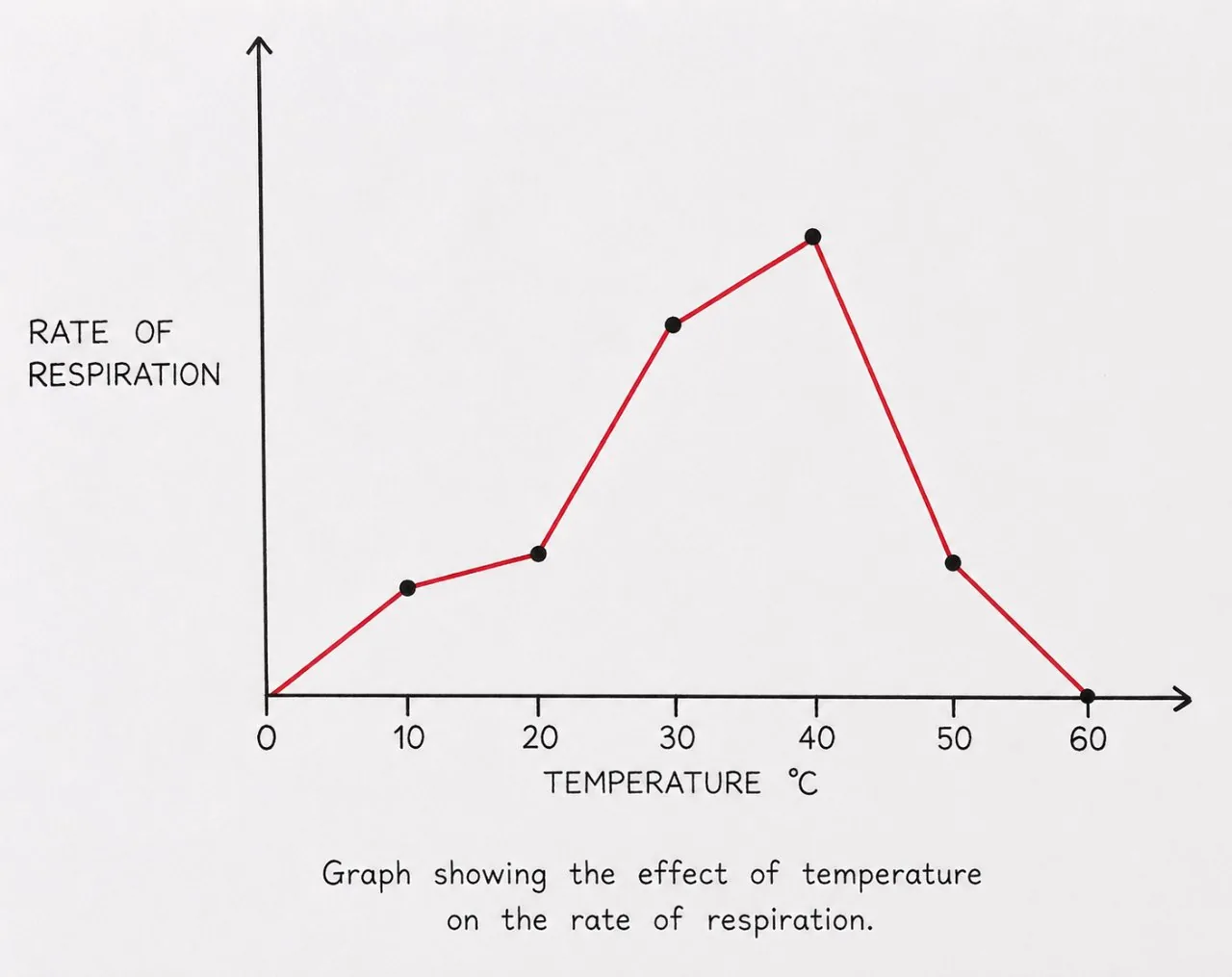
- Temperature
- Affects the rate of enzyme action in carbon fixation;
- rate increases with temperature up to the optimum (~25–30 °C), then drops sharply due to enzyme denaturation.
- Affects the rate of enzyme action in carbon fixation;
Section 3 of 4Key terms
| Term | Meaning |
|---|---|
| Chlorophyll | The green pigment located in chloroplasts that absorbs light energy for photosynthesis. |
| Photolysis | The splitting of water molecules into hydrogen and oxygen driven by absorbed light energy. |
| Carbon fixation | The enzymatic stage of photosynthesis combining hydrogen and CO2 to form glucose using ATP. |
| Limiting factor | A variable that limits the rate of a biological process when present in sub-optimal quantity. |
Section 4 of 4Exam technique
Avoid these mistakes
Stating oxygen is passed to Stage 2 — oxygen is a waste gas that diffuses out; only hydrogen and ATP pass to Stage 2.
Omitting temperature as an enzyme factor — carbon fixation is controlled by enzymes, so temperatures above optimum denature enzymes and halt photosynthesis.
Biology 0610 & 9700 Exam Model
Limiting Factors Master
Photosynthesis: Limiting Factors & Graph Plateau
6CO2 + 6H2O → C6H12O6 + 6O2 (Light & Chlorophyll required)
- Limiting Factor Definition: Something present in the environment in such short supply that it restricts life processes.
- Graph Plateau: When rate levels off as light intensity increases, light is no longer the limiting factor; CO2 concentration or temperature has become limiting.
- High Temperature Drop: Beyond optimum temp (~40°C), enzymes (e.g. RuBisCO) denature, permanently decreasing rate.