1.1.10Cells, Organ Systems and Ecosystems
Investigating Factors Affecting Enzyme Action
5 min read 7 parts Lesson 11 of 45 1 quiz
Section 1 of 7Method

1
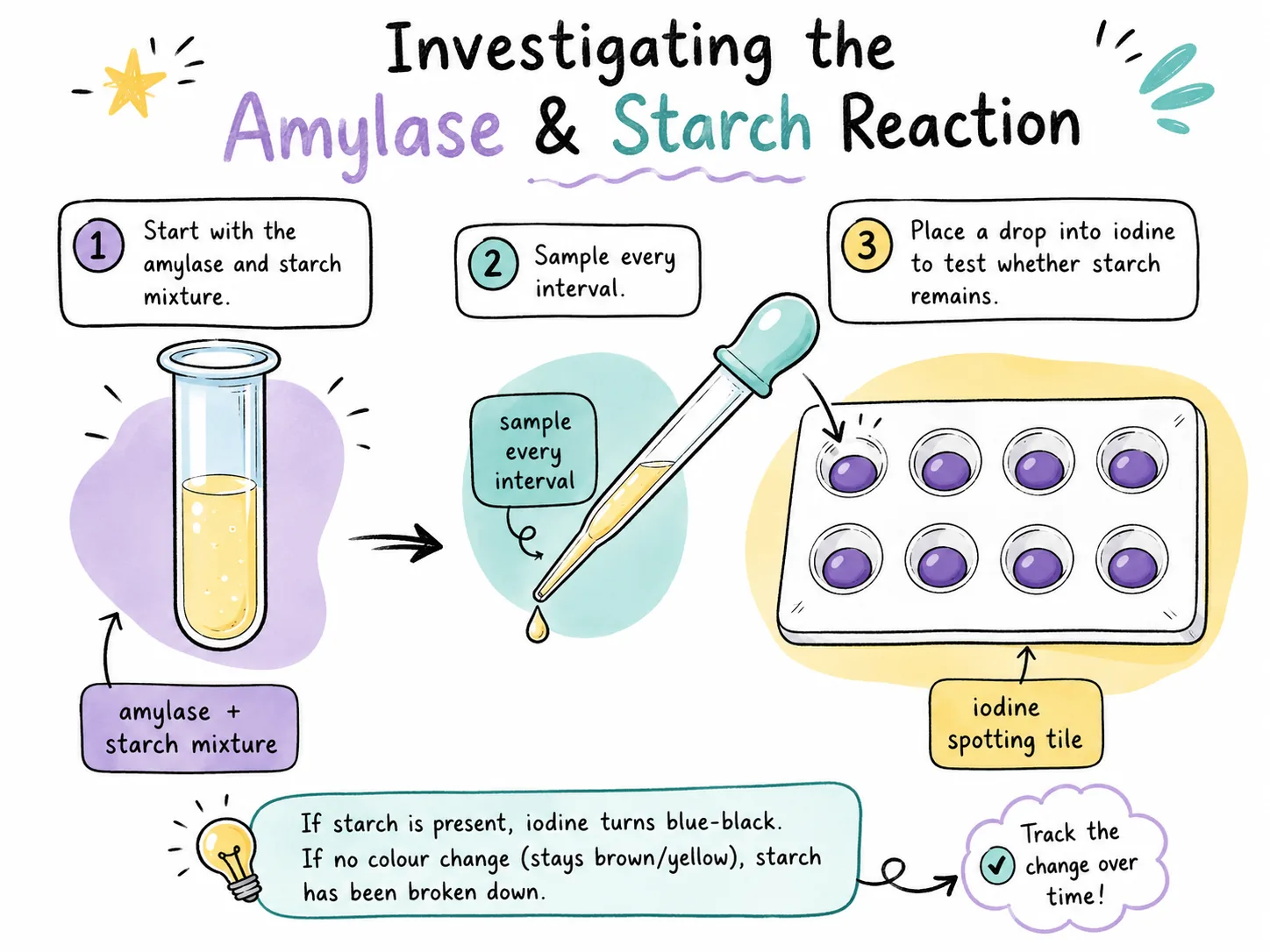
Put 10 cm3 of starch solution in one test tube and 2 cm3 of amylase solution in another.
2
Place both tubes in a water bath at 20 °C for about three minutes so that they reach the same temperature.
3
Put a drop of iodine in each well of the spotting tile.
4
Pour the amylase into the starch, mix and start the stopwatch at once.
5
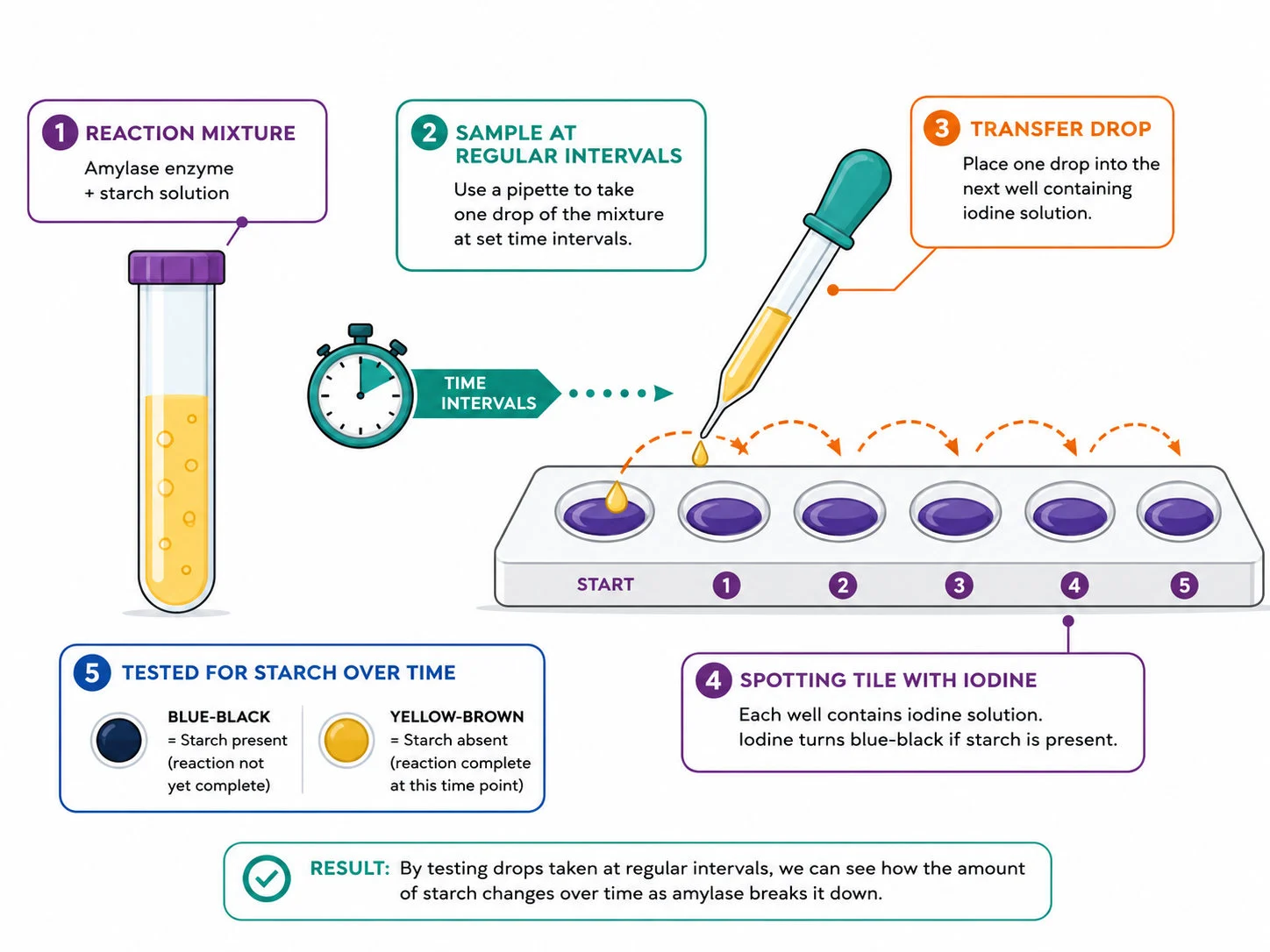
At the start and then every minute, use a pipette to transfer one drop of the mixture into a fresh well of iodine and note the colour.
6
Stop when the iodine stays orange-brown and record the time taken.
7
Repeat at 30, 40, 50 and 60 °C, keeping everything else the same.
Section 2 of 7Variables and safety
| Type | Detail |
|---|---|
| Independent | Temperature of the water bath |
| Dependent | Time for the starch to disappear (iodine stays orange-brown) |
| Controlled | pH, concentration and volume of both the amylase and the starch |
| Safety | Wear eye protection; take care with hot water and iodine, which stains skin and clothes |
Section 3 of 7Interpreting results


1Low temperature
- Low temperature Few successful collisions between enzyme and substrate, so the starch takes a long time to break down.
2Rising temperature
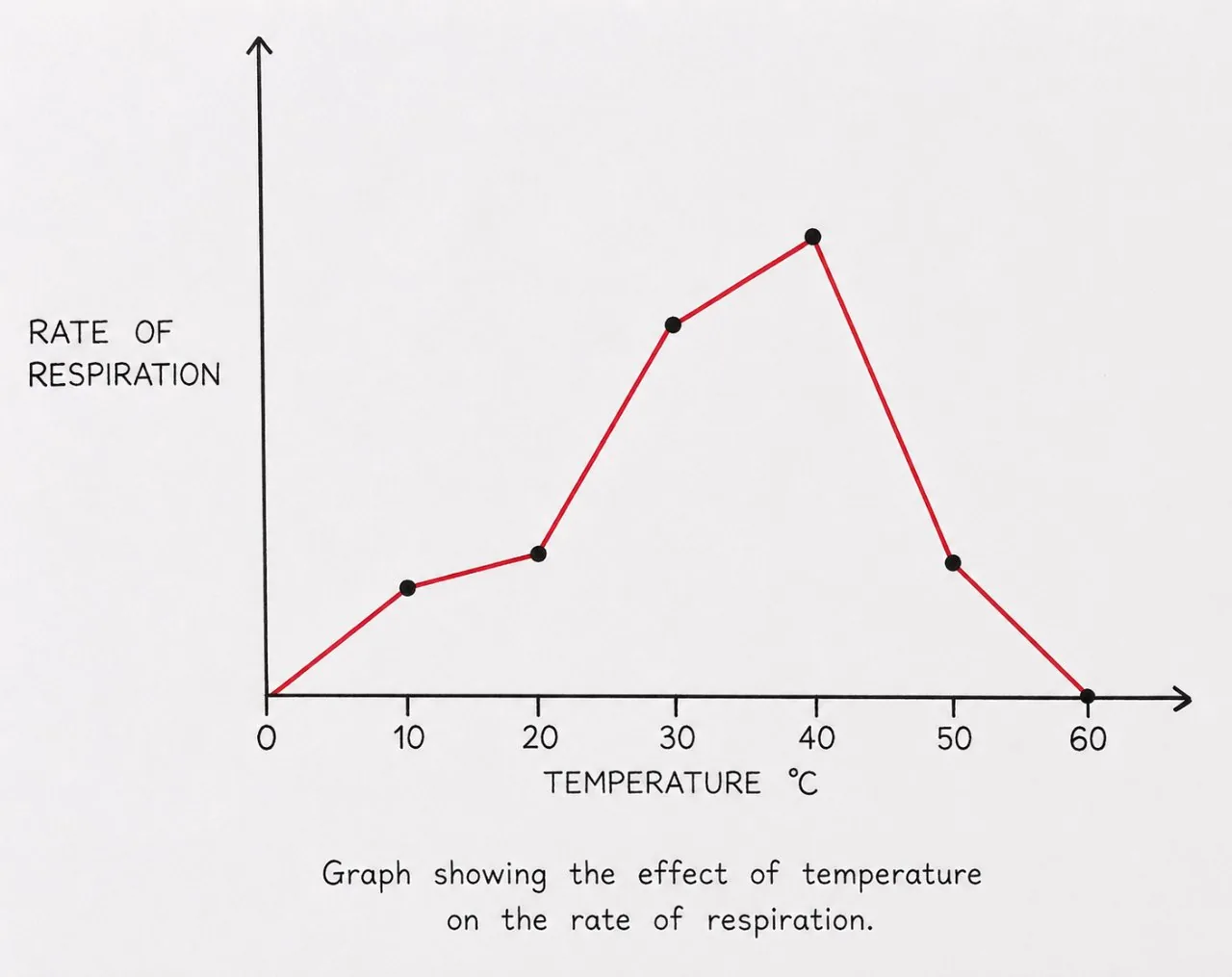
- Rising temperature Particles move faster and collide more often and with more energy, so the time falls and the rate rises.
3Optimum
- Optimum The shortest time is found at the optimum temperature, often around 40 °C for human amylase.
4Too hot
- Too hot The active site changes shape, the enzyme is denatured and the starch is not broken down.
Section 4 of 7Calculating and extending

Rate
- Rate Rate can be calculated as 1 ÷ time (in s−1), so a shorter time gives a bigger rate.
- Plot rate against temperature to show the bell-shaped curve.
Other factors
- Other factors pH: use buffer solutions of different pH and keep the temperature constant.
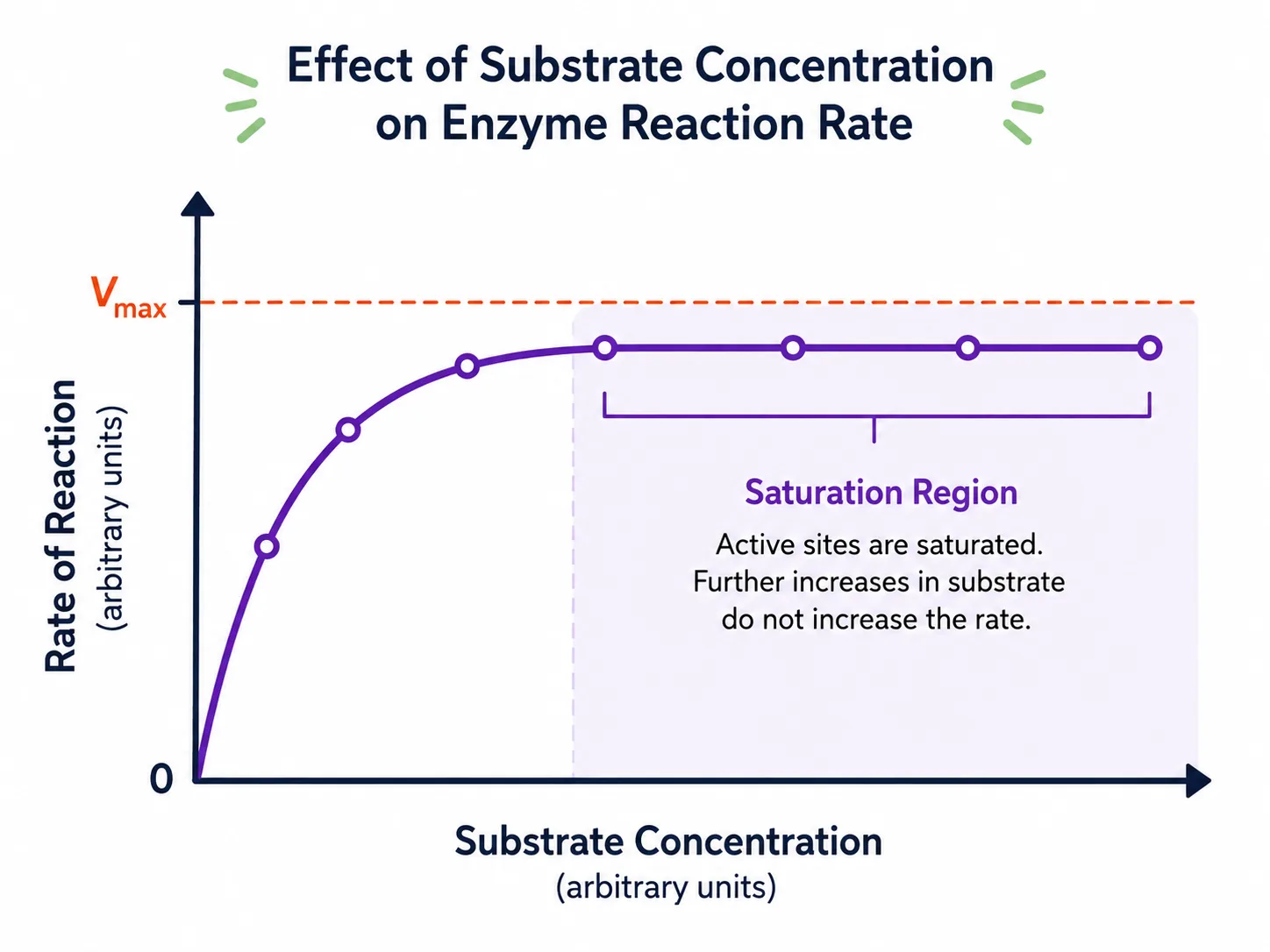
- Enzyme or substrate concentrationdilute the solution with water to give a range of concentrations and keep the other factors the same.
Section 5 of 7Key terms
| Term | Meaning |
|---|---|
| Optimum | The temperature or pH at which an enzyme works fastest. |
| Denatured | Having an active site that has permanently changed shape so the enzyme no longer works. |
| Amylase | An enzyme that digests starch into maltose. |
| Buffer solution | A solution that holds a steady pH. |
| Rate of reaction | How quickly a reaction happens, often calculated as 1 ÷ time. |
Section 6 of 7Syllabus checklist



Reaction
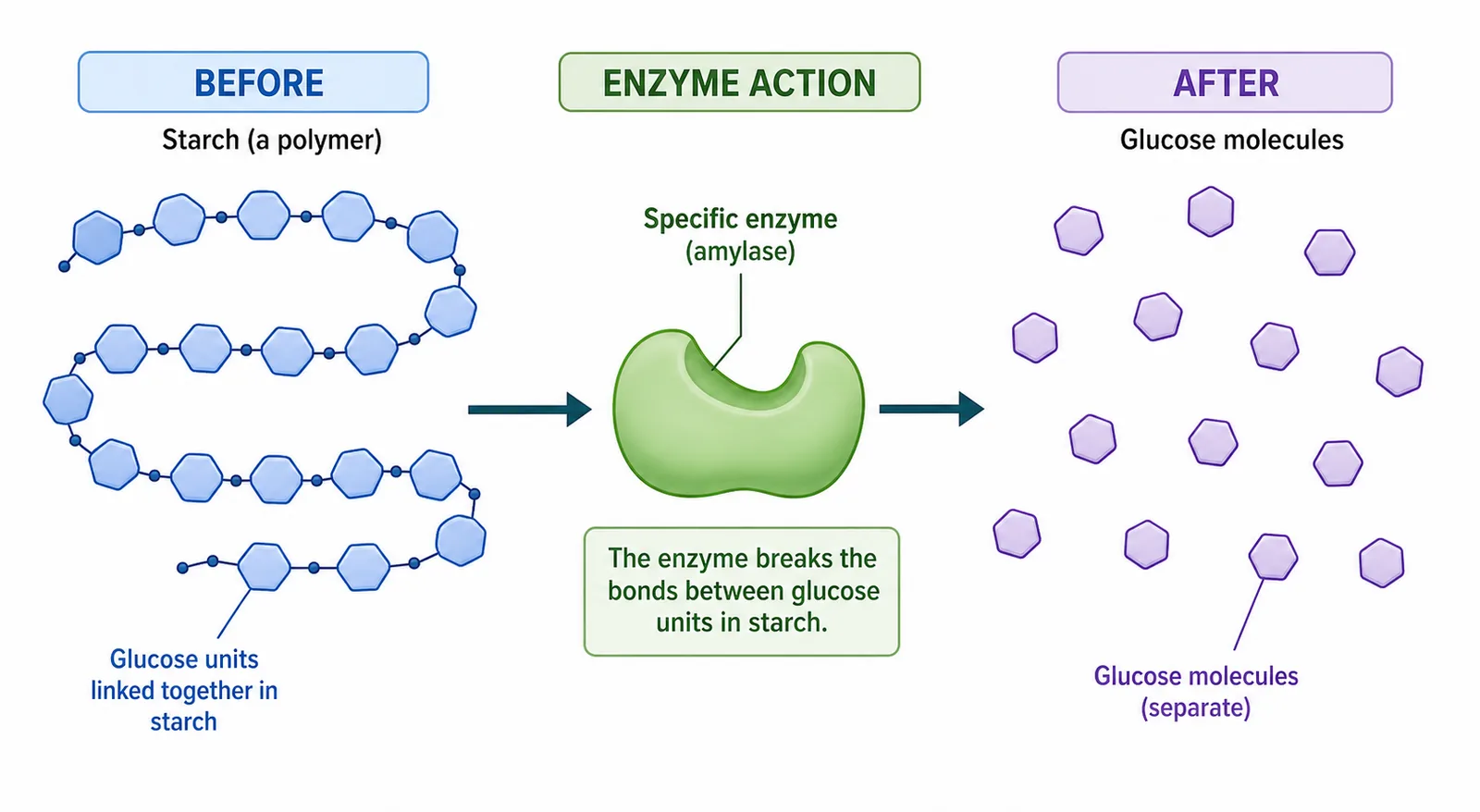
- Reaction Amylase is an enzyme that breaks down starch into the sugar maltose.
Indicator
- Indicator Iodine solution is orange-brown but turns blue-black with starch.
- When the drops stop turning blue-black, all the starch has been digested.
Apparatus
- Apparatus Starch solution, amylase solution, test tubes and rack, measuring cylinders, a water bath at different temperatures, a spotting tile with iodine, a dropping pipette and a stopwatch.
Section 7 of 7Exam technique
1
Saying the enzyme is killed at high temperature; it is denatured.
2
Forgetting to bring the enzyme and substrate to the same temperature before mixing.
3
Not using a fresh well of iodine for each drop, which contaminates the readings.
4
Concluding that rate is slow when the time is short. A short time means a fast rate.
5
Changing more than one variable at once, such as using different amounts of amylase at different temperatures.