Section 1 of 7Structures involved in ventilation

Diaphragm
- Diaphragm A sheet of muscle that separates the thorax (chest cavity) from the abdomen and is domed when relaxed.
Intercostal muscles
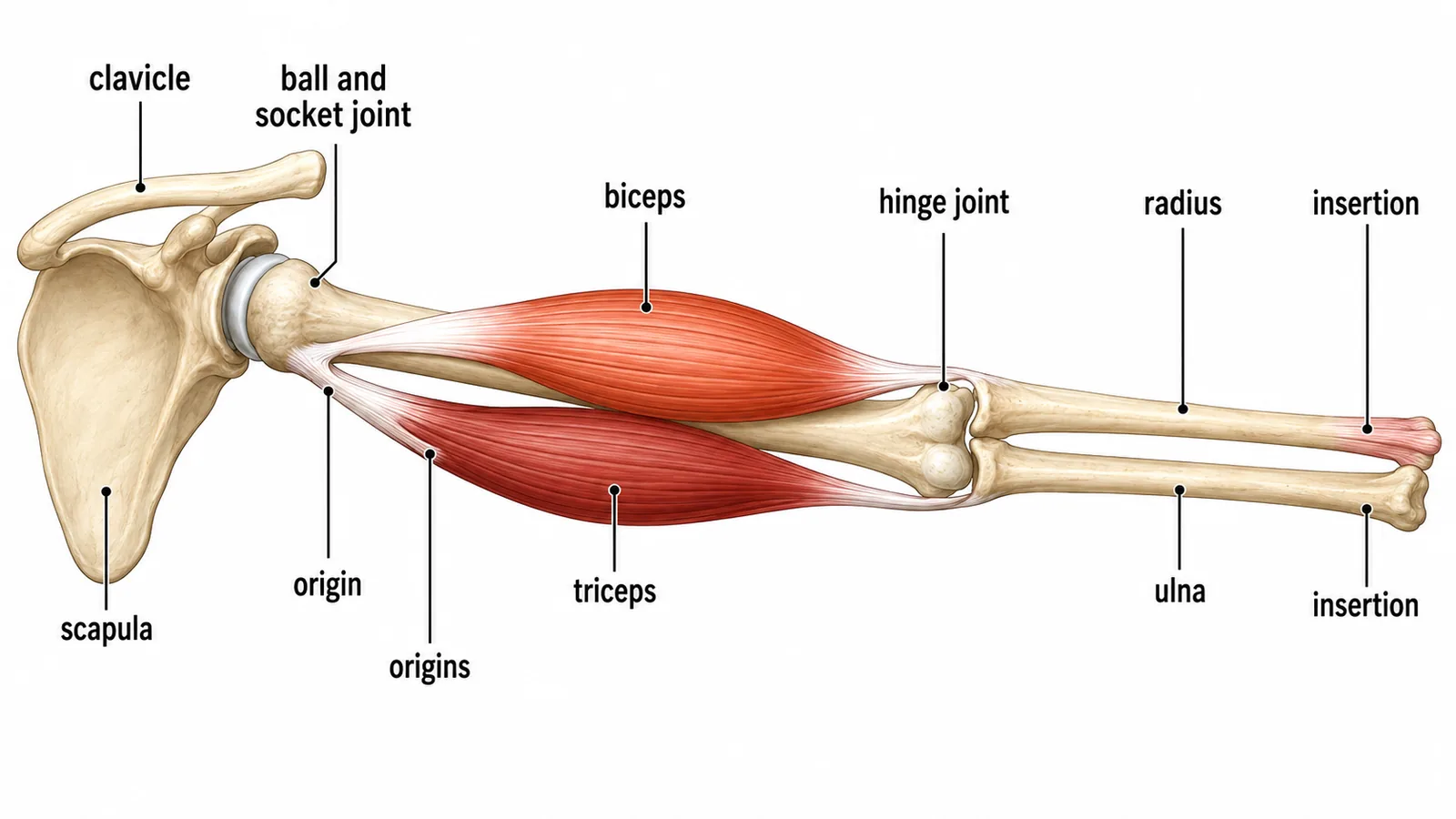
- Intercostal muscles These lie between the ribs;
- the external intercostals raise the ribs and the internal intercostals help pull them down.
Rib cage
- Rib cage The ribs protect the lungs and move up and out or down and in as the intercostal muscles act.
Pressure principle
- Pressure principle Air always moves from a region of higher pressure to one of lower pressure, so changing the chest volume makes air flow.
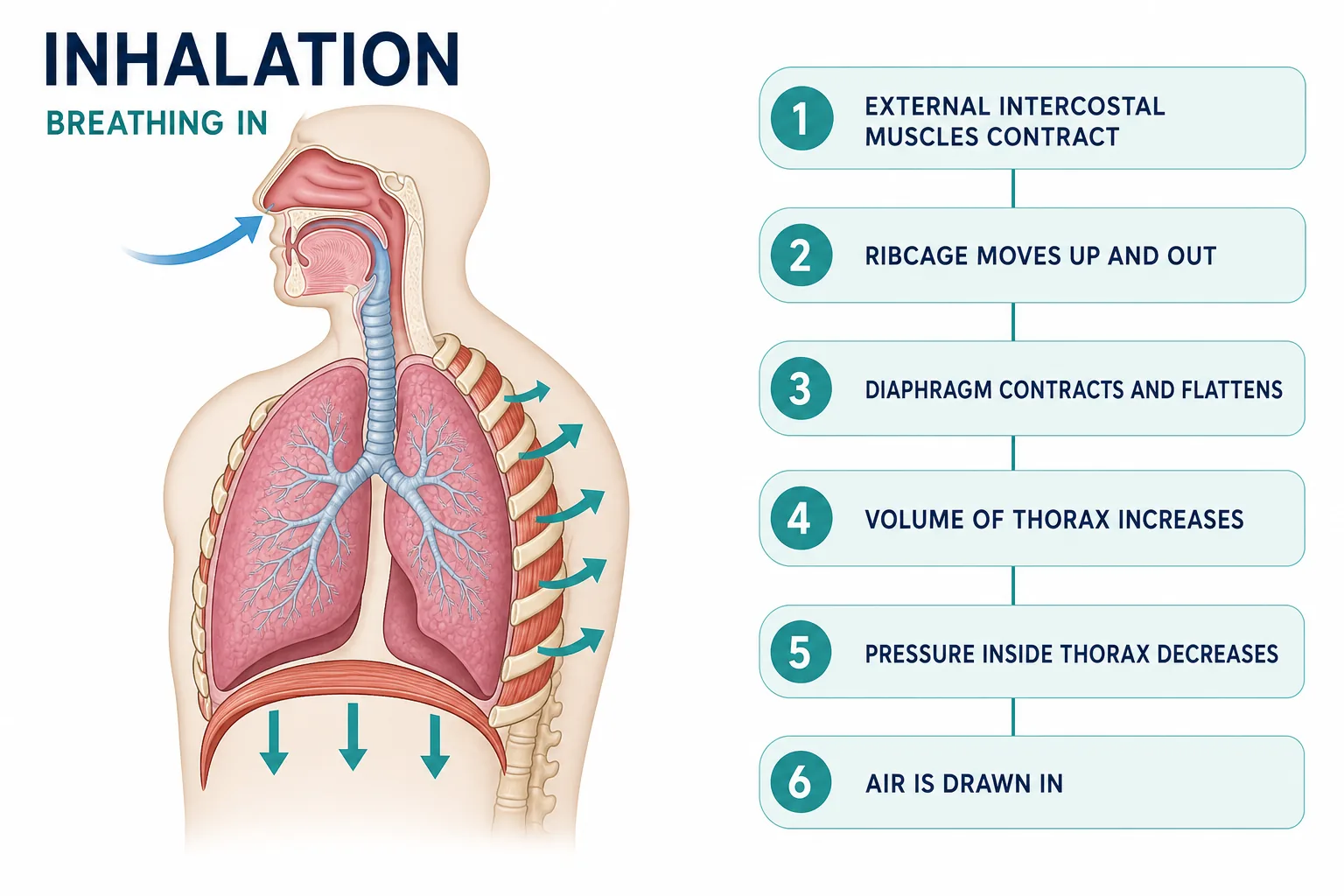
Section 2 of 7Inspiration (breathing in)
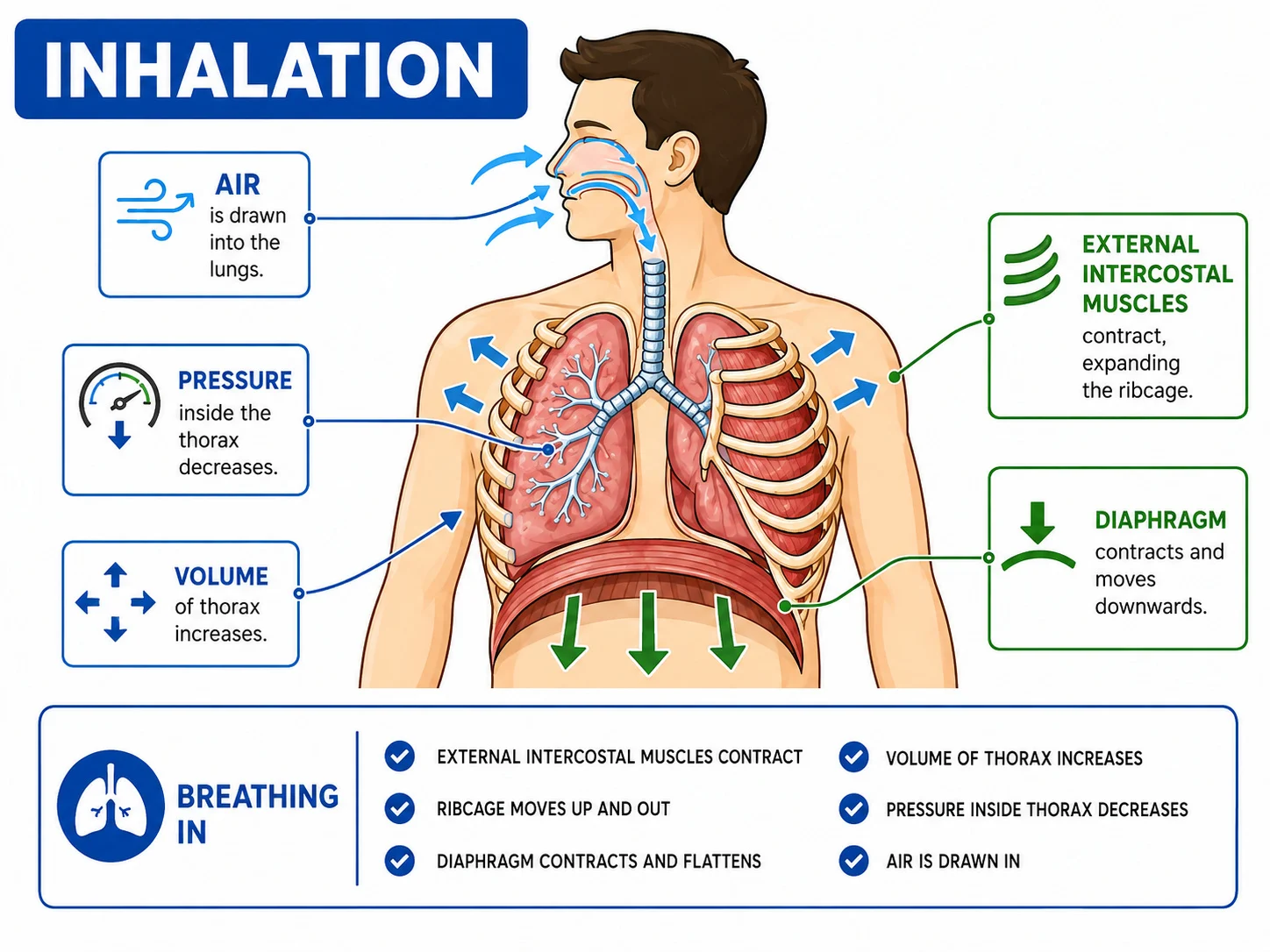
1Muscles contract
- Muscles contract The diaphragm contracts and flattens, and the external intercostal muscles contract to pull the ribs up and out.
2Volume increases
- Volume increases The thorax gets bigger, so the volume inside the chest cavity rises.
3Pressure falls
- Pressure falls The pressure inside the lungs drops below atmospheric pressure.
4Air enters
- Air enters Air is pushed into the lungs by the higher outside pressure.
Section 3 of 7Expiration (breathing out)


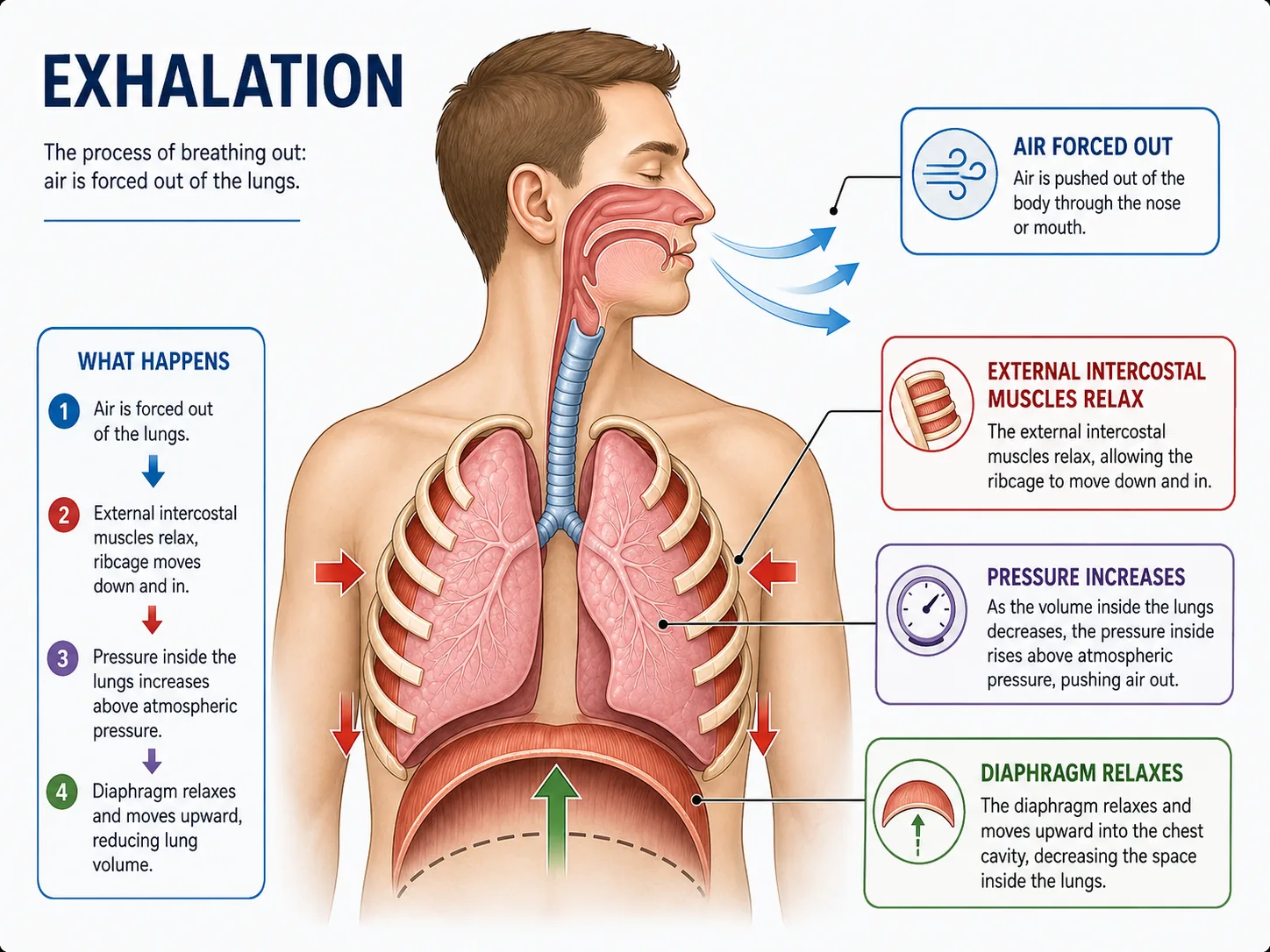
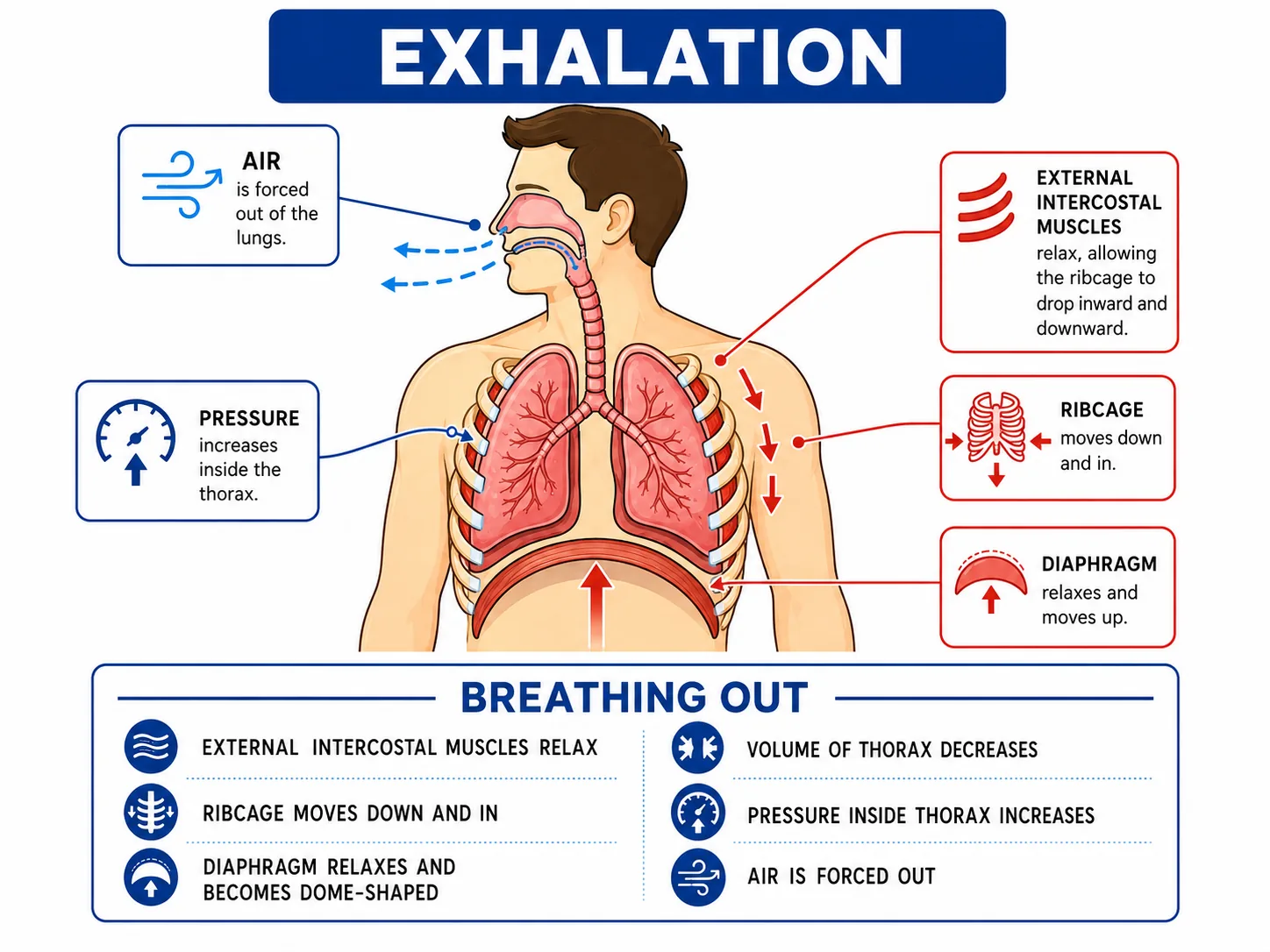
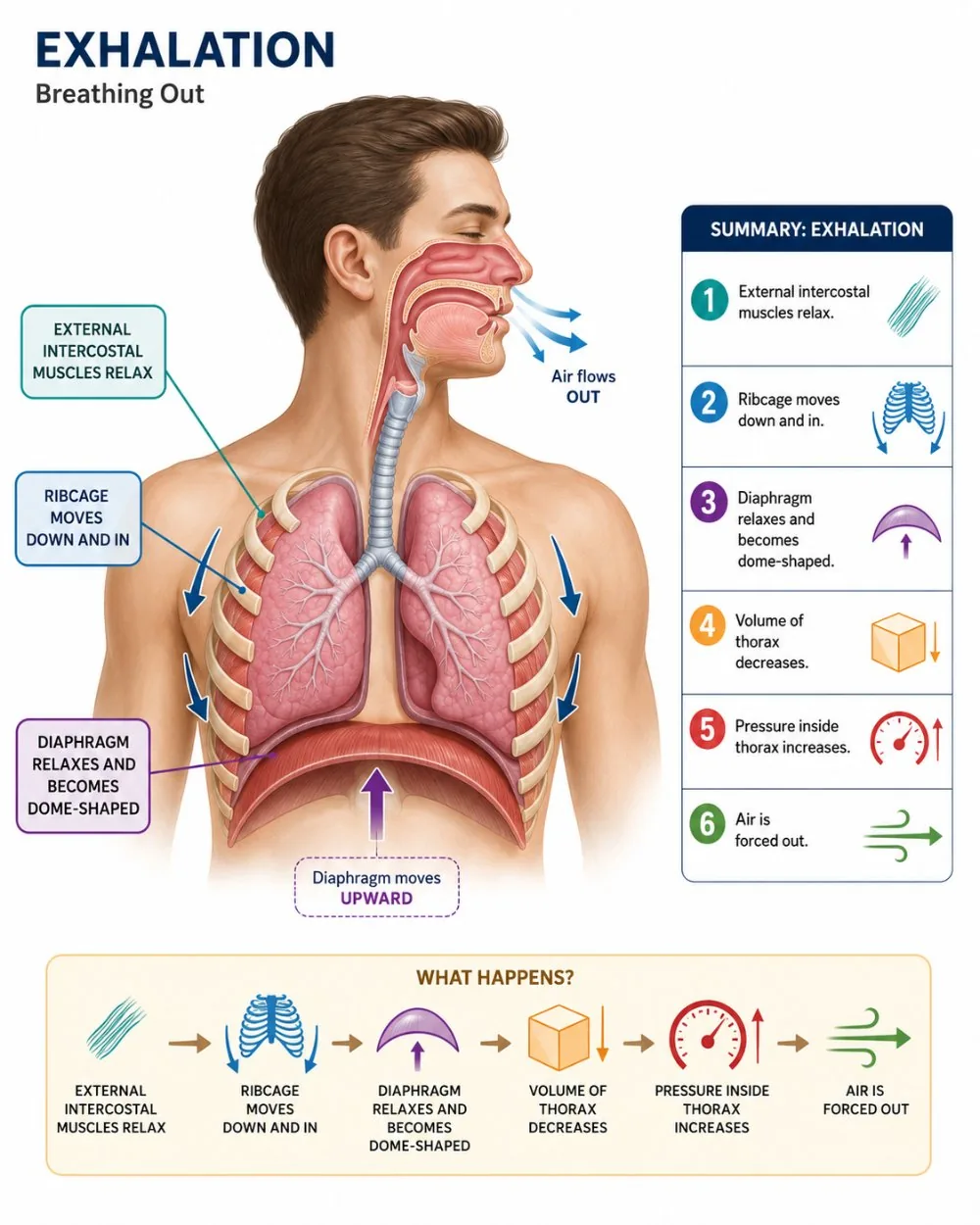
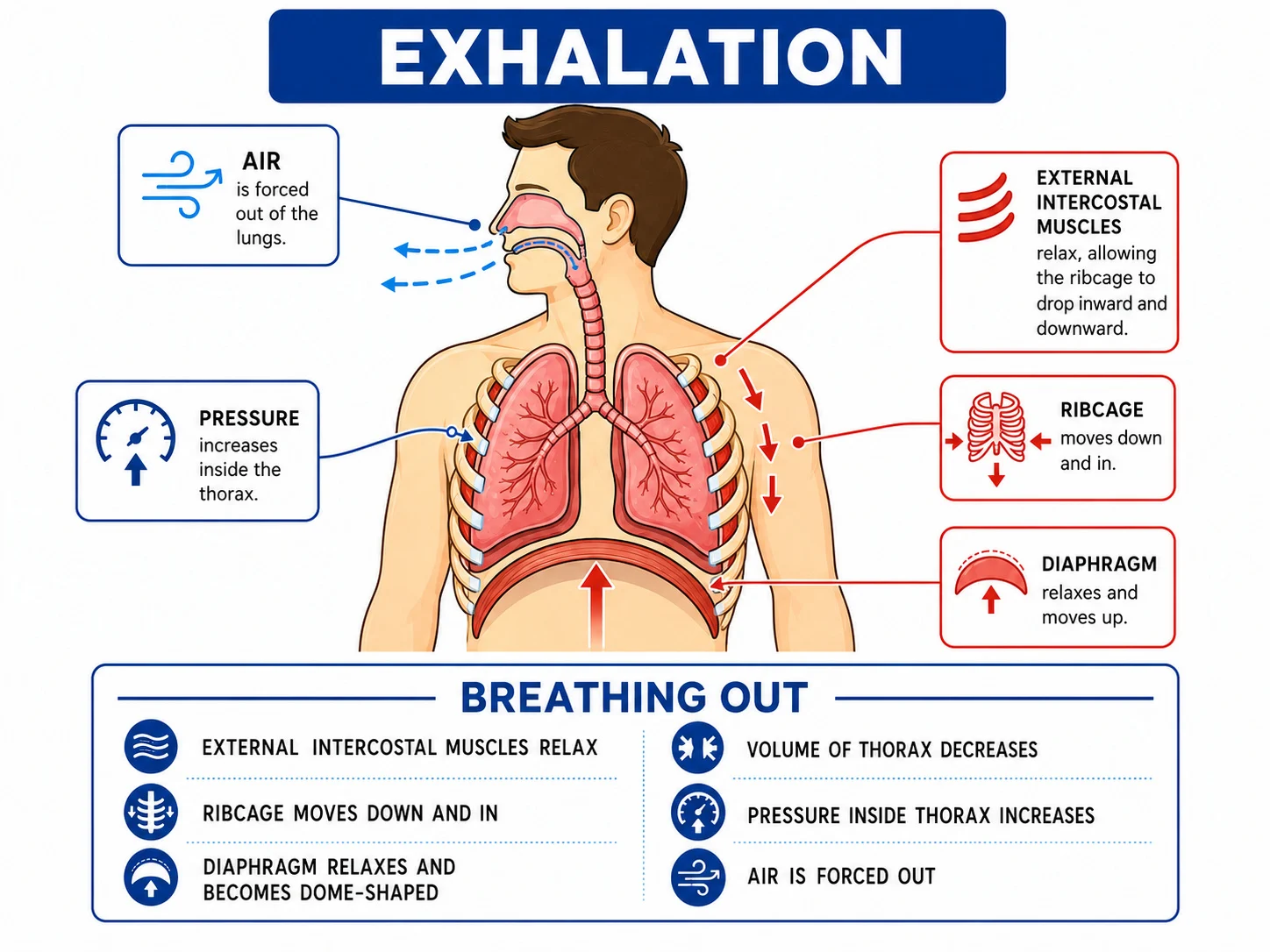
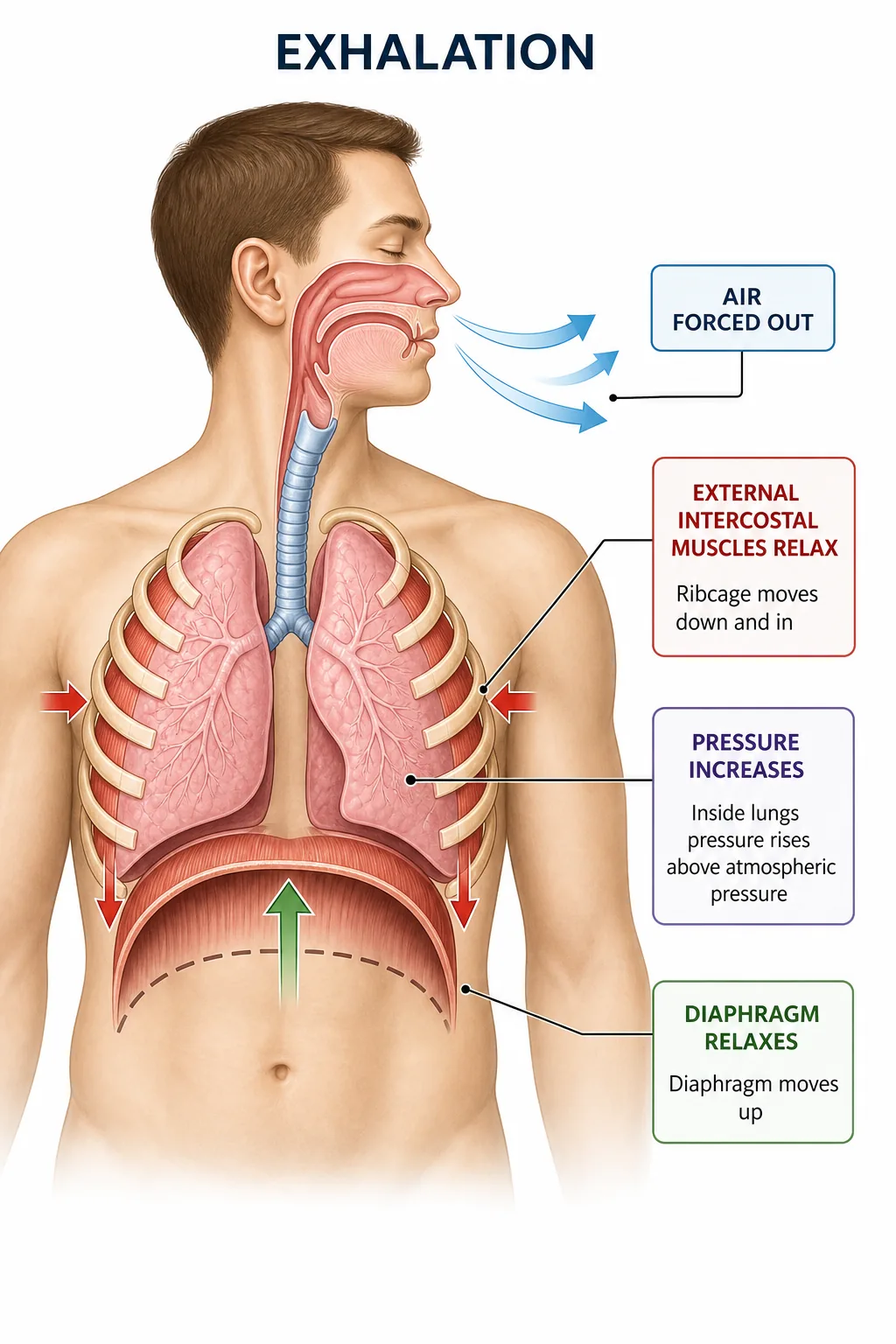
1Muscles relax
- Muscles relax The diaphragm relaxes and rises back into a dome, and the intercostal muscles relax so the ribs move down and in.
2Volume decreases
- Volume decreases The thorax becomes smaller, reducing the volume of the chest cavity.
3Pressure rises
- Pressure rises Pressure inside the lungs is now higher than outside.
4Air leaves
- Air leaves Air is forced out of the lungs until the pressures are equal.
Section 4 of 7Why pressure changes when volume changes




Fixed amount of air
- Fixed amount of air When the chest gets bigger, the same number of air particles in the lungs is spread through a larger space,
- so they collide with the lung walls less often and the pressure drops.
- When the chest gets smaller, the particles are squeezed together and collide more often, so the pressure rises.
Role of the airway
- Role of the airway The trachea and bronchi are open to the atmosphere,
- so air flows along them until the pressure inside the lungs matches the pressure outside.
- This is why breathing is a continuous cycle of pressure differences, not a single event.
Exam approach
- Exam approach Describe the muscles first, then the effect on the ribs, then volume, then pressure, and finally the direction of air movement.
- Learn inspiration thoroughly, because expiration is almost exactly the reverse.
Section 5 of 7Comparing the two phases




| Feature | Inspiration | Expiration |
|---|---|---|
| Diaphragm | Contracts and flattens | Relaxes and domes upwards |
| Intercostal muscles | External contract | External relax |
| Ribs | Move up and out | Move down and in |
| Chest volume | Increases | Decreases |
| Pressure in lungs | Decreases | Increases |
| Air movement | Into lungs | Out of lungs |
Section 6 of 7Key terms
| Term | Meaning |
|---|---|
| Ventilation | The movement of air into and out of the lungs. |
| Inspiration | Breathing in; also called inhalation. |
| Expiration | Breathing out; also called exhalation. |
| Thorax | The chest cavity containing the lungs and heart. |
| Intercostal muscles | Muscles between the ribs that move the rib cage. |
Section 7 of 7Exam technique
1
Saying that the lungs suck in air by themselves — the lungs have no muscle; the diaphragm and ribs change the volume.
2
Writing that the diaphragm relaxes and flattens during breathing in; it contracts and flattens.
3
Mixing up volume and pressurewhen volume increases, pressure decreases.
4
Forgetting that normal expiration is largely passive, as the muscles relax rather than contract.