1.3.8Cells, Organ Systems and Ecosystems
The Products of Digestion
5 min read 6 parts Lesson 27 of 45 1 quiz
Section 1 of 6From absorbed molecule to body molecule


Assimilation
- Assimilation Once digested food has been absorbed into the blood, the cells of the body take it up and use it to build or fuel their own structures.
- This incorporation of absorbed substances into the body is called assimilation.
Glucose
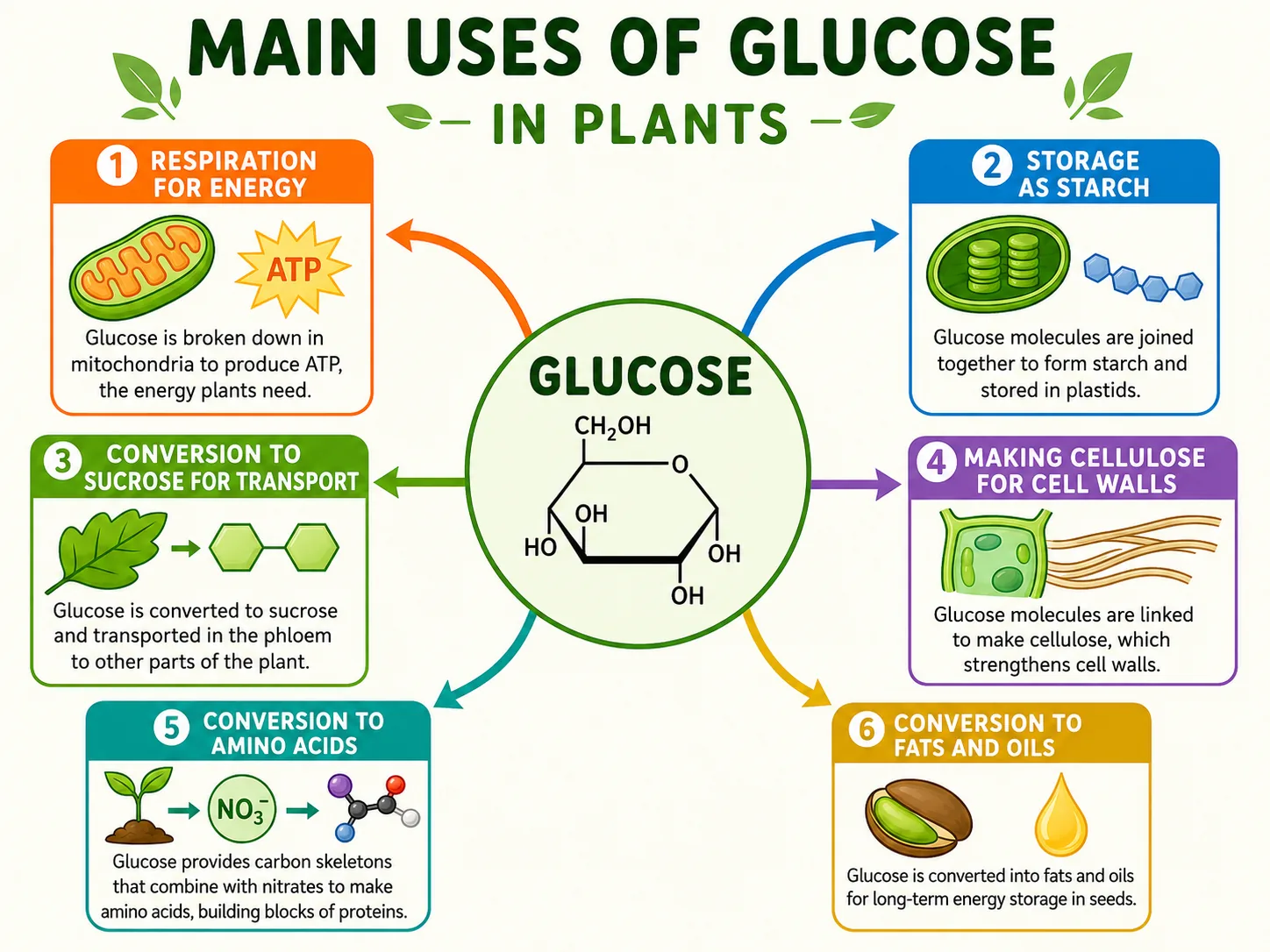
- Glucose Glucose is used in respiration to release energy.
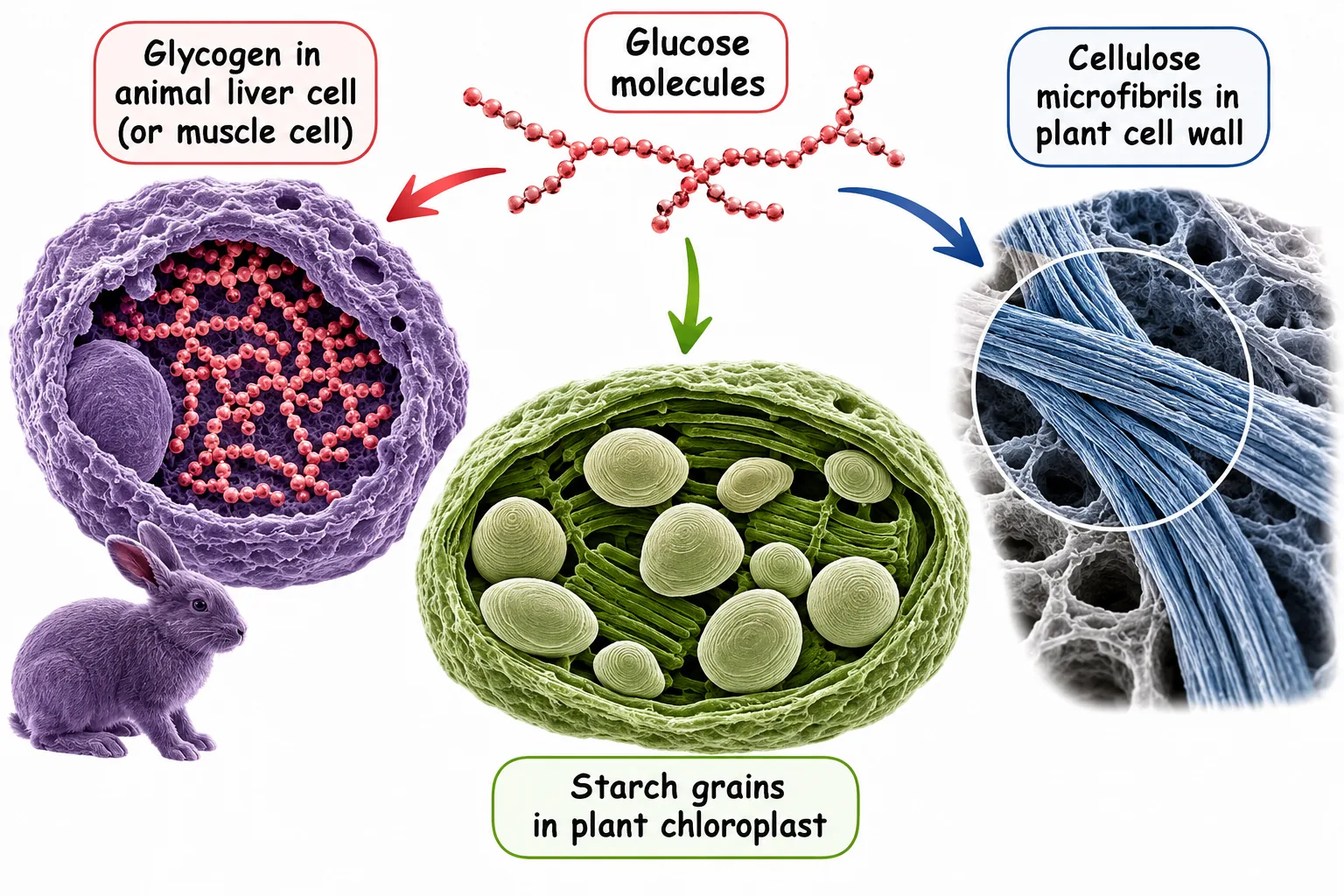
- Extra glucose can be joined into the large carbohydrate glycogen, which is stored in the liver and muscles.
Amino acids
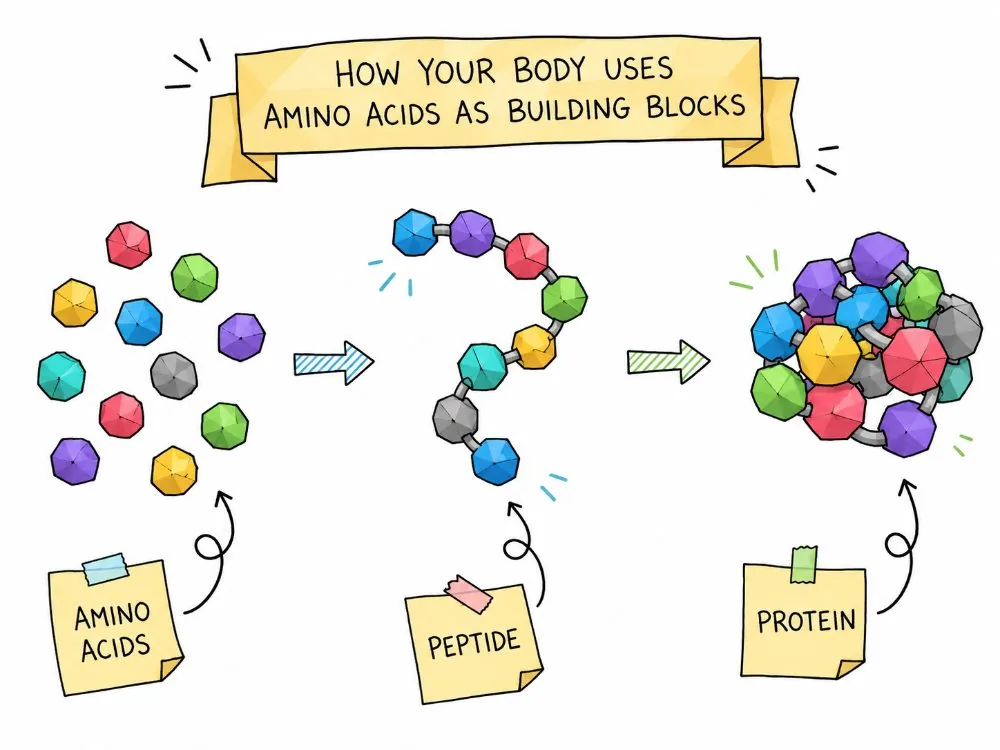
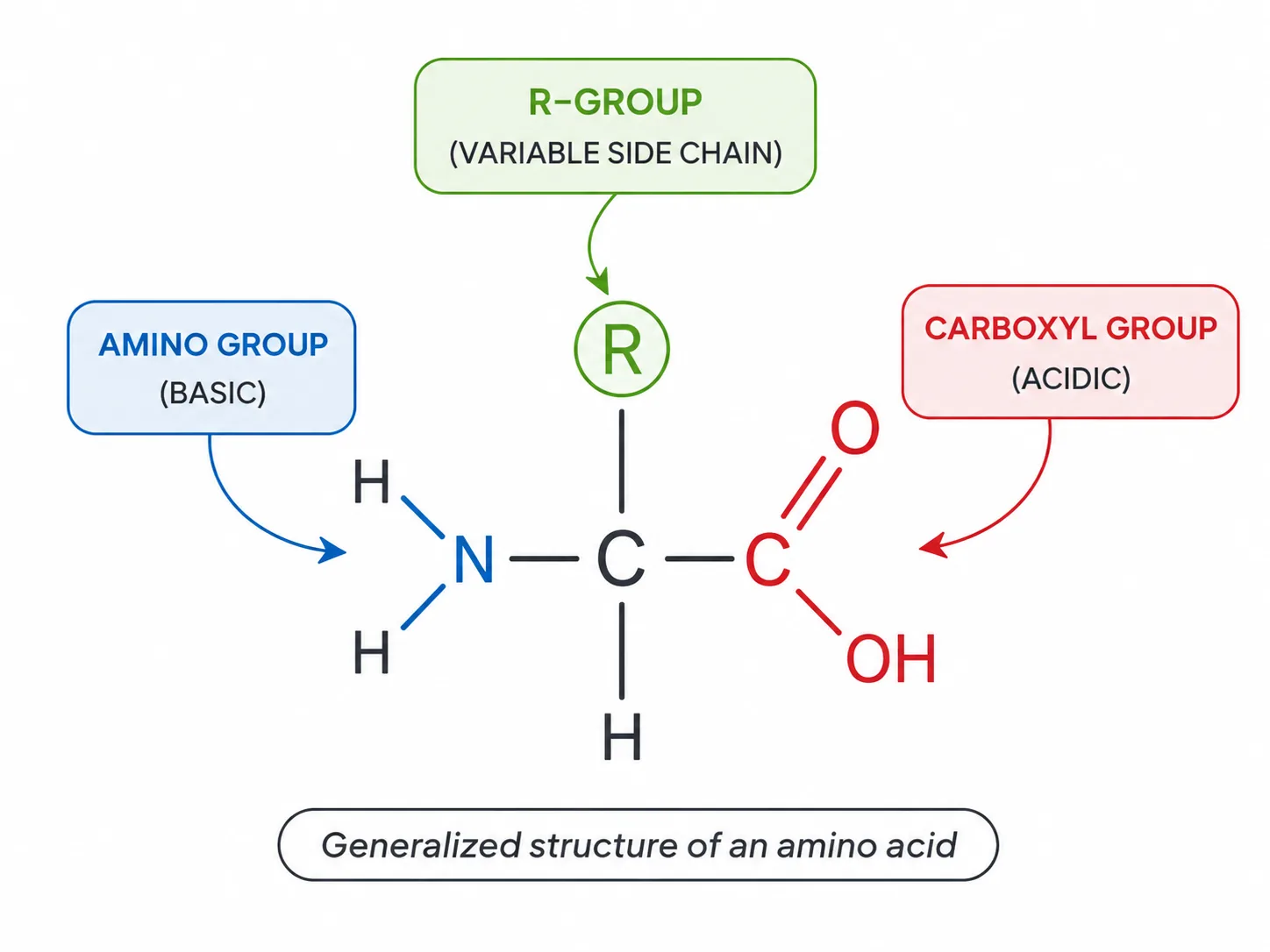
- Amino acids Amino acids are joined in a chosen order to make new proteins, such as keratin in skin and hair, enzymes and the proteins of muscle.
Fatty acids and glycerol
- Fatty acids and glycerol These are rebuilt into fats (lipids) for storage and insulation, and they are also used to make cell membranes.
Section 2 of 6Functions and sources of the main food groups


| Food group | Main functions | Good sources |
|---|---|---|
| Carbohydrate | The main source of energy; glucose is a reactant in respiration | Bread, cereals, pasta, rice, potatoes |
| Protein | Growth and repair of tissues; making enzymes, hormones and structural proteins | Meat, fish, eggs, pulses, nuts |
| Fat (lipid) | Energy storage, insulation under the skin and protection of organs; a very concentrated energy store | Butter, oils, nuts, oily fish |
Section 3 of 6How digestion products are used
1Food is digested
- Food is digested Enzymes break large insoluble molecules into small soluble ones.
2Products are absorbed
- Products are absorbed Small molecules cross the villi into the blood or lymph.
3Blood delivers them
- Blood delivers them The circulatory system carries them to every cell in the body.
4Cells assimilate them
- Cells assimilate them Cells use them for energy, to grow, to repair damage or to store.
Section 4 of 6Linking function to structure

Using the products of digestion
Energy
- Energy Carbohydrates release energy most readily because glucose is respired quickly.
Growth and repair
- Growth and repair Proteins are needed in larger amounts by growing children, since every new cell needs new protein.
Storage
- Storage Fats hold more energy per gram than carbohydrates, but their energy is harder to release, so they are a long-term store.
Section 5 of 6Key terms
| Term | Meaning |
|---|---|
| Assimilation | The use of absorbed food molecules by cells to build new substances or release energy. |
| Glycogen | A large carbohydrate made from many glucose units, used for short-term storage in the liver and muscles. |
| Amino acid | A small molecule that is the building block of protein. |
| Keratin | A structural protein found in skin, hair and nails. |
| Lipid | The scientific name for fats and oils. |
| Insulation | A layer that reduces heat loss from the body; fat under the skin acts as insulation. |
Section 6 of 6Exam technique
1
Saying that digestion products are 'used up' — they are reassembled into the body's own carbohydrates, proteins and fats.
2
Writing that protein is the main source of energy — carbohydrates are the main energy source; protein is for growth and repair.
3
Mixing up glucose and glycogenglucose is the small soluble sugar, glycogen is the large storage carbohydrate.
4
Saying fats release energy faster than carbohydrates — fat stores more energy per gram but releases it more slowly.
5
Forgetting that the products reach the cells via the blood, so absorption must come before assimilation.