Skip to content
Dabour HubLEARN · PRACTICE · EXPLORESign inStudent

1.5.1Cells, Organ Systems and Ecosystems

Photosynthesis

5 min read 9 parts Lesson 35 of 45 1 quiz

0%read

Section 1 of 9What photosynthesis is
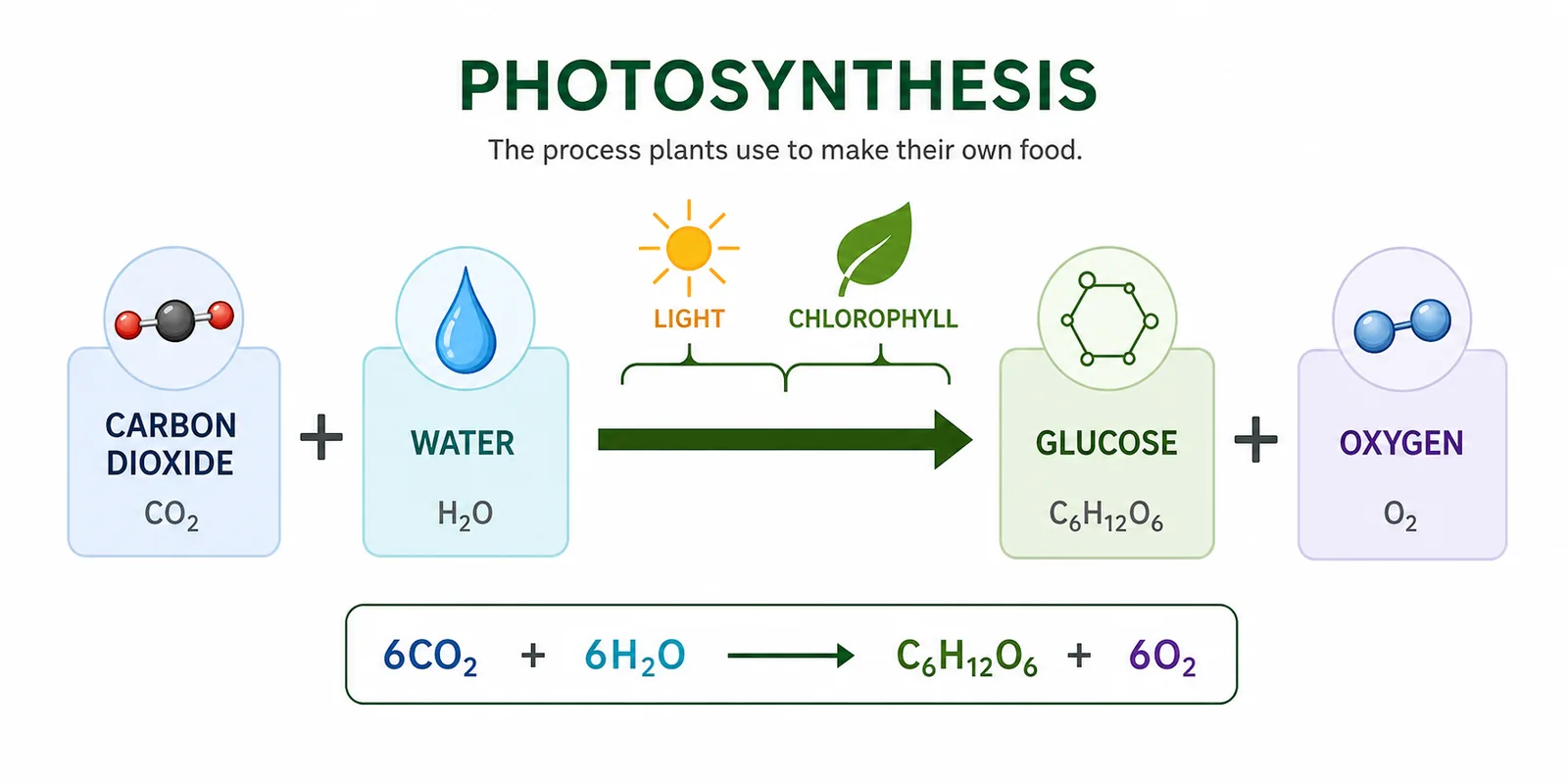
Photosynthesis word/symbol equation
Photosynthesis equation (icons)
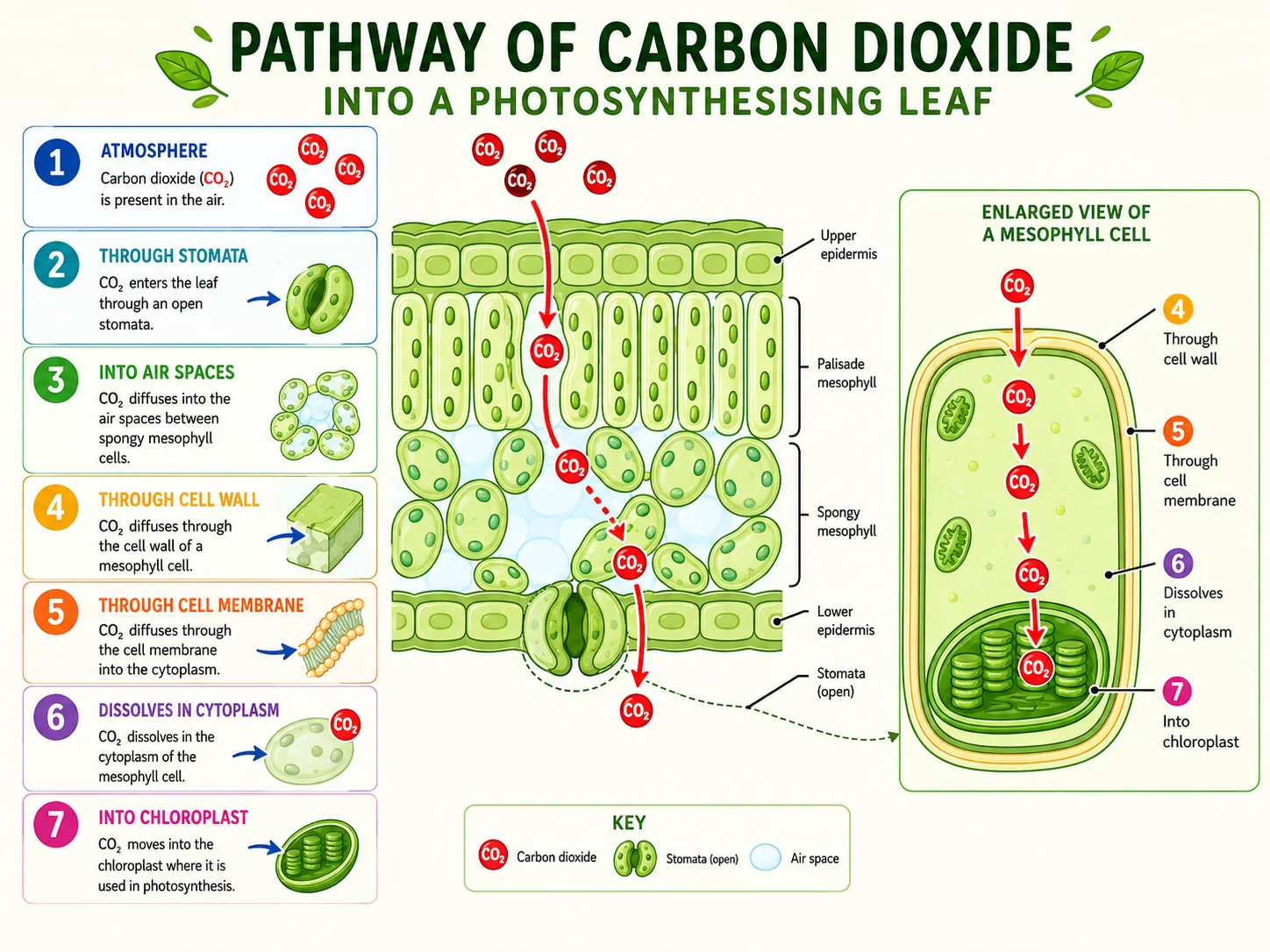
Pathway of carbon dioxide into a photosynthesising leaf
How carbon dioxide enters a leaf for photosynthesis
photosynthesis equation strawberry
Photosynthesis summary: carbon dioxide, water, light to glucose and oxygen
Leaf cross-section: carbon dioxide enters, oxygen exits
Photosynthesis
Photosynthesis
Photosynthesis — Full 2D Simulation

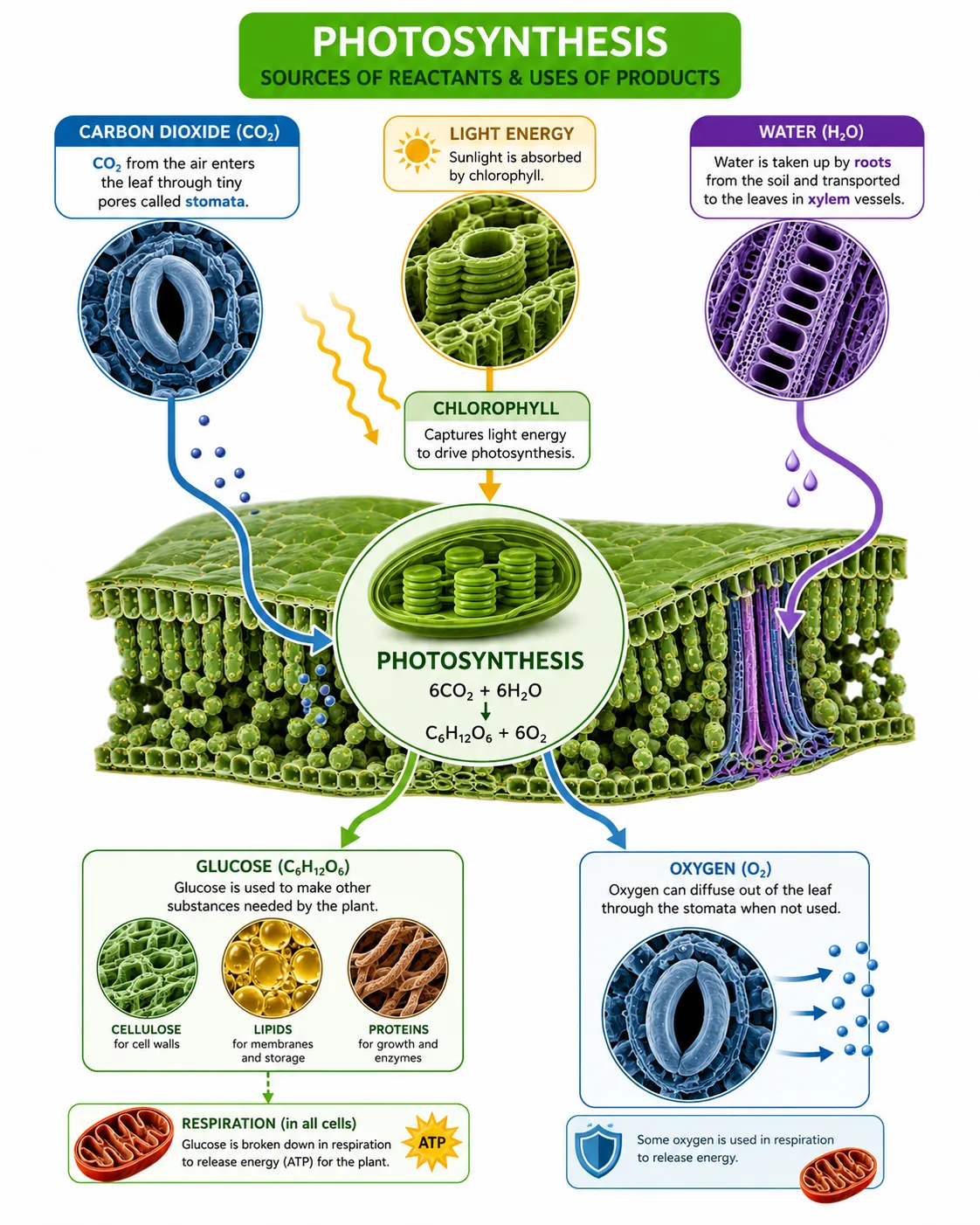
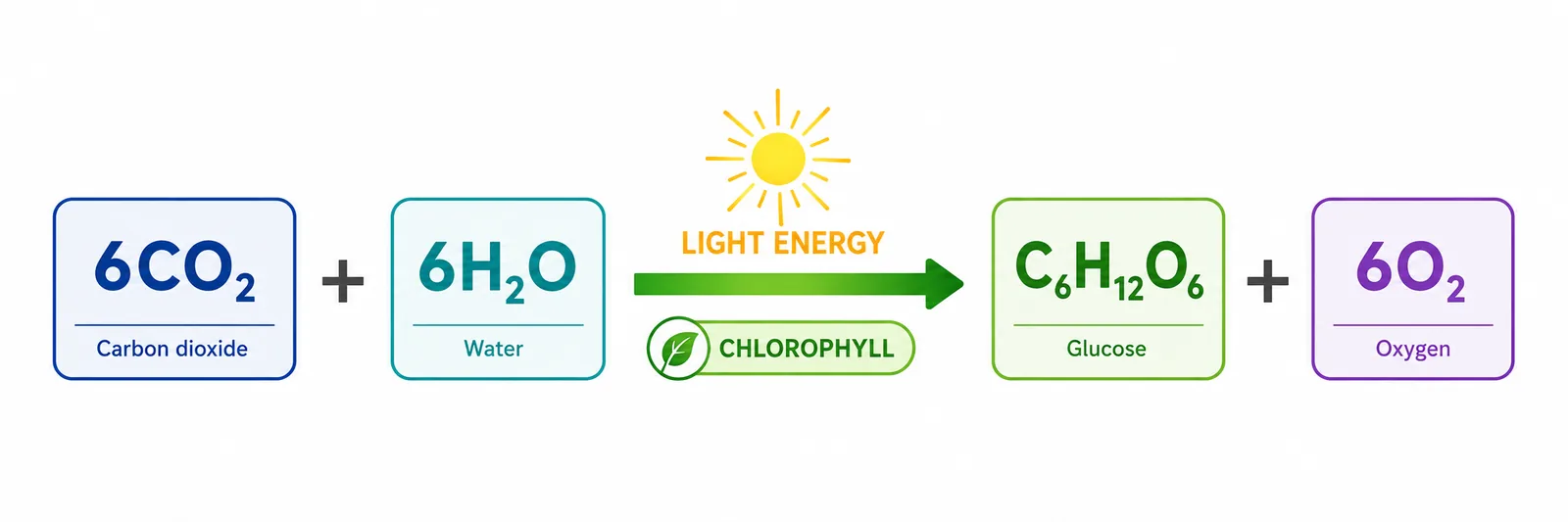
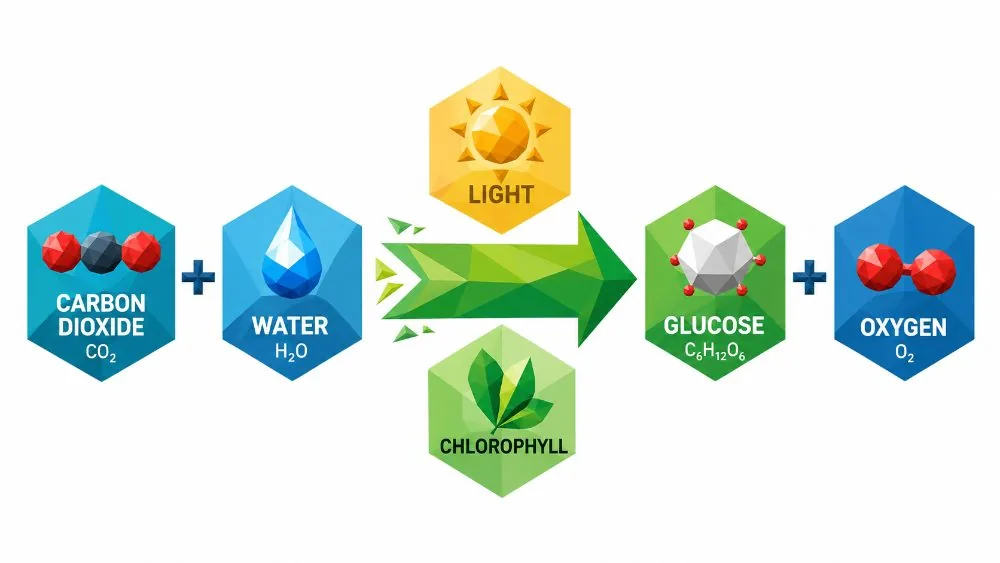
Photosynthesis is the process by which green plants, algae and some bacteria make glucose from carbon dioxide and water using light energy.

Endothermic
It is an endothermic reaction, because energy is transferred from the surroundings (light) to the chemicals, and it stores that energy in glucose.
Photosynthesis is the starting point of nearly every food chain: producers make organic molecules, and all other organisms depend on them directly or indirectly.
It also releases the oxygen in our atmosphere, which is used in aerobic respiration.

Word equationcarbon dioxide + water, in the presence of light and chlorophyll, gives glucose + oxygen.

Symbol equation6CO2 + 6H2O gives C6H12O6 + 6O2.

Section 2 of 9Where it happens: chloroplasts

Leaf structure and function
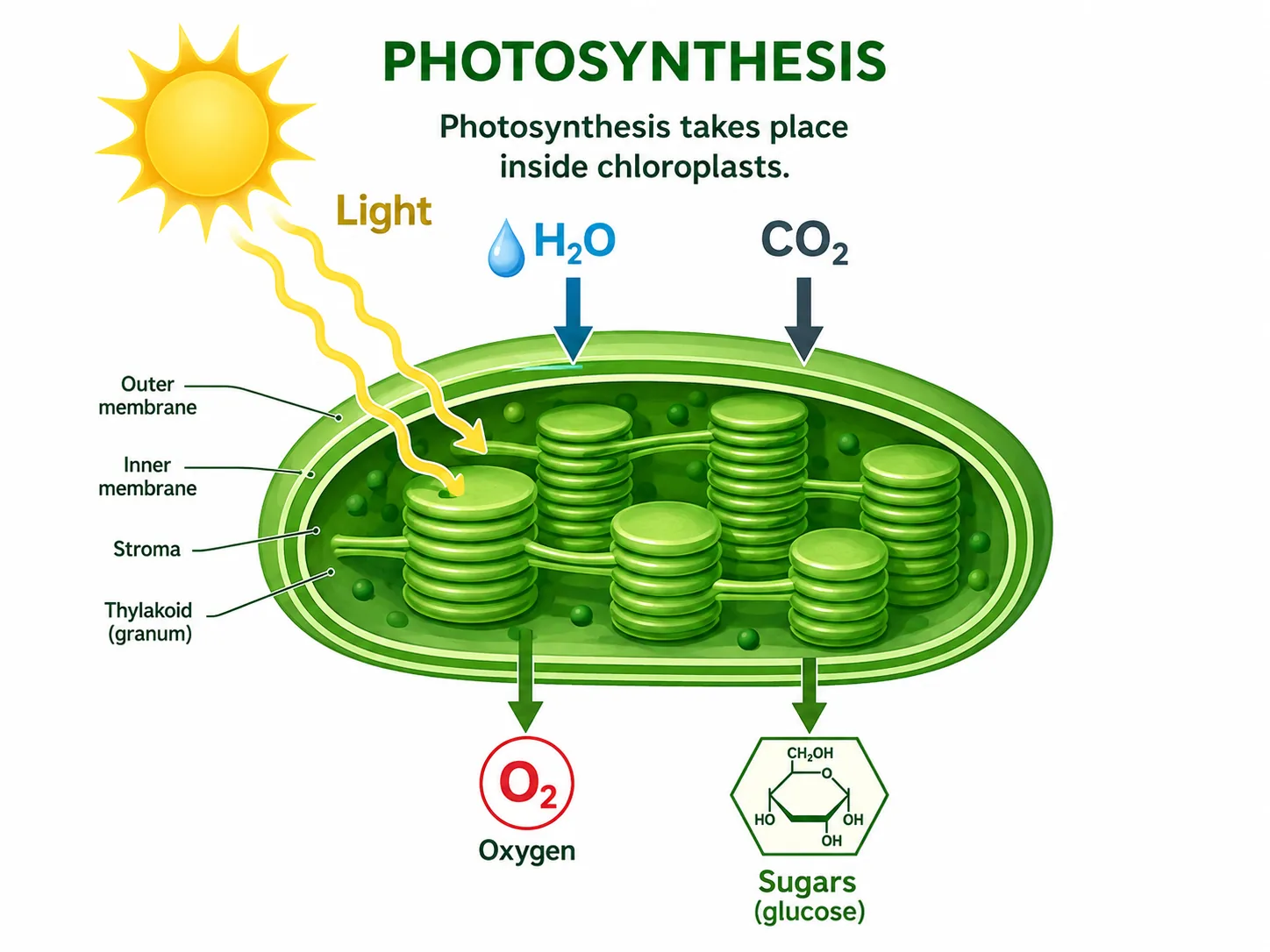
photosynthesis chloroplast
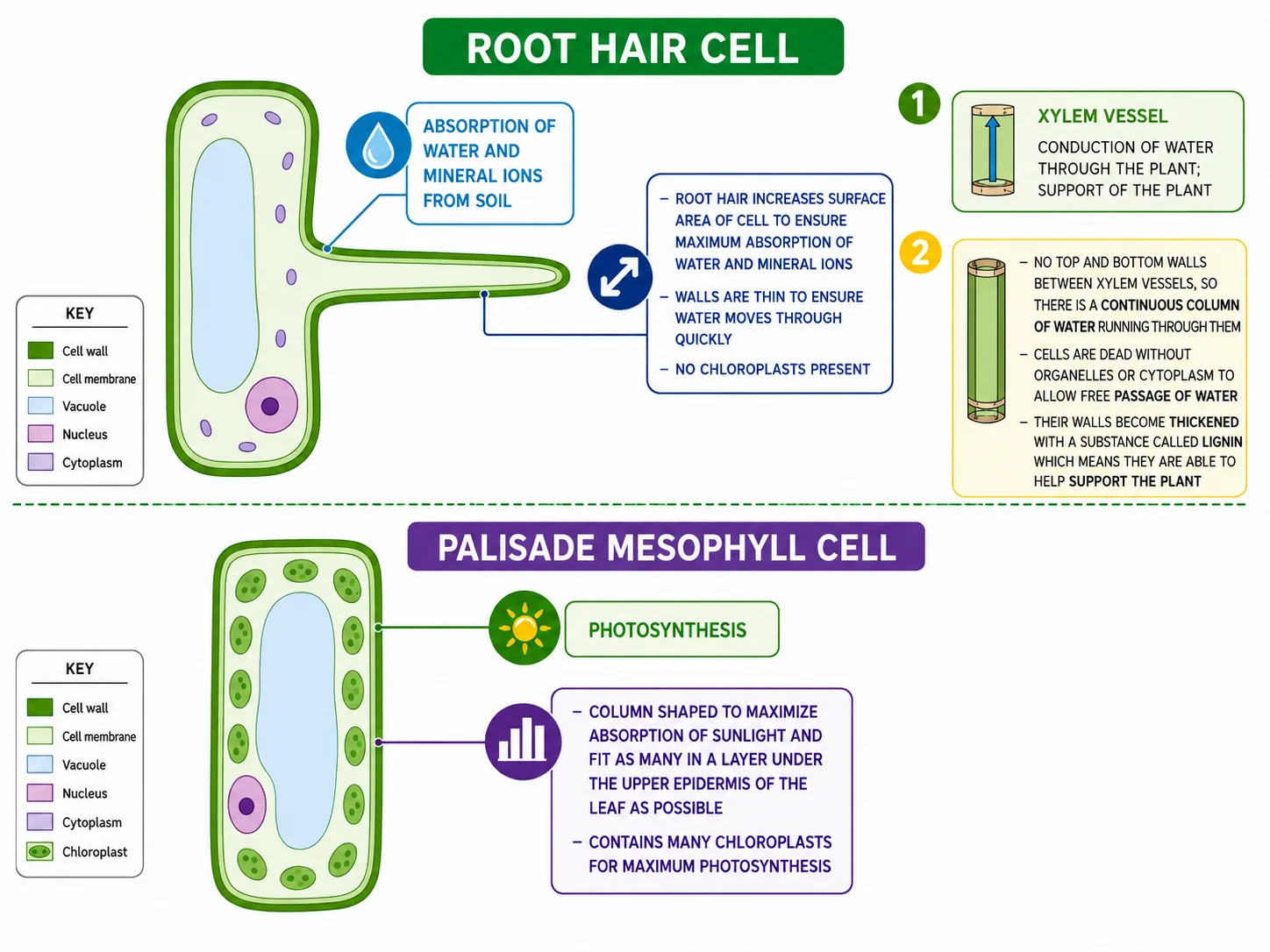
Root hair cell & palisade mesophyll cell

Photosynthesis takes place in chloroplasts, which are found mainly in palisade mesophyll cells in the leaf, and in the cells of the spongy mesophyll and guard cells.

Chlorophyll
Chloroplasts contain the green pigment chlorophyll, which absorbs light energy, mainly in the red and blue parts of the spectrum, and reflects green light, which is why leaves look green.
The light energy absorbed by chlorophyll is used to join carbon dioxide and water to form glucose.
Root cells have no chloroplasts and cannot photosynthesise, as they are underground.

Section 3 of 9Raw materials and where they come from

SubstanceSource
Carbon dioxideDiffuses from the air through open stomata into the leaf
WaterAbsorbed from the soil by roots and carried to the leaves in xylem
Light energyThe Sun, absorbed by chlorophyll

The oxygen produced diffuses out of the leaf through the stomata, and some is used by the plant for respiration. The glucose is made in the chloroplasts and then used or stored.

Section 4 of 9Uses of glucose

The Starch Test – Interactive 2D Simulation
Uses of Glucose in Plants
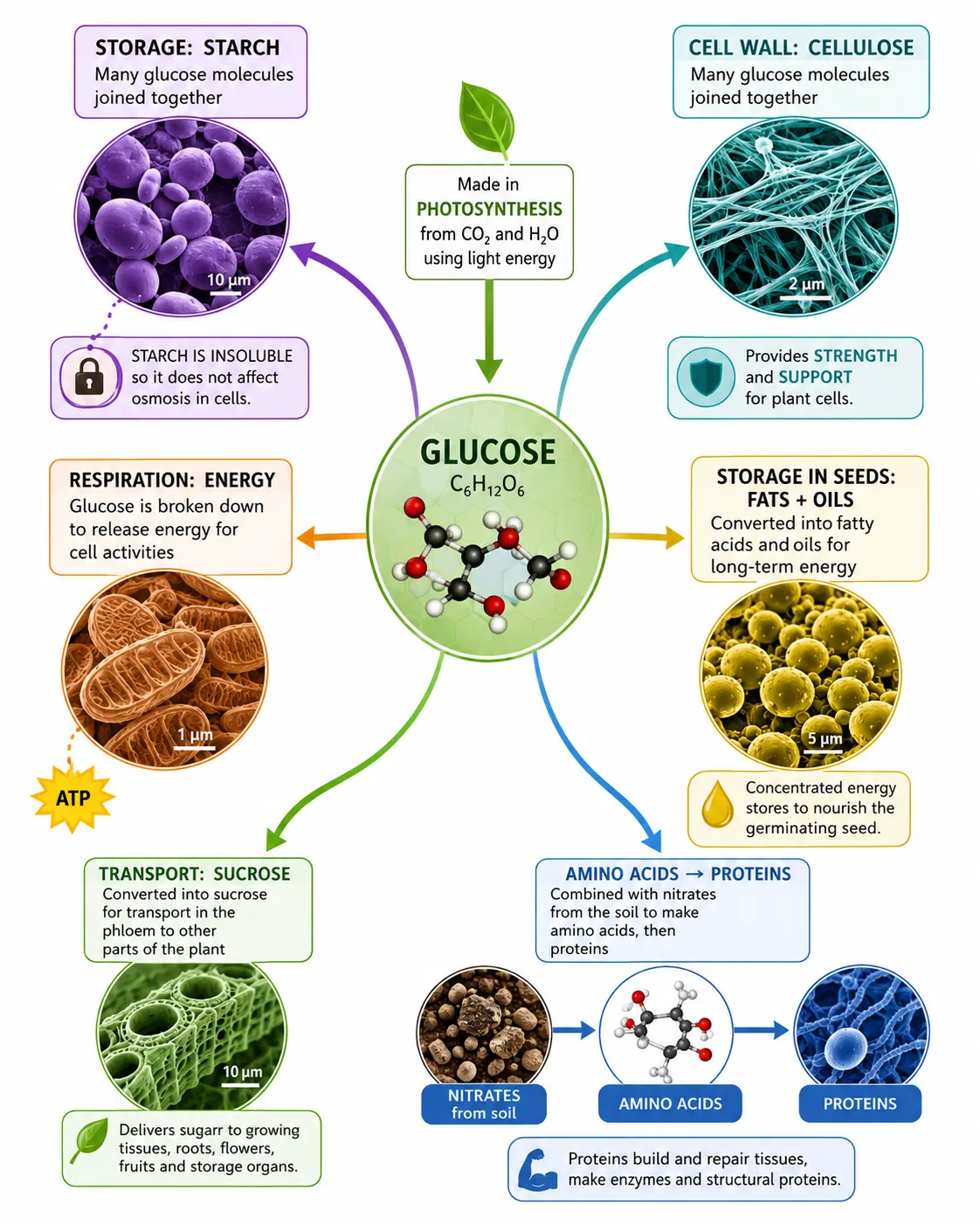
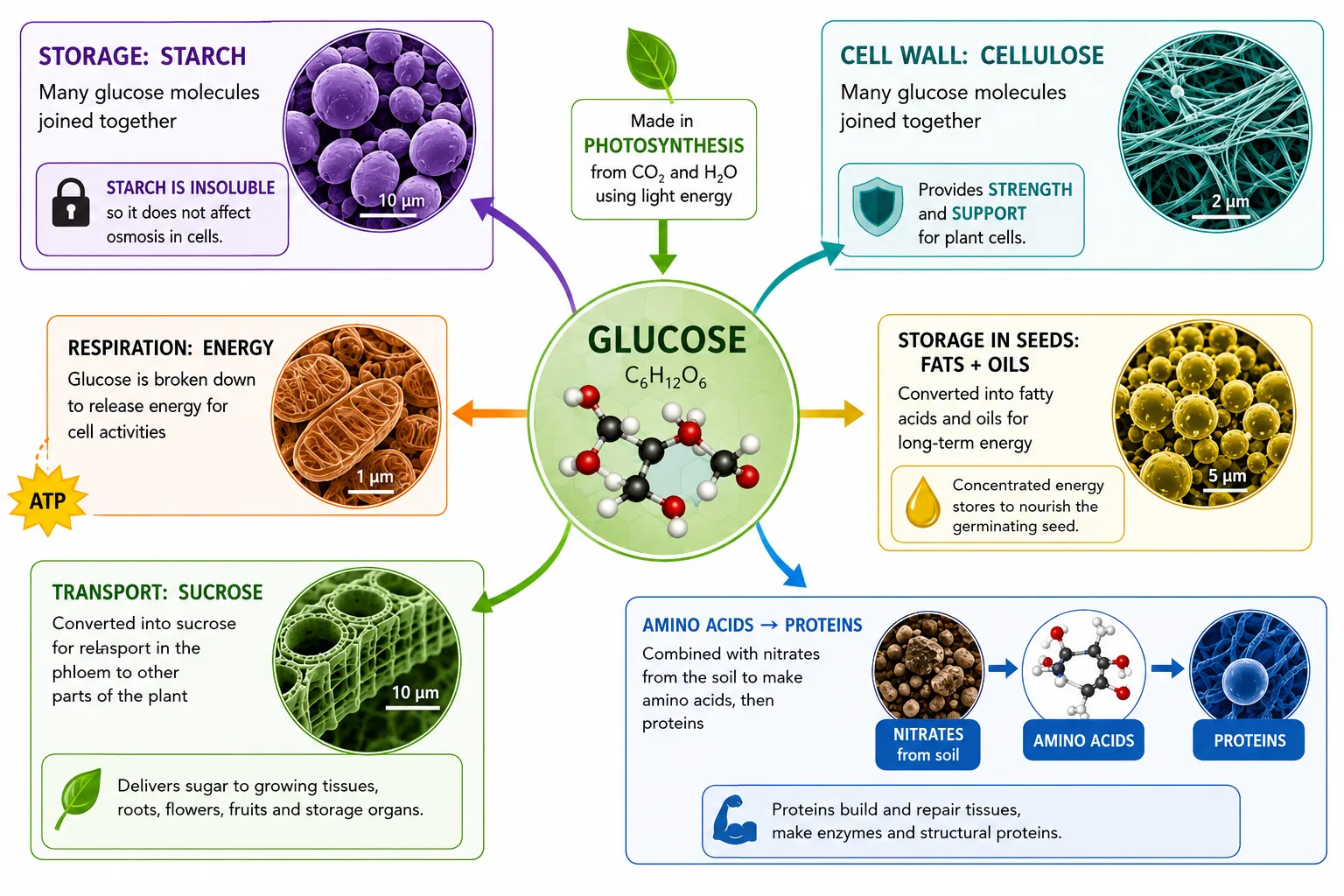
Uses of glucose made by photosynthesis in plants
Uses of glucose in plants
Uses of glucose in plants: starch, cellulose, respiration, sucrose
Main Uses of Glucose in Plants — 2D Simulation
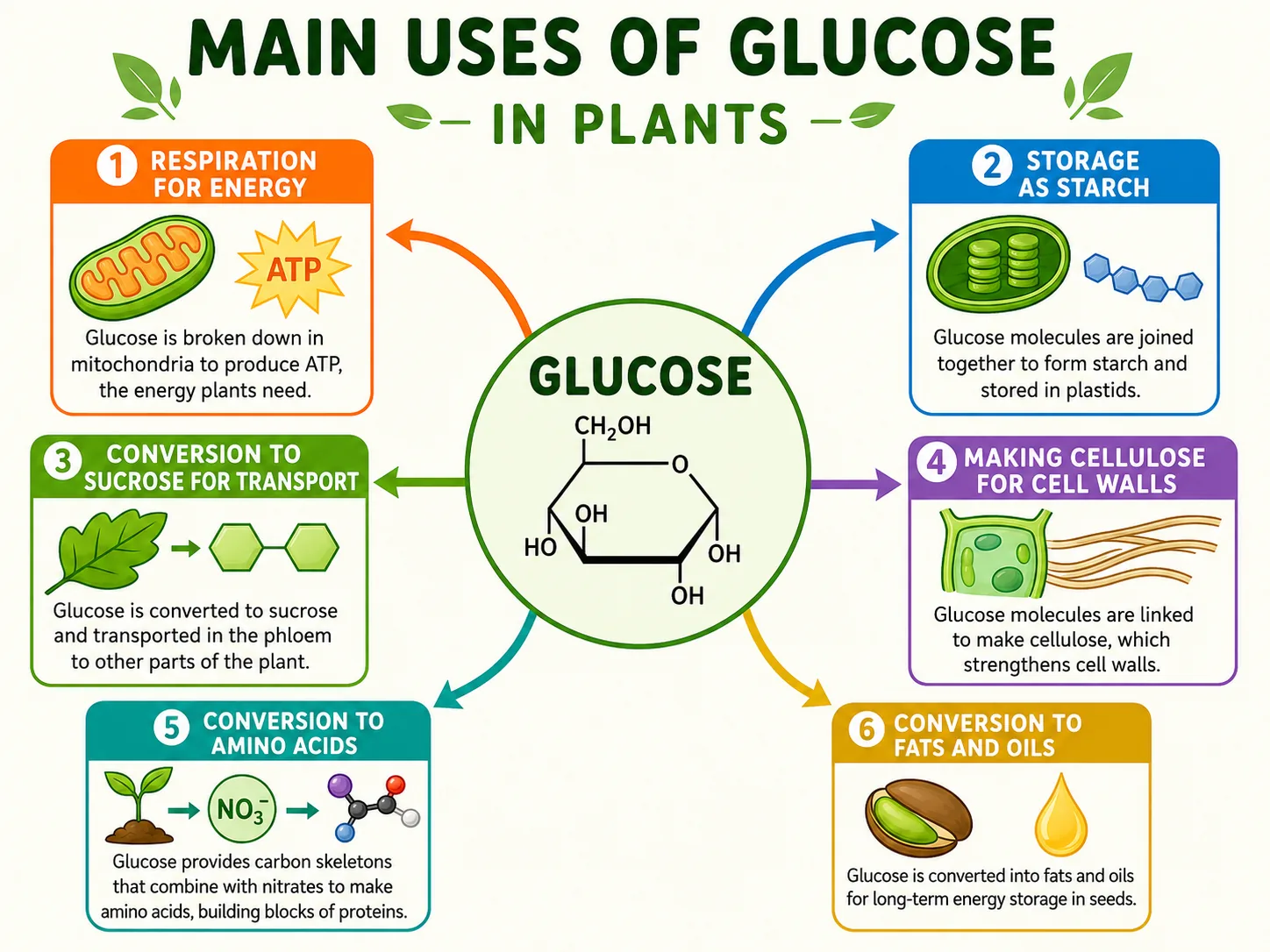
Main uses of glucose in plants
Respiration
Respiration glucose is broken down to release energy for active transport, growth and other processes.
Making cellulose
Making cellulose for cell walls, by joining glucose molecules.
Making starch
Making starch for storage in leaves, roots, seeds and stems, which is insoluble so it does not affect the water balance of cells. Starch can be converted back into glucose when needed.
Making fats and oils
Making fats and oils for storage, particularly in seeds, as they store more energy per gram.
Making proteins
Making proteins by combining glucose with nitrate ions absorbed from the soil, to make amino acids. This is why plants need nitrate for growth.
Making sucrose
Making sucrose for transport in the phloem to growing regions and storage organs.

Section 5 of 9Testing a leaf for starch
Five steps of testing a variegated leaf for starch
The starch test for a leaf
Starch test steps for a leaf (boiling, ethanol, iodine)
Testing a leaf for starch
Iodine Test — Starch Simulation
Starch test steps (water, ethanol, wash, iodine)

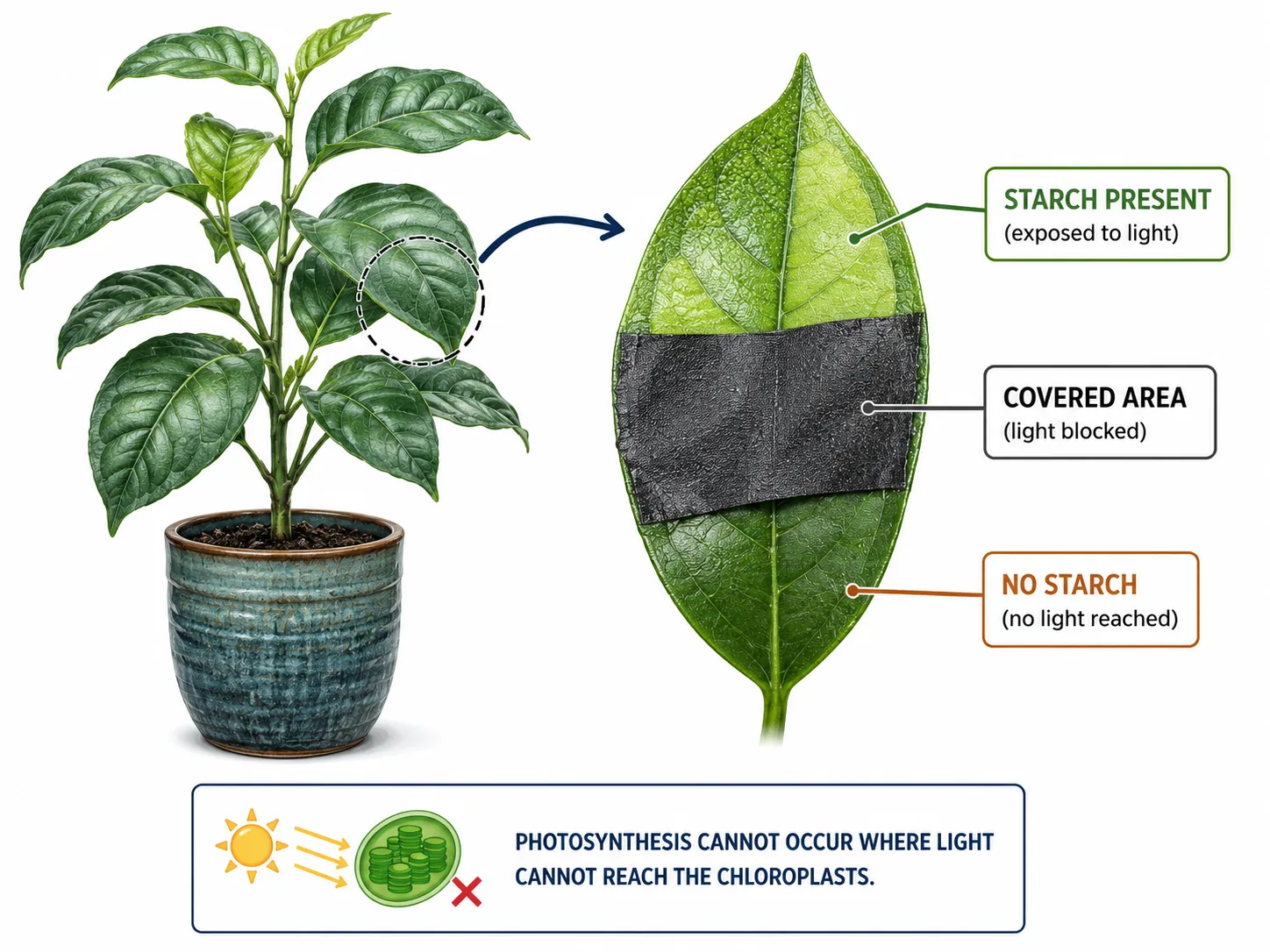
Starch indicates that photosynthesis has taken place.

Testing a leaf for starch
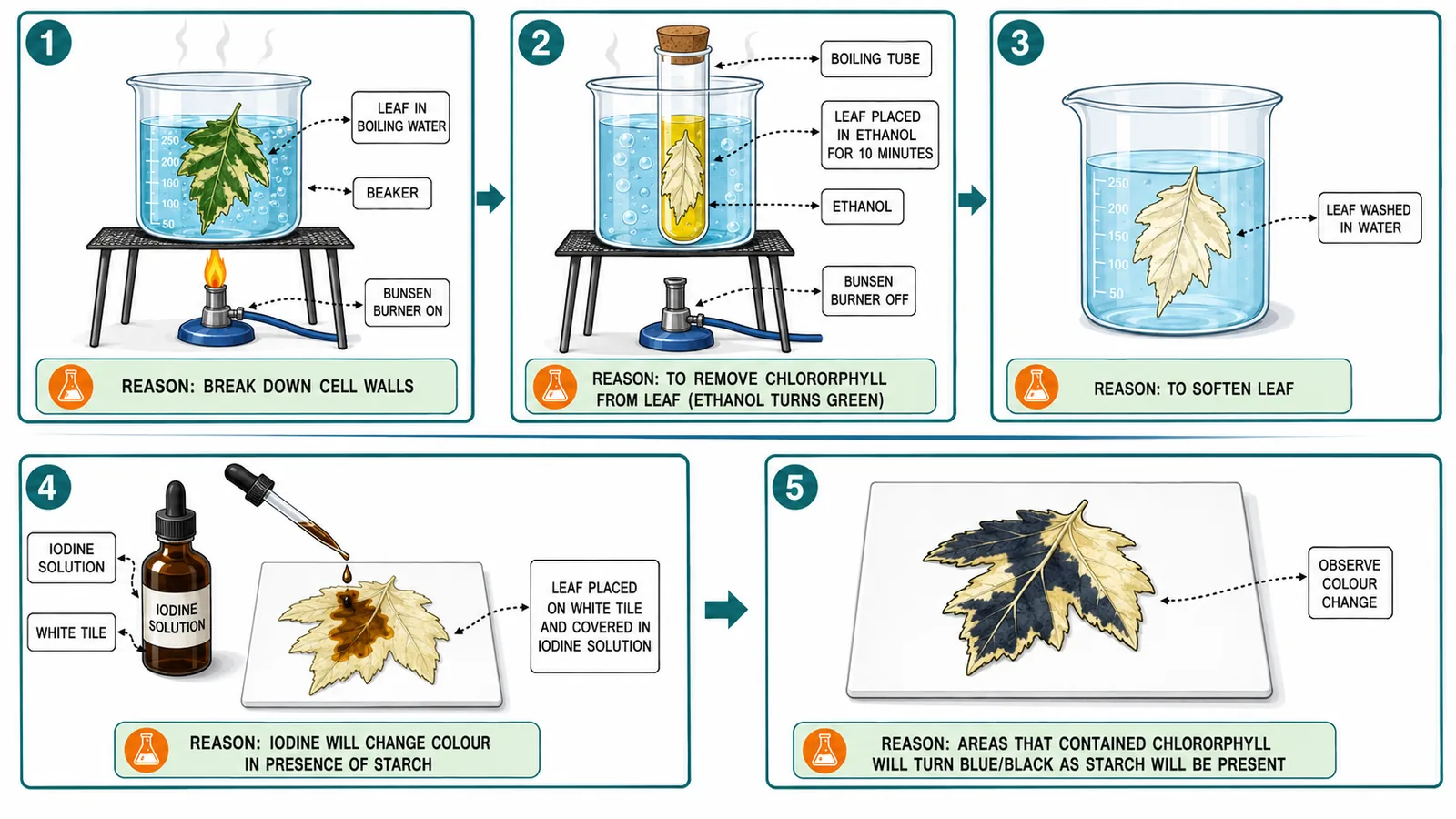
The test is: (1) dip the leaf in boiling water for about a minute to kill it and stop reactions and to make it permeable; (2) place it in hot ethanol in a water bath (never heating ethanol directly with a flame) to remove the chlorophyll so that colour changes can be seen; (3) rinse the leaf in water to soften it; (4) spread it on a white tile and add iodine solution.
A blue-black colour shows starch is present; orange-brown shows none.
A variegated leaf, with green and white patches, shows that only the green parts containing chlorophyll make starch.

Section 6 of 9Link with respiration and the carbon cycle

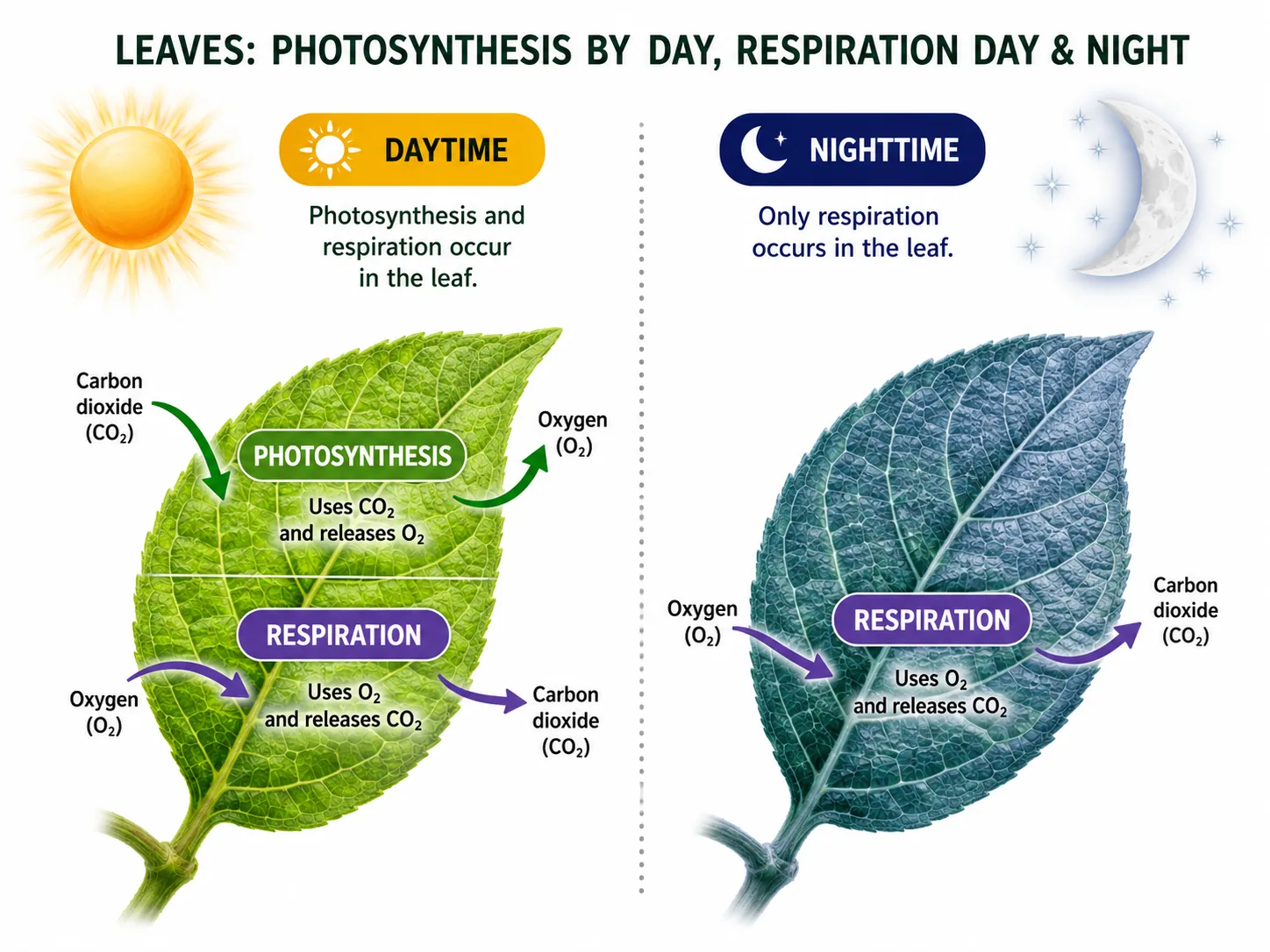
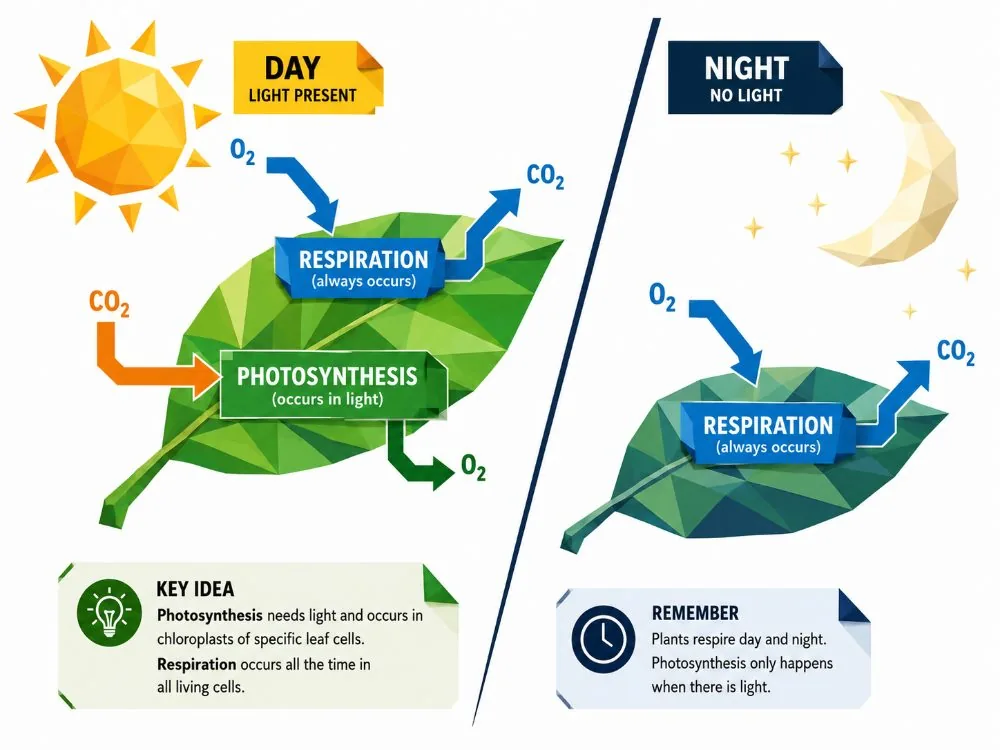
Plants photosynthesise in daylight and respire all the time
Leaves: photosynthesis by day, respiration day and night
Day and night: photosynthesis and respiration in leaves
Key Structures of the Respiratory System
Day and night: photosynthesis and respiration in leaves
pasted 1782294530048 0
Starch test: leaf with covered area (light blocked)
carbon cycle
The Carbon Cycle

Photosynthesis and respiration are almost opposite processes.

1
Photosynthesis removes carbon dioxide and releases oxygen, while respiration releases carbon dioxide and uses oxygen.
2
During daylight a plant usually photosynthesises faster than it respires, so overall it takes in carbon dioxide and gives out oxygen.
3
At night only respiration happens.
4
The point at which the two rates are equal, so there is no net gas exchange, is called the compensation point.
5
Photosynthesis transfers carbon from the atmosphere to living things and so is the main way in which carbon dioxide is removed from the air in the carbon cycle.

The adaptations of a leaf for photosynthesis are covered in the plant structure topic, but it is worth noting here that a thin, flat shape gives a large surface area to catch light, and a short diffusion distance for carbon dioxide.

Link with respiration and the carbon cycle
Algae, which have no leaves, photosynthesise in the same way: phytoplankton in the oceans produce about half of the oxygen released each year.
When a question gives an unfamiliar plant or alga, apply the same equation and think about where each reactant comes from, rather than recalling a specific example.

Remember that the glucose made in a leaf in the day can be stored as starch there, and that this starch is converted into soluble sugar and moved to other parts of the plant at night.

Section 7 of 9Exam-style questions

enzyme reaction cycle infographic
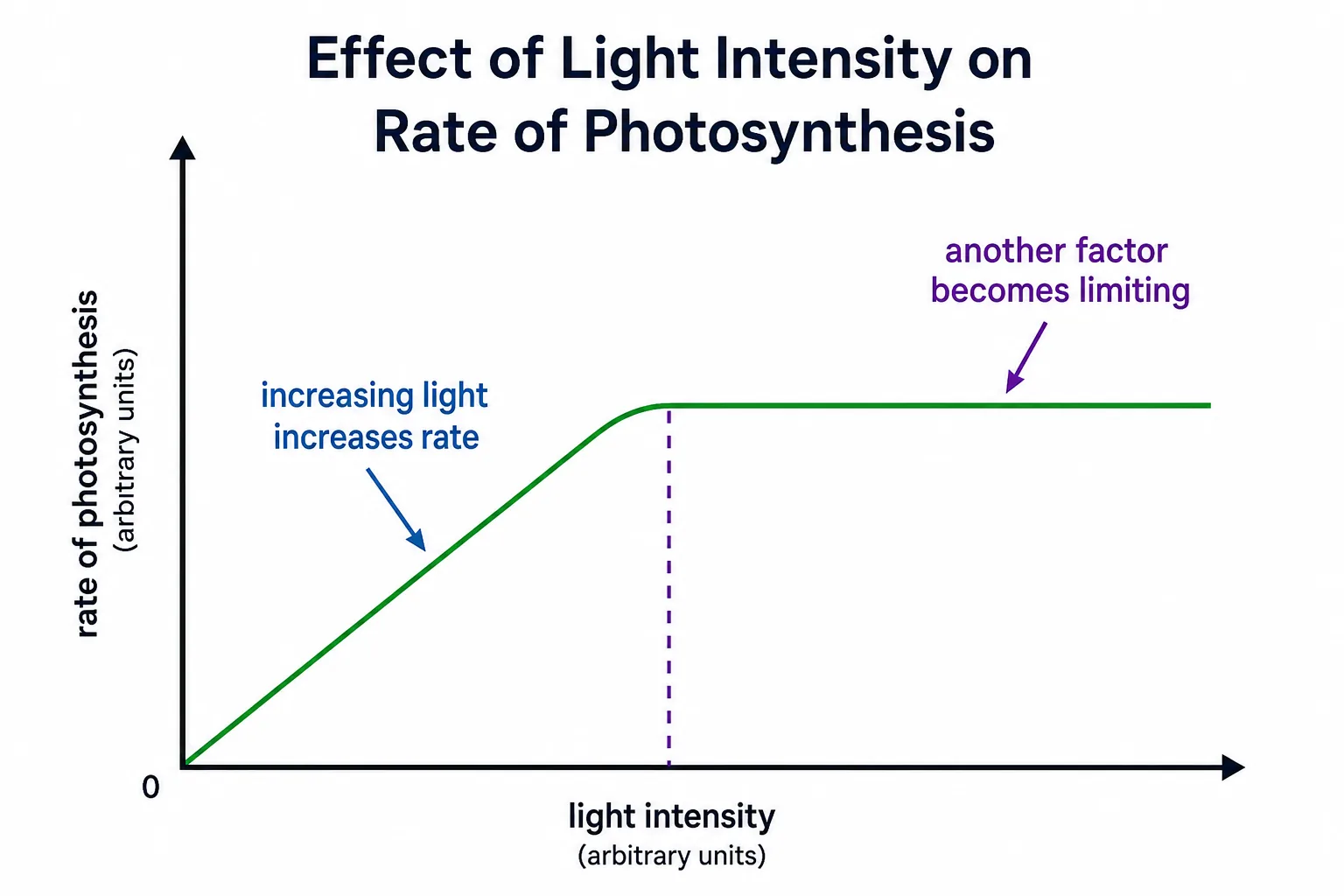
Effect of Light Intensity on Rate of Photosynthesis — 2D Simulation
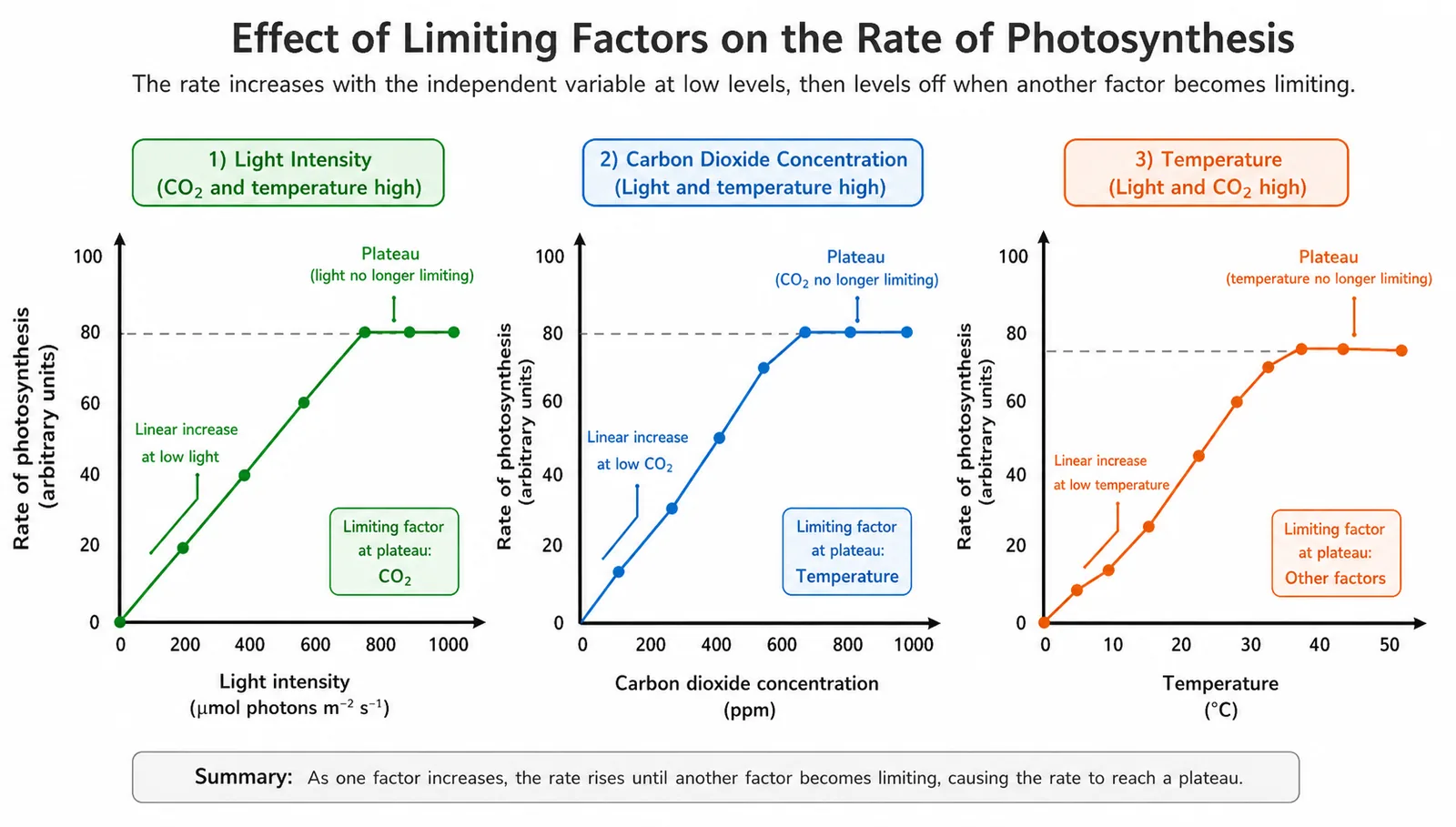
Effect of Limiting Factors on the Rate of Photosynthesis — 2D Simulation
pasted 1782544085563 0
Light intensity limiting photosynthesis (graph)
Effect of light intensity on rate of photosynthesis (graph)
Effect of carbon dioxide concentration on rate of photosynthesis (graph)
Carbon dioxide concentration limiting photosynthesis (graph)
r049-enzyme-temperature
pasted 1782446219913 0
pasted 1782544101824 0
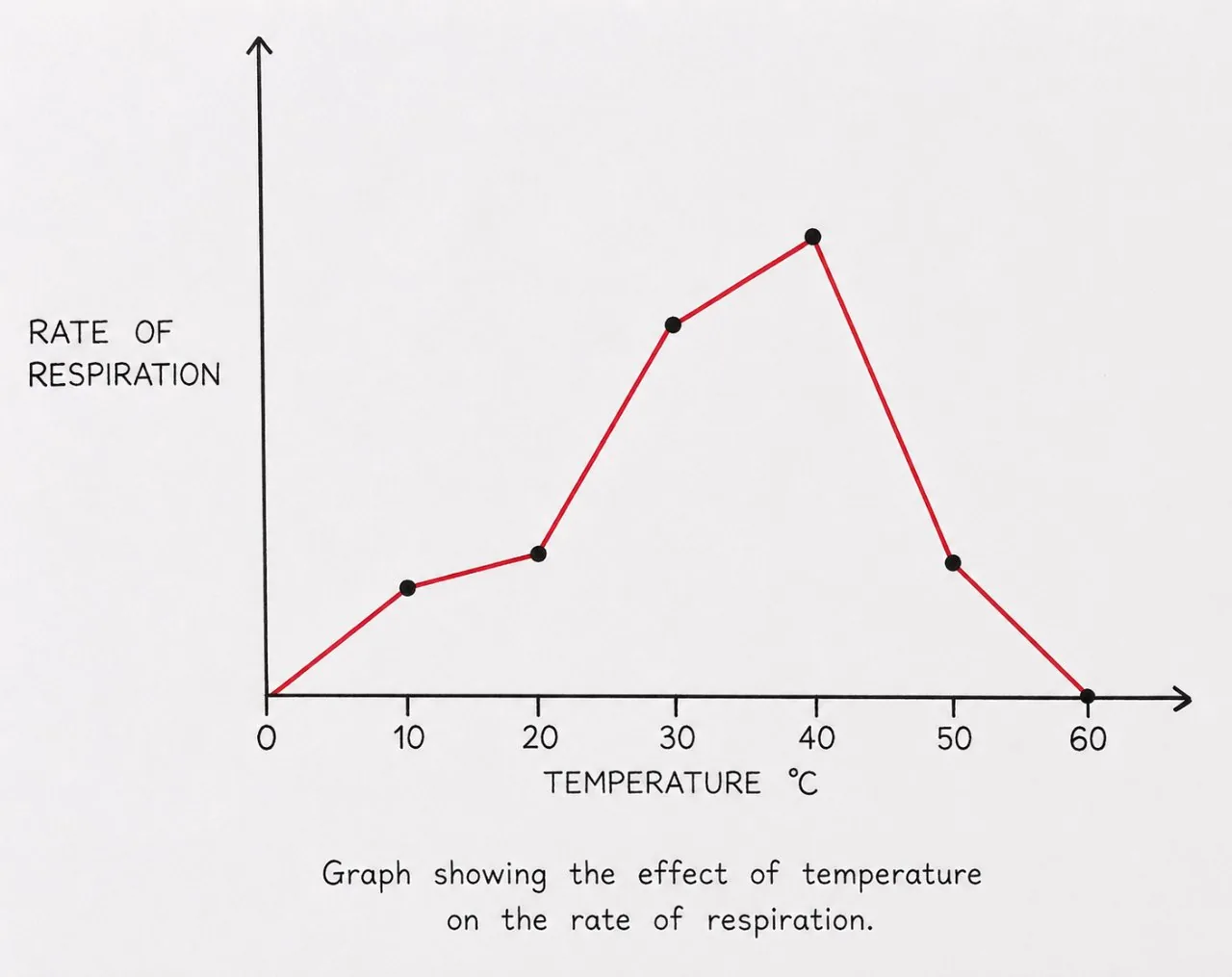
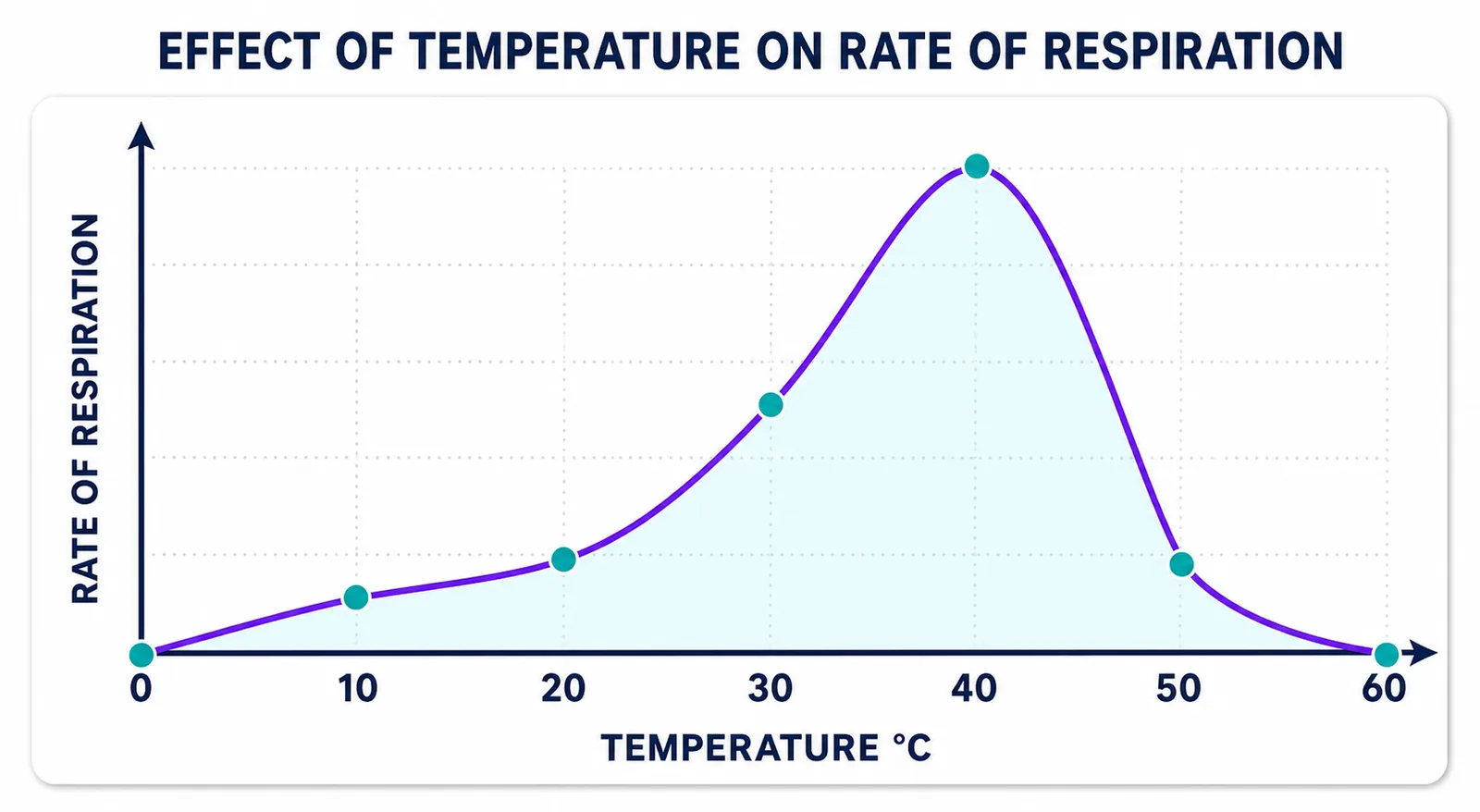
Effect of temperature on rate of respiration (graph)
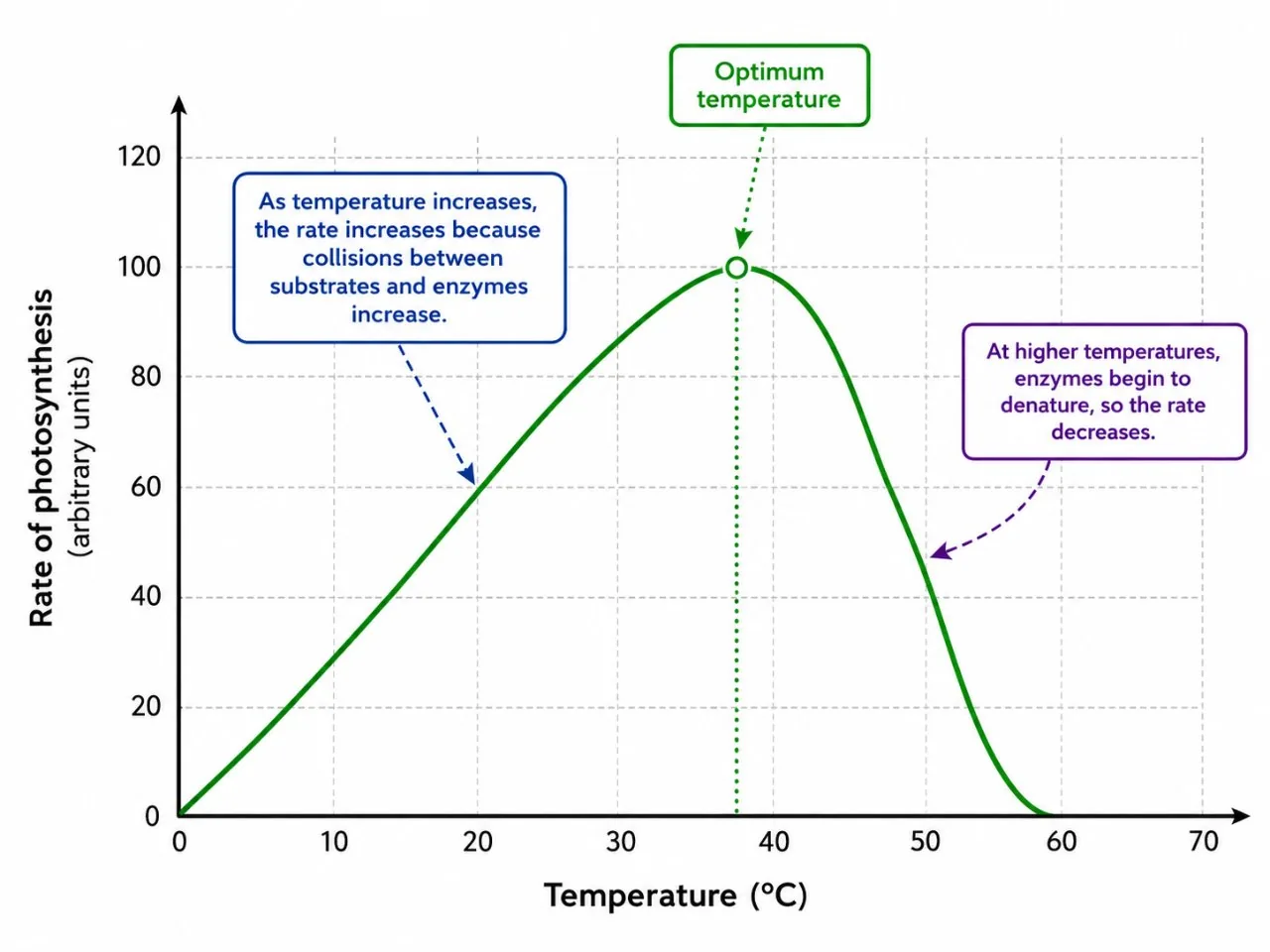
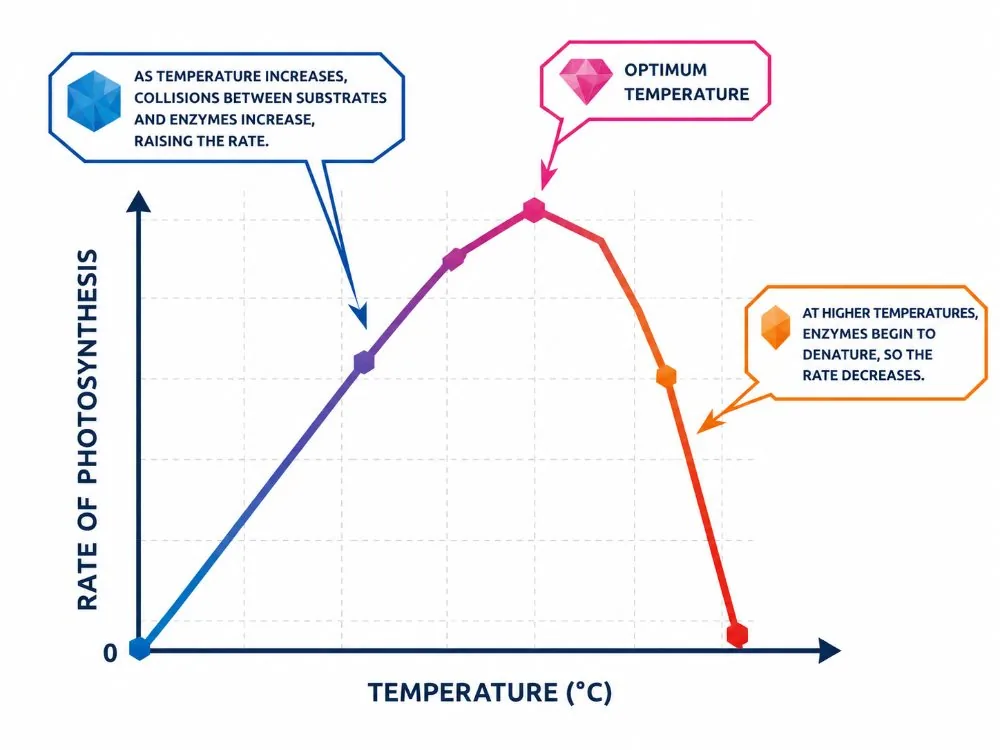
Effect of temperature on rate of photosynthesis (graph)
r054-enzyme-concentration
pasted 1782544092168 0
Photosynthesis: sources of reactants and uses of products
  1. State the word equation for photosynthesis and name the site of the reaction in a cell. [3]3 marks

  2. Describe how a leaf is tested for starch and explain each step of the method. [4]4 marks

  3. Explain why plants need nitrate ions to grow. [2]2 marks

Section 8 of 9Key terms

TermMeaning
PhotosynthesisThe process of making glucose from carbon dioxide and water using light energy.
ChlorophyllThe green pigment that absorbs light energy for photosynthesis.
ChloroplastThe organelle where photosynthesis occurs.
EndothermicA reaction that takes in energy from the surroundings.
StomataPores in the leaf through which gases enter and leave.
StarchAn insoluble carbohydrate used for storage.
Compensation pointThe light intensity at which photosynthesis rate equals respiration rate.

Section 9 of 9Exam technique

1
Saying plants only respire at night. They respire all the time; they photosynthesise only when there is light.
2
Writing that plants take in oxygen and release carbon dioxide in photosynthesis. It is the reverse.
3
Saying that chlorophyll makes the glucose. It absorbs light energy; the enzymes and other reactions make glucose.
4
Heating ethanol directly with a Bunsen flame because it is flammable.
Biology 0610 & 9700 Exam Model Limiting Factors Master

Photosynthesis: Limiting Factors & Graph Plateau

6CO2 + 6H2O → C6H12O6 + 6O2 (Light & Chlorophyll required)

  • Limiting Factor Definition: Something present in the environment in such short supply that it restricts life processes.
  • Graph Plateau: When rate levels off as light intensity increases, light is no longer the limiting factor; CO2 concentration or temperature has become limiting.
  • High Temperature Drop: Beyond optimum temp (~40°C), enzymes (e.g. RuBisCO) denature, permanently decreasing rate.