2.2.2Variation, Homeostasis and Micro-organisms
Types of Cell Division
5 min read 8 parts Lesson 11 of 51 1 quiz
Section 1 of 8What mitosis is and why it matters
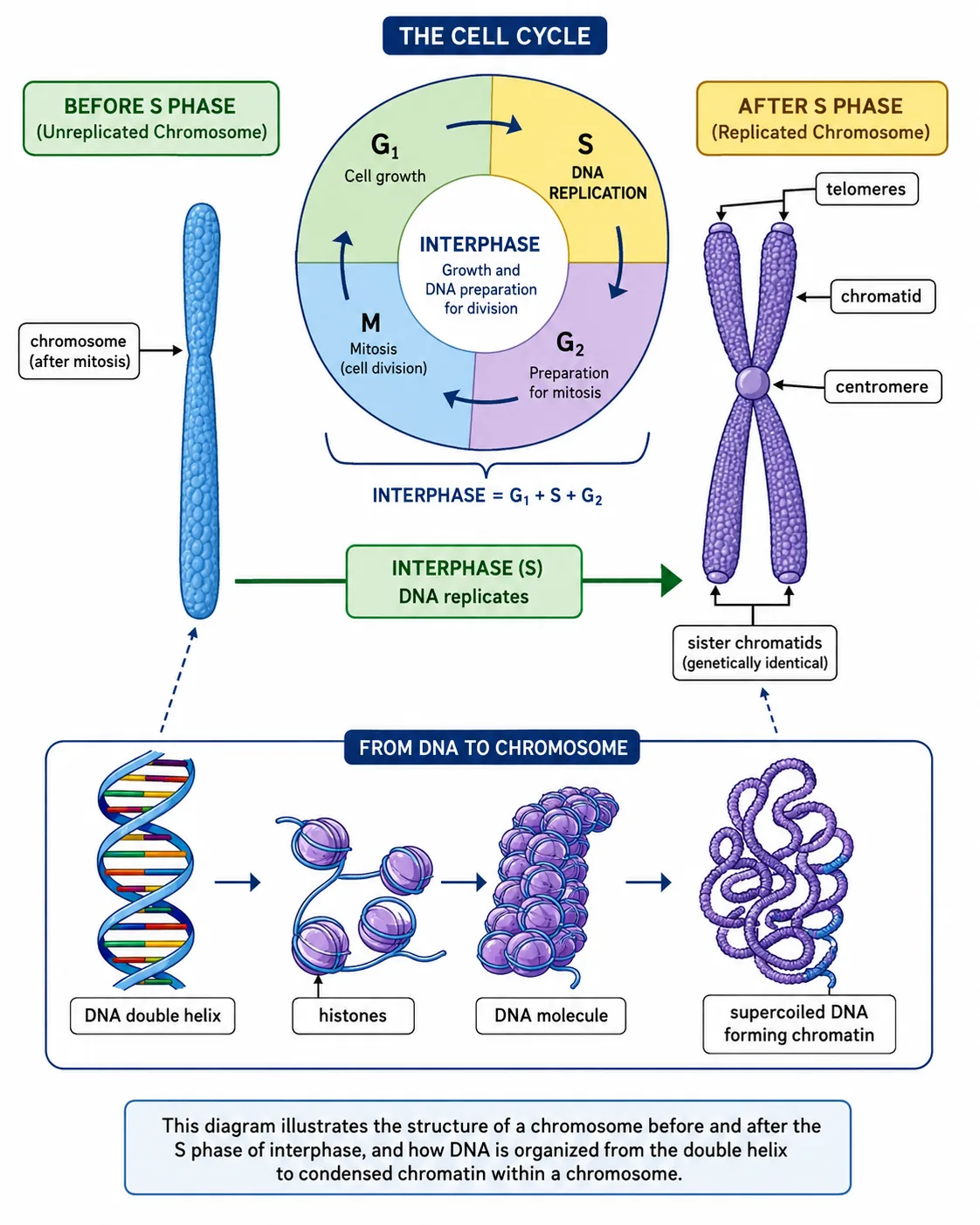
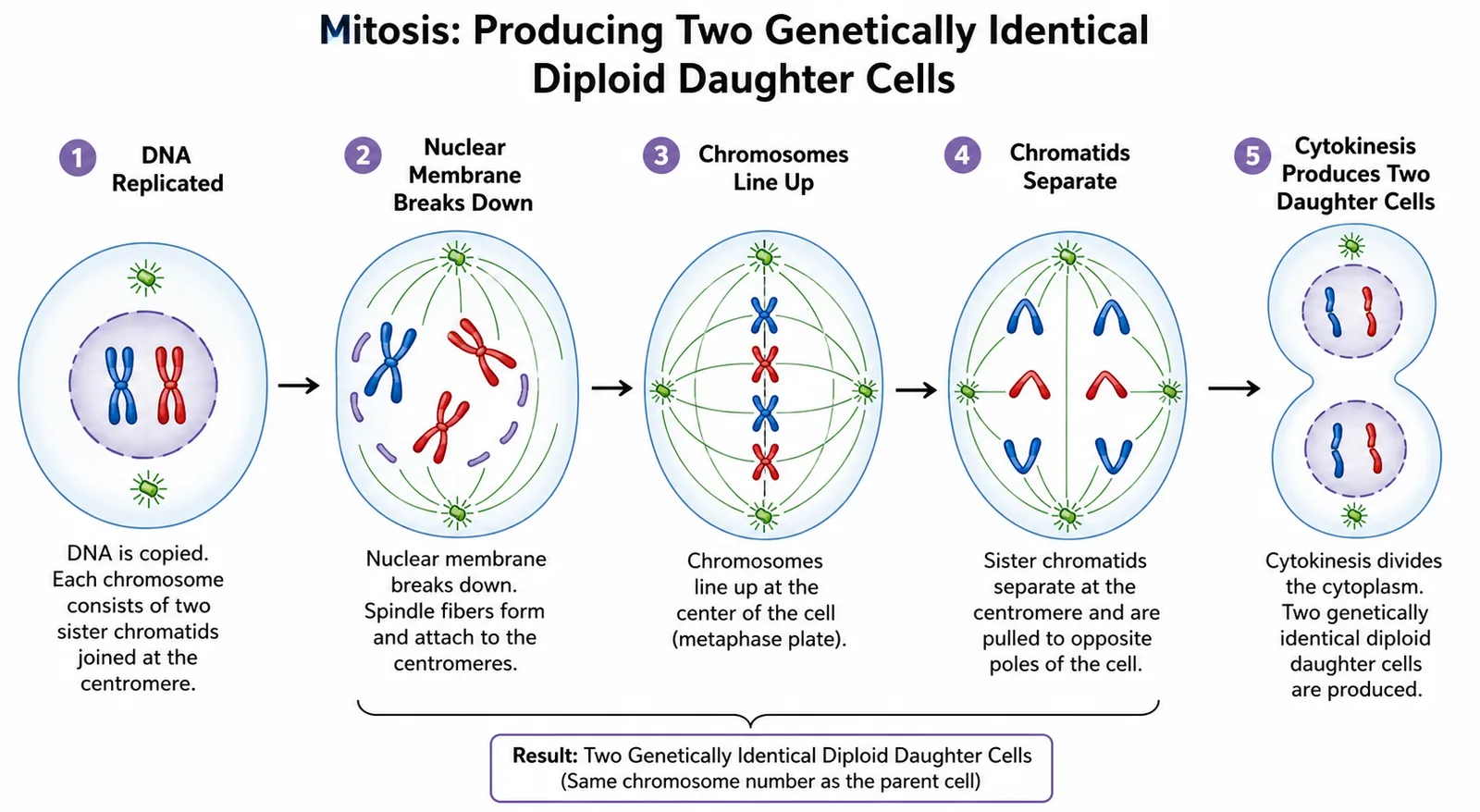
Mitosis is a nuclear division that gives rise to two genetically identical diploid daughter cells.
Section 2 of 8The cell cycle and the stages of mitosis

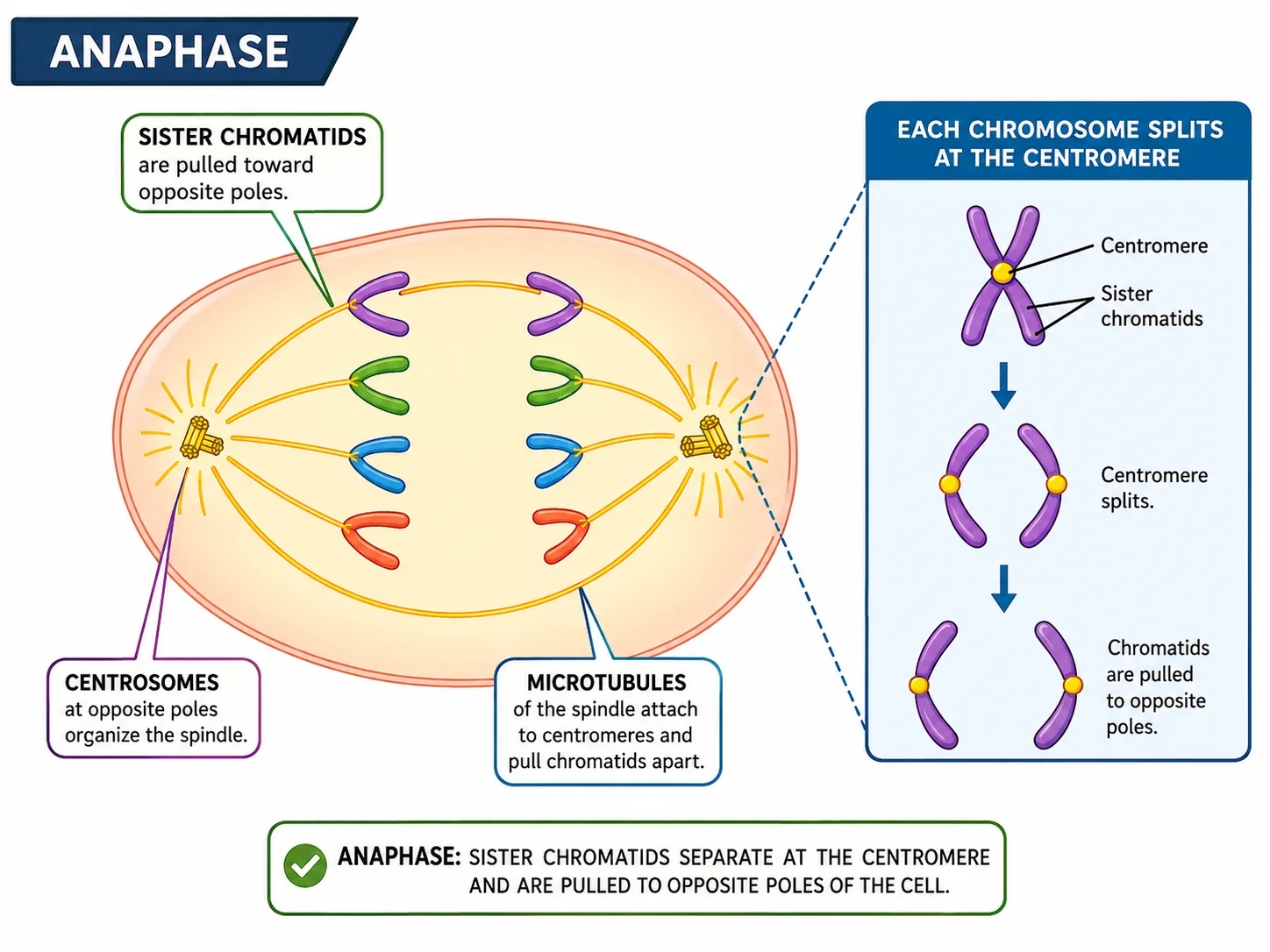


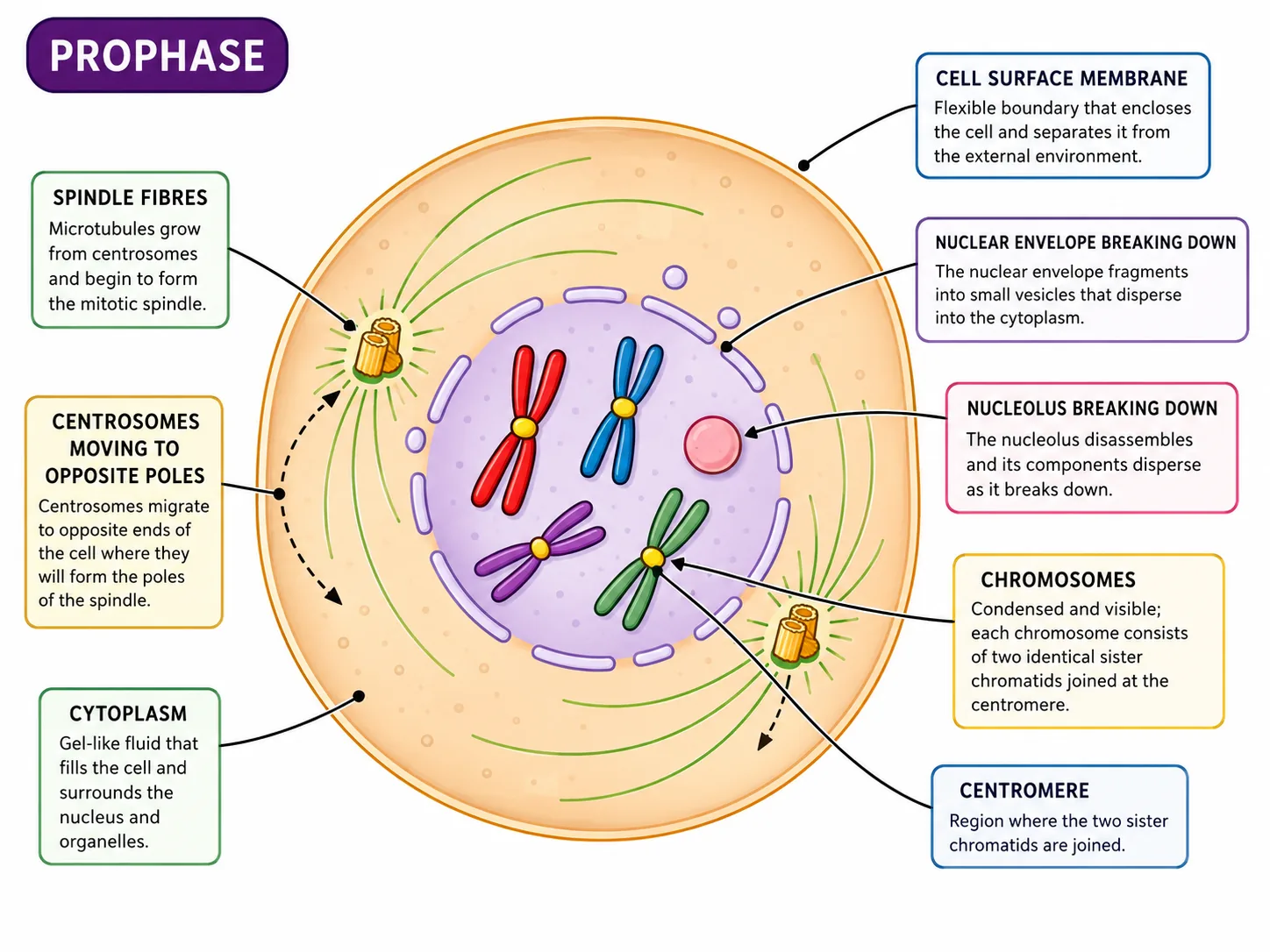


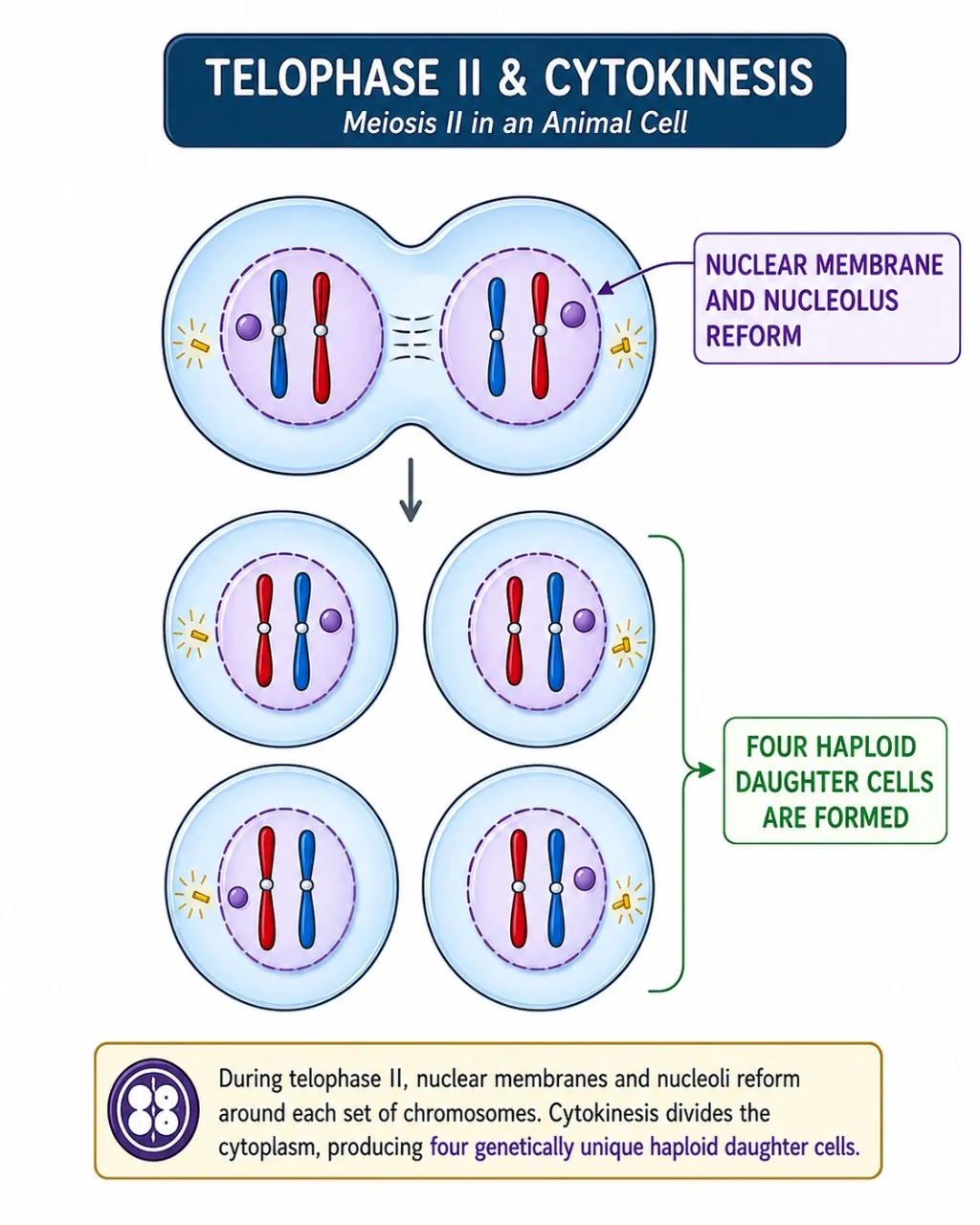

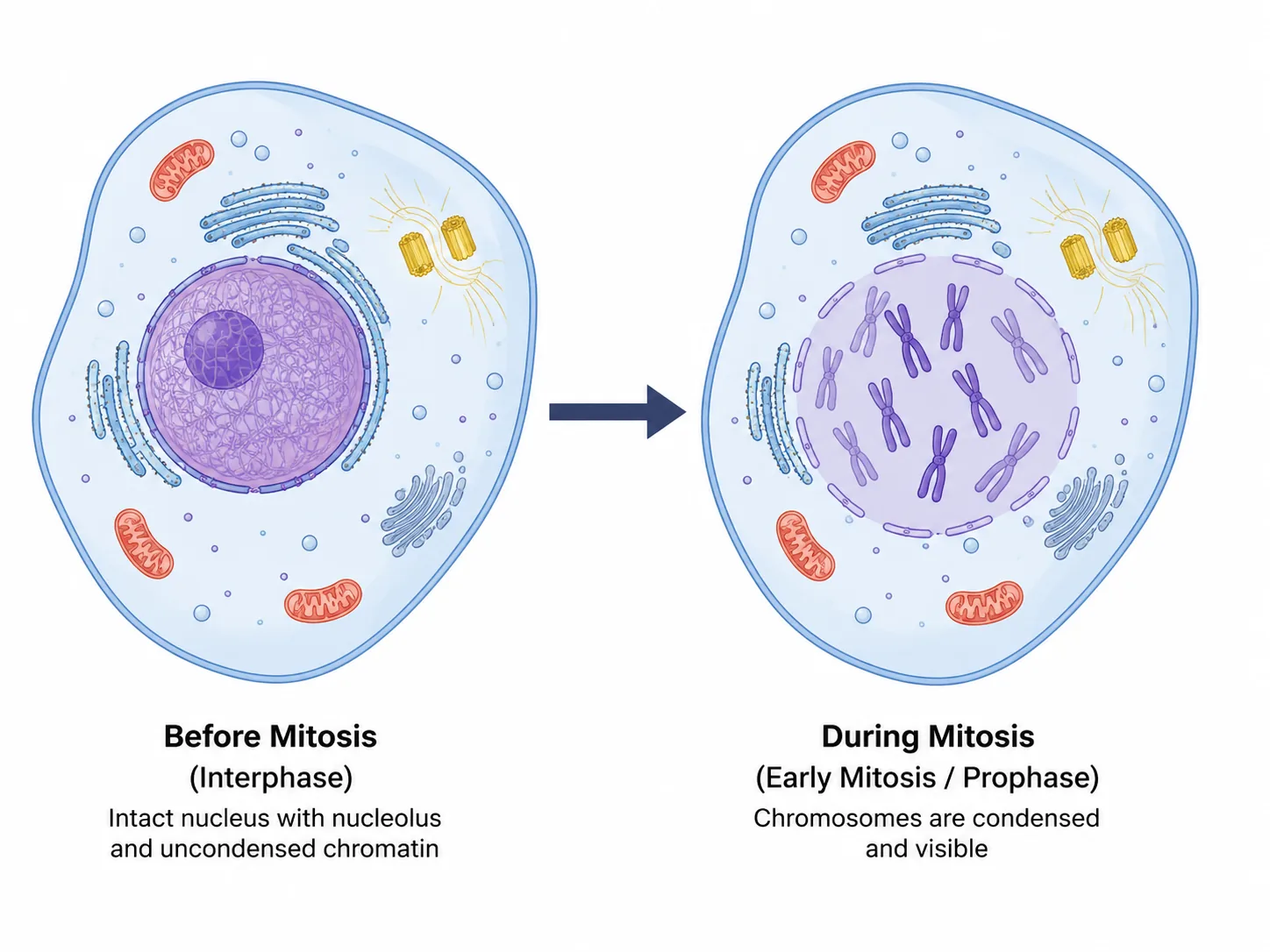
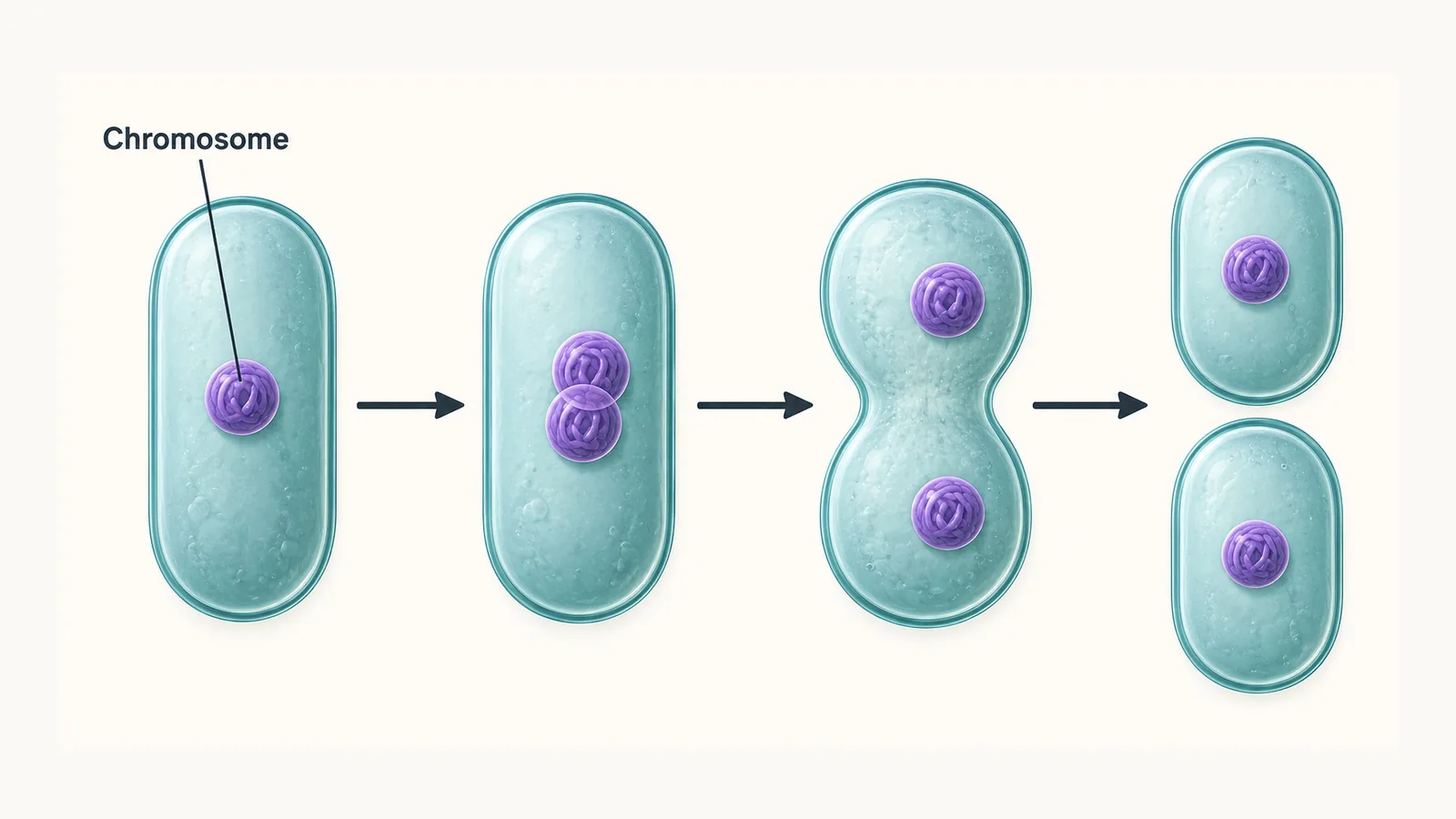
Before dividing, a cell goes through interphase, when it grows, increases the number of organelles and replicates (copies) its DNA so that each chromosome is made of two identical chromatids joined together. Mitosis itself then follows in a series of stages:
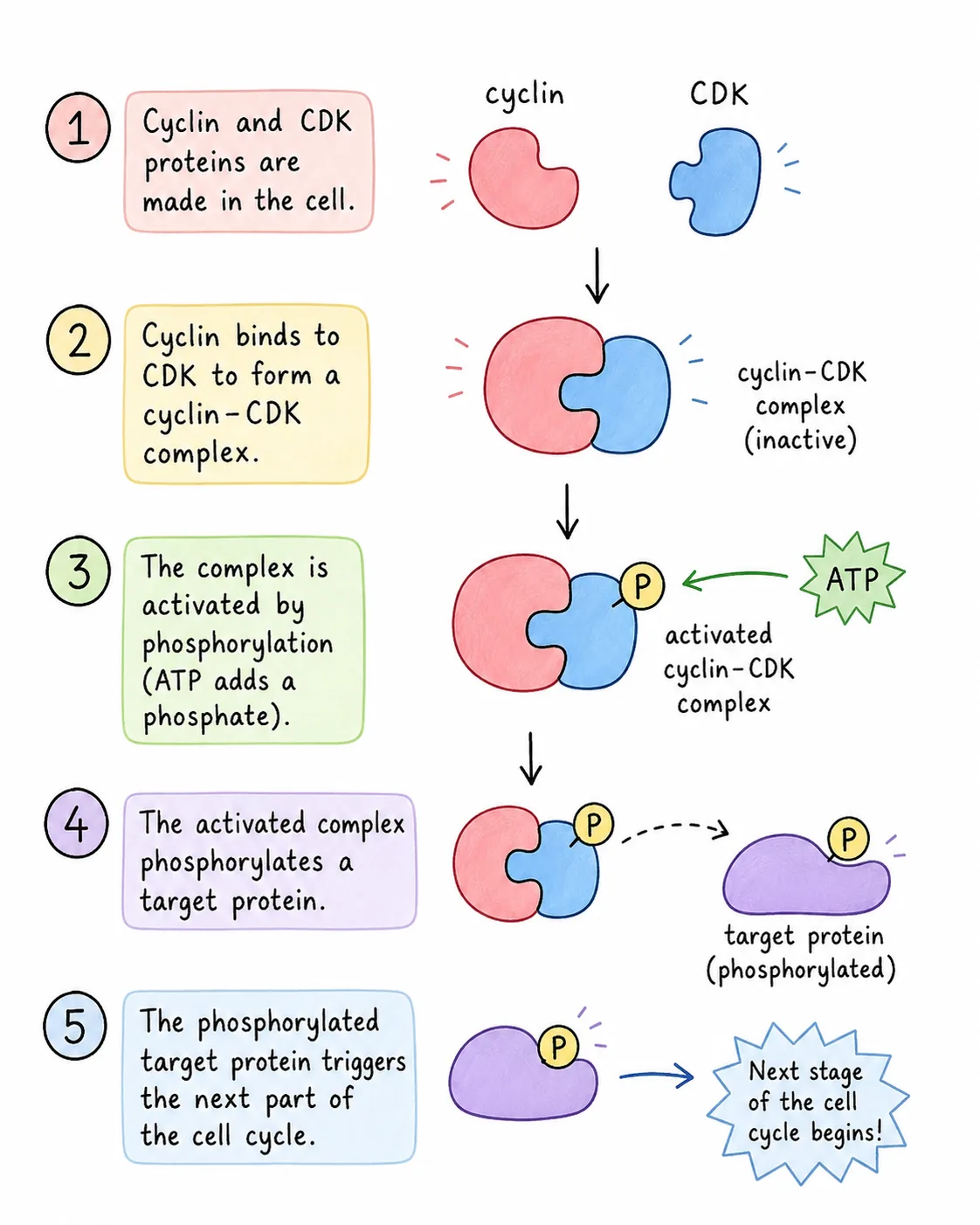
Mitosis is only one part of the cell cycle, and the cycle is regulated by many different genes so that cells divide only when they need to and stop when required.
Section 3 of 8Calculating the number of cells
Each division doubles the number, so after n divisions one cell becomes 2n cells. If a cell divides 7 times, it produces 27 = 128 cells. If you start with more than one cell, multiply the starting number by 2n.
| Number of divisions | Cells from 1 starting cell |
|---|---|
| 1 | 2 |
| 2 | 4 |
| 3 | 8 |
| 4 | 16 |
| 7 | 128 |
Section 4 of 8Uncontrolled cell division

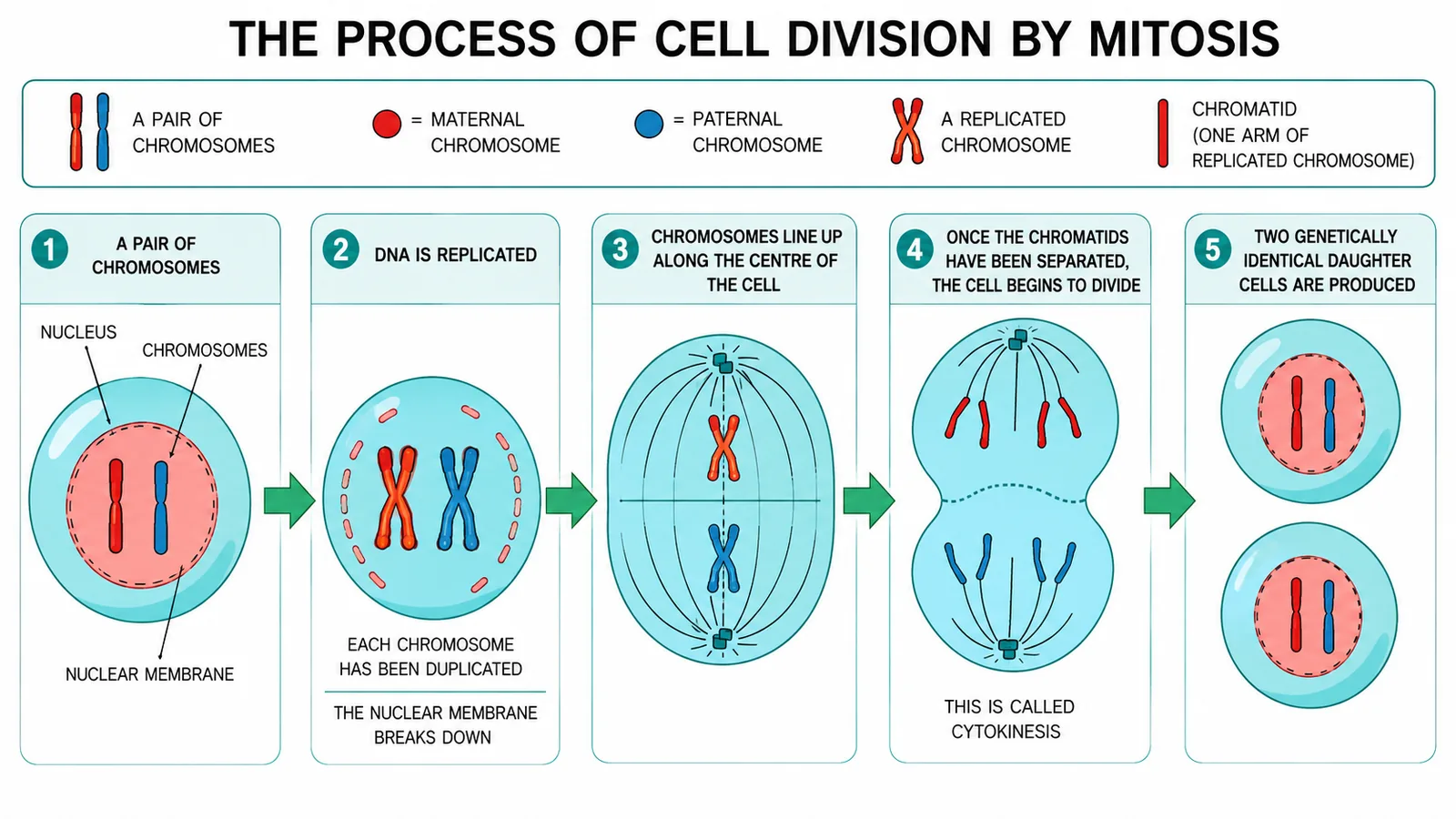

If the genes that regulate the cell cycle are damaged (mutated), a cell may divide repeatedly without control.
Comparison of mitosis and uncontrolled division: during normal division the number of cells is controlled and matched to the body's needs, but in cancer the controls have been lost, so the cells keep dividing and may invade and damage surrounding tissue.
Section 5 of 8Observing mitosis and exam application


Mitosis can be observed in the lab by examining a root tip squash.
In exam answers on mitosis, use correct vocabulary: chromosomes, chromatids, spindle fibres and equator.
Section 6 of 8Worked examples

A single cell divides by mitosis 7 times. How many cells are produced? [2]2 marks
Number of cells = 27 = 128.
Describe what happens to the chromosomes during anaphase. [2]2 marks
Spindle fibres split each chromosome at the centre, so the two chromatids separate. One chromatid is pulled to each end of the cell.
Explain why cells lining the intestine divide by mitosis constantly. [2]2 marks
Cells are shed as food moves through the digestive system, so new cells made by mitosis replace them. The new cells are genetically identical, so they carry out the same function.
Section 7 of 8Key terms
| Term | Meaning |
|---|---|
| Mitosis | Nuclear division that produces two genetically identical diploid daughter cells. |
| Diploid | Having two sets of chromosomes, one from each parent; 46 chromosomes in humans. |
| Chromatid | One of the two identical halves of a replicated chromosome. |
| Interphase | The part of the cell cycle in which a cell grows and replicates its DNA. |
| Tumour | A mass of abnormal cells caused by uncontrolled cell division. |
| Spindle fibres | Protein fibres that move chromosomes during cell division. |
Section 8 of 8Exam technique
Marked practiceQuizzes for this lesson
Magnification Triangle & Unit Conversion
Formula: M = I / A ⇔ A = I / M ⇔ I = M × A
Units: 1 mm = 1,000 μm = 1,000,000 nm.
Rule: Convert Image size (ruler mm) to μm by ×1,000 before dividing by Actual size.