2.3.6Variation, Homeostasis and Micro-organisms
Genes, Alleles and Other Key Terms in Genetics
5 min read 6 parts Lesson 19 of 51 Unit quiz
Section 1 of 6Genes and alleles
Gene
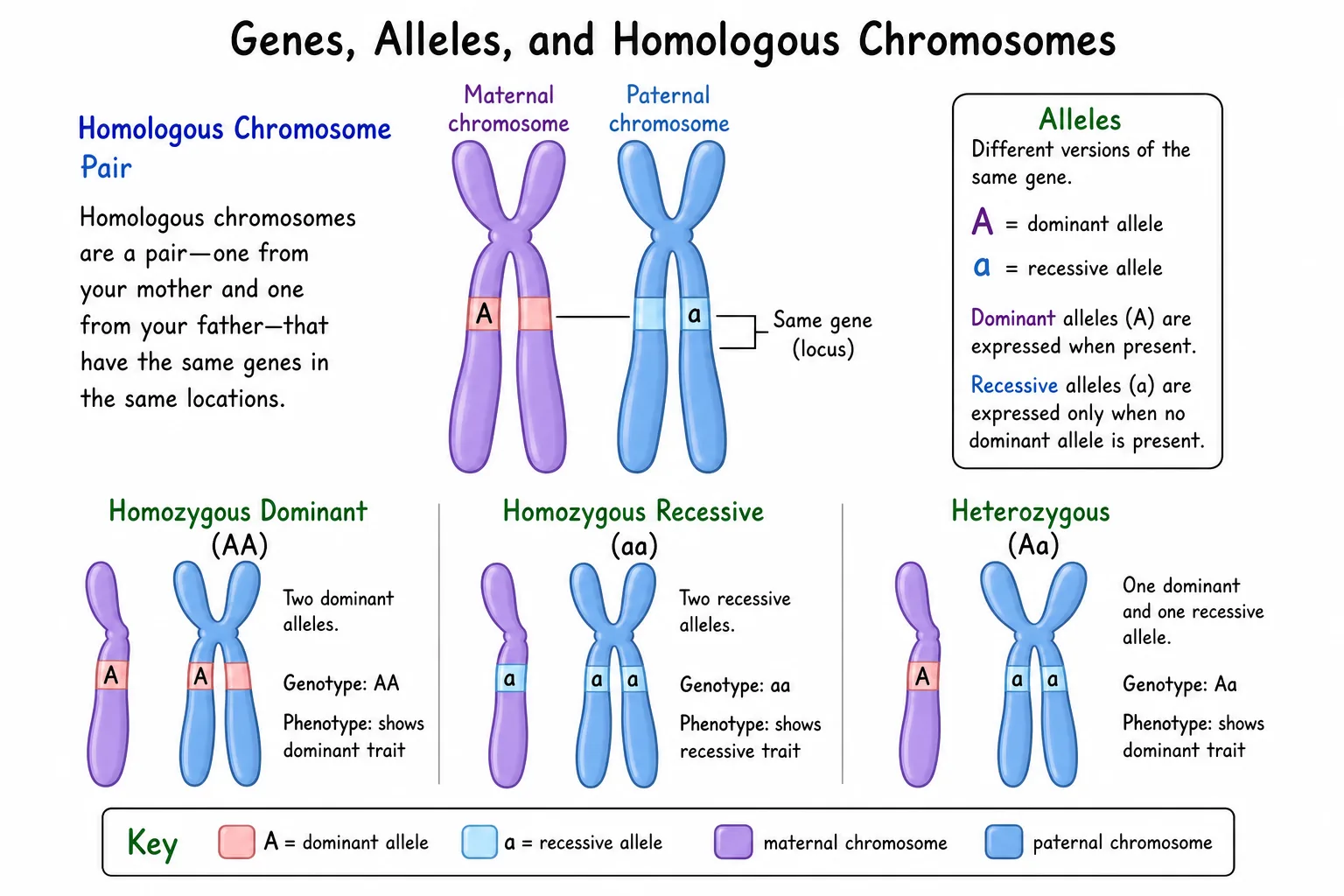
- Gene A gene is a short length of DNA on a chromosome that codes for a particular characteristic, by controlling which protein is made.
Allele
- Allele Alleles are different versions of the same gene.
- Chromosomes come in pairs, so we carry two alleles of each gene: one from the mother and one from the father.
Alleles may differ
- Alleles may differ The two alleles do not have to be identical.
- For example, one allele for eye colour might code for brown and the other for blue.
Section 2 of 6Genotype and phenotype
| Term | Meaning | Example |
|---|---|---|
| Genotype | The combination of alleles an organism has for a characteristic | Bb |
| Phenotype | The observable characteristic, resulting from genotype and the environment | Brown eyes |
| Dominant allele | Shows in the phenotype even if only one copy is present | B (capital letter) |
| Recessive allele | Shows only if two copies are present; hidden when a dominant allele is also there | b (lower case) |
Section 3 of 6Homozygous and heterozygous


Two alleles of one gene
Homozygous dominant
- Homozygous dominant Both alleles are the dominant form, for example BB.
Homozygous recessive
- Homozygous recessive Both alleles are the recessive form, for example bb. The recessive characteristic shows.
Heterozygous
- Heterozygous The two alleles are different, for example Bb.
- The dominant characteristic shows and the recessive allele is carried but hidden.
Writing alleles
- Writing alleles In genetic diagrams one letter is used for each gene: a capital for the dominant allele and the same letter in lower case for the recessive allele.
- Choose a letter whose capital and small forms look clearly different.
Section 4 of 6Generations and breeding


1
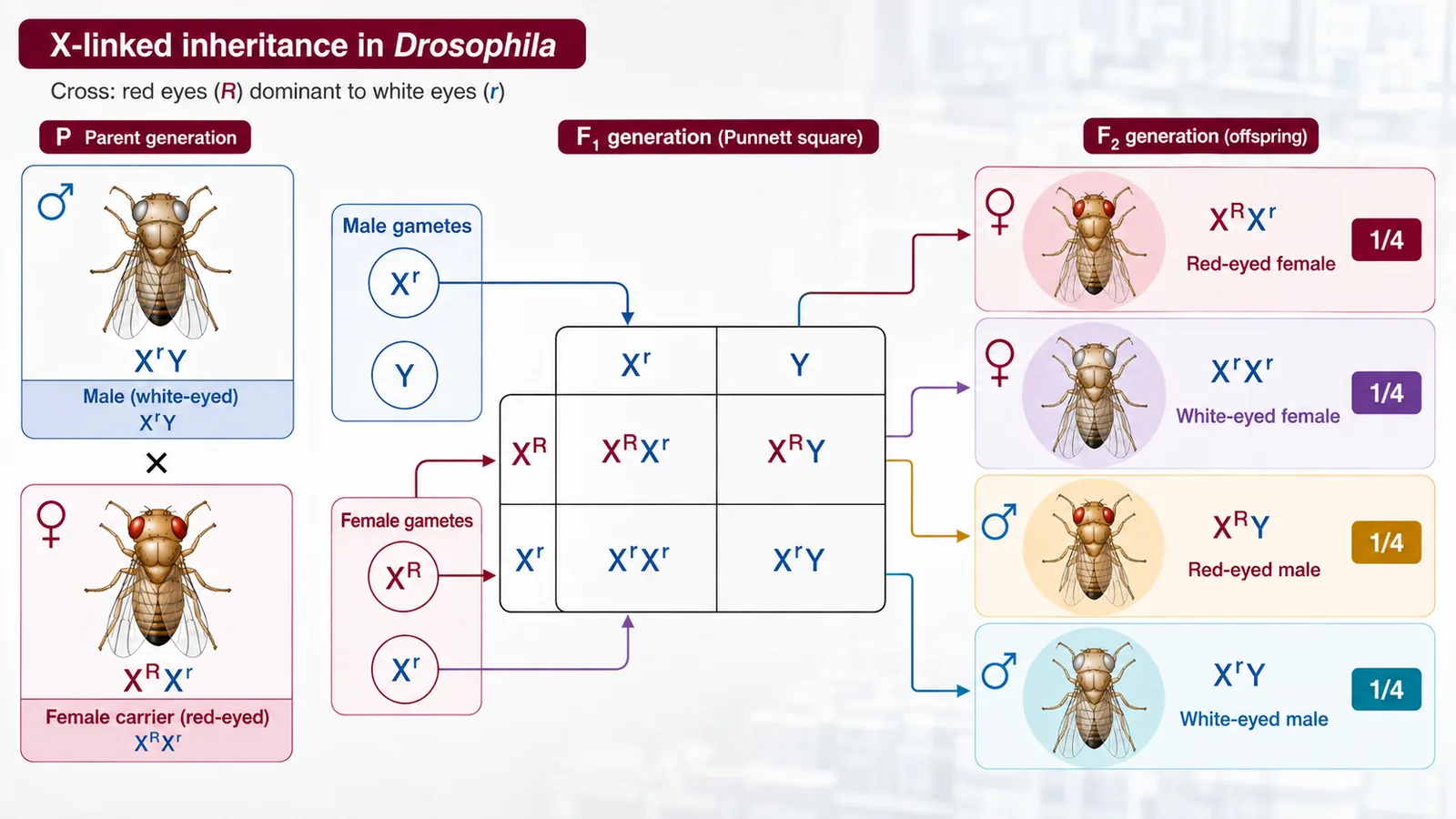
Two parent organisms are crossed. The offspring they produce are the F1 generation (first filial generation).
2
When two F1 individuals are crossed with each other, their offspring are the F2 generation.
3
Individuals that are homozygous for a characteristic are pure breeding: crossed with each other, all offspring have the same genotype and phenotype as the parents.
4
A heterozygous parent can pass on either allele, so its offspring can have a different genotype and phenotype from the parent.
5
A dominant phenotype can be produced by two different genotypes (homozygous dominant or heterozygous), so you cannot always tell the genotype just by looking.
Section 5 of 6Key terms
| Term | Meaning |
|---|---|
| Gene | A length of DNA on a chromosome that codes for a characteristic. |
| Allele | One of the alternative forms of a gene. |
| Genotype | The alleles an organism has for a gene, such as Tt. |
| Phenotype | The characteristic that can be observed, caused by genotype and environment. |
| Pure breeding | Homozygous for a characteristic, so that offspring always match the parents. |
Section 6 of 6Exam technique
1
Mixing up gene and allele. A gene is the whole instruction; alleles are the different versions of it.
2
Saying that a dominant allele is the stronger or more common one. It simply shows when present.
3
Assuming that a plant with the dominant phenotype must be homozygous. It could be heterozygous.
4
Writing the recessive allele with a different letter to the dominant one. Use the same letter in lower case.