Section 1 of 7What is a reflex action?

Involuntary response
- Involuntary response A reflex is a response that does not need the conscious part of the brain to coordinate it.
- You only become aware of what happened after the response has already taken place.
Key features
- Key features Reflexes are automatic, rapid and protective, because a quick response can prevent injury.
Why speed matters
- Why speed matters The short pathway, with few neurones, means the response takes only a fraction of a second.
Section 2 of 7Examples of reflexes
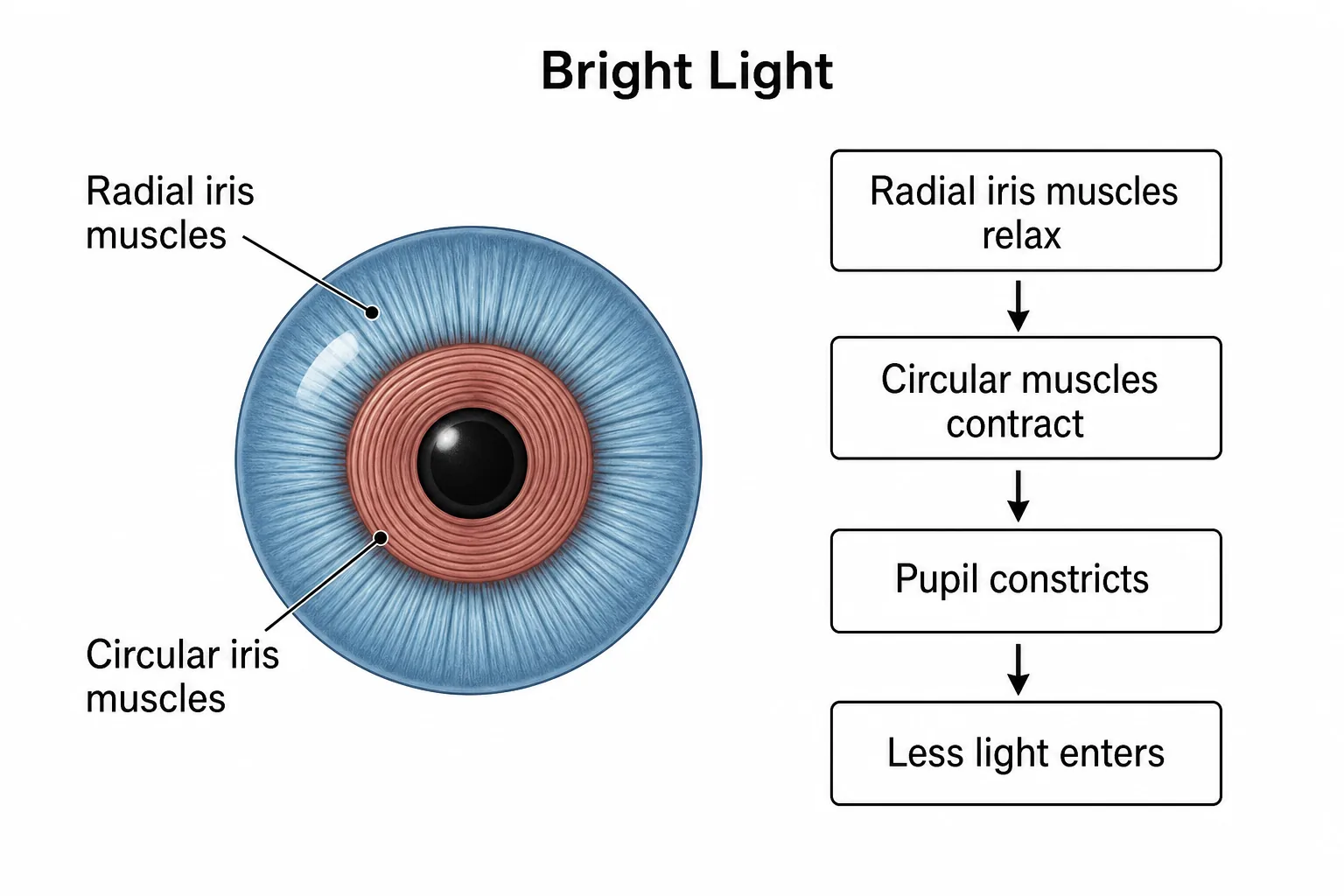

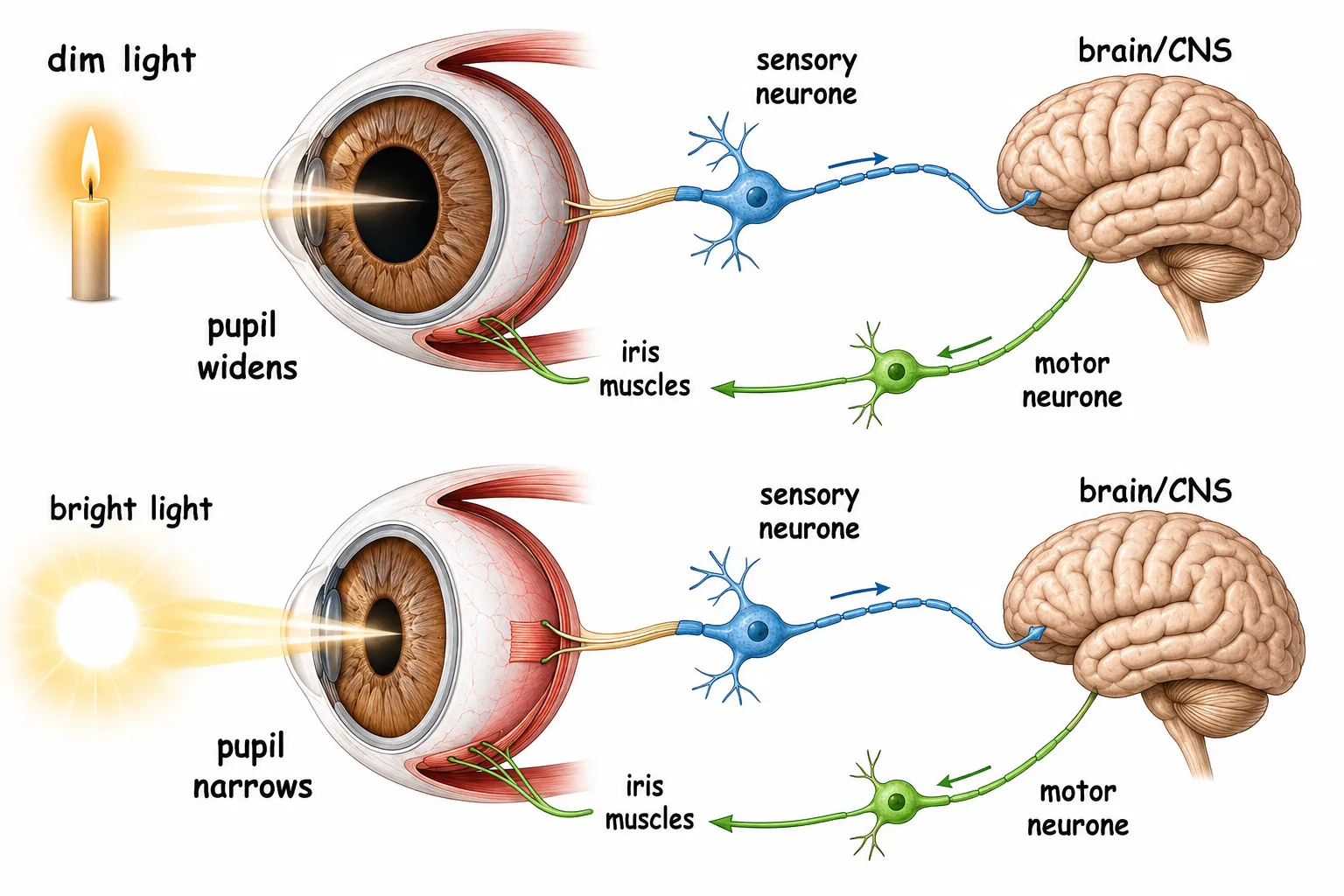
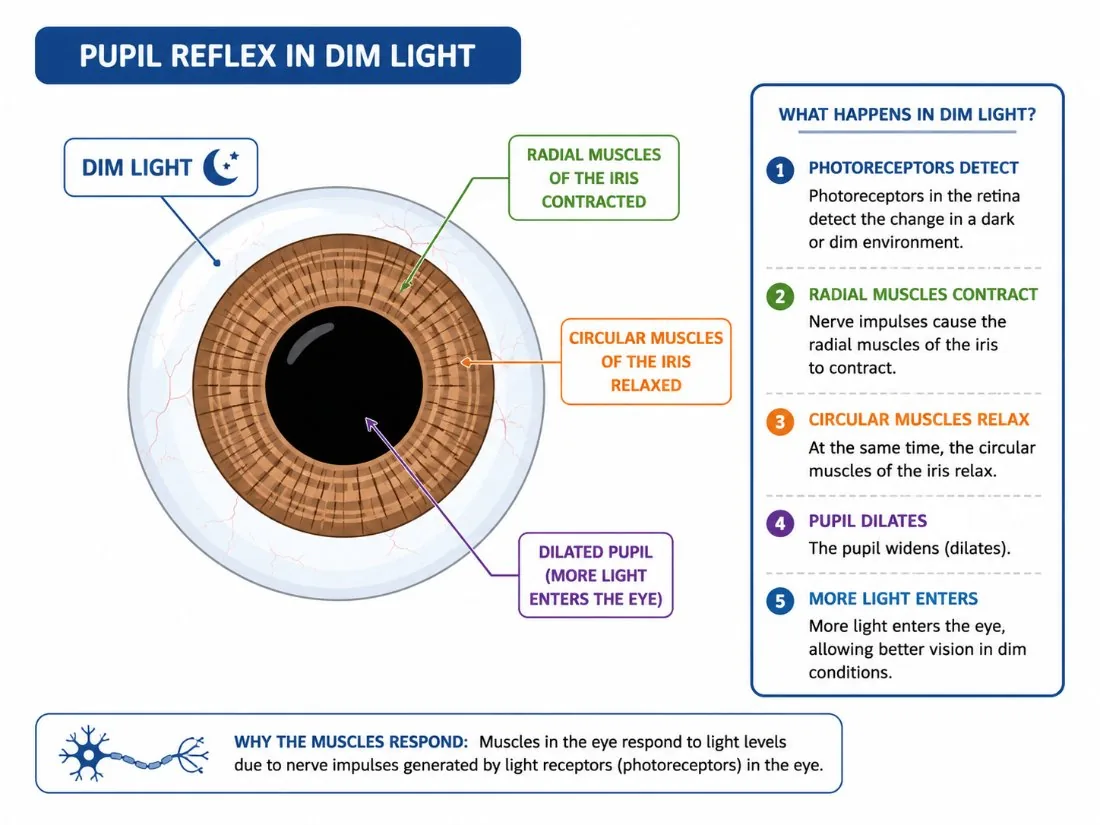

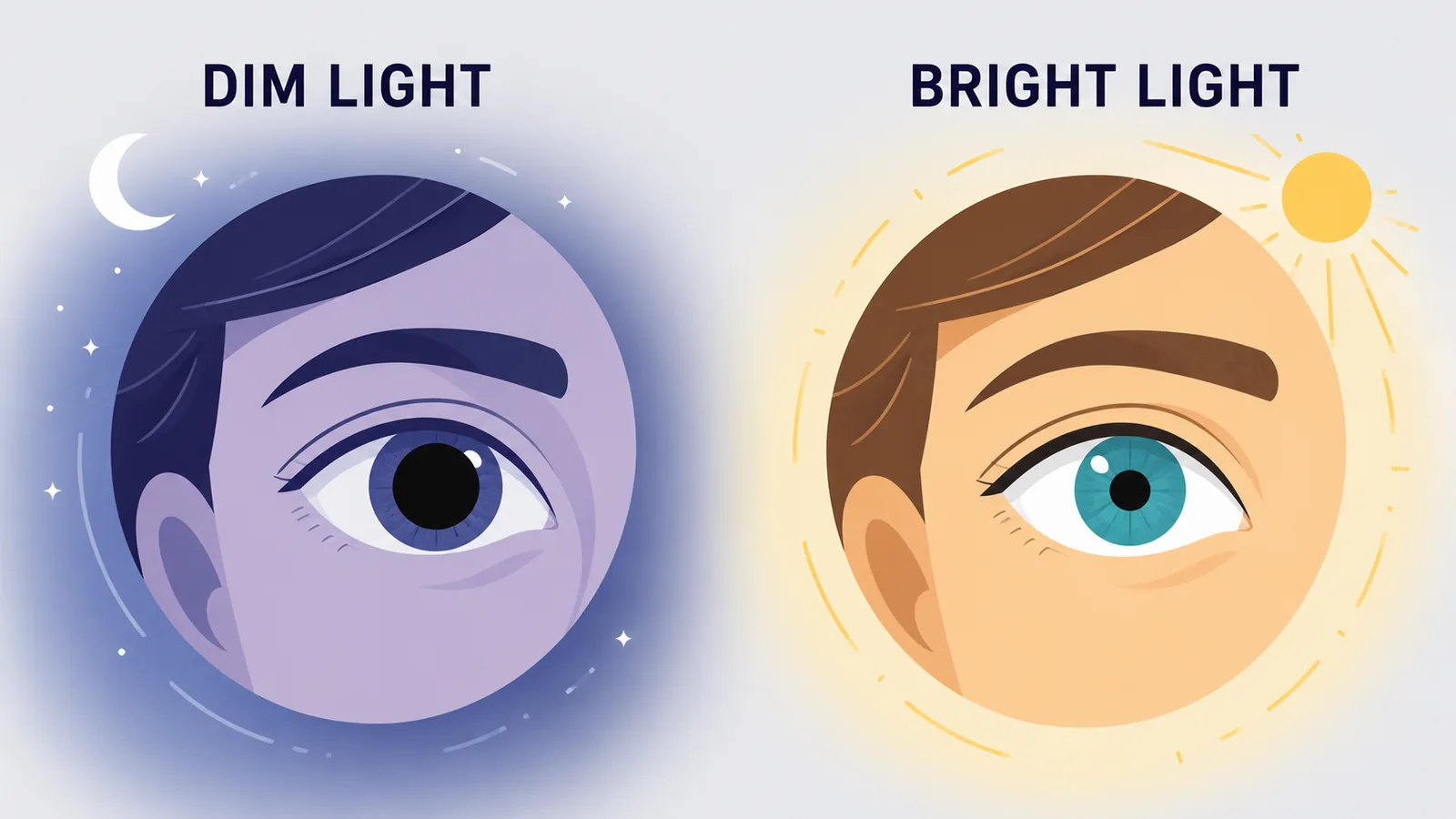
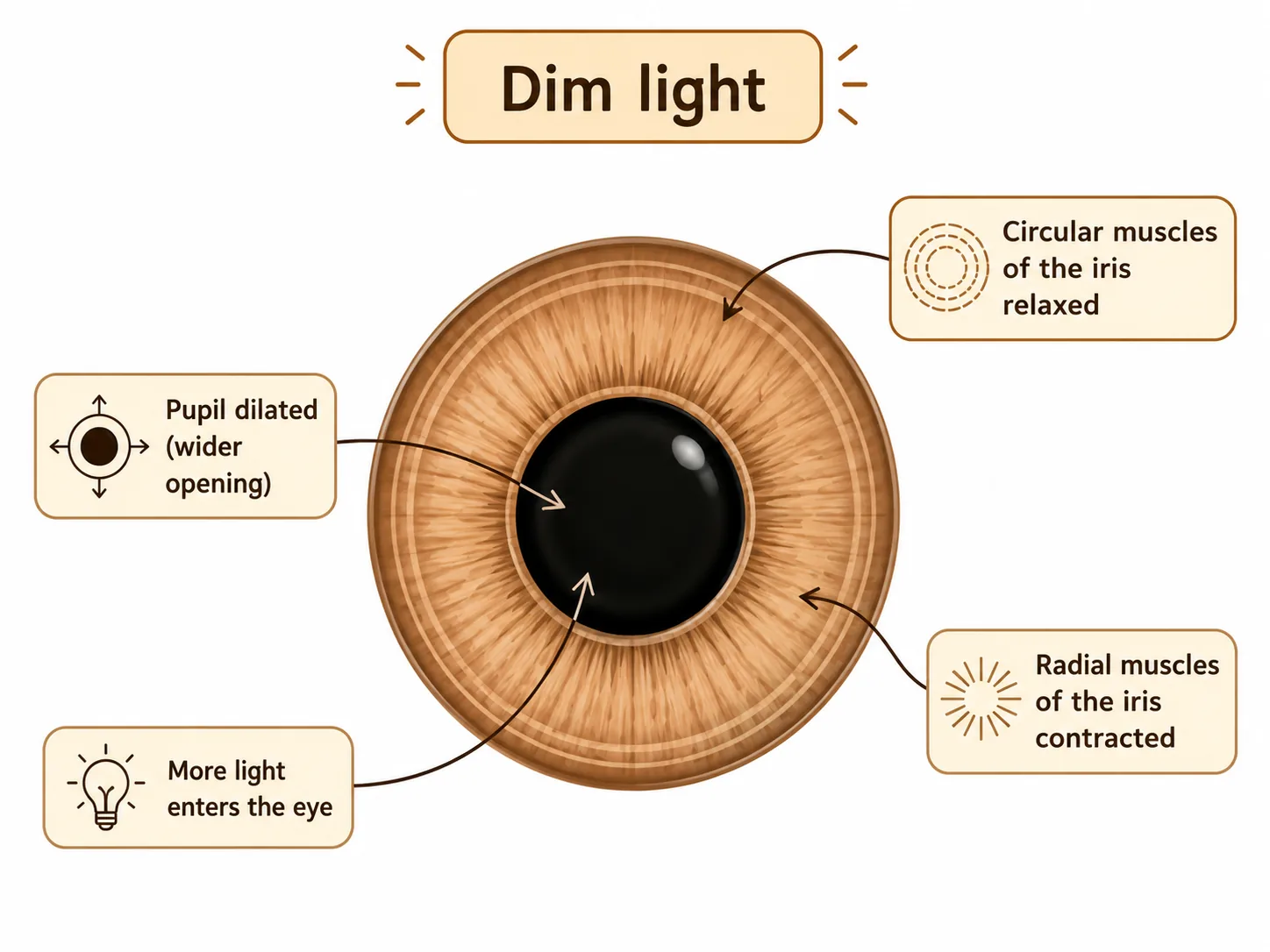

| Reflex | What happens | Protective value |
|---|---|---|
| Withdrawal | Limb muscles contract and pull the limb away from heat or a sharp object | Reduces tissue damage |
| Blinking | Eyelid muscles close the eye in response to dust, an allergen or bright light | Protects the eye |
| Pupil reflex (bright light) | Muscles make the pupil smaller | Protects the retina from damage |
| Pupil reflex (dim light) | Muscles make the pupil larger | Lets more light enter so you can see |
Section 3 of 7Parts of a reflex arc (HT only)
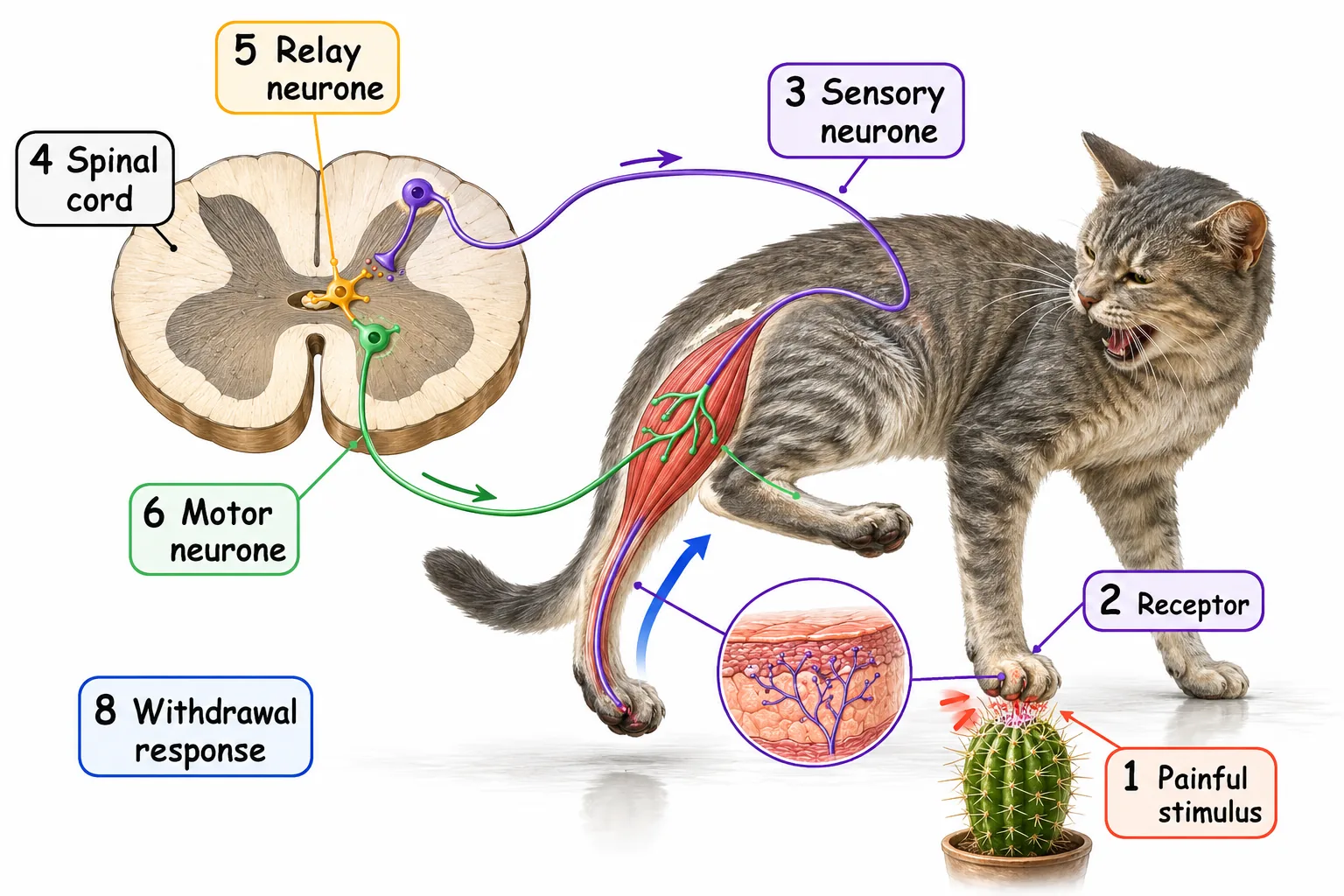
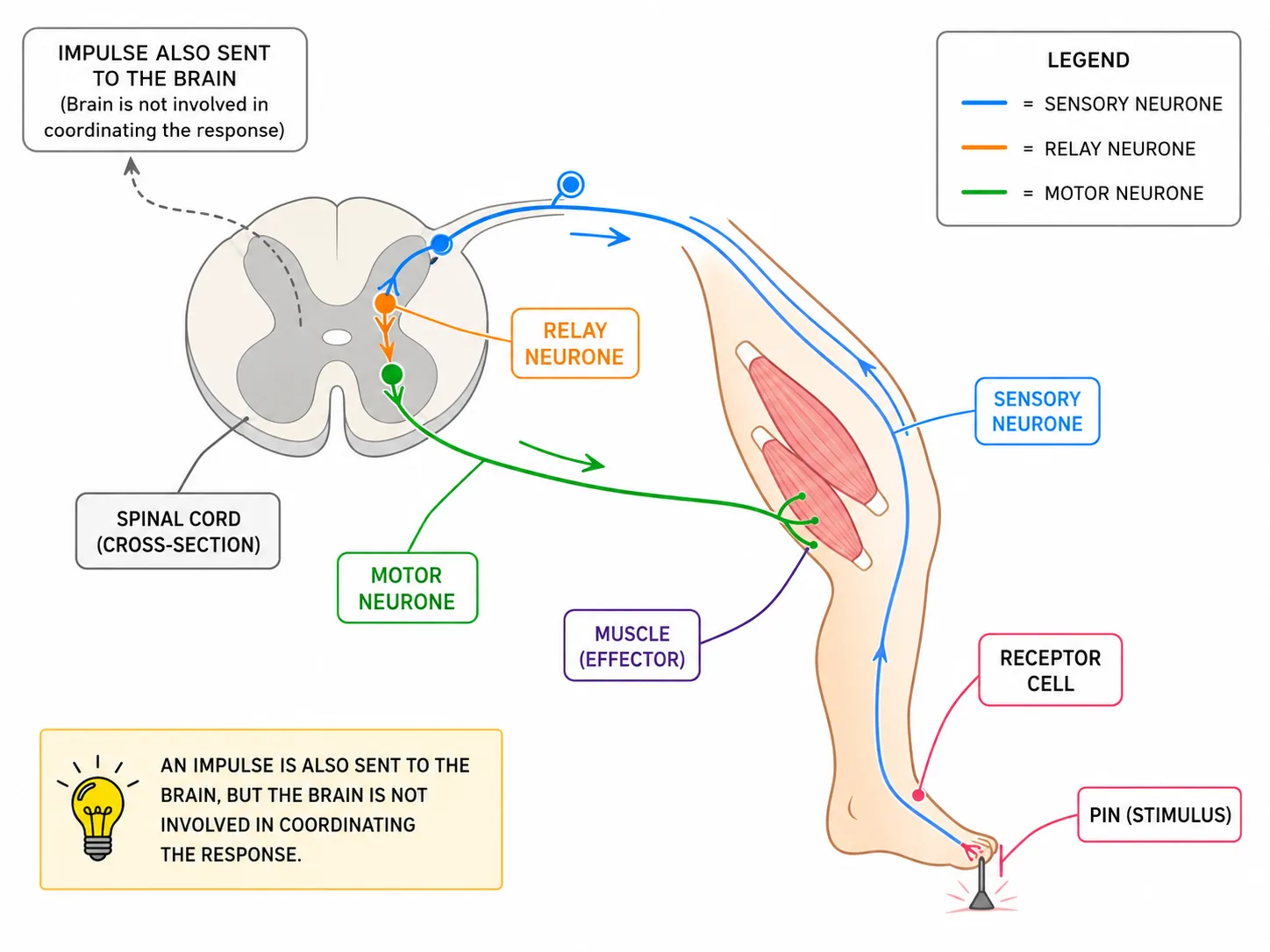
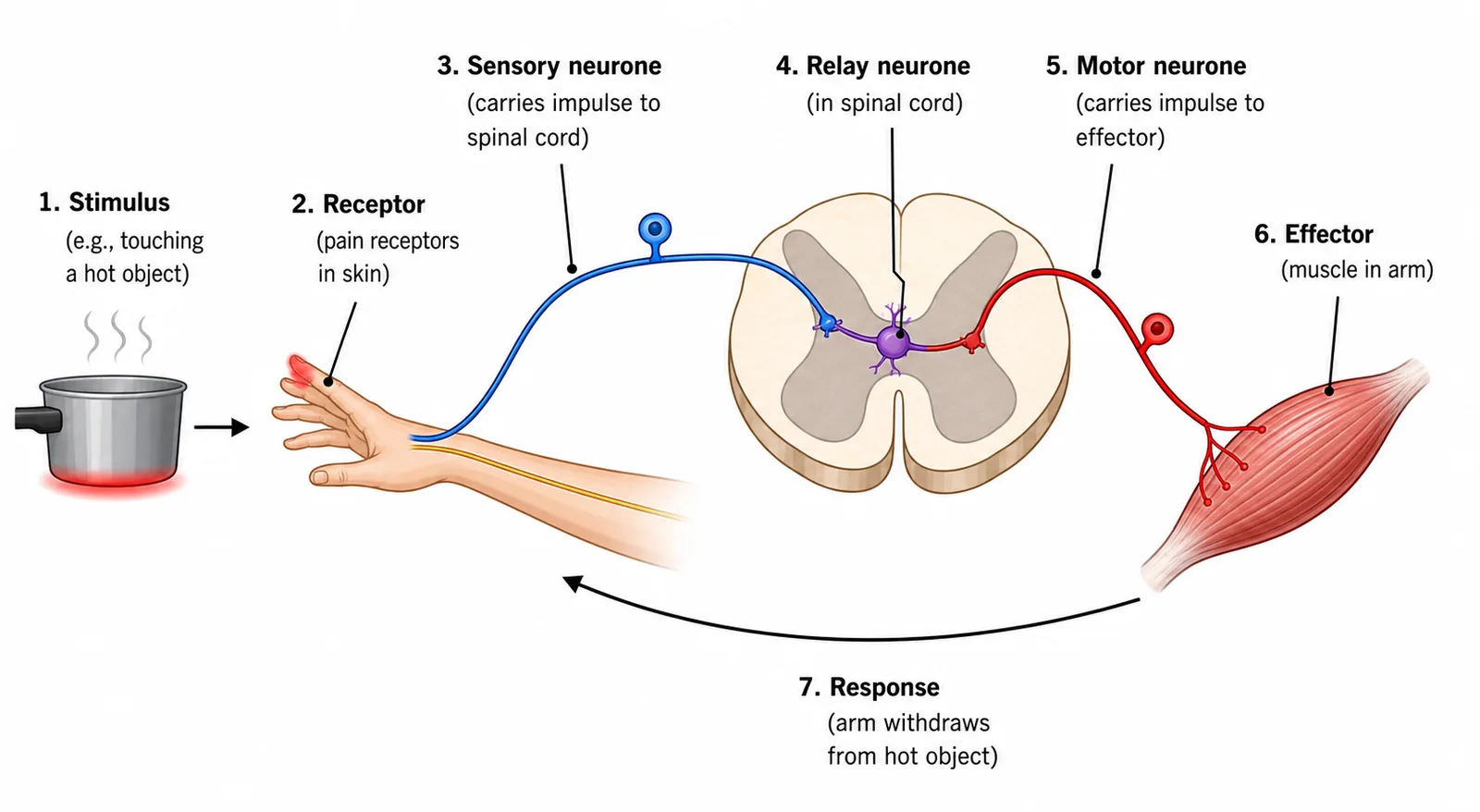


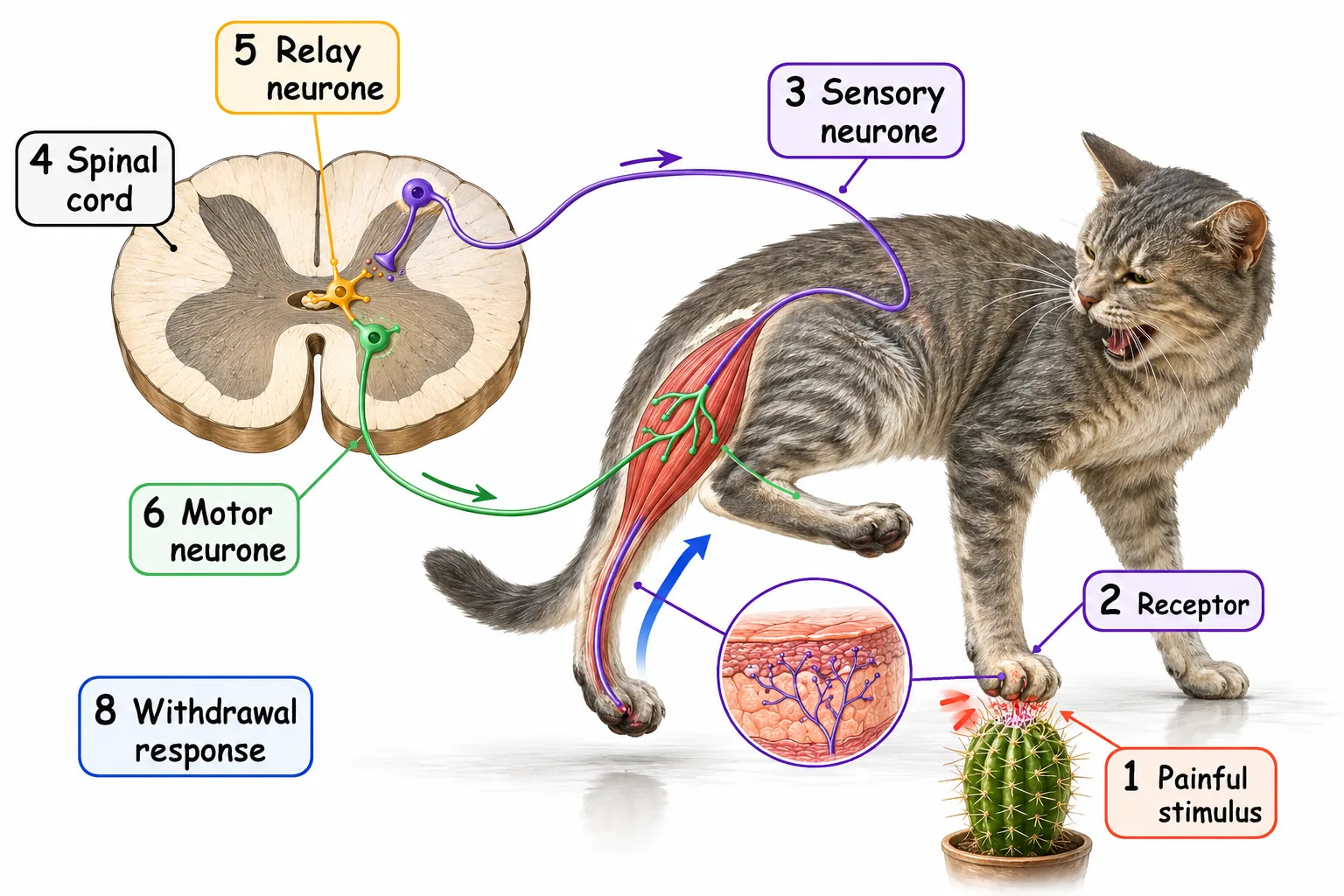
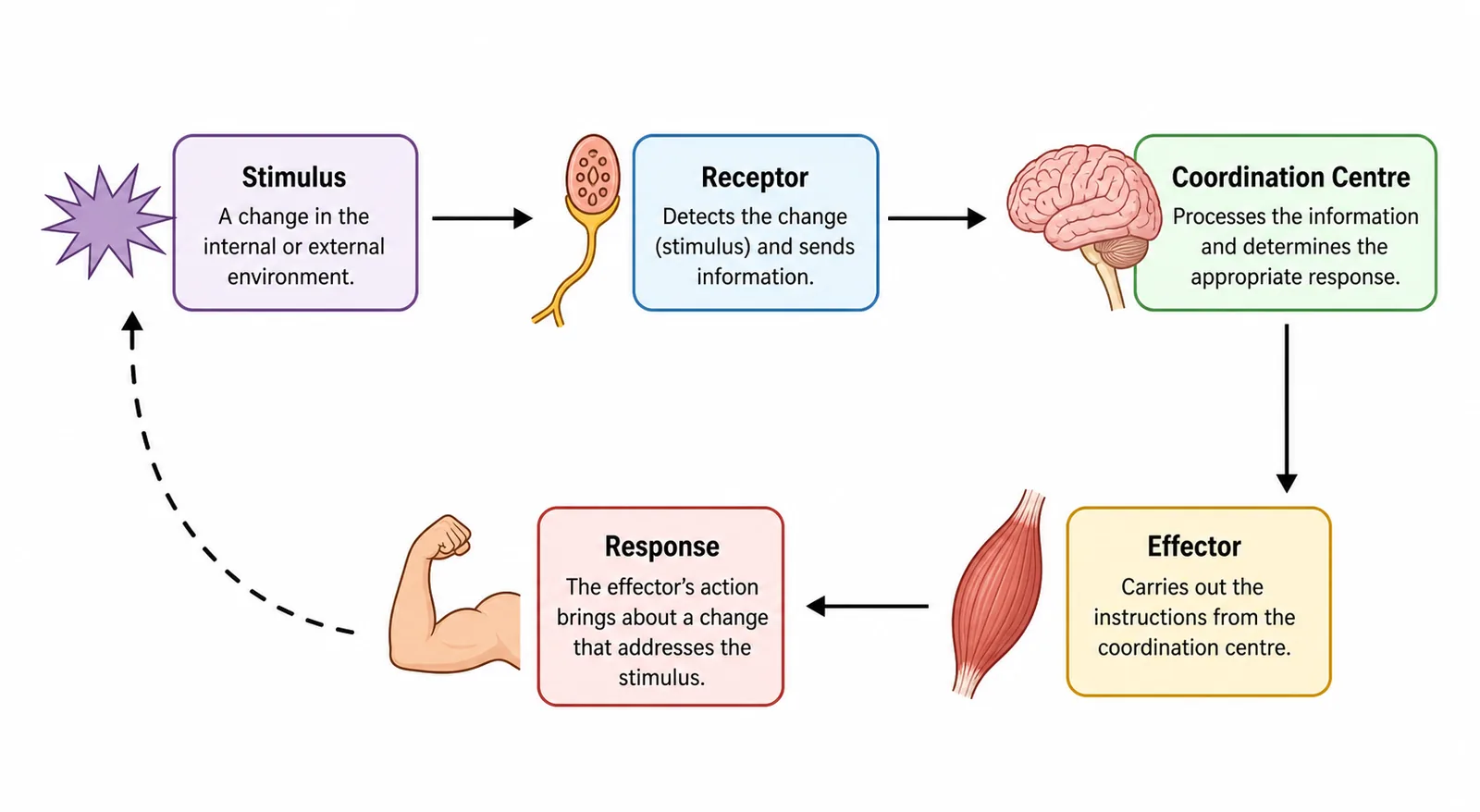
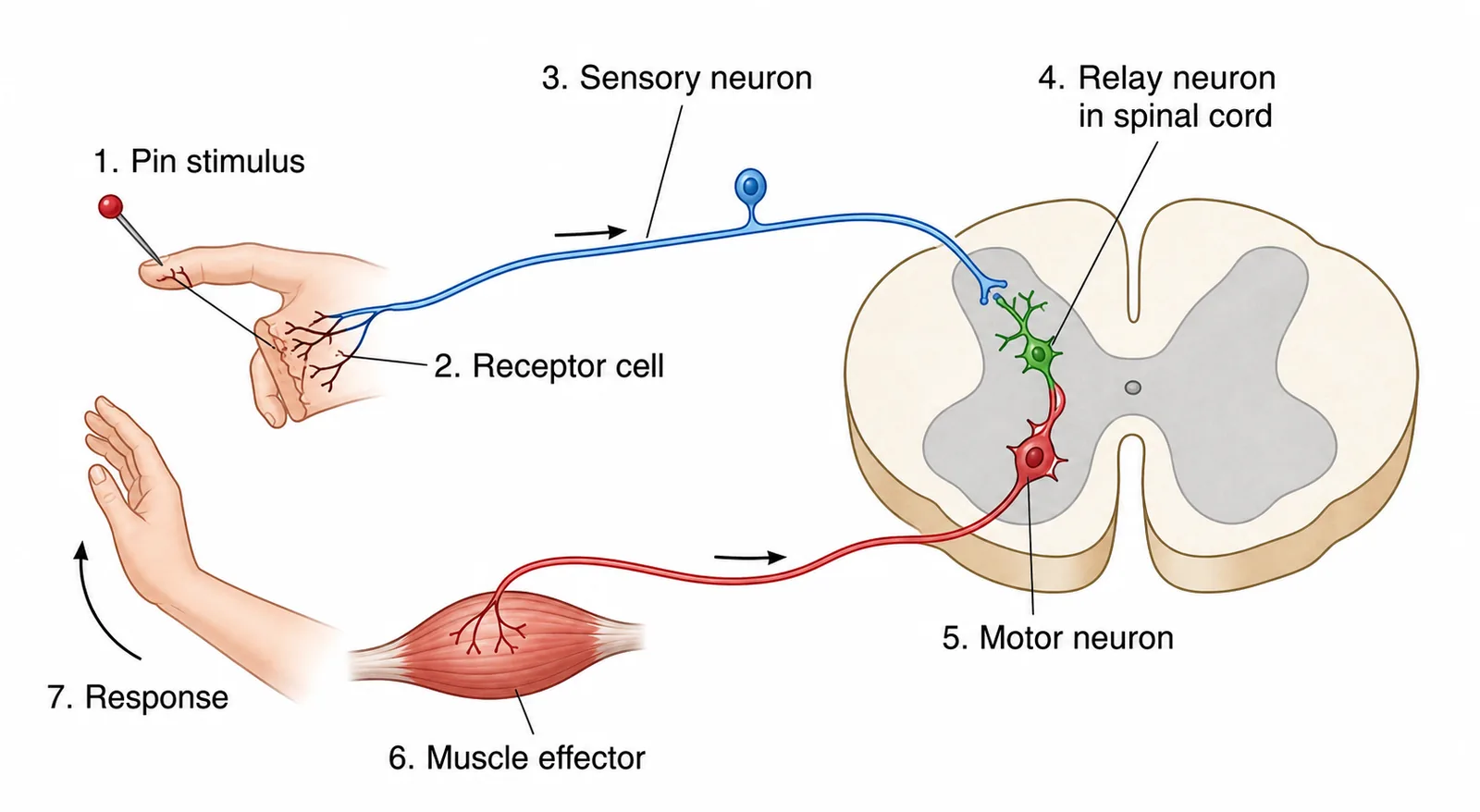
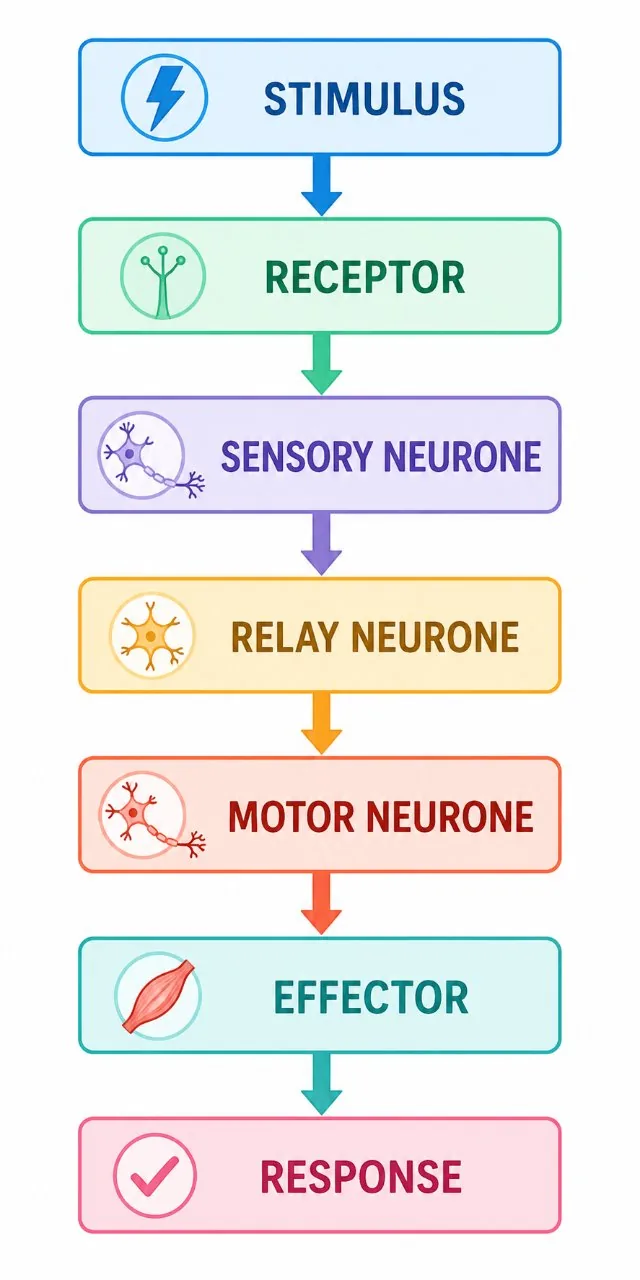
Reflex arc
Stimulus and receptor
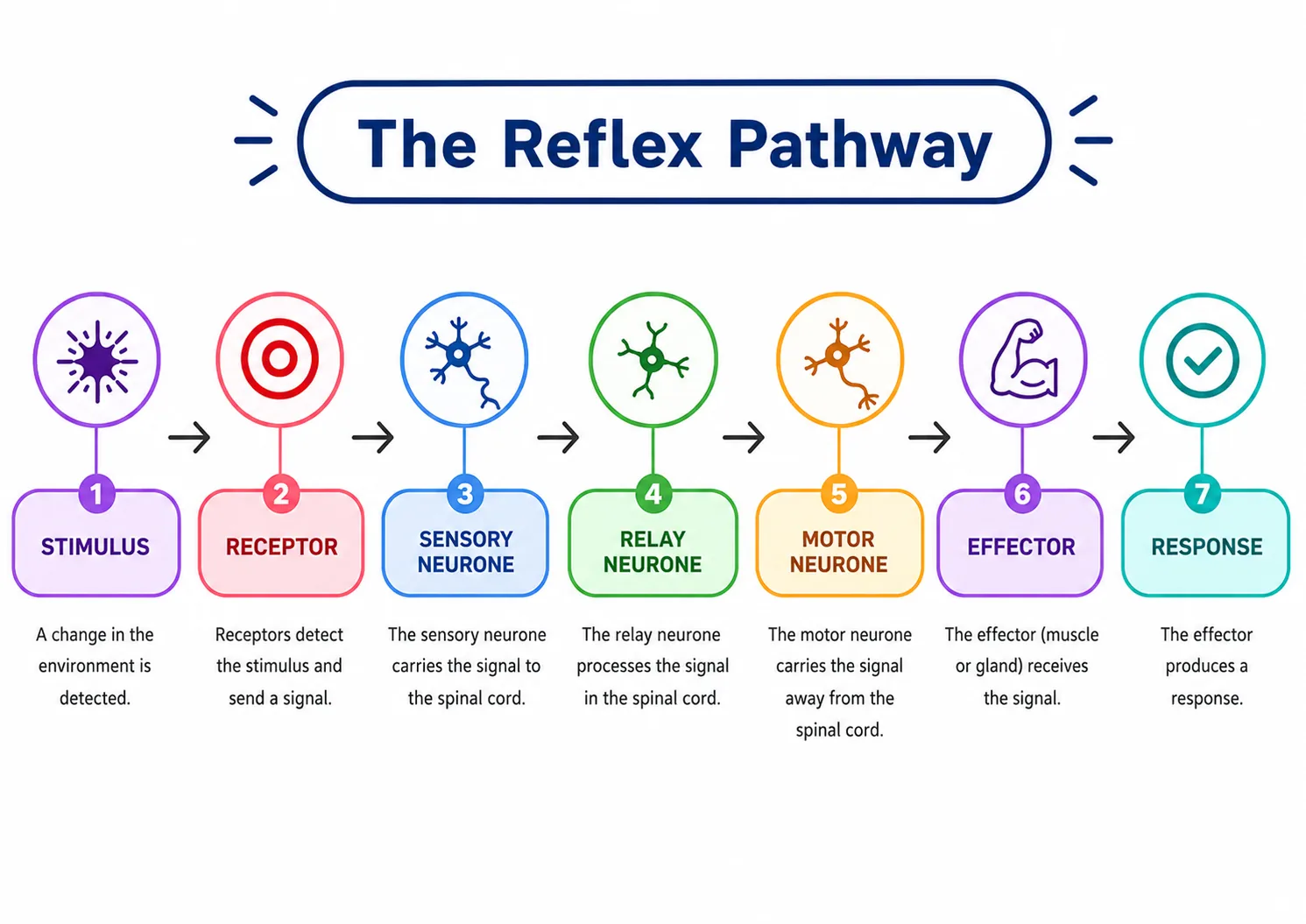
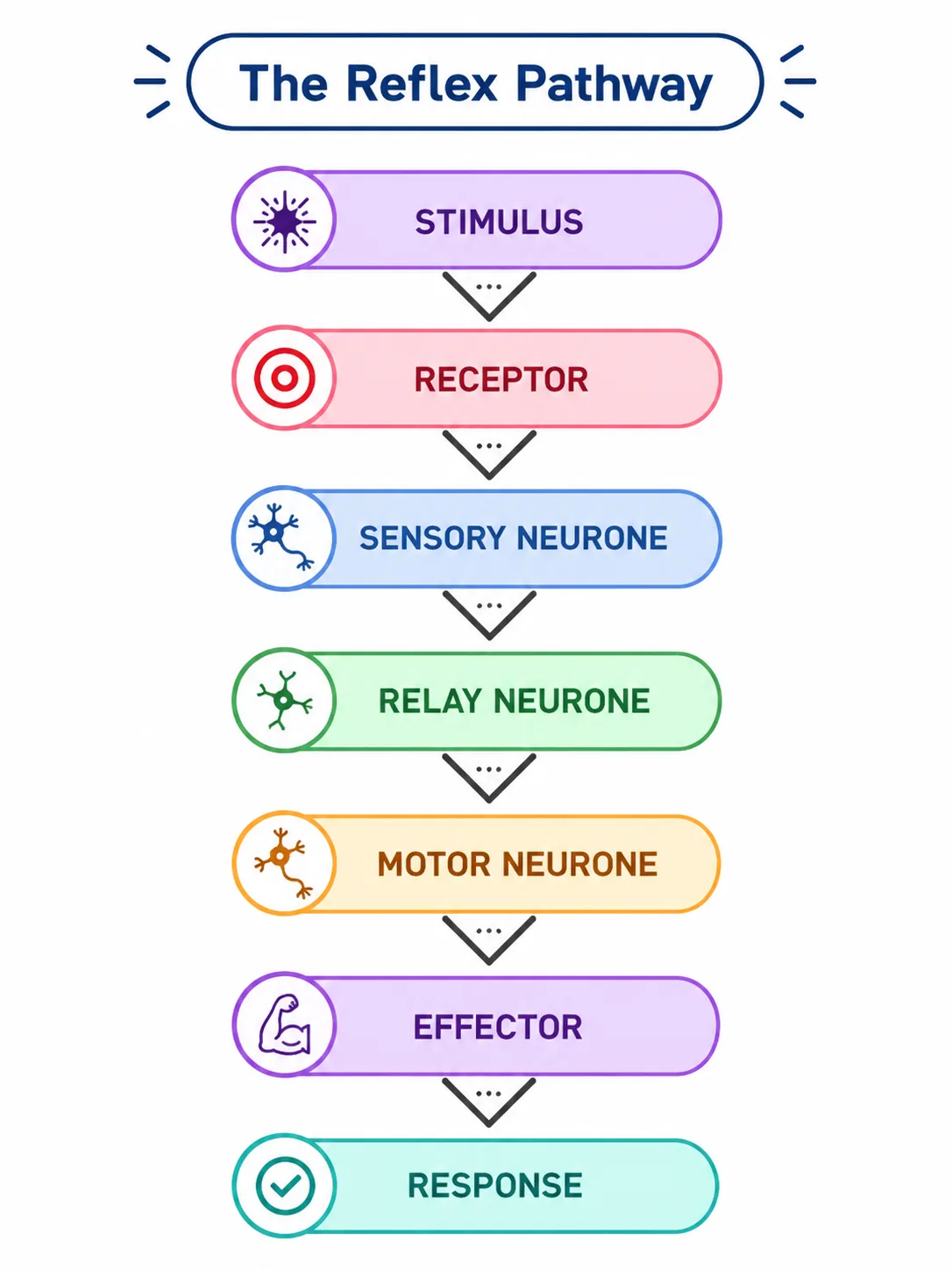
- Stimulus and receptor A stimulus is a change in the surroundings. Receptor cells in sense organs detect it.
Sensory neurone
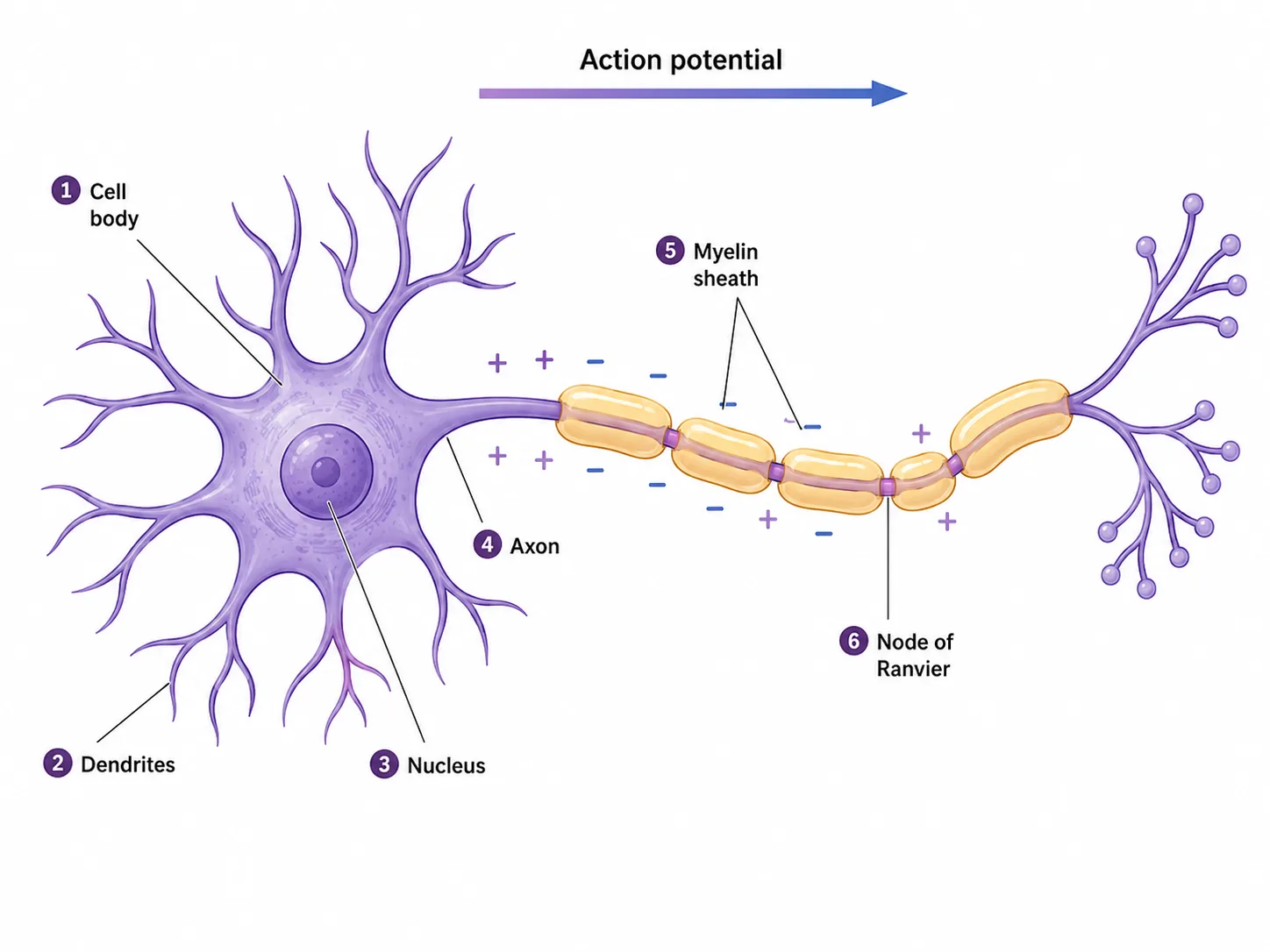
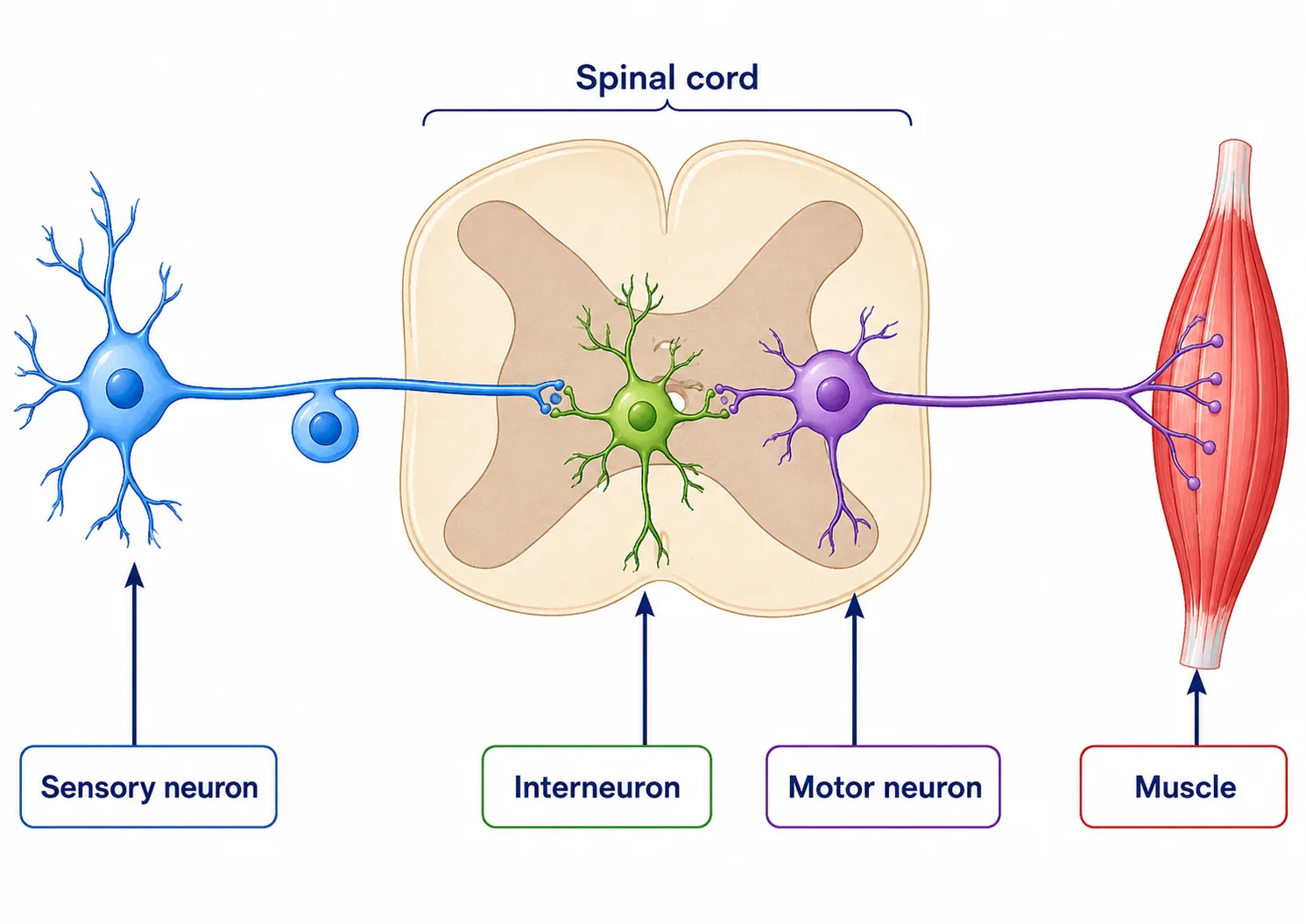
- Sensory neurone Carries impulses from the receptor to the central nervous system (CNS).
Coordinator
- Coordinator A relay neurone in the CNS, usually the spinal cord, passes impulses on without using the conscious brain.
Motor neurone
- Motor neurone Carries impulses from the CNS to the effector.
Effector
- Effector A muscle or gland that produces the response.
Section 4 of 7The pain-withdrawal reflex (HT only)

1
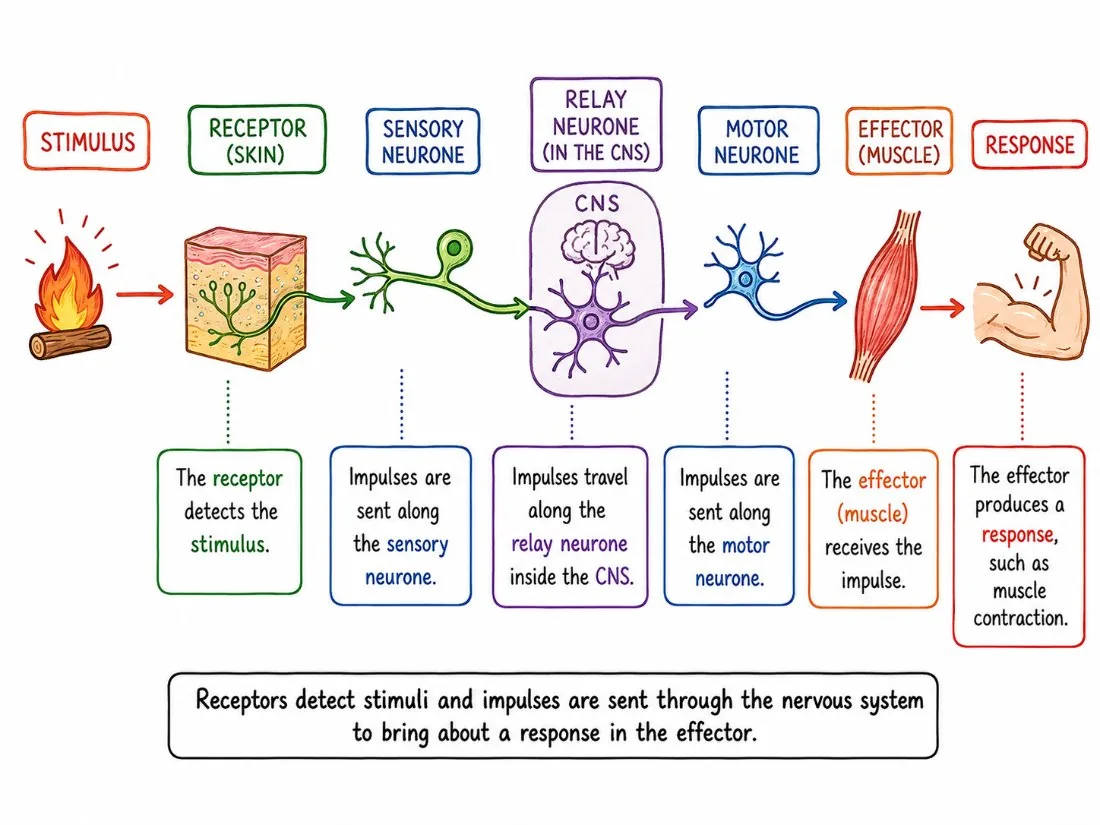
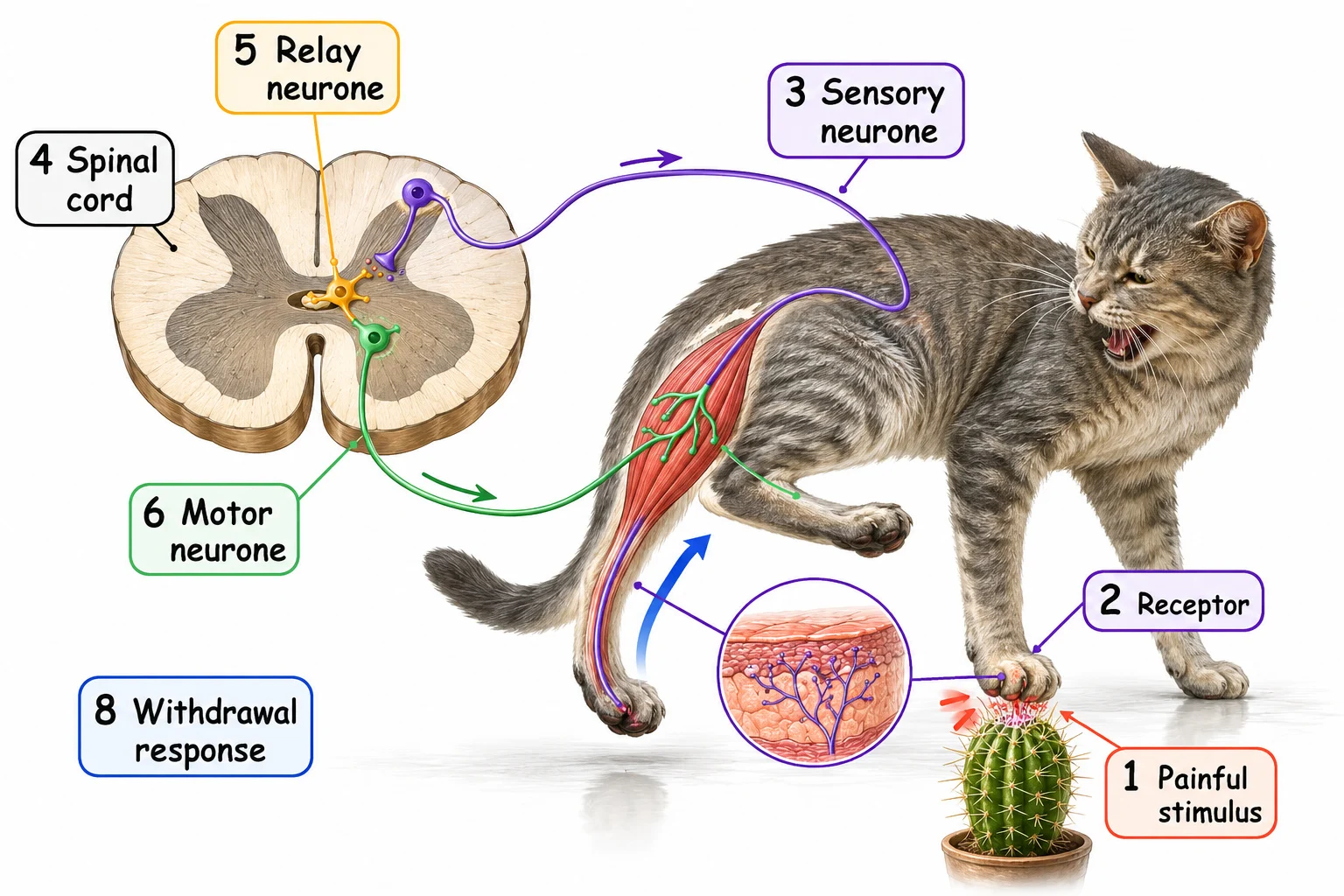
A receptor in the skin of the foot detects the sharp pin as a pain stimulus.
2
A sensory neurone carries electrical impulses to the spinal cord.
3
The impulse passes to a relay neurone in the spinal cord.
4
The relay neurone passes the impulse across a synapse to a motor neurone.
5
The motor neurone carries the impulse to a leg muscle, the effector.
6
The muscle contracts and pulls the foot away from the pin, all within a fraction of a second.
Section 5 of 7Direction and exceptions (HT only)


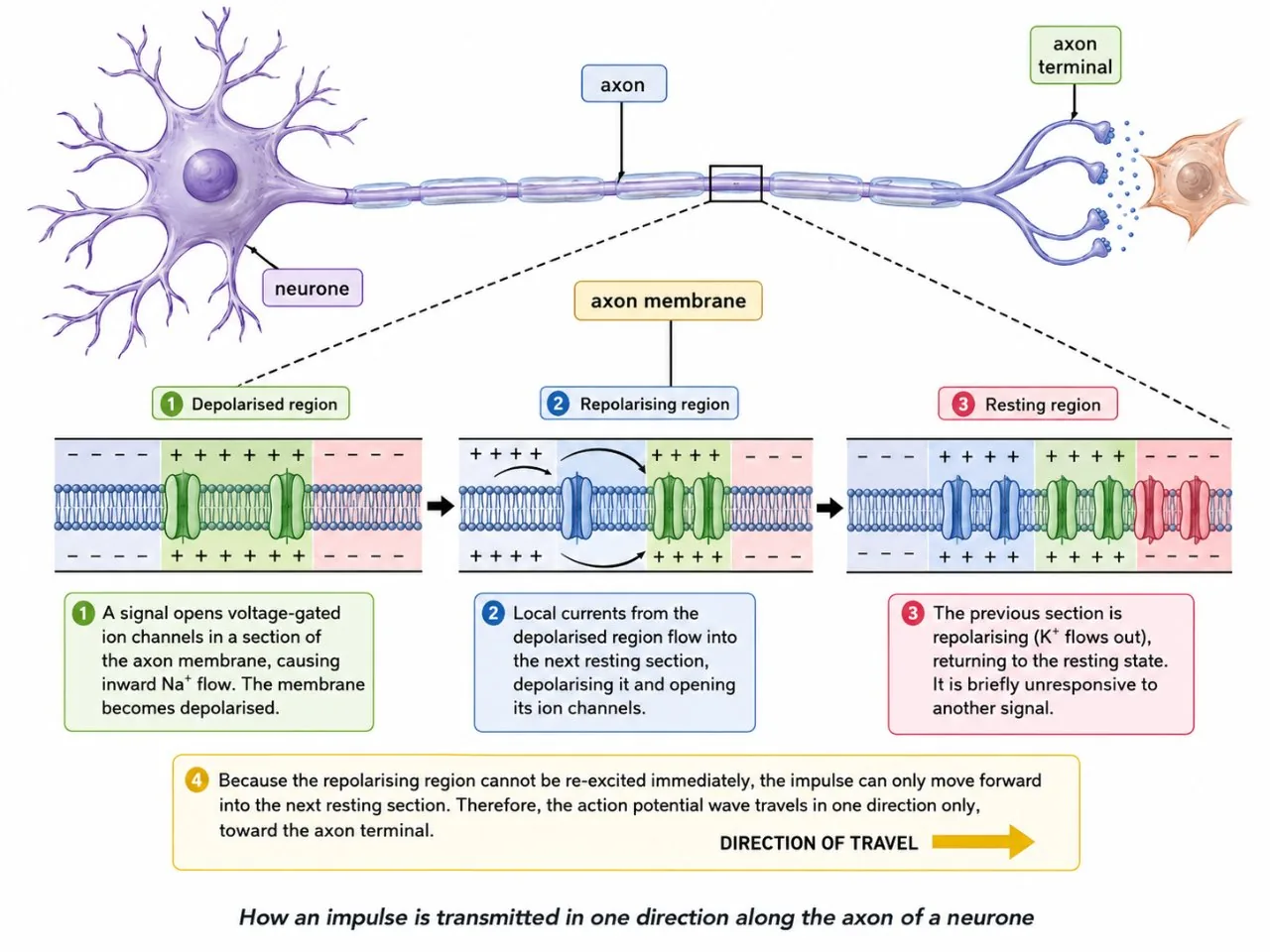
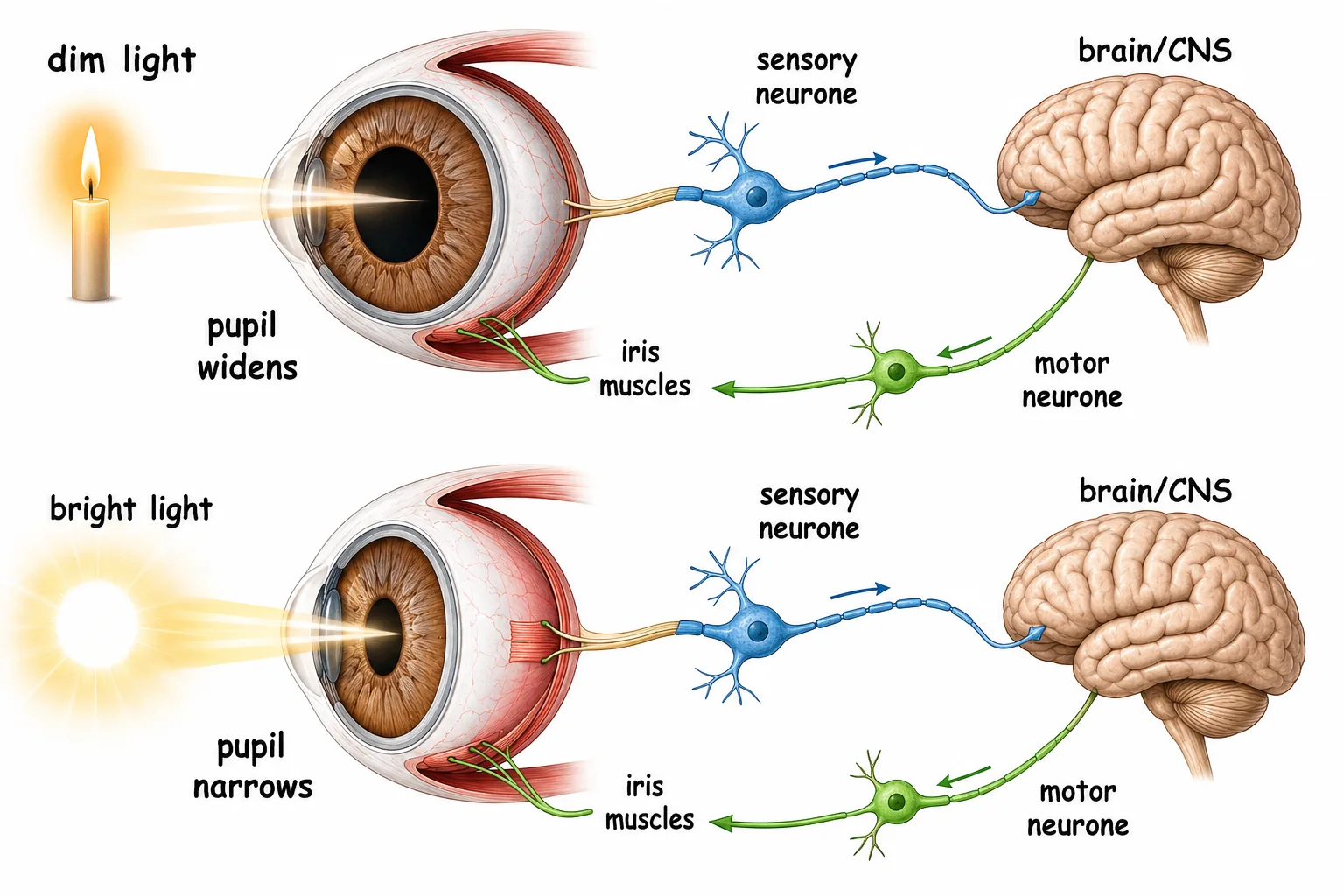

1Receptor
- Receptor The impulse always starts at the receptor.
2CNS
- CNS It then travels along the sensory neurone to the spinal cord.
3Effector
- Effector It leaves along the motor neurone to the muscle or gland.
4Eye reflexes
- Eye reflexes In blinking and the pupil reflex the coordinator is in the brain, but still not the conscious part.
Section 6 of 7Key terms
| Term | Meaning |
|---|---|
| Reflex action | An automatic, rapid, protective response that does not involve conscious thought. |
| Receptor | A cell that detects a stimulus. |
| Effector | A muscle or gland that carries out a response. |
| Synapse | A gap between two neurones where the signal passes from one to the next. |
| Relay neurone | A neurone in the CNS that links a sensory neurone to a motor neurone. |
Section 7 of 7Exam technique
1
Saying that the brain decides the reflex response. The conscious brain is not involved, so the response is automatic.
2
Reversing sensory and motor neurones. Sensory goes towards the CNS; motor goes away from it.
3
Describing the pupil reflex as dilating in bright light. The pupil gets smaller in bright light.
4
Leaving out the synapse when labelling a reflex arc diagram.