2.5.7Variation, Homeostasis and Micro-organisms
Maintaining Blood Glucose Levels
5 min read 6 parts Lesson 37 of 51 1 quiz
Section 1 of 6Why glucose must be controlled
A narrow safe range
- A narrow safe range Glucose is the sugar that cells use as the fuel for respiration, and it is carried around the body dissolved in the blood plasma.
- The concentration of glucose in the blood is held within a narrow range,
- which makes it an example of homeostasis: keeping the internal environment steady even when conditions outside or after meals change.
Glucose too high
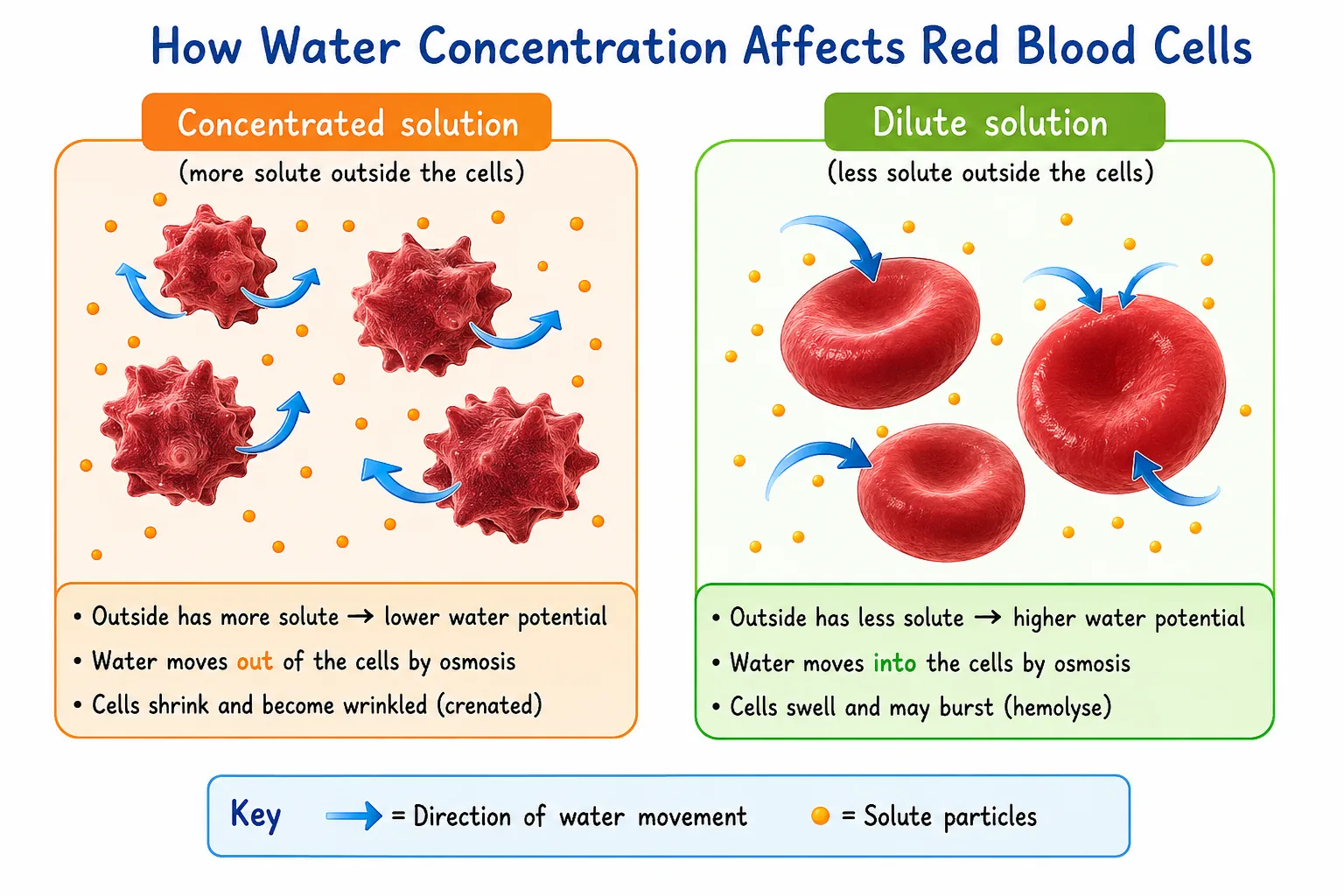
- Glucose too high Very concentrated blood plasma can pull water out of body cells by osmosis, so the cells lose water and cannot work properly.
- This is dangerous if it is not corrected.
Glucose too low
- Glucose too low The brain depends on a steady supply of glucose for respiration.
- If too little arrives, brain cells cannot release enough energy, which can lead to confusion, a coma or even death.
The control centre
- The control centre The pancreas monitors the glucose concentration of the blood and responds to any change.
- It is an endocrine gland, which means it makes hormones and secretes them directly into the bloodstream.
Section 2 of 6What happens after a meal
1Glucose rises
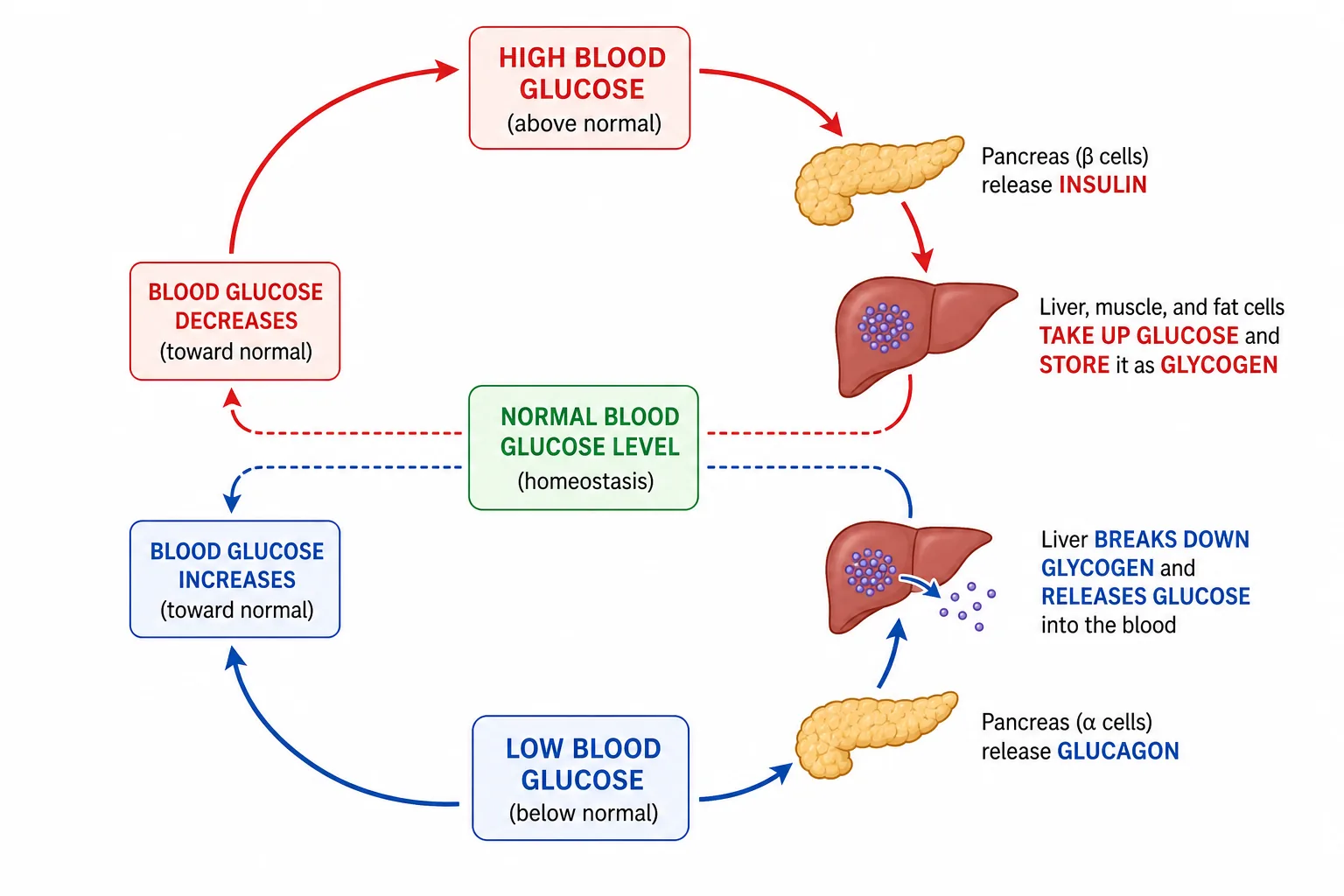
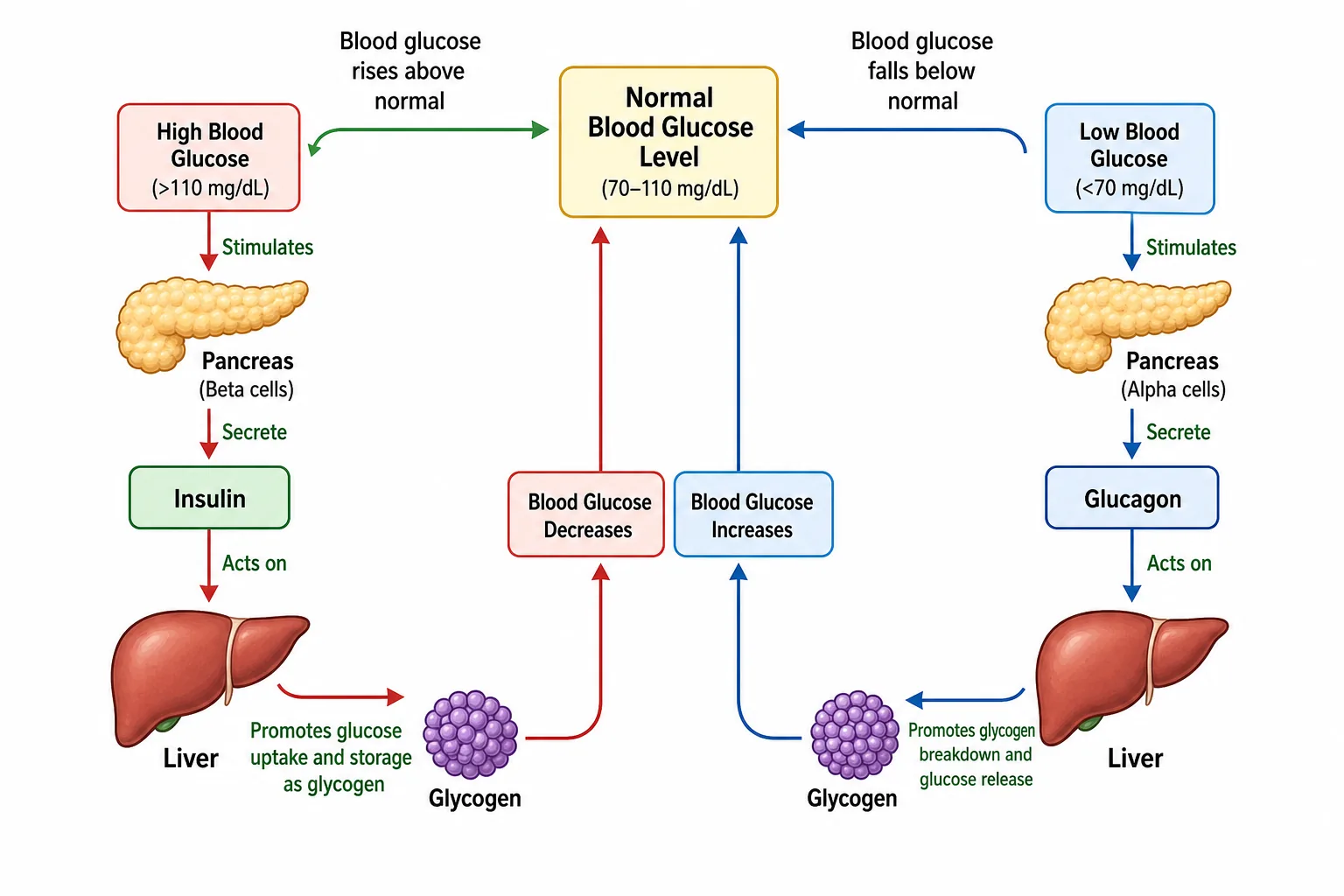
- Glucose rises Carbohydrate from a meal is digested to glucose, which is absorbed into the blood, so the concentration climbs above the normal level.
2Pancreas detects it
- Pancreas detects it Cells in the pancreas sense the higher glucose concentration of the blood passing through.
3Insulin is secreted
- Insulin is secreted The pancreas releases the hormone insulin into the blood, and the blood carries it to its target organs.
4Glucose is stored
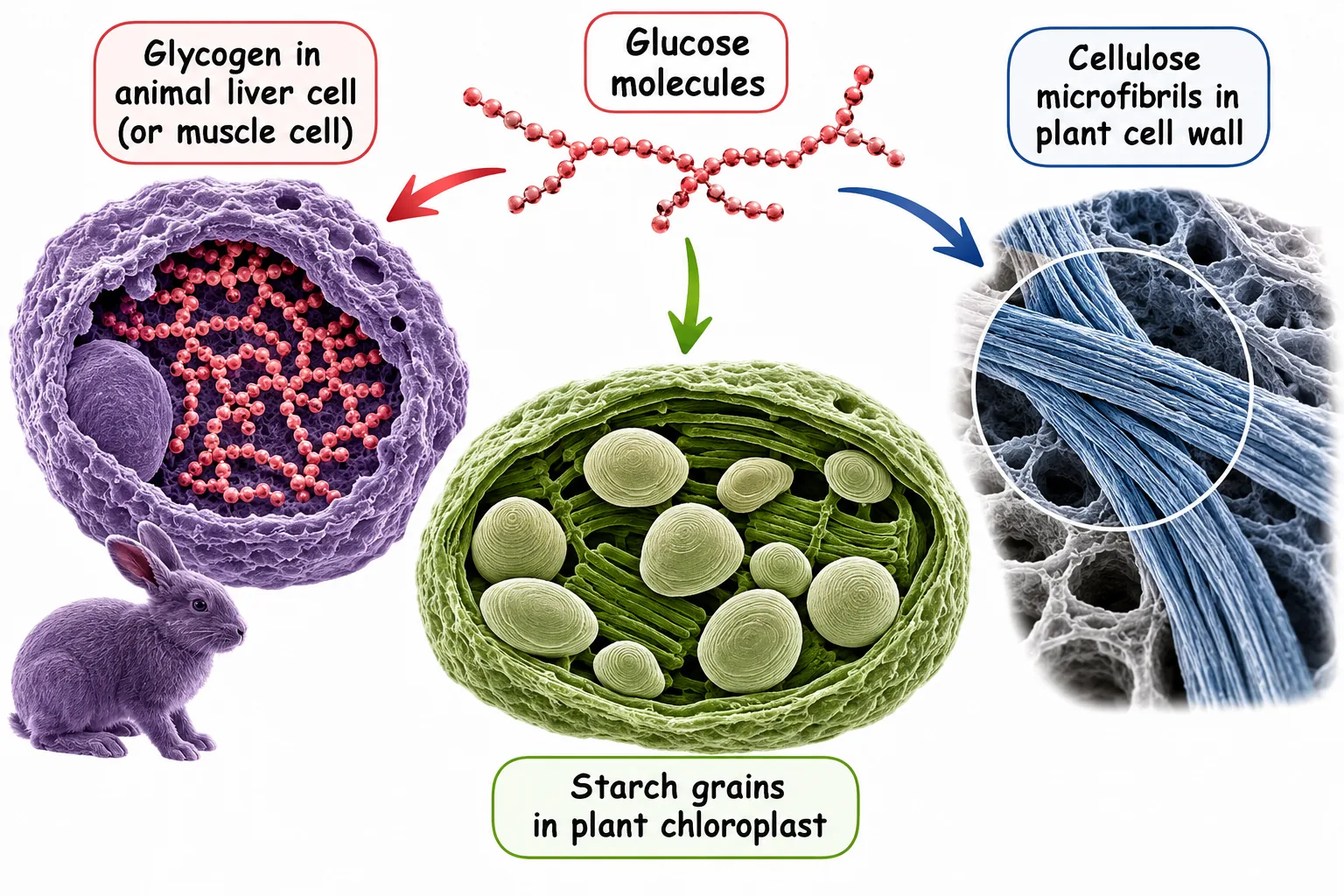
- Glucose is stored Insulin makes the liver and the muscles take glucose out of the blood and convert it into glycogen, an insoluble store.
5Level returns to normal
- Level returns to normal As the glucose concentration falls, the pancreas detects this and slows down insulin secretion.
Section 3 of 6Negative feedback




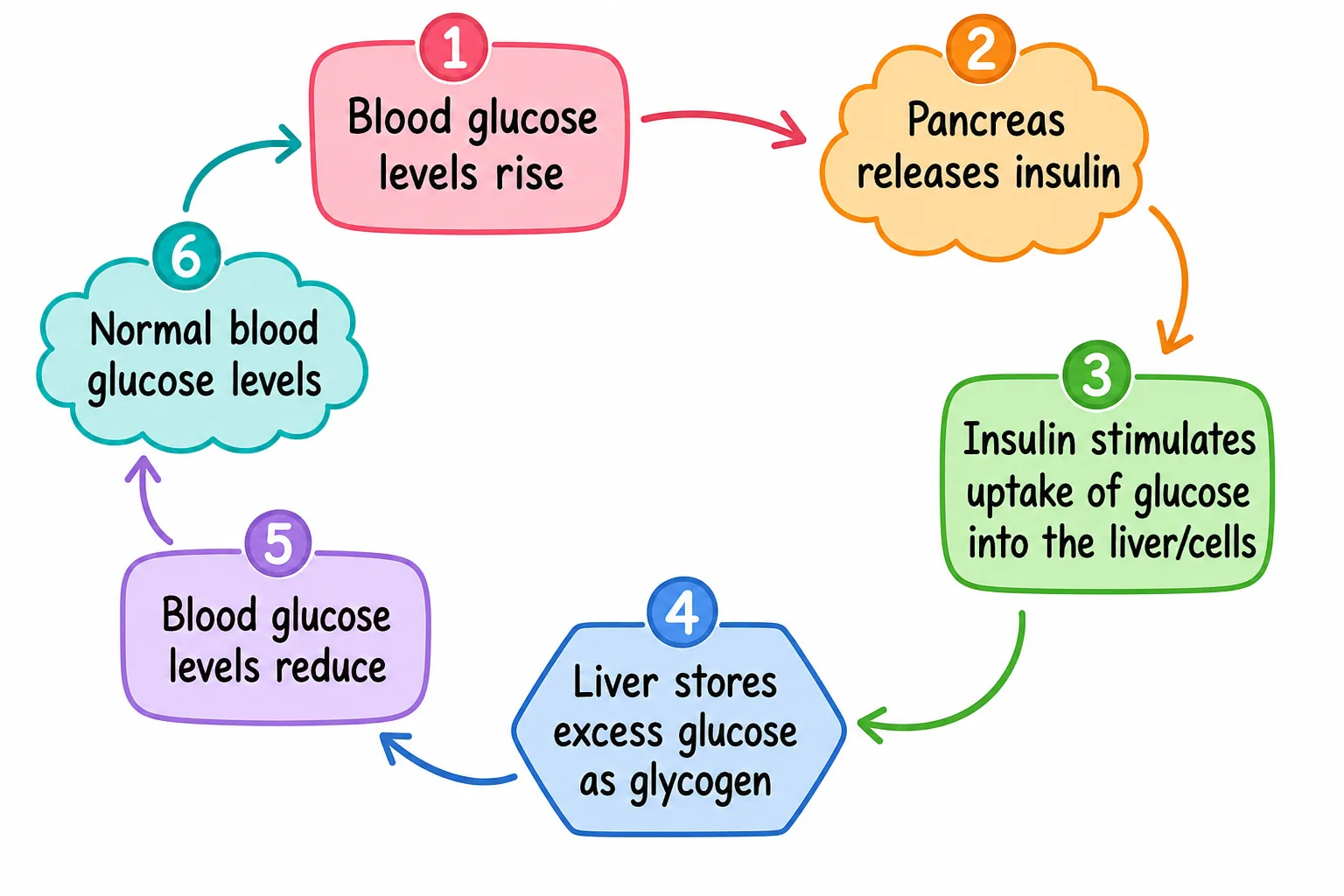
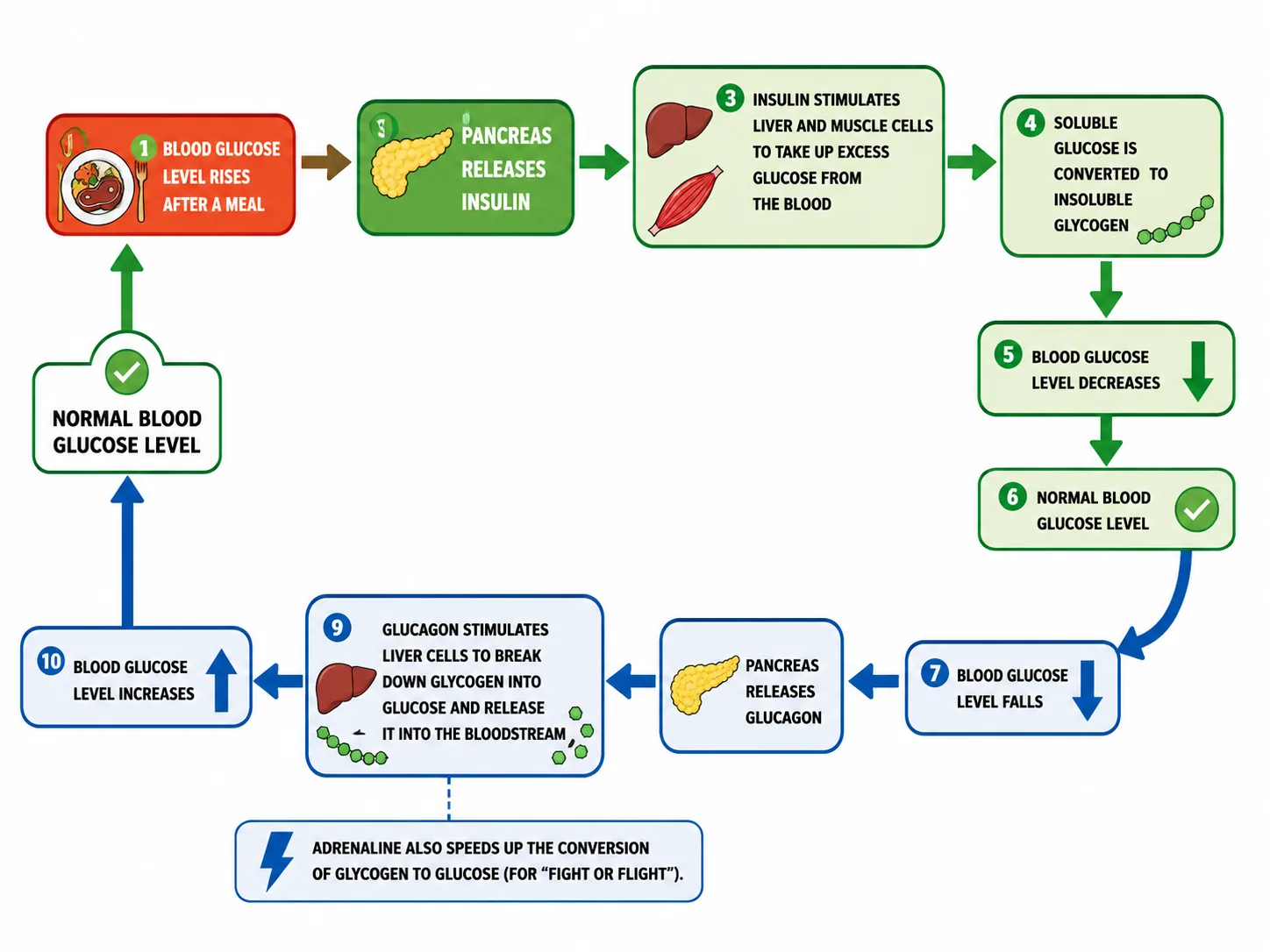
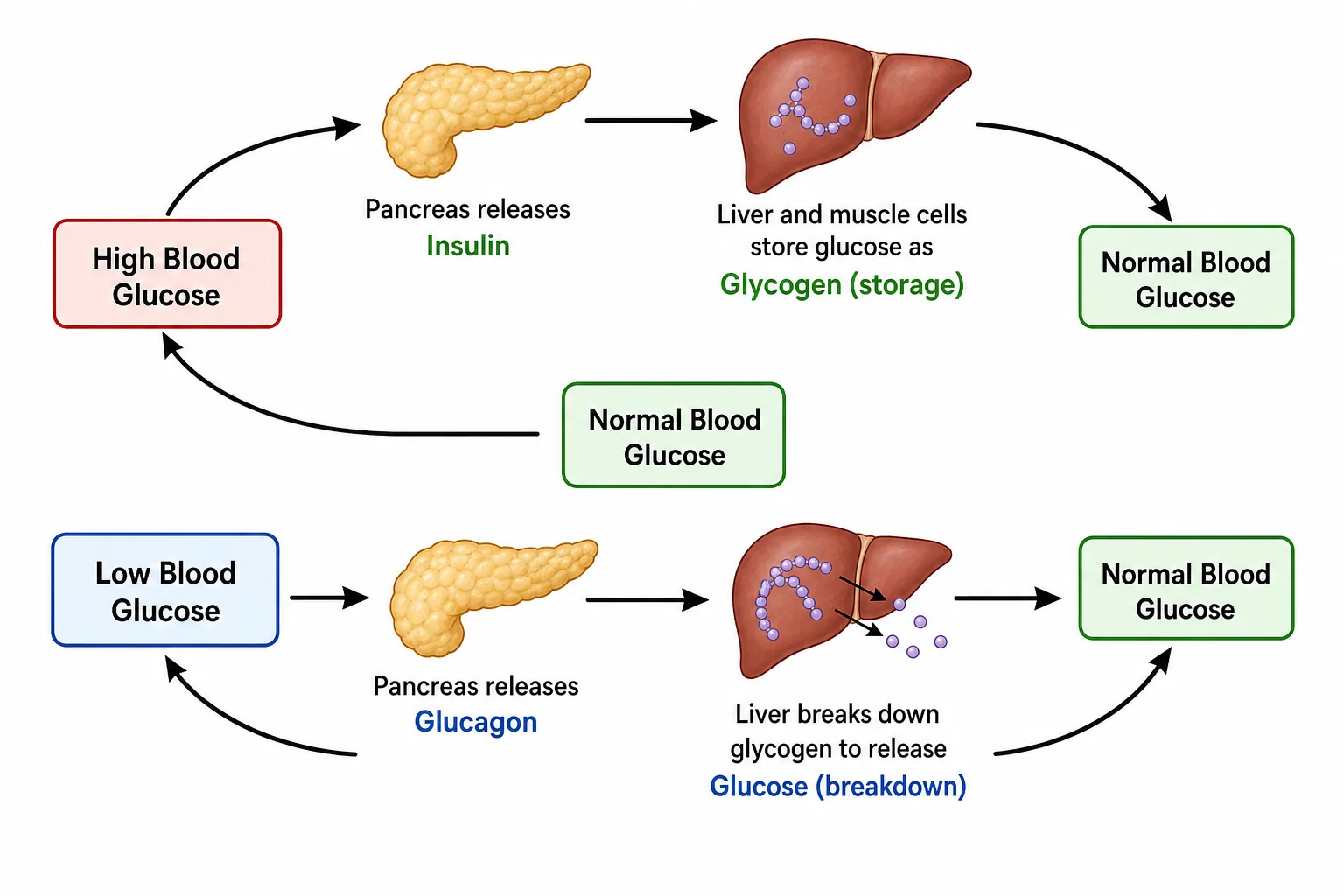

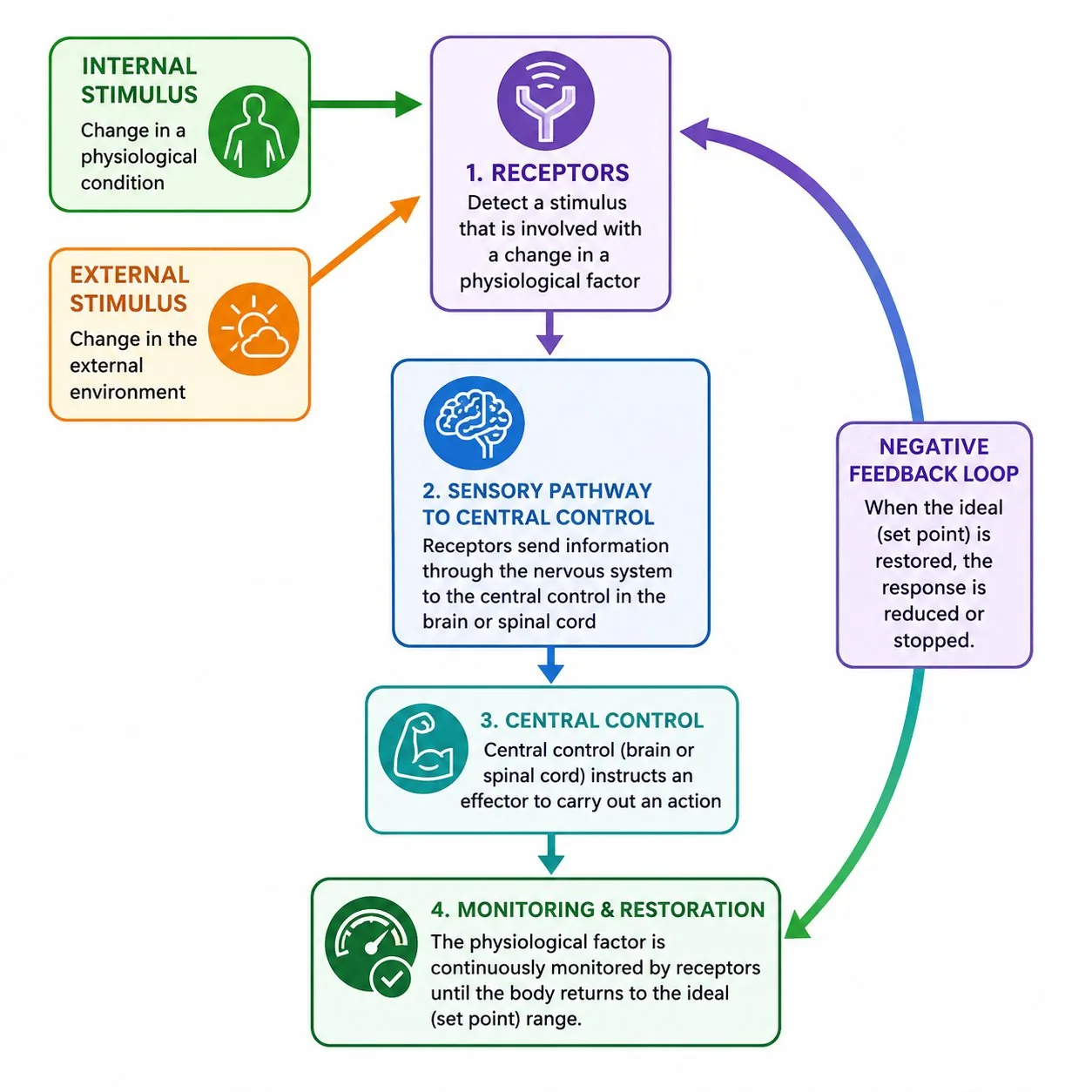
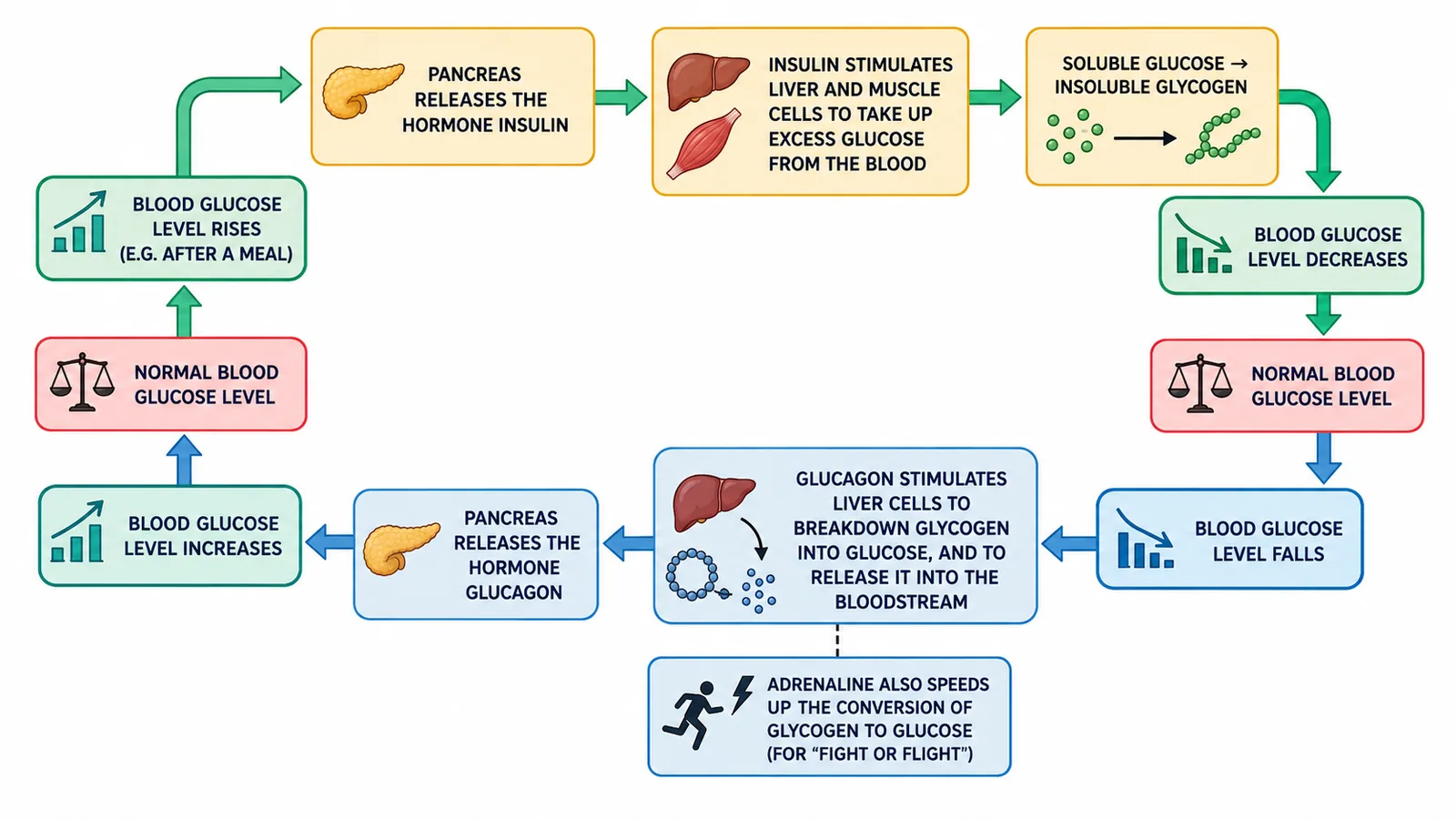

Homeostasis of blood glucose
Receptor
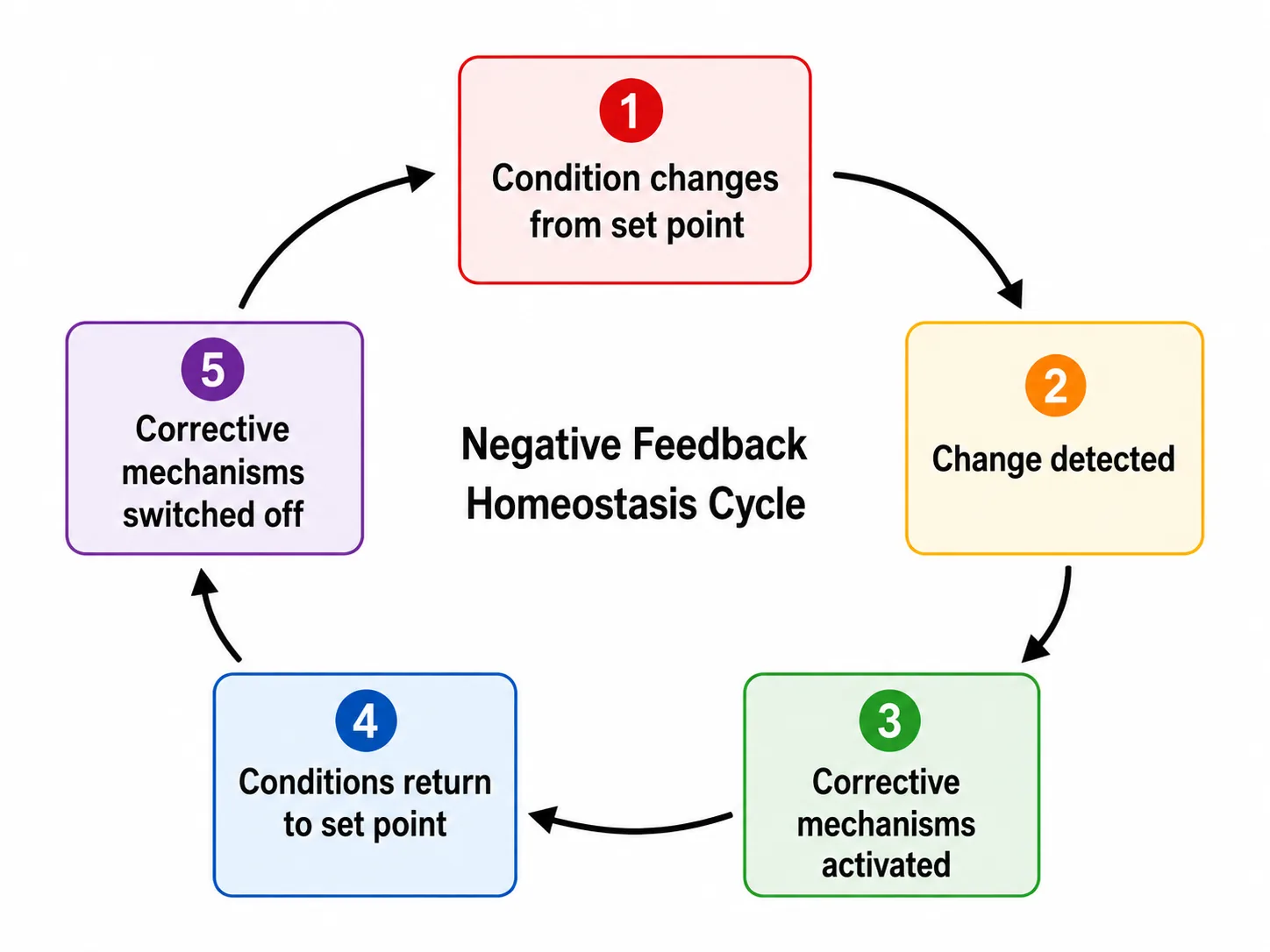
- Receptor Glucose-sensing cells in the pancreas detect the concentration of glucose in the blood.
Coordination
- Coordination The pancreas acts as the control centre and decides whether insulin should be released.
Effectors
- Effectors The liver and muscles respond to insulin by taking up glucose and storing it as glycogen.
Feedback
- Feedback The response reverses the original change, so the stimulus is removed and insulin release stops.
- This is called negative feedback.
Falling glucose (HT only)
- Falling glucose (HT only) When glucose is too low, the pancreas secretes the hormone glucagon,
- which makes the liver break glycogen back down into glucose and release it into the blood.
Section 4 of 6Comparing the two situations
| Feature | Blood glucose too high | Blood glucose too low (HT only for hormone) |
|---|---|---|
| Detected by | Pancreas | Pancreas |
| Hormone released | Insulin | Glucagon |
| Organs that respond | Liver and muscles | Liver |
| Change in the organs | Glucose converted to glycogen for storage | Glycogen broken down to glucose |
| Effect on blood glucose | Concentration falls | Concentration rises |
Section 5 of 6Key terms
| Term | Meaning |
|---|---|
| Homeostasis | The maintenance of a constant internal environment despite changes inside or outside the body. |
| Pancreas | An endocrine gland that monitors blood glucose and secretes insulin. |
| Insulin | A hormone that causes the liver and muscles to take up glucose and store it as glycogen. |
| Glycogen | An insoluble carbohydrate made of many glucose units, used as a store in the liver and muscles. |
| Endocrine gland | A gland that secretes hormones directly into the bloodstream. |
| Negative feedback | A response that reverses a change and returns a condition to its normal level. |
Section 6 of 6Exam technique
1
Saying that insulin turns glucose into glucagon. Glycogen is the storage carbohydrate; glucagon is a different hormone (HT only).
2
Writing that the pancreas stores the glucose. It is the liver and muscles that take up glucose and store glycogen.
3
Forgetting to state that insulin travels in the blood. Hormones are carried in the bloodstream to their target organs.
4
Saying that high blood glucose makes cells swell. In fact the concentrated blood draws water out of cells by osmosis.
5
Describing glycogen as soluble. It is insoluble, which is why it is a suitable store that does not affect osmosis.