1.2.10Chemical Substances, Reactions and Essential Resources
Testing Cations and Anions
5 min read 8 parts Lesson 22 of 46 1 quiz
Section 1 of 8The flame test for cations
1
Clean a loop of unreactive wire, such as nichrome or platinum, by dipping it in dilute acid.
2
Hold the loop in the hot blue part of a Bunsen flame until it gives no colour.
3
Dip the clean loop into the solid sample or its solution.
4
Place the loop at the edge of the blue flame and note the colour.
5
Compare the colour with known results to name the metal ion.
Section 2 of 8Flame colours to learn
| Metal ion | Flame colour |
|---|---|
| Lithium, Li+ | Red |
| Sodium, Na+ | Yellow-orange |
| Potassium, K+ | Lilac |
| Calcium, Ca2+ | Brick-red |
| Barium, Ba2+ | Apple-green |
Section 3 of 8Why the method matters
Cleaning in acid
- Cleaning in acid Any ions left on the wire from an earlier test would add their own colour.
- A mixture of colours can hide the true ion, so the wire is cleaned until it gives no colour at all.
Using the blue flame
- Using the blue flame The blue Bunsen flame is hottest and gives little colour of its own, so the colour from the sample is easier to see.
Precise wording
- Precise wording Marks are only given for the exact colour, so write apple-green for barium rather than just green.
Section 4 of 8Testing for halide ions
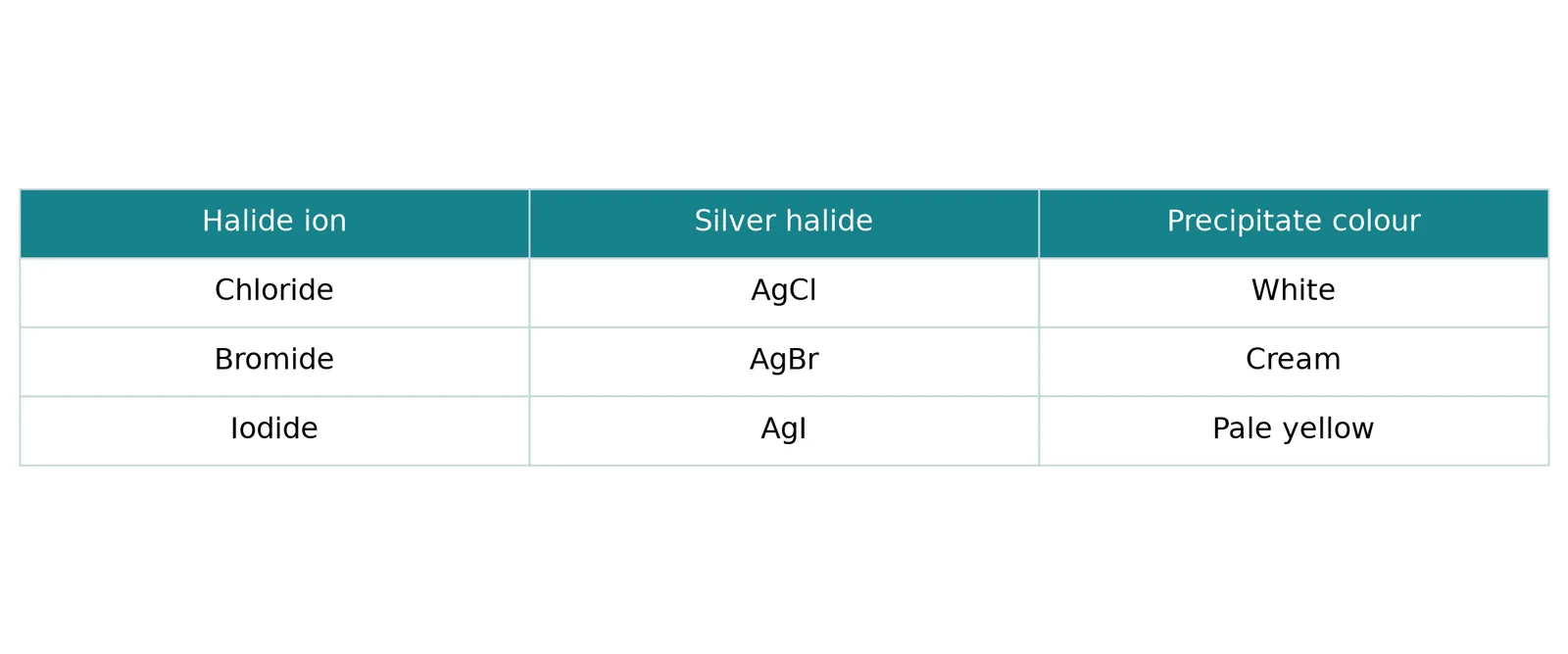
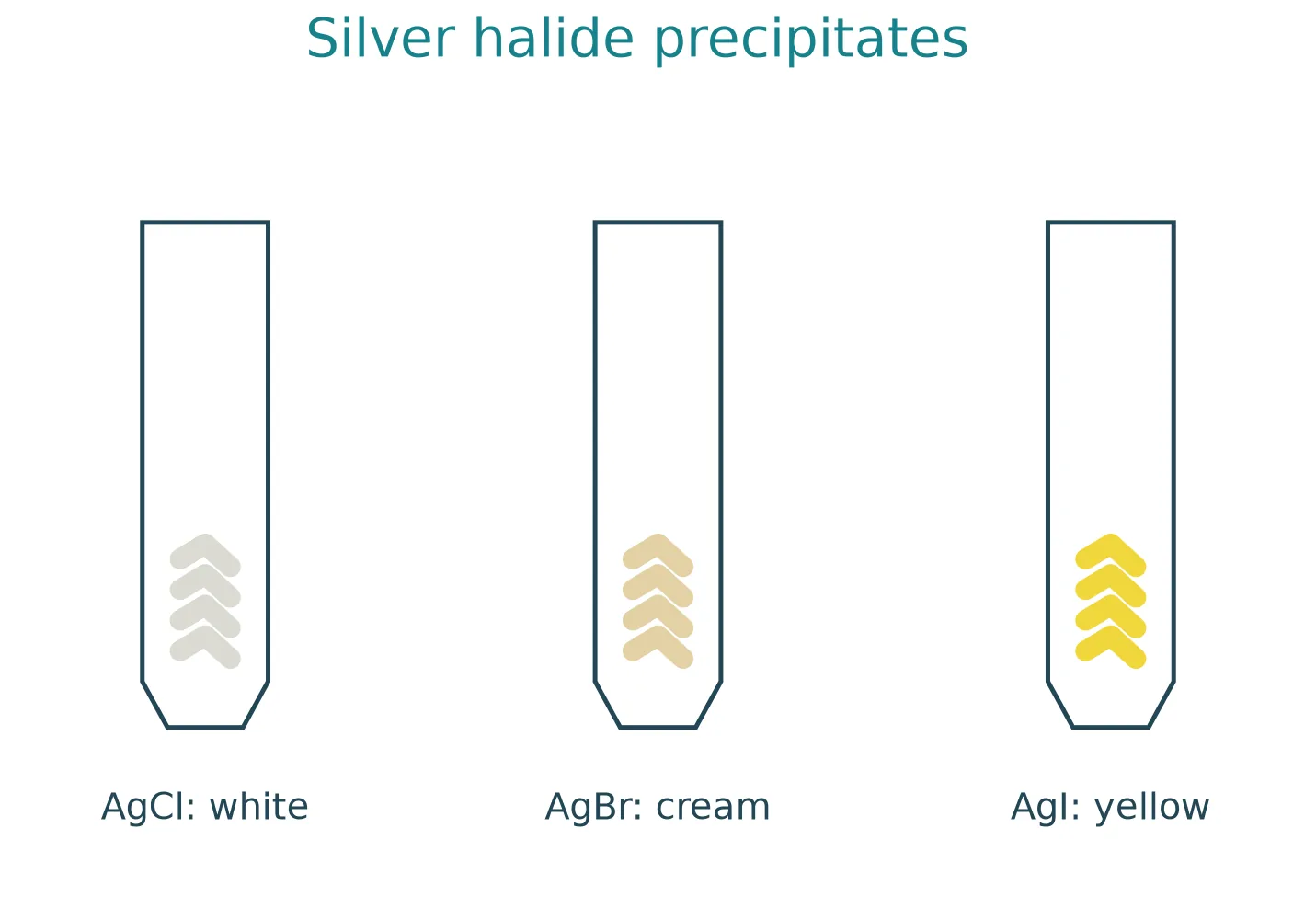
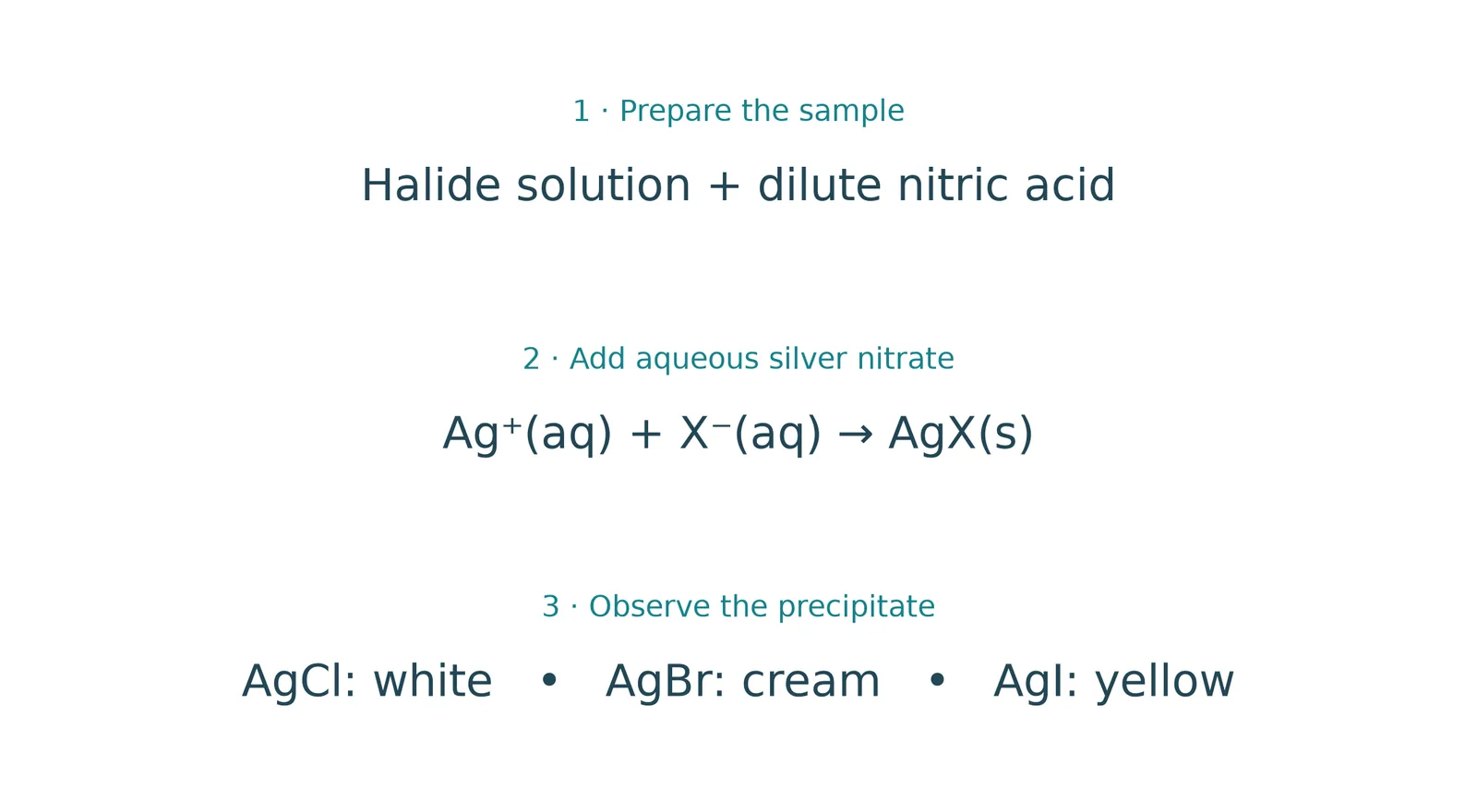
1Add silver nitrate
- Add silver nitrate Add a few drops of silver nitrate solution, AgNO3, to a solution of the sample.
2Silver ions meet halide ions
- Silver ions meet halide ions Ag+ ions combine with Cl-, Br- or I- ions in solution.
3Precipitate forms
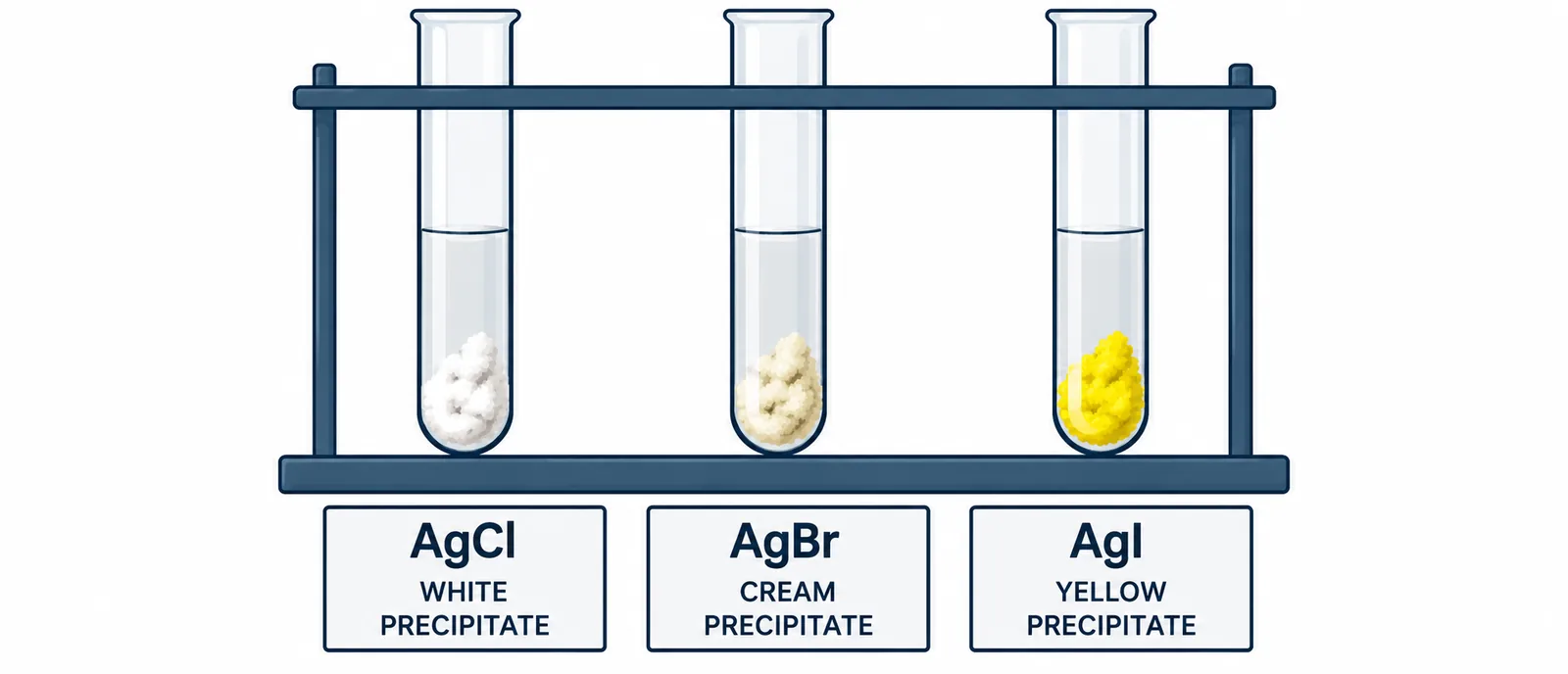
- Precipitate forms An insoluble silver halide is made, so the mixture turns cloudy.
4Colour identifies the halide
- Colour identifies the halide The colour of the solid shows which halide ion was present.
Section 5 of 8Halide results and equations
| Halide ion | Precipitate | Ionic equation |
|---|---|---|
| Chloride | White silver chloride | Ag+(aq) + Cl-(aq) → AgCl(s) |
| Bromide | Cream silver bromide | Ag+(aq) + Br-(aq) → AgBr(s) |
| Iodide | Yellow silver iodide | Ag+(aq) + I-(aq) → AgI(s) |
Section 6 of 8Worked equation with potassium chloride
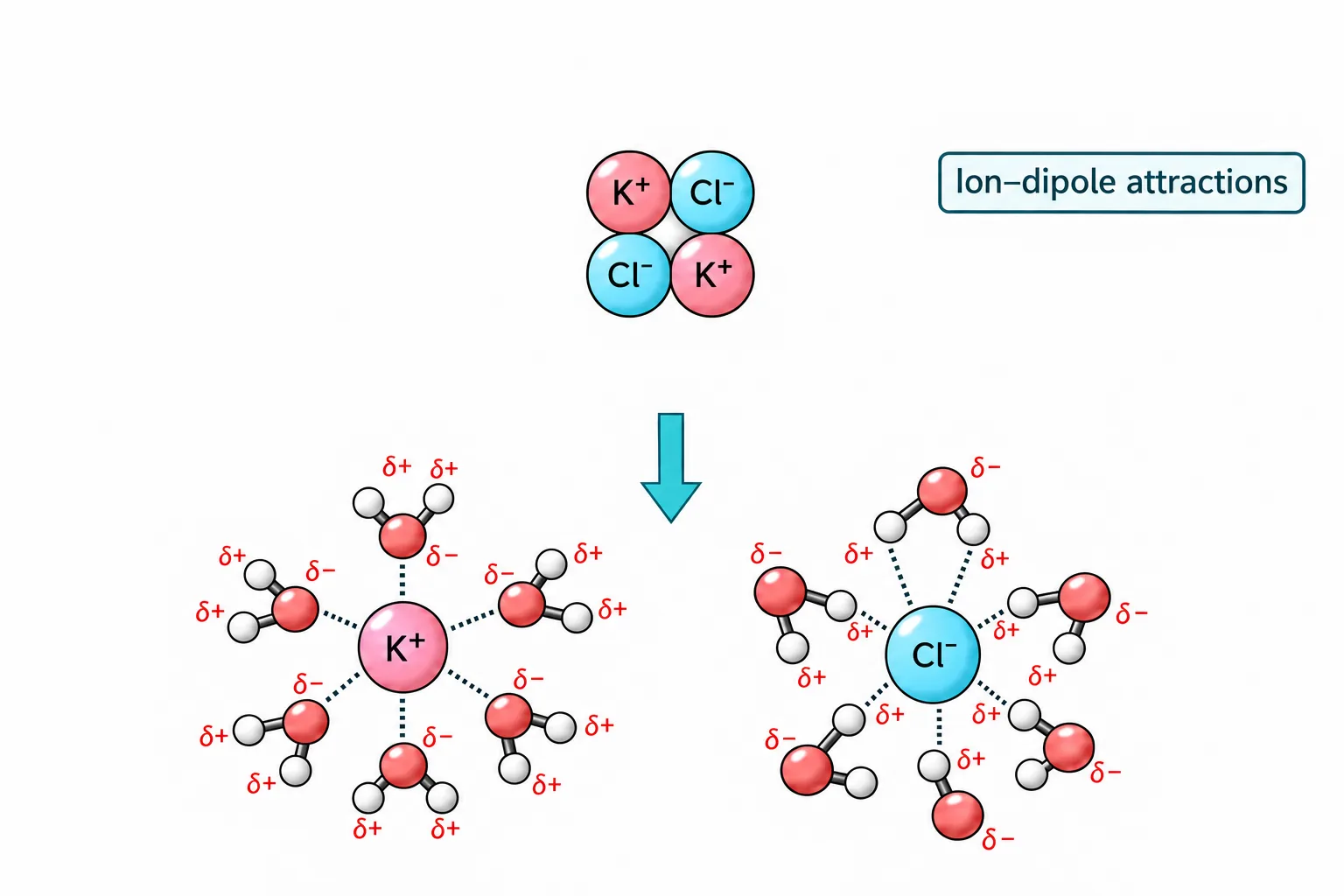
Full equation
- Full equation potassium chloride + silver nitrate → potassium nitrate + silver chloride.
- KCl(aq) + AgNO3(aq) → KNO3(aq) + AgCl(s)
Ionic equation
- Ionic equation Only the silver and chloride ions change, so the ionic equation is Ag+(aq) + Cl-(aq) → AgCl(s).
- The general form for any halide X- is Ag+(aq) + X-(aq) → AgX(s).
Spectator ions
- Spectator ions Potassium and nitrate ions stay dissolved and unchanged, so they are spectator ions and are left out of the ionic equation.
- State symbols are needed to show which substance is the solid precipitate, (s).
Section 7 of 8Key terms
| Term | Meaning |
|---|---|
| Cation | A positively charged ion, such as a metal ion. |
| Anion | A negatively charged ion, such as a halide ion. |
| Flame test | A method that identifies certain metal ions by the colour they give to a flame. |
| Precipitate | An insoluble solid formed when two solutions react. |
| Spectator ion | An ion present in a reaction mixture that does not take part in the reaction. |
Section 8 of 8Exam technique
1
Describing the barium flame as just green - the required answer is apple-green.
2
Skipping the acid-cleaning step, so leftover ions give a mixed or misleading colour.
3
Leaving out state symbols, especially (s) for the precipitate, in ionic equations.
4
Including the potassium and nitrate ions in the ionic equation instead of treating them as spectators.
5
Mixing up the precipitate colours - chloride is white, bromide is cream and iodide is yellow.