1.3.4Chemical Substances, Reactions and Essential Resources
Fluoridation of Water
5 min read 6 parts Lesson 26 of 46 Unit quiz
Section 1 of 6What fluoridation is and why it is done
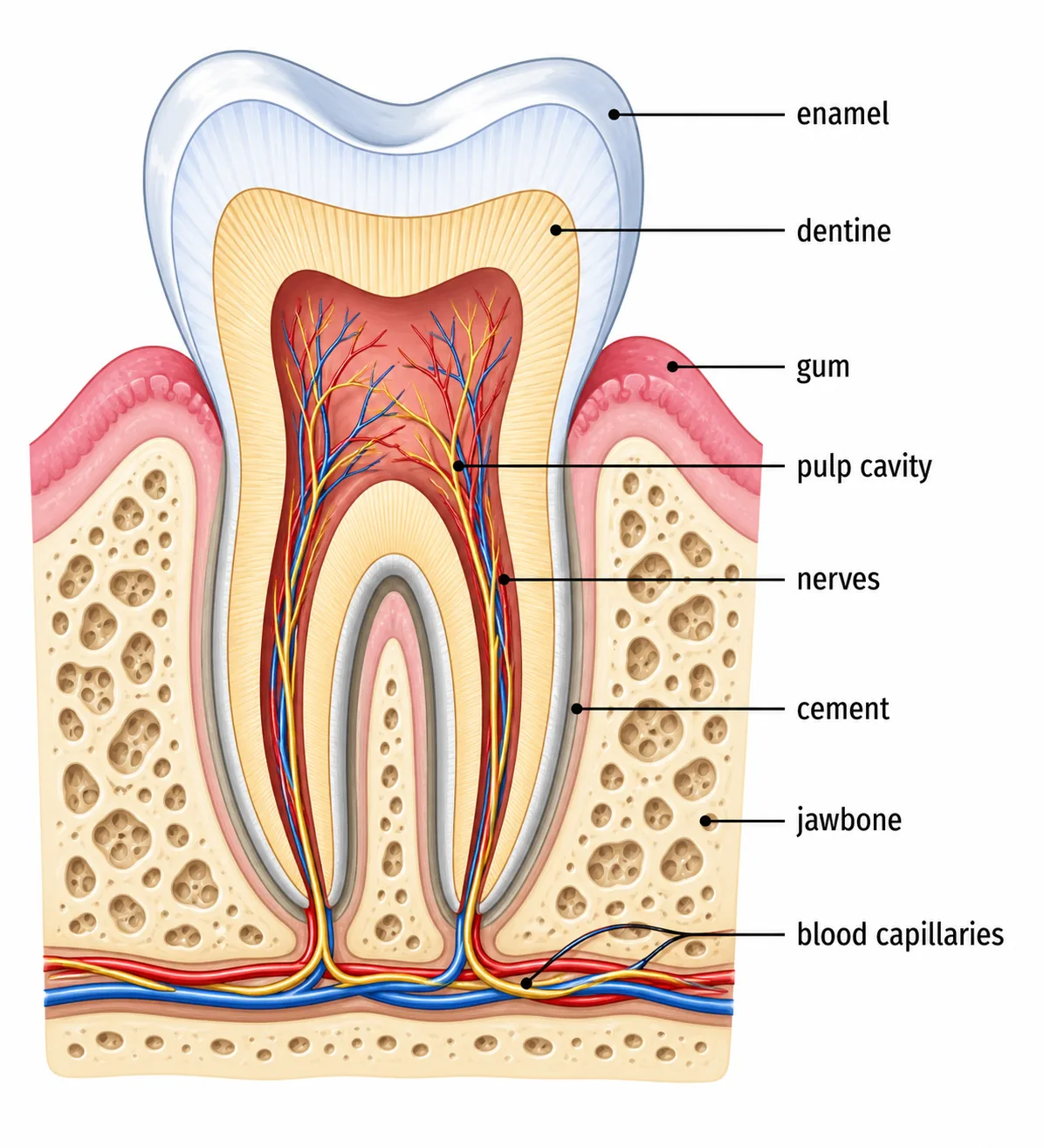

The process
- The process Fluoridation means adding fluoride to a public water supply at a carefully controlled low concentration.
The aim
- The aim The main purpose is to reduce tooth decay across the whole population, especially in children.
The evidence
- The evidence Surveys of school children of different ages have been used to look for a link between fluoride levels in water and how much tooth decay there is.
Section 2 of 6How tooth decay happens and how fluoride helps
1Acid forms
- Acid forms Bacteria in the mouth turn sugars into acid.
2Demineralisation
- Demineralisation The acid reacts with the enamel on the tooth surface, so minerals dissolve out of it.
3Remineralisation
- Remineralisation If the acid is neutralised, minerals can re-enter the enamel and repair it.
4Fluoride's role
- Fluoride's role Fluoride speeds up remineralisation, makes it harder for bacteria to produce acid,
- and in young children changes the enamel so that it resists acid attack.
Section 3 of 6Arguments against fluoridation
Health concerns
- Health concerns Too much fluoride can be toxic.
- High intake causes fluorosis, which shows as white patches on the enamel.
- Some studies have suggested links to problems such as bone cancer, stomach cancer and infertility.
Other sources exist
- Other sources exist Fluoride occurs naturally in the water in some regions and is in most toothpastes,
- so some people think adding it to water is unnecessary.
Ethics and consent
- Ethics and consent Giving a substance to everyone, whether or not they need it, is called mass medication.
- Critics say it is unethical because individuals have not given their consent.
Section 4 of 6Evaluating the data
Can we trust the evidence?
Comparing areas
- Comparing areas Fluoride levels and tooth decay have been compared in different parts of the UK.
Other factors
- Other factors Diet, wealth, access to dentists and tooth-brushing habits also differ between areas, so these may affect decay rates.
Conclusion
- Conclusion A correlation alone does not prove that fluoride caused the difference, so the data cannot give a fully valid conclusion.
Section 5 of 6Key terms
| Term | Meaning |
|---|---|
| Fluoridation | Adding fluoride to drinking water to help prevent tooth decay. |
| Demineralisation | Loss of minerals from tooth enamel when acid dissolves it. |
| Remineralisation | Minerals re-entering tooth enamel after acid has been neutralised. |
| Fluorosis | White patches on the teeth caused by too much fluoride in childhood. |
| Mass medication | Giving a treatment to everyone regardless of whether they need it. |
| Correlation | A link between two sets of data that does not by itself prove a cause. |
Section 6 of 6Exam technique
1
Saying fluoride 'kills' the bacteria that cause decay - it reduces their ability to make acid and helps enamel repair.
2
Claiming that lower decay in a fluoridated area proves fluoride is the cause, ignoring other social and economic factors.
3
Mixing up demineralisation (minerals lost) and remineralisation (minerals regained).
4
Giving only one side when asked to evaluate; include both advantages and disadvantages.