1.3.6Chemical Substances, Reactions and Essential Resources
Distillation
5 min read 7 parts Lesson 28 of 46 1 quiz
Section 1 of 7The idea behind distillation


Separating by boiling point
- Separating by boiling point Distillation separates a liquid from a mixture by evaporating it and then condensing the vapour back to a liquid.
- It works because the components of the mixture boil at different temperatures.
Which technique to use
- Which technique to use Simple distillation separates a liquid from a solution containing a dissolved solid, such as pure water from salt water.
- Fractional distillation separates a mixture of liquids with different, fairly close boiling points.
Section 2 of 7Simple distillation of salt water

1
Heat the salt solution in a flask fitted with a thermometer and a delivery tube leading to a condenser.
2
The water boils at 100 °C and turns into steam, which leaves the flask while the salt stays behind.
3
Cold water flows through the outer jacket of the condenser, entering at the bottom and leaving at the top, so the steam cools and condenses.
4
The pure liquid water drips into a collecting flask.
5
Stop heating before the flask boils dry, leaving the solid salt as the residue.
Section 3 of 7Fractional distillation of ethanol and water
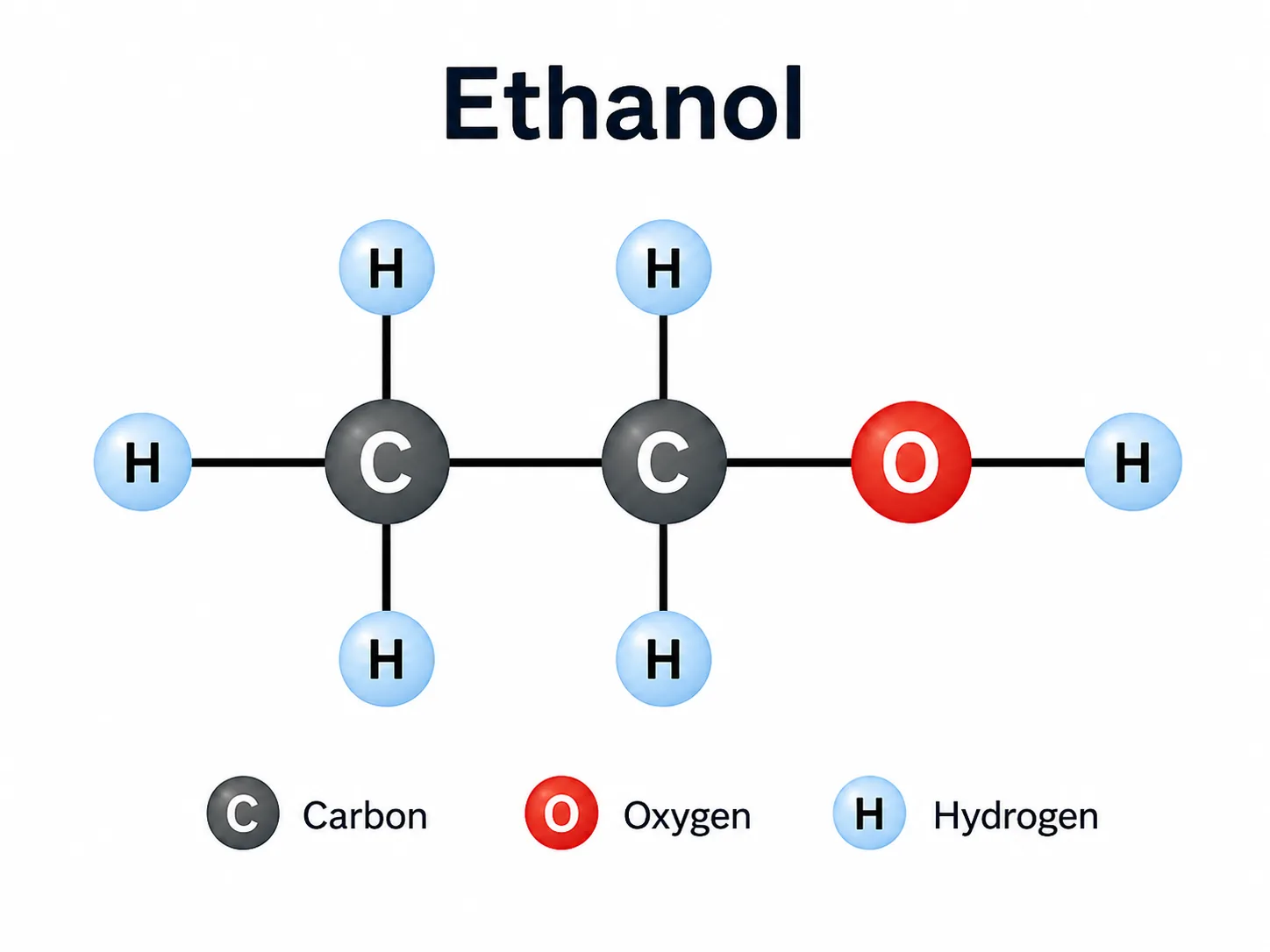

1Heat the mixture
- Heat the mixture Ethanol boils at about 78 °C and water at 100 °C.
2Ethanol evaporates first
- Ethanol evaporates first The vapour rises up a fractionating column packed with glass beads, which provides a large surface area.
3Vapour condenses and rises again
- Vapour condenses and rises again Water-rich vapour condenses on the cooler beads and drips back, while the more volatile ethanol travels to the top.
4Collect each fraction
- Collect each fraction When the thermometer reads about 78 °C the ethanol passes into the condenser and is collected.
- After the temperature rises to 100 °C the flask is changed to collect water.
Section 4 of 7Limits of the method (HT only)
Pure ethanol is not possible (HT only)
- Pure ethanol is not possible (HT only) Some water evaporates even below its boiling point,
- so a little water vapour always travels with the ethanol and the distillate is never completely pure.
Energy and cost
- Energy and cost Distillation needs a great deal of energy to heat and boil large volumes of liquid, so producing pure water this way is expensive.
Section 5 of 7Comparing the two methods
| Feature | Simple distillation | Fractional distillation |
|---|---|---|
| Separates | A solvent from a dissolved solid | Liquids with different boiling points |
| Fractionating column | Not used | Used to improve separation |
| Example | Pure water from seawater | Ethanol from a fermentation mixture; crude oil fractions |
Section 6 of 7Key terms
| Term | Meaning |
|---|---|
| Distillation | Separating liquids by evaporating then condensing them. |
| Condenser | A cooled tube in which vapour is turned back into liquid. |
| Boiling point | The temperature at which a liquid changes to vapour throughout the liquid. |
| Fractionating column | A column filled with beads or plates that helps separate liquids with similar boiling points. |
| Distillate | The liquid collected after the vapour has condensed. |
Section 7 of 7Exam technique
1
Saying the salt evaporates along with the water: it has a very high boiling point and stays in the flask.
2
Running the condenser water the wrong way: cold water should enter at the bottom and leave at the top.
3
Placing the thermometer bulb in the liquid: it should be at the side arm opening to read the vapour temperature.
4
Claiming fractional distillation gives perfectly pure ethanol (HT only): some water vapour always escapes.
5
Describing the process as filtrationdistillation separates by boiling point, not by particle size.