2.1.6Chemical Bonding, Application Of Chemical Reactions and Organic Chemistry
Intermolecular Bonding
5 min read 7 parts Lesson 7 of 54 Unit quiz
Section 1 of 7Two kinds of attraction
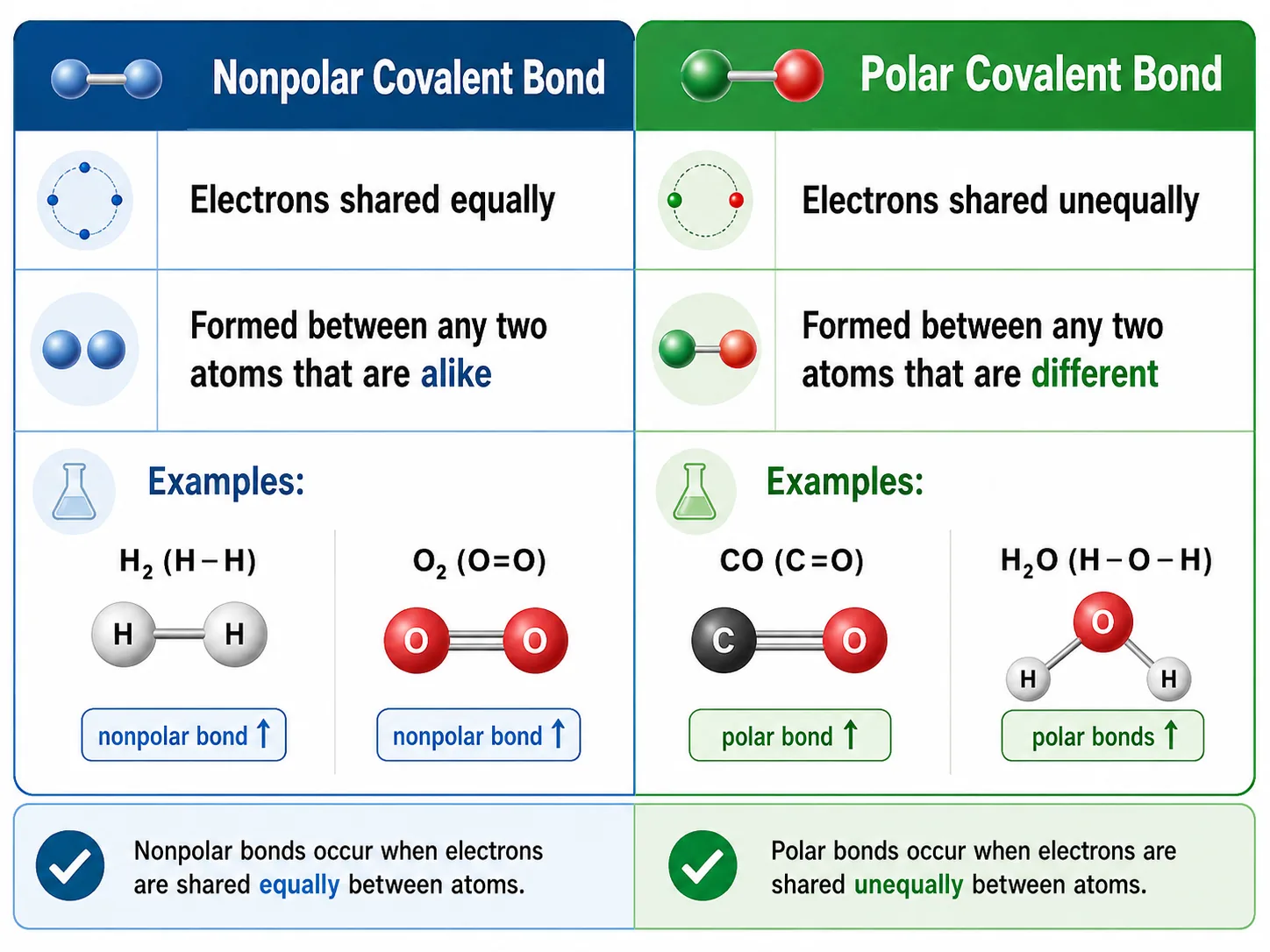
| Covalent bond | Intermolecular force | |
|---|---|---|
| Where it acts | Between atoms inside one molecule | Between separate molecules |
| What it is | A shared pair of electrons | A weak attraction between neighbouring molecules |
| Strength | Very strong | Weak by comparison |
| Affected by melting or boiling? | No, the molecules stay intact | Yes, these are overcome |
Section 2 of 7Simple molecular structures
Small molecules
- Small molecules Substances such as carbon dioxide, methane, water and iodine consist of molecules containing only a few atoms each.
Two levels of bonding
- Two levels of bonding Strong covalent bonds hold the atoms together within each molecule.
- Much weaker intermolecular forces hold the molecules close to each other in the solid and liquid states.
Section 3 of 7Why melting and boiling points are low
1Heat is supplied
- Heat is supplied The molecules gain kinetic energy and vibrate or move more.
2Weak forces are overcome
- Weak forces are overcome Only the intermolecular forces need to be broken, which takes little energy.
3State changes
- State changes The substance melts and then boils at a low temperature, and many are gases or liquids at room temperature.
4Molecules survive
- Molecules survive The covalent bonds are untouched, so a molecule of the gas is the same molecule that was in the solid.
Section 4 of 7Effect of molecular size
Bigger molecules
- Bigger molecules As the molecules in a series get larger, the intermolecular forces between them get stronger.
- More energy is therefore needed to separate them, so the melting and boiling points generally rise.
Exam link
- Exam link This explains why small molecules like methane are gases while very large molecules can be waxy solids.
Section 5 of 7Electrical conductivity
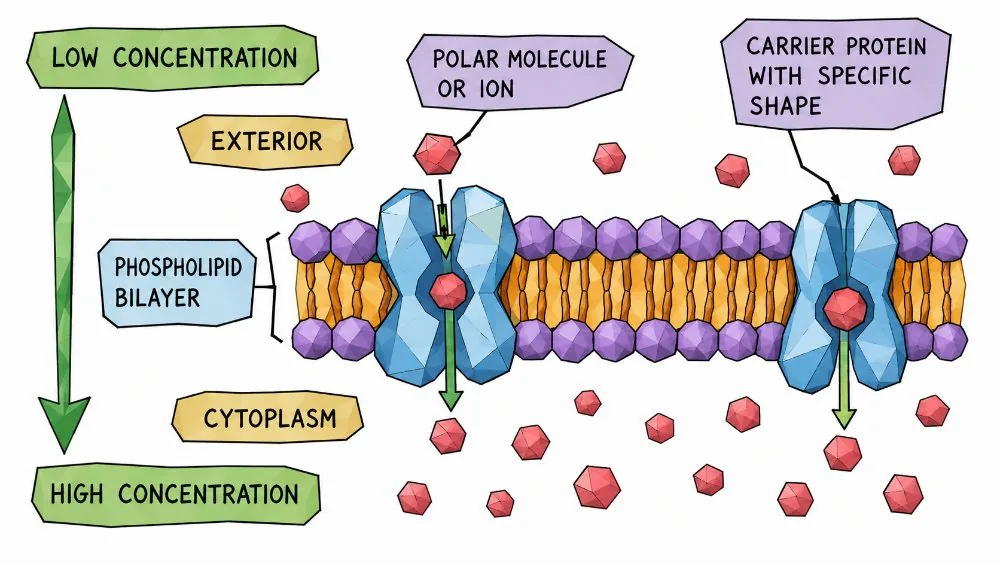


Simple molecules do not conduct
No free charge carriers
- No free charge carriers Molecules are neutral overall and have no ions, and all outer electrons are held in bonds, so nothing can carry a current.
Even when molten
- Even when molten Melting does not create ions, so a liquid simple molecular substance still does not conduct.
Insulators
- Insulators Plastic wire coatings, rubber and wood are good insulators, and the coating on household cables stops current leaking out.
Section 6 of 7Key terms
| Term | Meaning |
|---|---|
| Covalent bond | A strong bond formed when two atoms share a pair of electrons. |
| Intermolecular force | A weak attraction between neighbouring molecules. |
| Simple molecule | A small group of atoms joined by covalent bonds. |
| Insulator | A material that does not allow electric current to pass through it. |
| Boiling point | The temperature at which a liquid turns to gas throughout the liquid. |
Section 7 of 7Exam technique
1
Saying covalent bonds break when a simple molecular substance melts or boils — the weak intermolecular forces are overcome instead.
2
Describing intermolecular forces as 'weak bonds inside the molecule' — they act between molecules.
3
Claiming the substance does not conduct because 'it has no electrons' — the real reason is that there are no free-moving charged particles.
4
Forgetting that boiling points rise with molecular size because the intermolecular forces get stronger.