2.1.10Chemical Bonding, Application Of Chemical Reactions and Organic Chemistry
Bulk Properties
5 min read 7 parts Lesson 11 of 54 Unit quiz
Section 1 of 7What are bulk properties?
Properties of large collections
- Properties of large collections Bulk properties include melting and boiling points, electrical and thermal conductivity, hardness and flexibility.
- A single atom has none of these properties.
- They appear only when very large numbers of particles act together.
Where they come from
- Where they come from They are controlled by the type of bonding (ionic, covalent, metallic) and by how strong the forces are between particles.
- The arrangement of the particles, for example in layers or a giant lattice, matters just as much.
Section 2 of 7Brittle or malleable
Response to a force
Metals are malleable
- Metals are malleable Metal atoms sit in regular layers that can slide over each other when a force is applied.
- The sea of delocalised electrons keeps the structure bonded, so the metal changes shape without cracking.
Ionic solids are brittle
- Ionic solids are brittle A force shifts a layer of ions so that ions of the same charge line up and repel, and the crystal shatters.
Giant covalent solids are brittle
- Giant covalent solids are brittle Applying a large force breaks the rigid network of covalent bonds, so the material snaps rather than bends.
Section 3 of 7Carbon allotropes compared
| Form of carbon | Structure | Bulk properties |
|---|---|---|
| Diamond | Each atom bonded to four others | Extremely hard, very high melting point, does not conduct |
| Graphite | Layers with weak forces between them | Soft and slippery, conducts electricity, very high melting point |
| Fullerenes | Hollow cages or tubes of carbon atoms | Conduct electricity, slippery or useful as cages for other molecules |
| Carbon nanotubes | Rolled-up sheets of hexagons | High tensile strength, good conductors of heat and electricity |
| Graphene | Single layer of hexagons | Extremely strong, conducts heat and electricity, almost transparent |
Section 4 of 7Polymers
1
Most polymers are solid at room temperature because their molecules are very long.
2
Atoms inside each polymer chain are held by strong covalent bonds.
3
Between separate chains there are intermolecular forces. Because the chains are long, these forces add up and are stronger than those between small simple molecules.
4
Those forces are still much weaker than ionic or covalent bonds, so polymers melt at lower temperatures than giant ionic or covalent substances.
Section 5 of 7Nanoparticles change properties
Silver as an example
- Silver as an example Bulk silver is a shiny, malleable metal that does not corrode and is mainly used in jewellery.
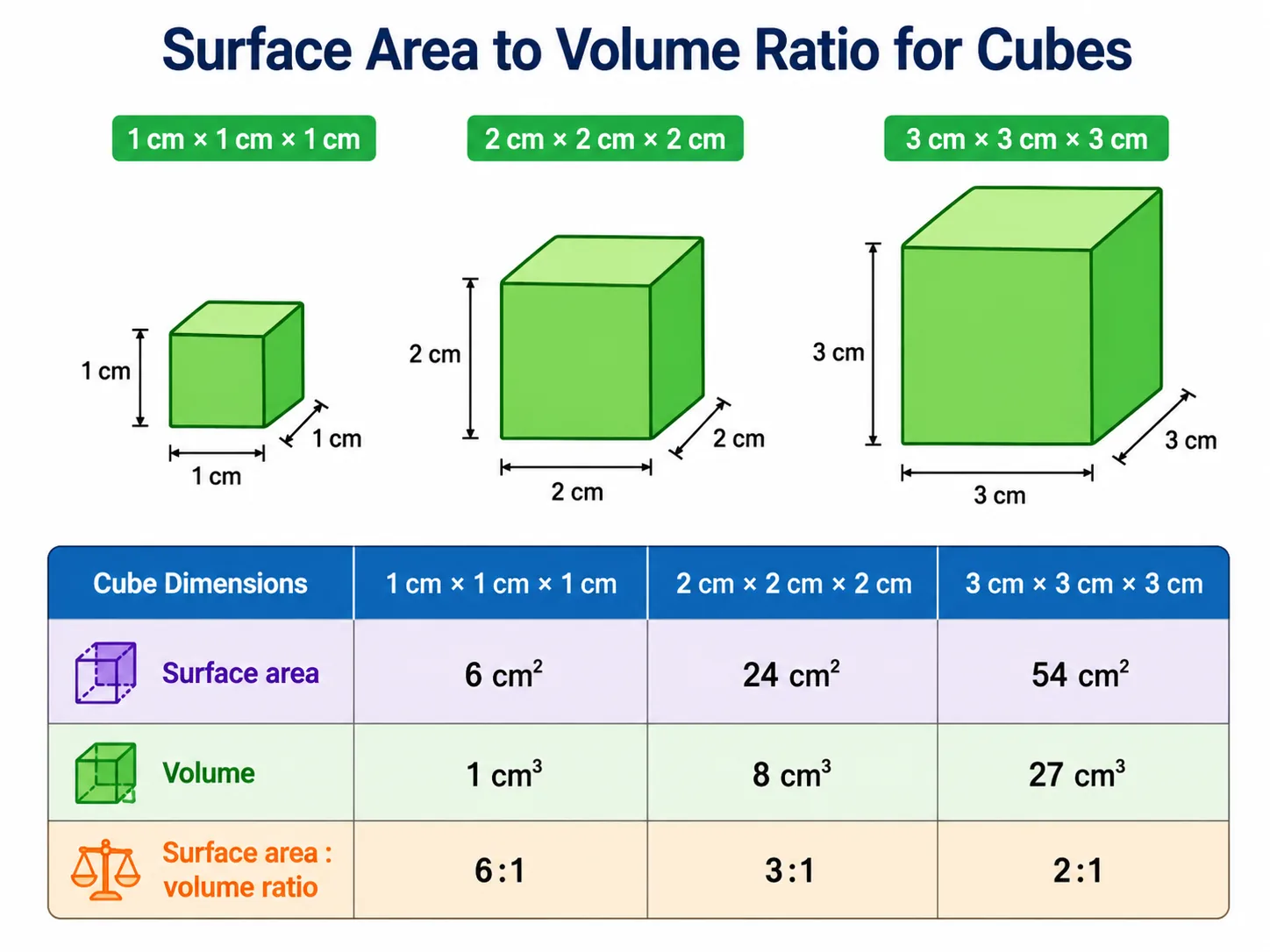
- Silver nanoparticles are only 1 to 100 nm across and have a very large surface area to volume ratio.
New uses
- New uses In this form silver kills bacteria, so it is used in deodorants, fridge linings and socks to reduce odours.
The lesson
- The lesson The same substance can behave differently as a bulk solid and as nanoparticles, because the surface area to volume ratio changes.
Section 6 of 7Key terms
| Term | Meaning |
|---|---|
| Bulk property | A property of a material that arises from many particles acting together, not from one atom. |
| Malleable | Able to be bent or hammered into shape without breaking. |
| Brittle | Likely to crack or shatter when a force is applied. |
| Intermolecular force | A force of attraction between separate molecules. |
| Nanoparticle | A particle between 1 and 100 nanometres across. |
Section 7 of 7Exam technique
1
Saying an individual atom is hard or has a melting point. These are properties of the bulk material only.
2
Thinking only covalent substances have giant structures. Ionic compounds and metals do too.
3
Writing that polymers have weak bonds. The covalent bonds in the chains are strong; the weak forces are between chains.
4
Forgetting that nanoparticle properties are explained by the large surface area to volume ratio.