2.1.11Chemical Bonding, Application Of Chemical Reactions and Organic Chemistry
Nano-scale Particles
5 min read 7 parts Lesson 12 of 54 Unit quiz
Section 1 of 7What are nanoparticles?
Size
- Size Nanoparticles are between 1 and 100 nanometres across and usually contain only a few hundred atoms.
- Ordinary atoms and small molecules are roughly a hundred times smaller than this.
Nanoscience
- Nanoscience The study of how nanoparticles are made and the ways they can be used is called nanoscience.
Different from bulk
- Different from bulk A substance in nanoparticle form can behave very differently from the same substance in large pieces.
Section 2 of 7Surface area to volume ratio



1
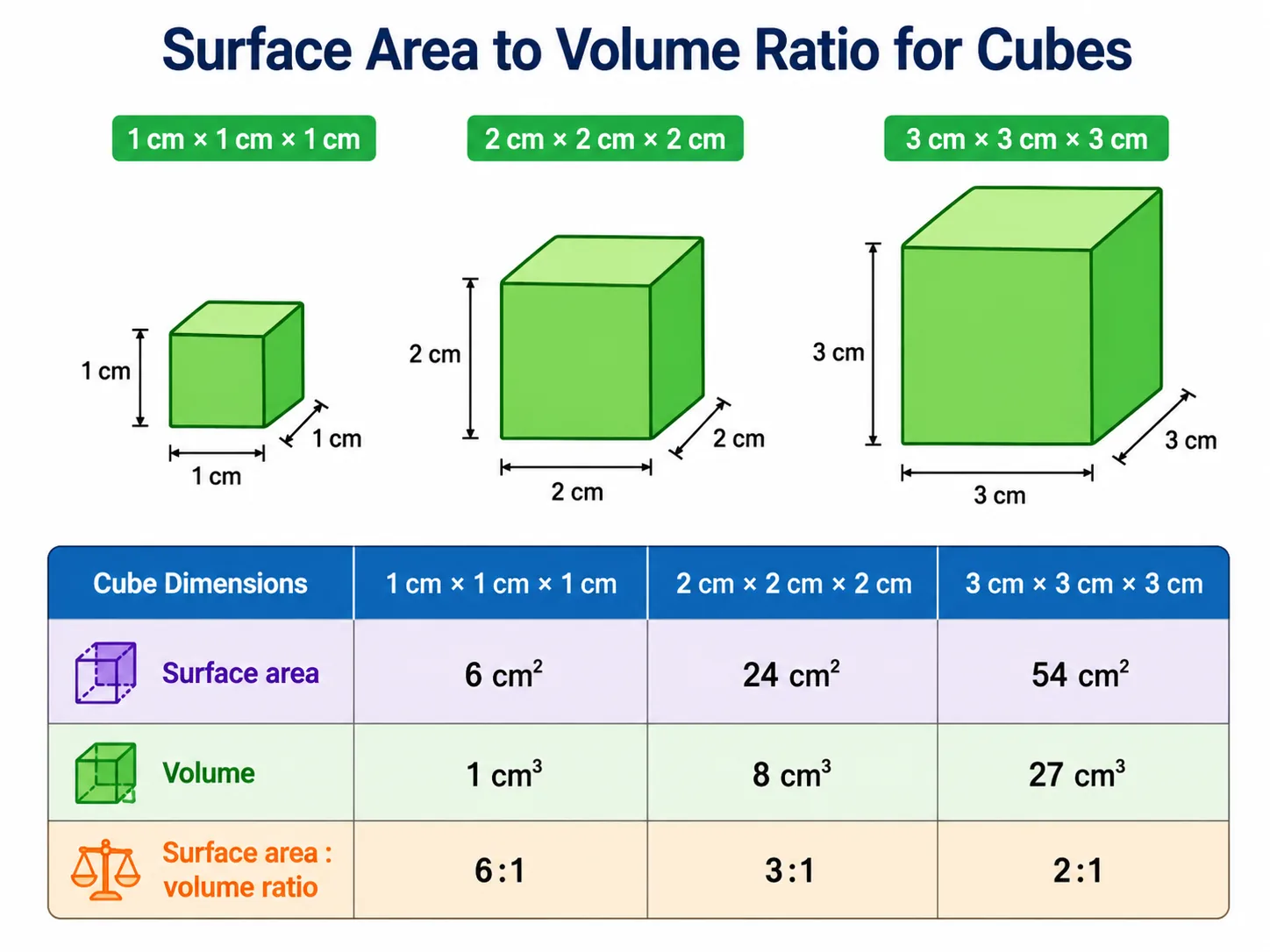
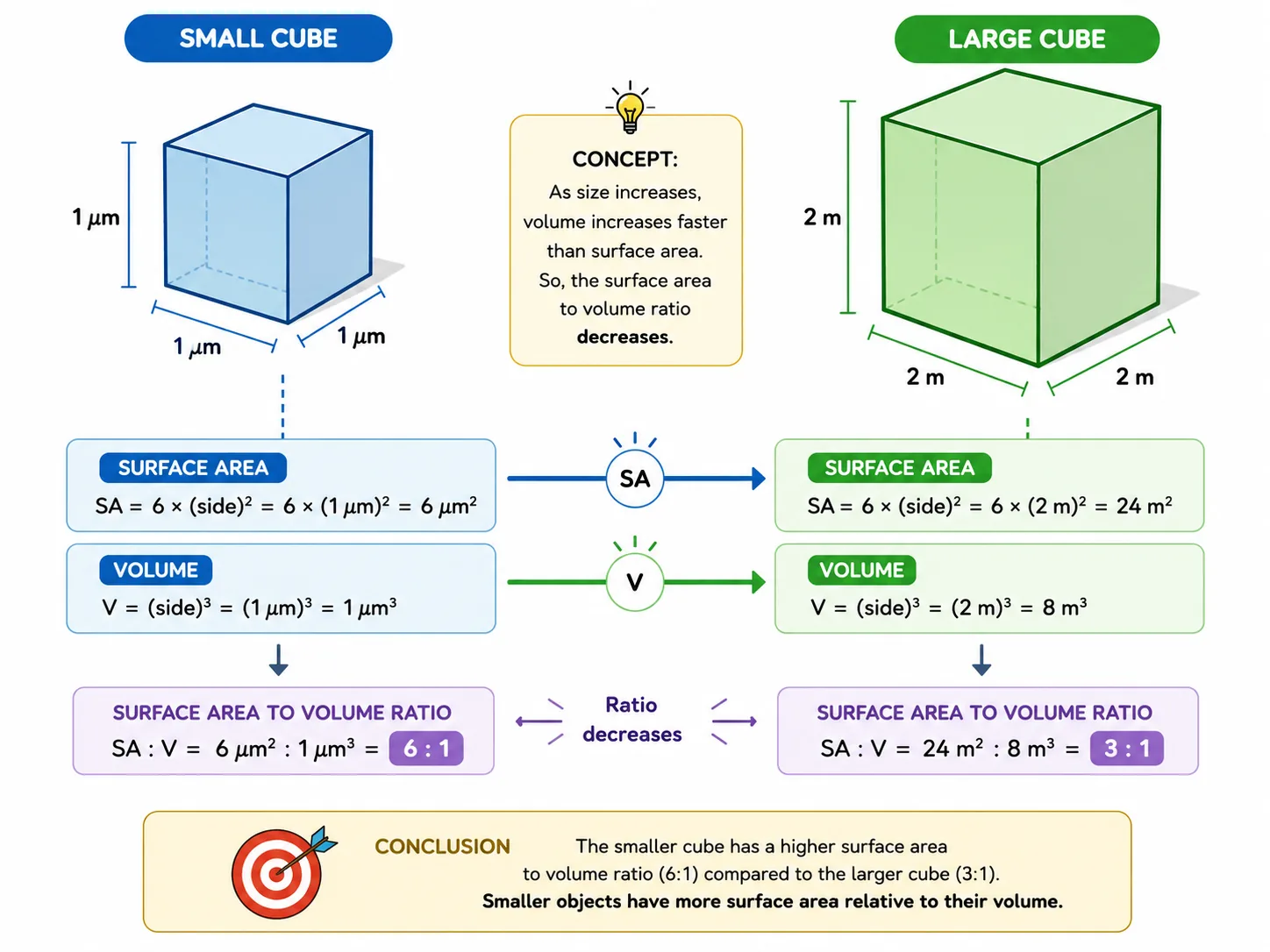
Take a cube and note that its surface area to volume ratio is found by dividing total surface area by volume.
2
For a cube of side length L, surface area = 6 × L2 and volume = L3, so the ratio = 6 ÷ L.
3
If the side length is reduced by a factor of 10, the ratio becomes 10 times bigger.
4
Nanoparticles are so tiny that nearly all their atoms are near or on the surface, so the ratio is enormous.
5
A large ratio means much more of the material is exposed to react, which is why properties change and why smaller quantities can be effective.
Section 3 of 7Silver nanoparticles
Antibacterial silver
The property
- The property Silver nanoparticles have antibacterial and antifungal action and can kill microorganisms without harming humans.
Sports clothing
- Sports clothing Body odour is caused by bacteria on the skin, so fabrics containing silver reduce smell by killing them.
Surgical equipment
- Surgical equipment A silver coating kills bacteria on instruments before operations.
Fridges
- Fridges An antibacterial coating on the inside surfaces prevents bacteria causing odours.
Section 4 of 7Titanium dioxide nanoparticles
Titanium dioxide, TiO2
The property
- The property These particles reflect or block ultraviolet light while letting visible light pass through.
Transparent sunscreen
- Transparent sunscreen The particles are too small to be seen on the skin, yet they stop UV light reaching it, lowering the risk of sunburn and skin cancer.
Self-cleaning windows
- Self-cleaning windows A coating breaks down dirt when sunlight shines on it.
- It also makes water spread into a thin film instead of droplets, which helps wash the dirt away.
Section 5 of 7Risks of nanoparticles (HT only)
1Very small
- Very small Nanoparticles may enter living cells or pass through the skin into the bloodstream.
2Used on the skin
- Used on the skin Nano silver in deodorants and titanium dioxide in sunscreen are applied directly to skin, so absorption is a concern.
3Unknown long-term effects
- Unknown long-term effects They have not been used for long, so effects that take years to appear may not have been detected yet.
4Toxicity magnified
- Toxicity magnified The high surface area to volume ratio means even slight toxicity is increased,
- and the body cannot easily remove them,
- so caution is needed.
Section 6 of 7Key terms
| Term | Meaning |
|---|---|
| Nanoparticle | A particle between 1 and 100 nanometres in size, containing only a few hundred atoms. |
| Nanoscience | The study of the production and applications of nanoparticles. |
| Surface area to volume ratio | The surface area of an object divided by its volume; it rises as the object gets smaller. |
| Antibacterial | Able to kill bacteria or stop them growing. |
| Bulk material | A substance in ordinary large pieces rather than nanoparticles. |
Section 7 of 7Exam technique
1
Saying that nanoparticles have a smaller surface area — the total surface area compared with volume is much larger.
2
Stating that silver nanoparticles kill humans' cells too — they are used because they target microorganisms without harming people, although long-term effects are still being studied.
3
Mixing up the two usessilver is for killing microbes, titanium dioxide is for blocking UV light and self-cleaning.
4
Writing that nanoparticles are 'safe because there have been no side effects' — the correct point is that long-term effects are not yet known.