2.4.3Chemical Bonding, Application Of Chemical Reactions and Organic Chemistry
Bond Energy Calculations
5 min read 10 parts Lesson 40 of 54 1 quiz
Section 1 of 10Bond breaking and making

Bond breaking
- Bond breaking Breaking bonds takes in energy from the surroundings, so it is endothermic.
Bond making
- Bond making Forming bonds releases energy to the surroundings, so it is exothermic.
Bond energy
- Bond energy Each type of bond has a bond energy, in kJ/mol: the energy to break it, or released when it forms.
Overall result
- Overall result If more energy is released making bonds than is needed to break them, the reaction is exothermic;
- otherwise it is endothermic.
Section 2 of 10Calculation method

1
Draw the displayed formulae of all reactants and products so every bond can be counted.
2
Add together the bond energies of all the bonds broken in the reactants: this is the energy in.
3
Add together the bond energies of all the bonds formed in the products: this is the energy out.
4
Calculate: energy change = energy in − energy out.
5
A negative answer means exothermic; a positive answer means endothermic.
Section 3 of 10Worked example: H2 + Cl2 → 2HCl
| Step | Working | Value |
|---|---|---|
| Bonds broken | 1 × H–H (436) + 1 × Cl–Cl (243) | 679 kJ/mol |
| Bonds formed | 2 × H–Cl (432) | 864 kJ/mol |
| Energy change | 679 − 864 | −185 kJ/mol |
| Conclusion | Negative value | Exothermic |
Section 4 of 10Reverse reaction
Decomposition of 2HBr → H2 + Br2
Bonds broken
- Bonds broken 2 × H–Br at 366 each gives 732 kJ/mol.
Bonds formed
- Bonds formed H–H (436) + Br–Br (193) gives 629 kJ/mol.
Energy change
- Energy change 732 − 629 = +103 kJ/mol, so the decomposition is endothermic.
Section 5 of 10Some average bond energies
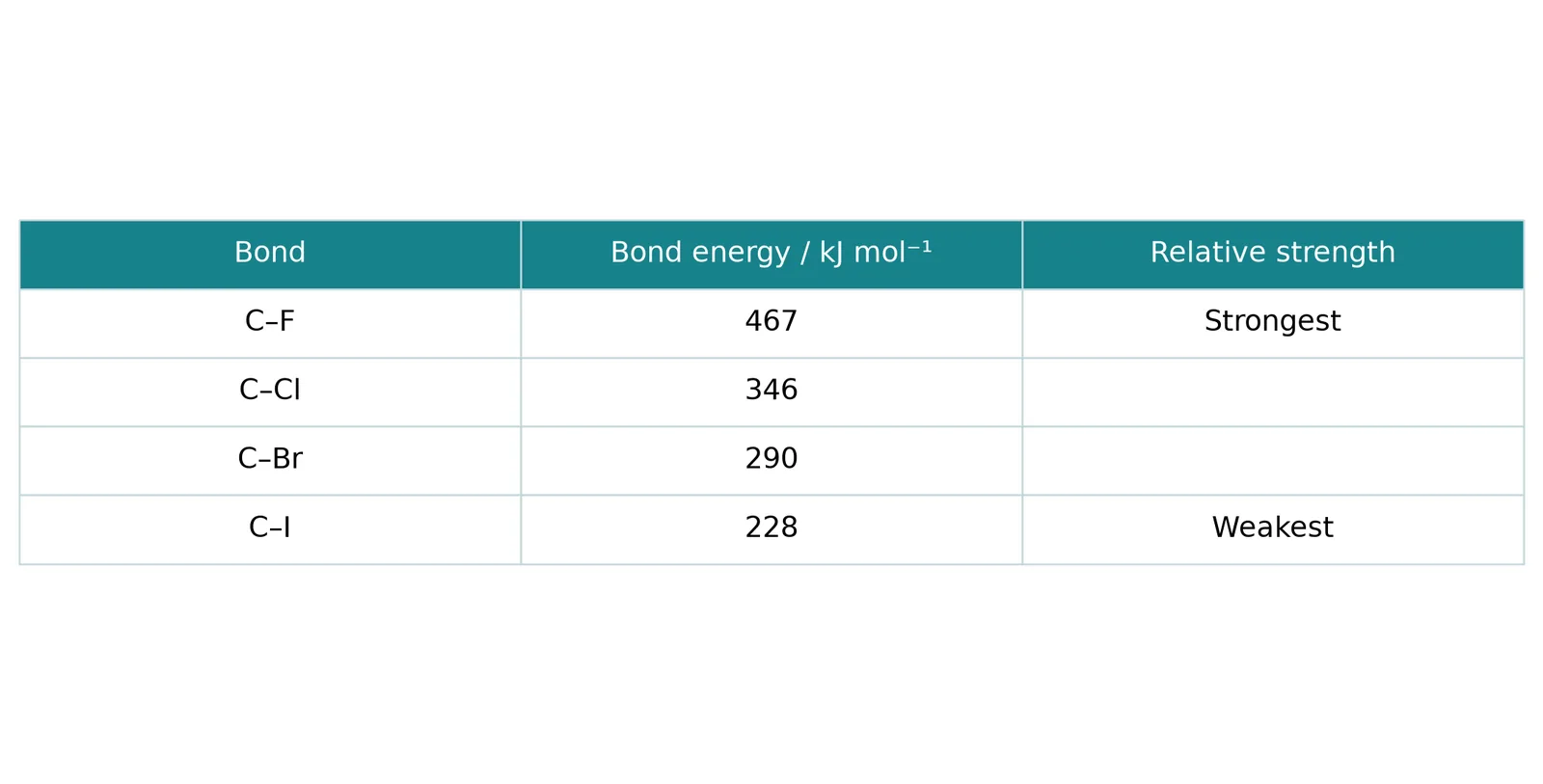
| Bond | Energy (kJ/mol) |
|---|---|
| H–H | 436 |
| Cl–Cl | 243 |
| H–Cl | 432 |
| C–H | 413 |
| O=O | 498 |
| C=O | 805 |
| O–H | 464 |
Section 6 of 10Worked example: burning methane

1
The equation is CH4 + 2O2 → CO2 + 2H2O.
2
Bonds broken: 4 × C–H (413) + 2 × O=O (498) = 1652 + 996 = 2648 kJ/mol.
3
Bonds formed: 2 × C=O (805) + 4 × O–H (464) = 1610 + 1856 = 3466 kJ/mol.
4
Energy change = 2648 − 3466 = −818 kJ/mol.
5
The value is negative, so the combustion of methane is exothermic, as expected for a fuel.
Section 7 of 10Limitations of the method
Average values
- Average values Bond energies are averages taken over many compounds, so calculated energy changes are only approximate.
Gaseous state
- Gaseous state The method assumes all substances are gases, so it ignores the energy needed for changes of state.
Section 8 of 10Linking to energy profiles

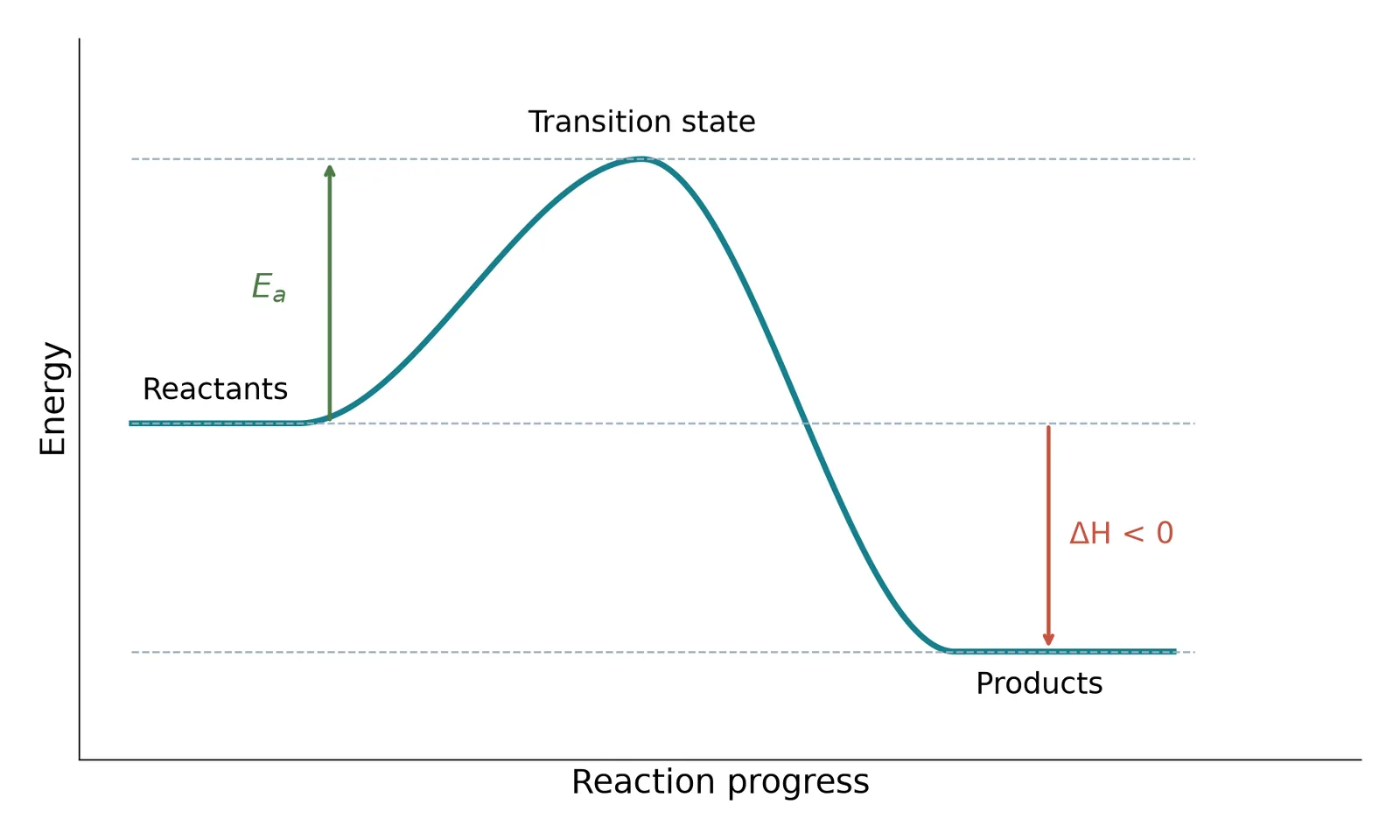


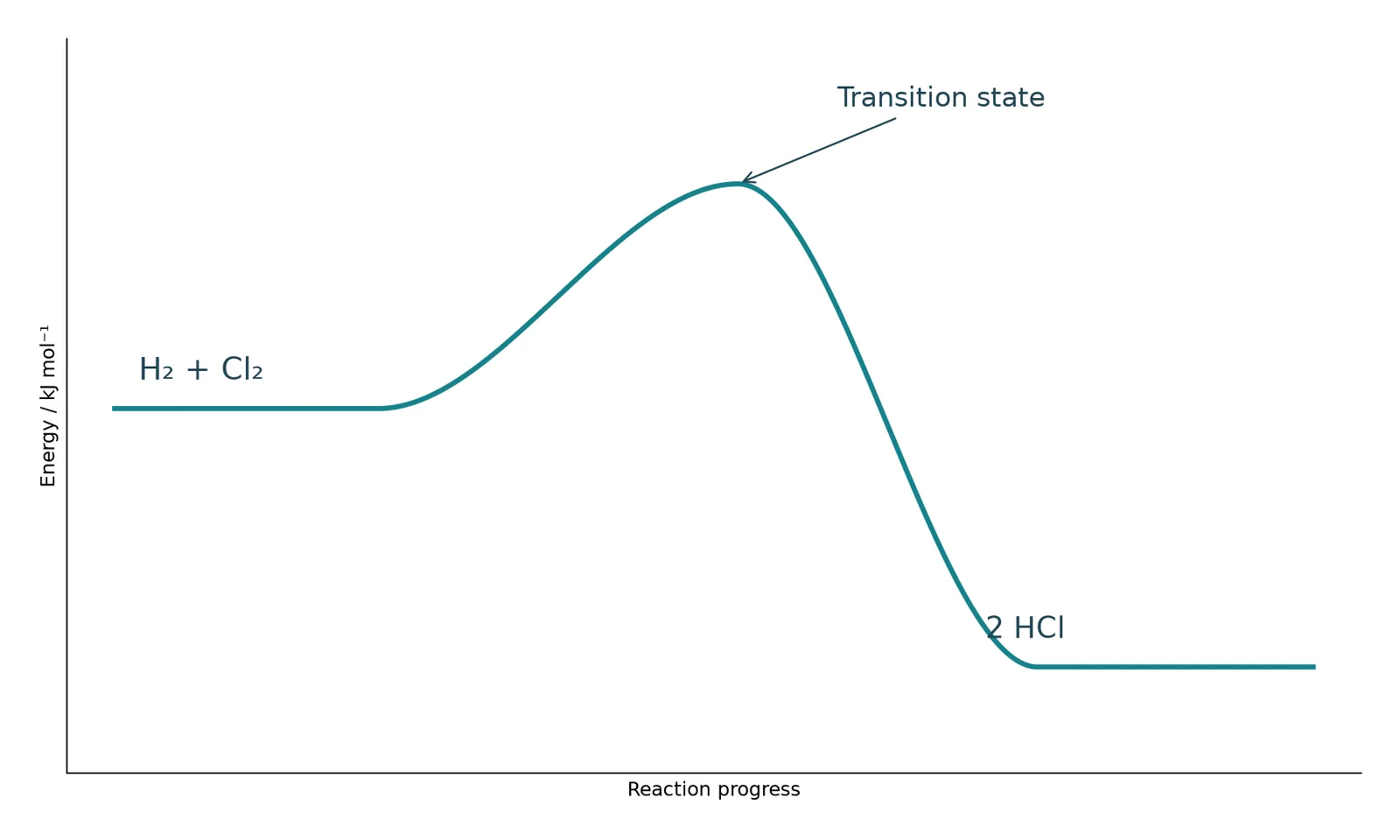


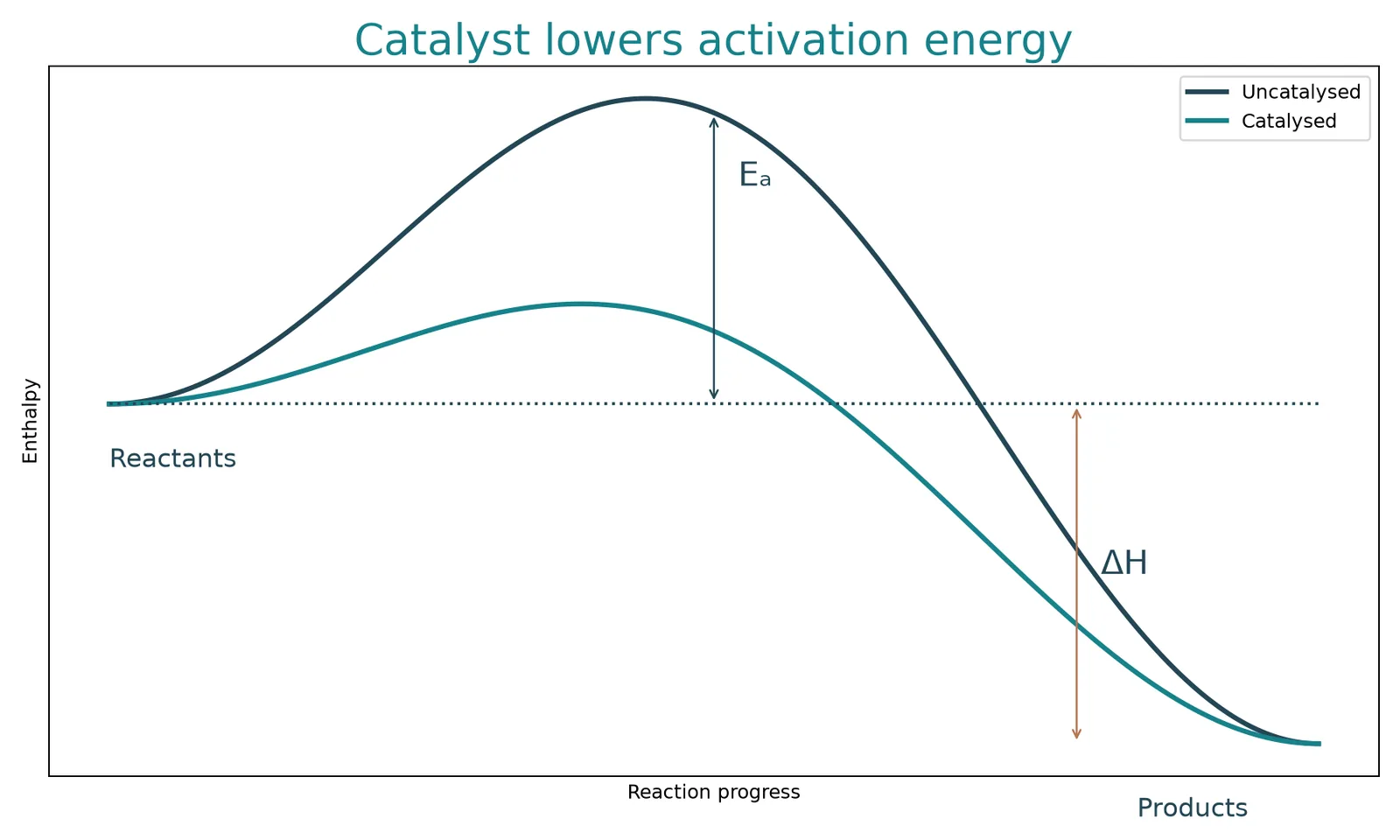
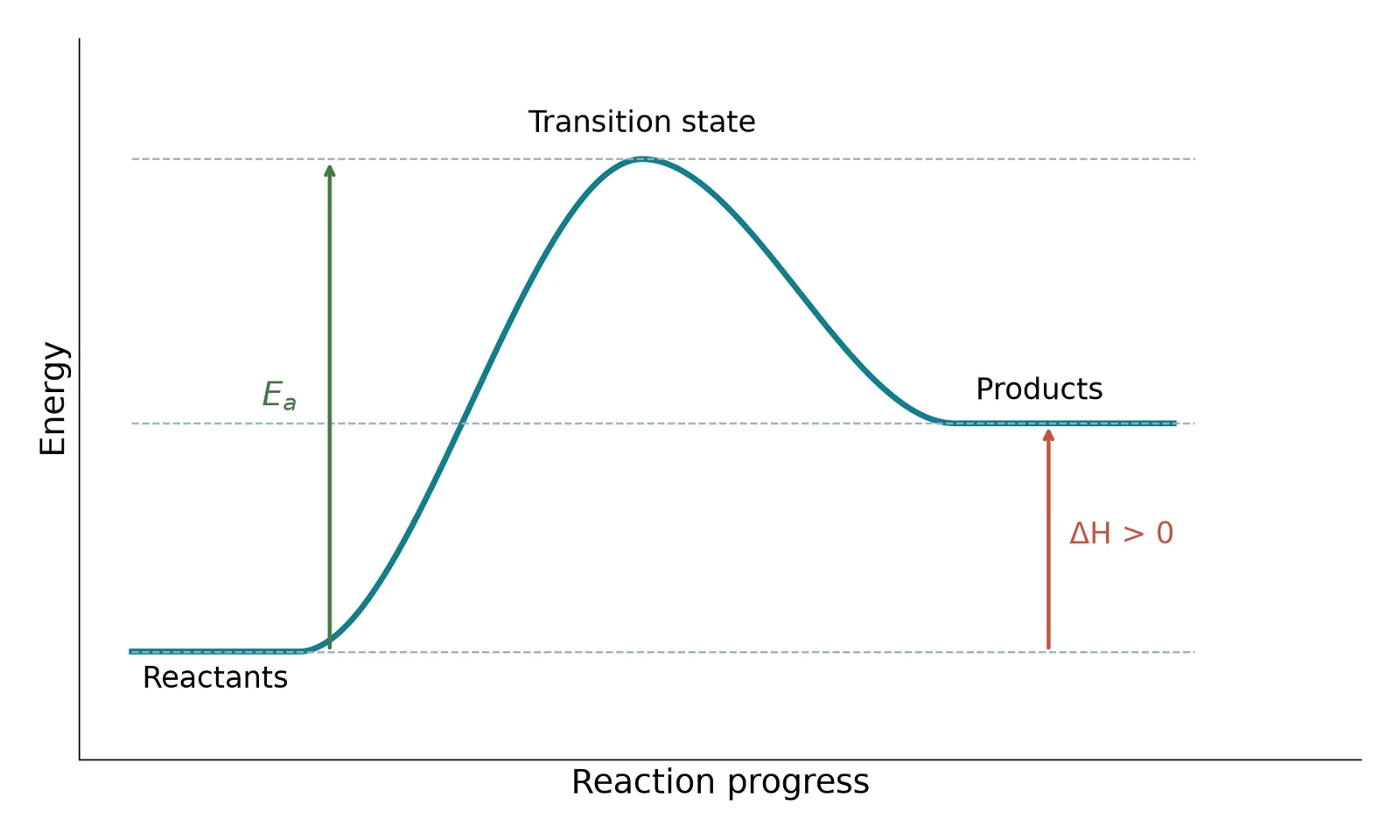
1Reactants
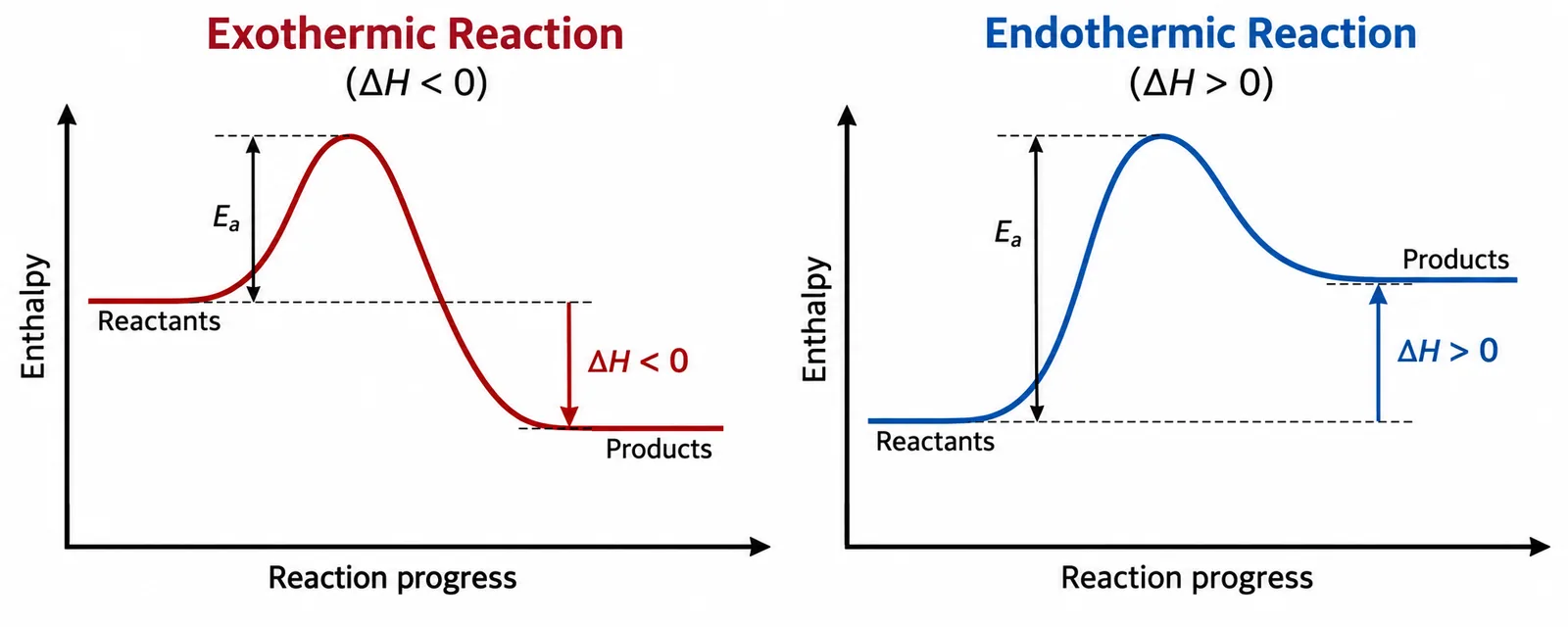
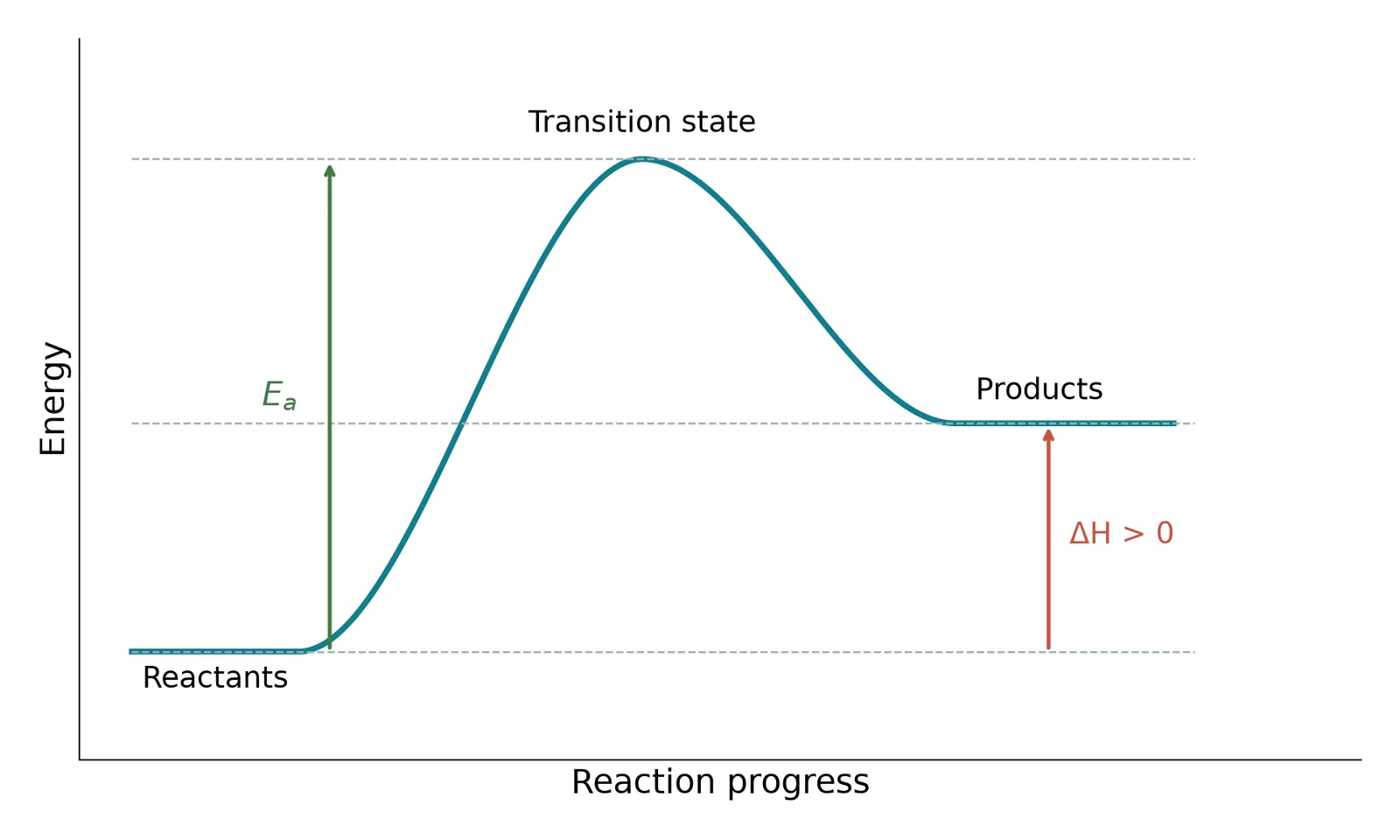
- Reactants The reactants start at a certain energy level.
2Bonds break
- Bonds break Energy is taken in, shown by the line rising to the activation energy.
3Bonds form
- Bonds form Energy is released as the products are made, shown by the line falling.
4Overall change
- Overall change If the products end lower than the reactants the reaction is exothermic;
- if higher it is endothermic.
Section 9 of 10Key terms
| Term | Meaning |
|---|---|
| Bond energy | The energy needed to break one mole of a particular bond, or released when it is formed. |
| Exothermic | A reaction that transfers energy to the surroundings; the energy change is negative. |
| Endothermic | A reaction that takes in energy from the surroundings; the energy change is positive. |
| Energy change | Energy taken in to break bonds minus energy given out when bonds form. |
| kJ/mol | Kilojoules per mole, the usual unit for bond energies. |
Section 10 of 10Exam technique
1
Subtracting in the wrong orderuse energy in (bonds broken) minus energy out (bonds formed).
2
Forgetting to multiply the bond energy by the number of bonds, such as 2 × H–Cl.
3
Counting the bonds from the formula without drawing it, for instance missing the double bonds in CO2.
4
Leaving the sign off the answer; the sign shows whether the reaction is exothermic or endothermic.